
Asia Pacific Insulation Products Market (2024-2029)

The Asia Pacific Insulation Products Market was valued at $21983.2 Million in 2024 and projected to reach to $29411 Million by 2029, representing a compound annual growth rate of 6.0%. Asia Pacific's insulation products market is positioned for sustained expansion, driven by rapid industrialization, urbanization, and increased construction investments across the region.


| Market Size in | USD 26.32 MN |
| Market Forecast in | |
| CAGR | |
| Forecast Period | |
| Units Considered | Value (USD MN) |
Asia Pacific Insulation Products Market Trends and Insights
- Asia Pacific's 6.0% compound annual growth rate outpaces the global average, driven by rapid industrialization, urbanization, and increased construction activity across the region.
- The market encompasses applications in packaging, construction, mining, and gases sectors, with Asia Pacific emerging as a critical hub for manufacturing and infrastructure development. Asia Pacific's insulation products demand is fueled by stringent energy efficiency regulations, rising awareness of thermal management, and substantial investments in commercial and residential construction.
- Between 2024 and 2029, Asia Pacific is expected to capture significant market share as economies in China, India, Southeast Asia, and Japan prioritize sustainable building practices and industrial optimization.
- The region's competitive landscape features both established multinational players and emerging local manufacturers, positioning Asia Pacific as a dynamic and high-growth market segment within the global insulation products industry..
Key Market Statistics
- CAGR (2024-2029) 6.0% CAGR
- Market Size, 2024 ~USD 21983.2 Million
- Forecast, 2029 ~USD 29411 Million
- Geography Asia Pacific
Asia Pacific Insulation Products Market Overview
Regional Market Leadership :
Asia Pacific commands a significant share of the global insulation products market, valued at USD 21,983.2 million in 2024, demonstrating the region's critical importance in the worldwide insulation industry.
Outpacing Global Growth :
With a 6.0% CAGR through 2029, Asia Pacific's growth rate exceeds the global average of 5%, driven by accelerating industrialization and infrastructure development across emerging economies.
Rapid Urbanization Catalyst :
Explosive urbanization and construction activity in Asia Pacific nations are fueling demand for insulation products across residential, commercial, and industrial applications, creating sustained market expansion.
Forecast Growth Trajectory :
The market is projected to reach USD 29,411.0 million by 2029, representing substantial growth opportunities for manufacturers and suppliers targeting Asia Pacific's booming construction and packaging sectors.
Asia Pacific Insulation Products Market Dynamics
- Countries like China and India are leading demand through infrastructure development, manufacturing growth, and rising consumer spending on residential and commercial properties.
- The region's 6.0% CAGR reflects strong economic fundamentals and favorable demographic trends. Looking ahead to 2029, Asia Pacific will continue benefiting from regulatory support for energy efficiency, growing awareness of thermal management in packaging, and industrial applications in mining and gases sectors.
- Strategic investments in manufacturing capacity, technological innovation, and supply chain optimization will be critical for market participants to capture growth opportunities in this dynamic and increasingly competitive regional landscape..
Market Ecosystem
Related Ecosystem
Building And Construction
- HVAC System
- Acoustic Insulation
- Alkyd Resins
- Fiberglass
- Thermal Insulation
- Snc-lavalin group inc.
- Saint-gobain
- LHOIST S.A
- USG CORPORATION
- Basf se
Farm Equipment And Irrigation
- Sensors
- Hydroponics
- Aeroponics
- Camera Systems
- Global Positioning System (GPS)
- MSK FARM MACHINERY CORPORATION
- MITSUBISHI CHEMICAL AGRI DREAM
- MITSUBISHI AGRICULTURAL MACHINERY
- RIVULIS IRRIGATION
- AGCO Corporation
Foam And Insulation
- Fiberglass
- Acoustic Insulation
- Elastomeric Foam
- HVAC System
- Flexible Foam
- Basf se
- Saint-gobain
- ARMACELL INTERNATIONAL
- THE WOODBRIDGE GROUP
- Sekisui Chemical Co., Ltd.
Key Takeaways
- Asia Pacific insulation products market will grow from USD 21,983.2 million in 2024 to USD 29,411.0 million by 2029, representing a 6.0% CAGR.
- Asia Pacific's growth rate exceeds the global 5% CAGR, reflecting the region's accelerating construction and industrial expansion.
- Key drivers in Asia Pacific include urbanization, energy efficiency mandates, and infrastructure investments across China, India, and Southeast Asia.
- Asia Pacific's competitive landscape combines multinational corporations with emerging regional manufacturers, creating diverse market opportunities.
Insulation Products Market Report Scope
| Report Metric | Details |
|---|---|
| Base Year | 2024 |
| Fastest Growing Segment | SPRAY FOAM (Type) |
| Forecast Period | 2024-2029 |
| Growth Rate | CAGR of 5% from 2024 to 2029 |
| Largest Segment | THERMAL INSULATION (Insulation Type) |
| Market Size Base Year (Billions) | ~USD 65.97 (2024) |
| Revenue Forecast (Billions) | ~USD 84.2 (2029) |
| Segments Covered | Material Type, Insulation Type, End-Use Industry, Type |
Asia Pacific Insulation Products Market Report Segmentation
4 segment dimensions are covered across the global market.
By Material Type
- Fef
- Flexible Elastomeric Foam
- Mineral Wool
- Other Materials
- Polyurethane Foam
- Puf
By Insulation Type
- Acoustic & Other
- Acoustic & Other Insulation
- Acoustic & Others
- Thermal
- Thermal Insulation
By End-Use Industry
- Building & Construction
- Consumer Goods
- Industrial
- Transportation
By Type
- Flexible Foam
- Rigid Foam
- Spray Foam
Target Audience
- Construction & Real Estate Developers : Need market data to understand insulation product demand drivers, specification trends, and procurement strategies for residential and commercial projects across Asia Pacific's booming construction sector.
- Insulation Manufacturers & Suppliers : Require regional market sizing, growth forecasts, and competitive insights to optimize production capacity, distribution networks, and product portfolios for Asia Pacific's high-growth market opportunity.
- Packaging & Logistics Companies : Seek insights into insulation product applications in temperature-controlled packaging and cold chain logistics to enhance service offerings and meet growing demand across Asia Pacific's e-commerce and food sectors.
- Industrial & Mining Operators : Need market intelligence on insulation solutions for industrial equipment, pipelines, and mining operations to improve operational efficiency and comply with regional energy and safety standards.
- Investment & Strategy Consultants : Require comprehensive Asia Pacific market data, growth drivers, and forecasts to advise clients on market entry strategies, M&A opportunities, and portfolio optimization in the insulation products sector.
Countries within Asia Pacific - compare and drill down
| Country | 2025 size (native) |
|---|---|
| China | USD 18279.6 Million |
| India | USD 3385 Million |
| Japan | USD 2408 Million |
| South Korea | USD 1563.6 Million |
| Rest Of Asia Pacific | USD 3774.8 Million |
Country market size visualization
Reasons to Buy this Report
- Regional Growth Outperformance : Gain insights into why Asia Pacific's 6% CAGR exceeds global averages, enabling strategic positioning in the fastest-growing insulation market region with USD 7.4 billion growth potential by 2029.
- Country-Level Market Intelligence : Access detailed market sizing for China, India, Japan, and South Korea—the region's key markets—to identify high-potential segments and tailor market entry or expansion strategies accordingly.
- Urbanization & Construction Trends : Understand how rapid urbanization and infrastructure development across Asia Pacific are creating unprecedented demand for insulation products in construction, packaging, and industrial applications.
- Competitive Landscape Analysis : Benchmark your business against regional competitors and identify market gaps, emerging opportunities, and strategic partnerships essential for capturing share in Asia Pacific's dynamic insulation sector.
- Forecast-Driven Decision Making : Leverage 2029 projections and CAGR data to make informed investment decisions, resource allocation, and product development priorities aligned with Asia Pacific's growth trajectory.
Frequently asked questions
What is the current market size of insulation products in Asia Pacific?
The Asia Pacific insulation products market was valued at USD 21,983.2 million in 2024.
What is the projected market size for Asia Pacific insulation products by 2029?
Asia Pacific's insulation products market is forecast to reach USD 29,411.0 million by 2029.
What is the CAGR for Asia Pacific insulation products market?
Asia Pacific insulation products market is expected to grow at a 6.0% compound annual growth rate from 2024 to 2029.
Which sectors drive demand for insulation products in Asia Pacific?
Asia Pacific insulation products demand is driven by packaging, construction, mining, and gases industries, with construction being the largest segment.
How does Asia Pacific's growth compare to the global insulation products market?
Asia Pacific's 6.0% CAGR exceeds the global market's 5% CAGR, making it one of the fastest-growing regions for insulation products.
RESEARCH METHODOLOGY
The study involved four major activities in estimating the current size of the insulation products market—extensive secondary research collected information on the market, peer, and parent markets. The next step was to validate these findings, assumptions, and measures with industry experts across the value chain of insulation products through primary research. Both top-down and bottom-up approaches were employed to estimate the total market size. After that, market breakdown and data triangulation were used to estimate the size of the segments and sub-segments of the market.
Secondary Research
The research methodology used to estimate and forecast the access control market begins with capturing data on the revenues of key vendors in the market through secondary research. In the secondary research process, various secondary sources, such as Hoovers, Bloomberg BusinessWeek, Factiva, World Bank, and Industry Journals, were referred to to identify and collect information for this study. These secondary sources included annual reports, press releases, investor presentations of companies, white papers, certified publications, articles by recognized authors, notifications by regulatory bodies, trade directories, and databases. Vendor offerings have also been taken into consideration to determine market segmentation.
Primary Research
The insulation products market comprises several stakeholders in the supply chain, such as manufacturers, end-users, traders, associations, and regulatory organizations. The development of various end-use industries characterizes the demand side of this market. Various primary sources from the supply and demand sides of the market were interviewed to obtain qualitative and quantitative information. Following is the breakdown of the primary respondents:
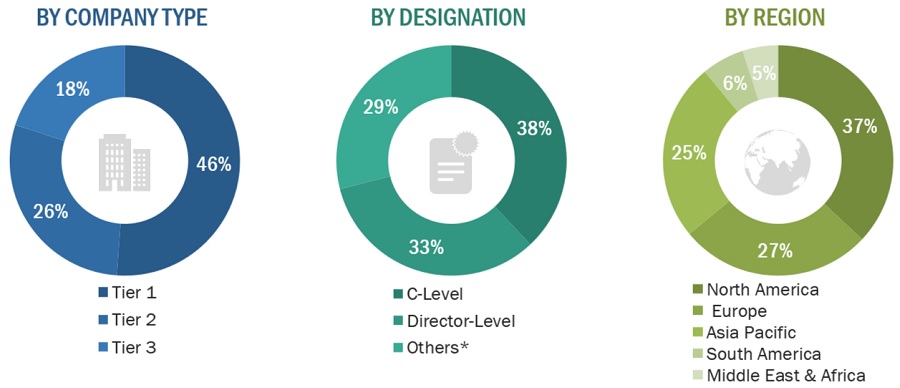
Note: “Others” includes sales, marketing, and product managers
To know about the assumptions considered for the study, download the pdf brochure
Market Size Estimation
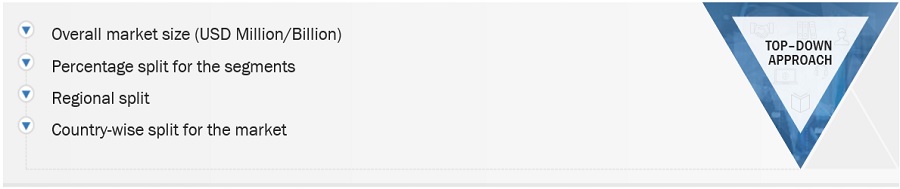
The top-down and bottom-up approaches were used to estimate and validate the total size of the insulation products market. These methods were also used extensively to determine the market size of various segments. The research methodology used to estimate the market size included the following:
- The key players were identified through extensive primary and secondary research.
- The value chain and market size of the insulation market, in terms of value, were determined through primary and secondary research.
- All percentage shares, splits, and breakdowns were determined using secondary sources and verified through primary sources.
- All possible parameters that affect the market covered in this research study were accounted for, viewed in extensive detail, verified through primary research, and analyzed to obtain the final quantitative and qualitative data.
- The research included the study of reports, reviews, and newsletters of top market players, along with extensive interviews for opinions from key leaders, such as CEOs, directors, and marketing executives.
Global Insulation products Market Size: Bottom-Up Approach
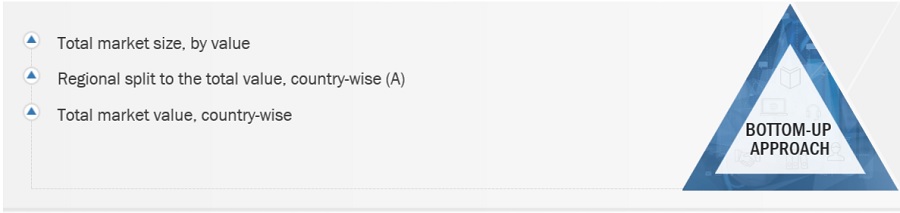
To know about the assumptions considered for the study, Request for Free Sample Report
Global Insulation products Market Size: Top-Down Approach
Data Triangulation
After arriving at the overall market size using the market size estimation processes as explained above, the market was split into several segments and sub-segments. Data triangulation and market breakdown procedures were employed to complete the overall market engineering process and determine each market segment’s and subsegment’s exact statistics. The market size was calculated globally by summing up the country-level and regional-level data.
Market Definition
The market definition of insulation products refers to The market for insulation products encompasses a wide range of materials and solutions designed to enhance the thermal, acoustic, and moisture control performance of buildings and industrial facilities. These products include but are not limited to fiberglass, mineral wool, foam plastics (such as expanded polystyrene, extruded polystyrene, and polyurethane), cellulose, aerogels, and reflective insulation materials. Insulation products are utilized across various segments of the construction industry, including residential, commercial, and industrial applications, as well as in HVAC (Heating, Ventilation, and Air Conditioning) systems and refrigeration equipment. The market is driven by factors such as energy efficiency regulations, environmental concerns, technological advancements, and the need for improved comfort and indoor air quality. As construction activity continues to rise globally, coupled with growing awareness of energy conservation and sustainability, the demand for insulation products is expected to remain robust, driving market expansion and innovation.
Key Stakeholder
- Manufacturers of insulation products
- Traders, distributors, and suppliers of insulation products
- Government and research organizations
- Associations and industrial bodies
- Research and consulting firms
- R&D institutions
- Environment support agencies
- Investment banks and private equity firms
Report Objectives:
- To define, describe, and forecast the size of the global insulation market in terms of value
- To provide detailed information regarding the key factors, such as drivers, restraints, opportunities, and industry-specific challenges, influencing the growth of the insulation products market.
- To analyze and forecast the size of various segments (material type, insulation type and end-use industry) of the insulation products market based on five major regions—North America, Europe, Asia Pacific, South America, Middle East & Africa—along with key countries
- To analyze recent developments and competitive strategies, such as expansions, new product developments, partnerships, and acquisitions, product launches to draw the competitive landscape of the market
- To strategically profile the key players in the market and comprehensively analyze their core competencies
Available Customizations:
With the given market data, MarketsandMarkets offers customizations according to client-specific needs. The following customization options are available for the report:
Additional country-level analysis of the insulation products market
Profiling of additional market players (up to 5)
Product matrix, which gives a detailed comparison of the product portfolio of each company.
Get the Full Insulation Products Market Report
Full forecast, segment splits, and company analysis for all Insulation Products Market.
- Italy Insulation Products Market
- UK Insulation Products Market
- Spain Insulation Products Market
- Poland Insulation Products Market
- Russia Insulation Products Market
- China Insulation Products Market
- Japan Insulation Products Market
- India Insulation Products Market
- South Korea Insulation Products Market
- Brazil Insulation Products Market
- South Africa Insulation Products Market
- Rest Of Europe Insulation Products Market
- Rest Of Asia Pacific Insulation Products Market
- GCC Countries Insulation Products Market
- -Other GCC Countries Insulation Products Market
- Rest Of South America Insulation Products Market
- US Insulation Products Market
- Canada Insulation Products Market
- Mexico Insulation Products Market
- France Insulation Products Market
- Germany Insulation Products Market
Need a Tailored Report?
Customize this report to your needs
Get 10% FREE Customization
Customize This Report
