
Asia Pacific Isostatic Pressing Market (2024-2029)

The Asia Pacific Isostatic Pressing Market was valued at $2470.1 Million in 2024 and projected to reach to $3346.1 Million by 2029, representing a compound annual growth rate of 6.3%. Asia Pacific's isostatic pressing market is poised for substantial expansion, growing from $2,470.1 million in 2024 to $3,346.1 million by 2029 at a 6.3% CAGR.


| Market Size in | USD 26.32 MN |
| Market Forecast in | |
| CAGR | |
| Forecast Period | |
| Units Considered | Value (USD MN) |
Asia Pacific Isostatic Pressing Market Trends and Insights
- In 2024, Asia Pacific's isostatic pressing market was valued at $2,470.1 million, driven by robust demand from advanced chip fabrication and precision component production across the region.
- Asia Pacific is expected to expand significantly through 2029, with the market forecast to reach $3,346.1 million, reflecting a compound annual growth rate of 6.3%. The growth trajectory in Asia Pacific is underpinned by accelerating semiconductor production capacity, increasing adoption of advanced materials in electronics, and rising investments in manufacturing infrastructure.
- Asia Pacific's competitive advantage stems from its concentration of leading semiconductor foundries, electronics manufacturers, and supply chain ecosystems.
- Between 2024 and 2029, Asia Pacific will continue to benefit from technological innovation, regional trade dynamics, and the shift toward miniaturization and high-performance components in consumer and industrial applications..
Key Market Statistics
- CAGR (2024-2029) 6.3% CAGR
- Market Size, 2024 ~USD 2470.1 Million
- Forecast, 2029 ~USD 3346.1 Million
- Geography Asia Pacific
Asia Pacific Isostatic Pressing Market Overview
Market Leadership :
Asia Pacific commands 38.2% of the global isostatic pressing market, with a 2024 valuation of $2,470.1 million, establishing the region as the dominant force in semiconductor and electronics manufacturing.
China's Dominance :
China leads Asia Pacific with $1,113.5 million in market size, driven by aggressive semiconductor fabrication expansion and advanced electronics component production across major manufacturing hubs.
Strong Regional Growth :
Asia Pacific's 6.3% CAGR (2024-2029) outpaces the global 5.4% growth rate, reflecting accelerating demand for precision isostatic pressing in chip fabrication and high-tech component manufacturing.
Diversified Manufacturing Base :
Japan ($868.6M), South Korea ($345.2M), and Rest of Asia Pacific ($1,018.8M) collectively support a robust ecosystem of semiconductor and electronics producers requiring advanced pressing technologies.
Asia Pacific Isostatic Pressing Market Dynamics
- This growth trajectory is fueled by escalating semiconductor manufacturing capacity, particularly in China and Taiwan, alongside rising demand for precision components in consumer electronics, automotive, and industrial applications across the region. The region's competitive advantage stems from established manufacturing ecosystems, technological expertise, and significant capital investments in advanced fabrication facilities.
- Key drivers include the proliferation of 5G technology, AI chip development, and electric vehicle production.
- Strategic government initiatives supporting semiconductor self-sufficiency further accelerate market expansion, positioning Asia Pacific as the critical growth engine for global isostatic pressing demand through 2029..
Market Ecosystem
Related Ecosystem
Electronics System And Components
- Sensors
- Temperature Sensors
- Pressure Sensors
- Actuators
- Image Sensors
- Lenovo
- Samsung
- Texas Instruments Incorporated
- HONEYWELL INTERNATIONAL INC.
- Teledyne Technologies Incorporated
Engine Engine System Exhaust
- Light Commercial Vehicles (LCVs)
- Agricultural Tractors
- Battery Electric Vehicle (BEV)
- Hybrid Electric Vehicle (HEV)
- Sensors
- TENNECO
- GORKOVSKY AVTOMOBILNY ZAVOD
- Titan Company Limited
- AISIN CORPORATION
- TI AUTOMOTIVE
Industrial Automation
- Sensors
- Image Sensors
- Manufacturing Execution System (MES)
- Actuators
- Flow Sensors
- Siemens ag
- ABB India Limited
- Emerson Electric Co.
- HONEYWELL INTERNATIONAL INC.
- SCHNEIDER ELECTRIC SE
Key Takeaways
- Asia Pacific's isostatic pressing market is valued at $2,470.1 million in 2024 and projected to grow to $3,346.1 million by 2029.
- Asia Pacific exhibits a 6.3% CAGR, outpacing the global average of 5.4%, reflecting stronger regional demand drivers.
- Asia Pacific's market growth is fueled by semiconductor manufacturing expansion, advanced materials adoption, and precision electronics production.
- Asia Pacific's dominance in global electronics manufacturing positions it as the primary growth engine for isostatic pressing technology adoption.
Isostatic Pressing Market Report Scope
| Report Metric | Details |
|---|---|
| Base Year | 2024 |
| Fastest Growing Segment | MEDICAL (End-Use Industry) |
| Forecast Period | 2024-2029 |
| Growth Rate | CAGR of 5.4% from 2024 to 2029 |
| Largest Segment | SERVICES (Offering) |
| Market Size Base Year (Billions) | ~USD 7.61 (2024) |
| Revenue Forecast (Billions) | ~USD 9.9 (2029) |
| Segments Covered | Offering, Type, Capacity, End-Use Industry, Process Type, Application, Vertical |
Asia Pacific Isostatic Pressing Market Report Segmentation
7 segment dimensions are covered across the global market.
By Offering
- Materials
- Printers
- Services
- Software
- System
- Systems
By Type
- Acrylonitrile Butadiene Styrene (Abs)
- After Sales
- Aluminum
- Ceramics
- Cip
- Cold Isostatic Pressing (Cip)
- Custom Design & Manufacturing
- Desktop Printers
- Hip
- Hot Isostatic Pressing (Hip)
- Industrial Printers
- Metals
- Nickel
- Nylon
- Other Materials
- Other Metals
- Other Thermoplastics
- Photopolymers
- Plastics
- Polylactic Acid (Pla)
- Steel
- Thermoplastics
- Titanium
By Capacity
- Large-Sized
- Medium-Sized
- Small-Sized
By End-Use Industry
- Aerospace
- Automotive
- Electronics & Semiconductor
- Energy & Power
- Medical
- Other End-Use Industries
- Other Industries
- Precision Machine Manufacturing
- Research & Development
By Process Type
- Dry Bag Pressing
- Wet Bag Pressing
By Application
- Functional Part Manufacturing
- Prototyping
- Tooling
By Vertical
- Aerospace & Defense
- Architecture & Construction
- Automotive
- Consumer Goods
- Education
- Energy
- Food & Culinary
- Healthcare
- Industrial
- Jewelry
- Other Verticals
- Printed Electronics
Target Audience
- Semiconductor Equipment Manufacturers : Identify market expansion opportunities and customer concentration in Asia Pacific's high-growth chip fabrication sector, critical for equipment sales strategy and R&D investment prioritization.
- Electronics Component Suppliers : Understand regional demand patterns for precision-pressed components across consumer electronics, automotive, and industrial applications to optimize production capacity and supply chain positioning.
- Investment & Private Equity Firms : Evaluate Asia Pacific's attractive 6.3% CAGR and $876M growth opportunity (2024-2029) for M&A targets, portfolio companies, and capital deployment in semiconductor manufacturing technology.
- Strategic Business Planners : Develop market entry, expansion, and partnership strategies leveraging detailed country-level data for China, Japan, South Korea, and emerging Asia Pacific markets with differentiated growth profiles.
- Government & Policy Makers : Assess semiconductor manufacturing competitiveness, technology gaps, and investment needs across Asia Pacific to inform industrial policy, trade strategy, and technology development initiatives.
Countries within Asia Pacific - compare and drill down
| Country | 2025 size (native) |
|---|---|
| China | USD 1113.5 Million |
| Japan | USD 868.6 Million |
| South Korea | USD 345.2 Million |
| Rest Of Asia Pacific | USD 1018.8 Million |
Country market size visualization
Reasons to Buy this Report
- Regional Market Dominance Data : Gain comprehensive insights into Asia Pacific's 38.2% global market share with country-level breakdowns for China, Japan, South Korea, and emerging markets, enabling precise regional investment decisions.
- Growth Acceleration Metrics : Access detailed analysis of Asia Pacific's 6.3% CAGR outperforming global 5.4% growth, identifying high-potential segments and geographic sub-regions for strategic expansion and resource allocation.
- Competitive Landscape Intelligence : Understand competitive positioning across Asia Pacific's diversified manufacturing ecosystem, from established Japanese and Korean players to emerging Chinese manufacturers driving market transformation.
- Semiconductor Supply Chain Insights : Leverage detailed analysis of isostatic pressing demand drivers in chip fabrication, 5G infrastructure, AI development, and EV production specific to Asia Pacific's manufacturing priorities.
- Forecast-Driven Strategy Planning : Utilize 2024-2029 market projections ($2,470.1M to $3,346.1M) to develop long-term business strategies, capacity planning, and market entry initiatives tailored to Asia Pacific's growth trajectory.
Frequently asked questions
What is the current market size of isostatic pressing in Asia Pacific?
Asia Pacific's isostatic pressing market was valued at $2,470.1 million in 2024, making it a significant segment within the global market.
What is the projected market size for Asia Pacific isostatic pressing by 2029?
Asia Pacific's isostatic pressing market is forecast to reach $3,346.1 million by 2029, representing substantial growth over the five-year period.
What is the CAGR for Asia Pacific's isostatic pressing market?
Asia Pacific's isostatic pressing market is expected to grow at a compound annual growth rate of 6.3% from 2024 to 2029.
Why is Asia Pacific's growth rate higher than the global average?
Asia Pacific's 6.3% CAGR exceeds the global 5.4% rate due to concentrated semiconductor manufacturing capacity, rising electronics production, and increased investment in advanced manufacturing technologies across the region.
What industries drive demand for isostatic pressing in Asia Pacific?
Asia Pacific's isostatic pressing demand is primarily driven by semiconductor fabrication, precision electronics manufacturing, advanced materials processing, and high-performance component production.
RESEARCH METHODOLOGY
The study involves four major activities that estimate the size of the isostatic pressing market. Exhaustive secondary research was conducted to collect information related to the market. Following this was validating these findings, assumptions, and sizing with the industry experts across the value chain through primary research. Both top-down and bottom-up approaches were employed to estimate the overall size of the isostatic pressing market. Subsequently, market breakdown and data triangulation procedures were used to determine the extent of different segments and subsegments of the market.
Secondary Research
Secondary sources in this research study include corporate filings (such as annual reports, investor presentations, and financial statements); trade, business, and professional associations; white papers, certified publications, articles from recognized authors; directories; and databases. The secondary data were collected and analyzed to estimate the overall market size, further validated by primary research. The relevant data is collected from various secondary sources, it is analyzed to extract insights and information relevant to the market research objectives. This analysis has involved summarizing the data, identifying trends, and drawing conclusions based on the available information.
Primary Research
In the primary research process, numerous sources from both the supply and demand sides were interviewed to obtain qualitative and quantitative information about this report. The primary sources from the supply side included various industry experts such as Chief X Officers (CXOs), Vice Presidents (VPs), and Directors from business development, marketing, product development/innovation teams, and related key executives from isostatic pressing providers, (such as KPBE STEEL, LTD., Nikkiso, Co., Ltd., EPSI, Aegis Technology) research organizations, distributors, professional and managed service providers, industry associations, and key opinion leaders. Approximately 25% of the primary interviews were conducted with the demand side and 75% with the supply side. These data were collected mainly through questionnaires, emails, and telephonic interviews, accounting for 80% of the primary interviews.
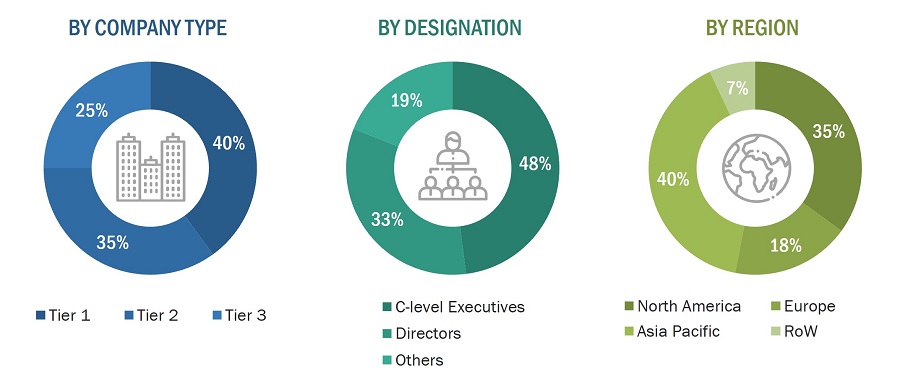
To know about the assumptions considered for the study, download the pdf brochure
Market Size Estimation
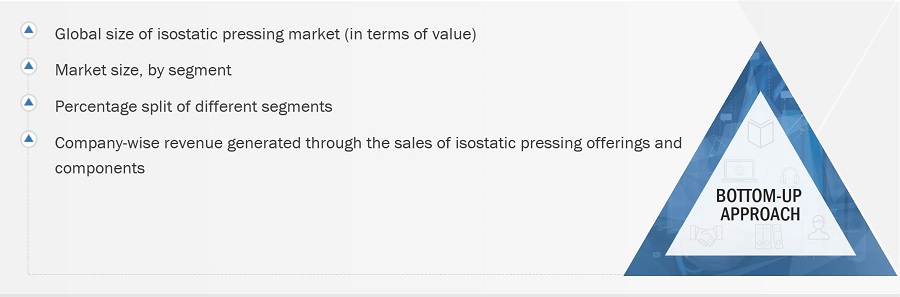
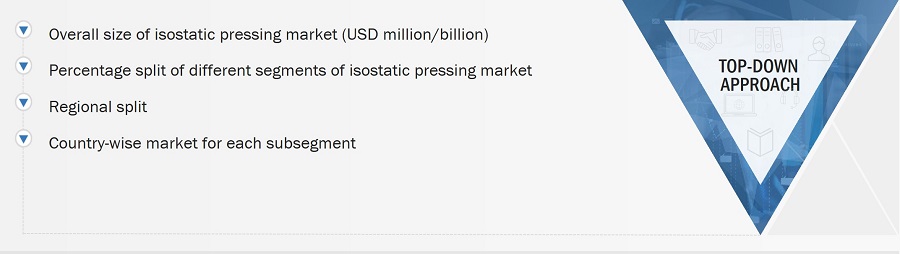
In the market engineering process, both top-down and bottom-up approaches were implemented, along with several data triangulation methods, to estimate and validate the size of the isostatic pressing market and other dependent submarkets listed in this report.
- The key players in the industry and markets were identified through extensive secondary research.
- Both the supply chain of the industry and the market size, in terms of value, were determined through primary and secondary research.
- All percentage shares, splits, and breakdowns were determined using secondary sources and verified through primary sources.
Market Size Estimation Methodology-Bottom-up Approach
Market Size Estimation Methodology-Top- Down Approach
Data Triangulation
After estimating the overall market size, the total market was split into several segments. The market breakdown and data triangulation procedures were employed wherever applicable to complete the overall market engineering process and gauge exact statistics for all segments. The data were triangulated by studying various factors and trends from both the demand and supply sides. The market was also validated using both top-down and bottom-up approaches.
Market Definition
Isostatic pressing is a powder metallurgy-based process in which equal pressure is applied on powdered materials, such as metals, alloys, or ceramics, in all directions to achieve maximum uniformity of density and microstructure without the geometric limitations of uniaxial pressing. This process is categorized into two types: hot isostatic pressing (HIP) and cold isostatic pressing (CIP). The HIP processes materials using the synergistic effects of temperature and pressure. It is used as a part of the powder metrology process for pressure-assisted brazing and fabrication of metal composites. Manufacturing companies extensively install HIP systems to enhance their working efficiency. Meanwhile, the CIP is a powder-forming technology that applies uniform pressure to compress powdered materials into various shapes, mainly at room temperature. This technology is widely used in ceramic and powder metallurgy as an effective forming method. In the CIP system, a mold is placed into a chamber filled with a working fluid, usually water, with a corrosion inhibitor pressurized using an external pump.
Stakeholders
- End users
- Government bodies, venture capitalists, and private equity firms
- Isostatic pressing manufacturers
- Isostatic pressing distributors
- Isostatic pressing industry associations
- Professional service/solution providers
- Research institutions and organizations
- Standards organizations and regulatory authorities
- System integrators
- Technology consultants
The main objectives of this study are as follows:
- To describe and forecast the isostatic pressing market in terms of value based on offering, type, capacity, process type, end-user industry, and region
- To define and forecast the isostatic pressing market, by Type, in terms of volume
- To forecast the market size for various segments with regard to four main regions, namely, North America, Europe, Asia Pacific, and the Rest of the World (RoW), along with their respective countries, in terms of value
- To provide detailed information regarding drivers, restraints, opportunities, and challenges influencing the market growth
- To provide a detailed overview of the value chain of the isostatic pressing ecosystem
- To provide a detailed analysis of the impact of the recession on the isostatic pressing market, its segments, and market players
- To strategically analyze micromarkets1 with respect to individual growth trends, prospects, and contributions to the total market
- To analyze the opportunities for stakeholders and details of the competitive landscape of the market
- To strategically profile the key players and comprehensively analyze their market positions in terms of ranking and core competencies2
- To analyze the major growth strategies implemented by key market players, such as contracts, agreements, acquisitions, product launches, expansions, and partnerships
Available Customizations:
With the given market data, MarketsandMarkets offers customizations according to the specific requirements of companies. The following customization options are available for the report:
Country-wise Information:
- Analysis for additional countries (up to five)
Company Information:
- Detailed analysis and profiling of different market players (up to five)
Get the Full Isostatic Pressing Market Report
Full forecast, segment splits, and company analysis for all Isostatic Pressing Market.
- US Isostatic Pressing Market
- Canada Isostatic Pressing Market
- Mexico Isostatic Pressing Market
- Germany Isostatic Pressing Market
- UK Isostatic Pressing Market
- France Isostatic Pressing Market
- Rest Of Europe Isostatic Pressing Market
- China Isostatic Pressing Market
- Japan Isostatic Pressing Market
- South Korea Isostatic Pressing Market
- Rest Of Asia Pacific Isostatic Pressing Market
- GCC Countries Isostatic Pressing Market
- Rest Of Middle East Isostatic Pressing Market
Need a Tailored Report?
Customize this report to your needs
Get 10% FREE Customization
Customize This Report
