
China Long Read Sequencing Market (2024-2029)

The China Long Read Sequencing Market was valued at $42.8 Million in 2024 and projected to reach to $198.2 Million by 2029, representing a compound annual growth rate of 35.9%. China's long read sequencing market is positioned for exceptional growth as the country prioritizes genomic medicine and precision healthcare.


| Market Size in | USD 26.32 MN |
| Market Forecast in | |
| CAGR | |
| Forecast Period | |
| Units Considered | Value (USD MN) |
China Long Read Sequencing Market Trends and Insights
- This exceptional growth trajectory reflects China's strategic investments in genomic research infrastructure and precision medicine initiatives.
- China is leveraging long read sequencing technology to advance cancer diagnostics, rare disease identification, and agricultural genomics, positioning itself as a key player in the Asia Pacific region. The acceleration of China's long read sequencing adoption is driven by increasing government funding for biotechnology research, growing collaboration between academic institutions and commercial entities, and rising demand for advanced diagnostic capabilities.
- China's healthcare sector is increasingly recognizing the clinical value of long read sequencing for complex genomic analysis.
- Between 2024 and 2029, China is expected to witness substantial market consolidation and technological innovation, with domestic and international players competing to capture market share in this high-growth segment..
Key Market Statistics
- CAGR (2024-2029) 35.9% CAGR
- Market Size, 2024 ~USD 42.8 Million
- Forecast, 2029 ~USD 198.2 Million
- Country China
China Long Read Sequencing Market Overview
Rapid Market Expansion :
China's long read sequencing market is growing at 35.9% CAGR, significantly outpacing the global average of 32.8%, driven by substantial government investments in genomic research and precision medicine infrastructure.
Strategic Government Initiatives :
China's commitment to becoming a global leader in genomics is evident through major funding for sequencing centers, research institutions, and clinical adoption programs across major cities and research hubs.
Clinical Application Focus :
Long read sequencing is being rapidly integrated into cancer diagnostics, rare disease identification, and personalized treatment planning, with increasing adoption in Chinese hospitals and diagnostic laboratories.
Market Valuation Growth :
The market is projected to grow from $42.8 million in 2024 to $198.2 million by 2029, representing a 363% increase over five years and reflecting strong commercial viability in the Chinese healthcare sector.
China Long Read Sequencing Market Dynamics
- Government support through funding initiatives, coupled with increasing adoption in major medical centers, is accelerating technology deployment across oncology, rare diseases, and infectious disease diagnostics.
- The expanding middle class and rising healthcare spending further drive demand for advanced diagnostic solutions. By 2029, China is expected to become a significant regional hub for long read sequencing applications.
- Domestic manufacturers are emerging alongside international players, creating competitive pricing and localized solutions.
- Integration with artificial intelligence and big data analytics will enhance clinical utility, while regulatory frameworks continue to evolve to support innovation and clinical implementation across the healthcare system..
Market Ecosystem
Related Ecosystem
Biotechnology
- Reagents
- Polymerase Chain Reaction (PCR)
- Stem Cells
- Assay Kits
- Flow Cytometers
- Thermo Fisher Scientific Inc.
- Merck KGaA
- Danaher Corporation
- Agilent Technologies, Inc.
- Bio-Rad Laboratories, Inc.
Key Takeaways
- China's long read sequencing market is valued at $42.8 million in 2024 and is forecast to grow to $198.2 million by 2029, representing a 35.9% CAGR.
- China is investing heavily in genomic research infrastructure and precision medicine, driving adoption of long read sequencing technologies across clinical and research settings.
- China's market growth is supported by government funding initiatives, academic-commercial partnerships, and increasing demand for advanced diagnostic capabilities in oncology and rare diseases.
- Between 2024 and 2029, China is expected to experience significant market consolidation with both domestic innovators and international players competing for leadership in this high-growth segment.
Long Read Sequencing Market Report Scope
| Report Metric | Details |
|---|---|
| Base Year | 2024 |
| Fastest Growing Segment | DATA ANALYSIS (Workflow) |
| Forecast Period | 2024-2029 |
| Growth Rate | CAGR of 32.8% from 2024 to 2029 |
| Largest Segment | RESEARCH USAGE (Usage) |
| Market Size Base Year (Billions) | ~USD 0.76 (2024) |
| Revenue Forecast (Billions) | ~USD 3.13 (2029) |
| Segments Covered | Offering, Technology, Workflow, Application, Usage, End User |
China Long Read Sequencing Market Report Segmentation
6 segment dimensions are covered across the global market.
By Offering
- Consumables
- Instruments
- Services
By Technology
- Nanopore Sequencing
- Single-Molecule Real-Time Sequencing
- Synthetic Long-Read Sequencing
By Workflow
- Data Analysis
- Sample Preparation
- Sequencing
By Application
- Epigenetics
- Metagenomics
- Other Applications
- Targeted Sequencing
- Whole-Exome Sequencing
- Whole-Genome Sequencing
By Usage
- Clinical Usage
- Research Usage
By End User
- Academic & Research Institute
- Academic & Research Institutes
- Hospitals, Clinics & Diagnostic
- Hospitals, Clinics, And Diagnostic Labs
- Other End User
- Other End Users
- Pharmaceutical & Biotechnologies Companies
- Pharmaceutical & Biotechnology Companies
- Pharmaceutical & Biotechnology Companies Labs
CHINA: LONG-READ SEQUENCING MARKET, BY END USER, 2022–2029
| Segment | 2022 | 2023 | 2024 | 2025 | 2026 | 2027 | 2028 | 2029 | CAGR (%) |
|---|---|---|---|---|---|---|---|---|---|
| ACADEMIC & RESEARCH INSTITUTE | 21.4 | 29.4 | 38.2 | 50.4 | 67.5 | 91.4 | 124.7 | 176.6 | 35.8 |
| HOSPITALS, CLINICS, AND DIAGNOSTIC LABS | 6 | 8.3 | 10.9 | 14.4 | 19.4 | 26.4 | 36.3 | 51.7 | 36.6 |
| OTHER END USER | 3.3 | 4.4 | 5.5 | 7 | 9 | 11.7 | 15.3 | 20.8 | 30.5 |
| PHARMACEUTICAL & BIOTECHNOLOGY COMPANIES | 9.9 | 13.6 | 17.6 | 23.2 | 31.1 | 42 | 57.2 | 80.9 | 35.6 |
| TOTAL | 40.7 | 55.6 | 72.2 | 95.1 | 127 | 171.5 | 233.5 | 330 | 35.5 |
Target Audience
- Sequencing Technology Manufacturers : Equipment and platform providers need China-specific market data to optimize product offerings, establish distribution partnerships, and align R&D investments with local clinical and research demands.
- Diagnostic Service Providers : Clinical laboratories and diagnostic centers require insights into market trends, reimbursement models, and competitive positioning to expand long read sequencing services and capture growing demand.
- Healthcare Investment Firms : Venture capital, private equity, and strategic investors need comprehensive market analysis to identify high-potential companies, assess growth trajectories, and make informed investment decisions in China's genomics ecosystem.
- Pharmaceutical & Biotech Companies : Drug developers and biotech firms utilize market intelligence to understand precision medicine adoption, companion diagnostic opportunities, and clinical trial infrastructure in China's rapidly evolving healthcare landscape.
- Government & Policy Makers : Healthcare administrators and policy officials require market data to inform genomic medicine strategy, allocate research funding, establish regulatory frameworks, and support precision medicine initiatives across China.
Reasons to Buy this Report
- Market Entry Strategy : Comprehensive analysis of China's unique regulatory landscape, reimbursement policies, and clinical adoption pathways enables informed market entry decisions and localization strategies for international and domestic players.
- Competitive Intelligence : Detailed insights into key Chinese players, emerging domestic manufacturers, and international competitors operating in the market, including their market positioning, partnerships, and growth strategies.
- Investment Opportunity Assessment : Quantified growth projections and market dynamics provide venture capital, private equity, and strategic investors with data-driven insights for funding decisions in China's high-growth genomics sector.
- Clinical Implementation Roadmap : Understanding of hospital adoption rates, diagnostic center integration, and clinical workflow requirements specific to Chinese healthcare institutions guides product development and commercialization strategies.
- Government Policy Alignment : Analysis of Chinese government initiatives, precision medicine programs, and healthcare reform policies that directly influence market growth, funding availability, and regulatory requirements for long read sequencing technologies.
Frequently asked questions
What is the current size of China's long read sequencing market?
China's long read sequencing market was valued at $42.8 million in 2024 and is projected to reach $198.2 million by 2029.
What is the expected growth rate for China's long read sequencing market?
China's long read sequencing market is expected to grow at a compound annual growth rate (CAGR) of 35.9% from 2024 to 2029.
What factors are driving growth in China's long read sequencing market?
Growth in China's long read sequencing market is driven by government funding for biotechnology research, precision medicine initiatives, academic-commercial collaborations, and increasing clinical demand for advanced genomic diagnostics.
Which applications are most prominent in China's long read sequencing market?
China's long read sequencing market is primarily driven by applications in cancer diagnostics, rare disease identification, and agricultural genomics research.
How does China's long read sequencing market compare to other Asia Pacific countries?
China represents a significant portion of the Asia Pacific long read sequencing market, with its 35.9% CAGR reflecting strong regional leadership and substantial investment in genomic technologies.
RESEARCH METHODOLOGY
This study on the long-read sequencing market employed secondary sources, directories, and databases to gather pertinent information. To gather and validate important qualitative and quantitative data and evaluate market growth prospects, in-depth interviews were conducted with many primary respondents including key industry participants, subject-matter experts (SMEs), C-level executives from key market players, and industry consultants. After estimating the long-read sequencing market using several research strategies, the size of the final market was obtained by triangulating data from primary research.
Secondary Research
The secondary sources referred to for this research study include publications from government sources. These include Nucleic Acids Research, Genome Biology, Nature Reviews Genetics, Nature Methods, Genome Research, International Journal of Genomics, National Human Genome Research Institute (NHGRI), International Chromosome and Genome Society (ICGS), Genome Canada, European Society of Human Genetics (ESHG), Genomics England, Genome British Columbia, Beijing Institute of Genomics, Centre for Cellular & Molecular Biology (CCMB), São Paulo Research Foundation (FAPESP), National Cancer Institute (NCI), European Medicines Agency (EMA), Biotechnology and Biological Sciences Research Council (BBSRC), Organisation for Economic Co-operation and Development (OECD), Population Health Research Institute (PHRI), PubMed, World Bank, and the World Health Organization (WHO), among others. Secondary sources also included corporate & regulatory filings, such as annual reports, SEC filings, investor presentations, and financial statements; business magazines & research journals; press releases; and trade, business, and professional associations. Secondary data was collected and analyzed to arrive at the overall size of the global long-read sequencing market, which was validated through primary research.
Primary Research
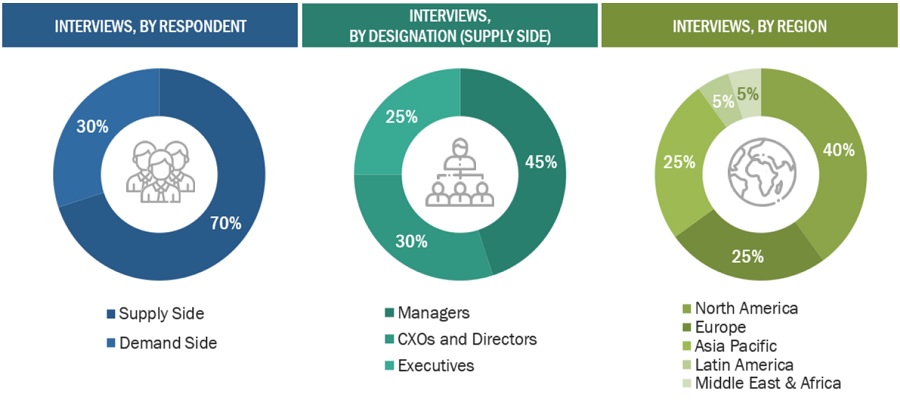
Extensive primary research was conducted after acquiring basic knowledge about the global long-read sequencing market scenario through secondary research. Several primary interviews were conducted with market experts from the supply side, such as C-level and D-level executives, operational managers, marketing & sales managers of key manufacturers, distributors, and channel partners of companies providing long-read sequencing; experts from the demand side, such as personnel from academic & research institutes, hospitals, clinics and diagnostic labs, pharmaceutical & biopharmaceutical industries. These interviews were conducted across six major regions, including North America, Europe, the Asia Pacific, Latin America, the Middle East, and Africa. Approximately 70% and 30% of the primary interviews were conducted with supply-side and demand-side participants, respectively. This primary data was collected through questionnaires, e-mails, online surveys, personal interviews, and telephonic interviews.
The following is a breakdown of the primary respondents:
To know about the assumptions considered for the study, download the pdf brochure
Market Size Estimation
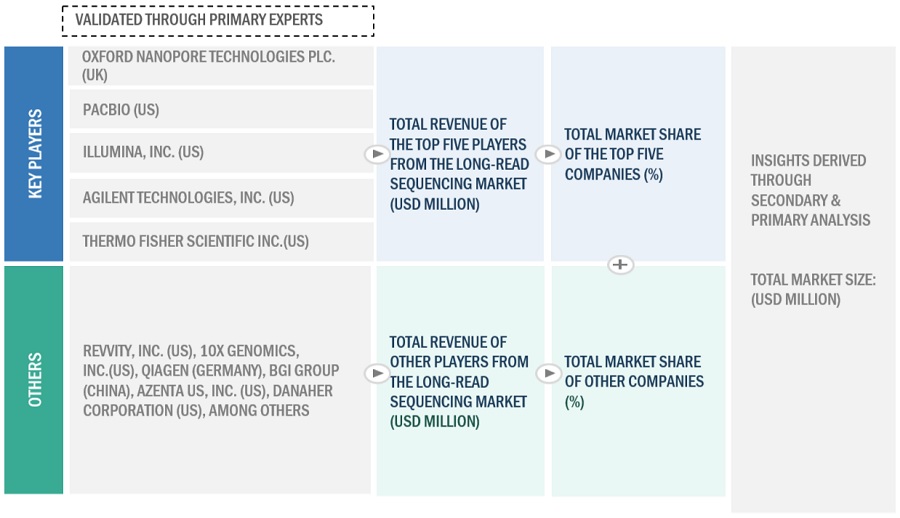
Both top-down and bottom-up approaches were used to estimate and validate the total size of the long-read sequencing market. These methods were also used extensively to estimate the size of various subsegments in the market. The research methodology used to estimate the market size includes the following:
Bottom-up Approach
- The key players in the industry and market have been identified through extensive secondary research.
- The revenues generated from the long-read sequencing market business of leading players have been determined through primary and secondary research.
- All percentage shares, splits, and breakdowns have been determined using secondary sources and verified through primary sources.
To know about the assumptions considered for the study, Request for Free Sample Report
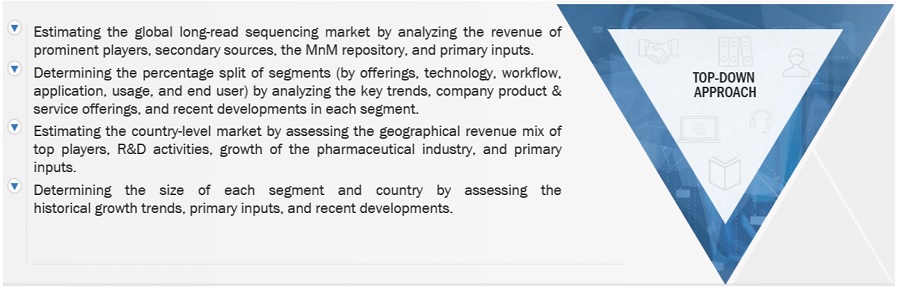
Top-down Approach
After arriving at the overall market size from the market size estimation process, the total market was split into several segments and subsegments.
Data Triangulation
To complete the overall market engineering process and arrive at the exact statistics for all segments and subsegments, data triangulation and market breakdown procedures were employed, wherever applicable. The data was triangulated by studying various factors and trends from both the demand and supply sides.
Market Definition
Long-read sequencing is a type of nucleic acid sequencing that produces genomic data by generating individual reads from single molecules, generally ranging in size from 700 to over 20,000 bases. These fragments are typically derived from "native" molecules, which are directly extracted from biological samples for analysis. The long-read sequencing market encompasses the consumables, instruments, services, and technology associated with long-read sequencing. The long-read sequencing market is defined as solutions including instruments/systems, consumables (kits, reagents, flow cells), and services for long-read sample preparation, sequencing, and data analysis. Long-read software solutions are often provided alongside the instrument/system/platform, hence the software solutions are considered within the instrument segment scope. Other standalone software solutions are provided as data analysis services and are considered within the services segment scope.
Stakeholders
- Academic & Research Institutes
- Software & Bioinformatics Companies
- Healthcare & Clinical Laboratories
- Long-Read Sequencing Technology Vendors
- Contract Research Organizations (CROs)
- Market Research and Consulting Firms
- Pharmaceutical & Biotechnology Companies
- Regulatory Agencies
- Venture Capitalists
- Government Organizations
- Industry Associations and Professional Societies
Report Objectives
- To define, describe, and forecast the long-read sequencing market based on offerings, technology, workflow, application, usage, end user, and region
- To provide detailed information regarding the major factors influencing the market growth (such as drivers, restraints, opportunities, and challenges)
- To strategically analyze micromarkets with respect to individual growth trends, prospects, and contributions to the overall long-read sequencing market
- To analyze the opportunities in the market for stakeholders and provide details of the competitive landscape for market leaders
- To forecast the size of the market segments with respect to six main regions, namely, North America, Europe, the Asia Pacific, Latin America, the Middle East, and Africa
- To profile the key players in the global long-read sequencing market and comprehensively analyze their instruments, consumables, and services portfolios, market positions, and core competencies
- To track and analyze competitive developments such as product & service launches, expansions, agreements, and collaborations in the long-read sequencing market
- To benchmark players within the long-read sequencing market using the ‘Company Evaluation Matrix' framework, which analyzes market players based on various parameters within the broad categories of business and service strategy
Available Customizations
With the given market data, MarketsandMarkets offers customizations as per the company’s specific needs. The following customization options are available for the report:
Geographical Analysis
- Further breakdown of the Rest of Europe Long-Read Sequencing Market, by country
- Further breakdown of the Rest of Asia Pacific Long-Read Sequencing Market, by country
- Further breakdown of the Rest of Latin America Long-Read Sequencing Market, by country
- Further breakdown of the Rest of Middle East Long-Read Sequencing Market, by country
Company Information
- Detailed analysis and profiling of additional market players (up to five)
Segment Analysis
- Further breakdown of the other application and other end users area into subsegments
- Cross-segment analysis
Get the Full Long Read Sequencing Market Report
Full forecast, segment splits, and company analysis for all Long Read Sequencing Market.
- Canada Long Read Sequencing Market
- US Long Read Sequencing Market
- Germany Long Read Sequencing Market
- UK Long Read Sequencing Market
- France Long Read Sequencing Market
- Italy Long Read Sequencing Market
- Spain Long Read Sequencing Market
- Japan Long Read Sequencing Market
- India Long Read Sequencing Market
- South Korea Long Read Sequencing Market
- Brazil Long Read Sequencing Market
- Mexico Long Read Sequencing Market
- Argentina Long Read Sequencing Market
- Saudi Arabia Long Read Sequencing Market
- UAE Long Read Sequencing Market
- Rest Of Europe Long Read Sequencing Market
- Rest Of Asia Pacific Long Read Sequencing Market
- Rest Of Latin America Long Read Sequencing Market
- GCC Countries Long Read Sequencing Market
- Rest Of Middle East Long Read Sequencing Market
- Rest Of GCC Countries Long Read Sequencing Market
Need a Tailored Report?
Customize this report to your needs
Get 10% FREE Customization
Customize This Report
