
Mexico Maritime Safety System Market (2024-2029)

The Mexico Maritime Safety System Market was valued at $676.1 Million in 2024 and projected to reach to $1212.7 Million by 2029, representing a compound annual growth rate of 12.4%. Mexico's maritime safety system market is poised for substantial growth through 2029, driven by the country's pivotal role in global trade and increasing regulatory requirements for port security and vessel monitoring.


| Market Size in | USD 26.32 MN |
| Market Forecast in | |
| CAGR | |
| Forecast Period | |
| Units Considered | Value (USD MN) |
Mexico Maritime Safety System Market Trends and Insights
- This expansion reflects Mexico's strategic importance as a major shipping hub and the increasing regulatory emphasis on port security and vessel monitoring across the country.
- Mexico's coastal geography and role in global trade corridors are driving demand for advanced safety technologies and integrated monitoring solutions. The 12.4% compound annual growth rate in Mexico significantly outpaces global trends, underscoring the country's accelerating digital transformation in maritime operations.
- Mexico is investing heavily in modernizing its port infrastructure and compliance frameworks, creating substantial opportunities for maritime safety system providers.
- Between 2024 and 2029, Mexico's market is expected to nearly double, driven by regulatory mandates, vessel fleet expansion, and heightened focus on environmental and operational safety standards throughout the region..
Key Market Statistics
- CAGR (2024-2029) 12.4% CAGR
- Market Size, 2024 ~USD 676.1 Million
- Forecast, 2029 ~USD 1212.7 Million
- Country Mexico
Mexico Maritime Safety System Market Overview
Rapid Market Expansion :
Mexico's maritime safety system market is growing at 12.4% CAGR, significantly outpacing the global average of 9.6%, driven by increased investment in port infrastructure and vessel monitoring technologies across major shipping hubs.
Strategic Coastal Position :
With extensive Pacific and Atlantic coastlines, Mexico serves as a critical gateway for North American trade. This geographic advantage necessitates advanced maritime safety systems to manage high-volume shipping corridors and ensure compliance with international maritime regulations.
Regulatory Compliance Pressure :
Strengthened port security mandates and vessel tracking requirements are compelling Mexican maritime operators to adopt modern safety solutions, creating sustained demand for integrated monitoring and surveillance systems across the country's major ports.
Market Valuation Growth :
The market is projected to grow from $676.1 million in 2024 to $1,212.7 million by 2029, representing an 79% increase in market value over five years, reflecting strong investment momentum in maritime infrastructure modernization.
Mexico Maritime Safety System Market Dynamics
- Investment in digital transformation of maritime infrastructure, coupled with Mexico's strategic position in North American supply chains, creates compelling opportunities for safety technology providers.
- The 12.4% CAGR reflects growing adoption of automated surveillance, real-time tracking systems, and integrated port management solutions. Key growth catalysts include modernization of major ports like Manzanillo and Veracruz, enhanced cybersecurity requirements for maritime operations, and compliance with international maritime safety standards.
- As Mexico continues to strengthen its competitive position in global shipping, demand for advanced safety systems will accelerate, attracting both established technology providers and innovative startups to the market..
Market Ecosystem

MARITIME SAFETY SYSTEM MARKET: COMMERCIAL USE CASES ACROSS INDUSTRIES
| COMPANY | USE CASE DESCRIPTION | BENEFITS |
|---|---|---|
 |
Kongsberg Maritime provides integrated maritime safety and navigation solutions, including radar, ECDIS, bridge systems, vessel automation, situational awareness, remote operations, and digital monitoring. Its technologies integrate information from multiple onboard systems to support safe navigation, collision prevention, vessel monitoring, and shore-based operational support. | Improved navigation and situational awareness | Enhanced collision prevention and vessel safety | Reduced operational risk through integrated systems | Improved remote monitoring and lifecycle support |
 |
Wärtsilä provides integrated navigation, automation, communication, digital, and vessel-management technologies that support safer and more efficient vessel operations. Its solutions enable centralized monitoring, navigation decision support, remote services, and integration of vessel and shore-based data to improve operational safety. | Improved vessel operational safety | Enhanced navigation and decision support | Reduced equipment downtime through remote monitoring and diagnostics | Improved fleet and shore-side visibility |
 |
FURUNO provides marine electronics and safety technologies including radar, ECDIS, AIS, GNSS, navigation sensors, communication equipment, and integrated bridge solutions. These systems combine navigation and vessel information to improve situational awareness and support collision avoidance and safe vessel operations. | Enhanced navigation accuracy and situational awareness | Improved collision prevention | Reliable access to vessel and traffic information | Increased operational safety and regulatory compliance |
 |
JRC provides marine navigation, communication, radar, GMDSS, AIS, and integrated bridge systems for commercial and other vessels. Its solutions support safe navigation, distress communication, vessel identification, and emergency response while enabling integration of multiple safety functions onboard. | Improved navigation and vessel awareness | Enhanced distress and emergency communication | Improved compliance with maritime safety requirements | Reduced operational and communication risks |
 |
SRT Marine Systems provides AIS, vessel monitoring, maritime surveillance, and integrated situational-awareness solutions for vessels, ports, coast guards, and maritime authorities. Its platforms combine vessel tracking and sensor data to support real-time monitoring, maritime domain awareness, and vessel traffic management. | Real-time vessel tracking and monitoring | Improved maritime situational awareness | Enhanced vessel traffic and security management | Faster identification of potential safety risks |
Logos and trademarks shown above are the property of their respective owners. Their use here is for informational and illustrative purposes only.
Related Ecosystem
Software And Services
- Natural Language Processing (NLP)
- Machine Learning
- Supply Chain Management
- Predictive Analytics
- Image Sensors
- International Business Machines Corporation
- MICROSOFT CORPORATION
- Oracle Corporation
- SAP SE
- Amazon.com, Inc.
Marine
- Tankers
- Fuel Cell
- HVAC System
- Navigation Systems
- Sensors
- Wartsila
- Kongsberg Gruppen ASA
- L3Harris Technologies, Inc.
- ABB India Limited
- Thales group
Public Safety
- Face Recognition
- Cloud Security
- Surveillance System
- Voice Recognition
- Biometric Security and Authentication System
- Zensar Technologies Limited
- International Business Machines Corporation
- Allot Ltd.
- Cisco Systems, Inc.
- MICROSOFT CORPORATION
Key Takeaways
- Mexico's maritime safety system market will grow from $676.1M (2024) to $1,212.7M (2029), representing an 79% increase over five years.
- Mexico's 12.4% CAGR outpaces the global average of 9.6%, positioning the country as a high-growth market in Latin America.
- Mexico's strategic location and expanding port infrastructure are driving demand for integrated vessel monitoring and port security solutions.
- Regulatory compliance and environmental safety standards are key growth catalysts for maritime safety system adoption across Mexico.
Maritime Safety System Market Report Scope
| Report Metric | Details |
|---|---|
| Base Year | 2024 |
| Fastest Growing Segment | TRAINING & CONSULTING (Professional Service) |
| Forecast Period | 2024–2029 |
| Growth Rate | CAGR of 9.6% from 2024 to 2029 |
| Largest Segment | SOLUTIONS (Offering) |
| Market Size Base Year (Billions) | ~USD 30.23 (2024) |
| Revenue Forecast (Billions) | ~USD 47.8 (2029) |
| Segments Covered | Offering, Service, Professional Service, Security Type, System, Application, End User, Shipping & Transportation |
Mexico Maritime Safety System Market Report Segmentation
8 segment dimensions are covered across the global market.
By Offering
- Services
- Solutions
By Service
- Managed Services
- Professional Services
By Professional Service
- Risk Assessment & Investigation
- Support & Maintenance
- Training & Consulting
By Security Type
- Cargoes & Containers Safety
- Coastal Security
- Crew Security
- Other Security Types
- Port & Critical Infrastructure Security
- Ship System & Equipment (Sse) Safety
- Vessel Security
By System
- Automatic Identification System (Ais)
- Global Maritime Distress Safety System (Gmdss)
- Long-Range Identification & Tracking (Lrit) System
- Other Systems
- Ship Security Reporting System
- Vessel Monitoring & Management System
By Application
- Communication Management
- Counter Piracy
- Environment Protection
- Loss Prevention & Detection
- Monitoring & Tracking
- Other Applications
- Search & Rescue
- Search And Rescue
- Security & Safety Management
By End User
- Government & Defense
- Marine & Construction
- Oil & Gas
- Other End Users
- Shipping & Transportation
By Shipping & Transportation
- Passengers & Cargo Owners
- Ship Crews
- Shipping Companies
Target Audience
- Maritime Technology Vendors : Vendors of vessel tracking, port surveillance, and integrated safety systems need Mexico-specific market data to identify growth opportunities, understand local competition, and tailor solutions to regional regulatory requirements.
- Port Operators & Authorities : Mexican port operators require market intelligence on emerging safety technologies, best practices, and investment benchmarks to modernize infrastructure and maintain competitive advantage in global trade corridors.
- Shipping & Logistics Companies : Shipping operators and logistics providers need insights into Mexico's maritime safety requirements and technology trends to ensure compliance, optimize operations, and reduce risk across Mexican ports.
- Government & Regulatory Bodies : Mexican maritime authorities and government agencies use market data to inform policy decisions, infrastructure investments, and regulatory frameworks governing port security and vessel safety standards.
- Investment & Consulting Firms : Private equity, venture capital, and management consulting firms require Mexico-specific market analysis to identify investment opportunities, assess market potential, and guide client strategies in maritime safety.
Key Companies in the Mexico Maritime Safety System Market
| Company | HQ | Ownership | Strongest segments |
|---|---|---|---|
| QINETIQ GROUP PLC | United Kingdom | Public Company | Test and Training,Mission Support and Operations,Research and Development, |
| HCL TECHNOLOGIES LIMITED | India | Public Company | IT and Business Services,Engineering and R&D Services,HCL Software and IP-led Offerings, |
| NTT DATA CORPORATION | Japan | Private Company | Application Development & Modernization,Cloud & Infrastructure / Data Centers,Consulting & Industry Solutions, |
| ALLOT COMMUNICATIONS LTD. | Israel | Public Company | Allot Secure platform (NetworkSecure, HomeSecure, DNSecure, IoTSecure, EndpointSecure, BusinessSecure, Secure Cloud, Network Protection as a Service),DDoS Secure, NetProtect, 5GNetProtect,AllotSmart (Smart5G, SmartVisibility, SmartTraffic QoE, SmartPCC, SmartSentinel), |
| HONEYWELL | United States | Public Company | Industrial Automation (control, instrumentation, smart energy, sensing, PPE, software),Building Automation (building control software, energy management, security, fire),Energy and Sustainability Solutions – UOP technologies and equipment, |
| SMITHS GROUP | United Kingdom | Public Company | John Crane (seals, couplings, filtration),Smiths Detection (security sensors and systems),Flex-Tek (engineered components, hosing, tubing), |
| ELBIT SYSTEMS | Israel | Public Company | Aerospace (airborne platforms, UAVs, avionics, training),C4I and Cyber,ISTAR, Electro-Optics, EW & Radar, |
| NORTHROP GRUMMAN | United States | Public Company | Aeronautics Systems,Defense Systems,Mission Systems, |
| WESTMINSTER GROUP | United Kingdom | Private Company | Managed Services (airports, ports, infrastructure operations),Technology Security Solutions (surveillance, detection, tracking, screening, interception),Manpower, Consultancy, and Training, |
| SAAB GROUP | Sweden | Public Company | Surveillance (radar, EW, C4I, combat systems),Aeronautics (manned and unmanned aircraft, aviation tech),Dynamics (weapons, missiles, training & simulation, signature management), |
| BAE SYSTEMS | United Kingdom | Public Company | Air (including future combat air systems and Eurofighter-related work),Electronic Systems,Maritime, |
| L3HARRIS TECHNOLOGIES | United States | Public Company | Space & Mission Systems (SMS),Communications & Spectrum Dominance (CSD),Missile Solutions (MSL), |
| KONGSBERG | Norway | Public Company | Air defence, combat systems, and C2,Naval strike and air-to-surface missiles,Remote weapon stations and remote towers, |
| LEONARDO DRS | United States | Public Company | Advanced Sensing (EO/IR, SIGINT, EW, tactical radars, soldier and space sensing),Network and Tactical Computing (platform computing, C2, tactical networks, communications),Naval and Platform Electrical Propulsion (power conversion, distribution, permanent magnet motors), |
| AIRBUS | Netherlands | Public Company | Commercial aircraft (Airbus segment),Helicopters,Defence and Space, |
QINETIQ GROUP PLC
QinetiQ Group PLC is a United Kingdom-based public company founded in 2001, employing 7,378 people. The company operates in the defense and security sector, providing technology and services to government and commercial clients.
HCL TECHNOLOGIES LIMITED
HCL Technologies Limited is an Indian public company founded in 1976. The company is a major player in the information technology and business services industry.
NTT DATA CORPORATION
NTT DATA Corporation is a Japanese private company founded in 1988 with 197,777 employees. The company is a leading global IT services and digital transformation provider.
ALLOT COMMUNICATIONS LTD.
Allot Communications Ltd. is an Israeli public company established in 1996 with 362 employees. The company operates in the cybersecurity and network intelligence sector.
HONEYWELL
Honeywell is a United States-based public company founded in 1885 with 101,000 employees. The company is a diversified technology and manufacturing conglomerate serving aerospace, building, and industrial markets.
SMITHS GROUP
Smiths Group is a United Kingdom-based public company founded in 1851 with 16,000 employees. The company is a diversified engineering group serving the aerospace, defense, and security markets.
ELBIT SYSTEMS
Elbit Systems is an Israeli public company founded in 1966 with 20,000 employees. The company is a leading defense electronics and systems integrator serving global military and commercial customers.
NORTHROP GRUMMAN
Northrop Grumman is a United States-based public company founded in 1939 with 95,000 employees. The company is a major aerospace and defense contractor providing advanced systems and technologies.
WESTMINSTER GROUP
Westminster Group is a United Kingdom-based private company founded in 2000 with 236 employees. The company provides specialized services within the defense and security sectors.
SAAB GROUP
Saab Group is a Swedish public company founded in 1937 with 29,380 employees. The company is a major defense and aerospace contractor providing advanced technology solutions globally.
BAE SYSTEMS
BAE Systems is a United Kingdom-based public company founded in 1979 with 111,400 employees. The company is a leading global defense, aerospace, and security contractor.
L3HARRIS TECHNOLOGIES
L3Harris Technologies is a United States-based public company founded in 1895 with 45,000 employees. The company is a major aerospace and defense technology provider serving government and commercial markets.
KONGSBERG
Kongsberg is a Norwegian public company founded in 1814 with 7,586 employees. The company operates in the defense, aerospace, and maritime technology sectors.
LEONARDO DRS
Leonardo DRS is a United States-based private company founded in 1968 with 7,300 employees. The company provides advanced defense electronics and technology solutions.
AIRBUS
Airbus is a Netherlands-based public company founded in 1998 with 166,876 employees. The company is a leading global aerospace manufacturer producing commercial aircraft, helicopters, and defense systems.
Reasons to Buy this Report
- Market-Specific Growth Data : Access detailed forecasts and historical data exclusive to Mexico's maritime safety market, enabling precise investment decisions and competitive positioning in this high-growth regional segment.
- Regulatory Landscape Intelligence : Understand Mexico-specific maritime safety regulations, compliance requirements, and government initiatives driving technology adoption across ports and shipping operators throughout the country.
- Competitive Positioning Analysis : Identify key players, market share distribution, and competitive strategies specific to Mexico's maritime safety ecosystem, helping you benchmark performance and identify partnership opportunities.
- Port-Specific Insights : Gain detailed analysis of major Mexican ports including Manzanillo, Veracruz, and Lázaro Cárdenas, with insights into their safety system investments and modernization priorities.
- Strategic Entry Planning : Develop informed market entry strategies with Mexico-focused data on customer segments, technology preferences, pricing dynamics, and distribution channels specific to the regional maritime sector.
Frequently asked questions
What is the current size of Mexico's maritime safety system market?
Mexico's maritime safety system market was valued at $676.1 million in 2024 and is projected to reach $1,212.7 million by 2029.
What is the expected growth rate for Mexico's maritime safety system market?
Mexico's maritime safety system market is expected to grow at a compound annual growth rate (CAGR) of 12.4% from 2024 to 2029.
Why is Mexico's maritime safety system market growing faster than the global average?
Mexico's 12.4% CAGR exceeds the global 9.6% rate due to increased port modernization, regulatory compliance requirements, and Mexico's critical role in international shipping corridors.
What are the primary drivers of growth in Mexico's maritime safety system market?
Key drivers include regulatory mandates for vessel safety, port infrastructure modernization, environmental compliance standards, and Mexico's expanding maritime trade activities.
Which sectors in Mexico are investing most in maritime safety systems?
Major ports, shipping companies, government maritime authorities, and logistics operators in Mexico are the primary investors in advanced maritime safety technologies and monitoring solutions.
RESEARCH METHODOLOGY
The research methodology for the maritime safety system market consisted of extensive secondary and primary research, followed by market size estimation, market breakdown, and data triangulation. Secondary sources, including annual reports, investor presentations, company websites, regulatory publications, government databases, healthcare organizations, scientific journals, and industry associations, were used to identify key market participants, technology trends, product developments, and market dynamics. Interviews were then conducted with industry experts from both the supply and demand sides to validate market assumptions, growth trends, competitive developments, and segment-level estimates.
Secondary Research
The secondary research process involved collecting information from publicly available sources to understand the maritime safety system ecosystem, competitive landscape, value chain, market segmentation, technological advancements, regulatory environment, and industry adoption trends. Key information was gathered from annual reports, investor presentations, product documentation, technical publications, regulatory publications, government databases, classification societies, maritime organizations, and industry associations. Major secondary sources included the International Maritime Organization (IMO), International Hydrographic Organization (IHO), International Association of Marine Aids to Navigation and Lighthouse Authorities (IALA), International Telecommunication Union (ITU), national maritime administrations, European Maritime Safety Agency (EMSA), US Coast Guard (USCG), Maritime and Port Authority of Singapore (MPA), classification societies such as DNV, ABS, and Lloyd's Register, company annual reports, investor presentations, product documentation, and maritime technology publications. Information obtained through secondary research was used to identify key market players, establish market segmentation, assess technology adoption, analyze regional developments, evaluate regulatory requirements, and identify emerging opportunities across commercial shipping, passenger vessels, offshore installations, ports and waterways, fishing fleets, and government maritime operations.
Secondary research also provided insights into the industry's value chain, market dynamics, pricing trends, technological developments, regulatory landscape, competitive positioning, and investment activities. Particular attention was given to international maritime safety requirements under SOLAS, the Global Maritime Distress and Safety System (GMDSS), the ISM Code, IHO's S-100 framework, maritime digitalization, vessel connectivity, autonomous and remotely operated vessels, AI-enabled navigation, collision prevention, vessel traffic management, fire and hazard detection, emergency response, and vessel and crew monitoring. These sources helped establish preliminary market estimates that were subsequently validated through primary interviews.
Primary Research
In the primary research process, a diverse range of stakeholders from both the supply and demand sides of the maritime safety system market were interviewed to gather qualitative and quantitative insights specific to the market. From the supply side, key industry experts, including CEOs, vice presidents, business development directors, product managers, technology and innovation heads, engineering leaders, and technical experts from companies providing maritime safety hardware, software, marine electronics, communication systems, navigation solutions, vessel monitoring technologies, digital maritime platforms, and safety services were consulted. System integrators, maritime technology consultants, connectivity providers, service providers, classification and certification specialists, and installation and maintenance companies were also considered.
On the demand side, interviews covered shipowners and shipping operators, shipyards, passenger and cruise operators, offshore energy companies, port and waterway authorities, vessel traffic service operators, government and coast guard agencies, fishing fleet operators, and other maritime organizations. These stakeholders were interviewed to understand current procurement practices, technology adoption, replacement cycles, preferred suppliers, system integration requirements, pricing structures, regulatory requirements, and future investment priorities.
The primary research considered critical parameters affecting the maritime safety system market, including navigation and collision prevention, vessel traffic and situational awareness, communication and distress management, emergency response and life safety, fire and hazard protection, vessel and crew safety monitoring, digital navigation, S-100 implementation, AI-based collision avoidance, computer vision, autonomous navigation, remote vessel operations, vessel connectivity, IoT-enabled monitoring, cybersecurity, cloud-based maritime applications, and ship–shore integration. Each factor was analyzed and validated through primary research and used to develop qualitative and quantitative market estimates across hardware, software, and services.
Once the initial phase of market engineering was completed, including detailed calculations for market statistics, segment-level estimates, growth forecasts, pricing analysis, and regional market sizing, an additional round of primary research was undertaken. This step was used to refine and validate critical data points related to hardware, software, and services; hardware subsegments; software subsegments; professional and managed services; safety applications; operating environments; vessel types; end users; competitive positioning; pricing strategies; procurement behavior; regional dynamics; technology adoption; and future investment outlook. Key market drivers, including fleet modernization, maritime digitalization, increasing vessel connectivity, regulatory compliance, adoption of integrated bridge systems, AI-enabled safety technologies, autonomous operations, and demand for remote monitoring, were assessed alongside challenges such as high installation costs, system integration complexity, certification requirements, cybersecurity risks, interoperability issues, and harsh operating environments.
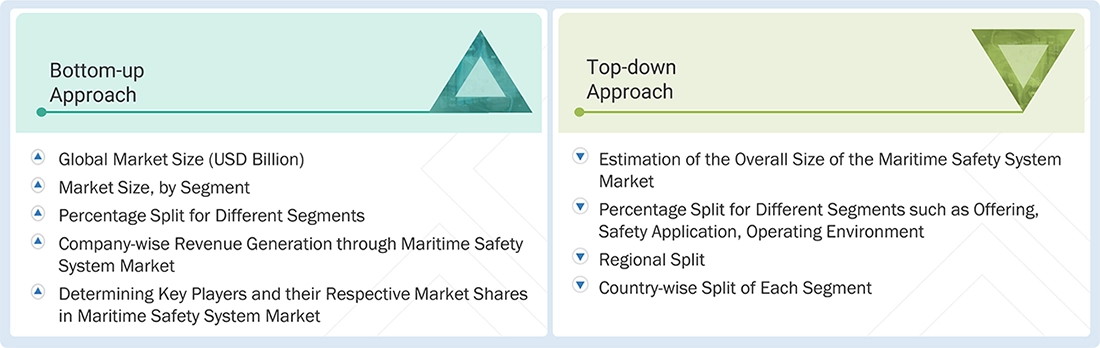
In the comprehensive market engineering process, the top-down and bottom-up approaches, along with several data triangulation methods, were extensively employed to perform market estimation and forecasting for the overall market and its subsegments covered in this report. Extensive qualitative and quantitative analyses were conducted throughout the market engineering process to capture critical market insights and ensure the accuracy of the final market estimates.
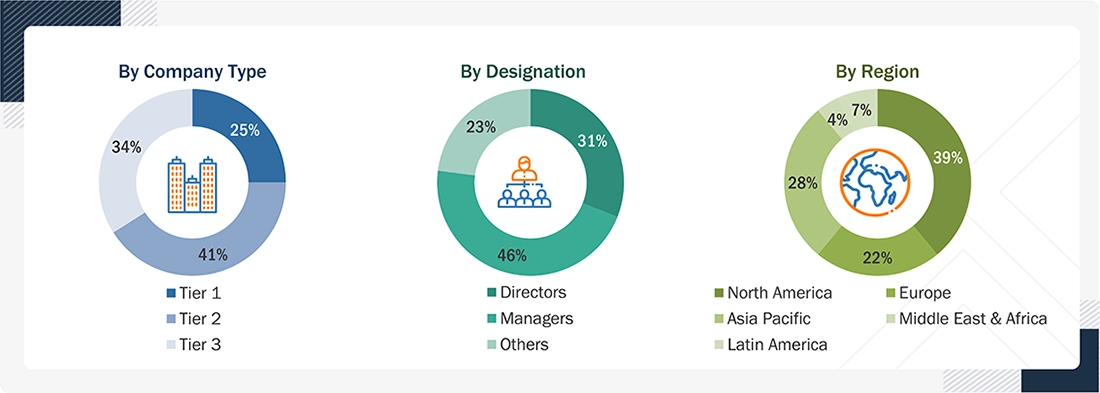
Note: Three tiers of companies are defined based on total annual revenue. Tier 1 companies generate more than USD 1 billion in annual revenue; Tier 2 companies generate between USD 500 million and USD 1 billion; and Tier 3 companies generate less than USD 500 million in annual revenue.
To know about the assumptions considered for the study, download the pdf brochure
Market Size Estimation
The top-down and bottom-up approaches were employed to estimate and forecast the maritime safety system market, as well as its dependent submarkets. This multi-layered analysis was further reinforced through data triangulation, which incorporated primary and secondary research inputs. The market figures were also validated against the existing MarketsandMarkets repository for accuracy.
Maritime Safety System Market : Top-Down and Bottom-Up Approach
Data Triangulation
The market was divided into several segments and subsegments after determining the overall market size using the market size estimation processes described above. To complete the overall market engineering process and determine the exact statistics for each market segment and subsegment, data triangulation and market segmentation procedures were employed, wherever applicable. The overall market size was then used in the top-down approach to estimate the size of other individual markets by applying percentage splits to the market segmentation.
Market Definition
The maritime safety system market refers to the market for hardware, software, and services designed to protect vessels, crew, passengers, cargo, offshore personnel, and maritime infrastructure from navigation, communication, operational, environmental, fire, and other safety-related risks. Maritime safety systems enable functions such as navigation and collision prevention, vessel traffic and situational awareness, communication and distress management, emergency response and life safety, fire and hazard protection, and vessel and crew safety monitoring. The market includes marine safety equipment, digital navigation and safety software, monitoring and decision-support solutions, installation and integration services, inspection and certification services, training and simulation, remote safety monitoring, and remote operations and support. The market is supported by international maritime safety requirements and standards, including SOLAS, GMDSS, the ISM Code, IHO S-100, and IALA standards, as well as increasing vessel digitalization, connectivity, automation, AI-enabled safety technologies, and ship–shore integration.
Key Stakeholders
- Maritime Safety System Hardware Providers
- Marine Electronics & Navigation Equipment Providers
- Maritime Safety Software Providers
- Maritime Safety System Integration & Service Providers
- Maritime Communication & Connectivity Providers
- Maritime AI, Automation & Autonomous Navigation Technology Providers
- Sensor, Radar & Positioning Technology Providers
- Shipyards & Vessel System Integrators
- Classification Societies & Certification Organizations
- Maritime Safety Consultants & Advisory Service Providers
- Commercial Shipping Operators
- Passenger & Cruise Operators
- Offshore Energy Operators
- Port & Waterway Authorities
- Government & Coast Guard Agencies
- Fishing Fleet Operators
- Vessel Traffic Service (VTS) Operators
- Maritime Training & Simulation Providers
- Maritime Regulatory & Standards Organizations
- Maritime Technology Investors & Venture Capital Firms
Report Objectives
- To define, describe, and forecast the maritime safety system market by offering (hardware, software, and services), safety application, operating environment, and region
- To provide detailed information related to the major factors, including drivers, restraints, opportunities, and challenges, influencing the market growth
- To analyze the micro markets with respect to individual growth trends, prospects, and their contribution to the overall market
- To analyze opportunities in the market for stakeholders by identifying high-growth segments across offering, safety application, and operating environment
- To analyze market opportunities and provide details of the competitive landscape for stakeholders and market leaders
- To forecast the market size of segments across five major regions: North America, Europe, Asia Pacific, Middle East & Africa, and Latin America
- To profile key players and comprehensively analyze their market ranking, product portfolios, market positioning, and core competencies
- To analyze competitive developments, such as partnerships, product launches, collaborations, mergers & acquisitions, investments, and technology developments, in the market
- To analyze the impact of various macroeconomic, maritime regulatory, technological, and industry-specific factors on the market across regions
Available customizations:
With the given market data, MarketsandMarkets offers customizations based on the company's specific needs. The following customization options are available for the report.
Product Comparative Analysis
- Brand/product comparative analysis of additional vendors
Geographic Analysis
- Breakup of additional European countries by offering, safety application, and operating environment
- Breakup of additional Asia Pacific countries by offering, safety application, and operating environment
- Breakup of additional Middle Eastern & African countries by offering, safety application, and operating environment
- Breakup of additional Latin American countries by offering, safety application, and operating environment
Company Information
- Detailed analysis and profiling of additional market players (up to five)
Get the Full Maritime Safety System Market Report
Full forecast, segment splits, and company analysis for all Maritime Safety System Market.
- Rest Of Europe Maritime Safety System Market
- Anz Maritime Safety System Market
- Asean Maritime Safety System Market
- Rest Of Asia Pacific Maritime Safety System Market
- Canada Maritime Safety System Market
- US Maritime Safety System Market
- UK Maritime Safety System Market
- Germany Maritime Safety System Market
- France Maritime Safety System Market
- Spain Maritime Safety System Market
- Italy Maritime Safety System Market
- China Maritime Safety System Market
- Japan Maritime Safety System Market
- India Maritime Safety System Market
- South Korea Maritime Safety System Market
- UAE Maritime Safety System Market
- Saudi Arabia Maritime Safety System Market
- South Africa Maritime Safety System Market
- Egypt Maritime Safety System Market
- Qatar Maritime Safety System Market
- Brazil Maritime Safety System Market
- Argentina Maritime Safety System Market
Need a Tailored Report?
Customize this report to your needs
Get 10% FREE Customization
Customize This Report
