
Mexico Natural Dyes Market (2024-2029)

The Mexico Natural Dyes Market was valued at $29.36 Million in 2024 and projected to reach to $35.86 Million by 2029, representing a compound annual growth rate of 4.1%. Mexico's natural dyes market is positioned for steady growth as domestic textile manufacturers increasingly adopt sustainable production methods to meet both regulatory requirements and consumer demand.


| Market Size in | USD 26.32 MN |
| Market Forecast in | |
| CAGR | |
| Forecast Period | |
| Units Considered | Value (USD MN) |
Mexico Natural Dyes Market Trends and Insights
- Mexico's market growth is driven by increasing demand for sustainable and eco-friendly textile solutions, coupled with rising consumer awareness of natural and organic products across the region.
- The Mexican natural dyes sector benefits from the country's rich textile heritage and growing adoption of sustainable manufacturing practices among domestic and export-oriented producers. During the forecast period from 2024 to 2029, Mexico is expected to experience steady market expansion as regulatory pressures and consumer preferences shift toward environmentally responsible dyeing processes.
- Mexico's position within North America positions it as a key hub for natural dye applications in textiles, cosmetics, and food industries.
- The market in Mexico is supported by both traditional artisanal producers and modern industrial manufacturers seeking to differentiate their products through natural and sustainable dye solutions..
Key Market Statistics
- CAGR (2024-2029) 4.1% CAGR
- Market Size, 2024 ~USD 29.36 Million
- Forecast, 2029 ~USD 35.86 Million
- Country Mexico
Mexico Natural Dyes Market Overview
Market Valuation :
Mexico's natural dyes market reached USD 29.36 million in 2024, with steady growth trajectory positioning it as a key regional player in sustainable textile solutions.
Growth Momentum :
With a CAGR of 4.1% through 2029, Mexico's market is expanding faster than historical trends, driven by domestic demand for eco-friendly alternatives in textile manufacturing.
Sustainability Drivers :
Increasing consumer preference for organic and natural products in Mexico is accelerating adoption of natural dyes across fashion, home textiles, and artisanal industries.
Forecast Expansion :
The market is projected to reach USD 35.86 million by 2029, representing a USD 6.5 million increase, reflecting Mexico's commitment to sustainable manufacturing practices.
Mexico Natural Dyes Market Dynamics
- The country's rich tradition of natural dyeing, combined with growing environmental consciousness, creates a favorable environment for market expansion.
- Local artisans and mid-sized textile producers are particularly driving adoption, leveraging Mexico's access to natural dye sources and traditional knowledge. Looking ahead to 2029, Mexico's market will benefit from strengthened supply chains, increased investment in eco-friendly infrastructure, and rising export opportunities to North American markets.
- Government initiatives promoting sustainable manufacturing and consumer education campaigns about natural products will further accelerate market penetration, positioning Mexico as a regional hub for natural dye innovation and production..
Market Ecosystem
Related Ecosystem
Speciality Chemicals
- Corrosion Inhibitors
- Polyetheretherketone (PEEK)
- Acrylonitrile Butadiene Styrene (ABS)
- Epoxy Resin
- Polycarbonate
- Basf se
- DOW CHEMICAL COMPANY
- Evonik industries ag
- Clariant ag.
- Solvay sa
Free From And Clean Label
- Acrylics
- Bakery Products
- Fluoropolymers
- Amway
- BATORY FOODS
- AZELIS HOLDINGS SA
- Ingredion Incorporated
- ICL Group Ltd
Green Bio Chemicals
- Animal-Based Sealants
- Bacterial Fermentation
- Corrosion Inhibitors
- Hydrogen Peroxide
- Nitrile Butadiene Rubber (NBR)
- Basf se
- Evonik industries ag
- Solvay sa
- AZELIS HOLDINGS SA
- CARGILL, INCORPORATED
Key Takeaways
- Mexico's natural dyes market is valued at USD 29.36 million in 2024 and will grow to USD 35.86 million by 2029 at a 4.1% CAGR.
- Mexico benefits from strong textile manufacturing heritage and increasing consumer demand for sustainable, eco-friendly dyeing solutions.
- Regulatory pressures and corporate sustainability commitments are accelerating adoption of natural dyes across Mexico's textile and industrial sectors.
- Mexico's strategic position in North America enables the country to serve both domestic and export markets with natural dye products and applications.
Natural Dyes Market Report Scope
| Report Metric | Details |
|---|---|
| Base Year | 2024 |
| Fastest Growing Segment | -OCHRE (Type) |
| Forecast Period | 2024-2029 |
| Growth Rate | CAGR of 5.7% from 2024 to 2029 |
| Largest Segment | DYEING & COLORING (Application) |
| Market Size Base Year (Billions) | ~USD 4.85 (2024) |
| Revenue Forecast (Billions) | ~USD 6.4 (2029) |
| Segments Covered | Structure, Form, Type, Application, End-Use Industry |
Mexico Natural Dyes Market Report Segmentation
5 segment dimensions are covered across the global market.
By Structure
- Anionic
- Cationic
- Non-Ionic
By Form
- Liquid Dyes
- Powder Dyes
By Type
- Animal Based
- Mineral Based
- Plant Based
- -Annatto
- -Cochineal
- -Henna
- -Indigo
- -Lac Dye
- -Malachite
- -Ochre
- -Others
- -Spinach
- -Turmeric
By Application
- Dyeing & Coloring
- Other Applications
- Paints & Coatings
- Printing Inks
- Tanning
By End-Use Industry
- Cosmetic & Personal Care
- Food & Beverage
- Other End-Use Industries
- Packaging
- Pharmaceuticals
- Pulp & Paper
- Stationery & Art Supplies
MEXICO: NATURAL DYES MARKET, BY END-USE INDUSTRY, 2024–2029
| Segment | 2024 | 2025 | 2026 | 2027 | 2028 | 2029 | CAGR (%) |
|---|---|---|---|---|---|---|---|
| COSMETIC & PERSONAL CARE | 38.8 | 40.9 | 43.1 | 45.5 | 48 | 50.9 | 5.6 |
| FOOD & BEVERAGE | 69.6 | 73.5 | 77.7 | 82.2 | 87.1 | 92.6 | 5.9 |
| OTHER END-USE INDUSTRIES | 34.6 | 36.4 | 38.3 | 40.3 | 42.5 | 45 | 5.4 |
| PACKAGING | 8.8 | 9.2 | 9.6 | 10 | 10.5 | 11 | 4.5 |
| PHARMACEUTICALS | 18.1 | 19 | 19.8 | 20.8 | 21.8 | 23 | 4.9 |
| PULP & PAPER | 6 | 6.3 | 6.6 | 6.9 | 7.3 | 7.7 | 4.9 |
| STATIONERY & ART SUPPLIES | 5.1 | 5.4 | 5.7 | 6 | 6.3 | 6.6 | 5.2 |
| TOTAL | 181.1 | 190.6 | 200.7 | 211.6 | 223.5 | 236.8 | 5.5 |
Target Audience
- Textile Manufacturers : Mexican and international textile producers need this data to understand local market demand for natural dyes, identify sourcing opportunities, and plan sustainable production transitions.
- Chemical & Dye Suppliers : Suppliers require Mexico-specific market intelligence to assess demand potential, competitive landscape, pricing strategies, and distribution channel opportunities in the natural dyes segment.
- Investment & Private Equity Firms : Investors evaluating opportunities in Mexico's sustainable materials sector need detailed market sizing, growth projections, and risk assessments to guide capital allocation decisions.
- Fashion & Apparel Brands : Brands sourcing from Mexico or expanding operations there need market insights on natural dye availability, supplier capabilities, cost structures, and sustainability credentials.
- Government & Policy Makers : Mexican government agencies and trade organizations require market data to develop industrial policies, sustainability initiatives, and export promotion strategies for the natural dyes sector.
Reasons to Buy this Report
- Market-Specific Insights : Gain detailed understanding of Mexico's unique natural dyes market dynamics, including local consumer preferences, regional supply chain structures, and country-specific growth drivers distinct from global trends.
- Competitive Positioning : Identify key Mexican manufacturers, emerging players, and market gaps to develop targeted strategies for market entry or expansion within Mexico's growing sustainable textile sector.
- Investment Decision Support : Access comprehensive valuation data and growth forecasts for Mexico to make informed investment decisions, assess market viability, and allocate resources effectively in the region.
- Regulatory & Compliance Guidance : Understand Mexico-specific regulatory frameworks, sustainability standards, and compliance requirements governing natural dyes production and trade to ensure market-ready operations.
- Strategic Growth Planning : Leverage Mexico's 4.1% CAGR projections and USD 6.5 million market expansion forecast to develop long-term business strategies, product development roadmaps, and regional expansion plans.
Frequently asked questions
What is the current size of Mexico's natural dyes market?
Mexico's natural dyes market was valued at USD 29.36 million in 2024 and is expected to reach USD 35.86 million by 2029.
What is the projected growth rate for Mexico's natural dyes market?
Mexico's natural dyes market is projected to grow at a compound annual growth rate (CAGR) of 4.1% from 2024 to 2029.
What are the main drivers of growth in Mexico's natural dyes market?
Key growth drivers in Mexico include increasing consumer demand for sustainable products, regulatory pressures for eco-friendly manufacturing, and Mexico's strong textile industry heritage.
Which industries in Mexico use natural dyes?
Natural dyes in Mexico are primarily used in textiles, cosmetics, food and beverage, and pharmaceutical industries, with textiles being the largest application segment.
How does Mexico's natural dyes market compare to other North American countries?
Mexico represents a significant segment of the North American natural dyes market, with its growth rate of 4.1% reflecting steady expansion driven by both domestic consumption and export demand.
RESEARCH METHODOLOGY
The study involved four major activities in estimating the market size of the natural dyes market. Exhaustive secondary research was done to collect information on the market, the peer market, and the grandparent market. The next step was to validate these findings, assumptions, and sizing with industry experts across the value chain through primary research. Both top-down and bottom-up approaches were employed to estimate the complete market size. Thereafter, the market breakdown and data triangulation procedures were used to estimate the market size of the segments and subsegments.
Secondary Research
In the secondary research process, various secondary sources have been referred to for identifying and collecting information for this study. These secondary sources include annual reports, press releases, investor presentations of companies, white papers, certified publications, trade directories, articles from recognized authors, gold standard and silver standard websites, and databases. Secondary research has been used to obtain key information about the value chain of the industry, monetary chain of the market, the total pool of key players, market classification and segmentation according to industry trends to the bottom-most level, and regional markets. It was also used to obtain information about the key developments from a market-oriented perspective.
Primary Research
The natural dyes market comprises several stakeholders in the value chain, which include manufacturers, and end users. Various primary sources from the supply and demand sides of the natural dyes market have been interviewed to obtain qualitative and quantitative information. The primary interviewees from the demand side include key opinion leaders in textile and food & beverage sector. The primary sources from the supply side include manufacturers, associations, and institutions involved in the natural dyes industry. Primary interviews were conducted to gather insights such as market statistics, data of revenue collected from the products and services, market breakdowns, market size estimations, market forecasting, and data triangulation. Primary research also helped in understanding the various trends related to type, end-use industry, and region. Stakeholders from the demand side, such as CIOs, CTOs, and CSOs were interviewed to understand the buyer’s perspective on the suppliers, products, component providers, and their current usage of natural dyes and outlook of their business, which will affect the overall market.
The breakdown of profiles of the primary interviewees is illustrated in the figure below:
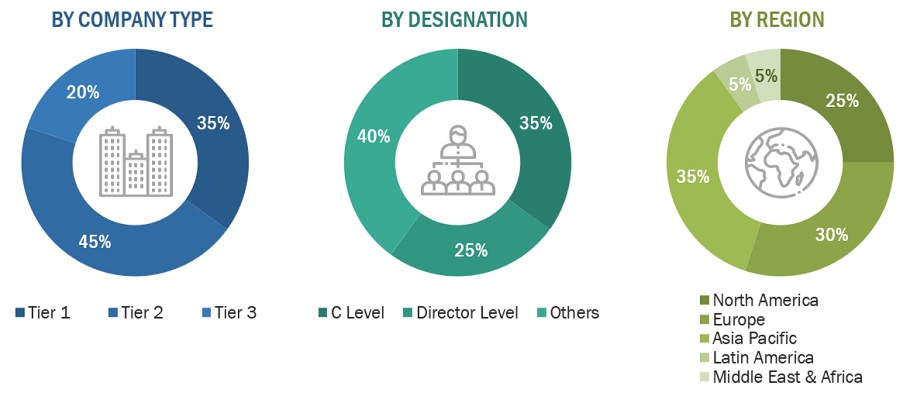
Note: Tier 1, Tier 2, and Tier 3 companies are classified based on their market revenue in 2023 available in the public domain, product portfolios, and geographical presence.
Other designations include consultants and sales, marketing, and procurement managers.
To know about the assumptions considered for the study, download the pdf brochure
Market Size Estimation
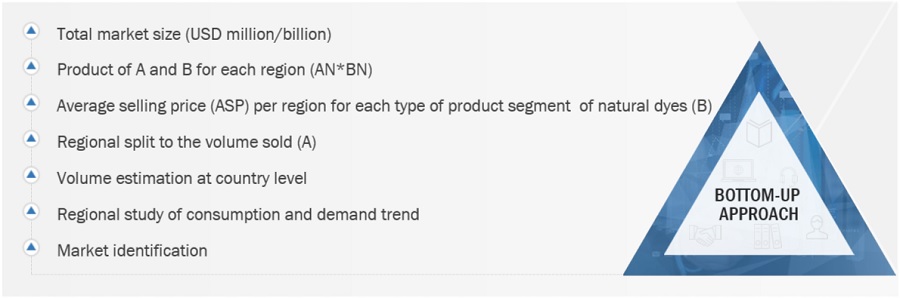
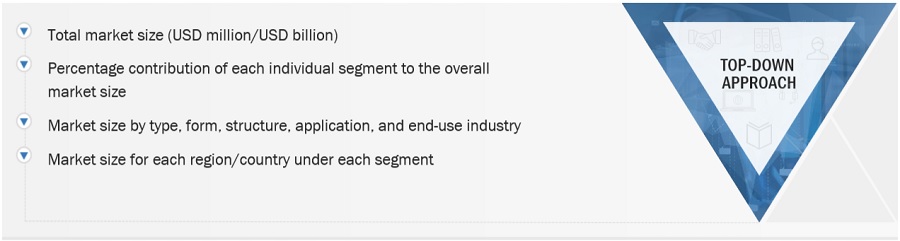
The top-down and bottom-up approaches have been used to estimate and validate the size of the natural dyes market.
- The key players in the industry have been identified through extensive secondary research.
- The supply chain of the industry has been determined through primary and secondary research.
- All percentage shares, splits, and breakdowns have been determined using secondary sources and verified through primary sources.
- All possible parameters that affect the markets covered in this research study have been accounted for, viewed in extensive detail, verified through primary research, and analyzed to obtain the final quantitative and qualitative data.
- The research includes the study of reports, reviews, and newsletters of the key market players, along with extensive interviews for opinions with leaders such as directors and marketing executives.
TOP - DOWN Approach-
To know about the assumptions considered for the study, Request for Free Sample Report
BOTTOM - UP Approach-
Data Triangulation
After arriving at the total market size from the estimation process, the overall market has been split into several segments and sub-segments. To complete the overall market engineering process and arrive at the exact statistics for all the segments and sub-segments, the data triangulation and market breakdown procedures have been employed, wherever applicable. The data has been triangulated by studying various factors and trends from both the demand and supply sides. Along with this, the market size has been validated by using both the top-down and bottom-up approaches and primary interviews. Hence, for every data segment, there have been three sources—top-down approach, bottom-up approach, and expert interviews. The data was assumed correct when the values arrived from the three sources matched.
Market Definition
Natural dyes are colorants derived from natural sources such as plants, animals, and minerals. Unlike synthetic dyes, which are produced through chemical processes, natural dyes are obtained through the extraction of pigments from natural materials like roots, leaves, flowers, bark, insects, and minerals. These dyes have been used for centuries in various applications, including textiles, food, cosmetics, and art, offering a range of colors that are often more muted and varied than synthetic alternatives. Natural dyes are valued for their eco-friendly properties, biodegradability, and potential health benefits, making them a sustainable option in an increasingly environmentally conscious market.
Key Stakeholders
- Senior Management
- End User
- Finance/Procurement Department
- R&D Department
- Manufacturers
- Raw Material Suppliers
Report Objectives
- To define, describe, and forecast the size of the natural dyes market, in terms of value and volume.
- To provide detailed information regarding the major factors (drivers, opportunities, restraints, and challenges) influencing the growth of the market
- To estimate and forecast the market size based on type, form, application, structure ,end-use industry, and region.
- To forecast the size of the market with respect to major regions, namely, Europe, North America, Asia Pacific, Middle East & Africa, and South America, along with their key countries
- To strategically analyze micromarkets with respect to individual growth trends, prospects, and their contribution to the overall market
- To analyze opportunities in the market for stakeholders and provide a competitive landscape of market leaders.
- To track and analyze recent developments such as expansions, new product launches, partnerships & agreements, and acquisitions in the market.
- To strategically profile key market players and comprehensively analyze their core competencies.
Available Customizations
Along with the given market data, MarketsandMarkets offers customizations according to the company’s specific needs. The following customization options are available for the report:
Regional Analysis
- Further breakdown of a region with respect to a particular country or additional application
Company Information
- Detailed analysis and profiles of additional market players
Tariff & Regulations
- Regulations and Impact on natural dyes market
Get the Full Natural Dyes Market Report
Full forecast, segment splits, and company analysis for all Natural Dyes Market.
- Canada Natural Dyes Market
- Germany Natural Dyes Market
- UK Natural Dyes Market
- France Natural Dyes Market
- Italy Natural Dyes Market
- Spain Natural Dyes Market
- China Natural Dyes Market
- Japan Natural Dyes Market
- India Natural Dyes Market
- South Korea Natural Dyes Market
- South Africa Natural Dyes Market
- Brazil Natural Dyes Market
- Argentina Natural Dyes Market
- Rest Of Europe Natural Dyes Market
- Rest Of Asia Pacific Natural Dyes Market
- GCC Countries Natural Dyes Market
- -Rest Of GCC Countries Natural Dyes Market
- Rest Of South America Natural Dyes Market
- US Natural Dyes Market
Need a Tailored Report?
Customize this report to your needs
Get 10% FREE Customization
Customize This Report
