
Rest Of Europe Off-highway Plastics Market (2025-2030)

The Rest Of Europe Off-highway Plastics Market was valued at $533.7 Million in 2025 and projected to reach to $760.3 Million by 2030, representing a compound annual growth rate of 7.3%. Rest Of Europe's off-highway plastics market is positioned for sustained growth through 2030, driven by regulatory mandates for emissions reduction and the region's strong manufacturing base in agricultural and construction equipment.


| Market Size in | USD 26.32 MN |
| Market Forecast in | |
| CAGR | |
| Forecast Period | |
| Units Considered | Value (USD MN) |
Rest Of Europe Off-highway Plastics Market Trends and Insights
- This expansion reflects Rest Of Europe's increasing adoption of lightweight plastic components in agricultural machinery, construction equipment, and mining vehicles, driven by regulatory pressures to reduce emissions and improve fuel efficiency.
- Rest Of Europe manufacturers are investing in advanced polymer technologies to meet stringent EU environmental standards while maintaining cost competitiveness. The Rest Of Europe market benefits from a mature industrial base and strong engineering capabilities across multiple countries.
- Rest Of Europe's off-highway sector is leveraging plastics to enhance durability and reduce maintenance costs in harsh operating environments.
- The 7.3% compound annual growth rate demonstrates Rest Of Europe's commitment to sustainable material innovation and the region's strategic positioning within the broader European supply chain for off-highway equipment..
Key Market Statistics
- CAGR (2025-2030) 7.3% CAGR
- Market Size, 2025 ~USD 533.7 Million
- Forecast, 2030 ~USD 760.3 Million
- Country Rest Of Europe
Rest Of Europe Off-highway Plastics Market Overview
Strong Regional Growth Trajectory :
Rest Of Europe's off-highway plastics market is expanding at 7.3% CAGR, outpacing the global average of 6.8%, demonstrating the region's accelerating adoption of plastic components in heavy machinery applications.
Emission Reduction Compliance :
Stringent EU environmental regulations are driving manufacturers across Rest Of Europe to integrate lightweight plastic components in agricultural and construction equipment to meet fuel efficiency and emission reduction standards.
Diverse Equipment Applications :
Rest Of Europe's market spans agricultural machinery, construction equipment, and mining vehicles, with plastic components increasingly replacing traditional materials to reduce overall equipment weight and operational costs.
Significant Market Expansion :
The market is projected to grow from $533.7 million in 2025 to $760.3 million by 2030, representing a $226.6 million increase driven by technological advancement and regulatory compliance initiatives across the region.
Rest Of Europe Off-highway Plastics Market Dynamics
- The 7.3% CAGR reflects increasing material substitution trends, where lightweight plastics replace heavier metals to improve fuel efficiency and reduce operational costs for end-users.
- Investment in advanced polymer technologies and sustainable material solutions is accelerating across the region. The market's expansion is further supported by growing demand from equipment manufacturers seeking to enhance product performance while meeting EU environmental standards.
- Rest Of Europe's mature industrial infrastructure, combined with rising adoption of precision agriculture and mechanized construction practices, creates favorable conditions for plastic component integration.
- Strategic partnerships between material suppliers and OEMs are expected to drive innovation and market penetration through 2030..
Market Ecosystem
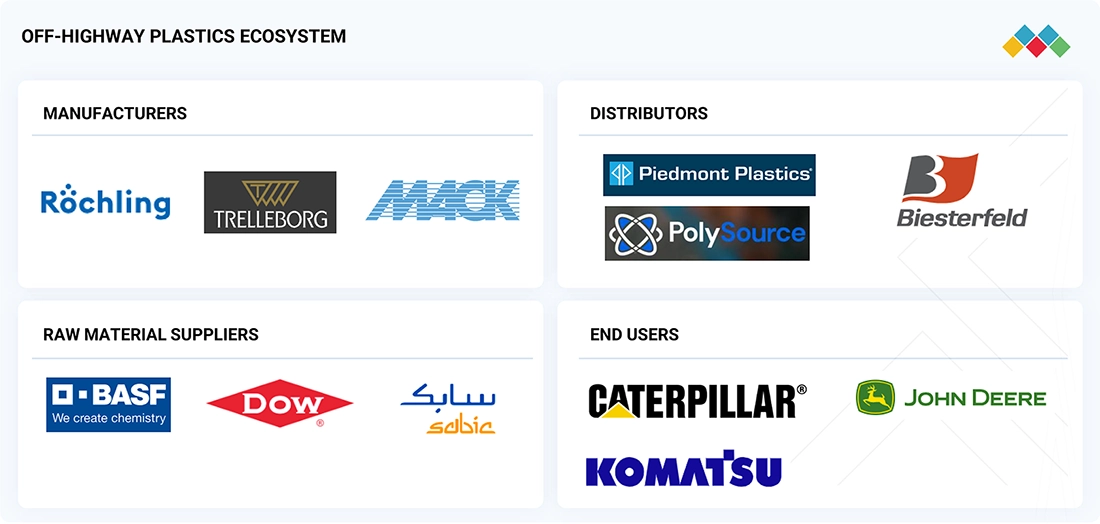
OFF-HIGHWAY PLASTICS MARKET: COMMERCIAL USE CASES ACROSS INDUSTRIES
| COMPANY | USE CASE DESCRIPTION | BENEFITS |
|---|---|---|
 |
Engineered thermoplastic components for off-highway equipment, including construction, agriculture, and mining machinery applications | High impact resistance, lightweight compared to metal, corrosion-free performance, extended service life, and reduced maintenance costs |
 |
Polymer sealing systems, bushings, and wear components for heavy-duty off-road vehicles and hydraulic systems | Superior sealing efficiency, vibration dampening, chemical resistance, improved equipment uptime, and enhanced operational reliability |
 |
Custom injection-molded plastic housings and structural assemblies for agricultural, construction, and industrial vehicle platforms | Integrated design and manufacturing, weight reduction, durability in harsh environments, cost efficiency, and streamlined supply chains |
 |
Advanced engineering plastics for drivetrain, fluid handling, and structural parts in off-highway machinery | High mechanical strength, thermal stability, chemical resistance, lightweighting advantages, and improved fuel efficiency |
 |
Large-scale molded plastic enclosures, panels, and interior components for heavy equipment and specialty vehicles | Design flexibility, impact resistance, corrosion protection, reduced assembly complexity, and long-term performance in extreme conditions |
Logos and trademarks shown above are the property of their respective owners. Their use here is for informational and illustrative purposes only.
Related Ecosystem
Resins And Polymers
- Polycarbonate
- Acrylonitrile Butadiene Styrene (ABS)
- Epoxy Resin
- Light Commercial Vehicles (LCVs)
- Polypropylene (PP)
- Basf se
- DOW CHEMICAL COMPANY
- Solvay sa
- Saudi arabia basic industries corporation (sabic)
- DuPont de Nemours, Inc.
Key Takeaways
- Rest Of Europe's off-highway plastics market will grow from $533.7M (2025) to $760.3M (2030) at a 7.3% CAGR.
- Rest Of Europe is prioritizing lightweight plastic solutions to comply with EU emission reduction mandates and improve equipment efficiency.
- Rest Of Europe's mature manufacturing ecosystem supports advanced polymer development and integration into off-highway applications.
- Rest Of Europe's market growth is driven by demand for durable, cost-effective plastic components in agriculture, construction, and mining sectors.
Off-highway Plastics Market Report Scope
| Report Metric | Details |
|---|---|
| Base Year | 2025 |
| Fastest Growing Segment | ADDITIVE MANUFACTURING/3D PRINTING (Process Type) |
| Forecast Period | 2025–2030 |
| Growth Rate | CAGR of 6.8% from 2025 to 2030 |
| Largest Segment | INJECTION MOLDING (Process Type) |
| Market Size Base Year (Billions) | ~USD 9.41 (2025) |
| Revenue Forecast (Billions) | ~USD 13.08 (2030) |
| Segments Covered | Process Type, Material Type, End User |
Rest Of Europe Off-highway Plastics Market Report Segmentation
3 segment dimensions are covered across the global market.
By Process Type
- Additive Manufacturing/3D Printing
- Blow Molding
- Compression Molding
- Extrusion
- Injection Molding
- Other Process Types
By Material Type
- Acrylonitrile Butadiene Styrene (Abs)
- Bio-Based Plastics
- Polyamide (Pa)
- Polycarbonate (Pc)
- Polyethylene (Pe)
- Polyoxymethylene (Pom)
- Polypropylene (Pp)
- Polyvinyl Chloride (Pvc)
- Thermoplastic Elastomer (Tpe)
By End User
- Agriculture
- Construction
- Material Handling
- Mining
Target Audience
- Material & Polymer Manufacturers : Evaluate Rest Of Europe's demand for advanced plastics and polymers in off-highway applications, identify customer segments, and develop regional product strategies aligned with equipment manufacturer requirements.
- Off-Highway Equipment OEMs : Assess plastic component sourcing opportunities, supplier capabilities, and cost-benefit analysis for material substitution in agricultural, construction, and mining equipment manufactured for Rest Of Europe markets.
- Plastic Component Suppliers : Understand Rest Of Europe's market size, growth potential, and customer concentration to develop targeted sales strategies, capacity planning, and product innovation roadmaps for regional equipment manufacturers.
- Investment & Private Equity Firms : Evaluate investment opportunities in Rest Of Europe's off-highway plastics supply chain, including acquisition targets, growth potential, and market consolidation trends to inform portfolio decisions.
- Market Consultants & Analysts : Access comprehensive Rest Of Europe market data to support client advisory services, competitive benchmarking, and strategic planning initiatives in the chemicals, materials, and industrial equipment sectors.
Key Companies in the Rest Of Europe Off-highway Plastics Market
| Company | HQ | Ownership | Strongest segments |
|---|---|---|---|
| LIPPERT | United States | Private Company | Chassis, axles, and suspension systems,Slide-outs, leveling, and stabilization,Awnings, steps, and exterior accessories, |
| TRELLEBORG AB | Sweden | Public Company | Industrial and automotive sealing & antivibration solutions,Marine, infrastructure, and civil engineering systems,Engineered coated fabrics, molded parts, and wear protection, |
| MITSUBISHI CHEMICAL GROUP | Japan | Public Company | Specialty Materials (battery, semiconductor, display, high-performance polymers),MMA & Derivatives / PMMA,Basic Materials & Polymers (commodity polymers, petrochemicals, solvents), |
LIPPERT
Lippert is a United States-based private company founded in 1956 with 5,956 employees. The company operates as a significant player in its sector.
TRELLEBORG AB
Trelleborg AB is a Swedish public company founded in 1905 with 15,756 employees. The company has over a century of operational history and maintains a substantial global workforce.
MITSUBISHI CHEMICAL GROUP
Mitsubishi Chemical Group is a Japanese public company founded in 1933 with 56,678 employees. The company is one of the largest chemical manufacturers globally.
Reasons to Buy this Report
- Regional Market Sizing & Forecasts : Access precise valuation data for Rest Of Europe's off-highway plastics market with detailed 2025-2030 projections, enabling accurate budget allocation and investment planning specific to regional growth dynamics.
- Competitive Landscape Intelligence : Identify key manufacturers, material suppliers, and OEMs operating in Rest Of Europe's market, understanding their positioning, product portfolios, and strategic initiatives to inform competitive strategy.
- Application-Specific Demand Analysis : Understand plastic component adoption rates across agricultural machinery, construction equipment, and mining vehicles in Rest Of Europe, identifying high-growth segments and emerging opportunities for targeted market entry.
- Regulatory & Compliance Insights : Gain clarity on EU environmental regulations driving plastic adoption in Rest Of Europe, including emission standards and fuel efficiency requirements that shape material selection and product development priorities.
- Growth Driver Identification : Discover the specific factors accelerating Rest Of Europe's 7.3% CAGR, including technological trends, sustainability initiatives, and regional manufacturing dynamics to capitalize on emerging market opportunities.
Frequently asked questions
What is the current market size of off-highway plastics in Rest Of Europe?
Rest Of Europe's off-highway plastics market is valued at $533.7 million in 2025 and is expected to reach $760.3 million by 2030.
What is the projected growth rate for Rest Of Europe's off-highway plastics market?
Rest Of Europe's off-highway plastics market is projected to grow at a compound annual growth rate (CAGR) of 7.3% from 2025 to 2030.
Which industries drive demand for off-highway plastics in Rest Of Europe?
Rest Of Europe's demand is primarily driven by agriculture, construction equipment, and mining sectors seeking lightweight, durable plastic components.
Why is Rest Of Europe focusing on plastic materials for off-highway equipment?
Rest Of Europe manufacturers are adopting plastics to reduce vehicle weight, improve fuel efficiency, lower emissions, and meet stringent EU environmental regulations.
What competitive advantages does Rest Of Europe have in off-highway plastics?
Rest Of Europe benefits from advanced engineering capabilities, established manufacturing infrastructure, and proximity to major equipment OEMs across the European market.
RESEARCH METHODOLOGY
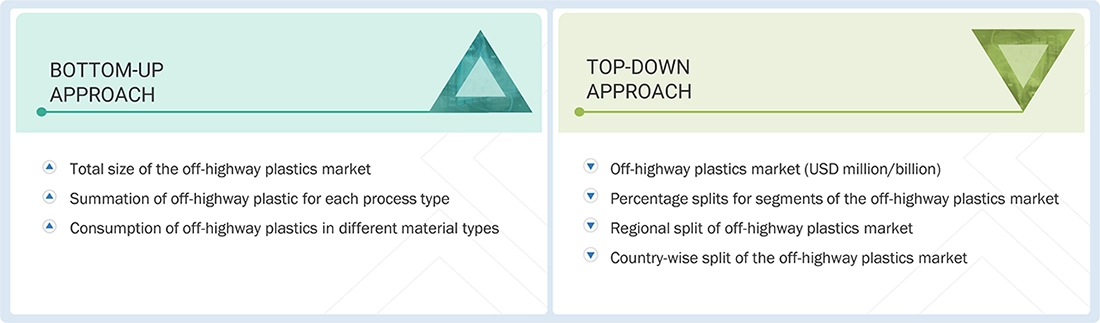
The study involved four major activities for estimating the current size of the global off-highway plastics market. Exhaustive secondary research was conducted to collect information on the market, the peer product market, and the parent product group market. The next step was to validate these findings, assumptions, and sizes with industry experts across the off-highway plastics value chain through primary research. Both the top-down and bottom-up approaches were employed to estimate the overall size of the off-highway plastics market. After that, market breakdown and data triangulation procedures were used to determine the size of different segments and subsegments of the market.
Secondary Research
In the secondary research process, various secondary sources such as D&B Hoovers, Factiva, Bloomberg BusinessWeek, and Dun & Bradstreet were referred to identify and collect information for this study on the off-highway plastics market. These secondary sources included annual reports, press releases & investor presentations of companies, white papers, certified publications, databases, and articles by recognized authors, regulatory bodies, and trade directories.
Primary Research
The off-highway plastics market comprises several stakeholders in the supply chain, which include raw material suppliers, distributors, end-product manufacturers, buyers, and regulatory organizations. Various primary sources from the supply and demand sides of the markets have been interviewed to obtain qualitative and quantitative information. The primary participants from the demand side include key opinion leaders, executives, vice presidents, and CEOs of companies in the off-highway plastics market. Primary sources from the supply side include associations and institutions involved in the off-highway plastics market, key opinion leaders, and processing players.
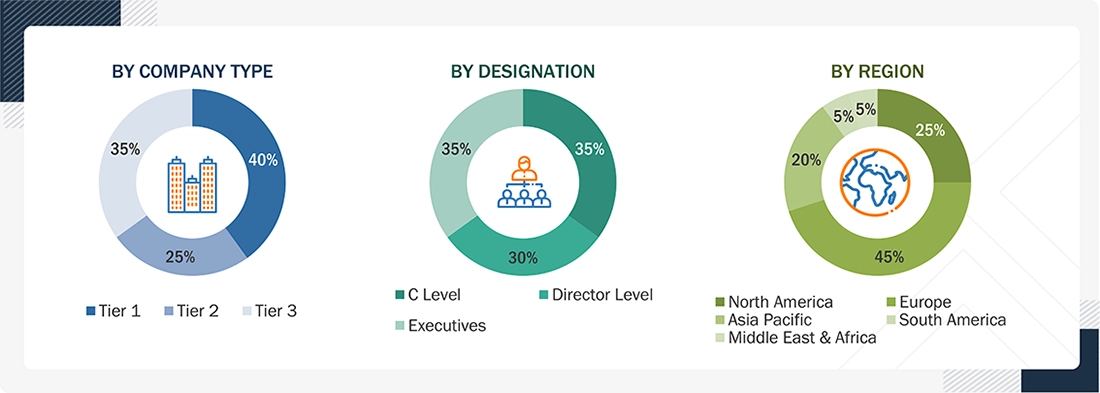
To know about the assumptions considered for the study, download the pdf brochure
Market Size Estimation
The bottom-up and top-down approaches have been used to estimate the off-highway plastics market by material type, process type, end user, and region. The research methodology used to calculate the market size includes the following steps:
- The key players in the industry and markets were identified through extensive secondary research.
- In terms of value, the industry’s supply chain and market size were determined through primary and secondary research processes.
- All percentage shares, splits, and breakdowns were determined using secondary sources and verified through primary sources.
- All possible parameters that affect the markets covered in this research study were accounted for, viewed in extensive detail, verified through primary research, and analyzed to obtain the final quantitative and qualitative data.
- The research included studying reports, reviews, and newsletters of top market players and extensive interviews with leaders, such as directors and marketing executives, to obtain opinions.
Off-highway Plastics Market : Top-Down and Bottom-Up Approach
Data Triangulation
After arriving at the overall size of the off-highway plastics market from the estimation process explained above, the total market was split into several segments and subsegments. The data triangulation and market breakdown procedures were employed, wherever applicable, to complete the overall market engineering process and arrive at the exact statistics for all segments and subsegments. The data was triangulated by studying various factors and trends from both the demand and supply sides. Along with this, the market size was validated using both the top-down and bottom-up approaches.
Market Definition
The off-highway plastics market refers to the industry segment focused on the production and application of plastic materials that are used in vehicles and equipment that operate outside public roadways. These include construction, agricultural, mining, forestry, and industrial machinery, which consists of excavators, tractors, loaders, and harvesters. The market includes various polymer materials that manufacturers use to create structural components, interior and exterior panels, engine covers, fluid reservoirs, and electrical housings. Off-highway plastics provide durability, lightweight performance, chemical resistance, and cost efficiency for use in demanding operating environments.
Key Stakeholders
- Off-Highway Plastics Manufacturers
- Raw Material Suppliers
- Regulatory Bodies and Government Agencies
- Distributors and Suppliers
- End-use Industries
- Associations and Industrial Bodies
- Market Research and Consulting Firms
Report Objectives
- To define, describe, and forecast the size of the off-highway plastics market in terms of value and volume
- To provide detailed information regarding the key factors influencing the growth of the market (drivers, restraints, opportunities, and challenges)
- To forecast the market size based on material type, process type, end user, and region
- To forecast the market size for the five main regions—North America, Europe, Asia Pacific, South America, and the Middle East & Africa—along with their key countries
- To strategically analyze micromarkets with respect to individual growth trends, prospects, and contributions to the total market
- To analyze the opportunities in the market for stakeholders and provide details of the competitive landscape for the market leaders
- To strategically profile the leading players and comprehensively analyze their key developments, such as product launches, expansions, and deals in the off-highway plastics market
- To strategically profile the key players and comprehensively analyze their market shares and core competencies
- To study the impact of AI/Gen AI on the market under study, along with the macroeconomic outlook
Customization Options
With the given market data, MarketsandMarkets offers customizations per the specific needs of companies.
The following customization options are available for the report:
Product Analysis
- Product matrix, which provides a detailed comparison of the market for different sources of off-highway plastics.
Regional Analysis
- Further breakdown of a country with respect to the off-highway plastics market.
Company Information
- Detailed analysis and profiling of additional market players
Get the Full Off-highway Plastics Market Report
Full forecast, segment splits, and company analysis for all Off-highway Plastics Market.
- China Off-highway Plastics Market
- Japan Off-highway Plastics Market
- India Off-highway Plastics Market
- South Korea Off-highway Plastics Market
- Germany Off-highway Plastics Market
- UK Off-highway Plastics Market
- France Off-highway Plastics Market
- Italy Off-highway Plastics Market
- Spain Off-highway Plastics Market
- South Africa Off-highway Plastics Market
- Canada Off-highway Plastics Market
- Mexico Off-highway Plastics Market
- Brazil Off-highway Plastics Market
- Argentina Off-highway Plastics Market
- US Off-highway Plastics Market
- Rest Of Asia Pacific Off-highway Plastics Market
- GCC Countries Off-highway Plastics Market
- –Other GCC Countries Off-highway Plastics Market
Need a Tailored Report?
Customize this report to your needs
Get 10% FREE Customization
Customize This Report
