
Japan Ophthalmology Drugs Market (2025-2030)

The Japan Ophthalmology Drugs Market was valued at $354.4 Million in 2025 and projected to reach to $465.4 Million by 2030, representing a compound annual growth rate of 5.6%. Japan's ophthalmology drugs market is poised for steady growth through 2030, supported by its aging population and increasing prevalence of chronic eye conditions.


| Market Size in | USD 26.32 MN |
| Market Forecast in | |
| CAGR | |
| Forecast Period | |
| Units Considered | Value (USD MN) |
Japan Ophthalmology Drugs Market Trends and Insights
- Japan's aging population and rising prevalence of age-related eye conditions, including cataracts, glaucoma, and age-related macular degeneration, are driving demand for specialized ophthalmic therapeutics.
- The market in Japan benefits from advanced healthcare infrastructure, high treatment adoption rates, and strong pharmaceutical innovation in the region. Growth in Japan's ophthalmology drugs market is supported by increasing healthcare expenditure, improved diagnostic capabilities, and the introduction of novel drug formulations targeting chronic eye diseases.
- Japan's regulatory environment and emphasis on precision medicine further accelerate market expansion.
- Between 2025 and 2030, Japan is expected to maintain steady growth as the country addresses the ophthalmological needs of its rapidly aging demographic, positioning itself as a key market within the Asia Pacific region..
Key Market Statistics
- CAGR (2025-2030) 5.6% CAGR
- Market Size, 2025 ~USD 354.4 Million
- Forecast, 2030 ~USD 465.4 Million
- Country Japan
Japan Ophthalmology Drugs Market Overview
Aging Population Driving Growth :
Japan's rapidly aging demographic, with over 29% of the population aged 65+, is significantly increasing the prevalence of age-related eye diseases such as cataracts, glaucoma, and age-related macular degeneration, directly boosting ophthalmology drug demand.
Market Valuation and Expansion :
Japan's ophthalmology drugs market is valued at USD 354.4 million in 2025 and is projected to reach USD 465.4 million by 2030, reflecting a steady CAGR of 5.6% driven by increased healthcare spending and advanced treatment adoption.
Advanced Healthcare Infrastructure :
Japan's world-class healthcare system, high insurance coverage rates, and strong pharmaceutical distribution networks enable rapid adoption of innovative ophthalmic therapeutics and ensure consistent market accessibility across urban and rural regions.
Innovation in Glaucoma and Retinal Therapies :
Growing investment in novel drug formulations, combination therapies, and biologics for glaucoma and retinal diseases reflects Japan's commitment to advancing ophthalmology treatment options and improving patient outcomes in specialized eye care.
Japan Ophthalmology Drugs Market Dynamics
- The market's 5.6% CAGR reflects strong demand for both established and innovative therapeutic solutions, particularly in glaucoma management and age-related macular degeneration treatment.
- Healthcare providers and pharmaceutical companies are investing in advanced formulations and combination therapies to address the growing patient base. The Japanese government's focus on preventive healthcare and early diagnosis initiatives will further accelerate market expansion.
- Additionally, rising healthcare expenditure, improved patient awareness, and the introduction of next-generation biologics and sustained-release formulations are expected to drive market penetration.
- Strategic partnerships between domestic and international pharmaceutical firms will enhance product availability and market competitiveness through 2030..
Market Ecosystem
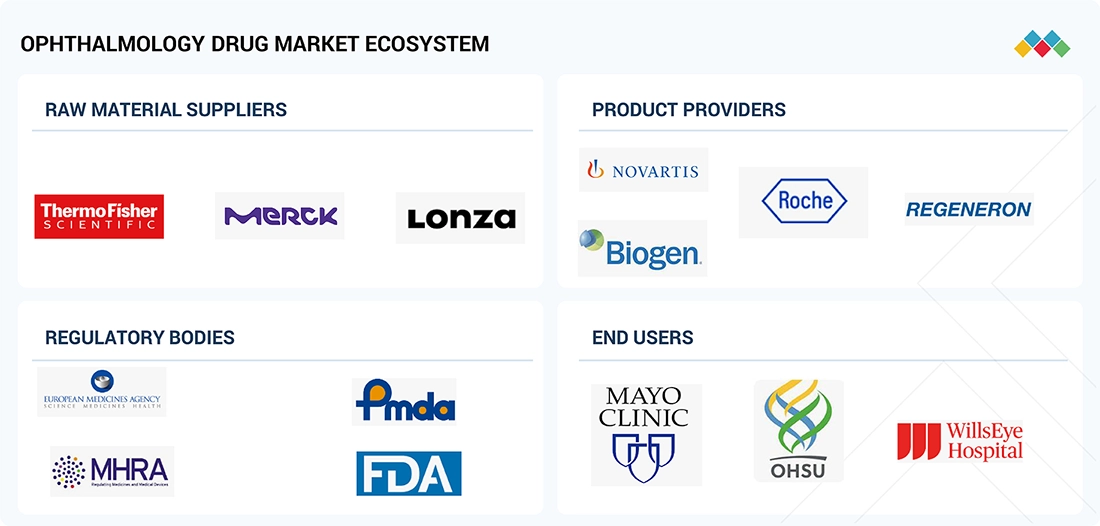
Ophthalmology Drugs Market: COMMERCIAL USE CASES ACROSS INDUSTRIES
| COMPANY | USE CASE DESCRIPTION | BENEFITS |
|---|---|---|
 |
Formulation of preservative-free glaucoma and dry eye disease treatments | Enhances ocular surface tolerance, reduces side effects linked to preservatives, and supports better long-term adherence |
 |
Application of monoclonal antibody therapy for retinal vascular diseases | Improves retinal fluid control, stabilizes vision, and lowers the risk of vision impairment in diabetic retinopathy and AMD |
Logos and trademarks shown above are the property of their respective owners. Their use here is for informational and illustrative purposes only.
Related Ecosystem
Pharmaceuticals
- Bioreactors
- Analytical Testing
- Bioanalytical Testing Services
- Cell Counters
- Data Management Services
- Thermo Fisher Scientific Inc.
- Merck KGaA
- SANOFI
- Pfizer Inc.
- NOVARTIS
Key Takeaways
- Japan's ophthalmology drugs market is valued at USD 354.4 million in 2025 and will reach USD 465.4 million by 2030 at a 5.6% CAGR.
- Japan's aging population drives demand for treatments targeting age-related eye diseases such as glaucoma, cataracts, and macular degeneration.
- Advanced healthcare infrastructure and high treatment adoption rates in Japan support sustained market growth through 2030.
- Japan's emphasis on pharmaceutical innovation and precision medicine positions the country as a key growth driver in the Asia Pacific ophthalmology market.
Ophthalmology Drugs Market Report Scope
| Report Metric | Details |
|---|---|
| Base Year | 2025 |
| Fastest Growing Segment | FARICIMAB (Molecule) |
| Forecast Period | 2025–2030 |
| Growth Rate | CAGR of 6.1% from 2025 to 2030 |
| Largest Segment | INTRAVITREAL (Route Of Administration) |
| Market Size Base Year (Billions) | ~USD 19.55 (2025) |
| Revenue Forecast (Billions) | ~USD 26.28 (2030) |
| Segments Covered | Molecule, Modality, Indication, Type, Route Of Administration, End User |
Japan Ophthalmology Drugs Market Report Segmentation
6 segment dimensions are covered across the global market.
By Molecule
- Aflibercept
- Faricimab
- Other Molecules
- Ranibizumab
By Modality
- Monoclonal Antibodies & Fusion Proteins
- Other Modalities
- Small Molecules
By Indication
- Age-Related Macular Degeneration
- Diabetic Macular Edema
- Diabetic Retinopathy
- Other Indications
By Type
- Dry Amd
- Wet Amd
By Route Of Administration
- Intravitreal
- Other Routes Of Administration
- Topical
By End User
- Hospitals
- Long-Term Care Facilities
- Specialty Centers
JAPAN: OPHTHALMOLOGY DRUGS MARKET, BY END USER, 2023–2030
| Segment | 2023 | 2024 | 2025 | 2026 | 2027 | 2028 | 2029 | 2030 | CAGR (%) |
|---|---|---|---|---|---|---|---|---|---|
| HOSPITALS | 482 | 441.7 | 467 | 491.3 | 523 | 554.2 | 586.9 | 621 | 5.9 |
| LONG-TERM CARE FACILITIES | 99.1 | 89.9 | 94.7 | 99.4 | 105.4 | 111.4 | 117.6 | 124 | 5.5 |
| SPECIALTY CENTERS | 41.1 | 36.3 | 38 | 39.4 | 41.5 | 43.4 | 45.4 | 47.4 | 4.5 |
| TOTAL | 622.1 | 567.9 | 599.7 | 630.1 | 669.9 | 709 | 749.8 | 792.4 | 5.7 |
Target Audience
- Pharmaceutical Companies : Manufacturers and distributors of ophthalmic drugs need Japan-specific market data to assess market potential, identify therapeutic areas with highest growth, and develop localized commercialization strategies for this aging-population-driven market.
- Healthcare Investors : Investment firms and venture capitalists require detailed Japan market analysis to evaluate investment opportunities in ophthalmology drug companies, assess market growth potential, and make informed funding decisions in this high-growth segment.
- Medical Device and Biotech Companies : Organizations developing innovative ophthalmic solutions need Japan market insights to understand competitive positioning, regulatory pathways, and partnership opportunities with established pharmaceutical players in this specialized market.
- Healthcare Consultants and Analysts : Consulting firms and market research professionals require Japan-specific ophthalmology data to support client advisory services, competitive benchmarking, and strategic recommendations for healthcare and pharmaceutical sector clients.
- Government and Policy Makers : Healthcare policymakers and government agencies need market intelligence on Japan's ophthalmology drug sector to inform healthcare policy decisions, budget planning, and initiatives addressing age-related eye disease management and prevention.
Key Companies in the Japan Ophthalmology Drugs Market
| Company | HQ | Ownership | Strongest segments |
|---|---|---|---|
| REGENERON PHARMACEUTICALS INC. | United States | Public Company | Ophthalmology (EYLEA franchise),Immunology / Inflammation (Dupixent, Kevzara),Oncology / Hematology (Libtayo, bispecifics pipeline), |
| BAYER AG | Germany | Public Company | Crop Science (seeds, traits, crop protection, digital ag, services),Pharmaceuticals (cardiology, women’s health, oncology, hematology, ophthalmology, imaging, cell & gene),Consumer Health (OTC, self-care, supplements, dermatology, pain, digestive), |
| NOVARTIS AG | Switzerland | Public Company | Oncology and Hematology (Kisqali, Tafinlar+Mekinist, Pluvicto, Lutathera, Scemblix, Promacta/Revolade, Jakavi, Fabhalta),Cardiovascular, Renal and Metabolic (Entresto, Leqvio and related CVRM portfolio),Immunology and Neuroscience (Cosentyx, Xolair, Ilaris and related assets), |
| ABBVIE | United States | Public Company | Immunology (Skyrizi, Rinvoq and related),Oncology/Hematology (Imbruvica, Venclexta, Epkinly, Elahere, Emrelis),Neuroscience & CNS (Vraylar, Duodopa, Vyalev, migraine portfolio), |
| APELLIS PHARMACEUTICALS | United States | Private Company | SYFOVRE – Geographic Atrophy,EMPAVELI – PNH and related indications,Pipeline and collaborations (APL-3007, APL-9099, Beam partnership), |
| BIOGEN | United States | Public Company | Multiple sclerosis franchise (TECFIDERA, VUMERITY, AVONEX, PLEGRIDY, TYSABRI, OCREVUS-related),SMA and rare neurology (SPINRAZA, SKYCLARYS, QALSODY, zorevunersen pipeline linkage),Alzheimer’s and psychiatry (LEQEMBI, ZURZUVAE), |
| BAUSCH + LOMB | Canada | Public Company | Vision Care (contact lenses, lens care, OTC eye care, vitamins),Pharmaceuticals (Rx and generic ophthalmics),Surgical (cataract, corneal, vitreous, retinal devices and IOLs), |
| ASTELLAS PHARMA INC. | Japan | Public Company | Oncology (XTANDI, XOSPATA, VYLOY, PADCEV),Urology (Betanis/Myrabetriq/BETMIGA),Immunology / Transplant (Prograf), |
| FORMYCON AG | Germany | Public Company | Ranibizumab biosimilars (ophthalmology),Aflibercept biosimilars (ophthalmology),Ustekinumab biosimilar pipeline/early revenues, |
| BIOCON | India | Public Company | Biosimilars (oncology, diabetes, immunology),Generics and APIs,CRDMO (discovery, development, manufacturing services), |
| SANDOZ GROUP AG | Switzerland | Public Company | Small-molecule generics (oral and injectable),Biosimilars,Specialty and rare disease off-patent medicines, |
| SANTEN PHARMACEUTICAL CO., LTD. | Japan | Public Company | Glaucoma & ocular hypertension therapies,Dry eye & keratoconjunctival disease,Allergic conjunctivitis & inflammatory eye disease, |
| INNOVENT | China | Public Company | Oncology immunotherapy (PD-1, CTLA-4, combinations),Oncology targeted therapies and cell therapy,Autoimmune and ophthalmology biologics, |
| OUTLOOK THERAPEUTICS, INC. | United States | Public Company | ONS-5010 (ophthalmic bevacizumab for wet AMD and retinal diseases),Other pipeline / platform and collaboration-derived income, |
REGENERON PHARMACEUTICALS INC.
Regeneron Pharmaceuticals Inc. is a United States-based public pharmaceutical company founded in 1988 with 15,343 employees. The company focuses on the discovery, development, and commercialization of medicines.
BAYER AG
Bayer AG is a German public company founded in 1863 with 87,757 employees, operating across pharmaceuticals, consumer health, and agricultural sciences. The company is one of the world's largest diversified life sciences organizations.
NOVARTIS AG
Novartis AG is a Swiss public pharmaceutical company founded in 1996 with 75,267 employees. The company develops and manufactures a broad range of innovative medicines and healthcare products.
ABBVIE
AbbVie is a United States-based public pharmaceutical company founded in 2012 with 57,000 employees. The company discovers, develops, and markets pharmaceutical products across multiple therapeutic areas.
APELLIS PHARMACEUTICALS
Apellis Pharmaceuticals is a United States-based private biopharmaceutical company founded in 2009 with 736 employees. The company focuses on the development of novel therapeutic candidates.
BIOGEN
Biogen is a United States-based public biotechnology company founded in 1978 with 7,500 employees. The company discovers, develops, manufactures, and delivers medicines primarily in neurology and immunology.
BAUSCH + LOMB
Bausch + Lomb is a Canadian public company founded in 1853 with 13,000 employees specializing in eye health and vision care products. The company is a global leader in the eye care industry.
ASTELLAS PHARMA INC.
Astellas Pharma Inc. is a Japanese public pharmaceutical company founded in 1923 with 14,099 employees. The company researches, develops, and commercializes pharmaceutical products worldwide.
FORMYCON AG
Formycon AG is a German public biopharmaceutical company founded in 1999 with 203 employees. The company specializes in the development of biosimilar medicines.
BIOCON
Biocon is an Indian public biopharmaceutical company founded in 1978 with 16,447 employees. The company develops and manufactures biopharmaceuticals, including biosimilars and small molecule drugs.
SANDOZ GROUP AG
Sandoz Group AG is a Swiss public pharmaceutical company founded in 1886 with 22,356 employees. The company is a global leader in generic and biosimilar medicines.
SANTEN PHARMACEUTICAL CO., LTD.
Santen Pharmaceutical Co., Ltd. is a Japanese public pharmaceutical company founded in 1890 with 3,968 employees. The company specializes in ophthalmic and other pharmaceutical products.
INNOVENT
Innovent is a Chinese public biopharmaceutical company founded in 2011 with 7,502 employees. The company focuses on the research and development of innovative biologics.
OUTLOOK THERAPEUTICS, INC.
Outlook Therapeutics, Inc. is a United States-based public biopharmaceutical company founded in 2010 with 17 employees. The company develops and commercializes ophthalmic therapeutic products.
Reasons to Buy this Report
- Precise Market Sizing for Japan : Obtain accurate valuation data specific to Japan's ophthalmology drugs market (USD 354.4M in 2025) with detailed forecasts through 2030, enabling precise budget allocation and investment planning for market entry or expansion strategies.
- Demographic-Driven Growth Insights : Understand how Japan's aging population structure directly impacts ophthalmology drug demand, with actionable intelligence on disease prevalence trends and patient demographics to inform product development and marketing strategies.
- Competitive Landscape Analysis : Gain comprehensive understanding of Japan's unique healthcare infrastructure, regulatory environment, and competitive dynamics to identify market gaps, partnership opportunities, and differentiation strategies for pharmaceutical companies.
- Forecast-Based Strategic Planning : Leverage the 5.6% CAGR projection and USD 465.4M 2030 forecast to develop long-term business strategies, resource allocation plans, and market positioning initiatives tailored to Japan's specific growth trajectory.
- Regulatory and Distribution Insights : Access Japan-specific information on healthcare policies, insurance coverage mechanisms, and pharmaceutical distribution channels to optimize market entry strategies and ensure compliance with local regulatory requirements.
Frequently asked questions
What is the current size of Japan's ophthalmology drugs market?
Japan's ophthalmology drugs market is valued at USD 354.4 million in 2025.
What is the projected market size for Japan's ophthalmology drugs by 2030?
Japan's ophthalmology drugs market is projected to reach USD 465.4 million by 2030.
What is the CAGR for Japan's ophthalmology drugs market?
Japan's ophthalmology drugs market is expected to grow at a compound annual growth rate (CAGR) of 5.6% from 2025 to 2030.
What factors are driving growth in Japan's ophthalmology drugs market?
Key growth drivers in Japan include an aging population, rising prevalence of age-related eye conditions, advanced healthcare infrastructure, and increased pharmaceutical innovation in ophthalmic therapeutics.
How does Japan's ophthalmology market compare to other Asia Pacific countries?
Japan represents a significant market within Asia Pacific due to its advanced healthcare system, high treatment adoption rates, and strong emphasis on precision medicine and pharmaceutical innovation.
RESEARCH METHODOLOGY
This research study extensively used secondary sources, directories, and databases to identify and collect valuable information to analyze the global ophthalmology drugs market. In-depth interviews were conducted with various primary respondents, including key industry participants, subject-matter experts (SMEs), C-level executives of key market players, and industry consultants, to obtain and verify critical qualitative and quantitative information and assess the growth prospects of the market. The global market size estimated through secondary research was then triangulated with inputs from primary research to arrive at the final market size.
Secondary Research
Secondary research was used mainly to identify and collect information for the extensive, technical, market-oriented, and commercial study of the ophthalmology drugs market. The secondary sources used for this study include US Food and Drug Administration (US FDA), European Medicines Agency (EMA), World Health Organization (WHO), National Center for Biotechnology Information (NCBI), White papers, Company Websites, Interviews with Experts, Annual Reports, SEC Filings, Investor Presentations, and MarketsandMarkets Analysis. These sources also obtained key information about major players, market classification, and segmentation according to industry trends, regional/country-level markets, market developments, and technology perspectives.
Primary Research
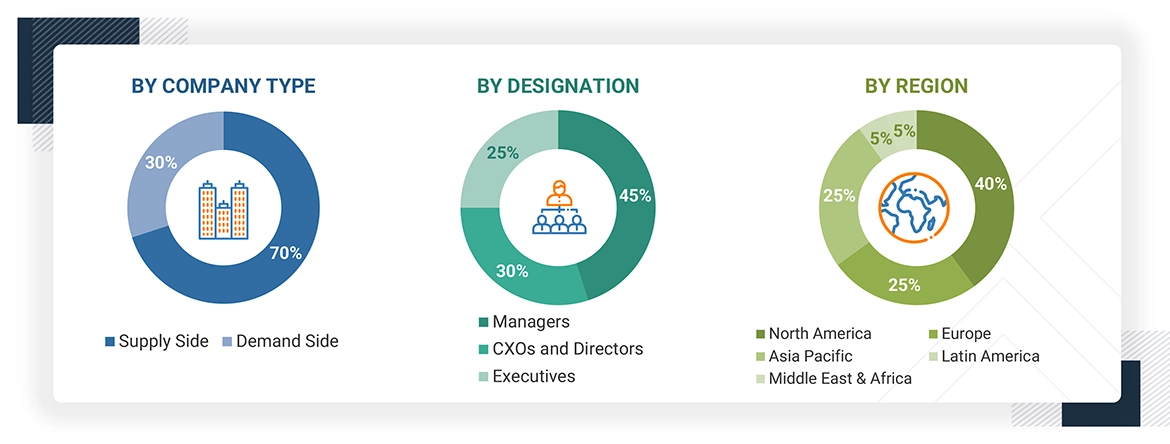
A comprehensive primary research was undertaken following an initial assessment of the global ophthalmology drugs market landscape through secondary research. This involved conducting in-depth interviews with market experts from the demand side, including stakeholders from hospitals, long-term care facilities, and specialty centers. Additionally, interviews were held with key supply-side participants, such as C-suite and senior executives, product managers, and marketing and sales leaders from prominent manufacturers, distributors, and channel partners. The research covered six major geographical regions: North America, Europe, Asia Pacific, Latin America, the Middle East, and Africa. Approximately 70% of the primary interviews were conducted with supply-side participants, while 30% involved demand-side experts. Data collection methods included structured questionnaires, email correspondence, online surveys, personal interviews, and telephonic discussions to understand the market dynamics comprehensively.
The following is a breakdown of the primary respondents:
To know about the assumptions considered for the study, download the pdf brochure
Market Size Estimation
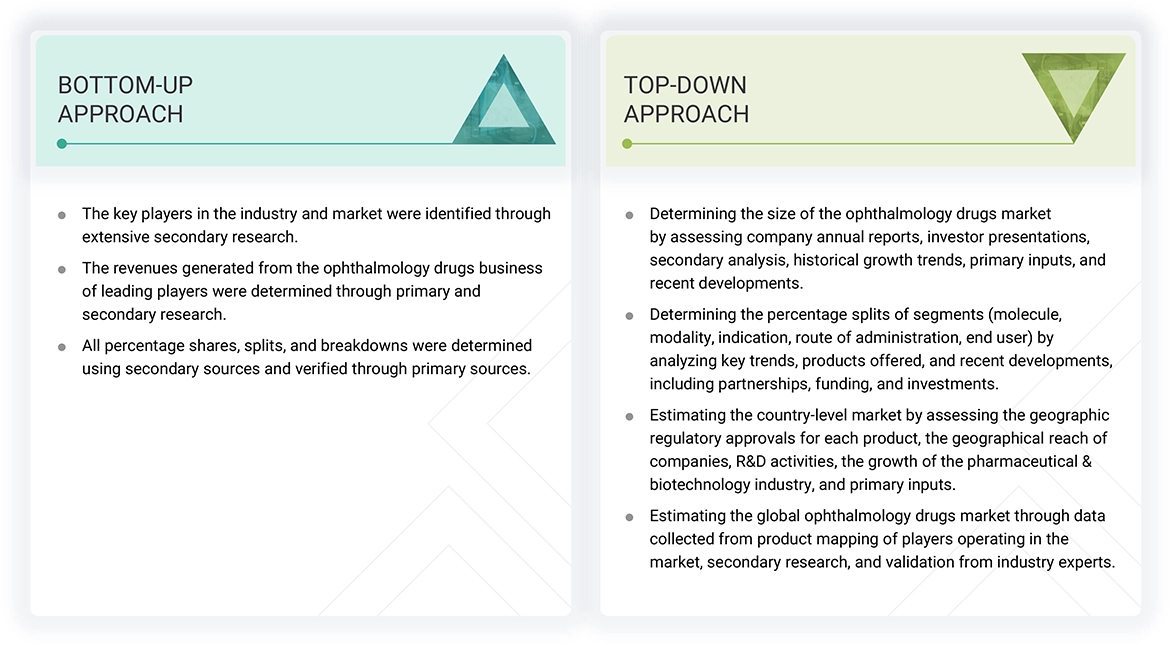
Both bottom-up and top-down approaches were used to estimate and validate the total size of the ophthalmology drugs market. These methods were also used extensively to estimate the size of various subsegments in the market. The research methodology used to estimate the market size includes the following:
- A list of the major global players operating in the ophthalmology drugs market was generated.
- The revenues generated from their ophthalmology drug products have been determined through annual reports and secondary sources (including paid databases).
- The products were mapped according to the segments of the market. Percentage shares and splits were determined based on the revenue contributed to each segment. This was verified using secondary sources and by industry experts.
- All assumptions, approaches, and individual shares/revenue estimates were validated through expert interviews.
Global Ophthalmology Drugs Market Size: Bottom-up and Top-down Approaches
Data Triangulation
After arriving at the market size from the estimation process explained above, the total market was divided into several segments and subsegments. To complete the overall market engineering process and arrive at the exact statistics for all segments and subsegments, data triangulation and market breakdown procedures were employed, wherever applicable. The data was triangulated by studying various factors and trends from both the demand and supply sides.
Market Definition
Ophthalmology drugs are specifically designed to treat or prevent eye diseases and disorders. These medications target various parts of the eye, including the cornea, conjunctiva, lens, retina, and optic nerve. The market includes a range of effective therapies across different drug modalities, such as biologics and biosimilars (e.g., anti-VEGF drugs, monoclonal antibodies, oligonucleotides, and peptides), small molecules, gene therapy, and cell therapy. These treatments address various conditions, including age-related macular degeneration (AMD), diabetic retinopathy, diabetic macular edema, retinal vein occlusion, uveitis, and neurotrophic keratitis, among others.
Stakeholders
- Pharmaceutical & biotechnology companies
- Hospitals
- Patient advocacy organizations
- Specialty clinics
- Long-term care facilities
- Academic researchers and government research organizations
- Private research institutes
- Contract manufacturing organizations (CMOs)
- Contract research organizations (CROs)
- Venture capitalists
Report Objectives
- To define, describe, and forecast the ophthalmology drugs market by molecule, modality, route of administration, indication, end user, and region
- To provide detailed information regarding the factors influencing market growth (such as drivers, opportunities, restraints, and challenges)
- To strategically analyze micromarkets with respect to individual growth trends, prospects, and contributions to the overall ophthalmology drugs market
- To analyze market opportunities for stakeholders and provide details of the competitive landscape for key players
- To profile the key players in the global ophthalmology drugs market as well as comprehensively analyze their core competencies and market rankings
- To forecast the size of the market segments in North America, Europe, the Asia Pacific, Latin America, the Middle East, and Africa
- To track and analyze competitive developments, such as product launches & approvals, expansions, acquisitions, partnerships, product pipelines, collaborations, and agreements, in the ophthalmology drugs market
Get the Full Ophthalmology Drugs Market Report
Full forecast, segment splits, and company analysis for all Ophthalmology Drugs Market.
- US Ophthalmology Drugs Market
- Canada Ophthalmology Drugs Market
- Germany Ophthalmology Drugs Market
- UK Ophthalmology Drugs Market
- France Ophthalmology Drugs Market
- Italy Ophthalmology Drugs Market
- Spain Ophthalmology Drugs Market
- China Ophthalmology Drugs Market
- India Ophthalmology Drugs Market
- Australia Ophthalmology Drugs Market
- South Korea Ophthalmology Drugs Market
- Brazil Ophthalmology Drugs Market
- Mexico Ophthalmology Drugs Market
- Rest Of Europe Ophthalmology Drugs Market
- Rest Of Asia Pacific Ophthalmology Drugs Market
- Rest Of Latin America Ophthalmology Drugs Market
Need a Tailored Report?
Customize this report to your needs
Get 10% FREE Customization
Customize This Report
