
Argentina Plant Biotechnology Market (2025-2030)

The Argentina Plant Biotechnology Market was valued at $2367.2 Million in 2025 and projected to reach to $3498.3 Million by 2030, representing a compound annual growth rate of 8.1%. Argentina's plant biotechnology market is poised for significant expansion through 2030, driven by increasing adoption of genetically modified crops, advanced seed technologies, and precision agriculture solutions.


| Market Size in | USD 26.32 MN |
| Market Forecast in | |
| CAGR | |
| Forecast Period | |
| Units Considered | Value (USD MN) |
Argentina Plant Biotechnology Market Trends and Insights
- Valued at USD 2,367.2 million in 2025, Argentina's market is expected to expand to USD 3,498.3 million by 2030, reflecting a compound annual growth rate of 8.1%.
- This expansion is underpinned by Argentina's strong agricultural heritage, increasing adoption of genetically modified crops, and rising investment in crop improvement technologies. The plant biotechnology sector in Argentina benefits from the country's established position as a global agricultural exporter and its supportive regulatory environment for biotech innovations.
- Argentina's market growth is driven by demand for enhanced crop yields, disease resistance, and climate-adaptive varieties that address regional farming challenges.
- Between 2025 and 2030, Argentina is anticipated to see accelerated commercialization of advanced seed technologies and precision agriculture solutions, positioning the nation as a regional hub for biotechnology-driven agricultural transformation..
Key Market Statistics
- CAGR (2025-2030) 8.1% CAGR
- Market Size, 2025 ~USD 2367.2 Million
- Forecast, 2030 ~USD 3498.3 Million
- Country Argentina
Argentina Plant Biotechnology Market Overview
Market Valuation Growth :
Argentina's plant biotechnology market is valued at USD 2,367.2 million in 2025 and is projected to reach USD 3,498.3 million by 2030, demonstrating robust expansion driven by agricultural modernization and biotech adoption.
Strong Agricultural Foundation :
Argentina's established agricultural sector and expertise in crop production provide a solid foundation for plant biotechnology integration, particularly in GMO crops and precision agriculture technologies.
Regional Leadership Position :
As a key growth driver within South America's agricultural innovation landscape, Argentina is leveraging its competitive advantages in biotechnology research and development to strengthen its regional market position.
Consistent Growth Trajectory :
With a CAGR of 8.1% from 2025 to 2030, Argentina's market growth aligns closely with the global plant biotechnology CAGR of 8.2%, indicating sustained investor confidence and market stability.
Argentina Plant Biotechnology Market Dynamics
- The country's strong agricultural heritage and established farming infrastructure create favorable conditions for biotech innovation integration across major crop segments including soy, corn, and wheat. Government support for agricultural modernization, coupled with rising farmer demand for higher-yield and disease-resistant varieties, will accelerate market penetration.
- Investment in R&D facilities and biotechnology startups, combined with Argentina's export-oriented agricultural economy, positions the nation as a critical hub for plant biotechnology development and commercialization in South America..
Market Ecosystem
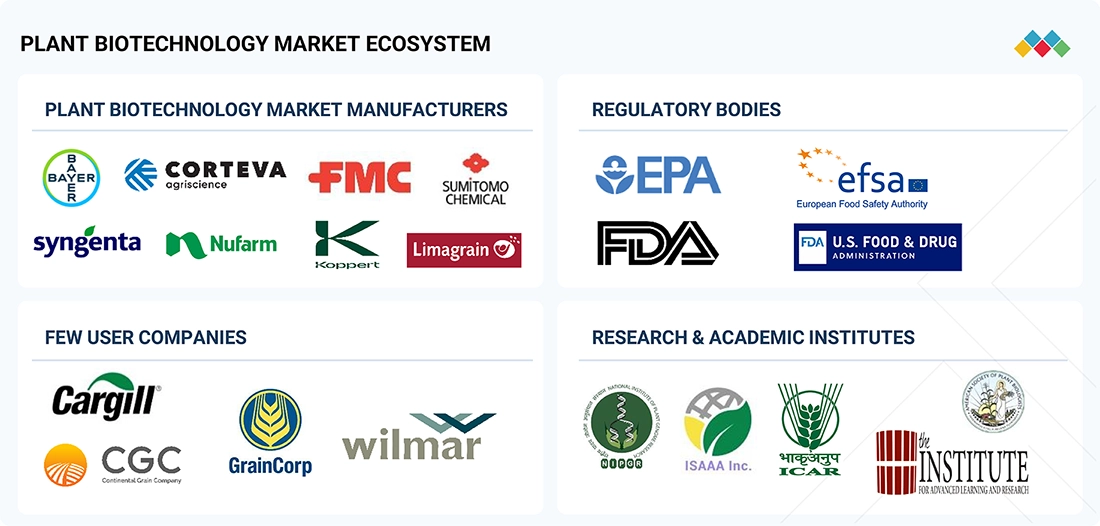
Plant Biotechnology Market: COMMERCIAL USE CASES ACROSS INDUSTRIES
| COMPANY | USE CASE DESCRIPTION | BENEFITS |
|---|---|---|
 |
Flipper is derived from a natural by-product of extra virgin olive oil, which targets pest insects. Flipper is derived from a natural by-product of extra virgin olive oil, which targets pest insects. | FLiPPER is a contact bio-insecticide/acaricide for the effective control of aphids, whiteflies, thrips and spider mites and good control of mealybugs, leafhoppers, psyllids, suckers and scale insects. It is effective against all insect and spider mite life stages, particularly against motile forms. |
 |
Hearken biological insecticide is a virus-based solution specifically targeting Heliothine species, without affecting beneficial or non-target organisms. | Controls Heliothine Species Across Generations |
 |
Bazooka helps in the grass and weeds suppression field. It is a variety of Barley seeds. | Deliver a higher yield than conventional feed barley. |
 |
Serifel is a preventative fungicide based on Bacillus amyloliquefaciens strain MBI600 with multiple modes of action. | Biological control agents such as biological fungicides and biological insecticides help reduce the damage caused by diseases and pests, including fungi, insects, and slugs. |
Logos and trademarks shown above are the property of their respective owners. Their use here is for informational and illustrative purposes only.
Related Ecosystem
Agricultural Biologicals
- Bionematicides
- Auxins
- Cytokinins
- Ethylene
- Humic Substances
- NICHINO INDIA PVT LTD.
- Corteva, Inc.
- Basf se
- AZELIS HOLDINGS SA
- BAYER AG
Seeds And Others
- Auxins
- Bacillus Thuringiensis
- Beauveria Bassiana
- Bionematicides
- Carbamates
- Corteva, Inc.
- BAYER AG
- Basf se
- AZELIS HOLDINGS SA
- ARYSTA LIFESCIENCE CORPORATION
Key Takeaways
- Argentina's plant biotechnology market is valued at USD 2,367.2 million in 2025 and is projected to reach USD 3,498.3 million by 2030.
- Argentina maintains an 8.1% CAGR, reflecting strong regional demand for genetically modified and climate-resilient crop varieties.
- Argentina's established agricultural export infrastructure and regulatory framework support rapid adoption of biotechnology innovations.
- Argentina is emerging as South America's leading market for advanced seed technologies and precision agriculture solutions through 2030.
Plant Biotechnology Market Report Scope
| Report Metric | Details |
|---|---|
| Base Year | 2025 |
| Fastest Growing Segment | PHARMACEUTICAL & BIOPHARMA COMPANIES (End User) |
| Forecast Period | 2025–2030 |
| Growth Rate | CAGR of 8.2% from 2025 to 2030 |
| Largest Segment | BIOTECH SEEDS & TRAITS (Product Type) |
| Market Size Base Year (Billions) | ~USD 51.78 (2025) |
| Revenue Forecast (Billions) | ~USD 76.79 (2030) |
| Segments Covered | Technology, Product Type, Type, Crop Type, End User, Crop Protection & Nutrition Solution Product, Biotech Seed & Trait, Cereal & Grain, Oilseed & Pulse, Fruit & Vegetable |
Argentina Plant Biotechnology Market Report Segmentation
10 segment dimensions are covered across the global market.
By Technology
- Genetic Engineering
- Genome Editing
- Marker-Assisted Breeding
- Other Technologies
- Synthetic Biology
- Tissue Culture
By Product Type
- Biotech Seeds & Traits
- Crop Protection & Nutrition Solution Products
- Synthetic Biology-Enabled Products
By Type
- Barley
- Biofertilizers
- Biopesticides
- Canola
- Citrus Fruits
- Corn
- Cotton
- Herbicide Tolerance
- Insect Resistance
- Leafy Vegetables
- Other Cereals & Grains
- Other Fruits & Vegetables
- Other Oilseeds & Pulses
- Plant Growth Regulators
- Pome Fruits
- Rice
- Root & Tuber Vegetables
- Sorghum
- Soybean
- Stacked
- Wheat
By Crop Type
- Cereals & Grains
- Fruits & Vegetables
- Oilseeds & Pulses
- Other Crop Types
By End User
- Agricultural Input Suppliers
- Biofuel & Biochemical Companies
- Food & Beverage Industry
- Government & Research Institutes
- Pharmaceutical & Biopharma Companies
- Seed Companies
By Crop Protection & Nutrition Solution Product
- Biofertilizers
- Biopesticides
- Plant Growth Regulators
By Biotech Seed & Trait
- Herbicide Tolerance
- Insect Resistance
- Stacked
By Cereal & Grain
- Barley
- Corn
- Other Cereals & Grains
- Rice
- Sorghum
- Wheat
By Oilseed & Pulse
- Canola
- Cotton
- Other Oilseeds & Pulses
- Soybean
By Fruit & Vegetable
- Citrus Fruits
- Leafy Vegetables
- Other Fruits & Vegetables
- Pome Fruits
- Root & Tuber Vegetables
Target Audience
- Agricultural Biotechnology Companies : Seed producers, biotech firms, and agricultural input manufacturers need Argentina-specific market data to evaluate market entry, assess competitive positioning, and develop localized product strategies for this high-growth South American market.
- Investment & Private Equity Firms : Investors evaluating opportunities in Argentina's agricultural sector require detailed market sizing, growth projections, and regional dynamics to make informed investment decisions and identify acquisition targets in plant biotechnology.
- Government & Policy Makers : Argentine agricultural ministries and policy bodies need market intelligence to develop supportive regulations, allocate R&D funding, and create frameworks that enhance the country's position as a regional biotech innovation hub.
- Farmers & Agricultural Cooperatives : Large-scale Argentine farmers and agricultural cooperatives require market insights on emerging biotech solutions, adoption trends, and cost-benefit analyses to make informed decisions on implementing new plant biotechnology innovations.
- Research Institutions & Universities : Argentine agricultural research centers and universities need market data to align R&D initiatives with commercial opportunities, secure funding, and develop biotechnology programs that address local farming challenges and market demands.
Key Companies in the Argentina Plant Biotechnology Market
| Company | HQ | Ownership | Strongest segments |
|---|---|---|---|
| BASF SE | Germany | Public Company | Chemicals,Materials,Industrial Solutions, |
| BAYER AG | Germany | Public Company | Pharmaceuticals,Consumer Health (OTC and self-care),Crop Science (seeds, traits, crop protection, digital), |
| CORTEVA AGRISCIENCE | United States | Public Company | Seed,Crop Protection,Digital and Decision Solutions, |
| SYNGENTA | Switzerland | Private Company | Synthetic crop protection (herbicides, fungicides, insecticides),Seeds (field crops and vegetables),Biological crop protection and seed treatments, |
| KWS SAAT SE & CO. KGAA | Germany | Public Company | Corn (corn, soybeans, sunflowers),Sugarbeet and hybrid potatoes,Cereals and oilseed rape, |
| UPL | India | Public Company | Crop Protection (herbicides, fungicides, insecticides, acaricides, seed treatment, adjuvants, fumigants, public health),Seeds (Advanta, Alta Seeds, Pacific Seeds, Hannaford),Bio-solutions and ProNutiva programs, |
| FMC CORPORATION | United States | Public Company | Insecticides,Herbicides,Fungicides, |
| SUMITOMO CHEMICAL CO., LTD. | Japan | Public Company | Essential & Green Materials,Agro & Life Solutions,ICT & Mobility Solutions, |
| NUFARM | Australia | Public Company | Herbicides,Fungicides,Insecticides, |
| PRO FARM GROUP | United States | Private Company | Bioinsecticides (Grandevo, Venerate, Majestene),Biofungicides and bactericides (Regalia, Stargus, Jet-Ag/Jet-Oxide),Crop health and stress management (Emergen, Haven, Pacesetter, Ympact), |
| LIMAGRAIN | France | Private Company | Field seeds (corn, wheat, sunflower, rapeseed, other),Vegetable seeds (tomato, carrot, melon, cauliflower, pepper, other),Garden products (vegetable and flower seeds, grass seeds, bulbs), |
| DLF SEEDS A/S | Denmark | Private Company | Forage grass seeds for livestock nutrition,Professional turf seeds (stadiums, golf, airports, parks),Lawn grass seeds (consumer and landscape), |
BASF SE
BASF SE is a German multinational chemical company founded in 1865 that operates as a public company with 94,910 employees. The company is one of the world's largest producers of chemicals, plastics, and agricultural products.
BAYER AG
Bayer AG is a German public company founded in 1863 with 87,757 employees, operating in pharmaceuticals, crop science, and consumer health. The company is a global leader in life sciences and healthcare solutions.
CORTEVA AGRISCIENCE
Corteva Agriscience is a United States-based public company founded in 1802 with 21,500 employees, specializing in agricultural seeds and crop protection products. The company serves farmers worldwide with innovative agricultural solutions.
SYNGENTA
Syngenta is a Swiss private company founded in 1999 with 28,000 employees, focused on crop protection and seeds for global agriculture. The company develops and markets pesticides, fungicides, and herbicides for farmers worldwide.
KWS SAAT SE & CO. KGAA
KWS SAAT SE & CO. KGAA is a German public company founded in 1856 with 4,957 employees, specializing in the breeding and production of seeds. The company is a leading provider of seeds for agriculture and horticulture.
UPL
UPL is an Indian public company founded in 1969 with 12,000 employees, operating in crop protection and specialty seeds. The company provides agrochemical solutions to farmers across multiple continents.
FMC CORPORATION
FMC Corporation is a United States-based public company founded in 1883 with 5,500 employees, specializing in agricultural sciences and specialty chemicals. The company develops crop protection and plant health solutions for global markets.
SUMITOMO CHEMICAL CO., LTD.
Sumitomo Chemical Co., Ltd. is a Japanese public company founded in 1913 with 27,491 employees, operating in petrochemicals, energy, and agricultural chemicals. The company is a diversified chemical manufacturer serving multiple industries worldwide.
NUFARM
Nufarm is an Australian public company founded in 1916 with 3,046 employees, specializing in crop protection products and seeds. The company supplies agrochemical solutions to farmers in multiple regions globally.
PRO FARM GROUP
Pro Farm Group is a United States-based private company founded in 2006 with 153 employees, operating in agricultural services and farm management. The company provides specialized agricultural solutions to farming operations.
LIMAGRAIN
Limagrain is a French private company founded in 1942 specializing in seeds and plant genetics for agriculture. The company is a global leader in crop breeding and seed production.
DLF SEEDS A/S
DLF Seeds A/S is a Danish private company founded in 1872 with 1,963 employees, specializing in grass and clover seed production. The company is a leading supplier of seeds for forage and turf applications.
Reasons to Buy this Report
- Country-Specific Market Sizing : Access precise valuation data for Argentina's plant biotechnology market with detailed 2025-2030 projections, enabling accurate investment planning and resource allocation decisions specific to this high-growth South American market.
- Competitive Landscape Intelligence : Understand Argentina's unique market dynamics, local player strategies, and regional competitive positioning within South America's agricultural biotech sector to identify partnership and expansion opportunities.
- Growth Driver Analysis : Identify key factors fueling Argentina's 8.1% CAGR including GMO adoption rates, government policies, farmer adoption trends, and technological innovations specific to the Argentine agricultural context.
- Investment Decision Support : Leverage comprehensive Argentina-focused market data to evaluate market entry strategies, assess risk factors, and benchmark performance against regional competitors in South America's fastest-growing biotech markets.
- Strategic Market Positioning : Develop targeted go-to-market strategies for Argentina by understanding local agricultural practices, regulatory environment, distribution channels, and customer preferences unique to this key regional market.
Frequently asked questions
What is the current size of Argentina's plant biotechnology market?
Argentina's plant biotechnology market is estimated at USD 2,367.2 million in 2025 and is expected to grow to USD 3,498.3 million by 2030.
What is the projected growth rate for Argentina's plant biotechnology market?
Argentina's plant biotechnology market is projected to grow at a compound annual growth rate (CAGR) of 8.1% from 2025 to 2030.
What factors are driving growth in Argentina's plant biotechnology sector?
Argentina's growth is driven by strong agricultural heritage, increasing adoption of genetically modified crops, rising investment in crop improvement, and demand for climate-adaptive and disease-resistant varieties.
How does Argentina's plant biotechnology market compare to other South American countries?
Argentina is positioned as a leading market in South America due to its established agricultural export infrastructure, supportive regulatory environment, and advanced biotechnology capabilities.
What biotechnology solutions are most in demand in Argentina?
Argentina shows strong demand for advanced seed technologies, genetically modified crop varieties, disease-resistant cultivars, and precision agriculture solutions that enhance crop yields and climate resilience.
RESEARCH METHODOLOGY
The study involved two major approaches in estimating the current size of the plant biotechnology market. Exhaustive secondary research was done to collect information on the market, peer, and parent markets. The next step was to validate these findings, assumptions, and sizing with industry experts across the value chain through primary research. Both top-down and bottom-up approaches were employed to estimate the complete market size. After that, market breakdown and data triangulation were used to estimate the market size of segments and subsegments.
Secondary Research
This research study involved the extensive use of secondary sources—directories and databases such as Bloomberg Businessweek and Factiva—to identify and collect information useful for a technical, market-oriented, and commercial study of the market.
In the secondary research process, various sources such as annual reports, press releases & investor presentations of companies, white papers, food journals, certified publications, articles from recognized authors, directories, and databases were referred to identify and collect information.
Secondary research was mainly used to obtain key information about the industry’s supply chain, the total pool of key players, and market classification and segmentation as per the industry trends to the bottom-most level, regional markets, and key developments from both market- and technology-oriented perspectives.
Primary Research
Extensive primary research was conducted after obtaining information regarding the plant biotechnology market scenario through secondary research. Several primary interviews were conducted with market experts from both the demand and supply sides across major countries of North America, Europe, Asia Pacific, South America, and the Rest of the World. Primary data was collected through questionnaires, emails, and telephonic interviews. The primary sources from the supply side included various industry experts, such as Chief X Officers (CXOs), Vice Presidents (VPs), Directors from business development, marketing, research, and development teams, and related key executives from distributors and key opinion leaders. Primary interviews were conducted to gather insights such as market statistics, data on revenue collected from the products and services, market breakdowns, market size estimations, market forecasting, and data triangulation. Primary research also helped in understanding the various trends related to technology type, product, crop type, end-user and region. Stakeholders from the demand side, such as research institutions and plant biotechnology distributors and retailers, and manufacturing comapnies were interviewed to understand the buyer’s perspective on the suppliers, products, and their current usage of plant biotechnology and the outlook of their business, which will affect the overall market.
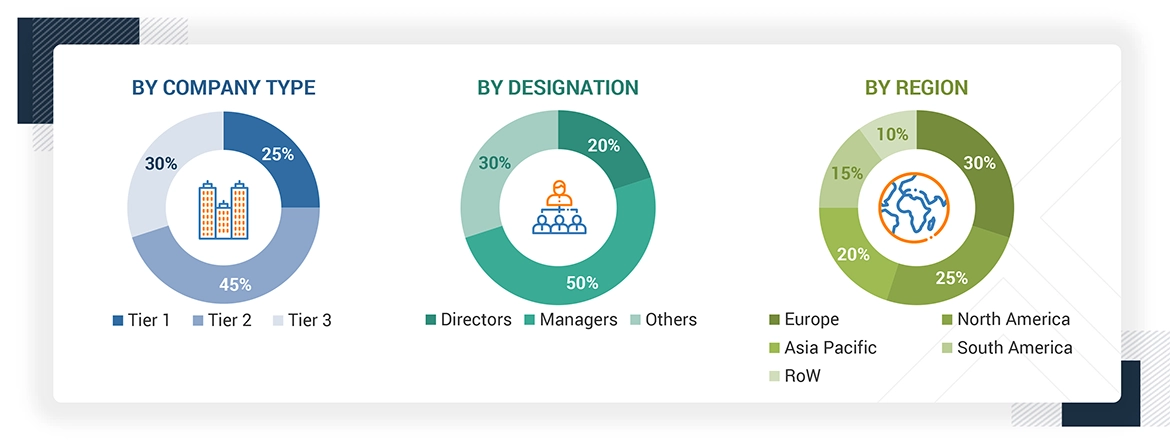
Note 1: Others include sales managers, marketing managers, and product managers.
Note 2: Tier 1 companies’ revenues are more than USD 10 billion; tier 2 companies’ revenues range between USD 1 and 10 billion; and tier 3 companies’ revenues range between USD 500 million and USD 1 billion.
Source: Industry Experts
To know about the assumptions considered for the study, download the pdf brochure
|
COMPANY NAME |
DESIGNATION |
|
BASF SE (Germany) |
General Manager |
|
Bayer AG (Germany) |
Sales Manager |
|
Corteva Agriscience (US) |
Manager |
|
UPL (India) |
Sales Manager |
|
FMC Corporation (US) |
Marketing Manager |
Market Size Estimation
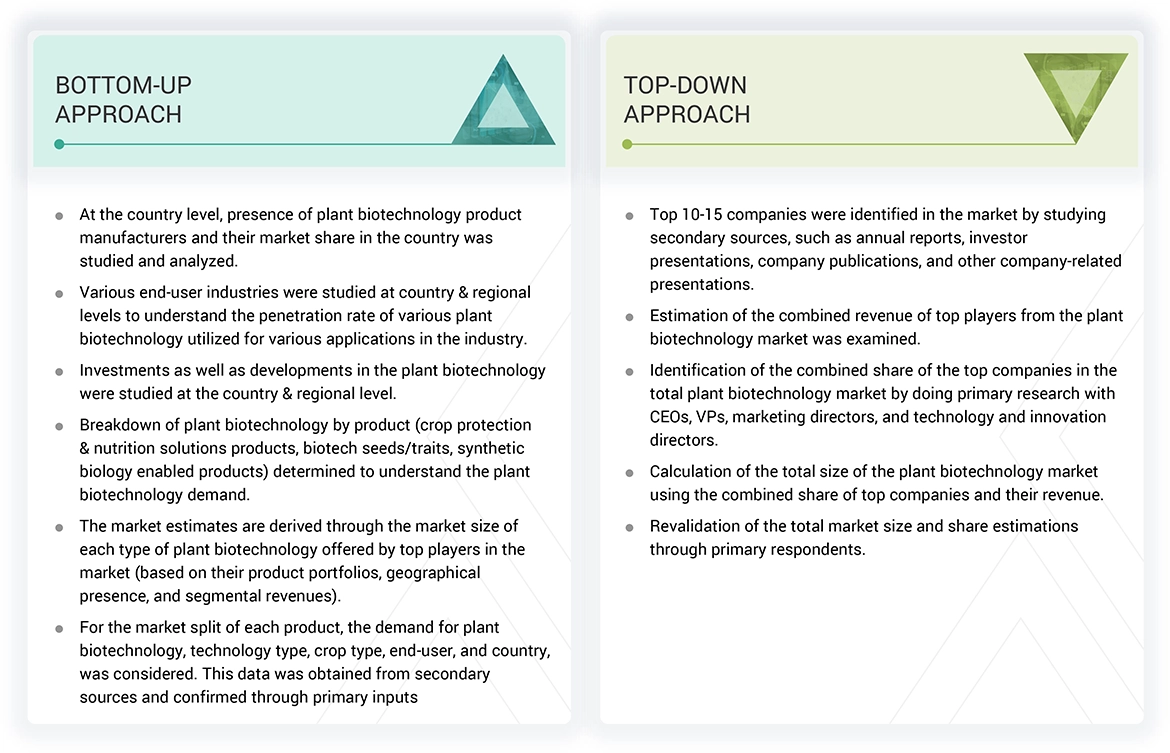
Both the top-down and bottom-up approaches were used to estimate and validate the total size of the plant biotechnology market. These approaches were also used extensively to determine the size of various subsegments in the market. The research methodology used to estimate the market size includes the following details:
- The key players in the industry and the overall markets were identified through extensive secondary research.
- All shares, splits, and breakdowns were determined using secondary sources and verified through primary sources.
- All possible parameters that affect the market covered in this research study were accounted for, viewed in extensive detail, verified through primary research, and analyzed to obtain final quantitative and qualitative data.
- The research included the study of reports, reviews, and newsletters of top market players, along with extensive interviews for opinions from leaders, such as CEOs, directors, and marketing executives.
Plant Biotechnology Market : Top-Down and Bottom-Up Approach
Data Triangulation
After arriving at the overall market size from the estimation process explained above, the total market was split into several segments and subsegments. The data triangulation and market breakdown procedures were employed, wherever applicable, to estimate the overall plant biotechnology market and arrive at the exact statistics for all segments and subsegments. The data was triangulated by studying various factors and trends from the demand and supply sides. The market size was also validated using both the top-down and bottom-up approaches.
Market Definition
According to the US Department of Agriculture, plant biotechnology is a set of techniques used to adapt plants for specific needs or opportunities. Plant biotechnologies supporting the development of new varieties and traits include genetics and genomics, marker-assisted breeding (MAB), biotech (genetically engineered) crops, and others. The biotechnology enable researchers to identify and map genes, determine their functions, selectively breed for desirable genetic traits, and transfer specific genes into plants to enhance targeted characteristics.
Stakeholders
-
Genetic solution providers and biotechnological companies
Technology providers and lab instrument & equipment manufacturers
Commercial and Biotech seed companies
Manufacturers of biopesticides, biofertilizers, and plant growth regulators
Research institutions/agencies/laboratories/academic institutions
Concerned government authorities, commercial R&D institutions, and other regulatory bodies- Food and Agriculture Organization (FAO)
- World Health Organization (WHO)
- US Department of Agriculture (USDA)
- European Food Safety Authority (EFSA)
- European Commission
- Government Agencies
-
Associations
- International Seed Federation (ISF)
- American Seed Trade Association (ASTA)
- US National Corn Growers Association (NCGA)
- American Society of Plant Biologists
- International Association for Plant Biotechnology
- Importers, exporters, distributors, & traders
Report Objectives
- To determine and project the size of the plant biotechnology market with respect to the technology type, end-user, product, crop type and region in terms of value over five years, ranging from 2025 to 2030.
- To identify the attractive opportunities in the market by determining the largest and fastest-growing segments across regions
- To provide detailed information about the key factors influencing market growth (drivers, restraints, opportunities, and challenges)
- To analyze the opportunities in the market for stakeholders and provide details of the competitive landscape for market leaders.
- To analyze the micro-markets with respect to individual growth trends, prospects, and their contribution to the total market.
- To identify and profile the key players in the plant biotechnology market.
- To understand the competitive landscape and identify the major growth strategies adopted by players across the key regions.
Available Customizations
With the given market data, MarketsandMarkets offers customizations according to company-specific scientific needs.
The following customization options are available for the report:
Product Analysis
- Product Matrix, which gives a detailed comparison of the product portfolio of each company.
Geographic Analysis as per Feasibility
With the given market data, MarketsandMarkets offers customizations according to company-specific scientific needs.
- Further breakdown of the Rest of Europe plant biotechnology market into key countries.
- Further breakdown of the Rest of Asia Pacific plant biotechnology market into key countries.
- Further breakdown of the Rest of South America plant biotechnology market into key countries.
Company Information
- Detailed analyses and profiling of additional market players (up to five)
Get the Full Plant Biotechnology Market Report
Full forecast, segment splits, and company analysis for all Plant Biotechnology Market.
- Rest Of Europe Plant Biotechnology Market
- US Plant Biotechnology Market
- Canada Plant Biotechnology Market
- Mexico Plant Biotechnology Market
- Germany Plant Biotechnology Market
- France Plant Biotechnology Market
- UK Plant Biotechnology Market
- Italy Plant Biotechnology Market
- Spain Plant Biotechnology Market
- China Plant Biotechnology Market
- India Plant Biotechnology Market
- Japan Plant Biotechnology Market
- Brazil Plant Biotechnology Market
Need a Tailored Report?
Customize this report to your needs
Get 10% FREE Customization
Customize This Report
