
Brazil Point-of-use Water Treatment Systems Market (2025-2030)

The Brazil Point-of-use Water Treatment Systems Market was valued at $772.1 Million in 2025 and projected to reach to $1039.2 Million by 2030, representing a compound annual growth rate of 6.1%. Brazil's point-of-use water treatment systems market is positioned for sustained growth through 2030, driven by increasing urbanization, water scarcity concerns, and heightened consumer awareness of water quality issues.


| Market Size in | USD 26.32 MN |
| Market Forecast in | |
| CAGR | |
| Forecast Period | |
| Units Considered | Value (USD MN) |
Brazil Point-of-use Water Treatment Systems Market Trends and Insights
- This growth trajectory reflects Brazil's increasing focus on residential and commercial water quality solutions amid rising urbanization and water scarcity concerns.
- Brazil's market is driven by heightened consumer awareness of contamination risks and the growing adoption of filtration technologies across households and small businesses. The 6.1% compound annual growth rate (CAGR) positions Brazil as a significant player within the Latin American water treatment sector.
- Brazil's expanding middle class and improving disposable incomes are fueling demand for point-of-use systems, particularly in metropolitan areas where municipal water quality remains inconsistent.
- Between 2025 and 2030, Brazil's market will benefit from regulatory pressures, technological innovation, and increased distribution channels that make treatment solutions more accessible to consumers..
Key Market Statistics
- CAGR (2025-2030) 6.1% CAGR
- Market Size, 2025 ~USD 772.1 Million
- Forecast, 2030 ~USD 1039.2 Million
- Country Brazil
Brazil Point-of-use Water Treatment Systems Market Overview
Market Valuation :
Brazil's point-of-use water treatment systems market is valued at USD 772.1 million in 2025, with strong growth momentum driven by urbanization and water quality concerns across residential and commercial sectors.
Growth Trajectory :
The market is projected to reach USD 1,039.2 million by 2030, representing a steady CAGR of 6.1%, outpacing many regional competitors and reflecting sustained demand for water treatment solutions.
Consumer Awareness :
Rising consumer consciousness about water quality and health risks associated with contaminated water is driving adoption of point-of-use systems across Brazilian households and businesses.
Urbanization Impact :
Rapid urbanization combined with water scarcity challenges in key Brazilian regions is accelerating demand for decentralized water treatment solutions in both residential and commercial applications.
Brazil Point-of-use Water Treatment Systems Market Dynamics
- The market's 6.1% CAGR reflects strong demand from both residential and commercial segments seeking reliable, localized water treatment solutions.
- Government initiatives addressing water infrastructure gaps and rising disposable incomes in urban centers are expected to further accelerate market expansion.
- The competitive landscape is intensifying as both domestic and international players invest in innovative filtration technologies tailored to Brazilian water conditions and consumer preferences..
Market Ecosystem
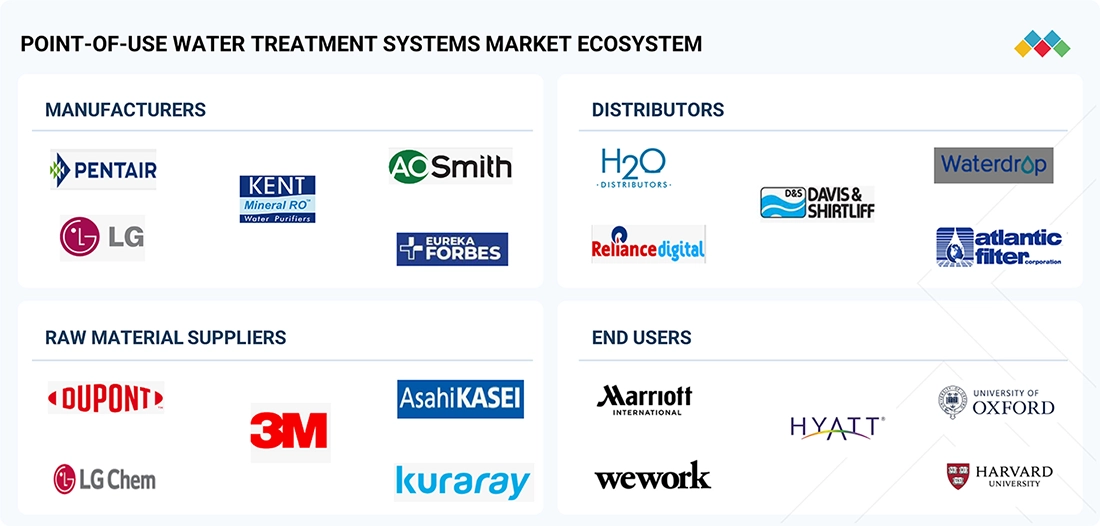
POINT-OF-USE WATER TREATMENT SYSTEMS MARKET: COMMERCIAL USE CASES ACROSS INDUSTRIES
| COMPANY | USE CASE DESCRIPTION | BENEFITS |
|---|---|---|
 |
Hindustan Unilever has developed Pureit, low cost, non-electric, gravity based with multi-stage purification with an auto shut-off mechanism, for providing safe drinking water to households without reliable electricity or piped water. | Pureit served more than 80 million consumers, increased access to safe drinking water, decreased risk of waterborne disease and proved how affordable innovation can help to drive increased adoption of water treatment in underserved communities and international markets. |
 |
MIT has developed a solar-powered point-of-use reverse osmosis system for La Mancalona, Mexico that delivers clean drinking water in an off-grid environment, training local residents to operate and maintain the system on their own. | The solution provided a safe drinking water supply, was community operated with a sustainable pay-per-use model, and demonstrated a scalable approach for decentralized water treatment in remote, underserved areas. |
 |
Ceramica Stefani created the São João Ceramic Filter, a non-electric point-of-use filter that use ceramic candles to eliminate germs and pollutants, offering an economical drinking water option for rural and off-grid regions. | The filter has been utilized in Brazilian families for over 70 years, enhancing access to potable water, mitigating waterborne diseases, and offering a dependable, economical alternative to neglected regions lacking electricity. |
Logos and trademarks shown above are the property of their respective owners. Their use here is for informational and illustrative purposes only.
Related Ecosystem
Equipment Machine And Tooling
Key Takeaways
- Brazil's point-of-use water treatment market will grow from USD 772.1 million (2025) to USD 1,039.2 million (2030) at a 6.1% CAGR.
- Brazil's expanding middle class and urbanization are primary drivers of increased demand for residential and commercial water filtration systems.
- Brazil's market benefits from rising consumer awareness of water contamination and inconsistent municipal water quality in major cities.
- Brazil's regulatory environment and technological innovation will accelerate adoption of point-of-use treatment solutions through 2030.
Point-of-use Water Treatment Systems Market Report Scope
| Report Metric | Details |
|---|---|
| Base Year | 2025 |
| Fastest Growing Segment | REVERSE OSMOSIS SYSTEMS (Technology) |
| Forecast Period | 2025–2030 |
| Growth Rate | CAGR of 6.2% from 2025 to 2030 |
| Largest Segment | DISTRIBUTOR (THIRD-PARTY SALES) (Sales Channel) |
| Market Size Base Year (Billions) | ~USD 15.14 (2025) |
| Revenue Forecast (Billions) | ~USD 20.45 (2030) |
| Segments Covered | Device, Technology, Application, Sales Channel |
Brazil Point-of-use Water Treatment Systems Market Report Segmentation
4 segment dimensions are covered across the global market.
By Device
- Counter-Top Units
- Faucet-Mounted Filters
- Free-Standing Water Purifiers
- Other Devices
- Tabletop Pitchers
- Under-The-Sink Filters
- Whole House Water Treatment
By Technology
- Activated Carbon
- Disinfection
- Distillation
- Ion Exchange
- Other Technologies
- Reverse Osmosis Systems
- Ultrafiltration Systems
By Application
- Non-Residential
- Residential
By Sales Channel
- Direct Sales
- Distributor (Third-Party Sales)
BRAZIL: POINT-OF-USE WATER TREATMENT SYSTEMS MARKET, BY APPLICATION,2024–2030
| Segment | 2024 | 2025 | 2026 | 2027 | 2028 | 2029 | 2030 | CAGR (%) |
|---|---|---|---|---|---|---|---|---|
| NON-RESIDENTIAL | 209.6 | 222.4 | 234.2 | 246.6 | 259.7 | 273.5 | 288 | 5.3 |
| RESIDENTIAL | 518 | 549.6 | 585.1 | 622.8 | 662.9 | 705.7 | 751.1 | 6.4 |
| TOTAL | 727.6 | 772.1 | 819.3 | 869.4 | 922.7 | 979.2 | 1039.2 | 6.1 |
Target Audience
- Water Treatment Manufacturers : Manufacturers need Brazil-specific market data to assess expansion opportunities, identify growth segments, and develop products tailored to Brazilian water conditions and consumer preferences.
- Distribution & Retail Partners : Distributors and retailers require detailed market insights to optimize inventory decisions, identify high-demand regions within Brazil, and capitalize on the 6.1% CAGR growth opportunity.
- Investment & Private Equity Firms : Investors evaluating opportunities in Brazil's water treatment sector need comprehensive market sizing, growth forecasts, and competitive analysis to support acquisition and funding decisions.
- Government & Policy Makers : Brazilian government agencies and policymakers use market data to inform water infrastructure policies, subsidy programs, and regulatory frameworks supporting point-of-use treatment adoption.
- Consulting & Strategy Firms : Consultants advising clients on Brazil market entry or expansion require detailed segmentation, demand drivers, and competitive intelligence to develop evidence-based strategic recommendations.
Key Companies in the Brazil Point-of-use Water Treatment Systems Market
| Company | HQ | Ownership | Strongest segments |
|---|---|---|---|
| FLUOR CORPORATION | United States | Public Company | Energy Solutions,Urban Solutions,Mission Solutions, |
| RICARDO | United Kingdom | Private Company | Energy & Environment (EE),Rail,A&I Established, |
| UPONOR CORPORATION | Finland | Private Company | PEX-a plumbing systems (AquaPEX + accessories),Radiant heating and cooling (HePEX, manifolds, controls),Fittings, valves, and TotalFit push-to-connect, |
| CALGON CARBON CORPORATION | United States | Private Company | Granular activated carbon and reactivation services,Powdered and pelletized activated carbon,Cloth activated carbon and specialty media, |
| JAPAN VILENE COMPANY, LTD. | Japan | Private Company | Automotive materials (components and cabin/air filters),Industrial and air filtration materials (incl. VILEDON series),Medical and consumer masks / hospital supplies, |
| PENTAIR | United Kingdom | Public Company | Pool segment (residential and commercial pool equipment and accessories),Flow segment (fluid treatment, pumps, and systems),Water Solutions segment (residential and commercial water treatment), |
| EUREKA FORBES | India | Public Company | Water filter cum purifiers and water solutions,Vacuum cleaners,Electronic air cleaning systems / air purifiers, |
| PANASONIC HOLDINGS CORPORATION | Japan | Public Company | Energy (EV and other batteries, storage systems),HVAC & CC (air conditioners, heat pumps, commercial refrigeration),Electric Works (lighting, wiring devices, solar, fuel cells, housing materials), |
| LG ELECTRONICS | South Korea | Public Company | Home Appliance & Air Solution,Home Entertainment (TVs & digital media),Vehicle Component Solutions, |
| A. O. SMITH | United States | Public Company | Residential water heaters (gas, electric, tankless, heat pump, solar),Commercial water heaters and boilers,Residential water treatment (point-of-entry and point-of-use), |
| TORAY INDUSTRIES, INC. | Japan | Public Company | Fibers and Textiles,Performance Chemicals (Resins, Films, Fine Chemicals, Electronic Materials),Carbon Fiber Composite Materials, |
| WHIRLPOOL CORPORATION | United States | Public Company | Laundry appliances and commercial laundry,Refrigerators, freezers, ice makers, and water filters,Cooking appliances and small domestic appliances, |
| COWAY CO.,LTD. | South Korea | Public Company | Water purifiers and water treatment (including rental and industrial water),Air purifiers and Smart Air Care services,Bidets and bathroom-related appliances, |
| HAVELLS INDIA LIMITED | India | Public Company | Cables & Wires,Switchgears (including Crabtree),Lighting & Fixtures, |
| KENT RO SYSTEMS LTD. | India | Private Company | RO and UV water purifiers,Water softeners and hot water appliances,Kitchen appliances (air fryers, juicers, kettles, etc.), |
| GRUPO ROTOPLAS, S.A.B. DE C.V. | Mexico | Public Company | Individual storage solutions (tanks, cisterns, rainwater systems, accessories),Waterflow solutions (pipes, pumps, valves, hydraulic systems),Treatment and comprehensive water solutions, |
| AB ELECTROLUX | Sweden | Public Company | Refrigerators and Freezers,Laundry (Washing Machines and Dryers),Cooking (Cookers, Ovens, Hobs, Hoods, Microwaves), |
FLUOR CORPORATION
Fluor Corporation is a publicly traded U.S. engineering and construction company founded in 1912 with approximately 23,000 employees. The company provides services across multiple industrial sectors.
RICARDO
Ricardo is a British private company established in 1915 with 2,600 employees. The company has over a century of experience in its field of operations.
UPONOR CORPORATION
Uponor Corporation is a Finnish private company founded in 1918 employing 3,527 people. The company has maintained operations for over 100 years.
CALGON CARBON CORPORATION
Calgon Carbon Corporation is a U.S. private company founded in 1942 with 1,268 employees. The company has been operating for over 80 years.
JAPAN VILENE COMPANY, LTD.
Japan Vilene Company, Ltd. is a Japanese private company founded in 1960 with 1,739 employees. The company has operated for over 60 years.
PENTAIR
Pentair is a publicly traded company based in the United Kingdom, founded in 1966 with 9,000 employees. The company has been in operation for nearly 60 years.
EUREKA FORBES
Eureka Forbes is an Indian public company founded in 1982 with 2,721 employees. The company operates as a publicly listed enterprise.
PANASONIC HOLDINGS CORPORATION
Panasonic Holdings Corporation is a Japanese multinational public company founded in 1918 with 183,685 employees. The company is one of the world's largest electronics manufacturers.
LG ELECTRONICS
LG Electronics is a South Korean public company founded in 1958 with 34,884 employees. The company is a major global manufacturer of consumer electronics and appliances.
A. O. SMITH
A. O. Smith is a U.S. public company founded in 1874 with 11,500 employees. The company has operated for nearly 150 years as a publicly traded enterprise.
TORAY INDUSTRIES, INC.
Toray Industries, Inc. is a Japanese public company founded in 1926 with 46,294 employees. The company is a major multinational manufacturer of advanced materials and chemicals.
WHIRLPOOL CORPORATION
Whirlpool Corporation is a U.S. public company founded in 1911 with 41,000 employees. The company is a leading global manufacturer of home appliances.
COWAY CO.,LTD.
Coway Co., Ltd. is a South Korean public company founded in 1989 with 6,096 employees. The company operates as a publicly traded enterprise.
HAVELLS INDIA LIMITED
Havells India Limited is an Indian public company founded in 1958 with 7,598 employees. The company is a publicly listed manufacturer and distributor of electrical products.
KENT RO SYSTEMS LTD.
Kent RO Systems Ltd. is an Indian private company founded in 1999 with 1,864 employees. The company has been operating for over 20 years.
GRUPO ROTOPLAS, S.A.B. DE C.V.
Grupo Rotoplas, S.A.B. de C.V. is a Mexican public company founded in 1978 with 3,263 employees. The company operates as a publicly traded enterprise.
AB ELECTROLUX
AB Electrolux is a Swedish public company founded in 1901 with 39,000 employees. The company is a major global manufacturer of home and professional appliances.
Reasons to Buy this Report
- Market Size & Growth Data : Access precise valuation metrics for Brazil's market (USD 772.1M in 2025) with detailed 5-year forecasts, enabling accurate investment planning and competitive positioning in this high-growth segment.
- Regional Demand Insights : Understand Brazil-specific drivers including urbanization patterns, water scarcity hotspots, and consumer awareness trends that differentiate this market from global averages and regional competitors.
- Segment Analysis : Gain detailed breakdown of residential versus commercial demand dynamics in Brazil, identifying which segments offer the highest growth potential and profitability for market participants.
- Competitive Landscape : Benchmark against domestic and international competitors operating in Brazil, with insights into market share distribution, pricing strategies, and differentiation opportunities specific to Brazilian consumers.
- Strategic Planning : Leverage Brazil-focused market intelligence to develop targeted go-to-market strategies, product localization approaches, and partnership opportunities aligned with regional growth projections through 2030.
Frequently asked questions
What is the current size of Brazil's point-of-use water treatment market?
Brazil's point-of-use water treatment systems market is valued at USD 772.1 million in 2025 and is expected to reach USD 1,039.2 million by 2030.
What is the projected growth rate for Brazil's water treatment market?
Brazil's market is projected to grow at a compound annual growth rate (CAGR) of 6.1% between 2025 and 2030.
What factors are driving growth in Brazil's point-of-use water treatment sector?
Brazil's market growth is driven by urbanization, rising consumer awareness of water quality issues, expanding middle-class purchasing power, and inconsistent municipal water quality in major cities.
Which segments are most active in Brazil's water treatment market?
Brazil's residential and commercial segments are the most active, with growing adoption in households and small businesses seeking improved water quality solutions.
How does Brazil's market compare to the global point-of-use water treatment market?
Brazil's 6.1% CAGR is slightly below the global average of 6.2%, reflecting regional market maturity and localized growth dynamics within Latin America.
RESEARCH METHODOLOGY
The study involved four major activities to estimate the current size of the global point-of-use water treatment systems market. Exhaustive secondary research was conducted to gather information on the market, the peer product market, and the parent product group market. The next step was to validate these findings, assumptions, and sizes with the industry experts across the value chain of point-of-use water treatment systems through primary research. The top-down and bottom-up approaches were employed to estimate the overall size of the point-of-use water treatment systems market. After that, market breakdown and data triangulation procedures were used to determine the size of different segments and sub-segments of the market.
Secondary Research
The market for companies offering point-of-use water treatment systems is derived from secondary data from paid and unpaid sources, analyzing the product portfolios of major companies in the ecosystem, and rating companies based on performance and quality. Various secondary sources, such as Business Standard, Bloomberg, World Bank, and Factiva, were referred to identify and collect information for this study on the point-of-use water treatment systems market. In the secondary research process, various sources were consulted to identify and collect information for the study. Secondary sources included annual reports, press releases, and investor presentations of door vendors, forums, certified publications, and whitepapers. The secondary research was used to obtain critical information on the industry’s value chain, the total pool of key players, market classification, and segmentation from the market and technology-oriented perspectives.
Primary Research
In the primary research process, various primary sources from both the supply and demand sides were interviewed to obtain qualitative and quantitative information for this report. The primary sources from the supply side included industry experts, such as Chief Executive Officers (CEOs), Vice Presidents (VPs), marketing directors, technology and innovation directors, and related key executives from several key companies and organizations operating in the point-of-use water treatment systems market. After the complete market engineering (calculations for market statistics, market breakdown, market size estimations, market forecasting, and data triangulation), extensive primary research was conducted to gather information and verify and validate the critical numbers arrived at. Primary research was also conducted to identify segmentation types, the competitive landscape of point-of-use water treatment systems offered by various market players, and key market dynamics, including drivers, restraints, opportunities, challenges, and key player strategies. In the complete market engineering process, the top-down and bottom-up approaches and several data triangulation methods were extensively used to perform the market estimation and market forecasting for the overall market segments and subsegments listed in this report. Extensive qualitative and quantitative analysis was performed across the complete market engineering process to present key information/insights throughout the report.
Following is the breakdown of primary respondents:
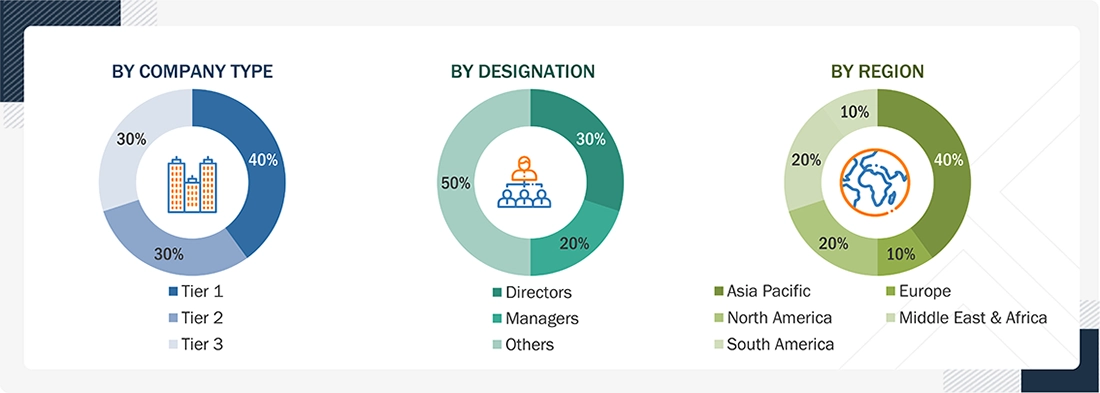
Notes: Other designations include sales, marketing, and product managers.
Tier 1: >USD 1 Billion; Tier 2: USD 500 million–1 Billion; and Tier 3: <USD 500 million.
To know about the assumptions considered for the study, download the pdf brochure
Market Size Estimation
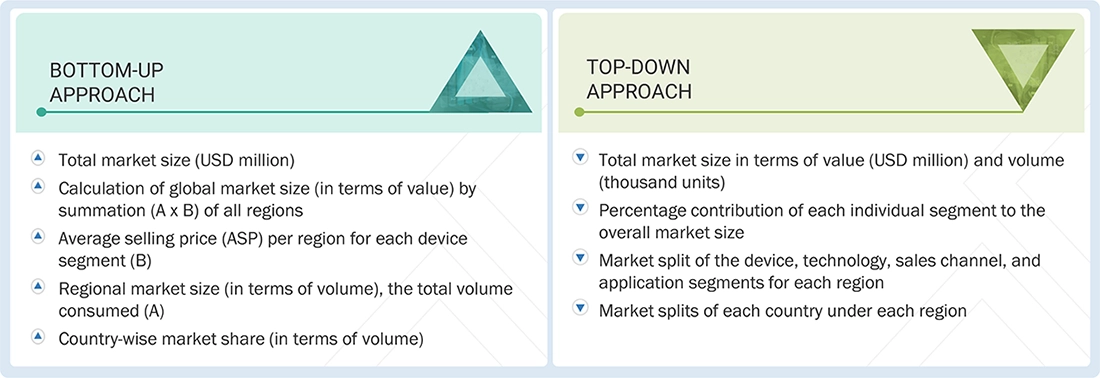
The top-down and bottom-up approaches were used to estimate and validate the size of the global point-of-use water treatment systems market. These approaches were also widely used to estimate the sizes of various dependent market segments. The research methodology used to estimate the market size included the following:
Point-of-use Water Treatment Systems Market: Top-Down and Bottom-Up Approach
Data Triangulation
After arriving at the overall market size using the market size estimation processes, the market was split into several segments and subsegments. The data triangulation and market breakup procedures were employed, wherever applicable, to complete the overall market engineering process and arrive at the exact statistics of each market segment and subsegment. The data was triangulated by studying various factors and trends from both the demand and supply sides.
Market Definition
Point-of-use water treatment systems are devices installed at a house's tap (or taps) to provide clean, safe water. These systems work by removing various contaminants from water, such as chlorine, iron, sulfur, dissolved solids, bacteria, and other impurities. The treated water is suitable for drinking, cooking, and other daily uses in residential and non-residential environments. These systems are placed near the point of use, such as kitchen sinks, faucets, or countertops, so that you can get purified water on demand. Common POU water treatment systems include tabletop pitchers, faucet-mounted filters, countertop units, under-the-sink filters, free-standing water purifiers, whole-house water treatment systems, and other similar products. They use different purification technologies to enhance water quality and make the systems easier to use and maintain. These include reverse osmosis (RO), ultrafiltration (UF), ultraviolet (UV) purification, and activated carbon filtration.
Key Stakeholders
- Point-of-use water treatment system manufacturers
- Raw material suppliers
- Converters & processors
- Distributors and traders
- Industry associations and regulatory bodies
- End users
Report Objectives
- To define, describe, and forecast the size of the global point-of-use water treatment systems market, based on device, technology, sales channel, application, and region in terms of value.
- To provide detailed information on the significant drivers, restraints, opportunities, and challenges influencing the market
- To strategically analyze micromarkets concerning individual growth trends, prospects, and their contribution to the market
- To assess the growth opportunities in the market for stakeholders and provide details on the competitive landscape for market leaders
- To forecast the market size of segments and subsegments for North America, Europe, Asia Pacific, Latin America, and the Middle East & Africa
- To strategically profile key players and comprehensively analyze their market shares and core competencies
- To analyze competitive developments such as product launches, acquisitions, expansions, partnerships, and agreements in the point-of-use water treatment systems market
- To provide the impact of AI/Gen AI on the market
Available customizations:
Based on the given market data, MarketsandMarkets offers customizations tailored to client-specific needs.
The following customization options are available for the point-of-use water treatment systems market report:
Product Analysis
-
A product matrix that gives a detailed comparison of the product portfolio of each company
Regional Analysis
-
A further breakdown of the point-of-use water treatment systems market for additional countries
Company Information
-
Detailed analysis and profiling of additional market players (up to five)
Get the Full Point-of-use Water Treatment Systems Market Report
Full forecast, segment splits, and company analysis for all Point-of-use Water Treatment Systems Market.
- China Point-of-use Water Treatment Systems Market
- India Point-of-use Water Treatment Systems Market
- Japan Point-of-use Water Treatment Systems Market
- South Korea Point-of-use Water Treatment Systems Market
- Australia Point-of-use Water Treatment Systems Market
- Canada Point-of-use Water Treatment Systems Market
- US Point-of-use Water Treatment Systems Market
- Germany Point-of-use Water Treatment Systems Market
- France Point-of-use Water Treatment Systems Market
- Italy Point-of-use Water Treatment Systems Market
- UK Point-of-use Water Treatment Systems Market
- Spain Point-of-use Water Treatment Systems Market
- South Africa Point-of-use Water Treatment Systems Market
- Mexico Point-of-use Water Treatment Systems Market
- Argentina Point-of-use Water Treatment Systems Market
- Colombia Point-of-use Water Treatment Systems Market
- Chile Point-of-use Water Treatment Systems Market
- Peru Point-of-use Water Treatment Systems Market
- Rest Of Asia Pacific Point-of-use Water Treatment Systems Market
Need a Tailored Report?
Customize this report to your needs
Get 10% FREE Customization
Customize This Report
