
Rest Of Latin America Solar Tracker Market (2024-2029)

The Rest Of Latin America Solar Tracker Market was valued at $303.8 Million in 2024 and projected to reach to $493.6 Million by 2029, representing a compound annual growth rate of 10.2%. Rest Of Latin America's solar tracker market is positioned for sustained growth over the forecast period, supported by regional commitments to renewable energy expansion and favorable regulatory frameworks.


| Market Size in | USD 26.32 MN |
| Market Forecast in | |
| CAGR | |
| Forecast Period | |
| Units Considered | Value (USD MN) |
Rest Of Latin America Solar Tracker Market Trends and Insights
- The region is projected to expand to $493.6 million by 2029, representing a compound annual growth rate of 10.2%.
- This growth trajectory reflects increasing investments in renewable energy infrastructure across Rest Of Latin America, driven by favorable government policies and rising energy demand. The solar tracker market in Rest Of Latin America is benefiting from technological advancements and cost reductions in tracking systems.
- Rest Of Latin America's abundant solar resources and commitment to clean energy transition are key factors supporting market expansion.
- The region's diverse economic landscape presents both opportunities and challenges for solar tracker adoption across Rest Of Latin America. Rest Of Latin America is positioning itself as an emerging hub for solar energy development within the broader Latin American context.
- The forecast period through 2029 will be critical for Rest Of Latin America to establish competitive advantages in solar tracker manufacturing and deployment..
Key Market Statistics
- CAGR (2024-2029) 10.2% CAGR
- Market Size, 2024 ~USD 303.8 Million
- Forecast, 2029 ~USD 493.6 Million
- Country Rest Of Latin America
Rest Of Latin America Solar Tracker Market Overview
Steady Regional Growth :
Rest Of Latin America's solar tracker market is projected to grow from $303.8 million in 2024 to $493.6 million by 2029, demonstrating a consistent 10.2% CAGR driven by regional renewable energy expansion.
Government Policy Support :
Favorable government policies across Rest Of Latin America are catalyzing investments in renewable energy infrastructure, creating a conducive environment for solar tracker adoption and deployment.
Infrastructure Development :
Increasing renewable energy infrastructure investments throughout Rest Of Latin America are accelerating the adoption of advanced solar tracking technologies to maximize energy generation efficiency.
Regional Market Potential :
With a 10.2% CAGR outpacing many mature markets, Rest Of Latin America represents a significant growth opportunity for solar tracker manufacturers and renewable energy stakeholders.
Rest Of Latin America Solar Tracker Market Dynamics
- The market's 10.2% CAGR reflects increasing capital allocation toward solar infrastructure modernization and the adoption of efficiency-enhancing technologies.
- Government incentives and climate commitments are driving utilities and independent power producers to invest in advanced tracking systems that optimize energy output.
- The region's abundant solar resources combined with improving economic conditions create favorable conditions for market expansion through 2029..
Market Ecosystem
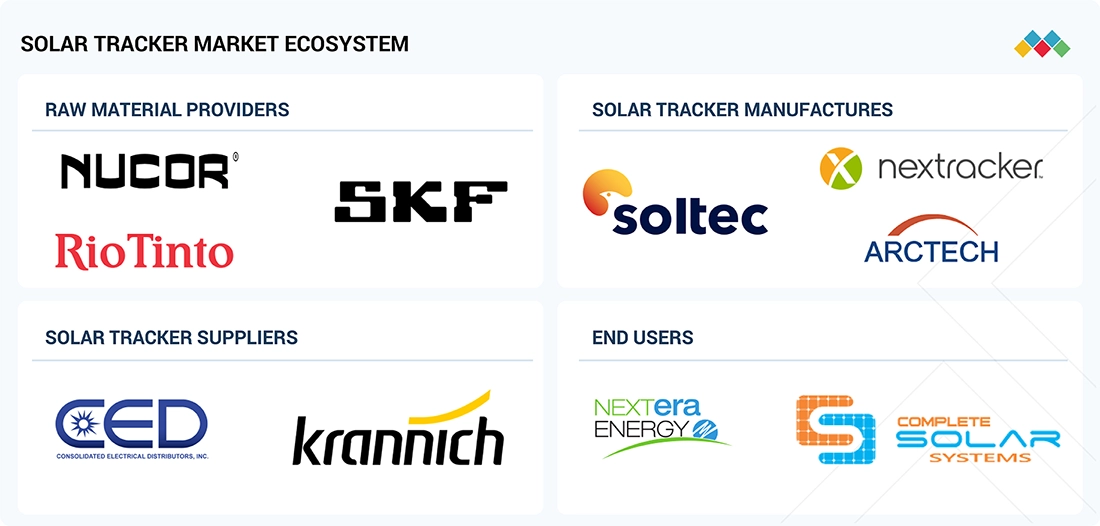
Solar Tracker Market: COMMERCIAL USE CASES ACROSS INDUSTRIES
| COMPANY | USE CASE DESCRIPTION | BENEFITS |
|---|---|---|
 |
To mitigate CO2 emissions across its extensive network of supermarket chains. | The installation of rooftop solar panels at Big C's 16 locations yields multifaceted benefits, starting with substantial environmental gains through significant CO2 emission reductions, aligning with global sustainability imperatives and fostering a greener retail ecosystem in Thailand. Economically, it delivers long-term cost savings on electricity bills via self-generated power, while the net metering system enables revenue generation from surplus energy fed back to the grid, enhancing financial viability and accelerating return on investment. Operationally, the high-performance inverters ensure reliable, efficient energy utilization, minimizing downtime and supporting uninterrupted store operations. |
 |
Implementing solar panels on the rooftop will minimize CO2 emissions, harness clean, renewable energy directly from the sun, reduce reliance on fossil fuels, and contribute to a more sustainable future. | The rooftop solar installation at HP's Toltequilla Office delivers profound benefits, foremost in environmental stewardship by slashing CO2 emissions and curbing fossil fuel dependency, thereby advancing a cleaner, more sustainable energy paradigm in Mexico. Economically, it fosters substantial electricity conservation and cost reductions through self-generated renewable power, with efficient PV and concentrated solar systems minimizing operational expenses over time. Operationally, the integration of battery and thermal storage ensures uninterrupted energy supply, optimizing usage for critical needs and enhancing system resilience. |
Logos and trademarks shown above are the property of their respective owners. Their use here is for informational and illustrative purposes only.
Related Ecosystem
Decarbonization
- Battery Electric Vehicle (BEV)
- Energy Management Systems
- Fuel Cell
- Fuel Cell Electric Vehicle (FCEV)
- Geographical Information System (GIS)
- TotalEnergies SE
- Siemens ag
- Mitsui & Co., Ltd.
- General Electric Company
- Thyssenkrupp ag
Key Takeaways
- Rest Of Latin America's solar tracker market is valued at $303.8 million in 2024 and is expected to grow to $493.6 million by 2029.
- The region demonstrates a 10.2% CAGR, reflecting moderate but consistent growth in solar tracking technology adoption across Rest Of Latin America.
- Rest Of Latin America benefits from abundant solar resources and supportive renewable energy policies that drive market expansion.
- Rest Of Latin America's diverse economic landscape creates varied opportunities for solar tracker deployment across different market segments.
Solar Tracker Market Report Scope
| Report Metric | Details |
|---|---|
| Base Year | 2024 |
| Fastest Growing Segment | OFF-GRID (Type) |
| Forecast Period | 2024–2029 |
| Growth Rate | CAGR of 17.3% from 2024 to 2029 |
| Largest Segment | GRID-CONNECTED (Type) |
| Market Size Base Year (Billions) | ~USD 10.3 (2024) |
| Revenue Forecast (Billions) | ~USD 22.87 (2029) |
| Segments Covered | Type, Axis Type, Application |
Rest Of Latin America Solar Tracker Market Report Segmentation
3 segment dimensions are covered across the global market.
By Type
- Grid-Connected
- Off-Grid
By Axis Type
- Dual-Axis
- Single-Axis
By Application
- Non-Utility
- Utility
Target Audience
- Solar Equipment Manufacturers : Manufacturers need Rest Of Latin America-specific market data to assess regional demand, optimize production capacity, and develop localized product offerings aligned with regional growth projections.
- Renewable Energy Investors : Investors require detailed regional market analysis to evaluate investment opportunities, forecast returns, and allocate capital effectively across Rest Of Latin America's solar infrastructure projects.
- Utility Companies & Power Producers : Utilities need region-specific insights to plan solar tracker deployments, optimize energy generation efficiency, and align capital expenditures with regional market growth trends.
- Government & Policy Makers : Policymakers require market intelligence on Rest Of Latin America's solar tracker sector to design effective incentive programs, regulatory frameworks, and renewable energy targets.
- Consulting & Advisory Firms : Consultants need comprehensive regional market data to provide clients with actionable insights on market opportunities, competitive positioning, and strategic recommendations for Rest Of Latin America.
Key Companies in the Rest Of Latin America Solar Tracker Market
| Company | HQ | Ownership | Strongest segments |
|---|---|---|---|
| FTC SOLAR | United States | Public Company | Single-axis – Utility – Grid-connected,Single-axis – Non-utility / C&I,Dual-axis – Utility / Off-grid, |
| VALMONT INDUSTRIES, INC. | United States | Public Company | Single-axis trackers,Dual-axis trackers,Grid-connected applications, |
| XIAMEN GRACE SOLAR NEW ENERGY TECHNOLOGY CO., LTD. | China | Private Company | Single-axis trackers,Dual-axis trackers,Grid-connected applications, |
| ARCELORMITTAL | Luxembourg | Public Company | Single-axis, Grid-connected, Utility,Single-axis, Grid-connected, Non-utility,Dual-axis, Grid-connected, Utility, |
FTC SOLAR
FTC Solar is a publicly traded United States company founded in 2017 with 232 employees that provides solar racking and mounting systems.
VALMONT INDUSTRIES, INC.
Valmont Industries, Inc. is a publicly traded United States company founded in 1946 with 10,791 employees that manufactures infrastructure and agricultural products, including solar tracking systems.
XIAMEN GRACE SOLAR NEW ENERGY TECHNOLOGY CO., LTD.
Xiamen Grace Solar New Energy Technology Co., Ltd. is a China-based private company founded in 2009 that manufactures solar energy products and components.
ARCELORMITTAL
ArcelorMittal is a Luxembourg-based publicly traded company founded in 1976 with 125,554 employees that is the world's largest steel manufacturing company.
Reasons to Buy this Report
- Regional Market Sizing : Obtain precise market valuation data specific to Rest Of Latin America, including 2024 baseline ($303.8M) and 2029 forecasts ($493.6M), enabling accurate regional business planning and investment decisions.
- Growth Trajectory Analysis : Understand the 10.2% CAGR specific to Rest Of Latin America, allowing stakeholders to benchmark regional performance against global trends (17.3%) and identify competitive advantages.
- Policy & Investment Insights : Access detailed analysis of government policies and infrastructure investments driving solar tracker adoption across Rest Of Latin America, informing market entry and expansion strategies.
- Competitive Positioning : Leverage region-specific market intelligence to identify growth opportunities, competitive gaps, and customer segments within Rest Of Latin America's solar tracker ecosystem.
- Strategic Planning : Develop data-driven strategies for product development, partnerships, and market penetration tailored to Rest Of Latin America's unique regulatory, economic, and infrastructure landscape.
Frequently asked questions
What is the current market size of solar trackers in Rest Of Latin America?
Rest Of Latin America's solar tracker market was valued at $303.8 million in 2024 and is projected to reach $493.6 million by 2029.
What is the expected growth rate for solar trackers in Rest Of Latin America?
Rest Of Latin America's solar tracker market is expected to grow at a compound annual growth rate of 10.2% from 2024 to 2029.
What factors are driving solar tracker adoption in Rest Of Latin America?
Rest Of Latin America's solar tracker market growth is driven by abundant solar resources, supportive renewable energy policies, technological advancements, and cost reductions in tracking systems.
How does Rest Of Latin America's solar tracker market compare to other regions?
Rest Of Latin America's 10.2% CAGR represents moderate growth compared to the global solar tracker market CAGR of 17.3%, indicating regional variation in market maturity and adoption rates.
What challenges does Rest Of Latin America face in the solar tracker market?
Rest Of Latin America faces challenges including diverse economic conditions across countries, varying regulatory frameworks, infrastructure limitations, and competition from established solar markets in the region.
RESEARCH METHODOLOGY
The study involved major activities in estimating the current size of the solar tracker market. Exhaustive secondary research was done to collect information on the peer and parent markets. The next step was to validate these findings, assumptions, and sizing with industry experts across the value chain through primary research. Both top-down and bottom-up approaches were employed to estimate the complete market size. Thereafter, market breakdown and data triangulation were used to estimate the market size of the segments and subsegments.
Secondary Research
In the secondary research process, information was sourced from annual reports, press releases & investor presentations of companies, white papers, certified publications, trade directories, articles from recognized authors, gold- and silver-standard websites, and databases. Secondary research was used to obtain critical information about the industry’s value chain, the pool of key players, market classification, and segmentation according to industry trends to the bottom-most level and regional markets. It has also been used to obtain information about key developments from a market-oriented perspective.
Primary Research
The solar tracker market comprises several stakeholders in the supply chain, including raw material suppliers, product manufacturers, vendors or distributors, and end users. Various primary sources from the supply and demand sides of the market were interviewed to obtain qualitative and quantitative information. Primary sources from the demand side included key opinion leaders from various end-use applications.
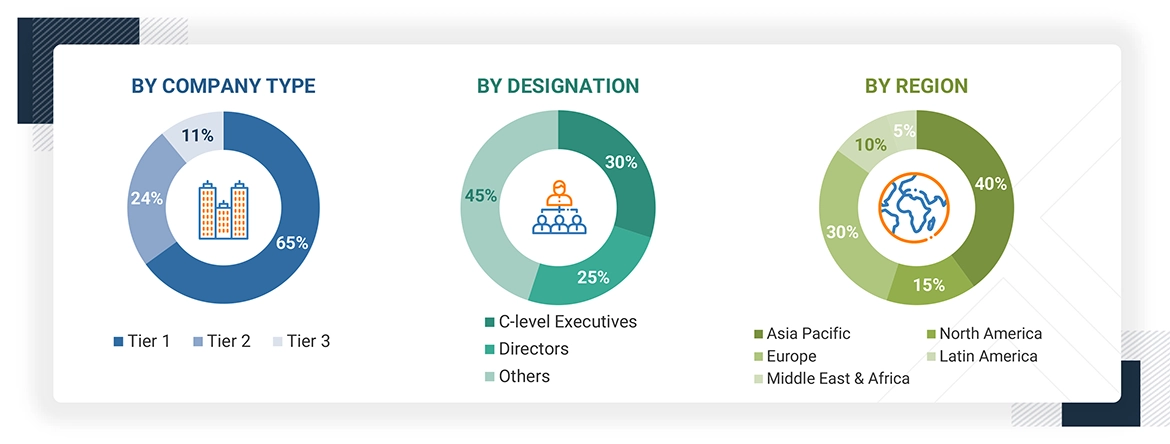
Note 1: Others include sales managers, marketing managers, and product managers.
Note 2: Tier 1 companies’ revenues are more than USD 10 billion; tier 2 companies’ revenues range between USD 1 and 10 billion; and tier 3 companies’ revenues range between USD 500 million and USD 1 billion.
Source: Industry Experts
To know about the assumptions considered for the study, download the pdf brochure
Market Size Estimation
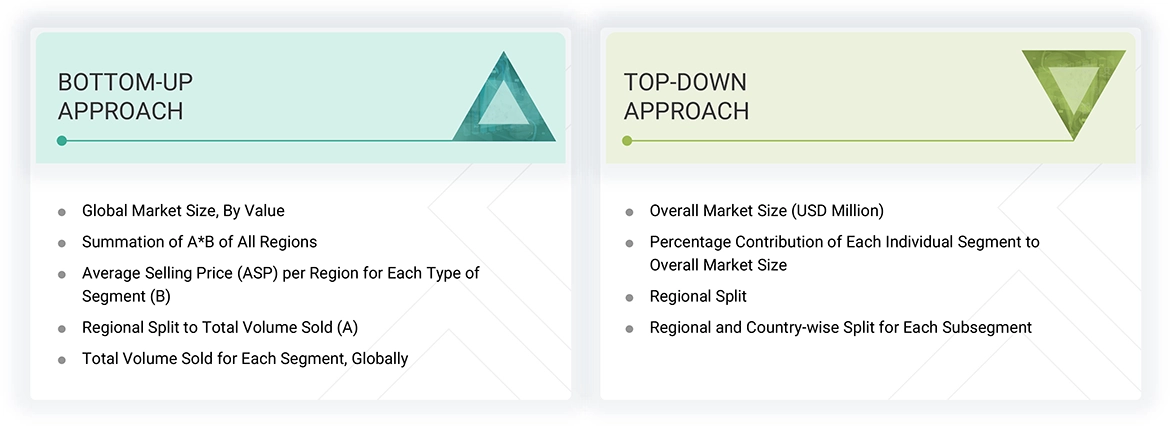
The top-down and bottom-up approaches were used to estimate and validate the size of the global solar tracker market and evaluate the sizes of various dependent submarkets. The key players in the market were identified through secondary research, and their shares in the respective regions were determined through primary and secondary research. This entire procedure included studying annual and financial reports of top market players and extensive interviews for key insights with industry leaders such as CEOs, VPs, directors, and marketing executives. All percentage shares, splits, and breakdowns were determined using secondary sources and verified through primary sources. All possible parameters that affect the markets covered in this research study were accounted for, viewed in extensive detail, verified through primary research, and analyzed to get the final quantitative and qualitative data.
Solar Tracker Market : Top-Down and Bottom-Up Approach
Data Triangulation
After arriving at the total market size, the overall market was split into several segments. The data triangulation procedure was used, wherever applicable, to complete the overall market engineering process and determine the exact statistics for all segments. The data was triangulated by studying various factors and trends from the demand and supply sides. Moreover, the market size was validated using top-down and bottom-up approaches. Hence, there are three sources for each data segment: the top-down approach, the bottom-up approach, and interviews with experts. Only when the values from the three points matched, the data was assumed to be correct.
Market Definition
A solar tracker is an advanced mechanical system designed to optimize solar energy capture by dynamically adjusting the orientation of solar panels or other photovoltaic applications to maintain direct alignment with the sun's trajectory throughout the day. This technology is particularly advantageous in high-latitude regions, where seasonal variations in solar irradiance are significant. Solar trackers can increase electricity generation by approximately 30%, with reported enhancements reaching up to 40% in some locales, thereby improving overall energy yield and efficiency under varying solar conditions. The most popular uses of solar trackers are for orienting space observatories to detect the sun's direction and for positioning photovoltaic (PV) panels, or solar panels, to ensure that they stay perpendicular to the sun's rays. PV solar trackers adjust the direction of solar panels to follow the sun's movement across the sky. By keeping the panels perpendicular to the sun, they receive more sunlight, which reduces reflection and increases energy absorption. This process allows for greater power production from the captured energy.
Stakeholders
- Solar tracker manufacturers
- Universities, governments, and research organizations
- Solar associations and industrial bodies
- Research and consulting firms
- R&D institutions
- Environmental support agencies
- Investment banks and private equity firms
Report Objectives
- To describe and forecast the global solar tracker market, in terms of volume and value
- To provide detailed information about the key factors (drivers, restraints, opportunities, and challenges) influencing market growth
- To analyze the market segmentation and forecast the market size based on axis type, application, and region
- To evaluate and forecast the market size in North America, Europe, Asia Pacific, South America, and the Middle East & Africa, along with their key countries
- To strategically analyze micromarkets1 with respect to individual growth trends, prospects, and contribution of submarkets to the total market
- To assess the market opportunities and competitive landscape for stakeholders and market leaders
- To analyze competitive developments in the market, such as expansions, partnerships, and agreements
- To profile key players and comprehensively analyze their market share and core competencies2
Available Customizations
MarketsandMarkets offers customizations according to the specific needs of the companies using the given market data.
The following customization options are available for the report:
Product Analysis
- Product matrix, which gives a detailed comparison of the product portfolio of each company
Geographic Analysis as per Feasibility
- Further breakdown of the solar tracker market by country for the European region
Company Information
- Detailed analysis and profiling of additional market players (up to five)
Get the Full Solar Tracker Market Report
Full forecast, segment splits, and company analysis for all Solar Tracker Market.
- Canada Solar Tracker Market
- Mexico Solar Tracker Market
- US Solar Tracker Market
- Germany Solar Tracker Market
- Italy Solar Tracker Market
- Spain Solar Tracker Market
- Rest Of Europe Solar Tracker Market
- China Solar Tracker Market
- India Solar Tracker Market
- Japan Solar Tracker Market
- South Korea Solar Tracker Market
- Rest Of Asia Pacific Solar Tracker Market
- Brazil Solar Tracker Market
- Saudi Arabia Solar Tracker Market
Need a Tailored Report?
Customize this report to your needs
Get 10% FREE Customization
Customize This Report
