
Japan Surgical Suction Instruments Market (2024-2029)

The Japan Surgical Suction Instruments Market was valued at $7.93 Million in 2024 and projected to reach to $11.44 Million by 2029, representing a compound annual growth rate of CAGR 7.6%. Japan's surgical suction instruments market is positioned for sustained growth driven by demographic shifts and healthcare modernization.


| Market Size in | USD 26.32 MN |
| Market Forecast in | |
| CAGR | |
| Forecast Period | |
| Units Considered | Value (USD MN) |
Japan Surgical Suction Instruments Market Trends and Insights
- This expansion reflects Japan's advanced healthcare infrastructure and increasing surgical procedure volumes across the nation.
- Japan's aging population and rising prevalence of chronic conditions are driving demand for sophisticated surgical equipment, including suction instruments used in operating rooms and clinical settings. The market in Japan is characterized by high adoption rates of advanced medical technologies and stringent quality standards that align with international best practices.
- Japan's healthcare system prioritizes precision and safety, creating favorable conditions for premium surgical suction instrument manufacturers.
- Between 2024 and 2029, Japan is expected to maintain a compound annual growth rate of 7.6%, outpacing global averages and reflecting the country's commitment to surgical innovation and patient care excellence. Key drivers of growth in Japan include increased surgical interventions, hospital modernization initiatives, and strong regulatory frameworks that ensure product quality.
- Japan's market dynamics are shaped by both domestic manufacturers and international players competing to meet the nation's exacting healthcare standards..
Key Market Statistics
- CAGR (2024-2029) CAGR 7.6%
- Market Size, 2024 ~USD 7.93 Million
- Forecast, 2029 ~USD 11.44 Million
- Country Japan
Japan Surgical Suction Instruments Market Overview
Market Valuation Growth :
Japan's surgical suction instruments market is valued at $7.93 million in 2024, with a projected CAGR of 7.6% through 2029, reaching $11.44 million. This outpaces the global CAGR of 6.1%, indicating Japan's accelerated market expansion.
Aging Population Dynamics :
Japan's rapidly aging demographic is a primary growth driver, with an increasing elderly population requiring more surgical interventions. This demographic shift directly correlates with higher volumes of surgical procedures and demand for advanced suction instruments.
Advanced Healthcare Infrastructure :
Japan's world-class healthcare system and high adoption of cutting-edge medical technologies create a favorable environment for premium surgical suction instruments. Japanese hospitals and surgical centers prioritize quality and innovation in their equipment procurement.
Chronic Disease Prevalence :
Rising prevalence of chronic conditions in Japan, including cardiovascular diseases and cancers, necessitates increased surgical interventions. This trend directly supports sustained demand for reliable and efficient surgical suction instruments across multiple specialties.
Japan Surgical Suction Instruments Market Dynamics
- The nation's aging population combined with rising chronic disease prevalence will continue to elevate surgical procedure volumes across hospitals and surgical centers.
- Japan's commitment to healthcare excellence and technology adoption ensures strong demand for advanced suction instruments. The market's 7.6% CAGR reflects Japan's premium positioning within the global surgical instruments sector.
- Investment in healthcare infrastructure upgrades and the expansion of minimally invasive surgical procedures will further accelerate market growth.
- Japanese manufacturers and international suppliers are well-positioned to capitalize on this expanding market through innovation and strategic partnerships with leading healthcare institutions..
Market Ecosystem
Related Ecosystem
Key Takeaways
- Japan's surgical suction instruments market will grow from $7.93M (2024) to $11.44M (2029) at a 7.6% CAGR.
- Japan's aging demographic and advanced healthcare system drive strong demand for surgical suction instruments.
- Japan maintains stringent quality and regulatory standards that favor premium product offerings in the market.
- Japan's market growth outpaces global averages, reflecting the nation's commitment to surgical innovation.
Surgical Suction Instruments Market Report Scope
| Report Metric | Details |
|---|---|
| Base Year | 2024 |
| Fastest Growing Segment | GENERAL SURGERY (Application) |
| Forecast Period | 2024-2029 |
| Growth Rate | CAGR of 6.1% from 2024 to 2029 |
| Largest Segment | DISPOSABLE (Usability) |
| Market Size Base Year (Billions) | ~USD 0.37 (2024) |
| Revenue Forecast (Billions) | ~USD 0.5 (2029) |
| Segments Covered | Type, Usability, Application, End User |
Japan Surgical Suction Instruments Market Report Segmentation
4 segment dimensions are covered across the global market.
By Type
- Frazier Suction Tips
- Malleable Retractors
- Other Instruments
- Poole Suction Tubes
- Rake Retractors
- Retractors
- Yankauer Suction Tubes
By Usability
- Disposable
- Reusable
By Application
- Cardiovascular Surgery
- Dental Surgery
- General Surgery
- Neurosurgery
- Orthopedic Surgery
By End User
- Ambulatory Surgery Centers
- Hospitals & Clinics
- Other End Users
JAPAN: SURGICAL SUCTION INSTRUMENTS MARKET, BY END USER, 2022–2029
| Segment | 2022 | 2023 | 2024 | 2025 | 2026 | 2027 | 2028 | 2029 | CAGR (%) |
|---|---|---|---|---|---|---|---|---|---|
| AMBULATORY SURGERY CENTERS | 9.9 | 10.5 | 11.2 | 11.9 | 12.7 | 13.6 | 14.5 | 15.5 | 6.8 |
| HOSPITALS & CLINICS | 12.2 | 13 | 13.9 | 14.9 | 16 | 17.2 | 18.5 | 20 | 7.5 |
| OTHER END USERS | 6.4 | 6.7 | 7.1 | 7.4 | 7.8 | 8.2 | 8.7 | 9.2 | 5.5 |
| TOTAL | 28.5 | 30.2 | 32.1 | 34.2 | 36.5 | 39 | 41.7 | 44.7 | 6.8 |
Target Audience
- Medical Device Manufacturers : Manufacturers need Japan-specific market data to develop localized product strategies, understand competitive positioning, and identify growth opportunities in this premium healthcare market with high technology adoption rates.
- Healthcare Facility Administrators : Hospital and surgical center leaders require market insights to make informed procurement decisions, budget allocations, and equipment upgrades aligned with Japan's advancing surgical procedure volumes and quality standards.
- Investment & Private Equity Firms : Investors evaluating opportunities in Japan's healthcare sector need detailed market forecasts, growth drivers, and competitive dynamics to assess investment viability and potential returns in surgical instruments.
- Distribution & Supply Chain Partners : Distributors and logistics providers need Japan market intelligence to optimize inventory management, identify supplier partnerships, and capitalize on the growing demand for surgical suction instruments across the nation.
- Healthcare Consultants & Analysts : Consultants advising healthcare organizations and medical device companies require Japan-specific market data to develop strategic recommendations, competitive analyses, and market entry strategies for surgical instrument sectors.
Reasons to Buy this Report
- Market-Specific Growth Projections : Gain precise forecasting data for Japan's market expansion from $7.93M to $11.44M through 2029, enabling accurate business planning and investment decisions tailored to this high-growth Asian market.
- Demographic Insights & Opportunity Analysis : Understand Japan's aging population dynamics and chronic disease prevalence driving surgical demand. Identify specific market segments and patient demographics to target your product development and marketing strategies effectively.
- Competitive Landscape Intelligence : Analyze Japan's advanced healthcare infrastructure and premium market positioning. Benchmark against local and international competitors to identify differentiation opportunities and market entry strategies for surgical suction instruments.
- Healthcare System Integration Data : Access insights into Japan's world-class hospital networks and surgical centers' procurement preferences. Understand regulatory requirements and quality standards specific to Japan's healthcare system for successful market penetration.
- Strategic Partnership Opportunities : Identify collaboration potential with Japanese healthcare institutions, distributors, and manufacturers. Leverage market intelligence to establish strategic alliances and distribution networks in this high-value, technology-driven market.
Frequently asked questions
What is the current size of Japan's surgical suction instruments market?
Japan's surgical suction instruments market was valued at $7.93 million in 2024 and is projected to reach $11.44 million by 2029.
What is the expected growth rate for Japan's surgical suction instruments market?
Japan's surgical suction instruments market is expected to grow at a compound annual growth rate (CAGR) of 7.6% from 2024 to 2029.
What factors are driving growth in Japan's surgical suction instruments market?
Growth in Japan is driven by an aging population, increased surgical procedures, hospital modernization, and stringent regulatory standards that support premium product adoption.
How does Japan's market growth compare to global trends?
Japan's 7.6% CAGR outpaces the global average of 6.1%, reflecting the nation's advanced healthcare infrastructure and strong demand for surgical innovations.
What role do regulatory standards play in Japan's surgical suction instruments market?
Japan's stringent quality and regulatory frameworks ensure high product standards, creating competitive advantages for manufacturers meeting these exacting requirements.
RESEARCH METHODOLOGY
The study involved four major activities in estimating the current size of the surgical suction instruments market. Exhaustive secondary research was done to collect information on the market, peer market, and parent market. The next step was to validate these findings, assumptions, and sizing with industry experts across the value chain through primary research. Both top-down and bottom-up approaches were employed to estimate the complete market size. After that, market breakdown and data triangulation were used to estimate the market size of segments and subsegments.
Secondary Research
The secondary research process involved the widespread use of secondary sources, directories, databases (such as Bloomberg Businessweek, Factiva, and D&B Hoovers), white papers, annual reports, company house documents, investor presentations, and SEC filings of companies. Secondary research was used to identify and collect information useful for the extensive, technical, market-oriented, and commercial study of the surgical suction instruments market. It was also used to obtain important information about the key players and market classification and segmentation according to industry trends to the bottom-most level, and key developments related to market and technology perspectives. A database of the key industry leaders was also prepared using secondary research.
Primary Research
In the primary research process, various sources from both the supply and demand sides were interviewed to obtain qualitative and quantitative information for this report. The primary sources from the supply side include industry experts such as CEOs, vice presidents, marketing and sales directors, technology & innovation directors, and related key executives from various key companies and organizations operating in the surgical suction instruments market. The primary sources from the demand side included industry experts, purchase & sales managers, doctors, and personnel from research organizations. Primary research was conducted to validate the market segmentation, identify key players in the market, and gather insights on key industry trends and key market dynamics.
A breakdown of the primary respondents for the surgical suction instruments market is provided below:
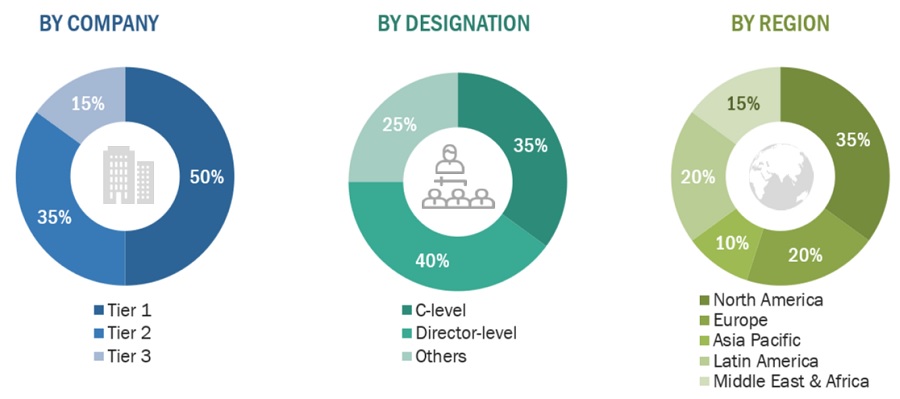
Note 1: C-level primaries include CEOs, COOs, CTOs, and VPs.
Note 2: Other primaries include Others include sales managers, marketing managers, and product managers.
Note 3: Companies are classified into tiers based on their total revenue. As of 2020: Tier 1=>USD 1 billion, Tier 2 = USD 500 million to USD 1 billion, Tier 3=<USD 500 million
To know about the assumptions considered for the study, download the pdf brochure
The research methodology used to estimate the size of the surgical suction instruments market includes the following details.
The market sizing of the market was undertaken from the global side.
Country-level Analysis: The size of the surgical suction instruments market was obtained from the annual presentations of leading players and secondary data available in the public domain. The share of products and services in the overall surgical suction instruments market was obtained from secondary data and validated by primary participants to arrive at the total surgical suction instruments market. Primary participants further validated the numbers.
Geographic market assessment (by region & country): The geographic assessment was done using the following approaches:
Approach 1: Geographic revenue contributions/splits of leading players in the market (wherever available) and respective growth trends
Approach 2: Geographic adoption trends for individual product segments by end users and growth prospects for each of the segments (assumptions and indicative estimates validated from primary interviews)
At each point, the assumptions and approaches were validated through industry experts contacted during primary research. Considering the limitations of data available from secondary research, revenue estimates for individual companies (for the overall surgical suction instruments market and geographic market assessment) were ascertained based on a detailed analysis of their respective product offerings, geographic reach/strength (direct or through distributors or suppliers), and the shares of the leading players in a particular region or country.
Global Surgical suction instruments Size: Top-Down Approach
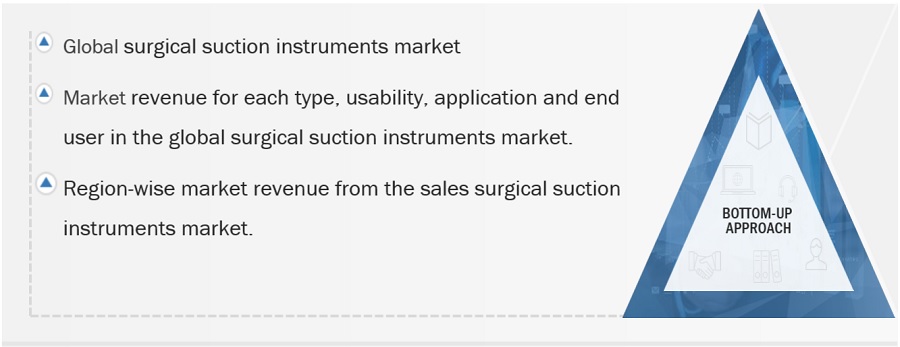
To know about the assumptions considered for the study, Request for Free Sample Report
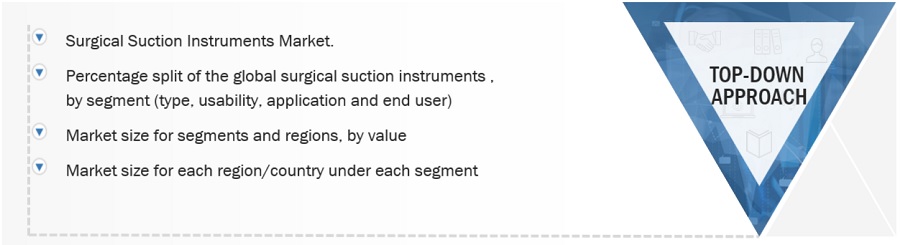
Global Surgical suction instruments Size: Bottom-Up Approach
Data Triangulation
After arriving at the overall market size—using the market size estimation processes explained above—the market was split into several segments and sub-segments. To complete the overall market engineering process and arrive at the exact statistics of each market segment and subsegment, data triangulation, and market breakdown procedures were employed, wherever applicable. The data was triangulated by studying various factors and trends from both the demand and supply sides.
Market Definition
Surgical suction instruments are specialized medical devices used during surgery to remove fluids, blood, smoke, and debris from the surgical site. They play a critical role in maintaining a clear operative field, promoting efficient surgery, and improving patient outcomes. Surgical suction instruments work by creating a partial vacuum through a tubing system connected to a suction pump. The tip of the instrument is placed near the area requiring suction, and the fluids or debris are drawn into the tubing and disposed of in a collection canister.
Key Stakeholders
- Manufacturers and distributors of medical devices
- Manufacturers and distributors of medical device components
- Surgical suction instruments companies
- Healthcare institutes
- Diagnostic laboratories
- Hospitals and clinics
- Academic institutes
- Research institutes
- Government associations
- Market research and consulting firms
- Venture capitalists and investors
Objectives of the Study
- To define, describe, segment, analyze, and forecast the global surgical suction instruments market by type, usability, application, end user and region
- To provide detailed information about the factors influencing the market growth (drivers, restraints, opportunities, and challenges)
- To analyze micro markets concerning individual growth trends, prospects, and contributions to the overall market
- To analyze market opportunities for stakeholders and provide details of the competitive landscape for key players.
- To forecast the size of the surgical suction instruments market in North America, Europe, Asia Pacific, Latin America, and the Middle East & Africa and GCC countries.
- To profile the key players in the surgical suction instruments market and comprehensively analyze their core competencies.
- To track and analyze competitive developments such as agreements, collaborations, and partnerships; expansions; acquisitions; and product launches and approvals in the surgical suction instruments market.
- To analyze the impact of the recession on the surgical suction instruments market
Available Customizations
With the given market data, MarketsandMarkets offers customizations as per the company’s specific needs. The following customization options are available for the report:
Geographic Analysis
- Further breakdown of the Rest of Asia Pacific surgical suction instruments market into Indonesia, Philippines, Vietnam, Hong Kong, and other countries
- Further breakdown of the Rest of Europe surgical suction instruments market into Belgium, Russia, the Netherlands, Switzerland, and other countries.
- Further breakdown of the Rest of Latin America surgical suction instruments market into Argentina, Peru, and other countries.
Get the Full Surgical Suction Instruments Market Report
Full forecast, segment splits, and company analysis for all Surgical Suction Instruments Market.
- Rest Of Latin America Surgical Suction Instruments Market
- GCC Countries Surgical Suction Instruments Market
- US Surgical Suction Instruments Market
- Canada Surgical Suction Instruments Market
- Germany Surgical Suction Instruments Market
- UK Surgical Suction Instruments Market
- France Surgical Suction Instruments Market
- Italy Surgical Suction Instruments Market
- Spain Surgical Suction Instruments Market
- China Surgical Suction Instruments Market
- India Surgical Suction Instruments Market
- Australia Surgical Suction Instruments Market
- South Korea Surgical Suction Instruments Market
- Brazil Surgical Suction Instruments Market
- Mexico Surgical Suction Instruments Market
- Rest Of Europe Surgical Suction Instruments Market
- Rest Of Asia Pacific Surgical Suction Instruments Market
Need a Tailored Report?
Customize this report to your needs
Get 10% FREE Customization
Customize This Report
