
Germany Veterinary Ophthalmology Equipment Market (2026-2031)

The Germany Veterinary Ophthalmology Equipment Market was valued at $10.37 Million in 2026 and projected to reach to $15.65 Million by 2031, representing a compound annual growth rate of 8.6%. Germany's veterinary ophthalmology equipment market is positioned for sustained expansion through 2031, driven by increasing pet healthcare awareness and rising disposable incomes among German pet owners.


| Market Size in | USD 26.32 MN |
| Market Forecast in | |
| CAGR | |
| Forecast Period | |
| Units Considered | Value (USD MN) |
Germany Veterinary Ophthalmology Equipment Market Trends and Insights
- Germany's advanced veterinary healthcare infrastructure and high pet ownership rates are driving demand for specialized diagnostic and surgical equipment in the ophthalmology segment.
- The market in Germany is outpacing the global average CAGR of 6.6%, reflecting strong investment in animal eye care and modernization of veterinary clinics across the country. The expansion of Germany's veterinary ophthalmology equipment market is supported by increasing awareness of pet eye health, rising disposable incomes, and the presence of leading veterinary institutions and equipment manufacturers.
- Germany's regulatory environment and emphasis on quality animal care standards further accelerate adoption of advanced ophthalmological devices.
- Between 2026 and 2031, Germany is expected to consolidate its position as a key market in Europe for specialized veterinary eye care equipment..
Key Market Statistics
- CAGR (2026-2031) 8.6% CAGR
- Market Size, 2026 ~USD 10.37 Million
- Forecast, 2031 ~USD 15.65 Million
- Country Germany
Germany Veterinary Ophthalmology Equipment Market Overview
Strong Market Growth :
Germany's veterinary ophthalmology equipment market is growing at 8.6% CAGR, significantly outpacing the global rate of 6.6%, reflecting robust domestic demand and investment in advanced veterinary care.
High Pet Ownership Rates :
Germany's elevated pet ownership and strong pet healthcare spending culture drive consistent demand for specialized ophthalmology diagnostic and surgical equipment among veterinary clinics and animal hospitals.
Advanced Healthcare Infrastructure :
Germany's well-developed veterinary healthcare system and emphasis on cutting-edge medical technology create a favorable environment for premium ophthalmology equipment adoption and innovation.
Market Expansion Trajectory :
The market is projected to grow from USD 10.37 million in 2026 to USD 15.65 million by 2031, representing a 50.9% increase and indicating sustained investment in veterinary eye care capabilities.
Germany Veterinary Ophthalmology Equipment Market Dynamics
- The country's strong regulatory framework and emphasis on animal welfare standards encourage veterinary practices to invest in advanced diagnostic and surgical technologies for eye care.
- Demand is particularly concentrated in urban centers and among specialized veterinary hospitals seeking to differentiate their service offerings. The market will benefit from technological advancements in imaging systems, surgical instruments, and diagnostic devices tailored to German quality standards.
- Partnerships between German veterinary equipment manufacturers and international suppliers are expected to enhance product availability and innovation.
- Additionally, growing awareness of preventive eye care in companion animals will expand the addressable market beyond traditional surgical interventions..
Market Ecosystem
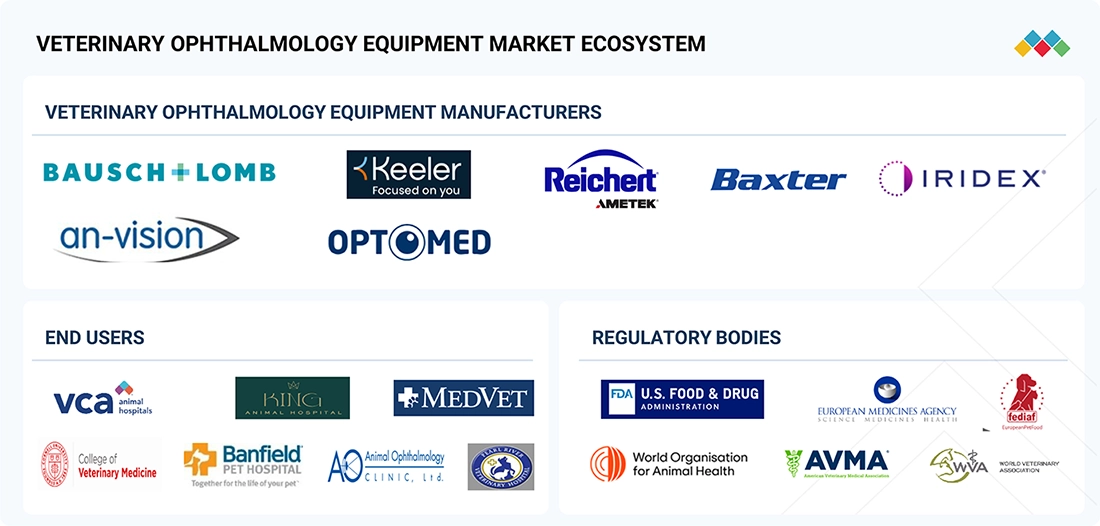
VETERINARY OPHTHALMOLOGY EQUIPMENT MARKET: COMMERCIAL USE CASES ACROSS INDUSTRIES
| COMPANY | USE CASE DESCRIPTION | BENEFITS |
|---|---|---|
 |
Provides veterinary-usable ophthalmic instruments, including surgical tools, lenses, and microsurgical equipment used in cataract extraction, corneal procedures, and general ophthalmic surgery in animals. | Supports high-precision eye surgery, improves surgical outcomes, and enables advanced treatment options for companion animals. |
 |
Offers veterinary rebound tonometers (TONOVET Plus, TONOVET Pro, TONOVET Pet) designed for accurate intraocular pressure measurement in dogs, cats, rabbits, and horses. | Enables fast, accurate glaucoma screening without anesthesia; improves early disease detection and routine IOP monitoring in veterinary practices. |
 |
Provides the Tono-Vera Vet tonometer, a veterinary-specific handheld device for objective IOP measurement with automated alignment for companion animals. | Improves reliability and consistency of IOP assessments; enhances clinical efficiency for glaucoma diagnostics in animals. |
 |
Manufactures veterinary binocular indirect ophthalmoscopes (Vantage Plus), slit lamps (KSL-H range), and handheld ophthalmoscopes specifically used by veterinary ophthalmologists. | Enables detailed retinal and anterior segment evaluation, improving diagnostic accuracy and comprehensive eye examinations. |
 |
Supplies handheld fundus cameras (e.g., Aurora IQ, Smartscope) adapted for veterinary eye imaging, allowing retinal, optic nerve, and anterior segment documentation in animals. | Facilitates high-quality imaging in general and specialty practices; supports tele-ophthalmology and early detection of retinal disease. |
Logos and trademarks shown above are the property of their respective owners. Their use here is for informational and illustrative purposes only.
Related Ecosystem
Animal Health
- Polymerase Chain Reaction (PCR) Tests
- Porcine
- Immunodiagnostics
- Lateral Flow Assays
- Microarrays
- Zoetis Inc.
- Patterson Companies, Inc.
- Virbac
- Elanco Animal Health Incorporated
- BOEHRINGER INGELHEIM GMBH
Medical Devices
- Polymerase Chain Reaction (PCR)
- Magnetic Resonance Imaging (MRI)
- Disposable Autoinjectors
- Pulse Oximeters
- Blood Pressure Monitors
- Medtronic plc
- Abbott Laboratories
- Stryker Corporation
- Becton, Dickinson and Company
- CONMED Corporation
Key Takeaways
- Germany's veterinary ophthalmology equipment market is valued at USD 10.37 million in 2026 and will reach USD 15.65 million by 2031, representing 50.8% growth over five years.
- Germany's market CAGR of 8.6% significantly exceeds the global average of 6.6%, positioning Germany as a high-growth market in the veterinary ophthalmology sector.
- Germany's advanced veterinary infrastructure, stringent quality standards, and high pet ownership drive strong demand for specialized eye care diagnostic and surgical equipment.
- Germany's market expansion is fueled by increasing pet health awareness, rising veterinary clinic modernization, and the presence of leading equipment manufacturers and research institutions.
Veterinary Ophthalmology Equipment Market Report Scope
| Report Metric | Details |
|---|---|
| Base Year | 2026 |
| Fastest Growing Segment | CANINES (Animal Type) |
| Forecast Period | 2026–2031 |
| Growth Rate | CAGR of 6.6% from 2026 to 2031 |
| Largest Segment | DIAGNOSTIC DEVICES (Product) |
| Market Size Base Year (Billions) | ~USD 0.22 (2026) |
| Revenue Forecast (Billions) | ~USD 0.3 (2031) |
| Segments Covered | Product, Type, Application, Animal Type, End User |
Germany Veterinary Ophthalmology Equipment Market Report Segmentation
5 segment dimensions are covered across the global market.
By Product
- Diagnostic Devices
- Surgical Equipment, Disposables, & Implants
By Type
- Applanation Tonometers
- Bandage Contact Lenses
- Cataract Surgery
- Corneal Surgery
- Direct Ophthalmoscopes
- Electroretinography (Erg) Devices
- Fundus Cameras
- Glaucoma Treatment
- Indirect Ophthalmoscopes
- Operating Microscopes
- Ophthalmic Implants
- Ophthalmoscopes
- Other Diagnostic Devices
- Other Surgical Equipment, Disposables, & Implants
- Other Surgical Procedures
- Phacoemulsification Devices
- Rebound Tonometers
- Retinoscopes
- Shunts
- Slit Lamps
- Tonometers
By Application
- Diagnosis & Monitoring
- Laser Therapy
- Surgical Procedures
By Animal Type
- Canines
- Equines
- Exotic & Wildlife Animals
- Felines
- Other Animals
- Rabbits
By End User
- Other End Users
- Veterinary Hospitals
- Veterinary Specialty Clinics
GERMANY: VETERINARY OPHTHALMOLOGY EQUIPMENT MARKET, BY END USER, 2024–2031
| Segment | 2024 | 2025 | 2026 | 2027 | 2028 | 2029 | 2030 | 2031 | CAGR (%) |
|---|---|---|---|---|---|---|---|---|---|
| OTHER END USERS | 0.98 | 1.04 | 1.11 | 1.19 | 1.27 | 1.36 | 1.45 | 1.56 | 6.9 |
| VETERINARY HOSPITALS | 8.73 | 9.54 | 10.43 | 11.41 | 12.49 | 13.69 | 15.03 | 16.52 | 9.6 |
| VETERINARY SPECIALTY CLINICS | 5.95 | 6.43 | 6.95 | 7.52 | 8.15 | 8.83 | 9.59 | 10.43 | 8.5 |
| TOTAL | 15.66 | 17.01 | 18.49 | 20.12 | 21.91 | 23.88 | 26.08 | 28.5 | 9 |
Target Audience
- Veterinary Equipment Manufacturers : Manufacturers need Germany-specific market data to develop localized product strategies, identify distribution partnerships, and capitalize on the 8.6% growth opportunity in this premium market.
- Veterinary Clinic Operators : Clinic owners and managers require market insights to justify capital investments in ophthalmology equipment, benchmark against peers, and plan service expansion in Germany's growing pet healthcare sector.
- Medical Device Distributors : Distributors need Germany market forecasts and demand drivers to optimize inventory, negotiate supplier agreements, and identify high-potential customer segments within the veterinary ophthalmology space.
- Investment & Private Equity Firms : Investors evaluating German veterinary healthcare opportunities require detailed market sizing and growth projections to assess portfolio companies and identify acquisition targets in this expanding segment.
- Healthcare Consultants & Advisors : Consultants advising veterinary practices and equipment suppliers need Germany-specific market intelligence to develop strategic recommendations and support business planning initiatives.
Key Companies in the Germany Veterinary Ophthalmology Equipment Market
| Company | HQ | Ownership | Strongest segments |
|---|---|---|---|
| BAUSCH + LOMB | Canada | Public Company | Vision Care (contact lenses, lens care, OTC eye drops, vitamins),Pharmaceuticals (proprietary and generic ophthalmic drugs),Surgical (cataract, corneal, vitreous, retinal devices and IOLs), |
| REVENIO GROUP OYJ | Finland | Public Company | Tonometers (IC100, ST500, IC200, HOME2, TONOVET lines),Tonometer accessories (iCare Sensors and consumables),Imaging devices (EIDON, DRSplus, COMPASS), |
| HALMA PLC | United Kingdom | Public Company | Safety,Environmental & Analysis,Healthcare, |
| BAXTER | United States | Public Company | Medical Products & Therapies (IV, infusion, parenteral nutrition, dialysis-related),Healthcare Systems & Technologies (smart beds, monitoring, OR integration, surgical equipment),Pharmaceuticals (generic and specialty injectables, inhaled anesthetics, compounding), |
| AMETEK, INC. | United States | Public Company | Electronic Instruments Group (EIG),Electromechanical Group (EMG), |
| IRIDEX CORPORATION | United States | Public Company | Cyclo G6 glaucoma laser systems and probes (MicroPulse P3, G-Probe, G-Probe Illuminate),Retinal laser systems (IQ 532, IQ 577) and TxCell scanning delivery,OcuLight photocoagulation systems (TX, SL, SLx, GL, GLx), |
| OPTOMED PLC | Finland | Public Company | Handheld fundus cameras (Optomed Smartscope Pro, Aurora, Aurora AEYE, Polaris, Lumo),OEM cameras (Volk Optical, Carl Zeiss Meditec, Topcon branded),Eye-care software (Avenue AI, Avenue Eye Screen, Avenue Flow, Avenue Telemedicine), |
BAUSCH + LOMB
Bausch + Lomb is a Canadian public company founded in 1853 with 13,000 employees. The company operates as an established player in the optical and eye care industry.
REVENIO GROUP OYJ
Revenio Group Oyj is a Finnish public company founded in 2001 with 246 employees. The company operates in the ophthalmic technology and diagnostics sector.
HALMA PLC
Halma PLC is a United Kingdom-based public company founded in 1894 with 9,000 employees. The company operates across multiple sectors including safety, diagnostics, and environmental monitoring.
BAXTER
Baxter is a United States-based public company founded in 1931 with 37,500 employees. The company is a global healthcare company specializing in medical devices, pharmaceuticals, and biotechnology.
AMETEK, INC.
AMETEK, Inc. is a United States-based public company founded in 1930 with 22,500 employees. The company manufactures electronic instruments and electromechanical devices for industrial and commercial applications.
IRIDEX CORPORATION
Iridex Corporation is a United States-based public company founded in 1989 with 93 employees. The company develops and manufactures laser-based medical systems for ophthalmology and dermatology applications.
OPTOMED PLC
Optomed PLC is a Finnish public company founded in 2004 with 110 employees. The company develops and manufactures portable ophthalmic diagnostic devices.
Reasons to Buy this Report
- Market-Specific Growth Intelligence : Gain detailed insights into Germany's 8.6% CAGR trajectory and understand the unique drivers differentiating this market from global trends, enabling targeted business strategy development.
- Competitive Positioning Data : Access Germany-specific market sizing and forecasts to benchmark your offerings against local competitors and identify gaps in the USD 10.37M-to-USD 15.65M market opportunity.
- Customer Demand Insights : Understand German veterinary practitioners' preferences for ophthalmology equipment, including technology adoption patterns and purchasing criteria specific to the German market context.
- Investment & Expansion Planning : Leverage Germany market projections through 2031 to make informed decisions about market entry, facility expansion, or product localization for the German veterinary sector.
- Regulatory & Infrastructure Context : Understand Germany's advanced veterinary healthcare infrastructure and quality standards to align product development and compliance strategies with local market requirements.
Frequently asked questions
What is the current market size of veterinary ophthalmology equipment in Germany?
Germany's veterinary ophthalmology equipment market is valued at USD 10.37 million in 2026 and is projected to grow to USD 15.65 million by 2031.
What is the expected growth rate for Germany's veterinary ophthalmology equipment market?
Germany's market is expected to grow at a CAGR of 8.6% from 2026 to 2031, outpacing the global average of 6.6%.
What factors are driving growth in Germany's veterinary ophthalmology equipment market?
Key drivers include Germany's advanced veterinary healthcare infrastructure, high pet ownership rates, increasing pet health awareness, rising disposable incomes, and modernization of veterinary clinics.
How does Germany's market performance compare to the global market?
Germany's CAGR of 8.6% significantly exceeds the global CAGR of 6.6%, indicating that Germany is a faster-growing market for veterinary ophthalmology equipment compared to the worldwide average.
What is the forecast market size for Germany's veterinary ophthalmology equipment market in 2031?
Germany's veterinary ophthalmology equipment market is forecasted to reach USD 15.65 million by 2031, representing a 50.8% increase from the 2026 baseline.
RESEARCH METHODOLOGY
This research study extensively utilized both primary and secondary sources. It involved analyzing various factors influencing the industry to identify segmentation types, industry trends, key players, the competitive landscape, key market dynamics, and strategies employed by key players.
Secondary Research
This research study utilized a variety of comprehensive secondary sources, including directories, databases such as Bloomberg Business, Factiva, and Dun & Bradstreet, white papers, annual reports, company house documents, investor presentations, and SEC filings from various companies. Secondary research was employed to gather information crucial for an in-depth, technical, market-oriented, and commercial analysis of the veterinary ophthalmology equipment market. This approach also helped identify key players in the industry and allowed for classification and segmentation based on emerging trends at the most detailed level. Furthermore, significant developments pertaining to both market and technological perspectives were documented. A database of primary industry leaders was created as part of this secondary research.
Primary Research
In the primary research process, we interviewed a range of sources from both the supply and demand sides to gather qualitative and quantitative information for this report. Primary sources from the supply side include project/sales/marketing/business development managers, presidents, CEOs, vice presidents, chairpersons, chief operating officers, chief strategy officers, directors, chief information officers, and chief medical information officers related to the veterinary ophthalmology equipment market. Primary sources from the demand side include veterinary ophthalmologists and general veterinary clinicians, R&D and product development teams, managers of specialty and referral veterinary clinics, and procurement teams in veterinary practices and hospitals.
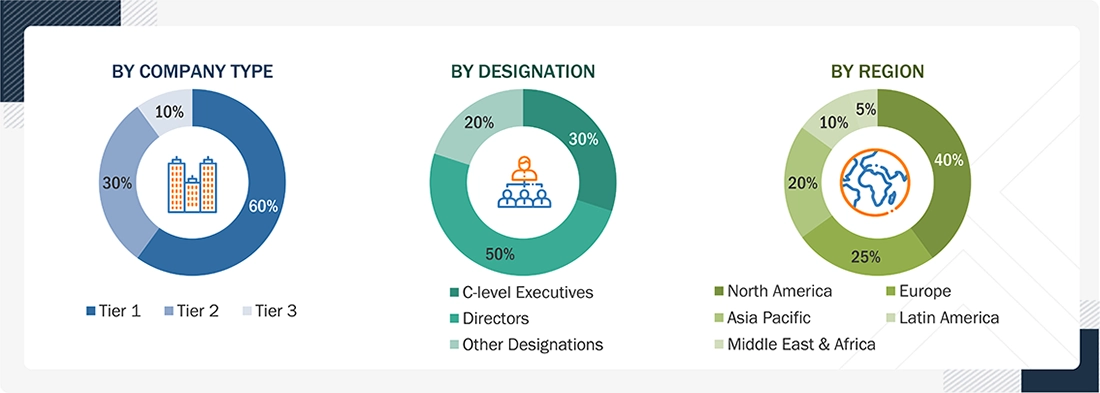
Note 1: C-level executives include CEOs, COOs, CTOs, and VPs.
Note 2: Other designations include sales, marketing, and product managers.
Note 3: Tiers are defined based on a company’s total revenue. As of 2025: Tier 1 = >USD 1 billion, Tier 2 = USD 500 million to USD 1 billion, and Tier 3 = <USD 500 million.
To know about the assumptions considered for the study, download the pdf brochure
Market Size Estimation
The total size of the veterinary ophthalmology equipment market was determined after data triangulation from three approaches, as mentioned below. After each approach, the weighted average of the three approaches was taken based on the level of assumptions used in each approach.
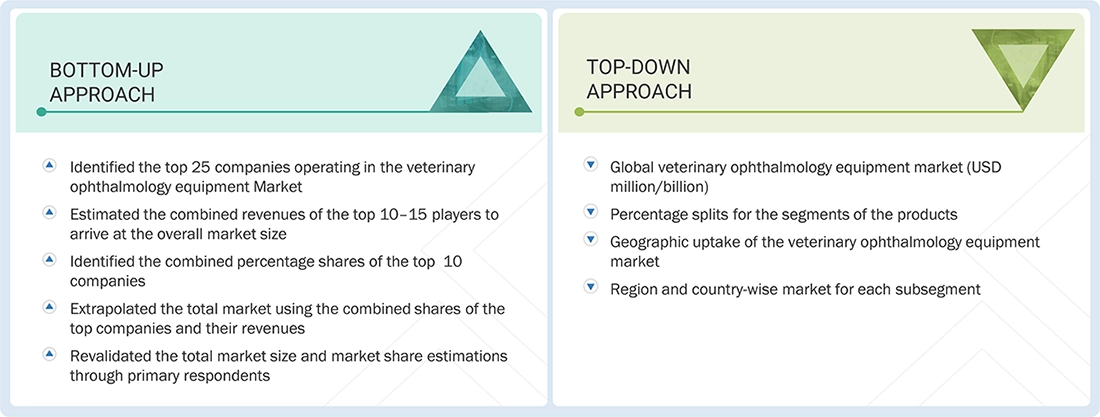
Data Triangulation
After arriving at the market size, the total market was divided into several segments and subsegments. Data triangulation and market breakdown procedures were employed wherever applicable to complete the overall market engineering process and arrive at the exact statistics for all segments and subsegments.
Market Definition
Veterinary ophthalmology equipment refers to specialized tools, instruments, and devices used by veterinarians and veterinary ophthalmologists to diagnose, treat, and manage eye related conditions in animals. This equipment facilitates various aspects of ophthalmic care for animals, ranging from routine eye examinations to advanced surgical procedures. Veterinary ophthalmology equipment may include diagnostic tools such as ophthalmoscopes, tonometers, slit lamps, and ocular ultrasound machines, which enable veterinarians to assess the health of the eye, diagnose diseases, and monitor treatment progress.
Key Stakeholders
- Manufacturers of veterinary ophthalmology equipment
- Veterinary ophthalmology equipment suppliers & distributors
- Original equipment manufacturers (OEMs)
- Veterinary hospitals & clinics
- Distributors of veterinary ophthalmology equipment
- Contract research organizations (CROs)
- Medical device research & consulting firms
- Academic & research institutes
- Veterinary research institutes
- Veterinary diagnostic laboratories
- Animal health research & development (R&D) companies
- Government associations
- Venture capitalists & investors
Report Objectives
- To define, describe, segment, and forecast the veterinary ophthalmology equipment market by product, animal type, application, end user, and region
- To provide detailed information about the factors influencing market growth (such as drivers, restraints, opportunities, and challenges)
- To analyze micromarkets with respect to individual growth trends, prospects, and contributions to the overall veterinary ophthalmology equipment market
- To analyze market opportunities for stakeholders and provide details of the competitive landscape for key players
- To forecast the size of the veterinary ophthalmology equipment market in five main regions (along with their respective key countries): North America, Europe, the Asia Pacific, Latin America, and the Middle East & Africa
- To profile the key players in the veterinary ophthalmology equipment market and comprehensively analyze their core competencies and market shares
- To track and analyze competitive developments such as acquisitions, product launches, expansions, collaborations, agreements, and partnerships
Available customizations:
With the given market data, MarketsandMarkets offers customizations to meet your company’s specific needs. The following customization options are available for the report:
Company Information
Geographic Analysis
-
Detailed analysis and profiling of additional market players (up to 5)
- Further breakdown of the Rest of European veterinary ophthalmology equipment market into Austria, Finland, Switzerland, and other countries
- Further breakdown of the Rest of Latin American veterinary ophthalmology equipment market into Colombia, Chile, and other countries
-
Competitive Landscape Assessment
- Market share analysis for North American and European markets, which provides market shares of the top 3–5 key players in the veterinary ophthalmology equipment market
- Competitive leadership mapping for established players in the US
Get the Full Veterinary Ophthalmology Equipment Market Report
Full forecast, segment splits, and company analysis for all Veterinary Ophthalmology Equipment Market.
- US Veterinary Ophthalmology Equipment Market
- Canada Veterinary Ophthalmology Equipment Market
- UK Veterinary Ophthalmology Equipment Market
- France Veterinary Ophthalmology Equipment Market
- Italy Veterinary Ophthalmology Equipment Market
- Spain Veterinary Ophthalmology Equipment Market
- Netherlands Veterinary Ophthalmology Equipment Market
- China Veterinary Ophthalmology Equipment Market
- Japan Veterinary Ophthalmology Equipment Market
- India Veterinary Ophthalmology Equipment Market
- Australia Veterinary Ophthalmology Equipment Market
- South Korea Veterinary Ophthalmology Equipment Market
- New Zealand Veterinary Ophthalmology Equipment Market
- Brazil Veterinary Ophthalmology Equipment Market
- Mexico Veterinary Ophthalmology Equipment Market
- UAE Veterinary Ophthalmology Equipment Market
- Irelands Veterinary Ophthalmology Equipment Market
- Rest Of Europe Veterinary Ophthalmology Equipment Market
Need a Tailored Report?
Customize this report to your needs
Get 10% FREE Customization
Customize This Report
