
South Africa Wind Turbine Protection Market (2024-2029)

The South Africa Wind Turbine Protection Market was valued at $7.4 Million in 2024 and projected to reach to $13.8 Million by 2029, representing a compound annual growth rate of 13.4%. South Africa's wind turbine protection market is positioned for sustained growth as the nation accelerates its transition away from coal-dependent energy systems.


| Market Size in | USD 26.32 MN |
| Market Forecast in | |
| CAGR | |
| Forecast Period | |
| Units Considered | Value (USD MN) |
South Africa Wind Turbine Protection Market Trends and Insights
- This growth trajectory reflects South Africa's increasing investment in renewable energy infrastructure and the critical need for advanced protective systems to safeguard wind assets against environmental and operational challenges.
- South Africa's strategic positioning as a renewable energy hub in the Middle East Africa region is driving demand for comprehensive turbine protection solutions. The market in South Africa is propelled by rising wind energy capacity installations and heightened awareness of asset longevity and maintenance efficiency.
- South Africa's commitment to renewable energy targets and grid modernization initiatives are creating sustained demand for protective technologies including lightning protection, corrosion prevention, and structural monitoring systems.
- Between 2024 and 2029, South Africa's wind turbine protection market is expected to nearly double, reflecting the country's pivotal role in regional energy transition and the escalating complexity of wind farm operations..
Key Market Statistics
- CAGR (2024-2029) 13.4% CAGR
- Market Size, 2024 ~USD 7.4 Million
- Forecast, 2029 ~USD 13.8 Million
- Country South Africa
South Africa Wind Turbine Protection Market Overview
Rapid Market Expansion :
South Africa's wind turbine protection market is growing at 13.4% CAGR, significantly outpacing the global rate of 10.5%, driven by aggressive renewable energy targets and government incentives for clean power generation.
Strategic Infrastructure Investment :
With market valuation reaching USD 7.4 million in 2024 and projected growth to USD 13.8 million by 2029, South Africa is prioritizing wind asset protection as a cornerstone of its energy transition strategy.
Environmental Challenge Mitigation :
South Africa's coastal and inland wind farms face unique environmental pressures including salt corrosion, extreme weather events, and operational stress, creating sustained demand for specialized protective solutions.
Renewable Energy Commitment :
Government renewable energy procurement programs and private sector investments in wind capacity are accelerating the need for comprehensive turbine protection systems across South African wind farms.
South Africa Wind Turbine Protection Market Dynamics
- The country's abundant wind resources, particularly in the Western Cape and Northern Cape regions, are attracting significant capital investment in wind farm development, directly correlating with increased demand for advanced protective technologies. The market outlook remains highly positive through 2029, supported by regulatory frameworks favoring renewable energy, declining wind turbine costs, and growing awareness of asset protection's role in maximizing operational efficiency and lifespan.
- South African utilities and independent power producers are increasingly recognizing that comprehensive protection systems deliver superior return on investment, positioning the market for continued expansion beyond the forecast period..
Market Ecosystem
Related Ecosystem
Decarbonization
- Battery Electric Vehicle (BEV)
- Energy Management Systems
- Fuel Cell
- Fuel Cell Electric Vehicle (FCEV)
- Geographical Information System (GIS)
- TotalEnergies SE
- Siemens ag
- Mitsui & Co., Ltd.
- General Electric Company
- Thyssenkrupp ag
Key Takeaways
- South Africa's wind turbine protection market is valued at USD 7.4 million in 2024 and is forecast to grow to USD 13.8 million by 2029, representing an accelerated 13.4% CAGR.
- South Africa's renewable energy expansion and commitment to decarbonization are driving increased adoption of advanced turbine protection technologies.
- South Africa's geographic and climatic conditions necessitate specialized protective solutions for lightning, corrosion, and structural integrity.
- South Africa's market growth outpaces the global average, positioning the country as a key growth driver in the Middle East Africa region.
Wind Turbine Protection Market Report Scope
| Report Metric | Details |
|---|---|
| Base Year | 2024 |
| Fastest Growing Segment | OFFSHORE (End User) |
| Forecast Period | 2024-2029 |
| Growth Rate | CAGR of 10.5% from 2024 to 2029 |
| Largest Segment | ONSHORE (End User) |
| Market Size Base Year (Billions) | ~USD 1.7 (2024) |
| Revenue Forecast (Billions) | ~USD 2.8 (2029) |
| Segments Covered | Protection Type, Type, Equipment, End User |
South Africa Wind Turbine Protection Market Report Segmentation
4 segment dimensions are covered across the global market.
By Protection Type
- Coatings
- Tapes & Films
By Type
- Epoxy Coatings
- Other Coatings
- Polyurethane
- Polyurethane Coatings
By Equipment
- Blades
- Nacelle
- Nacelles
- Tower
- Towers
By End User
- Offshore
- Onshore
Target Audience
- Wind Farm Operators & Utilities : South African utility companies and independent power producers need market intelligence to optimize asset protection investments, reduce downtime, and maximize turbine lifespan in the country's growing wind portfolio.
- Protection Technology Providers : Manufacturers and suppliers of turbine protection systems require South Africa-specific market data to identify expansion opportunities, customize solutions for local conditions, and compete effectively in this high-growth market.
- Investment & Private Equity Firms : Investors evaluating opportunities in South Africa's renewable energy sector need detailed market sizing and growth forecasts to assess the viability and returns of wind energy infrastructure investments.
- Government & Policy Makers : South African energy regulators and policy officials require market insights to develop supportive frameworks, allocate resources effectively, and track progress toward national renewable energy targets.
- Engineering & Consulting Firms : Project developers and engineering consultants serving South Africa's wind sector need localized market data to advise clients on protection system selection, cost optimization, and regulatory compliance.
Reasons to Buy this Report
- Market-Specific Growth Intelligence : Gain detailed insights into South Africa's 13.4% CAGR trajectory, understanding localized drivers and competitive dynamics that differ significantly from global market trends.
- Investment Decision Support : Access comprehensive valuation data (USD 7.4M to USD 13.8M forecast) to inform capital allocation decisions, market entry strategies, and partnership opportunities in South Africa's wind sector.
- Regional Risk Assessment : Understand South Africa-specific environmental challenges, regulatory frameworks, and operational conditions that influence turbine protection requirements and technology adoption patterns.
- Competitive Positioning : Identify market gaps, emerging competitors, and customer preferences unique to South Africa's wind energy landscape to develop targeted go-to-market strategies.
- Stakeholder Alignment : Leverage South Africa-focused data to align with government renewable energy targets, utility procurement priorities, and investor expectations in the local market.
Frequently asked questions
What is the current size of South Africa's wind turbine protection market?
South Africa's wind turbine protection market was valued at USD 7.4 million in 2024.
What is the projected market size for South Africa by 2029?
South Africa's wind turbine protection market is forecast to reach USD 13.8 million by 2029.
What is the CAGR for South Africa's wind turbine protection market?
South Africa's wind turbine protection market is expected to grow at a compound annual growth rate of 13.4% from 2024 to 2029.
Why is South Africa's market growing faster than the global average?
South Africa's accelerated growth is driven by expanding renewable energy capacity, climate commitments, and the need for specialized protection against local environmental conditions.
What types of protection solutions are in demand in South Africa?
South Africa's market demand includes lightning protection systems, corrosion prevention coatings, structural health monitoring, and blade protection technologies.
RESEARCH METHODOLOGY
The study involved major activities in estimating the current size of the wind turbine protection market. Exhaustive secondary research was done to collect information on the peer and parent markets. The next step was to validate these findings, assumptions, and sizing with industry experts across the value chain through primary research. Both top-down and bottom-up approaches were employed to estimate the complete market size. Thereafter, market breakdown and data triangulation were used to estimate the market size of the segments and subsegments.
Secondary Research
This research study on the wind turbine protection market involved the use of extensive secondary sources, directories, and databases, such as Hoovers, Bloomberg, Businessweek, Factiva, International Energy Agency, and United States Energy Association, to identify and collect information useful for a technical, market-oriented, and commercial study of the global wind turbine protection market. The other secondary sources included annual reports of the companies involved in the market, press releases & investor presentations of companies, white papers, certified publications, articles by recognized authors, manufacturer associations, trade directories, and databases.
Primary Research
The wind turbine protection market comprises several stakeholders such as wind turbine protection manufacturers, wind turbine protection service companies, suppliers and distributors of wind turbine protection in the supply chain. The demand side of this market is characterized by the increasing oil & gas exploration activities. The supply side is characterized by rising demand for contracts from the oil & gas sector and mergers & acquisitions among big players. Various primary sources from both the supply and demand sides of the market were interviewed to obtain qualitative and quantitative information.
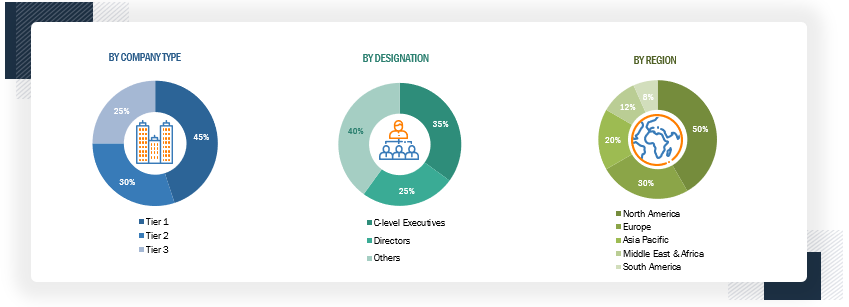
To know about the assumptions considered for the study, download the pdf brochure
Market Size Estimation
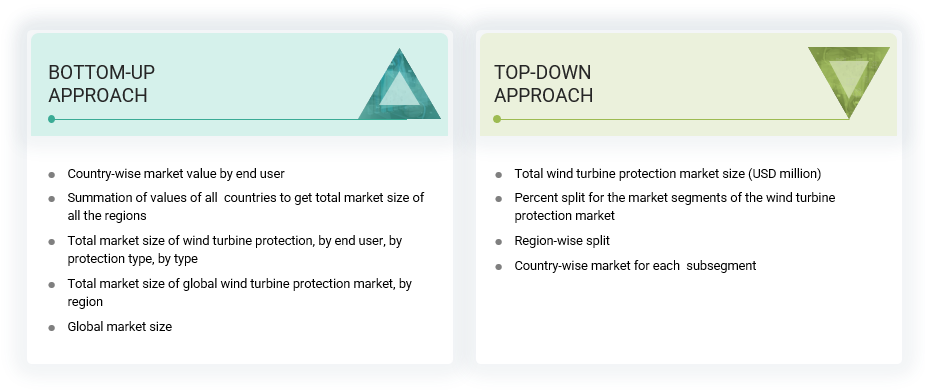
Both top-down and bottom-up approaches were used to estimate and validate the total size of the wind turbine protection market. These methods were also used extensively to estimate the size of various subsegments in the market. The research methodology used to estimate the market size includes the following:
Wind Turbine Protection Market Size: Top-Down & Bottom-UP Approach
Data Triangulation
After arriving at the overall market size from the estimation process explained above, the total market has been split into several segments and subsegments. The complete market engineering process is done to arrive at the exact statistics for all the segments and subsegments, also data triangulation and market breakdown processes have been employed, wherever applicable. The data has been triangulated by examining various factors and trends from both the demand- and supply sides. Along with this, the market has been validated through both the top-down and bottom-up approaches.
Market Definition
The wind turbine protection market encompasses the materials and technologies designed to safeguard wind turbine components such as blades, nacelle, tower etc. from environmental damage and operational wear. This includes leading-edge protection systems, anti-corrosion coatings, and erosion-resistant materials. These solutions address challenges such as rain erosion, UV radiation, and mechanical impacts, which can reduce turbine efficiency and lifespan. The players in this market innovate to enhance the durability and performance of wind turbines, ensuring reliability and reducing maintenance costs, thereby supporting the growth of the renewable energy sector.
Stakeholders
- Wind turbine protection equipment manufacturers
- Wind turbine manufacturers
- Wind turbine distributors and suppliers
- Research institutes and companies.
- Wind Farm Operators
- Industry, energy, and environmental associations
- Renewable Energy Advocates
- Government and research organizations
Report Objectives
- To define, describe, segment, and forecast the wind turbine protection market, by equipment, protection type, and end user, in terms of value.
- To define, describe, segment, and forecast the wind turbine protection market, by end user and region, in terms of volume.
- To describe and forecast the market size of various segments across five key regions: North America, South America, Europe, Asia Pacific, and the Middle East & Africa.
- To provide detailed information regarding the drivers, restraints, opportunities, and challenges influencing the market growth
- To strategically analyze the market with respect to individual growth trends, prospects, and contributions of each segment to the market
- To strategically analyze the micromarkets1 with respect to individual growth trends, upcoming expansions, and their contributions to the overall market
- To analyze market opportunities for stakeholders and provide a detailed competitive landscape for market leaders.
- To strategically analyze the regulatory landscape, tariff, standards, patents, Porter’s five forces, import and export scenarios, trade values, and case studies pertaining to the market under study.
- To strategically profile the key players and comprehensively analyze their market ranking and core competencies*
- To analyze competitive developments in the wind turbine protection market, such as product launches, contracts, expansions, and mergers & acquisitions
Get the Full Wind Turbine Protection Market Report
Full forecast, segment splits, and company analysis for all Wind Turbine Protection Market.
- US Wind Turbine Protection Market
- Canada Wind Turbine Protection Market
- Mexico Wind Turbine Protection Market
- Germany Wind Turbine Protection Market
- Spain Wind Turbine Protection Market
- UK Wind Turbine Protection Market
- France Wind Turbine Protection Market
- Sweden Wind Turbine Protection Market
- China Wind Turbine Protection Market
- India Wind Turbine Protection Market
- Australia Wind Turbine Protection Market
- Japan Wind Turbine Protection Market
- Brazil Wind Turbine Protection Market
- Argentina Wind Turbine Protection Market
- Egypt Wind Turbine Protection Market
- Jordan Wind Turbine Protection Market
- Rest Of Europe Wind Turbine Protection Market
- Rest Of Asia Pacific Wind Turbine Protection Market
- Rest Of South America Wind Turbine Protection Market
Need a Tailored Report?
Customize this report to your needs
Get 10% FREE Customization
Customize This Report
