Healthcare Mass Notification System Market

Healthcare Mass Notification System Market by Software (Public Warning and Emergency Alerting, Operational and IT Alerting), Hardware, Application (Evacuation Management, Operational Disruption & Infrastructure Alerts) - Global Forecast to 2030




OVERVIEW
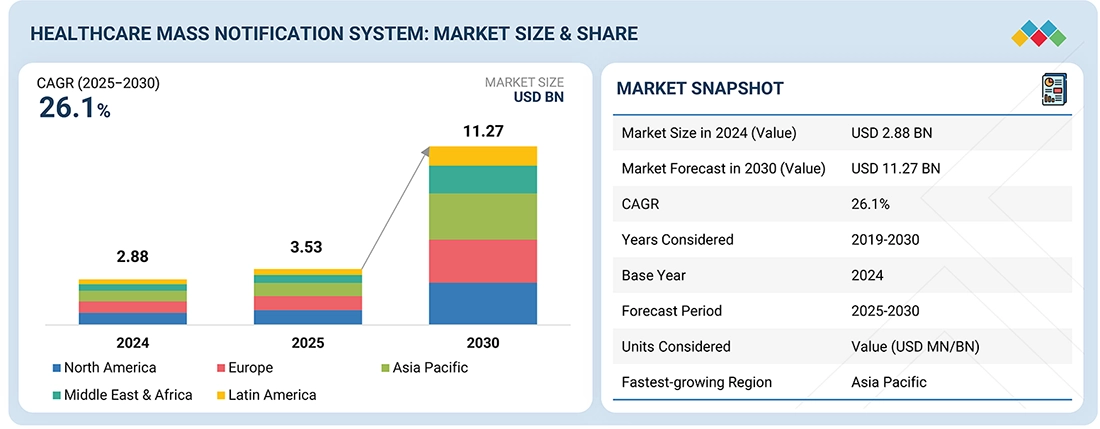
Source: Secondary Research, Interviews with Experts, MarketsandMarkets Analysis
The healthcare mass notification system market is projected to grow from USD 3.53 billion in 2025 to USD 11.27 billion by 2030, at a CAGR of 26.1% during the forecast period. MNS is a communication solution that includes basic alerting mechanisms to efficiently inform and direct healthcare providers to safety. It comprises a comprehensive framework encompassing inputs and monitoring capabilities to provide directives during critical situations. The adoption of healthcare notification systems is rising because hospitals need faster, multi-channel communication to manage diverse critical events, security incidents, weather events, IT downtime, and facility disruptions.
KEY TAKEAWAYS
-
By RegionNorth America dominates the healthcare mass notification system market by holding a 28.06% market share in 2025.
-
By OfferingElectronic messaging displays are projected to be the fastest-growing segment during the forecast period.
-
By Communication ChannelBy communication channel, the voice communication segment dominates the market with a share of 47.8% in 2025.
-
By ApplicationBy application, the staff accountability & mustering segment is anticipated to show the highest growth with a CAGR of 30.3% during the forecast period.
-
Competitive LandscapeHoneywell, Johnson Controls, Everbridge, and Motorola Solutions were identified as leading players in the healthcare mass notification system market due to their strong product innovation, broad industry coverage, and solid operational and financial performance that cater to the healthcare vertical.
-
Competitive LandscapeRegroup Mass Notification, Crises Control, and CrisisGo have distinguished themselves among startups and SMEs through robust product portfolios and effective business strategies.
In healthcare, clear and fast communication is essential to keep staff, patients, and visitors safe. When mass notification systems are connected with incident management and visitor check-in tools, hospitals can respond quickly to emergencies while also supporting smooth daily operations. Many healthcare organizations are adopting these systems to meet emergency preparedness requirements, with a large share of U.S. hospitals expected to use them by 2025. After the COVID-19 pandemic, the use of mass notification systems also increased, especially for contact tracing and sharing vaccine updates.
TRENDS & DISRUPTIONS IMPACTING CUSTOMERS' CUSTOMERS
The healthcare mass notification system market is estimated to grow at a CAGR of 26.1% by value during the forecast period. The market is expanding to ensure timely and adequate information dissemination during routine operations and emergencies. Vendors are now offering advanced MNS platforms that include features like wearable panic buttons, mobile app enhancements, and dynamic targeting. These innovations enable more precise and effective communication, tailored to the specific needs of healthcare environments.?? Honeywell and Siemens focus on hardware-software hybrids for large healthcare facilities, Singlewire on IP-based systems, and BlackBerry AtHoc on secure, encrypted notifications.
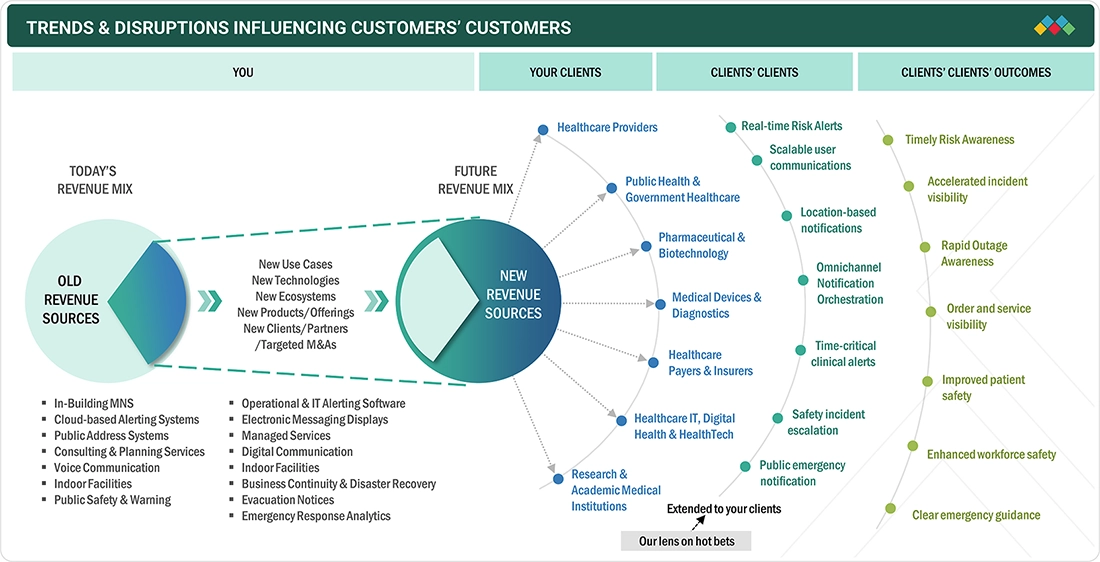
Source: Secondary Research, Interviews with Experts, MarketsandMarkets Analysis
MARKET DYNAMICS

Level
-
Rising need for real-time clinical and emergency communication across hospitals, healthcare facilities, and care teams

-
Growing focus on staff safety, disaster preparedness, and regulatory compliance in healthcare facilities


Level
-
Budget constraints and long procurement cycles in hospitals slow down full-scale MNS deployments

-
Integration challenges with legacy paging, PBX, and building systems increase complexity


Level
-
Rapid shift toward smart hospitals, AI-driven operations, and connected care environments will drive deeper MNS adoption

-
Growing need for automated, location-aware, and predictive alerting will expand MNS beyond basic notifications into intelligent response platforms


Level
-
Need to ensure high reliability, security, and compliance in life-critical healthcare environments

-
Alert fatigue and training gaps can limit the effectiveness of notification systems

Source: Secondary Research, Interviews with Experts, MarketsandMarkets Analysis
Rising need for real-time clinical and emergency communication across hospitals, healthcare facilities, and care teams
The Healthcare Mass Notification System market is growing because hospitals need faster and more reliable ways to communicate during emergencies, security incidents, system outages, and natural disasters. In healthcare, even a small delay can put patient safety at risk. As hospital networks expand and become more complex, they need one system that can quickly reach doctors, nurses, administrators, and security teams through mobile phones, voice calls, and digital alerts.
Budget constraints and long procurement cycles in hospitals slow down full-scale MNS deployments
Despite the strong need, adoption is sometimes slowed by budget limitations and long approval processes within hospitals. Many healthcare organizations still rely on older paging systems and fragmented communication tools, which makes upgrading to a modern, integrated MNS more complex. Limited IT resources and competing priorities, such as EHR upgrades or cybersecurity investments, also delay full-scale deployments in some facilities.
Rapid shift toward smart hospitals, AI-driven operations, and connected care environments will drive deeper MNS adoption
The move toward smart hospitals, digital health, and connected care is creating new growth opportunities for MNS vendors. As hospitals adopt cloud platforms, AI-driven operations, and IoT-enabled infrastructure, mass notification systems can become more automated, location-aware, and intelligent. This allows healthcare providers to go beyond basic alerts and build faster, more coordinated response systems that improve both patient care and staff safety.
Need to ensure high reliability, security, and compliance in life-critical healthcare environments
Healthcare environments demand extremely high reliability because alerts often involve life-critical situations. MNS platforms must work without failure, even during network outages or disasters, and must meet strict security and privacy standards. At the same time, hospitals must manage alert fatigue and ensure staff are trained to respond correctly, which can be difficult in large, high-pressure clinical environments.
HEALTHCARE MASS NOTIFICATION SYSTEM MARKET: COMMERCIAL USE CASES ACROSS INDUSTRIES
| COMPANY | USE CASE DESCRIPTION | BENEFITS |
|---|---|---|
 |
Holland Hospital in western Michigan implemented InformaCast, a mass notification and incident management system, that offers a mobile panic button available through an app. | InformaCast provides the capability to monitor severe weather feeds from the National Weather Service, enabling the sending of automated alerts for specified weather events. |
 |
UK HealthCare implemented xMatters integration with Microsoft Teams. For critical incidents, xMatters automatically launches a Teams channel where responders can collaborate and access all incident details. | By using xMatters, UK HealthCare has been able to reduce incident engagement time from minutes to seconds, automate the manual triage processes, and deliver the most reliable patient experience. |
 |
Anderson Hospital in Maryville, Illinois (US), implemented the Alertus Desktop Notification solution to easily and effectively expand its notification reach for its initial phase. | With an easy-to-use interface and a single point of activation, Anderson Hospital could be able to deploy critical information across all integrated technologies for fast, consistent alerting. |
Logos and trademarks shown above are the property of their respective owners. Their use here is for informational and illustrative purposes only.
MARKET ECOSYSTEM
The Healthcare MNS market includes software providers that deliver platforms for real-time alerts and emergency coordination; meanwhile, hardware vendors include broadcast systems and physical alerting devices. Service providers support deployment and integration to ensure reliable, organization-wide communication during critical events. Together, these segments enable fast, secure, and scalable mass alerting across healthcare facilities, medical institutions, and public health firms.
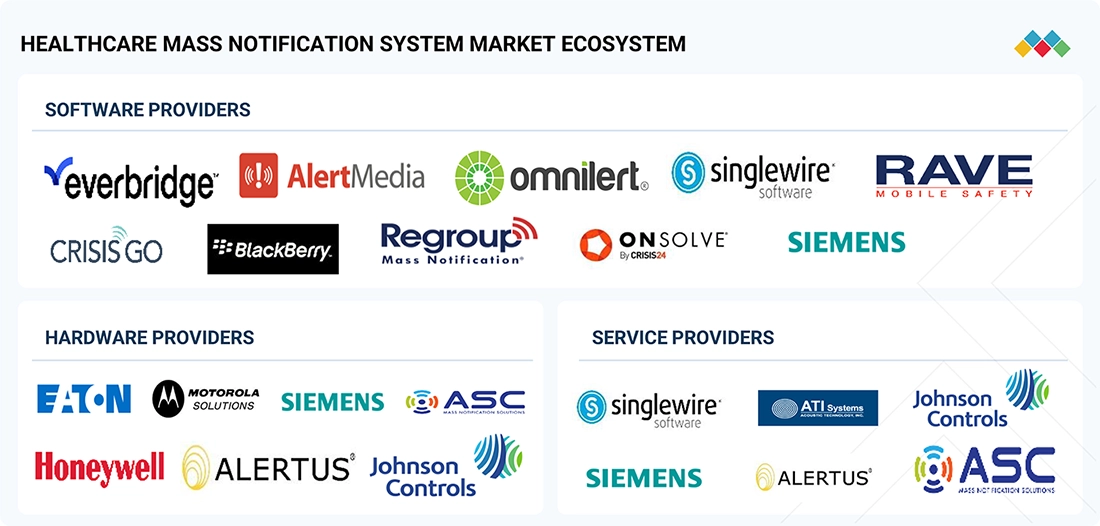
Logos and trademarks shown above are the property of their respective owners. Their use here is for informational and illustrative purposes only.
MARKET SEGMENTS
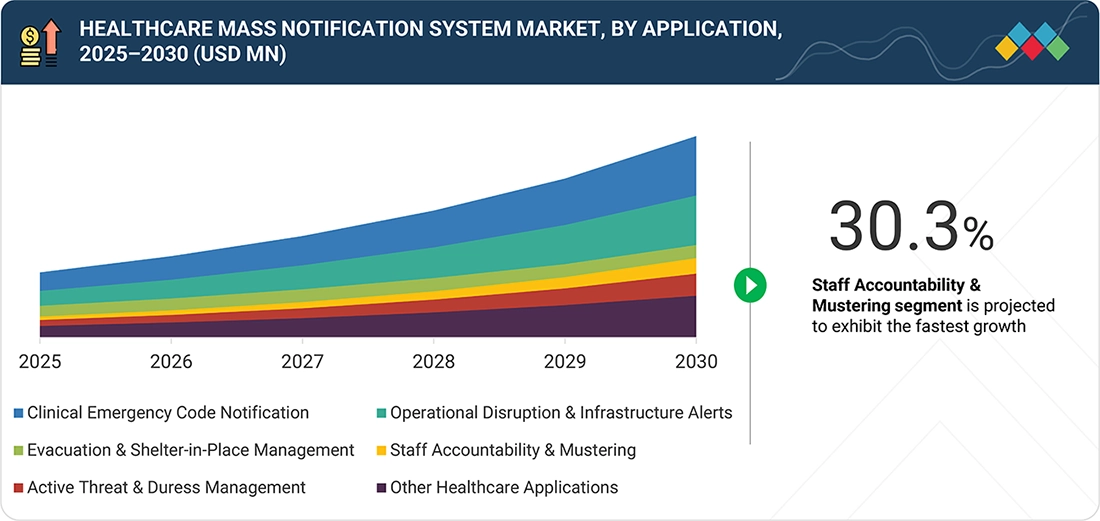
Source: Secondary Research, Interviews with Experts, MarketsandMarkets Analysis
Healthcare Mass Notification System Market, By Offering
Public warning & emergency alerting platforms are becoming central to large-scale emergency communication strategies. As healthcare becomes more connected to smart cities and national emergency systems, public warning platforms are becoming a core part of healthcare resilience strategies. Public Warning and Emergency Alerting Platforms enable hospitals, public health agencies, and government health departments to send fast, wide-area alerts through SMS, voice calls, mobile apps, social media, and broadcast systems.
Healthcare Mass Notification System Market, By Communication Channel
Voice communication remains a key channel because of its clarity, immediacy, and effectiveness across diverse user groups. Organizations rely on voice alerts for urgent, high-impact messaging where tone, urgency, and direct comprehension matter. This channel supports landlines, mobile devices, and integrated PA systems, ensuring reliable delivery during critical moments.
Healthcare Mass Notification System Market, By Application
Clinical Emergency Code Notification applications have a direct impact on patient safety and rapid clinical response. Hospitals rely on code alerts such as Code Blue, Code Red, and trauma calls to instantly mobilize the right care teams during life-threatening situations. These alerts must reach doctors, nurses, and support staff across multiple devices within seconds, making this use case the most critical and most frequently used within healthcare MNS platforms.
REGION
Asia Pacific to be fastest-growing region in Healthcare Mass Notification System during forecast period
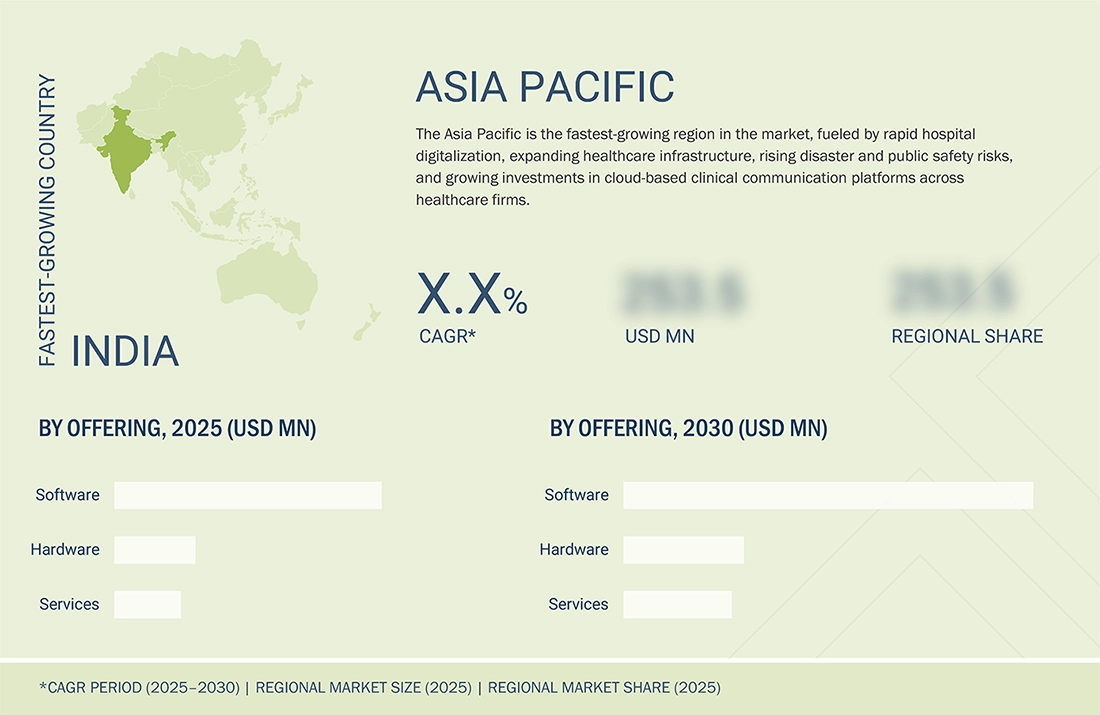
The Asia Pacific is expected to be the fastest-growing region in the healthcare mass notification system market. Healthcare providers are adopting cloud-based notification systems to streamline crisis communications and response procedures, thereby fueling market growth. In addition, the increased mobile use and rollout of 5G are improving the reach and reliability of mass communication technologies across the region. The rapid expansion of hospital infrastructure in countries such as China, India, Japan, South Korea, and Australia will further drive adoption. Health systems seek to modernize outdated paging systems and implement multi-channel alerting that reaches staff, security teams, and patients in real time.
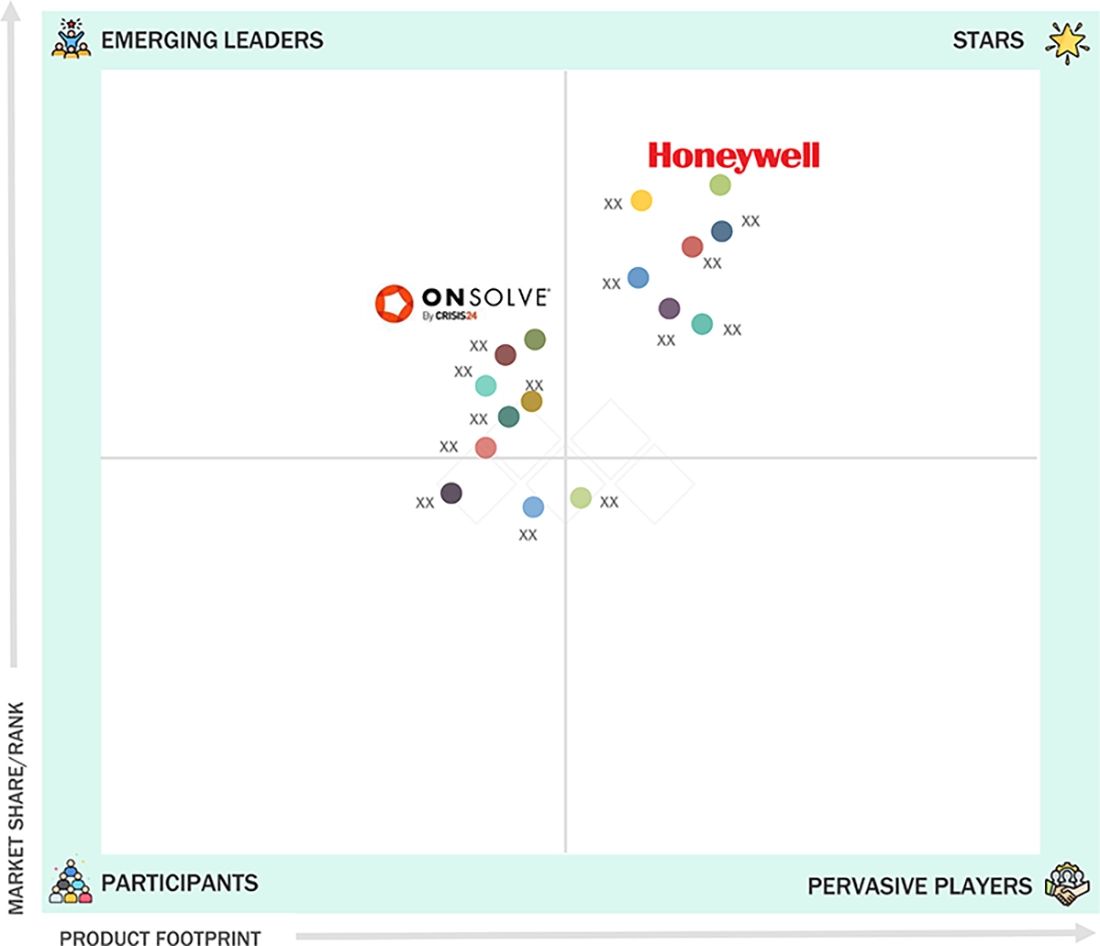
HEALTHCARE MASS NOTIFICATION SYSTEM MARKET: COMPANY EVALUATION MATRIX
Honeywell (Star) leads with its comprehensive emergency communication platforms and deep expertise in public safety and critical event management. Its scalable solutions and continuous enhancements in real-time alerting and system reliability are maintaining its position as a global leader in the market. Crisis24 (Emerging Leader) is gaining momentum with its AI-driven critical event management capabilities that help healthcare firms detect, analyze, and respond to threats with speed and precision. Its focus on intelligent alerting and cross-channel communication positions it as a rising challenger in the healthcare MNS landscape.
Source: Secondary Research, Interviews with Experts, MarketsandMarkets Analysis
KEY MARKET PLAYERS
- Siemens AG (Germany)
- Everbridge (US)
- Honeywell (US)
- Eaton (Ireland)
- Motorola Solutions (US)
- Blackberry (Canada)
- Johnson Controls (Ireland)
- Singlewire Software (US)
- Crisis24 (US)
- AlertMedia (US)
- Alertus Technologies (US)
- F24 (Germany)
- HipLink (US)
- American Signal Corporation (US)
- ATI Systems (US)
- Finalsite (US)
- Omnilert (US)
MARKET SCOPE
| REPORT METRIC | DETAILS |
|---|---|
| Market Size in 2024 (Value) | USD 2.88 Billion |
| Market Forecast in 2030 (value) | USD 11.27 Billion |
| Growth Rate | 26.1% |
| Years Considered | 2019-2030 |
| Base Year | 2024 |
| Forecast Period | 2025-2030 |
| Units Considered | Value (USD Million/Billion) |
| Report Coverage | Revenue forecast, company ranking, competitive landscape, growth factors, and trends |
| Segments Covered |
|
| Regions Covered | North America, Asia Pacific, Europe, the Middle East & Africa, and Latin America |
WHAT IS IN IT FOR YOU: HEALTHCARE MASS NOTIFICATION SYSTEM MARKET REPORT CONTENT GUIDE
DELIVERED CUSTOMIZATIONS
We have successfully delivered the following deep-dive customizations:
| CLIENT REQUEST | CUSTOMIZATION DELIVERED | VALUE ADDS |
|---|---|---|
| Leading Mass Notification System Vendor |
|
|
| Leading Mass Notification System Vendor |
|
|
RECENT DEVELOPMENTS
- December 2025 : Bogen Communications LLC, a longstanding leader in commercial audio and voice communications technology, has partnered with Alertus Technologies to enable organizations to leverage Bogen Communications’ Nyquist IP-based paging platform alongside Alertus’ alerting tools, providing a more comprehensive, automated emergency communication solution across healthcare facilities.
- July 2025 : ZeroEyes, the creators of the first AI-based gun detection video analytics platform to earn the full US Department of Homeland Security SAFETY Act Designation, partnered with Everbridge. The alliance is designed to provide healthcare facilities with rapid emergency response and intelligent situational awareness in the event of a gun-related threat.
- July 2025 : AlertMedia has launched Incident Response, a powerful addition to its AI-enabled platform, designed to help organizations mitigate risks and resolve incidents more quickly. The tool to resolve critical events faster, targeting healthcare for risk mitigation and employee protection, reflecting demand for integrated platforms.
- March 2024 : Kontakt.io, a leader in inpatient journey analytics, partnered with Singlewire Software. This partnership aims to integrate Singlewire's InformaCast mass notification and management software with Kontakt.io's staff safety solution. Through this integration, Kontakt.io smart badges will initiate InformaCast notifications, offering personalized protection for healthcare workers.
- January 2024 : Rave Mobile Safety introduced Rave Alert 360, a next-generation emergency notification solution that integrates Internet of Things (IoT) sensors for real-time monitoring and automated alert dispatch. This innovation enhances automated alerting capabilities that healthcare organizations can leverage for environmental and safety alerts within facilities.
Table of Contents
 Exclusive indicates content/data unique to MarketsandMarkets and not available with any competitors.
Methodology
The research methodology for the Healthcare Mass Notification System Market report involved the use of extensive secondary sources and directories, as well as various reputed open-source databases, to identify and collect useful information for this technical and market-oriented study. In-depth interviews were conducted with various primary respondents, including software by type; software by integration; by deployment mode; verticals; high-level executives of multiple companies offering mass notification system software, hardware & services; and industry consultants to obtain and verify critical qualitative and quantitative information and assess the market prospects and industry trends.
Secondary Research
During the secondary research process, various secondary sources were consulted to identify and collect information for the study. The secondary sources included annual reports; press releases and investor presentations of companies; white papers, certified publications.
The secondary research was utilized to gather key information about the industry’s value chain, the market’s monetary chain, the overall pool of key players, market classification and segmentation based on industry trends, and regional markets, as well as key developments from both market- and technology-oriented perspectives.
Primary Research
In the primary research process, a diverse range of stakeholders from both the supply and demand sides of the Mass notification system ecosystem were interviewed to gather qualitative and quantitative insights specific to this market. From the supply side, key industry experts, such as chief executive officers (CEOs), vice presidents (VPs), marketing directors, technology & innovation directors, as well as technical leads from vendors offering Mass notification system hardware, software & services, were consulted. Additionally, system integrators, service providers, and IT service firms that implement and support the Mass notification system solutions were included in the study. On the demand side, input from IT decision-makers, infrastructure managers, and business heads of prominent industry verticals was collected to understand the user perspectives and adoption challenges within targeted industries.
The primary research ensured that all crucial parameters affecting theHealthcare Mass Notification System Market, from technological advancements and evolving use cases to regulatory and compliance needs, were considered. Each factor was thoroughly analyzed, verified through primary research, and evaluated to obtain precise quantitative and qualitative data for this market.
Once the initial phase of market engineering was completed, including detailed calculations for market statistics, segment-specific growth forecasts, and data triangulation, a second round of primary research was conducted. This step was crucial for refining and validating critical data points, such as Mass notification system offerings (hardware, software & services), industry adoption trends, the competitive landscape, and key market dynamics like demand drivers (Growing need for real-time, multi-channel emergency communication across organizations, Regulatory and industry-mandated requirements for emergency preparedness), challenges Balancing ease of access with strong security posture across devices and external users, Managing cross-channel consistency, false alarms, and governance across large distributed organizations), and opportunities (Advanced content lifecycle automation, intelligent sync, and metadata-driven governance, Expansion into AI-driven alert automation, multilingual messaging, and behavioral response analytics) and restraints (Balancing ease of access with strong security posture across devices and external users, Managing cross-channel consistency, false alarms, and governance across large distributed organizations).
In the comprehensive market engineering process, the top-down and bottom-up approaches, along with several data triangulation methods, were extensively employed to perform market estimation and forecasting for the overall market segments and subsegments listed in this report. Extensive qualitative and quantitative analysis was performed on the complete market engineering process to record the critical information/insights throughout the report.
Market Size Estimation
The top-down and bottom-up approaches were employed to estimate and forecast the Healthcare Mass Notification System Market, as well as its dependent submarkets. This multi-layered analysis was further reinforced through data triangulation, which incorporated primary and secondary research inputs. The market figures were also validated against the existing MarketsandMarkets repository for accuracy.
Data Triangulation
The market was divided into several segments and subsegments after determining the overall market size using the market size estimation processes described above. To complete the overall market engineering process and determine the exact statistics for each market segment and subsegment, data triangulation and market segmentation procedures were employed, wherever applicable. The overall market size was then used in the top-down approach to estimate the size of other individual markets by applying percentage splits to the market segmentation.
Market Definition
According to Everbridge, a mass notification system is a vital solution that enables the prompt and precise delivery of notifications to individuals or groups, irrespective of their location. It is a comprehensive platform, swiftly disseminating emergency messages through various communication channels like voice calls, SMS, push notifications, desktop alerts, and social media. By utilizing visual intelligence and user-friendly interfaces, a mass notification system ensures that the right message reaches the intended recipients during critical events, regardless of their devices or physical whereabouts. This system plays a pivotal role in protecting people, securing operations, and safeguarding the reputation of organizations by facilitating timely and accurate communication.
Key Stakeholders
- Mass Notification System Vendors
- Mass Notification Software Vendors
- Managed Service Providers
- Support and Maintenance Service Providers
- System Integrators (SIs)/Migration Service Providers
- Distributors and Value-added Resellers (VARs)
- Independent Software Vendors (ISVs)
- Cloud Service Providers
- Technology Providers
Report Objectives
- To define, describe, and predict the Healthcare Mass Notification System Market by offering (software, hardware, and services), communication channel, facility type, application, vertical, and region
- To provide detailed information related to major factors (drivers, restraints, opportunities, and industry-specific challenges) influencing market growth
- To analyze opportunities in the market and provide details of the competitive landscape for stakeholders and market leaders
- To forecast the market size of segments with respect to five main regions: North America, Europe, Asia Pacific, Middle East & Africa, and Latin America
- To analyze each submarket with respect to individual growth trends, prospects, and contributions to the overallHealthcare Mass Notification System Market
- To analyze competitive developments, such as partnerships, new product launches, mergers & acquisitions, in theHealthcare Mass Notification System Market
- To analyze the competitive developments, such as partnerships, product launches, mergers and acquisitions, in theHealthcare Mass Notification System Market
- To analyze the impact of macroeconomic factors on the Healthcare Mass Notification System Market across all regions
Available Customizations
With the given market data, MarketsandMarkets offers customizations based on the company’s specific needs. The following customization options are available for the report.
Product Analysis
- Product comparative analysis, which gives a detailed comparison of innovative products being offered by prominent vendors
Geographic analysis
- Further breakup of additional European countries by offering, communication channel, facility type, application and vertical
- Further breakup of additional Asia Pacific countries by offering, communication channel, facility type, application and vertical
- Further breakup of additional Middle East & African countries by offering, communication channel, facility type, application and vertical
- Further breakup of additional Latin American countries by offering, communication channel, facility type, application and vertical
Company information
- Detailed analysis and profiling of additional market players (up to five)
Key Questions Addressed by the Report
What is the current size of the Healthcare Mass Notification System Market?
The Healthcare Mass Notification System Market is valued at USD 3.53 billion in 2025 and is projected to reach USD 11.27 billion by 2030, growing at a CAGR of 26.1% during the forecast period.
What is driving the growth of the Healthcare Mass Notification System Market?
The market is growing due to the increasing need for rapid emergency communication in hospitals, rising regulatory compliance requirements, greater focus on patient and staff safety, and growing adoption of cloud-based, multi-channel notification platforms.
Which region leads the Healthcare Mass Notification System Market?
North America holds the largest market share, accounting for 28.06% of the global market in 2025, driven by advanced healthcare infrastructure and strong investments in emergency preparedness technologies.
Which segment is expected to grow the fastest in the Healthcare Mass Notification System Market?
The Staff Accountability & Mustering application segment is expected to register the highest growth, while electronic messaging displays are projected to be the fastest-growing offering during the forecast period.
Who are the key players in the Healthcare Mass Notification System Market?
Major companies operating in the market include Honeywell, Johnson Controls, Everbridge, Motorola Solutions, Regroup Mass Notification, Crises Control, and CrisisGo, offering advanced notification and emergency communication solutions for healthcare organizations.


Personalize This Research
- Triangulate with your Own Data
- Get Data as per your Format and Definition
- Gain a Deeper Dive on a Specific Application, Geography, Customer or Competitor
- Any level of Personalization
Let Us Help You
- What are the Known and Unknown Adjacencies Impacting the Healthcare Mass Notification System Market
- What will your New Revenue Sources be?
- Who will be your Top Customer; what will make them switch?
- Defend your Market Share or Win Competitors
- Get a Scorecard for Target Partners

Custom Market Research Services
We Will Customise The Research For You, In Case The Report Listed Above Does Not Meet With Your Requirements
Get 10% Free CustomisationTESTIMONIALS






Growth opportunities and latent adjacency in Healthcare Mass Notification System Market