Human Identification Market

Human Identification Market by Product [Consumables (Kits & Reagents), Instruments, Software], Technology (PCR, Capillary Electrophoresis, NGS, Microarray, Rapid DNA Analysis), Application (Forensics, Paternity Testing), End User - Global Forecast to 2031



HUMAN IDENTIFICATION MARKET SIZE, SHARE & GROWTH SNAPSHOT
Source: Secondary Research, Interviews with Experts, MarketsandMarkets Analysis
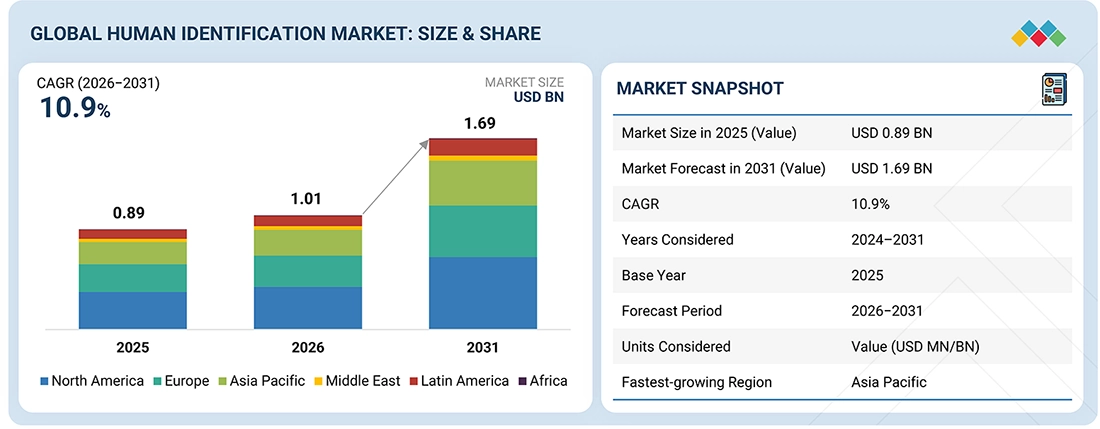
The global human identification market, valued at USD 0.89 billion in 2025, stood at USD 1.01 billion in 2026 and is projected to advance at a resilient CAGR of 10.9% from 2026 to 2031, culminating in a forecasted valuation of USD 1.69 billion by the end of the period. Human identification technologies are used to establish or verify an individual’s identity using biological evidence, primarily through DNA-based analysis. These solutions are widely applied in forensic investigations, paternity testing, missing persons identification, disaster victim identification, and related applications, and include consumables, instruments, and software used across DNA extraction, quantification, amplification, analysis, and interpretation workflows.
KEY TAKEAWAYS
-
MARKET SNAPSHOT:
Base Year Market Size (2025): USD 0.89 Billion
Current Market Size (2026): USD 1.01 Billion
Forecast Market Size (2031): USD 1.69 Billion
CAGR (2026–2031): 10.9% -
SEGMENT LEADERSHIP:
By Region: Asia Pacific is the fastest-growing regional segment with a CAGR of 11.8% during the forecast period.
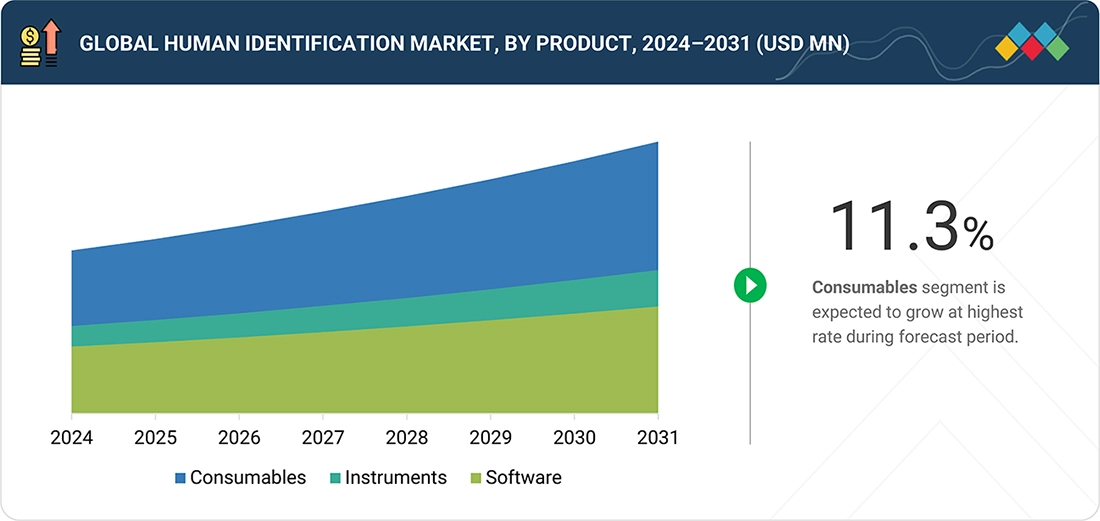
By Product: Consumables are projected to grow at the highest CAGR of 11.3% between 2026 and 2031.
By Technology: NGS is expected to grow at the highest CAGR of 12.4% over the forecast period.
By Application: Forensic applications are expected to dominate the global human identification market in 2025.
By End User: Forensic laboratories are expected to dominate the global human identification market in 2025. -
MARKET OUTLOOK & COMPETITIVE LANDSCAPE:
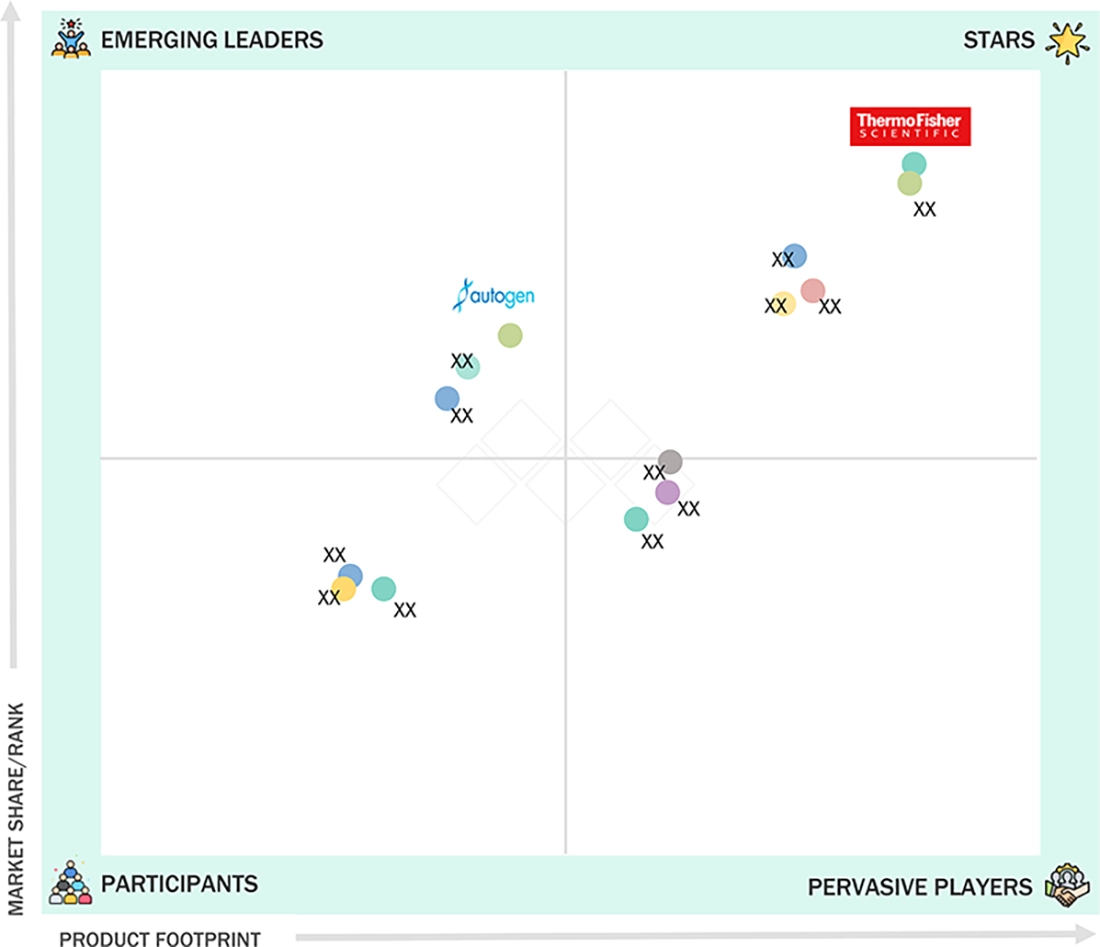
Thermo Fisher Scientific, Inc., QIAGEN N.V., and Promega Corporation were identified as star players in the global human identification market, given their strong market shares and product footprints.
Othram, Inc. and SoftGenetics have distinguished themselves among startups and SMEs by securing strong footholds in specialized niche areas, underscoring their potential as emerging market leaders.
The global human identification market is rapidly expanding for several reasons. These include the increasing backlog of forensic cases and the expansion of databanks, the adoption of rapid DNA testing at booking stations, the transition to next-generation sequencing (NGS) in complex casework and disaster victim identification (DVI), and the heightened accreditation and quality standards (ISO 17025) among forensic laboratories for human identification applications.
TRENDS & DISRUPTIONS IMPACTING CUSTOMERS' CUSTOMERS
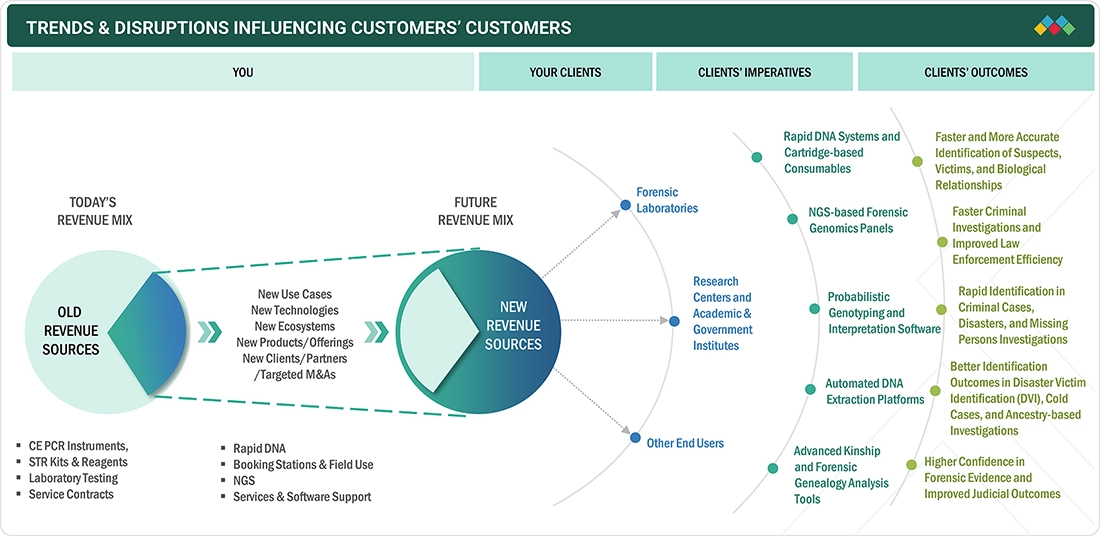
The human identification market is shifting from a traditional model focused on consumable-driven revenue to one that emphasizes integrated DNA analysis workflows. In the past, most revenue was generated from essential consumables such as DNA amplification kits, extraction kits, quantification reagents, and rapid DNA cartridges used in standard forensic testing. However, future growth is increasingly supported by advanced instruments and software solutions. These include automated DNA extraction systems, next-generation sequencing-based forensic genomics panels, and probabilistic genotyping tools. Forensic laboratories and research institutions are adopting these technologies to enhance efficiency, reduce case backlogs, and improve the accuracy of DNA evidence analysis. As a result, the human identification ecosystem is evolving into a more technology-driven model. In this new approach, consumables, instruments, and software work together to provide faster and more reliable human identification outcomes for law enforcement and judicial systems.
Source: Secondary Research, Interviews with Experts, MarketsandMarkets Analysis
MARKET DYNAMICS

Level
-
Rising forensic case backlogs and expansion of DNA databases

-
Adoption of rapid DNA technologies in booking stations


Level
-
Government budget constraints & forensic funding

-
Slow replacement cycle of CE & PCR systems


Level
-
Probabilistic genotyping adoption

-
Automation of extraction workflows


Level
-
Declining reagent usage due to direct-PCR kits

-
Migration from CE to NGS reduces CE dominance

Source: Secondary Research, Interviews with Experts, MarketsandMarkets Analysis
Driver: Rising forensic case backlogs and expansion of DNA databases
One of the primary factors driving the human identification market is the increasing backlog of forensic cases, coupled with the rapid growth of national DNA databases. Forensic laboratories worldwide are facing a rising number of crime samples that require DNA analysis, which is placing pressure on these labs to adopt advanced human identification technologies. According to the FBI, as of 2025, the Combined DNA Index System (CODIS) contained over 19.2 million offender profiles, 6.1 million arrestee profiles, and 1.4 million forensic profiles, highlighting the swift expansion of DNA databases globally.
Restraint: Government budget constraints & forensic funding
One of the main challenges facing the human identification market is the limited funding provided to forensic laboratories by government agencies. Most forensic DNA testing laboratories rely on public-sector funding, which includes support from national police departments, justice ministries, and government research institutions. Budget constraints can hinder these laboratories from upgrading their infrastructure, acquiring advanced DNA sequencing instruments, or expanding their capacity. Consequently, many forensic labs continue to use outdated DNA analysis technologies instead of adopting next-generation solutions.
Opportunity: Probabilistic genotyping adoption
Probabilistic genotyping (PG) presents a significant growth opportunity, as it enhances the value and necessity of DNA interpretation software in forensic casework. As laboratories encounter more complex samples, such as DNA mixtures, touch DNA, and low-template DNA, traditional manual interpretation becomes increasingly difficult to defend in court. PG software offers statistically grounded likelihood ratios and standardized interpretations, making it essential in accredited forensic workflows. Recent studies involving multiple laboratories indicate that PG has been widely adopted by forensic DNA crime labs. In the US, most labs that utilize PG rely on commercial tools like TrueAllele or STRmix.
Challenge: Declining reagent usage due to direct-PCR kits
A significant challenge facing the growth of consumables, particularly DNA extraction kits and DNA quantification kits, is the increasing use of direct PCR technologies for certain types of forensic samples. Direct PCR workflows enable laboratories to amplify STR markers directly from a biological sample, such as a swab punch, without the need for traditional DNA extraction and quantification steps. This method is primarily used for reference samples and simple forensic samples, where the DNA quality is relatively high, allowing for a simplified analysis workflow. Scientific studies in forensic genetics have shown that direct PCR can eliminate several sample preparation steps that were once considered essential in DNA profiling workflows.
HUMAN IDENTIFICATION MARKET: COMMERCIAL USE CASES ACROSS INDUSTRIES
| COMPANY | USE CASE DESCRIPTION | BENEFITS |
|---|---|---|
 |
Provides advanced DNA extraction kits, STR analysis kits, and real-time PCR systems widely used by forensic laboratories for criminal investigations, paternity testing, and disaster victim identification. | Enables fast, accurate, and high-quality DNA profiling, improving case resolution rates and reducing turnaround time for human identification workflows. |
 |
Offers automated sample-preparation instruments and DNA purification consumables for forensic evidence processing, including degraded and trace biological samples. | Improves reliability of results from complex or low-quality samples, supports standardized processing, and enhances laboratory productivity. |
 |
Develops STR kits, genetic analyzers, and workflow-integrated solutions used by crime labs and research institutes for identity verification and forensic DNA testing. | Provides consistent, reproducible, and court-admissible DNA profiles, ensuring high confidence in forensic outcomes and compliance with global quality standards. |
Logos and trademarks shown above are the property of their respective owners. Their use here is for informational and illustrative purposes only.
MARKET ECOSYSTEM
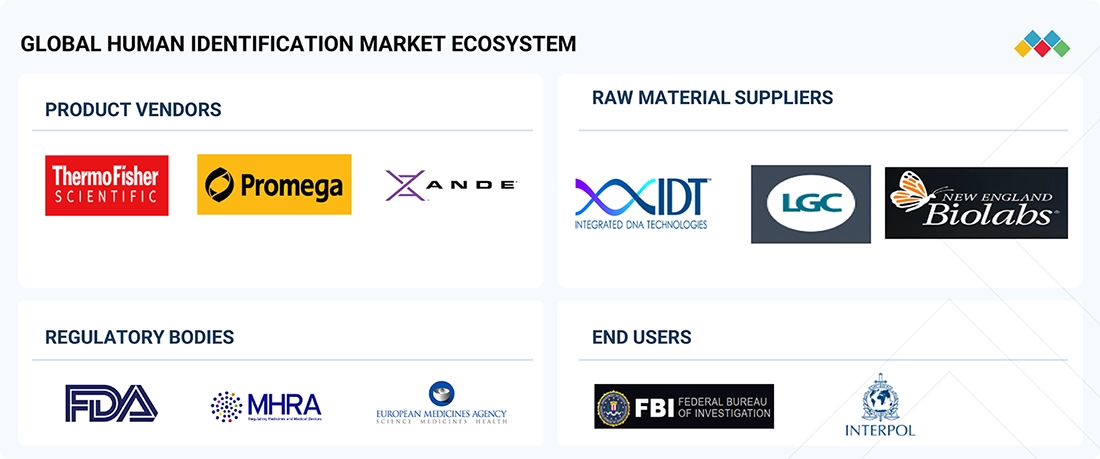
The human identification market encompasses a variety of stakeholders, including product manufacturers and end users such as forensic laboratories, research centers, academic institutions, and government agencies. Manufacturers are responsible for developing, producing, and supplying human identification tools, which range from DNA extraction kits to advanced analysis instruments. These products are utilized in various applications, including forensic casework, criminal investigations, paternity testing, and disaster victim identification. Companies within this ecosystem must adhere to strict regulations and quality standards established by organizations such as the FDA and EMA. This ensures the accuracy, reliability, and compliance of their products. Regulatory oversight is essential for maintaining the integrity of the entire supply chain, from product development to end-use testing.
Logos and trademarks shown above are the property of their respective owners. Their use here is for informational and illustrative purposes only.
MARKET SEGMENTS
Source: Secondary Research, Interviews with Experts, MarketsandMarkets Analysis
Global Human Identification Market, by Product
In 2025, the consumables segment dominated the human identification market due to the need for frequent and bulk purchases of these products, as well as the increasing adoption of HID products in developing economies for forensic applications.
Global Human Identification Market, by Technology
In 2025, the capillary electrophoresis segment held the largest share of the human identification market. This significant dominance can be attributed to advancements in capillary electrophoresis technology and its effectiveness in identifying individuals or establishing biological relationships from DNA samples collected at crime scenes involving suspects or missing persons.
Global Human Identification Market, by Application
In 2025, the forensic applications segment held the largest share and was the fastest-growing segment in the global human identification market. This dominance is driven by increasing crime rates in various countries and the launch of new products and services by several companies aimed at enhancing forensic applications, which, in turn, supports the growth of this market.
Global Human Identification Market, by End User
In 2025, forensic laboratories dominated the market with the highest growth rate due to their ability to process numerous cases and samples, particularly in densely populated areas or regions with elevated crime rates.
REGION
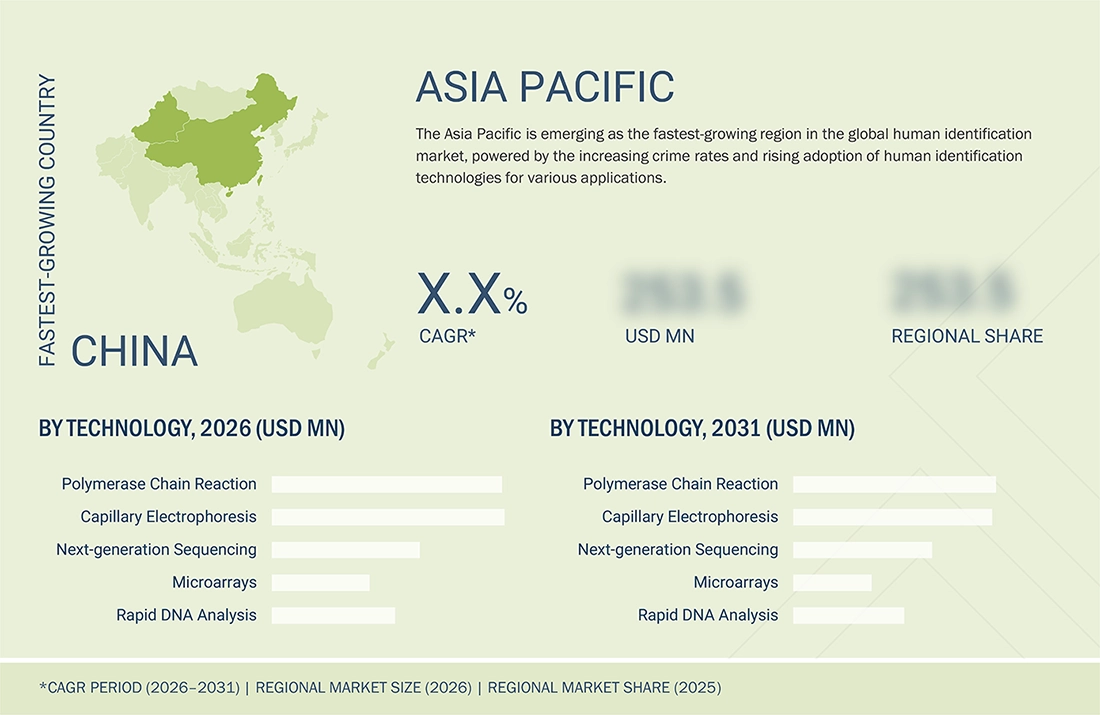
APAC to be fastest-growing region in market during forecast period
In 2025, the APAC region became the fastest-growing area in the global human identification market. This growth was fueled by the rapid expansion of healthcare infrastructure in China, India, and Japan. Additionally, increasing crime rates, a rising number of forensic laboratories, and the implementation of awareness campaigns and conferences on human identification and forensic sciences contributed to this trend.
HUMAN IDENTIFICATION MARKET: COMPANY EVALUATION MATRIX
In the global human identification market, Thermo Fisher Scientific is a leading player, known for its comprehensive portfolio that includes STR kits, DNA extraction chemistries, capillary electrophoresis systems, and integrated forensic workflows. Crime laboratories, research centers, and government agencies around the world rely on Thermo Fisher’s robust and validated solutions for forensic DNA testing, paternity analysis, and disaster victim identification. The company is well-supported by a strong global distribution network and compliance with regulatory standards. Meanwhile, AutoGen Inc. is emerging as a rising competitor in the market. The company is gaining traction with its automated DNA extraction platforms, which provide high-quality and reliable yields from challenging forensic samples. Its scalable and user-friendly systems are increasingly being adopted by mid-sized forensic laboratories and academic institutions across key regions, enhancing sample throughput and strengthening next-generation human identification workflows.
Source: Secondary Research, Interviews with Experts, MarketsandMarkets Analysis
KEY MARKET PLAYERS
- Thermo Fisher Scientific Inc. (US)
- QIAGEN N.V. (Netherlands)
- Promega Corporation (US)
- Hamilton Company (US)
- ANDE Corporation (US)
- FUJIFILM Wako Pure Chemical Corporation (Japan)
- AutoGen Inc. (US)
- InnoGenomics Technologies, LLC (US)
- Oxford Nanopore Technologies PLC (UK)
- Bode Cellmark Forensics Inc. (US)
- Bio-Rad Laboratories, Inc. (US)
- ZEISS (Germany)
- Cybergenetics, Inc. (US)
- MACHEREY-NAGEL GmbH & Co. KG (Germany)
- BIOTYPE GmbH (Germany)
MARKET SCOPE
| REPORT METRIC | DETAILS |
|---|---|
| Market Size in 2025 (Value) | USD 0.89 Billion |
| Market Forecast in 2031 (Value) | USD 1.69 Billion |
| Growth Rate | CAGR of 10.9% from 2026–2031 |
| Years Considered | 2024–2031 |
| Base Year | 2025 |
| Forecast Period | 2026–2031 |
| Units Considered | Value (USD Million/Billion) |
| Report Coverage | Revenue Forecast, Company Ranking, Competitive Landscape, Growth Factors, and Trends |
| Segments Covered |
|
| Regions Covered | North America, Europe, Asia Pacific, Latin America, Middle East, and Africa |
WHAT IS IN IT FOR YOU: HUMAN IDENTIFICATION MARKET REPORT CONTENT GUIDE
DELIVERED CUSTOMIZATIONS
We have successfully delivered the following deep-dive customizations:
| CLIENT REQUEST | CUSTOMIZATION DELIVERED | VALUE ADDS |
|---|---|---|
| Benchmarking end-user preferences for human identification technologies and applications | Mapped how forensic laboratories, law-enforcement agencies, immigration authorities, and academic institutes prioritize STR analysis, DNA extraction, capillary electrophoresis, PCR/qPCR, mtDNA sequencing, rapid DNA systems, and digital data management tools for different use cases, such as crime scene investigation, paternity testing, missing-person identification, and DVI workflows. | Informs product strategy and field-education efforts by showing which human identification technologies are gaining adoption across each application, enabling commercial teams to target the right forensic units, casework types, and regional workflows with differentiated value messages. |
| Identifying outsourcing, collaboration, and partnership opportunities in forensic DNA testing and human identification workflow development | Mapped leading forensic service providers, HID-focused labs, CDMOs, and technology partners offering DNA extraction automation, genotyping services, data interpretation software, training, and validation support. |
|
| Country-specific regulatory, accreditation, and procurement insights for HID systems |
|
Enables strategic market entry by clarifying compliance and accreditation requirements, reducing regulatory delays, and helping clients prioritize high-budget countries/labs with ongoing investments in HID modernization. |
| Additional company profiling requirements for competitive intelligence | Expanded competitive profiling to include extra global and regional HID companies upon client request, covering product portfolios, pricing, workflow integration, installed base, end-user penetration, and pipeline innovations. |
|
RECENT DEVELOPMENTS
- November 2025 : QIAGEN launched the EZ2 DNA Investigator Sep&Prep Kit, a fully automated solution for processing sexual assault samples.
- February 2025 : Promega's PowerPlex 35GY System, the first 8-color STR analysis chemistry, has been approved by the FBI for use in the National DNA Index System (NDIS). This approval indicates that the kit meets the FBI’s rigorous Quality Assurance Standards (QAS) and is suitable for generating profiles eligible for inclusion in the national database.
- September 2024 : QIAGEN and Bode Technology partnered to enhance the use of the GEDmatch PRO genealogy database in law enforcement and the identification of human remains. This collaboration builds on QIAGEN's strong position as a global leader in providing a comprehensive portfolio for human identification and forensic applications.
Table of Contents
 Exclusive indicates content/data unique to MarketsandMarkets and not available with any competitors.
Methodology
This research study extensively used secondary sources, directories, and databases to identify and collect valuable information to analyze the global human identification market. In-depth interviews were conducted with primary respondents, including key industry participants, subject-matter experts (SMEs), C-level executives of leading market players, and industry consultants, to obtain and verify critical qualitative and quantitative information and to assess the market's growth prospects. The global market size estimated through secondary research was then triangulated with primary research inputs to arrive at the final market size.
Secondary Research
Secondary research was used mainly to identify and collect information for the extensive, technical, market-oriented, and commercial study of the global human identification market. The secondary sources used for this study include World Health Organization (WHO), Organisation for Economic Co-operation and Development (OECD), World Bank, INTERPOL, Scientific Working Group on DNA Analysis Methods (SWGDAM), Combined DNA Index System (CODIS), National DNA Data Bank of Canada, US Census Bureau, Federal Bureau of Investigation (FBI, US), American Society of Crime Laboratory Directors, American Academy of Forensic Sciences, National Center for Forensic Science (US), Forensic Science Regulator (UK), Australian Criminal Intelligence Commission (Australia), Medicines & Healthcare Products Regulatory Agency (UK), Statistics Canada, Ministry of Attorney General (UK), Federal Criminal Police Office (BKA, Germany), Pharmaceuticals and Medical Devices Agency (Japan), and National Crime Records Bureau (NCRB, India); corporate filings such as annual reports, SEC filings, investor presentations, and financial statements; press releases; and trade, business, professional associations. These sources were also used to obtain key information on major players, market classification, and segmentation aligned with industry trends, regional/country-level markets, market developments, and technology perspectives.
Primary Research
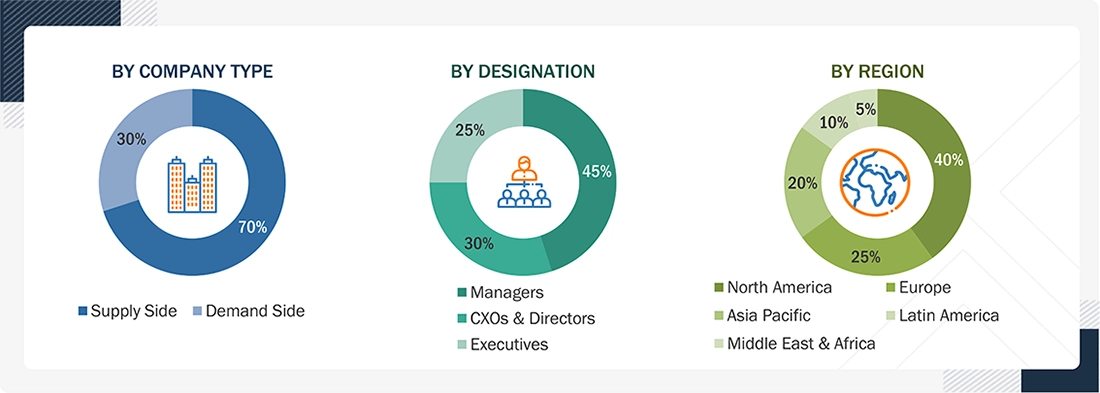
Following an initial assessment of the global human identification market landscape through secondary research, comprehensive primary research was undertaken. This involved conducting in-depth interviews with market experts from the demand side, including stakeholders from pharmaceutical and biotechnology firms, CROs, CMOs, and academic and research institutions. Additionally, interviews were conducted with key supply-side participants, including C-suite and senior executives, product managers, and marketing and sales leaders from prominent manufacturers, distributors, and channel partners. The research covered six major geographical regions: North America, Europe, Asia Pacific, Latin America, the Middle East, and Africa. Approximately 70% of the primary interviews were conducted with supply-side participants, while 30% were conducted with demand-side experts. Data collection methods included structured questionnaires, email correspondence, online surveys, personal interviews, and telephonic discussions to comprehensively understand market dynamics.
The following is a breakdown of the primary respondents:
To know about the assumptions considered for the study, download the pdf brochure
Market Size Estimation
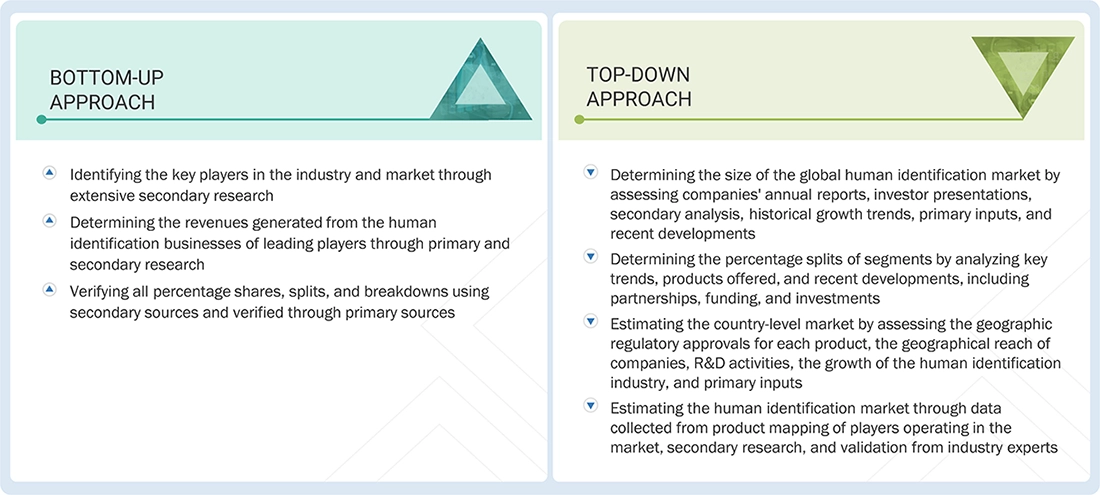
Both bottom-up and top-down approaches were used to estimate and validate the total size of the global human identification market. These methods were also widely used to estimate the sizes of various subsegments in the market. The research methodology used to estimate the market size includes the following:
- A list of the major global players operating in the human identification market was generated.
- The revenues generated from their human identification product portfolios have been determined through annual reports and secondary sources (including paid databases).
- The products were mapped according to the segments of the market. Percentage shares and splits were determined based on each segment's revenue contribution. This was verified using secondary sources and by industry experts.
- All assumptions, approaches, and individual shares/revenue estimates were validated through expert interviews.
Data Triangulation
After arriving at the market size from the estimation process explained above, the total market was divided into several segments and subsegments. To complete the overall market engineering process and obtain exact statistics for all segments and subsegments, data triangulation and market breakdown procedures were employed, as applicable. The data was triangulated by studying various factors and trends from both the demand and supply sides.
Market Definition
Human identification is the process of establishing and confirming an individual's unique identity. This process involves various techniques and methods that help determine individuality and link unknown materials or evidence to known identities. Human identification is widely used in forensics, paternity testing, disaster victim identification, and anthropology, among other applications, with DNA analysis and profiling a key tool in this sector. It also builds citizen databases to ensure better healthcare and develops an organized set of records.
Key Stakeholders
- Technology & Product Providers
- Forensic Laboratories
- Law Enforcement & Public Safety Agencies
- Government & Regulatory Bodies
- Academic & Research Institutions
- Contract Research & Forensic Service Providers
- Healthcare & Clinical Institutions
- Database & IT Infrastructure Providers
- Rapid DNA & Field Deployment Stakeholders
- Funding Bodies & Investors
Report Objectives
- To define, describe, and forecast the global human identification market based on product, technology, application, and end user
- To provide detailed information regarding the major factors influencing market growth (such as drivers, restraints, opportunities, and challenges)
- To strategically analyze micromarkets concerning individual growth trends, prospects, and contributions to the human identification market
- To analyze the opportunities in the market for stakeholders and provide details of the competitive landscape for market leaders
- To forecast the size of the market segments concerning six main regions: North America, Europe, the Asia Pacific, Latin America, the Middle East, and Africa
- To profile the key players in the global human identification market and comprehensively analyze their product portfolios, market positions, and core competencies
- To track and analyze competitive developments such as product approvals and launches, expansions, agreements, and collaborations in the human identification market
- To benchmark players within the human identification market using the company evaluation matrix framework, which analyzes market players based on various parameters within the broad categories of business and service strategy.
Available customizations:
With the given market data, MarketsandMarkets offers customizations to meet your company’s needs. The following customization options are available for this report:
Portfolio Assessment- Product Matrix, which gives a detailed comparison of the product portfolios of the top three companies.
- Detailed analysis and profiling of additional market players (up to three).
- A further breakdown of the Rest of Asia Pacific human identification market into countries
- A further breakdown of the Rest of Europe human identification market into countries
- A further breakdown of the Rest of Latin America human identification market into countries


Personalize This Research
- Triangulate with your Own Data
- Get Data as per your Format and Definition
- Gain a Deeper Dive on a Specific Application, Geography, Customer or Competitor
- Any level of Personalization
Let Us Help You
- What are the Known and Unknown Adjacencies Impacting the Human Identification Market
- What will your New Revenue Sources be?
- Who will be your Top Customer; what will make them switch?
- Defend your Market Share or Win Competitors
- Get a Scorecard for Target Partners

Custom Market Research Services
We Will Customise The Research For You, In Case The Report Listed Above Does Not Meet With Your Requirements
Get 10% Free CustomisationTESTIMONIALS

JAYANT RAJPUROHIT
Director of Market Insights, Data and Analytics
SFI Health,
Leading Pharmaceutical Companywww.sfihealth.com/

We at SFI Health approached MarketsandMarkets for an Opportunity Assessment on "Incidence and Prevalence of Focus Indications" as we wanted to know the most attractive HCPs like Physician, Functional MD, Naturopath and Pharmacist. The project was critical for us to ensure our focus on the right target which would enable sustainable growth and profitability for SFI Health. The business insights provided exceeded our expectations and we were extremely impressed. The team at MarketsandMarkets is highly professional and detail oriented and very well understood our business needs. MarketsandMarkets offers a unique combination of expertise and dedicated engagement model. We identified 2 new products to be launched in coming months, based on the research findings provided by MarketsandMarkets. We are happy with the services and would strongly recommend MarketsandMarkets to my peers in the industry.

BEATRIZ DE LA CALLE
Head of Commercial Analytics
Qualicaps,
Leading Pharmaceutical Companywww.qualicaps.com/

We partnered with MarketsandMarkets for an assessment study on hard empty capsules. The team was extremely professional in understanding our business requirements and we received timely responses to all our queries. The market intelligence and the recommendations has met our business requirements. We were extremely impressed to see the final study results; it really exceeded our expectations. The market intelligence offered by MarketsandMarkets, and clarity on next steps will help us achieve our business objective for the Year 2021. We are happy with the services and would strongly recommend MarketsandMarkets to my peers in the industry.

Bob Williams,
Senior Director Business Development & Innovation
Bracco Diagnostics Inc.,
Italian Multinational in life sciences sector and a World Leader in imaging diagnosticsimaging.bracco.com/us-en
We were pleased with targeted insights that MarketsandMarkets identified from a custom study on the 'Radiation Dose Management Solutions Market'. Your team identified and characterized the market participants as well as underlying trends accurately. This study was useful to Bracco in formulating business strategies for our dose monitoring product lines and we thank MarketsandMarkets for the job well done.
Cody Coonradt,
Market Development and Strategy Manager
3M Health Information Systems,
Leader in Health care Coding, Payment & Analytics Solutions.www.3m.com/3M/en_US/health-information-systems-us
The value for our organization comes from three things: depth of research, specificity of segments and being easy to work with. As important as the first two are, the third can't be underestimated. MarketsandMarkets, maybe more than any other research vendor, wants to know what is top of mind for our team and what big questions we are grappling to answer.
Their customer first approach and high value engagement model, have given us great analysis and excellent value for money
- Canada Human Identification Market
- US Human Identification Market
- Germany Human Identification Market
- UK Human Identification Market
- France Human Identification Market
- Italy Human Identification Market
- Spain Human Identification Market
- China Human Identification Market
- Japan Human Identification Market
- India Human Identification Market
- Australia Human Identification Market
- South Korea Human Identification Market
- Brazil Human Identification Market
- Mexico Human Identification Market
- Saudi Arabia Human Identification Market
- Rest Of Europe Human Identification Market
- Rest Of Asia Pacific Human Identification Market
- Rest Of Latin America Human Identification Market
- Rest Of GCC Countries Human Identification Market
- United Arab Emirates Human Identification Market






Growth opportunities and latent adjacency in Human Identification Market