The study involved major activities in estimating the current size of the hydrogen fueling station market. Exhaustive secondary research was done to collect information on the peer and parent markets. The next step was to validate these findings, assumptions, and sizing with industry experts across the value chain through primary research. The top-down and bottom-up approaches were employed to estimate the total market size. Thereafter, market breakdown and data triangulation techniques were used to estimate the market size of the segments and subsegments.
Secondary Research
This research study involved the use of extensive secondary sources, directories, and databases, such as Hoover’s, Bloomberg, Factiva, IRENA, International Energy Agency, and Statista Industry Journal, to collect and identify valuable information for a technical, market-oriented, and commercial study of the hydrogen fueling station. Other secondary sources included annual reports, press releases, and investor presentations of companies; white papers; certified publications; and articles by recognized authors, manufacturer associations, trade directories, and databases.
Primary Research
In the primary research process, various primary sources from the supply and demand sides were interviewed to obtain qualitative and quantitative information for this report. Primary sources from the supply side include industry experts such as chief executive officers (CEOs), vice presidents (VPs), marketing directors, and related key executives from various companies and organizations operating in the hydrogen fueling station market.
In the complete market engineering process, the top-down and bottom-up approaches, along with several data triangulation methods, were extensively used to perform the market size estimations and forecasts for all segments and subsegments listed in this report. Extensive qualitative and quantitative analyses were conducted to complete the market engineering process and list key information/insights throughout the report.
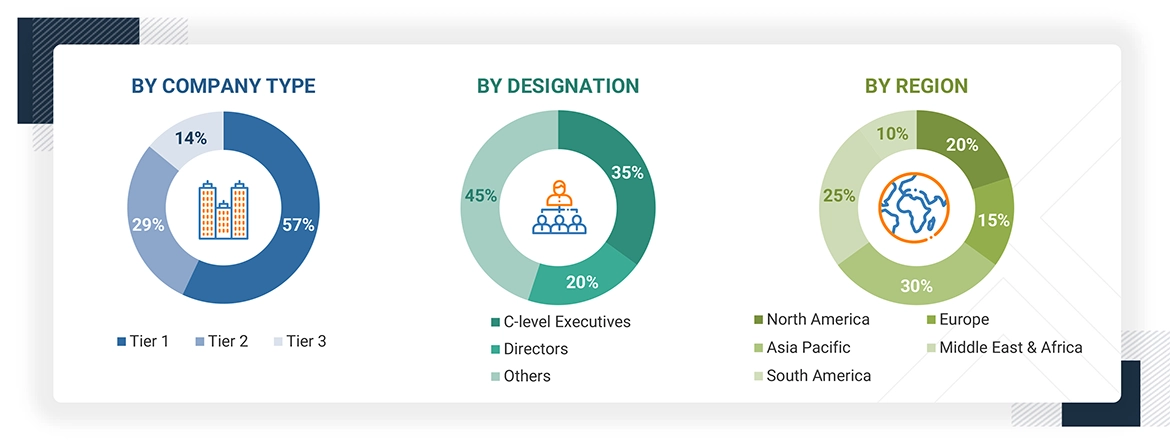
Note: The tiers of the companies are defined based on their total revenues as of 2024. Tier 1: > USD
1 billion, Tier 2: From USD 500 million to USD 1 billion, and Tier 3: < USD 500 million. Others include sales managers,
engineers, and regional managers.
To know about the assumptions considered for the study, download the pdf brochure
Market Size Estimation
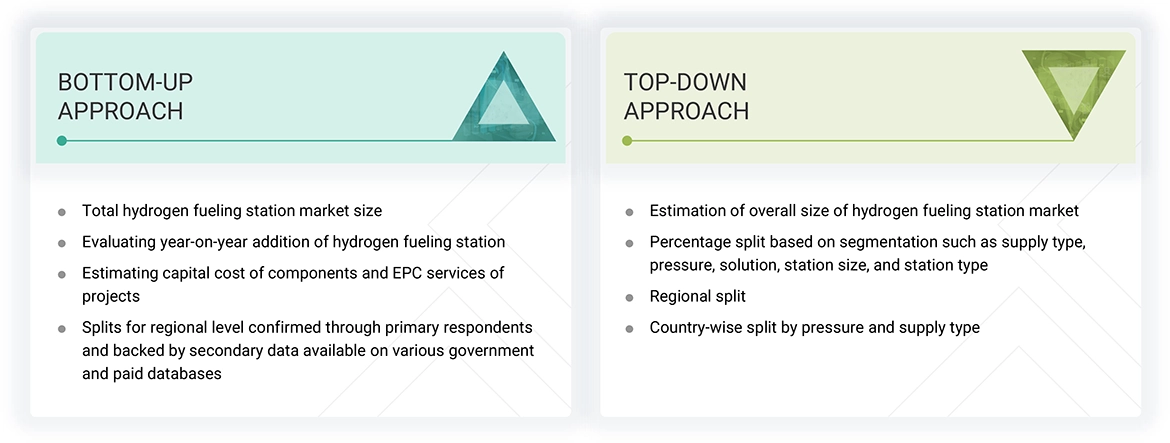
The top-down and bottom-up approaches were used to estimate and validate the total size of the hydrogen fueling station market. These methods were also used extensively to estimate the size of various subsegments of the market. The research methodology used to estimate the market size includes the following.
Hydrogen Fueling Station Market : Top-Down and Bottom-Up Approach
Data Triangulation
The total market was split into several segments and subsegments after arriving at the overall market size from the above estimation process. Data triangulation and market breakdown processes were employed to complete the overall market engineering process and arrive at the exact statistics for all the segments and subsegments, wherever applicable. The data was triangulated by studying various factors and trends from the demand and supply sides. In addition, the market size was validated using both the top-down and bottom-up approaches.
Market Definition
A hydrogen fueling station typically consists of a cooling system, a dispenser, and a nozzle. The storage tank may be elevated or buried. Compressors are used to decrease the volume of gaseous hydrogen as the hydrogen refueling process needs high pressure. It is intended to deliver highly pressurized hydrogen to the nozzle so that the car can be refueled with up to 700 bar or 300 bar. Hydrogen warms up as it spreads. Before it approaches the nozzle, the chiller brings the temperature of the hydrogen down to about -40º Celsius.
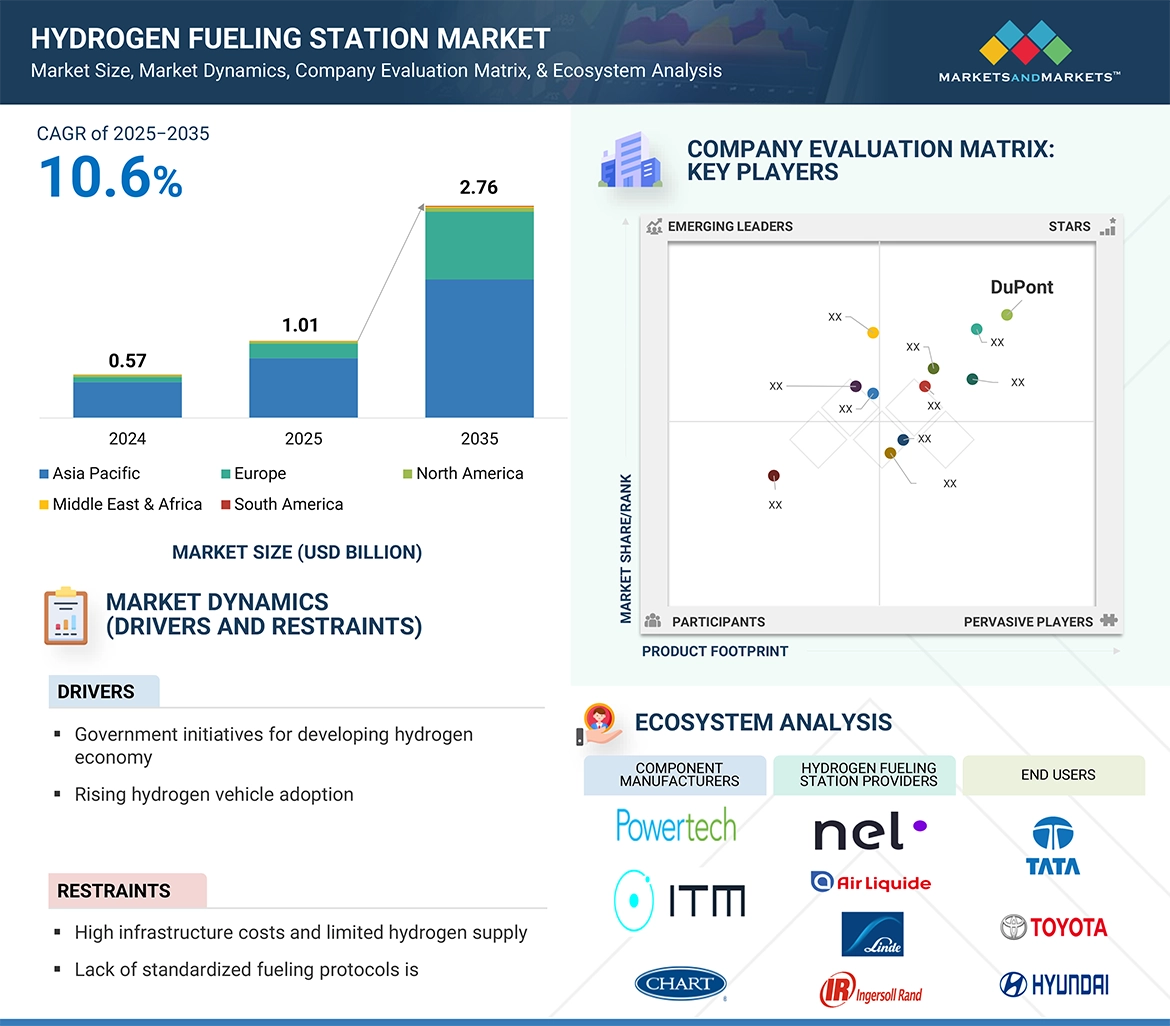
The hydrogen fueling station market comprises revenues of companies that offer engineering, procurement, and construction services for the hydrogen refueling station. The hydrogen fueling station market has been studied for five key regions: North America, Europe, the Middle East & Africa, South America, and Asia Pacific.
Stakeholders
-
Hydrogen storage tanks and transportation dealers and suppliers
-
Manufacturers of fuel cell electric vehicles
-
Government and research organizations
-
Operators and owners of hydrogen fueling stations
-
Power and energy associations
-
State and national regulatory authorities
-
Research and consulting companies in the clean energy generation sector
-
Organizations, forums, alliances, and associations
-
Industrial authorities and associations
Report Objectives
-
To define, describe, segment, and forecast the hydrogen fueling station market size, by station size, supply type, pressure, station type, and solution, in terms of value
-
To forecast the market size across five key regions, namely, North America, Europe, Asia Pacific, the Middle East & Africa, and South America, along with the country-level market sizes, in terms of value and volume
-
To provide detailed information about the key drivers, restraints, opportunities, and industry-specific challenges influencing the growth of the hydrogen fueling station market
-
To strategically analyze the hydrogen fueling station market with respect to individual growth trends, prospects, and contributions of each segment to the market
-
To provide information pertaining to the supply chain, trends/disruptions impacting customer business, ecosystem/market map, pricing of hydrogen fueling stations, and regulatory landscape pertaining to the hydrogen fueling station market
-
To strategically analyze the micromarkets1 with respect to individual growth trends, upcoming expansions, and their contributions to the overall market
-
To analyze opportunities for stakeholders in the hydrogen fueling station market and draw a competitive landscape for market players
-
To benchmark players within the market using the company evaluation matrix, which analyzes market players on various parameters within the broad categories of business and product strategies
-
To compare key market players with respect to the market share, product specifications, and applications
-
To strategically profile key players and comprehensively analyze their market ranking and core competencies2
-
To track and analyze competitive developments in the hydrogen fueling station market, such as contracts, agreements, investments, expansions, product launches, alliances, mergers, partnerships, joint ventures, collaborations, and acquisitions
Available Customizations
MarketsandMarkets offers customizations according to the specific needs of the companies using the given market data.
The following customization options are available for the report:
Product Analysis
-
Product matrix, which gives a detailed comparison of the product portfolio of each company
Geographic Analysis as per Feasibility
-
Further breakdown of the hydrogen fueling station market by country
Company Information
-
Detailed analysis and profiling of additional market players (up to five)




 LARGEST MARKET IN 2024
 CHINA TO BE FASTEST-GROWING MARKET IN ASIA PACIFIC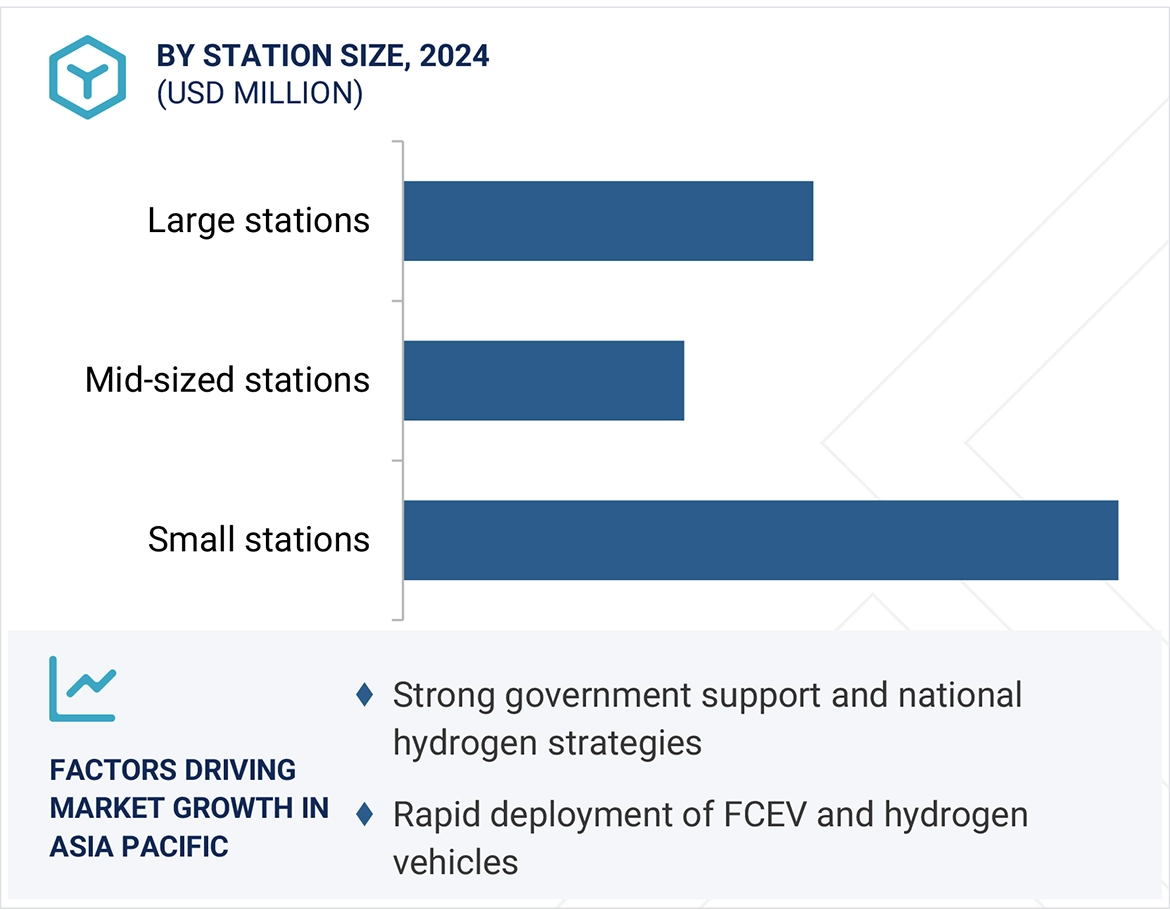












Growth opportunities and latent adjacency in Hydrogen Fueling Station Market