Latin America Gluten-free Products Market

Latin America Gluten-free Products Market by Type (Bakery Products, Snacks & RTE Products, Pizzas & Pastas, Condiments & Dressings), Form, Distribution Channel (Conventional Stores, Specialty Stores, Drugstores & Pharmacies), Source – Forecast to 2030




OVERVIEW
Source: Secondary Research, Interviews with Experts, MarketsandMarkets Analysis
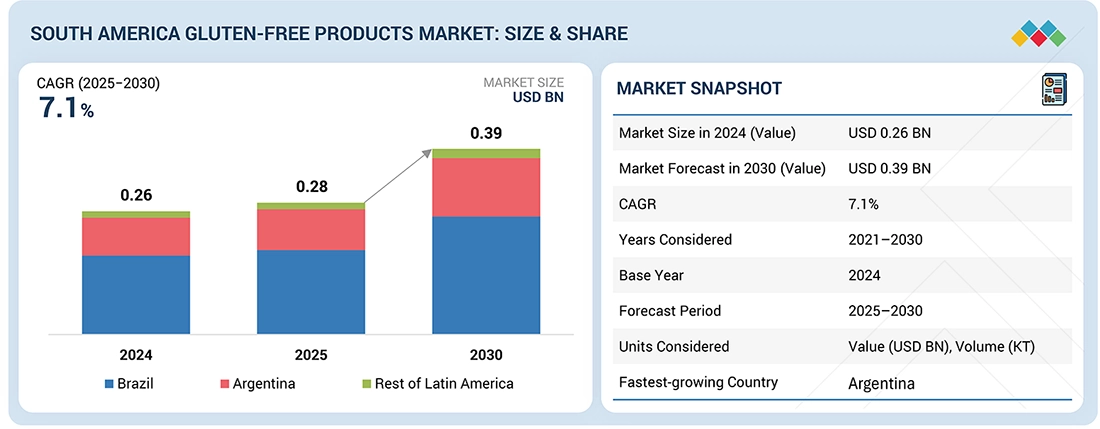
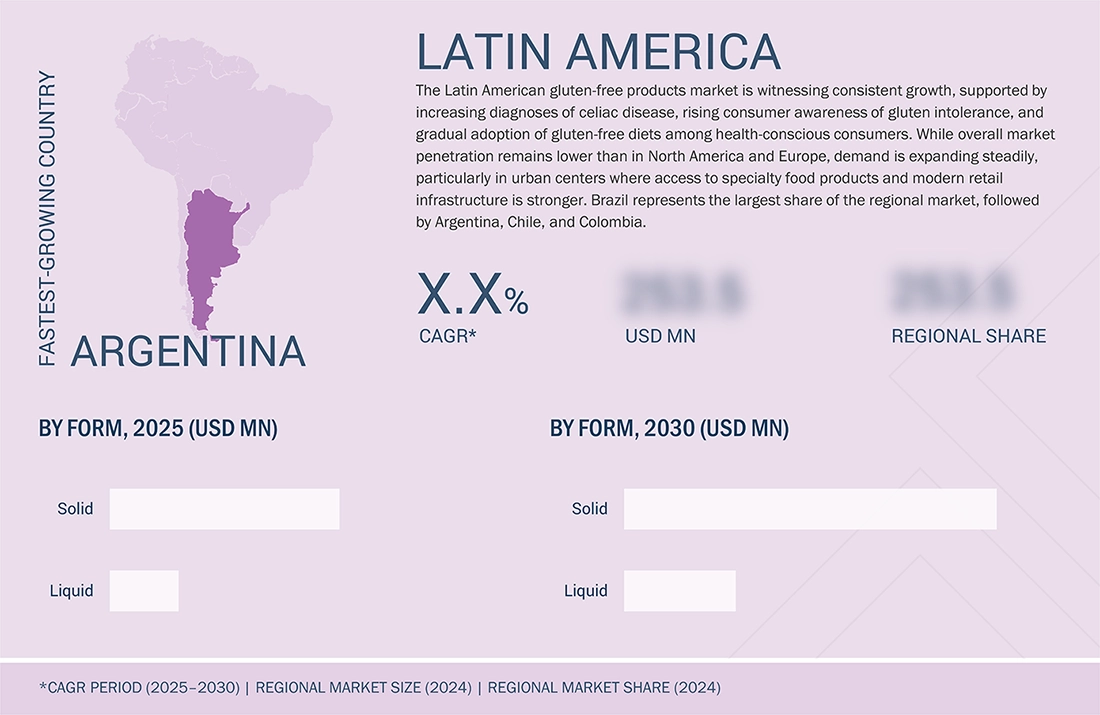
The Latin America gluten-free products market is projected to grow from USD 0.28 billion in 2025 to USD 0.39 billion by 2030, at a CAGR of 7.1%. This market is experiencing steady growth, supported by increased diagnoses of celiac disease, rising consumer awareness of gluten intolerance, and gradual adoption of gluten-free diets among health-conscious consumers.
KEY TAKEAWAYS
-
BY COUNTRYBrazil is estimated to account for 50.4% of the gluten-free products market in 2025.
-
BY PRODUCT TYPEBy product type, the bakery products segment is projected to grow at the highest rate from 2025 to 2030.
-
BY DISTRIBUTION CHANNELBy distribution channel, the conventional stores segment is estimated to dominate the market with a share of 71.3% in 2025.
-
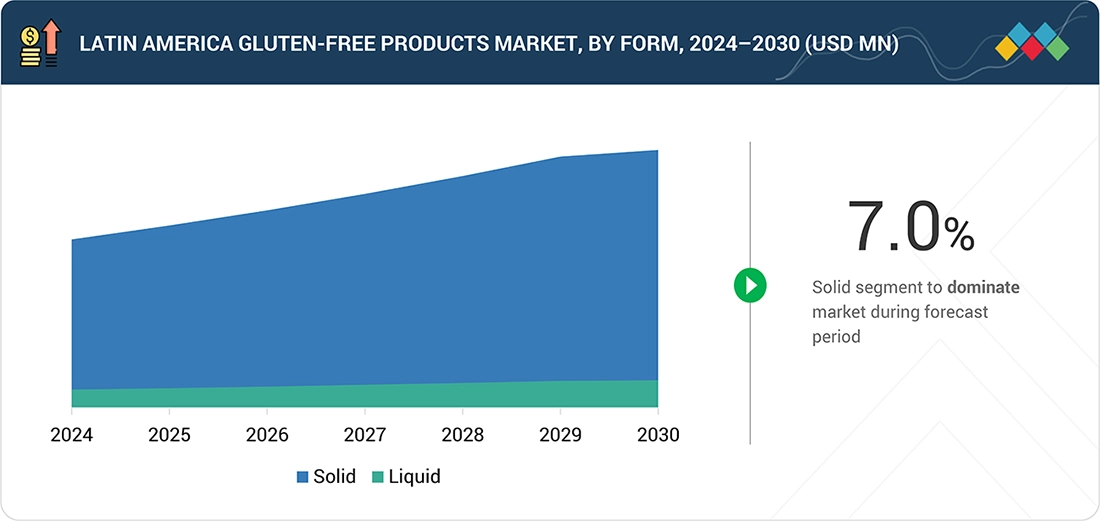
BY FORMBy form, the solid segment is estimated to account for 90.4% of the market in 2025.
-
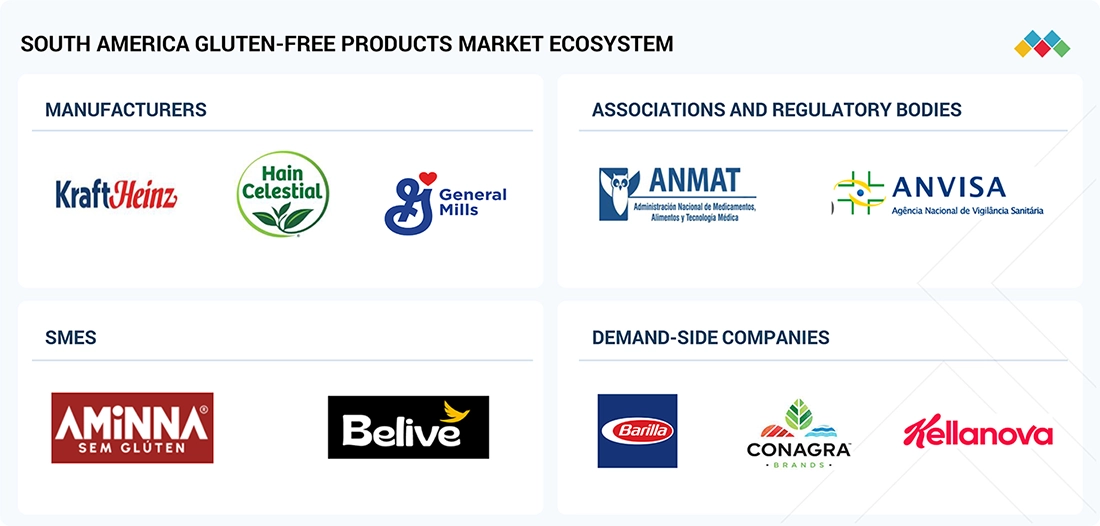
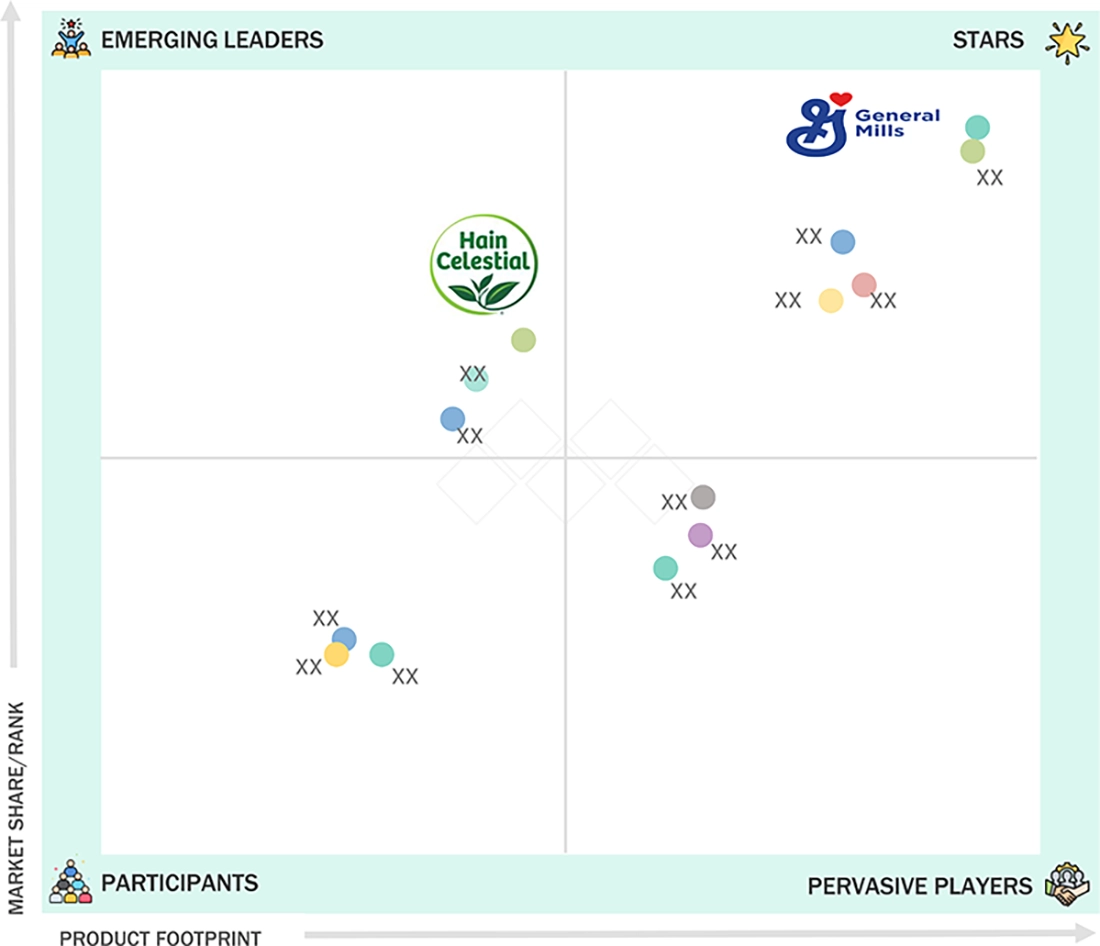
COMPETITIVE LANDSCAPE - KEY PLAYERSThe Kraft Heinz Company (US), The Hain Celestial Group (US), and General Mills Inc. were identified as some of the star players in the gluten-free products market, given their strong market share and product footprint.
-
COMPETITIVE LANDSCAPE - STARTUPSAminna, Belive, and Granero Gluten Free, among others, have distinguished themselves among startups and SMEs by securing strong footholds in specialized niche areas, underscoring their potential as emerging market leaders.
The Latin America gluten-free products market is driven by rising awareness of celiac disease, improved gluten labeling regulations, and growing urban demand for digestive health–oriented foods. The expansion of locally produced gluten-free staples supports market growth, while adoption beyond medical needs remains gradual due to price sensitivity and limited access outside major cities.
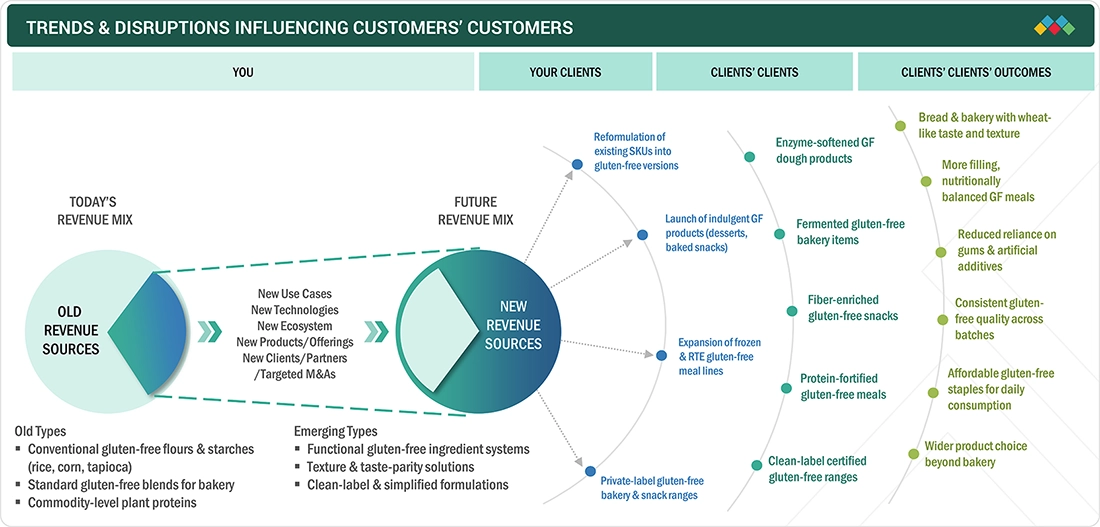
TRENDS & DISRUPTIONS IMPACTING CUSTOMERS' CUSTOMERS
The Latin America gluten-free products market is expanding steadily, driven by rising diagnoses of gluten-related disorders and growing interest in digestive health among urban consumers. Market activity is concentrated in Brazil and Argentina, where improved labeling regulations and expanding modern retail infrastructure support broader availability of gluten-free staples and bakery products. While medical necessity remains a key demand driver, gradual lifestyle-led adoption and increased local manufacturing are strengthening market accessibility and supporting long-term growth.
Source: Secondary Research, Interviews with Experts, MarketsandMarkets Analysis
MARKET DYNAMICS

Level
-
Rising diagnosis of celiac disease and gluten intolerance in Brazil and Argentina

-
Growing urban consumer awareness of gluten-free and digestive health benefits


Level
-
High price premiums for imported gluten-free products

-
Limited availability outside major metropolitan areas


Level
-
Expansion of affordable, locally manufactured gluten-free bakery products

-
Growth of e-commerce and specialty health retail across Latin America


Level
-
Maintaining taste and texture parity with conventional wheat-based products

-
Managing supply chain and certification costs for gluten-free compliance

Source: Secondary Research, Interviews with Experts, MarketsandMarkets Analysis
Driver: Rising diagnosis of celiac disease and gluten intolerance in Brazil and Argentina
Improved medical screening, stronger advocacy by celiac associations, and mandatory gluten labeling regulations have increased formal diagnosis rates in Brazil and Argentina. This has directly expanded the medically driven consumer base that requires certified gluten-free products, particularly staple foods such as bakery items, pasta, and flour substitutes.
Restraint: High price premiums for imported gluten-free products
A significant portion of gluten-free products in Latin America are imported, resulting in higher retail prices due to tariffs, logistics costs, and currency volatility. These premiums limit consumption largely to higher-income consumers and constrain volume growth across mass-market segments.
Opportunity: Expansion of affordable, locally manufactured gluten-free bakery products
Local production of gluten-free bakery items offers an opportunity to lower prices and better align with regional taste preferences. Domestic manufacturers are increasingly investing in certified facilities to meet everyday consumption needs and broaden market reach.
Challenge: Maintaining taste and texture parity with conventional wheat-based products
Consumer expectations for bread and baked goods remain high in Latin America, where wheat-based foods are dietary staples. Achieving comparable taste, softness, and shelf stability in gluten-free formulations remains a key technical challenge for manufacturers.
LATIN AMERICA GLUTEN-FREE PRODUCTS MARKET: COMMERCIAL USE CASES ACROSS INDUSTRIES
| COMPANY | USE CASE DESCRIPTION | BENEFITS |
|---|---|---|
 |
Expanded its gluten-free ingredient portfolio by offering rice- and corn-based flours, tapioca starches, texturizing systems, and clean-label binders for gluten-free bakery, snacks, and ready meals. Cargill also supports manufacturers with application labs focused on gluten-free dough rheology and texture optimization. | Enables food manufacturers to achieve better texture, volume, and shelf life in gluten-free bakery and snacks while improving cost efficiency and formulation consistency at industrial scale. |
 |
Introduced gluten-free flour blends, plant proteins, and functional fibers designed to enhance nutritional density and mouthfeel in gluten-free baked goods, cereals, and snack products. ADM supports gluten-free claims through traceable sourcing and allergen-controlled processing. | Strengthens manufacturers’ ability to launch nutrient-enhanced, clean-label gluten-free products, addressing consumer demand for protein, fiber, and better-for-you positioning. |
 |
Provides clean-label starches, rice flours, and pulse-based ingredients tailored for gluten-free bakery, sauces, and snacks. Ingredion works closely with brands on reformulation of mainstream SKUs into gluten-free variants. | Helps brands maintain label simplicity, stable texture, and scalable production, enabling faster gluten-free line extensions of existing products. |
Logos and trademarks shown above are the property of their respective owners. Their use here is for informational and illustrative purposes only.
MARKET ECOSYSTEM
The Latin America gluten-free products market ecosystem comprises ingredient processors, local and multinational manufacturers, regulatory and certification authorities, celiac associations, and modern retail and pharmacy channels. Market development is supported by rising diagnosis of gluten-related disorders, improved regulatory labeling frameworks, and increasing availability of certified gluten-free staples. Both multinational brands and regional producers contribute to portfolio expansion and localization, while demand is shaped by advances in alternative grain processing and the growing use of gluten-free products for medical diets and health-oriented consumption.
Logos and trademarks shown above are the property of their respective owners. Their use here is for informational and illustrative purposes only.
MARKET SEGMENTS
Source: Secondary Research, Interviews with Experts, MarketsandMarkets Analysis
Gluten-free Products Market, By Type
Based on type, bakery products dominate the gluten-free market because of their broad consumption and vital intake in daily diets, including bread, cakes, cookies, etc.
Gluten-free Products Market, By Distribution Channel
Conventional stores, which comprise supermarkets, hypermarkets, and internet retailers, are expected to dominate the gluten-free products market during the forecast period. Their comprehensive accessibility, convenience, and extensive range of products make them the primary choice among consumers seeking gluten-free food.
Gluten-free Products Market, By Form
The solid segment is expected to hold a significant market share, owing to its convenience in handling, longer shelf life, and widespread use in commercial manufacturing.
REGION
Latin America to lead global gluten-free products market during forecast period
The Latin America gluten-free products market is supported by mandatory gluten labeling regulations and improved regulatory enforcement, which enhance consumer confidence and product transparency. Growing awareness of gluten intolerance and digestive health, supported by medical guidance and celiac associations, has expanded demand beyond clinically diagnosed consumers, particularly for staple foods such as bakery products, pasta, and packaged snacks in urban markets.
LATIN AMERICA GLUTEN-FREE PRODUCTS MARKET: COMPANY EVALUATION MATRIX
In the Latin America gluten-free products market, multinational companies such as The Kraft Heinz Company (US), The Hain Celestial Group (US), General Mills Inc. (US), Barilla G. e R. F.lli S.p.A. (Italy), and Dr. Schär AG / SPA (Italy) maintain a strong market presence, supported by established brand equity, certified gluten-free portfolios, and wide distribution across modern retail, specialty stores, and pharmacy channels. Their scale, product consistency, and regulatory compliance capabilities reinforce their leadership in key markets such as Brazil and Argentina. Regional players, including Aminna (Brazil), Belive (Brazil), and Granero Gluten Free (Argentina), complement this landscape by expanding locally produced offerings, improving affordability, and adapting products to regional taste preferences, thereby supporting overall market growth and penetration.
Source: Secondary Research, Interviews with Experts, MarketsandMarkets Analysis
KEY MARKET PLAYERS
- The Kraft Heinz Company (US)
- The Hain Celestial Group (US)
- General Mills Inc. (US)
- Conagra Brands, Inc. (US)
- Kellanova (US)
- Barilla G. e R. Fratelli S.p.A. (Italy)
- Raisio Oyj (Finland)
- Dr. Schär AG / SPA (Italy)
- Ecotone (France)
- Enjoy Life (US)
- Alara Wholefoods Ltd (UK)
- Katz Gluten Free (US)
- Genius Foods (UK)
- Silly Yaks – For Real Taste (Australia)
- Norside Foods Ltd (UK)
- Aminna (Brazil)
- Belive (Brazil)
MARKET SCOPE
| REPORT METRIC | DETAILS |
|---|---|
| Market Size in 2025 (Value) | USD 0.28 BN |
| Market Forecast in 2030 (Value) | USD 0.39 BN |
| Growth Rate | CAGR of 7.1% from 2025 to 2030 |
| Years Considered | 2021–2030 |
| Base Year | 2024 |
| Forecast Period | 2025–2030 |
| Units Considered | Value (USD Billion), Volume (KT) |
| Report Coverage | Revenue Forecast, Company Ranking, Competitive Landscape, Growth Factors, and Trends |
| Segments Covered |
|
| Countries/Regions Covered | Brazil, Argentina, Rest of Latin America |
WHAT IS IN IT FOR YOU: LATIN AMERICA GLUTEN-FREE PRODUCTS MARKET REPORT CONTENT GUIDE
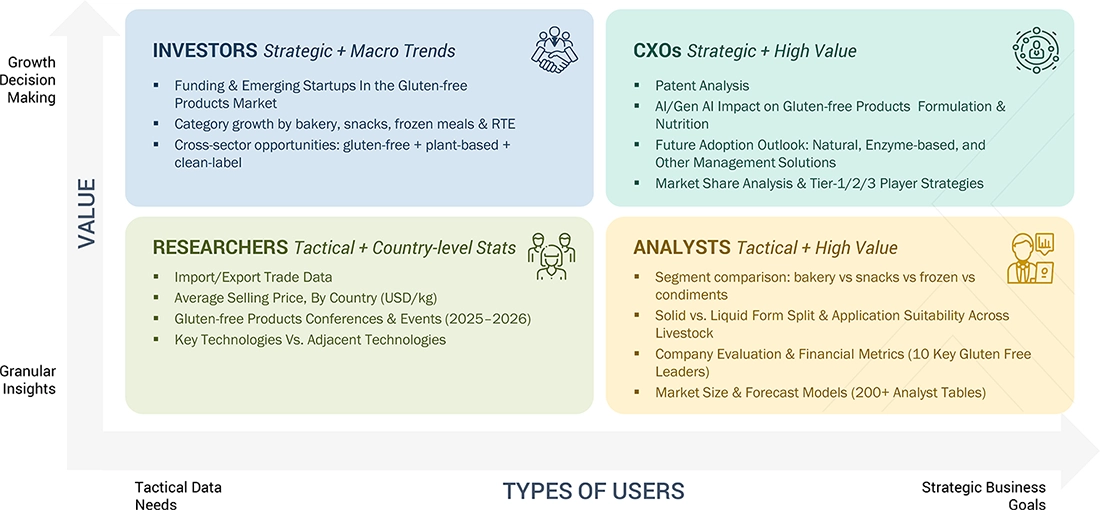
DELIVERED CUSTOMIZATIONS
We have successfully delivered the following deep-dive customizations:
| CLIENT REQUEST | CUSTOMIZATION DELIVERED | VALUE ADDS |
|---|---|---|
| Brazil-based Gluten-free Product Manufacturers |
|
|
| Gluten-free Products: Type & Application Segment Assessment |
|
|
RECENT DEVELOPMENTS
- July 2024 : Ore-Ida and GoodPop, brands of The Kraft Heinz Company, joined forces with Frozen Novelties to create Fudge n' Vanilla French Fry Pops, which are manufactured using vanilla oat milk, a chocolate fudge shell, and crispy potato bits. With strategic placement in the gluten-free category, these two innovative, first-of-their-kind products were expected to place the companies in an excellent position to meet the growing consumer demand for unique and allergen-friendly snacks.
- March 2024 : Garden Veggie, The Hain Celestial Group’s brand, introduced Flavor Burst Tortilla Chips. These gluten-free tortilla chips were expected to be available in vegetable-infused flavors such as Nacho Cheese and Zesty Ranch. This innovation is expected to help the company grow by providing consumers with healthy, nutritious gluten-free snacking options.
- February 2024 : General Mills Inc.'s yogurt brand, Yoplait, also introduced Yoplait Original with Chocolate Shavings in Cherry, Raspberry, and Strawberry flavors, enhancing the creaminess of this guilt-free indulgence made with real chocolate. These gluten-free products are anticipated to provide the company with a competitive advantage in the marketplace.
Table of Contents
 Exclusive indicates content/data unique to MarketsandMarkets and not available with any competitors.
Methodology
The study involved major segments in estimating the current size of the Latin America gluten-free products market. Exhaustive secondary research was done to collect information on the market, peer, and parent markets. The next step was to validate these findings, assumptions, and sizing with industry experts across the value chain through primary research. Both top-down and bottom-up approaches were employed to estimate the complete market size. After that, market breakdown and data triangulation were used to estimate the market size of segments and subsegments.
Secondary Research
This research study involved the extensive use of secondary sources—directories and databases such as Bloomberg Businessweek and Factiva—to identify and collect information useful for a technical, market-oriented, and commercial study of the Latin America gluten-free products market.
In the secondary research process, various sources such as annual reports, press releases & investor presentations of companies, white papers, food journals, certified publications, articles from recognized authors, directories, and databases were referred to identify and collect information.
Secondary research was mainly used to obtain key information about the industry’s supply chain, the total pool of key players, and market classification and segmentation as per the industry trends to the bottom-most level, regional markets, and key developments from both market- and technology-oriented perspectives.
Primary Research
Extensive primary research was conducted after obtaining information regarding the Latin America gluten-free products market scenario through secondary research. Several primary interviews were conducted with market experts from both the demand and supply sides across Latin America. Primary data was collected through questionnaires, emails, and telephonic interviews. The primary sources from the supply side included various industry experts, such as Chief X Officers (CXOs), Vice Presidents (VPs), Directors from business development, marketing, research, and development teams, and related key executives from distributors and key opinion leaders. Primary interviews were conducted to gather insights such as market statistics, data on revenue collected from the products, market breakdowns, market size estimations, market forecasting, and data triangulation. Primary research also helped in understanding the various trends related to Latin America gluten-free products type, form, distribution channel and region. Stakeholders from the demand side, who use gluten-free ingredients, were interviewed to understand the buyer’s perspective on the suppliers, products, and their current usage of Latin America gluten-free products and the outlook of their business, which will affect the overall market.
Market Size Estimation
Both the top-down and bottom-up approaches were used to estimate and validate the total market size. These approaches were also used to estimate the size of various dependent submarkets. The research methodology used to estimate the market size includes the following:
- The key players in the industry and markets were identified through extensive secondary research.
- All shares, splits, and breakdowns were determined using secondary sources and verified through primary sources.
- All possible parameters that affect the markets covered in this research study were accounted for, viewed in extensive detail, verified through primary research, and analyzed to obtain the final quantitative and qualitative data.
- The research included the study of reports, reviews, and newsletters of top market players, along with extensive interviews for opinions from leaders, such as CEOs, directors, and marketing executives.
Data Triangulation
After arriving at the overall market size from the estimation process explained above, the total market was split into several segments and subsegments. To estimate the overall Latin America gluten-free products market and arrive at the exact statistics for all segments and subsegments, data triangulation and market breakdown procedures were employed, wherever applicable. The data was triangulated by studying various factors and trends from the demand and supply sides. Along with this, the market size was validated using both the top-down and bottom-up approaches.
Market Definition
- According to the Food and Drug Administration (FDA), gluten-free products are food products that do not contain any of the following:
- An ingredient that is any type of wheat, rye, barley, or crossbreeds of these grains
- An ingredient derived from these grains, and that has not been processed to remove gluten
- An ingredient derived from these grains that has been processed to remove gluten, if it results in the food containing 20 or more parts per million (ppm) gluten.
Key Stakeholders
- Supply-side: Gluten-free products manufacturers, suppliers, distributors, importers, and exporters
- Gluten-free products additive manufacturers and traders
- Demand-side: Gluten-free product manufacturers
- Regulatory side: Concerned government authorities, commercial research & development (R&D) institutions, and other regulatory bodies.
- Associations and industry bodies such as:
- Food and Drug Administration (FDA)
- European Food Safety Authority (EFSA)
- Food Standards Australia New Zealand (FSANZ)
- Gluten-Free Certification Organization (GFCO)
- National Foundation for Celiac Awareness (NFCA)
- Gluten-Free Standards Organization (GFSA)
- International Certification Services (ICS)
Report Objectives
- To define, segment, and forecast the Latin America gluten-free products market based on type, form, source, distribution channel and region from 2020 to 2023 and a forecast period from 2024 to 2029
- To provide detailed information about the key factors, including drivers, restraints, opportunities, and challenges influencing the growth of the market
- To identify attractive opportunities in the market by determining the largest and fastest-growing segments across regions
-
To analyze the demand-side factors based on the following:
- Impact of macro and microeconomic factors on the market
- Shifts in demand patterns across different subsegments and regions
- Strategically profile the key players and comprehensively analyze their core competencies
- Competitive developments, such as partnerships, mergers & acquisitions, new product developments, and expansions & investments in the Latin America gluten-free products market
Available Customizations:
With the given market data, MarketsandMarkets offers customizations according to company-specific scientific needs.
The following customization options are available for the report:
PRODUCT ANALYSIS
- Product Matrix, which gives a detailed comparison of the product portfolio of each company.
GEOGRAPHIC ANALYSIS
With the given market data, MarketsandMarkets offers customizations according to company-specific scientific needs.
- Further breakdown of the Rest of the Europe Gluten-free products market into key countries
- Further breakdown of the Rest of Asia Pacific Gluten-free products market into key countries
- Further breakdown of the South America Gluten-free products market into key countries
COMPANY INFORMATION
- Detailed analyses and profiling of additional market players (up to five)


Personalize This Research
- Triangulate with your Own Data
- Get Data as per your Format and Definition
- Gain a Deeper Dive on a Specific Application, Geography, Customer or Competitor
- Any level of Personalization
Let Us Help You
- What are the Known and Unknown Adjacencies Impacting the Latin America Gluten-free Products Market
- What will your New Revenue Sources be?
- Who will be your Top Customer; what will make them switch?
- Defend your Market Share or Win Competitors
- Get a Scorecard for Target Partners

Custom Market Research Services
We Will Customise The Research For You, In Case The Report Listed Above Does Not Meet With Your Requirements
Get 10% Free CustomisationTESTIMONIALS

Business Innovation Director
US Based Leading Agribusiness,
Food and Ingredients ManufacturerI highly appreciate the team's efficiency for a well conducted study that helped us clarify some blind spots in food and agricultural niche markets. Although compiling information for B2B markets is very difficult, the MnM team pulled out the task successfully. The quality of research, level of insights, and responsiveness of team were commendable.






Growth opportunities and latent adjacency in Latin America Gluten-free Products Market