Latin America Hospital Food Services Market

LATAM Hospital Food Services Market by Service Type [Patient Dining (Clinical Nutrition, Regular Diet), Retail Services, Vending], Settings [Acute Hospitals, ASC, Post Acute (Long-term care, Skilled Nursing), Physician Office], Country - Forecast to 2031



LATIN AMERICA HOSPITAL FOOD SERVICES MARKET SIZE, SHARE & GROWTH SNAPSHOT
Source: Secondary Research, Interviews with Experts, MarketsandMarkets Analysis
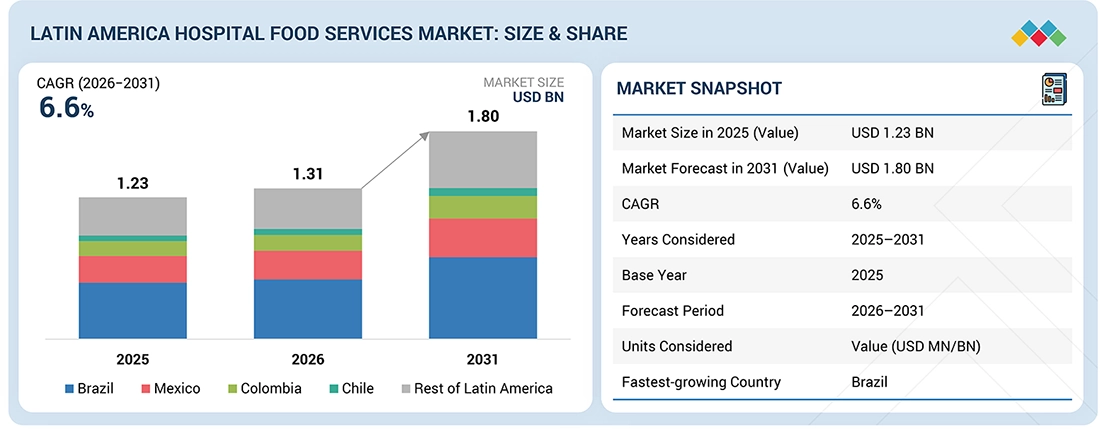
The Latin America hospital food services market is projected to grow from USD 1.31 billion in 2026 to USD 1.80 billion by 2031, at a CAGR of 6.6% during the forecast period. The market was valued at USD 1.23 billion in 2025. The market is seeing consistent growth, mainly because of the constant development of healthcare infrastructure and the growing number of hospitals in leading countries such as Brazil, Mexico, and Argentina. Another factor driving market growth is the increasing burden of non-communicable diseases, coupled with the rising elderly population, which is leading to a rise in hospitalizations and boosting the demand for specialized and nutritionally balanced meals. Healthcare providers have also realized the need to focus on enhancing patient experience and overall care quality, which is leading to improvements in food standards, customized meal plans, and dining services. Moreover, the increasing trend of hospitals availing outsourced food services can lead to better cost-saving and efficiency in operations. Besides, rapid urbanization, higher disposable incomes, and food service industry developments are also strengthening supply chains and paving the way for more innovative and quality hospital food solutions.
KEY TAKEAWAYS
-
MARKET SNAPSHOT:
Base Year Market Size (2025): USD 1.23 Billion
Current Market Size (2026): USD 1.31 Billion
Forecast Market Size (2031): USD 1.80 Billion
CAGR (2026–2031): 6.6% -
SEGMENT LEADERSHIP:
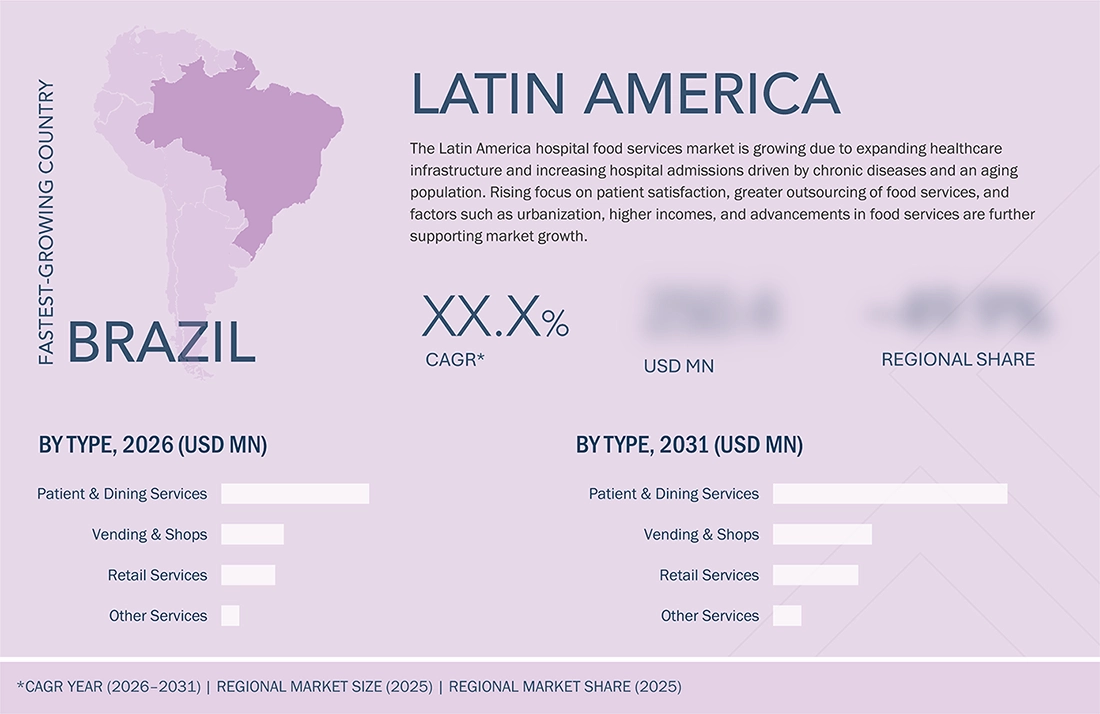
By Country: Brazil accounted for the largest share of 39.7% of the Latin America hospital food services market in 2025.
By Type: Patient & dining services accounted for the largest share of 52.7% of the market in 2025.
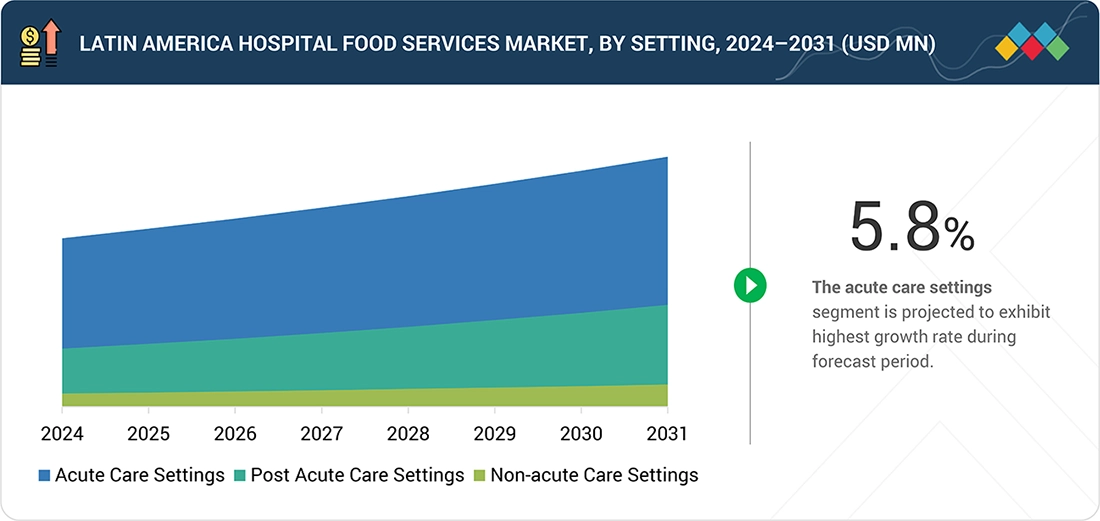
By Setting: Acute care facilities accounted for the largest share of 69.8% of the market in 2025. -
MARKET OUTLOOK & COMPETITIVE LANDSCAPE:
Sodexo (France) and GRSA (Brazil) were recognized as star players due to their established product portfolios and strong geographic presence across Latin America.
The Latin America hospital food services market is driven by an increase in healthcare infrastructure and the growing number of hospitals in countries like Brazil, Mexico, and Argentina. This is leading to an increased need for catering services. The growing number of people suffering from chronic conditions and the rapidly aging population is also contributing to an increase in the number of patients seeking medical attention. Moreover, an increased focus on customer satisfaction and an increase in outsourced food services are also contributing to market growth. Urbanization and an increase in income levels and advancements in food services are also contributing to market growth.
TRENDS & DISRUPTIONS IMPACTING CUSTOMERS' CUSTOMERS
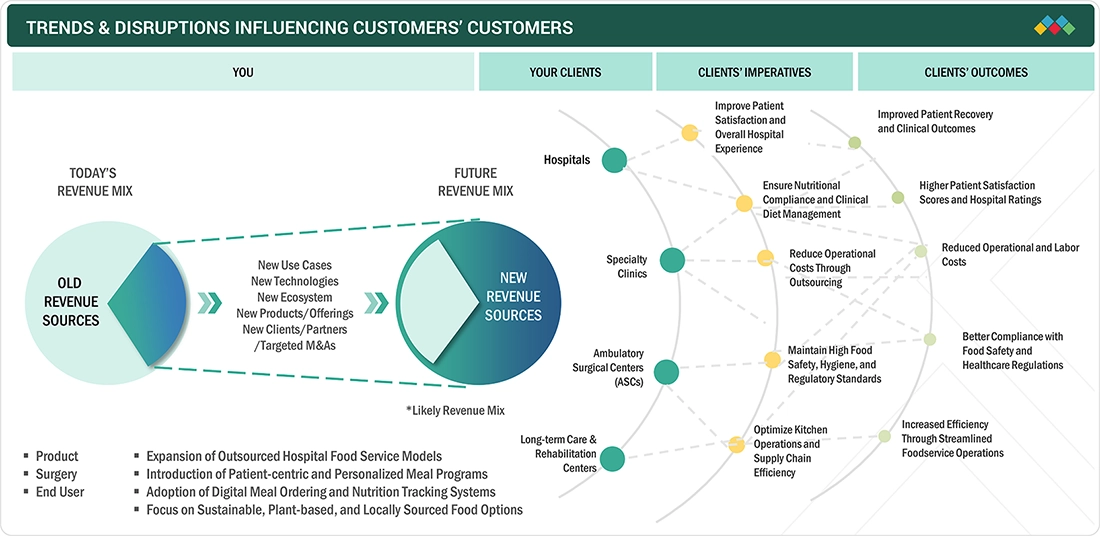
The Latin America hospital food services market is currently undergoing significant transformation due to evolving trends that are shaping the expectations of healthcare providers and their patients. Hospitals are increasingly prioritizing patient satisfaction, clinical nutrition, and overall hospital experience, which is driving food service providers to offer more personalized and higher-quality food options. Simultaneously, hospitals are focusing on cost optimization, compliance, and operational efficiency, leading to a rise in outsourced food service models. The introduction of digital technologies, the use of eco-friendly food options, and improved supply chain efficiencies are also having a major impact on food services. Overall, these trends are contributing to better patient outcomes, enhanced hospital performance, and the development of modern, patient-centered, and efficient hospital food service models.
Source: Secondary Research, Interviews with Experts, MarketsandMarkets Analysis
MARKET DYNAMICS

Level
-
Expansion of healthcare infrastructure


Level
-
High operational and food service costs


Level
-
Growing demand for outsourced & specialized nutrition services


Level
-
Maintaining food quality, safety, and regulatory compliance

Source: Secondary Research, Interviews with Experts, MarketsandMarkets Analysis
Driver: Expansion of healthcare infrastructure
One of the main factors driving the hospital food services market in Latin America is the expansion of healthcare infrastructure. Both government and private entities are investing in the construction of new hospitals, upgrading existing facilities, and increasing the availability of healthcare services throughout the region. Countries such as Brazil, Mexico, Argentina, and others are witnessing a growth in healthcare institutions, both public and private. This, in turn, leads to an increase in patient admissions and a rising demand for support services like food and nutrition. As healthcare facilities expand, the need for quality, large-scale, and reliable food service operations that cater to patients, staff, and visitors also grows. Additionally, hospitals today are placing greater emphasis on clinical nutrition and patient-centered care, which further raises the demand for a well-organized and professionally managed food service system. Therefore, the ongoing development of infrastructure is a key factor contributing to the steady growth of the hospital food services market in Latin America.
Restraint: High operational and food service costs
Labor, raw materials, food preparation, and logistics are the primary cost factors in the hospital sector. High operational and food service costs have been identified as significant obstacles in the hospital food services market in Latin America. To manage these systems, hospitals need trained personnel and dietitians, as well as compliance with food safety regulations. This complexity adds to the overall operational costs. Moreover, price fluctuations in food supplies, inefficiencies in supply chains, and inflationary pressures in some Latin American countries can create budgetary challenges for hospitals, particularly for public institutions with limited resources. Investments in kitchen modernization, infrastructure, and technological solutions further contribute to the financial burden. As a result, many healthcare facilities face the dilemma of whether to control costs or provide highly nutritious meals that align with the growing demand for high-quality, nutritionally appropriate food. This dilemma can hinder the adoption of advanced or premium food service solutions.
Opportunity: Growing demand for outsourced & specialized nutrition services
The latest trend in outsourcing and specialized nutrition services is leading to a rise in the hospital food service industry in Latin America. Individuals are increasingly drawn to the healthcare sector due to its efficiency. Food services provide an excellent way for providers to offer comprehensive solutions, including meal preparation, menu planning, and dietary management, which ensure consistency, quality, and cost optimization. Additionally, there is a growing focus on clinical nutrition and personalized diets, as people require meals tailored to specific health conditions such as diabetes, cardiovascular diseases, and malnutrition. This presents a significant opportunity for service providers to implement dietitian-led programs, advanced menu customization, and innovative food offerings. In their pursuit of better patient outcomes and satisfaction, hospitals are continually seeking operational efficiency. This “good old-fashioned” approach often includes outsourcing food services. As a result, the demand for outsourced and specialized nutrition services is expected to grow steadily throughout the region.
Challenge: Maintaining food quality, safety, and regulatory compliance
Food quality, safety, and compliance are major challenges faced by the hospital food services market in Latin America. Food service providers must adhere to strict hygiene and nutritional standards while serving a large volume of meals daily. Hospitals need to ensure safe food handling, proper storage, and minimize contamination risks to avoid health hazards. This requires continuous monitoring and well-trained personnel. Additionally, compliance with varying government regulations and food safety standards across different countries poses a significant challenge for food service providers operating in multiple regions. Ensuring food quality and compliance is essential to prevent health risks and maintain a good reputation. Hospitals must focus on standardizing food quality while catering to a diverse customer base. To achieve this, they need to implement robust quality control systems and effective supply chain management.
LATAM HOSPITAL FOOD SERVICES MARKET: COMMERCIAL USE CASES ACROSS INDUSTRIES
| COMPANY | USE CASE DESCRIPTION | BENEFITS |
|---|---|---|
 |
Provides on-site dining solutions within hospitals, where meals are freshly prepared and served directly to patients, staff, and visitors. These services are widely used in large hospitals and healthcare facilities requiring real-time meal customization aligned with clinical dietary requirements and patient preferences. | Enhances meal freshness and quality, improves patient satisfaction, enables real-time dietary adjustments, supports clinical nutrition compliance, and ensures efficient coordination with hospital staff for better care delivery. |
 |
Offers customized meal plans tailored to specific patient conditions such as diabetes, cardiac disorders, and post-operative recovery. These services are commonly implemented in hospitals with diverse patient populations requiring personalized nutrition management. | Improves patient recovery outcomes, ensures adherence to prescribed diets, supports individualized care, enhances menu flexibility, and aligns with local dietary habits and hospital nutrition protocols. |
 |
Delivers clinically driven nutrition programs integrated with hospital care, involving dietitians and nutrition specialists to design and monitor patient diets. These solutions are used in hospitals focusing on therapeutic and preventive nutrition. | Supports disease-specific nutrition management, improves clinical outcomes, enhances monitoring and evaluation of patient diets, increases operational efficiency, and elevates overall quality of healthcare services. |
 |
Provides end-to-end patient food services, including meal production, distribution, and logistics management across hospital networks. These services are suitable for multi-site hospitals and healthcare systems requiring standardized operations. | Ensures consistent service quality, improves operational efficiency, reduces costs through centralized production, enhances scalability, and supports reliable large-volume meal delivery. |
 |
Offers patient dining programs that allow patients to select meals based on preferences within clinical guidelines, often incorporating room-service style models in hospitals. These services are used in facilities aiming to improve patient experience and engagement. | Increases patient satisfaction, improves meal consumption and reduces food waste, delivers personalized dining experiences, supports nutritional compliance, and enhances the overall perception of hospital care quality. |
Logos and trademarks shown above are the property of their respective owners. Their use here is for informational and illustrative purposes only.
MARKET ECOSYSTEM
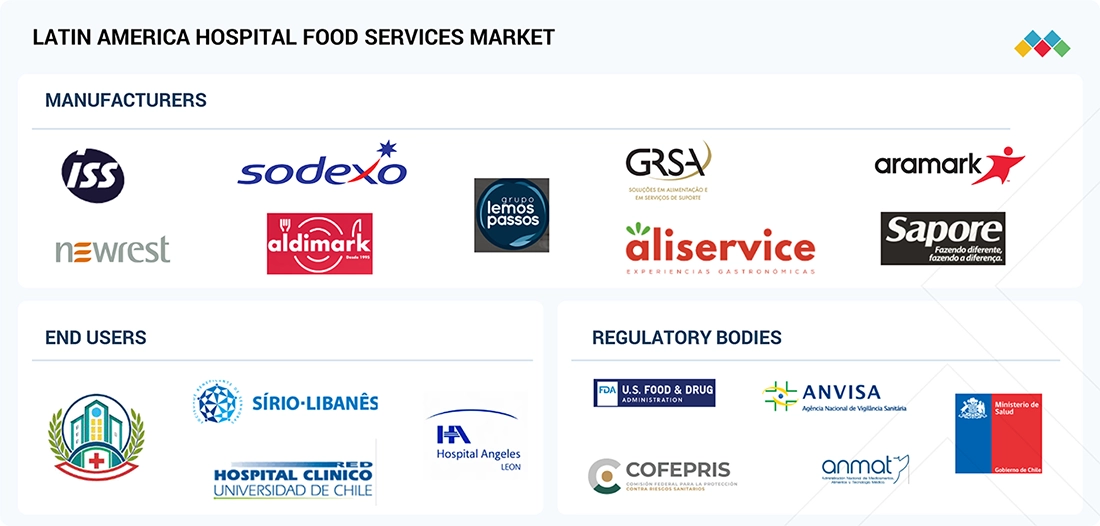
The Latin America hospital food services market consists of a network involving global and regional food service companies, healthcare facilities, and government authorities collaborating to ensure effective food service delivery. Key players such as Sodexo, GRSA, Sapore, Aramark, ISS A/S, and Newrest play a vital role in providing catering and food services to hospitals. Major healthcare facilities, including Hospital Sírio-Libanês, Hospital Angeles, and Hospital Clínico Universidad de Chile, are significant end users of these services. Additionally, government authorities such as ANVISA, COFEPRIS, and ANMAT are responsible for enforcing compliance with food safety, hygiene, and healthcare standards. This efficient delivery system is a major asset for the Latin America hospital food services market.
Logos and trademarks shown above are the property of their respective owners. Their use here is for informational and illustrative purposes only.
MARKET SEGMENTS
Source: Secondary Research, Interviews with Experts, MarketsandMarkets Analysis
Latin America Hospital Food Services Market, by Type
The patient & dining services segment currently holds the largest market share in the Latin America hospital food services market. This is primarily due to its direct connection to patient care and the overall hospital experience. Hospitals are increasingly prioritizing the provision of well-balanced, disease-specific meals to enhance patient health, leading to a high demand for patient meals. Furthermore, the emphasis on patient satisfaction and the desire to offer a high-quality dining experience for all hospital visitors significantly contributes to the growth of the patient & dining services segment. Additionally, the trend of outsourcing food services, where a third-party provider manages the entire dining experience, is also driving growth in this segment. This trend is further fueled by the increase in hospitalizations resulting from chronic diseases and the aging population in the region.
Latin America Hospital Food Services Market, by Setting
Acute care facilities represent the largest segment of the hospital food services market in Latin America. This is primarily because these institutions manage a significant number of patients, and the nature of their illnesses often results in longer hospital stays. These facilities, which include large hospitals and specialized treatment centers, require a consistent and substantial meal supply for not only patients but also their staff and visitors. This creates a strong demand for food services. Additionally, patients in acute care often need specially tailored diets to support their treatment and recovery, underscoring the importance of nutrition services. The segment is further driven by an increasing prevalence of chronic diseases, more surgical procedures, and a rise in emergency situations in the region. Moreover, it is common for acute care hospitals to contract external food service companies to ensure high quality, operational efficiency, and compliance with healthcare standards, which solidifies their significant share in the market.
REGION
Brazil to be fastest-growing country in Latin America hospital food service market during forecast period
Brazil significantly leads the hospital food services market in Latin America, due to its robust healthcare system, large population, and high number of hospitalized patients. A primary driver of hospital catering in Brazil is the public healthcare system, known as Sistema Único de Saúde (SUS), which serves a large portion of the population and creates a steady demand for cost-effective and scalable food service solutions in hospitals. Moreover, the hospital food services market has experienced considerable growth due to the increasing trend of outsourcing non-core hospital operations, including food services. Key market competitors such as domestic companies GRSA and Sapore, along with global players like Sodexo and Aramark, are enhancing service standards in Brazil. In addition, factors such as an increasing emphasis on clinical nutrition, a rise in chronic disease incidence, and ongoing investments in modernizing hospital facilities continue to reinforce Brazil's leadership in the regional market.
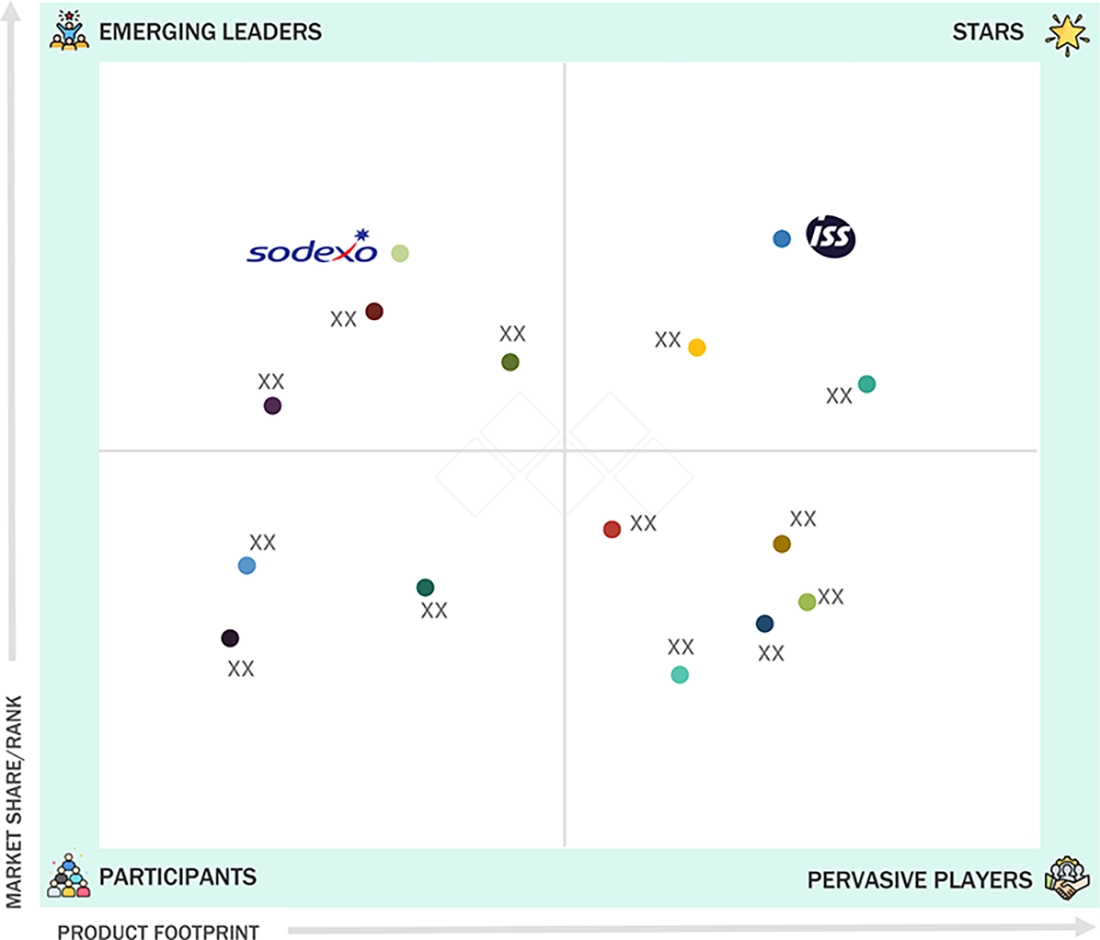
LATAM HOSPITAL FOOD SERVICES MARKET: COMPANY EVALUATION MATRIX
In the matrix of the Latin America hospital food services market, Sodexo (France) and GRSA (Brazil) are categorized as "Stars" due to their unmatched regional presence, strong brand recognition, and comprehensive portfolios of hospital food services. LemosPassos (Brazil), classified as a "Pervasive Players," is rapidly gaining traction with its versatile product offerings in the hospital food service sector.
Source: Secondary Research, Interviews with Experts, MarketsandMarkets Analysis
KEY MARKET PLAYERS
MARKET SCOPE
| REPORT METRIC | DETAILS |
|---|---|
| Market Size in 2025 (Value) | USD 1.23 Billion |
| Market Forecast in 2031 (Value) | USD 1.80 Billion |
| Growth Rate | CAGR of 6.6% from 2026–2031 |
| Years Considered | 2025–2031 |
| Base Year | 2025 |
| Forecast Period | 2026–2031 |
| Units Considered | Value (USD Million/Billion) |
| Report Coverage | Revenue Forecast, Company Ranking, Competitive Landscape, Growth Factors, and Trends |
| Segments Covered |
|
| Countries Covered | Brazil, Mexico, Colombia, Chile, and Rest of Latin America |
WHAT IS IN IT FOR YOU: LATAM HOSPITAL FOOD SERVICES MARKET REPORT CONTENT GUIDE
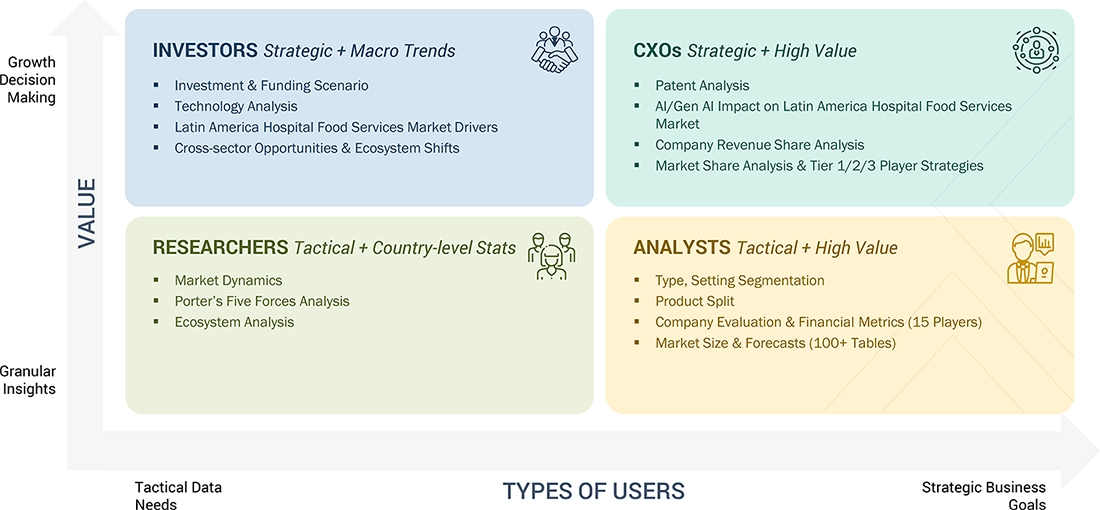
DELIVERED CUSTOMIZATIONS
We have successfully delivered the following deep-dive customizations:
| CLIENT REQUEST | CUSTOMIZATION DELIVERED | VALUE ADDS |
|---|---|---|
| Company Information | Market share analysis, by country (Brazil, Mexico, Colombia, Chile), which provides market shares of the top 3 key players in the Latin America hospital food services market. | Insights on market share analysis, by country. |
| Geographic Analysis | Further breakdown of the Rest of Latin America hospital food services market into Argentina, Peru, Guyana, Bolivia, El Salvador, Ecuador, Paraguay, Uruguay, Panama, and Cuba. | Country-level demand mapping for new product launches and localization strategy planning. |
RECENT DEVELOPMENTS
- April 2025 : Sodexo expanded its partnership with Greener by Default to enhance plant-based meal programs throughout its hospital network in the US. They aim to reach approximately 400 hospitals by 2026. This initiative builds on previous successes, where a significant number of patients chose plant-based options, leading to improved sustainability and reduced carbon emissions.
- March 2025 : Compass Group successfully sold its operating subsidiaries in Chile, Colombia, and Mexico to Newrest Group, marking its complete exit from the Latin American market. This transaction enhances Newrest's presence in the region while enabling Compass to streamline its global operations.
Table of Contents
 Exclusive indicates content/data unique to MarketsandMarkets and not available with any competitors.
Methodology
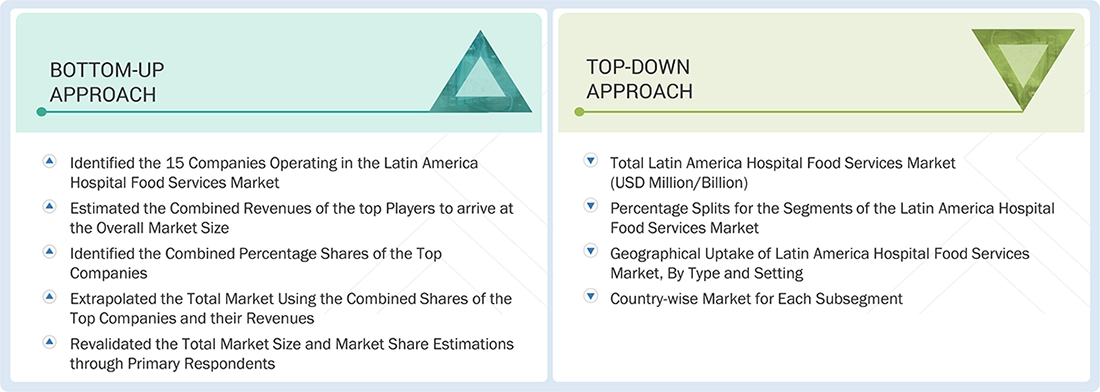
This study involved four major activities in estimating the current Latin America hospital food services market size. First, extensive secondary research was conducted to gather information on the market, including related and parent markets. The next step was to validate these findings, assumptions, and sizing with industry experts across the value chain through primary research. Both top-down and bottom-up approaches were employed to estimate the complete market size. After that, market breakdown and data triangulation were used to estimate the market size of segments and subsegments.
Secondary Research
The secondary research process involved the widespread use of secondary sources, directories, databases (such as Bloomberg Businessweek, Factiva, and D&B Hoovers), white papers, annual reports, company house documents, investor presentations, and SEC filings of companies. Secondary research was used to identify and collect information useful for the extensive, technical, market-oriented, and commercial study of the Latin America hospital food services market. It was also used to obtain important information about the key players and market classification and segmentation according to industry trends to the bottom-most level, and key developments related to market and technology perspectives. A database of the key industry leaders was also prepared using secondary research.
Primary Research
In the primary research process, various sources from both the supply and demand sides were interviewed to obtain qualitative and quantitative information for this report. The primary sources from the supply side include industry experts such as CEOs, vice presidents, marketing and sales directors, technology & innovation directors, and related key executives from various key companies and organizations operating in the Latin America hospital food services market. The primary sources from the demand side included industry experts, purchase & sales managers, doctors, and personnel from research organizations. Primary research was conducted to validate the market segmentation, identify key players in the market, and gather insights on key industry trends and key market dynamics.
A breakdown of the primary respondents for the Latin America hospital food services market is provided below:
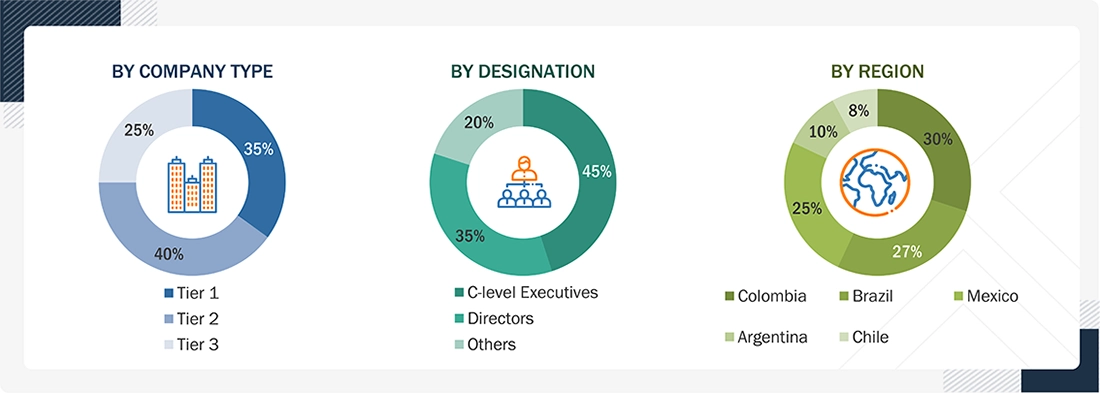
Note 1: C-level executives include CEOs, CFOs, COOs, and VPs.
Note 2: Others include sales managers, marketing managers, business development managers, product managers, distributors, and suppliers.
Note 3: Companies are classified into tiers based on their total revenue. As of 2025, Tier 1 = >USD 10.00 billion, Tier 2 = USD 1.00 billion to USD 10.00 billion, and Tier 3 = <USD 1.00 billion.
To know about the assumptions considered for the study, download the pdf brochure
Market Size Estimation
For the global market value, annual revenues were calculated based on the revenue mapping of major product manufacturers and OEMs active in the Latin America hospital food services market. All the major product manufacturers were identified at the global and/or country/regional level. Revenue mapping for the respective business segments/sub-segments was done for the major players. Also, the Latin America hospital food services market was split into various segments and subsegments based on:
- List of major players operating in the products market at the country level
- Product mapping of various Latin America hospital food services providers at the country level
- Mapping of annual revenues generated by listed major players from Latin America hospital food services.
- Revenue mapping of major players covered.
- Extrapolation of the revenue mapping of the listed major players to derive the market value of the respective segments/subsegments
- Summation of the market value of all segments/subsegments to arrive at the Latin America hospital food services market
The above-mentioned data was consolidated and added with detailed inputs and analysis from MarketsandMarkets and presented in this report.
Market Size Estimation (Bottom-up Approach & Top-down Approach)
Data Triangulation
After arriving at the overall size of the Latin America hospital food services market through the above-mentioned methodology, this market was split into several segments and subsegments. The data triangulation and market breakdown procedures were employed, wherever applicable, to complete the overall market engineering process and arrive at the exact market value data for the key segments and subsegments. The extrapolated market data was triangulated by studying various macroindicators and regional trends from both demand- and supply-side participants.
Market Definition
Healthcare/hospital food services refer to catering services in the healthcare industry. There are various companies in the catering business that provide services such as dining services, room services, online food delivery, and retail services to patients, hospital staff (including doctors, residents, and interns), and visitors. Food service companies also provide packaged food services as well as real-time food services.
Hospitals and other healthcare food service providers provide catering services for cafeterias and other retail outlets for visitors and employees, as well as nutrition services for patients. Both aspects are managed by the same food and nutrition team, typically a director of food and nutrition, dieticians, chefs, and other staff.
Key Stakeholders
- Healthcare food service companies
- Hospitals & clinics
- Nursing homes
- Assisted living facilities
- Healthcare insurance providers
- Market research & consulting firms
- Venture capitalists & investors
- Acute hospitals
- Military treatment facilities
- Ambulatory surgery centers
- Academic medical centers
- Children’s hospitals
- Long-term acute facilities
- Skilled nursing facilities
- Rehabilitation hospitals
- Psychiatric hospitals
- Physicians’ offices
- Clinics
- Laboratories
- Pharmacies
Report Objectives
- To define, describe, and forecast the Latin America hospital food services market by type, setting, and country
- To provide detailed information regarding the major factors influencing the growth of this market (such as drivers, restraints, challenges, and opportunities)
- To analyze the micromarkets with respect to individual growth trends, prospects, and contributions to the overall Latin America hospital food services market
- To analyze the opportunities for stakeholders and provide details of the competitive landscape for market leaders
- To forecast the size of the market segments with respect to Latin America
- To profile the key players and analyze their market shares and core competencies
- To track and analyze competitive developments such as product launches & approvals, acquisitions, expansions, partnerships, deployments, agreements, and collaborations in the overall Latin America hospital food services market
Available customizations:
With the given market data, MarketsandMarkets offers customizations as per your company’s specific needs. The following customization options are available for the report:
Geographic Analysis
- Further breakdown of the Rest of Latin America hospital food services market into Peru, Cuba, Panama, Ecuador, and others
Competitive Landscape Assessment
- Market share analysis, by country, which provides market shares of the top 3–5 key players in the Latin America hospital food services market


Personalize This Research
- Triangulate with your Own Data
- Get Data as per your Format and Definition
- Gain a Deeper Dive on a Specific Application, Geography, Customer or Competitor
- Any level of Personalization
Let Us Help You
- What are the Known and Unknown Adjacencies Impacting the LATAM Hospital Food Services Market
- What will your New Revenue Sources be?
- Who will be your Top Customer; what will make them switch?
- Defend your Market Share or Win Competitors
- Get a Scorecard for Target Partners

Custom Market Research Services
We Will Customise The Research For You, In Case The Report Listed Above Does Not Meet With Your Requirements
Get 10% Free CustomisationTESTIMONIALS

JAYANT RAJPUROHIT
Director of Market Insights, Data and Analytics
SFI Health,
Leading Pharmaceutical Companywww.sfihealth.com/

We at SFI Health approached MarketsandMarkets for an Opportunity Assessment on "Incidence and Prevalence of Focus Indications" as we wanted to know the most attractive HCPs like Physician, Functional MD, Naturopath and Pharmacist. The project was critical for us to ensure our focus on the right target which would enable sustainable growth and profitability for SFI Health. The business insights provided exceeded our expectations and we were extremely impressed. The team at MarketsandMarkets is highly professional and detail oriented and very well understood our business needs. MarketsandMarkets offers a unique combination of expertise and dedicated engagement model. We identified 2 new products to be launched in coming months, based on the research findings provided by MarketsandMarkets. We are happy with the services and would strongly recommend MarketsandMarkets to my peers in the industry.

BEATRIZ DE LA CALLE
Head of Commercial Analytics
Qualicaps,
Leading Pharmaceutical Companywww.qualicaps.com/

We partnered with MarketsandMarkets for an assessment study on hard empty capsules. The team was extremely professional in understanding our business requirements and we received timely responses to all our queries. The market intelligence and the recommendations has met our business requirements. We were extremely impressed to see the final study results; it really exceeded our expectations. The market intelligence offered by MarketsandMarkets, and clarity on next steps will help us achieve our business objective for the Year 2021. We are happy with the services and would strongly recommend MarketsandMarkets to my peers in the industry.

Bob Williams,
Senior Director Business Development & Innovation
Bracco Diagnostics Inc.,
Italian Multinational in life sciences sector and a World Leader in imaging diagnosticsimaging.bracco.com/us-en
We were pleased with targeted insights that MarketsandMarkets identified from a custom study on the 'Radiation Dose Management Solutions Market'. Your team identified and characterized the market participants as well as underlying trends accurately. This study was useful to Bracco in formulating business strategies for our dose monitoring product lines and we thank MarketsandMarkets for the job well done.
Cody Coonradt,
Market Development and Strategy Manager
3M Health Information Systems,
Leader in Health care Coding, Payment & Analytics Solutions.www.3m.com/3M/en_US/health-information-systems-us
The value for our organization comes from three things: depth of research, specificity of segments and being easy to work with. As important as the first two are, the third can't be underestimated. MarketsandMarkets, maybe more than any other research vendor, wants to know what is top of mind for our team and what big questions we are grappling to answer.
Their customer first approach and high value engagement model, have given us great analysis and excellent value for money






Growth opportunities and latent adjacency in LATAM Hospital Food Services Market