Mental Health Apps Market Size, Growth, Share & Trends Analysis

Mental Health Apps Market by Platform (Android, iOS), Application (Depression, Meditation, Stress, Trauma), Function (Screening, Consultation, Prescription, Treatment, Monitoring, Coaching), End User (Provider, Patient, Employer) - Global Forecast to 2030




OVERVIEW
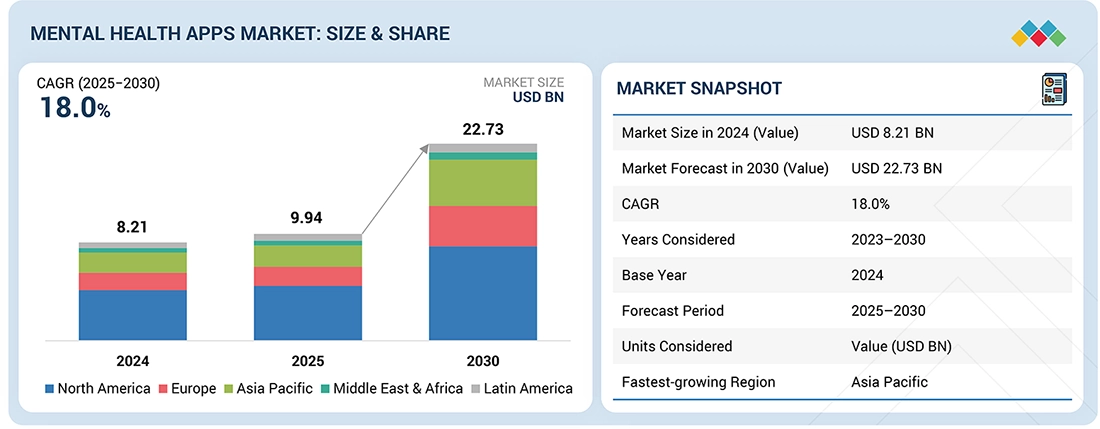
Source: Secondary Research, Interviews with Experts, MarketsandMarkets Analysis
The Mental Health Apps market, valued at US$8.21 billion in 2024, stood at US$9.94 billion in 2025 and is projected to advance at a resilient CAGR of 18.0% from 2025 to 2030, culminating in a forecasted valuation of US$22.73 billion by the end of the period. The mental health apps market is growing rapidly, driven by advancements in digital technologies such as artificial intelligence, data analytics, and mobile health platforms. AI-enabled chatbots, personalized therapy modules, and real-time monitoring tools are improving user engagement and enabling scalable mental health support.
KEY TAKEAWAYS
-
By RegionNorth America accounted for the largest share of 47.0% of the mental health apps market in 2024.
-
By PlatformBy platform, the iOS segment is expected to register the highest CAGR of 18.9% during the forecast period.
-
By ApplicationBy application, the depression & anxiety management segment will dominate the market during the forecast period.
-
By FunctionBy function, the consultation segment accounted for the largest market share in 2024.
-
By End userBy end-user, the employer groups segment is expected to register the highest CAGR of 19.2% during the forecast period.
-
Competitive LandscapeTeladoc, Headspace Inc., and Talkspace were identified as some of the star players in the mental health apps market, given their strong market share and product footprint.
-
Competitive LandscapeWoebot Health and Youper Inc., among others, have distinguished themselves among startups and SMEs by securing strong footholds in specialized niche areas, underscoring their potential as emerging market leaders.
Growth in the mental health apps market is being propelled by rapid technological innovation that enables more personalized, accessible, and data-driven care. Mobile-first platforms, secure cloud infrastructure, and integration with digital therapeutics and remote care models are expanding the role of mental health apps beyond self-help into clinically supported solutions.
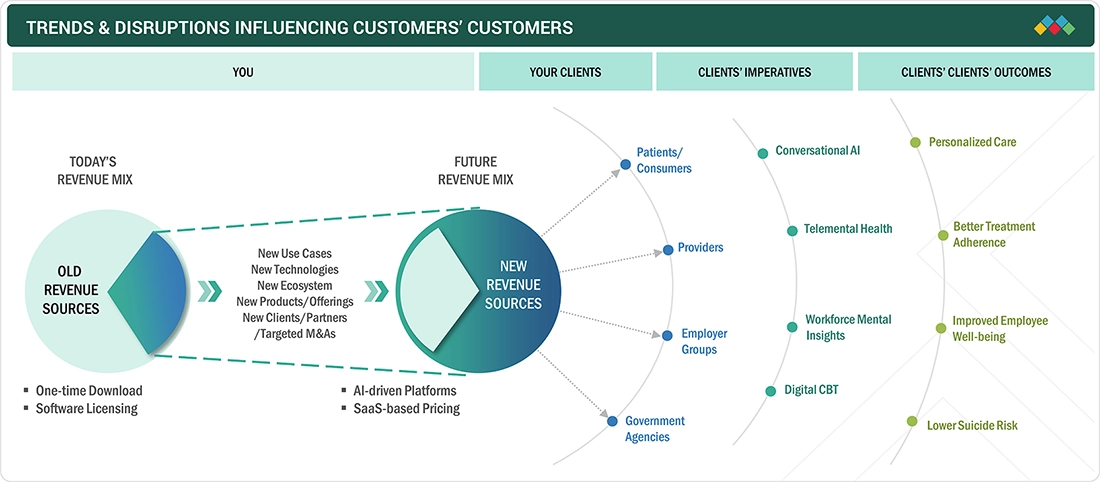
TRENDS & DISRUPTIONS IMPACTING CUSTOMERS' CUSTOMERS
The mental health apps market is being reshaped by conversational AI, tele-mental health, and digital CBT, enabling personalized, scalable care across consumers, providers, employers, and governments. These trends are driving better treatment adherence, improved employee well-being, and reduced suicide risk, accelerating the shift toward technology-enabled mental healthcare.
Source: Secondary Research, Interviews with Experts, MarketsandMarkets Analysis
MARKET DYNAMICS

Level
-
Growing acceptance of AI-enabled mental health care

-
Employer wellness programs and government initiatives


Level
-
Regulatory and clinical validation complexity

-
Limited reimbursement coverage


Level
-
Expansion in emerging markets

-
Integration with healthcare providers, insurers, and employers


Level
-
Maintaining long-term user engagement and adherence

-
Interoperability issues

Source: Secondary Research, Interviews with Experts, MarketsandMarkets Analysis
Driver: Growing acceptance of AI-enabled mental health care
The growing acceptance of AI-enabled mental health care is becoming a key driver in the mental health apps market. AI-powered features, such as chatbots, mood tracking, and personalized therapy modules, are enhancing accessibility and engagement by providing real-time, on-demand support. For instance, platforms like Wysa and Woebot Health utilize AI-driven conversational tools based on evidence-based techniques to effectively support users at scale. In August 2024, NHS Coventry, Warwickshire, and Solihull Talking Therapies launched an AI chatbot along with the “Everyday Mental Health” app. This initiative aims to simplify referrals and offer early digital support for anxiety and low mood while patients await clinical care.
Restraint: Regulatory and clinical validation complexity
The complexity of regulatory and clinical validation represents a significant restraint in the mental health apps market. The absence of standardized regulatory frameworks and varying classification requirements across regions creates uncertainty for developers. Establishing clinical efficacy and safety often requires rigorous validation processes, which can be resource-intensive and time-consuming, particularly for AI-driven applications. Additionally, compliance with evolving healthcare regulations and data protection standards increases operational complexity, potentially delaying market entry and limiting innovation, especially for smaller market participants.
Opportunity: Expansion in emerging markets
The mental health apps market holds strong growth potential across emerging economies. Public investments in digital health infrastructure, national mental health programs, and telehealth platforms are improving access to mental health services and encouraging the adoption of app-based solutions. Governments are increasingly promoting awareness campaigns and integrating digital tools into public healthcare systems, such as India's National Tele Mental Health Programme (Tele MANAS), which provides free, 24×7 telecounselling and mental health services nationwide. Additionally, the Australian Government provides free or low-cost digital mental health services offering online support, counselling, and treatment via web and mobile platforms.
Challenge: Maintaining long-term user engagement and adherence
The mental health apps market continues to face challenges in retaining users over long periods. There is a strong initial adoption, user engagement often declines over time due to limited personalization, engagement fatigue, or unclear long-term benefits. Sustaining continued usage requires regular feature enhancements, evidence-based and clinically validated content, and adaptive user experiences, all of which increase development complexity and operational costs.
MENTAL HEALTH APPS MARKET: COMMERCIAL USE CASES ACROSS INDUSTRIES
| COMPANY | USE CASE DESCRIPTION | BENEFITS |
|---|---|---|
 |
On-demand virtual therapy connecting users with licensed counselors via text, audio, and video | Improves access to professional care, flexible engagement, and scalable subscription model |
 |
Self-guided mindfulness, meditation, and sleep support for stress and mental fitness | Preventive mental wellness, high user engagement, and strong enterprise adoption |
 |
Clinician-led digital therapy delivered through asynchronous and live communication | Evidence-based care, integration with payers/employers, and improved continuity of care |
 |
Employer-focused mental health platform offering personalized care navigation, therapy, and coaching | Rapid access to care, measurable outcomes, and reduced absenteeism and burnout |
 |
Consumer and enterprise-focused app for meditation, sleep, and stress management | Scalable mental wellness support, high retention, and strong brand recognition |
Logos and trademarks shown above are the property of their respective owners. Their use here is for informational and illustrative purposes only.
MARKET ECOSYSTEM
The mental health apps market ecosystem includes key solution providers such as Teladoc, Calm, Talkspace, alongside innovative startups like Wysa and Woebot Health. These platforms are supported by major cloud service providers, including Amazon Web Services and Microsoft Azure, while adoption is driven by patients/consumers, healthcare providers, employer groups, and public health organizations.
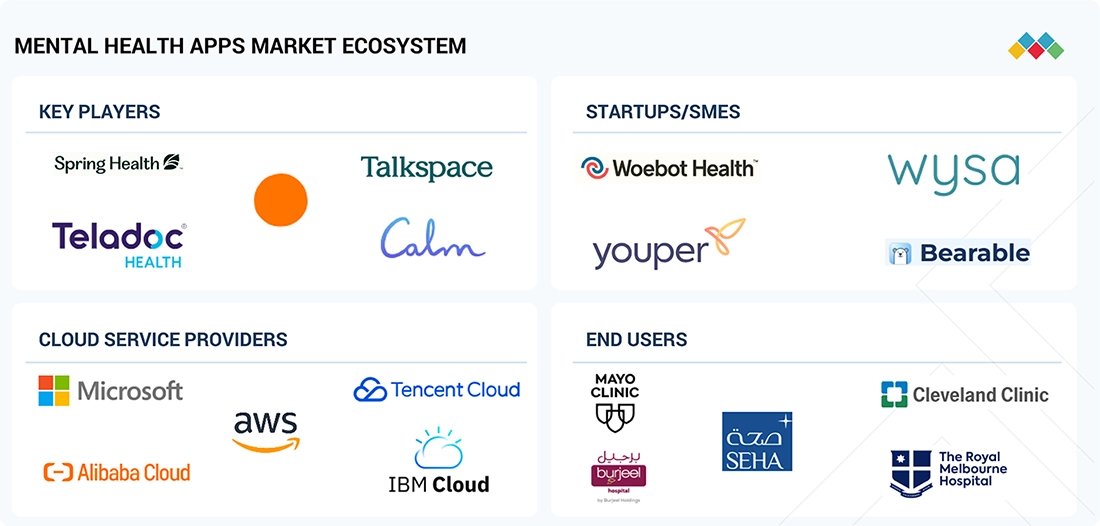
Logos and trademarks shown above are the property of their respective owners. Their use here is for informational and illustrative purposes only.
MARKET SEGMENTS
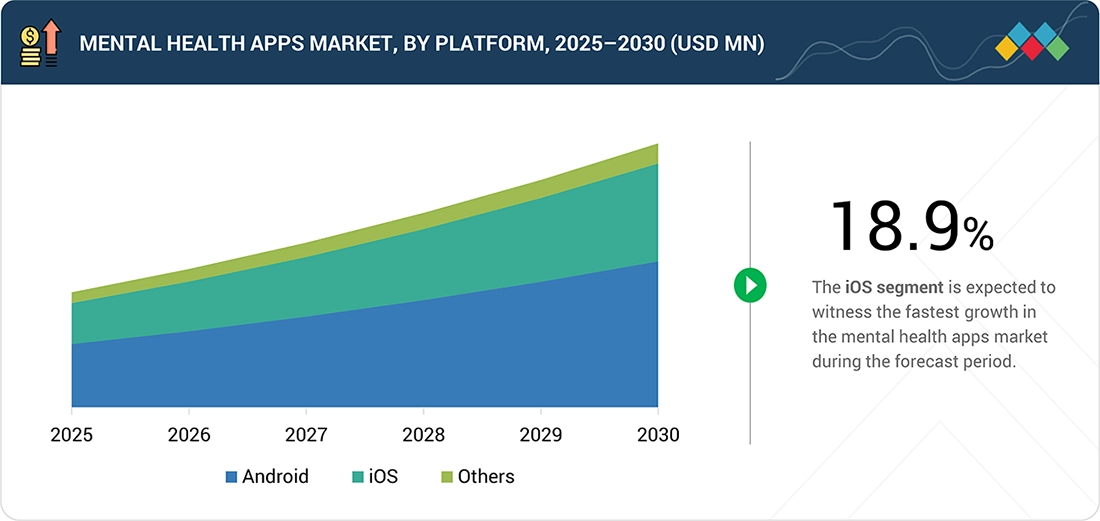
Source: Secondary Research, Interviews with Experts, MarketsandMarkets Analysis
Mental Health Apps Market, by Platform
In 2024, the Android segment held the largest share of the mental health apps market, driven by its vast global footprint and strong adoption across diverse demographic and income groups. Its broad device compatibility enables mental health solutions to scale efficiently, particularly for self-care, CBT-based tools, and mood management applications. For example, MindDoc has gained significant traction on Android by providing mood tracking and CBT-based support to a broad consumer audience, leveraging Android’s wide device reach.
Mental Health Apps Market, by Application
In 2024, depression & anxiety management held the largest share of the mental health apps market, driven by the high prevalence and recurring nature of these conditions and the strong demand for scalable digital interventions such as CBT-based programs, mood tracking, self-assessment tools, and virtual counseling. According to the US CDC, approximately one in six adults experiences depression at some point in their lifetime, with nearly 16 million adults affected annually in the US, reinforcing the widespread need for accessible, app-based solutions compared with more specialized segments such as trauma management.
Mental Health Apps Market, by Function
In 2024, consultation held the largest share of the mental health apps market, as digital platforms are most widely adopted for enabling virtual interactions between users and licensed mental health professionals via chat, audio, and video sessions. The dominance of this segment is driven by growing acceptance of tele-mental health, reduced access barriers, and faster care delivery compared with traditional in-person models. For example, platforms such as BetterHelp and Talkspace primarily focus on remote consultation, making it the most established and revenue-generating offering in the market.
Mental Health Apps Market, by End User
In 2024, the patients/consumers segment held the largest share of the mental health apps market, reflecting the strong adoption of direct-to-consumer digital solutions that provide on-demand access to mental health support. The widespread use of mobile applications for self-guided therapy, mindfulness, mood tracking, and virtual counseling, combined with low entry barriers and subscription-based pricing models, has enabled individuals to engage independently with mental health services without relying on clinical providers or employer-sponsored programs. For example, platforms such as Calm and Headspace have scaled globally by targeting individual users seeking accessible and on-demand mental wellness tools.
REGION
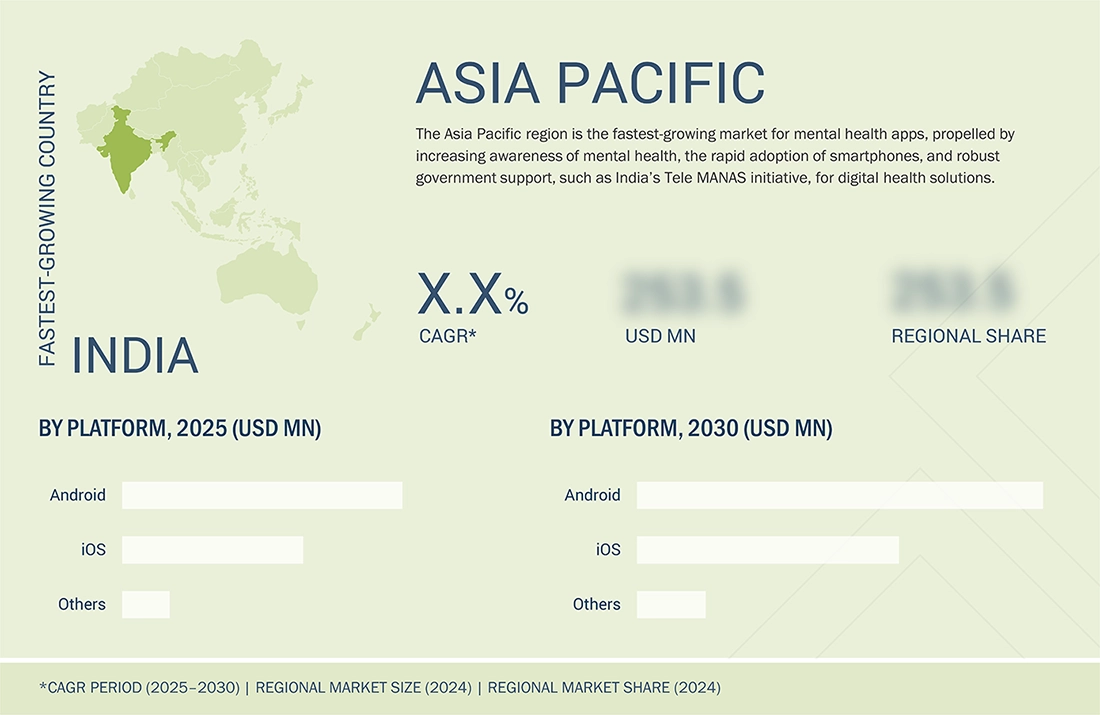
Asia Pacific is expected to be fastest-growing country in mental health apps market during forecast period
Asia Pacific is expected to be the fastest-growing region in the mental health apps market, driven by strong government support and expanding digital health infrastructure. For instance, the Australian Government’s 'Head to Health' initiative provides a national digital platform that connects users to trusted mental health apps, online programs, and telehealth services. Such government-backed digital frameworks are increasing public trust, improving access to care, and accelerating the adoption of mental health apps across the Asia Pacific region.
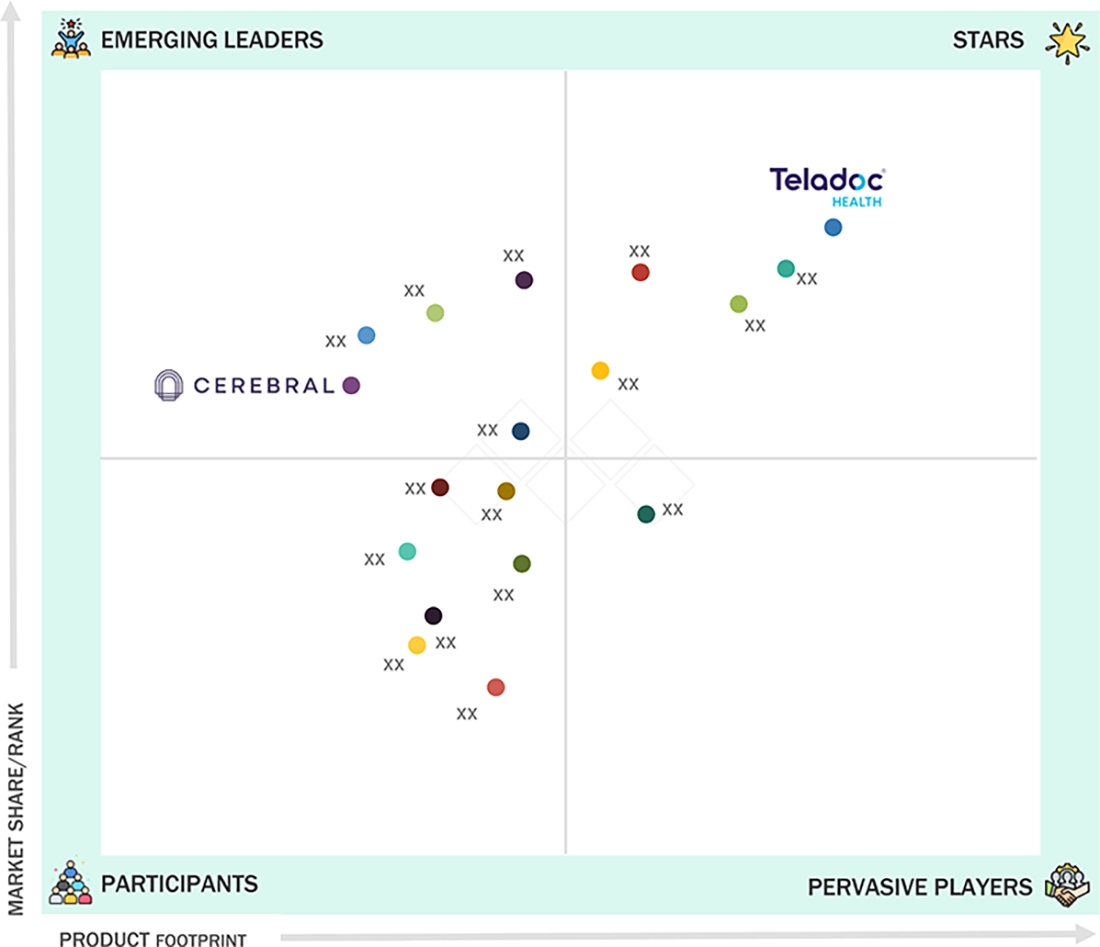
MENTAL HEALTH APPS MARKET: COMPANY EVALUATION MATRIX
In the mental health apps market matrix, Teladoc Health, Inc. (Star Player) leads with a dominant presence, offering one of the largest online therapy platforms worldwide, offering licensed virtual counseling and psychiatry services via app-based and web platforms. Cerebral Inc. (Emerging Leader) expanding access to digital therapy and medication management through a clinically oriented care model.
Source: Secondary Research, Interviews with Experts, MarketsandMarkets Analysis
KEY MARKET PLAYERS
- Teladoc (US)
- Headspace Inc. (US)
- Talkspace (US)
- Spring Care, Inc. (US)
- Calm (US)
- Thriveworks Administrative Services, LLC (US)
- Amwell (US)
- Cerebral Inc. (US)
- CVS Health (US)
- Modern Life, Inc. (US)
- DarioHealth Corp. (US)
- BigHealth (US)
- MindShift CBT (Canada)
MARKET SCOPE
| REPORT METRIC | DETAILS |
|---|---|
| Market Size in 2024 (Value) | USD 8.21 Billion |
| Market Forecast in 2030 (Value) | USD 22.73 Billion |
| Growth Rate | CAGR of 18.0% from 2025–2030 |
| Years Considered | 2023–2030 |
| Base Year | 2024 |
| Forecast Period | 2025–2030 |
| Units Considered | Value (USD Million/Billion) |
| Report Coverage | Revenue Forecast, Company Ranking, Competitive Landscape, Growth Factors, and Trends |
| Segments Covered |
|
| Region Covered | North America, Europe, Asia Pacific, Latin America, Middle East & Africa |
| Parent & Related Segment Reports | Digital Health Market |
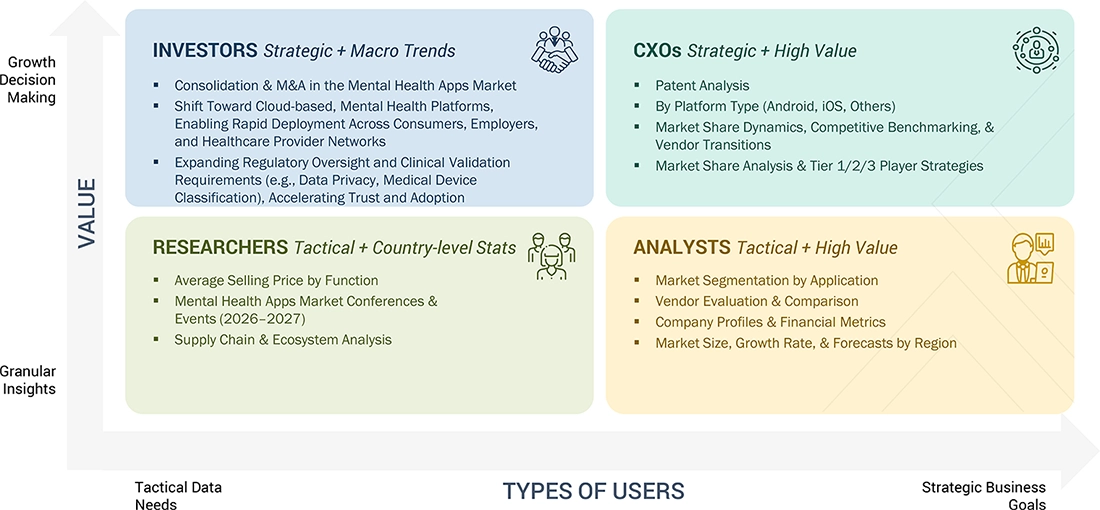
WHAT IS IN IT FOR YOU: MENTAL HEALTH APPS MARKET REPORT CONTENT GUIDE
DELIVERED CUSTOMIZATIONS
We have successfully delivered the following deep-dive customizations:
| CLIENT REQUEST | CUSTOMIZATION DELIVERED | VALUE ADDS |
|---|---|---|
| Local Competitive Landscape | Analysis of leading mental health apps by technology, use case, and regulatory positioning | Supports vendor benchmarking and strategic positioning. |
| Regional Market Entry Strategy | Assessment of mental health demand, policies, and digital readiness by region | Enables faster and targeted market entry |
| Local Risk & Opportunity Assessment | Evaluation of regulatory, clinical, and adoption risks with growth opportunities | Informs investment and risk mitigation decisions |
| Technology Adoption by Region | Mapping adoption of digital and AI-based mental health solutions | Guides scalable technology and growth strategy |
RECENT DEVELOPMENTS
- November 2025 : Cigna partnered with Headspace to provide digital mental health tools to over 7 million members, giving access to Headspace’s app content, AI companion (Ebb), coaching, therapy resources, and clinical care navigation through Cigna’s plans.
- June 2025 : Headspace launched “Therapy by Headspace” a new direct-to-consumer clinical therapy service covered by insurance across all 50 US states, blending AI, self-care, and clinical care in one app and expanding access for millions.
- June 2025 : Calm Health has expanded internationally to the UK and Canada to offer scalable mental health support through employers, health plans, and providers.
Table of Contents
 Exclusive indicates content/data unique to MarketsandMarkets and not available with any competitors.
Methodology
The study involved several key activities to estimate the current size of the Mental Health Apps Market. Extensive secondary research was conducted to gather information on this market. The next step was to validate the findings, assumptions, and size estimates by consulting industry experts throughout the value chain through primary research. Various methods, including top-down and bottom-up approaches, were employed to estimate the overall market size. Following this, market segmentation and data triangulation techniques were used to determine the size of specific segments and subsegments within the digital healthcare market.
Secondary Research
This research study involved the wide use of secondary sources, directories, and databases such as Dun & Bradstreet, Bloomberg Business, and Factiva; white papers, annual reports, and companies’ house documents; investor presentations; and the SEC filings of companies. The market for companies providing digital healthcare solutions is assessed using secondary data from both paid and free sources. This involves analyzing the product portfolios of major players in the industry and evaluating these companies based on their performance and quality. Various resources were utilized in the secondary research process to gather information for this study. The sources include annual reports, press releases, investor presentations, white papers, academic journals, certified publications, articles by recognized authors, directories, and databases.
Secondary research was used to identify and collect information useful for the extensive, technical, market-oriented, and commercial study of the digital healthcare market. It was also used to obtain important information about the key players and market classification and segmentation according to industry trends to the bottom-most level, and key developments related to market and technology perspectives. A database of the key industry leaders was also prepared using secondary research.
Primary Research
In the primary research process, various primary sources from both the supply and demand sides were interviewed to obtain qualitative and quantitative information for this report. Primary sources are mainly industry experts from the core and related industries and preferred suppliers, manufacturers, distributors, technology developers, researchers, and organizations related to all segments of this industry’s value chain. In-depth interviews were conducted with various primary respondents, including key industry participants, subject-matter experts, C-level executives of key market players, and industry consultants, among other experts, to obtain and verify the critical qualitative and quantitative information as well as assess prospects.
Primary research was conducted to identify segmentation types, industry trends, key players, and key market dynamics such as drivers, restraints, opportunities, challenges, and strategies adopted by key players.
After completing the market engineering process, which includes calculations for market statistics, market breakdown, size estimations, forecasting, and data triangulation, extensive primary research was conducted. This research aimed to gather information and verify the critical numbers obtained during the market analysis. Additionally, primary research was conducted to identify different types of market segmentation, analyze industry trends, evaluate the competitive landscape of digital healthcare offered by various players, and understand key market dynamics such as drivers, restraints, opportunities, challenges, industry trends, and strategies employed by key market participants.
In the complete market engineering process, the top-down and bottom-up approaches and several data triangulation methods were extensively used to perform the market estimation and market forecasting for the overall market segments and subsegments listed in this report. Extensive qualitative and quantitative analysis was performed on the complete market engineering process to list the key information/insights throughout the report.
A breakdown of the primary respondents:
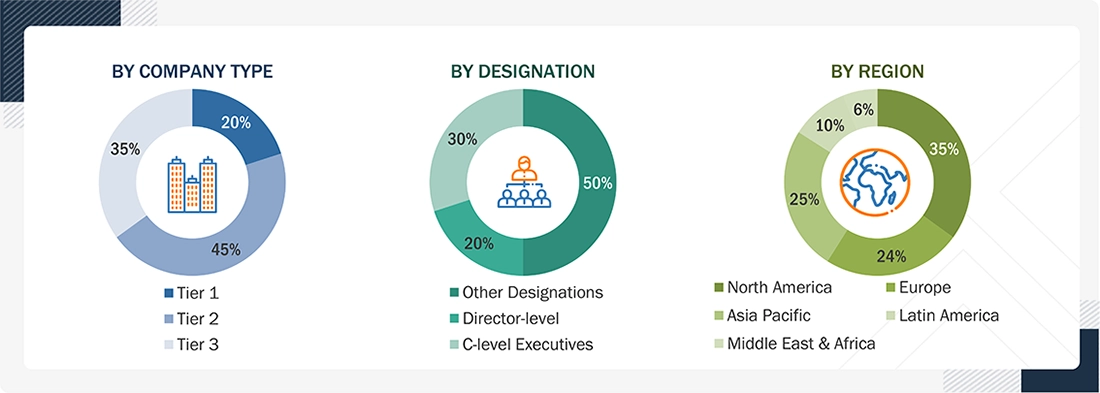
Others include sales, marketing, and product managers.
Note: Tiers are defined based on a company’s total revenue, as of 2024: Tier 1 = >USD 1 billion, Tier 2 = USD 500 million to USD 1 billion, and Tier 3 = < USD 500 million.
To know about the assumptions considered for the study, download the pdf brochure
Market Size Estimation
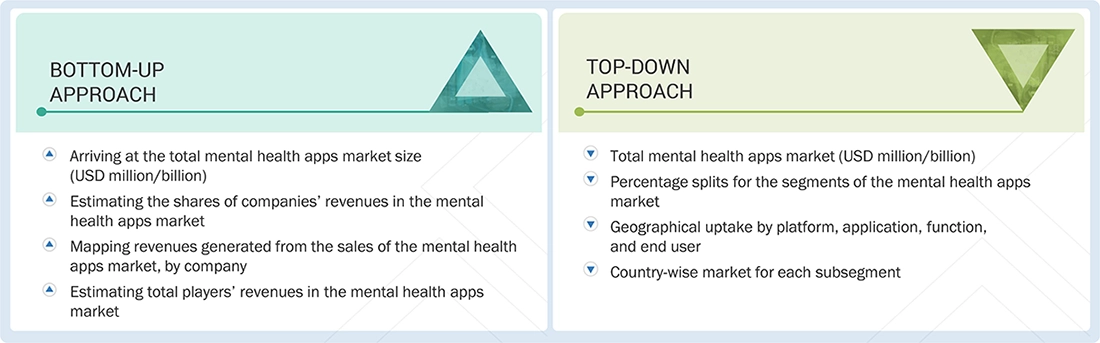
The market size estimates and forecasts provided in this study are derived through a mix of the bottom-up approach (revenue share analysis of leading players) and top-down approach (assessment of utilization/adoption/penetration trends, by offering, disease, use case, end user, and region).
Market Definition
The Mental Health Apps Market covers hardware, software, and services that use technology to improve healthcare delivery, patient outcomes, and system efficiency. It includes consumer-facing wellness, self-management applications, regulated medical software and device solutions, interoperable platforms, connectivity tools, and embedded sensor systems. Its applications span preventive care, diagnosis, treatment, patient engagement, remote monitoring, and health system management, driving more personalized, efficient, and data-driven healthcare.
Stakeholders
- Healthcare Providers
- Digital Health Providers
- Healthcare Payers
- Healthcare Consumers
- Academic Research Institutes
- Pharmaceutical and Biotechnology Companies
- Medical Device Companies
- Telehealth & Virtual Care Providers
- Government Institutions
- Market Research and Consulting Firms
- Venture Capitalists and Investors
Report Objectives
- To define, describe, and forecast the global Mental Health Apps Market based on offering, disease, use case, end user, and region
- To provide detailed information regarding the factors influencing the growth of the market (such as drivers, restraints, opportunities, and challenges)
- To strategically analyze micromarkets with respect to individual growth trends, prospects, and contributions to the overall Mental Health Apps Market
- To analyze market opportunities for stakeholders and provide details of the competitive landscape for market leaders
- To forecast the size of the Mental Health Apps Market in five main regions (along with their respective key countries): North America, Europe, the Asia Pacific, Latin America, and the Middle East & Africa
- To profile key players and comprehensively analyze their product portfolios, market positions, and core competencies in the market
- To track and analyze competitive developments such as product & service launches, expansions, partnerships, agreements, and collaborations, and acquisitions in the Mental Health Apps Market
- To benchmark players within the Mental Health Apps Market using the Company Evaluation Matrix framework, which analyzes market players on various parameters within the broad categories of business strategy, market share, and product offering


Personalize This Research
- Triangulate with your Own Data
- Get Data as per your Format and Definition
- Gain a Deeper Dive on a Specific Application, Geography, Customer or Competitor
- Any level of Personalization
Let Us Help You
- What are the Known and Unknown Adjacencies Impacting the Mental Health Apps Market
- What will your New Revenue Sources be?
- Who will be your Top Customer; what will make them switch?
- Defend your Market Share or Win Competitors
- Get a Scorecard for Target Partners

Custom Market Research Services
We Will Customise The Research For You, In Case The Report Listed Above Does Not Meet With Your Requirements
Get 10% Free CustomisationTESTIMONIALS

JAYANT RAJPUROHIT
Director of Market Insights, Data and Analytics
SFI Health,
Leading Pharmaceutical Companywww.sfihealth.com/

We at SFI Health approached MarketsandMarkets for an Opportunity Assessment on "Incidence and Prevalence of Focus Indications" as we wanted to know the most attractive HCPs like Physician, Functional MD, Naturopath and Pharmacist. The project was critical for us to ensure our focus on the right target which would enable sustainable growth and profitability for SFI Health. The business insights provided exceeded our expectations and we were extremely impressed. The team at MarketsandMarkets is highly professional and detail oriented and very well understood our business needs. MarketsandMarkets offers a unique combination of expertise and dedicated engagement model. We identified 2 new products to be launched in coming months, based on the research findings provided by MarketsandMarkets. We are happy with the services and would strongly recommend MarketsandMarkets to my peers in the industry.

BEATRIZ DE LA CALLE
Head of Commercial Analytics
Qualicaps,
Leading Pharmaceutical Companywww.qualicaps.com/

We partnered with MarketsandMarkets for an assessment study on hard empty capsules. The team was extremely professional in understanding our business requirements and we received timely responses to all our queries. The market intelligence and the recommendations has met our business requirements. We were extremely impressed to see the final study results; it really exceeded our expectations. The market intelligence offered by MarketsandMarkets, and clarity on next steps will help us achieve our business objective for the Year 2021. We are happy with the services and would strongly recommend MarketsandMarkets to my peers in the industry.

Bob Williams,
Senior Director Business Development & Innovation
Bracco Diagnostics Inc.,
Italian Multinational in life sciences sector and a World Leader in imaging diagnosticsimaging.bracco.com/us-en
We were pleased with targeted insights that MarketsandMarkets identified from a custom study on the 'Radiation Dose Management Solutions Market'. Your team identified and characterized the market participants as well as underlying trends accurately. This study was useful to Bracco in formulating business strategies for our dose monitoring product lines and we thank MarketsandMarkets for the job well done.
Cody Coonradt,
Market Development and Strategy Manager
3M Health Information Systems,
Leader in Health care Coding, Payment & Analytics Solutions.www.3m.com/3M/en_US/health-information-systems-us
The value for our organization comes from three things: depth of research, specificity of segments and being easy to work with. As important as the first two are, the third can't be underestimated. MarketsandMarkets, maybe more than any other research vendor, wants to know what is top of mind for our team and what big questions we are grappling to answer.
Their customer first approach and high value engagement model, have given us great analysis and excellent value for money






Growth opportunities and latent adjacency in Mental Health Apps Market