Microencapsulation Market By Material (Core, Shell), Core Material (Active Ingredients, Fragrances, Others), Shell Material (Polymers, Gums & Resins, Lipids, Carbohydrates, Proteins), Technology, End-use Industry, Core Material Form, Functionality, and Region – Global Forecast to 2031

icon1
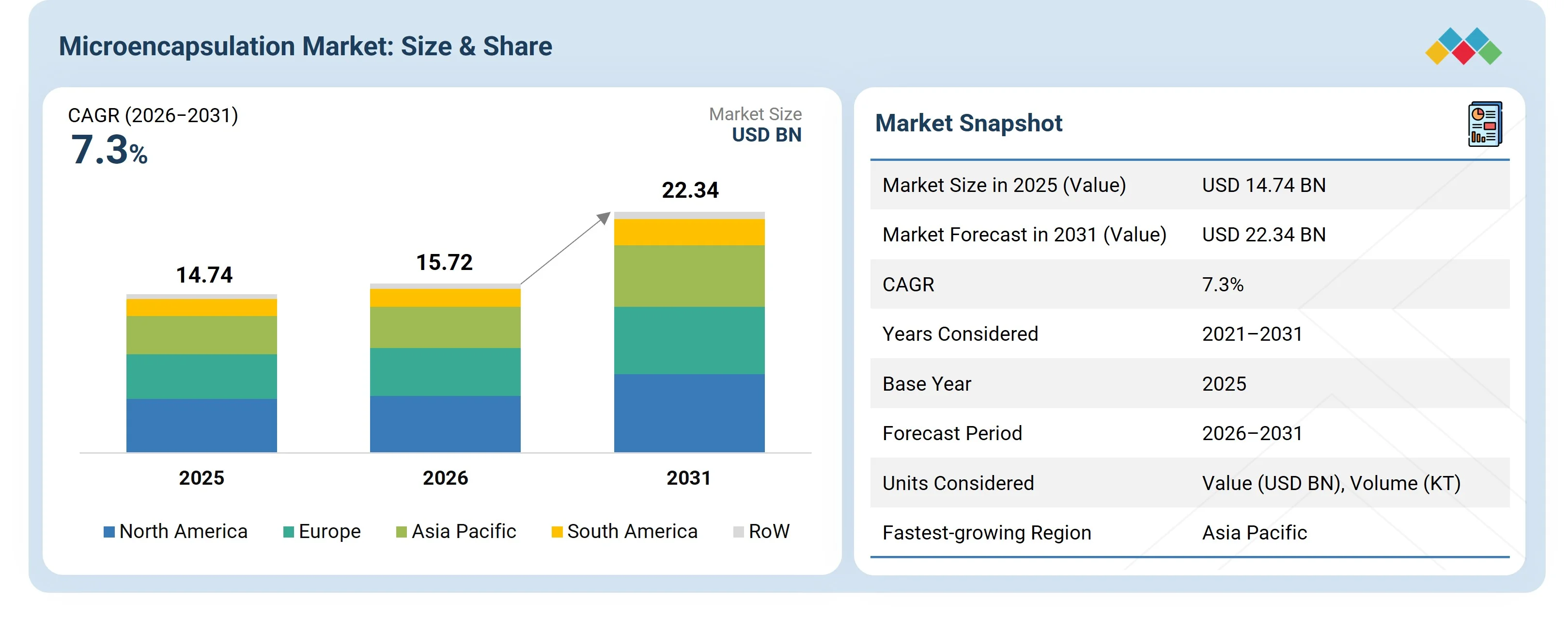
USD 22.34 BN
MARKET SIZE, 2031
icon2
CAGR 7.3%
(2026-2031)
icon3
330
REPORT PAGES
icon4
250
MARKET TABLES

OVERVIEW

microencapsulation-market Overview

Source: Secondary Research, Interviews with Experts, MarketsandMarkets Analysis

The microencapsulation market is projected to grow from USD 15.72 billion in 2026 to USD 22.34 billion in 2031, at a CAGR of 7.3%. The market is driven by the growing use of microencapsulation technologies to protect sensitive ingredients, improve stability, enable controlled release, and enhance functional performance across pharmaceuticals, food & beverages, household & personal care, agriculture, textiles, and other applications. Microencapsulation is widely used to protect materials such as vitamins and minerals, probiotics, enzymes, flavors, essential oils, fragrances, active ingredients, and agricultural inputs from moisture, oxygen, light, temperature, and other environmental conditions. Growing demand for functional and fortified products, controlled-release formulations, and products with improved stability and shelf life is supporting the adoption of microencapsulation across diverse industries. Additionally, manufacturers are investing in spray, emulsion, coacervation, polymerization, dripping, and other encapsulation technologies to improve encapsulation efficiency, process scalability, and release characteristics. Advancements in shell materials, processing technologies, and application-specific encapsulation systems are expected to support continued market development across pharmaceuticals, food & beverages, personal care, agriculture, and other end-use industries.

KEY TAKEAWAYS

  • By Material
    By material, the core material segment held 93.5% of the market share and is projected to dominate the market throughout the forecast period.
  • By End-use Industry
    By end-use industry, the pharmaceuticals segment is estimated to dominate the market with a share of 51.8% in 2025.
  • By Shell Material
    By shell material, polymers are expected to dominate the microencapsulation market.
  • By Technology
    By technology, the emulsion technologies segment is expected to witness the fastest growth in the microencapsulation market, registering a CAGR of 7.3% from 2026 to 2031.
  • By Core Material
    By core material, active ingredients are projected to account for the largest share of the microencapsulation market.
  • By Region
    Asia Pacific is expected to be the fastest-growing region in the microencapsulation market, registering a CAGR of 8.4% during the forecast period.
  • Competitive Landscape - Key Players
    BASF, DSM-Firmenich, Givaudan, and International Flavors & Fragrances Inc. are key players in the microencapsulation market, supported by their encapsulation capabilities, ingredient portfolios, application expertise, and presence across multiple end-use industries.
  • Competitive Landscape - Startups/SMEs
    TasteTech, Maxx Performance Inc., and Vitablend are specialized players in the microencapsulation market, with capabilities spanning encapsulated ingredients, microencapsulation technologies, and application-specific solutions for food & beverage and nutrition applications.

The microencapsulation market is driven by the growing need to improve the stability, protection, controlled release, and functionality of sensitive ingredients across pharmaceutical, food & beverage, household & personal care, agricultural, textile, and other applications. Rising demand for functional and fortified products, controlled-release formulations, and ingredients with improved shelf stability is driving adoption of microencapsulation technologies. The market also benefits from encapsulation, which protects active ingredients from moisture, oxygen, light, and temperature during processing and storage. Advances in encapsulation materials and processing technologies are improving delivery performance, formulation flexibility, and scalability, while ongoing product development across diverse industries supports market growth.

TRENDS & DISRUPTIONS IMPACTING CUSTOMERS' CUSTOMERS

Customer demand in the microencapsulation market is driven by the need to protect sensitive ingredients, improve stability, control release, and maintain performance across food & beverages, pharmaceuticals, household & personal care, agriculture, textiles, and building & construction. Traditional applications include encapsulating vitamins and minerals, probiotics, enzymes, flavors, essential oils, active ingredients, agricultural inputs, and other materials sensitive to moisture, oxygen, light, temperature, or processing conditions. Demand is increasingly shifting toward controlled-release formulations, application-specific encapsulation systems, sustainable shell materials, and technologies that support scalable processing and compatibility with formulations. These developments are influencing revenue for ingredient suppliers, pharmaceutical and consumer-product manufacturers, agricultural input producers, textile manufacturers, and other users by supporting consistent product performance, extended functionality, improved ingredient delivery, and enhanced product quality.
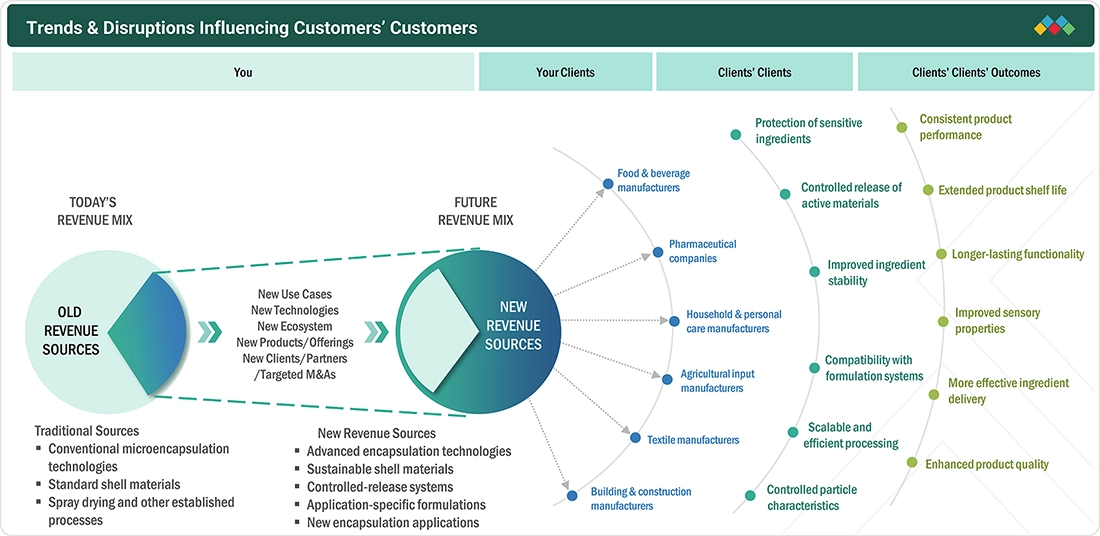
microencapsulation-market Disruptions

Source: Secondary Research, Interviews with Experts, MarketsandMarkets Analysis

MARKET DYNAMICS

Drivers
Impact
Level
  • Increase in demand for fortified food products with health benefits
  • Increased consumer demand for functional products
RESTRAINTS
Impact
Level
  • High cost associated with microencapsulated process
  • Competition from low-cost alternatives
OPPORTUNITIES
Impact
Level
  • Development of advanced technologies to tap niche markets
  • Technological advancements in sustainable microencapsulation
CHALLENGES
Impact
Level
  • Balancing performance and sustainability in microencapsulation coatings
  • Regulatory challenges hindering innovation and increasing costs

Source: Secondary Research, Interviews with Experts, MarketsandMarkets Analysis

Driver: Increase in demand for fortified food products with health benefits

The growing use of fortified foods and beverages is supporting demand for microencapsulation technologies that protect vitamins, minerals, probiotics, bioactive compounds, and other sensitive ingredients during processing and storage. Many of these ingredients are susceptible to degradation from oxygen, light, moisture, and temperature, which can reduce their stability and functionality. Microencapsulation provides a protective barrier around these ingredients, improving stability, retention, and controlled release and enabling their incorporation into a broader range of fortified food and beverage formulations.

Restraint: High cost associated with microencapsulated process

The cost associated with microencapsulation can constrain adoption, particularly where specialized equipment, process optimization, and suitable encapsulating materials are required. Costs vary with encapsulation technology, shell material, processing conditions, and required encapsulation efficiency and particle characteristics. Although processes such as spray drying offer scalability and relatively cost-efficient production compared with several alternative techniques, achieving the required stability, yield, and product characteristics can require process development and optimization, increasing the overall cost of producing microencapsulated ingredients.

Opportunity: Development of advanced technologies to tap niche markets

Advances in encapsulation technologies are creating new opportunities for manufacturers to serve niche, high-value segments of the microencapsulation market. Innovations such as nanoencapsulation, multilayer encapsulation, lipid-based delivery systems, and smart controlled-release technologies are enabling more precise protection and targeted delivery of active ingredients. These developments support emerging applications in personalized nutrition, plant-based products, nutraceuticals, pharmaceuticals, precision agriculture, and specialty animal nutrition. As consumers increasingly seek customized health solutions and premium products with enhanced functionality, advanced microencapsulation technologies allow manufacturers to differentiate offerings, improve product performance, and expand into specialized market segments with higher growth potential and stronger profit margins.

Challenge: Balancing performance and sustainability in microencapsulation coatings

Balancing product performance with sustainability goals is a growing challenge for microencapsulation manufacturers. End users increasingly demand environmentally responsible products and natural ingredient systems, prompting producers to reduce reliance on synthetic polymers and petroleum-based coating materials. However, sustainable coating alternatives must still provide comparable protection, stability, controlled-release functionality, and shelf-life performance for sensitive active ingredients. Natural and biodegradable wall materials may be limited by moisture resistance, mechanical strength, processing compatibility, and cost-effectiveness. Consequently, manufacturers must invest in continuous research and formulation optimization to develop coating systems that satisfy both functional performance requirements and evolving sustainability expectations without significantly increasing production costs.

MICROENCAPSULATION MARKET TRENDS, GROWTH, AND FORECAST: COMMERCIAL USE CASES ACROSS INDUSTRIES

COMPANY USE CASE DESCRIPTION BENEFITS
company logo
Uses perfume microcapsules in fabric-enhancer and laundry products, including products under brands such as Tide and Downy. The microcapsules deposit on fabrics during laundering and release fragrance when the fabric is subsequently rubbed or worn. Provides long-lasting fragrance after washing, with controlled fragrance release during fabric use. P&G reported commercialization of laundry products containing functional perfume microcapsules across North America and Western Europe.
company logo
Has incorporated fragrance microcapsules into laundry and fabric-care formulations, where capsules are designed to remain on fabrics after washing and release fragrance through physical interaction with the fabric. Supports fragrance retention and delayed release, extending the freshness experience beyond the washing process.
company logo
Uses microencapsulation in Demand CS insecticide, a commercial formulation containing microencapsulated lambda-cyhalothrin for professional pest management. The microcapsules protect the active ingredient and release it over time, providing fast knockdown and long-lasting residual insect control. Demand CS can provide control for up to 90 days.

Logos and trademarks shown above are the property of their respective owners. Their use here is for informational and illustrative purposes only.

MARKET ECOSYSTEM

The microencapsulation ecosystem comprises raw material and microencapsulation solution providers, technology and equipment providers, associations and regulatory bodies, and downstream end users. Companies such as BASF, Balchem, International Flavors & Fragrances (IFF), Givaudan, Syngenta, FrieslandCampina, and dsm-firmenich provide ingredients, formulation expertise, and encapsulation-related solutions. Technology and equipment providers including GEA, Bühler, Glatt, Emultech, and Büchi support the ecosystem through processing technologies and manufacturing equipment used in microencapsulation applications. The US Food and Drug Administration (FDA), US Environmental Protection Agency (EPA), Institute of Food Technologists (IFT), European Food Safety Authority (EFSA), and Controlled Release Society (CRS) represent key regulatory, scientific, and industry organizations relevant to the ecosystem. End users include companies such as Procter & Gamble, Nestlé, L'Oréal, Henkel, Unilever, and Corteva Agriscience, which utilize microencapsulation technologies across consumer goods, food, personal care, and agricultural applications to enhance ingredient protection, controlled release, stability, and product performance.
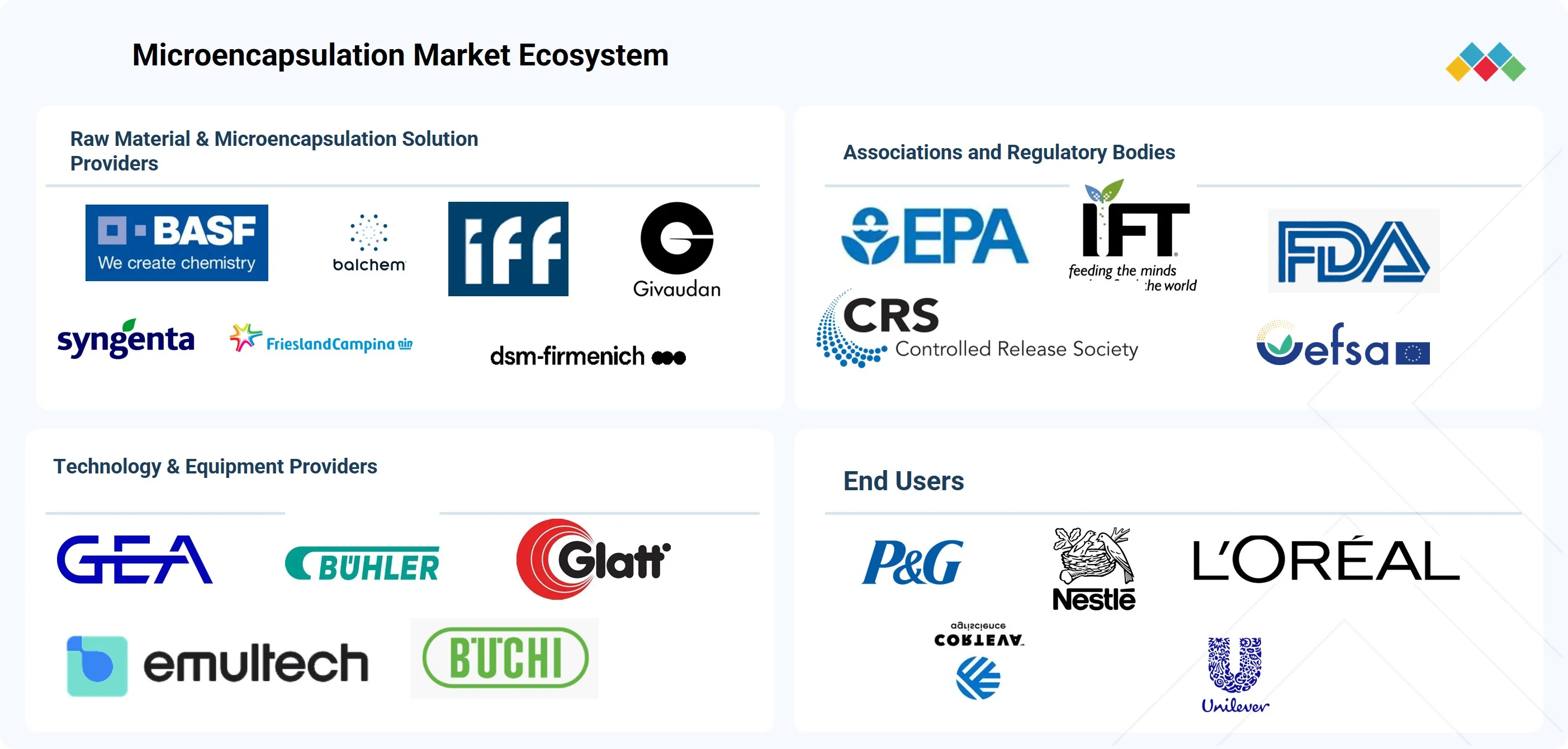
microencapsulation-market Ecosystem

Logos and trademarks shown above are the property of their respective owners. Their use here is for informational and illustrative purposes only.

MARKET SEGMENTS
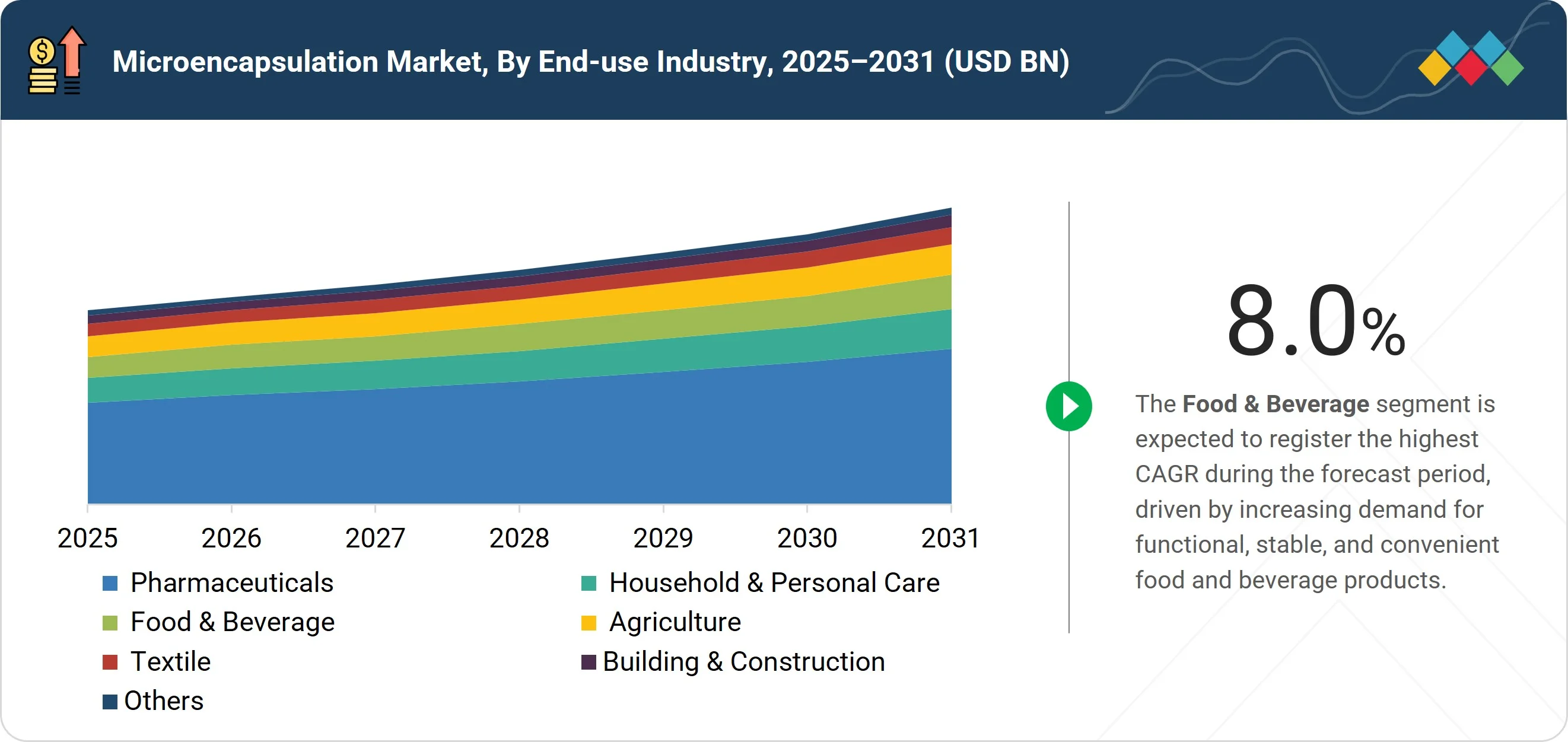
microencapsulation-market Segments

Source: Secondary Research, Interviews with Experts, MarketsandMarkets Analysis

Microencapsulation Market, By End-use Industry

The pharmaceuticals segment accounts for the largest share of the microencapsulation market by end-use industry, driven by its extensive use in drug delivery and formulation development. Microencapsulation is used to improve the stability, bioavailability, and controlled release of active pharmaceutical ingredients (APIs), while also helping to protect sensitive compounds from environmental and physiological conditions. Microencapsulation is used in formulations involving small-molecule drugs, peptides, proteins, and other pharmaceutical actives, including sustained-release, targeted-delivery, and taste-masking formulations. Technologies such as spray drying, coacervation, emulsion-based methods, and fluidized-bed coating enable manufacturers to tailor encapsulation and release characteristics to specific pharmaceutical requirements. The growing development of controlled-release and advanced drug-delivery formulations is therefore supporting the continued use of microencapsulation across pharmaceutical applications.

Microencapsulation Market, By Shell Material

The polymers segment is expected to dominate the microencapsulation market by shell material, supported by the widespread use of polymeric materials to form protective shells around active ingredients across pharmaceutical, food & beverage, household & personal care, agricultural, textile, and other applications. Polymeric shells can provide protection, improved stability, and controlled release, while their properties can be tailored to meet specific formulation and application requirements. Polyurea and melamine-formaldehyde are among the polymeric materials used in microencapsulation to form durable shell structures around core materials. The compatibility of polymeric shell materials with a wide range of microencapsulation processes and end-use requirements further supports their adoption. Their ability to control permeability, release characteristics, mechanical strength, and resistance to environmental conditions makes them suitable for applications requiring protection and controlled delivery of sensitive or functional core materials.

Microencapsulation Market, By Technology

The spray technologies segment is expected to account for the largest share of the microencapsulation market by technology, supported by the scalability, process flexibility, and broad applicability of spray-based encapsulation methods. Spray technologies convert encapsulating materials and core ingredients into microcapsules with controlled particle characteristics, protecting sensitive ingredients from moisture, oxygen, light, and other environmental conditions. The segment includes spray chilling, which uses atomization and cooling to form encapsulated particles and is particularly applicable to ingredients requiring protection and controlled release. The suitability of spray technologies for commercial-scale production, ingredient stabilization, controlled release, and incorporation into diverse formulations supports their adoption across pharmaceutical, food & beverage, household & personal care, agricultural, textile, building & construction, and other applications. Their ability to accommodate different core and shell materials further supports their use in applications requiring improved stability, handling, storage performance, and controlled delivery.

REGION

Asia Pacific is expected to exhibit the highest CAGR in the microencapsulation market during the forecast period

Asia Pacific is expected to register the fastest growth in the microencapsulation market, supported by expanding pharmaceutical and food processing industries, rising demand for functional and fortified products, and increasing adoption of advanced formulation technologies. China, India, and Japan are important markets, with manufacturers increasingly using microencapsulation to improve ingredient stability, controlled release, bioavailability, and protection of sensitive compounds. The region’s growing production of pharmaceuticals, processed foods, functional ingredients, personal care products, and agricultural inputs is expanding encapsulation technologies' applications. In addition, investments in pharmaceutical manufacturing capacity, food-processing infrastructure, and research and development are supporting the adoption of advanced encapsulation materials and processes. The use of microencapsulation across pharmaceuticals, food & beverages, household & personal care, agriculture, textiles, building & construction, and other applications is further broadening the technology’s commercial use across Asia Pacific.
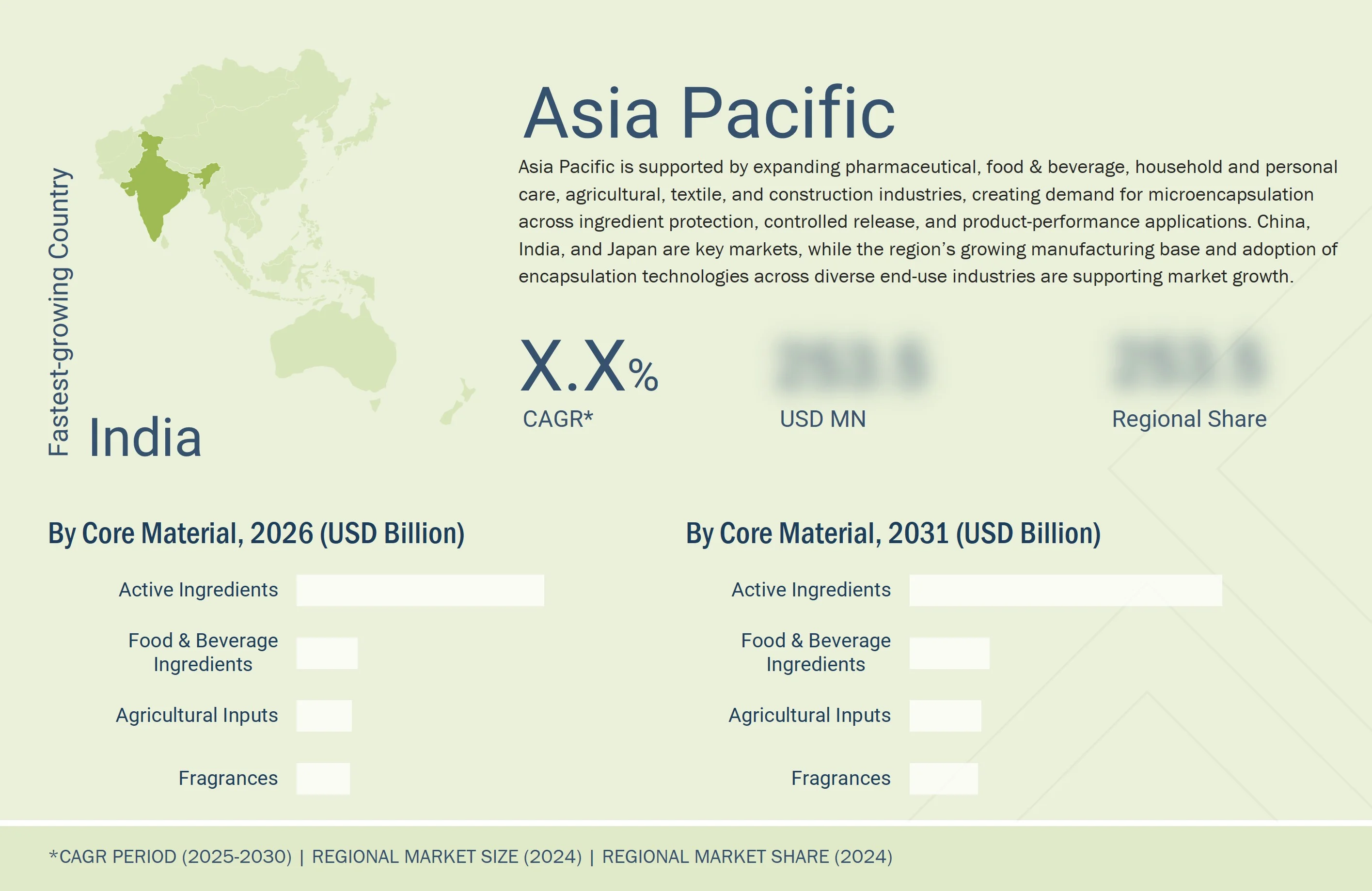
microencapsulation-market Region

MICROENCAPSULATION MARKET TRENDS, GROWTH, AND FORECAST: COMPANY EVALUATION MATRIX

In the microencapsulation market matrix, BASF (Star) holds a strong position, supported by its broad ingredient portfolio, formulation expertise, and encapsulation capabilities across multiple end-use applications. Symrise (Emerging Leader) has established capabilities in ingredient innovation and microencapsulation technologies, particularly across flavor, fragrance, nutrition, and personal care applications. Their positioning reflects differences in product portfolios, encapsulation capabilities, application coverage, formulation expertise, and ability to support customers with specialized ingredient and delivery solutions.
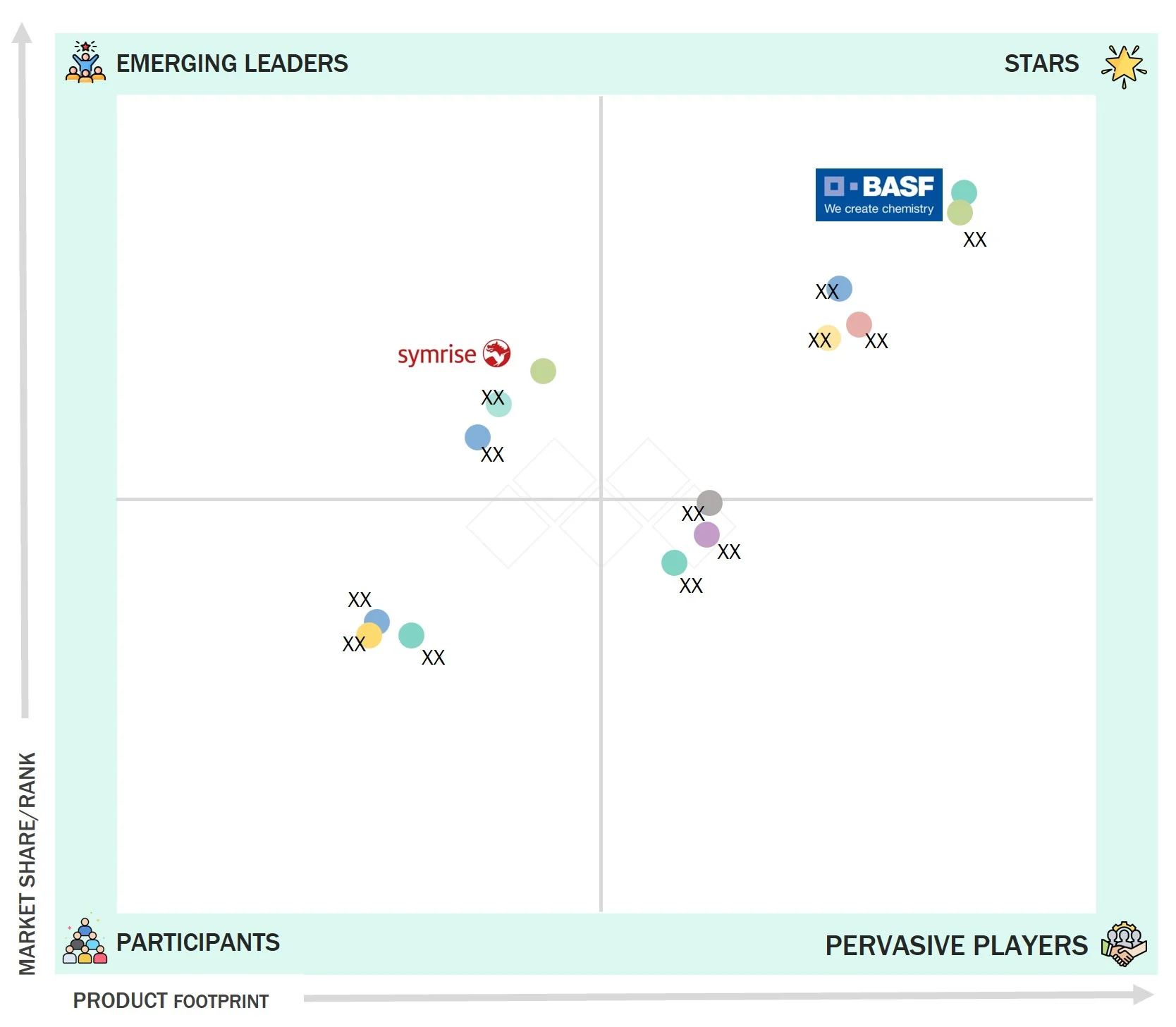
microencapsulation-market Evaluation Metrics

Source: Secondary Research, Interviews with Experts, MarketsandMarkets Analysis

KEY MARKET PLAYERS

MARKET SCOPE

REPORT METRIC DETAILS
Market Size in 2025 (Value) USD 14.74 billion
Market Forecast in 2026 (Value) USD 15.72 billion
Market Forecast in 2031 (Value) USD 22.34 billion
Growth Rate 7.3%
Years Considered 2021–2031
Base Year 2025
Forecast Period 2026–2031
Units Considered Value (USD Bn), Volume (KT)
Report Coverage Revenue forecast, company ranking, competitive landscape, growth factors, and trends
Segments Covered
  • Material:
    • Core Materials
    • Shell Materials
  • Shell Material:
    • Polymers
    • Gums & Resins
    • Lipids
    • Carbohydrates
    • Proteins
  • Core Material:
    • Active Ingredients
    • Food & Beverage Ingredients
    • Agricultural Inputs
    • Fragrances
    • Phase Change Materials
    • Other Core Materials
  • Technology:
    • Spray Technologies
    • Emulsion Technologies
    • Dripping Technologies
    • Other Technologies
  • End-use Industry:
    • Pharmaceuticals
    • Household & Personal Care
    • Food & Beverages
    • Agriculture
    • Textile
    • Building & Construction
    • Other End-use Industries
  • Core Material Form:
    • Solid
    • Liquid
    • Gas
  • Functionality:
    • Enhanced Stability
    • Controlled Release
    • Taste Masking
    • Extended Shelf Life
    • Other Functionalities
Regions Covered North America, Asia Pacific, Europe, South America, RoW

WHAT IS IN IT FOR YOU: MICROENCAPSULATION MARKET TRENDS, GROWTH, AND FORECAST REPORT CONTENT GUIDE
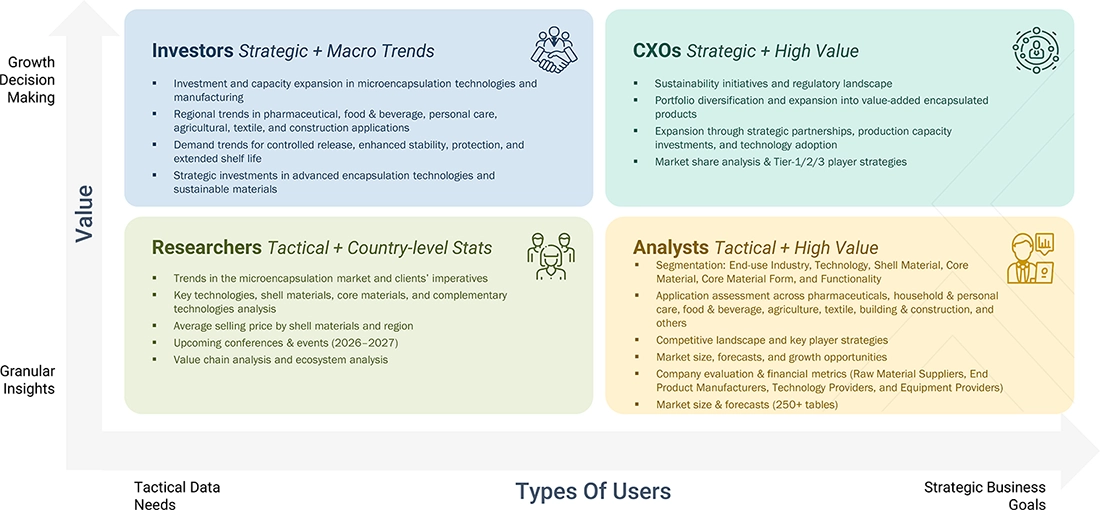
microencapsulation-market Content Guide

DELIVERED CUSTOMIZATIONS

We have successfully delivered the following deep-dive customizations:

CLIENT REQUEST CUSTOMIZATION DELIVERED VALUE ADDS
Pharmaceutical Company Evaluating Expansion into Asia Pacific
  • Assessed demand for controlled-release and orally delivered formulations across China, India, Japan, and South Korea
  • Evaluated formulation trends, regulatory requirements, and pharmaceutical manufacturing landscape
  • Identified high-potential markets for advanced drug-delivery applications
  • Supported regional expansion and formulation strategy
Food Ingredient Supplier Evaluating Growth Opportunities in Functional Foods
  • Analyzed demand for fortified foods, functional beverages, dietary supplements, and nutrition products across key markets
  • Evaluated ingredient stability and delivery requirements across applications
  • Identified high-growth application areas for value-added ingredients
  • Supported portfolio diversification and product development
Agricultural Input Manufacturer Evaluating Controlled-Release Products
  • Analyzed demand for controlled-release fertilizers, pesticides, herbicides, and plant growth regulators across major agricultural markets
  • Evaluated application trends and regional adoption factors
  • Identified opportunities for improved input delivery and product performance
  • Supported regional product development priorities

RECENT DEVELOPMENTS

  • March 2026 : Givaudan Active Beauty introduced VectorHyal, a customizable microencapsulation-based delivery system designed to enhance the stability, protection, and performance of active cosmetic ingredients. The technology combines hyaluronic acid engineering with encapsulation science to support deeper ingredient penetration and controlled release, helping improve the efficacy of sensitive actives across cosmetic applications.
  • December 2025 : Balchem Corp. announced the development of a new high-capacity microencapsulation manufacturing facility in Orange County, New York. The 12-acre facility is expected to open in 2027 and is intended to expand production capacity for its microencapsulated food ingredient technologies, supporting applications in bakery, confectionery, and meat products.
  • August 2025 : DSM-Firmenich announced investments in India, including a 56,000-square-meter greenfield Taste plant in Gujarat. The facility is designed to include advanced encapsulation systems alongside liquid compounding, dry blending, automated packaging, and quality-control capabilities, with operations planned for Q4 2027.

Table of Contents

checkmarkExclusive indicates content/data unique to MarketsandMarkets and not available with any competitors.

TITLE
PAGE NO
1
INTRODUCTION


32
2
EXECUTIVE SUMMARY


38
3
PREMIUM INSIGHTS


44
4
MARKET OVERVIEW
Microencapsulation revolutionizes industries with enhanced product functionality despite high costs and regulatory challenges.


50
 
4.1
INTRODUCTION


4.2
MARKET DYNAMICS


4.2.1
DRIVERS


4.2.1.1
GROWING DEMAND FOR FORTIFIED FOOD PRODUCTS WITH HEALTH BENEFITS


4.2.1.1.1
INCREASE IN DEMAND FROM FOOD INDUSTRY


4.2.1.1.2
GROWING USE IN FUNCTIONAL FOOD


4.2.1.2
INCREASING ADOPTION IN PHARMACEUTICAL INDUSTRY


4.2.1.2.1
CONTROLLED DRUG DELIVERY


4.2.1.2.2
TARGETED DRUG DELIVERY


4.2.1.3
RISING APPLICATION IN AGROCHEMICALS SECTOR


4.2.1.3.1
CONTROLLED-RELEASE TECHNIQUE TO ENHANCE EFFICIENCY OF AGROCHEMICALS


4.2.1.3.2
CONTROLLED-RELEASE APPLICATION FOR CONVENIENCE IN USE


4.2.1.3.3
REDUCED APPLICATION COST


4.2.1.3.4
INCREASE IN ENVIRONMENTAL CONCERNS


4.2.1.4
SURGING CONSUMER DEMAND FOR FUNCTIONAL PRODUCTS


4.2.1.5
WIDESPREAD APPLICATIONS OF MICROENCAPSULATION


4.2.1.5.1
RISING NEED TO ENHANCE PRODUCT FUNCTIONALITY


4.2.2
RESTRAINTS


4.2.2.1
HIGH COST ASSOCIATED WITH MICROENCAPSULATION PROCESS


4.2.2.2
COMPETITION FROM LOW-COST ALTERNATIVES


4.2.3
OPPORTUNITIES


4.2.3.1
INNOVATIONS IN CAMEL THORN EXTRACT PRODUCTION


4.2.3.2
DEVELOPMENT OF ADVANCED TECHNOLOGIES TO TAP NICHE MARKETS


4.2.3.2.1
REDUCTION IN CAPSULE SIZE AND INCREASE IN BIOAVAILABILITY


4.2.3.2.2
NEED FOR MULTI-COMPONENT DELIVERY SYSTEMS


4.2.3.3
TECHNOLOGICAL ADVANCEMENTS IN SUSTAINABLE MICROENCAPSULATION


4.2.4
CHALLENGES


4.2.4.1
BALANCING PERFORMANCE AND SUSTAINABILITY IN MICROENCAPSULATION COATINGS


4.2.4.2
REGULATORY CHALLENGES HINDERING INNOVATION AND INCREASING COSTS


4.2.4.3
TECHNICAL CONSTRAINTS ASSOCIATED WITH HIGH COSTS


4.2.4.4
SELECTING APPROPRIATE TECHNOLOGY COMPLICATING EFFICIENCY AND SCALABILITY IN MICROENCAPSULATION


4.3
UNMET NEEDS AND WHITE SPACES


4.3.1
UNMET NEEDS IN MICROENCAPSULATION MARKET


4.3.2
WHITE SPACE OPPORTUNITIES


4.4
INTERCONNECTED MARKETS AND CROSS-SECTOR OPPORTUNITIES


4.4.1
INTERCONNECTED MARKETS


4.4.2
CROSS-SECTOR OPPORTUNITIES


4.5
STRATEGIC MOVES BY TIER-1/2/3 PLAYERS


4.5.1
KEY MOVES AND STRATEGIC FOCUS


5
INDUSTRY TRENDS
Explore strategic growth in microencapsulation through innovation, regional opportunities, and competitive dynamics.


70
 
5.1
INTRODUCTION


5.2
PORTER’S FIVE FORCES ANALYSIS


5.2.1
INTENSITY OF COMPETITIVE RIVALRY


5.2.2
BARGAINING POWER OF SUPPLIERS


5.2.3
BARGAINING POWER OF BUYERS


5.2.4
THREAT OF SUBSTITUTES


5.2.5
THREAT OF NEW ENTRANTS


5.3
MACROECONOMIC INDICATORS


5.3.1
HIGHER INVESTMENT IN RESEARCH AND DEVELOPMENT


5.3.2
GROWTH OPPORTUNITIES IN DEVELOPING REGIONS SUCH AS ASIA PACIFIC


5.4
VALUE CHAIN ANALYSIS


5.4.1
RESEARCH & DEVELOPMENT: INVESTMENT IN NOVEL ENCAPSULATION TECHNIQUES, INNOVATIVE SHELL-CORE COMBINATIONS, AND EFFICIENCY IMPROVEMENTS TO ENHANCE PRODUCT FUNCTIONALITY


5.4.2
RAW MATERIAL SOURCING: SECURING RELIABLE SUPPLY OF SHELL MATERIALS (POLYSACCHARIDES, PROTEINS, LIPIDS) AND CORE ACTIVES LIKE FLAVORS, VITAMINS, AND PROBIOTICS.


5.4.3
MANUFACTURING/PRODUCTION: ADOPTION OF SPRAY DRYING, FLUIDIZED BED, AND COACERVATION PROCESSES TO ENSURE SCALABILITY, STABILITY, AND CONSISTENT MICROCAPSULE QUALITY.


5.4.4
QUALITY CONTROL & SAFETY: RIGOROUS TESTING PROTOCOLS, REGULATORY COMPLIANCE, AND SAFETY CHECKS TO MAINTAIN PERFORMANCE, STABILITY, AND INTERNATIONAL CERTIFICATION STANDARDS.


5.4.5
LOGISTICS & DISTRIBUTION: EXPANDING REGIONAL AND GLOBAL DISTRIBUTION CHANNELS, SUPPORTED BY B2B PARTNERSHIPS AND E-COMMERCE PLATFORMS TO IMPROVE ACCESSIBILITY.


5.4.6
MARKETING & SALES: EMPHASIS ON CLEAN-LABEL POSITIONING, APPLICATION-SPECIFIC BRANDING, AND CUSTOMER EDUCATION TO ENHANCE MARKET VISIBILITY AND ADOPTION.


5.4.7
END USER: INTEGRATION OF MICROENCAPSULATED INGREDIENTS ACROSS FOOD, PHARMACEUTICAL, COSMETIC, AND HOME CARE APPLICATIONS TO DELIVER TARGETED BENEFITS.


5.5
ECOSYSTEM ANALYSIS


5.5.1
DEMAND SIDE


5.5.2
SUPPLY SIDE


5.5.3
PRICING ANALYSIS


5.5.4
AVERAGE SELLING PRICE OF MICROENCAPSULATED PRODUCTS, BY CORE MATERIAL


5.5.5
AVERAGE SELLING PRICE TREND, BY CORE MATERIAL


5.5.6
AVERAGE SELLING PRICE TREND, BY SHELL MATERIAL


5.5.7
AVERAGE SELLING PRICE TREND, BY REGION


5.6
TRADE ANALYSIS


5.6.1
EXPORT SCENARIO OF HS 2936


5.6.2
IMPORT SCENARIO OF HS 2936


5.6.3
EXPORT SCENARIO OF HS 1301


5.6.4
IMPORT SCENARIO OF HS 1301


5.6.5
EXPORT SCENARIO OF HS 330210


5.6.6
IMPORT SCENARIO OF HS 330210


5.7
KEY CONFERENCES AND EVENTS, 2026–2027


5.8
TRENDS/DISRUPTIONS IMPACTING CUSTOMER BUSINESS


5.9
INVESTMENT AND FUNDING SCENARIO


5.10
CASE STUDY ANALYSIS


5.10.1
XERJOFF NEWCLEUS — MICROENCAPSULATION ENABLING ETHANOL-FREE PERFUME


5.10.2
EXTENDING BURGER BUN SHELF LIFE THROUGH MICROENCAPSULATION


5.11
IMPACT OF 2025 US TARIFF – MICROENCAPSULATION MARKET


5.11.1
INTRODUCTION


5.11.2
PRICE IMPACT ANALYSIS


5.11.3
IMPACT ON COUNTRIES/REGIONS


5.11.3.1
US


5.11.3.2
EUROPE


5.11.3.3
ASIA PACIFIC


5.11.4
IMPACT ON END-USE INDUSTRIES


6
TECHNOLOGICAL ADVANCEMENTS, AI-DRIVEN IMPACT, PATENTS, INNOVATIONS, AND FUTURE APPLICATIONS
AI-driven microencapsulation innovations revolutionize sustainable materials and intelligent release systems.


102
 
6.1
INTRODUCTION


6.2
TECHNOLOGY ANALYSIS


6.2.1
KEY TECHNOLOGIES


6.2.1.1
NANOTECHNOLOGY


6.2.1.2
SELF-HEALING MICROCAPSULES


6.2.2
COMPLEMENTARY TECHNOLOGIES


6.2.2.1
SPRAY DRYING


6.2.2.2
BIOPOLYMER COATING


6.2.2.3
MICROPLASTIC-FREE POLYMER TECHNOLOGY FOR SUSTAINABLE AGRICULTURE


6.2.3
ADJACENT TECHNOLOGIES


6.2.3.1
LIPOSOME ENCAPSULATION


6.2.3.2
FOOD ENCAPSULATION


6.3
TECHNOLOGY/PRODUCT ROADMAP


6.3.1
SHORT-TERM | PROCESS OPTIMIZATION, ENCAPSULATION EFFICIENCY, AND MATERIAL SELECTION


6.3.2
MID-TERM | ADVANCED ENCAPSULATION, DIGITAL PROCESS CONTROL, AND SUSTAINABLE MATERIALS


6.3.3
LONG-TERM | INTELLIGENT RELEASE SYSTEMS, SUSTAINABLE MANUFACTURING, AND APPLICATION-SPECIFIC CAPSULES


6.4
PATENT ANALYSIS


6.4.1
LIST OF MAJOR PATENTS


6.5
FUTURE APPLICATIONS


6.5.1
MICROENCAPSULATION FOR ADVANCED BATTERY SYSTEMS


6.5.2
MICROENCAPSULATION FOR SELF-HEALING INFRASTRUCTURE MATERIALS


6.5.3
MICROENCAPSULATED PHASE-CHANGE MATERIALS FOR RENEWABLE ENERGY THERMAL STORAGE


6.6
IMPACT OF GENERATIVE AI ON MICROENCAPSULATION MARKET


6.6.1
INTRODUCTION


6.6.2
TOP USE CASES AND MARKET POTENTIAL


6.6.3
BEST PRACTICES IN MICROENCAPSULATION MARKET


6.6.4
CASE STUDIES OF AI IMPLEMENTATION IN MICROENCAPSULATION MARKET


6.6.5
INTERCONNECTED ADJACENT ECOSYSTEM AND IMPACT ON MARKET PLAYERS


6.6.6
CLIENTS’ READINESS TO ADOPT GENERATIVE AI IN MICROENCAPSULATION MARKET


6.7
SUCCESS STORIES AND REAL-WORLD APPLICATIONS


7
REGULATORY LANDSCAPE AND SUSTAINABILITY INITIATIVES
Navigate evolving regulations and sustainability shifts to future-proof your microencapsulation strategies.


117
 
7.1
INTRODUCTION


7.2
REGIONAL REGULATIONS AND COMPLIANCE


7.2.1
REGULATORY BODIES, GOVERNMENT AGENCIES, AND OTHER ORGANIZATIONS


7.2.2
INDUSTRY STANDARDS


7.2.3
REGISTRATION, DOCUMENTATION, AND LABELING REQUIREMENTS


7.2.4
ANTICIPATED REGULATORY CHANGES IN NEXT 5–10 YEARS


7.2.4.1
FULL PHASE-OUT OF NON-BIODEGRADABLE POLYMER MICROCAPSULES


7.2.4.2
CLOSER SCRUTINY OF NANO-SIZED ENCAPSULATES


7.2.4.3
TIGHTER OVERSIGHT OF DIETARY SUPPLEMENTS AND HEALTH CLAIMS


7.2.4.4
MODERNIZED PHARMACEUTICAL MANUFACTURING AND LIFECYCLE RULES


7.3
SUSTAINABILITY INITIATIVES


7.3.1
BIODEGRADABLE AND MICROPLASTIC-FREE FRAGRANCE CAPSULES


7.3.2
CLEAN-LABEL AND PLANT-BASED SHELL MATERIALS


7.3.3
ENERGY- AND SOLVENT-EFFICIENT ENCAPSULATION PROCESSES


7.4
IMPACT OF REGULATORY POLICIES ON SUSTAINABILITY INITIATIVES


7.5
CERTIFICATIONS, LABELING, ECO-STANDARDS


8
CUSTOMER LANDSCAPE AND BUYER BEHAVIOR
Identify unmet needs and stakeholder influences to optimize your market entry strategy.


127
 
8.1
INTRODUCTION


8.2
DECISION-MAKING PROCESS


8.3
KEY STAKEHOLDERS INVOLVED IN BUYING PROCESS AND THEIR EVALUATION CRITERIA


8.3.1
KEY STAKEHOLDERS IN BUYING PROCESS


8.3.2
BUYING CRITERIA


8.4
ADOPTION BARRIERS AND INTERNAL CHALLENGES


8.5
UNMET NEEDS OF VARIOUS END-USE INDUSTRIES


8.6
MARKET PROFITABILITY


9
MICROENCAPSULATION MARKET, BY MATERIAL
Market Size & Growth Rate Forecast Analysis to 2031 in USD Million and Kilotons | 4 Data Tables


136
 
9.1
INTRODUCTION


9.2
CORE MATERIAL


9.2.1
GROWING USE OF HIGH-VALUE AND PERFORMANCE-SENSITIVE MATERIALS TO DRIVE DEMAND FOR MICROENCAPSULATION


9.3
SHELL MATERIAL


9.3.1
RISING DEMAND FOR IMPROVED STABILITY AND CONTROLLED RELEASE TO DRIVE MARKET


10
MICROENCAPSULATION MARKET, BY CORE MATERIAL
Market Size & Growth Rate Forecast Analysis to 2031 in USD Million and Kilotons | 19 Data Tables


140
 
10.1
INTRODUCTION


10.2
ACTIVE INGREDIENTS


10.2.1
RISE IN DEMAND FOR MICROENCAPSULATION OF ACTIVE INGREDIENTS IN PERSONAL CARE AND FORTIFIED FOODS


10.3
FOOD & BEVERAGE INGREDIENTS


10.3.1
DEMAND FOR NUTRIENT-RICH, FLAVOR-STABILIZED PRODUCTS TO DRIVE CORE MATERIAL SEGMENT IN MICROENCAPSULATION


10.3.2
VITAMINS AND MINERALS


10.3.3
ENZYMES


10.3.4
ADDITIVES


10.3.5
PREBIOTICS AND PROBIOTICS


10.3.6
ESSENTIAL OILS


10.3.7
OTHER FOOD & BEVERAGE INGREDIENTS


10.4
FRAGRANCES


10.4.1
MICROENCAPSULATION PREVENTS FRAGRANCES FROM OXIDIZING AND EVAPORATING


10.5
AGRICULTURAL INPUTS


10.5.1
ADVANCES IN EMULSION CHEMICAL PROCESSES ENHANCE PRECISE ENCAPSULATION FOR STABLE, CONTROLLED-RELEASE FORMULATIONS


10.6
PHASE CHANGE MATERIALS


10.6.1
TEXTILE AND CONSTRUCTION INDUSTRIES TO DRIVE PHASE CHANGE MATERIAL DEMAND


10.7
OTHER CORE MATERIALS


11
MICROENCAPSULATION MARKET, BY SHELL MATERIAL
Market Size & Growth Rate Forecast Analysis to 2031 in USD Million and Kilotons | 5 Data Tables


153
 
11.1
INTRODUCTION


11.2
POLYMERS


11.2.1
POLYUREA & MELAMINE FORMALDEHYDE


11.2.1.1
POLYUREA/URETHANE TO BE MOST VERSATILE SHELL MATERIALS


11.3
CARBOHYDRATES


11.3.1
CELLULOSE


11.3.1.1
ORGANIC COMPONENTS PREFERRED IN MAJOR APPLICATIONS


11.4
GUMS & RESINS


11.4.1
NATURAL GUMS


11.4.1.1
DEMAND FOR FOOD INCLUSIONS TO DRIVE GUMS MARKET


11.4.2
SYNTHETIC RESINS


11.4.2.1
DURABILITY OF SYNTHETIC RESINS AND PROTECTIVE SHELLS FOR CONTROLLED INGREDIENT RELEASE TO DRIVE MARKET


11.5
LIPIDS


11.5.1
PHOSPHOLIPIDS


11.5.1.1
BIOAVAILABILITY AND STABILITY OF PHOSPHOLIPIDS IN MICROENCAPSULATION TO DRIVE GROWTH


11.5.2
TRIGLYCERIDES


11.5.2.1
USE OF TRIGLYCERIDES IN FOOD INDUSTRY TO DRIVE GROWTH


11.6
PROTEINS


11.6.1
GELATIN


11.6.1.1
GELATIN-BASED MICROENCAPSULATION EFFECTIVELY PROTECTS AND DELIVERS SENSITIVE BIOACTIVE COMPOUNDS ACROSS VARIOUS INDUSTRIES


11.6.2
ALBUMIN


11.6.2.1
MICROENCAPSULATION WITH ALBUMIN ENHANCES DRUG SOLUBILITY AND TARGETED DELIVERY IN PHARMACEUTICALS


11.6.3
CASEIN


11.6.3.1
CASEIN ENHANCES MICROENCAPSULATION, IMPROVING STABILITY AND BIOAVAILABILITY OF SENSITIVE BIOACTIVE COMPOUNDS IN PRODUCTS


11.6.4
ZEIN


11.6.4.1
ZEIN ENHANCES MICROENCAPSULATION FOR TARGETED DELIVERY IN PHARMACEUTICALS AND FOOD APPLICATIONS


12
MICROENCAPSULATION MARKET, BY TECHNOLOGY
Market Size & Growth Rate Forecast Analysis to 2031 in USD Million | 12 Data Tables


162
 
12.1
INTRODUCTION


12.2
SPRAY


12.2.1
SPRAY CHILLING


12.2.1.1
GROWING DEMAND FOR MICROENCAPSULATED FOOD ADDITIVES TO DRIVE MARKET DEMAND


12.3
EMULSION


12.3.1
IN SITU POLYMERIZATION


12.3.1.1
ADVANCEMENT OF POLYMERIZATION TECHNIQUES IN MICROENCAPSULATED DRUGS, COLORS, AND FRAGRANCE APPLICATIONS


12.3.2
COACERVATION


12.3.2.1
DEMAND FOR ESSENTIAL OILS, FLAVORS, AND FRAGRANCES TO DRIVE MARKET FOR COACERVATION TECHNOLOGIES


12.3.3
SOL-GEL ENCAPSULATION


12.3.3.1
SOL-GEL’S MICROENCAPSULATION ENSURES STABLE, EFFECTIVE, CONTROLLED-RELEASE SKIN TREATMENT


12.4
DRIPPING


12.4.1
SPINNING DISK/ROTATIONAL SUSPENSION SEPARATION


12.4.1.1
ATOMIZATION, HIGH PRODUCTION, AND SCALABILITY TO DRIVE DEMAND


12.4.2
CENTRIFUGAL EXTRUSION


12.4.2.1
GROWING DEMAND FOR MICROENCAPSULATED ACTIVE INGREDIENTS IN PHARMACEUTICAL INDUSTRY TO DRIVE MARKET


12.5
OTHER TECHNOLOGIES


13
MICROENCAPSULATION MARKET, BY END-USE INDUSTRY
Market Size & Growth Rate Forecast Analysis to 2031 in USD Million | 17 Data Tables


172
 
13.1
INTRODUCTION


13.2
PHARMACEUTICAL


13.2.1
GROWING FOCUS ON ADVANCED DRUG DELIVERY AND COMPLEX FORMULATIONS TO SUPPORT MARKET GROWTH


13.3
HOUSEHOLD & PERSONAL CARE


13.3.1
DETERGENTS


13.3.1.1
MICROENCAPSULATION ENHANCES DETERGENTS BY CONTROLLING FRAGRANCE RELEASE FOR PROLONGED SCENT LONGEVITY


13.3.2
AIR FRESHENERS


13.3.2.1
MICROENCAPSULATION IN AIR FRESHENERS ENSURES PROLONGED FRAGRANCE RELEASE FOR ENHANCED USER EXPERIENCE


13.3.3
SKIN CARE PRODUCTS


13.3.3.1
MICROENCAPSULATION ENHANCES INGREDIENT STABILITY AND CONTROLLED RELEASE, IMPROVING SKINCARE PRODUCT EFFECTIVENESS


13.3.4
FRAGRANCES


13.3.4.1
MICROENCAPSULATION IN FRAGRANCES ENHANCES LONGEVITY FOR LASTING SCENT


13.3.5
COSMETICS


13.3.5.1
MICROENCAPSULATION ENHANCES INGREDIENT STABILITY FOR EFFECTIVE COSMETIC FORMULATIONS


13.3.6
HAIR CARE PRODUCTS


13.3.6.1
MICROENCAPSULATION ENHANCES STABILITY, DELIVERY, AND SENSORY EXPERIENCES OF ACTIVE HAIR CARE INGREDIENTS


13.4
FOOD & BEVERAGE


13.4.1
DAIRY


13.4.1.1
INCREASING DEMAND FOR FORTIFIED DAIRY PRODUCTS TO DRIVE MARKET


13.4.2
BEVERAGES


13.4.2.1
INCREASING DEMAND FOR FORTIFIED BEVERAGE PRODUCTS TO DRIVE MARKET


13.4.3
BAKERY AND CONFECTIONERY


13.4.3.1
INCREASED USE OF MICROENCAPSULATION IN BAKING DOUGH TO DRIVE MARKET


13.4.4
SNACKS AND READY-TO-EAT MEALS


13.4.4.1
MICROENCAPSULATION IN FOOD PRESERVATION TO DRIVE MARKET


13.4.5
MEAT AND POULTRY


13.4.5.1
PRESERVATION OF MEAT TO DRIVE MARKET


13.4.6
INFANT NUTRITION


13.4.6.1
MICROENCAPSULATION IN INFANT NUTRITION FOR BETTER ABSORPTION TO DRIVE MARKET


13.4.7
OTHER FOOD & BEVERAGE SEGMENTS


13.5
AGRICULTURE


13.5.1
PESTICIDES, HERBICIDES, AND INSECTICIDES


13.5.1.1
MICROENCAPSULATION ENHANCES PESTICIDE EFFICACY, STABILITY, AND ENVIRONMENTAL SUSTAINABILITY


13.5.2
FERTILIZERS


13.5.2.1
USE OF MICROENCAPSULATION FOR INCREASED STABILITY AND LONGER SHELF LIFE TO DRIVE MARKET


13.5.3
PLANT GROWTH REGULATORS


13.5.3.1
USE OF MICROENCAPSULATION TO PROTECT PLANT GROWTH REGULATORS FROM ENVIRONMENTAL FACTORS TO DRIVE MARKET


13.6
TEXTILE


13.6.1
PERFUMES AND ESSENTIAL OILS


13.6.1.1
MICROENCAPSULATION ENHANCES TEXTILES WITH LASTING FRAGRANCES AND FUNCTIONAL PROPERTIES


13.6.2
ANTIMICROBIAL AGENTS


13.6.2.1
ANTIMICROBIAL TEXTILES UTILIZE MICROENCAPSULATION FOR IMPROVED STABILITY AND RELEASE


13.6.3
THERAPEUTIC FABRICS


13.6.3.1
RISING CONSUMER INTEREST IN HEALTH AND WELLNESS DRIVES INNOVATION IN THERAPEUTIC TEXTILE APPLICATIONS


13.7
BUILDING & CONSTRUCTION


13.7.1
INSULATION MATERIALS


13.7.1.1
MICROENCAPSULATION ENHANCES INSULATION WITH PHASE CHANGE MATERIALS FOR EFFICIENCY


13.7.2
COATINGS AND SEALANTS


13.7.2.1
MICROENCAPSULATION ENHANCES COATINGS, IMPROVING ENERGY EFFICIENCY AND DURABILITY IN CONSTRUCTION


13.7.3
FIREPROOFING MATERIALS


13.7.3.1
MICROENCAPSULATION ENHANCES FIREPROOFING MATERIALS, IMPROVING SAFETY AND SUSTAINABILITY


13.8
OTHER END-USE INDUSTRIES


13.8.1
ENERGY


13.8.1.1
EXPANDING USE IN ENERGY STORAGE SOLUTIONS DRIVES DEMAND FOR MICROENCAPSULATION TECHNOLOGY


13.8.2
DEFENSE


13.8.2.1
MICROENCAPSULATION ENHANCES DEFENSE MATERIALS BY PROVIDING SELF-HEALING PROPERTIES AND CHEMICAL PROTECTION


13.8.3
PAPER AND PRINTING


13.8.3.1
ENHANCED FUNCTIONALITY AND PERFORMANCE IN SPECIALTY PAPERS, INKS, AND COATINGS TO SUPPORT MARKET GROWTH


14
MICROENCAPSULATION MARKET, BY CORE MATERIAL FORM
Market Size & Growth Rate Forecast Analysis


196
 
14.1
INTRODUCTION


14.2
SOLID


14.2.1
INCREASED DEMAND FOR MICROENCAPSULATION OF SOLID CORE MATERIALS ACROSS INDUSTRIES TO DRIVE MARKET


14.3
LIQUID


14.3.1
USE OF MICROENCAPSULATION IN FOOD INDUSTRY TO DRIVE MARKET


14.4
GAS


14.4.1
NEED FOR ENHANCED STABILITY AND CONTROLLED RELEASE OF FRAGRANCES AND VOLATILE COMPOUNDS TO DRIVE MARKET


15
MICROENCAPSULATION MARKET, BY FUNCTIONALITY
Market Size & Growth Rate Forecast Analysis


198
 
15.1
INTRODUCTION


15.2
ENHANCED STABILITY


15.2.1
ENHANCING STABILITY AND ENABLING CONTROLLED RELEASE OF COMPOUNDS


15.3
CONTROLLED RELEASE


15.3.1
ENSURING EFFECTIVE DELIVERY AND STABILITY OF ENCAPSULATED COMPOUNDS


15.4
TASTE MASKING


15.4.1
ENHANCING FLAVOR ACCEPTANCE AND COMPLIANCE


15.5
EXTENDED SHELF LIFE


15.5.1
EXTENDING SHELF LIFE BY PROTECTING SENSITIVE INGREDIENTS EFFECTIVELY


15.6
OTHER FUNCTIONALITIES


16
MICROENCAPSULATION MARKET, BY REGION
Comprehensive coverage of 7 Regions with country-level deep-dive of 14 Countries | 82 Data Tables.


201
 
16.1
INTRODUCTION


16.2
NORTH AMERICA


16.2.1
US


16.2.1.1
INNOVATIONS AND COLLABORATIONS WITH R&D FIRMS TO DRIVE MARKET


16.2.2
CANADA


16.2.2.1
SUBSTANTIAL GROWTH IN FOOD, DRUGS, CONSUMER GOODS, AND ENERGY INDUSTRIES TO DRIVE MARKET


16.2.3
MEXICO


16.2.3.1
FOOD AND AGROCHEMICAL APPLICATIONS TO GROW AT HIGH RATES IN NEXT FIVE YEARS


16.3
EUROPE


16.3.1
GERMANY


16.3.1.1
CONCENTRATION OF KEY PLAYERS TO FUEL MARKET


16.3.2
UK


16.3.2.1
APPLICATION OF PCMS AND FRAGRANCES IN TEXTILE INDUSTRY TO DRIVE MARKET


16.3.3
FRANCE


16.3.3.1
ESTABLISHED FOOD MANUFACTURING BASE AND EXPANDING INDUSTRIAL MICROENCAPSULATION CAPABILITIES TO DRIVE MARKET


16.3.4
SPAIN


16.3.4.1
RISING DEMAND FOR FUNCTIONAL FOODS AND INNOVATIONS TO DRIVE MARKET


16.3.5
ITALY


16.3.5.1
FOCUS ON INNOVATIVE SOLUTIONS AND SUSTAINABLE TECHNOLOGIES TO DRIVE MARKET


16.3.6
REST OF EUROPE


16.4
ASIA PACIFIC


16.4.1
CHINA


16.4.1.1
GROWING DEMAND FOR AGROCHEMICALS AND DAIRY TO DRIVE MARKET


16.4.2
JAPAN


16.4.2.1
GROWING FUNCTIONAL FOOD INDUSTRY TO DRIVE MARKET


16.4.3
INDIA


16.4.3.1
STRATEGIC PARTNERSHIPS AND INNOVATIONS TO PROPEL MARKET


16.4.4
AUSTRALIA & NEW ZEALAND


16.4.4.1
INCREASING DEMAND FOR MICROENCAPSULATION IN PERSONAL AND HOME CARE TO DRIVE MARKET


16.4.5
REST OF ASIA PACIFIC


16.5
SOUTH AMERICA


16.5.1
BRAZIL


16.5.1.1
CONSISTENT ECONOMIC GROWTH AND DEVELOPMENT TO STIMULATE DEMAND FOR MICROENCAPSULATION


16.5.2
ARGENTINA


16.5.2.1
RESEARCH AND DEVELOPMENT IN AGRICULTURAL SOLUTIONS TO DRIVE MARKET


16.5.3
REST OF SOUTH AMERICA


16.6
REST OF THE WORLD


16.6.1
MIDDLE EAST


16.6.1.1
USE OF MICROENCAPSULATION TECHNOLOGY ACROSS FOOD AND PHARMA INDUSTRIES TO DRIVE MARKET


16.6.2
AFRICA


16.6.2.1
ADVANCING MICROENCAPSULATION SOLUTIONS TO DRIVE INNOVATION AND MARKET GROWTH


17
COMPETITIVE LANDSCAPE
Uncover market leaders' strategies and emerging competitors reshaping the industry landscape.


245
 
17.1
OVERVIEW


17.2
KEY PLAYER COMPETITIVE STRATEGIES/RIGHT TO WIN, 2021–2026


17.3
REVENUE ANALYSIS, 2023–2025


17.4
MARKET SHARE ANALYSIS, 2025


17.5
BRAND/PRODUCT COMPARISON


17.5.1
BALCHEM CORPORATION (BAKESHURE)


17.5.2
GIVAUDAN (PLANETCAPS)


17.5.3
DSM-FIRMENICH (ENCAPSOLUTIONS)


17.5.4
BASF (VITAGUARD A)


17.5.5
IFF (ENVIROCAP)


17.6
COMPANY EVALUATION MATRIX: KEY PLAYERS, 2025


17.6.1
STARS


17.6.2
EMERGING LEADERS


17.6.3
PERVASIVE PLAYERS


17.6.4
PARTICIPANTS


17.6.5
COMPANY FOOTPRINT: KEY PLAYERS, 2025


17.6.5.1
COMPANY FOOTPRINT


17.6.5.2
REGION FOOTPRINT


17.6.5.3
CORE MATERIAL FOOTPRINT


17.6.5.4
END-USE INDUSTRY FOOTPRINT


17.7
COMPANY EVALUATION MATRIX: STARTUPS/SMES, 2025


17.7.1
PROGRESSIVE COMPANIES


17.7.2
RESPONSIVE COMPANIES


17.7.3
DYNAMIC COMPANIES


17.7.4
STARTING BLOCKS


17.7.5
COMPETITIVE BENCHMARKING: STARTUPS/SMES, 2025


17.7.5.1
DETAILED LIST OF KEY STARTUPS/SMES


17.7.5.2
COMPETITIVE BENCHMARKING OF KEY STARTUPS/SMES


17.8
COMPANY VALUATION AND FINANCIAL METRICS


17.8.1
COMPANY VALUATION


17.8.2
EV/EBITDA


17.9
COMPETITIVE SCENARIO


17.9.1
PRODUCT LAUNCHES


17.9.2
DEALS


17.9.3
EXPANSIONS


18
COMPANY PROFILES
In-depth Company Profiles of Leading Market Players with detailed Business Overview, Product and Service Portfolio, Recent Developments, and Unique Analyst Perspective (MnM View)


267
 
18.1
KEY PLAYERS


18.1.1
DSM-FIRMENICH


18.1.1.1
BUSINESS OVERVIEW


18.1.1.2
PRODUCTS OFFERED


18.1.1.3
RECENT DEVELOPMENTS


18.1.1.3.1
PRODUCT LAUNCHES


18.1.1.3.2
DEALS


18.1.1.3.3
EXPANSIONS


18.1.1.4
MNM VIEW


18.1.1.4.1
RIGHT TO WIN


18.1.1.4.2
STRATEGIC CHOICES


18.1.1.4.3
WEAKNESSES AND COMPETITIVE THREATS


18.1.2
GIVAUDAN


18.1.3
INTERNATIONAL FLAVORS & FRAGRANCES INC.


18.1.4
BASF


18.1.5
SYMRISE


18.1.6
SYNGENTA


18.1.7
KERRY GROUP PLC


18.1.8
BALCHEM CORP.


18.1.9
GLANBIA PLC


18.1.10
MILLIKEN


18.1.11
BAYER GROUP


18.1.12
LYCORED


18.1.13
FRIESLANDCAMPINA


18.1.14
KOEHLER GROUP


18.1.15
MANE


18.2
OTHER PLAYERS


18.2.1
MAXX PERFORMANCE INC.


18.2.2
VITABLEND


18.2.3
QINGDAO THERMAL NEW MATERIALS CO., LTD.


18.2.4
HANGZHOU INNOCAP SPECIALTY MATERIALS LTD.


18.2.5
TASTETECH


18.2.6
MICROCAPS AG


18.2.7
PHS LIFE SCIENCES


18.2.8
CALYXIA


18.2.9
INSTA FOODS


18.2.10
INGREDALIA


19
RESEARCH METHODOLOGY


339
 
19.1
RESEARCH DATA


19.1.1
SECONDARY DATA


19.1.1.1
KEY DATA FROM SECONDARY SOURCES


19.1.2
PRIMARY DATA


19.1.2.1
KEY DATA FROM PRIMARY SOURCES


19.1.2.2
KEY INDUSTRY INSIGHTS


19.1.2.3
BREAKDOWN OF PRIMARIES


19.2
MARKET SIZE ESTIMATION


19.2.1
TOP-DOWN APPROACH


19.2.2
SUPPLY-SIDE ANALYSIS


19.2.3
BOTTOM-UP APPROACH (DEMAND SIDE)


19.3
DATA TRIANGULATION


19.4
RESEARCH ASSUMPTIONS


19.5
RESEARCH LIMITATIONS AND RISK ASSESSMENT


20
ADJACENT & RELATED MARKETS


349
 
20.1
INTRODUCTION


20.2
LIMITATIONS


20.3
FOOD ENCAPSULATION MARKET


20.3.1
MARKET DEFINITION


20.3.2
MARKET OVERVIEW


20.4
FOOD INCLUSIONS MARKET


20.4.1
MARKET DEFINITION


20.4.2
MARKET OVERVIEW


21
APPENDIX


353
 
21.1
DISCUSSION GUIDE


21.2
KNOWLEDGESTORE: MARKETSANDMARKETS’ SUBSCRIPTION PORTAL


21.3
CUSTOMIZATION OPTIONS


21.4
RELATED REPORTS


21.5
AUTHOR DETAILS


LIST OF TABLES


TABLE 1
USD EXCHANGE RATES, 2021–2025


TABLE 2
MAJOR APPLICATIONS OF MICROENCAPSULATION IN VARIOUS INDUSTRIES


TABLE 3
MICROENCAPSULATION METHODS, CORES, AND SIZES OF CAPSULES


TABLE 4
MAXIMUM PERMISSIBLE RESIDUE LEVEL OF FORMALDEHYDE IN TEXTILES AND OTHER PRODUCTS


TABLE 5
IMPACT OF PORTER’S FIVE FORCES ON MICROENCAPSULATION MARKET


TABLE 6
MICROENCAPSULATION MARKET: SUPPLY CHAIN (ECOSYSTEM)


TABLE 7
AVERAGE SELLING PRICE (ASP) TREND, BY CORE MATERIAL, 2021–2025 (USD/KG)


TABLE 8
AVERAGE SELLING PRICE (ASP) TREND, BY SHELL MATERIAL, 2021–2025 (USD/KG)


TABLE 9
AVERAGE SELLING PRICE (ASP) TREND, BY REGION, 2021–2025 (USD/KG)


TABLE 10
TOP 10 EXPORTERS OF HS CODE 2936, 2021–2025 (USD MILLION)


TABLE 11
TOP 10 EXPORTERS OF HS CODE 2936, 2021–2025 (KT)


TABLE 12
TOP 10 IMPORTERS OF HS CODE 2936, 2021–2025 (USD MILLION)


TABLE 13
TOP 10 IMPORTERS OF HS CODE 2936, 2021–2025 (KT)


TABLE 14
TOP 10 EXPORTERS OF HS CODE 1301, 2021–2025 (USD MILLION)


TABLE 15
TOP 10 EXPORTERS OF HS CODE 1301, 2021–2025 (KT)


TABLE 16
TOP 10 IMPORTERS OF HS CODE 1301, 2021–2025 (USD MILLION)


TABLE 17
TOP 10 IMPORTERS OF HS CODE 1301, 2021–2025 (KT)


TABLE 18
TOP 10 EXPORTERS OF HS CODE 330210, 2021–2025 (USD MILLION)


TABLE 19
TOP 10 EXPORTERS OF HS CODE 330210, 2021–2025 (KT)


TABLE 20
TOP 10 IMPORTERS OF HS CODE 330210, 2021–2025 (USD MILLION)


TABLE 21
TOP 10 IMPORTERS OF HS CODE 330210, 2021–2025 (KT)


TABLE 22
MICROENCAPSULATION MARKET: LIST OF KEY CONFERENCES AND EVENTS, 2026–2027


TABLE 23
LIST OF MAJOR PATENTS PERTAINING TO MICROENCAPSULATION MARKET, 2021–2026


TABLE 24
TOP USE CASES AND MARKET POTENTIAL


TABLE 25
BEST PRACTICES: COMPANIES IMPLEMENTING USE CASES


TABLE 26
MICROENCAPSULATION MARKET: CASE STUDIES RELATED TO GEN AI IMPLEMENTATION


TABLE 27
INTERCONNECTED ADJACENT ECOSYSTEM AND IMPACT ON MARKET PLAYERS


TABLE 28
NORTH AMERICA: LIST OF REGULATORY BODIES, GOVERNMENT AGENCIES, AND OTHER ORGANIZATIONS


TABLE 29
EUROPE: LIST OF REGULATORY BODIES, GOVERNMENT AGENCIES, AND OTHER ORGANIZATIONS


TABLE 30
ASIA PACIFIC: LIST OF REGULATORY BODIES, GOVERNMENT AGENCIES, AND OTHER ORGANIZATIONS


TABLE 31
LATIN AMERICA: LIST OF REGULATORY BODIES, GOVERNMENT AGENCIES, AND OTHER ORGANIZATIONS


TABLE 32
INTERNATIONAL: LIST OF REGULATORY BODIES, GOVERNMENT AGENCIES, AND OTHER ORGANIZATIONS


TABLE 33
GLOBAL INDUSTRY STANDARDS IN MICROENCAPSULATION MARKET


TABLE 34
REGISTRATION, DOCUMENTATION, AND LABELING REQUIREMENTS IN MICROENCAPSULATION MARKET


TABLE 35
SUSTAINABILITY INITIATIVES IN MICROENCAPSULATION MARKET


TABLE 36
CERTIFICATIONS AND ECO-STANDARDS RELEVANT TO MICROENCAPSULATION MARKET


TABLE 37
INFLUENCE OF STAKEHOLDERS ON BUYING PROCESS, BY KEY END-USE INDUSTRIES


TABLE 38
KEY BUYING CRITERIA, BY KEY END-USE INDUSTRIES


TABLE 39
UNMET NEEDS IN MICROENCAPSULATION MARKET, BY END-USE INDUSTRY


TABLE 40
MICROENCAPSULATION MARKET, BY MATERIAL, 2021–2025 (USD MILLION)


TABLE 41
MICROENCAPSULATION MARKET, BY MATERIAL, 2026–2031 (USD MILLION)


TABLE 42
MICROENCAPSULATION MARKET, BY MATERIAL, 2021–2025 (KT)


TABLE 43
MICROENCAPSULATION MARKET, BY MATERIAL, 2026–2031 (KT)


TABLE 44
MICROENCAPSULATION PROCESS AND APPLICABLE CORE MATERIALS


TABLE 45
MICROENCAPSULATION MARKET, BY CORE MATERIAL, 2021–2025 (USD MILLION)


TABLE 46
MICROENCAPSULATION MARKET, BY CORE MATERIAL, 2026–2031 (USD MILLION)


TABLE 47
MICROENCAPSULATION MARKET, BY CORE MATERIAL, 2021–2025 (KT)


TABLE 48
MICROENCAPSULATION MARKET, BY CORE MATERIAL, 2026–2031 (KT)


TABLE 49
ACTIVE INGREDIENTS: MICROENCAPSULATION MARKET, BY REGION, 2021–2025 (USD MILLION)


TABLE 50
ACTIVE INGREDIENTS: MICROENCAPSULATION MARKET, BY REGION, 2026–2031 (USD MILLION)


TABLE 51
FOOD & BEVERAGE INGREDIENTS: MICROENCAPSULATION MARKET, BY REGION, 2021–2025 (USD MILLION)


TABLE 52
FOOD & BEVERAGE INGREDIENTS: MICROENCAPSULATION MARKET, BY REGION, 2026–2031 (USD MILLION)


TABLE 53
FOOD & BEVERAGE INGREDIENTS: MICROENCAPSULATION MARKET, BY SUBTYPE, 2021–2025 (USD MILLION)


TABLE 54
FOOD & BEVERAGE INGREDIENTS: MICROENCAPSULATION MARKET, BY SUBTYPE, 2026–2031 (USD MILLION)


TABLE 55
FRAGRANCES: MICROENCAPSULATION MARKET, BY REGION, 2021–2025 (USD MILLION)


TABLE 56
FRAGRANCES: MICROENCAPSULATION MARKET, BY REGION, 2026–2031 (USD MILLION)


TABLE 57
AGRICULTURAL INPUTS: MICROENCAPSULATION MARKET, BY REGION, 2021–2025 (USD MILLION)


TABLE 58
AGRICULTURAL INPUTS: MICROENCAPSULATION MARKET, BY REGION, 2026–2031 (USD MILLION)


TABLE 59
PHASE CHANGE MATERIALS: MICROENCAPSULATION MARKET, BY REGION, 2021–2025 (USD MILLION)


TABLE 60
PHASE CHANGE MATERIALS: MICROENCAPSULATION MARKET, BY REGION, 2026–2031 (USD MILLION)


TABLE 61
OTHER CORE MATERIALS: MICROENCAPSULATION MARKET, BY REGION, 2021–2025 (USD MILLION)


TABLE 62
OTHER CORE MATERIALS: MICROENCAPSULATION MARKET, BY REGION, 2026–2031 (USD MILLION)


TABLE 63
MICROENCAPSULATION MARKET, BY SHELL MATERIAL, 2021–2025 (USD MILLION)


TABLE 64
MICROENCAPSULATION MARKET, BY SHELL MATERIAL, 2026–2031 (USD MILLION)


TABLE 65
MICROENCAPSULATION MARKET, BY SHELL MATERIAL, 2021–2025 (KT)


TABLE 66
MICROENCAPSULATION MARKET, BY SHELL MATERIAL, 2026–2031 (KT)


TABLE 67
BIODEGRADABLE AND NON-BIODEGRADABLE POLYMER SHELL MATERIALS IN MICROENCAPSULATION


TABLE 68
TECHNOLOGIES FOR MICROENCAPSULATION


TABLE 69
MICROENCAPSULATION TECHNIQUES WITH THEIR RELATIVE PARTICLE SIZE RANGES


TABLE 70
MICROENCAPSULATION MARKET, BY TECHNOLOGY, 2021–2025 (USD MILLION)


TABLE 71
MICROENCAPSULATION MARKET, BY TECHNOLOGY, 2026–2031 (USD MILLION)


TABLE 72
SPRAY: MICROENCAPSULATION MARKET, BY REGION, 2021–2025 (USD MILLION)


TABLE 73
SPRAY: MICROENCAPSULATION MARKET, BY REGION, 2026–2031 (USD MILLION)


TABLE 74
EMULSION: MICROENCAPSULATION MARKET, BY REGION, 2021–2025 (USD MILLION)


TABLE 75
EMULSION: MICROENCAPSULATION MARKET, BY REGION, 2026–2031 (USD MILLION)


TABLE 76
DRIPPING: MICROENCAPSULATION MARKET, BY REGION, 2021–2025 (USD MILLION)


TABLE 77
DRIPPING: MICROENCAPSULATION MARKET, BY REGION, 2026–2031 (USD MILLION)


TABLE 78
OTHER TECHNOLOGIES: MICROENCAPSULATION MARKET, BY REGION, 2021–2025 (USD MILLION)


TABLE 79
OTHER TECHNOLOGIES: MICROENCAPSULATION MARKET, BY REGION, 2026–2031 (USD MILLION)


TABLE 80
MICROENCAPSULATION MARKET, BY END-USE INDUSTRY, 2021–2025 (USD MILLION)


TABLE 81
MICROENCAPSULATION MARKET, BY END-USE INDUSTRY, 2026–2031 (USD MILLION)


TABLE 82
MICROENCAPSULATED DRUGS AND BIOPHARMACEUTICS


TABLE 83
PHARMACEUTICAL: MICROENCAPSULATION MARKET, BY REGION, 2021–2025 (USD MILLION)


TABLE 84
PHARMACEUTICAL: MICROENCAPSULATION MARKET, BY REGION, 2026–2031 (USD MILLION)


TABLE 85
HOUSEHOLD & PERSONAL CARE: MICROENCAPSULATION MARKET, BY REGION, 2021–2025 (USD MILLION)


TABLE 86
HOUSEHOLD & PERSONAL CARE: MICROENCAPSULATION MARKET, BY REGION, 2026–2031 (USD MILLION)


TABLE 87
FOOD & BEVERAGE: MICROENCAPSULATION MARKET, BY REGION, 2021–2025 (USD MILLION)


TABLE 88
FOOD & BEVERAGE: MICROENCAPSULATION MARKET, BY REGION, 2026–2031 (USD MILLION)


TABLE 89
AGRICULTURE: MICROENCAPSULATION MARKET, BY REGION, 2021–2025 (USD MILLION)


TABLE 90
AGRICULTURE: MICROENCAPSULATION MARKET, BY REGION, 2026–2031 (USD MILLION)


TABLE 91
TEXTILE: MICROENCAPSULATION MARKET, BY REGION, 2021–2025 (USD MILLION)


TABLE 92
TEXTILE: MICROENCAPSULATION MARKET, BY REGION, 2026–2031 (USD MILLION)


TABLE 93
BUILDING & CONSTRUCTION: MICROENCAPSULATION MARKET, BY REGION, 2021–2025 (USD MILLION)


TABLE 94
BUILDING & CONSTRUCTION: MICROENCAPSULATION MARKET, BY REGION, 2026–2031 (USD MILLION)


TABLE 95
OTHER END-USE INDUSTRIES: MICROENCAPSULATION MARKET, BY REGION, 2021–2025 (USD MILLION)


TABLE 96
OTHER END-USE INDUSTRIES: MICROENCAPSULATION MARKET, BY REGION, 2026–2031 (USD MILLION)


TABLE 97
MICROENCAPSULATION MARKET, BY REGION, 2021–2025 (USD MILLION)


TABLE 98
MICROENCAPSULATION MARKET, BY REGION, 2026–2031 (USD MILLION)


TABLE 99
MICROENCAPSULATION MARKET, BY REGION, 2021–2025 (KT)


TABLE 100
MICROENCAPSULATION MARKET, BY REGION, 2026–2031 (KT)


TABLE 101
NORTH AMERICA: MICROENCAPSULATION MARKET, BY COUNTRY, 2021–2025 (USD MILLION)


TABLE 102
NORTH AMERICA: MICROENCAPSULATION MARKET, BY COUNTRY, 2026–2031 (USD MILLION)


TABLE 103
NORTH AMERICA: MICROENCAPSULATION MARKET, BY END-USE INDUSTRY, 2021–2025 (USD MILLION)


TABLE 104
NORTH AMERICA: MICROENCAPSULATION MARKET, BY END-USE INDUSTRY, 2026–2031 (USD MILLION)


TABLE 105
NORTH AMERICA: MICROENCAPSULATION MARKET, BY TECHNOLOGY, 2021–2025 (USD MILLION)


TABLE 106
NORTH AMERICA: MICROENCAPSULATION MARKET, BY TECHNOLOGY, 2026–2031 (USD MILLION)


TABLE 107
NORTH AMERICA: MICROENCAPSULATION MARKET, BY CORE MATERIAL, 2021–2025 (USD MILLION)


TABLE 108
NORTH AMERICA: MICROENCAPSULATION MARKET, BY CORE MATERIAL, 2026–2031 (USD MILLION)


TABLE 109
US: MICROENCAPSULATION MARKET, BY END-USE INDUSTRY, 2021–2025 (USD MILLION)


TABLE 110
US: MICROENCAPSULATION MARKET, BY END-USE INDUSTRY, 2026–2031 (USD MILLION)


TABLE 111
CANADA: MICROENCAPSULATION MARKET, BY END-USE INDUSTRY, 2021–2025 (USD MILLION)


TABLE 112
CANADA: MICROENCAPSULATION MARKET, BY END-USE INDUSTRY, 2026–2031 (USD MILLION)


TABLE 113
MEXICO: MICROENCAPSULATION MARKET, BY END-USE INDUSTRY, 2021–2025 (USD MILLION)


TABLE 114
MEXICO: MICROENCAPSULATION MARKET, BY END-USE INDUSTRY, 2026–2031 (USD MILLION)


TABLE 115
EUROPE: MICROENCAPSULATION MARKET, BY COUNTRY, 2021–2025 (USD MILLION)


TABLE 116
EUROPE: MICROENCAPSULATION MARKET, BY COUNTRY, 2026–2031 (USD MILLION)


TABLE 117
EUROPE: MICROENCAPSULATION MARKET, BY END-USE INDUSTRY, 2021–2025 (USD MILLION)


TABLE 118
EUROPE: MICROENCAPSULATION MARKET, BY END-USE INDUSTRY, 2026–2031 (USD MILLION)


TABLE 119
EUROPE: MICROENCAPSULATION MARKET, BY TECHNOLOGY, 2021–2025 (USD MILLION)


TABLE 120
EUROPE: MICROENCAPSULATION MARKET, BY TECHNOLOGY, 2026–2031 (USD MILLION)


TABLE 121
EUROPE: MICROENCAPSULATION MARKET, BY CORE MATERIAL, 2021–2025 (USD MILLION)


TABLE 122
EUROPE: MICROENCAPSULATION MARKET, BY CORE MATERIAL, 2026–2031 (USD MILLION)


TABLE 123
GERMANY: MICROENCAPSULATION MARKET, BY END-USE INDUSTRY, 2021–2025 (USD MILLION)


TABLE 124
GERMANY: MICROENCAPSULATION MARKET, BY END-USE INDUSTRY, 2026–2031 (USD MILLION)


TABLE 125
UK: MICROENCAPSULATION MARKET, BY END-USE INDUSTRY, 2021–2025 (USD MILLION)


TABLE 126
UK: MICROENCAPSULATION MARKET, BY END-USE INDUSTRY, 2026–2031 (USD MILLION)


TABLE 127
FRANCE: MICROENCAPSULATION MARKET, BY END-USE INDUSTRY, 2021–2025 (USD MILLION)


TABLE 128
FRANCE: MICROENCAPSULATION MARKET, BY END-USE INDUSTRY, 2026–2031 (USD MILLION)


TABLE 129
SPAIN: MICROENCAPSULATION MARKET, BY END-USE INDUSTRY, 2021–2025 (USD MILLION)


TABLE 130
SPAIN: MICROENCAPSULATION MARKET, BY END-USE INDUSTRY, 2026–2031 (USD MILLION)


TABLE 131
ITALY: MICROENCAPSULATION MARKET, BY END-USE INDUSTRY, 2021–2025 (USD MILLION)


TABLE 132
ITALY: MICROENCAPSULATION MARKET, BY END-USE INDUSTRY, 2026–2031 (USD MILLION)


TABLE 133
REST OF EUROPE: MICROENCAPSULATION MARKET, BY END-USE INDUSTRY, 2021–2025 (USD MILLION)


TABLE 134
REST OF EUROPE: MICROENCAPSULATION MARKET, BY END-USE INDUSTRY, 2026–2031 (USD MILLION)


TABLE 135
ASIA PACIFIC: MICROENCAPSULATION MARKET, BY COUNTRY, 2021–2025 (USD MILLION)


TABLE 136
ASIA PACIFIC: MICROENCAPSULATION MARKET, BY COUNTRY, 2026–2031 (USD MILLION)


TABLE 137
ASIA PACIFIC: MICROENCAPSULATION MARKET, BY END-USE INDUSTRY, 2021–2025 (USD MILLION)


TABLE 138
ASIA PACIFIC: MICROENCAPSULATION MARKET, BY END-USE INDUSTRY, 2026–2031 (USD MILLION)


TABLE 139
ASIA PACIFIC: MICROENCAPSULATION MARKET, BY TECHNOLOGY, 2021–2025 (USD MILLION)


TABLE 140
ASIA PACIFIC: MICROENCAPSULATION MARKET, BY TECHNOLOGY, 2026–2031 (USD MILLION)


TABLE 141
ASIA PACIFIC: MICROENCAPSULATION MARKET, BY CORE MATERIAL, 2021–2025 (USD MILLION)


TABLE 142
ASIA PACIFIC: MICROENCAPSULATION MARKET, BY CORE MATERIAL, 2026–2031 (USD MILLION)


TABLE 143
CHINA: MICROENCAPSULATION MARKET, BY END-USE INDUSTRY, 2021–2025 (USD MILLION)


TABLE 144
CHINA: MICROENCAPSULATION MARKET, BY END-USE INDUSTRY, 2026–2031 (USD MILLION)


TABLE 145
JAPAN: MICROENCAPSULATION MARKET, BY END-USE INDUSTRY, 2021–2025 (USD MILLION)


TABLE 146
JAPAN: MICROENCAPSULATION MARKET, BY END-USE INDUSTRY, 2026–2031 (USD MILLION)


TABLE 147
INDIA: MICROENCAPSULATION MARKET, BY END-USE INDUSTRY, 2021–2025 (USD MILLION)


TABLE 148
INDIA: MICROENCAPSULATION MARKET, BY END-USE INDUSTRY, 2026–2031 (USD MILLION)


TABLE 149
AUSTRALIA & NEW ZEALAND: MICROENCAPSULATION MARKET, BY END-USE INDUSTRY, 2021–2025 (USD MILLION)


TABLE 150
AUSTRALIA & NEW ZEALAND: MICROENCAPSULATION MARKET, BY END-USE INDUSTRY, 2026–2031 (USD MILLION)


TABLE 151
REST OF ASIA PACIFIC: MICROENCAPSULATION MARKET, BY END-USE INDUSTRY, 2021–2025 (USD MILLION)


TABLE 152
REST OF ASIA PACIFIC: MICROENCAPSULATION MARKET, BY END-USE INDUSTRY, 2026–2031 (USD MILLION)


TABLE 153
SOUTH AMERICA: MICROENCAPSULATION MARKET, BY COUNTRY, 2021–2025 (USD MILLION)


TABLE 154
SOUTH AMERICA: MICROENCAPSULATION MARKET, BY COUNTRY, 2026–2031 (USD MILLION)


TABLE 155
SOUTH AMERICA: MICROENCAPSULATION MARKET, BY END-USE INDUSTRY, 2021–2025 (USD MILLION)


TABLE 156
SOUTH AMERICA: MICROENCAPSULATION MARKET, BY END-USE INDUSTRY, 2026–2031 (USD MILLION)


TABLE 157
SOUTH AMERICA: MICROENCAPSULATION MARKET, BY TECHNOLOGY, 2021–2025 (USD MILLION)


TABLE 158
SOUTH AMERICA: MICROENCAPSULATION MARKET, BY TECHNOLOGY, 2026–2031 (USD MILLION)


TABLE 159
SOUTH AMERICA: MICROENCAPSULATION MARKET, BY CORE MATERIAL, 2021–2025 (USD MILLION)


TABLE 160
SOUTH AMERICA: MICROENCAPSULATION MARKET, BY CORE MATERIAL, 2026–2031 (USD MILLION)


TABLE 161
BRAZIL: MICROENCAPSULATION MARKET, BY END-USE INDUSTRY, 2021–2025 (USD MILLION)


TABLE 162
BRAZIL: MICROENCAPSULATION MARKET, BY END-USE INDUSTRY, 2026–2031 (USD MILLION)


TABLE 163
ARGENTINA: MICROENCAPSULATION MARKET, BY END-USE INDUSTRY, 2021–2025 (USD MILLION)


TABLE 164
ARGENTINA: MICROENCAPSULATION MARKET, BY END-USE INDUSTRY, 2026–2031 (USD MILLION)


TABLE 165
REST OF SOUTH AMERICA: MICROENCAPSULATION MARKET, BY END-USE INDUSTRY, 2021–2025 (USD MILLION)


TABLE 166
REST OF SOUTH AMERICA: MICROENCAPSULATION MARKET, BY END-USE INDUSTRY, 2026–2031 (USD MILLION)


TABLE 167
REST OF THE WORLD: MICROENCAPSULATION MARKET, BY REGION, 2021–2025 (USD MILLION)


TABLE 168
REST OF THE WORLD: MICROENCAPSULATION MARKET, BY REGION, 2026–2031 (USD MILLION)


TABLE 169
REST OF THE WORLD: MICROENCAPSULATION MARKET, BY END-USE INDUSTRY, 2021–2025 (USD MILLION)


TABLE 170
REST OF THE WORLD: MICROENCAPSULATION MARKET, BY END-USE INDUSTRY, 2026–2031 (USD MILLION)


TABLE 171
REST OF THE WORLD: MICROENCAPSULATION MARKET, BY TECHNOLOGY, 2021–2025 (USD MILLION)


TABLE 172
REST OF THE WORLD: MICROENCAPSULATION MARKET, BY TECHNOLOGY, 2026–2031 (USD MILLION)


TABLE 173
REST OF THE WORLD: MICROENCAPSULATION MARKET, BY CORE MATERIAL, 2021–2025 (USD MILLION)


TABLE 174
REST OF THE WORLD: MICROENCAPSULATION MARKET, BY CORE MATERIAL, 2026–2031 (USD MILLION)


TABLE 175
MIDDLE EAST: MICROENCAPSULATION MARKET, BY END-USE INDUSTRY, 2021–2025 (USD MILLION)


TABLE 176
MIDDLE EAST: MICROENCAPSULATION MARKET, BY END-USE INDUSTRY, 2026–2031 (USD MILLION)


TABLE 177
AFRICA: MICROENCAPSULATION MARKET, BY END-USE INDUSTRY, 2021–2025 (USD MILLION)


TABLE 178
AFRICA: MICROENCAPSULATION MARKET, BY END-USE INDUSTRY, 2026–2031 (USD MILLION)


TABLE 179
COMPETITIVE STRATEGIES OF KEY PLAYERS IN MICROENCAPSULATION MARKET, 2021–2026


TABLE 180
MICROENCAPSULATION MARKET: DEGREE OF COMPETITION


TABLE 181
MICROENCAPSULATION MARKET: REGION FOOTPRINT


TABLE 182
MICROENCAPSULATION MARKET: CORE MATERIAL FOOTPRINT


TABLE 183
MICROENCAPSULATION MARKET: END-USE INDUSTRY FOOTPRINT


TABLE 184
MICROENCAPSULATION MARKET: KEY STARTUPS/SMES


TABLE 185
MICROENCAPSULATION MARKET: COMPETITIVE BENCHMARKING OF KEY STARTUPS/SMES


TABLE 186
MICROENCAPSULATION MARKET: PRODUCT LAUNCHES, JANUARY 2021–SEPTEMBER 2026


TABLE 187
MICROENCAPSULATION MARKET: DEALS, JANUARY 2021–SEPTEMBER 2026


TABLE 188
MICROENCAPSULATION MARKET: EXPANSIONS, JANUARY 2021–SEPTEMBER 2026


TABLE 189
DSM-FIRMENICH: COMPANY OVERVIEW


TABLE 190
DSM-FIRMENICH: PRODUCTS OFFERED


TABLE 191
DSM-FIRMENICH: PRODUCT LAUNCHES


TABLE 192
DSM-FIRMENICH: DEALS


TABLE 193
DSM-FIRMENICH: EXPANSIONS


TABLE 194
GIVAUDAN: COMPANY OVERVIEW


TABLE 195
GIVAUDAN: PRODUCTS OFFERED


TABLE 196
GIVAUDAN: PRODUCT LAUNCHES


TABLE 197
GIVAUDAN: DEALS


TABLE 198
GIVAUDAN: EXPANSIONS


TABLE 199
INTERNATIONAL FLAVORS & FRAGRANCES INC.: COMPANY OVERVIEW


TABLE 200
INTERNATIONAL FLAVORS & FRAGRANCES INC.: PRODUCTS OFFERED


TABLE 201
INTERNATIONAL FLAVORS & FRAGRANCES INC.: PRODUCT LAUNCHES


TABLE 202
INTERNATIONAL FLAVORS & FRAGRANCES INC.: DEALS


TABLE 203
BASF: COMPANY OVERVIEW


TABLE 204
BASF: PRODUCTS OFFERED


TABLE 205
BASF: PRODUCT LAUNCHES


TABLE 206
SYMRISE: COMPANY OVERVIEW


TABLE 207
SYMRISE: PRODUCTS OFFERED


TABLE 208
SYNGENTA: COMPANY OVERVIEW


TABLE 209
SYNGENTA: PRODUCTS OFFERED


TABLE 210
KERRY GROUP PLC: COMPANY OVERVIEW


TABLE 211
KERRY GROUP PLC: PRODUCTS OFFERED


TABLE 212
BALCHEM CORP.: COMPANY OVERVIEW


TABLE 213
BALCHEM CORP.: PRODUCTS OFFERED


TABLE 214
BALCHEM CORP.: PRODUCT LAUNCHES


TABLE 215
BALCHEM CORP.: DEALS


TABLE 216
BALCHEM CORP.: EXPANSIONS


TABLE 217
GLANBIA PLC: COMPANY OVERVIEW


TABLE 218
GLANBIA PLC: PRODUCTS OFFERED


TABLE 219
GLANBIA PLC: PRODUCT LAUNCHES


TABLE 220
GLANBIA PLC: DEALS


TABLE 221
MILLIKEN: COMPANY OVERVIEW


TABLE 222
MILLIKEN: PRODUCTS OFFERED


TABLE 223
MILLIKEN: DEALS


TABLE 224
MILLIKEN: EXPANSIONS


TABLE 225
BAYER GROUP: COMPANY OVERVIEW


TABLE 226
BAYER GROUP: PRODUCTS OFFERED


TABLE 227
BAYER GROUP: PRODUCT LAUNCHES


TABLE 228
BAYER GROUP: DEALS


TABLE 229
LYCORED: COMPANY OVERVIEW


TABLE 230
LYCORED: PRODUCTS OFFERED


TABLE 231
LYCORED: PRODUCT LAUNCHES


TABLE 232
LYCORED: EXPANSIONS


TABLE 233
FRIESLANDCAMPINA: COMPANY OVERVIEW


TABLE 234
FRIESLANDCAMPINA: PRODUCTS OFFERED


TABLE 235
FRIESLANDCAMPINA: PRODUCT LAUNCHES


TABLE 236
KOEHLER GROUP: COMPANY OVERVIEW


TABLE 237
KOEHLER GROUP: PRODUCTS OFFERED


TABLE 238
KOEHLER GROUP: PRODUCT LAUNCHES


TABLE 239
MANE: COMPANY OVERVIEW


TABLE 240
MANE: PRODUCTS OFFERED


TABLE 241
MANE: PRODUCT LAUNCHES


TABLE 242
MANE: EXPANSIONS


TABLE 243
MAXX PERFORMANCE INC.: COMPANY OVERVIEW


TABLE 244
MAXX PERFORMANCE INC.: PRODUCTS OFFERED


TABLE 245
VITABLEND: COMPANY OVERVIEW


TABLE 246
VITABLEND: PRODUCTS OFFERED


TABLE 247
QINGDAO THERMAL NEW MATERIALS CO., LTD.: COMPANY OVERVIEW


TABLE 248
QINGDAO THERMAL NEW MATERIALS CO., LTD.: PRODUCTS OFFERED


TABLE 249
HANGZHOU INNOCAP SPECIALTY MATERIALS LTD.: COMPANY OVERVIEW


TABLE 250
HANGZHOU INNOCAP SPECIALTY MATERIALS LTD.: PRODUCTS OFFERED


TABLE 251
TASTETECH: COMPANY OVERVIEW


TABLE 252
TASTETECH: PRODUCTS OFFERED


TABLE 253
TASTETECH: DEALS


TABLE 254
MICROCAPS AG: COMPANY OVERVIEW


TABLE 255
PHS LIFE SCIENCES: COMPANY OVERVIEW


TABLE 256
CALYXIA: COMPANY OVERVIEW


TABLE 257
INSTA FOODS: COMPANY OVERVIEW


TABLE 258
INGREDALIA: COMPANY OVERVIEW


TABLE 259
ADJACENT MARKETS TO THE MICROENCAPSULATION MARKET


TABLE 260
FOOD ENCAPSULATION MARKET, BY REGION, 2018–2021 (USD MILLION)


TABLE 261
FOOD ENCAPSULATION MARKET, BY REGION, 2022–2027 (USD MILLION)


TABLE 262
FOOD INCLUSIONS MARKET, BY REGION, 2019–2021 (USD MILLION)


TABLE 263
FOOD INCLUSIONS MARKET, BY REGION, 2022–2027 (USD MILLION)


LIST OF FIGURES


FIGURE 1
MARKET SEGMENTATION


FIGURE 2
MARKET SCENARIO


FIGURE 3
MICROENCAPSULATION MARKET, 2021–2031


FIGURE 4
MAJOR STRATEGIES ADOPTED BY KEY PLAYERS IN MICROENCAPSULATION MARKET, 2022–JUNE 2026


FIGURE 5
DISRUPTIONS INFLUENCING GROWTH OF MICROENCAPSULATION MARKET


FIGURE 6
MICROENCAPSULATION MARKET: HIGH-GROWTH SEGMENTS, 2026–2031


FIGURE 7
ASIA PACIFIC TO REGISTER HIGHEST CAGR DURING FORECAST PERIOD


FIGURE 8
RISING DEMAND FOR FUNCTIONAL INGREDIENTS AND ADVANCEMENTS IN ENCAPSULATION TECHNOLOGIES TO DRIVE MARKET


FIGURE 9
ACTIVE INGREDIENTS SEGMENT AND NORTH AMERICA TO ACCOUNT FOR LARGEST MARKET SHARES IN 2026


FIGURE 10
CORE MATERIAL SEGMENT TO DOMINATE MARKET IN 2026


FIGURE 11
SPRAY SEGMENT TO LEAD MARKET IN 2026


FIGURE 12
ACTIVE INGREDIENTS SEGMENT TO ACCOUNT FOR LARGEST MARKET SHARE IN 2026


FIGURE 13
POLYMERS SEGMENT TO ACCOUNT FOR LARGEST MARKET SHARE IN 2026


FIGURE 14
PHARMACEUTICAL SEGMENT TO DOMINATE MARKET IN 2026


FIGURE 15
US TO ACCOUNT FOR LARGEST MARKET SHARE IN 2026


FIGURE 16
MICROENCAPSULATION MARKET: DRIVERS, RESTRAINTS, OPPORTUNITIES, AND CHALLENGES


FIGURE 17
MICROENCAPSULATION MARKET: PORTER’S FIVE FORCES ANALYSIS


FIGURE 18
GROWTH IN GROSS DOMESTIC EXPENDITURE ON R&D, BETWEEN 2019–2020 AND 2020–2021


FIGURE 19
GDP GROWTH RATE IN ASIAN COUNTRIES, 2020–2023


FIGURE 20
MICROENCAPSULATION MARKET: VALUE CHAIN ANALYSIS


FIGURE 21
MICROENCAPSULATION MARKET: ECOSYSTEM ANALYSIS


FIGURE 22
AVERAGE SELLING PRICE OF MICROENCAPSULATED PRODUCTS, BY CORE MATERIAL, 2026 (USD/KG)


FIGURE 23
AVERAGE SELLING PRICE TREND, BY CORE MATERIAL, 2021–2025 (USD/KG)


FIGURE 24
AVERAGE SELLING PRICE TREND, BY SHELL MATERIAL, 2021–2025 (USD/KG)


FIGURE 25
AVERAGE SELLING PRICE TREND, BY REGION, 2021–2025 (USD/KG)


FIGURE 26
EXPORT VALUE OF HS CODE 2936, BY KEY COUNTRIES, 2021–2025 (USD MILLION)


FIGURE 27
IMPORT VALUE OF HS CODE 2936, BY KEY COUNTRIES, 2021–2025 (USD MILLION)


FIGURE 28
EXPORT VALUE OF HS CODE 1301, BY KEY COUNTRIES, 2021–2025 (USD MILLION)


FIGURE 29
IMPORT VALUE OF HS CODE 1301, BY KEY COUNTRIES, 2021–2025 (USD MILLION)


FIGURE 30
EXPORT VALUE OF HS CODE 330210, BY KEY COUNTRIES, 2021–2025 (USD MILLION)


FIGURE 31
IMPORT VALUE OF HS CODE 330210, BY KEY COUNTRIES, 2021–2025 (USD MILLION)


FIGURE 32
TRENDS/DISRUPTIONS IMPACTING CUSTOMER BUSINESS


FIGURE 33
INVESTMENT AND FUNDING SCENARIO, 2021–2026 (USD MILLION)


FIGURE 34
NUMBER OF PATENTS APPLIED AND GRANTED, 2016–2026


FIGURE 35
REGIONAL ANALYSIS OF PATENTS GRANTED FOR MICROENCAPSULATION MARKET, 2016–2026


FIGURE 36
FUTURE APPLICATIONS


FIGURE 37
REACH ENTRY 78 TRANSITION PERIODS FOR MICROENCAPSULATED AND RELATED PRODUCTS


FIGURE 38
INFLUENCE OF STAKEHOLDERS ON BUYING PROCESS, BY KEY END-USE INDUSTRIES


FIGURE 39
KEY BUYING CRITERIA, BY KEY END-USE INDUSTRIES


FIGURE 40
ADOPTION BARRIERS AND INTERNAL CHALLENGES


FIGURE 41
MICROENCAPSULATION MARKET, BY MATERIAL, 2026 VS. 2031 (USD MILLION)


FIGURE 42
MICROENCAPSULATION MARKET, BY CORE MATERIAL, 2026 VS. 2031 (USD MILLION)


FIGURE 43
MICROENCAPSULATION MARKET, BY SHELL MATERIAL, 2026 VS. 2031 (USD MILLION)


FIGURE 44
MICROENCAPSULATION MARKET, BY TECHNOLOGY, 2026 VS. 2031 (USD MILLION)


FIGURE 45
MICROENCAPSULATION MARKET, BY END-USE INDUSTRY, 2026 VS. 2031 (USD MILLION)


FIGURE 46
INDIA TO REGISTER HIGHEST CAGR DURING FORECAST PERIOD


FIGURE 47
NORTH AMERICA: MICROENCAPSULATION MARKET SNAPSHOT


FIGURE 48
ASIA PACIFIC: MICROENCAPSULATION MARKET SNAPSHOT


FIGURE 49
MICROENCAPSULATION MARKET: REVENUE ANALYSIS FOR FIVE KEY PLAYERS, 2023–2025 (USD BILLION)


FIGURE 50
SHARE OF LEADING COMPANIES IN MICROENCAPSULATION MARKET, 2025


FIGURE 51
COMPARATIVE ANALYSIS OF VENDOR BRANDS/PRODUCTS


FIGURE 52
MICROENCAPSULATION MARKET: COMPANY EVALUATION MATRIX (KEY PLAYERS), 2025


FIGURE 53
MICROENCAPSULATION MARKET: COMPANY FOOTPRINT


FIGURE 54
MICROENCAPSULATION MARKET: COMPANY EVALUATION MATRIX (STARTUPS/SMES), 2025


FIGURE 55
COMPANY VALUATION OF MICROENCAPSULATION MARKET PLAYERS


FIGURE 56
EV/EBITDA OF KEY COMPANIES


FIGURE 57
DSM-FIRMENICH: COMPANY SNAPSHOT


FIGURE 58
GIVAUDAN: COMPANY SNAPSHOT


FIGURE 59
INTERNATIONAL FLAVORS & FRAGRANCES INC.: COMPANY SNAPSHOT


FIGURE 60
BASF: COMPANY SNAPSHOT


FIGURE 61
SYMRISE: COMPANY SNAPSHOT


FIGURE 62
SYNGENTA: COMPANY SNAPSHOT


FIGURE 63
KERRY GROUP PLC: COMPANY SNAPSHOT


FIGURE 64
BALCHEM CORP.: COMPANY SNAPSHOT


FIGURE 65
GLANBIA PLC: COMPANY SNAPSHOT


FIGURE 66
BAYER GROUP: COMPANY SNAPSHOT


FIGURE 67
MICROENCAPSULATION MARKET: RESEARCH DESIGN


FIGURE 68
KEY DATA FROM SECONDARY SOURCES


FIGURE 69
INSIGHTS FROM INDUSTRY EXPERTS


FIGURE 70
BREAKDOWN OF PRIMARIES, BY COMPANY TYPE, DESIGNATION, AND REGION


FIGURE 71
MARKET SIZE ESTIMATION METHODOLOGY: TOP-DOWN APPROACH


FIGURE 72
SUPPLY-SIDE ANALYSIS: SOURCES OF INFORMATION AT EVERY STEP


FIGURE 73
MICROENCAPSULATION MARKET SIZE ESTIMATION: BOTTOM-UP APPROACH


FIGURE 74
DATA TRIANGULATION METHODOLOGY


Methodology

This study employed two primary approaches to estimate the current size of the microencapsulation market. Exhaustive secondary research was carried out to collect information on shell material, core material, core material form, technology, end-use industry, functionality, and region for the market. The next step involved validating these findings, assumptions, and sizing with industry experts across the value chain through primary research. The top-down and bottom-up approaches were employed to estimate the complete market size. Thereafter, data triangulation was used to estimate the market size of segments and subsegments.

Secondary Research

This research study used extensive secondary sources—directories and databases such as Bloomberg Businessweek and Factiva—to identify and collect information for a technical, market-oriented, and commercial market study. In the secondary research process, sources such as annual reports, press releases and investor presentations of companies, white papers, microencapsulation-related journals, certified publications, articles from recognized authors, directories, and databases were referred to identify and collect information. Secondary research was mainly used to obtain key information about the industry’s supply chain, the pool of key players, and market classification and segmentation based on industry trends to the bottom-most level, regional markets, and key developments from market- and technology-oriented perspectives.

Primary Research

Extensive primary research was conducted after obtaining information regarding the microencapsulation market scenario through secondary research. Several primary interviews were conducted with market experts from the demand and supply sides. Primary data was collected through questionnaires, emails, and telephonic interviews. Supply-side sources included industry experts such as chief experience officers (CXOs); vice presidents (VPs); directors from business development, marketing, research, and development teams; and key executives from distributors and key opinion leaders.

Primary interviews were conducted to gather insights, including market statistics, revenue data from products and services, market breakdowns, market size estimations, market forecasting, and data triangulation. Primary research helped understand various trends related to core material, core material form, shell material type, technology, end-user industry, functionality, and region.

Stakeholders from the demand side, including pharmaceutical companies, food and beverage manufacturers, nutraceutical and dietary supplement companies, household and personal care manufacturers, agricultural input producers, and textile manufacturers, were interviewed to understand buyers’ perspectives on microencapsulation technologies, purchasing trends, formulation requirements, sourcing preferences, and the outlook for the microencapsulation market.
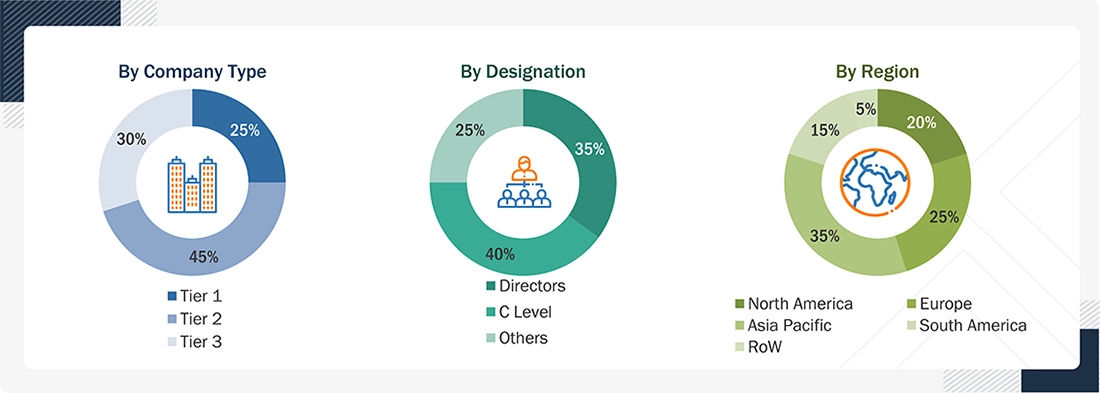
Microencapsulation Market 
 Size, and Share

Notes:

  • The three tiers of the companies are defined based on their total revenues in 2025, based on the availability of financial data.
  • Tier 1: Revenue > USD 1 billion; Tier 2: USD 100 million ≤ Revenue ≤ USD 1 billion; Tier 3: Revenue < USD 100 million
  • Others include product managers, R&D managers, technical managers, production managers, procurement managers, sales and marketing managers, business development managers, application specialists, and quality assurance managers.

COMPANY

DESIGNATION

BASF (Germany)

Product Development Manager

FrieslandCampina (Netherlands)

Senior R&D Scientist

DSM-Firmenich (Switzerland)

Global Marketing Director

GIVAUDAN (Switzerland)

Head of Microencapsulation Technology

International Flavors & Fragrances Inc. (US)

Senior Research Scientist

Sensient Technologies Corporation (US)

Business Development Manager

To know about the assumptions considered for the study, download the pdf brochure

Market Size Estimation

The top-down and bottom-up approaches were used to estimate and validate the total size of the microencapsulation market. These approaches were also used extensively to determine the size of various market subsegments.

The research methodology used to estimate the market size includes the following details:

  • The key players in the industry and the overall market were identified through extensive secondary research.
  • All shares, splits, and breakdowns were determined using secondary sources and verified through primary sources.
  • All possible parameters that affect the market covered in this research study were accounted for, viewed in extensive detail, verified through primary research, and analyzed to obtain final quantitative and qualitative data.
  • The research included the study of reports, reviews, and newsletters of top market players, along with extensive interviews for opinions from leaders, such as CEOs, directors, and marketing executives.

Microencapsulation Market: Bottom-up and Top-down Approaches

Microencapsulation Market Top Down and Bottom Up Approach

Data Triangulation

After determining the overall market size from the estimation process explained above, the total market was split into several segments and subsegments. The data triangulation procedure was employed, wherever applicable, to estimate the overall microencapsulation market and obtain precise statistics for all segments and subsegments. The data was triangulated by studying various factors and trends from the demand and supply sides. The market size was also validated using the top-down and bottom-up approaches.

Market Definition

According to the article “A Review On Microspheres,” published by R. B. Saudagar and Kanchan T. Mandlik in the International Journal of Pharma and Bio Sciences, “Microencapsulation is a process in which tiny particles or droplets are surrounded by a coating to give small capsules. In simple terms, a microcapsule is a small sphere with a uniform wall around it. The material inside the microcapsule is called the core, internal phase, or fill, while the wall is sometimes called the shell, coating, or membrane. Most microcapsules have diameters between a few micrometers and a few millimeters.”

Key Stakeholders

  • Food & Beverage Manufacturers
    • Fortified food producers
    • Functional beverage companies
    • Dietary supplement manufacturers
  • Pharmaceutical Companies
    • Generic drug manufacturers
    • Specialty pharmaceutical firms
  • Cosmetic & Personal Care Brands
    • Skincare and hair care product manufacturers
    • Cosmetic companies
  • Nutraceutical Companies
    • Health supplement brands
    • Functional food producers
  • Agricultural Sector
    • Fertilizer and pesticide manufacturers
    • Seed treatment companies
  • Regulatory Bodies and Institutions
    • US Food and Drug Administration (FDA)
    • European Food Safety Authority (EFSA)
    • Health Canada
    • Food Safety and Standards Authority of India (FSSAI)
    • World Health Organization (WHO)
    • Codex Alimentarius Commission
    • European Medicines Agency (EMA)
    • National Institutes of Health (NIH)
    • Institute of Food Technologists (IFT)
    • American Chemical Society (ACS)
  • Distributors and Wholesalers
    • Ingredient and equipment distributors
  • R&D Institutions
    • Academic research organizations
    • Private research labs

Report Objectives

  • To determine and project the size of the microencapsulation market based on shell material, core material, core material form, technology, end-use industry, functionality, and region over the forecast period
  • To identify key growth opportunities by analyzing the largest and fastest-growing segments across regions  
  • To provide detailed insights on factors influencing market growth, including drivers, restraints, opportunities, and challenges
  • To evaluate market opportunities for stakeholders and present the competitive landscape of leading players
  • To analyze micro-markets with respect to individual growth trends, future potential, and their contribution to the overall market
  • To identify and profile key companies operating in the microencapsulation market
  • To assess the competitive environment and highlight key strategies adopted by major players across regions

Available customizations:

Based on the provided market data, MarketsandMarkets offers customizations to meet company-specific scientific needs. The following customization options are available for the report:

PRODUCT ANALYSIS

  • Product matrix, which gives a detailed comparison of the product portfolio of each company.

GEOGRAPHIC ANALYSIS

With the given market data, MarketsandMarkets offers customizations according to company-specific scientific needs.

  • Further breakdown of Rest of Europe microencapsulation market by key country
  • Further breakdown of Rest of Asia Pacific microencapsulation market by key country
  • Further breakdown of Rest of South America microencapsulation market by key country

COMPANY INFORMATION

  • Detailed analyses and profiling of additional market players (up to five)

 

Personalize This Research

  • Triangulate with your Own Data
  • Get Data as per your Format and Definition
  • Gain a Deeper Dive on a Specific Application, Geography, Customer or Competitor
  • Any level of Personalization
Request A Free Customisation

Let Us Help You

  • What are the Known and Unknown Adjacencies Impacting the Microencapsulation Market
  • What will your New Revenue Sources be?
  • Who will be your Top Customer; what will make them switch?
  • Defend your Market Share or Win Competitors
  • Get a Scorecard for Target Partners
Customized Workshop Request

Custom Market Research Services

We Will Customise The Research For You, In Case The Report Listed Above Does Not Meet With Your Requirements

Get 10% Free Customisation

TESTIMONIALS

Growth opportunities and latent adjacency in Microencapsulation Market

DMCA.com Protection Status
popup img