Military Robots Market Size, Share & Trends

Military Robots Market Size, Share and Trends by Type (Land, Marine, and Airborne), Application, Range, System, Launch Mode, Level of Autonomy (Human-in-the-Loop, Human-on-the-Loop, and Highly Autonomous), Collaboration Architecture (Single-Robot, Multi-Robot, Manned-Unmanned Team, and Swarm Operations) – Global Forecast to 2031




MILITARY ROBOTS MARKET OVERVIEW
According to Marketsandmarkets, the Global Military Robots Market Size was valued at USD 42.15 billion in 2026 and is projected to reach USD 128.92 billion by 2031, growing at a CAGR of 25.1% from 2026-2031. In terms of volume, the market is projected to grow from 74,817 units in 2026 to 109,010 units by 2031. Armed forces are increasing the use of military robots for dangerous missions to reduce direct soldier exposure to battlefield threats. These systems are being deployed for surveillance, combat, explosive ordnance disposal, transportation, mine disposal, and other mission-support activities across land, marine, and airborne operations.
REPORT SCOPE
| REPORT METRIC | DETAILS |
|---|---|
| Market Size in 2025 | USD 32.85 Billion |
| Market Size in 2026 | USD 42.15 Billion |
| Market Forecast in 2031 | USD 128.92 Billion |
| Growth Rate | CAGR of 25.1% |
| Years Considered | 2021–2031 |
| Base Year | 2025 |
| Forecast Period | 2026-2031 |
| Units Considered | Value (USD Million/Billion), Volume (Units) |
| Report Coverage | Revenue forecast, company ranking, competitive landscape, growth factors, and trends |
| Top Companies |
|
| Growth Drivers |
|
| Segments Covered |
|
| Regions Covered | North America, Asia Pacific, Europe, Middle East & Africa, Latin America |
KEY TAKEAWAYS
-
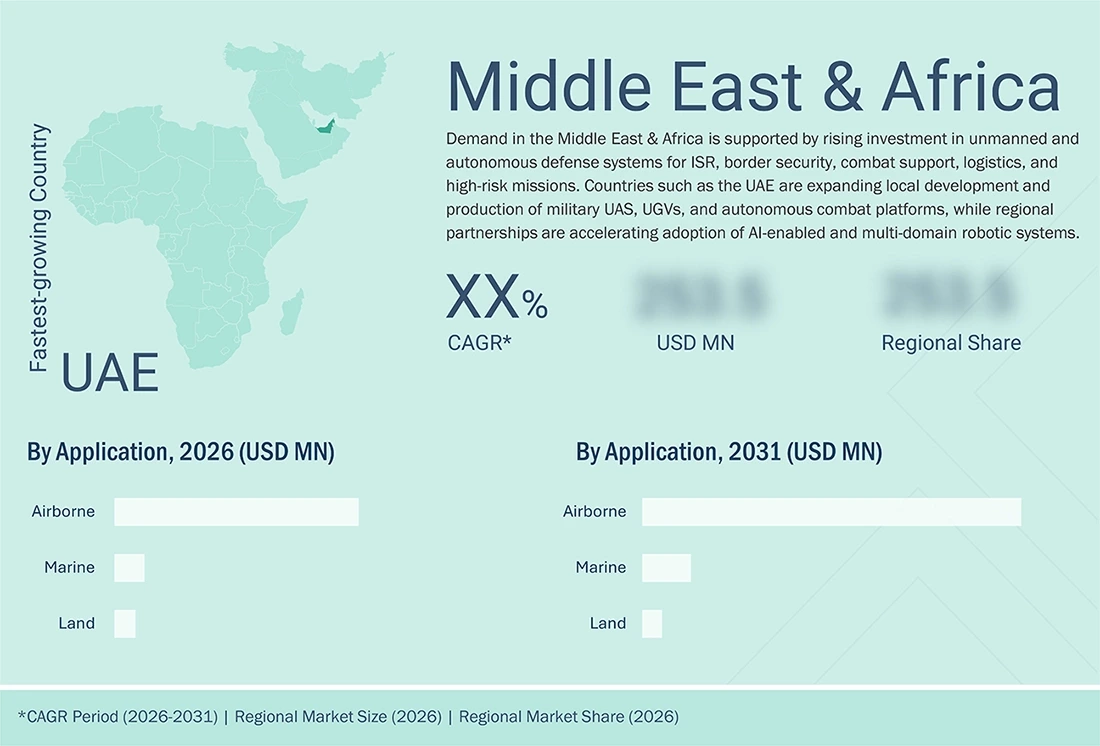
By RegionThe Middle East & African military robots market is expected to register the highest CAGR of 31.8% between 2026 and 2031.
-
By TypeMarine is expected to register the highest CAGR of 26.7% between 2026 and 2031.
-
By ApplicationAirborne is estimated to be the most dominant segment in 2026.
-
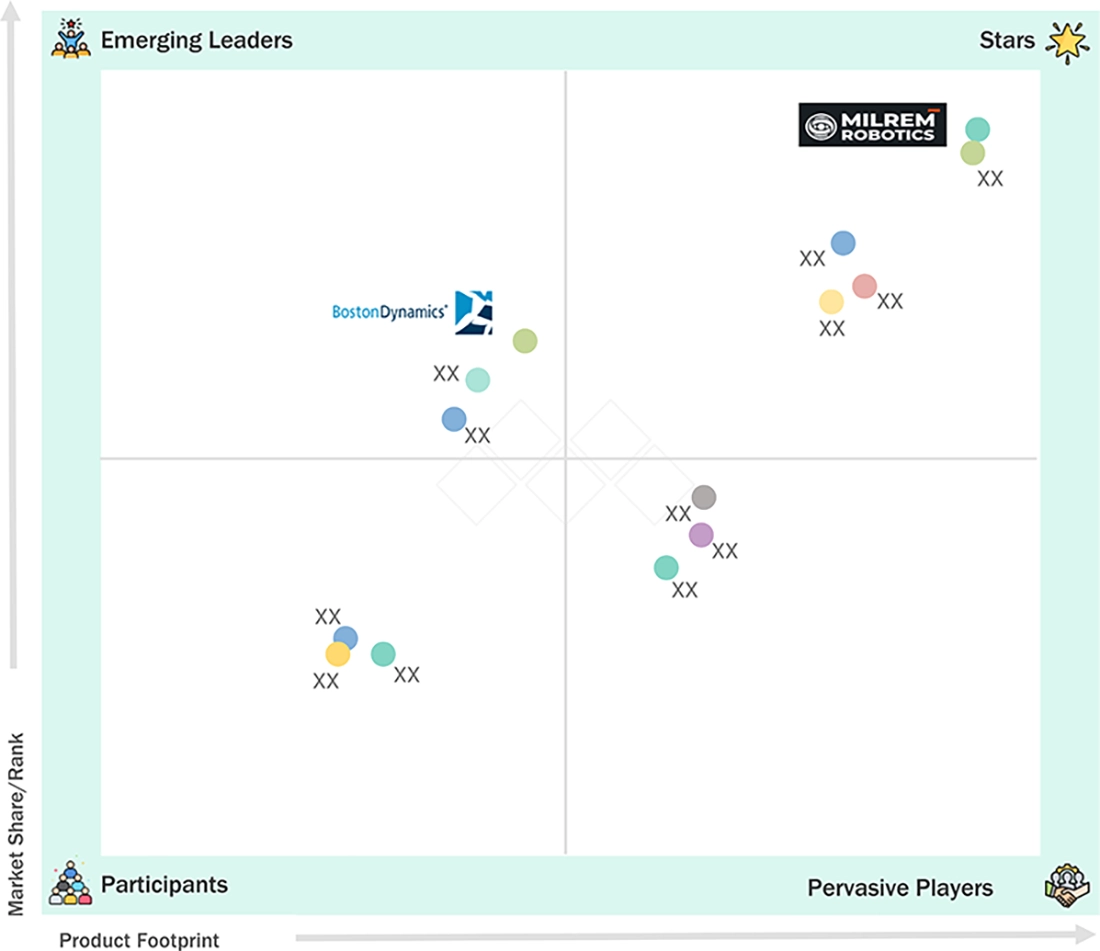
Competitive LandscapeMilrem Robotics, Tencore, and Teledyne FLIR Defense were identified as some of the star players in the military robots market (global), given their strong market share and product footprint.
The Military Robots Industry is growing as armed forces increasingly adopt advanced sensor systems, autonomous navigation, and AI-based decision support. These technologies allow robots to operate with greater accuracy in complex and GPS-denied environments, detect obstacles, identify targets, and adjust their movement with limited human input. This is increasing the use of military robots across land, marine, and airborne missions where reliable autonomous operation is becoming more important.
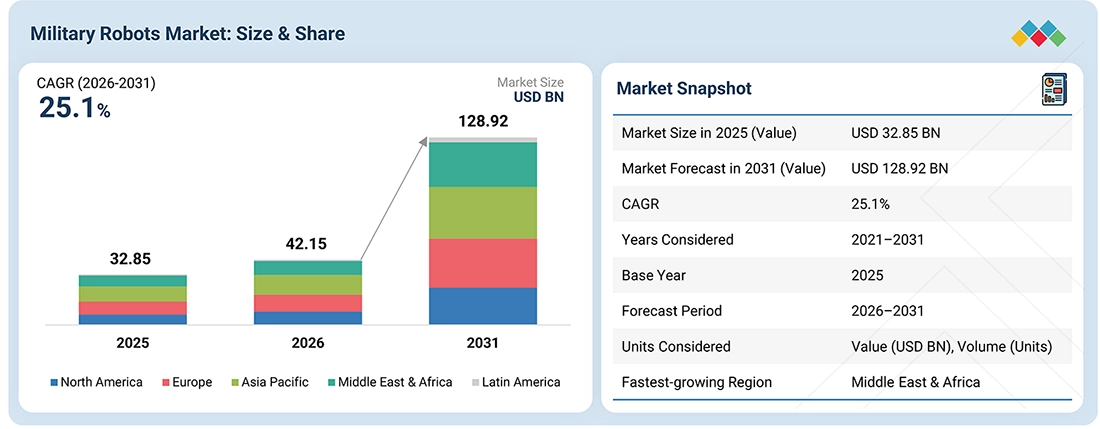
Source: Secondary Research, Interviews with Experts, MarketsandMarkets Analysis
TRENDS & DISRUPTIONS IMPACTING CUSTOMERS' CUSTOMERS
The impact on customers in the military robots market is driven by the need to improve mission efficiency with limited personnel and resources. A single robotic platform can support different tasks by using interchangeable payloads and mission equipment, which reduces the need for separate specialized systems. Common platforms, components, and controls can also simplify operator training, maintenance, and spare parts management. This helps defense organizations improve operational flexibility, equipment availability, and overall lifecycle cost.
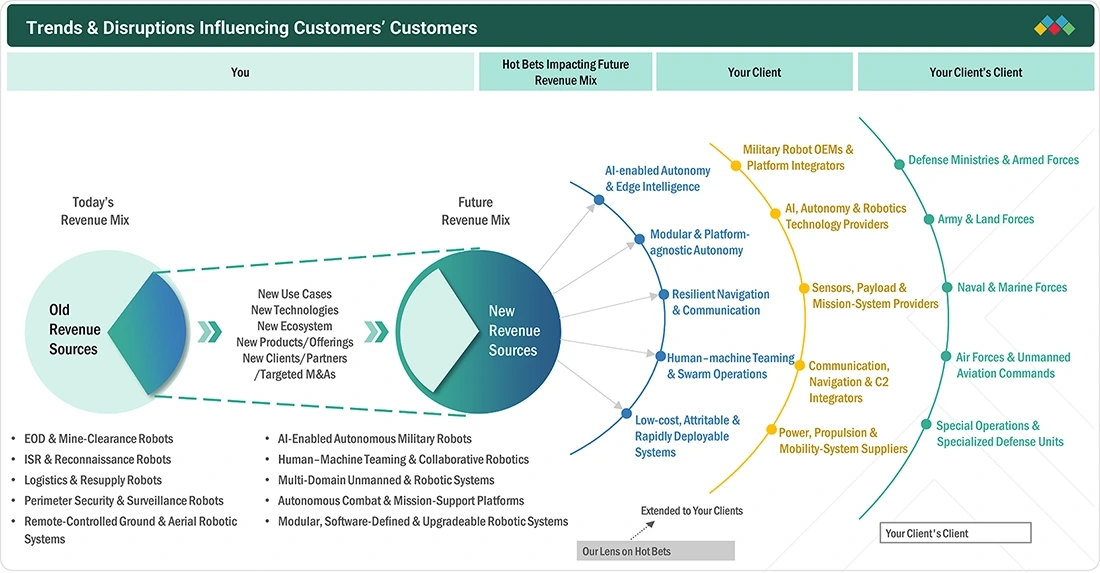
Source: Secondary Research, Interviews with Experts, MarketsandMarkets Analysis
MILITARY ROBOTS MARKET DYNAMICS

Level
-
Growing requirement to reduce personnel exposure in high-risk military operations

-
Increasing requirement for persistent ISR and expanded battlespace awareness


Level
-
Limited endurance, payload capacity, and onboard power availability of military robotic platforms

-
Regulatory, safety, and human-control requirements for weaponized autonomous systems


Level
-
Expansion of military robots into battlefield logistics, combat engineering, EOD, mine warfare, and casualty support

-
Development of coordinated multi-robot and swarm operations for military missions


Level
-
Maintaining command, navigation, and communications in GPS-denied and electronically contested environments

-
Achieving interoperability across military robots, mission payloads, control stations, and allied forces

Source: Secondary Research, Interviews with Experts, MarketsandMarkets Analysis
Driver: Growing requirement to reduce personnel exposure in high-risk military operations
Military forces are increasingly using robots for missions where sending personnel directly can involve high risk. Military robots can support tasks such as explosive ordnance disposal, mine clearance, reconnaissance, combat support, and operations in hazardous areas. By using robots for these activities, armed forces can reduce direct exposure of soldiers to threats while maintaining mission capability. This supports wider adoption of military robots across land, marine, and airborne operations.
Restraint: Limited endurance, payload capacity, and onboard power availability of military robotic platforms
Military robots have limits on how long they can operate, how much equipment they can carry, and how much onboard power they can provide to sensors, communication systems, and mission payloads. These limitations can reduce mission duration and restrict the use of heavier or more power-intensive equipment. In demanding environments, frequent battery replacement, recharging, or refueling can also affect operational continuity and increase logistics requirements.
Opportunity: Expansion of military robots into battlefield logistics, combat engineering, EOD, mine warfare, and casualty support
Military robots are being considered for a wider range of support missions beyond surveillance and combat. They can be used to move supplies, support engineering work, handle explosive threats, clear mines, and assist with casualty evacuation in dangerous areas. Wider use across these mission areas can reduce the burden on personnel and improve support to frontline units, creating additional demand for specialized land, marine, and airborne robotic platforms.
Challenge: Maintaining command, navigation, and communications in GPS-denied and electronically contested environments
Military robots depend on reliable communication and navigation to operate effectively, but these functions can be disrupted by jamming, signal interference, cyber threats, or loss of GPS access. In contested environments, weak or interrupted links can reduce control, situational awareness, and mission effectiveness. Military robot developers therefore need resilient communication, alternative navigation, and secure control systems that can continue operating under electronic warfare conditions.
MILITARY ROBOTS MARKET SIZE, SHARE & TRENDS: COMMERCIAL USE CASES ACROSS INDUSTRIES
| COMPANY | USE CASE DESCRIPTION | BENEFITS |
|---|---|---|
 |
Milrem Robotics’ THeMIS unmanned ground vehicles are being used by Ukrainian forces for demining, route clearance, resupply, and transporting equipment through areas that are difficult or dangerous for conventional vehicles. Milrem has delivered 14 THeMIS UGVs to Ukraine, with operational feedback confirming their use against anti-tank mines and unexploded ordnance. | Reduces the need to send soldiers into mined or exposed areas. The same modular platform can support logistics, casualty evacuation, ordnance disposal, and other frontline missions, improve mission flexibility while lower personnel risk. |
 |
Tencore’s TerMIT UGVs are being used by the Armed Forces of Ukraine mainly for frontline logistics, including supply movement and casualty evacuation, with additional use in combat and engineering roles. Tencore stated in 2026 that it has delivered more than 4,000 UGVs to Ukrainian forces, while its systems have been developed continuously using frontline feedback. | Enables supplies, equipment, and casualties to be moved along exposed frontline routes without requiring soldiers or crewed vehicles to enter the same areas. Its modular design also allows the platform to be adapted for combat, engineering, mine-related, and electronic-warfare support missions. |
 |
Teledyne FLIR Defense supplies Centaur unmanned ground vehicles to the US Army, Navy, Air Force, and Marine Corps under the MTRS Increment II program. EOD teams use Centaur to identify and dispose of improvised explosive devices, landmines, and unexploded ordnance, while additional payloads can support CBRN-related missions. | Provides EOD personnel with greater stand-off distance from explosive and hazardous threats. Common robotic platforms across military services also support joint training, maintenance, and mission flexibility through interchangeable sensors and payloads. |
Logos and trademarks shown above are the property of their respective owners. Their use here is for informational and illustrative purposes only.
MILITARY ROBOTS MARKET ECOSYSTEM
The military robots market includes unmanned platform manufacturers, sensor and payload suppliers, autonomy software developers, propulsion providers, and system integrators. Major companies such as Northrop Grumman, Boeing, Israel Aerospace Industries, Lockheed Martin Corporation, Teledyne Technologies Incorporated, BAE Systems, Elbit Systems Ltd., EDGE Group PJSC, L3Harris Technologies, Inc., Leonardo S.p.A., Thales, General Dynamics Corporation, Textron Inc., RTX, Kratos, General Atomics, Rheinmetall AG, QinetiQ, AeroVironment, Inc., Saab AB, Anduril Industries, Milrem AS, and Tencore provide military robotic systems across land, marine, and airborne applications. Other players such as Boston Dynamics, Shield AI, Rockwell Automation, Inc., Maritime Robotics, Saronic Technologies, Overland AI, and Havoc provide specialized robotic platforms, autonomous systems, mission software, and related technologies for surveillance, logistics, combat support, maritime operations, and other military applications.
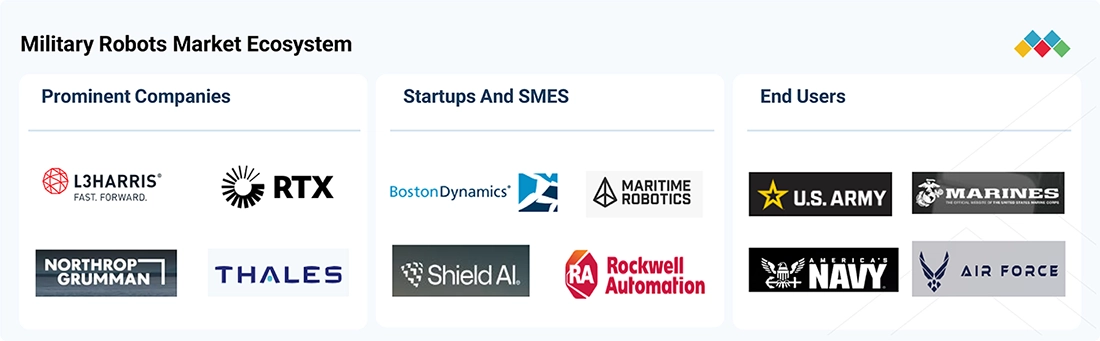
Logos and trademarks shown above are the property of their respective owners. Their use here is for informational and illustrative purposes only.
MILITARY ROBOTS MARKET SEGMENTS
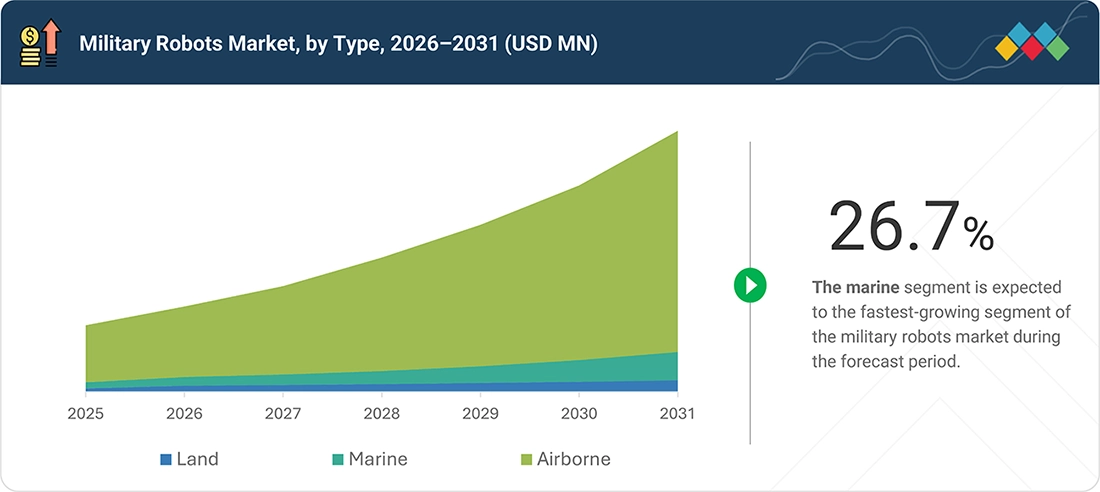
Source: Secondary Research, Interviews with Experts, MarketsandMarkets Analysis
Military Robots Market, By Type
The Airborne – Tactical segment holds the largest share of the market. Tactical military UAVs are widely used for ISR, targeting, communications support, and combat missions. Their ability to operate beyond frontline positions, cover large areas, and carry different mission payloads supports strong adoption across defense forces. NATO also identifies unmanned systems as increasingly central to military operations because they improve operational reach, persistence, and situational awareness.
Military Robots Market, By Application
The Airborne – Intelligence, Surveillance & Reconnaissance (ISR) segment holds the largest share of the market. Military UAVs can remain over operational areas for extended periods and provide real-time imagery, surveillance, target tracking, and battlefield information. This makes airborne ISR useful for monitoring large areas while limiting the need to place personnel close to threats.
Military Robots Market, By Range
The Airborne – Beyond Visual Line of Sight (BVLOS) segment holds the largest share of the market. BVLOS capability allows military UAVs to operate far beyond the operator’s direct sight and support long-range surveillance, reconnaissance, and combat missions. This extended operational reach is particularly important where forces need persistent coverage across large or difficult-to-access areas.
Military Robots Market, By System
The Airborne segment holds the largest share of the market. Airborne robotic systems depend on integrated payloads, communication systems, navigation systems, propulsion systems, and other mission equipment. The wide deployment of military UAVs across surveillance, reconnaissance, targeting, and combat missions creates continued demand for these onboard systems.
Military Robots Market, By Launch Mode
The Airborne – Runway Launched segment holds the largest share of the market. Runway-launched UAVs generally include larger tactical and strategic platforms designed for longer endurance, greater payload capacity, and extended operating range. These systems support persistent ISR, combat, and other long-duration missions that require larger aircraft and supporting ground infrastructure.
Military Robots Market, By Level of Autonomy
The Human-in-the-Loop segment holds the largest share of the market. Many fielded military robots continue to rely on operators for mission control and important operational decisions. Human involvement remains particularly relevant for complex missions and weapon-related actions, while autonomous functions are increasingly used for navigation, sensing, and other supporting tasks.
Military Robots Market, By Collaboration Architecture
The Single-Robot Operation segment holds the largest share of the market. Most operational military robots are currently deployed as individual platforms for defined missions such as ISR, EOD, logistics, combat support, and mine countermeasures. For example, the US Navy’s MCM USV operates as an individual semi-autonomous platform carrying modular payloads for minehunting, minesweeping, and mine neutralization.
MILITARY ROBOTS MARKET REGION
Middle East & Africa to be fastest-growing region in global military robots market during forecast period
The Middle East & African military robots market is expected to grow at the fastest rate during the forecast period. Growth is supported by increasing use of unmanned and autonomous systems for surveillance, reconnaissance, force protection, border security, and operations in high-risk environments. Military exercises in Africa are expanding the use of AI-enabled autonomous vehicles and unmanned aerial systems for reconnaissance, combat identification, and mission support. At the same time, rising security concerns and the need to reduce personnel exposure are encouraging armed forces across the region to adopt military robots across land, marine, and airborne operations.
MILITARY ROBOTS MARKET SIZE, SHARE & TRENDS: COMPANY EVALUATION MATRIX
The military robots market matrix includes Milrem AS (Star), supported by its strong position in unmanned ground vehicles and autonomous military systems. Its THeMIS platform supports combat, intelligence, logistics, CASEVAC, and ordnance-disposal missions and is in service or robotics programs across 20 countries. Milrem is also expanding its portfolio through systems such as HAVOC, VECTOR, MRCV and ARCOS. Boston Dynamics, Inc. (Emerging Leader) has built a strong position in legged robotic systems through its Spot platform. Spot supports non-weaponized military and government applications such as hazardous-area inspection, EOD, ISR, rescue, logistics, and CBRNE response, while its mobility and modular payload architecture allow operation in difficult environments.
Source: Secondary Research, Interviews with Experts, MarketsandMarkets Analysis
KEY MILITARY ROBOTS MARKET PLAYERS
List of Top Military Robots Companies
- Milrem Robotics (Estonia)
- Tencore (Ukraine)
- Teledyne FLIR Defense (US)
- Rheinmetall (Germany)
- Elbit Systems (Israel)
- Northrop Grumman (US)
- Boeing (US)
- Israel Aerospace Industries (Israel)
- Lockheed Martin Corporation (US)
- BAE Systems (UK)
- EDGE Group PJSC (UAE)
- L3Harris Technologies, Inc. (US)
- Leonardo S.p.A. (Italy)
- Thales (France)
- General Dynamics Corporation (US)
- Textron Inc. (US)
- RTX (US)
- Kratos (US)
- General Atomics (US)
- QinetiQ (UK)
- AeroVironment, Inc. (US)
- Saab AB (Sweden)
- Anduril Industries (US)
WHAT IS IN IT FOR YOU: MILITARY ROBOTS MARKET SIZE, SHARE & TRENDS REPORT CONTENT GUIDE
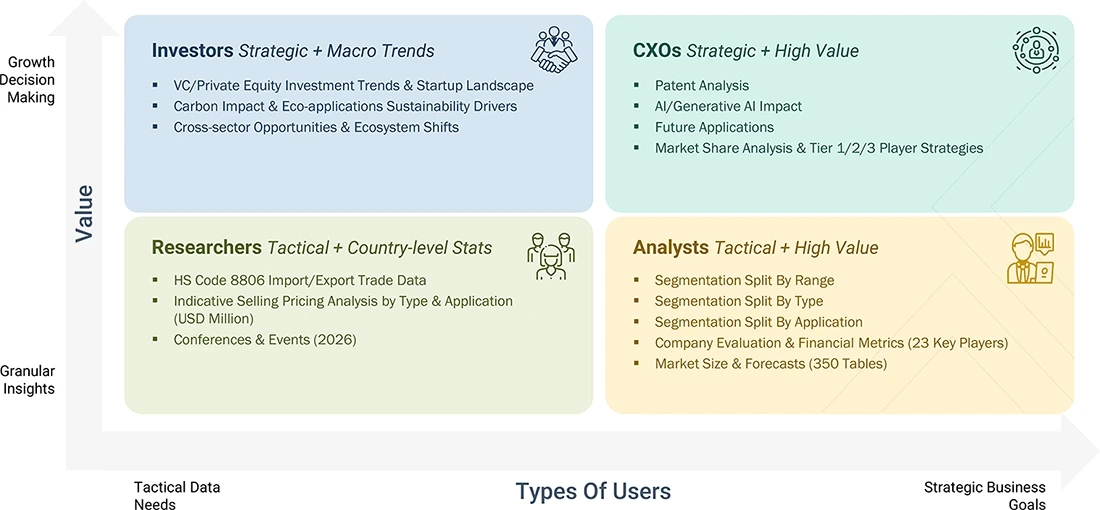
DELIVERED CUSTOMIZATIONS
We have successfully delivered the following deep-dive customizations:
| CLIENT REQUEST | CUSTOMIZATION DELIVERED | VALUE ADDS |
|---|---|---|
| Leading Manufacturer | Additional segment breakdown for countries | Additional country-level market sizing tables for segments/sub-segments covered at the regional/global level to gain an understanding of market potential by each country |
| Emerging Leader | Additional company profiles | Competitive information on targeted players to gain granular insights on direct competition |
| Regional Market Leader | Additional country market estimates | Additional country-level deep dive for a more targeted understanding of the total addressable market |
RECENT DEVELOPMENTS
- July 2026 : Rheinmetall AG (Germany) completed the acquisition of a 51% majority stake in DOK-ING (Croatia). The deal directly expands Rheinmetall’s military robotics portfolio through DOK-ING’s unmanned ground systems for mine clearance, military engineering, reconnaissance, logistics, and other high-risk operations. The acquired business operates as Rheinmetall Unmanned Vehicles and is intended to support the development of autonomous combat and combat-support vehicles.
- November 2025 : EDGE Group PJSC (UAE) and Anduril Industries, Inc. (US) agreed to form the EDGE-Anduril Production Alliance, a joint venture for developing, manufacturing, selling, and sustaining autonomous systems. Its first platform is the Omen Group 3 autonomous air vehicle, with the UAE committing to an initial 50 systems and EDGE contributing nearly USD 200 million toward the program and related development.
- May 2025 : AeroVironment, Inc. (US) completed the acquisition of BlueHalo LLC (US). The transaction substantially broadened AeroVironment’s defense technology portfolio across autonomous systems, unmanned platforms, AI, counter-UAS, and related capabilities spanning air, land, and sea domains. The transaction was originally valued at approximately USD 4.1 billion during the announcement.
Table of Contents
 Exclusive indicates content/data unique to MarketsandMarkets and not available with any competitors.
Methodology
The study used four main activities to estimate the current size of the military robots market. First, detailed secondary research was conducted to collect information on military robotic platforms, manufacturers, system types, applications, defense programs, procurement contracts, military budgets, deliveries, deployments, and ongoing development programs. The collected information and key assumptions were then checked through primary interviews with industry participants and experts across the value chain. Demand-side analysis was used to estimate spending on military robots by platform, application, end user, and region. Finally, market breakdown and data triangulation were used to calculate the size of each segment and subsegment.
Secondary Research
Secondary research included information from government procurement portals, defense ministries, armed forces, defense agencies, company annual reports, regulatory filings, investor presentations, product documents, press releases, technical papers, journals, along with the recognized defense databases. Sources such as SIPRI were used to review military spending, equipment transfers and procurement activity, while government budget documents and procurement records were used to track military robot programs, contracts, orders and deliveries. Company filings and official product information were used to study military robot portfolios, revenues, contracts, technologies, applications, customers and geographical presence.
Primary Research
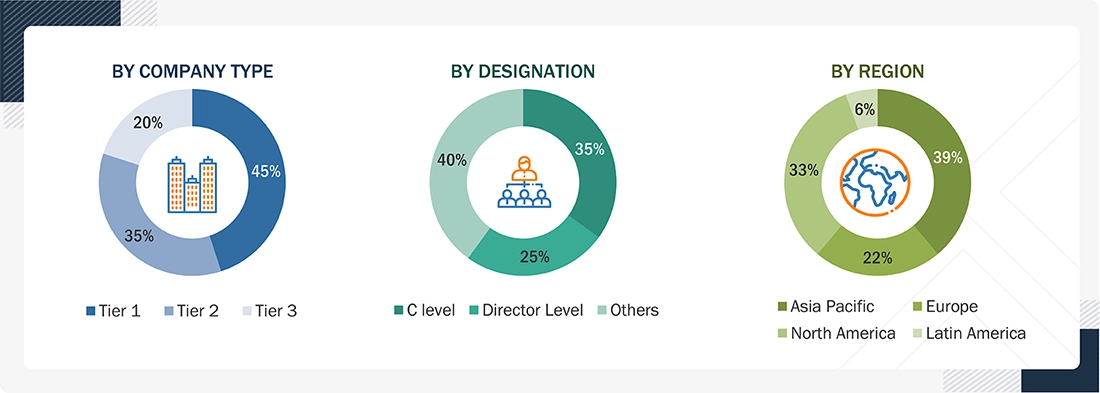
Primary research was conducted after completing the secondary research. Interviews were conducted with military robot manufacturers, component suppliers, system integrators, technology providers, distributors, defense procurement officials, armed forces personnel, defense experts, and other industry participants. The interviews covered major countries across North America, Europe, Asia Pacific, the Middle East & Africa, and Latin America. Primary information was collected through questionnaires, emails, and telephone interviews and was used to check market estimates, procurement trends, pricing, demand patterns, applications, platform adoption, and segment-level assumptions.
To know about the assumptions considered for the study, download the pdf brochure
Market Size Estimation
The top-down and bottom-up approaches were used to estimate and validate the size of the military robots market. The research methodology used to estimate the size of the market included the following details:
- Key military robot companies were identified through secondary research. Their market shares were estimated using company revenues, military robot product portfolios, contract activity, delivery units, application presence and regional presence. Annual reports, financial filings, product documents, procurement records, and interviews with company executives, engineers, system integrators, distributors, and other industry participants were used for the analysis.
- Market shares, segment splits, regional shares, and growth rates were first estimated using secondary sources and then checked through primary interviews. The analysis covered military robot type, application, range, system, launch mode, level of autonomy, collaboration architecture, pricing, delivery volumes, and deployment activity.
- Demand for military robots across defense applications was considered. Defense procurement plans, military modernization programs, operational requirements, platform replacement, autonomy requirements, payload integration, interoperability, and deployment needs were also reviewed because they affect military robot adoption.
- The collected information was compared and combined through data triangulation. The final market values were calculated using company-level revenues, military robot delivery units, average selling prices, contract values, procurement activity, regional demand patterns, and primary interview validation.
Military Robots Market : Top-Down and Bottom-Up Approach
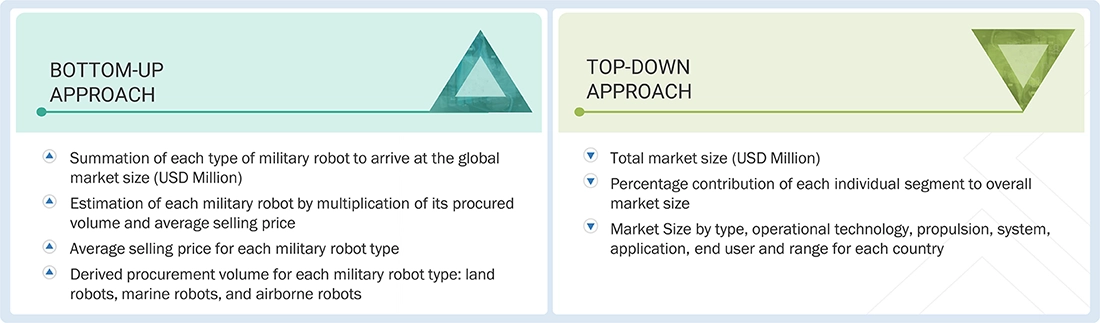
Data Triangulation
After determining the overall market size, the military robots market was divided into its main segments and subsegments. Data triangulation and market breakdown were used to develop estimates for each segment and subsegment. The analysis considered factors from both the demand and supply sides, including military robot procurement, delivery volumes, defense programs, platform requirements, applications, pricing, company participation, and regional demand. The final market estimates were then checked using both top-down and bottom-up approaches to ensure consistency across the overall market, regions, segments, and subsegments.
Market Definition
A robot is a machine designed to carry out several tasks by sensing, analyzing in a deliberative and non-mechanical way, and acting according to the requirements. In the military, robots are used for various functions, including warfare, picking and placing objects, firefighting, and detecting metal. Military robots can be operated semi- or fully autonomously and do not depend entirely on humans for control. For example, teleoperated drones, such as the US Air Force Predator, are unmanned aerial vehicles that make most decisions independently. Military robots can be expendable or recoverable and are designed to carry a lethal or a non-lethal payload.
Military robots form a dynamic segment of the defense industry focused on the production and deployment of robotic systems designed to enhance operational capabilities across land, air, and maritime domains. These systems leverage advanced technologies such as artificial intelligence, autonomous navigation, and state-of-the-art sensors to support mission-critical applications, including surveillance, reconnaissance, logistics, and combat operations. Driven by increasing defense budgets, technological advancements, and the need to minimize human risk in high-stakes environments, this market represents a significant area of innovation and strategic investment for military modernization initiatives worldwide.
Key Stakeholders
- Defense Ministries & Procurement Agencies
- Armed Forces & Military End Users
- Military Robot OEMs & Defense Prime Contractors
- Component, Subsystem & Payload Suppliers
- AI, Autonomy, Communications & C2 Technology Providers
- System Integrators & Engineering Service Providers
- Defense R&D, Testing & Certification Organizations
- Maintenance, Training & Lifecycle Support Providers
- Defense Alliances & Multinational Standardization Bodies
Report Objectives
- To define, describe, segment, and forecast the size of the military robots market based on type, application, range, system, launch mode, level of autonomy, collaboration architecture, and region
- To forecast the size of market segments across five regions: North America, Europe, Asia Pacific, the Middle East & Africa, and Latin America
- To identify and analyze key drivers, restraints, opportunities, and challenges influencing the growth of the market
- To identify industry trends, market trends, and technology trends in the market
- To analyze micro markets with respect to individual technology trends, growth prospects, and their contribution to the overall market
- To strategically profile key market players and analyze their market position and core capabilities
- To provide a detailed competitive landscape of the market and analyze competitive strategies such as product launches, partnerships, agreements, and collaborations adopted by key players
- To assess the financial position of key players along with their key products, unique offerings, and recent developments
Available customizations:
MarketsandMarkets offers the following customizations for this market report:
- Additional country-level analysis of the military robots market
- Profiling of other market players (up to 5)
Product Analysis
- Product matrix, which provides a detailed comparison of the product portfolio of each company in the military robots market
Key Questions Addressed by the Report
What is the current size of the Military Robots Market?
The Military Robots Market is estimated at USD 42.15 billion in 2026 and is projected to reach USD 128.92 billion by 2031.
What is the expected CAGR of the Military Robots Market?
The market is expected to grow at a CAGR of 25.1% during 2026–2031, driven by rising defense modernization programs and increasing adoption of autonomous systems.
What are the key growth drivers of the Military Robots Market?
Major growth drivers include increasing demand for autonomous military operations, AI-enabled battlefield systems, ISR missions, force protection requirements, and rising investments in unmanned land, air, and marine platforms.
Which region dominates the Military Robots Market?
North America leads the market, accounting for over 40% of global revenue in 2024, supported by high defense spending and advanced robotics development programs.
Which region is expected to witness the fastest growth?
Asia Pacific is projected to register the highest growth rate through 2030 due to increasing military modernization initiatives in China, India, Japan, and South Korea.
What are the major trends shaping the Military Robots Market?
Key trends include AI-powered autonomous decision-making, swarm robotics, human-machine teaming, GPS-denied navigation technologies, unmanned maritime systems, and advanced ISR capabilities.
Which segment holds the largest market share?
The Airborne Robots/UAV segment accounted for more than 51% of the market share in 2024, owing to their extensive use in surveillance, reconnaissance, and combat missions.
Who are the leading companies in the Military Robots Market?
Major companies include Lockheed Martin, Northrop Grumman, BAE Systems, Elbit Systems, Saab AB, QinetiQ, and Thales Group.
What opportunities exist in the Military Robots Industry?
Opportunities are emerging from increased procurement of unmanned combat systems, autonomous logistics platforms, naval drones, counter-drone technologies, and AI-enabled robotic warfare solutions.
What does a Military Robots Market report typically analyze?
The report analyzes market size, growth forecasts, technology trends, platform segmentation (land, air, marine), competitive landscape, regional outlook, procurement trends, and strategic developments among key defense contractors.


Personalize This Research
- Triangulate with your Own Data
- Get Data as per your Format and Definition
- Gain a Deeper Dive on a Specific Application, Geography, Customer or Competitor
- Any level of Personalization
Let Us Help You
- What are the Known and Unknown Adjacencies Impacting the Military Robots Market
- What will your New Revenue Sources be?
- Who will be your Top Customer; what will make them switch?
- Defend your Market Share or Win Competitors
- Get a Scorecard for Target Partners

Custom Market Research Services
We Will Customise The Research For You, In Case The Report Listed Above Does Not Meet With Your Requirements
Get 10% Free CustomisationTESTIMONIALS
Growth opportunities and latent adjacency in Military Robots Market






Parv
Jun, 2019
Need to analyze the market for defense robots in the US, Canada, China, and the Middle East and prepare a report..
Rashid
Jan, 2019
I am doing a landscape analysis in the robotics sector to establish a business case in my job. I need estimates of the robot market, both past and future, especially for MENA region. If MENA is not there, it is fine to have others and I will make assumptions. Regards.