MXene Market Size, Share & Trends

MXene Market Size, Share & Trends by Type (Ti-based, V-based, Nb-based, Mo-based, Others), Production Method (HF Chemical Etching, Fluoride-free Etching, Electrochemical Etching), Form (Powder, Wet Paste), End User, and Region – Global Forecast to 2032




MXENE MARKET OVERVIEW
According to Marketsandmarkets, the global MXene market size is projected to reach USD 0.29 billion by 2032 from an estimated USD 0.05 billion in 2026, growing at a CAGR of 35.6% from 2026 to 2032. Demand is driven by growing use in energy storage systems, such as batteries and supercapacitors, due to high electrical conductivity and surface area. Rising adoption in EMI shielding, sensors, and advanced electronics is further supporting market growth. Increased investments in nanomaterials research and commercialization are accelerating MXene-based applications across industries.
The MXene market is gaining traction as industries increasingly adopt high-performance materials for energy storage, electronics, and advanced coatings. Growing demand for MXene in batteries, supercapacitors, and EMI shielding is driving MXene market growth, supported by continuous research and expanding industrial applications.
Global expansion of the MXene market share is fueled by rising investments in nanotechnology and increasing use across automotive, healthcare, and semiconductor sectors. Key MXene market trends include commercialization, scalable production, and innovation, making it a competitive segment in the advanced materials industry.
REPORT SCOPE
| REPORT METRIC | DETAILS |
|---|---|
| Market Size in 2025 (Value) | USD 0.04 Billion |
| Market Forecast in 2032 (Value) | USD 0.029 Billion |
| Growth Rate | CAGR of 35.6% from 2026–2032 |
| Years Considered | 2021–2032 |
| Base Year | 2025 |
| Forecast Period | 2026–2032 |
| Units Considered | Value (USD BN), Volume (KG) |
| Report Coverage | Revenue forecast, company ranking, competitive landscape, growth factors, and trends |
| Top Companies |
|
| Growth Driver |
|
| Segments Covered |
|
| Regional Scope | North America, Europe, Asia Pacific, RoW |
Market Size & Forecast
• 2026 Market Size: USD 0.05 Billion
• 2032 Projected Market Size: USD 0.29 Billion
• CAGR (2026-2032): 35.6%
• Electrochemical Etching: Fastest CAGR
• Asia Pacific: Fastest growing market
KEY TAKEAWAYS
-
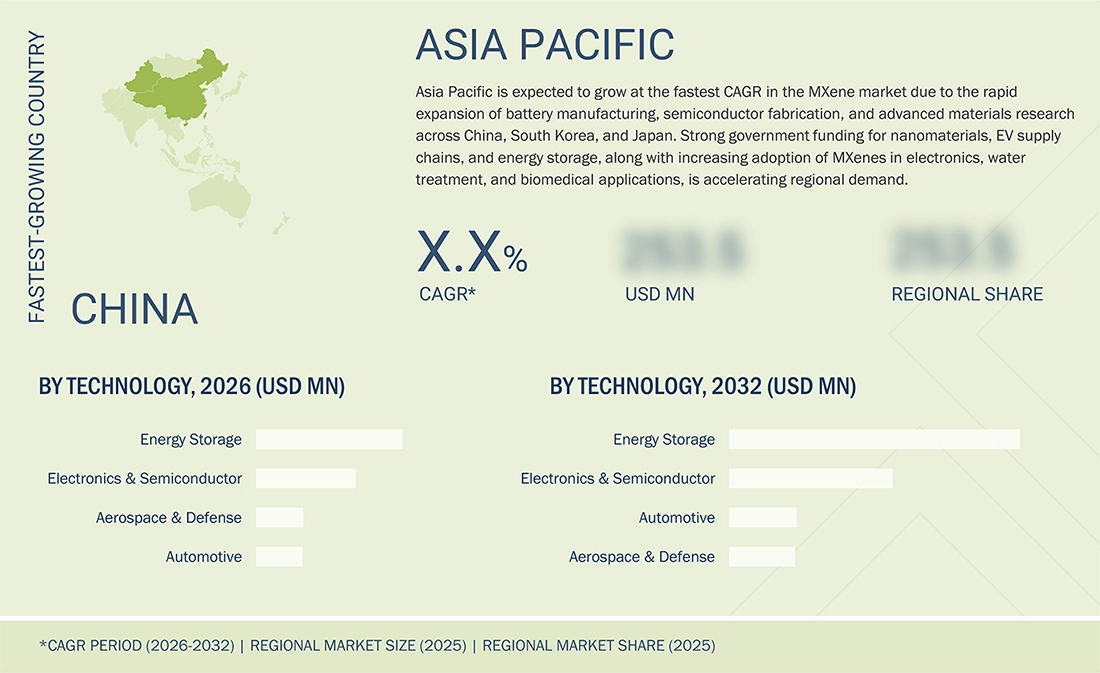
MXENE MARKET, BY REGIONBy region, Asia Pacific is expected to grow at a CAGR of 37.1% during the forecast period.
-
MXENE MARKET, BY TYPEBy type, the Ti based segment is expected to dominate the market during the forecast period.
-
MXENE MARKET, BY PRODUCTION METHODBy production method, the electrochemical etching segment is expected to grow at the highest CAGR during the forecast period.
-
MXENE MARKET, BY FORMBy form, the powder segment dominated the market with a share of 75.5% in 2025.
-
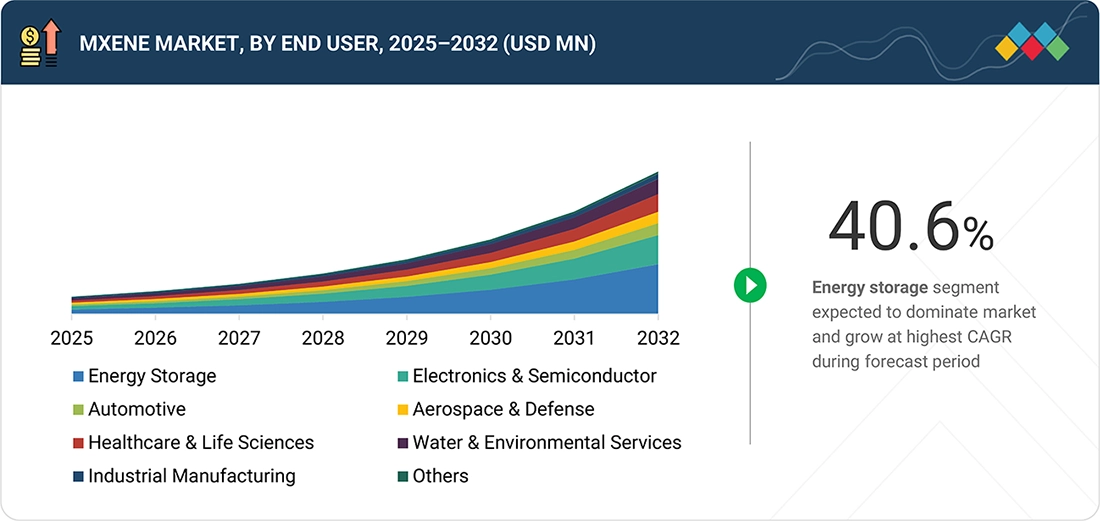
MXENE MARKET, BY END USERBy end user, the energy storage segment is expected to register the fastest CAGR of 40.6% during the forecast year.
-
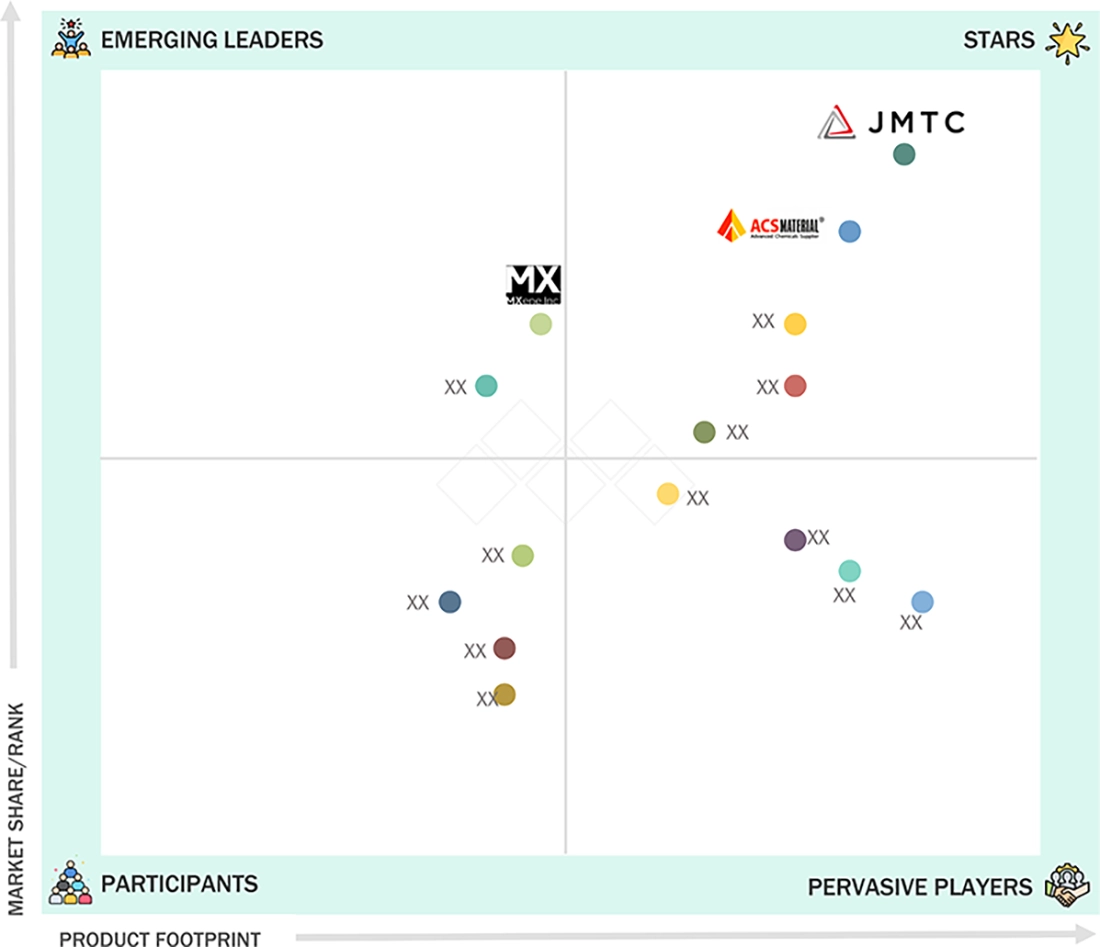
COMPETITIVE LANDSCAPE - KEY PLAYERSBeijing Beike New Material Technology (China), Merck (Germany), Alfa Chemistry (US), American Elements (US), and XFNANO (China) were identified as some of the star players in the global MXene market, given their strong market share and product footprint.
-
COMPETITIVE LANDSCAPE - STARTUPS/SMESEpoch Material Co., Ltd. (India), NanoCarbonTech (Poland), and Nanoplexus (UK), among others, have established themselves as specialized MXene material suppliers by building strong positions in high-performance nanomaterials. These companies are strengthening their market presence by offering application-specific MXene formulations for energy storage, EMI shielding, and advanced coatings, while adopting targeted expansion and partnership strategies to scale their commercial footprint in the global MXene market.
Major materials and advanced manufacturing companies are integrating MXene-based materials into energy storage, electronics, and sensing platforms to enhance performance and enable miniaturization. Several MXene producers have expanded the commercialization of MXene powders, inks, and coatings for use in lithium-ion batteries, supercapacitors, EMI shielding, and flexible electronics. These developments are accelerating the adoption of MXenes as a next-generation 2D material and strengthening their role in enabling high-performance, lightweight, conductive material systems across multiple industries, including automotive, consumer electronics, healthcare, and others.
Rising Demand in the MXene Market
The MXene market is gaining strong momentum due to its exceptional electrical conductivity and versatile properties. Growing demand from energy storage, electronics, and biomedical sectors is accelerating overall market expansion.
MXene Market Growth in Energy Storage and Electronics
In the MXene market, these materials are widely used in batteries, supercapacitors, and EMI shielding applications. Their ability to enhance energy efficiency and support next-generation electronic devices continues to drive adoption.
Future Opportunities in the MXene Market
The MXene market is expected to witness significant growth as ongoing research unlocks new applications in nanotechnology and smart materials. Improved production methods and rising commercialization efforts will further boost market potential.
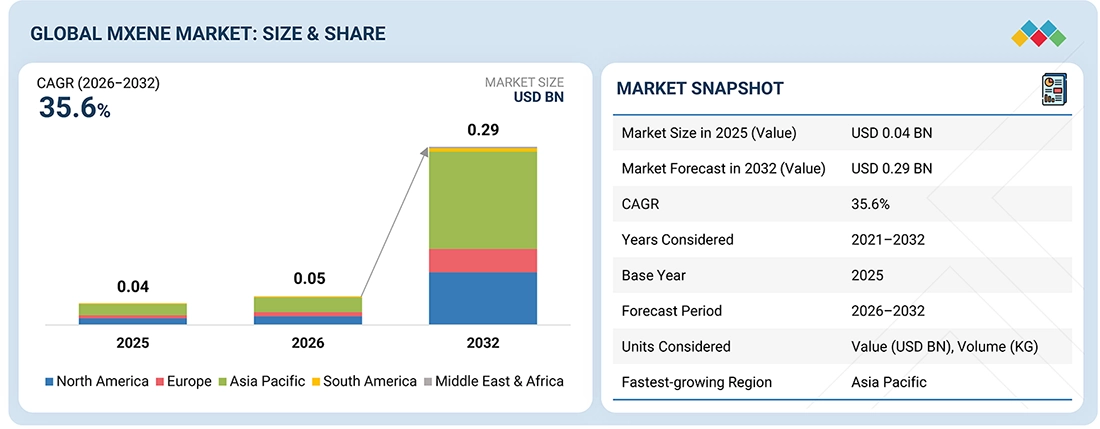
Source: Secondary Research, Interviews with Experts, MarketsandMarkets Analysis
TRENDS & DISRUPTIONS IMPACTING CUSTOMERS' CUSTOMERS
The MXene market trends is being shaped by a shift from traditional carbon- and metal-based materials toward high-performance 2D materials that enable new applications in energy storage, EMI shielding, and flexible electronics. Growing demand from battery manufacturers, electronics material suppliers, and sensor companies is creating new revenue streams for MXene producers. These trends are driven by end-user industries, including electric vehicles, consumer electronics, and medical devices, that seek lighter, smaller, and more efficient components.
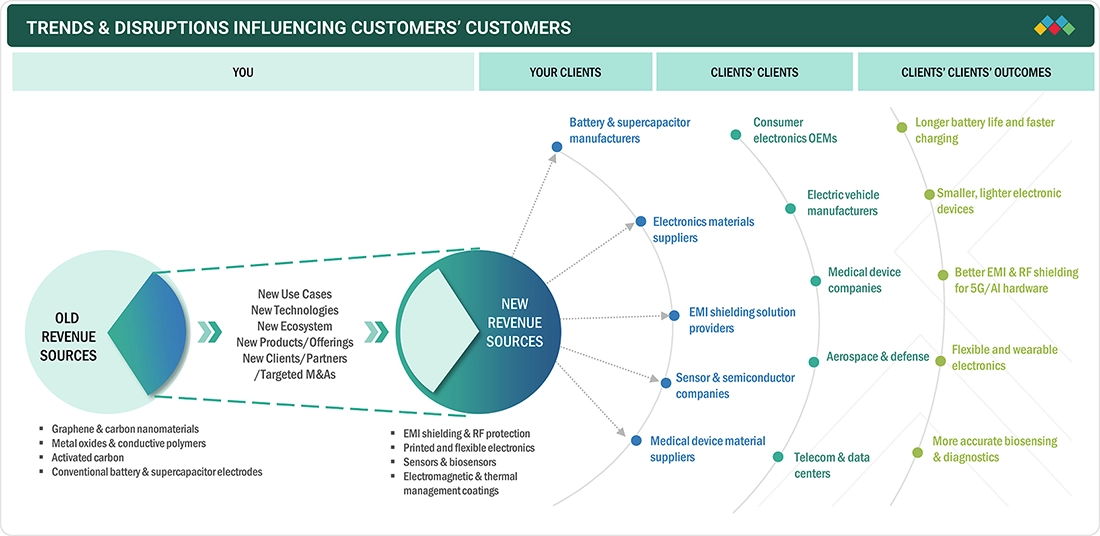
Source: Secondary Research, Interviews with Experts, MarketsandMarkets Analysis
MARKET DYNAMICS

Level
-
Rapid adoption of MXenes in energy storage for lithium-ion batteries and supercapacitors

-
Growing use of MXenes in electromagnetic interference (EMI) shielding for electronics


Level
-
High cost of MXene synthesis and processing

-
Limited large-scale manufacturing capabilities


Level
-
High cost of MXene synthesis and processing

-
Increasing demand for high-performance EMI shielding in EVs and 5G devices


Level
-
Integrating MXenes into existing manufacturing lines

-
Lack of long-term performance data

Source: Secondary Research, Interviews with Experts, MarketsandMarkets Analysis
Driver: Rapid adoption of MXenes in energy storage for lithium-ion batteries and supercapacitors
The rapid adoption of MXenes in lithium-ion batteries and supercapacitors is driving market growth due to their high electrical conductivity and large surface area, which improve energy density and charging speed. This makes MXenes increasingly attractive for next-generation energy storage systems used in electric vehicles and portable electronics.
Restraint: High cost of MXene synthesis and processing
The MXene market faces constraints due to the high cost of synthesis and processing, as production involves complex etching, purification, and handling of sensitive materials. These cost factors limit large-scale adoption, particularly in price-sensitive applications.
Opportunity: High cost of MXene synthesis and processing
Ongoing research into scalable, low-cost MXene production methods is creating opportunities to lower manufacturing costs and improve material availability. As production processes mature, MXenes are expected to become more commercially viable across multiple industries.
Challenge: Integrating MXenes into existing manufacturing lines
Integrating MXenes into existing manufacturing lines remains a key challenge because of differences in material handling, coating, and processing requirements. Manufacturers need to modify equipment and workflows to fully leverage MXene-based solutions at scale.
MXENE MARKET: COMMERCIAL USE CASES ACROSS INDUSTRIES
| COMPANY | USE CASE DESCRIPTION | BENEFITS |
|---|---|---|
 |
Beijing Beike supplies MXene powders and dispersions for integration into flexible pressure sensors, wearable electronics, EMI shielding films, and energy-storage electrodes used in consumer electronics, healthcare monitoring devices, and industrial IoT systems | Enables high-sensitivity sensing, lightweight and flexible electronic components, improved signal integrity through EMI shielding, and higher energy density in supercapacitors and batteries, supporting miniaturized and high-performance electronic systems |
 |
Merck deploys MXene materials in advanced electronics and life-science applications, including printed electronics, biosensors, electrochemical sensing platforms, and conductive coatings for semiconductor and diagnostic devices | Supports high electrical conductivity, chemical stability, and biocompatibility, enabling faster biosignal detection, improved chip-level interconnects, and reliable functional coatings for next-generation electronics and medical diagnostics |
 |
Alfa Chemistry supplies research-grade MXenes for R&D in catalysis, gas sensing, electrochemical energy storage, and surface-functionalized nanomaterials across academic and industrial laboratories | Accelerates materials innovation, enables customized MXene formulations, and supports faster development cycles for energy, sensing, and catalytic applications through high-purity and tunable MXene chemistries |
 |
American Elements provides MXene nanomaterials and composites for use in EMI shielding, conductive inks, thermal management coatings, and lithium-ion and sodium-ion battery electrodes for aerospace, defense, and electronics industries | Improves thermal and electrical performance, reduces electromagnetic interference, enhances battery charge–discharge efficiency, and enables lightweight, high-performance material systems for advanced industrial and defense applications |
 |
XFNANO supplies MXene nanosheets and colloidal dispersions for flexible electronics, transparent conductive films, water purification membranes, and chemical sensors used in smart devices, environmental monitoring, and filtration systems | Enables high surface area and conductivity, improves water filtration efficiency, supports low-power sensing, and allows thin, transparent, and flexible device architectures for next-generation smart materials and sustainability solutions |
Logos and trademarks shown above are the property of their respective owners. Their use here is for informational and illustrative purposes only.
MARKET ECOSYSTEM
The MXene industry ecosystem comprises raw material suppliers and material manufacturers, supported by research institutions advancing MXene synthesis, performance, and applications. Industry associations and standards bodies play a key role in validation, regulation, and technology alignment, while end users across energy storage, electronics, and advanced materials drive commercial adoption and scale-up of MXene-based solutions.
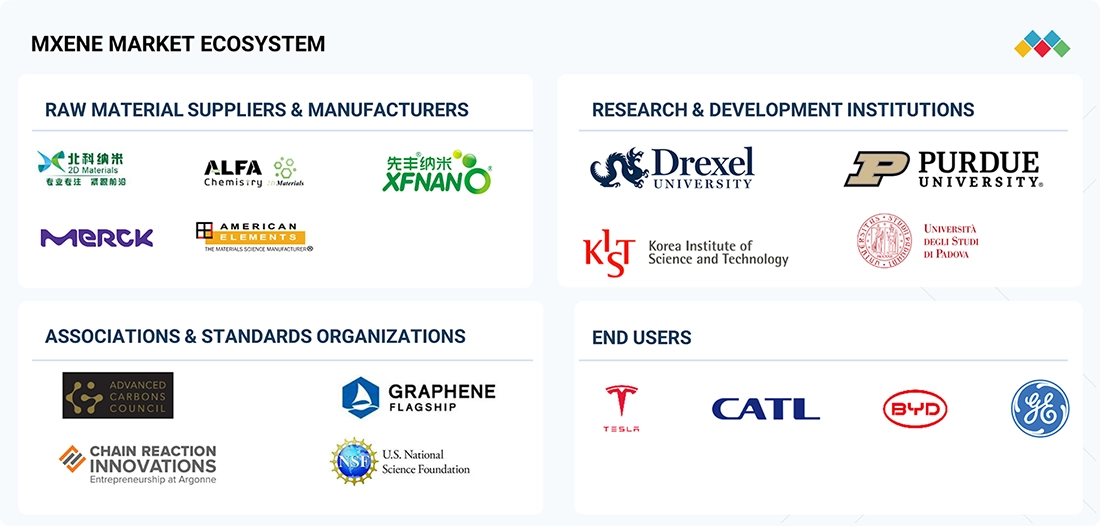
Logos and trademarks shown above are the property of their respective owners. Their use here is for informational and illustrative purposes only.
MARKET SEGMENTS
Source: Secondary Research, Interviews with Experts, MarketsandMarkets Analysis
MXene Market, By Type
Ti-based MXenes dominate the market because they offer high electrical conductivity, chemical stability, and ease of processing. These properties make them suitable for major applications, including batteries, supercapacitors, sensors, and EMI shielding.
MXene Market, By Production Method
By production method, electrochemical etching is the fastest-growing because it is safer, more controllable, and more scalable than traditional chemical etching. It yields higher material quality and supports large-volume MXene production for commercial applications.
MXene Market, By Form
The powder form of MXene dominates the market because it is easy to store, transport, and integrate into coatings, inks, electrodes, and composites. This makes it suitable for a wide range of industrial and research-based MXene applications.
MXene Market, By End User
The energy storage end user segment is growing fastest due to rising demand for high-performance batteries and supercapacitors. MXenes improve charge capacity, conductivity, and cycle life, making them attractive for electric vehicles and grid energy storage systems.
REGION
Asia Pacific is expected to be the fastest-growing region across the global MXene market during the forecast period
Asia Pacific is expected to grow at the fastest CAGR in the MXene market, driven by strong demand from battery manufacturing, electronics, and advanced materials industries across China and India. The region benefits from high investments in electric vehicles, energy storage, and semiconductor manufacturing, which are key application areas for MXenes. In addition, the presence of key regional suppliers, including Beijing Beike New Material Technology (China), Shanghai Hegi Chemical Technology Co., Ltd. (China), and Epoch Material Co., Ltd. (India), is accelerating commercialization and broader adoption of MXene-based materials.
MXENE MARKET: COMPANY EVALUATION MATRIX
In the global MXene companies matrix, Beijing Beike New Material Technology and Merck (Star) lead with a strong market presence and a broad MXene product portfolio, driving large-scale adoption across multiple industries, including energy storage, electronics and semiconductors, automotive, aerospace and defense, healthcare and life sciences, water and environmental services, and industrial manufacturing. Otto Chemie Pvt. Ltd. (Emerging Leader) is strengthening its market position through specialized MXene materials for targeted applications such as energy storage research, advanced electronic components, and industrial material development. This focus on application-specific offerings supports growing adoption in niche segments and contributes to the company’s expanding role in the global MXene market.
Source: Secondary Research, Interviews with Experts, MarketsandMarkets Analysis
KEY MARKET PLAYERS
- Beijing Beike New Material Technology (China)
- Merck (Germany)
- Alfa Chemistry (US)
- American Elements (US)
- XFNANO (China)
- Japan Material Technologies Corporation (Japan)
- ACS Material, LLC (US)
- 2D Semiconductors (US)
- Otto Chemie Pvt. Ltd. (US)
- SixCarbon Technology (China)
WHAT IS IN IT FOR YOU: MXENE MARKET REPORT CONTENT GUIDE
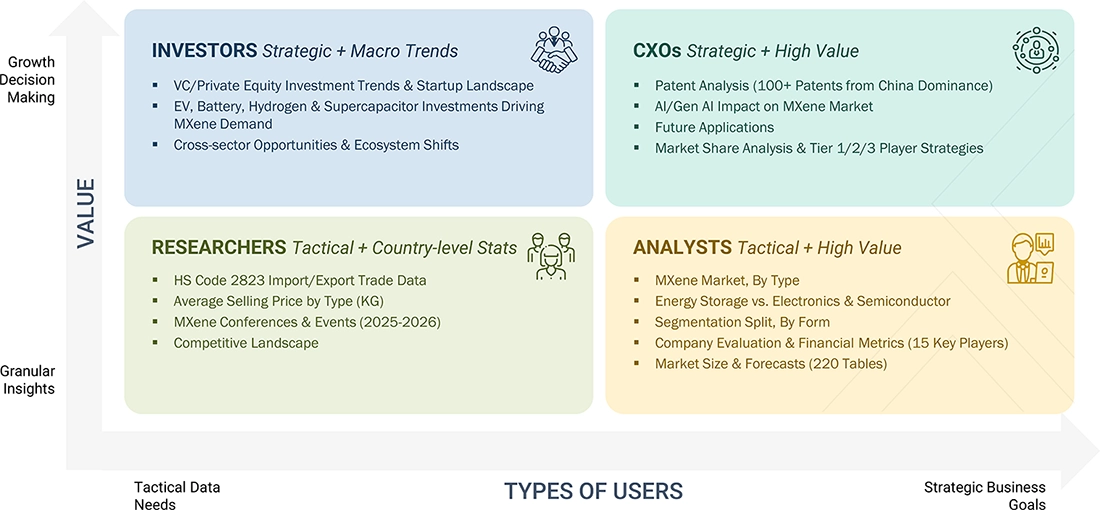
DELIVERED CUSTOMIZATIONS
We have successfully delivered the following deep-dive customizations:
| CLIENT REQUEST | CUSTOMIZATION DELIVERED | VALUE ADDS |
|---|---|---|
| Energy Storage Material Manufacturer |
|
|
| Water Purification Technology Developer |
|
|
| EMI Shielding Solutions Provider |
|
|
RECENT DEVELOPMENTS
- July 2026 : Chinese Academy of Sciences (CAS) developed an electric-field strategy that significantly boosts the sensitivity of bimetallic MXene-based SERS sensors. The approach dynamically tunes electronic structure and carrier distribution to enhance both charge transfer and electromagnetic effects. The sensors achieved an ultra-low detection limit of 10?¹³ M for rhodamine 6G, delivering a three-order-of-magnitude sensitivity improvement. The technology offers an electrically programmable route to high-performance, non-metal SERS sensing. The innovation could advance chemical sensing, environmental monitoring, and biomedical diagnostics.
- July 2026 : Researchers developed CNT@Ag-MXene/EG, a multilayered sensing composite engineered for high durability and corrosion resistance under mechanical strain. The material combines carbon nanotubes, silver nanoparticles, MXene, and expanded graphite to deliver conductivity, flexibility, and structural strength. It maintained stable electrical performance through thousands of loading cycles while resisting corrosion from challenging environments. The technology is designed for reliable, long-term strain sensing in wearable electronics, health monitoring, and soft robotics.
- March 2026 : Drexel University developed MXene nanoscrolls, transforming 2D MXene sheets into highly conductive 1D tubular structures. The scalable technology creates open “highways” for faster ion and molecule transport, improving conductivity and material performance. MXene nanoscrolls can enhance batteries, biosensors, gas sensors, electrochemical capacitors, and wearable electronics. Their strength and conductivity also make them promising for smart textiles, flexible devices, and advanced composites. The technology could further enable flexible superconducting films, interconnects, and quantum sensors.
- January 2026 : Researchers developed ultra-wideband MXene antennas for next-generation millimeter-wave wireless communication. The antennas use highly conductive MXene materials to deliver wide bandwidth, strong radiation performance, and compact designs. The technology supports high-frequency communication while offering flexibility and lightweight construction. Ultra-wideband MXene antennas could enable faster, more efficient connectivity for 5G/6G networks and advanced wireless devices. The innovation strengthens the potential of MXene materials for next-generation communication systems.
- January 2026 : Drexel University and Seoul National University developed fully stretchable MXene-based OLEDs that maintain high brightness and efficiency under mechanical deformation. The transparent electrodes combine MXene with silver nanowires to improve conductivity, stretchability, and charge injection. The displays can stretch up to 1.6 times their original size while retaining strong luminescence. The technology also demonstrated improved durability, retaining 83% of light-production efficiency after 100 strain cycles.
Table of Contents
 Exclusive indicates content/data unique to MarketsandMarkets and not available with any competitors.
Methodology
The research process for this study involved the systematic gathering, recording, and analysis of data on customers and companies operating in the MXene market. This process involved the extensive use of secondary sources, directories, and databases (Factiva and Oanda) to identify and collect valuable information for the comprehensive, technical, market-oriented, and commercial study of the MXene market. In-depth interviews were conducted with primary respondents, including experts from core and related industries, as well as preferred manufacturers, to obtain and verify critical qualitative and quantitative information and assess growth prospects. Key players in the MXene market were identified through secondary research, and their market rankings were determined through a combination of primary and secondary research. This research involved studying the annual reports of top players and conducting interviews with key industry experts, including CEOs, directors, and marketing executives.
Secondary Research
Various sources were utilized in the secondary research process to identify and collect information relevant to this study. These include company annual reports, press releases, investor presentations, white papers, technology journals, certified publications, articles by recognized authors, directories, and databases. Secondary research was primarily used to gather key information about the industry’s value chain, the total pool of market players, market classification according to industry trends at the most detailed level, regional markets, and key developments from both market and technology-oriented perspectives.
Primary Research
Primary research was also conducted to identify the segmentation types, key players, competitive landscape, and key market dynamics, including drivers, restraints, opportunities, challenges, and industry trends, as well as the key strategies adopted by players operating in the MXene market. Extensive qualitative and quantitative analyses were performed on the complete market engineering process to list key information and insights throughout the report.
Extensive primary research has been conducted following the acquisition of knowledge about the MXene market scenarios through secondary research. Several primary interviews were conducted with experts from the demand (end user industry and region) and supply side (type, production method, form) across four major geographic regions: North America, Europe, Asia Pacific, and RoW. Approximately 60% and 40% of the primary interviews were conducted from the supply and demand sides, respectively. These primary data have been collected through questionnaires, emails, and telephonic interviews.
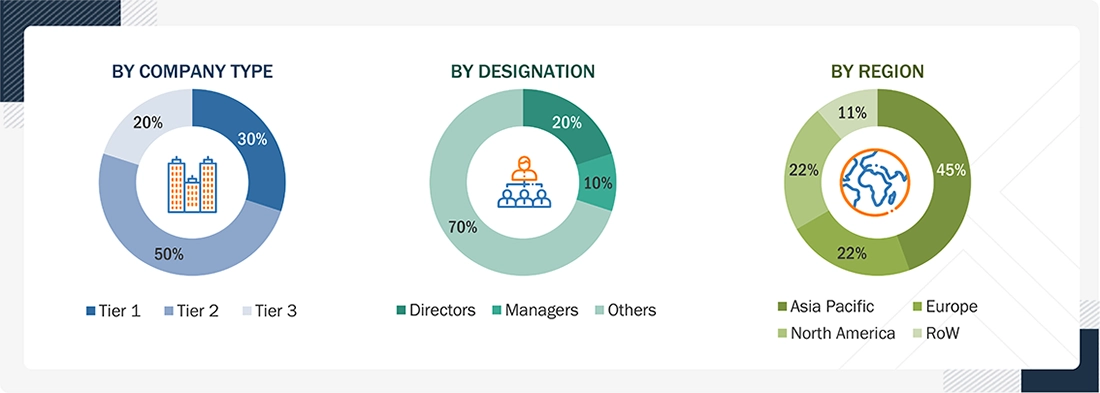
Notes: The three tiers of companies have been defined based on their total/segmental revenue as of 2025: Tier 1 = > USD 1 billion, Tier 2 = USD 1 billion–USD 500 million, and Tier 3 = < USD 500 million.
To know about the assumptions considered for the study, download the pdf brochure
Market Size Estimation
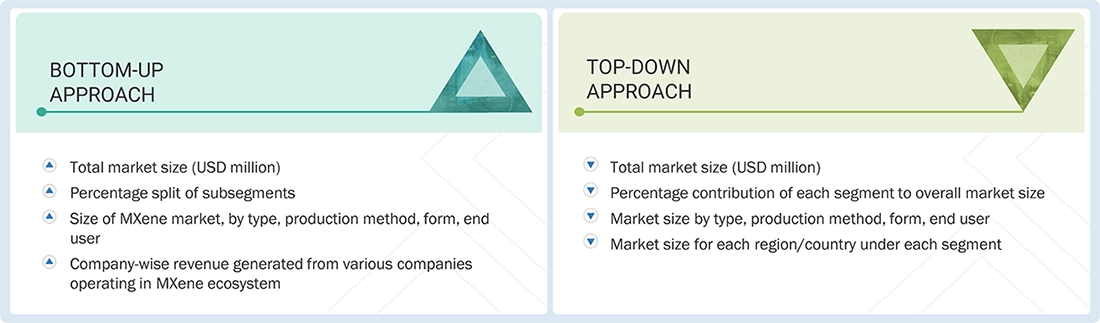
Both the top-down and bottom-up approaches have been used to estimate and validate the size of the small satellite market.
In the complete market engineering process, top-down and bottom-up approaches and several data triangulation methods were implemented to estimate and validate the size of the MXene market and various other dependent submarkets. Key players in the market were identified through secondary research, and their market share in the respective regions was determined through a combination of primary and secondary research. This entire research methodology involved studying the annual and financial reports of the top players, as well as conducting interviews with experts (including CEOs, VPs, directors, and marketing executives) to gather key insights (both quantitative and qualitative).
All percentage shares, splits, and breakdowns were determined using secondary sources and verified through primary sources. All the possible parameters that affect the markets covered in this research study were accounted for, viewed in detail, verified through primary research, and analyzed to obtain the final quantitative and qualitative data. This data was consolidated and supplemented with detailed inputs and analysis from MarketsandMarkets and presented in this report.
MXene Market : Top-Down and Bottom-Up Approach
Data Triangulation
After determining the overall market size through the estimation process, as explained above, the total market was divided into several segments and subsegments. To complete the overall market engineering process and obtain precise statistics for all segments and subsegments, market breakdown and data triangulation procedures were employed, as applicable. The data was triangulated by studying various factors and trends from the demand and supply sides. Additionally, the market has been validated using both top-down and bottom-up approaches.
Market Definition
The MXene market covers the global ecosystem involved in development, production, processing, and commercialization of MXenes. MXenes are two-dimensional inorganic materials derived from MAX phases and are valued for their high electrical conductivity, tunable surface chemistry, and large surface area.
The market is segmented by type such as Ti-based MXenes and V-based MXenes, with additional categories including Nb-based and Mo-based MXenes. Production methods include HF chemical etching and fluoride-free etching, while electrochemical etching represents another key method. The market is also segmented by form, including powder MXenes and wet paste MXenes. MXenes are adopted across energy storage and electronics industries, with growing use in automotive and aerospace applications. Healthcare and industrial manufacturing represent additional end users, while advances in scalable production and material performance optimization continue to support market growth across regions.
Key Stakeholders
- Raw material and MAX phase precursor suppliers
- Chemical etchants and process reagent suppliers
- MXene material manufacturers and producers
- Chemical distributors and specialty material suppliers
- Formulators and application solution integrators
- Equipment and processing technology providers
- End-user industries and OEMs
- Research institutions, academia, and innovation centers
Report Objectives
- To describe and forecast the size of the MXene market, by type, production method, form, and end user industry, in terms of value
- To describe and forecast the market size for four major regions—North America, Europe, Asia Pacific, and RoW, in terms of value
- To describe and forecast the market size, by type, in terms of volume
- To provide a detailed overview of the MXene technologies and throughputs
- To provide detailed information regarding major factors, such as drivers, restraints, opportunities, and challenges, influencing the market growth
- To provide ecosystem analysis, case study analysis, patent analysis, technology analysis, value chain analysis, trends/disruptions impacting customers' business, the impact of AI/Gen AI, key conferences and events, pricing analysis, Porter’s five forces analysis, 2025 US tariff impact, and regulations pertaining to the market under study
- To strategically analyze micromarkets with regard to individual market trends, growth prospects, and contributions to the total market
- To strategically profile key players and comprehensively analyze their market position in terms of ranking and core competencies, along with a detailed competitive landscape for the market leaders
- To analyze major growth strategies, such as product launches, expansions, joint ventures, and acquisitions, adopted by key market players to enhance their market position
- To describe macroeconomic factors impacting market growth in each region
- To analyze the AI/Gen AI impact on the MXene market
- To analyze the 2025 US tariff impact on the MXene market
Available customizations:
With the given market data, MarketsandMarkets offers customizations according to the company’s specific needs. The following customization options are available for the report:
Key Questions Addressed by the Report
What is the current size of the MXene market?
The global MXene market is valued at approximately USD 0.05 billion in 2026 and is expected to reach USD 0.29 billion by 2032. (MarketsandMarkets)
What is the expected CAGR of the MXene market?
The market is projected to grow at a CAGR of 35.6% during 2026–2032, making it one of the fastest-growing advanced materials markets. (MarketsandMarkets)
What is the primary growth driver for the MXene market?
Rising adoption of MXenes in lithium-ion batteries, supercapacitors, and energy storage systems due to their high electrical conductivity and large surface area is the key growth driver. (MarketsandMarkets)
Which industry is expected to witness the fastest growth in MXene adoption?
The energy storage industry is expected to record the highest growth, with a projected CAGR of 40.6% during the forecast period. (MarketsandMarkets)
Which region is expected to grow the fastest in the MXene market?
Asia Pacific is projected to be the fastest-growing regional market, with an estimated CAGR of 37.1% through 2032. (MarketsandMarkets)
Which MXene type dominates the market?
Titanium-based (Ti-based) MXenes dominate the market due to their superior electrical conductivity, chemical stability, and suitability for energy storage and EMI shielding applications. (MarketsandMarkets)
What are the major trends shaping the MXene market?
Key trends include increasing use in EMI shielding, flexible electronics, sensors, conductive coatings, and next-generation energy storage devices. (MarketsandMarkets)
Which companies are leading the global MXene market?
Major players include Merck, American Elements, Alfa Chemistry, Beijing Beike New Material Technology, XFNANO, ACS Material, 2D Semiconductors, and SixCarbon Technology. (MarketsandMarkets)
Which production method holds the largest market share?
HF Chemical Etching remains the dominant production method because of its high yield, structural precision, and compatibility with large-scale manufacturing. (MarketsandMarkets)
What does the MarketsandMarkets MXene report cover?
The report includes 260 pages, 220 tables, market sizing, forecasts through 2032, competitive landscape, regional analysis, trends, drivers, opportunities, and segmentation by type, form, production method, and end-user industry. (MarketsandMarkets)


Personalize This Research
- Triangulate with your Own Data
- Get Data as per your Format and Definition
- Gain a Deeper Dive on a Specific Application, Geography, Customer or Competitor
- Any level of Personalization
Let Us Help You
- What are the Known and Unknown Adjacencies Impacting the MXene Market
- What will your New Revenue Sources be?
- Who will be your Top Customer; what will make them switch?
- Defend your Market Share or Win Competitors
- Get a Scorecard for Target Partners

Custom Market Research Services
We Will Customise The Research For You, In Case The Report Listed Above Does Not Meet With Your Requirements
Get 10% Free CustomisationTESTIMONIALS

Tetsuya Ohhira
Business Development Manager-Technology Business
Nikon Corporation,
Leading Japanese MNC specializing in optics and imaging productswww.nikon.com
MarketsandMarkets™ response
is quick. Their attitude is flexible and positive. Analyst Insights are globally considered and
significant. Client Services quickly respond to our inquiry and demand. Their wide range of global
surveys help us make our strategic plan.
We hope Knowledge Store will be easier to search
for a report.
VP - Marketing & Business Development
Leading Provider of Process Control Solutions
We engaged with MarketsandMarkets on a study to perform an analysis and recommend a Go-To-Market strategy for metrology and process control in the semiconductor market. The study was tailored to our targets and needs with well-defined milestones. Our overall experience with the MarketsandMarkets team was very good throughout the project in all aspects including the analysis methodologies used, the quality and depth of primary and secondary data sets, the professionalism and flexibility of the team and the ability to meet the target schedule and milestones. We want to thank MarketsandMarkets team for a job well done.
- US MXene Market
- Canada MXene Market
- Mexico MXene Market
- Germany MXene Market
- UK MXene Market
- France MXene Market
- China MXene Market
- Japan MXene Market
- India MXene Market
- South Korea MXene Market
- Rest Of Europe MXene Market
- Rest Of Asia Pacific MXene Market
- South Africa MXene Market
- GCC MXene Market
- Argentina MXene Market
- Brazil MXene Market
- Rest Of South America MXene Market






Growth opportunities and latent adjacency in MXene Market