North America Critical Infrastructure Protection Market

North America Critical Infrastructure Protection Market by Solution Type (IAM, Firewall & VPN, SIEM, Antivirus/Antimalware), Service (Risk & Threat Assessment, Training & Education, Managed), Security Type (Cloud, Application) - Forecast to 2030




OVERVIEW
Source: Secondary Research, Interviews with Experts, MarketsandMarkets Analysis
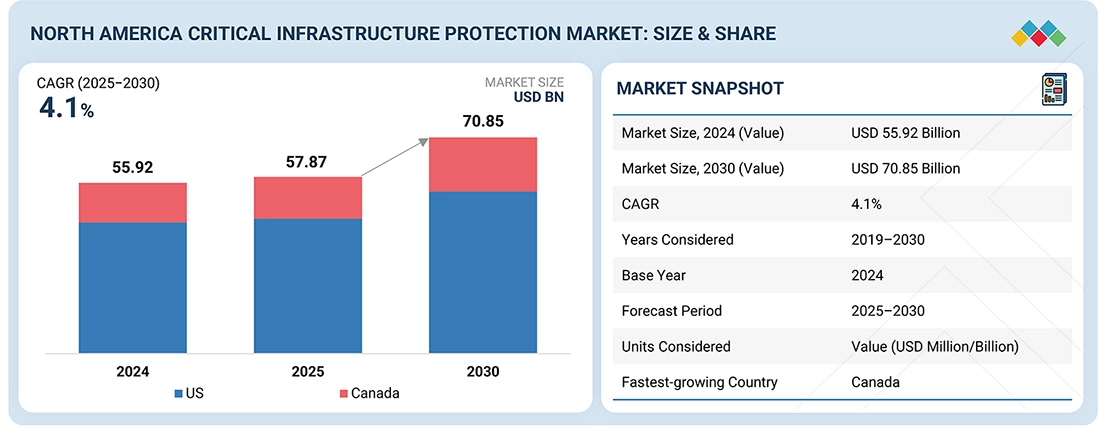
The critical infrastructure protection (CIP) market size in North America is projected to grow from USD 57.87 billion in 2025 to USD 70.85 billion by 2030, at a compound annual growth rate of 4.1% during the forecast period. The market's growth is supported by the growing need for domestic semiconductor production and the rapid development of hyperscale AI infrastructure. The production centers for new chips require a close integration of physical security and cybersecurity to safeguard intellectual property, cleanroom operations, and the confidentiality of process data. Meanwhile, the large AI data centers are straining power grids, compelling utilities to invest in robust protection of substations and energy networks to avoid interruptions and cascading failures.
KEY TAKEAWAYS
-
BY COUNTRYBy country, Canada is projected to grow at the fastest rate during the forecast period.
-
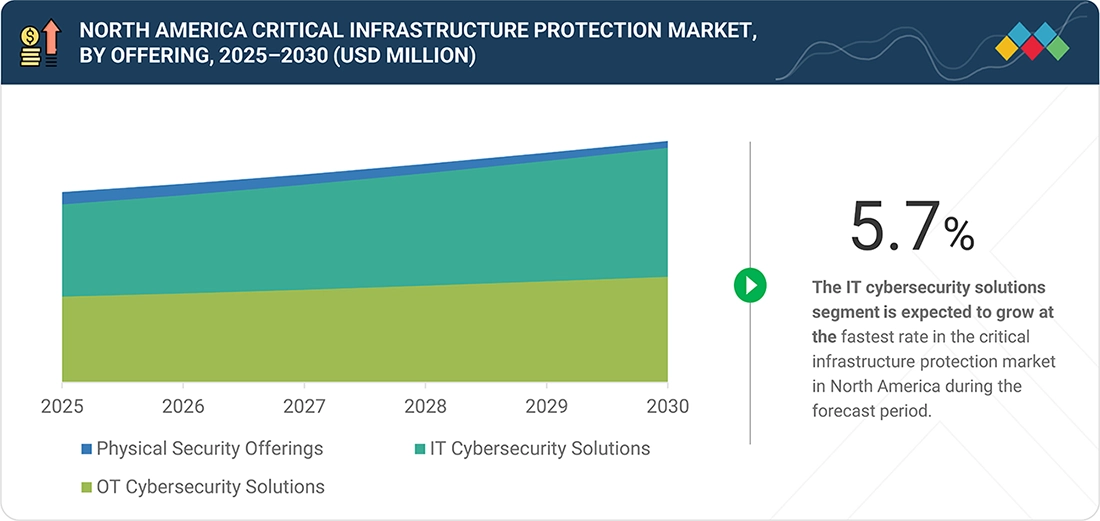
BY OFFERINGBy offering, physical security offerings are projected to lead the CIP market in North America in terms of market share during the forecast period.
-
BY PHYSICAL SECURITY OFFERINGSBy physical security offerings, the perimeter protection segment is projected to lead in terms of growth rate of 5.0%.
-
BY IT CYBERSECURITY SOLUTIONSBy IT cybersecurity solutions, the network and endpoint protection segment is expected to hold the largest market share of 24.1% in 2025.
-
BY OT CYBERSECURITY SOLUTIONSBy OT cybersecurity solutions, the digital twin platforms segment is projected to grow at a higher CAGR of 4.5%.
-
BY VERTICALBy vertical, the telecommunications segment is projected to grow at the highest CAGR during the forecast period.
-
COMPETITIVE LANDSCAPE - KEY PLAYERSIn North America, Honeywell, General Dynamics, and Motorola Solutions dominate the CIP market through integrated physical security, industrial cybersecurity, and resilient communications platforms.
-
COMPETITIVE LANDSCAPE - STARTUPSIn North America, CIP startups such as Achilles, Kloch, and CIPS Security are filling niche security gaps. These companies focus on supply chain risk management, identity-focused protection, and lightweight cybersecurity solutions to operators of critical infrastructure.
With the growth in size of production hubs and power networks, operators are reconsidering how resilience is incorporated into daily operations. The trend in security strategies is towards integrated platforms, where physical access control, surveillance, and cyber monitoring are united under a single operational perspective. Manufacturers of utilities and semiconductors are also focusing on real-time monitoring and localized protection to contain the blast radius in the event of a failure. This practice helps preserve uptime, safeguard sensitive intellectual property, and meet regulatory expectations for the nation's infrastructure security.
TRENDS & DISRUPTIONS IMPACTING CUSTOMERS' CUSTOMERS
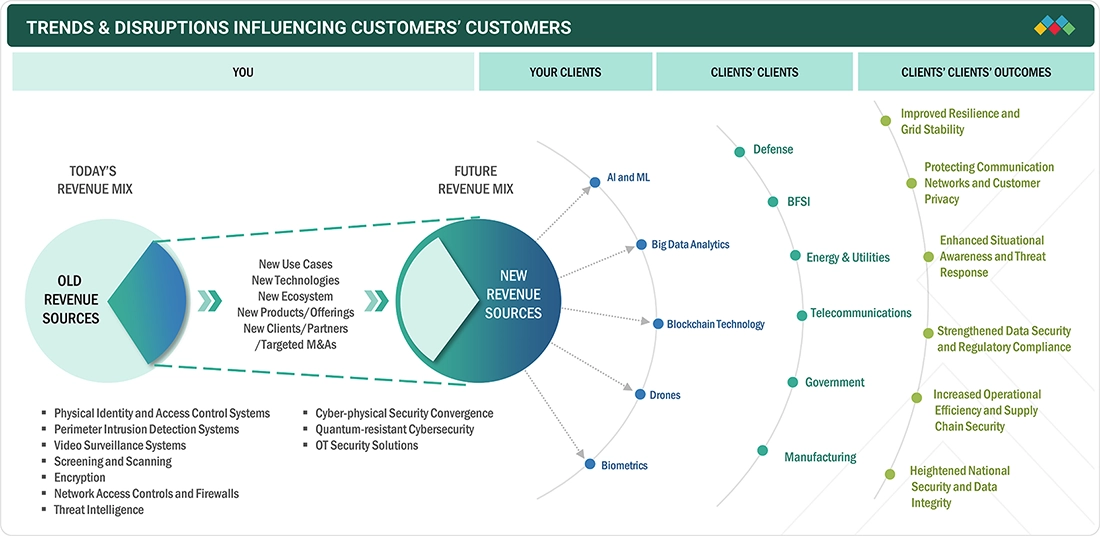
This figure highlights how the critical infrastructure protection market in North America is moving from traditional, hardware-based security models towards an integrated cyber-physical protection model. With the deployment of sophisticated digital technologies across critical sectors, revenue is shifting towards cyber-physical convergence, analytics-based security, and resilient OT solutions. The shift indicates evolving client priorities in energy, defense, government, and manufacturing, where physical security, IT cybersecurity, and OT protection must be coordinated to protect operations, data, and national assets amid emerging risks and regulatory pressures.
Source: Secondary Research, Interviews with Experts, MarketsandMarkets Analysis
MARKET DYNAMICS

Level
-
Domestic semiconductor expansion requiring integrated physical and cybersecurity for production hubs

-
Federal incentives driving enhanced regulatory compliance across vital energy and manufacturing


Level
-
Outdated grid infrastructure limiting the rapid adoption of modernized protective security systems

-
High costs for updating legacy operational technology with modern protections


Level
-
Growing demand for autonomous threat detection within converged cyber-physical environments

-
Collaborative public-private partnerships enhancing regional supply chain security and resilience


Level
-
Sophisticated ransomware targeting vulnerable industrial control systems within critical national services

-
Evolving geopolitical tensions increasing the risk of hybrid cyber-physical infrastructure attacks

Source: Secondary Research, Interviews with Experts, MarketsandMarkets Analysis
Driver: Domestic semiconductor expansion requiring integrated physical and cybersecurity for production hubs
Renewed investment in domestic semiconductor manufacturing facilities, which demand end-to-end protection, is driving the CIP market in North America. These high-value manufacturing centers are a combination of delicate intellectual property and complicated physical activities. The 2024 Industrial Cybersecurity Insights report released by Honeywell found that semiconductor plants are focusing on tightly integrated physical security, access management, and OT cyber monitoring to minimize the threat of sabotage, espionage, and operational disruption in cleanrooms and fabrication lines.
Restraint: Outdated grid infrastructure limiting rapid adoption of modernized protective security systems
One of the limiting factors of the CIP market in North America is the use of old grid infrastructure that was not built to support modern digital security. Numerous substations and transmission resources do not support advanced monitoring and automation. A report by the US Department of Energy (2024) indicates that utilities are still struggling to incorporate modern cyber and physical security into legacy systems, slowing deployment and making upgrades more complex.
Opportunity: Growing demand for autonomous threat detection within converged cyber-physical environments
Operators need independent threat detection that can detect abnormal behavior across cameras, access systems, networks, and control environments in real time. According to Motorola Solutions’ 2025 Critical Infrastructure Security Trends study, infrastructure operators are increasingly adopting analytics-driven platforms to reduce response times and improve situational awareness without expanding security teams.
Challenge: Sophisticated ransomware targeting vulnerable industrial control systems within critical national services
In North America, threat actors are targeting utilities, transportation networks, and manufacturing facilities that cause nationwide downtime. The 2025 Industrial Ransomware Analysis by Dragos states that attackers are targeting weakly segmented OT environments and legacy protocols, which strain service availability and force operators to choose between security measures and operational stability.
NORTH AMERICA CRITICAL INFRASTRUCTURE PROTECTION MARKET: COMMERCIAL USE CASES ACROSS INDUSTRIES
| COMPANY | USE CASE DESCRIPTION | BENEFITS |
|---|---|---|
 |
Power grid modernization, substation protection, legacy ICS security gaps, remote operations exposure, compliance with NERC CIP, physical and cyber convergence | Improved grid resilience | Real-time threat detection | Reduced outage risk | Regulatory compliance | Secure remote operations |
 |
Utility network segmentation, IT OT convergence risk, insecure remote access, expanding 5G connectivity, limited network visibility | Enhanced network visibility | Reduced attack surface | Secure remote access | Faster incident response | Improved operational uptime |
 |
Defense critical infrastructure protection, classified network security, supply chain cyber risk, advanced persistent threat exposure | Strengthened cyber resilience | Protection against nation-state threats | Secure mission operations | Improved situational awareness |
Logos and trademarks shown above are the property of their respective owners. Their use here is for informational and illustrative purposes only.
MARKET ECOSYSTEM
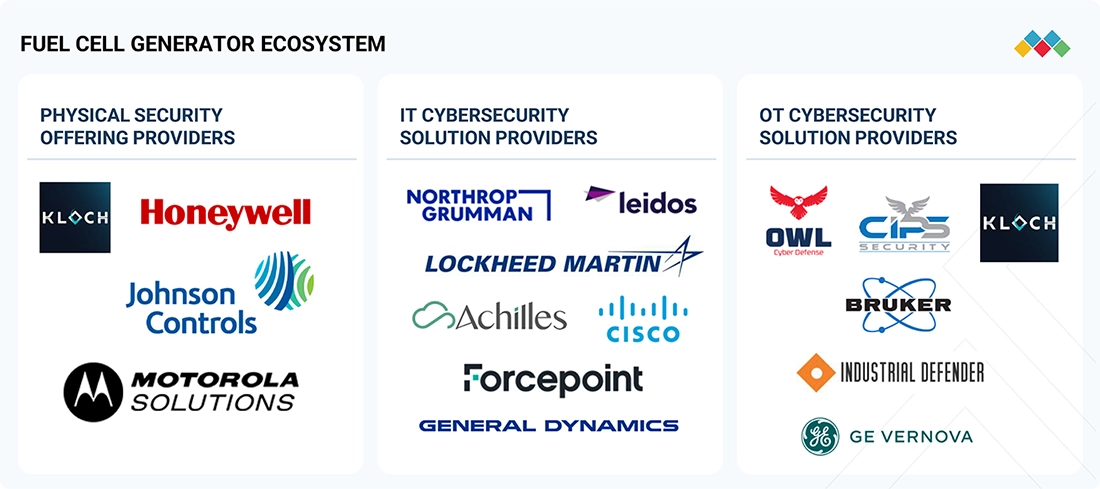
The ecosystem in the CIP market in North America reflects an integrated mix of physical security, IT cybersecurity, and OT cybersecurity providers addressing evolving risk landscapes. The market is anchored by large industrial- and defense-oriented vendors offering surveillance, access control, and mission-critical systems, and enhanced security across networks, endpoints, and industrial settings, delivered by cybersecurity experts. Together, these players enable unified cyber-physical security strategies that support regulatory compliance, operational resilience, and national security objectives across energy, transportation, manufacturing, and public sector infrastructure.
Logos and trademarks shown above are the property of their respective owners. Their use here is for informational and illustrative purposes only.
MARKET SEGMENTS
Source: Secondary Research, Interviews with Experts, MarketsandMarkets Analysis
North America Cybersecurity Market, by Offering
The physical security offerings hold the highest market share because governments and operators are concerned with protecting high-value assets. Energy utilities, data centers, and semiconductor fabs in the US use perimeter security, access control systems, and surveillance systems to avert sabotage and unauthorized access. Federal security mandates that include power grids, transportation hubs, and industrial facilities support these investments.
North America Cybersecurity Market, by Physical Security Offerings
Surveillance and monitoring systems represent the largest segment as continuous visibility is critical for infrastructure safety. In the US and Canada, utilities and transportation authorities deploy video surveillance, sensor-based monitoring, and command centers to secure substations, pipelines, rail corridors, and ports. According to Motorola Solutions industry reports, real time monitoring supports faster incident response and improves coordination between physical security teams and emergency services.
North America Cybersecurity Market, by IT Cybersecurity Solutions
Network and endpoint protection leads the IT cybersecurity segment in terms of market share as critical infrastructure operators manage large, interconnected environments. In the US, federal agencies and utilities secure operational networks against ransomware and advanced threats using intrusion prevention, endpoint detection, and secure remote access.
North America Cybersecurity Market, by OT Cybersecurity Solutions
According to Cisco security research, network-centric defenses remain foundational for protecting hybrid IT and operational systems supporting essential services. OT and ICS security platforms hold the largest share as utilities and manufacturers protect industrial control systems. In the US, electric and water utilities deploy OT security platforms to monitor SCADA traffic, detect anomalies, and prevent unauthorized access. According to Dragos and Honeywell industry briefings in 2024, centralized OT visibility improves operational safety and supports compliance with federal critical infrastructure security guidelines.
North America Cybersecurity Market, by Vertical
The commercial sector accounts for the largest share, with private operators managing essential infrastructure assets. In the US, data center operators, logistics hubs, and industrial campuses invest heavily in integrated physical and cyber security. Semiconductor manufacturers supported by the CHIPS Act prioritize protecting facilities and digital systems to reduce operational disruption, safeguard intellectual property, and maintain production continuity.
REGION
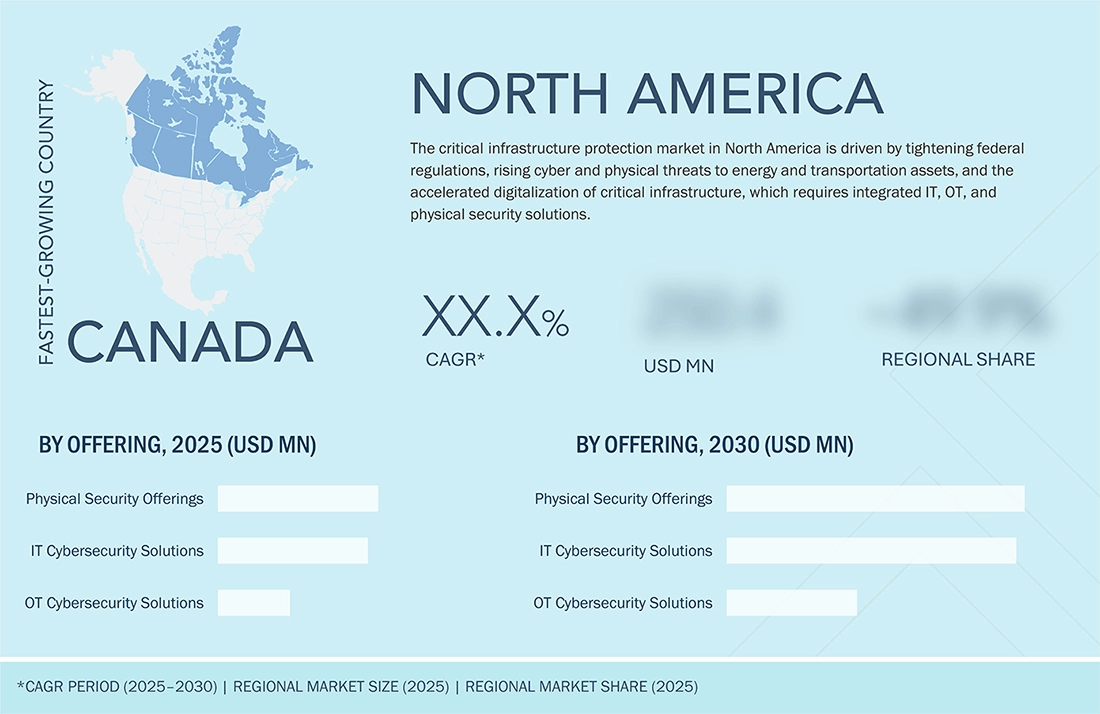
Canada to be fastest-growing country in the critical infrastructure protection market in North America during the forecast period.
Canada is emerging as the fastest-growing country in the CIP market in North America, supported by rising cyber risks and strong regulatory action. Federal initiatives, such as the National Cybersecurity Strategy and investments in energy transition, smart grids, and transportation modernization, are driving demand. Stricter compliance mandates for utilities and public services are accelerating the adoption of integrated physical and cyber protection solutions.
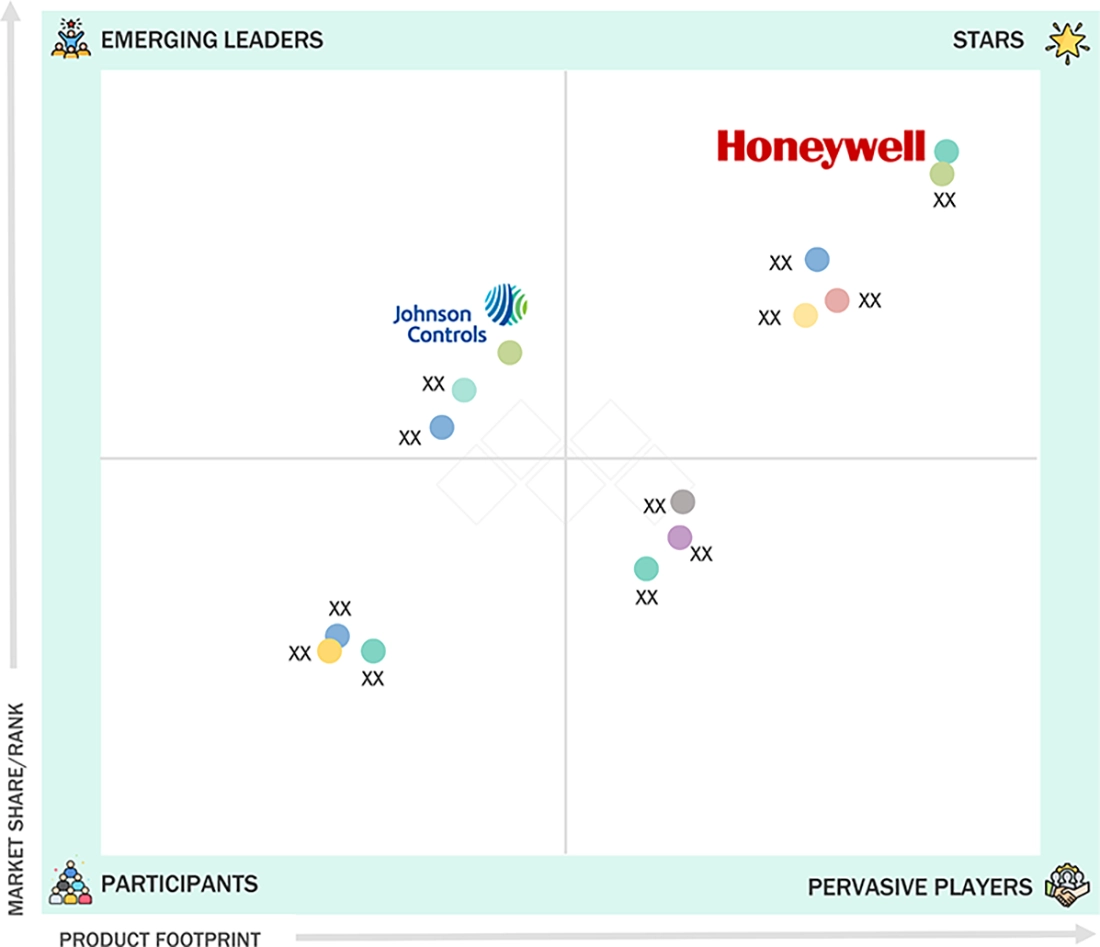
NORTH AMERICA CRITICAL INFRASTRUCTURE PROTECTION MARKET: COMPANY EVALUATION MATRIX
The critical infrastructure protection market in North America features a strong presence of established industrial technology leaders alongside specialized security providers. Companies such as Johnson Controls and Honeywell play a central role by combining physical security, building management, and industrial control expertise with cybersecurity capabilities. Their integrated portfolios support the protection of energy facilities, manufacturing plants, transportation hubs, and smart infrastructure, helping operators address rising security risks while meeting regulatory and operational resilience requirements across the region.
Source: Secondary Research, Interviews with Experts, MarketsandMarkets Analysis
KEY MARKET PLAYERS
- Honeywell (US)
- Lockheed Martin (US)
- General Dynamics (US)
- Northrop Grumman (US)
- Johnson Controls (US)
- Motorola Solutions (US)
- Owl Cyber Defense (US)
- Kloch (US)
- Achilles (US)
- CIPS Security (US)
MARKET SCOPE
| REPORT METRIC | DETAILS |
|---|---|
| Market Size, 2024 (Value) | USD 55.92 Billion |
| Market Size, 2030 (Value) | USD 70.85 Billion |
| Growth Rate | CAGR of 4.1% from 2025 to 2030 |
| Years Considered | 2019–2030 |
| Base Year | 2024 |
| Forecast Period | 2025–2030 |
| Units Considered | Value (USD Million/Billion) |
| Report Coverage | Revenue Forecast, Company Ranking, Competitive Landscape, Growth Factors, and Trends |
| Segments Covered |
|
| Countries Covered | US, Canada |
WHAT IS IN IT FOR YOU: NORTH AMERICA CRITICAL INFRASTRUCTURE PROTECTION MARKET REPORT CONTENT GUIDE
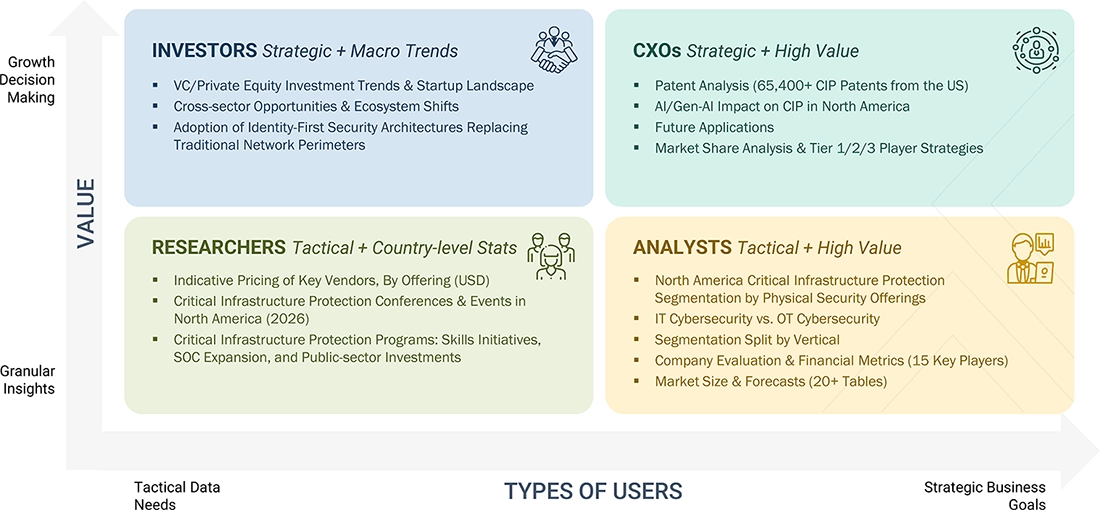
DELIVERED CUSTOMIZATIONS
We have successfully delivered the following deep-dive customizations:
| CLIENT REQUEST | CUSTOMIZATION DELIVERED | VALUE ADDS |
|---|---|---|
| Leading Solution Provider (US) | Product Analysis: Comprehensive CIP solution matrix benchmarking leading North American vendors across physical security, IT cybersecurity, and OT security. The analysis covers surveillance and access control, network and endpoint protection, OT and ICS security platforms, identity management, SIEM, XDR, threat intelligence, and Zero Trust. It also evaluates deployment readiness across on-premises, hybrid, and regulated cloud environments. | The analysis delivers clear visibility into vendor positioning, platform depth, and integration maturity across physical and cyber domains. It supports strategic investment decisions, capability gap assessment, and roadmap planning. These insights help organizations align CIP modernization programs with regulatory mandates, grid resilience requirements, and national security priorities across North America. |
RECENT DEVELOPMENTS
- December 2025 : Honeywell expanded its industrial cybersecurity portfolio for North American critical infrastructure by enhancing secure remote access and OT network monitoring capabilities for energy and utilities operators.
- October 2025 : Lockheed Martin introduced upgraded cyber resilience solutions for defense and civilian infrastructure programs, focusing on zero-trust architectures and secure data sharing across mission-critical networks.
- July 2025 : General Dynamics strengthened its cyber and physical security integration offerings for government and transportation infrastructure, supporting real-time threat detection and incident response.
- April 2025 : Northrop Grumman launched advanced cyber protection capabilities for power grid and aerospace infrastructure, emphasizing secure edge protection and resilience against state-sponsored attacks.
- March 2025 : Cisco expanded its critical infrastructure security solutions in North America with improved network visibility, identity-based access controls, and threat analytics tailored for utilities and industrial operators.
Table of Contents
 Exclusive indicates content/data unique to MarketsandMarkets and not available with any competitors.
Methodology
The study involved estimating the current North America Critical Infrastructure Protection (CIP) market size. Exhaustive secondary research was done to collect information on the North America Critical Infrastructure Protection market industry. The next step was to validate these findings, assumptions, and sizing with industry experts across the value chain using primary research. Different approaches, such as top-down and bottom-up, were employed to estimate the total market size. Thereafter, the market breakup and data triangulation procedures were used to estimate the market size of the segments and subsegments of the North America Critical Infrastructure Protection market.
Secondary Research
The market for companies offering North America Critical Infrastructure Protection solutions and services is determined by secondary data available through paid and unpaid sources, analyzing the product portfolios of the major companies in the ecosystem, and rating the companies by their performance and quality. Various sources were referred to in the secondary research process to identify and collect information for this study. The secondary sources include annual reports, press releases, investor presentations of companies, white papers, journals, certified publications, and articles from recognized authors, directories, and databases.
In the secondary research process, various secondary sources were referred to identify and collect information related to the study. Secondary sources included annual reports, press releases, and investor presentations of North America Critical Infrastructure Protection market vendors, forums, certified publications, and whitepapers. The secondary research was used to obtain essential information on the industry’s value chain, the total pool of key players, market classification, and segmentation from the market and technology-oriented perspectives.
Primary Research
In the primary research process, various supply and demand sources were interviewed to obtain qualitative and quantitative information for this report. The primary sources from the supply side included industry experts, such as Chief Executive Officers (CEOs), Vice Presidents (VPs), marketing directors, technology and innovation directors, and related key executives from various key companies and organizations operating in the North America Critical Infrastructure Protection Market market.
After the complete market engineering (calculations for market statistics, market breakdown, market size estimations, market forecasting, and data triangulation), extensive primary research was conducted to gather information and verify and validate the critical numbers. Primary research was also undertaken to identify the segmentation types, industry trends, competitive landscape of North America Critical Infrastructure Protection Market solutions and services offered by various market players, and fundamental market dynamics, such as drivers, restraints, opportunities, challenges, industry trends, and key player strategies.
In the complete market engineering process, the top-down and bottom-up approaches and several data triangulation methods were extensively used to perform the market estimation and market forecasting for the overall market segments and subsegments listed in this report. Extensive qualitative and quantitative analysis was performed on the complete market engineering process to list the key information/insights throughout the report.
Market Size Estimation
Top-down and bottom-up approaches were used to estimate and validate the size of the North America Critical Infrastructure Protection market and the size of various other dependent sub-segments in the overall North America Critical Infrastructure Protection market. The research methodology used to estimate the market size includes the following details: key players in the market were identified through secondary research, and their market shares in the respective regions were determined through primary and secondary research. This entire procedure included the study of the annual and financial reports of the top market players, and extensive interviews were conducted for key insights from the industry leaders, such as CEOs, VPs, directors, and marketing executives.
All percentage splits and breakdowns were determined using secondary sources and verified through primary sources. All possible parameters that affect the market covered in this research study have been accounted for, viewed in extensive detail, verified through primary research, and analyzed to get the final quantitative and qualitative data. This data is consolidated and added to detailed inputs and analysis from MarketsandMarkets.
Data Triangulation
After arriving at the overall market size using the market size estimation processes explained above, the market was split into several segments and subsegments. The data triangulation and market breakup procedures were employed, wherever applicable, to complete the overall market engineering process and arrive at the exact statistics of each market segment and subsegment. The data was triangulated by studying various factors and trends from the demand and supply sides.
Market Definition
According to MarketsandMarkets, critical infrastructure protection refers to safeguarding essential physical assets, citizens, and critical cyber networks that are vital for public safety, economic stability, and national security. It secures the infrastructure of organizations across critical industries such as energy, food, agriculture, and transportation to protect them against cyber threats, natural disasters, and terrorist attacks.
Stakeholders
- Chief technology and data officers
- Government bodies and public safety agencies
- Project managers
- Developers
- Business analysts
- Quality Assurance (QA)/Test engineers
- North America Critical Infrastructure Protection Market specialists
- North America Critical Infrastructure Protection Market solution and service providers
- Consulting firms
- Third-party vendors
- Investors and venture capitalists
- System integrators (SIs)
Report Objectives
- To define, describe, and forecast the North America Critical Infrastructure Protection market based on offering, vertical, and region
- To analyze the subsegments of the market concerning individual growth trends, prospects, and contributions to the overall North America Critical Infrastructure Protection market
- To provide detailed information related to the primary factors (drivers, restraints, opportunities, and challenges) influencing the growth of the North America Critical Infrastructure Protection market
- To analyze opportunities for stakeholders by identifying high-growth segments of the North America Critical Infrastructure Protection market
- To profile the key players of the North America Critical Infrastructure Protection market and comprehensively analyze their market size and core competencies
- Track and analyze competitive developments, such as new product launches, mergers and acquisitions, partnerships, agreements, and collaborations in the North America Critical Infrastructure Protection market
Available Customizations
With the given market data, MarketsandMarkets offers customizations based on company-specific needs. The following customization options are available for the report:
Geographic Analysis as per Feasibility
- Further breakup of the Asia Pacific market into countries contributing 75% to the regional market size
- Further breakup of the North America market into countries contributing 75% to the regional market size
- Further breakup of the Latin America market into countries contributing 75% to the regional market size
- Further breakup of the Middle East and Africa market into countries contributing 75% to the regional market size
- Further breakup of the Europe market into countries contributing 75% to the regional market size
Company Information
- Detailed analysis and profiling of additional market players (up to 5)
Key Questions Addressed by the Report
What factors are driving the growth of the North America Critical Infrastructure Protection Market?
The North America Critical Infrastructure Protection Market is driven by increasing cyber and physical security threats, modernization of critical infrastructure, adoption of smart technologies, stringent regulatory requirements, and rising investments in protecting essential sectors such as energy, utilities, transportation, healthcare, government, and defense.
Why are governments and enterprises investing in critical infrastructure protection solutions?
Governments and enterprises are investing to enhance operational resilience, safeguard mission-critical assets, strengthen cyber and physical security, improve threat detection and response, maintain regulatory compliance, and ensure uninterrupted delivery of essential public and commercial services.
Which technologies are transforming the North America Critical Infrastructure Protection Market?
The market is being shaped by artificial intelligence (AI), machine learning (ML), Zero Trust security, industrial cybersecurity, IoT security, cloud-based security platforms, video analytics, Security Information and Event Management (SIEM), endpoint detection and response (EDR), and advanced threat intelligence solutions.
What are the latest trends in the North America Critical Infrastructure Protection Market?
Key trends include convergence of physical and cybersecurity, AI-powered threat detection, increased adoption of Zero Trust architectures, protection of operational technology (OT) environments, cloud security modernization, predictive risk analytics, and investments in resilient infrastructure.
What is the market outlook for the North America Critical Infrastructure Protection Market?
The market outlook remains favorable as public and private organizations continue prioritizing investments in infrastructure resilience, cybersecurity modernization, and integrated security solutions to address evolving threat landscapes and support digital transformation initiatives.
Which industries present the strongest opportunities in the North America Critical Infrastructure Protection Market?
Significant opportunities exist across energy and utilities, oil and gas, transportation and logistics, government, defense, healthcare, telecommunications, manufacturing, financial services, and water and wastewater infrastructure, where security and operational continuity are strategic priorities.
What should buyers consider before selecting critical infrastructure protection solutions?
Buyers should evaluate cybersecurity capabilities, physical security integration, interoperability with existing infrastructure, regulatory compliance, scalability, AI-driven analytics, real-time monitoring, incident response capabilities, vendor expertise, and long-term support services.
How do critical infrastructure protection solutions improve operational performance?
These solutions help organizations reduce security risks, improve threat visibility, strengthen business continuity, enhance incident response, minimize operational disruptions, protect critical assets, and support compliance with industry regulations while improving overall resilience.
What challenges are affecting the North America Critical Infrastructure Protection Market?
Major challenges include increasingly sophisticated cyber threats, aging infrastructure, integration of legacy IT and OT systems, workforce shortages, evolving compliance requirements, budget constraints, and securing highly interconnected digital ecosystems.
Why is the North America Critical Infrastructure Protection Market attracting long-term investment?
The market continues to attract long-term investment due to growing cyber risks, increasing infrastructure modernization initiatives, expanding adoption of smart infrastructure technologies, government funding programs, and sustained demand for integrated cyber-physical security solutions across critical industries.


Personalize This Research
- Triangulate with your Own Data
- Get Data as per your Format and Definition
- Gain a Deeper Dive on a Specific Application, Geography, Customer or Competitor
- Any level of Personalization
Let Us Help You
- What are the Known and Unknown Adjacencies Impacting the North America Critical Infrastructure Protection Market
- What will your New Revenue Sources be?
- Who will be your Top Customer; what will make them switch?
- Defend your Market Share or Win Competitors
- Get a Scorecard for Target Partners

Custom Market Research Services
We Will Customise The Research For You, In Case The Report Listed Above Does Not Meet With Your Requirements
Get 10% Free CustomisationTESTIMONIALS






Growth opportunities and latent adjacency in North America Critical Infrastructure Protection Market