North America Mass Notification System Market

North America Mass Notification System Market by Software (Public Warning & Emergency Alerting, Operational & IT Alerting), Hardware (Fire Alarm and Public Address Systems), Application (Critical Event Management, Reporting & Analytics) - Forecast to 2030




OVERVIEW
Source: Secondary Research, Interviews with Experts, MarketsandMarkets Analysis
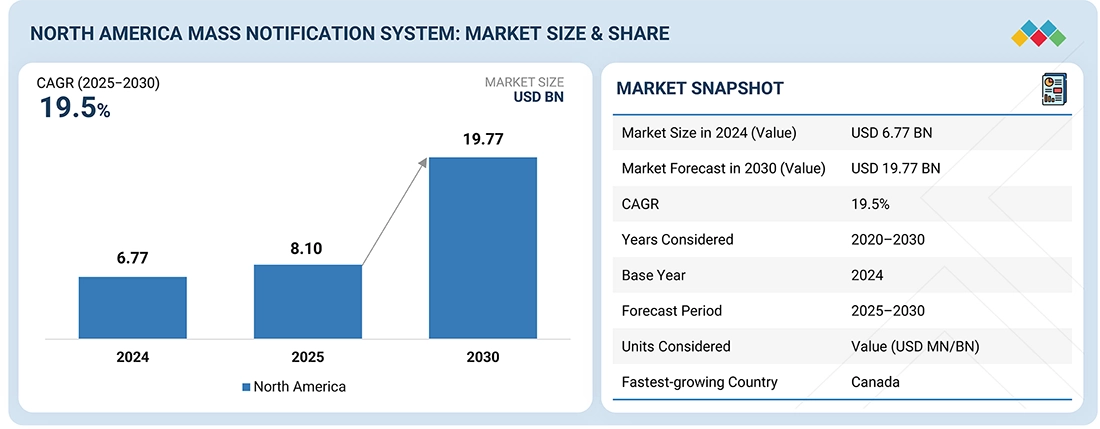
The North America mass notification system (MNS) market is projected to surge from USD 8.10 billion in 2025 to USD 19.77 billion by 2030, expanding at a remarkable 19.5% CAGR. The market is expected to grow steadily as vendors continue to see strong demand from regulated and high-risk sectors. Requirements linked to public safety, NG911 upgrades, and campus security are pushing organizations to invest in mass notification systems. Buyers increasingly prefer platforms that can connect easily with their existing IT tools and building systems. Vendors are also benefiting from rising demand for cloud-based deployments, managed services, and multi-channel alerts that support compliance, reporting, and large-scale operations.
KEY TAKEAWAYS
-
BY OFFERINGBy offering, public address systems hardware is expected to hold 24.3% of the market in 2025.
-
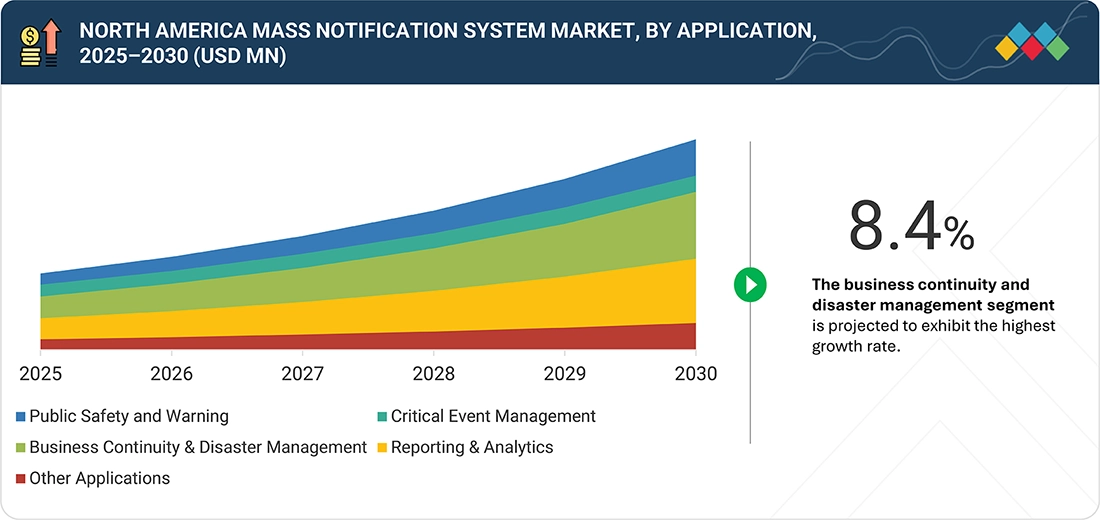
BY APPLICATIONThe business continuity & disaster management application is positioned to showcase the fastest growth rate with 21.1% CAGR during the forecast period.
-
BY COMMUNICATION CHANNELThe voice communication segment is positioned to hold 39.5% of the market in 2025.
-
BY VerticalBy vertical, the healthcare & life sciences segment is expected to witness the fastest growth between 2025 and 2030.
-
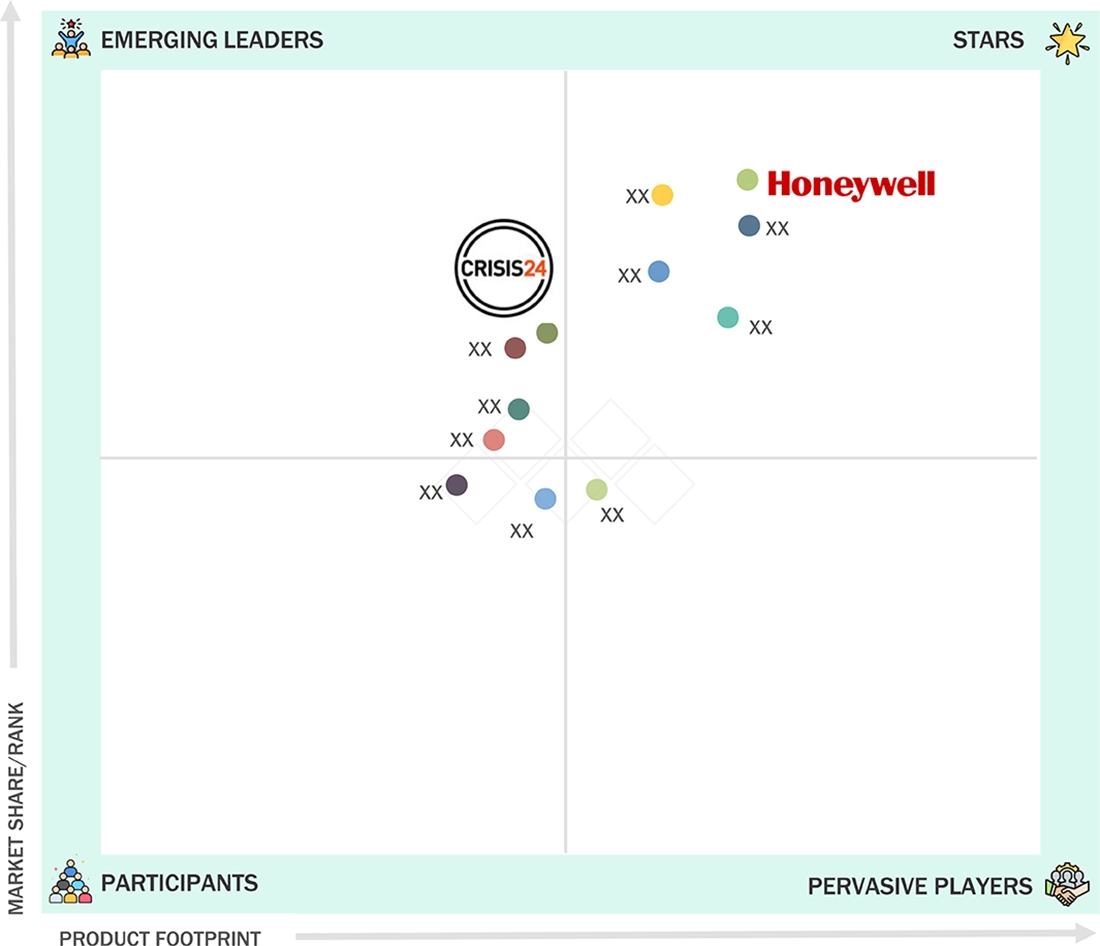
BY COMPETITIVE LANDSCAPEEverbridge, Honeywell, and Motorola Solutions are identified as some of the leading players in the North America Mass Notification market, given their strong market share and product footprint.
-
BY COMPETITIVE LANDSCAPERegroup Mass Notification, and CrisisGo among others, have distinguished themselves among other players by securing strong footholds in specialized niche areas, underscoring their potential as emerging leaders.
The North America mass notification system market is shaped by ongoing technology upgrades, regulatory changes, and high readiness among enterprises and public agencies. Cloud platforms, mobile applications, and location-based alerts are helping improve how quickly and widely messages are delivered. Safety regulations for campuses & public warning systems continue to support adoption. Frequent weather events, cyber threats, and workplace safety risks are encouraging organizations to invest more in emergency communication systems.
TRENDS & DISRUPTIONS IMPACTING CUSTOMERS' CUSTOMERS
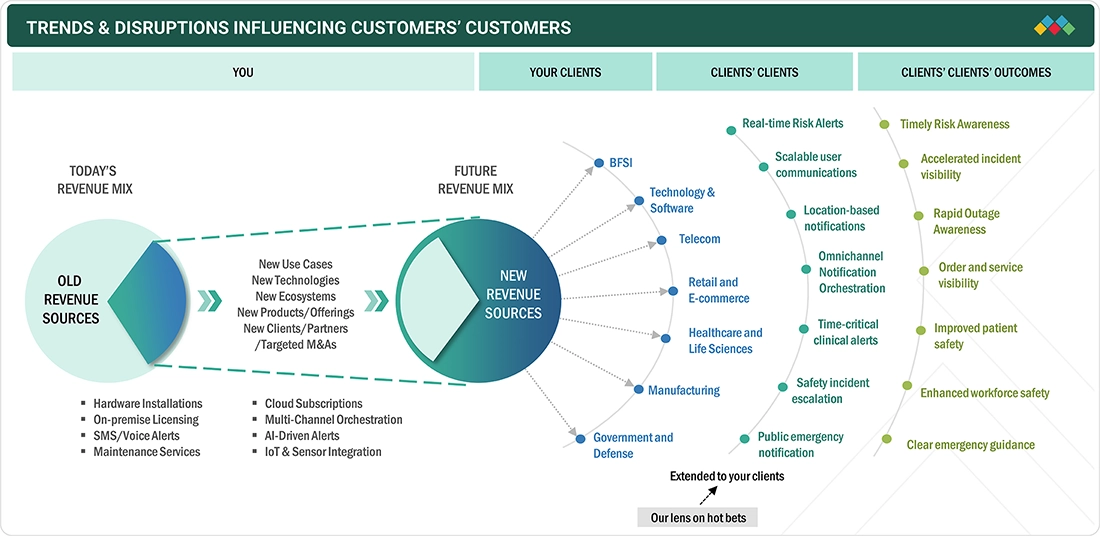
The market is gradually moving away from hardware-driven, one-time-licensing models toward software platforms and ongoing services. Historically, the core revenue source includes core alerting tools and single deployments. Today, growth is expected to come from integrated software platforms, digital communication tools, and managed services that support business continuity and public safety programs. Vendors adjusting their offerings to match changing needs are better placed to build recurring revenue & strengthen long-term customer relationships.
Source: Secondary Research, Interviews with Experts, MarketsandMarkets Analysis
MARKET DYNAMICS

Level
-
Insurance carriers offering premium reductions for certified MNS deployments

-
NG911 modernization pushing CAP/standardized feeds to vendors


Level
-
Procurement rules and multi-jurisdictional approvals lengthening deployment cycles

-
High costs of replacing end-of-life hardware in municipally owned systems


Level
-
Real-time shared dashboards enabling coordinated response across multiple agencies

-
AR/VR training modules for multi-agency incident response rehearsal


Level
-
Scaling delivery during simultaneous multi-jurisdiction emergencies

-
Managing public trust after high-profile false alerts or system failures

Source: Secondary Research, Interviews with Experts, MarketsandMarkets Analysis
Driver: Insurance carriers offering premium reductions for certified MNS deployments
Insurance providers have begun reviewing emergency communication readiness as an important part of their risk assessments. Organizations with certified and well-documented mass notification system deployments are often seen as better prepared to handle incidents. These systems can help reduce response time, limit injuries, and lower damage. Insurers offer better policy terms or lower premiums, which further encourage adoption among enterprises, campuses, and operators of critical infrastructure.
Restraint: Procurement rules and multi-jurisdictional approvals lengthening deployment cycles
Public sector mass notification system (MNS) projects require approvals from several agencies, legal teams, and funding bodies. The US & Canada follow their own procurement & compliance processes, which could possibly slow decision-making. These extensions in timelines increase costs & delay system updates, especially for large deployments that must align multiple places, departments, and emergency services under a shared framework.
Opportunity: Real-time shared dashboards enabling coordinated response across multiple agencies
Some mass notification systems still function within separate departments. This limits visibility during large incidents. Shared command dashboards bring alerts, sensor data, and response updates into a single view. This helps police, fire services, medical teams, and utilities work more closely during emergencies. Better visibility reduces delays and lowers the risk of communication errors. Vendors offering secure, role-based dashboards can support more effective coordination across multiple agencies.
Challenge: Scaling delivery during simultaneous multi-jurisdiction emergencies
During large incidents, alerts may need to reach entire cities or regions at the same time. This leads to sharp increases in message volumes across SMS, voice, and digital channels. Platforms must manage carrier limits, system performance, and backup routing together. Handling these conditions remains challenging. If systems fail to scale, alerts may be delayed, recipients may be confused, and trust in the system can be affected.
NORTH AMERICA MASS NOTIFICATION SYSTEM MARKET: COMMERCIAL USE CASES ACROSS INDUSTRIES
| COMPANY | USE CASE DESCRIPTION | BENEFITS |
|---|---|---|
 |
PostNord needed a faster and more reliable way to reach employees during critical events across its operations. Email and phone calls were not effective in urgent situations. The company implemented the cloud-based crisis management platform from Everbridge. This allowed teams to send pre-set alerts and activate response groups quickly. The platform also supported task assignment and real-time updates through a mobile app, improving coordination during disruptions. | PostNord reduced the time required to notify & organize first responders. Employees received alerts immediately and could confirm receipt through automated follow-ups. Automated workflows reduced manual communication efforts and allowed responders to focus on response activities. Logging and group management features also supported continuity planning across the organization. |
 |
Barry University faced issues with an outdated emergency notification system that was unreliable and required frequent manual effort. With a large number of commuter and residential students, the university needed a more dependable system that worked with existing infrastructure. Alertus deployed a campus-wide solution that included high-power speakers, text-to-speech alerts, and both USB and hardwired panic buttons connected to dispatch systems. | The new Alertus system delivered consistent and reliable emergency notifications across the campus. Automatic system checks and simple testing processes reduced maintenance effort for staff. Students and employees received timely alerts regardless of location. The deployment improved overall campus safety and strengthened confidence in the university’s emergency response capabilities. |
Logos and trademarks shown above are the property of their respective owners. Their use here is for informational and illustrative purposes only.
MARKET ECOSYSTEM
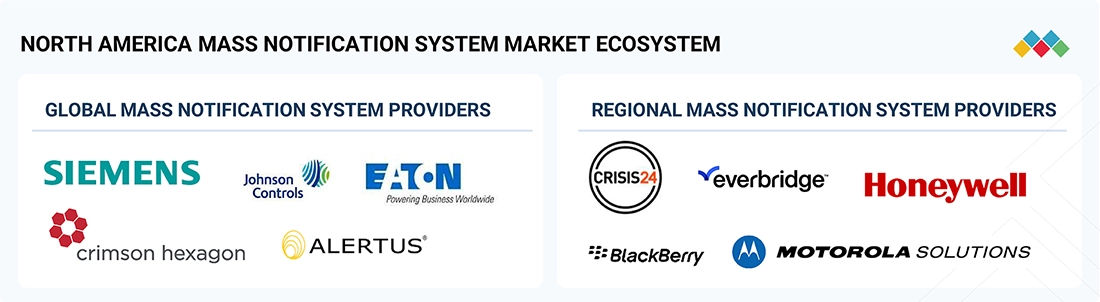
The North America MNS ecosystem includes both global providers and regional specialists, each serving different parts of the emergency communication value chain. Large vendors bring scale, system reliability, and strong links to building and safety infrastructure. Regional players often focus on cloud platforms, public safety workflows, and faster deployments. Together, these vendors support a wide range of users by enabling timely alerts, better coordination, and compliance with evolving safety requirements.
Logos and trademarks shown above are the property of their respective owners. Their use here is for informational and illustrative purposes only.
MARKET SEGMENTS
Source: Secondary Research, Interviews with Experts, MarketsandMarkets Analysis
North America Mass Notification System Market, By Offering
Organizations increasingly prefer software-led solutions that can be deployed quickly, scaled across locations, and updated without major infrastructure changes. These platforms support multiple communication channels, integrate with existing IT and security systems, and provide reporting features required for audits and compliance. As enterprises and public agencies move away from standalone tools and hardware-based systems, software-focused crisis and event notification platforms continue to attract higher spending and wider adoption across regulated and safety-critical environments.
North America Mass Notification System Market, By Communication
Digital communication channels are also seeing strong growth as alerting expands beyond SMS and voice calls. Vendors are investing in mobile applications, desktop alerts & visual displays that can deliver clearer instructions, maps, and updates. The mentioned channels support two-way communication and provide better insight into who received and acknowledged messages. Organizations prefer digital channels as they are easier to manage, less dependent on carriers, and better aligned with existing IT systems.
North America Mass Notification System Market, By Application
Public safety and warning applications are expected to remain the largest part of the North America MNS market in 2025. Government agencies at all levels continue to invest in systems that support emergency alerts, evacuations, and public health messages. National and regional alerting programs help sustain demand. Frequent storms, wildfires, and safety incidents further reinforce the importance of public safety use cases in overall market revenue.
REGION
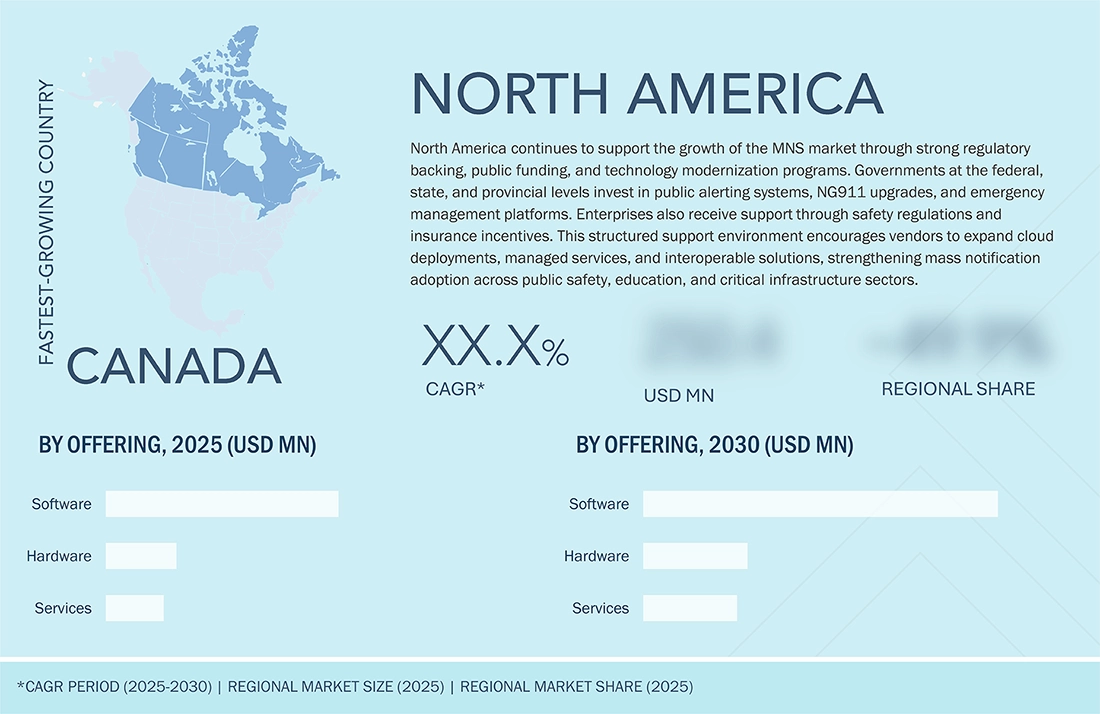
Canada to showcase fastest growth during the forecast period
Canada is expected to register the fastest growth in the North America MNS market. National public alerting programs and increased spending on emergency preparedness are supporting adoption across sectors. Rising incidents of wildfires, floods, and extreme weather are prompting utilities, educational institutions, and local governments to upgrade their notification systems. In response, vendors are expanding cloud-based deployments and working with provincial authorities to address compliance, language, and service requirements.
NORTH AMERICA MASS NOTIFICATION SYSTEM MARKET: COMPANY EVALUATION MATRIX
Honeywell stands out as a leading player in the North America MNS market due to its strong customer base and close integration with building and safety systems. Crisis24 is emerging as a strong contender, supported by its cloud-focused platform and emphasis on critical event management. Continued focus on system integration, analytics, and public sector engagement could help Crisis24 strengthen its position and compete more directly with established leaders.
Source: Secondary Research, Interviews with Experts, MarketsandMarkets Analysis
KEY MARKET PLAYERS
- Everbridge (US)
- Honeywell (US)
- Motorola Solutions (US)
- Blackberry (Canada)
- Singlewire Software (US)
- AlertMedia (US)
- Alertus Technologies (US)
- HipLink (US)
- American Signal Corporation (US)
- ATI Systems (US)
- Finalsite (US)
- Omnilert (US)
- Regroup (US)
- Crisis24 (Canada)
MARKET SCOPE
| REPORT METRIC | DETAILS |
|---|---|
| Market Size in 2024 (Value) | USD 6.77 Billion |
| Market Forecast in 2030 (Value) | USD 19.77 Billion |
| Growth Rate | CAGR of 19.5% during 2025-2030 |
| Years Considered | 2020-2030 |
| Base Year | 2024 |
| Forecast Period | 2025-2030 |
| Units Considered | Value (USD Million/Billion) |
| Report Coverage | Revenue forecast, company ranking, competitive landscape, growth factors, and trends |
| Segments Covered |
|
| Countries Covered | US, Canada |
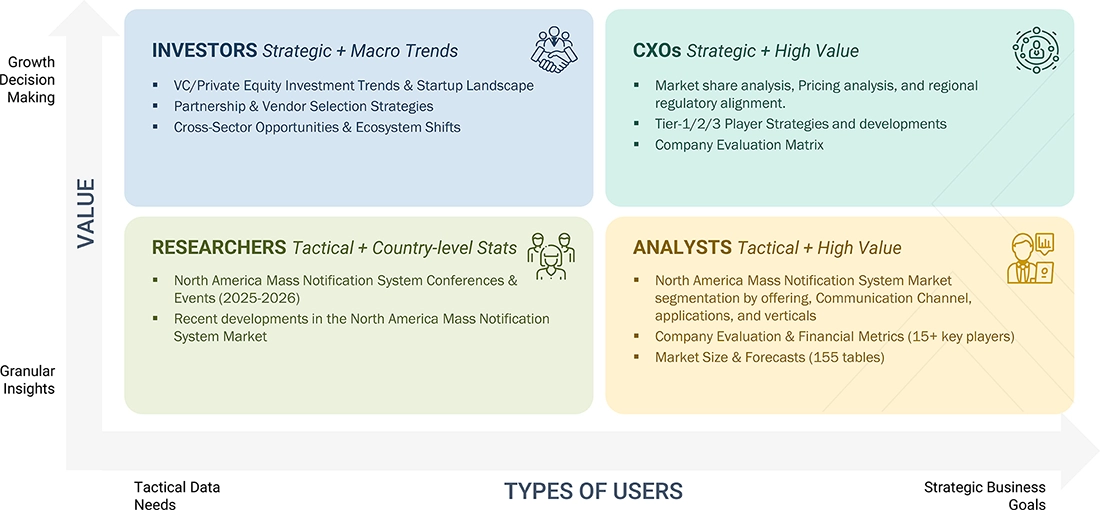
WHAT IS IN IT FOR YOU: NORTH AMERICA MASS NOTIFICATION SYSTEM MARKET REPORT CONTENT GUIDE
DELIVERED CUSTOMIZATIONS
We have successfully delivered the following deep-dive customizations:
| CLIENT REQUEST | CUSTOMIZATION DELIVERED | VALUE ADDS |
|---|---|---|
| Public Sector Emergency Management Agency | A tailored North America MNS analysis was delivered covering federal, state, and municipal emergency management agencies. The customization assessed vendor capabilities for public safety and warning use cases, NG911 and CAP compliance, and interoperability with PSAP systems. | The customization enabled the client to identify compliant and interoperable MNS platforms suited for regional deployment. It reduced procurement risk by clarifying vendor strengths and limitations. |
| Large Enterprise with Distributed Facilities | A customized MNS evaluation was conducted for an enterprise operating multiple offices, campuses, and outdoor facilities across North America. The engagement analyzed distributed recipient software, digital communication channels, and integration with HR, IT, and building systems. | The customization helped the client standardize emergency communication across locations. It improved employee reach and accountability during incidents. The analysis supported the selection of scalable platforms that aligned with enterprise IT policies. |
RECENT DEVELOPMENTS
- November 2025 : Motorola Solutions acquired Blue Eye’s AI-powered remote video monitoring service, adding human verification to automated alerts, which helped improve alert accuracy and reduce false alarms for enterprise safety and public notification workflows.
- November 2025 : Everbridge updated its Critical Event Management platform with enhanced alert management, physical security integration, and mobile crisis tools, improving situational awareness and response coordination for enterprises using mass notification and incident workflows.
- July 2025 : AlertMedia launched an incident response solution to strengthen its risk and communication platform, giving organizations unified tools to identify threats, coordinate response actions, and resolve critical events more quickly.
- April 2025 : Mimo and Singlewire integrated visual alerting with InformaCast to overlay critical notifications on HDMI displays, enabling organizations to expand visual emergency messaging across more screens for faster on-site awareness.
Table of Contents
 Exclusive indicates content/data unique to MarketsandMarkets and not available with any competitors.
Methodology
The research methodology for the North America Mass Notification System market report involved the use of extensive secondary sources and directories, as well as various reputed open-source databases, to identify and collect useful information for this technical and market-oriented study. In-depth interviews were conducted with various primary respondents, including software by type; software by integration; by deployment mode; verticals; high-level executives of multiple companies offering mass notification system software, hardware & services; and industry consultants to obtain and verify critical qualitative and quantitative information and assess the market prospects and industry trends.
Secondary Research
During the secondary research process, various secondary sources were consulted to identify and collect information for the study. The secondary sources included annual reports; press releases and investor presentations of companies; white papers, certified publications.
The secondary research was utilized to gather key information about the industry’s value chain, the market’s monetary chain, the overall pool of key players, market classification and segmentation based on industry trends, and regional markets, as well as key developments from both market- and technology-oriented perspectives.
Primary Research
In the primary research process, a diverse range of stakeholders from both the supply and demand sides of the North America Mass Notification System market ecosystem were interviewed to gather qualitative and quantitative insights specific to this market. From the supply side, key industry experts, such as chief executive officers (CEOs), vice presidents (VPs), marketing directors, technology & innovation directors, as well as technical leads from vendors offering mass notification system hardware, software & services, were consulted. Additionally, system integrators, service providers, and IT service firms that implement and support the mass notification system solutions were included in the study. On the demand side, input from IT decision-makers, infrastructure managers, and business heads of prominent industry verticals was collected to understand the user perspectives and adoption challenges within targeted industries.
The primary research ensured that all crucial parameters affecting the North America Mass Notification System market, from technological advancements and evolving use cases to regulatory and compliance needs, were considered. Each factor was thoroughly analyzed, verified through primary research, and evaluated to obtain precise quantitative and qualitative data for this market.
Once the initial phase of market engineering was completed, including detailed calculations for market statistics, segment-specific growth forecasts, and data triangulation, a second round of primary research was conducted. This step was crucial for refining and validating critical data points, such as mass notification system offerings (hardware, software & services), industry adoption trends, the competitive landscape, and key market dynamics like demand drivers (Growing need for real-time, multi-channel emergency communication across organizations, Regulatory and industry-mandated requirements for emergency preparedness), challenges Balancing ease of access with strong security posture across devices and external users, Managing cross-channel consistency, false alarms, and governance across large distributed organizations), and opportunities (Advanced content lifecycle automation, intelligent sync, and metadata-driven governance, Expansion into AI-driven alert automation, multilingual messaging, and behavioral response analytics) and restraints (Balancing ease of access with strong security posture across devices and external users, Managing cross-channel consistency, false alarms, and governance across large distributed organizations).
In the comprehensive market engineering process, the top-down and bottom-up approaches, along with several data triangulation methods, were extensively employed to perform market estimation and forecasting for the overall market segments and subsegments listed in this report. Extensive qualitative and quantitative analysis was performed on the complete market engineering process to record the critical information/insights throughout the report.
Market Size Estimation
The top-down and bottom-up approaches were employed to estimate and forecast the North America Mass Notification System market, as well as its dependent submarkets. This multi-layered analysis was further reinforced through data triangulation, which incorporated primary and secondary research inputs. The market figures were also validated against the existing MarketsandMarkets repository for accuracy.
North America Mass Notification System Market : Top-Down and Bottom-Up Approach
Data Triangulation
The market was divided into several segments and subsegments after determining the overall market size using the market size estimation processes described above. To complete the overall market engineering process and determine the exact statistics for each market segment and subsegment, data triangulation and market segmentation procedures were employed, wherever applicable. The overall market size was then used in the top-down approach to estimate the size of other individual markets by applying percentage splits to the market segmentation.
Market Definition
According to Everbridge, a mass notification system is a vital solution that enables the prompt and precise delivery of notifications to individuals or groups, irrespective of their location. It is a comprehensive platform, swiftly disseminating emergency messages through various communication channels like voice calls, SMS, push notifications, desktop alerts, and social media. By utilizing visual intelligence and user-friendly interfaces, a mass notification system ensures that the right message reaches the intended recipients during critical events, regardless of their devices or physical whereabouts. This system plays a pivotal role in protecting people, securing operations, and safeguarding the reputation of organizations by facilitating timely and accurate communication.
Key Stakeholders
- Mass Notification System Vendors
- Mass Notification Software Vendors
- Managed Service Providers
- Support and Maintenance Service Providers
- System Integrators (SIs)/Migration Service Providers
- Distributors and Value-added Resellers (VARs)
- Independent Software Vendors (ISVs)
- Cloud Service Providers
- Technology Providers
Report Objectives
- To define, describe, and predict the North America mass notification system marketby offering (software, hardware, and services), communication channel, facility type, application, vertical, and region
- To provide detailed information related to major factors (drivers, restraints, opportunities, and industry-specific challenges) influencing market growth
- To analyze opportunities in the market and provide details of the competitive landscape for stakeholders and market leaders
- To analyze each submarket with respect to individual growth trends, prospects, and contributions to the overall North America mass notification system market
- To analyze competitive developments, such as partnerships, new product launches, mergers & acquisitions, in the North America mass notification system market
- To analyze the impact of macroeconomic factors on the North America mass notification system market across all regions
Available Customizations
With the given market data, MarketsandMarkets offers customizations based on the company’s specific needs. The following customization options are available for the report.
Product Analysis
- Product comparative analysis, which gives a detailed comparison of innovative products being offered by prominent vendors
Geographic analysis
- Further breakup of additional Europe countries by offering, communication channel, facility type, application and vertical
- Further breakup of additional Asia Pacific countries by offering, communication channel, facility type, application and vertical
- Further breakup of additional Middle East & Africa countries by offering, communication channel, facility type, application and vertical
- Further breakup of additional Latin America countries by offering, communication channel, facility type, application and vertical
Company information
- Detailed analysis and profiling of additional market players (up to five)
Key Questions Addressed by the Report
What is the current size of the North America Mass Notification System market?
The North America Mass Notification System market is projected to grow from USD 8.10 billion in 2025 to USD 19.77 billion by 2030, at a CAGR of 19.5% during the forecast period.
What is driving the growth of the North America Mass Notification System market?
The market is driven by increasing investments in public safety, rising demand for real-time emergency communication, growing adoption of cloud-based notification platforms, and stricter workplace safety and regulatory compliance requirements.
Which offering segment holds the largest share of the North America Mass Notification System market?
The software segment holds the largest market share due to the increasing deployment of cloud-based mass notification platforms, AI-enabled alerting capabilities, and integrated emergency communication solutions.
Which application is expected to dominate the North America Mass Notification System market?
The Critical Event Management application segment is expected to account for the largest market share, driven by organizations' increasing focus on business continuity, operational resilience, and rapid incident response.
Who are the major players in the North America Mass Notification System market?
Key companies operating in the market include Everbridge, Honeywell, Eaton, Johnson Controls, Siemens AG, Motorola Solutions, BlackBerry, and Rave Mobile Safety, among others.


Personalize This Research
- Triangulate with your Own Data
- Get Data as per your Format and Definition
- Gain a Deeper Dive on a Specific Application, Geography, Customer or Competitor
- Any level of Personalization
Let Us Help You
- What are the Known and Unknown Adjacencies Impacting the North America Mass Notification System Market
- What will your New Revenue Sources be?
- Who will be your Top Customer; what will make them switch?
- Defend your Market Share or Win Competitors
- Get a Scorecard for Target Partners

Custom Market Research Services
We Will Customise The Research For You, In Case The Report Listed Above Does Not Meet With Your Requirements
Get 10% Free CustomisationTESTIMONIALS






Growth opportunities and latent adjacency in North America Mass Notification System Market