North America Microirrigation Systems Market

North America Microirrigation Systems Market by Type (Drip & Micro-sprinkler), Crop Type (Orchard Crops & Vineyards, Field Crops, Plantation Crops), & End User (Farmers, Industrial Users) – Forecast to 2030




OVERVIEW
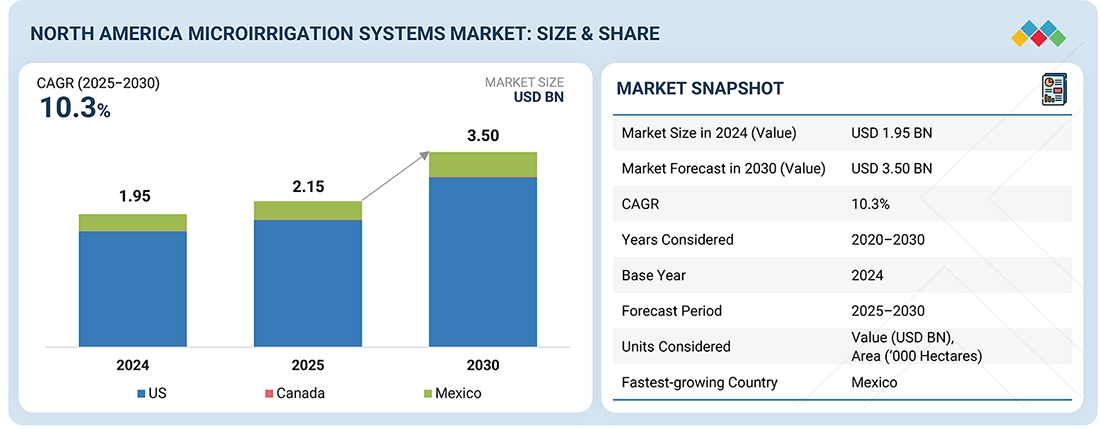
Source: Secondary Research, Interviews with Experts, MarketsandMarkets Analysis
The North America microirrigation systems market is estimated to be USD 2.15 billion in 2025 and is projected to reach USD 3.50 billion by 2030, registering a CAGR of 10.3% from 2025 to 2030. The North America micro-irrigation systems market is growing steadily. This growth is influenced more by long-term water issues and regulatory pressure than by short-term agricultural cycles. Declining groundwater availability, frequent droughts, and rising compliance costs are pushing growers to rethink irrigation practices to maximize efficiency per acre. Micro-irrigation systems are being used more and more as cost-effective tools. They allow for precise water and nutrient application, cut down on run-off, and reduce energy use. Adoption is highest in areas with limited water rights and where high-value crops are grown. In these regions, reliable irrigation is crucial for farm survival. As a result, there is a significant demand for system upgrades, retrofits, and the replacement of old irrigation infrastructure.
KEY TAKEAWAYS
-
By CountryThe US accounted for a 87.1% share of the North America microirrigation systems market in 2024.
-
By TypeBy type, the micro-sprinkler segment is projected to register a high CAGR of 7.3% during the forecast period.
-
By Crop TypeBy crop type, the orchard crops & vineyards segment dominated, with a market share of 58.5%, in 2024.
-
By End UserBy end user, the industrial users segment is projected to grow at the highest rate during the forecast period, supported by growth in the commercial farming.
-
Competitive Landscape – Key PlayersKey players, such as Toro company, Valmont industries, and Lindsay Corporation, are helped by their strong brand equity and regional distribution.
-
Competitive Landscape – Startups/SMEsEmerging companies, such as Raindrip and Aquaspy, are gaining traction in drip and sprinkler irrigation segments.
The North America microirrigation systems market is projected to grow from USD 2.15 billion in 2025 to USD 3.50 billion by 2030, at a CAGR of 10.3% during the forecast period. This growth is driven more by changes in water management, regulatory pressure, and shifting farm economics than by optional technology use. The expansion of the market increasingly relies on the need to separate agricultural output growth from water use, especially in drought-prone and heavily regulated areas of the US. Overall, the North America microirrigation market is evolving from an efficiency-driven upgrade market to one focused on resilience. Long-term growth will rely on adapting to climate change, enforcing policy, and using precision-led farming management instead of just short-term agricultural growth.
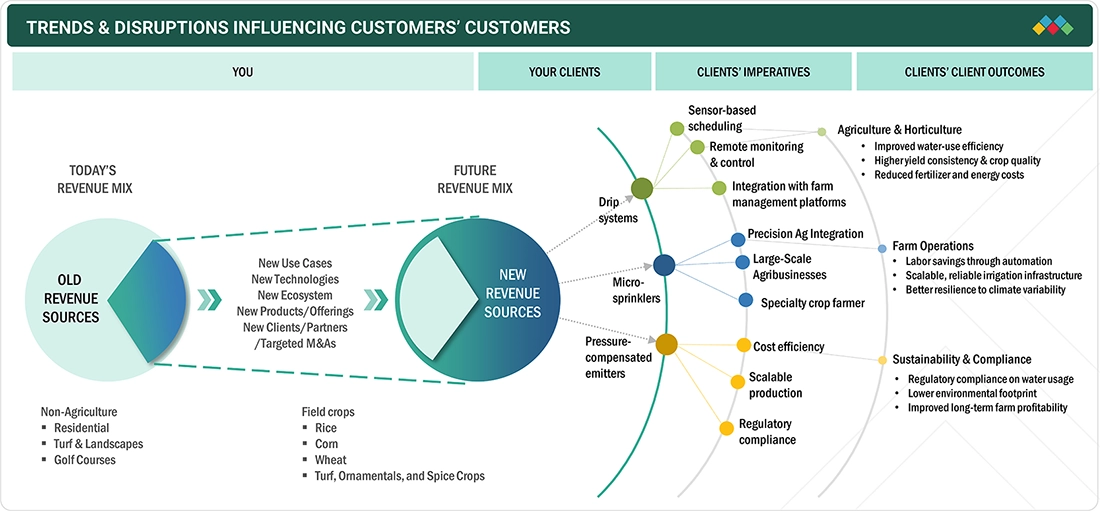
TRENDS & DISRUPTIONS IMPACTING CUSTOMERS' CUSTOMERS
The revenue mix in the North America microirrigation systems market is focused on a few main applications, mainly drip and micro-sprinkler systems used in orchards, vineyards, and high-value crops. However, future revenue is expected to come from new use cases, improved technologies, and solution-based offerings. Emerging applications will make up a larger portion of the total market value. This change shows a significant transformation in the market, rather than just gradual growth in volume. Growth is changing across different system types, digital capabilities, deployment models, and end-user segments. More people are adopting automation, IoT-enabled controls, sensor-based scheduling, fertigation integration, and data-driven irrigation management. This shift is moving the market from selling hardware to providing integrated irrigation platforms. At the same time, targeted growth in greenhouse cultivation, climate-resilient farming, regulated groundwater areas, and large-scale commercial operations is changing demand patterns. In agriculture, commercial growers are placing more emphasis on water-use efficiency, energy optimization, system reliability, scalability, and meeting regulations. These needs are leading to measurable improvements, such as reduced water withdrawal, lower energy use, consistent yields, labor savings, and better returns on irrigation investments. For permanent crops, results include higher fruit quality and yield stability. In row crops and protected cultivation, benefits involve tighter irrigation control and less operational variability. Outside of agriculture, the expansion into commercial landscaping, turf management, and institutional users is driving demand for precision irrigation solutions that provide reliable performance even with limited resources. These trends show how changing customer priorities, focused on sustainability, resilience, and data-driven choices, are reshaping demand throughout the North America microirrigation value chain.
Source: Secondary Research, Interviews with Experts, MarketsandMarkets Analysis
MARKET DYNAMICS

Level
-
Rising mechanization and adoption of smart agricultural technologies

-
Rapid growth in greenhouse vegetable production


Level
-
High initial investment

-
Need for continuous maintenance


Level
-
Increasing adoption of precision and sustainable agriculture practices

-
Expanding microfinance networks


Level
-
Lack of training and awareness among farmers

Source: Secondary Research, Interviews with Experts, MarketsandMarkets Analysis
Driver: Rising mechanization and adoption of smart agricultural technologies
Over the years, there has been a gradual shift toward mechanizing agricultural activities. Farm-level mechanization has significantly improved due to technological advancements, driven by increased research and development (R&D) expenditures from companies and government support for farming products. According to a report by FICCI in 2023, over 95% of farming activities in the US and Canada are now mechanized. Most agricultural tasks are performed using advanced machinery and equipment. Technologies such as the Internet of Things (IoT) are gaining global traction, enabling individuals to monitor and control various farming activities remotely through their smartphones. Irrigation has particularly benefited from this technology, allowing for better management of the irrigation process. Key players in the industry are focusing on improving sprinkler and drip irrigation management as well as water scheduling. The integration of various functionalities in precision irrigation technologies is expected to create significant growth opportunities in the coming years.
Restraint: High initial investment
Microirrigation systems are most suitable for high-value agricultural practices, such as orchards, nurseries, greenhouses, and vineyards, where traditional irrigation methods may not be effective. The initial investment costs for installing microirrigation can be high, making it less practical for low-value crops, as the returns on investment may be minimal. One of the main drawbacks of microirrigation is the setup cost, which includes purchasing tubing, emitters, and pumps, especially for large-scale operations.
Opportunity: Increasing adoption of precision and sustainable agriculture practices
Commercial horticulturists have consistently sought to maximize profits by using resources efficiently. Precision farming and sustainable agriculture have played key roles in this endeavor. In response to rising production costs, farmers are increasingly adopting micro irrigation techniques to enhance irrigation efficiency and boost crop productivity. In recent years, greenhouse vegetable production has been on the rise in various parts of the world, and the increasing area dedicated to protected farming systems is expected to drive growth in the micro irrigation systems market. Precision fertigation injection systems offer a targeted, data-driven approach to managing nutrients and water in agriculture. By delivering precise fertilizer doses directly to the root zone and optimizing irrigation based on real-time conditions, these systems minimize waste, reduce environmental impact, conserve resources, and ultimately contribute to improved soil health and higher crop yields.
Challenge: Lack of training and awareness among farmers
The lack of training and awareness among farmers poses significant barriers to market growth. While these systems are designed to optimize water usage and enhance agricultural efficiency, they require a certain level of technical knowledge for effective implementation and maintenance. Insufficient training and education lead to several key challenges. For example, users often struggle with the initial installation and configuration of micro-irrigation systems, which can result in frequent malfunctions, inefficiencies, and frustration. Incorrect setup can cause these systems to operate below their optimal capacity, wasting water and energy, and diminishing their overall effectiveness. Even when systems are correctly installed, users need to understand how to fully utilize their features. Micro-irrigation systems often have capabilities such as adjusting water delivery based on soil moisture levels, weather forecasts, and specific crop needs. Without proper education, users may fail to take advantage of these advanced features, leading to suboptimal performance and reduced benefits.
NORTH AMERICA MICROIRRIGATION SYSTEMS MARKET: COMMERCIAL USE CASES ACROSS INDUSTRIES
| COMPANY | USE CASE DESCRIPTION | BENEFITS |
|---|---|---|
 |
Drip and micro-irrigation solutions for specialty crops, orchards, vineyards, and commercial landscaping, integrated with automation and smart controls | Improve water-use efficiency, uniform crop irrigation | Reduce labor requirements | High return on irrigation investment |
 |
Precision irrigation systems integrating micro-irrigation with digital control platforms for large commercial farms and high-value crop operations | Optimize water and nutrient application | Improve yield consistency, data-driven decision-making | Reduce operational costs |
 |
Micro-irrigation and integrated irrigation infrastructure for large-scale agriculture, including orchards and row crops, supported by engineered solutions | Enhance irrigation reliability, scalable farm deployment | Improve resource efficiency, long-term system durability |
 |
Drip and micro-irrigation systems for agriculture, greenhouses, and turf & landscape applications with strong focus on precision and system reliability | Reduce water wastage | Improve crop and landscape performance, regulatory compliance on water usage, and maintenance needs |
Logos and trademarks shown above are the property of their respective owners. Their use here is for informational and illustrative purposes only.
MARKET ECOSYSTEM
In the North American microirrigation systems ecosystem, key manufacturers such as Toro, Valmont, Lindsay, and Rain Bird play a crucial role as the backbone of technology and infrastructure. They develop advanced irrigation equipment, precision agriculture solutions, and digital water management systems, which drive innovation and encourage the adoption of these technologies. Regulatory bodies, including the USDA, EPA, NRCS, and various industry associations, shape the market landscape through policies aimed at water conservation, agricultural subsidies, environmental standards, and irrigation efficiency programs. These initiatives promote sustainable practices within agriculture. End users, represented by farming organizations, agricultural companies, and grower associations, create market demand and influence product development by focusing on productivity, cost efficiency, and effective water management. Additionally, research and academic institutions, such as university extension systems and irrigation research institutes, foster innovation, provide training, and validate new technologies. This support helps accelerate the adoption of efficient irrigation practices throughout North America.
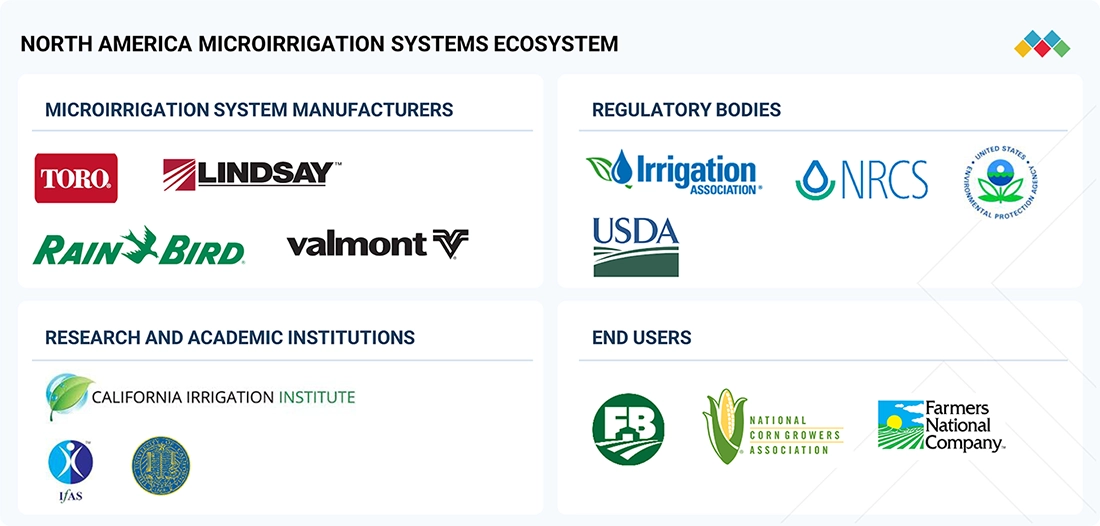
Logos and trademarks shown above are the property of their respective owners. Their use here is for informational and illustrative purposes only.
MARKET SEGMENTS
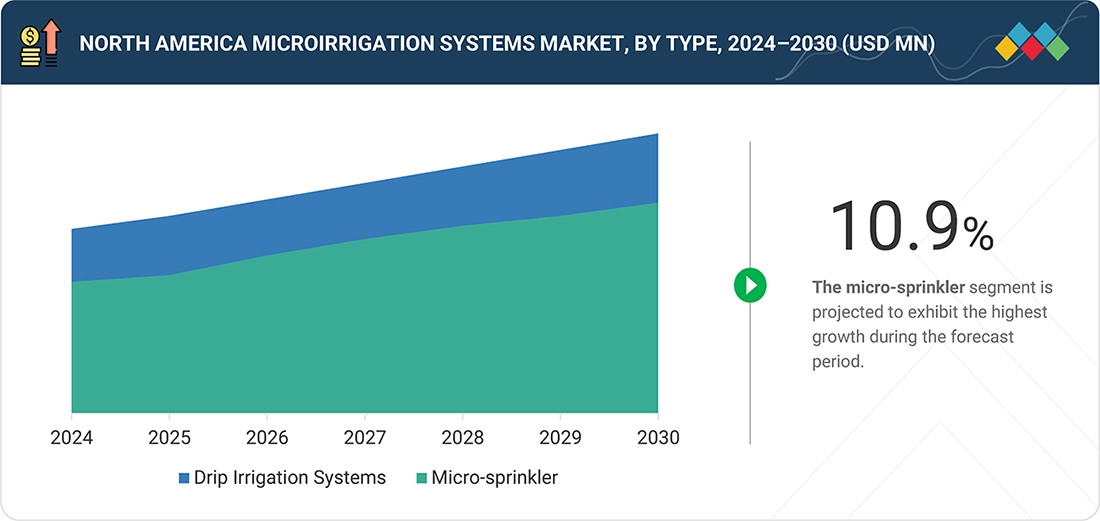
Source: Secondary Research, Interviews with Experts, MarketsandMarkets Analysis
North America Microirrigation Market, By Type
By type, the drip irrigation segment is projected to account for the largest share of the North America microirrigation systems market. Farmers extensively use drip irrigation systems for field crops, orchards, vineyards, greenhouses, and high-value horticulture. These systems deliver water and nutrients directly to the root zone, which minimizes losses from evaporation, runoff, or deep percolation. This precise method significantly improves water use efficiency, crop uniformity, and the effectiveness of fertilizers, making drip irrigation the preferred choice for large commercial farms and progressive mid-scale growers. The dominance of drip irrigation is bolstered by its strong compatibility with fertigation, automation, and precision agriculture technologies. These technologies include pressure-compensated emitters, smart controllers, and sensor-based irrigation scheduling. Drip irrigation has demonstrated proven performance across different climates, and its ease of scaling from small plots to large fields supports the adoption of water-efficient systems in the US, Canada, and Mexico. Furthermore, established manufacturing capacities, robust distribution networks, and ongoing product innovations by leading companies continue to enhance supply reliability and cost competitiveness. As water conservation, sustainability, and productivity improvement remain central to agricultural strategies in North America, the drip irrigation segment is likely to maintain its leading position in the coming years.
North America Microirrigation Market, By Crop Type
By crop type, the orchards & vineyards segment is projected to account for the largest share during the forecast period. This dominance is primarily due to the high economic value of perennial crops, such as apples, citrus, berries, grapes, nuts, and stone fruits. For these crops, precise and consistent water management is crucial for achieving good yields, optimal fruit size, and long-term plant health. Microirrigation, especially drip systems, allows for targeted delivery of water and nutrients directly to the root zone. This method helps reduce water stress and promotes even crop development across various soil conditions. Orchards and vineyards are particularly sensitive to water shortages, climate changes, and labor constraints, which accelerate the adoption of automated and sensor-enabled micro-irrigation solutions. The long lifespan of these crops and their permanent field layouts encourage investments in fixed irrigation systems. Although these systems may have higher initial costs, they often yield substantial long-term returns. Furthermore, regulations concerning water use, particularly in major producing regions like California and the Pacific Northwest, have reinforced the shift toward water-efficient irrigation practices. With robust grower economics, government incentives, and ongoing technological advancements, orchards and vineyards are likely to remain leaders in the North American micro-irrigation market in the coming years.
North America Microirrigation Market, By End User
The farmers segment is projected to lead the market during the forecast period. This dominance stems from the widespread adoption of microirrigation techniques among small, medium, and large farming operations seeking to enhance water efficiency, increase crop yields, and manage costs, particularly as input prices rise and climate change becomes more prevalent. Microirrigation systems, especially drip and micro-sprinkler solutions, enable precise delivery of water and nutrients to crops. This approach minimizes waste while ensuring consistent yields and improving crop quality. The demand from farmers is further supported by strong economic incentives, including government subsidies, water conservation regulations, and financial assistance programs aimed at enhancing on-farm irrigation practices. Moreover, the growing awareness regarding precision agriculture, the increasing integration of automation and digital irrigation controls, and the necessity to tackle labor shortages are accelerating the adoption of these systems on farms. As growers across North America prioritize sustainability, profitability, and long-term resilience, farmers are expected to remain the primary end-user group driving demand and innovation in the micro-irrigation systems market throughout the forecast period.
REGION
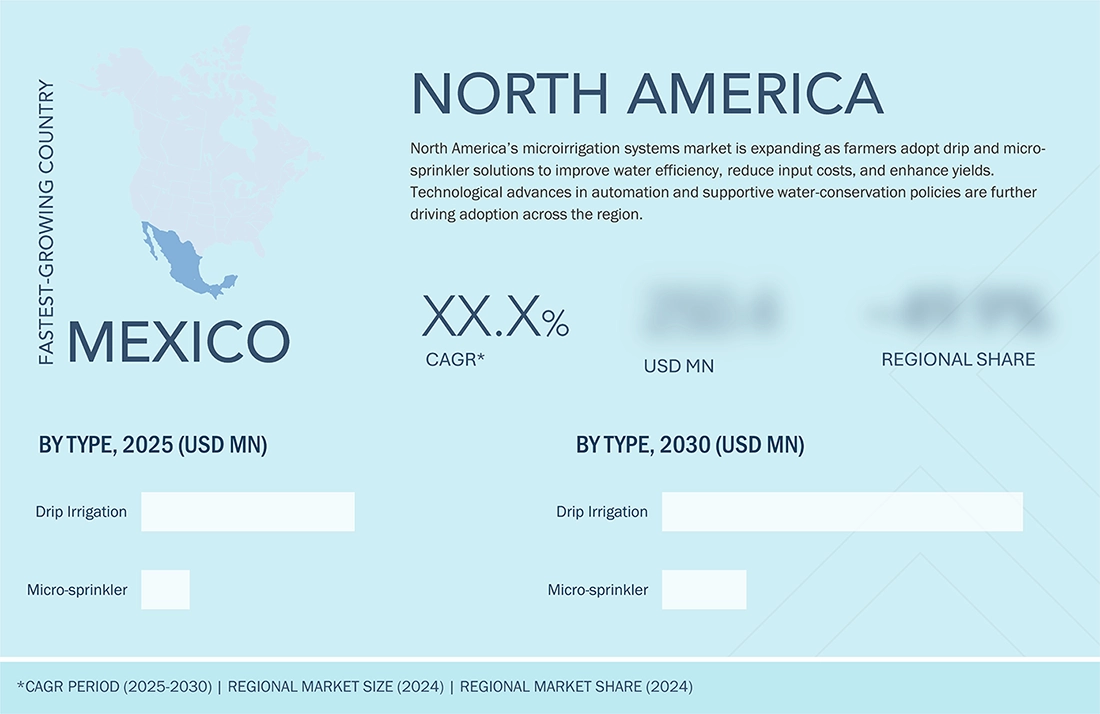
Mexico to be fastest-growing country in North America Microirrigation Systems Market during forecast period
Mexico is expected to witness the highest growth during the forecast period. This accelerated growth is driven by a combination of structural and policy factors, including increasing water scarcity, high dependence on irrigated agriculture, and the expanding cultivation of high-value crops such as fruits, vegetables, and export-oriented horticulture. As water efficiency becomes critical for farm viability, Mexican growers are rapidly transitioning from conventional flood and sprinkler systems to drip and micro-sprinkler irrigation solutions. Mexico’s growth is further supported by government-led irrigation modernization programs, rising investment in protected agriculture (greenhouses and shade nets), and increasing participation in North America agricultural supply chains. The strong presence of commercial farms, growing adoption of precision farming practices, and improving access to irrigation equipment through distributors and financing options are accelerating system penetration. Additionally, export-driven quality standards and climate volatility are pushing farmers toward more reliable and controllable irrigation infrastructure. As a result, Mexico is positioned as the fastest-growing country within the North America micro-irrigation systems market, contributing disproportionately to incremental market expansion over the forecast period.
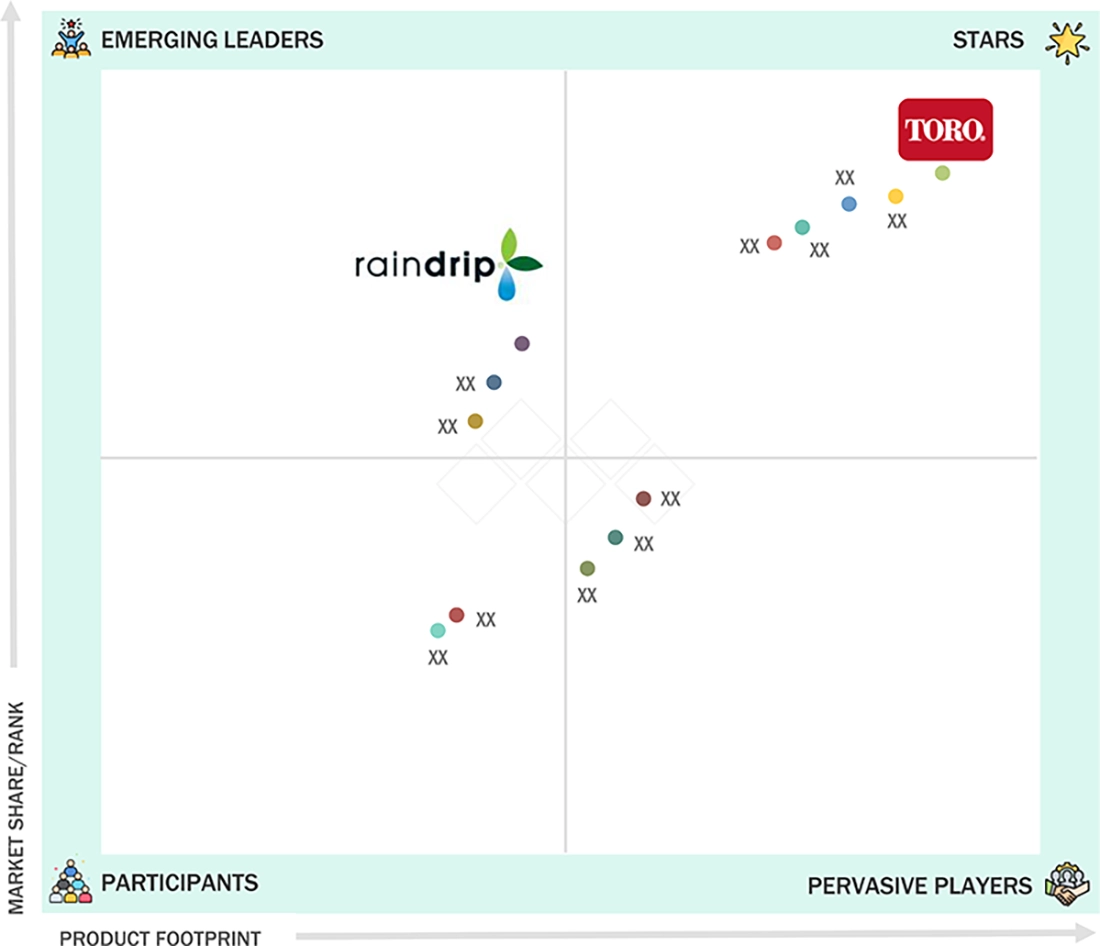
NORTH AMERICA MICROIRRIGATION SYSTEMS MARKET: COMPANY EVALUATION MATRIX
In the North America microirrigation market, The Toro Company is considered a star player due to its strong brand legacy, extensive distribution network, diversified irrigation portfolio, and continuous innovation in precision irrigation technologies for both agriculture and landscape applications. Its established customer base, scale advantages, and integrated solutions position it as a market leader. On the other hand, Rain Drip is an emerging player, gaining traction through cost-effective drip irrigation products. It is growing its presence in residential and small-scale agricultural segments, which is helping the demand for affordable water-efficient irrigation solutions, particularly as water conservation awareness rises across North America.
Source: Secondary Research, Interviews with Experts, MarketsandMarkets Analysis
KEY MARKET PLAYERS
- Nelson Irrigation (US)
- Rain Bird Corporation (US)
- The Toro Company (US)
- Lindsay Corporation (US)
- Valmont Industries (US)
- HUNTER INDUSTRIES (US)
- T-L Irrigation (US)
- DRIPWORKS (US)
- Netafim (Israel)
- Rivuls Irrigation (US)
- Jain Irrigation (India)
- EPC Industries (India)
- Microjet (South Africa)
- Chinadrip Irrigation Equipment Co., Ltd. (China)
- Aquaspy (US)
- Raindrip (US)
MARKET SCOPE
| REPORT METRIC | DETAILS |
|---|---|
| Market Size in 2024 (Value) | USD 1.95 Billion |
| Market Forecast in 2030 (Value) | USD 3.50 Billion |
| Growth Rate | CAGR of 10.3% from 2025–2030 |
| Years Considered | 2020–2030 |
| Base Year | 2024 |
| Forecast Period | 2025–2030 |
| Units Considered | Value (USD Billion), Volume ('000 Hectares) |
| Report Coverage | Revenue forecast, company ranking, competitive landscape, growth factors, and trends |
| Segments Covered |
|
| Countries Covered | US, Canada, and Mexico |
WHAT IS IN IT FOR YOU: NORTH AMERICA MICROIRRIGATION SYSTEMS MARKET REPORT CONTENT GUIDE
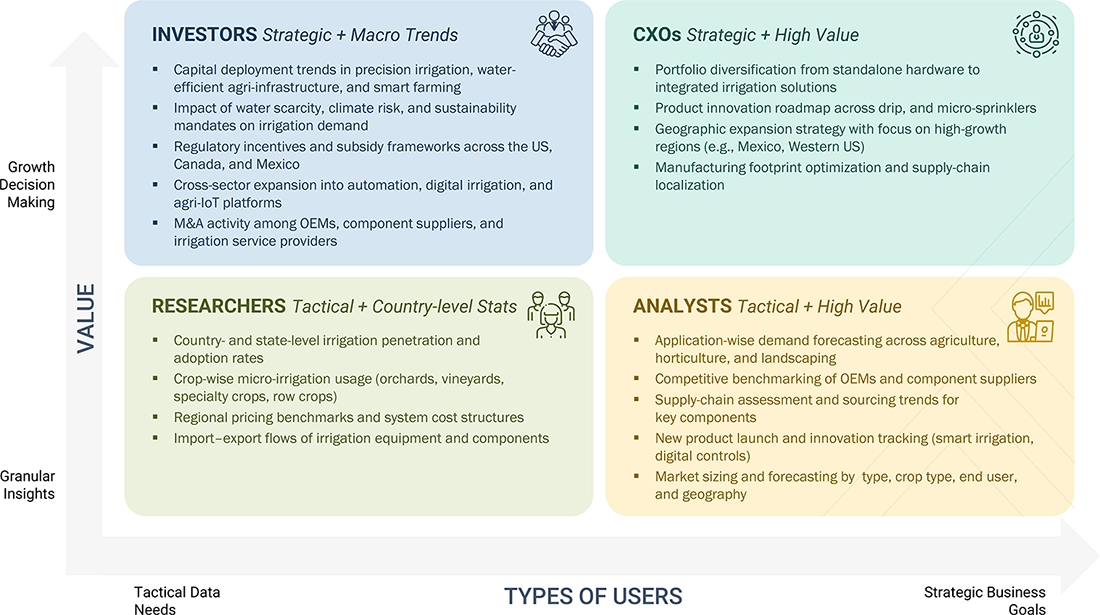
DELIVERED CUSTOMIZATIONS
We have successfully delivered the following deep-dive customizations:
| CLIENT REQUEST | CUSTOMIZATION DELIVERED | VALUE ADDS |
|---|---|---|
| Leading Microirrigation System Manufacturer |
|
|
| Microirrigation Equipment Supplier |
|
|
| Component Manufacturer |
|
|
RECENT DEVELOPMENTS
- January 2024 : Lindsay Corporation unveiled a new user interface for its FieldNET platform, part of a remote monitoring and control solution for any brand of center pivot irrigation, to provide farmers with assistance from routine monitoring up to and including industry-leading, highly sophisticated agronomic recommendations for irrigation via FieldNET Advisor.
- January 2024 : Lindsay Corporation announced an investment of USD 50 million over the next two years to enhance its largest global manufacturing facility in Lindsay, Nebraska. The initiative aimed to improve safety, quality, and efficiency while accelerating the development of innovations like the Smart Pivot.
- December 2022 : The Toro Company and Treetoscope Ltd. entered into a strategic partnership to provide an innovative, direct plant-sensing technology to support irrigation management decisions. With this collaboration, Toro was expected to provide this unique solution to growers across the US, Canada, and Mexico.
Table of Contents
 Exclusive indicates content/data unique to MarketsandMarkets and not available with any competitors.
Methodology
This research study involved the extensive use of secondary sources—directories and databases, such as Bloomberg Businessweek and Factiva—to identify and collect information useful for a technical, market-oriented, and commercial study of the North America Mircroirrigation Systems market. In-depth interviews were conducted with various primary respondents—such as key industry participants, subject matter experts (SMEs), C-level executives of key market players, and industry consultants—to obtain and verify critical qualitative and quantitative information, as well as to assess prospects.
Secondary Research
The secondary sources referred to for this research study include government sources (such as the Food and Agriculture Organization (FAO), the International Commission on Irrigation & Drainage (ICID), The Organization for Economic Co-operation and Development (OECD), United States Department of Agriculture (USDA), and the World Bank, corporate filings (such as annual reports, press releases, investor presentations, and financial statements)), and trade, business, and professional associations, among others. The secondary data was collected and analyzed to arrive at the overall North America Mircroirrigation Systems market size, which was further validated by primary research.
Primary Research
The market comprises several stakeholders in the supply chain; these include suppliers, manufacturers, and end-use product manufacturers. Various primary sources from both the supply and demand sides of the market were interviewed to obtain qualitative and quantitative information. The primary interviewees from the demand side include key opinion leaders, executives, vice presidents, and CEOs of the agriculture industry. The primary sources from the supply side include research institutions involved in R&D activities, key opinion leaders, and manufacturers of microirrigation systems.
To know about the assumptions considered for the study, download the pdf brochure
North America Microirrigation Systems Market Size Estimation
Both the top-down and bottom-up approaches were used to estimate and validate the total size of the North America Mircroirrigation Systems Market. These approaches were also used extensively to determine the size of various subsegments in the market. The research methodology used to estimate the market size includes the following details:
- The key players in the industry and the markets were identified through extensive secondary research.
- The North America Mircroirrigation Systems Market was determined through primary and secondary research.
- All percentage shares, splits, and breakdowns were determined using secondary sources and verified through primary sources.
- All macroeconomic and microeconomic factors affecting the growth of the North America Mircroirrigation Systems Market were considered while estimating the market size.
- All parameters that affect the market covered in this research study were accounted for, viewed in extensive detail, verified through primary research, and analyzed to obtain final quantitative and qualitative data.
Market Size Estimation: Bottom-up Approach
The figure represents the overall market size estimation process employed through the bottom-up approach for this study.
The bottom-up approach was implemented for data extracted from secondary research to validate the market segment sizes obtained, which is explained below:
- The market for the North America microirrigation systems was identified based on factors, such as COVID-19 impact on the trade and supply of agricultural inputs, company presence, and their revenues and product availability; crop production, exports, and imports; the adoption of organic farming based on key crops, and average usage of drip & micro-sprinkler irrigation systems on crop application rates in the industry.
- For each country, the increase in North America microirrigation area was considered, along with the replacement rate of North America microirrigation systems in the existing area to arrive at the market demand. This area with potential market demand was then multiplied with the average selling price (ASP) of North America Mircroirrigation Systems per hectare to arrive at the country's market size. Similar ASP was considered across all the countries in the region, with certain price variations done based on product availability and export/import dependency of the country for drip equipment. After arriving at each country's market value, these market values were summed to arrive at the regional North America Mircroirrigation System Market size. This was checked with the North America Mircroirrigation System Market share splits provided by the industry experts. A similar approach was performed for other regions as well.
- Following this, the market size for each region was estimated by summing up the country-level data. Further, the market size at the global level was estimated by summing up the regional level data, which has been validated through primary interviews conducted with North America Mircroirrigation Systems manufacturers, government institutions, research organizations, suppliers, and distributors.
- The global number for North America Mircroirrigation Systems was arrived at after giving certain weightage factors for secondary sources, and primary sources obtained.
Market Size Estimation: Top-Down Approach
The top-down approach was used to triangulate the data obtained through this study:
The top-down approach was also implemented for the data extracted from secondary research to validate the share of the market segment obtained. For the calculation of the North America Mircroirrigation Systems Market, the revenues of the major players operating in the Europe Mircroirrigation System Market were considered. The global share of the major players in the North America Mircroirrigation Systems Market was validated with the primary respondents. The regional splits were arrived at by considering the presence and number of products sold by the company in the particular region alongside the land area being brought under North America Mircroirrigation Systems.
North America Mircroirrigation Systems Market : Top-Down and Bottom-Up Approach

Data Triangulation
After arriving at the overall North America Mircroirrigation Systems Market size from the above estimation process using both top-down and bottom-up approaches, the total market was split into several segments and subsegments. To complete the overall North America Mircroirrigation Systems Market estimation and arrive at the exact statistics for all segments and subsegments, the data triangulation and market breakdown procedures were employed wherever applicable. The data was triangulated by studying various factors and trends from the demand and supply sides
Market Definition
According to US EPA (United States Environmental Protection Agency), North America microirrigation is a low-pressure, low-flow-rate type of irrigation that can reduce the likelihood of overwatering a landscape. This form of irrigation delivers water directly to where it is needed most-the root zone of plants. It also delivers the water slowly and over a longer period of time, preventing runoff and reducing evaporation. North america microirrigation systems use 20 to 50 percent less water than conventional sprinkler systems and can reduce residential or commercial landscape irrigation water use.
According to F.R. Lamm, J.E. Ayars, and F.S. Nakayama in the book titled ‘Microirrigation for Crop Production: Design, Operation and Management,’ microirrigation is defined as:
“Microirrigation is the slow application of water on, above, or below the soil by surface drip, subsurface drip, bubbler, and micro sprinkler systems. Water is applied as discrete or continuous drips, tiny streams, or miniature spray through emitters or applicators placed along a water delivery line adjacent to the plant row.”
Microirrigation systems include drip method and micro-sprinkler method of irrigation systems. The approach in both systems involves a controlled supply of water in small quantities with the required consistency. Microirrigation is low pressure and low-volume irrigation system suitable for high-return value crops such as fruit and vegetable crops. Microirrigation is a modern method of irrigation; by this method, water is irrigated through drippers, micro-sprinklers, foggers, and other emitters on the surface or subsurface of the land
Key Stakeholders
- Microirrigation systems manufacturers
- Microirrigation systems importers and exporters
- Microirrigation systems traders, distributors, and suppliers
- Government and research organizations
-
Government regulatory agencies
- Food and Agriculture Organization (FAO)
- United States Department of Agriculture (USDA)
- Environmental Protection Agency (EPA)
- Department of Environment, Food, and Rural Affairs (DEFRA)
Report Objectives
Market Intelligence
- To determine and project the size of the overall North America Mircroirrigation Systems Market with respect to type, crop type, end user, and region
- To identify the attractive opportunities in the North America Mircroirrigation Systems market by determining the largest and fastest-growing segments across regions
- To provide detailed information about the key factors influencing the North America Mircroirrigation Systems market growth (drivers, restraints, opportunities, and challenges)
- To provide the regulatory framework and market entry process related to the North America Mircroirrigation Systems market
- To analyze the micromarkets with respect to individual growth trends, prospects, and their contribution to the total North America Mircroirrigation Systems market
Competitive Intelligence
- To identify and profile the key players in the North America Mircroirrigation Systems Market
- To provide a comparative analysis of market leaders based on the following:
- Product offerings
- Business strategies
- Strengths and weaknesses
- Key financials
- To understand the competitive landscape and identify the major growth strategies adopted by players across countries
To provide insights on key product innovations and investments in the North America Mircroirrigation Systems Market
Customization Options
MarketsandMarkets offers customizations according to client-specific scientific needs with the given market data.
The following customization options are available for the report:
Product Analysis
- Product matrix, which gives a detailed comparison of the product portfolio of each company
Geographic Analysis
- Further breakdown of the North America Mircroirrigation Systems Market forecast into Germany, UK, the Netherlands, and other EU and non-EU countries.
Company Information
- Detailed analyses and profiling of additional market players (up to five)


Personalize This Research
- Triangulate with your Own Data
- Get Data as per your Format and Definition
- Gain a Deeper Dive on a Specific Application, Geography, Customer or Competitor
- Any level of Personalization
Let Us Help You
- What are the Known and Unknown Adjacencies Impacting the North America Microirrigation Systems Market
- What will your New Revenue Sources be?
- Who will be your Top Customer; what will make them switch?
- Defend your Market Share or Win Competitors
- Get a Scorecard for Target Partners

Custom Market Research Services
We Will Customise The Research For You, In Case The Report Listed Above Does Not Meet With Your Requirements
Get 10% Free CustomisationTESTIMONIALS

Business Innovation Director
US Based Leading Agribusiness,
Food and Ingredients ManufacturerI highly appreciate the team's efficiency for a well conducted study that helped us clarify some blind spots in food and agricultural niche markets. Although compiling information for B2B markets is very difficult, the MnM team pulled out the task successfully. The quality of research, level of insights, and responsiveness of team were commendable.






Growth opportunities and latent adjacency in North America Microirrigation Systems Market