North America Pharmaceutical Packaging Market

North America Pharmaceutical Packaging Market by Type (Plastic Bottles, Blister Packs, Prefilled Syringes), Packaging Type (Primary, Secondary), Drug Delivery (Oral, Injectables), Raw Material (Plastics, Paper & Paperboard), and Country - Forecast to 2030




OVERVIEW
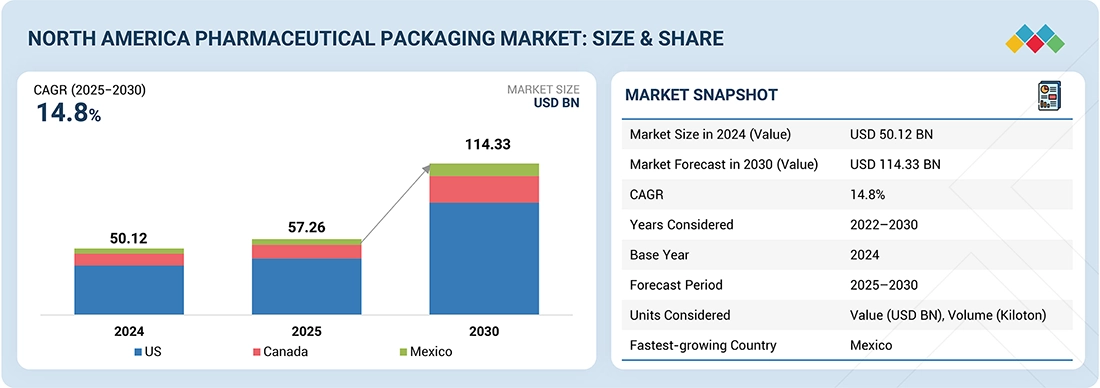
Source: Secondary Research, Interviews with Experts, MarketsandMarkets Analysis
The pharmaceutical packaging market in North America is estimated to be USD 57.26 billion in 2025 and is projected to reach USD 114.33 billion by 2030, which is around a CAGR of 14.8%. The market is experiencing a number of significant trends and demand factors. One of these trends is the patients' preference for drug delivery systems that are easy to use, such as prefilled syringes, auto-injectors, and blister packs. Other factors contributing to the market growth are the increasing demand for biologics, biosimilars, and specialty drugs, combined with the rise in chronic diseases. Hence, pharmaceutical companies are looking for secure, high-quality, and tamper-proof packaging solutions. Alongside these developments, manufacturers are also taking measures to lessen their environmental impact and are therefore opting for sustainability and eco-friendly materials. Moreover, technological advancements in the field of smart packaging, serialization, and anti-counterfeiting, coupled with rigorous regulatory controls for the safety and stability of products, are some of the factors that are not only promoting the growth of the market but also governing the future of pharmaceutical packaging in North America.
KEY TAKEAWAYS
-
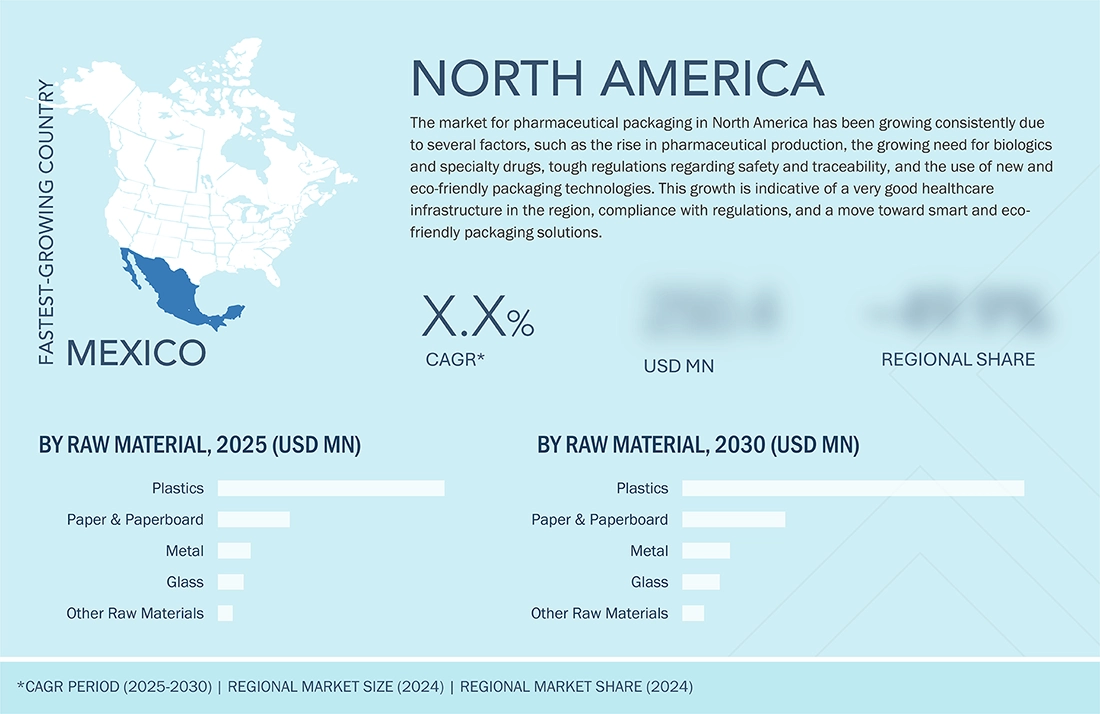
By CountryMexico is expected to be fastest-growing market in North America, registering a CAGR of 16.7% during the forecast period.
-
By TypeBy type, the prefilled syringes segment is projected to register the highest CAGR of 17.7% during the forecast period
-
By Packaging TypeBy packaging type, the primary packaging segment is estimated to account for the major market share of 76% in 2025.
-
By Drug DeliveryBy drug delivery, the injectables segment is projected to register the highest CAGR of 16.5% during the forecast period.
-
By Raw MaterialBy raw material, the plastics segment is estimated to account for the largest market share of 16.0% in 2025.
-
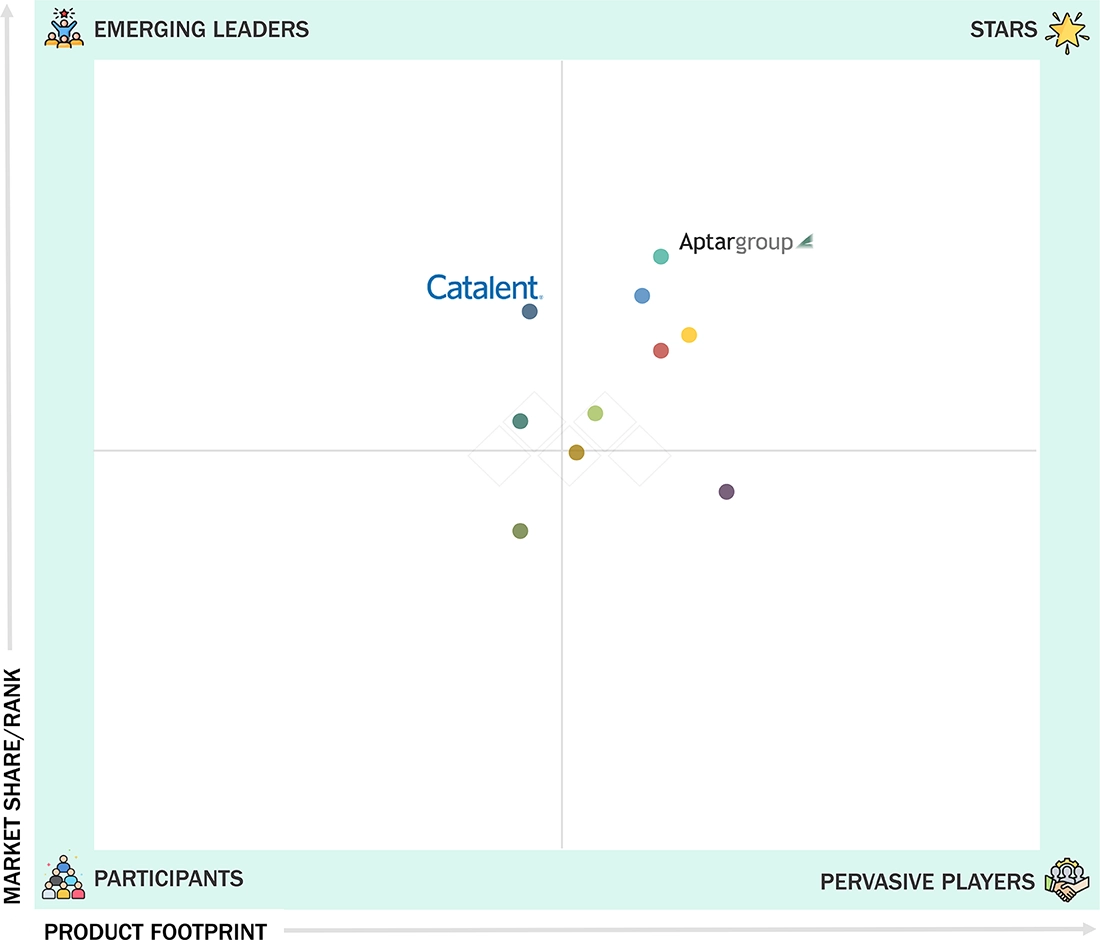
COMPETITIVE LANDSCAPE- KEY PLAYERSCompanies such as AptarGroup, Becton Dickinson & Co. (BD), West Pharmaceutical Services, WestRock, and Catalent, among other,s,were identified as some of the star players in the pharmaceutical packaging market in North America, given their strong market share and product footprint
-
COMPETITIVE LANDSCAPE- STARTUPSLegacy Pharma Solutions, 3C! Packaging, Pharma Pac, Ampak Inc., and Pharmapack North America, among others, have distinguished themselves among startups and SMEs by securing strong footholds in specialized niche areas, underscoring their potential as emerging market leaders
The pharmaceutical packaging market involves the development, manufacturing, and sale of packaging solutions specifically designed to store, protect, and deliver pharmaceutical products safely and effectively. Primary packaging consists of bottles, vials, ampoules, prefilled syringes, and blister packs that are in direct contact with the drug, whereas secondary and tertiary packaging are used for labeling, transportation, and storage. The market is propelled by the necessity to ensure product stability, uphold sterility, avoid counterfeiting, and provide patient convenience and compliance, which, in turn, makes packaging an essential element of the pharmaceutical supply chain.
TRENDS & DISRUPTIONS IMPACTING CUSTOMERS' CUSTOMERS
Several emerging trends and disruptive factors redefine the North America pharmaceutical packaging market. The main trends include the increasing use of patient-centered packaging, such as prefilled syringes, auto-injectors, and unit-dose systems, plus smart and connected packaging technologies for serialization, tracking, and anti-counterfeiting. There is a growing adoption of patient-centric packaging, such as prefilled syringes, auto-injectors, and unit-dose systems, and an increasing use of smart and connected packaging technologies for serialization, tracking, and anti-counterfeiting. Sustainability initiatives that include recyclable and biodegradable materials are becoming a source of influence over design and material choices. The rise of biologics and personalized medicine, supply chain issues, and stringent regulatory changes are pushing manufacturers to focus on rapid innovation, advanced automation, and increased packaging flexibility. These trends and disruptions combined are not only limiting the lines of competition but also affecting the investment priorities across North America while fueling the market growth.
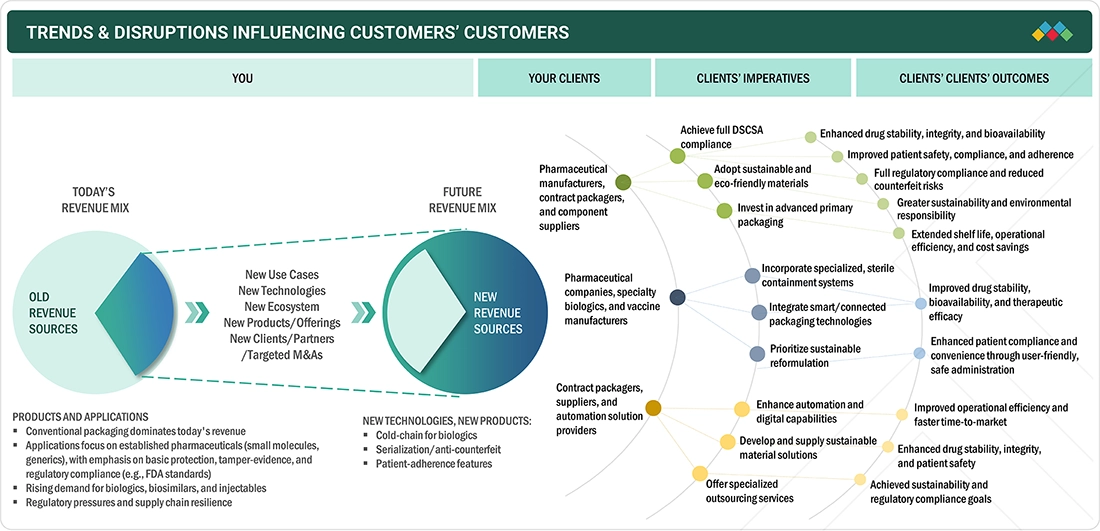
Source: Secondary Research, Interviews with Experts, MarketsandMarkets Analysis
MARKET DYNAMICS

Level
-
Growth in healthcare expenditure and the pharmaceutical industry in emerging economies

-
Rise in demand for drug delivery services and blister packaging


Level
-
Increase in overall packaging costs owing to dynamic regulatory policies

-
Lack of access to proper healthcare


Level
-
Rising demand for primary pharmaceutical packaging

-
Growth in personalized medicine


Level
-
Safeguarding against counterfeit products

-
Balancing innovations with cost efficiency

Source: Secondary Research, Interviews with Experts, MarketsandMarkets Analysis
Driver: Growth in healthcare expenditure and pharmaceutical industry in emerging economies
The pharmaceutical packaging market in North America is driven by the growing healthcare expenditure and the expanding pharmaceutical industry in emerging markets. These factors are mainly attributed to the increasing global demand for innovative therapies and biologics. Investments in healthcare in various countries drive the pharmaceutical businesses to increase their output, cut the costs of their supply chains, and use packaging of different types that are all designed for compliance with the North American quality and regulations. This worldwide outreach of companies, patient education, and demand for safe and user-friendly drug delivery systems are now the main reasons why advanced packaging, such as prefilled syringes, vials, and unit-dose systems, is becoming more widely used, in turn, supporting the growth of the North American market.
Restraint: Increase in overall packaging costs owing to dynamic regulatory policies
The pharmaceutical packaging market in North America is facing a setback in its growth due to the increasing costs of packaging, which are mainly caused by the dynamic and strict regulatory policies already in place. The production and maintenance of the materials, machinery, and quality control processes required for meeting FDA and Health Canada regulations on serialization, tampering detection, child-resistant, and track-and-trace systems are very costly. Moreover, the constant updating of labeling, safety, and environmental norms adds to the manufacturers' operational complexity and overhead. All these reasons raise the cost of pharmaceutical packaging, making it hard for the market to adapt and innovate packaging as per patients' needs and demand.
Opportunity: Rising demand for primary pharmaceutical packaging
The pharmaceutical packaging market in North America offers a major growth opportunity for players mainly because of the growing need for primary pharmaceutical packaging, which not only protects and contains drugs but also maintains their quality and safety. The transition to formats like vials, ampoules, prefilled syringes, and blister packs, especially for biologics, vaccines, and specialty medicines, is a key factor in the market's growth. Pharmaceutical companies are investing in research and development to create new materials and designs that enhance product security, improve patient compliance, and meet regulatory standards. This investment is driving market growth and attracting new players in high-end primary packaging solutions.
Challenge: Safeguarding against counterfeit products
A major challenge faced by the pharmaceutical packaging industry in North America is the problem of product counterfeiting, which not only endangers patients but also tarnishes the reputation of the companies. The supply chains' increasing sophistication, together with the high price of biologics, specialty pharmaceuticals, and controlled substances, make the pharmaceutical market very attractive for scammers to replicate and divert. Therefore, producers have no choice but to put in place costly and complicated methods to prevent counterfeiting, such as serialization, tamper-evident features, holographic labels, and track-and-trace technologies. Still, it is not easy to find a balance between the effective enforcement of these measures, efficiency, and compliance with regulations.
NORTH AMERICA PHARMACEUTICAL PACKAGING MARKET: COMMERCIAL USE CASES ACROSS INDUSTRIES
| COMPANY | USE CASE DESCRIPTION | BENEFITS |
|---|---|---|
 |
Offers state-of-the-art solutions in the area of drug delivery and packaging that include prefilled syringes, nasal sprays, and injection devices. Helps to meet the FDA/Health Canada requirements regarding sterility, tamper-evidence, and serialization. | Improvements in patient safety and compliance | Decrease in dosing errors | Faster time-to-market along with regulatory compliance |
 |
Provides solutions for the injectable drug delivery method that comprise vials, prefilled syringes, and safety-engineered devices. Uses track-and-trace systems and anti-counterfeit measures. | Guarantees product integrity | Enhances patient adherence | Makes biologics administration easier | Reduces the chances of counterfeiting |
 |
The company focuses on the packaging of injectables, vials, and prefilled units, and also works with elastomer parts and containment systems. | Offers drug stability and sterility | Provides advanced biologics packaging | Facilitates scalable production for specialty and high-value drugs |
Logos and trademarks shown above are the property of their respective owners. Their use here is for informational and illustrative purposes only.
MARKET ECOSYSTEM
The North America pharmaceutical packaging market is a complicated environment where pharmaceutical manufacturers, packaging solution providers, contract packaging organizations (CPOs), regulatory authorities, and technology enablers are all interlinked. Pharmaceutical companies are the ones driving the demand for innovative packaging solutions, which not only secure but also maintain the integrity and compliance of drugs. On the other hand, packaging suppliers, such as primary and secondary packaging manufacturers, are the ones that provide the necessary materials, such as glass vials, plastic containers, blister packs, and even advanced smart packaging. The services rendered by contract packaging organizations are not only scalable but also highly specialized. These organizations work closely with technology providers who supply serialization, track-and-trace systems, and anti-counterfeiting solutions. The FDA in the US and Health Canada, for instance, impose strict rules regarding labeling, safety, and serialization, which are factors affecting the overall packaging design and the use of compliance technologies. Novel companies that deal with sunscreen and biodegradable packaging are the ones slowly changing the whole ecosystem, as they are directly concerned with environmental issues and changing consumer expectations, thus opening up avenues for innovation all along the supply chain.
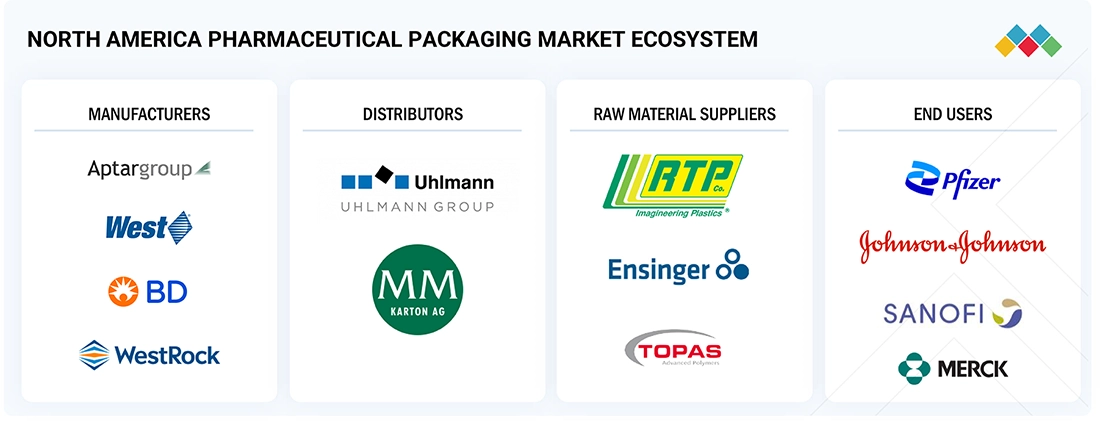
Logos and trademarks shown above are the property of their respective owners. Their use here is for informational and illustrative purposes only.
MARKET SEGMENTS
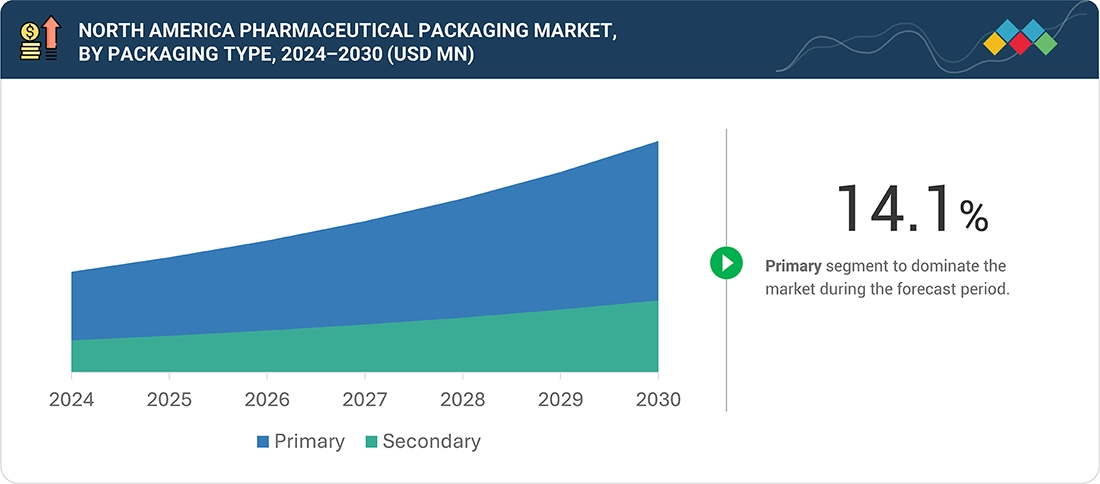
Source: Secondary Research, Interviews with Experts, MarketsandMarkets Analysis
North America Pharmaceutical Packaging Market, By Type
Plastic bottles account for the largest share of the North America pharmaceutical packaging market, mainly due to their flexibility, low price, and compatibility with diverse pharmaceutical formulations, such as tablets, capsules, and liquid medicines. On the other hand, these bottles also have drawbacks, like being heavy, less durable, and harder to develop for child-proof closures, tamper-proofing, and printing. However, the growing demand for solid and liquid medications in combination with the development of sustainable and recyclable plastics makes plastic bottles attractive. Moreover, large pharmaceutical and packaging companies are gradually increasing their investments in developing innovative materials and smart packaging solutions for plastic bottles with patient safety, regulatory compliance, and supply chain traceability in mind. This, in turn, strengthens their hold on the market as they continue to be the dominant packaging format in North America.
North America Pharmaceutical Packaging Market, By Packaging Type
By packaging type, the primary packaging segment accounts for the largest market share as it is the one that interacts with the drug and protects it, keeping it safe, stable, and efficient during the whole period of its use. This segment includes vials, ampoules, syringes, blister packs, and plastic bottles, which are the first barriers against contamination, moisture, and light. Factors like the region’s robust pharmaceutical manufacturing, patient-centric dosage forms, and strict regulatory requirements for secure and compliant packaging solutions all contribute to the prominence of primary packaging. New developments in child-resistant closures, tamper-evident systems, and smart packaging technologies also help to highlight the importance of primary packaging in North America in terms of ensuring product integrity, supporting supply chain traceability, and so on.
North America Pharmaceutical Packaging Market, By Drug Delivery
By drug delivery, the injectables segment is estimated to lead the pharmaceutical packaging market in North America, which indicates the growing interest of the region in biologics, vaccines, and precious specialty drugs that demand exact and sterile administration. The various packaging alternatives, such as prefilled syringes, vials, ampoules, and safety pens, which are meant for injectables, are all working toward the same goals of product stability, contamination prevention, and accurate dosing, all under the strictest FDA and Health Canada regulations. The increasing number of chronic patients, the growing prevalence of hospitals and home care settings, and the acceptance of self-injection therapies are the main factors driving the growth of this segment. New ideas like smart injectables, connected devices, and anti-counterfeiting features also help make injectables the top drug delivery format in North America.
North America Pharmaceutical Packaging Market, By Raw Material
Plastics continue to be the most widely used raw material because of their adaptability, lightness, low cost, and suitability for a wide variety of pharmaceutical products. Plastic and other materials, such as high-density polyethylene (HDPE), polypropylene (PP), and polyethylene terephthalate (PET), are used in large volumes for packaging pharmaceutical products and in the form of containers, bottles, blister packs, and closures, which offer durability, moisture resistance, and flexibility in design. The dominance of plastics is further supported by the increasing demand for oral solid and liquid medications, together with the growing focus on patient-friendly, tamper-evident, and child-resistant packaging solutions. The segment could also witness the entry of new recyclable and bio-based plastics, which help manufacturers not only comply with sustainability regulations but also ensure that the product safety and integrity are maintained throughout the supply chain.
REGION
US to be largest market for pharmaceutical packaging in North America during forecast period
The US is estimated to be the largest market for pharmaceutical packaging in North America, due to the presence and stability of the pharmaceutical and biotechnology industries, a costly healthcare system, and a strict regulatory environment imposed by the FDA. The demand for prescription and over-the-counter drugs, mainly in oral solids, injectables, and biologics, has contributed to the demand for advanced packaging solutions that offer product safety, efficacy, and compliance. The dominance of the US market is also supported by the huge investments in new packaging technologies like serialization, track-and-trace systems, smart packaging, and green materials. Moreover, the rising focus on patient-centered packaging, the quest for anti-counterfeiting measures, and the ongoing development of home healthcare therapies solidify the US's position as the major location of pharmaceutical packaging activities in North America.
NORTH AMERICA PHARMACEUTICAL PACKAGING MARKET: COMPANY EVALUATION MATRIX
AptarGroup is a Star Player in the North America pharmaceutical packaging market owing to its remarkable product portfolio, technical advancements, and wide presence in primary and specialized packaging sectors, especially in drug delivery systems and metered-dose devices. The company emphasizes research and development, regulatory compliance, and patient-centered solutions, which have contributed to its leading market position in the region. Catalent is considered an Emerging Leader, aided by the steadily increasing demand for its CDMO, advanced drug delivery technologies, and integrated packaging solutions. Both companies are implementing strategic approaches for innovation, market penetration, and collaboration. AptarGroup leads in the ,established packaging solutions while Catalent is rapidly catching up through service diversification and targeted technological advancements.
Source: Secondary Research, Interviews with Experts, MarketsandMarkets Analysis
KEY MARKET PLAYERS
- AptarGroup, Inc. (US)
- Becton Dickinson & Co. (BD) (US)
- West Pharmaceutical Services, Inc. (US)
- WestRock (US)
- Catalent, Inc. (US)
- Sealed Air Corporation (US)
- CCL Industries (US)
- Owens-Illinois, Inc. (O-I Glass) (US)
- Nelipak Healthcare (US)
- Ampak Inc. (Canada)
MARKET SCOPE
| REPORT METRIC | DETAILS |
|---|---|
| Market Size in 2025 (Value) | USD 57.26 Billion |
| Market Forecast in 2030 (value) | USD 114.33 Billion |
| Growth Rate | CAGR of 14.8% from 2025-2030 |
| Years Considered | 2022-2030 |
| Base Year | 2024 |
| Forecast Period | 2025-2030 |
| Units Considered | Value (USD Million/Billion), Volume (Kiloton) |
| Report Coverage | Revenue forecast, company ranking, competitive landscape, growth factors, and trends. |
| Segments Covered |
|
| Countries Covered | US, Canada, Mexico |
WHAT IS IN IT FOR YOU: NORTH AMERICA PHARMACEUTICAL PACKAGING MARKET REPORT CONTENT GUIDE
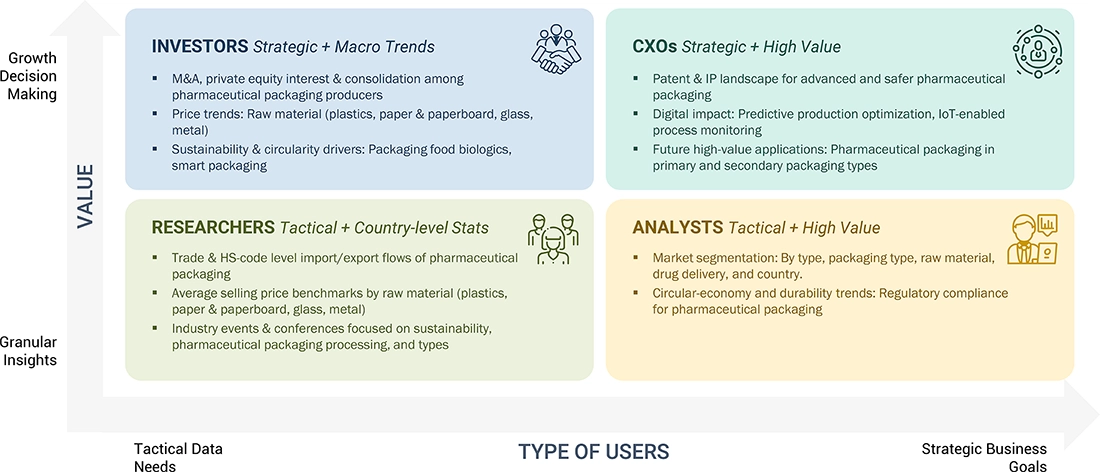
DELIVERED CUSTOMIZATIONS
We have successfully delivered the following deep-dive customizations:
| CLIENT REQUEST | CUSTOMIZATION DELIVERED | VALUE ADDS |
|---|---|---|
| Pharmaceutical Company (e.g., injectables, biologics, vaccines) |
|
|
| Contract Packaging / Packaging Service Provider |
|
|
| Raw Material / Component Supplier |
|
|
RECENT DEVELOPMENTS
- August 2025 : BD announced plans to invest in expanding BD PosiFlush Prefilled Flush Syringe production at the Columbus, Nebraska, facility. The expansion would increase US production capacity by hundreds of millions of units annually, support operational efficiencies, and enhance supply resilience for hospitals and health systems.
- July 2025 : AptarGroup, Inc. introduced the first nasal spray pump made with 52% bio-based feedstock, enhancing sustainability in pharmaceutical packaging.
- February 2024 : AptarGroup, Inc. launched a moisture-adsorbing flexible packaging solution combining Aptar's Activ-Polymer technology with ProAmpac's flexible film, offering integrated protection for moisture-sensitive products.
Table of Contents
 Exclusive indicates content/data unique to MarketsandMarkets and not available with any competitors.
Methodology
The study involved four major activities to estimate the current size of the North America pharmaceutical packaging market. Exhaustive secondary research was carried out to collect information on the market, the peer product market, and the parent product group market. The next step was to validate these findings, assumptions, and sizes with the industry experts across the value chain of North America pharmaceutical packaging through primary research. The top-down and bottom-up approaches were employed to estimate the overall size of the North America pharmaceutical packaging market. After that, market breakdown and data triangulation procedures were used to determine the size of different segments and sub-segments of the market.
Secondary Research
The market for the companies offering North America pharmaceutical packaging is arrived at by secondary data available through paid and unpaid sources, analyzing the product portfolios of the major companies in the ecosystem, and rating the companies by their performance and quality. Various secondary sources, such as Business Standard, Bloomberg, World Bank, and Factiva, were referred to in order to identify and collect information for this study on the North America pharmaceutical packaging market. In the secondary research process, various secondary sources were referred to identify and collect information related to the study. Secondary sources included annual reports, press releases, and investor presentations, forums, certified publications, and whitepapers. The secondary research was used to obtain critical information on the industry’s value chain, the total pool of key players, market classification, and segmentation from the market and technology-oriented perspectives.
Primary Research
In the primary research process, various primary sources from both the supply and demand sides were interviewed to obtain qualitative and quantitative information for this report. The primary sources from the supply side included industry experts, such as Chief Executive Officers (CEOs), Vice Presidents (VPs), marketing directors, technology and innovation directors, and related key executives from several key companies and organizations operating in the North America pharmaceutical packaging market. After the complete market engineering (calculations for market statistics, market breakdown, market size estimations, market forecasting, and data triangulation), extensive primary research was conducted to gather information and verify and validate the critical numbers arrived at. Primary research was also conducted to identify the segmentation types, industry trends, competitive landscape of North America pharmaceutical packaging offered by various market players, and key market dynamics, such as drivers, restraints, opportunities, challenges, industry trends, and key player strategies. In the complete market engineering process, the top-down and bottom-up approaches and several data triangulation methods were extensively used to perform the market estimation and market forecasting for the overall market segments and subsegments listed in this report. Extensive qualitative and quantitative analysis was performed on the complete market engineering process to list the key information/insights throughout the report.
To know about the assumptions considered for the study, download the pdf brochure
Market Size Estimation
The top-down and bottom-up approaches were used to estimate and validate the size of the North America pharmaceutical packaging market. These approaches were also used extensively to estimate the size of various dependent market segments. The research methodology used to estimate the market size included the following:
Data Triangulation
After arriving at the overall market size using the market size estimation processes, the market was split into several segments and subsegments. The data triangulation procedure was employed, wherever applicable, to complete the overall market engineering process and arrive at the exact statistics of each market segment and subsegment. The data was triangulated by studying various factors and trends from both the demand and supply sides.
Market Definition
Pharmaceutical packaging pertains to the materials and systems designed to protect, preserve, and deliver pharmaceutical products for oral, injectable, inhalation, and topical drug delivery modalities. It plays an important role in the stability and sterility of a drug, avoids contamination, and provides accurate dosing for the life of the product. Pharmaceutical packaging denotes the numerous varieties of available options, like plastic bottles, blister packs, vials, ampoules, prefillable syringes, tubes, pouches, and cartons to meet drug formulation requirements and regulatory obligations. Some of the significant functionalities of pharmaceutical packaging include moisture, oxygen, and light barrier protection, tamper evidence, patient convenience, and functionality with active pharmaceutical ingredients (APIs).
Areas of interest include ISO 15378 relating specifically to primary packaging materials, ISO 9001 regarding quality management systems, and GMP compliance. The DSCSA and the EU FMD identified serialized, tracking, and anti-counterfeiting programs, creating an opportunity for the packaging industry to help with drug quality and patient safety.
Stakeholders
- North America pharmaceutical packaging manufacturers
- Raw material suppliers
- Converters & processors
- Distributors and traders
- Industry associations and regulatory bodies
- End users
Report Objectives
- To define, describe, and forecast the size of the North America pharmaceutical packaging market, based on type, packaging type, drug delivery, raw material, and region in terms of value and volume
- To provide detailed information on the significant drivers, restraints, opportunities, and challenges influencing the market
- To strategically analyze micromarkets concerning individual growth trends, prospects, and their contribution to the market
- To assess the growth opportunities in the market for stakeholders and provide details on the competitive landscape for market leaders
- To strategically profile key players and comprehensively analyze their market shares and core competencies
- To analyze competitive developments such as acquisitions, product launches, expansions, partnerships, and agreements in the North America pharmaceutical packaging market
- To provide the impact of AI/Gen AI on the market
Available Customizations
With the given market data, MarketsandMarkets offers customizations according to client-specific needs.
The following customization options are available for the North America pharmaceutical packaging market report:
Product Analysis
- A product matrix that gives a detailed comparison of the product portfolio of each company
Geographic Analysis as per Feasibility
- A further breakdown of the North America pharmaceutical packaging market for additional countries
Company Information
- Detailed analysis and profiling of additional market players (up to five)


Personalize This Research
- Triangulate with your Own Data
- Get Data as per your Format and Definition
- Gain a Deeper Dive on a Specific Application, Geography, Customer or Competitor
- Any level of Personalization
Let Us Help You
- What are the Known and Unknown Adjacencies Impacting the North America Pharmaceutical Packaging Market
- What will your New Revenue Sources be?
- Who will be your Top Customer; what will make them switch?
- Defend your Market Share or Win Competitors
- Get a Scorecard for Target Partners

Custom Market Research Services
We Will Customise The Research For You, In Case The Report Listed Above Does Not Meet With Your Requirements
Get 10% Free CustomisationTESTIMONIALS
We at Nissan Chemicals Corporation have been clients of MarketsandMarkets for more than a year now. We recently consulted MarketsandMarkets for a study, the team at MarketsandMarkets was extremely professional and organized. The business insights were very detailed and aligned well with our expectations that really helped us formulate the Business Plans and device new strategies for development themes. MarketsandMarkets offers a unique combination of expertise and dedicated engagement model. Their research findings have helped us in designing our Pricing Strategy which will make it easier for us to predict the future sales and profits for the next ten years. We look forward to working with MarketsandMarkets in the future.
VP of Strategy & New Business Development
Leading Specialty Chemical Company
The MarketsandMarkets Engagement Model, composed of both the Knowledge Store and advisory custom research, has greatly helped us in understanding our markets and making strategic decisions. The Knowledge Store is a fast way to allow everyone in our organization to understand more about most any market they are interested in. The ability to then get custom research done and get answers to specific strategic questions and market insight has been spectacular. The Markets and Markets team feel more like colleagues than vendors and their services have helped us change our culture where statements of things like growth opportunities and competitive position are always backed by industry research.

Rich Gibson,
Director, Corporate Strategy
Milliken & Company,
Leading Industrial Manufacturer of specialty chemical, floor covering, performance and protective textile materials, and healthcaremilliken.com
MarketsandMarkets is a trusted resource that helps us to better understand markets that are near-adjacencies-whether its technology, value chain or geography. Their Knowledge Store platform provides a dashboard of markets and their characteristics which is easy to use and saves us time.
Adam Shaw,
Market Development and Strategy Manager
AdvanSix Inc. USA,
An American Leader in Chemicalswww.advansix.com
The Knowledge Store from MarketsandMarkets is a valuable tool which has helped my team acquire greater insight in to the end markets that our business serves. This has enabled us to help our company build stronger strategies throughout our planning process.
TOSHIO KINOSHITA
Senior Chif Consultion Research & Consulting Division
Mitsubishi Chemical Research Corporation,
Leading Manufacturer of Chemical Productswww.mitsubishichem-res.co.jp/en/

We recently engaged with MarketsandMarkets for a study, the team not only clearly understood our business objectives but was also extremely professional in the way they handled the entire project. The study was efficiently conducted in a phase-wise manner, and the engagement model furnished us with high-quality business insights that far exceeded our expectations at each phase. We were especially happy that MarketsandMarkets could provide us with both, an English as well as a Japanese version of the study. A special thanks to the Analyst Team and Client Services Team, whose fluency in Japanese enhanced our comfort level, as we could converse with them in our preferred language.
Independent entrepreneurs
Arrow Precision
We approached MarketsandMarkets for study on Proppants Market, and their work exceeded our expectations. The study conducted was comprehensive and enabled us to view the market through the various dimensions. In addition, the team was extraordinarily responsive throughout the process and resolved our queries on time. I strongly recommend MarketsandMarkets and will certainly consider them for additional market assessments we will need in the future.
Global engineering company, Japan
Deputy Manager,
Strategic Planning OfficeThe high-quality insights shared by the MarketsandMarkets team helped us understand the pharmaceutical plant designers in a specific geography. It also captured the risks that we may likely face in communicating with our potential partners. The study would enable us identify partners, which would impact our future growth.






Growth opportunities and latent adjacency in North America Pharmaceutical Packaging Market