North America Shore Power Market

North America Shore Power Market by Installation Type (Shoreside, Shipside), Component (Transformer, Switchgear, Frequency Converter, Cables and Accessories), Power Output (Up to 30 MVA, 30–60 MVA, Above 60 MVA) - Forecast to 2030




OVERVIEW
Source: Secondary Research, Interviews with Experts, MarketsandMarkets Analysis
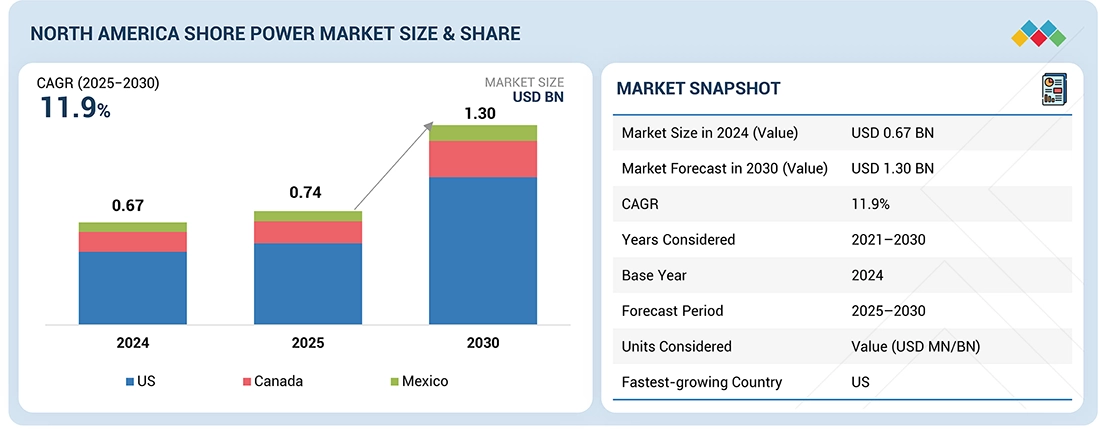
The North America shore power market is expected to reach USD 1.30 billion by 2030 from USD 0.74 billion in 2025, at a CAGR of 11.9% during the forecast period. Strict emission standards and clean port projects have emerged as a key driver for the shore power market in North America. A rising need for seaports in the US and Canada to curb diesel emissions from ships while they remain berthed and affect air purity in cities has emerged. State government mandates, primarily in California, Washington, and provinces of British Columbia, have promoted the use of shore power.
KEY TAKEAWAYS
-
BY COUNTRYBased on country, the US is expected to hold largest market share of 74.0% by 2030.
-
BY INSTALLATION TYPEThe shoreside installation type is expected to hold the largest market share by 2030.
-
BY CONNECTIONBy connection, the retrofit segment is expected to hold largest market share of 58.9% of 2030.
-
BY COMPONENTThe frequency converters are expected to witness a highest CAGR of 12.4% during the forecast period.
-
BY POWER OUTPUTBased on the power output segment, the up to 30 MVA segment is projected to record the highest CAGR during the forecast period.
-
BY VESSELBased on the vessel segment, the cruise segment is expected to dominate the market during the forecast period.
-
COMPETITIVE LANDSCAPEMajor market players in the North America shore power market are adopting organic and inorganic growth strategies, including partnerships, acquisitions, and strategic investments, to strengthen their market presence and expand service offerings. Companies such as General Electric Company (US), Siemens (Germany), Schneider Electric (France), ABB (Switzerland), Cavotec SA (Switzerland), Eaton (Ireland), Wärtsilä (Finland), Hitachi Energy Ltd (Switzerland) are increasingly collaborating with regional port authorities, shipyard developers, and energy utilities across North America to deploy shore power infrastructure tailored to local regulatory requirements, growing port electrification initiatives, and sustainability goals.
Growing environmental regulations aimed at reducing emissions from port operations are significantly driving the adoption of shore power systems across North America. Federal and state agencies, particularly in California and the Pacific Northwest, are enforcing stricter rules that limit the use of auxiliary ship engines while docked. These mandates require vessels to plug into cleaner onshore electricity, pushing ports to invest in advanced shore power infrastructure. Additionally, rising commitments by major shipping lines and port authorities toward decarbonization and ESG goals are accelerating the shift. This regulatory push, combined with sustainability initiatives, is strengthening market demand for shore power solutions.
TRENDS & DISRUPTIONS IMPACTING CUSTOMERS' CUSTOMERS
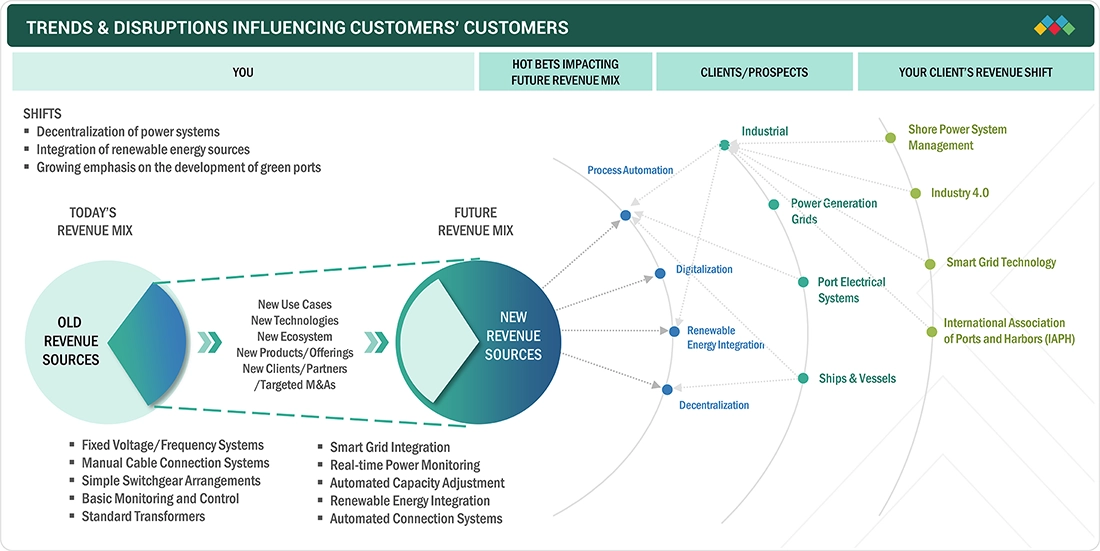
New emerging trends are transforming "customers' customers" in the North America shore power market. This reflects a transition from old revenue sources, such as fixed voltage, manual cable connections, switchgear, and monitoring, to new revenue sources, such as smart grid integration, power monitoring in real-time, automatic capacity adjustment, renewable energy integration, and automatic connection systems. These new revenue streams are a result of various other transformations, including decentralized energy grids, integration of renewable energy sources, and green ports. Consequently, various customer groups, such as industrial consumers, energy grid for power generation, port electrical infrastructure, and ships and vessels, are aligning their revenue streams with shore power management, Industry 4.0, "smart grid technology," and IAPH – International Association of Ports and Harbors.
Source: Secondary Research, Interviews with Experts, MarketsandMarkets Analysis
MARKET DYNAMICS

Level
-
Regulatory pressure and state-level mandates

-
Concentrated cruise, container and ferry activity


Level
-
High upfront capital costs and ship–port coordination issues

-
Issues in grid capacity, integration and peak-demand management


Level
-
Bundling shore power with renewables, storage, and energy-management services

-
Large retrofit programs, grants, and PPP structures to mobilize private capital


Level
-
Standardization, interoperability and commercial terms across jurisdictions

Source: Secondary Research, Interviews with Experts, MarketsandMarkets Analysis
Driver: Regulatory pressure and state-level mandates
The North America shore power market's coastal regions is primarily driven by strict government regulations and state or provincial mandates that effectively encourage or necessitate a reduction in emissions from at-berth operations. The At-Berth Regulation in California and subsequent updates have ensured substantial rates of compliance for container, cruise, Refrigerated Container and Roro ships with shore connections or CARB-approval for capture and control systems, making shore-side infrastructure demand forecasts relatively reliable. Other regions, including provinces of British Columbia and the state of Washington on the East Coast, as well as various seaports, have accelerated clean-port projects and reporting plans, making business cases for shore-side cold-ironing infrastructure at these regions relatively clear. Federal government seed money and facilities financing projects, including MARAD’s PIDP and various federal and state rounds for various projects, often include underlying infra projects for shore power and reduce costs associated with shore-side infra implementation.
Restraint: Issues in grid capacity, integration and peak-demand management
A major constraint relates to high capital costs associated with shore-side connections, as waterfront transformer stations, frequency-converter systems, distribution switchgear, cable and related works, and potentially grid enhancements, form high capital expenditure. There is also issue of co-ordination, as seaports would be apprehensive about making large expenditures without reaching a critical mass of compatible vessels calling at these seaports. Shipping would delay shore-side retrofits before seaport capacity and attractive tariffs become more widespread. Even with support through grants, these would not be comprehensive enough either for the shore side cost or shipping retrofits. A classic issue of split incentives arises here, more so for private seaport terminals and short-term investment cycles and older ships requiring expensive dry docking. Unless attractive financial models emerge for concessional loans, and potentially for shore-side energy as a service, seaport terminals as well as shipping would end up delaying market entry, thus postponing market growth despite government mandates and proven air emissions reduction benefits
Opportunity: Bundling shore power with renewables, storage, and energy-management services
By combining shore power with on-site solar and energy storage, new business models and market opportunities emerge for PPA, green tariffs, and peak shaving contracts. Energy storage can mitigate peak demand on the grid, reduce costs associated with grid infrastructure, and enable a lower-carbon energy offering that, with ESG procurement and broader decarbonization strategies at play, becomes an increasingly attractive service offering for shipowners. Additionally, these bundled solutions will offer opportunities for revenue stacking. The added benefit here is that with federal and state incentives offered for solar projects and grid modernization, a blending finance model will enable lowering costs and speed up implementation. As a whole, these energy solutions increase significantly the viability of shore-power projects. As energy solution suppliers and integrators, these projects add scale opportunities for implementation consultants.
Challenge: Standardization, interoperability and commercial terms across jurisdictions
Achieving seamless shore-power scale-up in North America requires harmonized technical standards (connector types, voltage/frequency compatibility, metering and communications) and clear commercial frameworks for tariffing, liability and metering areas that remain uneven across ports and ship classes. Differences in frequency (50/60 Hz), connection protocols, and port-specific installation practices increase engineering complexity and transaction costs for shipowners and suppliers. Inconsistencies with measurement and billing procedures, an associated national template for cost recovery, and uncertainty regarding liability related to problems with electrical power issues will make it more expensive and difficult from a contractual perspective. Ensuring harmony on shore power will be a challenge that requires cooperation among various stakeholders.
NORTH AMERICA SHORE POWER MARKET: COMMERCIAL USE CASES ACROSS INDUSTRIES
| COMPANY | USE CASE DESCRIPTION | BENEFITS |
|---|---|---|
 |
High-capacity frequency converters, transformers and monitoring systems to address 50/60 Hz and power-quality issues | Ensures stable frequency/voltage matching | Protects vessel systems while enhancing grid stability |
 |
Integrated shore-to-ship systems combining power conversion, substations and digital energy-management for multi-berth ports | Scalable engineered solutions with load management | Predictive maintenance to reduce downtime |
 |
Modular power-distribution, metering and microgrid controls plus containerized power units for rapid shore-power rollout | Improves energy visibility | Enables renewables/storage integration | Lowers capex risk |
 |
Turnkey berth electrification: transformers, frequency converters, switchgear and EPC for container & cruise terminals | Reliable, grid-compliant power delivery | Faster deployments | Simplified utility coordination |
 |
Automated cable reels, shore connectors and cable-management hardware for safe, rapid connection/disconnection at berths | Reduces manual handling | Speeds vessel turnaround | Saves berth space with compact automation |
Logos and trademarks shown above are the property of their respective owners. Their use here is for informational and illustrative purposes only.
MARKET ECOSYSTEM
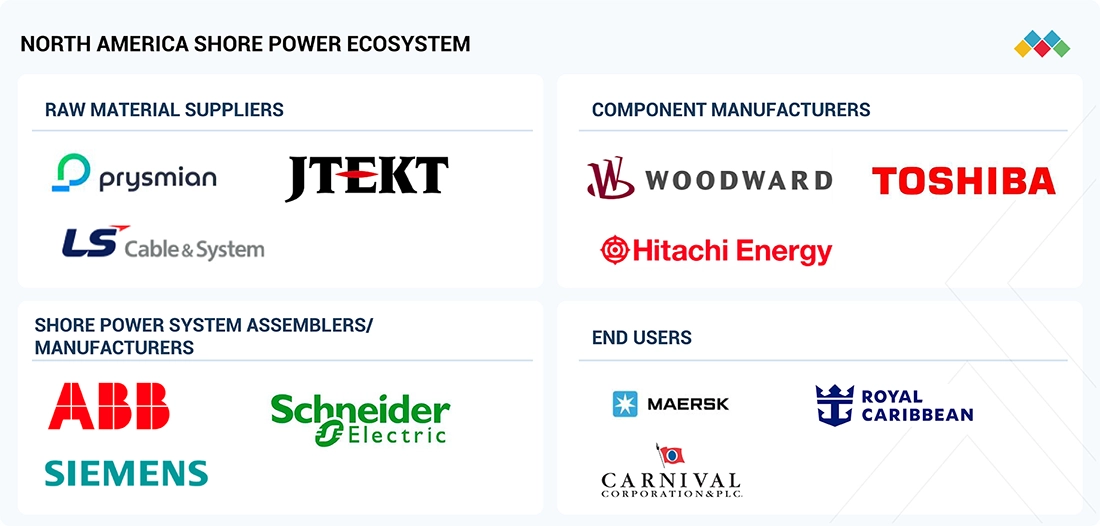
The North America shore power ecosystem embraces all sectors and components within it. Raw material suppliers, including Prysmian, LS Cable and System, and JTEKT, offer superior cables and mechanical components necessary for shore power. Component manufacturers, such as Woodward, Hitachi Energy, and Toshiba, offer power conversion and control components necessary for efficient and reliable shore power. Key assemblers/suppliers, such as ABB, Siemens, and Schneider Electric, put all these components together and market shore power as per the needs and requirements of various seaports. End users, such as Maersk, Royal Caribbean, and Carnival, use these systems for fuel and emission savings and enhance the sustainability index associated with these operations as per strict standards at various seaports within North America.
Logos and trademarks shown above are the property of their respective owners. Their use here is for informational and illustrative purposes only.
MARKET SEGMENTS
Source: Secondary Research, Interviews with Experts, MarketsandMarkets Analysis
North America Shore Power Market, By Installation Type
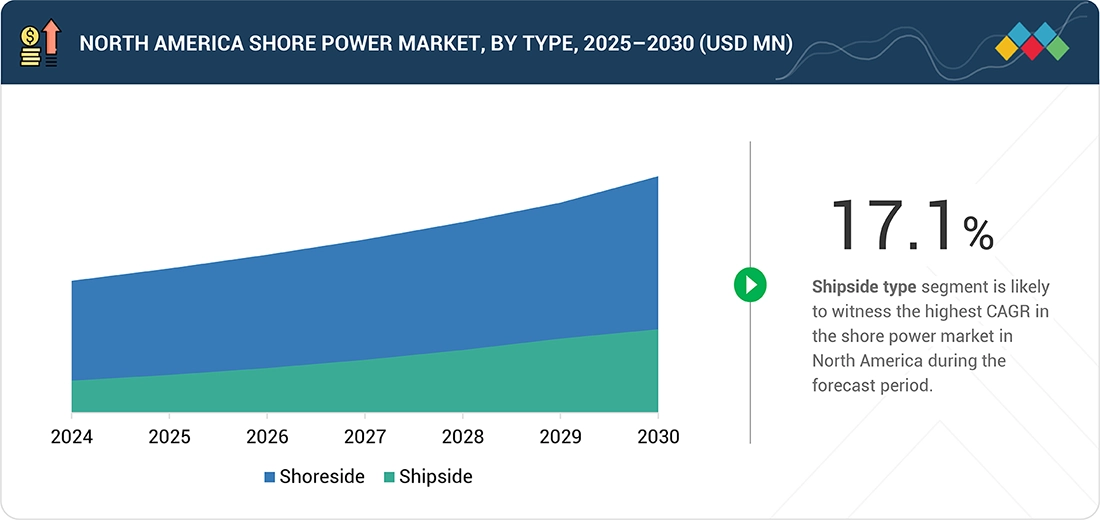
The shipside segment is anticipated to demonstrate the fastest CAGR within North America, with shipping companies increasingly optimizing their fleets to meet tougher emission standards. US and Canadian seaports, primarily on the West Coast, have made it mandatory for shipping companies to connect their vessels to shore-side power, pressurizing shipping companies to optimize shore-power-enabled electrical interfaces and switchgears on board. Additionally, the rising traffic within the cruise, container, and RORO cargo shipping sectors will augment the demand for shipside connections, with shipping companies striving for maximum standardization across all their fleets to meet strict emission standards. Moreover, government assistance and grants encouraging vessel electrification are also promoting rapid growth within the shipside market.
North America Shore Power Market, By Connection
The retrofit segment is expected to grow in the North America shore power market, as there are several legacy facilities at these seaports that will have to adapt to increasingly strict emission regulations. The majority of these seaports were engineered and built before there were strict standards on electrification, as seen in IEC/ISO 80005, and thus it becomes imperative for these facilities to adopt retrofitting. The influences from U.S. state governments, California, and Washington, as well as government funds set aside for eco-modified seaport renovation, have expedited the adoption process of retrofitting.
North America Shore Power Market, By Component
Frequency converters are expected to see the highest CAGR as they are fundamental to delivering compatible power to vessels from varying grid systems across North America. Ports commonly operate at 60 Hz, while many international vessels use 50 Hz or require different voltage levels, making converters essential for seamless connectivity. Increasing deployment of high-capacity and multi-frequency systems at container, cruise, and general cargo terminals further boosts the demand. Advances in solid-state converter technology, improved efficiency, and modular designs also support adoption. As ports expand electrification programs, frequency converters become critical components enabling universal vessel compatibility.
North America Shore Power Market, By Power Output
The up to 30 MVA market will have the largest market share by 2030 as it suits all types of vessels and terminals, ranging from container ships and ferries to cruise ships and general cargo vessels. It is also preferred as most North American seaports have medium-voltage shore connections that belong to this category. It can be implemented on single berths as well as multi-berths. With an ever-increasing adoption rate among all types and sizes of vessels, it becomes the most preferred solution for new as well as retrofitted shore-power connections.
REGION
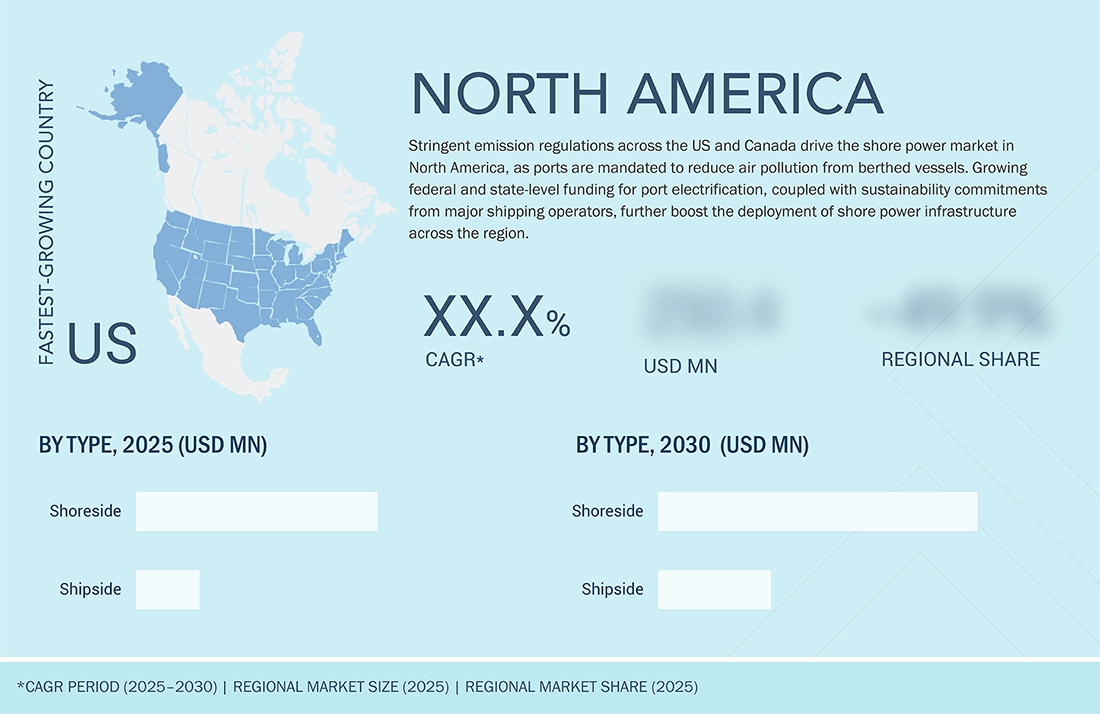
US to be fastest-growing region in North America shore power market during forecast period
Key factor driving the US shore power market as the fastest-growing country due to the rapid expansion of cruise and ferry operations, particularly along the West Coast and in Alaska-bound routes. US ports handling high volumes of cruise vessels face increasing pressure to minimize emissions and noise in urban waterfront areas. Shore power adoption allows ports and operators to meet sustainability commitments while improving community air quality. In addition, the presence of technologically advanced port infrastructure, strong utility grid connectivity, and standardized shore power requirements across major US ports is enabling faster, large-scale deployment compared to other regional markets.
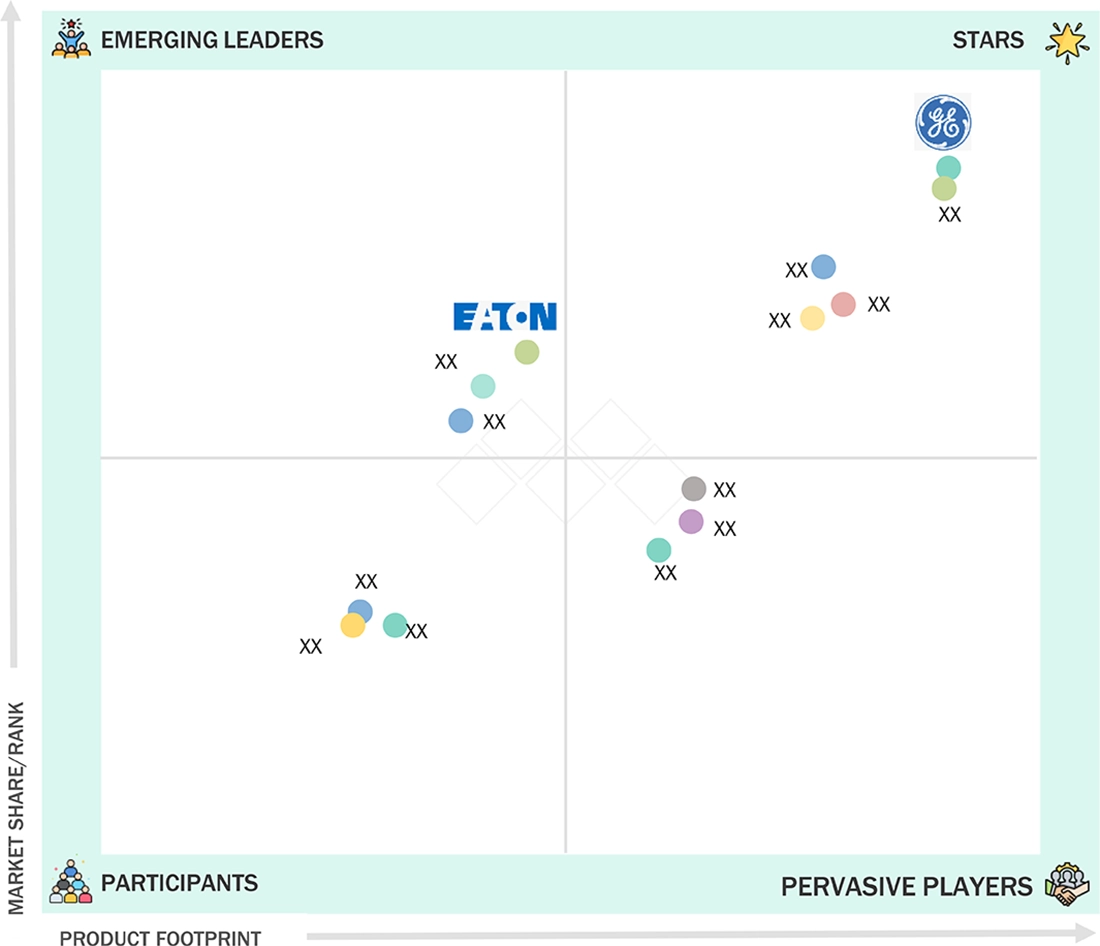
NORTH AMERICA SHORE POWER MARKET: COMPANY EVALUATION MATRIX
Generic Electric and Eaton have emerged as among the most influential and well-positioned leaders in the North America shore power market, driven by its deep expertise and large portfolio of shore power products and solutions.
Source: Secondary Research, Interviews with Experts, MarketsandMarkets Analysis
KEY MARKET PLAYERS
- General Electric Company (US)
- ABB (Switzerland)
- Siemens (Germany)
- Schneider Electric (France)
- Cavotec SA (Switzerland)
- Eaton (Ireland)
- Wartsla (Finland)
- Htachi Energy Ltd. (Switzerland)
- Danfoss (Denmark)
- Wabtec Corporation (US)
- ESL POWER SYSTEMS, INC.
MARKET SCOPE
| REPORT METRIC | DETAILS |
|---|---|
| Market Size in 2024 (Value) | USD 0.67 Billion |
| Market Forecast in 2030 (Value) | USD 1.30 Billion |
| Growth Rate | CAGR of 11.9% from 2025-2030 |
| Years Considered | 2025-2030 |
| Base Year | 2024 |
| Forecast Period | 2025-2030 |
| Units Considered | Value (USD Million/Billion) |
| Report Coverage | Revenue forecast, company ranking, competitive landscape, growth factors, and trends |
| Segments Covered | By Type (Shoreside, Shipside), Connection (New Installation, Retrofit), Component (Transformers, Switchgear Devices, Frequency Converters, Cables and Accessories, Others), Ouput (Up to 30 MVA,30-60 MVA, Above 60 MVA), and Vessel (Cruise, Ferry,Container Vessel, Ro-ro, Bulk and Vehicles Carrier, Tanker, General Cargo, Others) |
| Countries Covered | US, Canada, and Mexico |
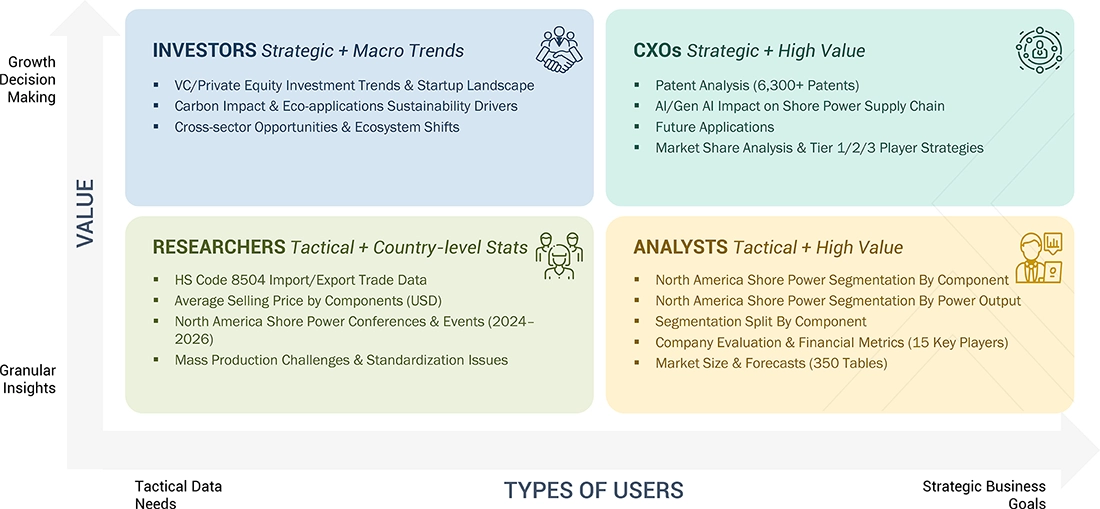
WHAT IS IN IT FOR YOU: NORTH AMERICA SHORE POWER MARKET REPORT CONTENT GUIDE
RECENT DEVELOPMENTS
- March 2024 : GE Vernova signed a contract with ST Engineering Marine Limited to supply its ship's electric grid for the Republic of Singapore Navy's six new Multi-Role Combat Vessels (MRCVS). These will be the Navy's first vessels powered by GE Vernova's energy-efficient Integrated Full Electric Propulsion (IFEP) system, which optimizes power distribution and management across the ships.
- April 2024 : Siemens Smart Infrastructure launched Electrification X, a new addition to the Siemens Xcelerator portfolio, aimed at modernizing and transforming outdated electrification systems. It is designed to drive the digital transformation of electrification infrastructure across commercial, industrial, and utility sectors. Electrification X offers a growing, dynamic, and interoperable portfolio of loT SaaS solutions to improve energy efficiency, support e-mobility, and optimize industrial energy systems.
- April 2023 : Schneider Electric signed a partnership of a consultancy project to establish the UK's first green shipping corridor between the Ports of Dover, Calais, and Dunkirk. This initiative is part of the UK's Clean Maritime Demonstration Competition (CMDC). As a technical partner, Schneider Electric would evaluate green energy solutions for marine and land-based vessels and vehicles, enabling zero-emission transport of goods and passengers between the ports.
- May 2023 : ABB introduced an industry-first electric propulsion system, ABB Dynafin, which mimics the motion of a whale's tail for optimal efficiency, paving the way for innovative vessel designs. This groundbreaking technology supports the shipping industry's target of reducing annual greenhouse gas emissions by at least 50% by 2050. An independent study has confirmed that the Dynafin system can lower propulsion energy consumption by up to 22% compared to traditional shaftline systems.
Table of Contents
 Exclusive indicates content/data unique to MarketsandMarkets and not available with any competitors.
Methodology
The study involved major activities in estimating the current size of the North America Shore Power Market . Exhaustive secondary research was done to collect information on the peer and parent markets. The next step was to validate these findings, assumptions, and sizing with industry experts across the value chain through primary research. Both top-down and bottom-up approaches were employed to estimate the total market size. Thereafter, market breakdown and data triangulation were used to estimate the market size of the segments and subsegments.
Secondary Research
Secondary sources referred to for this research study include annual reports, press releases, and investor presentations of companies; white papers; certified publications; articles by recognized authors; and databases of various companies and associations. Secondary research was mainly used to obtain key information about the industry’s supply chain, the total pool of key players, market classification, and segmentation according to industry trends to the bottom-most level, regional markets, and key developments from both, market- and technology-oriented perspectives.
Primary Research
In the primary research process, various primary sources from the supply and demand sides were interviewed to obtain qualitative and quantitative information for this report. Primary sources from the supply side include industry experts such as chief executive officers (CEOs), vice presidents (VPs), marketing directors, and related key executives from various companies and organizations operating in the shore powers market.
In the complete market engineering process, the top-down and bottom-up approaches, along with several data triangulation methods, were extensively used to perform the market size estimations and forecasts for all segments and subsegments listed in this report. Extensive qualitative and quantitative analyses were conducted to complete the market engineering process and list key information/insights throughout the report. Following is the breakdown of primary respondents:
Market Size Estimation
Both top-down and bottom-up approaches were used to estimate and validate the size of the North America Shore Power Market . These methods were also used extensively to estimate the size of various subsegments in the market. The research methodology used to estimate the market size includes the following:
After arriving at the overall market size from the estimation process explained below, the total market was split into several segments and subsegments. The data triangulation and market breakdown procedures were employed, wherever applicable, to complete the overall market engineering process and arrive at the exact statistics for all segments and subsegments. The data was triangulated by studying various factors and trends from both the demand and supply sides. The market size was validated using the top-down and bottom-up approaches.
Market Definition
Shore power, also known as cold ironing or alternative maritime power (AMP), refers to the supply of electricity from the shore directly to a moored vessel, allowing it to switch off its own on-vessel diesel generators. It, therefore reduces fuel burning and greenhouse gas emissions in a berthed vessel. In addition, shore power has been applied in several types of vessels, among them, vessels cruising, transport ferries, container shipping, and tankers. The main drivers of shore power adoption are, therefore, environmental regulations, government initiatives, and calls for more sustainable and greener port operations, good ways to reduce noise and air pollution, thus improving health and safety conditions for port workers and other local communities. Advances in power management, renewable energy integration, and growth in investments related to port electrification are all resulting in growth in shore power.
Stakeholders
- Government & research organizations
- Institutional investors
- Investors/Shareholders
- Environmental research institutes
- Manufacturers’ associations
- Shore power manufacturers, dealers, and suppliers
- Organizations, forums, alliances, and associations
- Shore Power equipment manufacturing companies
- Shore Power project developers
- Government and research organizations
- Universities and Research institutes
Report Objectives
- To define, describe, segment, and forecast the North America Shore Power Market by installation type, connection, component, power output, and region, in terms of value
- To provide detailed information regarding key drivers, restraints, opportunities, and challenges influencing the market growth
- To strategically analyze the micromarkets1 with respect to individual growth trends, prospects, and contributions to the overall market size
- To provide value chain analysis, ecosystem analysis, case study analysis, patent analysis, trade analysis, technology analysis, average selling price (ASP) analysis, Porter’s five forces analysis, and regulations pertaining to the market
- To analyze opportunities for stakeholders in the market and draw a competitive landscape for market players
- To strategically analyze the ecosystem, regulations, patents, and trading scenarios pertaining to the market
- To benchmark players within the market using the company evaluation matrix, which analyzes market players on various parameters within the broad categories of business and product strategies
- To compare key market players with respect to their market share, product specifications, and applications
- To strategically profile key players and comprehensively analyze their market rankings and core competencies2
- To analyze competitive developments, such as contracts & agreements, investments & expansions, mergers & acquisitions, partnerships, and collaborations, in the market
- To study the impact of AI/Gen AI on the market under study, along with the macroeconomic outlook
Available Customizations
With the given market data, MarketsandMarkets offers customizations according to the specific requirements of companies. The following customization options are available for the report:
Product Analysis
- Product Matrix, which provides a detailed comparison of the product portfolio of each company
Company Information
- Detailed analyses and profiling of additional market players


Personalize This Research
- Triangulate with your Own Data
- Get Data as per your Format and Definition
- Gain a Deeper Dive on a Specific Application, Geography, Customer or Competitor
- Any level of Personalization
Let Us Help You
- What are the Known and Unknown Adjacencies Impacting the North America Shore Power Market
- What will your New Revenue Sources be?
- Who will be your Top Customer; what will make them switch?
- Defend your Market Share or Win Competitors
- Get a Scorecard for Target Partners

Custom Market Research Services
We Will Customise The Research For You, In Case The Report Listed Above Does Not Meet With Your Requirements
Get 10% Free CustomisationTESTIMONIALS

Kimberly Murphy
GLOBAL MARKETING DIRECTOR
Bently Nevada,
Leading Condition Monitoring & Asset Protectionwww.bakerhughesds.com/bently-nevada

MarketsandMarkets™ showed consistent rigor for success and relentlessly worked with Bently Nevada stakeholders to positively impact go-to-market strategy. Their proactiveness and flexibility has been instrumental in achieving the objectives to grow our sales pipeline in key industrial markets.

DARRICK HUEBER
Business Development Leader
Nexus Controls LLC,
Leading Manufacturer of Automation System & Electrical Panelswww.bakerhughesds.com/nexus-controls

We partnered with MarketsandMarkets to expand our business further by tapping into new industrial segments. It was critical for us to gather crucial business insights about specific markets to achieve this goal. MarketsandMarkets engagement model and client services helped us provide those insights, it was really impressive and valuable for my business. The team was extremely flexible and helpful.

Mike Schoff
Global Industrial Commercial Strategy Leader
Nexus Controls LLC
Leading Manufacturer of Automation System & Electrical Panelswww.bakerhughesds.com/nexus-controls
We consulted MarketsandMarkets for potential Partner Identification. Overall, it was a good experience. The insights provided through interviews conducted by the team helped us put together the questionnaire required for discussion with the selected partners. Their ability to provide insights through interviews with customers in a timely manner was quite impressive.






Growth opportunities and latent adjacency in North America Shore Power Market