North America Smart Glass Market

North America Smart Glass Market by Type (Tinted, Coated), Technology (Electrochromic, Suspended Particle Display (SPD), Liquid Crystal, Nanocrystalline, Photochromic), Control System (Voice-based, Building Automation, Mobile-based) - Forecast to 2030




OVERVIEW
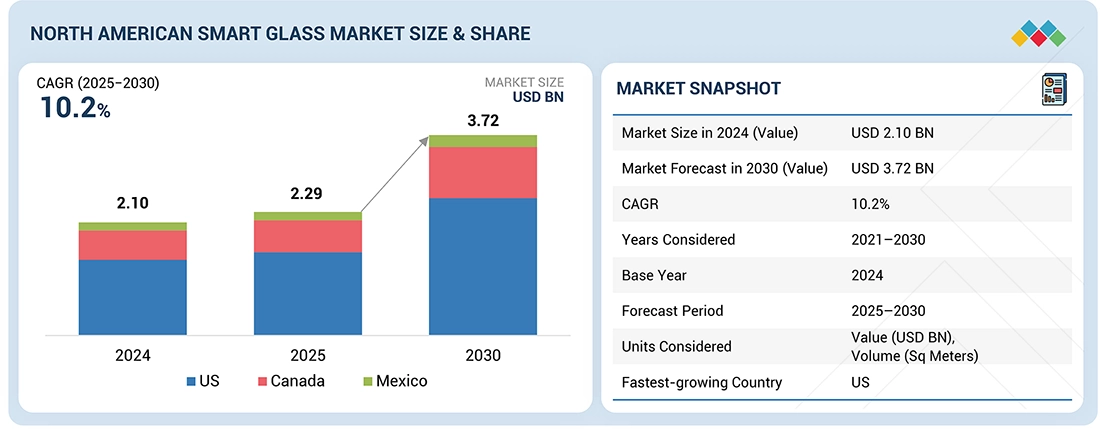
Source: Secondary Research, Interviews with Experts, MarketsandMarkets Analysis
The North America smart glass market is projected to reach USD 3.72 billion by 2030 from USD 2.29 billion in 2025, at a CAGR of 10.2% from 2025 to 2030. The regional market is driven by the increasing demand for energy-efficient and sustainable building solutions, the rising adoption of dynamic façades and smart windows, and stringent green building regulations. Expansion of smart homes and IoT-enabled building automation systems further supports market adoption.
Market Size & Forecast
KEY TAKEAWAYS
-
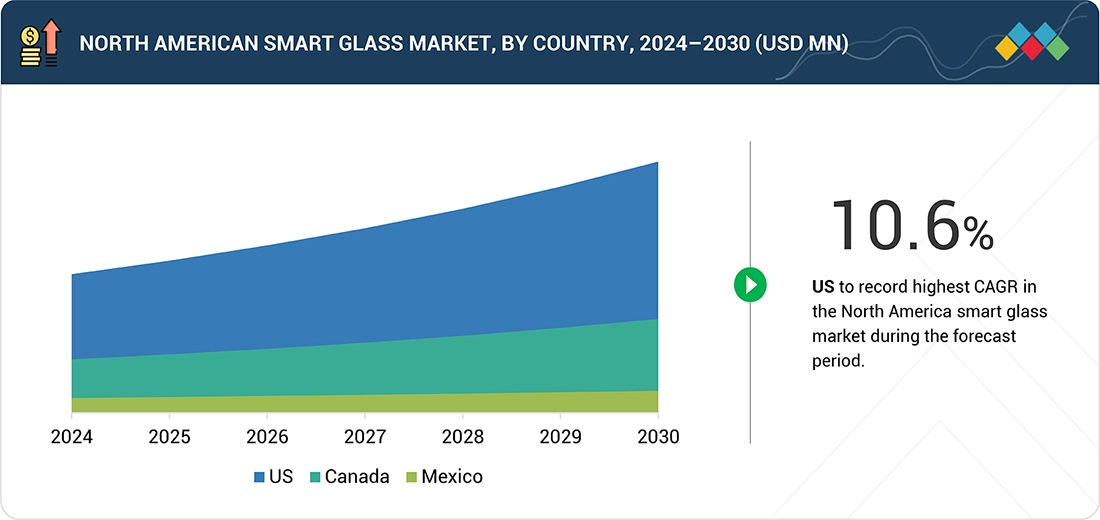
By CountryThe US smart glass market accounted for a 66.95% market share in 2024.
-
By TechnologyBy technology, the suspended particle display (SPD) segment is expected to register the highest CAGR of 11.4% during the forecast period.
-
By MechanismBy mechanism, the active segment is projected to grow at the fastest rate from 2025 to 2030.
-
By Control SystemBy control system, the mobile based segment is projected to grow at the fastest rate from 2025 to 2030.
-
By End UseBy end use, the transportation segment to dominate the market during the forecast period.
-
Competitive LandscapeSaint Gobain, AGC Inc., Gentex Corporation, Corning Incorporated, and Nippon Sheet Glass Co Ltd. were identified as some of the star players in the North America smart glass market, given their strong market share and product footprint.
-
Competitive LandscapeRaven Window, Halio Inc. among others, have distinguished themselves among startups and SMEs by securing strong footholds in specialized niche areas, underscoring their potential as emerging market leaders.
The North America smart glass market is witnessing steady growth due to the increasing emphasis on energy-efficient and sustainable building practices, the growing adoption of smart homes and automated building systems, and the rising demand for dynamic façades that enhance comfort and reduce energy consumption. Strong integration of smart glass in automotive, electric vehicle, and aerospace applications—driven by leading OEMs seeking advanced glazing solutions—further supports market expansion. Additionally, technological advancements in electrochromic, SPD, and switchable glass make these solutions more accessible and cost-effective, contributing to steady regional growth.
TRENDS & DISRUPTIONS IMPACTING CUSTOMERS' CUSTOMERS
The North America smart glass market is experiencing notable trends and disruptions driven by rapid advancements in dynamic glazing technologies, increasing integration with IoT and building automation systems, and rising focus on net-zero and energy-efficient construction. Electrochromic and SPD solutions are gaining traction due to improved switching speeds, durability, and falling system costs, while the shift toward smart, adaptive façades reshapes architectural design across commercial and institutional buildings. In the automotive and EV sectors, smart glass is evolving from a premium feature to a functional necessity for glare control, heat management, and enhanced in-cabin experiences. At the same time, disruptions such as accelerated retrofitting demand, supply-chain shifts toward regional manufacturing, and growing R&D investments from startups and material innovators redefine competition and market dynamics across the region.
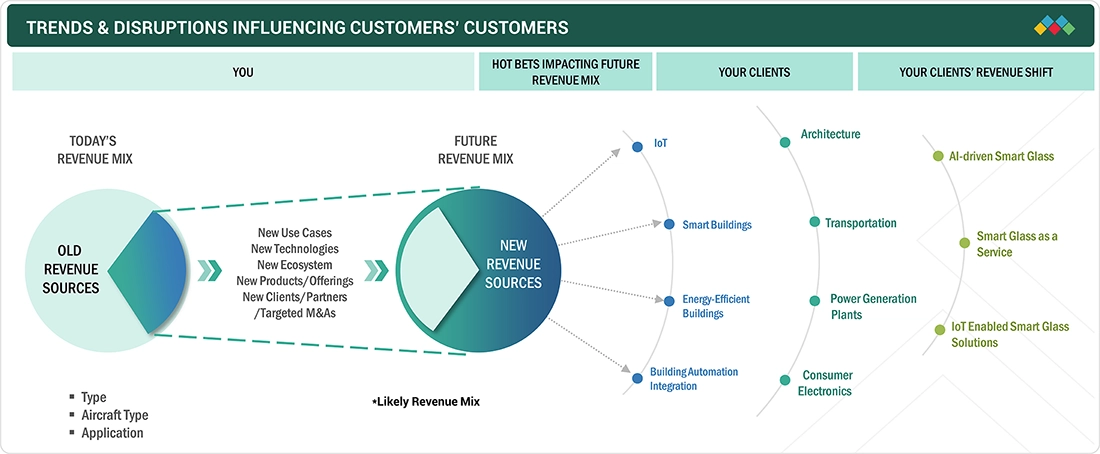
Source: Secondary Research, Interviews with Experts, MarketsandMarkets Analysis
MARKET DYNAMICS

Level
-
Rising demand for energy-efficient building materials

-
Growing integration of smart glass with IoT and building automation systems


Level
-
High upfront installation costs in US and Canada

-
Complex installation and integration requirements


Level
-
Growing retrofitting and renovation demand in US and Canada

-
Thriving electric vehicle industry


Level
-
Limited consumer awareness

-
Supply chain volatility and dependence on imported components

Source: Secondary Research, Interviews with Experts, MarketsandMarkets Analysis
Driver: Rising demand for energy-efficient building materials.
North America’s rising demand for energy-efficient building materials is a major driver for smart glass adoption, supported by stringent green building regulations, stricter energy codes, and growing emphasis on reducing heating and cooling loads in commercial and residential structures. Governments in the US and Canada are increasingly promoting sustainable construction through incentives, certifications, and carbon-reduction targets, pushing developers to integrate advanced glazing solutions. Smart glass fits directly into this momentum by offering dynamic control over heat gain, glare, and natural light, enabling buildings to significantly improve energy performance. As organizations prioritize net-zero goals and long-term operational cost savings, the demand for smart, high-performance glass continues to accelerate across the region.
Restraint: High upfront installation costs in US and Canada.
High upfront installation costs in the US and Canada remain a major restraint for the North America smart glass market, as advanced glazing technologies, such as electrochromic and SPD systems, require specialized materials, controllers, and skilled labor, significantly increasing project budgets. These costs are often higher than traditional alternatives, including tinted glass or window films, making adoption challenging for cost-sensitive residential and commercial projects. Additionally, integration with building automation systems and electrical wiring can further raise installation expenses, discouraging small developers and homeowners from choosing smart glass.
Opportunity: Growing retrofitting and renovation demand in US and Canada
Growing retrofitting and renovation demand in the US and Canada presents a significant opportunity for the North America smart glass market, as aging commercial buildings, offices, and institutional facilities increasingly require energy-efficient upgrades. With government incentives and green-building programs encouraging modernization, smart glass offers an effective solution to improve thermal performance, reduce glare, and enhance occupant comfort without major structural changes. Retrofitting projects particularly benefit from switchable and modular smart glass systems, which can be installed more easily than full façade replacements.
Challenge: Limited consumer awareness
Limited consumer awareness remains a significant challenge for the North America smart glass market, as many homeowners and small commercial buyers are still unfamiliar with the technology’s benefits, applications, and long-term energy savings. This knowledge gap often leads to hesitation in choosing smart glass over more traditional and familiar alternatives like blinds, curtains, or tinted windows. Additionally, misconceptions about high costs, maintenance requirements, and durability further slow adoption, especially in the residential sector. Without broader education and marketing efforts from manufacturers, installers, and industry associations, consumer understanding and demand for smart glass will continue to grow at a gradual pace rather than accelerating rapidly.
NORTH AMERICA SMART GLASS MARKET: COMMERCIAL USE CASES ACROSS INDUSTRIES
| COMPANY | USE CASE DESCRIPTION | BENEFITS |
|---|---|---|
 |
Use of electrochromic and thermochromic smart glass solutions in commercial building façades, offices, and energy-efficient windows | Reduced HVAC load by regulating heat and glare | Enhanced occupant comfort | Improved daylighting | Support for green building certifications |
 |
Deployment of auto-dimming and electronically dimmable smart glass in automotive rear-view mirrors, sunroofs, and aircraft windows | Glare reduction | Enhanced comfort and safety | Reduced energy consumption in vehicles and aircraft cabins |
 |
Integration of specialty coated and dynamic glass technologies in architectural glazing, automotive interiors, and next-gen mobility displays | High durability | Improved light control | Energy savings | Compatibility with advanced display systems used in EVs and smart buildings |
Logos and trademarks shown above are the property of their respective owners. Their use here is for informational and illustrative purposes only.
MARKET ECOSYSTEM
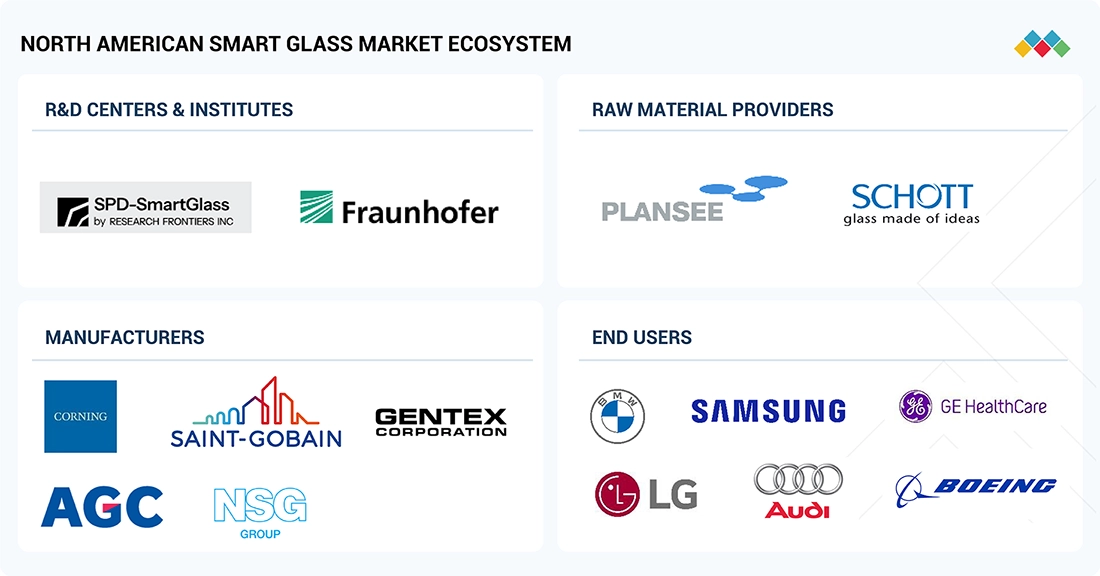
The North America smart glass ecosystem comprises a strong network of R&D centers & institutes driving innovation in electrochromic, SPD, and next-gen dynamic glazing technologies. This is supported by raw material providers supplying advanced coatings, films, polymers, and conductive layers essential for smart glass production. Manufacturers, such as glass processors, technology developers, and OEMs, integrate these materials into finished smart glazing solutions for architectural, automotive, and aerospace applications. End users, such as commercial builders, residential developers, automotive OEMs, airlines, and infrastructure projects, complete the ecosystem, creating a robust and interconnected value chain that fuels ongoing market growth.
Logos and trademarks shown above are the property of their respective owners. Their use here is for informational and illustrative purposes only.
MARKET SEGMENTS
Source: Secondary Research, Interviews with Experts, MarketsandMarkets Analysis
North America Smart Glass Market, By Type
As of 2024, coated segment held the largest share in the North America smart glass market, driven by its cost-effectiveness, ease of production, and broad compatibility with existing glazing systems. Coated smart glass offers reliable solar control, glare reduction, and UV protection without requiring complex electrical components, making it a preferred choice for large-scale architectural applications, such as façades, windows, and skylights. Its widespread availability, lower installation costs compared with active smart glass technologies, and strong adoption in commercial and residential retrofitting projects have further reinforced its dominance across the region.
North America Smart Glass Market, By Technology
In 2024, electrochromic smart glass dominated the North America market due to its superior energy-saving performance, smooth tint transition, and strong suitability for commercial buildings, offices, and institutional infrastructure. Its ability to dynamically control heat and glare while maintaining clear visibility makes it highly attractive for architects and developers aiming to meet stringent energy-efficiency standards.
North America Smart Glass Market, By End Use
The transportation segment dominates the North America smart glass market due to strong adoption of dynamic glazing in automotive, electric vehicles, and aerospace applications, where smart glass enhances comfort, safety, and energy efficiency. Automakers increasingly use electrochromic and SPD glass for sunroofs, side windows, and rear-view mirrors to reduce glare, control cabin temperature, and improve the driving experience. In the rapidly expanding EV segment, smart glass supports battery efficiency by lowering HVAC load.
REGION
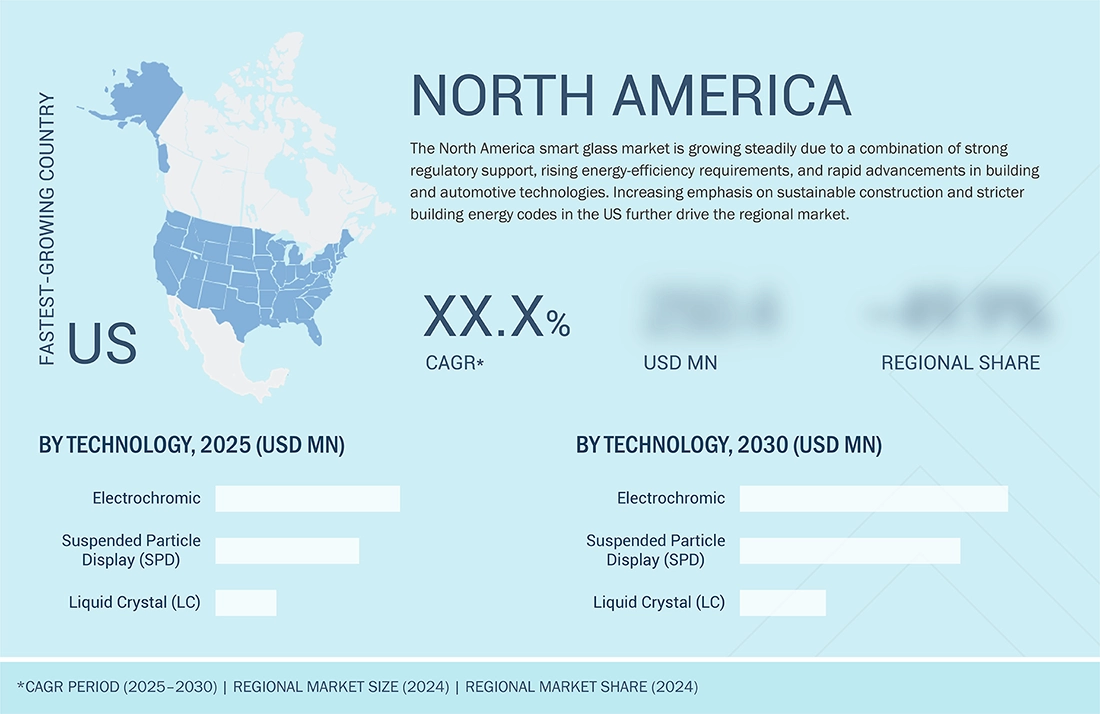
US to be fastest-growing country in North America smart glass market during forecast period
The US is expected to register the highest growth rate in the North America smart glass market due to its strong push toward energy-efficient and sustainable building solutions, supported by stringent federal and state-level green construction standards. Rapid expansion of commercial infrastructure, smart homes, and retrofitting projects further accelerates demand for dynamic glazing technologies.
NORTH AMERICA SMART GLASS MARKET: COMPANY EVALUATION MATRIX
In the North America smart glass market matrix, Corning Incorporated (Star) leads with a strong market share and an extensive product portfolio, driven by its advanced coated and electrochromic glass solutions widely adopted across transportation, commercial, and residential sectors. View Inc (Emerging Leader) is gaining traction with its innovative smart window technologies and energy-efficient solutions, strengthening its position through sustainability-focused offerings and tailored building integration. While Corning dominates through scale and diverse applications, View Inc shows significant potential to move toward the leaders’ quadrant as demand for energy-efficient and adaptive glazing solutions continues to grow.
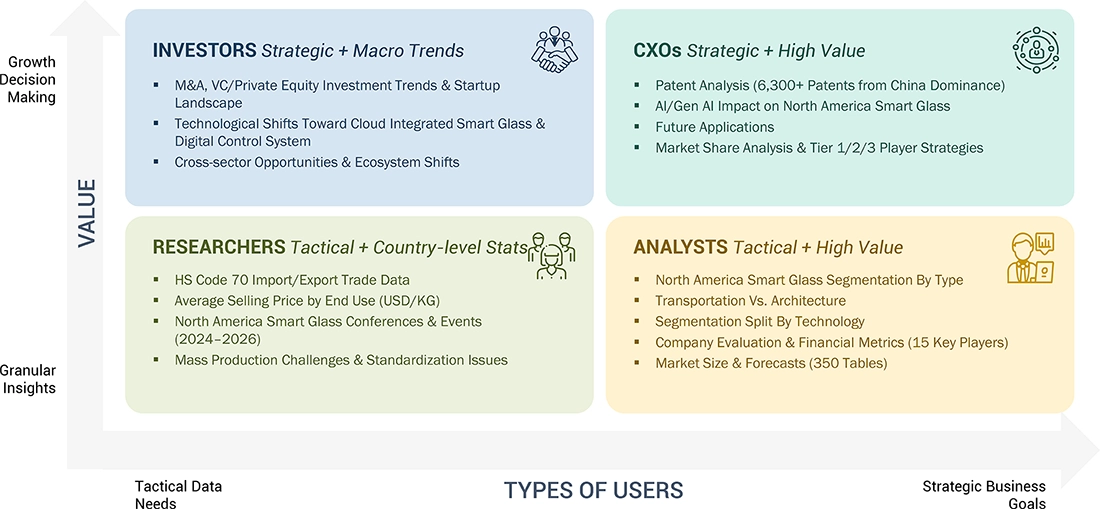
Source: Secondary Research, Interviews with Experts, MarketsandMarkets Analysis
KEY MARKET PLAYERS
- Saint Gobain
- AGC Inc.
- Gentex Corporation
- Corning Incorporated
- Nippon Sheet Glass Co Ltd
- View Inc
- Gauzy Ltd
- Research Frontiers
- Pleotint Inc.
- RavenWindow
MARKET SCOPE
| REPORT METRIC | DETAILS |
|---|---|
| Market Size in 2024 (Value) | USD 2.10 Billion |
| Market Forecast in 2030 (Value) | USD 3.72 Billion |
| Growth Rate | CAGR of 10.2% from 2025-2030 |
| Years Considered | 2021-2030 |
| Base Year | 2024 |
| Forecast Period | 2025-2030 |
| Units Considered | Value (USD Million/Billion), Volume (Sq Meters) |
| Report Coverage | Revenue forecast, company ranking, competitive landscape, growth factors, and trends |
| Segments Covered |
|
| Countries Covered | US, Canada, and Mexico |
WHAT IS IN IT FOR YOU: NORTH AMERICA SMART GLASS MARKET REPORT CONTENT GUIDE
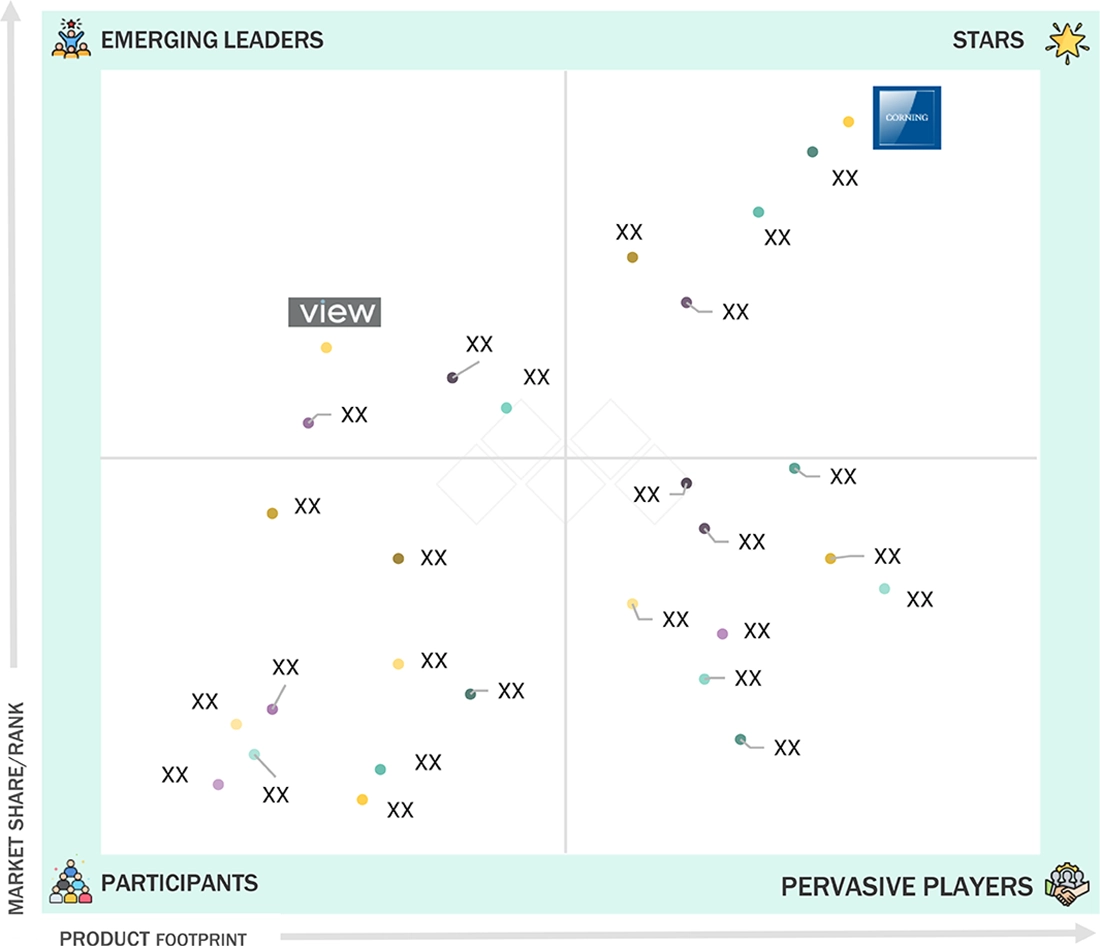
DELIVERED CUSTOMIZATIONS
We have successfully delivered the following deep-dive customizations:
| CLIENT REQUEST | CUSTOMIZATION DELIVERED | VALUE ADDS |
|---|---|---|
| Architectural Firm |
|
|
| Automotive OEM |
|
|
| Smart Glass Manufacturer |
|
|
RECENT DEVELOPMENTS
- October 2024 : Saint-Gobain entered a agreement to acquire Kilwaughter, a prominent leader in façade mortars across the UK and Ireland. Kilwaughter is known for its well-established and respected brands, including K Rend and K Systems. This acquisition will enhance Saint-Gobain’s portfolio in light and sustainable construction within the UK and Ireland.
- November 2023 : AGC, a global leader in glass, chemicals, and high-tech materials, announced that its Building Integrated Photovoltaic (BIPV) glass, SunEwat, has been selected for "The Greenhouse," Singapore's first net-zero international school building.
- September 2023 : Gentex Corporation announced the opening of a technology hub in downtown Grand Rapids. The facility aims to support, attract, and retain top engineering and software talent across West Michigan.
Table of Contents
 Exclusive indicates content/data unique to MarketsandMarkets and not available with any competitors.
Methodology
The study used four major activities to estimate the market size of the North America Smart Glass Market. Exhaustive secondary research was conducted to gather information on the market and its peer and parent markets. The next step was to validate these findings, assumptions, and sizing with industry experts across the value chain through primary research. Both top-down and bottom-up approaches were employed to estimate the total market size. Finally, market breakdown and data triangulation methods were utilized to estimate the market size for different segments and subsegments.
Secondary Research
The research methodology used to estimate and forecast the size of the North America Smart Glass Market began with the acquisition of data related to the revenues of key vendors in the market through secondary research. Various secondary sources have been referred to in the secondary research process to identify and collect information for this study. Secondary sources include annual reports, press releases, and investor presentations of companies; white papers, journals, certified publications, and articles by recognized authors; websites; directories; and databases. Secondary research has mainly been used to obtain key information about the value chain of the North America Smart Glass Market, key players, market classification, and segmentation according to the industry trends to the bottom-most level, geographic markets, and key developments from both market and technology-oriented perspectives. Secondary data has been collected and analyzed to determine the overall market size, further validated through primary research. The secondary research referred to for this research study involves the Semiconductor Industry Association (SIA), Electronic System Design Alliance (ESD Alliance), Institute of Electrical and Electronics Engineers (IEEE), Taiwan Semiconductor Industry Association (TSIA), European Semiconductor Industry Association (ESIA), and Korea Semiconductor Industry Association (KSIA). Moreover, the study involved extensive use of secondary sources, directories, and databases, such as Hoovers, Bloomberg Businessweek, Factiva, and OneSource, to identify and collect valuable information for a technical, market-oriented, and commercial study of the market. Vendor offerings have been taken into consideration to determine market segmentation.
Primary Research
In the primary research, various primary sources from both the supply and demand sides have been interviewed to obtain the qualitative and quantitative information relevant to this report. Primary sources from the supply side include the key industry participants, subject-matter experts (SMEs), and C-level executives and consultants from various key companies and organizations in the North America Smart Glass Market ecosystem. After the complete market engineering (including calculations for the market statistics, the market breakdown, the market size estimations, the market forecasting, and the data triangulation), extensive primary research has been conducted to verify and validate the critical market numbers obtained. Extensive qualitative and quantitative analyses have been performed during the market engineering process to list key information/insights throughout the report. Extensive primary research has been conducted after understanding the North America Smart Glass Market scenario through secondary research. Several primary interviews have been conducted with market experts from the demand and supply-side players across North America. Various primary sources from both the supply and demand sides of the market have been interviewed to obtain qualitative and quantitative information. Following is the breakdown of the primary respondents.
Primary data has been collected through questionnaires, emails, and telephonic interviews. In the canvassing of primaries, various departments within organizations, such as sales, operations, and administration, were covered to provide a holistic viewpoint in our report. After interacting with industry experts, brief sessions were conducted with highly experienced independent consultants to reinforce the findings from our primaries. This and the in-house subject matter experts’ opinions have led us to the findings described in the remainder of this report.
Market Size Estimation
Both top-down and bottom-up approaches were utilized to estimate and validate the size of the North America Smart Glass Market and its submarkets. Secondary research was conducted to identify the key players in the market, and primary and secondary research was used to determine their market share in specific regions. The entire process involved studying top players' annual and financial reports and conducting extensive interviews with industry leaders such as CEOs, VPs, directors, and marketing executives. Secondary sources were used to determine all percentage shares and breakdowns, which were verified through primary sources. All parameters that could impact the markets covered in this research study were accounted for, analyzed in detail, verified through primary research, and consolidated to obtain the final quantitative and qualitative data.Data Triangulation
Once the overall size of the North America Smart Glass Market was determined using the methods described above, it was divided into multiple segments and subsegments. Market engineering was performed for each segment and subsegment using market breakdown and data triangulation methods, as applicable, to obtain accurate statistics. To triangulate the data, various factors and trends from the demand and supply sides were studied. The market was validated using both top-down and bottom-up approaches.
Market Definition
Smart glass, also known as switchable, dimmable, or magic glass, can adjust the light transmission properties dynamically or statically, depending on the stimuli. The stimuli altering the light transmission properties could be light, voltage, or heat. It does not require electricity to maintain its opacity or change color. The installation of smart glass helps reduce the energy spent on heating, ventilation, and air conditioning (HVAC) and lighting systems and improves the indoor environmental quality of buildings. Electrochromic glass, which can be directly controlled by building occupants, is popular for enhancing occupant comfort, maximizing access to daylight and outdoor views, reducing energy costs, and providing architects with more design freedom.
Key Stakeholders
- Smart glass manufacturers
- Building material suppliers
- Switchable (metal-oxide) film manufacturers
- Dimmable/smart glass film manufacturers
- Aerospace and automotive glass industry players
- Architects and building owners
- Smart glass-related technology investors
- Advanced glass and film technology researchers and developers
- End users
- Research institutes and organizations
- Market research and consulting firms
- Smart glass buyers
- Smart glass technology providers
Report Objectives
- To describe and forecast the North America Smart Glass Market by type, technology, mechanism, control system, end use, and region, in terms of value
- To strategically analyze the micro markets with regard to the individual growth trends, prospects, and contribution to the market
- To provide detailed information regarding drivers, restraints, opportunities, and challenges influencing the growth of the market
- To analyze opportunities for stakeholders by identifying high-growth segments in the market
- To provide a detailed overview of the value chain
- To strategically analyze the ecosystem, regulatory landscape, patent landscape, Porter’s five forces, import and export scenarios trade landscape, and case studies pertaining to the market under study
- To strategically profile key players in the North America Smart Glass Market and comprehensively analyze their market shares and core competencies
- To strategically profile the key players and provide a detailed competitive landscape of the market
- To analyze competitive developments such as partnerships, acquisitions, expansions, collaborations, and product launches, along with research and development (R&D) in the North America Smart Glass Market
Available Customizations
With the given market data, MarketsandMarkets offers customizations according to the specific requirements of companies. The following customization options are available for the report:
- Detailed analysis and profiling of additional market players (up to 5)
- Additional country-level analysis of the North America Smart Glass Market
Product Analysis
- Product matrix provides a detailed comparison of the product portfolio of each company in the North America Smart Glass Market.
Key Questions Addressed by the Report
What is the projected value of the North America smart glass market?
The North America smart glass market is projected to reach USD 3.72 billion by 2030 from USD 2.29 billion in 2025, growing at a CAGR of 10.2%
Which country dominates the North America smart glass market?
The United States dominates the market, accounting for approximately 66.95% share in 2024.
Which segment leads the North America smart glass market by type?
The coated segment holds the largest share due to its cost-effectiveness and wide adoption in architectural applications.
Which segment is expected to grow the fastest in the market?
The suspended particle display (SPD) technology segment is expected to register the highest CAGR during the forecast period.
Who are the key players in the North America smart glass market?
Key players include Saint-Gobain, AGC Inc., Gentex Corporation, Corning Incorporated, and Nippon Sheet Glass Co. Ltd.


Personalize This Research
- Triangulate with your Own Data
- Get Data as per your Format and Definition
- Gain a Deeper Dive on a Specific Application, Geography, Customer or Competitor
- Any level of Personalization
Let Us Help You
- What are the Known and Unknown Adjacencies Impacting the North America Smart Glass Market
- What will your New Revenue Sources be?
- Who will be your Top Customer; what will make them switch?
- Defend your Market Share or Win Competitors
- Get a Scorecard for Target Partners

Custom Market Research Services
We Will Customise The Research For You, In Case The Report Listed Above Does Not Meet With Your Requirements
Get 10% Free CustomisationTESTIMONIALS

Tetsuya Ohhira
Business Development Manager-Technology Business
Nikon Corporation,
Leading Japanese MNC specializing in optics and imaging productswww.nikon.com
MarketsandMarkets™ response
is quick. Their attitude is flexible and positive. Analyst Insights are globally considered and
significant. Client Services quickly respond to our inquiry and demand. Their wide range of global
surveys help us make our strategic plan.
We hope Knowledge Store will be easier to search
for a report.
VP - Marketing & Business Development
Leading Provider of Process Control Solutions
We engaged with MarketsandMarkets on a study to perform an analysis and recommend a Go-To-Market strategy for metrology and process control in the semiconductor market. The study was tailored to our targets and needs with well-defined milestones. Our overall experience with the MarketsandMarkets team was very good throughout the project in all aspects including the analysis methodologies used, the quality and depth of primary and secondary data sets, the professionalism and flexibility of the team and the ability to meet the target schedule and milestones. We want to thank MarketsandMarkets team for a job well done.






Growth opportunities and latent adjacency in North America Smart Glass Market