Recycled Plastics Market

Recycled Plastics Market by Source (Bottles, Fibers, Films, Foams), Process, Plastic Type (PET, PP, PVC, PS), Type, End-Use Industry (Packaging, Textiles, Building & Construction, Automotive, Electrical & Electronics), and Region - Forecast to 2033




OVERVIEW
Source: Secondary Research, Interviews with Experts, MarketsandMarkets Analysis
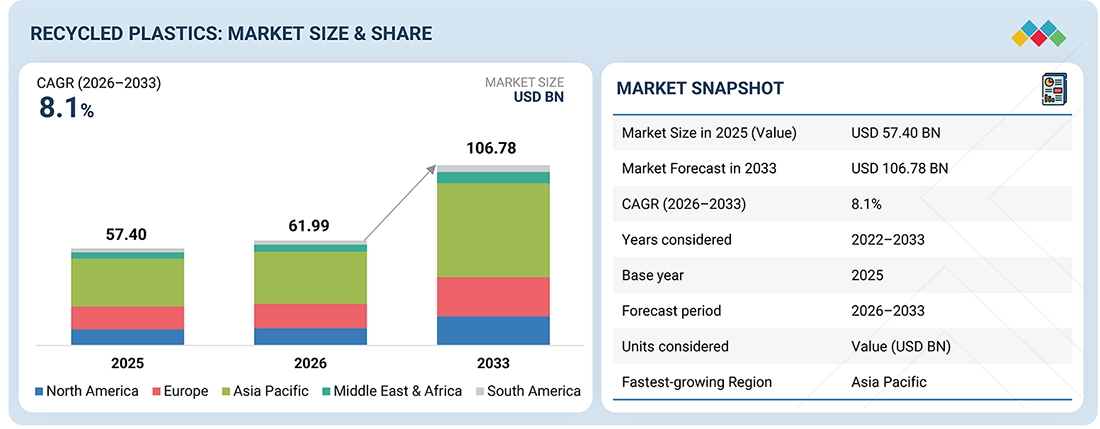
The global recycled plastics market is projected to grow from USD 61.99 billion in 2026 to USD billion 106.78 by 2033, at a CAGR of 8.1% during the forecast period. The market has shown consistent growth throughout the study period and is expected to maintain this trend during the forecast period. Increasing awareness among individuals about energy savings and government initiatives are anticipated to drive the market growth in the coming years.
KEY TAKEAWAYS
-
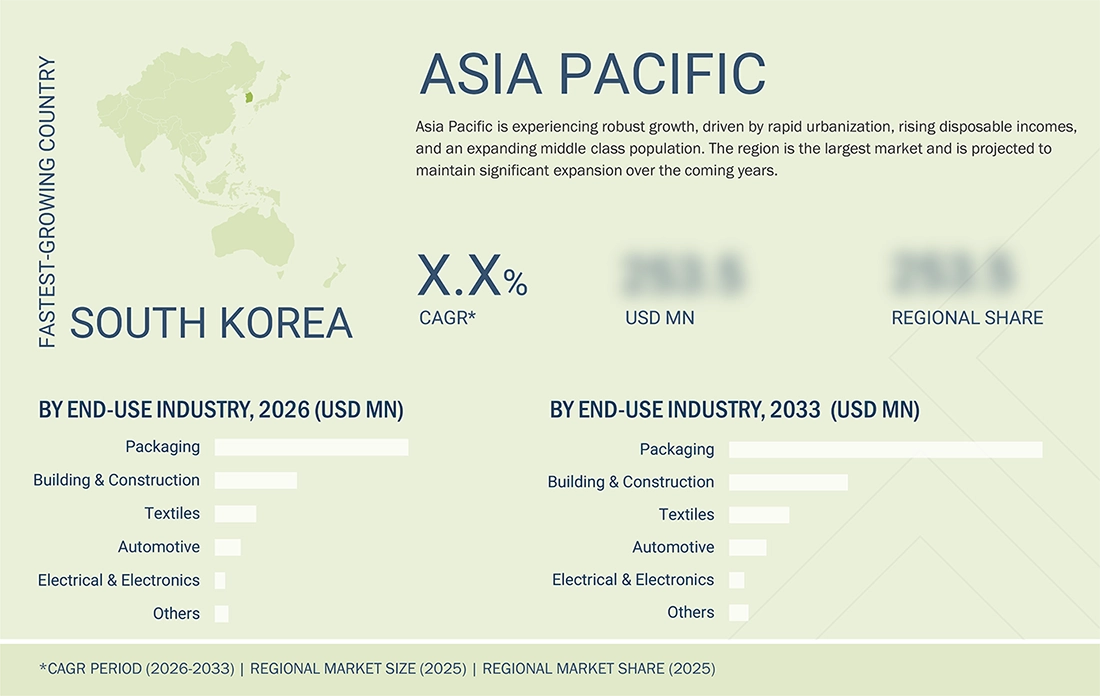
BY REGIONThe global recycled plastics market is led by Asia Pacific with a share of 53.2%, in terms of value, in 2025. The market in the region is projected to register a CAGR of 9.1% between 2026 and 2033.
-
BY SourceThe bottles segment accounted for a share of 54.3%, in terms of value, of the overall market in 2025.
-
BY Plastic TypeBy plastic type, the PET segment is expected to register a CAGR of 8.6% during the forecast period.
-
By ProcessBy process, the mechanical segment is expected to dominate the market during the forecast period.
-
By TypeThe post-consumer recyclates segment is projected to register a CAGR of 8.3%, in terms of volume, during the forecast period.
-
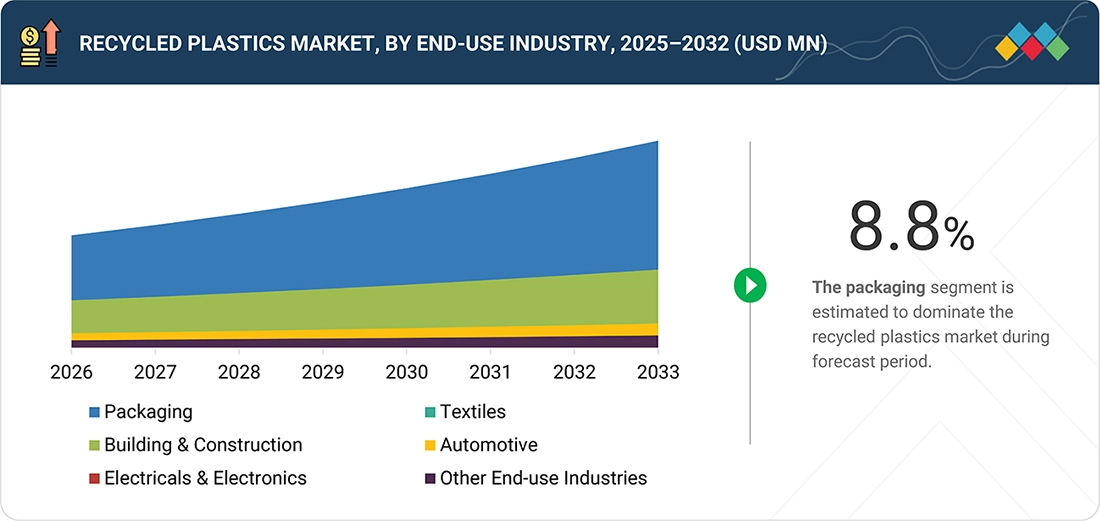
By End-use IndustryPackaging is the largest and fastest-growing end-use industry of recycled plastics, accounting for 53.3% of the overall market in terms of value in 2025.
-
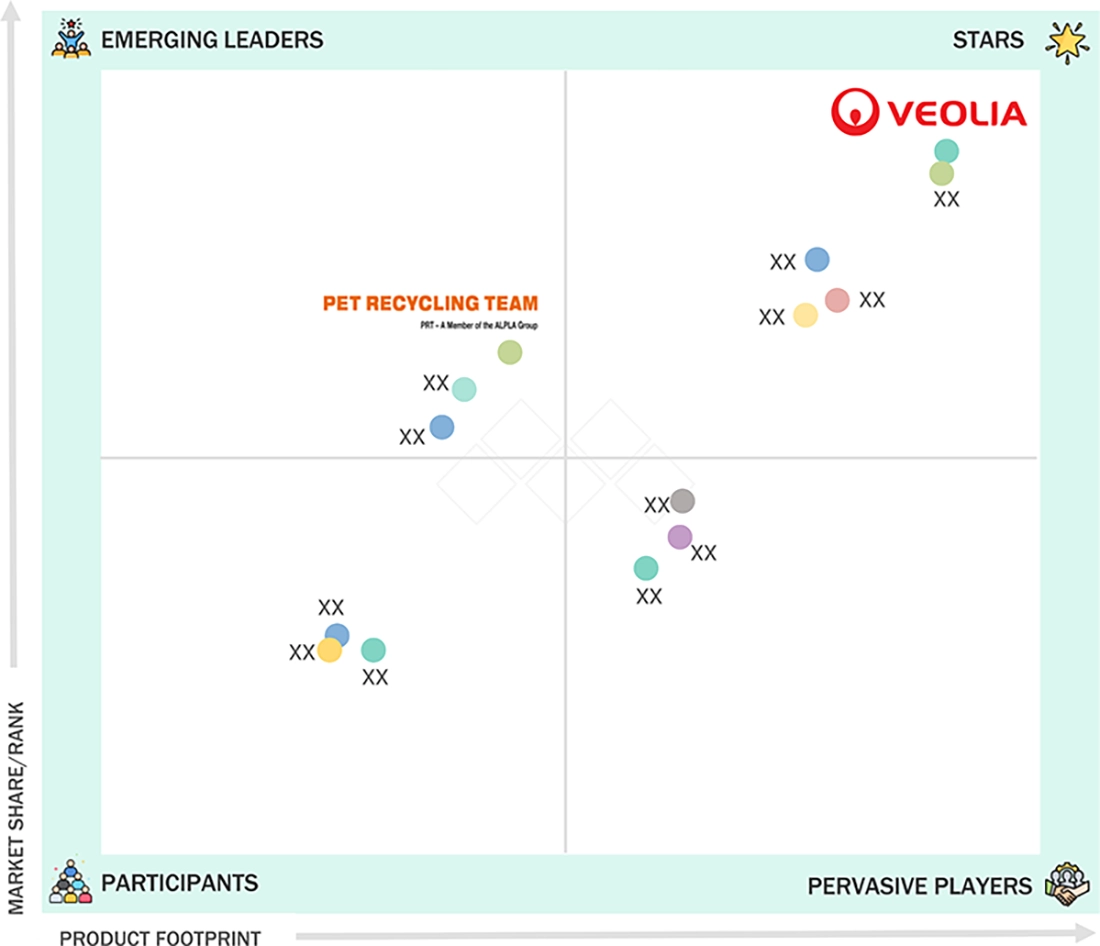
Competitive Landscape - Key PlayersVeolia, Indorama Ventures, and Republic Services were identified as some of the star players in the recycled plastics market (global), given their strong market share and product footprint.
-
Competitive Landscape - StartupsCustom Polymers, B&B Plastics Inc., and Fresh Pak Corp, among others, have distinguished themselves among startups and SMEs by securing strong footholds in specialized niche areas, underscoring their potential as emerging market leaders.
The demand for recycled plastics is expected to grow at a steady pace during the forecast period. Stringent regulations on sustainability and environmental concerns, along with advances in recycling technologies, are driving growth in this market. Several industries, such as packaging, automotive, textiles, building & construction, and other sectors, are substituting virgin polymers with recycled polymers in their production processes. This is due to a shift in practices across several industries towards the circular economy. There is a growing demand for PCR (post-consumer recyclates) such as rPET (recycled PET), which is altering supply chains and production processes. By end-use industry, the packaging segment accounted for a major share of the market owing to growing commitment for sustainable packaging solutions and the expanding network of recycling and waste collection infrastructure. Continuous improvements in sorting and recovery technologies are increasing the quality of recycled resins. With rapidly developing industries, expanding manufacturing operations across emerging economies, and supportive government policies focusing on enhancement of recycling processes, Asia Pacific is anticipated to emerge as a leading region in the market.
TRENDS & DISRUPTIONS IMPACTING CUSTOMERS' CUSTOMERS
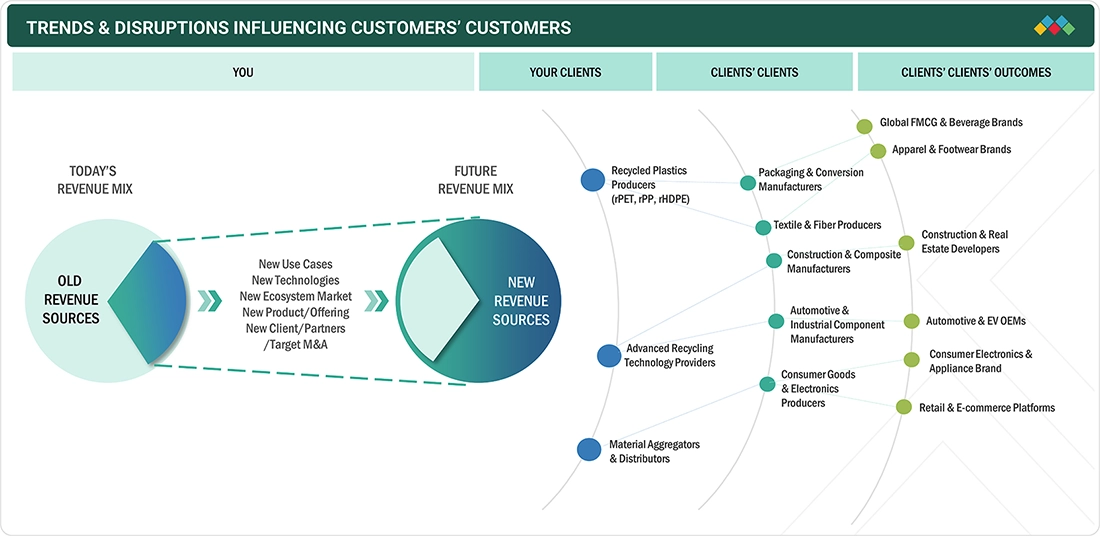
Commitments to greater sustainability, tightening environmental legislation and innovations in recycling and waste management technologies are affecting the recycled plastics market. Increased demand for high-quality recycled polymers in the packaging, textiles, automotive, and construction sectors is spurring improvements in material recovery and processing technologies. Manufacturers are looking at incorporating post-consumer recyclates in their manufacturing processes in order to lower emissions. Government efforts to create a circular economy, along with greater consumer awareness, are fueling large-scale investment in recycling facilities.
Source: Secondary Research, Interviews with Experts, MarketsandMarkets Analysis
MARKET DYNAMICS

Level
-
Negative environmental impact of plastic disposal

-
Growing awareness regarding energy savings and government initiatives


Level
-
Strong competition from virgin plastics

-
Adverse impact of downcycling


Level
-
Favorable initiatives to promote use of recycled plastics in developed countries

-
Increasing use in textiles industry in developing APAC countries


Level
-
Ban on imports of waste or scrap plastics in China

-
Difficulties in collecting raw materials

Source: Secondary Research, Interviews with Experts, MarketsandMarkets Analysis
Driver: Increasing use in packaging, automotive, and electrical & electronics industries
The recycled plastic market is growing rapidly due to the growing demand in major industries, such as packaging, automotives, and electrical & electronic appliances. In the packaging industry, there is a shift toward using eco-friendly materials. As people get more environmentally aware and conscious, and governments implement laws to curb single-use plastic consumption, companies are utilizing recycled plastics to fulfill their commitment to sustainability. In particular, recycled PET and HDPE are increasingly used in the food & beverage packaging sector. In the automotive industry, there are calls to use lightweight materials to reduce carbon dioxide emissions and conserve fuel. As recycled polymers like polypropylene and polyethylene are relatively cheap and easily moldable, automotive companies are increasingly using these in automotive interiors, bumpers, and under-hood systems. In the electrical & electronics industry, the demand for recyclable plastics is growing fast.
Restraints: Adverse impact of downcycling
The market for recycled plastics faces a significant issue: downcycling. This process transforms recycled plastics into lower-quality and less functional products that differ from their original form. Such a decrease in quality is a major concern for manufacturers, who may avoid using recycled plastics, particularly when performance demands are stringent. Downcycling reduces the mechanical properties (e.g., lower tensile strength, poorer color stability, and lower heat resistance) of recycled plastics, making them less desirable to manufacturers that need rigid, consistent-performance plastics. End users are also likely to choose virgin plastics over recycled materials if performance and safety are primary considerations. Over successive cycles (even under demanding recycling conditions), polymer chains further degrade, and the lifetime of the recycled plastic decreases. This is the reason for concern when a collection stream is comprised of mixed plastics. The inherent incompatibility of different types of plastics and contamination leads to degraded end products. The use of inferior sorting and processing technologies prevalent in some regions makes it difficult to produce good-quality recycled plastics. These difficulties negatively impact market uptake and the transition to a closed-loop system.
Opportunity: Favorable initiatives to promote the use of recycled plastics in developed countries
The growth of recycled plastics is driven by robust policies enacted in developed countries. Under the EU Plastic Strategy (2018) and within the Circular Economy Action Plan, the EU is driving improvements in collection systems and enhanced requirements for recyclability, as well as a mandatory share of recycled content for specific plastic products. The EU is expanding its deposit return and reverse vending machine systems, and countries such as Germany, Norway and Ireland have achieved very high recycling rates for beverage bottles through these schemes. This results in a higher quality of feedstock by creating higher participation of the public and lowering contamination of recycling streams. There are now revisions planned to the EU End of Life Vehicles (ELV) Regulation aimed to increase recycled plastic content in new automobiles and to improve the recyclability of vehicle components. These will stimulate a base load for demand of plastics from industrial applications and investment in recycling infrastructure. EPR schemes have also begun to be enacted in various countries, France's Anti-Waste and Circular Economy Act being a key example which favors collection and re-use schemes as well as incorporating recycled content into plastic products.
Challenge: Ban on imports of waste or scrap plastics in China
China’s 2017-2018 ban on the import of foreign waste, termed the ‘National Sword’ policy, is creating considerable disturbance that restricts global market expansion for recycled plastics. China cut off imports of low-grade mixed recycling by targeting plastic waste with more than 0.05% contamination. As China receives and processes a major share of the world's recycled plastics, imports dropped by more than 90%, and exporters are rerouting plastic waste to different markets. Short-term impacts of this policy are severe, as the bulk of recyclable materials is stockpiled, prices of plastic commodities have collapsed, and landfilling activity in developed nations has increased significantly. This led municipal recycling programs in North America and Europe to experience a sudden loss in revenue; consequently, some reduced or stopped their service. Plastic waste without a destination is directed to Southeast Asia, which is inadequately prepared, and bans on plastic waste imports in these countries followed soon after. This will discourage investment in recycling infrastructure in this sector, as market uncertainty affects the returns and profitability of those facilities. Contaminated low-grade plastic remains a major hurdle, as strict Chinese quality constraints underscore the essential need for precise sorting facilities. However, sorting capacity is inadequate in many regions. In summary, China's ban disrupted the flow of feedstocks, suppressed recycling profitability and revealed that sorting and processing capacity is a global problem. Until improved infrastructure and higher-quality waste streams are in place, the expansion of the recycling market is constrained.
RECYCLED PLASTICS MARKET: COMMERCIAL USE CASES ACROSS INDUSTRIES
| COMPANY | USE CASE DESCRIPTION | BENEFITS |
|---|---|---|
 |
Operates large-scale recycling and reprocessing systems, converting post-consumer and industrial plastic waste into high-quality recycled polymers (rPET, rHDPE, rPP) | Supplies to packaging, automotive, and construction sectors, integrating advanced sorting and circular resource recovery technologies | Enhances plastic circularity, reduces landfill dependency, and supports clients in achieving sustainability and carbon reduction targets through a reliable recycled material supply |
 |
Produces advanced recycled PET (rPET) resins and flakes for use in packaging, textiles, and consumer goods through its global Indorama Ventures Recycling network, utilizing integrated collection systems and advanced processing technologies to ensure material quality and supply reliability | Provides consistent, food-grade recycled plastics with strong quality assurance | Supports brand owners in meeting recycled content goals and environmental compliance standards |
 |
Operates a growing network of material recovery facilities (MRFs) that collect, sort, and process post-consumer plastics into high-quality feedstock for resin producers and brand owners in North America and Asia | Strengthens regional recycling ecosystems, supports circular economy infrastructure, and ensures a steady supply of sorted plastics for advanced reprocessors |
 |
Manufactures and supplies packaging materials to the consumer, healthcare and industrial sectors | Emphasizes design for recycling and closed-loop systems | Reduces virgin plastic use, supports customer sustainability pledges, and enhances lifecycle performance through high recycled-content packaging solutions |
 |
Produces and distributes recycled PET resins through its Alpek Polyester division, integrating bottle-to-bottle recycling systems to supply major beverage and packaging companies globally | Enables high-purity, food-grade rPET supply, reduces carbon emissions, and promotes sustainable manufacturing aligned with circular economy commitments |
Logos and trademarks shown above are the property of their respective owners. Their use here is for informational and illustrative purposes only.
MARKET ECOSYSTEM
Key players in this market are large, mature, and financially strong producers of recycled plastics. These producers have been active in the market for several years and have diverse products with a well-established global sales and marketing network. Some key players in the market are Veolia (France), Indorama Ventures Public Company Limited (Thailand), Far Eastern New Century Corporation (Taiwan), Alpek S.A.B. De C.V. (Mexico), and Amcor plc (Switzerland).
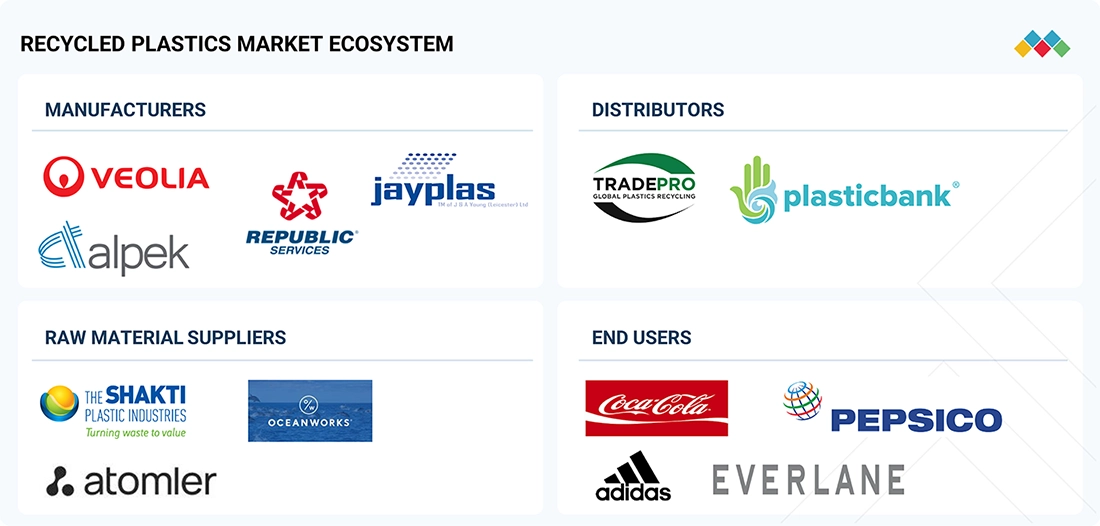
Logos and trademarks shown above are the property of their respective owners. Their use here is for informational and illustrative purposes only.
MARKET SEGMENTS
Source: Secondary Research, Interviews with Experts, MarketsandMarkets Analysis
Recycled Plastics Market, By End-Use Industry
By end-use industry, the packaging segment is projected to experience the highest growth in the global recycled plastics market. Growing consumer awareness and stringent environmental regulations are increasing the market size through rising global demand for environmentally friendly packaging. Plastic is used in bulk across industries like food & beverages, home care, and personal care. Businesses face greater pressure to curtail their use of virgin plastics due to the ongoing rise in plastic pollution and growing concern about the environmental impact of plastics. Alternatives like rPET and rHDPE can play an important role in tackling this problem. By mandating minimum recycled-plastic content in packaging, various governments worldwide are motivating brands and manufacturers to reform packaging practices and adopt higher levels of recycled content. Recycling technology is evolving rapidly, and its use helps produce higher-quality recycled plastics to meet the packaging sector's needs. With the packaging market consistently experiencing increased demand from e-commerce and evolving consumer requirements, industries are predicted to rely on the packaging sector to promote the recycled plastics market to achieve a closed-loop system and lower ecological impact.
Recycled Plastics Market, By Source
By source, the bottles segment is estimated to account for the largest share in the recycled plastics market. Plastic bottles—PET and HDPE—are among the most common and widely discarded plastics worldwide. With their widespread use in packaging soft drinks, personal care products, and household items, bottles are readily available for collection. Therefore, they represent the most accessible material for recycling schemes. One primary reason for the growth in this business is the extensive collection and sorting network, most commonly found in urban areas. Many countries have deposit-return systems and curbside recycling programs targeting bottles, making their collection and processing more feasible than for other plastics. Because of their typical structure and material composition, such bottles are easy to recycle. This enhances recycling in both quantity and quality. Additionally, the increasing awareness of sustainable packaging is driving brands to demand more recycled plastics from bottles, such as rPET, for use in their product packaging. The textile, food & beverage, and consumer goods sectors are increasing their use of recycled content due to environmental and regulatory factors. As consumer awareness of ecological issues rises and government regulators promote the circular economy, the bottle segment is expected to dominate the market for recycled plastics during the forecast period.
Recycled Plastics Market, By Plastic Type
By plastic type, the polyethylene terephthalate (PET) segment is the dominant contributor to the overall recycled plastics segment. PET is commonly used for packaging bottled water, food, and consumer goods. The strong existing collection and recycling infrastructure has made PET one of the most popular choices. With growing awareness and government regulations regarding the environment, all consumers and companies have now started considering adopting eco-friendly packaging alternatives. Furthermore, the increasing demand in textiles (polyester fiber), automotive, and construction industries for the recycled PET (rPET) indicates its future growth potential.
REGION
Asia Pacific is estimated to account for the largest market share during the forecast period.
Based on region, the Asia Pacific region is expected to be the fastest-growing market for recycled plastics. The region experiences increased demand due to rapid industrial growth, a rise in the urban population, and increased environmental awareness among consumers. The rising use of plastic in China, India, Japan and Southeast Asian nations has compelled both governments and businesses to establish sustainable waste management systems and build recycling centers. The packaging market, together with the automotive and construction industries, now requires greater amounts of recycled materials because regulations establishing plastic waste management requirements, extended producer responsibility (EPR) rules, and recycled content mandates have been introduced. The market expansion receives additional momentum from the substantial manufacturing output and growing international investment in circular economy projects. The rising consumer understanding of sustainability and the corporate dedication to sustainable practices drive recycled plastic usage in Asia Pacific.
RECYCLED PLASTICS MARKET: COMPANY EVALUATION MATRIX
In the recycled plastics market, Veolia (Star) stands as a leading solution provider, offering a well-diversified range of high-quality, traceable, and eco-friendly recycled PET (rPET), recycled PP (rPP), and recycled PE (rPE) products. The company's comprehensive recycling value chain, including collection and sorting activities and state-of-the-art reprocessing plants, will enable it to maintain its lead among packaging, construction, and industrial users. PET Recycling Team (Emerging Leader) is strengthening its position in the recycled plastics market through its focus on high-quality recycled PET (rPET) production and advanced PET recovery and reprocessing capabilities.
Source: Secondary Research, Interviews with Experts, MarketsandMarkets Analysis
KEY MARKET PLAYERS
- Veolia (France)
- Indorama Ventures Public Company Limited (Thailand)
- Republic Services (US)
- Amcor plc (Switzerland)
- Alpek S.A.B. de C.V. (Mexico)
- Far Eastern New Century Corporation (Taiwan)
- Biffa (UK)
- Jayplas (England)
- UNIFI, Inc., (US)
- Loop Industries (Canada)
- MBA Polymers Inc. (US)
- PET RECYCLING TEAM (Austria)
- Plastipak Holdings, Inc. (US)
- REMONDIS SE & Co. KG (Germany)
- Ultra-Poly Corporation (US)
- Suzhou Jiulong Recycling Technology Co., LTD.
MARKET SCOPE
| REPORT METRIC | DETAILS |
|---|---|
| Market Size in 2025 (Value) | USD 57.40 BN |
| Market Forecast in 2033 | USD 106.78 BN |
| CAGR (2026–2033) | 8.10% |
| Years Considered | 2022–2033 |
| Base Year | 2025 |
| Forecast Period | 2026–2033 |
| Units Considered | Value (USD BN) |
| Report Coverage | The report defines, segments, and projects the recycled plastics market based on source, plastic type, process, type, end-use industry, and region. It provides detailed information on the major factors influencing the market's growth, including drivers, restraints, opportunities, and challenges. It strategically profiles recycled plastic manufacturers, comprehensively analyzes their market shares and core competencies, and tracks and analyzes competitive developments they undertake in the market, such as expansions, partnerships, and new product launches. |
| Segments Covered | By Source (Bottles, Films, Foams, Fibers, Others) |
| Regional Scope | North America, Europe, Asia Pacific, Middle East & Africa, South America |
WHAT IS IN IT FOR YOU: RECYCLED PLASTICS MARKET REPORT CONTENT GUIDE
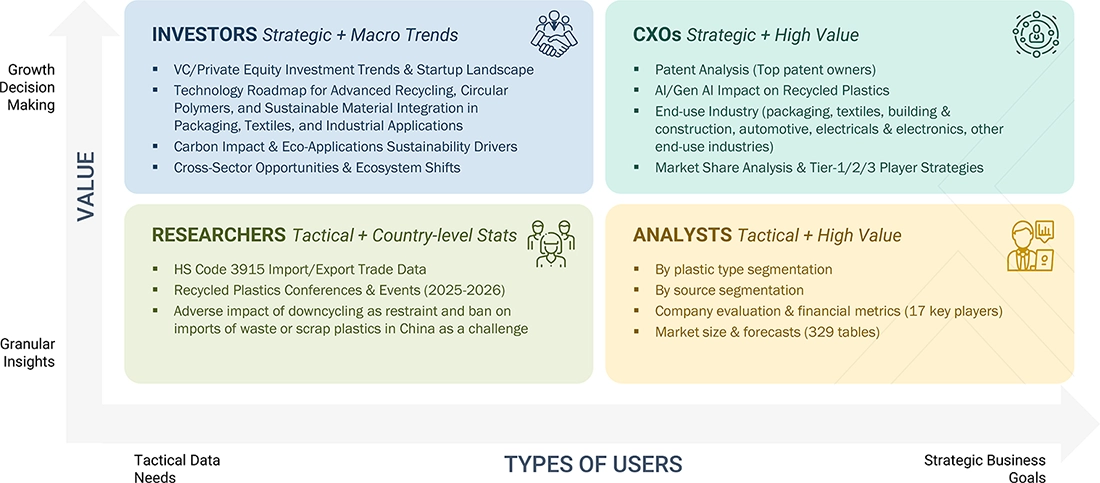
DELIVERED CUSTOMIZATIONS
We have successfully delivered the following deep-dive customizations:
| CLIENT REQUEST | CUSTOMIZATION DELIVERED | VALUE ADDS |
|---|---|---|
| Packaging & Consumer Goods Manufacturers | Benchmark recycled polymer grades (rPET, rPP, rHDPE) used in packaging applications to assess clarity, strength, and cost-effectiveness | Enhances packaging design efficiency, reduces virgin plastic dependence, and supports sustainability compliance goals |
| Textile & Apparel Producers | Map recycled polyester (rPET) and nylon (rPA) fiber options based on durability, appearance, and processing compatibility | Enhances product performance and supports recycled content labeling for global apparel brands |
| Construction & Industrial Material Developers | Benchmark recycled plastic composites and resins for use in pipes, panels, and structural components | Improves material circularity, reduces embodied carbon, and supports compliance with green building standards |
RECENT DEVELOPMENTS
- March 2026 : Amcor and DCM Shriram Ltd. introduced recycle-ready fertilizer packaging containing 35% post-consumer recycled (PCR) content for agricultural applications. The packaging is manufactured using mono-PE material structures and recycled plastic content.
- November 2025 : Indorama Ventures' Fibers business formed a joint venture with Jiaren Chemical Recycling to scale chemical recycling of polyester textile waste. The partnership aims to unlock up to 100,000 tonnes/year of textile-recycled PET spinning capacity and strengthen circular textile supply chains globally.
- August 2025 : Amcor and Flügger Group introduced paint containers manufactured with 50% recycled plastic content for decorative paint applications. The containers incorporate post-consumer recycled (PCR) material in rigid plastic packaging.
- July 2025 : Veolia announced a £70 million investment to develop the UK's first closed-loop PET tray-to-tray recycling facility in Shropshire, UK. The facility is expected to process around 80,000 tonnes of plastics annually and is scheduled to become operational in early 2026.
- May 2025 : Republic Services, Inc. announced plans of constructing a 105,000-square-foot cutting-edge recycling center in Bridgeton, Missouri. This center will boost local recycling rates immensely, as it can handle up to 45 tons of single-stream recyclables per hour. The new recycling center will feature sophisticated equipment, including at least 10 optical sorters, AI-enabled contamination reduction and high-throughput screeners to make sorting faster, smarter and more precise.
Table of Contents
 Exclusive indicates content/data unique to MarketsandMarkets and not available with any competitors.
Methodology
The study involved four major activities in estimating the current market size of recycled plastics. Exhaustive secondary research was done to collect information on the market, the peer market, and the parent market. The next step was to validate these findings, assumptions, and sizes with industry experts across the value chain of recycled plastics through primary research. Both top-down and bottom-up approaches were employed to estimate the complete market size. After that, market breakdown and data triangulation were used to estimate the size of the segments and sub-segments of the market.
Secondary Research
The research methodology used to estimate and forecast the access control market begins with capturing data on the revenues of key vendors in the market through secondary research. In the secondary research process, various secondary sources, such as Hoovers, Bloomberg BusinessWeek, Factiva, World Bank, and Industry Journals, were referred to for identifying and collecting information for this study. These secondary sources included annual reports, press releases & investor presentations of companies; white papers; certified publications; articles by recognized authors; notifications by regulatory bodies; trade directories; and databases. Vendor offerings have also been taken into consideration to determine market segmentation.
Primary Research
The recycled plastics market comprises several stakeholders, such as raw material suppliers, processors, recycling companies, recycled plastic manufacturers, and regulatory organizations in the supply chain. Various primary sources from both the supply and demand sides of the market were interviewed to obtain qualitative and quantitative information. Primary sources from the supply side included industry experts such as Chief Executive Officers (CEOs), vice presidents, marketing directors, technology and innovation directors, and related key executives from various key companies and organizations operating in the recycled plastics market. Primary sources from the demand side included directors, marketing heads, and purchase managers from various sourcing industries. The following is the breakdown of the primary respondents:
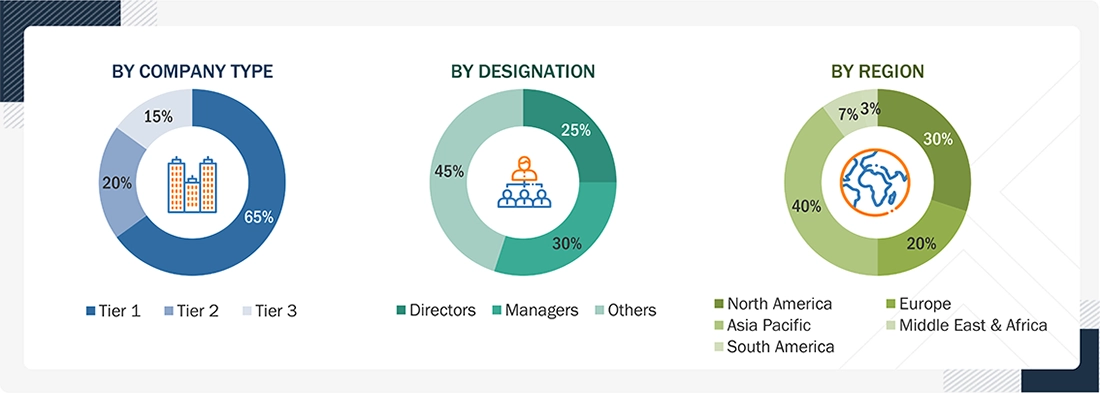
To know about the assumptions considered for the study, download the pdf brochure
Market Size Estimation
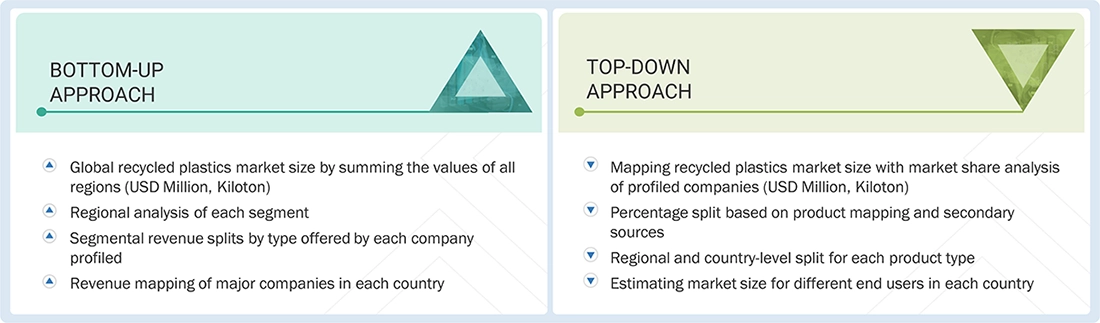
Both the top-down and bottom-up approaches have been used to estimate and validate the total size of the recycled plastics market. These approaches have also been used extensively to estimate the size of various dependent subsegments of the market. The research methodology used to estimate the market size included the following:
The following segments provide details about the overall market size estimation process employed in this study:
- The key players in the market were identified through secondary research.
- The market shares in the respective regions were identified through primary and secondary research.
- The value chain and market size of the recycled plastics market, in terms of value and volume, were determined through primary and secondary research.
- All percentage shares, splits, and breakdowns were determined using secondary sources and verified through primary sources.
- All possible parameters that affect the market covered in this research study were accounted for, viewed in extensive detail, verified through primary research, and analyzed to obtain the final quantitative and qualitative data.
- The research included the study of annual and financial reports of the top market players and interviews with industry experts, such as CEOs, VPs, directors, sales managers, and marketing executives.
Data Triangulation
After arriving at the overall market size using the market size estimation processes as explained above, the market was split into several segments and sub-segments. To complete the overall market engineering process and arrive at the exact statistics of each market segment and subsegment, the data triangulation and market breakdown procedures were employed, wherever applicable. The data was triangulated by studying various factors and trends from both the demand and supply sides in various sectors.
Market Definition
Recycled plastics are the materials that result from processing waste plastic materials. The use of recycled plastics leads to decreased landfill use while helping save natural resources, preventing plastic waste from entering the environment, and reducing greenhouse gas emissions. Recycled plastics derive their materials from multiple sources, which include plastic bottles, fibers, films, and foams. The recycling process uses mechanical or chemical methods to transform materials into two categories of recyclate, which include post-consumer and post-industrial materials that contain plastic pellets, flakes, sheets, and granules. The primary recycled plastics that recycling facilities handle include polyethylene terephthalate, polyethylene, polypropylene, polyvinyl chloride, and polystyrene.
Key Stakeholders
- Recycled plastic manufacturers
- Recycled plastic traders, distributors, and suppliers
- End-use market participants of recycled plastics
- Government and research organizations
- Associations and industrial bodies
- Research and consulting firms
- Research & development (R&D) institutions
- Environmental support agencies
- Investment banks and private equity firms
Report Objectives
- To analyze and forecast the market size of the recycled plastics market in terms of value and volume
- To provide detailed information regarding the major factors (drivers, restraints, challenges, and opportunities) influencing the market
- To analyze and forecast the global recycled plastics market on the basis of source, type, process, plastic type, end-use industry, and region
- To analyze the opportunities in the market for stakeholders and provide details of a competitive landscape for market leaders
- To forecast the size of various market segments based on five major regions: Asia Pacific, Europe, North America, the Middle East & Africa, and South America, along with their respective key countries
- To track and analyze the competitive developments, such as acquisitions, partnerships, collaborations, agreements, and expansions in the market
- To strategically profile the key players and comprehensively analyze their market shares and core competencies
Available customizations:
With the given market data, MarketsandMarkets offers customizations according to the client-specific needs.
The following customization options are available for the report:
- Additional country-level analysis of the recycled plastics market
- Profiling of additional market players (up to 5)
Product Analysis
- Product matrix, which gives a detailed comparison of the product portfolio of each company.


Personalize This Research
- Triangulate with your Own Data
- Get Data as per your Format and Definition
- Gain a Deeper Dive on a Specific Application, Geography, Customer or Competitor
- Any level of Personalization
Let Us Help You
- What are the Known and Unknown Adjacencies Impacting the Recycled Plastics Market
- What will your New Revenue Sources be?
- Who will be your Top Customer; what will make them switch?
- Defend your Market Share or Win Competitors
- Get a Scorecard for Target Partners

Custom Market Research Services
We Will Customise The Research For You, In Case The Report Listed Above Does Not Meet With Your Requirements
Get 10% Free CustomisationTESTIMONIALS
We at Nissan Chemicals Corporation have been clients of MarketsandMarkets for more than a year now. We recently consulted MarketsandMarkets for a study, the team at MarketsandMarkets was extremely professional and organized. The business insights were very detailed and aligned well with our expectations that really helped us formulate the Business Plans and device new strategies for development themes. MarketsandMarkets offers a unique combination of expertise and dedicated engagement model. Their research findings have helped us in designing our Pricing Strategy which will make it easier for us to predict the future sales and profits for the next ten years. We look forward to working with MarketsandMarkets in the future.
VP of Strategy & New Business Development
Leading Specialty Chemical Company
The MarketsandMarkets Engagement Model, composed of both the Knowledge Store and advisory custom research, has greatly helped us in understanding our markets and making strategic decisions. The Knowledge Store is a fast way to allow everyone in our organization to understand more about most any market they are interested in. The ability to then get custom research done and get answers to specific strategic questions and market insight has been spectacular. The Markets and Markets team feel more like colleagues than vendors and their services have helped us change our culture where statements of things like growth opportunities and competitive position are always backed by industry research.

Rich Gibson,
Director, Corporate Strategy
Milliken & Company,
Leading Industrial Manufacturer of specialty chemical, floor covering, performance and protective textile materials, and healthcaremilliken.com
MarketsandMarkets is a trusted resource that helps us to better understand markets that are near-adjacencies-whether its technology, value chain or geography. Their Knowledge Store platform provides a dashboard of markets and their characteristics which is easy to use and saves us time.
Adam Shaw,
Market Development and Strategy Manager
AdvanSix Inc. USA,
An American Leader in Chemicalswww.advansix.com
The Knowledge Store from MarketsandMarkets is a valuable tool which has helped my team acquire greater insight in to the end markets that our business serves. This has enabled us to help our company build stronger strategies throughout our planning process.
TOSHIO KINOSHITA
Senior Chif Consultion Research & Consulting Division
Mitsubishi Chemical Research Corporation,
Leading Manufacturer of Chemical Productswww.mitsubishichem-res.co.jp/en/

We recently engaged with MarketsandMarkets for a study, the team not only clearly understood our business objectives but was also extremely professional in the way they handled the entire project. The study was efficiently conducted in a phase-wise manner, and the engagement model furnished us with high-quality business insights that far exceeded our expectations at each phase. We were especially happy that MarketsandMarkets could provide us with both, an English as well as a Japanese version of the study. A special thanks to the Analyst Team and Client Services Team, whose fluency in Japanese enhanced our comfort level, as we could converse with them in our preferred language.
Independent entrepreneurs
Arrow Precision
We approached MarketsandMarkets for study on Proppants Market, and their work exceeded our expectations. The study conducted was comprehensive and enabled us to view the market through the various dimensions. In addition, the team was extraordinarily responsive throughout the process and resolved our queries on time. I strongly recommend MarketsandMarkets and will certainly consider them for additional market assessments we will need in the future.
Global engineering company, Japan
Deputy Manager,
Strategic Planning OfficeThe high-quality insights shared by the MarketsandMarkets team helped us understand the pharmaceutical plant designers in a specific geography. It also captured the risks that we may likely face in communicating with our potential partners. The study would enable us identify partners, which would impact our future growth.
- China Recycled Plastics Market
- Japan Recycled Plastics Market
- India Recycled Plastics Market
- South Korea Recycled Plastics Market
- Germany Recycled Plastics Market
- UK Recycled Plastics Market
- France Recycled Plastics Market
- Italy Recycled Plastics Market
- Spain Recycled Plastics Market
- Canada Recycled Plastics Market
- Mexico Recycled Plastics Market
- US Recycled Plastics Market
- Saudi Arabia Recycled Plastics Market
- Iran Recycled Plastics Market
- South Africa Recycled Plastics Market
- Brazil Recycled Plastics Market
- Argentina Recycled Plastics Market
- Rest Of Europe Recycled Plastics Market
- Rest Of Asia Pacific Recycled Plastics Market
- Rest Of GCC Countries Recycled Plastics Market
- Rest Of South America Recycled Plastics Market




Growth opportunities and latent adjacency in Recycled Plastics Market