
Micro Combined Heat and Power Market

Micro Combined Heat and Power Market by Technology (IC Engine, PEMFC, Rankine Cycle Engine, Stirling Engine, SOFC), Type (Engine, Fuel Cell), Application (Residential, Commercial), Capacity (<5 kW, 5-10 kW, 11-50 kW), and Region - Global Forecast to 2031




OVERVIEW

Source: Secondary Research, Interviews with Experts, MarketsandMarkets Analysis
The micro combined heat and power market is projected to grow from USD 3.69 billion in 2026 to USD 5.77 billion by 2031, reflecting a compound annual growth rate of 9.3% during the forecast period. The market is primarily driven by the increasing demand for decentralized and energy-efficient power generation solutions, particularly in residential and small commercial applications. Rising focus on reducing carbon emissions, improving energy utilization efficiency, and enhancing grid resilience is accelerating adoption across key regions, such as Asia Pacific and Europe.
Market Size and Forecast
- 2025 Market Size: USD 3.38 Billion
- 2026 Estimated Market Size: USD 3.69 Billion
- 2031 Projected Market Size: USD 5.77 Billion
- Growth Rate (2026-2031): CAGR of 9.3%
- Residential segment is expected to register the highest CAGR of 10.6%
- Forecast period: 2026–2031
- Asia Pacific is expected to hold the largest market share of 49.2% in 2026
- Fuel cell-based segment is projected to grow at the fastest rate during the forecast period
- Internal combustion (IC) engine segment is expected to dominate the market by technology
Key Market Trends and Insights
- Growth Factors: Rising demand for decentralized and energy-efficient power generation systems
- Future Outlook: Growing adoption of micro CHP solutions in residential and small commercial buildings
- Key Trends: Increasing focus on reducing carbon emissions and improving energy security
- Growth Opportunities: Fuel cell-based micro CHP systems gaining traction due to higher efficiency and lower emissions
- Supportive government incentives and energy-efficiency regulations driving market growth
- Asia Pacific remains the largest and fastest-growing market due to rapid urbanization and energy demand
- Advancements in smart energy management and cogeneration technologies enhancing system performance
KEY TAKEAWAYS
-
BY REGIONBy region, Asia Pacific is expected to account for the largest market share (49.2%) in 2026.
-
BY CAPACITYBy capacity, the 5–10 kW segment is projected to grow at the fastest rate from 2026 to 2031.
-
BY APPLICATIONBy application, the residential segment is estimated to register the highest CAGR of 10.6% from 2026 to 2031.
-
BY TECHNOLOGYBy technology, the internal combustion (IC) engines segment is expected to dominate the market during the forecast period.
-
BY TYPEBy type, the fuel cell-based segment is is projected to grow at the fastest rate between 2026 and 2031.
-
COMPETITIVE LANDSCAPECompanies such as Viessmann (UK), YANMAR HOLDINGS CO., LTD (Japan), Bosch Industriekessel GmbH (Germany), BDR Thermea Group (Netherlands), and AISIN CORPORATION (Japan) were identified as some star players in the micro combined heat and power market.
-
COMPETITIVE LANDSCAPE - STARTUPSCompanies such as WINNO ENERGY (Finland), GRIDIRON (US) and Biogas CHP (UK) were identified as some of the startup players in the micro combined heat and power market.
Micro combined heat and power (CHP) technology can be deployed rapidly and is cost-effective. It can use various fuels, both fossil- and renewable-based. However, the government’s focus has shifted to renewable fuels. It has been employed for years, mostly in industrial, institutional, and commercial. It is widely used for residential purposes. Micro CHP applications to operate at 75–85% efficiency. This technology captures the heat that would otherwise be wasted. It is further used to provide useful thermal energy, such as steam or hot water, that can be used for space heating, cooling, domestic hot water, and industrial processes. The market growth is increasingly supported by rising electricity price volatility and peak load tariffs, which are prompting end users to adopt on site generation solutions to improve cost predictability and reduce reliance on grid supply. In parallel, the growing emphasis on energy security and resilience at the building level, particularly across urban infrastructure and critical facilities, is driving the uptake of decentralized, self sufficient energy systems such as micro CHP.
TRENDS & DISRUPTIONS IMPACTING CUSTOMERS' CUSTOMERS
The micro combined heat and power market is undergoing a transition from traditional engine-based systems toward emerging technologies, such as fuel cell-based micro CHP, hybrid configurations, and integrated energy storage solutions. This shift is driven by the increasing investment in advanced technologies and a stronger focus on achieving lower carbon footprints. Future revenue mix is expected to tilt toward these emerging technologies, supported by growing adoption across residential buildings, hospitals, hotels, and commercial complexes. These solutions enable higher efficiency, reliable on site power generation, and reduced maintenance requirements. As a result, end users are increasingly prioritizing micro CHP systems that align with decarbonization goals while enhancing energy reliability and operational performance.

Source: Secondary Research, Interviews with Experts, MarketsandMarkets Analysis
MARKET DYNAMICS

Level
-
Government-led incentives to curb greenhouse gas emissions

-
Adoption of natural gas as cost-effective and environment-friendly alternative to heating oils


Level
-
Lack of financial support for micro CHP installation


Level
-
Rising need to replace inefficient boilers

-
Higher efficiency of micro CHP systems than traditional units


Level
-
Limited adoption of fossil fuel-based micro CHP systems

Source: Secondary Research, Interviews with Experts, MarketsandMarkets Analysis
Driver: Adoption of natural gas as cost-effective and environment-friendly alternative to heating oils
Natural gas has been more cost-effective for energy users than heating oil or propane. According to the US Energy Information Administration, natural gas prices have averaged around USD 3.80 per million Btu (MMBtu) in 2023. In regions with well-developed natural gas infrastructure, this translates to lower operating expenses for micro CHP users. In addition to cost-effectiveness, natural gas offers an environmental advantage. Although it is a fossil fuel, it emits about half the carbon dioxide per unit of energy compared with coal. This aligns with the growing trend of environmentally conscious consumers seeking energy-efficient solutions. Micro CHP systems fueled by natural gas can deliver a significantly lower carbon footprint than traditional separate heating and power generation methods. Existing natural gas infrastructure is crucial in this context. The American Gas Association reports that over 1.3 million miles of natural gas pipelines deliver natural gas to homes and businesses across the US. This existing infrastructure eliminates the need for substantial investments in new fuel delivery methods for micro CHP systems. This translates to reduced upfront costs and complexities, making micro-CHP a more accessible technology for many potential users. Finally, some government incentive programs specifically target natural gas-powered micro CHP systems. For instance, California offers up to USD 5,000 rebates for qualified micro CHP systems. These incentives further reduce the upfront cost burden and position natural gas-powered systems as a more attractive investment. They often highlight the potential environmental benefits of natural gas micro-CHP compared to other options, creating a stronger value proposition for potential adopters.
Restraint: Lack of financial support for micro CHP installation
The high cost of micro CHP units has limited their widespread use and is hinder growth in the micro combined heat and power market. Typically, these units cost between USD 10,000 and USD 30,000, depending on the technology and electrical output. Additionally, installation charges can range from USD 7,000 to USD 10,000. In contrast, including installation, a condensing boiler costs around USD 4,000 to USD 5,000. As a result, it takes around 8–10 years to cover the investment cost of micro CHP units. If there is no need to replace boilers, it becomes challenging to justify the purchase as the direct monetary benefits amount to a few hundred dollars a year. Though some government programs offer rebates or grants for micro CHP installations, these incentives often have limitations and may not be widely available. The lack of consistent and substantial financial support across different regions limits the adoption of micro CHP over traditional systems. Without these incentives, the high upfront costs become even more challenging for potential adopters to justify. Therefore, it is necessary to reduce the excessive manufacturing cost. Ideally, micro CHP prices must be comparable with those of boilers and should exhibit clear savings over electricity purchased from utilities. The most important method to control production costs is to realize economies of scale. Moreover, micro CHP systems generate electricity and heat simultaneously. However, the heat demand is often higher during colder months. In warmer climates with milder winters, the heat generation might not be fully utilized throughout the year. This underutilization of the heat output reduces the overall efficiency and economic benefit of the system. In addition, since heat demand is lower in warmer climates, the potential for energy cost savings through micro-CHP is also reduced. This directly impacts the payback period, potentially extending it further and weakening the economic case for micro CHP adoption in these regions. Technological advancements that drive down manufacturing costs, coupled with broader and more substantial government support through financial incentives, are crucial to improving the economic feasibility of micro CHP systems. As technology matures and the market grows, economies of scale could also play a role in bringing down costs and making micro CHP a more attractive option for a range of consumers. The market can unlock its full potential for efficient and sustainable energy generation by addressing these economic challenges.
Opportunity: Rising need to replace inefficient boilers
Boiler replacement presents an excellent opportunity for the micro CHP market, driven by several key factors. Firstly, replacing outdated and inefficient boilers with modern micro CHP systems allows for a substantial upgrade in energy efficiency. These systems can generate electricity and heat simultaneously and use waste heat that would otherwise be lost in traditional boilers. This results in significant energy savings and reduced utility costs. Moreover, the focus on reducing carbon emissions presents a strong incentive for replacing boilers with micro CHP solutions. These systems typically use cleaner fuels and advanced technologies to optimize energy utilization, aligning with regulatory requirements and sustainability goals. Additionally, integrating these systems with renewable energy sources further enhances their appeal, contributing to a more diverse and sustainable energy mix. Furthermore, modern micro CHP systems come equipped with smart grid capabilities and energy management features. This allows them to participate in demand response programs and enhance energy resilience during grid outages. With supportive government policies and incentives promoting energy-efficient upgrades, the opportunity for boiler replacement with micro-CHP systems is poised for significant growth, benefiting both consumers and the environment. Below are some key differences between conventional and micro CHP boilers.
Challenge: Limited adoption of fossil fuel-based micro CHP systems
Many countries worldwide are introducing stricter regulations regarding greenhouse gas (GHG) emissions from power plants and industrial facilities. These regulations set limits on the amount of carbon dioxide (CO2) that can be emitted per unit of energy produced. For example, the European Union aims to reduce greenhouse gas emissions by at least 55% by 2030 compared with 1990. Similar targets are being set in other regions, such as North America and Asia. These regulations make it difficult for new combined heat and power (CHP) plants that rely on fossil fuels to comply with the increasingly stringent regulations. This can make them less attractive investments than cleaner alternatives, such as CHP systems that use renewable energy sources, such as biogas, biomass, or geothermal energy. Highly efficient CHP systems with carbon capture and storage technology (CCS) may also emerge as a viable option. Many countries mandate a growing share of electricity from renewable sources, such as solar, wind, or hydropower. These mandates further limit the market for new fossil fuel CHP plants. As the percentage of renewable energy in the grid increases, the need for additional power generation from natural gas CHP systems may decrease. This reduces the overall economic viability of new fossil fuel CHP projects. Some countries implement carbon pricing mechanisms, such as carbon taxes or emission trading schemes. These mechanisms essentially put a cost on carbon emissions, making fossil fuel CHP systems less economically attractive compared with cleaner alternatives. For instance, the European Union Emissions Trading System (EU ETS) sets a price on carbon allowances, and the cost of these allowances is factored into the operational expenses of power plants. Stricter emission limits, renewable energy mandates, and carbon pricing mechanisms can all make fossil fuel-based CHP less economically viable compared with cleaner alternatives, such as renewable energy-powered CHP or highly efficient systems with CCS technology. As regulations evolve and the focus on clean energy intensifies, innovation in CHP technology will be crucial to ensure its role in a sustainable energy future.
MICRO COMBINED HEAT AND POWER MARKET: COMMERCIAL USE CASES ACROSS INDUSTRIES
| COMPANY | USE CASE DESCRIPTION | BENEFITS |
|---|---|---|
 |
Viessmann deploys micro CHP systems (primarily fuel cell-based) in residential buildings and small commercial establishments across Europe, enabling decentralized heating and power generation integrated with smart home energy systems. | High overall efficiency through combined heat and power generation | Reduced carbon emissions with optimized fuel utilization | Quiet and compact systems suitable for residential use | Integration with smart energy management systems for optimized performance |
 |
Panasonic has implemented residential fuel cell micro CHP systems (Ene-Farm) in Japan, widely adopted in households for continuous low-carbon electricity and hot water generation, supported by government incentives. | Continuous and reliable on site power and hot water generation | High efficiency operation leading to lower household energy costs | Significant reduction in carbon emissions | Enhanced energy independence and reduced reliance on grid supply |
 |
Bosch offers micro CHP solutions for residential and light commercial applications, particularly in Europe, combining internal combustion engine-based systems with advanced controls for efficient on-site energy generation. | Reliable decentralized energy generation for residential and light commercial use | Improved fuel efficiency and lower operating costs | Flexible system integration with existing heating infrastructure | Reduced emissions and compliance with evolving energy efficiency standards |
Logos and trademarks shown above are the property of their respective owners. Their use here is for informational and illustrative purposes only.
MARKET ECOSYSTEM
The micro combined heat and power ecosystem comprises several key stakeholders including component suppliers, equipment manufacturers, distributors/resellers, and after-sales/maintenance service providers. The value chain is supported by utilities, energy service companies (ESCOs), and regulatory bodies that facilitate grid integration, incentives, and compliance with emission standards. Unlike conventional power equipment markets, the role of distributors is relatively limited, with manufacturers often engaging directly with residential and commercial end users through integrated solutions and partnerships. Key participants across the ecosystem include fuel cell stack suppliers, engine component manufacturers, control system providers, heating system integrators, service and maintenance providers, and end users across residential, healthcare, hospitality, and small commercial sectors.

Logos and trademarks shown above are the property of their respective owners. Their use here is for informational and illustrative purposes only.
MARKET SEGMENTS

Source: Secondary Research, Interviews with Experts, MarketsandMarkets Analysis
Micro Combined Heat and Power Market, by Application
The residential segment accounts for the largest share in the micro combined heat and power market due to the strong demand for efficient and reliable household energy solutions that simultaneously meet electricity and heating needs. Widespread adoption is supported by favorable government incentives, particularly in Asia Pacific and Europe, aimed at promoting low carbon and energy efficient technologies. Additionally, the increasing focus on reducing household energy costs and improving energy independence is encouraging homeowners to adopt micro CHP systems. The suitability of these systems for continuous operation in residential settings, along with their compact design and integration with existing heating infrastructure, further drives their dominance in the market.
Micro Combined Heat and Power Market, by Capacity
The dominance of the 11–50 kW segment is primarily driven by its strong alignment with the energy demand profiles of small commercial establishments, where there is a consistent requirement for electricity and thermal energy. This capacity range offers an optimal balance between system efficiency and cost effectiveness, making it more economically viable compared to smaller residential units. Additionally, these systems are well suited for applications requiring continuous operation, enabling higher utilization rates and faster payback periods.
Micro Combined Heat and Power Market, by Technology
The internal combustion (IC) engines segment accounts for the largest share due to its technological maturity, proven reliability, and widespread availability across residential and commercial applications. These systems offer lower upfront costs compared with fuel cell-based alternatives, making them more economically accessible for a broader customer base. Additionally, IC engine-based micro CHP systems are compatible with existing fuel infrastructure such as natural gas, enabling easier deployment and integration. Their ability to deliver stable performance under varying load conditions and support continuous operation further contributes to their dominant position in the market.
Micro Combined Heat and Power Market, by Type
The engine-based segment accounts for the largest share of the market, due to rising energy costs and growing environmental concerns. Engine-based micro combined heat and power (CHP) systems offer high efficiency by utilizing waste heat for additional purposes. These systems use internal combustion engines to generate electricity and heat concurrently. This makes them a compelling solution for locations looking to improve energy efficiency and independence.
REGION
Asia Pacific to grow at fastest rate in micro combined heat and power market during forecast period
The Asia Pacific micro combined heat and power market is projected to grow steadily and maintain the largest share during the forecast period, driven by strong adoption in Japan, where residential fuel cell-based micro CHP systems are widely deployed under supportive government programs. Rapid urbanization, increasing energy demand, and a growing focus on energy efficiency and carbon reduction across China and South Korea are further supporting market growth. Additionally, favorable policy frameworks, subsidies for clean energy technologies, and the need for reliable decentralized power solutions are accelerating the adoption of micro CHP systems across residential and commercial sectors in the region.

MICRO COMBINED HEAT AND POWER MARKET: COMPANY EVALUATION MATRIX
BDR Thermea Group is recognized as a key player in this market, known for its broad portfolio of heating and micro CHP solutions under well-established brands. The company stands out for its emphasis on energy efficiency, low-emission technologies, and integration of smart heating systems to support sustainable energy adoption. Bosch Industriekessel GmbH is an emerging participant in the micro CHP market, leveraging its strong legacy in industrial boiler systems and energy solutions. The company focuses on high-efficiency, integrated heating and power solutions, supported by advanced control systems and digital monitoring capabilities. Its micro CHP offerings align with Bosch’s broader strategy of decentralized energy generation, emphasizing energy efficiency, reliability, and low-emission operation across commercial and light industrial applications.

Source: Secondary Research, Interviews with Experts, MarketsandMarkets Analysis
KEY MARKET PLAYERS
- EC Power
- BDR Thermea Group
- Viessmann
- Bosch Industriekessel GmbH
- Aisin Corporation
- Tedom
- Kyungdong Navien
- Helbio S.A.
- Yanmar Holdings Co., Ltd.
- Indop d.o.o.
- Dalkia
- 2G Energy AG
- Axiom Energy Group LLC
- Lochinvar
- RESET
- Azelio
- SenerTec
- SolydEra SpA
- Asja Ambiente Italia
MARKET SCOPE
| REPORT METRIC | DETAILS |
|---|---|
| Market Size in 2025 (Value) (Base Year) | USD 3.38 Billion |
| Market Forecast in 2031 (Value) | USD 5.77 Billion |
| CAGR | 9.3% |
| Years Considered | 2022–2031 |
| Base Year | 2025 |
| Forecast Period | 2026–2031 |
| Units Considered | Value (USD Million/Billion), Volume (kW) |
| Report Coverage | Revenue forecast, company ranking, competitive landscape, growth factors, and trends |
| Segments Covered |
|
| Regions Covered | North America, Asia Pacific, Europe, and RoW |
WHAT IS IN IT FOR YOU: MICRO COMBINED HEAT AND POWER MARKET REPORT CONTENT GUIDE

DELIVERED CUSTOMIZATIONS
We have successfully delivered the following deep-dive customizations:
| CLIENT REQUEST | CUSTOMIZATION DELIVERED | VALUE ADDS |
|---|---|---|
| Client requirement for Asia Pacific region-specific report | Market sizing for Asia Pacific countries | Country-wise market attractiveness analysis, competitive landscape overview, and application scope of micro CHP in high-growth economies |
RECENT DEVELOPMENTS
- September 2023 : BDR Thermea Group obtained a 25% stake to strengthen its strategic partnerships with G.I. INDUSTRIAL HOLDINGS SPA. This expands its offering of energy transition solutions for commercial and industrial customers.
- August 2023 : 2G Energy expanded its core cogeneration business by acquiring Dutch heat pump manufacturer, NRGTEQ, adding an innovative division to its portfolio. This move aligns with the growing political emphasis on electrifying the heating sector, showcasing 2G Energy’s commitment to diverse and sustainable energy solutions.
- October 2023 : Tedom’s Terbic plant certified the Cento output series for the US market, meeting rigorous safety and quality standards verified by Underwriters Laboratories (UL). This certification marks a significant milestone for Tedom and benefits North American clientele.
Table of Contents
 Exclusive indicates content/data unique to MarketsandMarkets and not available with any competitors.
Methodology
The study involved major activities in estimating the current size of the micro combined heat and power market. Exhaustive secondary research was done to collect information on the peer and parent markets. The next step was to validate these findings, assumptions, and sizing with industry experts across the value chain through primary research. Both top-down and bottom-up approaches were employed to estimate the complete market size. Thereafter, market breakdown and data triangulation were used to estimate the market size of the segments and subsegments.
Secondary Research
This research study on the micro combined heat and power market involved the use of extensive secondary sources, directories, and databases, such as D&B Hoovers, Bloomberg, Businessweek, Factiva, the International Energy Agency, and BP Statistical Review of World Energy, to identify and collect valuable information for a technical, market-oriented, and commercial study of the global micro combined heat and power market. Other secondary sources include annual reports, press releases, and investor presentations of companies, white papers, certified publications, articles by recognized authors, manufacturer associations, trade directories, and databases.
Primary Research
The micro combined heat and power market comprises stakeholders such as micro combined heat and power equipment manufacturers, micro combined heat and power unit manufacturers, control system suppliers, and support providers in the supply chain. Demand for micro combined heat and power solutions is growing as there is a need for energy-efficient, decentralized heating and power solutions in the residential, commercial, and small industrial sectors. This growth is due to increasing energy costs, more stringent emission standards, and the move toward low-carbon systems that provide higher efficiencies, enhance energy security, and reduce dependence on large power grids. Manufacturers are collaborating with energy providers, builders, and utilities as a platform for building new relationships while supporting government programs. Each company focuses on developing innovative products, integrating clean energy, developing collaborative strategies to strengthen market share, and using information from supply and demand side participants. The following is the breakdown of primary respondents:
BREAKDOWN OF PRIMARIES
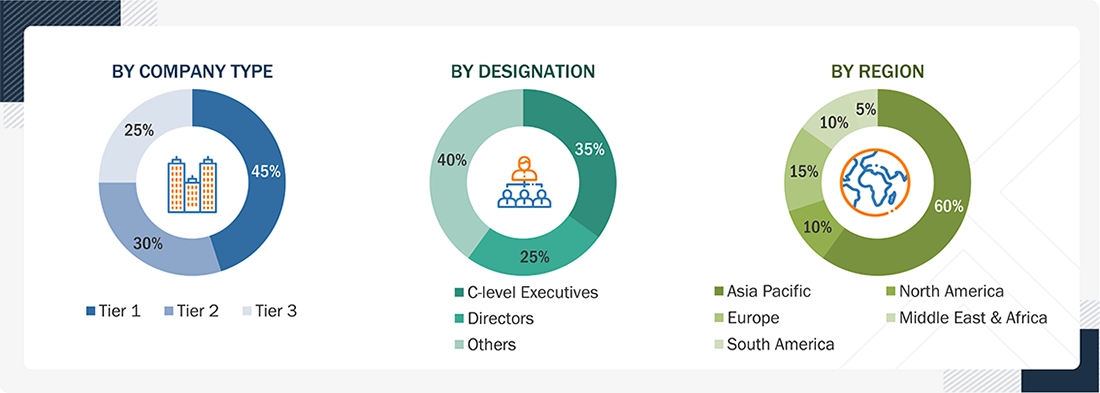
The tiers of the companies are defined based on their total revenue as of 2024: Tier 1: >USD 1 billion, Tier 2: USD 500 million–1 billion, and Tier 3: <USD 500 million.
To know about the assumptions considered for the study, download the pdf brochure
Market Size Estimation
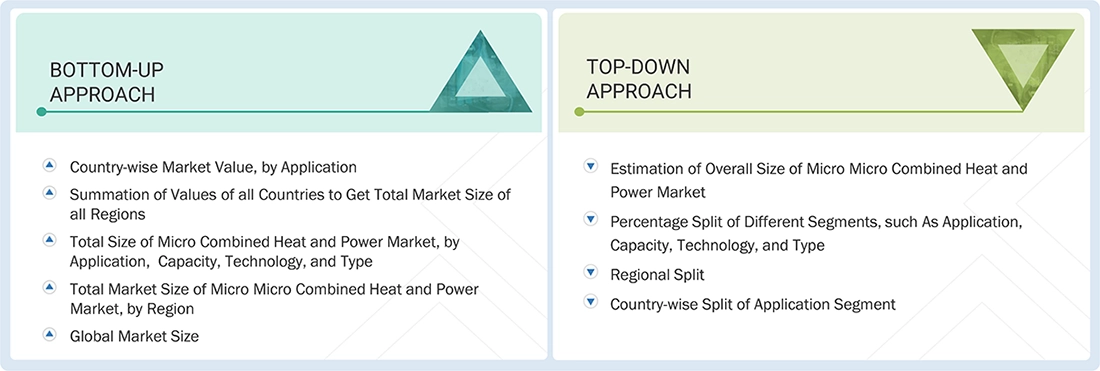
Both top-down and bottom-up approaches were employed to estimate and validate the size of the micro combined heat and power market. Major players in this market were identified through secondary research, and their market share in the respective regions was determined through a combination of primary and secondary research. The research methodology involves analyzing the annual and financial reports of top market players and conducting interviews with industry experts, including chief executive officers, vice presidents, directors, sales managers, and marketing executives, to gather key quantitative and qualitative insights related to the micro combined heat and power market.
Data Triangulation
The entire market has been split up into a number of segments and subsegments after the estimation process described above was used to determine the overall market size. Where appropriate, data triangulation and market breakdown procedures have been used to finish the entire market engineering process and acquire precise information for each segment and subsegment. By examining numerous elements and patterns from the supply and demand sides, the data has been triangulated. Furthermore, top-down and bottom-up methods have been used to validate the market.
Market Definition
Micro combined heat and power (MCHP) is an environmentally friendly technology that generates heat and electricity simultaneously from a single source of input fuel, such as natural gas, liquified petroleum gas (LPG), biomethane, hydrogen, and other liquid fuels. This fuel used to power MCHP units is not a renewable energy source, but the heat and electric energy generated can attain an operational efficiency of around 90%. This results in limited energy wastage and holds the potential to lower the carbon footprint significantly. The energy is produced on a relatively small scale, sufficient to satisfy heat and power requirements from residential and light commercial activities, requiring a small amount of heat and energy. The heat generated can be used for space heating and heating water. The electricity produced could be used on-site or exported to the national grid. Internal combustion engines, Stirling engines, Rankine cycle engines, proton exchange membrane fuel cells (PEMFCs), and solid oxide fuel cells (SOFCs) are key technologies available in the market that convert the input fuel into usable heat and electric energy in an MCHP system.
Key Stakeholders
- Micro CHP equipment manufacturers
- Micro CHP unit manufacturers
- Micro CHP unit distributors and suppliers
- Research institutes and companies
- Hotels, hospitals, care homes, office buildings, retail stores, and other utilities
- Smart grid players
- Industry, energy, and environmental associations
- Government and research organizations
- Investment banks
- Venture capital firms
Report Objectives
- To describe and forecast the micro combined heat and power market, by type, by technology, capacity, and application, in terms of value
- To describe and forecast the micro combined heat and power market for various segments with respect to five main regions: North America, Europe, Asia Pacific, South America, and the Middle East & Africa, in terms of value
- To describe and forecast the micro combined heat and power market, by capacity and region, in terms of volume
- To provide detailed information regarding drivers, restraints, opportunities, and challenges influencing the growth of the market
- To offer a detailed overview of the value chain analysis, use case analysis, key stakeholders and buying criteria, patent analysis, trade analysis, tariff analysis, regulations, macroeconomic outlook, pricing analysis, Porter’s five forces analysis, impact of Gen AI/AI, and the US tariff impact
- To strategically analyze micromarkets with respect to individual growth trends, prospects, and contributions to the total market
- To understand opportunities in the market for various stakeholders by identifying high-growth segments
- To strategically profile key players and comprehensively analyze their market position in terms of ranking and core competencies, along with detailing the market’s competitive landscape
- To analyze growth strategies, such as contracts, investments, expansions, and product launches, adopted by market players in the micro combined heat and power market
Available customizations:
MarketsandMarkets offers customizations tailored to the specific needs of companies using the given market data.
The following customization options are available for the report:
Product Analysis
- Product matrix, which gives a detailed comparison of the product portfolio of each company
Regional Analysis
- Further breakdown of the micro combined heat and power, by country
Company Information
- Detailed analysis and profiling of additional market players (up to five)
Need a Tailored Report?
Customize this report to your needs
Get 10% FREE Customization
Customize This ReportPersonalize This Research
- Triangulate with your Own Data
- Get Data as per your Format and Definition
- Gain a Deeper Dive on a Specific Application, Geography, Customer or Competitor
- Any level of Personalization
Let Us Help You
- What are the Known and Unknown Adjacencies Impacting the Micro Combined Heat and Power Market
- What will your New Revenue Sources be?
- Who will be your Top Customer; what will make them switch?
- Defend your Market Share or Win Competitors
- Get a Scorecard for Target Partners

Custom Market Research Services
We Will Customise The Research For You, In Case The Report Listed Above Does Not Meet With Your Requirements
Get 10% Free CustomisationTESTIMONIALS

Kimberly Murphy
GLOBAL MARKETING DIRECTOR
Bently Nevada,
Leading Condition Monitoring & Asset Protectionwww.bakerhughesds.com/bently-nevada

MarketsandMarkets™ showed consistent rigor for success and relentlessly worked with Bently Nevada stakeholders to positively impact go-to-market strategy. Their proactiveness and flexibility has been instrumental in achieving the objectives to grow our sales pipeline in key industrial markets.

DARRICK HUEBER
Business Development Leader
Nexus Controls LLC,
Leading Manufacturer of Automation System & Electrical Panelswww.bakerhughesds.com/nexus-controls

We partnered with MarketsandMarkets to expand our business further by tapping into new industrial segments. It was critical for us to gather crucial business insights about specific markets to achieve this goal. MarketsandMarkets engagement model and client services helped us provide those insights, it was really impressive and valuable for my business. The team was extremely flexible and helpful.

Mike Schoff
Global Industrial Commercial Strategy Leader
Nexus Controls LLC
Leading Manufacturer of Automation System & Electrical Panelswww.bakerhughesds.com/nexus-controls
We consulted MarketsandMarkets for potential Partner Identification. Overall, it was a good experience. The insights provided through interviews conducted by the team helped us put together the questionnaire required for discussion with the selected partners. Their ability to provide insights through interviews with customers in a timely manner was quite impressive.






Growth opportunities and latent adjacency in Micro Combined Heat and Power Market