Social and Emotional Learning Market

Social and Emotional Learning Market by Offering (Solution, Services), Type, Core Competency (Self Awareness, Self-management, Social Awareness), End User (Pre-K, K-12, Healthcare and Mental Health Professionals), Region – Global Forecast to 2032




OVERVIEW
Source: Secondary Research, Interviews with Experts, MarketsandMarkets Analysis
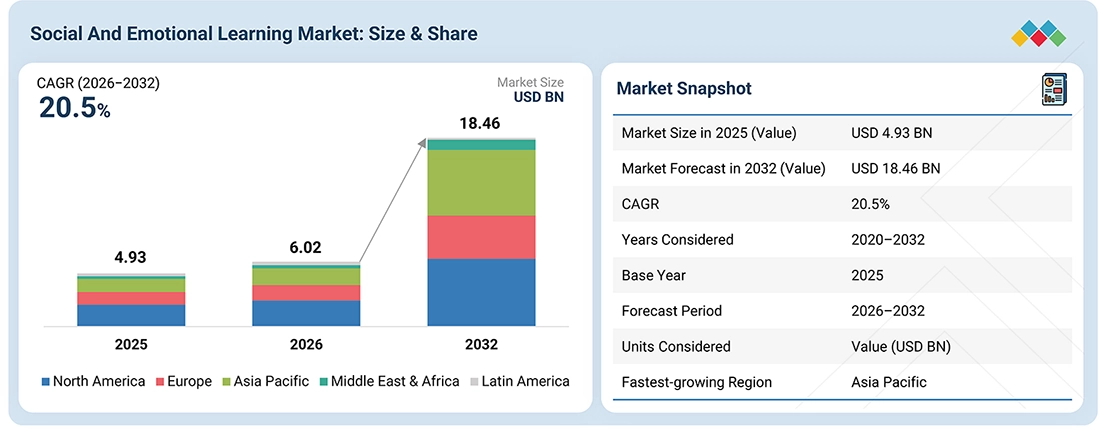
The global Social and Emotional Learning (SEL) market is expected to grow from USD 6.02 billion in 2026 to USD 18.46 billion by 2032, with a CAGR of 20.5% during this period. The market for SEL is growing consistently across the globe because of the recognition by education providers that, along with academic learning, emotional skills are an integral part of overall learning for students. SEL solutions are widely used in schools, districts, and educational institutions to ensure that learners gain valuable skills that include self-awareness, self-regulation, relationship skills, responsible decision-making, and social awareness. Increased levels of stress, misbehavior, and various mental issues among students have also contributed to the rise in demand for SEL programs. With increasing popularity of student-focused, inclusive education, there is an active adoption of SEL programs as well.
Social and Emotional Learning (SEL) Market Size and Forecast:
- Market Size in 2025: USD 4.93 Billion
- 2026 Market Size: USD 6.02 Billion
- 2032 Forecasted Market Size: USD 18.46 Billion
- Growth Rate (2026-2032): CAGR of 20.5%
- Forecast period: 2020–2032
Key Market Trends and Insights
- Key Trends In The Social And Emotional Learning Market: Key trends include rising K-12 adoption, digital SEL platforms, online learning, teacher training.
-
Fastest Growing Service Segment: The Training and Support service segment is expected to register the highest CAGR.
- Trending Opportunities: Opportunities include digital SEL platforms, assessment tools, training services, partnerships, collaborations, and expansion across K-12, higher education.
- Driving Factors In The Social And Emotional Learning Market: Growth is driven by increasing distance education, rising awareness of SEL benefits, government initiatives.
KEY TAKEAWAYS
-
By OfferingThe services segment is expected to register the highest CAGR of 22.4%.
-
By Core CompetencySelf-management accounts for the largest share of the market during the forecast period.
-
By TypeThe App segment is expected to register the highest CAGR during the forecast period.
-
By End UserThe middle & high school segment accounted for a 45.8% share in 2026.
-
By RegionThe Asia Pacific region is projected to grow the fastest from 2026 to 2032.
-
Competitive Landscape - Key PlayersCompanies such as Committee for Children, EVERFI, Panorama Education, Nearpod were identified as some of the star players in the social and emotional learning market, given their strong market share and product footprint.
-
Competitive Landscape - Startup/SMECompanies such as Wayfinder, Everyday Speech, Taproot Learning were identified as some of the star players in the social and emotional learning market, given their strong market share and product footprint.
The growing alignment between student well-being and academic performance outcomes is one of the key driving factors in the SEL market. Students with strong social and emotional skills consistently demonstrate better academic performance, improved classroom behavior, and higher engagement levels. Consequently, educational establishments are incorporating the notion of SEL into their education frameworks, while teachers receive training on this topic. Besides, governments and education boards promote social-emotional learning as an integral part of education.
TRENDS & DISRUPTIONS IMPACTING CUSTOMERS' CUSTOMERS
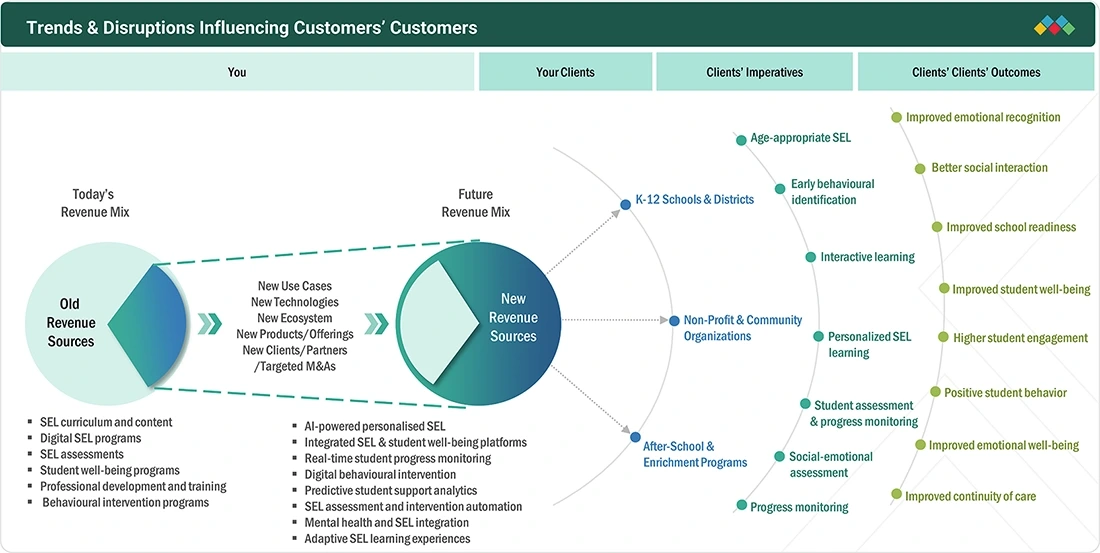
The market for SEL continues to evolve due to various reasons such as increased adoption of technologies, usage of data, and personalization in learning. There has been rapid adoption of digital platforms for SEL in recent times, especially in hybrid and online learning models where sustaining engagement and emotions of learners is difficult. Use of technology such as artificial intelligence (AI), data analytics, and learning analytics helps to track the performance of students and identify behavioral patterns. This use of technology in SEL has led to improved scalability, access, and measurement in SEL delivery.
Source: Secondary Research, Interviews with Experts, MarketsandMarkets Analysis
MARKET DYNAMICS

Level
-
Increasing focus on student mental health and well-being

-
Government-backed initiatives for student well-being programs


Level
-
Limited teacher training and implementation challenges

-
Inconsistent adoption across regions and institutions


Level
-
Integration of SEL with digital and adaptive learning platforms

-
Increasing investment in edtech-integrated SEL solutions


Level
-
Measuring outcomes and standardizing assessment frameworks

-
Data privacy concerns in student behavioral tracking

Source: Secondary Research, Interviews with Experts, MarketsandMarkets Analysis
Driver: Increasing focus on student mental health and well-being
The current issues associated with mental health and emotional problems faced by students contribute greatly to the popularity and need for SEL among educational institutions. According to UNICEF, a high number of adolescents worldwide have experienced issues related to their mental health, such as stress, depression, and anxiety. These mental problems prevent students from concentrating and performing successfully both academically and socially, leading to poor learning outcomes. Therefore, the application of SEL practices enables teachers to work on the improvement of students' emotional and social behavior through building up resistance and teaching coping strategies. As awareness continues to grow among educators, parents, and policymakers, the demand for structured and evidence-based SEL solutions is expected to increase further.
Restraint: Limited teacher training and implementation challenges
The effective implementation of SEL faces restraint due to the insufficient readiness of teachers. The lack of necessary skills and techniques makes it difficult for teachers to apply an SEL approach effectively. The Organisation for Economic Co-operation and Development (OECD) highlights that successful SEL implementation requires continuous professional development, structured curricula, and institutional support. In the absence of these factors, SEL initiatives may lack consistency and fail to deliver expected outcomes. Additionally, variations in cultural contexts, educational priorities, and resource availability further complicate implementation, particularly in large and diverse education systems. Moreover, the lack of standardization complicates the process of implementing SEL even more, especially in big countries where cultural diversity and different priorities exist.
Opportunity:Integration of SEL with digital and adaptive learning platforms
The increasing use of learning technologies offers ample opportunities for advancing SEL solutions. Digital learning platforms are gradually integrating SEL elements to ensure comprehensive learning. CASEL promotes the integration of SEL in digital environments for greater impact. The use of SEL technology enhances data collection through continuous tracking of the students' progress, offering personalized feedback and facilitating data-informed decision-making, thus increasing the efficiency of the intervention programs. The scalability of digital platforms further ensures the implementation of SEL solutions across different branches without any compromise to quality.
Challenge:Measuring outcomes and standardizing assessment frameworks
One major challenge in the SEL market is the difficulty in measuring program effectiveness and establishing standard assessment frameworks. Unlike traditional academic measurements, SEL outcomes are often qualitative and involve behavioral and emotional factors that are harder to quantify. Research from Harvard University shows the need for reliable assessment tools to evaluate SEL skills and track student progress over time. The lack of standardized measurement methods can lead to inconsistencies in evaluating programs and limit institutions' ability to show a return on investment. Additionally, ensuring data privacy and ethical use of student information adds another layer of complexity. Addressing these challenges is crucial for building trust and encouraging wider adoption of SEL solutions.
SOCIAL AND EMOTIONAL LEARNING (SEL) MARKET: COMMERCIAL USE CASES ACROSS INDUSTRIES
| COMPANY | USE CASE DESCRIPTION | BENEFITS |
|---|---|---|
 |
Panorama Education deployed its SEL and survey platform for the Utah State Board of Education across public schools to support an Early Warning System. The platform integrated academic, behavioral, and SEL data to identify at-risk students and enable timely interventions by educators. | Improved early identification of at-risk students, enhanced data-driven interventions, better tracking of student progress, and improved coordination among educators and administrators. |
 |
EVERFI collaborated with school districts across the US to deliver digital SEL curriculum focused on emotional intelligence, resilience, and responsible decision-making. Schools integrated EVERFI’s modules into classroom instruction to standardize SEL delivery. | Scalable SEL implementation, consistent curriculum delivery, improved student behavioral outcomes, and reduced burden on educators through ready-to-use digital content. |
 |
Nearpod partnered with K–12 schools to deliver interactive SEL lessons through its platform, enabling real-time participation, feedback, and activity-based learning in both in-person and virtual classrooms. | Higher student participation, improved retention of SEL concepts, enhanced classroom engagement, and effective delivery of SEL in hybrid learning environments. |
Logos and trademarks shown above are the property of their respective owners. Their use here is for informational and illustrative purposes only.
MARKET ECOSYSTEM
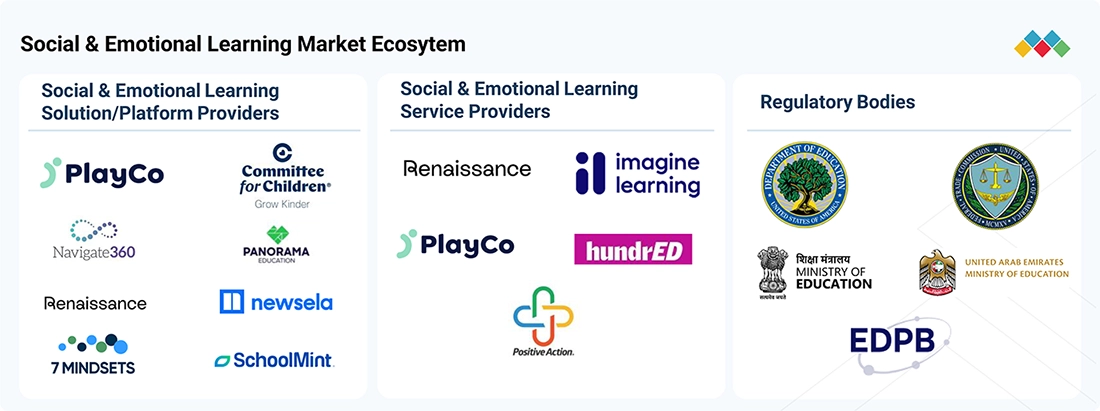
The Social and Emotional Learning ecosystem comprises of a number of stakeholders who collaborate in order to offer integrated and scalable solutions. Solution providers create the SEL curriculum, digital solutions and evaluation measures that will facilitate the process of learning. The service providers provide vital support services in terms of training and consultancy required for implementing SEL programs. The system integrators help integrate the SEL solutions within other educational technologies such as the learning management systems and student information systems. The end-users, comprising of schools, educational institutions and districts, adopt and utilize the solutions provided by the stakeholders in their respective educational contexts.
Logos and trademarks shown above are the property of their respective owners. Their use here is for informational and illustrative purposes only.
MARKET SEGMENTS
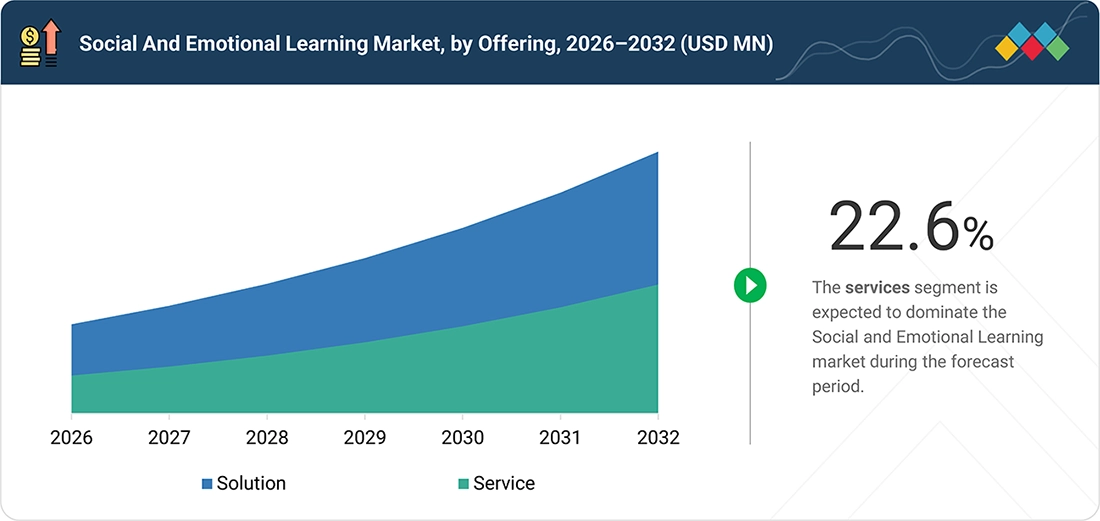
Source: Secondary Research, Interviews with Experts, MarketsandMarkets Analysis
Social and Emotional Learning Market, By Offering
The services segment is to witness the fastest growth due to the increasing need for assistance in implementing SEL programs. Professional development, consultancy, and evaluation are some of the major service types that are gaining popularity alongside SEL initiatives. It is important to understand that the adoption of SEL tools is not enough; instead, there is a need for ongoing guidance and training to achieve desired results. The service providers assist educational institutions to design an SEL strategy tailored to their needs and evaluate its efficiency during the process.
Social and Emotional Learning Market, By Core Competency
The self-management segment holds the largest share of the social and emotional learning market, driven by the growing emphasis on developing students’ emotional regulation, self-control, stress management, goal setting, and responsible decision-making skills. Schools and educational institutions are increasingly adopting SEL programs that strengthen students’ ability to manage emotions and behaviors, cope with challenges, and remain focused on academic and social goals. Growing awareness of student mental well-being and the need to develop resilience and positive behavioral outcomes further support the demand for self-management-focused SEL solutions.
Social and Emotional Learning Market, By Type
The app-based segment is the fastest-growing segment of the social and emotional learning market, driven by the increasing adoption of mobile and digital learning platforms across educational institutions. App-based SEL solutions provide students, educators, and families with flexible access to interactive activities, emotional well-being resources, assessments, and personalized learning experiences. Growing smartphone and tablet usage, demand for anytime-anywhere learning, and increasing integration of digital tools into education are further accelerating the adoption of app-based SEL solutions.
Social and Emotional Learning Market, By End User
Middle schools and high schools have the highest percentage share of the SEL market owing to the important developmental period of children within these age brackets. Adolescence is characterized by many psychological and physical developments in the learners' lives; hence, SEL strategies will be very effective at this level. Schools are increasingly adopting SEL programs that help students cope with peer pressure, stress associated with schooling, and other behavioral problems. The programs assist learners to acquire important life skills that will enable them to succeed academically and personally.
REGION
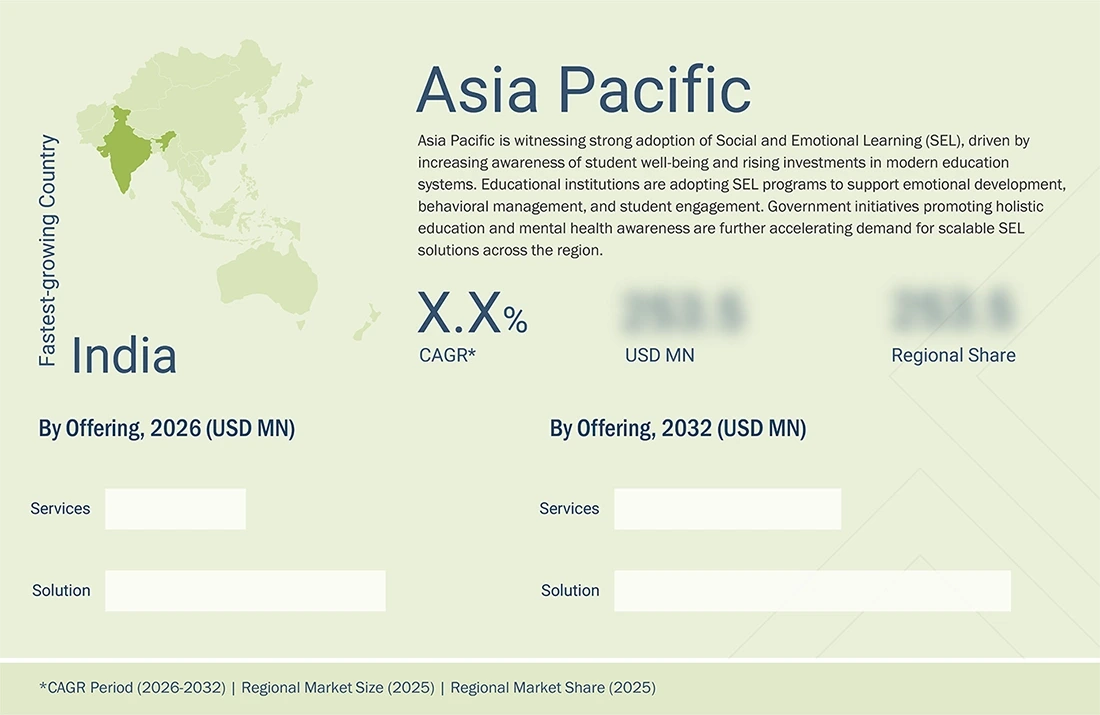
Asia Pacific will be the fastest-growing region in the Social and Emotional Learning Market
Asia Pacific is estimated to exhibit the highest CAGR during the forecast period owing to increased awareness about the importance of student well-being, rapid development in the education infrastructure, and active government support towards holistic learning solutions. Many countries in this region, including China, India, Japan, and Australia & New Zealand (ANZ), have started integrating social emotional learning within education strategies and curriculum. The region is also witnessing strong growth in digital education. This is making it easier to integrate SEL into e-learning and blended learning environments. This coupled with huge numbers of students, high spending on education technologies, and continuous education reform drives in the region presents immense potential for SEL companies in the coming years.
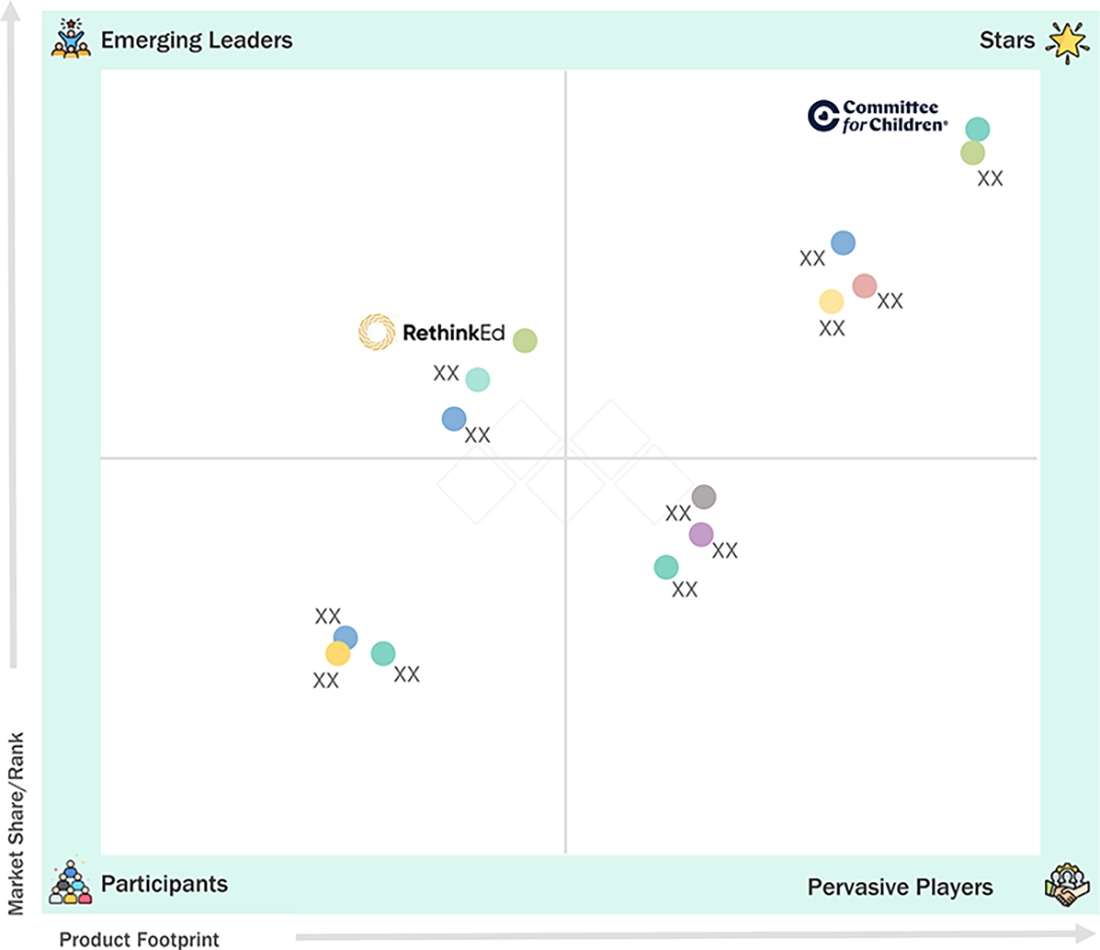
SOCIAL AND EMOTIONAL LEARNING (SEL) MARKET: COMPANY EVALUATION MATRIX
In the Social and Emotional Learning (SEL) market matrix, Committee for Children (Star Player) leads with a strong market presence, supported by its Second Step program, which focuses on building core competencies such as self-awareness, emotional regulation, and responsible decision-making. Its research-based curriculum and wide adoption across K–12 schools enable structured SEL integration into classroom learning, supporting improved student behavior and academic outcomes. Rethink Ed (Pervasive Player) is strengthening its position through its digital SEL platform, which combines curriculum, assessments, and behavioral support tools. Its cloud-based solutions enable scalable implementation across school districts, supporting personalized learning, improved student engagement, and data-driven decision-making in the evolving SEL market.
Source: Secondary Research, Interviews with Experts, MarketsandMarkets Analysis
KEY MARKET PLAYERS
- Committee for Children (US)
- EVERFI (US)
- Nearpod (US)
- Panorama Education (US)
- RethinkEd (US)
- Illuminate Education (US)
- Newsela (US)
- Navigate360 (US)
- 7 Mindsets (US)
- Imagine Learning (US)
- Move This World (US)
- Positive Action (US)
- Aperture Education (US)
- Everyday Speech (US)
- Peekapak (Canada)
- PATHS Program (US)
- Growing Leaders (US)
- Wings for Kids (US)
- Playworks (US)
MARKET SCOPE
| REPORT METRIC | DETAILS |
|---|---|
| Market Size in 2025 (Value) | USD 4.93 Billion |
| Market Forecast in 2026 (Value) | USD 6.02 Billion |
| Market Forecast in 2032 (Value) | USD 18.46 Billion |
| Growth Rate | CAGR of 20.5% during 2026-2032 |
| Years Considered | 2020-2032 |
| Base Year | 2025 |
| Forecast Period | 2026-2032 |
| Units Considered | Value (USD Billion) |
| Report Coverage | Revenue forecast, company ranking, competitive landscape, growth factors, and trends |
| Segments Covered |
|
| Region Covered | North America, Europe, Asia Pacific, Middle East & Africa, Latin America |
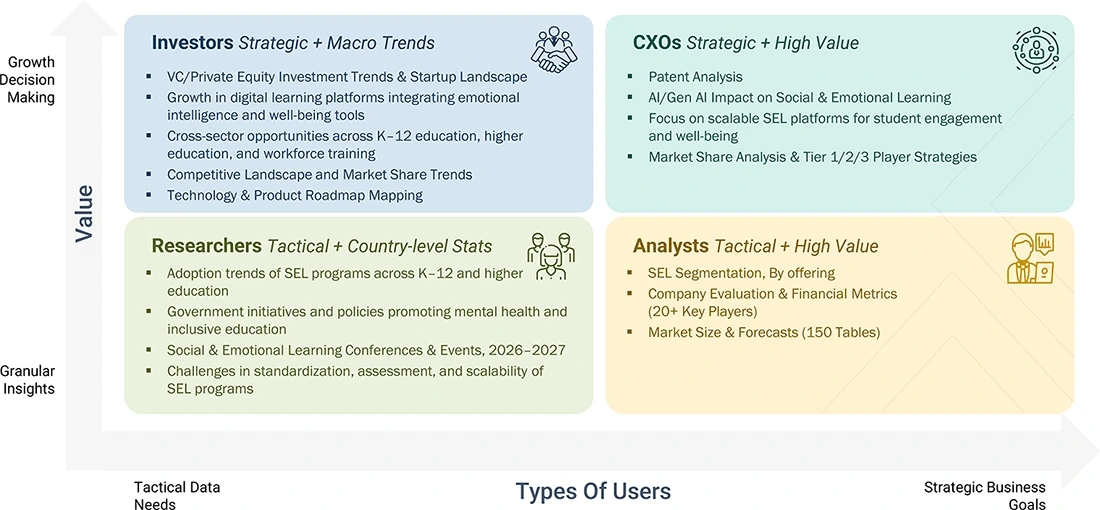
WHAT IS IN IT FOR YOU: SOCIAL AND EMOTIONAL LEARNING (SEL) MARKET REPORT CONTENT GUIDE
DELIVERED CUSTOMIZATIONS
We have successfully delivered the following deep-dive customizations:
| CLIENT REQUEST | CUSTOMIZATION DELIVERED | VALUE ADDS |
|---|---|---|
| Company Information | Detailed analysis and profiling of additional market players (up to 5) |
|
RECENT DEVELOPMENTS
- January 2026 : Newsela announced the acquisition of Schoolytics, an AI-driven analytics platform, to help educators consolidate fragmented student data across academic, behavioral, and engagement metrics into actionable insights. The integration aims to support data-informed decision-making and improve student outcomes through better monitoring and targeted interventions.
- April 2025 : Panorama Education announced the acquisition of Class Companion, an AI-powered tool that provides real-time feedback and tutoring to students. The acquisition aims to enhance personalized learning and expand Panorama’s AI capabilities, enabling educators to deliver differentiated instruction and improve student outcomes
Table of Contents
 Exclusive indicates content/data unique to MarketsandMarkets and not available with any competitors.
Methodology
The research study involved four major activities in estimating the social & emotional learning market size. Exhaustive secondary research has been done to collect important information about the market and peer markets. The next step has been to validate these findings and assumptions and size them with the help of primary research with industry experts across the value chain. Both top-down and bottom-up approaches have been used to estimate the market size. Post which the market breakdown and data triangulation have been adopted to estimate the market sizes of segments and sub-segments.
Secondary Research
The market size of the companies offering Social & emotional learning solutions to various end users was arrived at based on the secondary data available through paid and unpaid sources and by analyzing the product portfolios of major companies in the ecosystem and rating the companies based on their performance and quality. In the secondary research process, various sources were referred to identify and collect information for the study. The secondary sources included annual reports, press releases, investor presentations of companies, white papers, journals, certified publications, and articles from recognized authors, directories, and databases. Secondary research was mainly used to obtain critical information about industry insights, the market’s monetary chain, the overall pool of key players, market classification, and segmentation according to industry trends to the bottom-most level, regional markets, and key developments from both market- and technology-oriented perspectives.
Primary Research
In the primary research process, various sources from the supply and demand sides were interviewed to obtain qualitative and quantitative information for the report, Such as Chief Experience Officers (CXOs), Vice Presidents (VPs), directors from business development, marketing, and product development/innovation teams, and related key executives from Social & emotional learning solution vendors, system integrators, professional and managed service providers, industry associations, independent consultants, and key opinion leaders.
Primary interviews were conducted to gather insights, such as market statistics, data on revenue collected from software and services, market breakups, market size estimations, market forecasts, and data triangulation. Stakeholders from the demand side, such as Chief Information Officers (CIOs), Chief Finance Officers (CFOs), Chief Strategy Officers (CSOs), and the installation team of end users who use social & emotional learning, were interviewed to understand buyers’ perspectives on suppliers, products, service providers, and their current usage of Social & emotional learning solutions which is expected to affect the overall Social & emotional learning market growth.
BREAKDOWN OF PRIMARIES
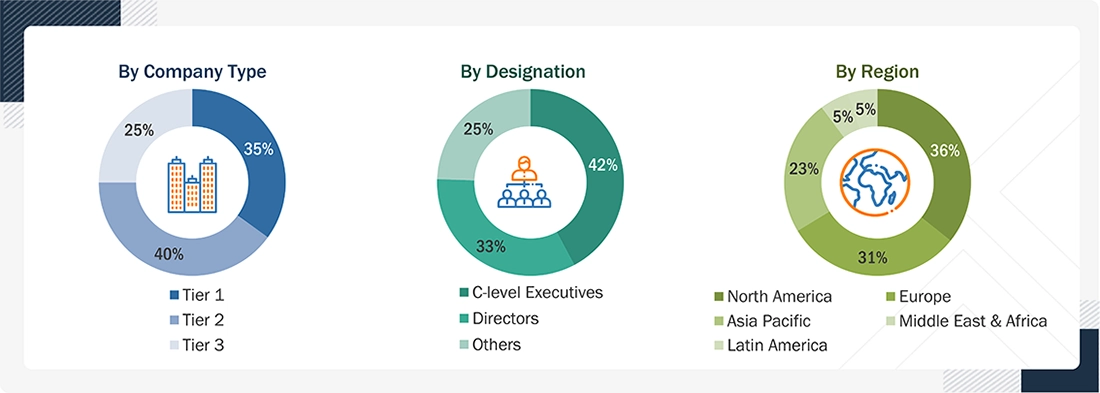
Note 1: Tier 1 companies have revenues of more than USD 10 billion; tier 2 companies’ revenue ranges from USD 1 billion to USD 10 billion; and tier 3 companies’ revenue ranges from USD 500 million to USD 1 billion
To know about the assumptions considered for the study, download the pdf brochure
Market Size Estimation
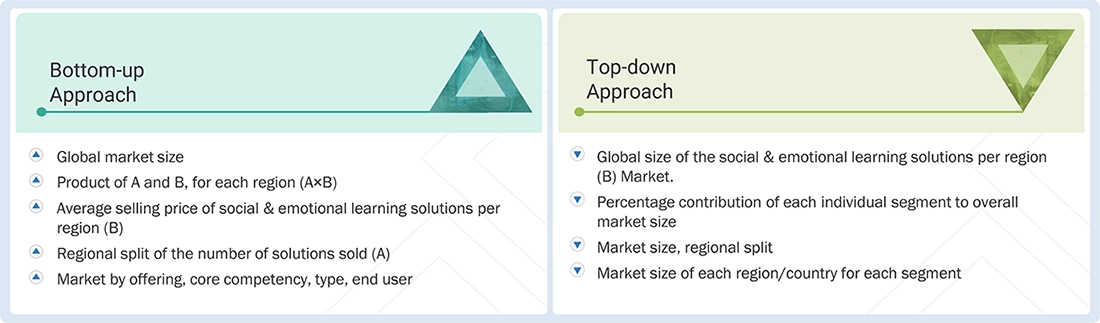
In the market engineering process, the top-down and bottom-up approaches were used along with multiple data triangulation methods to estimate and validate the size of the Social & emotional learning market and other dependent submarkets. The research methodology used to estimate the market sizes includes the following:
- Initially, MarketsandMarkets focuses on top-line investments and spending in the ecosystems. Further, significant developments in the critical market area have been considered.
- Tracking the recent and upcoming developments in the Social & emotional learning market that include investments, R&D activities, product launches, collaborations, mergers and acquisitions, and partnerships, as well as forecasting the market size based on these developments and other critical parameters.
- Conduct multiple discussions with key opinion leaders to learn about the diverse types of authentications and brand protection offerings used and the applications for which they are used to analyze the breakdown of the scope of work carried out by major companies.
- Segmenting the market based on technology types concerning applications wherein the types are to be used and deriving the size of the global application market.
- Segmenting the overall market into various market segments
- Validating the estimates at every level through discussions with key opinion leaders, such as chief executives (CXOs), directors, and operation managers, and finally with the domain experts at MarketsandMarkets
Social and Emotional Learning Market : Top-Down and Bottom-Up Approach
Data Triangulation
The Social & emotional learning market has been split into segments and sub-segments after the overall market size was estimated using the above estimation process. To complete the overall market engineering process and arrive at the exact statistics for all segments and sub-segments, data triangulation and market breakdown procedures have been used, wherever applicable. The data has been triangulated by studying various factors and trends from both the demand and supply sides.
The Social & emotional learning market size has been validated using top-down and bottom-up approaches.
Market Definition
Social and Emotional Learning (SEL) refers to a structured approach that enables individuals to develop essential competencies such as emotional regulation, self-awareness, social awareness, relationship management, and responsible decision-making. It focuses on building behavioral and interpersonal skills that support personal development, academic success, and overall well-being. Social and Emotional Learning is increasingly integrated into educational systems, training programs, and organizational frameworks through curriculum-based content, digital platforms, assessment tools, and support services. It plays a critical role in fostering inclusive learning environments, improving student engagement, and promoting positive social behaviors. By strengthening both cognitive and emotional capabilities, SEL supports long-term outcomes such as improved academic performance, workforce readiness, and healthier communities.
Key Stakeholders
- SEL Providers
- Independent Software Vendors (ISVs)
- SEL Content Developers
- Education Consultants
- System Integrators
- Educationists
- Corporate Trainers
- Compliance Regulatory Authorities
- Government Authorities
- University Bodies
- Professors and Teachers
- Investment Firms
Report Objectives
- To determine and forecast the global Social & emotional learning market by offering, core competency, type, end user, and region from 2026 to 2032 and analyze the various macroeconomic and microeconomic factors affecting the market growth.
- To forecast the size of the market segments concerning five central regions: North America, Europe, Asia Pacific (APAC), Middle East & Africa (MEA), and Latin America.
- To provide detailed information about the major factors (drivers, restraints, opportunities, and challenges) influencing the growth of the Social & emotional learning market.
- Analyze each submarket concerning individual growth trends, prospects, and contributions to the overall Social & emotional learning market.
- To analyze the opportunities in the market for stakeholders by identifying the high-growth segments of the Social & emotional learning market.
- To profile the key market players; provide a comparative analysis based on business overviews, regional presence, product offerings, business strategies, and key financials; and illustrate the market’s competitive landscape.
- Track and analyze competitive developments in the market, such as mergers and acquisitions, product developments, partnerships and collaborations, and Research and Development (R&D) activities.
Available customizations:
With the given market data, MarketsandMarkets offers customizations per the company’s specific needs. The following customization options are available for the report:
Geographic Analysis
-
Further break-up of the Asia Pacific market into countries contributing 75% to the regional market size
-
Further break-up of the North American market into countries contributing 75% to the regional market size
-
Further break-up of the Latin American market into countries contributing 75% to the regional market size
-
Further break-up of the Middle East African market into countries contributing 75% to the regional market size
-
Further break-up of the European market into countries contributing 75% to the regional market size
Company Information
-
Detailed analysis and profiling of additional market players (up to 5)
Key Questions Addressed by the Report
What is the size of the Social and Emotional Learning market?
The Social and Emotional Learning market is projected to grow from USD 6.02 billion in 2026 to USD 18.46 billion by 2032.
What is the growth rate of the Social and Emotional Learning market?
The Social and Emotional Learning market is expected to grow at a CAGR of 20.5%.
What are the key trends in the Social and Emotional Learning market?
Key trends include rising K-12 adoption, digital SEL platforms, online learning, teacher training, and growing focus on students’ emotional and mental well-being.
What factors are driving the Social and Emotional Learning market?
Growth is driven by increasing distance education, rising awareness of SEL benefits, government initiatives, and demand for holistic student development.
Which service segment is growing fastest in the SEL market?
The Training and Support service segment is expected to register the highest CAGR during the forecast period.
What opportunities exist for SEL market players?
Opportunities include digital SEL platforms, assessment tools, training services, partnerships, collaborations, and expansion across K-12, higher education.


Personalize This Research
- Triangulate with your Own Data
- Get Data as per your Format and Definition
- Gain a Deeper Dive on a Specific Application, Geography, Customer or Competitor
- Any level of Personalization
Let Us Help You
- What are the Known and Unknown Adjacencies Impacting the Social and Emotional Learning Market
- What will your New Revenue Sources be?
- Who will be your Top Customer; what will make them switch?
- Defend your Market Share or Win Competitors
- Get a Scorecard for Target Partners

Custom Market Research Services
We Will Customise The Research For You, In Case The Report Listed Above Does Not Meet With Your Requirements
Get 10% Free CustomisationTESTIMONIALS
- Canada Social and Emotional Learning Market
- US Social and Emotional Learning Market
- UK Social and Emotional Learning Market
- Germany Social and Emotional Learning Market
- China Social and Emotional Learning Market
- Japan Social and Emotional Learning Market
- India Social and Emotional Learning Market
- France Social and Emotional Learning Market
- Italy Social and Emotional Learning Market
- Nordic Countries Social and Emotional Learning Market
- Rest Of Europe Social and Emotional Learning Market
- Spain Social and Emotional Learning Market
- Anz Social and Emotional Learning Market
- Rest Of Asia Pacific Social and Emotional Learning Market
- South Korea Social and Emotional Learning Market
- Southeast Asia Social and Emotional Learning Market
- GCC Countries Social and Emotional Learning Market






Growth opportunities and latent adjacency in Social and Emotional Learning Market