Synthetic Feed Additives Market

Synthetic Feed Additives Market by Type (Amino Acids, Phosphates, Vitamins, Acidifiers, Enzymes, Mycotoxin Detoxifiers, Flavors & Sweeteners, Antibiotics, Minerals, Antioxidants, Nonprotein nitrogen, Preservatives), Livestock, Form, Function, and Region – Global Forecast to 2030




OVERVIEW
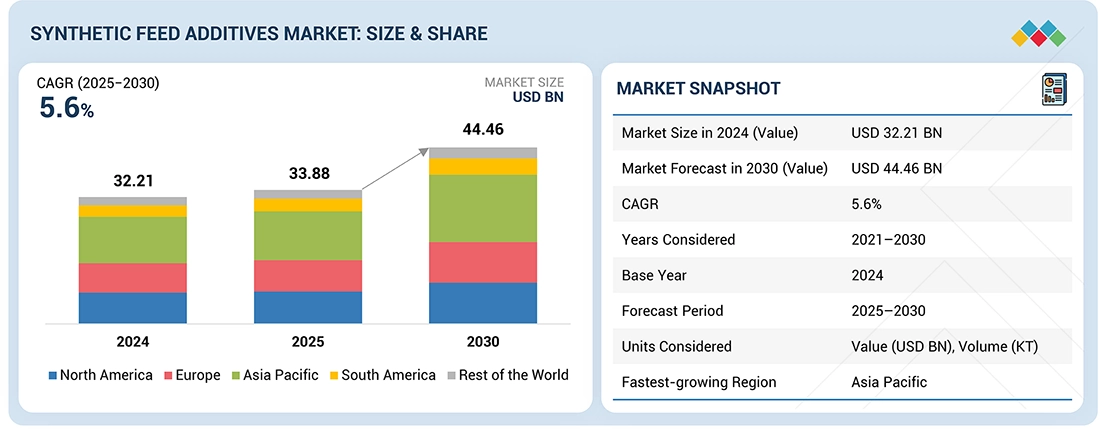
Source: Secondary Research, Interviews with Experts, MarketsandMarkets Analysis
The synthetic feed additives market is projected to grow from USD 33.88 billion in 2025 to USD 44.46 billion by 2030, at a CAGR of 5.6%. The market is mainly driven by livestock growers' focus on improving animal health, immunity, and feed efficiency in poultry, swine, ruminants, and aquaculture. Furthermore, there is a significant increase in the adoption of various types of additives, such as amino acids, phosphates, vitamins, and organic acids, resulting in the development of precision release and encapsulated additive technologies.
Market Size and Forecast:
- Market Size Value in 2024: USD 32.21 Billion
- Market Size Value in 2025: USD 33.88 Billion
- Revenue Forecast in 2030: USD 44.46 Billion
- Growth Rate: CAGR of 5.6% from 2025 to 2030
- Base year: 2024
- Forecast period: 2025–2030
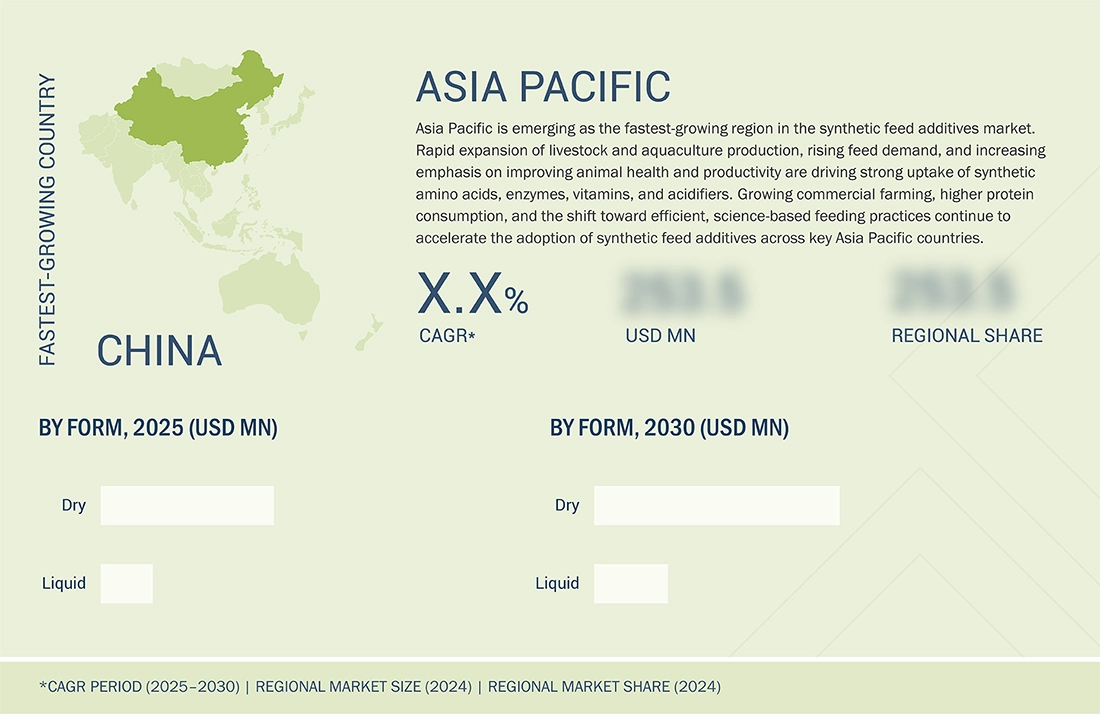
- Asia Pacific is estimated to account for 36.6% of the synthetic feed additives market in 2025.
- The poultry segment is estimated to dominate the market with a share of 47.9% in 2025.
Key Market Trends and Insights
- By Product Type: The Amino Acids segment accounts for a significant share of the synthetic feed additives market, driven by its essential role in improving feed efficiency, supporting animal growth, enhancing nutrient utilization, and optimizing livestock productivity.
- Industry Trends: Livestock producers are increasingly incorporating synthetic feed additives into animal nutrition programs to improve performance, enhance feed conversion ratios, support animal health, and maximize production efficiency.
- Market Drivers: Rising global demand for meat, dairy, and poultry products, increasing focus on animal nutrition, growing need for high-quality feed solutions, and expanding commercial livestock production are supporting market growth.
- Future Opportunities: Significant opportunities are emerging in precision animal nutrition, advanced feed formulations, sustainable livestock production systems, and innovative feed additive technologies designed to improve productivity and resource efficiency.
KEY TAKEAWAYS
-
BY REGIONAsia Pacific is estimated to account for 36.6% of the synthetic feed additives market in 2025.
-
BY TYPEBy type, the preservatives segment is projected to grow at the highest rate from 2025 to 2030.
-
BY LIVESTOCKBy livestock, the poultry segment is estimated to dominate the market with a share of 47.9% in 2025.
-
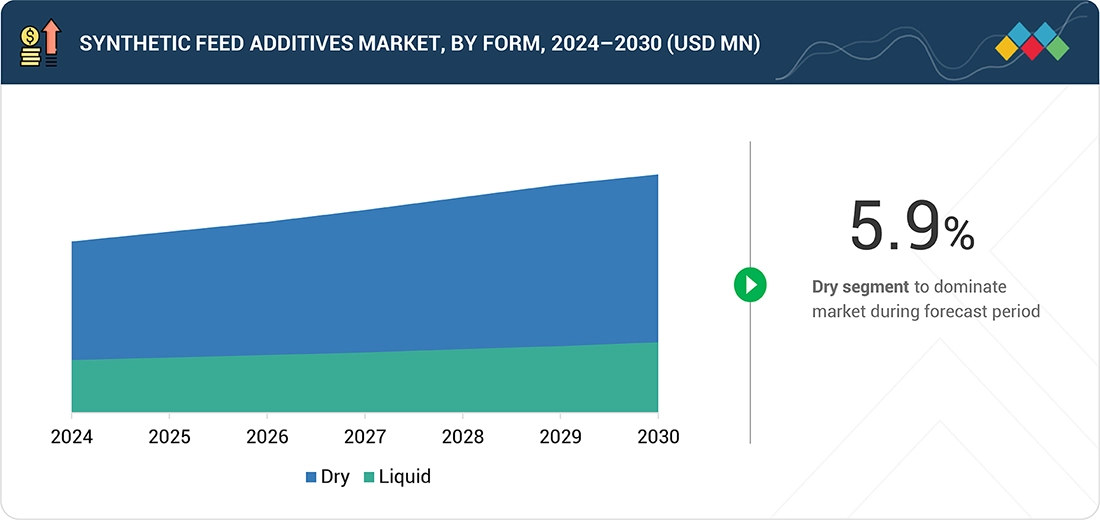
BY FORMBy form, the dry segment is estimated to account for 76.9% of the market in 2025.
-
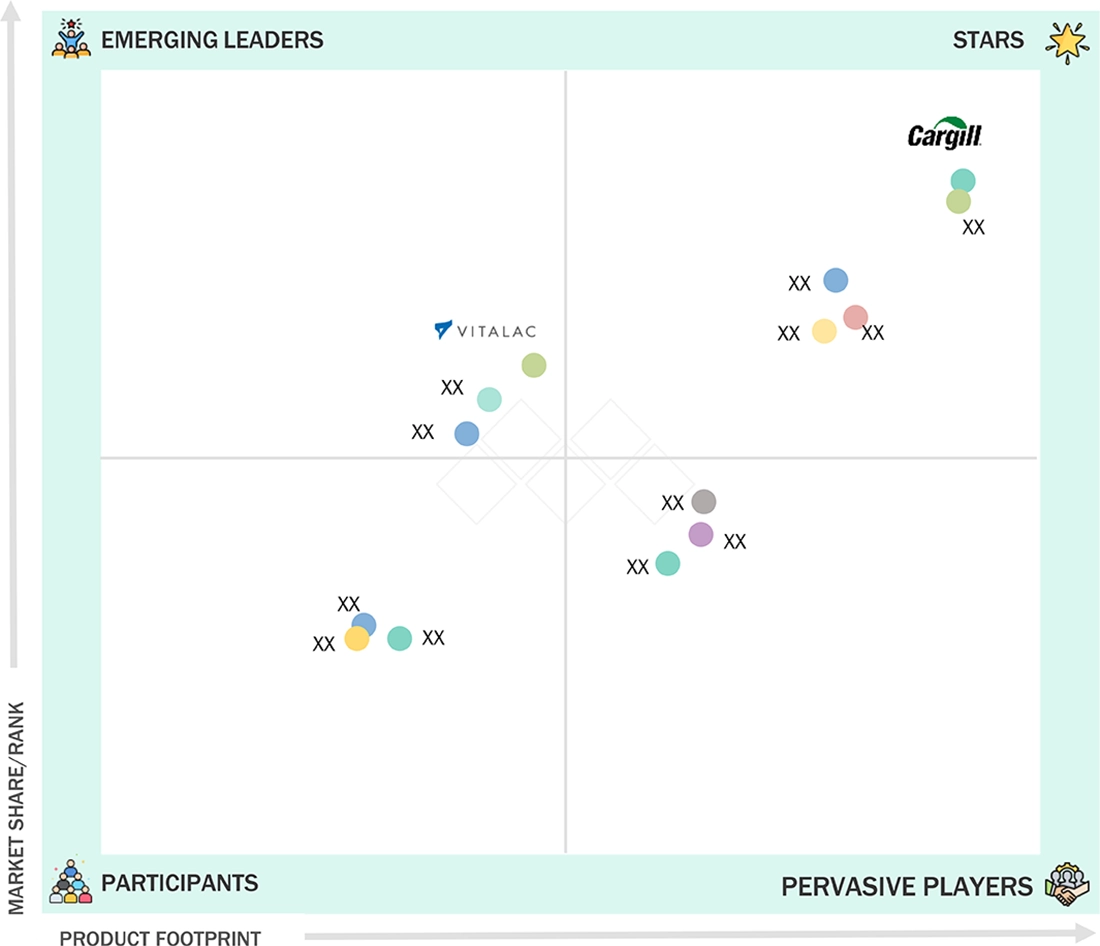
COMPETITIVE LANDSCAPE - KEY PLAYERSCargill, ADM, International Flavors & Fragrances, Evonik Industries AG, and BASF SE were identified as some of the star players in the synthetic feed additives market, given their strong market share and product footprint.
-
COMPETITIVE LANDSCAPE - STARTUPSVITALAC, Tex Biosciences, and Centafarm SRL, among others, have distinguished themselves among startups and SMEs by securing strong footholds in specialized niche areas, underscoring their potential as emerging market leaders.
The synthetic feed additives market is growing, driven by the increasing focus on feed efficiency, gut health, and immune support, along with the shift toward antibiotic-free production. Continued innovation in additive technologies and the expansion of their applications in aquaculture and intensive livestock systems will drive further growth.
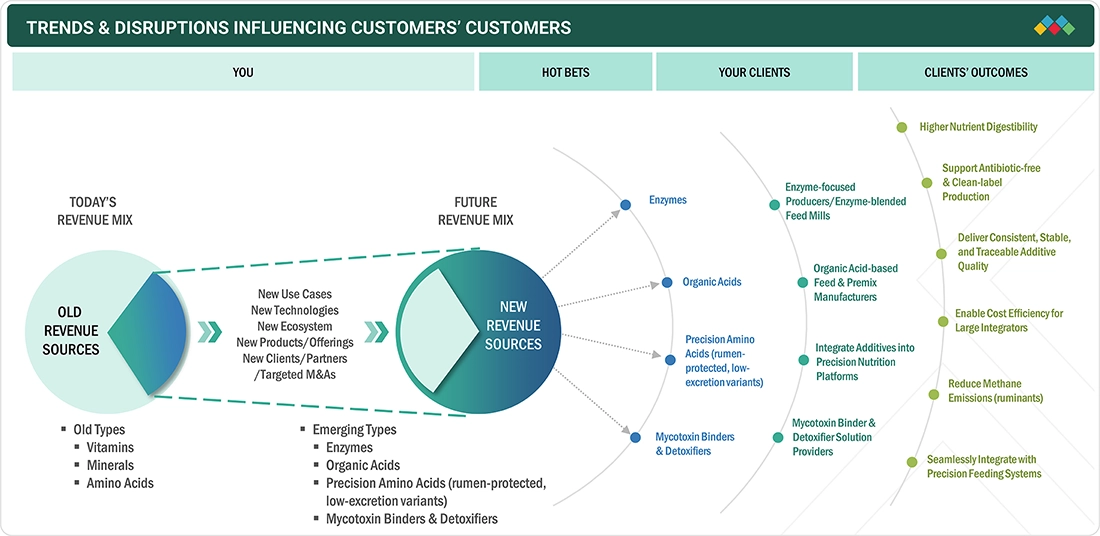
TRENDS & DISRUPTIONS IMPACTING CUSTOMERS' CUSTOMERS
The impact on the client's business is mainly driven by the evolving consumer trends and market disruptions in the synthetic feed additives market. There is an expected shift in the revenue mix from traditional synthetic additive products to emerging offerings such as Carotenoids, Advanced Amino Acids, Precision Vitamins, and Mineral Solutions, among others. As a result, changes in go-to-market and formulation strategies are expected to significantly affect the market dynamics globally.
Source: Secondary Research, Interviews with Experts, MarketsandMarkets Analysis
MARKET DYNAMICS

Level
-
High commercialization & large industrial livestock operations

-
Shift to antibiotic-free, clean-label solutions


Level
-
Volatility in commodity (corn/soy) prices

-
Conservative adoption by smaller family farms


Level
-
Growth in value-added additives (digestibility, mycotoxin binders, acidifiers)

-
On-farm precision dosing and premix services


Level
-
Price competition from commodity premixes

-
Regulatory uncertainty for novel biotics and enzymes

Source: Secondary Research, Interviews with Experts, MarketsandMarkets Analysis
Driver: High commercialization & large industrial livestock operations
With the fast growth of industrial livestock production in most parts of the world, there is an increasing demand for synthetic feed additives. This is due to scientifically formulated feed additives, mainly amino acids and enzymes, that help producers achieve better feed efficiency, superior growth performance, and maintain steadfast productivity in intensive high-density farming.
Restraint: Volatility in commodity (corn/soy) prices
The volatility of corn and soy prices has increased feed production costs significantly and will affect the ability of producers to afford synthetic feed additives. Rising input costs for feed will continue to reduce the margins of feed manufacturers and limit the capacity of producers to invest in premium-priced feed additives.
Opportunity: Growth in value-added additives (digestibility, mycotoxin binders, acidifiers)
Producers are looking for new, next-generation synthetic feed additives that will increase nutrient digestibility, improve gut health, and address toxin-related issues. In all areas of the world, producers are adopting science-based nutrition programs to become more efficient, and as a result, value-added additives, such as mycotoxin binders and acidifying agents, have the potential for substantial growth.
Challenge: Price competition from commodity premixes
While low-priced commodity premixes are ongoing sources of pricing pressure for specialized synthetic feed additives, it is challenging for high-value formulations to differentiate themselves and achieve market penetration, especially in regions where cost sensitivity is high.
SYNTHETIC FEED ADDITIVES MARKET: COMMERCIAL USE CASES ACROSS INDUSTRIES
| COMPANY | USE CASE DESCRIPTION | BENEFITS |
|---|---|---|
 |
Cargill expanded its synthetic feed additives portfolio by strengthening its offerings in amino acids, enzymes, mycotoxin binders, and gut-health enhancers. These solutions are integrated into premixes and compound feed to improve nutrient utilization, feed efficiency, and performance across poultry, swine, and ruminant systems. | Reinforces Cargill’s leadership in science-based synthetic nutrition by enabling producers to achieve higher productivity, improved feed conversion, and robust animal health through consistent, high-quality formulations. |
 |
ADM introduced advanced synthetic amino acid solutions and functional ingredient blends designed to support digestibility, optimize nutrient absorption, and meet growing demand for efficient, precision-based feeding programs in global livestock production. | Strengthens ADM’s competitive position by addressing the need for high-performance, clean, and sustainable synthetic additives that improve production outcomes in intensive livestock systems worldwide. |
 |
IFF expanded its biosciences capabilities with new synthetic enzymes, fermentation-derived additives, and performance-enhancing probiotics formulated to improve gut health, immunity, and feed conversion ratios in livestock. | Boosts IFF’s footprint in the global synthetic feed additives market by offering innovative, targeted solutions that enhance animal wellness and improve operational efficiency for feed manufacturers and producers. |
Logos and trademarks shown above are the property of their respective owners. Their use here is for informational and illustrative purposes only.
MARKET ECOSYSTEM
The synthetic feed additives ecosystem is composed of manufacturers, regulatory bodies, research organizations, and end-use livestock and feed companies. It is a fast-growing, innovation-driven landscape shaped by rising demand for science-backed nutrition, efficiency, and sustainable production practices. The market brings together established multinational companies and agile emerging players, all of whom contribute to the development of advanced synthetic additives that enhance animal health, feed performance, and productivity across global livestock systems.
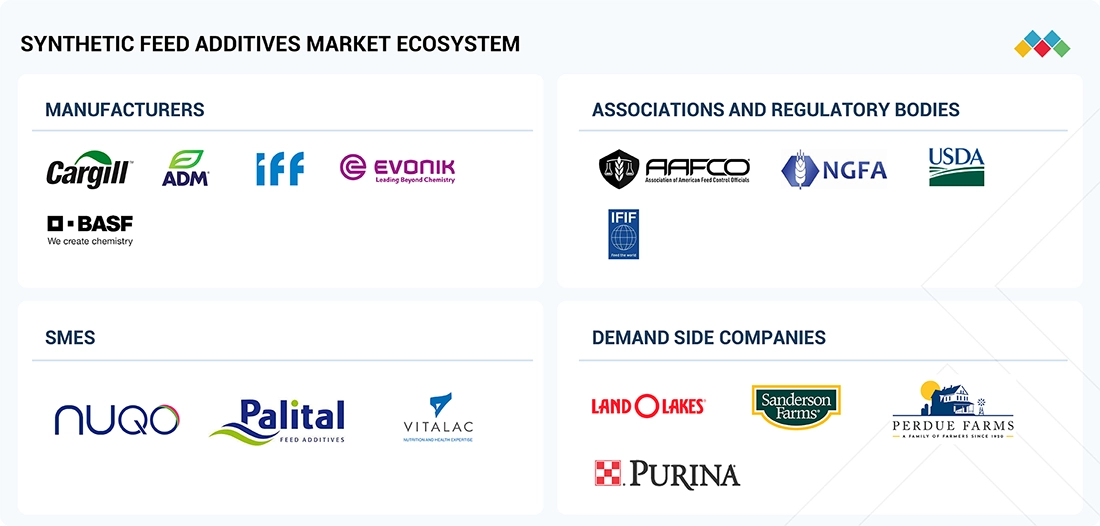
Logos and trademarks shown above are the property of their respective owners. Their use here is for informational and illustrative purposes only.
MARKET SEGMENTS
Source: Secondary Research, Interviews with Experts, MarketsandMarkets Analysis
Synthetic Feed Additives Market, By Type
The preservatives segment is projected to be the fastest-growing, driven by the increasing need to enhance feed stability and prevent spoilage across intensive livestock operations.
Synthetic Feed Additives Market, By Livestock
The poultry segment is estimated to dominate the market, as poultry producers increasingly rely on additives to improve feed efficiency, immunity, and overall flock performance.
Synthetic Feed Additives Market, By Form
The dry segment is expected to hold a significant market share, owing to its convenience in handling, longer shelf life, and widespread use in commercial feed manufacturing.
REGION
Asia Pacific to lead global synthetic feed additives market during forecast period
Asia Pacific is set to dominate the synthetic feed additives market, driven by rapid growth in livestock production and rising demand for high-quality animal protein. The region’s increasing use of efficient, science-based feed solutions further strengthens its market leadership.
SYNTHETIC FEED ADDITIVES MARKET: COMPANY EVALUATION MATRIX
In the synthetic feed additives market landscape, Cargill and ADM (Stars) lead with a strong market presence supported by their extensive production capabilities, broad synthetic feed additive portfolios, and well-established distribution networks across livestock sectors. Their scale, innovation in nutrition solutions, and deep integration with large commercial farming operations reinforce their dominant position. Emerging players such as NUQO Feed Additives (Emerging Leader) are gaining visibility through specialized solutions like functional synhtetic additives, strengthening their position with targeted, high-value offerings tailored to evolving animal health and performance needs.
Source: Secondary Research, Interviews with Experts, MarketsandMarkets Analysis
KEY MARKET PLAYERS
- Cargill, Incorporated (US)
- ADM (US)
- International Flavors & Fragrances Inc. (US)
- Evonik Industries AG (Germany)
- BASF SE (Germany)
- DSM-Firmenich (Switzerland)
- Ajinomoto Co., Inc. (Japan)
- Novonesis Group (Denmark)
- Adisseo (France)
- Jubilant Ingrevia Limited (India)
- Nutreco (Netherlands)
- Kemin Industries, Inc. (US)
- Lallemand Inc. (Canada)
- BRF Global (Brazil)
- Bentoli (US)
- Alltech (US)
- Neospark Drugs and Chemicals Private Limited (India)
- Volac International Ltd. (England)
- Global Nutrition International (France)
- Novus International, Inc. (US)
MARKET SCOPE
| REPORT METRIC | DETAILS |
|---|---|
| Market Size in 2024 (Value) | USD 32.21 Billion |
| Market Forecast in 2030 (Value) | USD 44.46 Billion |
| Growth Rate | CAGR of 5.6% from 2025 to 2030 |
| Years Considered | 2021–2030 |
| Base Year | 2024 |
| Forecast Period | 2025–2030 |
| Units Considered | Value (USD Billion), Volume (KT) |
| Report Coverage | Revenue Forecast, Company Ranking, Competitive Landscape, Growth Factors, and Trends |
| Segments Covered |
|
| Regions Covered | North America, Europe, Asia Pacific, South America, Rest of the World |
WHAT IS IN IT FOR YOU: SYNTHETIC FEED ADDITIVES MARKET REPORT CONTENT GUIDE
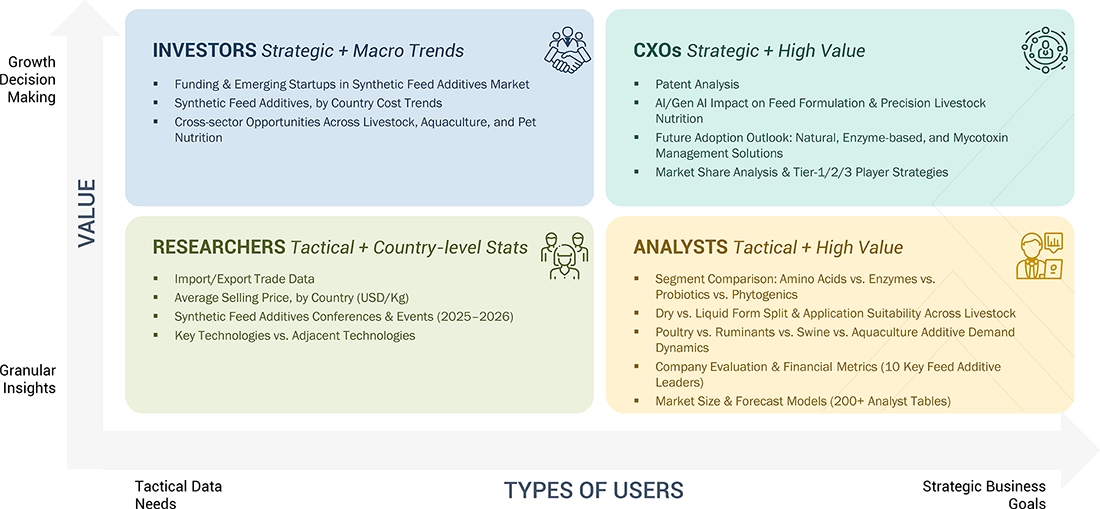
DELIVERED CUSTOMIZATIONS
We have successfully delivered the following deep-dive customizations:
| CLIENT REQUEST | CUSTOMIZATION DELIVERED | VALUE ADDS |
|---|---|---|
| US-based Synthetic Feed Additives Manufacturers | Detailed synthetic feed additives analysis by additive types (amino acids, enzymes, probiotics, preservatives, etc.), competitive landscape, and key manufacturer profiling (financial performance, production capacity, and product portfolio mapping). Customer landscape assessment by livestock category (poultry, ruminants, swine, aquaculture) and distribution channels. Market share benchmarking, pricing analysis, and regulatory environment review for synthetic feed additives in the US and Canada. | Identified & profiled 20+ feed additive manufacturers operating in North America, including integrators, mills, and specialty additive suppliers. Tracked adoption trends in high-growth additive categories (enzymes, probiotics, phytogenics, mycotoxin binders). Highlighted emerging livestock clusters and demand pockets driven by sustainability mandates, antibiotic reduction policies, and precision nutrition initiatives. |
| Synthetic Feed Additives, Type & Application Segment Assessment | Segmentation of feed additive demand across major livestock groups (poultry, ruminants, swine, aquaculture, and others). Benchmarking adoption across additive types such as amino acids, enzymes, mycotoxin detoxifiers, phytogenics, and probiotics. Switching barrier analysis for feed mills and integrators (cost sensitivity, proven efficacy, regulatory compliance, and formulation compatibility). | Delivered revenue share & growth outlook for key additive categories across different livestock species. Identified substitution risks & opportunities in cost-sensitive segments (e.g., antibiotics vs. probiotics). Mapped regulatory frameworks across North America, highlighting compliance pathways and ingredient approval requirements. |
RECENT DEVELOPMENTS
- September 2025: dsm-firmenich Animal Nutrition & Health officially opened a state-of-the-art feed additive plant in Jadcherla, Hyderabad, India, in full support of the Government's "Make in India" initiative, to further consolidate its leading position in India and Asia Pacific. The new facility sits on 11,200 square meters and is fitted with the latest Bühler technology built to international standards of quality and safety. Combined with the existing premix unit at this site, this new "Super Site" has the benefit of efficient production and faster service while allowing for local manufacturing of Mycofix Secure and Mycofix Shield solutions to help farmers manage rising mycotoxin risks.
- February 2025: ITOCHU Corporation signed a comprehensive agreement to exclusively distribute all methionine produced at Sumitomo Chemical’s Ehime Works from April 2025 onwards. With ITOCHU’s broad global network covering over 70 countries and Sumitomo Chemical’s economical production capacity, this collaboration will help to increase the reliability of supply and meet rising demand for livestock nutrition. Methionine, a prominent artificial amino acid, finds wide applications as a growth promoter in poultry and swine animal feeding stuffs.
- June 2024: Kemin Industries introduced FORMYL, a new feed acidifier for swine in the US. This product combines encapsulated calcium formate and citric acid to enhance gut health, combat pathogens, and improve digestion. Designed to reduce gastrointestinal pH and the incidence of diarrhea, FORMYL offers a non-antibiotic solution that ensures effective delivery and safer handling, aligning with Kemin’s focus on innovative, sustainable animal nutrition solutions.
- June 2024:Novus International, Inc. enhanced its feed additives portfolio with the acquisition of BioResource International, Inc. (BRI), integrating BRI’s fermentation expertise with NOVUS’ CIBENZA Enzyme Feed Additive. This expansion supports improved feed formulations, enhancing animal nutrition and performance while addressing sustainability challenges in the global feed additives market.
Table of Contents
 Exclusive indicates content/data unique to MarketsandMarkets and not available with any competitors.
Methodology
The study involved two major approaches in estimating the current size of the Synthetic Feed Additives Market. Exhaustive secondary research was done to collect information on the market, peer, and parent markets. The next step was to validate these findings, assumptions, and sizing with industry experts across the value chain through primary research. Both top-down and bottom-up approaches were employed to estimate the complete market size. After that, market breakdown and data triangulation were used to estimate the market size of segments and subsegments.
Secondary Research
This research study involved the extensive use of secondary sources—directories and databases such as Bloomberg Businessweek and Factiva—to identify and collect information useful for a technical, market-oriented, and commercial study of the market.
In the secondary research process, various sources such as annual reports, press releases & investor presentations of companies, white papers, food journals, certified publications, articles from recognized authors, directories, and databases were referred to identify and collect information.
Secondary research was mainly used to obtain key information about the industry’s supply chain, the total pool of key players, and market classification and segmentation as per the industry trends to the bottom-most level, regional markets, and key developments from both market- and technology-oriented perspectives.
Primary Research
Extensive primary research was conducted after obtaining information regarding the Synthetic Feed Additives Market scenario through secondary research. Several primary interviews were conducted with market experts from both the demand and supply sides across major countries of North America, Europe, Asia Pacific, South America, and the Rest of the World. Primary data was collected through questionnaires, emails, and telephonic interviews. The primary sources from the supply side included various industry experts, such as Chief X Officers (CXOs), Vice Presidents (VPs), Directors from business development, marketing, research, and development teams, and related key executives from distributors and key opinion leaders. Primary interviews were conducted to gather insights such as market statistics, data on revenue collected from the products and services, market breakdowns, market size estimations, market forecasting, and data triangulation. Primary research also helped in understanding the various trends related to feed additives by livestock, type, form, source, functions, and regions. Stakeholders from the demand side, such as livestock growers who are using feed additives, were interviewed to understand the buyer’s perspective on the suppliers, products, and their current usage of feed additives and the outlook of their business, which will affect the overall market.
Market Size Estimation
Both the top-down and bottom-up approaches were used to estimate and validate the total size of the Synthetic Feed Additives Market. These approaches were also used extensively to determine the size of various subsegments in the market. The research methodology used to estimate the market size includes the following details:
- The key players in the industry and the overall markets were identified through extensive secondary research.
- All shares, splits, and breakdowns were determined using secondary sources and verified through primary sources.
- All possible parameters that affect the market covered in this research study were accounted for, viewed in extensive detail, verified through primary research, and analyzed to obtain final quantitative and qualitative data.
Data Triangulation
After arriving at the overall market size from the estimation process explained above, the total market was split into several segments and subsegments. The data triangulation and market breakdown procedures were employed, wherever applicable, to estimate the overall Synthetic Feed Additives Market and arrive at the exact statistics for all segments and subsegments. The data was triangulated by studying various factors and trends from the demand and supply sides. The market size was also validated using both the top-down and bottom-up approaches.
Market Definition
According to the European Food Safety Authority, “Feed additives are products used in animal nutrition to achieve an effect on the feed itself, on the animals, on food products obtained from the animals consuming the feed additive, or on the environment. For instance, feed additives are used to enhance flavor of feed, to meet the need for certain nutrients, or to increase the performance of animals in good health. They are used in feed for food-producing animals and in pet food.”
According to the European Commission, “Feed additives are defined as products used in animal nutrition for the purpose of improving the quality of feed and the quality of food from animal origin, or to improve the animals’ performance and health, e.g., providing enhanced digestibility of the feed materials. Feed additives may not be put on the market unless authorization has been given, following a scientific evaluation demonstrating that the additive has no harmful effects on human and animal health and the environment.”
Stakeholders
- Feed manufacturers
- Dairy, poultry farms, and livestock farms
- Feed importers and exporters
- Intermediary suppliers such as traders and distributors of feed additives such as amino acids, phosphates, enzymes, vitamins, acidifiers, carotenoids, mycotoxin detoxifiers, flavors & sweeteners, antibiotics, minerals, antioxidants, nonprotein nitrogen, phytogenics, preservatives, and probiotics
- Government and research organizations
-
Associations and industry bodies:
- Food and Agriculture Organization (FAO)
- United States Department of Agriculture (USDA)
- European Food Safety Authority (EFSA)
- European Association of Specialty Feed Ingredients and their Mixtures (FEFANA)
- International Feed Industry Federation (IFIF)
- Organization for Economic Co-operation and Development (OECD)
- Animal Feed Manufacturers Association (AFMA)
- The Irish Grain and Feed Association (IGFA)
- National Grain and Feed Association (NGFA)
- The Compound Feed Manufacturers Association (CLFMA)
- Brazilian Poultry Association and the Brazilian Chicken Producers and Exporters Association (UBABEF)
- Japan Feed Manufacturers Association (JAFMA)
- Animal Nutrition Association of Canada (ANAC)
Report Objectives
- To determine and project the size of the Synthetic Feed Additives Market with respect to the livestock, type, source, form, functions (qualitative), and regions in terms of value over five years, ranging from 2024 to 2029.
- To identify the attractive opportunities in the market by determining the largest and fastest-growing segments across regions.
- To provide detailed information about the key factors influencing market growth (drivers, restraints, opportunities, and challenges)
- To analyze the opportunities in the market for stakeholders and provide details of the competitive landscape for market leaders.
- To analyze the micro-markets with respect to individual growth trends, prospects, and their contribution to the total market.
- To identify and profile the key players in the Synthetic Feed Additives Market.
- To understand the competitive landscape and identify the major growth strategies adopted by players across the key regions.
This research report categorizes the Synthetic Feed Additives Market based on livestock, type, form, source, functions (qualitative) and region.
Available Customizations
With the given market data, MarketsandMarkets offers customizations according to company-specific scientific needs.
The following customization options are available for the report:
Product Analysis
- Product Matrix, which gives a detailed comparison of the product portfolio of each company.
Geographic Analysis as per Feasibility
With the given market data, MarketsandMarkets offers customizations according to company-specific scientific needs.
- Further breakdown of the Rest of Europe Synthetic Feed Additives Market into key countries.
- Further breakdown of the Rest of Asia Pacific Synthetic Feed Additives Market into key countries.
- Further breakdown of the Rest of South America Synthetic Feed Additives Market into key countries.
Company Information
- Detailed analyses and profiling of additional market players (up to five)
Key Questions Addressed by the Report
What is the projected size of the global synthetic feed additives market?
The global synthetic feed additives market is projected to grow from USD 33.88 billion in 2025 to USD 44.46 billion by 2030, at a CAGR of 5.6% during the forecast period. Growth is driven by increasing demand for high-quality animal protein, improved feed efficiency, and enhanced livestock health.
Which segment holds the largest share of the synthetic feed additives market?
The poultry segment holds the largest share of the synthetic feed additives market, accounting for 47.9% in 2025. By form, the dry segment leads with a 76.9% market share due to its ease of handling, longer shelf life, and widespread use in commercial feed production.
What are the key trends driving the synthetic feed additives market?
Key trends include the growing adoption of precision animal nutrition, increasing use of encapsulated and precision-release additives, rising demand for antibiotic-free livestock production, and greater focus on improving feed conversion, immunity, and gut health.
Which region holds the largest share of the synthetic feed additives market?
Asia Pacific holds the largest share of the synthetic feed additives market, accounting for 36.6% in 2025. The region's growth is supported by expanding livestock production, increasing demand for meat and dairy products, and greater adoption of advanced animal nutrition solutions.
Who are the key players in the synthetic feed additives market?
Key companies operating in the synthetic feed additives market include Cargill, Incorporated (US), ADM (US), International Flavors & Fragrances Inc. (US), Evonik Industries AG (Germany), BASF SE (Germany), DSM-Firmenich (Switzerland), Ajinomoto Co., Inc. (Japan), Novonesis Group (Denmark), Adisseo (France), and Nutreco (Netherlands).


Personalize This Research
- Triangulate with your Own Data
- Get Data as per your Format and Definition
- Gain a Deeper Dive on a Specific Application, Geography, Customer or Competitor
- Any level of Personalization
Let Us Help You
- What are the Known and Unknown Adjacencies Impacting the Synthetic Feed Additives Market
- What will your New Revenue Sources be?
- Who will be your Top Customer; what will make them switch?
- Defend your Market Share or Win Competitors
- Get a Scorecard for Target Partners

Custom Market Research Services
We Will Customise The Research For You, In Case The Report Listed Above Does Not Meet With Your Requirements
Get 10% Free CustomisationTESTIMONIALS

Business Innovation Director
US Based Leading Agribusiness,
Food and Ingredients ManufacturerI highly appreciate the team's efficiency for a well conducted study that helped us clarify some blind spots in food and agricultural niche markets. Although compiling information for B2B markets is very difficult, the MnM team pulled out the task successfully. The quality of research, level of insights, and responsiveness of team were commendable.






Growth opportunities and latent adjacency in Synthetic Feed Additives Market