Threat Intelligence Market

Threat Intelligence Market by Solution (Threat Intelligence Platform (TIPS), SIEM Integration), Services (Risk Assessment and Threat Hunting, MDR), Application (Incident Response, Fraud, Threat Hunting), Vertical, and Region - Global Forecast to 2031




OVERVIEW
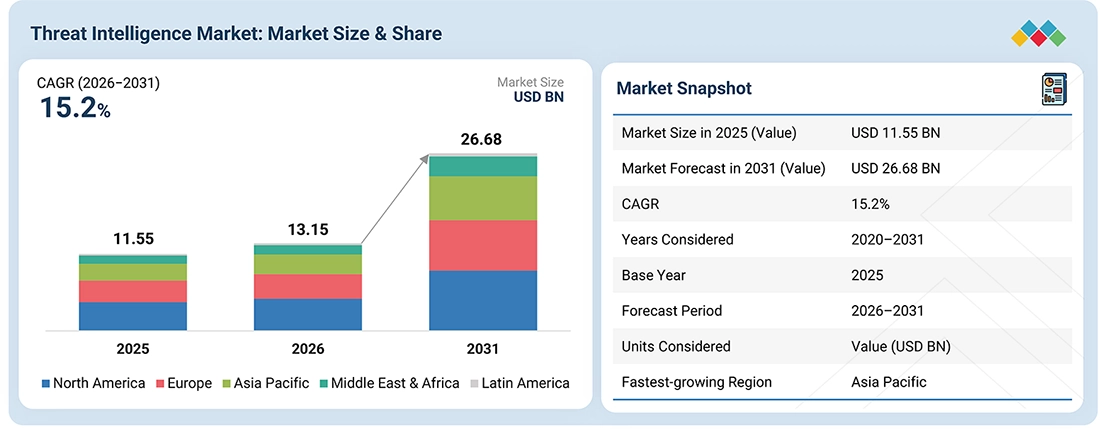
Source: Secondary Research, Interviews with Experts, MarketsandMarkets Analysis
The threat intelligence market is projected to reach USD 26.68 billion by 2031 from USD 13.15 billion in 2026, at a CAGR of 15.2%. The market for threat intelligence solutions is being fueled by the ever-growing need to adopt threat intelligence solutions for the detection of emerging threats, the tracking of threat actors, and proactive risk management caused by frequent cyberattacks. Also, the growing adoption of technologies like cloud computing, IoT, and digital platforms is expanding companies' attack surface, boosting demand for real-time threat monitoring services.
KEY TAKEAWAYS
-
BY REGIONNorth America is expected to account for the largest share of approximately 37% of the global threat intelligence market in 2026.
-
BY OFFERINGBy offering, the solutions segment is expected to dominate the market in 2026.
-
BY SOLUTIONBy solution, external attack surface management (EASM) is projected to be the fastest-growing segment during the forecast period.
-
BY DEPLOYMENT MODEBy deployment mode, the cloud segment is expected to register the highest CAGR of 14.0% during the forecast period.
-
BY APPLICATIONBy application, incident response is projected to be the fastest-growing segment from 2026 to 2031.
-
BY ORGANIZATION SIZEBy organization, the large enterprise segment is expected to hold the largest market share in 2026.
-
BY VERTICALBy vertical, the defense & intelligence segment is expected to record the highest CAGR of 19.0% during the forecast period.
-
COMPETITIVE LANDSCAPE - KEY PLAYERSPalo Alto Networks, CrowdStrike, IBM, Cisco, and Google are leading players in the threat intelligence market, offering comprehensive threat intelligence, threat detection, security analytics, XDR, SIEM, cloud security, threat research, and automated response capabilities to help organizations identify, investigate, and mitigate evolving cyber threats.
-
COMPETITIVE LANDSCAPE - STARTUPS/SMEsQuoIntelligence, Filigran, CloudSEK, Sekoia, and StrikeReady are emerging providers offering specialized threat intelligence, threat actor monitoring, digital risk protection, external attack surface intelligence, AI powered analysis, and security operations solutions to strengthen proactive threat detection and intelligence driven cybersecurity across enterprises and industry specific environments.
Organizations increasingly need to evaluate weaknesses and attack techniques present in their systems and networks; as a result, they are adopting threat intelligence to give security teams valuable insights for correlating data across multiple sources and improving incident response. The above-mentioned factors are pushing organizations across sectors such as BFSI, healthcare, government, manufacturing, and IT to adopt threat intelligence solutions.
TRENDS & DISRUPTIONS IMPACTING CUSTOMERS' CUSTOMERS
The threat intelligence market is shifting from legacy feeds and analyst-driven reports toward AI/ML-based detection, automated response, and cloud-native intelligence. Growing compliance needs, digital transformation, and expanding attack surfaces are driving adoption, reshaping enterprise security strategies across BFSI, government, and healthcare.
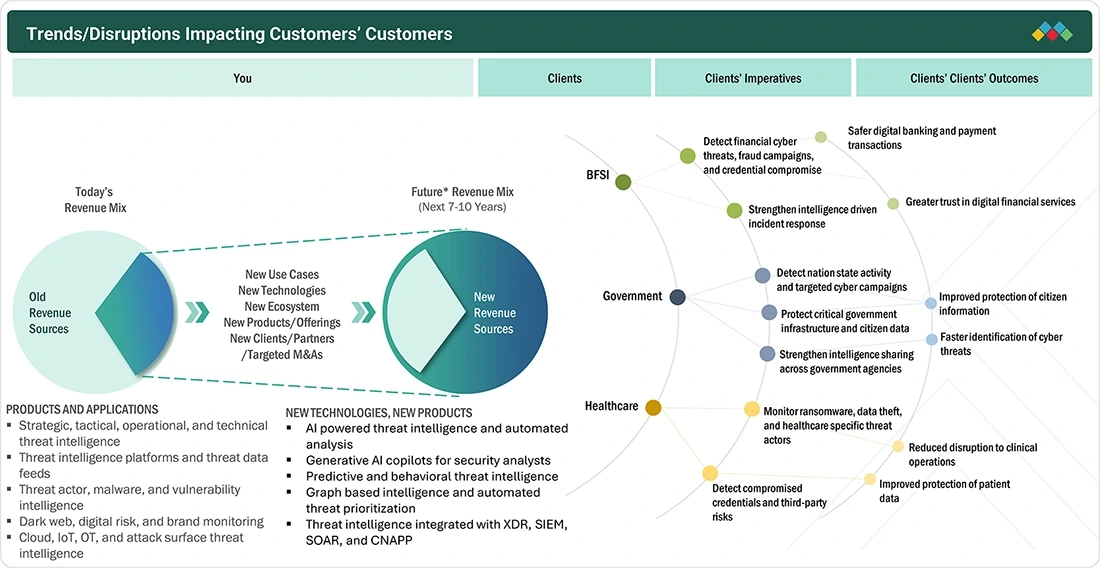
Source: Secondary Research, Interviews with Experts, MarketsandMarkets Analysis
MARKET DYNAMICS

Level
-
Escalating cybercrime and evolving breach tactics

-
Shift toward proactive threat intelligence


Level
-
High initial deployment and integration costs

-
Lack of standardization across platforms


Level
-
Expansion of connected devices and IoT risks

-
Rising adoption of AI and machine learning


Level
-
Lack of trained security analysts to analyze threat intelligence systems

-
Management of voluminous data

Source: Secondary Research, Interviews with Experts, MarketsandMarkets Analysis
Driver: Escalating cybercrime and evolving breach tactics
The rapid rise of cybercrime, including ransomware, phishing, and state-sponsored attacks, is forcing organizations to strengthen their threat intelligence capabilities. As attackers continuously adopt sophisticated methods, companies need real-time insights to anticipate, detect, and respond to threats effectively, making threat intelligence a critical part of cybersecurity strategy.
Restraint: Lack of Standardization Across Platforms
The threat intelligence market suffers from inconsistent data formats, protocols, and interoperability standards across platforms. This fragmentation makes it difficult to aggregate, analyze, and share intelligence efficiently, slowing response times and complicating integration with existing security operations, thereby affecting the overall effectiveness of threat intelligence initiatives.
Opportunity: Expansion of Connected Devices and IoT Risks
The rapid growth of IoT and connected devices increases the attack surface for enterprises. Threat intelligence solutions can identify vulnerabilities, monitor anomalous activity, and provide actionable insights, helping organizations secure distributed endpoints and prevent exploitation in environments where traditional security tools struggle to maintain visibility.
Challenge: Lack of trained security analysts to analyze threat intelligence systems
Organizations face a shortage of skilled security analysts capable of effectively interpreting and acting on threat intelligence data. The complexity of integrating insights from multiple sources, prioritizing risks, and responding quickly to threats creates a talent gap, limiting the full potential and operational effectiveness of threat intelligence systems.
THREAT INTELLIGENCE MARKET: COMMERCIAL USE CASES ACROSS INDUSTRIES
| COMPANY | USE CASE DESCRIPTION | BENEFITS |
|---|---|---|
 |
Threat intelligence feeds integrated with firewall and security platforms to detect and block cyber threats in real-time | Faster threat detection, reduced risk of breaches, improved network security visibility |
 |
Endpoint threat intelligence and monitoring using cloud-native AI to detect malware, ransomware, and advanced threats | Enhanced endpoint protection, rapid threat mitigation, proactive threat hunting capabilities |
 |
Security Intelligence and Event Management (SIEM) combined with threat analytics to monitor, correlate, and predict threats | Comprehensive threat visibility, reduced incident response time, improved compliance posture |
 |
Threat intelligence integrated into network and cloud security solutions to identify suspicious activities and vulnerabilities | Strengthened network defense, real-time threat alerts, reduced operational impact from attacks |
 |
Detects and blocks phishing and malware attacks in real time to protect organizations | Helps organizations proactively prevent cyberattacks and data breaches |
Logos and trademarks shown above are the property of their respective owners. Their use here is for informational and illustrative purposes only.
MARKET ECOSYSTEM
The threat intelligence market ecosystem spans multiple categories, including threat feed aggregators, digital risk protection, threat intelligence platforms, and external attack surface management. Together, these segments enable organizations to collect, analyze, and act on cyber threat data, strengthening security posture, mitigating risks, and enhancing proactive defense against evolving cyberattacks.
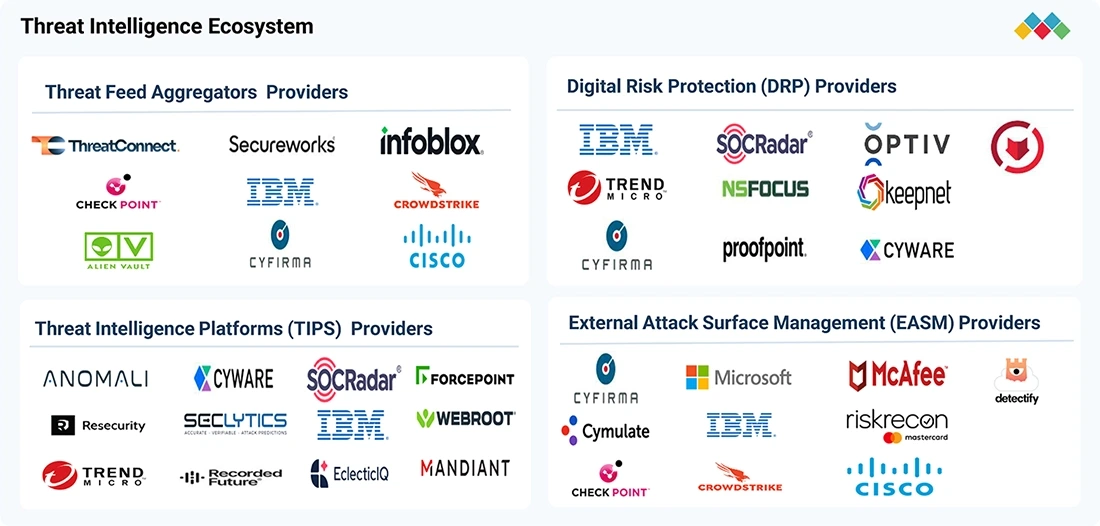
Logos and trademarks shown above are the property of their respective owners. Their use here is for informational and illustrative purposes only.
MARKET SEGMENTS
Source: Secondary Research, Interviews with Experts, MarketsandMarkets Analysis
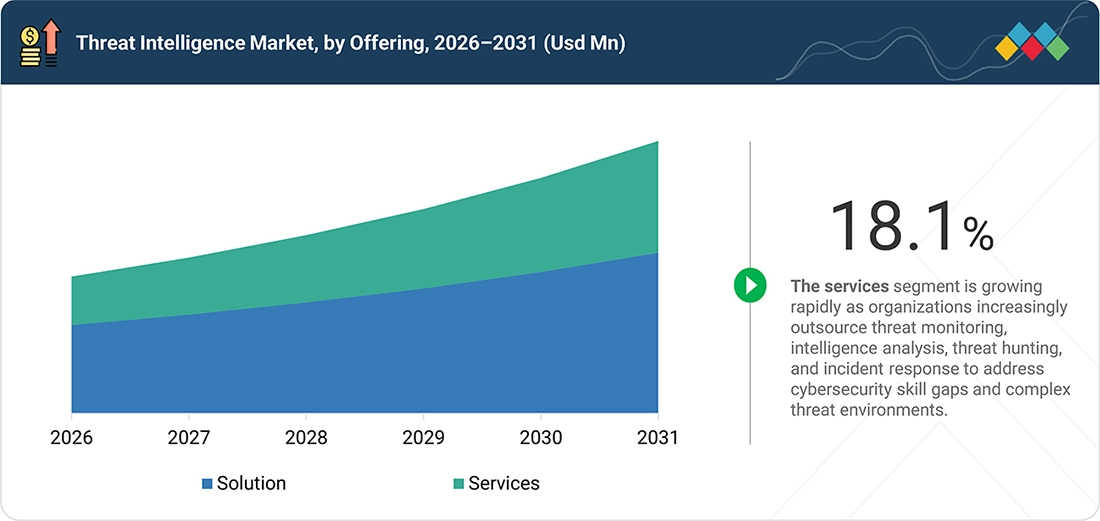
Threat Intelligence Market, By Offering
The solutions segment dominates as enterprises prioritize integrated platforms delivering real-time monitoring, analytics, and automated response. These solutions improve threat detection and compliance, driving higher adoption than standalone offerings.
Threat Intelligence Market, By Application
The fraud & financial crime detection segment holds the largest share in the overall threat intelligence market. Financial institutions are increasingly using threat intelligence to identify fraud infrastructure, compromised credentials, malicious domains, phishing campaigns, and coordinated threat actors.
Threat Intelligence Market, By Deployment
Hybrid deployment leads growth by blending cloud scalability with on-premises control. Enterprises prefer hybrid models to meet compliance needs, manage costs, and ensure sensitive data security across multi-cloud and distributed IT environments.
Threat Intelligence Market, By Organization Size
Large enterprises dominate adoption due to complex IT ecosystems, global operations, and higher cyber risk exposure. Significant budgets enable investment in advanced platforms, ensuring proactive defense and long-term resilience.
Threat Intelligence Market, By Vertical
The IT & ITeS segment leads the overall market, driven by rapid cloud adoption, rising ransomware threats, and the need to secure massive customer and enterprise data volumes. Proactive intelligence ensures business continuity and compliance.
REGION
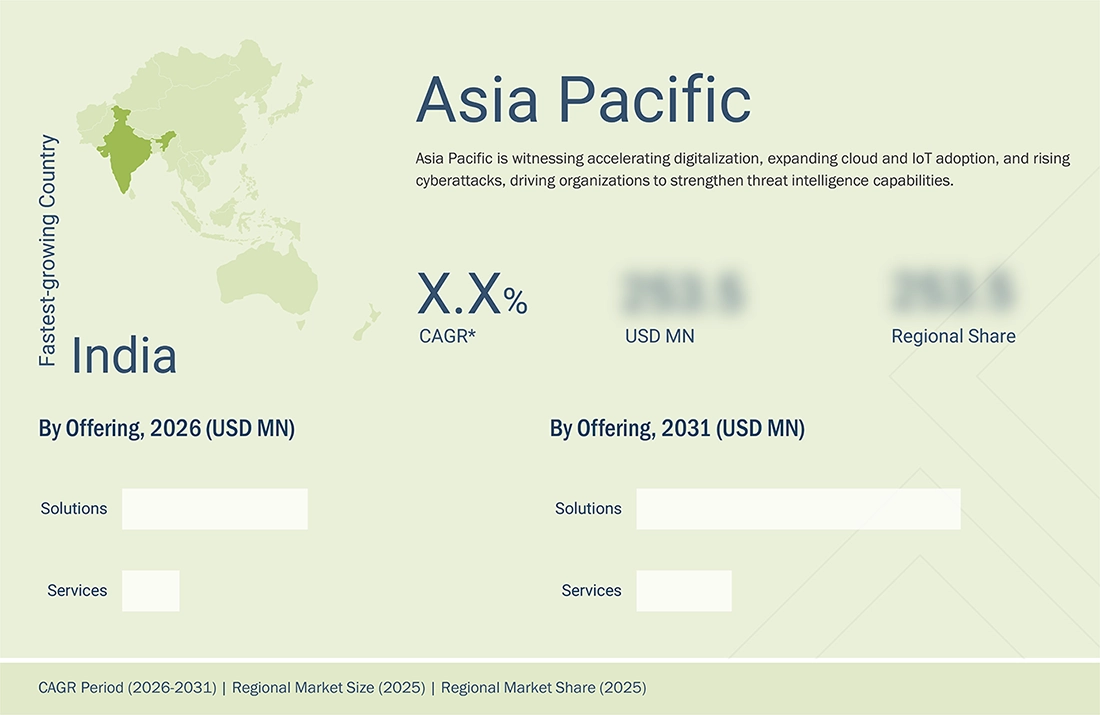
Asia Pacific is projected to be the fastest-growing region in the global threat intelligence market during the forecast period.
Asia Pacific’s threat intelligence market growth is fueled by increasing state-sponsored cyberattacks, expansion of financial fraud in emerging economies, rapid adoption of 5G networks, and rising ransomware targeting critical infrastructure. The region’s booming fintech and e-commerce sectors, coupled with stricter data protection laws, drive strong demand for advanced threat intelligence solutions.
THREAT INTELLIGENCE MARKET: COMPANY EVALUATION MATRIX
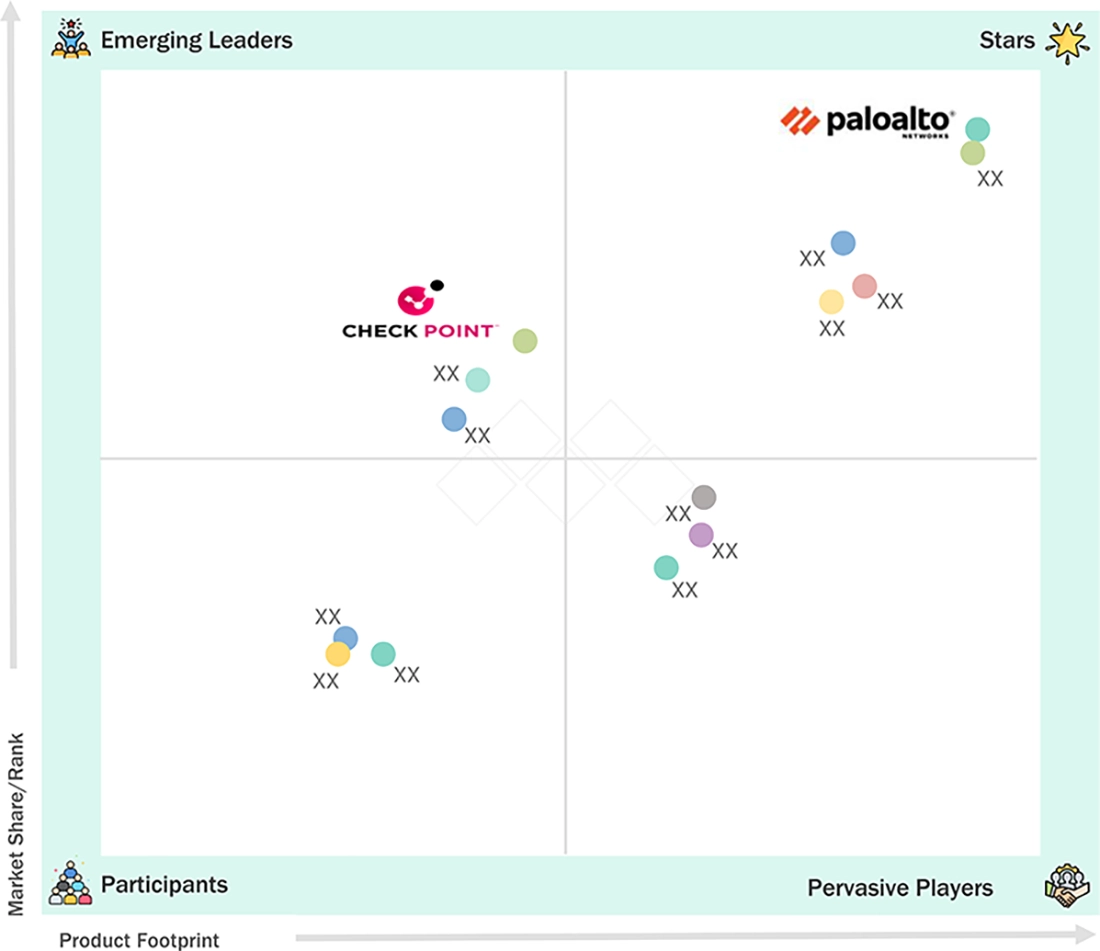
In the threat intelligence market vendor evaluation matrix, Palo Alto Networks (star player) leads with its extensive security portfolio and strong enterprise adoption, while Check Point (emerging player) is gaining traction by enhancing its threat detection capabilities and expanding into advanced intelligence-driven security solutions.
Source: Secondary Research, Interviews with Experts, MarketsandMarkets Analysis
KEY MARKET PLAYERS
- Palo Alto Networks (US)
- Cisco (US)
- CrowdStrike (US)
- IBM (US)
- Google (US)
- Fortinet (US0
- Check Point (Israel)
- Trellix (US)
- Rapid7 (US)
- Recorded Future (US)
- Group-IB (Singapore)
- Kaspersky (Russia)
- Anomali (US)
- ReliaQuest (US)
- KELA (Israel)
MARKET SCOPE
| REPORT METRIC | DETAILS |
|---|---|
| Market Size in 2025 (Value) | USD 11.55 Billion |
| Market Forecast in 2026 (Value) | USD 13.15 Billion |
| Market Forecast in 2031 (Value) | USD 26.68 Billion |
| Growth Rate | CAGR of 15.2% from 2026-2031 |
| Years Considered | 2020-2031 |
| Base Year | 2025 |
| Forecast Period | 2026-2031 |
| Units Considered | Value (USD Billion) |
| Report Coverage | Revenue forecast, company ranking, competitive landscape, growth factors, and trends |
| Segments Covered |
|
| Regions Covered | North America, Europe, Asia Pacific, Middle East & Africa, Latin America |
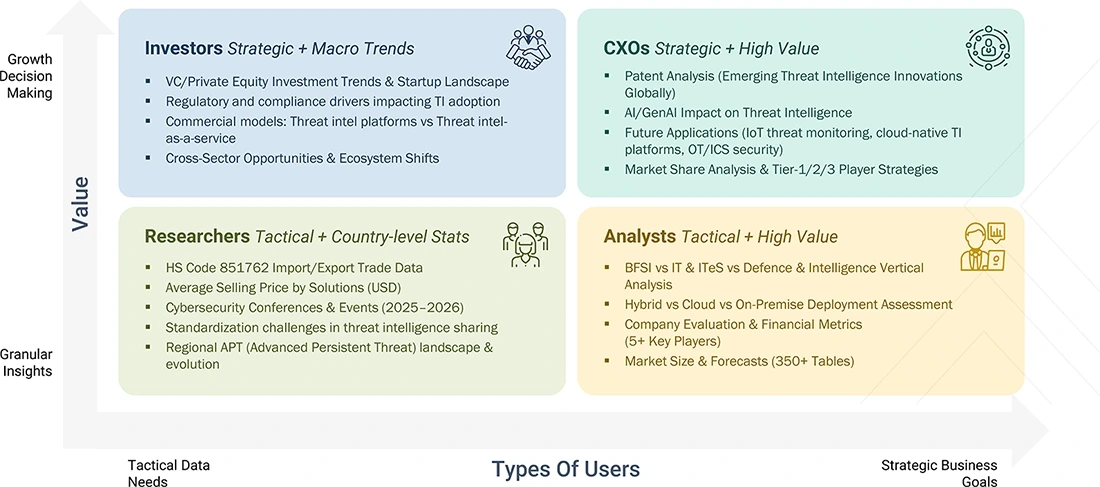
WHAT IS IN IT FOR YOU: THREAT INTELLIGENCE MARKET REPORT CONTENT GUIDE
DELIVERED CUSTOMIZATIONS
We have successfully delivered the following deep-dive customizations:
| CLIENT REQUEST | CUSTOMIZATION DELIVERED | VALUE ADDS |
|---|---|---|
| Assess market opportunity in Global and Middle East (UAE, KSA) | Leveraged TI, DRP, ASM, and cybersecurity studies | Clear view of growth potential across regions |
| Identify key drivers and emerging trends | Regional analysis of drivers and adoption trends | Actionable insights for strategy |
| Sectoral insights across major verticals | Deep-dive by BFSI, govt., defense, healthcare, etc. | Highlighted high-potential verticals |
RECENT DEVELOPMENTS
- April 2026 : ServiceNow completed the acquisition of Armis to strengthen cyber asset intelligence and risk management across IT, OT, IoT, medical devices, cloud environments, and other connected assets.
- August 2025 : Zscaler completed the acquisition of Red Canary to combine threat intelligence, managed detection and response, security automation, and AI driven security operations capabilities.
- July 2025 : Resecurity partnered with Iraq Cyber Events Response Team (IQ-CERT) to advance national cybersecurity and threat intelligence.
- June 2025 : KELA partnered with Sysmex to strengthen its cybersecurity using KELA’s threat intelligence platform, ULTRA RED, for continuous threat exposure and SLING for third-party risk management. The collaboration provides real-time visibility, prioritized alerts, and actionable intelligence, enabling faster incident response and enhanced protection across IT assets and vendors.
- March 2025 : Stellar Cyber partnered with WithSecure to deliver enhanced, unified threat detection and response capabilities for companies. This collaboration combines Stellar Cyber’s AI- and automation-driven open SecOps platform and WithSecure’s advanced endpoint protection and threat intelligence expertise, empowering organizations to streamline security operations and respond to threats faster and more effectively.
Table of Contents
 Exclusive indicates content/data unique to MarketsandMarkets and not available with any competitors.
Methodology
Secondary research was conducted to collect information useful for this technical, market-oriented, and commercial study of the threat intelligence market. The next step involved validating these findings, assumptions, and sizing with industry experts across the value chain using primary research. Different approaches, including top-down and bottom-up methods, were employed to estimate the total market size. After that, the market breakup and data triangulation procedures were used to estimate the market size of the segments and subsegments of the market.
Secondary Research
During the secondary research process, various secondary sources were consulted to identify and collect information relevant to the study. The secondary sources included annual reports, press releases, investor presentations of threat intelligence vendors, forums, certified publications, and whitepapers. Secondary research was mainly used to obtain key information about the industry's supply chain, the total pool of key players, market classification and segmentation according to industry trends to the bottom-most level, regional markets, and key developments from both market- and technology-oriented perspectives, all of which were further validated by primary sources.
Primary Research
In the primary research process, various primary sources from both the supply and demand sides were interviewed to obtain qualitative and quantitative information for this report. The primary sources from the supply side included industry experts such as chief executive officers (CEOs), vice presidents (VPs), marketing directors, technology and innovation directors, and other key executives from major companies and organizations operating in the threat intelligence market.
In the market engineering process, top-down and bottom-up approaches were extensively used, along with several data triangulation methods, to estimate and forecast the overall market segments and subsegments listed in this report. Extensive qualitative and quantitative analyses were performed on the complete market engineering process to present key information/insights throughout the report.
After the complete market engineering process (including calculations for market statistics, market breakups, market size estimates, market forecasts, and data triangulation), extensive primary research was conducted to gather information and verify & validate the derived critical numbers. Primary research was also conducted to identify the segmentation types, industry trends, competitive landscape of threat intelligence market players, and key market dynamics, such as drivers, restraints, opportunities, challenges, and key strategies.
Following is the breakup of the primary study:
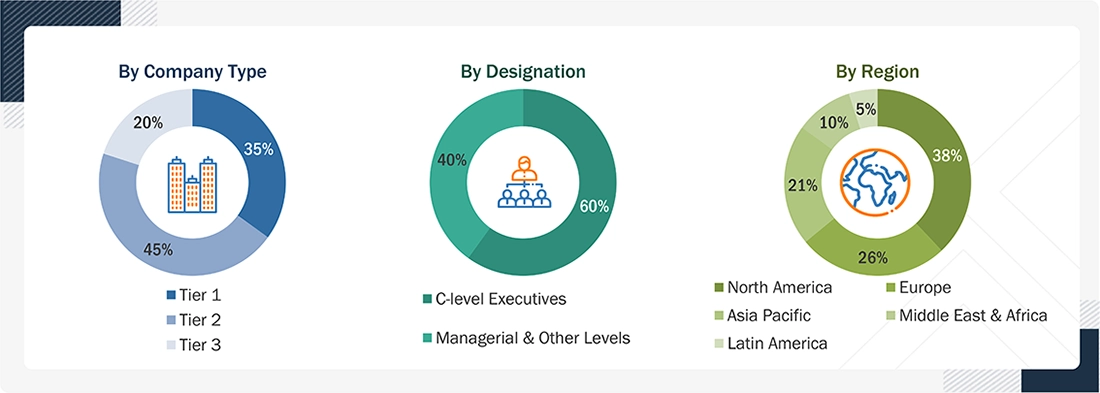
Notes: Tier 1 companies receive revenues higher than USD 10 billion; Tier 2 companies' revenues range between USD 1 and 10 billion; and Tier 3 companies' revenues range between USD 500 million and USD 1 billion. Other designations include sales, marketing, and product managers.
Source: Industry Experts
To know about the assumptions considered for the study, download the pdf brochure
Market Size Estimation
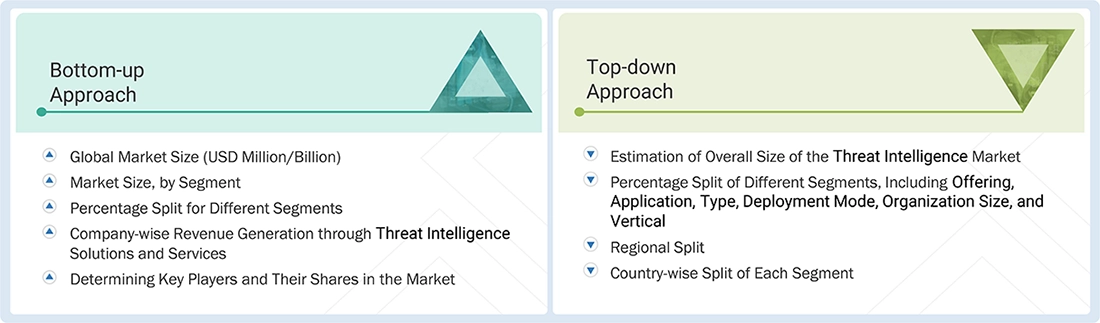
Top-down and bottom-up approaches were employed to estimate and validate the size of the threat intelligence market and of various dependent subsegments within it. The research methodology used to estimate the market size includes the following: critical players in the market were identified through secondary research, and their market shares in the respective regions were determined through both primary and secondary research. This procedure involved analyzing the annual and financial reports of the top market players and conducting extensive interviews with key industry leaders, including CEOs, VPs, directors, and marketing executives, to gather valuable insights.
All percentage splits and breakdowns were determined using secondary sources and verified through primary sources. All parameters that affect the market covered in this study were accounted for, examined in detail, verified through primary research, and analyzed to obtain final quantitative and qualitative data. This data was consolidated with detailed inputs and analysis from MarketsandMarkets.
Threat Intelligence Market : Top-Down and Bottom-Up Approach
Data Triangulation
The market was divided into several segments and subsegments after determining the overall market size using the market size estimation processes explained above. Data triangulation and market breakup procedures were employed, where applicable, to complete the overall market engineering process and arrive at the exact statistics for each market segment and subsegment. The data was triangulated by studying various factors and trends from both the demand and supply sides.
Market Definition
According to MarketsandMarkets, "Threat intelligence is a comprehensive approach that provides organizations with actionable insights to anticipate, detect, and mitigate cyber risks in an increasingly complex digital landscape. It encompasses multiple domains such as cyber threat intelligence, threat intelligence platforms, external attack surface management, and digital risk protection, each working together to strengthen defenses against evolving threats."
Key Stakeholders
- Technology & solution providers
- Managed security service providers (MSSPs)
- Cybersecurity consulting firms
- End-user organizations (across industries)
- Government agencies
- Regulatory bodies
- Threat intelligence sharing communities
- Industry-specific ISACs/ISAOs
- Open-source intelligence communities
- Investors and venture capital firms
- Strategic technology partners
Report Objectives
- To describe and forecast the threat intelligence market by offering, application, type, deployment mode, organization size, vertical, and region, as well as analyze the various macroeconomic and microeconomic factors that affect market growth
- To forecast the market size of five major regions: North America, Europe, Asia Pacific, the Middle East & Africa, and Latin America
- To analyze the subsegments of the market concerning individual growth trends, prospects, and contributions to the overall market
- To provide detailed information related to the primary factors (drivers, restraints, opportunities, and challenges) influencing the growth of the market
- To analyze opportunities in the market for stakeholders by identifying high-growth segments of the market
- To profile the key players of the threat intelligence market and comprehensively analyze their market size and core competencies
- To analyze competitive developments, such as product launches, mergers & acquisitions, partnerships, agreements, and collaborations in the global market
Available customizations:
With the given market data, MarketsandMarkets offers customizations based on company-specific needs. The following customization options are available for the report:
Company Information
-
Detailed analysis and profiling of additional market players (up to 5)
Geographic Analysis
- Further breakdown of the Asia Pacific market, by country
- Further breakdown of the North American market, by country
- Further breakdown of the Latin American market, by country
- Further breakdown of the Middle Eastern & African market, by country
- Further breakdown of the European market, by country
Key Questions Addressed by the Report
What are the opportunities in the threat intelligence market?
The threat intelligence market is expanding rapidly, driven by escalating cybercrime costs, state-sponsored attacks, and the growing adoption of cloud and IoT ecosystems. Regulatory mandates worldwide are pushing enterprises to adopt intelligence-driven security, while AI-powered analytics and cross-border intelligence sharing open new growth avenues. Rising SME adoption and the expanding role of MSSPs further present attractive opportunities for providers to scale globally.
What is the definition of the threat intelligence market?
According to MarketsandMarkets, threat intelligence is a comprehensive approach that provides organizations with actionable insights to anticipate, detect, and mitigate cyber risks in an increasingly complex digital landscape. It encompasses multiple domains such as cyber threat intelligence, threat intelligence platforms, external attack surface management, and digital risk protection, each working together to strengthen defenses against evolving threats.
Which region is expected to lead the threat intelligence market?
North America is estimated to account for the largest market share during the forecast period.
Which are the major market players covered in the report?
Major vendors included are Palo Alto Networks (US), Cisco (US), Check Point (Israel), CrowdStrike (US), IBM (US), Recorded Future (US), Google (US), Flashpoint (US), Group-IB (Singapore), Kaspersky (Russia), Trellix (US), Rapid7 (US), Fortinet (US), ReliaQuest (US), CPX (UAE), ZeroFox (US), Orange (France), Anomali (US), Resecurity (US), Help AG (UAE), Gatewatcher (France), Cyble (US), Cyberint (Israel), SOCRadar (US), ThreatConnect (US), ThreatQuotient (US), Quontelligence (Netherlands), ThreatMon (Turkey), Security Pact (France), and Securium Solutions (India).
What is the current size of the threat intelligence market?
The threat intelligence market is projected to reach USD 26.68 billion by 2031 from USD 13.15 billion in 2026, at a CAGR of 15.2%.


Personalize This Research
- Triangulate with your Own Data
- Get Data as per your Format and Definition
- Gain a Deeper Dive on a Specific Application, Geography, Customer or Competitor
- Any level of Personalization
Let Us Help You
- What are the Known and Unknown Adjacencies Impacting the Threat Intelligence Market
- What will your New Revenue Sources be?
- Who will be your Top Customer; what will make them switch?
- Defend your Market Share or Win Competitors
- Get a Scorecard for Target Partners

Custom Market Research Services
We Will Customise The Research For You, In Case The Report Listed Above Does Not Meet With Your Requirements
Get 10% Free CustomisationTESTIMONIALS
- Canada Threat Intelligence Market
- US Threat Intelligence Market
- UK Threat Intelligence Market
- Germany Threat Intelligence Market
- France Threat Intelligence Market
- Italy Threat Intelligence Market
- China Threat Intelligence Market
- Japan Threat Intelligence Market
- India Threat Intelligence Market
- Singapore Threat Intelligence Market
- UAE Threat Intelligence Market
- Brazil Threat Intelligence Market
- Mexico Threat Intelligence Market
- Rest Of Europe Threat Intelligence Market
- Rest Of Asia Pacific Threat Intelligence Market
- Rest Of Latin America Threat Intelligence Market
- Ksa Threat Intelligence Market
- Rest Of Middle East Threat Intelligence Market






Growth opportunities and latent adjacency in Threat Intelligence Market