
Automotive Turbocharger Market Size, Share & Analysis

Automotive Turbocharger Market by Diesel & Gasoline Turbo (VGT, Wastegate, e-Turbo), Component (Turbine Wheel, Compressor Wheel, Housing), Material, Off-Highway Equipment, Vehicle Type, Fuel Type, Aftermarket and Region - Global Forecast to 2030




OVERVIEW
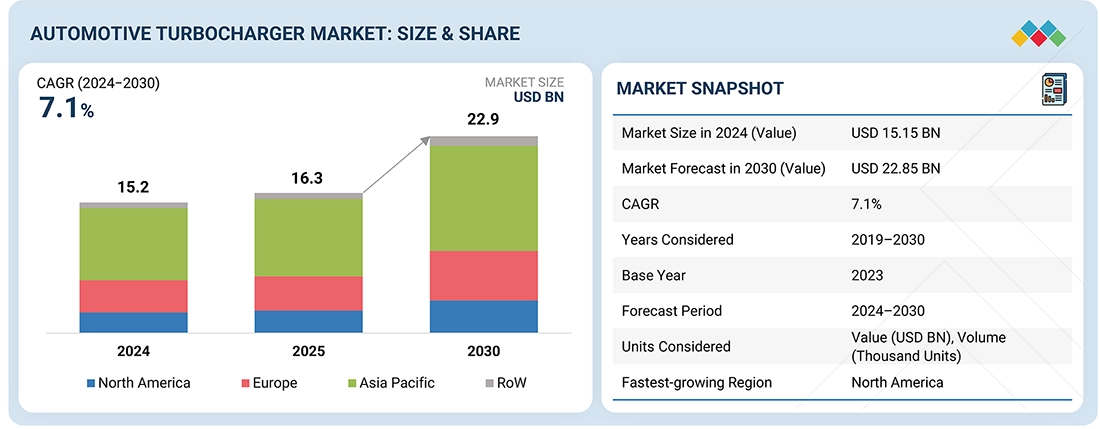
Source: Secondary Research, Interviews with Experts, MarketsandMarkets Analysis
The automotive turbocharger market is projected to grow from USD 15.2 billion in 2024 to USD 22.9 billion by 2030, at a CAGR of 7.1%. Growth in the automotive turbocharger market is driven by sustained OEM focus on engine downsizing and efficiency improvement to meet tightening emission and fuel-economy regulations, particularly in passenger cars and light commercial vehicles. Additionally, continued production of ICE and hybrid vehicles, especially in emerging markets, supports strong demand for turbochargers as they enable higher power output, improved torque, and reduced CO2 emissions without increasing engine displacement. The adoption of turbocharged gasoline and diesel engines across mass-market and commercial vehicle platforms further reinforces turbocharger integration in powertrain architectures.
KEY TAKEAWAYS
-
By RegionThe North America Automotive Turbocharger market is estimated to account for a share of more than 15.0% in 2025.
-
Automotive Diesel Turbocharger Market, By Turbo typeAutomotive Diesel Turbocharger Market, By Turbo type, the E-Turbo type segment is projected to register the highest CAGR by value during the forecast period.
-
AUTOMOTIVE GASOLINE TURBOCHARGER Market, By TURBO TYPEAUTOMOTIVE GASOLINE TURBOCHARGER Market, By TURBO TYPE, the E-Turbo type segment is projected to grow at the highest CAGR of more than 25% by value from 2023 to 2030.
-
off-highway turbocharger market, by applicationoff-highway turbocharger market, by application, the construction equipment segment is estimated to dominate the market in 2025.
-
AUTOMOTIVE TURBOCHARGER MARKET, by componentBy component, the turbine wheel segment is projected to grow at the highest CAGR of areound 7% by value during the forecast period.
-
AUTOMOTIVE TURBOCHARGER MARKET, BY fuel typeBy fuel type, The gasoline segment is estimated to dominate the market in 2025.
-
AUTOMOTIVE TURBOCHARGER Market, By materialBy material, the aluminium segment is projected to register the highest CAGR by value during the forecast period.
-
automotive turbocharger Market, By vehicle typeBy vehicle type, the passenger car segment is projected to grow at the highest CAGR of around 7% by value from 2024 to 2030.
-
automotive Gasoline turbocharger Market, By vehicle typeautomotive Gasoline turbocharger Market, By vehicle type, the Passenger Car segment is estimated to dominate the market in 2025.
-
automotive turbocharger aftermarket, by vehicle typeautomotive turbocharger aftermarket, by vehicle type, the LCV segment is projected to grow at the highest CAGR of 5.3% by value during the forecast period.
-
Competitive LandscapeBorgwarner (Germany), Garrett Motion Inc. (Switzerland), Mitsubishi Heavy Industries LTD (Japan), IHI Corporation (Japan), and Cummins Inc (US) were identified as star players in the mechanical control cables market, given their strong market share and product footprint.
-
Competitive LandscapeRotomaster (Canada) and Turbonetics(US) have distinguished themselves among startups and SMEs by securing strong footholds in specialized niche areas, underscoring their potential as emerging market leaders.
The automotive turbocharger market is growing steadily due to the continued need for efficient air management and power density enhancement in emission- and performance-critical vehicle powertrains. OEMs across passenger cars and commercial vehicles rely on turbochargers to improve fuel efficiency, torque delivery, and emission control, particularly in downsized gasoline, diesel, and hybrid engines where regulatory compliance and performance balance are essential. Additionally, sustained production of ICE and hybrid vehicles, especially in cost-sensitive and emerging markets, is supporting turbocharger demand. Moreover, technological advancements such as variable geometry turbochargers, electric assist (e-turbo) systems, and improved thermal materials are enhancing responsiveness, durability, and operating efficiency, further driving turbocharger adoption across vehicle segments.
TRENDS & DISRUPTIONS IMPACTING CUSTOMERS' CUSTOMERS
Present revenue in the automotive turbochargers market is primarily generated from conventional wastegate and variable-geometry turbochargers used in gasoline and diesel ICE vehicles, featuring cast-iron or steel turbine housings, oil-lubricated bearings, and mechanically actuated control systems. On the other hand, future revenue streams are expected to be driven by electrically assisted turbochargers (e-turbos), turbochargers optimized for hybrid powertrains, and advanced designs using lightweight alloys, improved aerodynamics, and high-temperature materials, enabling faster boost response, higher efficiency, and compliance with tighter emission and fuel-economy regulations.
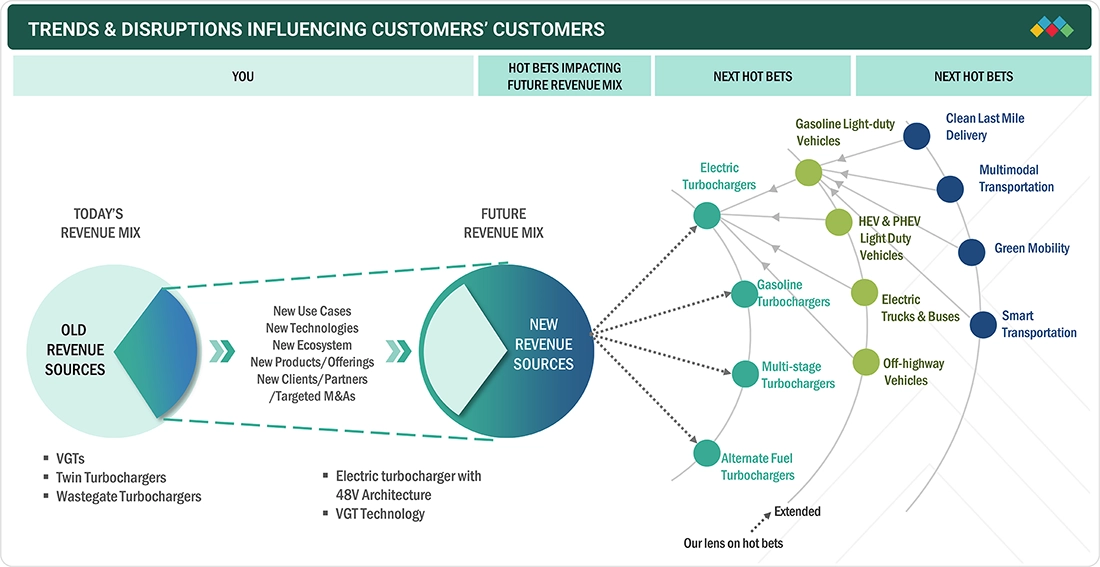
Source: Secondary Research, Interviews with Experts, MarketsandMarkets Analysis
MARKET DYNAMICS

Level
-
Strict laws related to NOx and CO2 emission levels

-
Increasing demand for passenger cars with gasoline engines


Level
-
High maintenance costs and cooling oil requirements

-
Increasing adoption of EVs


Level
-
Development of electric turbochargers


Level
-
Turbo lag

-
Availability of very few materials to withstand high temperature

Source: Secondary Research, Interviews with Experts, MarketsandMarkets Analysis
Driver: Strict laws related to NOx and CO2 emission levels
Stricter NOx and CO2 emission regulations are indirectly driving demand for high-precision, low-friction mechanical control cables as OEMs optimize ICE and hybrid powertrains for better combustion efficiency and emission control. Mechanical cables are widely used in throttle, exhaust flap, transmission, and auxiliary control systems, where predictable force transmission and calibration stability are critical to meeting emission targets. To support tighter control tolerances, cables increasingly feature PTFE-lined cores, reinforced housings, and low-hysteresis designs, delivering friction below 0.08 and cycle life exceeding 300,000–500,000 operations. These designs maintain consistent performance across wide temperature ranges (−40°C to 125°C) and under vibration and thermal stress, ensuring reliable actuation that supports emission compliance over the vehicle lifecycle.
Restraint: High maintenance costs and cooling oil requirements
High maintenance costs and lubrication requirements are constraining the adoption of mechanical control cables in advanced automotive and equipment platforms. Mechanical cables require periodic adjustment, lubrication, wear monitoring, and replacement, particularly in high-load or high-cycle applications, increasing total cost of ownership for OEMs and fleet operators. In comparison, electronic and electro-hydraulic actuation systems used in premium vehicles, electric models, and autonomous equipment reduce mechanical wear points and eliminate oiling and cable routing complexity. This shift is accelerating in applications prioritizing low maintenance, centralized control, and long service intervals, thereby limiting mechanical cable demand in next-generation platforms.
Opportunity: Development of electric turbochargers
The development of electric turbochargers (e-turbos) is creating new growth opportunities within the automotive turbocharger market as OEMs seek faster boost response and improved efficiency in hybrid and downsized ICE powertrains. E-turbos eliminate turbo lag by using an electric motor to spool the compressor independently of exhaust flow, enabling precise air management under transient driving conditions. As mild hybrids and plug-in hybrids scale, electric turbochargers support lower emissions, better drivability, and higher power density without increasing engine size. Additionally, their compatibility with 48V electrical architectures positions e-turbos as a key enabler in the transition phase between conventional ICE and full electrification, sustaining turbocharger demand in next-generation vehicle platforms.
Challenge: Turbo lag
Turbo lag remains a key challenge in the automotive turbocharger market, as conventional exhaust-driven turbochargers depend on sufficient exhaust energy to build boost, leading to delayed throttle response under low engine speeds. This lag affects drivability, particularly in downsized engines and stop-start urban driving conditions, where rapid torque delivery is critical. While solutions such as variable geometry turbines, twin-scroll designs, and electric assist reduce lag, they add system complexity, cost, and thermal management challenges. Balancing responsiveness, durability, and cost under high exhaust temperatures and transient load cycles continues to be a critical technical constraint for OEMs.
AUTOMOTIVE TURBOCHARGER MARKET SIZE, SHARE & ANALYSIS: COMMERCIAL USE CASES ACROSS INDUSTRIES
| COMPANY | USE CASE DESCRIPTION | BENEFITS |
|---|---|---|
 |
Designs and integrates advanced turbocharger systems (wastegate, VGT, twin-scroll) for compact, midsize, and premium passenger cars across gasoline, diesel, and CNG powertrains to deliver higher power density. ? | Ensures improved fuel efficiency and lower CO2 emissions while maintaining strong acceleration and driving comfort, enabling OEMs to comply with tightening global emission norms without sacrificing vehicle performance. ? |
 |
Provides robust turbochargers for pickups, vans, and last-mile delivery vehicles operating in stop-start urban cycles and regional logistics routes with varying load profiles. ? | Delivers enhanced low-speed torque, better payload handling, and reduced fuel consumption, supporting fleet operators in meeting city emission standards and lowering total cost of ownership in daily operations. ? |
 |
Supplies high-durability turbochargers for heavy trucks, buses, construction equipment, and agricultural machinery running under high load, high-temperature, and dusty operating environments. ? | Offers reliable boost and efficiency over extended duty cycles, improving pulling power, uptime, and compliance with stringent diesel emission regulations in long-haul, mining, and field applications. ? |
 |
Develops high-response turbochargers, including twin-turbo and electronically actuated VGT units, tailored for sports cars and performance trims requiring rapid boost build-up and high specific output. ? | Enables quick throttle response, reduced turbo lag, and superior acceleration while still contributing to reduced emissions and better fuel economy compared with naturally aspirated performance engines. ? |
Logos and trademarks shown above are the property of their respective owners. Their use here is for informational and illustrative purposes only.
MARKET ECOSYSTEM
The automotive turbocharger market ecosystem spans raw material suppliers, component and subsystem suppliers, tier-1 turbocharger manufacturers, and automotive OEMs. Key raw material and component suppliers include ArcelorMittal, POSCO, Precision Castparts, and Saint-Gobain, supplying high-temperature steels, superalloys, castings, and bearing materials critical for turbine and compressor durability. Major tier-1 turbocharger manufacturers such as BorgWarner, Garrett Motion, Mitsubishi Heavy Industries, IHI Corporation, and Cummins design, manufacture, and supply turbocharging systems to OEMs. Automotive OEMs including Toyota, Volkswagen, General Motors, Ford, Hyundai, and Stellantis integrate these turbochargers into ICE and hybrid powertrains to meet performance, efficiency, and emission requirements across passenger and commercial vehicle platforms.
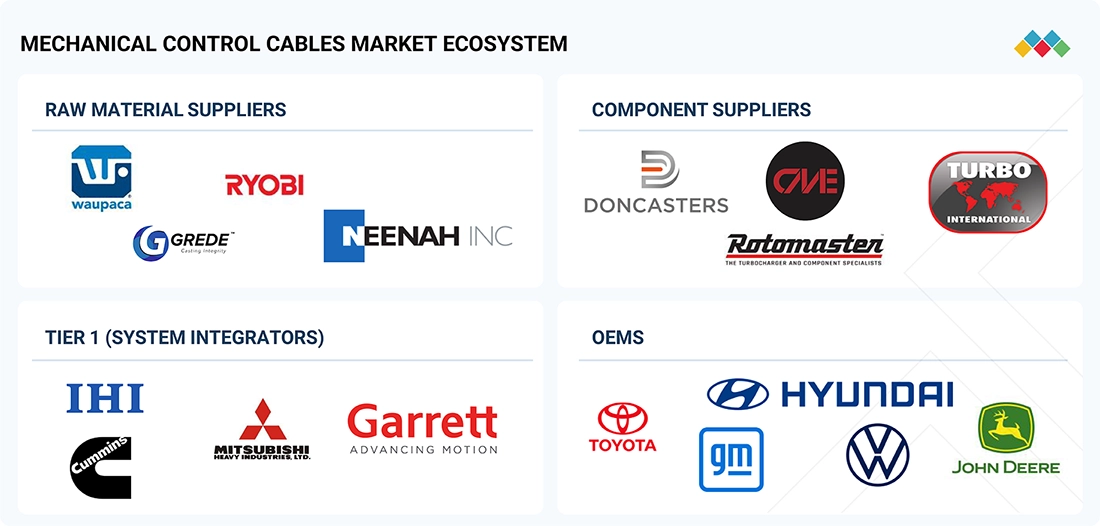
Logos and trademarks shown above are the property of their respective owners. Their use here is for informational and illustrative purposes only.
MARKET SEGMENTS
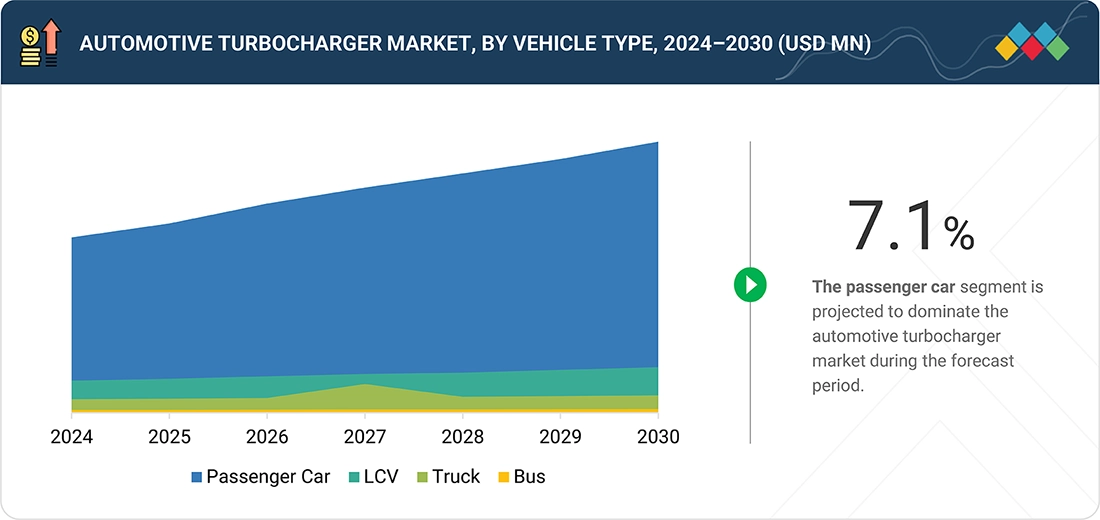
Source: Secondary Research, Interviews with Experts, MarketsandMarkets Analysis
Automotive Diesel Turbocharger Market, By Turbo type
By turbo type, the electric turbocharger (e-turbo) segment is expected to register the highest CAGR in the automotive diesel turbocharger market during the forecast period, driven by the need to mitigate turbo lag and meet tightening emission norms in diesel powertrains. E-turbos use an integrated electric motor to provide boost independent of exhaust energy, enabling faster torque delivery, improved transient response, and optimized air–fuel control in downsized and hybridized diesel engines. Adoption is accelerating in light commercial vehicles and premium passenger cars, where performance, efficiency, and emission compliance must be balanced. OEMs are increasingly deploying e-turbos to support 48V electrical architectures, reduce NOx and particulate emissions, and enhance drivability, particularly in applications where conventional variable geometry turbochargers face response and calibration limits under low-load and urban driving conditions.
off-highway turbocharger market, by application
By application, the construction equipment segment is estimated to dominate the off-highway turbocharger market, supported by sustained demand for excavators, loaders, dozers, and mining trucks operating under high load and duty-cycle conditions. Turbochargers are critical in construction equipment to deliver high torque at low engine speeds, improve fuel efficiency, and meet increasingly stringent off-road emission standards without compromising power output. OEMs widely deploy robust diesel turbochargers, including variable geometry and heavy-duty designs, to ensure reliable performance under dust, vibration, thermal stress, and extended operating hours. The continued global investment in infrastructure and mining projects further reinforces turbocharger demand in this segment due to higher engine displacement and turbo content per machine.
Automotive turbocharger market by material
By material, the aluminum segment is expected to register the highest CAGR in the automotive turbocharger market, driven by OEM focus on lightweighting and thermal efficiency to meet fuel-economy and emission targets. Aluminum is increasingly used in compressor housings and wheels due to its low density, good thermal conductivity, and ease of casting for complex geometries. As engine downsizing and hybridization accelerate, aluminum components help reduce overall turbocharger mass, improve transient response, and support higher engine efficiency. Adoption is strongest in passenger cars and light commercial vehicles, where weight reduction directly translates into lower CO2 emissions and improved vehicle performance.
REGION
North America to be fastest-growing region in autmotive turbocharger market during forecast period
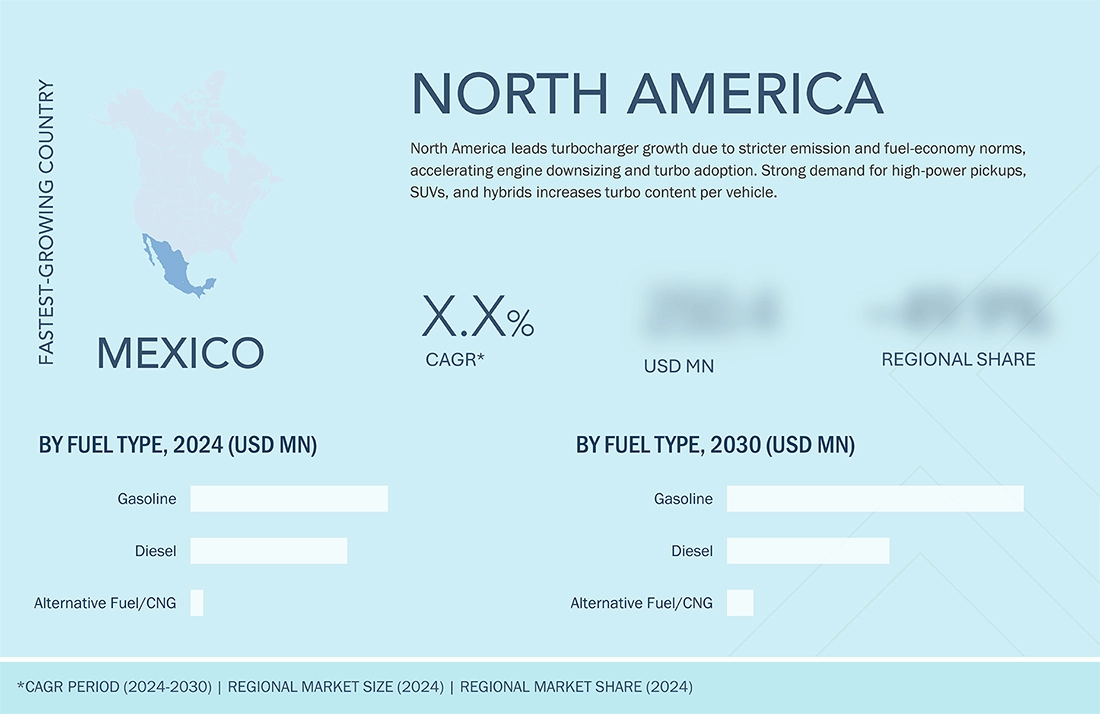
North America is projected to lead the global automotive turbocharger market during the forecast period, driven by stringent emission and fuel-economy regulations, high penetration of turbocharged gasoline and diesel engines, and strong demand for pickups, SUVs, and light commercial vehicles requiring high torque and towing capability. The region’s focus on engine downsizing and hybridized ICE platforms sustains turbocharger demand as OEMs balance performance with compliance under EPA and CARB norms. Leading suppliers such as BorgWarner, Garrett Motion, and Cummins support this growth with high-efficiency, durable turbochargers, including variable geometry and electric-assist designs, optimized for high-load duty cycles, improved drivability, and lower lifecycle costs across passenger and commercial vehicle platforms.
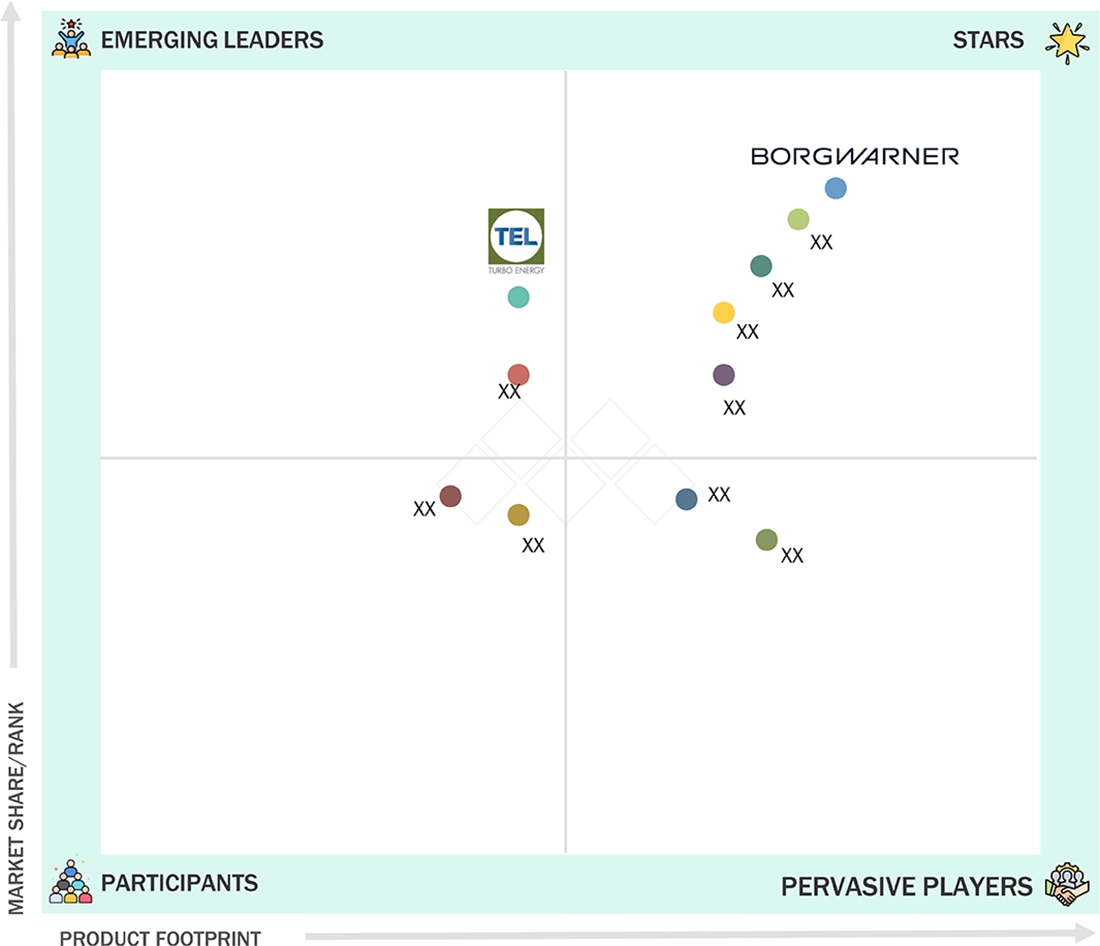
AUTOMOTIVE TURBOCHARGER MARKET SIZE, SHARE & ANALYSIS: COMPANY EVALUATION MATRIX
In the automotive turbocharger market matrix, BorgWarner Inc. (Star) holds a leading position supported by a high global market share and a broad turbocharger portfolio spanning wastegate turbochargers, variable geometry turbochargers (VGT), and emerging electric turbo solutions. Its position is reinforced by long-term OEM sourcing relationships, integration across high-volume passenger car and commercial vehicle platforms, and stable demand from ICE and hybrid powertrains during 2024–2025. Turbo Energy Private Limited (Emerging Leader) is strengthening its market position through capacity expansion and a focused portfolio of exhaust gas turbochargers for passenger cars, light commercial vehicles, and off-highway applications. The company is increasing penetration across automotive, agricultural tractor, and construction equipment segments, supported by cost-efficient manufacturing, localized supply chains, and rising acceptance among value-oriented OEM programs seeking compliant and durable turbo solutions.
Source: Secondary Research, Interviews with Experts, MarketsandMarkets Analysis
KEY MARKET PLAYERS
- BorgWarner Inc. (US)
- Garrett Motion Inc. (Switzerland)
- Mitsubishi Heavy Industries Ltd. (Japan)
- IHI Corporation (Japan)
- Cummins Inc. (US)
- Vitesco Technologies Gmbh (Germany)
- BMTS Technology Gmbh & Co. KG (Germany)
- Continental AG (Germany)
- TURBO ENERGY PRIVATE LIMITED (India)
- Rotomaster International (Canada)
MARKET SCOPE
| REPORT METRIC | DETAILS |
|---|---|
| Market Size in 2024 (Value) | USD 15.15 Billion |
| Market Forecast in 2030 (Value) | USD 22.85 Billion |
| Growth Rate | CAGR of 7.1% from 2024–2030 |
| Years Considered | 2019–2030 |
| Base Year | 2023 |
| Forecast Period | 2024–2030 |
| Units Considered | Value (USD Billion), Volume (Thousand Units) |
| Report Coverage | Revenue forecast, company ranking, competitive landscape, growth factors, and trends |
| Segments Covered |
|
| Regions Covered | Asia Pacific, North America, Europe, Rest of the World |
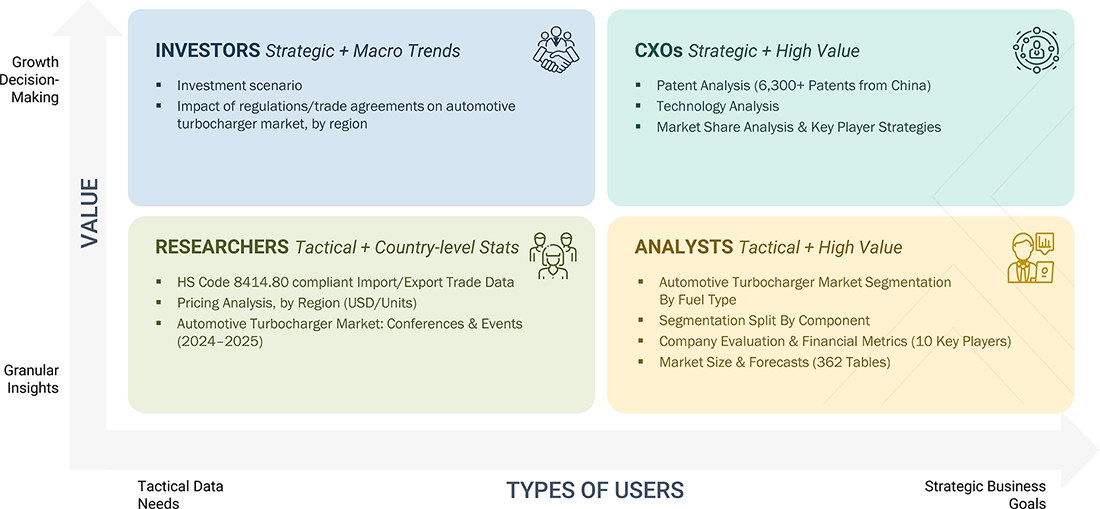
WHAT IS IN IT FOR YOU: AUTOMOTIVE TURBOCHARGER MARKET SIZE, SHARE & ANALYSIS REPORT CONTENT GUIDE
DELIVERED CUSTOMIZATIONS
We have successfully delivered the following deep-dive customizations:
| CLIENT REQUEST | CUSTOMIZATION DELIVERED | VALUE ADDS |
|---|---|---|
| Leading Automotive OEM |
|
|
RECENT DEVELOPMENTS
- June 2023 : Garrett Motion announced the completion of the expansion of its Wuhan Plant which included the installation of its first high-speed automated production line for advanced variable nozzle technology (VNT) used in turbo-passenger vehicles.
- April 2023 : Garrett Motion Inc. unveiled its latest turbocharger and e-mobility technologies at Auto Shanghai 2023. Its innovative E-turbos enhance power and fuel efficiency, enabling vehicles to achieve the performance levels of larger engines from previous generations while utilizing increasingly compact engines.
- June 2023 : IHI was honored with a supplier commendation in the form of a letter of appreciation from Yanmar Global Experts for its commendable efforts and contributions toward ensuring the stable supply of turbochargers throughout 2022. The award was focused on the adoption of new turbochargers and the company's role in facilitating consistent procurement, with particular emphasis placed on two key aspects that received high praise.
- March 2022 : BMTS showcased its Turbo technology at the Vienna Motor Symposium 2022. Its intention was to address the increasing demand for mobility, meet climate targets, and ensure future affordability in the mobility sector.
Table of Contents
 Exclusive indicates content/data unique to MarketsandMarkets and not available with any competitors.
Methodology
The research study involved various secondary sources, such as company annual reports/presentations, industry association publications, automotive turbocharger magazine articles, directories, technical handbooks, world economic outlook, trade websites, technical articles, and databases, which were used to identify and collect information for an extensive study of the automotive turbocharger market. Primary sources—experts from related industries, automobile OEMs, and suppliers—were interviewed to obtain and verify critical information and assess prospects and market estimations.
Secondary Research
The automotive turbocharger market is directly dependent on vehicle production. The vehicle production is derived from various secondary sources such as automotive industry organizations, corporate filings (such as annual reports, investor presentations, and financial statements), trade analysis, paid repositories, and automotive associations such as Organisation Internationale des Constructeurs d'Automobiles (OICA). Historical production data was collected and analyzed, and the industry trend is considered to arrive at the forecast, further validated by primary research. All the data was collected and analyzed to determine the overall market size, further validated by primary research.
Primary Research
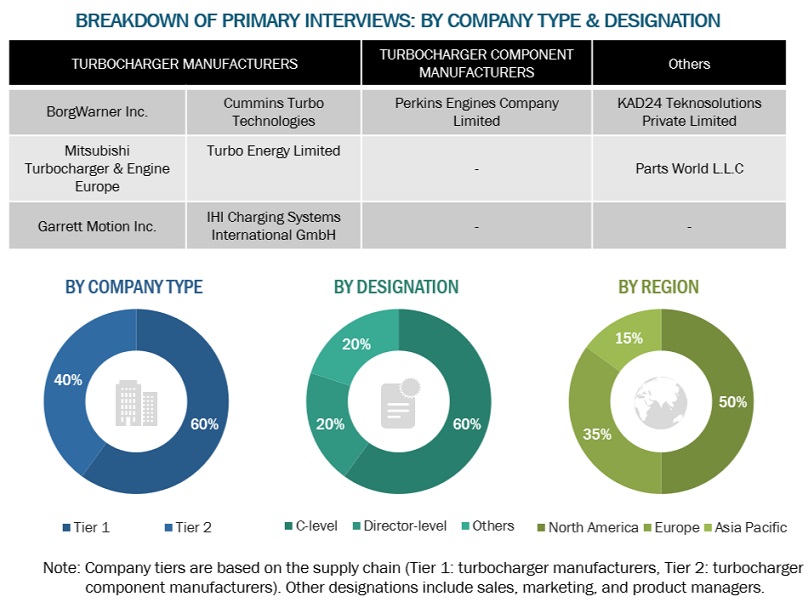
In the primary research process, various sources from both the supply and demand sides were interviewed to obtain qualitative and quantitative information on the market. Primary sources from the supply side included various industry experts, such as CXOs, vice presidents, directors from business development, marketing, product development/innovation teams, and related key executives from various key companies. Various system integrators, industry associations, independent consultants/industry veterans, and key opinion leaders were also interviewed.
After interacting with industry experts, brief sessions with highly experienced independent consultants were conducted to reinforce the findings from the primaries. This and the in-house subject matter experts’ opinions have led to the findings described in this report's remainder.
To know about the assumptions considered for the study, download the pdf brochure
Market Size Estimation
The bottom-up approach was used to estimate and validate the size of the automotive turbocharger market. This approach considered the vehicle production statistics for each vehicle type (passenger cars, LCVs, trucks, and buses) at a country and regional level. The country-level penetration of turbochargers in gasoline, diesel & alternate fuel/CNG engines is derived through country-wise model mapping of vehicle types, validated through primary respondents. This gives the country-level gasoline and diesel turbochargers market by vehicle and turbo types. The summation of the country-level markets gives the regional market, and further summation of the regional markets provides the global on-highway turbocharger market. A similar methodology was followed to estimate the automotive turbocharger market for off-highway vehicles (construction equipment, agricultural tractors, and mining equipment).
Automotive Turbocharger Market: Bottom-Up Approach
To know about the assumptions considered for the study, Request for Free Sample Report
Automotive Turbocharger Market: Top-Down Approach
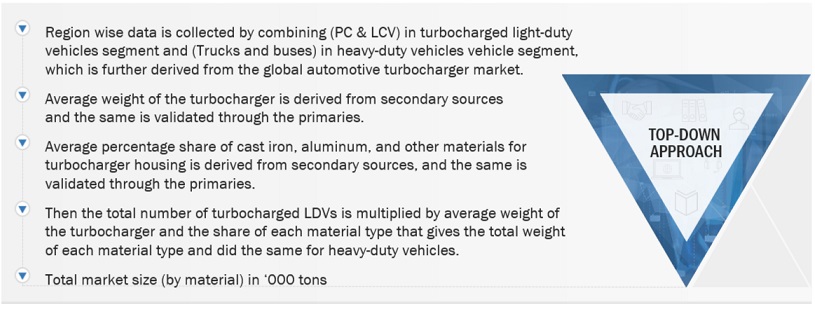
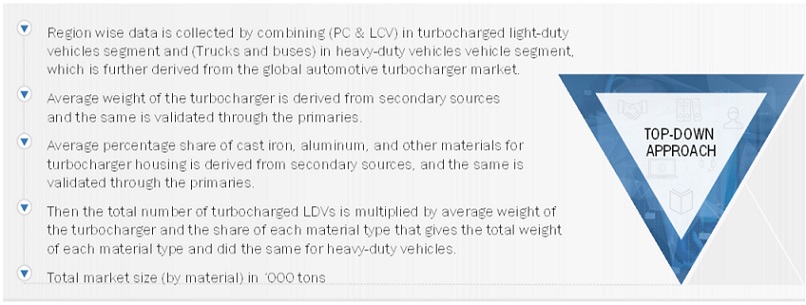
The top-down approach was followed to determine the market size, in terms of volume, for turbochargers by material. The global automotive turbocharger market derives the region-wise volume of turbocharged light-duty (passenger car & LDV) and heavy-duty (HDV) vehicles. The average weight of the turbocharger is derived from secondary sources and is validated through primary interviews. The average percentage of cast iron, aluminum, and other materials for turbocharger components is derived from secondary sources. Then, the total number of turbocharged LDVs is multiplied by the average weight of the turbocharger and the share of each material type. This gives the total weight of each material type. This calculation was repeated for heavy-duty vehicles as well.
Data Triangulation
All percentage shares, splits, and breakdowns have been determined using secondary sources and verified by the primary sources. All parameters that affect the markets covered in this research study have been accounted for, viewed in extensive detail, and analyzed to obtain the final quantitative and qualitative data. This data has been consolidated and enhanced with detailed inputs and analysis from MarketsandMarkets and presented in the report. The following figure is an illustrative representation of the overall market size estimation process employed for this study.
Market Definition
A turbocharger can compress more air into the engine’s cylinder. The oxygen molecules are packed closer together when the air is compressed. This increase in the air means more fuel can be added to a naturally aspirated engine of the same size. The same engine then generates increased mechanical power and improves the overall efficiency of the combustion process. Therefore, the engine size can be reduced to a turbocharged engine, leading to better packaging, weight-saving benefits, and improved fuel economy.
Key Stakeholders
- On-highway vehicles and off-highway Equipment Manufacturers
- Automotive Turbocharger and Component Manufacturers
- Raw material Suppliers
- Automotive OEMs
- Regulatory Bodies
- Software providers
- Traders, dealers, Suppliers, and Distributors
Report Objectives
-
To define, describe, and forecast the size of the global automotive turbocharger market in terms of value (USD million) and volume (million units)
- By Vehicle Type (Passenger cars, LCVs, HCVs, Trucks, Buses) at the regional level
- By Fuel Type (Gasoline, Diesel, Alternate fuel/CNG) at the regional level
- Diesel Turbocharger Market, By Turbo Type (VGT, Wastegate, E-Turbocharger) at the regional level
- Gasoline Turbocharger Market, By Turbo Type (VGT, Wastegate, E-Turbocharger) at the regional level
- Gasoline Turbocharger Market, By Vehicle Type (Passenger cars, LCVs, HCVs, Trucks, Buses) at the regional level
- By Material (Cast Iron, Aluminum, Others) at the regional level
- By Component (Turbine wheel, Compressor wheel, Housing) at the regional level
- Off-highway automotive turbocharger Market, By Application (Agriculture Tractors, Construction Equipment, and Mining Equipment) at a regional level
- Aftermarket, By vehicle type (LCV and HCV) at a regional level.
- By Region (Asia Pacific, Europe, North America, and the Rest of the World) by turbo type and vehicle type
- Country-level analysis of class-wise and usage-wise segments (Asia Pacific, Europe, and North America)
- To understand the market dynamics (drivers, restraints, opportunities, and challenges) of the market
- To analyze the competitive landscape of the global players in the market, along with their market share/ranking
- To analyze the competitive leadership mapping of the global automotive turbocharger manufacturers and automotive turbocharger component suppliers in the market.
- To analyze recent developments, including expansions and new product launches, undertaken by key industry participants in the market
- To strategically analyze the market with trade analysis, case studies, patent analysis, supply chain analysis, market ecosystem, pricing analysis, and the impact of the recession.
Available Customizations
Along with the market data, MarketsandMarkets offers customizations in accordance with company-specific needs.
The following customization options are available for the report:
Automotive Turbocharger Market, By Sales Channel
- Original Equipment Manufacturer
- Aftermarket
Off-highway TURBOCHARGER MARKET, BY technology
- Wastegate
- Variable Geometry Turbochargers (VGT)
- Electric Actuator
Note: This market sizing will be further segmented at the regional level.
Detailed Analysis And Profiling Of Additional Market Players
Key Questions Addressed by the Report
Need a Tailored Report?
Customize this report to your needs
Get 10% FREE Customization
Customize This ReportPersonalize This Research
- Triangulate with your Own Data
- Get Data as per your Format and Definition
- Gain a Deeper Dive on a Specific Application, Geography, Customer or Competitor
- Any level of Personalization
Let Us Help You
- What are the Known and Unknown Adjacencies Impacting the Automotive Turbocharger Market
- What will your New Revenue Sources be?
- Who will be your Top Customer; what will make them switch?
- Defend your Market Share or Win Competitors
- Get a Scorecard for Target Partners

Custom Market Research Services
We Will Customise The Research For You, In Case The Report Listed Above Does Not Meet With Your Requirements
Get 10% Free CustomisationTESTIMONIALS

JIM NAAS
PRODUCT DIRECTOR, WEASLER
Weasler Engineering, a CentroMotion organization
Global Provider of Industrial Actuation & Control Solutionswww.weasler.com
Our organization was interested in learning more about the attractiveness of a particular market space. We contacted MarketsandMarkets to help us based on previous positive experiences we had with them. The results did not disappoint! We discussed our objectives with them, and the team at MarketsandMarkets developed and executed a proposal that met our needs precisely. We were very impressed by their level of expertise, the quality of the analysis and their insightful recommendations. We would not hesitate in working with them again in the future.

Matt Kardel,
Vice President
Aptiv,
A global technology company that develops safer, greener and more connected solutions.www.aptiv.com
We contracted with
MarketsandMarkets to evaluate the value chain and potential go-to-market partners related to our
interest in the Fleet Management space. The team successfully completed the work on time and at the
pricing agreed. MarketsandMarkets listened and understood our objectives and collaborated well with
us to help us get the visibility we needed to make an investment.
We have subsequently used
MarketsandMarkets again related to Smart Cities to good results.
Growth opportunities and latent adjacency in Automotive Turbocharger Market




User
Aug, 2019
Power Range 200kW-10000kW Market Trends (electrification, e-boost, hybridizationetc.) Which TC is on which engine builder.
User
Aug, 2019
Looking for the upcoming trends in turbocharger as well as Pneumatic actuator requirement in turbocharger.
User
Aug, 2019
I have develop the study to introduce Rapid Prototype for Turbocharger. In order to understand the market trend I wuold like more information to complete my study..
User
Aug, 2019
My focus is the South america market of turbochargers, but i need to know about the international market too. Mainly the quantitative information. Could you send a sample with focus in Brazil and Argentina markets?.
Nilesh
Jun, 2019
Evaluating Turbocharger market for opportunities related to Wastegate actuators and other potential business opportunities..