Underfloor Heating Market Size, Share and Growth

Underfloor Heating Market by Product Type (Manifolds & Valves, Zone Valves, Heating Pipes, Wiring Centers, Thermal Actuators, Heating Cables, Mats, Thermostats & Sensors), Installation (New, Retrofit), Offering, and Region - Global Forecast to 2032




UNDERFLOOR HEATING MARKET OVERVIEW
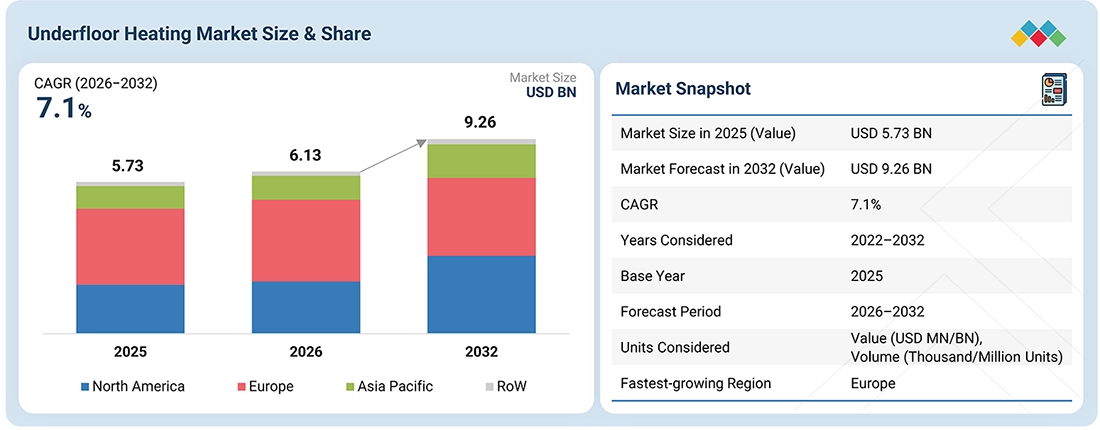
The global underfloor heating market is projected to grow from USD 6.13 billion in 2026 to USD 9.26 billion by 2032, registering a CAGR of 7.1%. The deployment of energy-efficient building standards and modern residential HVAC infrastructure primarily drives the demand for underfloor heating systems. These environments require dedicated, low-temperature radiant heat distribution for continuous indoor climate control and reduced thermal losses. The integration of advanced heat pump systems and smart home management platforms is further driving the demand for underfloor heating solutions. Residential and commercial applications, such as single-family retrofits and modern multi-zone office facilities, require dependable hydronic and electric heating networks for automated temperature regulation. Additionally, the transition toward building decarbonization mandates creates a requirement for low-emission radiant heating solutions across building operations.
REPORT SCOPE
| REPORT METRIC | DETAILS |
|---|---|
| Market Size in 2025 (Value) | USD 5.73 Billion |
| Market Forecast in 2026 (Value) | USD 6.13 Billion |
| Market Forecast in 2032 (Value) | USD 9.26 Billion |
| Growth Rate | CAGR of 7.1% from 2026–2032 |
| Years Considered | 2022–2032 |
| Base Year | 2025 |
| Forecast Period | 2026–2032 |
| Units Considered | Value (USD Million/Billion), Volume (Thousand/Million Units) |
| Report Coverage | Revenue forecast, company ranking, competitive landscape, growth factors, and trends |
|
Top Companies
|
|
|
Growth Drivers
|
|
| Segments Covered |
|
| Regional Scope | North America, Europe, Asia Pacific, and RoW |
KEY TAKEAWAYS
-
UNFLOOR HEATING MARKET, BY REGIONBy region, Europe is expected to record a CAGR of 7.8% in the underfloor heating market during the forecast period.
-
UNFLOOR HEATING MARKET, BY PRODUCT TYPEBy product type, the hydronic underfloor heating segment is expected to dominate the market between 2026 and 2032.
-
UNFLOOR HEATING MARKET, BY OFFERINGBy offering, the services segment is expected to record a CAGR of 8.7% during the forecast period.
-
UNFLOOR HEATING MARKET, BY INSTALLATION TYPEBy installation type, the new installations segment captured a 72.5% share of the underfloor heating market in 2025.
-
UNFLOOR HEATING MARKET, BY APPLICATIONBy application, the residential segment is expected to register the highest CAGR in underfloor heating market from 2026 to 2032.
-
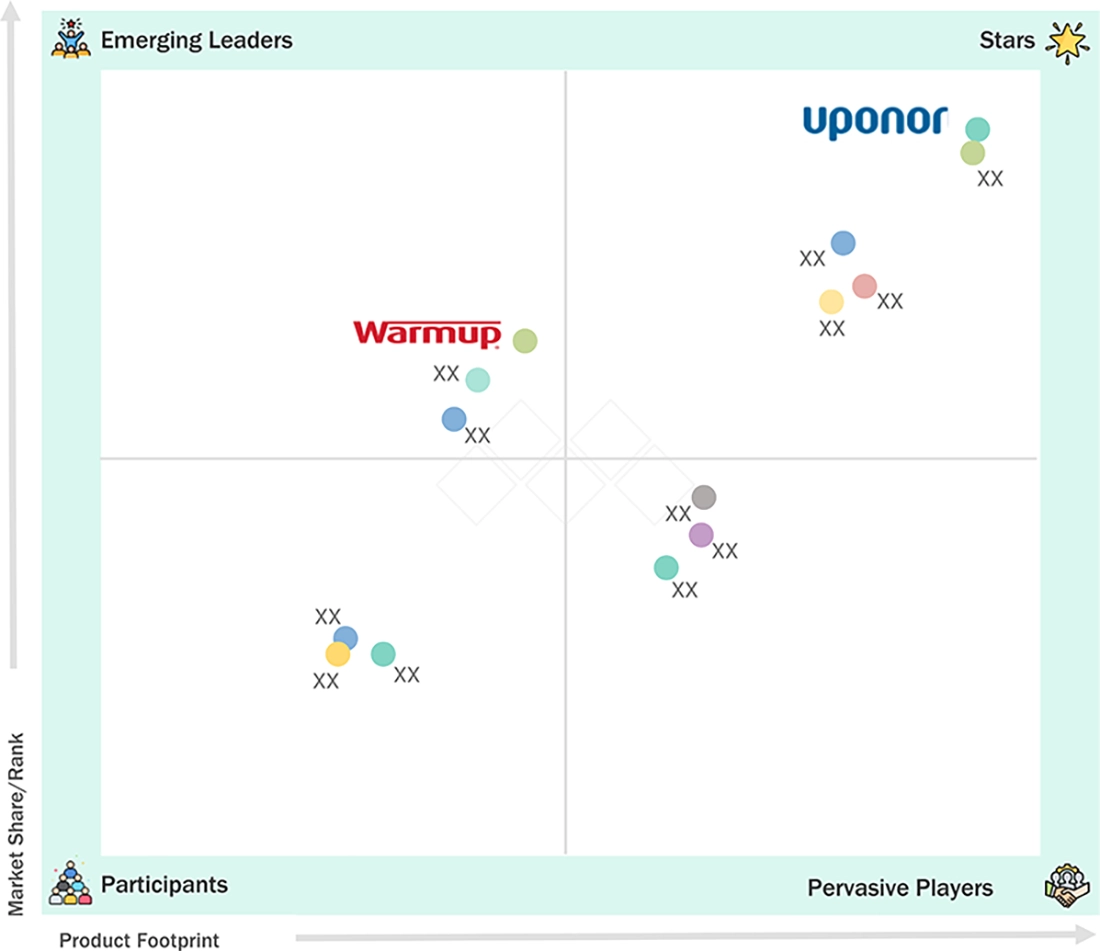
COMPETITIVE LANDSCAPE - KEY PLAYERSUponor Corporation (Finland), Danfoss (Denmark), REHAU (Switzerland), Resideo Technologies Inc (US), and Watts (US) were identified as some of the star players in the global underfloor heating market, given their strong market share and product footprint.
-
COMPETITIVE LANDSCAPE - STARTUPS/SMESAmuheat (Australia), Incognito Heat Co. (UK), Jupiter UK (UK), Solfex Ltd. (UK), Sensible Heat (US), Heat Mat Ltd. (UK), and Eco Home Insulation (UK), among others, have established themselves as specialized players in the underfloor heating market by focusing on high-performance materials and application-specific solutions.
The growth of the underfloor heating industry is accelerated by the expansion of building energy decarbonization and smart thermal regulation across modern construction. This leads to an increase in connected heating circuits and temperature sensors per individual facility. As thermal efficiency requirements increase and heating architectures shift to low-temperature operations, traditional convective radiators and forced-air approaches are being replaced. Building operators and homeowners are adopting advanced technologies such as hydronic heat pump integrations, low-profile dry retrofit panels, and IoT-enabled multi-zone thermostats. This technological transition expands the overall market value. Emerging applications include zero-emission housing, smart home climate automation, commercial office retrofits, and specialized healthcare facilities.
Source: Secondary Research, Interviews with Experts, MarketsandMarkets Analysis
TRENDS & DISRUPTIONS IMPACTING CUSTOMERS' CUSTOMERS
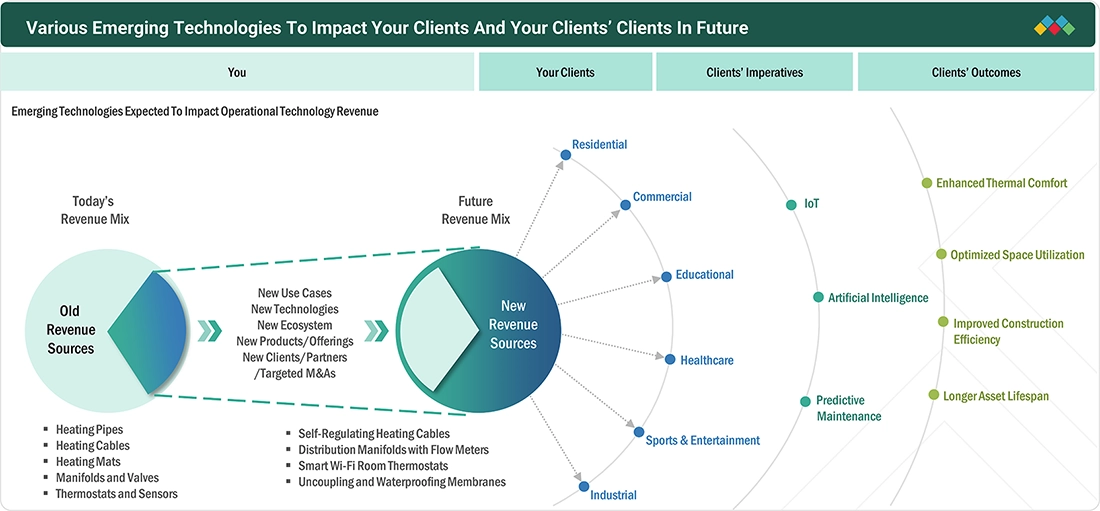
The underfloor heating market is being shaped by the replacement of traditional convective heating methods and basic standalone installations. System manufacturers and providers are adopting advanced technologies. These include self-regulating heating cables, distribution manifolds with flow meters, smart Wi-Fi room thermostats, and uncoupling and waterproofing membranes. This shift requires customized infrastructure integration for specific client operations. These clients operate across the residential, commercial, educational, healthcare, sports & entertainment, and industrial sectors. The new underfloor heating technologies address specific functional requirements. These requirements include Internet of Things (IoT) connectivity, artificial intelligence integration, and predictive maintenance. The adoption of these components leads to direct operational outcomes. These outcomes include the deployment of heating mats, specialized sensors and thermostats, heating cables, and distribution manifolds.
Source: Secondary Research, Interviews with Experts, MarketsandMarkets Analysis
UNDERFLOOR HEATING MARKET DYNAMICS

Level
-
Increasing demand for energy-efficient heating solutions

-
Rising implementation of stringent building codes and decarbonization mandates


Level
-
High initial setup and installation costs

-
Longer thermal response times compared with convective heating systems


Level
-
Emergence of IoT-based smart thermostats and home automation

-
Integration with renewable energy sources


Level
-
Setup and retrofitting issues in existing building structures

-
Compatibility limitations across diverse flooring materials

Source: Secondary Research, Interviews with Experts, MarketsandMarkets Analysis
Driver: Increasing demand for energy-efficient heating solutions
Increasing demand for energy-efficient heating solutions and stringent building decarbonization codes accelerate adoption. Systems operate at lower water temperatures, reducing thermal loss and lowering household power consumption compared with convective radiators.
Restraint: High initial setup and installation costs
High initial setup and installation costs restrict widespread adoption, particularly across budget-sensitive projects. Embedding subfloor pipework or heating elements requires specialized labor, subfloor preparation, and higher upfront capital expenditure than traditional convective units.
Opportunity: Emergence of IoT-based smart thermostats and home automation
The emergence of IoT-based smart thermostats and home automation integration enables multi-zone temperature regulation. Connected controls optimize heating schedules, reduce energy waste, and support integration with low-temperature renewable air-to-water heat pumps.
Challenge: Setup and retrofitting issues in existing building structures
Setup and retrofitting issues in existing building structures limit installation feasibility. Integrating underfloor networks into older properties often requires elevating floor levels, modifying doors, and overcoming structural constraints across varying flooring materials.
UNDERFLOOR HEATING MARKET SIZE, SHARE AND GROWTH: COMMERCIAL USE CASES ACROSS INDUSTRIES
| COMPANY | USE CASE DESCRIPTION | BENEFITS |
|---|---|---|
 |
Uponor supplies hydronic underfloor heating solutions integrated with Smatrix intelligent room controls and auto-balancing technology. The systems operate across residential homes, multi-family apartment buildings, and commercial facilities to provide automated low-temperature water distribution through cross-linked polyethylene (PEX) pipe networks. | Eliminates manual circuit balancing through automated algorithmic flow control | Lowers annual heating energy costs compared with traditional high-temperature radiator systems | Accelerates commissioning and installation speed for field contractors | Enables multi-zone individual room temperature management via cloud connectivity |
 |
Danfoss delivers digital underfloor heating platforms using the Icon2 main controller and smart room thermostats. The platform connects hydronic floor heating and cooling circuits across residential developments and light commercial properties, linking dynamic floor actuators directly with smart home systems. | Delivers automatic hydronic balancing across variable-length pipe loops without manual presetting | Lowers supply temperature requirements to optimize heat pump system performance | Simplifies installer setup via mobile app guided commissioning | Integrates seamlessly with third-party home automation protocols |
 |
REHAU provides radiant floor heating systems using RAUPEX PEXa cross-linked pipes and low-profile RAUPANEL dry-installation modules. The infrastructure supports new concrete slab construction, residential renovations, light commercial spaces, and outdoor snow melting applications. | Provides high resistance to pipe degradation and stress cracking using cross-linked polyethylene | Enables dry retrofit installations without requiring heavy concrete overpours | Delivers silent, uniform bottom-up heat distribution without circulating airborne dust or allergens | Secures reliable mechanical joints with long-term leak-free connection fittings |
 |
Resideo Technologies provides hydronic zoning platforms such as the Honeywell Home HCC100 multi-zone controller and connected thermostats. The system manages multi-room radiant underfloor circuits integrated with central heating systems, heat pumps, and motorized zone valves in modern dwellings. | Supports independent temperature scheduling for multiple distinct living zones | Coordinates heat demand directly with heat pumps and central boilers to reduce cycle losses | Provides flexible hybrid configurations supporting wired and wireless sensor endpoints | Optimizes indoor comfort through continuous two-way communication protocols |
 |
Watts manufactures stainless-steel radiant heating manifolds, mixing stations, and hydronic circulation modules for radiant floor projects. The equipment operates in custom residential homes, commercial office buildings, and institutional facilities to manage hot water distribution through sub-floor pipe circuits. | Delivers balanced hydraulic flow rates across all connected underfloor loops | Provides high corrosion resistance and mechanical strength with stainless-steel manifolds | Facilitates precise flow measurement and circuit monitoring through integrated flow meters | Integrates directly with secondary mixing shunts to maintain safe sub-floor fluid temperatures |
Logos and trademarks shown above are the property of their respective owners. Their use here is for informational and illustrative purposes only.
UNDERFLOOR HEATING MARKET ECOSYSTEM
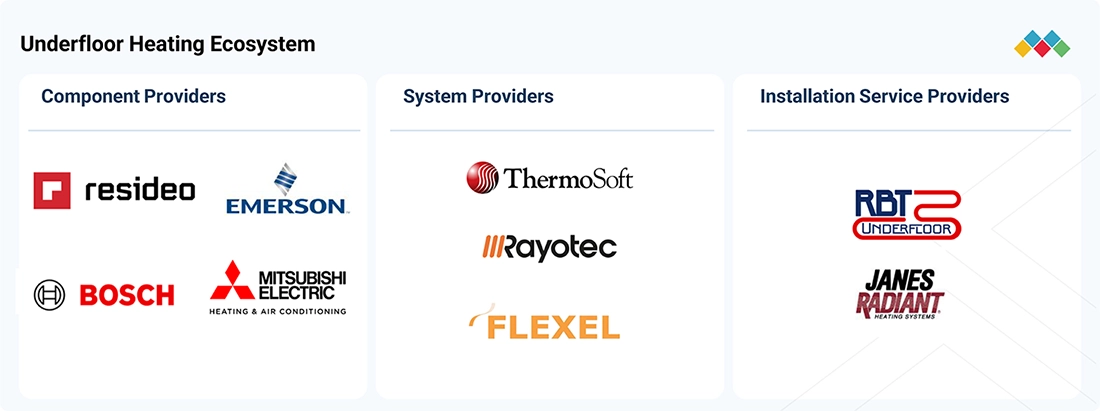
The underfloor heating ecosystem consists of raw material suppliers, component providers, system providers, installation service providers, and end users. This structure forms a value chain supporting product manufacturing and building-level installation. Component providers supply core hardware inputs such as thermostats, heating cables, PEX pipes, manifolds, thermal actuators, and heat pumps; examples include Resideo, Emerson, Bosch, and Mitsubishi Electric. System providers assemble and integrate these inputs into complete underfloor heating kits and turnkey radiant floor assemblies; examples include ThermoSoft, Flexel, and Rayotec. Installation service providers, including specialists such as RBT Underfloor and Janes Radiant, manage sub-floor preparation, hydraulic balancing, pipe laying, electrical commissioning, and ongoing maintenance to ensure proper operational performance. End users then utilize these heating networks for daily temperature control across residential housing, commercial offices, healthcare facilities, and industrial premises.
Logos and trademarks shown above are the property of their respective owners. Their use here is for informational and illustrative purposes only.
UNDERFLOOR HEATING MARKET SEGMENTS
Source: Secondary Research, Interviews with Experts, MarketsandMarkets Analysis
Underfloor Heating Market, By Product Type
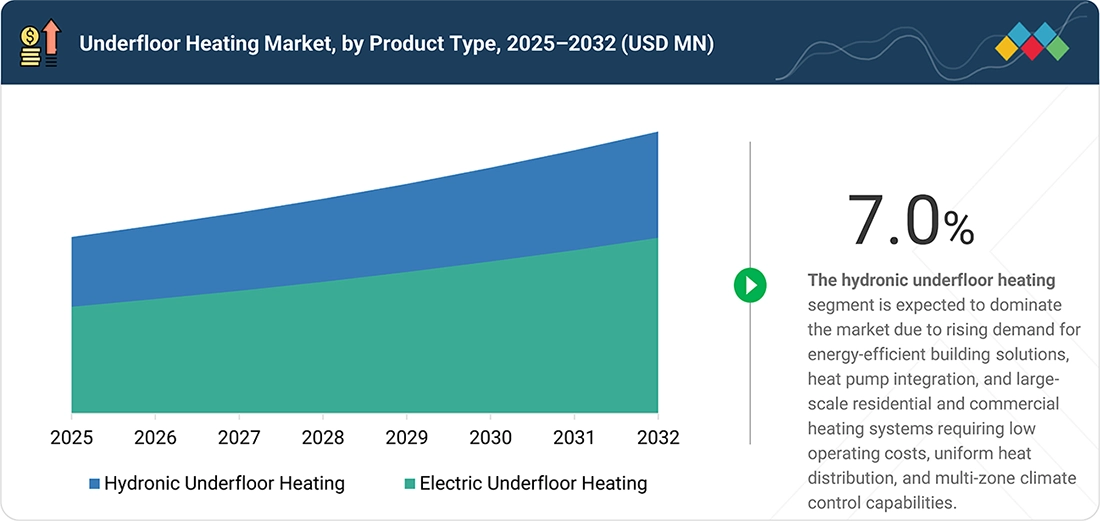
The hydronic underfloor heating segment holds the largest share and is projected to maintain its market lead. This architecture operates through closed-loop heated water circulation, utilizing low-temperature hydronic piping and central heat pump integration to deliver uniform radiant heat, consistent thermal comfort, and high operational energy efficiency. Building developers and property owners across residential housing, commercial complexes, and healthcare facilities favor hydronic systems to heat large-scale spaces and meet strict building decarbonization mandates.
Underfloor Heating Market, By Offering
The hardware segment holds the leading position in the market due to strict enterprise and residential requirements for high durability, structural reliability, and long-term thermal isolation. Meanwhile, services and retrofit solutions are experiencing rapid adoption. Facility managers and building contractors leverage pre-assembled manifold cabinets, automated zone actuators, and IoT-enabled thermostats to lower upfront capital investments while expanding deployment scalability across diverse floor layouts.
Underfloor Heating Market, By Installation Type
The new installation segment holds the leading position in the underfloor heating market due to strict building energy-efficiency standards, structural design preferences, and the cost advantage of embedding heating networks during initial construction. Meanwhile, retrofit installations and renovation projects are experiencing rapid adoption. Builders and property owners leverage low-profile dry boards, electric heating mats, and compact manifold systems to minimize floor height changes while expanding deployment scalability across existing structures.
Underfloor Heating Market, By Application
The residential segment accounts for the largest market share. Establishing residential underfloor heating infrastructure requires substantial installations of hydronic PEX pipes, electric heating mats, distribution manifolds, and smart room thermostats across living areas. However, commercial and institutional segments are expanding rapidly as facility managers adopt centralized hydronic loops, automated zone balancing, and commercial building management system (BMS) integrations.
UNDERFLOOR HEATING MARKET REGION
Europe to be fastest-growing region across global underfloor heating market during forecast period
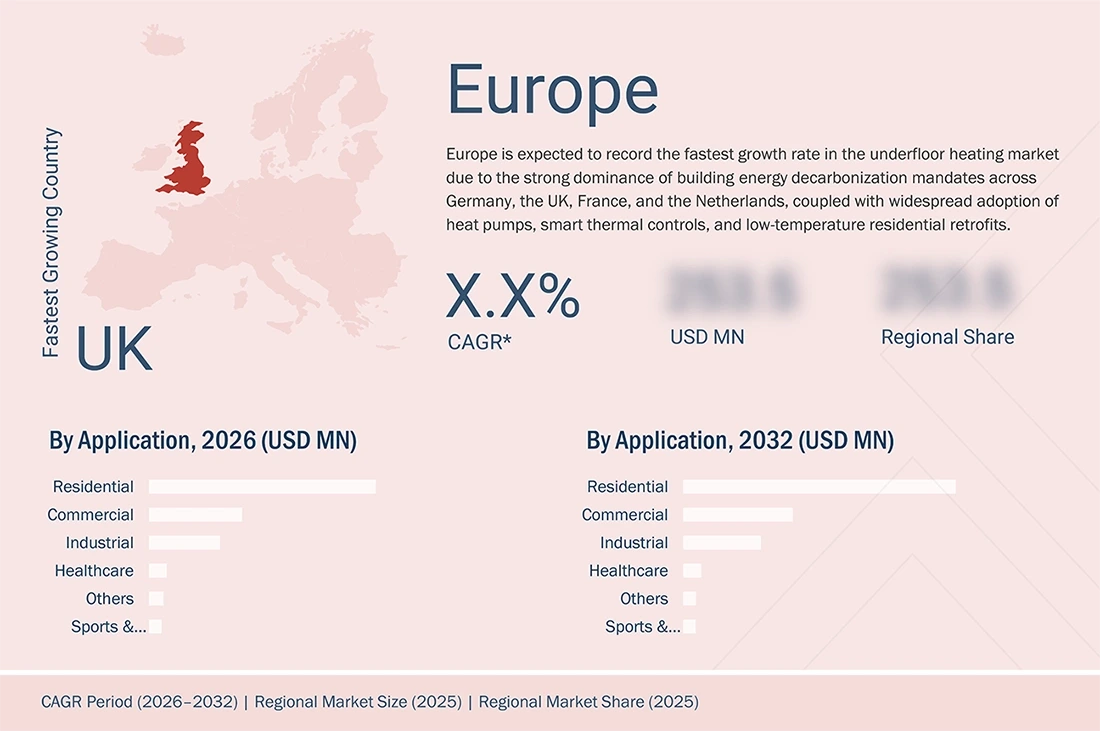
Europe is expected to secure the largest share and register the fastest CAGR in the global underfloor heating market during the forecast period. This growth is due to the strong regulatory commitment to building energy decarbonization across Germany, the UK, France, and the Netherlands, coupled with widespread consumer adoption of heat pumps, low-temperature residential retrofits, and smart climate controls. The UK operates as the fastest-growing country within the region, driven by net-zero building standards, boiler phase-out initiatives, and aggressive residential heat pump installations. The region contains an established ecosystem of radiant heating manufacturers, piping extruders, and digital thermostat providers. Increasing investments in low-profile hydronic panels, automated balancing manifolds, and smart home thermal integration drive the demand for radiant floor systems. Additionally, supportive government subsidies, stringent insulation directives, and expanding green building construction practices accelerate overall regional market growth.
UNDERFLOOR HEATING MARKET SIZE, SHARE AND GROWTH: COMPANY EVALUATION MATRIX
In the global underfloor heating market matrix, Uponor Corporation (Star) maintains a significant market share and product footprint. The company provides a comprehensive portfolio of radiant floor heating and cooling solutions, including its cross-linked PEX-a piping networks, modular distribution manifolds, and Smatrix intelligent auto-balancing control systems. These infrastructure components deliver energy-efficient, low-temperature hydronic thermal distribution across single-family residences, multi-family housing, and commercial buildings. Warmup (Emerging Leader) is expanding its market position through specialized electric heating and smart climate technology. It provides electric heating cable systems, DCM-PRO uncoupling membranes, and smart Wi-Fi thermostats integrated with residential mobile applications and digital home automation platforms. This focused operational approach supports its market presence within the global underfloor heating market.
Source: Secondary Research, Interviews with Experts, MarketsandMarkets Analysis
KEY UNDERFLOOR HEATING MARKET PLAYERS
Top Underfloor Heating Market Companies
- Uponor Corporation (Finland)
- Danfoss (Denmark)
- REHAU (Switzerland)
- Resideo Technologies Inc (US)
- Watts (US)
- Warmup Plc (UK)
- MAGNUM Heating Group B.V. (Netherlands)
- Emerson Electric Co. (US)
- Robert Bosch GmbH (Germany)
- Mitsubishi Electric Corporation (Japan)
WHAT IS IN IT FOR YOU: UNDERFLOOR HEATING MARKET SIZE, SHARE AND GROWTH REPORT CONTENT GUIDE
DELIVERED CUSTOMIZATIONS
We have successfully delivered the following deep-dive customizations:
| CLIENT REQUEST | CUSTOMIZATION DELIVERED | VALUE ADDS |
|---|---|---|
| Underfloor Heating Component & Pipe Manufacturer |
|
|
| Underfloor Heating System Provider (Hydronic, Electric, Hybrid) |
|
|
| Underfloor Heating End User & Installer (Residential / Commercial / Industrial) |
|
|
RECENT DEVELOPMENTS
- July 2026 : REHAU introduced the redesigned NEA room thermostat series featuring capacitive touch control, horizontal display indicators, and integrated open window detection. The unit operates with underfloor hydronic heating manifolds, low-temperature cooling systems, and heat pump integrations while supporting tool-free wiring installation.
- April 2026 : Warmup launched the Lo 16 hydronic radiant underfloor heating system, engineered with a low-profile build height. The system provides up to 19 percent higher thermal output compared with conventional hydronic panels and supports screeded or floating floor configurations.
Table of Contents
 Exclusive indicates content/data unique to MarketsandMarkets and not available with any competitors.
Methodology
The research process for this study involved the systematic gathering, recording, and analysis of data on customers and companies operating in the underfloor heating market. This process involved the extensive use of secondary sources, directories, and databases (Factiva and OANDA) to identify and collect valuable information for a comprehensive, technical, market-oriented, and commercial study of the market. In-depth interviews were conducted with primary respondents, including experts from core and related industries, as well as preferred manufacturers, to obtain and verify critical qualitative and quantitative information and assess growth prospects. Key players were identified through secondary research, and their market rankings were determined through a combination of primary and secondary research. This research involved studying the annual reports of top players and conducting interviews with key industry experts, including CEOs, directors, and marketing executives.
Secondary Research
Various sources were utilized in the secondary research process to identify and collect information relevant to this study. These include company annual reports, press releases, investor presentations, white papers, technology journals, certified publications, articles by recognized authors, directories, and databases. Secondary research was primarily used to gather key information on the industry’s value chain, the total pool of market players, market classification by industry trends at the most detailed level, regional markets, and key developments from market- and technology-oriented perspectives.
Primary Research
Primary research was conducted to identify the segmentation types, key players, competitive landscape, and key market dynamics, including drivers, restraints, opportunities, challenges, and industry trends, as well as the key strategies adopted by players operating in the underfloor heating market. Extensive qualitative and quantitative analyses were conducted across the complete market engineering process to present key information and insights throughout the report.
Extensive primary research has been conducted following the acquisition of knowledge about the underfloor heating market scenarios through secondary research. Several primary interviews were conducted with experts from the demand side (application and region) and the supply side (product type, offering, and installation type) across four major geographic regions: North America, Europe, Asia Pacific, and RoW. Approximately 60% and 40% of the primary interviews were conducted from the supply and demand sides, respectively. These primary data have been collected through questionnaires, emails, and telephonic interviews.
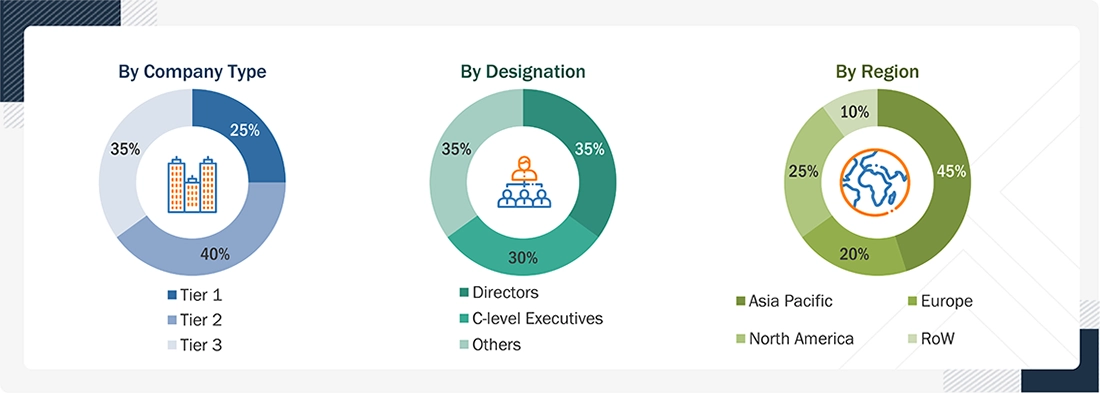
Notes: The three tiers of companies have been defined based on their total/segmental revenue as of 2025: Tier 1 = > USD 1 billion, Tier 2 = USD 1 billion–USD 500 million, and Tier 3 = < USD 500 million.
Other designations include sales, marketing, and product managers.
To know about the assumptions considered for the study, download the pdf brochure
Market Size Estimation
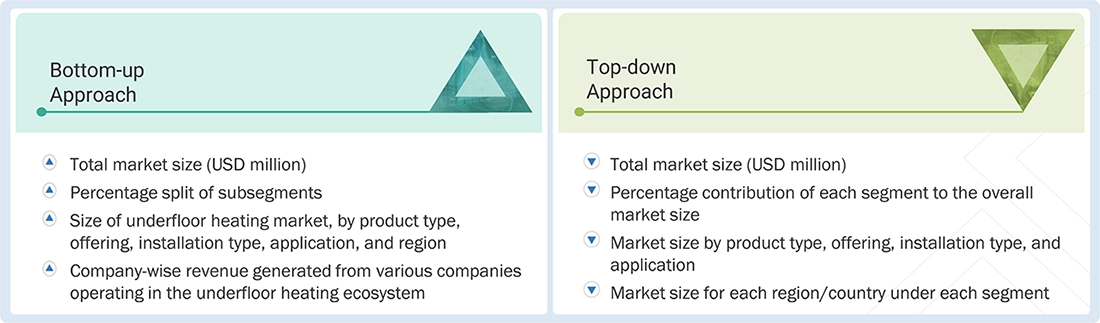
In the complete market engineering process, top-down and bottom-up approaches, along with several data triangulation methods, were used to estimate and validate the size of the underfloor heating market and various other dependent submarkets. Key players in the market were identified through secondary research, and their market share in each region was determined through a combination of primary and secondary research. This research methodology involved analyzing the annual and financial reports of the top players and conducting interviews with experts (CEOs, VPs, directors, and marketing executives) to gather key insights (quantitative and qualitative).
All percentage shares, splits, and breakdowns were determined using secondary sources and verified through primary sources. All possible parameters affecting the markets covered in this study were accounted for, examined in detail, verified through primary research, and analyzed to obtain final quantitative and qualitative data. This data was consolidated and supplemented with detailed inputs and analysis from MarketsandMarkets and presented in this report.
Underfloor Heating Market : Top-Down and Bottom-Up Approach
Data Triangulation
After determining the overall market size through the estimation process, as explained above, the total market was divided into several segments and subsegments. To complete the overall market engineering process and obtain precise statistics for all segments and subsegments, the data triangulation procedure was employed, as applicable. The data were triangulated by studying various factors and trends from the demand and supply sides. Additionally, the market has been validated using both top-down and bottom-up approaches.
Market Definition
The underfloor heating (UFH) system is a type of central heating system that regulates indoor temperature for thermal comfort using conduction, radiation, and convection methods. The underfloor heating market includes hydronic and electric underfloor heating systems. Hydronic UFH systems rely on hot water for in-floor heating, whereas electric UFH systems operate on electricity. Underfloor heating systems have many advantages over radiator heating systems and have become a viable method of space heating. The major players in the underfloor heating market include Uponor Corporation (Finland), Resideo Technologies Inc. (US), nVent (UK), Warmup Plc (UK), Rehau Ltd (Switzerland), Emerson Electric Co. (US), Robert Bosch GmbH (Germany), Danfoss (Denmark), Mitsubishi Electric Corporation (Japan), Siemens AG (Germany), Schneider Electric (France), and Incognito Heat Co. (UK).
Key Stakeholders
- End users
- Government bodies, venture capitalists, and private equity firms
- Underfloor heating manufacturers
- Underfloor heating distributors
- Underfloor heating industry associations
- Professional service/solution providers
- Research institutions and organizations
- Standards organizations and regulatory authorities
- System integrators
- Technology consultants
Report Objectives
- To describe and forecast the underfloor heating market, by offering, product type, installation type, application, and region, in terms of value
- To describe and forecast the underfloor heating market, by component type, in terms of volume
- To forecast the size of the market segments for four major regions, namely North America, Europe, Asia Pacific, and the Rest of the World (RoW), in terms of value
- To provide detailed information regarding the major factors influencing the growth of the market, such as drivers, restraints, opportunities, and challenges
- To offer an ecosystem analysis, case study analysis, patent analysis, technology analysis, pricing analysis, Porter’s Five Forces analysis, and regulations pertaining to the market
- To give a detailed overview of the value chain of the underfloor heating ecosystem
- To strategically analyze micromarkets with respect to individual growth trends, prospects, and contributions to the total market
- To strategically profile the key players and comprehensively analyze their market shares and core competencies
- To analyze the opportunities in the market for stakeholders and describe the competitive landscape of the market
- To study competitive developments, such as collaborations, partnerships, and product developments, in the market
- To provide the macroeconomic outlook for each region that has been covered in the report
Available customizations:
With the given market data, MarketsandMarkets offers customizations according to the company’s specific needs. The following customization options are available for the report:
Key Questions Addressed by the Report
What is the current size of the underfloor heating market?
The global underfloor heating market is projected to reach USD 9.26 billion by 2032, growing from USD 6.13 billion in 2026.
What is the CAGR of the underfloor heating market?
The underfloor heating market is expected to grow at a 7.1% CAGR from 2026 to 2032.
What are the major growth drivers of the underfloor heating market?
Key growth drivers include increasing demand for energy-efficient heating solutions, stringent building codes, government support and incentives, and integration with renewable energy sources.
Which type of underfloor heating is expected to dominate the market?
Hydronic underfloor heating is expected to maintain its leading position during the forecast period because of its suitability for low-temperature heating, heat pump integration, and large residential and commercial applications.
What are the major types of underfloor heating systems?
The market is segmented into hydronic underfloor heating and electric underfloor heating. These systems use different heating technologies and are deployed across residential, commercial, healthcare, industrial, and other applications.
What is driving the adoption of smart underfloor heating systems?
IoT-based thermostats, smart home automation, connected sensors, and multi-zone temperature controls are supporting adoption by enabling automated temperature regulation and more efficient heating management.
Which installation type holds the largest share of the underfloor heating market?
New installations held the largest position, accounting for 72.5% of the market in 2025. However, retrofit installations are also gaining adoption as low-profile panels and electric heating mats simplify installation in existing buildings.
Which application is expected to grow fastest in the underfloor heating market?
The residential segment is expected to register the highest CAGR from 2026 to 2032. Demand is supported by residential construction, energy-efficiency requirements, smart-home technologies, and heat-pump integration.
Which region is expected to grow fastest in the underfloor heating market?
Europe is expected to record the fastest growth, with a projected 7.8% CAGR during the forecast period. Building decarbonization policies, heat pump adoption, energy-efficiency requirements, and smart climate controls are supporting regional demand.
Who are the key players in the underfloor heating market?
Major companies identified in the market include Uponor Corporation, Danfoss, REHAU, Resideo Technologies, Watts, Warmup, MAGNUM Heating Group, Emerson Electric, Robert Bosch, and Mitsubishi Electric.


Personalize This Research
- Triangulate with your Own Data
- Get Data as per your Format and Definition
- Gain a Deeper Dive on a Specific Application, Geography, Customer or Competitor
- Any level of Personalization
Let Us Help You
- What are the Known and Unknown Adjacencies Impacting the Underfloor Heating Market
- What will your New Revenue Sources be?
- Who will be your Top Customer; what will make them switch?
- Defend your Market Share or Win Competitors
- Get a Scorecard for Target Partners

Custom Market Research Services
We Will Customise The Research For You, In Case The Report Listed Above Does Not Meet With Your Requirements
Get 10% Free CustomisationTESTIMONIALS

Tetsuya Ohhira
Business Development Manager-Technology Business
Nikon Corporation,
Leading Japanese MNC specializing in optics and imaging productswww.nikon.com
MarketsandMarkets™ response
is quick. Their attitude is flexible and positive. Analyst Insights are globally considered and
significant. Client Services quickly respond to our inquiry and demand. Their wide range of global
surveys help us make our strategic plan.
We hope Knowledge Store will be easier to search
for a report.
VP - Marketing & Business Development
Leading Provider of Process Control Solutions
We engaged with MarketsandMarkets on a study to perform an analysis and recommend a Go-To-Market strategy for metrology and process control in the semiconductor market. The study was tailored to our targets and needs with well-defined milestones. Our overall experience with the MarketsandMarkets team was very good throughout the project in all aspects including the analysis methodologies used, the quality and depth of primary and secondary data sets, the professionalism and flexibility of the team and the ability to meet the target schedule and milestones. We want to thank MarketsandMarkets team for a job well done.
- Canada Underfloor Heating Market
- Mexico Underfloor Heating Market
- US Underfloor Heating Market
- Belgium Underfloor Heating Market
- France Underfloor Heating Market
- Germany Underfloor Heating Market
- Netherlands Underfloor Heating Market
- Poland Underfloor Heating Market
- Rest Of Europe Underfloor Heating Market
- UK Underfloor Heating Market
- China Underfloor Heating Market
- Japan Underfloor Heating Market
- Rest Of Asia Pacific Underfloor Heating Market
- South Korea Underfloor Heating Market






Growth opportunities and latent adjacency in Underfloor Heating Market