US Digital Denture Market Size, Growth, Share & Trends Analysis

US Digital Denture Market by Type (Complete Dentures, Partial Dentures), Tool (Equipment, Software), Usability (Removable Dentures, Fixed Dentures), Material (Resins, Plastics), End User (Dental Hospitals, Dental Clinics) - Forecast to 2031




OVERVIEW
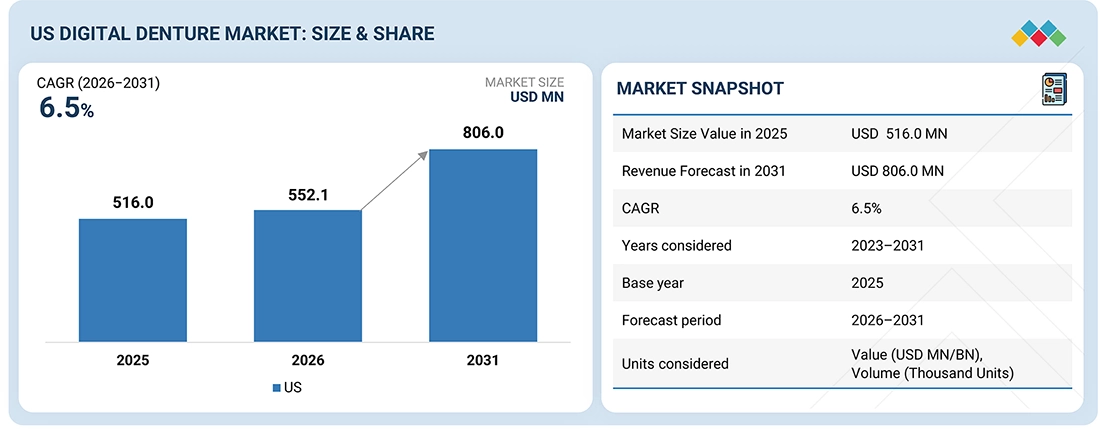
Source: Secondary Research, Interviews with Experts, MarketsandMarkets Analysis
The US Digital Denture market, valued at USD 516.0 million in 2025, stood at USD 552.1 million in 2026 and is projected to advance at a resilient CAGR of 6.5% from 2026 to 2031, culminating in a forecasted valuation of USD 806.0 million by the end of the period. Digital dentures refer to digitally enabled methods used in the design, fabrication, and delivery of complete and partial dentures through CAD/CAM and additive manufacturing workflows. The solutions comprise intraoral scanners, denture design software, milling and 3D printing systems, and advanced denture materials such as PMMA and printable resins. Digital denture technologies can support routine tooth replacement in any of the three—clinical, laboratory, or a combination of both—and can also be utilized for complex full-arch rehabilitations. These systems are increasingly being implemented in dental hospitals, dental clinics, and dental laboratories throughout the US to enhance workflow efficiency, improve prosthetic accuracy, shorten turnaround time, and provide consistent, high-quality patient outcomes.
KEY TAKEAWAYS
-
BY PRODUCTBy product, the equipment garnered the highest share in the US digital dentures market.
-
BY TYPEBy type, the partial dentures garnered the highest share in the US digital dentures market.
-
BY USABILITYBy usability, the fixed dentures segment is projected to increase at highest CAGR during the forecast period at the US digital dentures market.
-
By END USERBy end user, hospitals & clinics segment accounted for the largest share of the US digital dentures market.
-
COMPETITIVE LANDSCAPE- KEY PLAYERSDentsply Sirona, Planmeca OY, 3Shape A/S were identified as some of the star players in the US digital dentures market, given their strong market share and product/service footprint.
-
COMPETITIVE LANDSCAPE- STARTUPSCompanies such as Overjet among others, have distinguished themselves among startups and SMEs by securing strong footholds in specialized niche areas, underscoring their potential as emerging market leaders
The US digital dentures market is driven by rapid advances in digital dentistry technologies, including intraoral scanning, CAD/CAM software, and 3D printing, as well as a rising prevalence of edentulism and age-related tooth loss. Growing patient preference for esthetic, functionally superior tooth-replacement solutions, coupled with increasing adoption of digitally enabled workflows by dental clinics and laboratories, is accelerating the nationwide shift from conventional to digital denture fabrication.
TRENDS & DISRUPTIONS IMPACTING CUSTOMERS' CUSTOMERS
The US digital dentures market is undergoing significant disruption driven by the rapid adoption of advanced digital workflows, new use cases, and ecosystem-level innovation. The shift from traditional removable dentures to digitally designed and manufactured ones—facilitated by intraoral scanning, CAD/CAM software, 3D printing, and AI-assisted design—is significantly changing how dental hospitals, clinics, and laboratories operate. Providers are benefiting from these trends in several ways, including reduced chairside time, fewer patient visits, improved fit and clinical predictability, increased production efficiency, and reduced technician dependency. Moreover, the use of connected devices, automation, and visualization tools is elevating treatment planning, workflow coordination, and result consistency, leading to quicker treatment completion, high-quality and reproducible prostheses, and enhanced patient satisfaction in the US market.
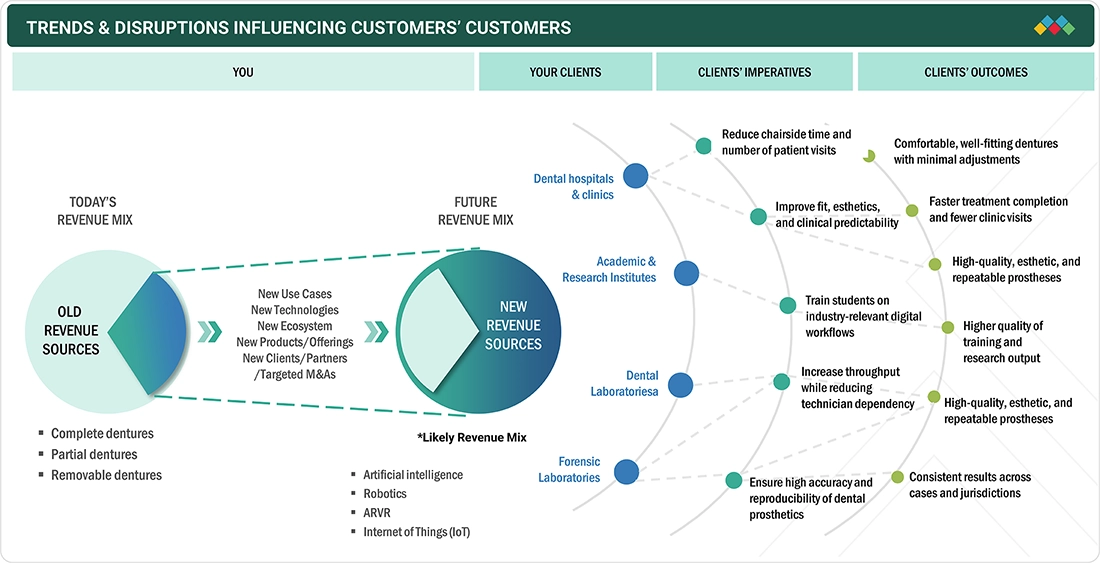
Source: Secondary Research, Interviews with Experts, MarketsandMarkets Analysis
MARKET DYNAMICS

Level
-
Growing focus on technological innovation for dental materials

-
Increasing prevalence of oral health disorders


Level
-
High cost of dental imaging systems and inadequate reimbursements


Level
-
Impact of DSOs on dental industry

-
Investments in CAD/CAM technologies by dentist laboratories


Level
-
Shortage of skilled dental practitioners

Source: Secondary Research, Interviews with Experts, MarketsandMarkets Analysis
Driver: Increasing prevalence of oral health disorders
The rising prevalence of oral health disorders in the US is significantly contributing to the expansion of the digital dentures market. According to the American Association of Oral and Maxillofacial Surgeons (AAOMS), nearly 69% of adults aged 35–44 have lost at least one permanent tooth in the past year due to decay, gum disease, or trauma, underscoring the early onset of tooth loss in the working-age population. Additionally, figures from the American College of Prosthodontists show that more than 36 million people in the USA are entirely without teeth, while around 120 million have lost at least one tooth, with the number of partially edentulous individuals expected to exceed 200 million in the next 15 years. This growing patient population is further supported by high levels of dental service utilization, as 64.1% of US adults had a dental examination or cleaning in 2022, according to the CDC, enabling timely diagnosis and prosthetic treatment. Together, these factors are likely to sustain demand for digitally fabricated dentures, as dental providers increasingly adopt digital workflows to address rising case volumes with better fit, efficiency, and clinical predictability.
Restraint: High cost of dental imaging systems and inadequate reimbursements
The two major factors that limit the implementation of advanced technologies to a large extent are the cost of the system and the lack of reimbursement for dental procedures. Advanced dental technologies, such as CAD/CAM, 3D scanners, and cone-beam CT, require a high initial investment, which is a major cost barrier that excludes small clinics or practices with limited budgets. High overhead also includes maintenance and training, which add to the total cost the dentist pays. Other dental procedures, like digital dentures, are covered by very few standard insurance schemes, and when they are, reimbursement is very low. The high costs, mainly of advanced dental imaging systems, and less-than-adequate reimbursement policies for many dental procedures are significant restraining factors behind the growth of the digital denture market. Dental imaging systems that include intraoral scanners and 3D printers contribute greatly to the accuracy and time-saving of digital dentures, but their hefty upfront costs make them out of reach for many smaller dental practices, thus limiting the widespread adoption of the technologies. Also, insurance does not cover quite a few of the dental procedures, which also involve digital dentures. It is to such an extent that there would have to be a huge out-of-pocket cost. With inadequate reimbursement, dental professionals will not be willing to invest in digital denture technology. Also, it would discourage the patients from taking up these advanced solutions, thus lessening market growth. Besides, such financial obstacles with lower payments usually related to dental procedures in several regions, especially those with very low dental insurance coverage, are still a big barrier to the full realization of the digital denture market.
Opportunity: Impact of DSOs on dental industry
The rise of Dental Service Organizations (DSOs) in the US dental market is a significant growth opportunity for the US digital dentures market. A report by the Oral Health Workforce Research Center (OHWRC) indicates that DSO-affiliated practices are primarily composed of general dentists. Almost 90% of the organizations surveyed reported that 61-100% of their dentists are general practitioners, enabling these practices to deliver high-volume restorative care. Moreover, the DSO model is improving clinical productivity. In the United States, solo practitioners are reported to spend almost 40% of their time on administrative tasks, while dentists in DSO-affiliated organizations use only 10% of their time for these tasks, allowing them to focus on patient care for close to 90% of their time. Due to this patient care-centric model, there is a growing demand for fast, simple, standardized solutions that save time, such as digitally fabricated dentures. In addition, DSO growth is being facilitated by finite but robust private equity resources. Most of the top 30 US DSOs, or 27 to be exact, are backed by private equity firms. Among them, Heartland Dental has been able to expand to over 400 practices in only one year. In sum, the size, consolidation, and operational prioritization of DSOs will likely lead to quicker implementation of digital denture workflows throughout the US. S
Challenge: Shortage of skilled dental practitioners
The insufficient number of skilled dental professionals remains a major obstacle to the widespread use of digital dentures in the United States. Transitioning from traditional denture-making to fully digital workflows requires significant investment in advanced technologies such as CAD/CAM systems, 3D printers, and intraoral scanners. These devices also require skilled personnel to operate them effectively. The high cost of purchasing and maintaining these machines, along with the need for specialized training, is increasing operational costs for dental clinics and laboratories, especially for small clinics that may be on a tight budget. Moreover, digital denture technologies involve a steep learning curve, meaning considerable time and resources are needed to train clinicians and technicians on complex software and equipment. Resistance to changing established workflows and hesitation to commit to an extensive training program have further slowed adoption, so the pace at which digital dentures are being integrated into routine clinical practice has been limited.
US DIGITAL DENTURE MARKET: COMMERCIAL USE CASES ACROSS INDUSTRIES
| COMPANY | USE CASE DESCRIPTION | BENEFITS |
|---|---|---|
 |
TRIOS 3 intraoral scanner is used to capture high-accuracy digital impressions for edentulous and partially edentulous patients, enabling fully digital denture design and fabrication workflows | Accurate digital impressions, reduced chairside time, improved denture fit and reproducibility, seamless integration with denture CAD workflows |
 |
Lucitone Digital Denture Base System supports digitally milled and 3D-printed denture bases for complete, partial, and implant-supported digital dentures | Lucitone Digital Denture Base System supports digitally milled and 3D-printed denture bases for complete, partial, and implant-supported digital dentures |
 |
Pro Resins are 3D-printable denture materials used for manufacturing denture bases and teeth within digital denture production workflows | Predictable mechanical performance, biocompatibility, faster production cycles, enables scalable and high-volume digital denture fabrication |
 |
Flexcera Base is an advanced 3D-printable resin designed for digitally manufactured denture bases requiring high strength and long-term wear performance | Enhanced fracture resistance, superior esthetics, long-term durability, suitable for premium and full-arch digital denture applications |
 |
Emerald S intraoral scanner is used for fast digital scanning of denture cases, supporting efficient data capture for digital denture planning and fabrication | Fast and accurate scans, improved patient comfort, streamlined clinic–lab communication, reduced impression-related errors |
Logos and trademarks shown above are the property of their respective owners. Their use here is for informational and illustrative purposes only.
MARKET ECOSYSTEM
The US digital dentures market value chain is complex and involves numerous stakeholders across technology development, manufacturing, regulation, distribution, and clinical adoption. In terms of technology, manufacturers such as Dentsply Sirona, Straumann Group, 3Shape A/S, and Desktop Metal lead the way in creating digital denture solutions that include intraoral scanning systems, CAD software, and additive manufacturing platforms, with a focus on accuracy, prosthetic quality, production efficiency, and clinical outcomes. Innovation in this market concentrates mainly on fully digital, minimally manual workflows that improve denture fit, aesthetics, and reproducibility while also reducing turnaround times. Distribution is facilitated by established dental supply companies and laboratory service providers that leverage nationwide logistics networks and digital ordering platforms to supply equipment, materials, and software to dental laboratories and clinics throughout the US. Regulatory oversight by organizations such as the US Food and Drug Administration (FDA) plays a vital role in guaranteeing product safety, performance, and compliance, thereby significantly affecting the pace of technology commercialization. Reimbursement structures and insurance coverage act as a double-edged sword that influences adoption, as they affect affordability and provider investment decisions. End users, including dental laboratories, prosthodontists, and general dentists, are the primary opinion leaders who confirm, suggest, and integrate digital denture technologies into standard care processes. In addition, professional associations and academic institutions facilitate market development by providing clinical guidelines, supporting education, and endorsing best practices in digital prosthodontics.
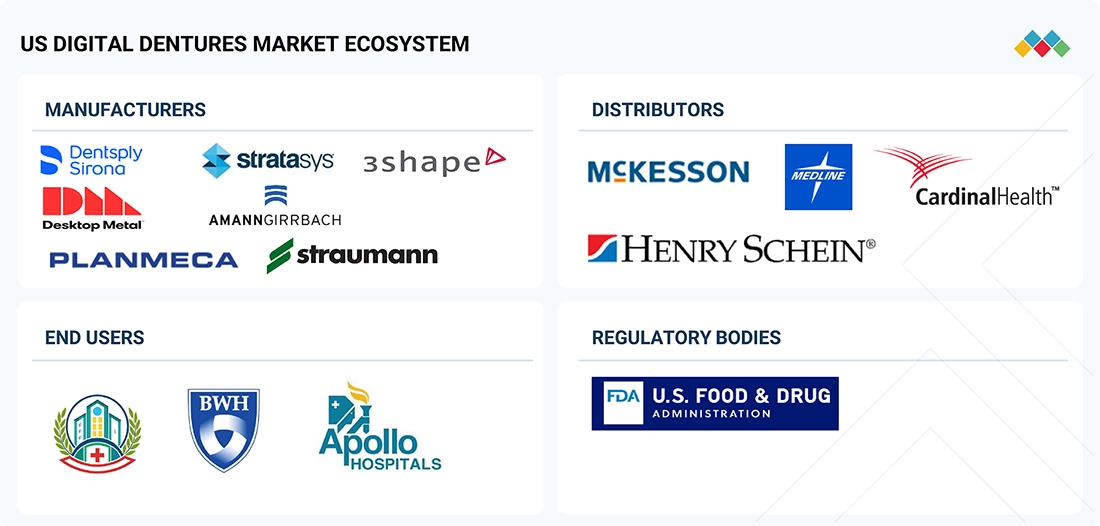
Logos and trademarks shown above are the property of their respective owners. Their use here is for informational and illustrative purposes only.
MARKET SEGMENTS
Source: Secondary Research, Interviews with Experts, MarketsandMarkets Analysis
US Digital Dentures Market, By Type
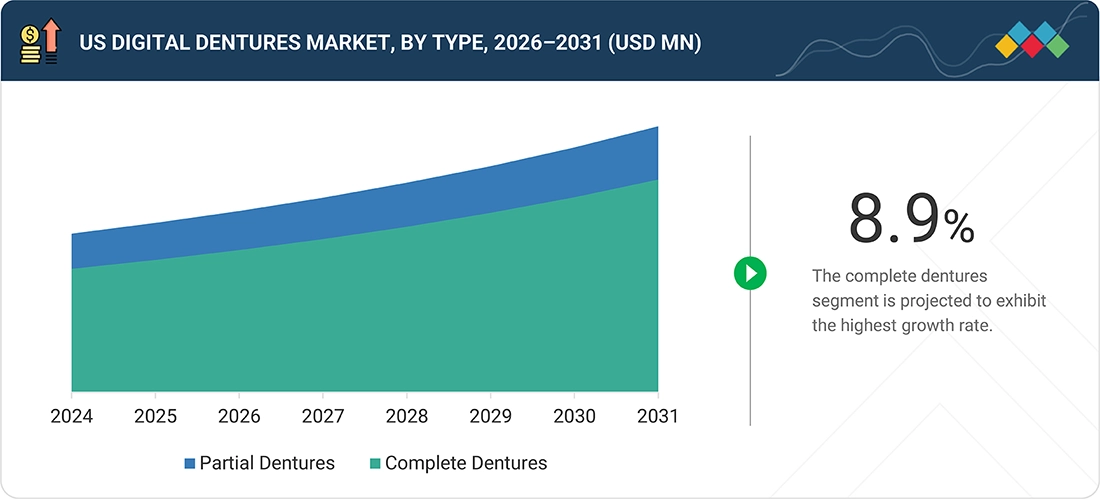
The type segment is divided into partial and complete dentures. The complete dentures segment is expected to grow at the highest CAGR during the forecast period. Complete dentures offer several advantages over partial dentures, particularly for patients who are missing all of their teeth in a dental arch. A complete denture is a removable dental prosthetic intended to replace all the natural teeth within either the upper or lower jaw, providing an individual who has lost all their teeth due to old age, decay, or other dental problems with a functional and aesthetically pleasing solution. Made from a combination of acrylic resin and, occasionally, metal, complete dentures are fitted individually to each patient's mouth contours to maximize comfort and stability. The process involves several procedures, including preliminary consultations to gather evidence, impressions of the gums, and the construction of a wax model to check fit and appearance before the final denture is produced. One key benefit is that complete dentures provide full restoration of both function and aesthetics, allowing patients to eat, speak, and smile with confidence. These dentures offer a comprehensive solution for tooth loss, unlike partial dentures, which are designed to fill gaps where some natural teeth remain.n
US Digital Dentures Market, By usability
The usability segment is divided into fixed and removable dentures. The fixed denture segment holds the largest share of the market because it offers several advantages over removable dentures, making it a preferred choice for many patients. A fixed denture, also known as a fixed bridge, is a dental prosthesis that replaces missing teeth and is firmly attached inside the mouth. In contrast, removable dentures are placed in and out of the mouth, while fixed dentures are anchored to existing teeth, providing stability and functionality. They help restore the natural appearance of the teeth and enable patients to chew and speak more effectively. Fixed dentures are made of extremely strong porcelain or metal. They are designed to resemble natural teeth and look like one. Prepared by a dentist through careful calculation and assessment, with proper fit and alignment, fixed dentures greatly enhance oral health and patient satisfaction. One of the key benefits is their stability and permanence, as fixed dentures are securely anchored to dental implants or natural teeth, providing a more natural feel and function compared to removable options. This stability eliminates concerns about dentures shifting or slipping during eating or speaking, offering greater comfort and confidence for the wearer.
US Digital Dentures Market, By Material
The materials segment is divided into resins, metals, plastics, and other materials. The resins segment is expected to grow at the highest CAGR during the forecast period. Resins offer several advantages in dentistry compared to other materials, making them a popular choice for various dental applications. High-performance resin materials, including high-quality resins, significantly improve the quality and durability of dental prosthetics. These resins, which are mainly biocompatible polymers, are formulated to simulate the natural appearance and performance of teeth in the oral cavity. In particular, photopolymerizable resins enable computer-aided design and manufacturing techniques to produce dentures with a precision fit and finish superior to those traditionally achieved with conventional denture fabrication techniques. For example, in addition to patient comfort, some of the mechanical properties of these resins, such as strength and flexibility, make them highly resistant to wear. With modern advancements in resin technology, these materials are more resistant to stains and easier to maintain, making them the best solution for a wide range of practitioners and patients in modern dentistry. One of the primary benefits is their versatility and adaptability, allowing easy manipulation to match the natural color of teeth and providing highly aesthetic results. Resins are also lightweight and biocompatible, reducing the risk of allergic reactions or irritation in patients. Their ability to bond directly to tooth structures ensures a strong, durable restoration while preserving more of the natural tooth. Additionally, resins can be easily shaped and polished, allowing for precise restorations and adjustments in a single
US DIGITAL DENTURE MARKET: COMPANY EVALUATION MATRIX
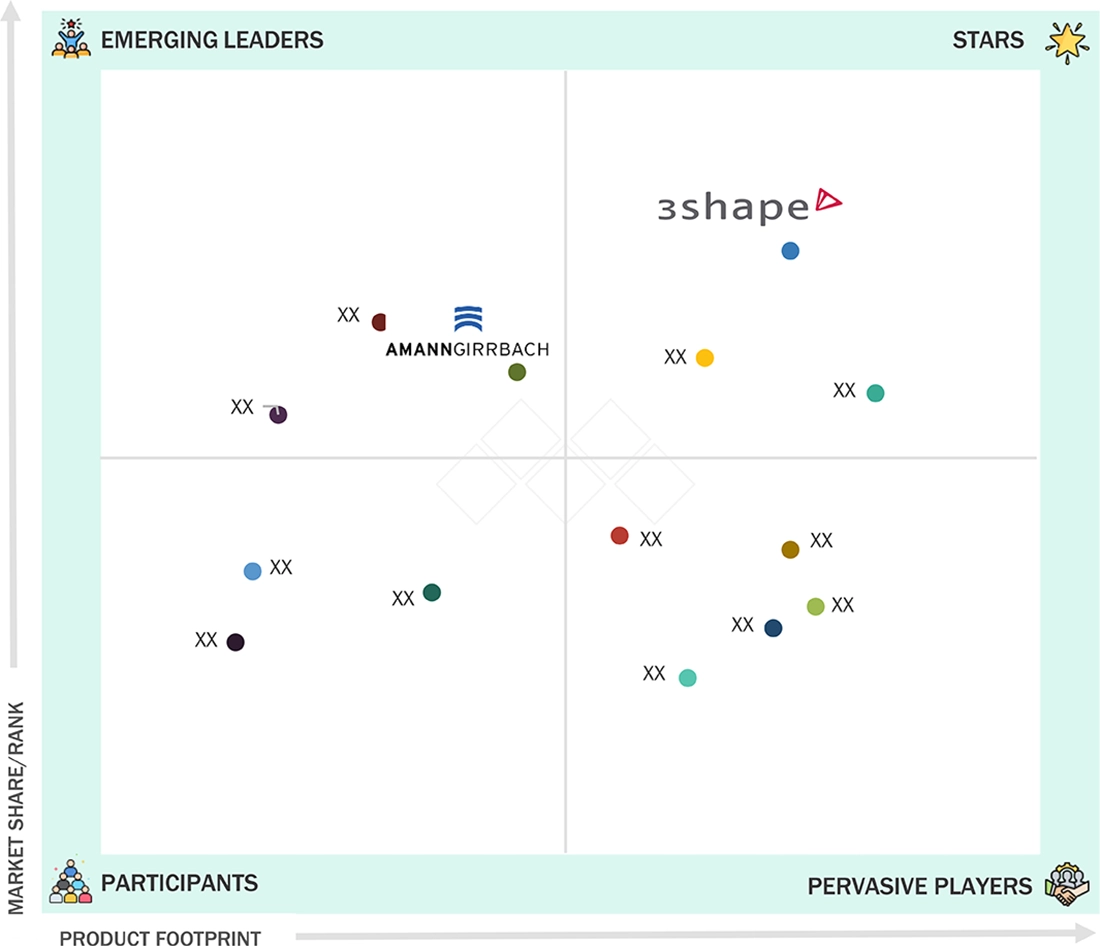
In the US digital dentures market competitive matrix, 3Shape A/S is positioned as a Star player, supported by its strong software-centric ecosystem, advanced denture design solutions, and widespread adoption across US dental laboratories. The company’s leadership is reinforced by deep integration of intraoral scanning, CAD software, and open digital workflows tailored for removable prosthetics. Amann Girrbach is categorized as an Emerging Player, gaining traction in the US market through its high-precision milling systems and expanding digital denture manufacturing capabilities. While 3Shape A/S maintains a leading position through technological depth and broad laboratory penetration, Amann Girrbach’s continued innovation and growing US footprint position it for accelerated growth within the competitive landscape.
Source: Secondary Research, Interviews with Experts, MarketsandMarkets Analysis
KEY MARKET PLAYERS
- Dentsply Sirona (US)
- Planmeca OY (Finland)
- 3Shape A/S (Denmark)
- Desktop Metal, Inc. (US)
- Modern Dental Group Ltd (Hong Kong)
- Midmark Corporation (US)
- Amman Girbach AG (Austria)
- Institut Straumann AG (Switzerland)
- Asiga (Australia)
MARKET SCOPE
| REPORT METRIC | DETAILS |
|---|---|
| Market Size Value in 2025 | USD 516.0 Million |
| Revenue Forecast in 2031 | USD 806.0 Million |
| Growth Rate | CAGR of 6.5% from 2026-2031 |
| Actual data | 2023-2031 |
| Base year | 2025 |
| Forecast period | 2026-2031 |
| Units considered | Value (USD Million), Volume (Thousands Units) |
| Report Coverage | Revenue Forecast, Company Ranking, Competitive Landscape, Growth Factors, and Trends |
| Segments Covered | By Product: Equipment, Software I By Type: Partial dentures, Complete dentures I By Usability: Removable dentures, Fixed dentures I By Material: Metal, Plastic, Resins, Other materials I By End User: Dental hospitals and clinics, Dental laboratories, Other end users |
| Parent & Related Segment Reports |
Digital Dentures Market Europe Digital Dentures Market |
WHAT IS IN IT FOR YOU: US DIGITAL DENTURE MARKET REPORT CONTENT GUIDE
DELIVERED CUSTOMIZATIONS
We have successfully delivered the following deep-dive customizations:
| CLIENT REQUEST | CUSTOMIZATION DELIVERED | VALUE ADDS |
|---|---|---|
| Volume Analysis | Market assessment by volume (units) for dental equipments used in digital dentures ecosystem |
|
| Company Information | Key players: Dentsply Sirona (US), 3Shape A/S (Denmark), Desktop Metal, Inc. (US), Planmeca OY (Finland). Top 3-5 players market share analysis at APAC and the European country level | Insights on revenue shifts toward emerging innovations |
RECENT DEVELOPMENTS
- May 2024 : Dentsply Sirona partnered with Google to launch medical-grade 3D printing solutions with integrated end-to-end workflows for dental practices and labs.
- February 2024 : A-dec and Dentsply Sirona expanded their collaboration by integrating the Dentsply Sirona Primescan Connect intraoral scanner with A-dec 500 and A-dec 300 delivery systems.
- May 2024 : Planmeca OY launched the Planmeca Viso G3, a multifunctional CBCT device covering all extraoral imaging needs from 2D to 3D, to the North American market.
- December 2023 : Straumann Group (Switzerland) procured distribution rights for Roland DGA’s (Japan) state-of-the-art DGSHAPE DWX mills for North America
Table of Contents
 Exclusive indicates content/data unique to MarketsandMarkets and not available with any competitors.
Methodology
The study involved four major activities in estimating the current size of the US digital denture market. Exhaustive secondary research was done to collect information on the market, peer market, and parent market. The next step was to validate these findings, assumptions, and sizing with industry experts across the value chain through primary research. Both top-down and bottom-up approaches were employed to estimate the complete market size. After that, market breakdown and data triangulation were used to estimate the market size of segments and subsegments.
Secondary Research
The secondary research process involved the widespread use of secondary sources, directories, databases (such as Bloomberg Businessweek, Factiva, and D&B Hoovers), white papers, annual reports, company house documents, investor presentations, and SEC filings of companies. Secondary research was used to identify and collect information useful for the extensive, technical, market-oriented, and commercial study of the US digital denture market. It was also used to obtain important information about the key players and market classification and segmentation according to industry trends to the bottom-most level, and key developments related to market and technology perspectives. A database of the key industry leaders was also prepared using secondary research.
Primary Research
In the primary research process, various sources from both the supply and demand sides were interviewed to obtain qualitative and quantitative information for this report. The primary sources from the supply side include industry experts such as CEOs, vice presidents, marketing and sales directors, technology & innovation directors, and related key executives from various key companies and organizations operating in the US digital denture market. The primary sources from the demand side included industry experts, purchase & sales managers, doctors, and personnel from research organizations. Primary research was conducted to validate the market segmentation, identify key players in the market, and gather insights on key industry trends and key market dynamics.
To know about the assumptions considered for the study, download the pdf brochure
Market Size Estimation
The research methodology used to estimate the size of the US digital denture market includes the following details.
The market sizing of the market was undertaken from the global side.
Country-level Analysis: The size of the US digital denture market was obtained from the annual presentations of leading players and secondary data available in the public domain. The share of products and services in the overall US digital denture market was obtained from secondary data and validated by primary participants to arrive at the total US digital denture market. Primary participants further validated the numbers.
Geographic market assessment (by region & country): The geographic assessment was done using the following approaches:
Approach 1: Geographic revenue contributions/splits of leading players in the market (wherever available) and respective growth trends
Approach 2: Geographic adoption trends for individual product segments by end users and growth prospects for each of the segments (assumptions and indicative estimates validated from primary interviews)
At each point, the assumptions and approaches were validated through industry experts contacted during primary research. Considering the limitations of data available from secondary research, revenue estimates for individual companies (for the overall US digital denture market and geographic market assessment) were ascertained based on a detailed analysis of their respective product offerings, geographic reach/strength (direct or through distributors or suppliers), and the shares of the leading players in a particular region or country.
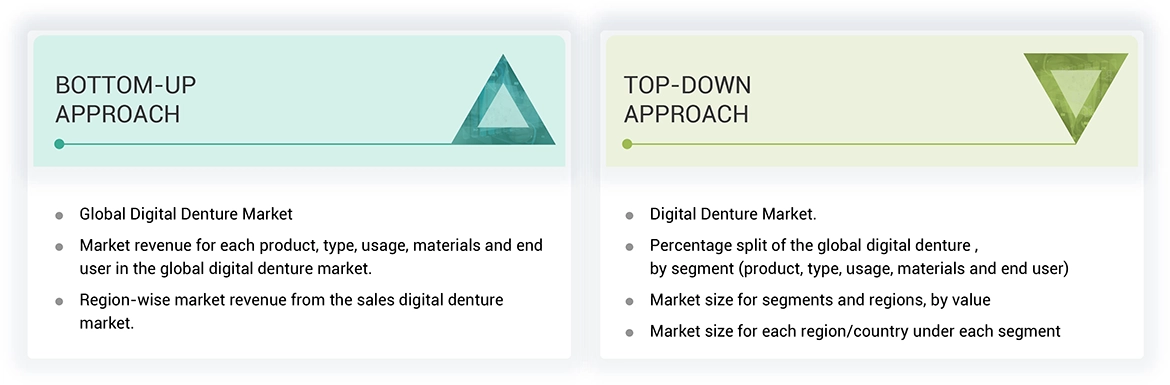
US Digital denture Size: Top-Down Approach & Bottom-Up Approach
Data Triangulation
After arriving at the overall market size—using the market size estimation processes explained above—the market was split into several segments and sub-segments. To complete the overall market engineering process and arrive at the exact statistics of each market segment and subsegment, data triangulation, and market breakdown procedures were employed, wherever applicable. The data was triangulated by studying various factors and trends from both the demand and supply sides.
Market Definition
Digital dentures are dental prostheses created with the help of scanners, design software and mills or printers. These digital tools can provide for more accuracy, efficiency and often more comfort for the patient. The US digital denture workflow can start in different ways: sometimes a conventional impression is still needed, sometimes a direct scan in the patient’s mouth can be done to create a digital impression for dentures, and sometimes an impression isn't needed because the clinician does a duplicate of an existing denture. The way the workflow looks depends entirely on the clinical situation and the type of denture that is created.
Stakeholders
- Manufacturers and distributors of medical devices
- Manufacturers and distributors of medical device components
- US Digital denture companies
- Healthcare institutes
- Diagnostic laboratories
- Hospitals and clinics
- Academic institutes
- Research institutes
- Government associations
- Market research and consulting firms
- Venture capitalists and investors
Report Objectives
- To define, describe, segment, analyze, and forecast the US digital denture market product, type, usage, materials, end userand region
- To provide detailed information about the factors influencing the market growth (drivers, restraints, opportunities, and challenges)
- To analyze micro markets concerning individual growth trends, prospects, and contributions to the overall market
- To analyze market opportunities for stakeholders and provide details of the competitive landscape for key players.
- To profile the key players in the US digital denture market and comprehensively analyze their core competencies.
- To track and analyze competitive developments such as agreements, collaborations, and partnerships; expansions; acquisitions; and product launches and approvals in the US digital denture market.
- To analyze the impact of the recession on the US digital denture market


Personalize This Research
- Triangulate with your Own Data
- Get Data as per your Format and Definition
- Gain a Deeper Dive on a Specific Application, Geography, Customer or Competitor
- Any level of Personalization
Let Us Help You
- What are the Known and Unknown Adjacencies Impacting the US Digital Denture Market
- What will your New Revenue Sources be?
- Who will be your Top Customer; what will make them switch?
- Defend your Market Share or Win Competitors
- Get a Scorecard for Target Partners

Custom Market Research Services
We Will Customise The Research For You, In Case The Report Listed Above Does Not Meet With Your Requirements
Get 10% Free CustomisationTESTIMONIALS

JAYANT RAJPUROHIT
Director of Market Insights, Data and Analytics
SFI Health,
Leading Pharmaceutical Companywww.sfihealth.com/

We at SFI Health approached MarketsandMarkets for an Opportunity Assessment on "Incidence and Prevalence of Focus Indications" as we wanted to know the most attractive HCPs like Physician, Functional MD, Naturopath and Pharmacist. The project was critical for us to ensure our focus on the right target which would enable sustainable growth and profitability for SFI Health. The business insights provided exceeded our expectations and we were extremely impressed. The team at MarketsandMarkets is highly professional and detail oriented and very well understood our business needs. MarketsandMarkets offers a unique combination of expertise and dedicated engagement model. We identified 2 new products to be launched in coming months, based on the research findings provided by MarketsandMarkets. We are happy with the services and would strongly recommend MarketsandMarkets to my peers in the industry.

BEATRIZ DE LA CALLE
Head of Commercial Analytics
Qualicaps,
Leading Pharmaceutical Companywww.qualicaps.com/

We partnered with MarketsandMarkets for an assessment study on hard empty capsules. The team was extremely professional in understanding our business requirements and we received timely responses to all our queries. The market intelligence and the recommendations has met our business requirements. We were extremely impressed to see the final study results; it really exceeded our expectations. The market intelligence offered by MarketsandMarkets, and clarity on next steps will help us achieve our business objective for the Year 2021. We are happy with the services and would strongly recommend MarketsandMarkets to my peers in the industry.

Bob Williams,
Senior Director Business Development & Innovation
Bracco Diagnostics Inc.,
Italian Multinational in life sciences sector and a World Leader in imaging diagnosticsimaging.bracco.com/us-en
We were pleased with targeted insights that MarketsandMarkets identified from a custom study on the 'Radiation Dose Management Solutions Market'. Your team identified and characterized the market participants as well as underlying trends accurately. This study was useful to Bracco in formulating business strategies for our dose monitoring product lines and we thank MarketsandMarkets for the job well done.
Cody Coonradt,
Market Development and Strategy Manager
3M Health Information Systems,
Leader in Health care Coding, Payment & Analytics Solutions.www.3m.com/3M/en_US/health-information-systems-us
The value for our organization comes from three things: depth of research, specificity of segments and being easy to work with. As important as the first two are, the third can't be underestimated. MarketsandMarkets, maybe more than any other research vendor, wants to know what is top of mind for our team and what big questions we are grappling to answer.
Their customer first approach and high value engagement model, have given us great analysis and excellent value for money






Growth opportunities and latent adjacency in US Digital Denture Market