Veterinary Software Market Size, Growth, Share & Trends Analysis

Veterinary Software Market by Product (Practice Management, Imaging/PACS, Telehealth, Client Engagement, Herd Management, LIMS), Delivery Mode (Cloud, On-premise), Practice Type (Small Animal, Large Animal), End User & Region - Global Forecast to 2030




OVERVIEW
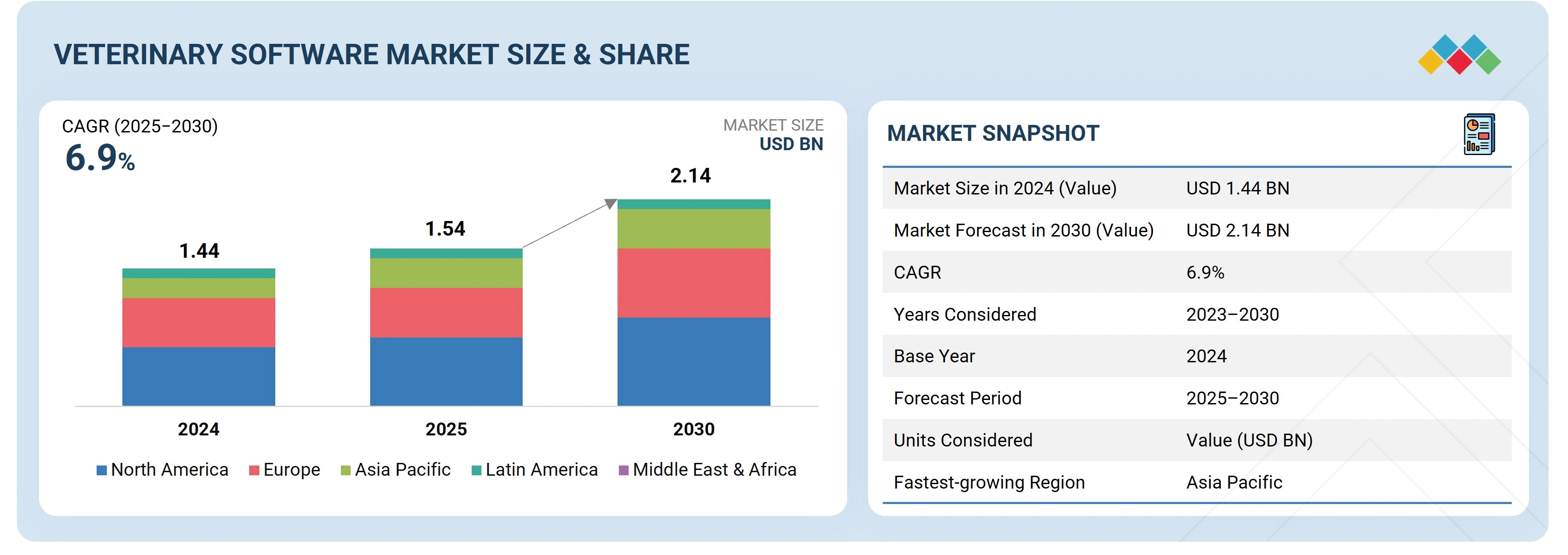
Source: Secondary Research, Interviews with Experts, MarketsandMarkets Analysis
The global veterinary software market, valued at US$1.44 billion in 2024, stood at US$1.54 billion in 2025 and is projected to advance at a resilient CAGR of 6.9% from 2024 to 2030, culminating in a forecasted valuation of US$2.14 billion by the end of the period. Veterinary software comprises specialized computer programs intentionally developed to optimize and augment diverse facets of veterinary practice administration and healthcare delivery. The growth of the veterinary software market is driven by the increasing adoption of digital technologies in veterinary practices, rising pet ownership, and the growing need for efficient clinical workflow management. Additionally, advancements in cloud-based solutions, telemedicine integration, and practice automation are supporting the demand for veterinary software to enhance patient care, diagnostics, and operational efficiency in veterinary clinics, hospitals, and research facilities.
KEY TAKEAWAYS
-
By RegionThe North America Veterinary software market accounted for a 43.3% revenue share in 2024.
-
By ProductBy product , the veterinary telehealth segment is expected to register the highest CAGR of 10.8%. (2025-2030)
-
By Delivery modeBy delivery mode, the web/ cloud-based segment accounted for a 80.8% revenue share in 2024.
-
By Software typeBy software type, the Integrated software segment is expected to dominate the market.
-
By Practice typeBy practice type, the exclusive small animal practices segment will grow the fastest during the forecast period.
-
By End userBy enduser, the intependent veterinary clinics segment is expected to dominate the market, accounting for largest marketshare of 52.5%.
-
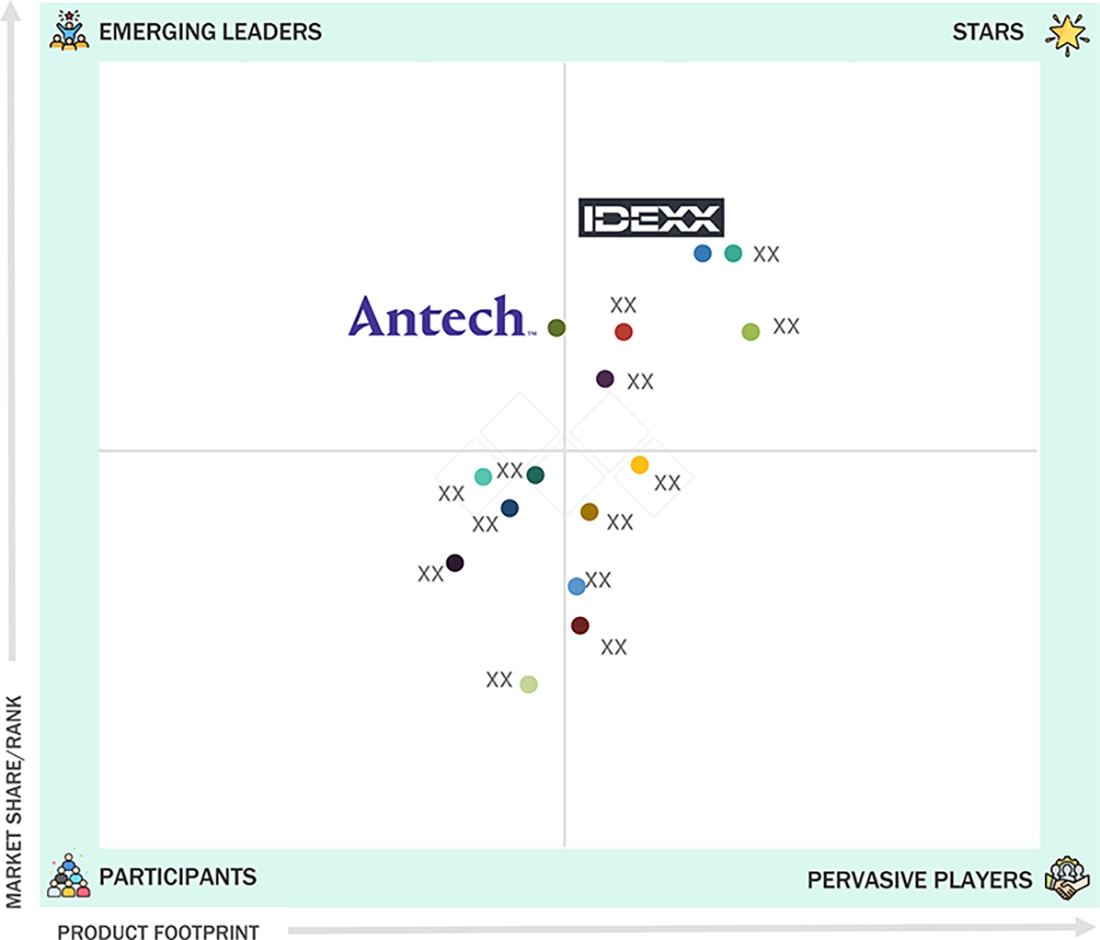
Competitive LandscapeIDEXX Laboratories, Inc. , Covetrus and Nordhealth were identified as some of the star players in the veterinary software market (global), given their strong market share and product footprint.
-
Competitive LandscapePetvisor, petsapp,Inc. and Eclipse veterinary software among others, have distinguished themselves among startups and SMEs by securing strong footholds in specialized niche areas, underscoring their potential as emerging market leaders
The Veterinary Software Market is expected to witness significant growth over the coming years, driven by the rising demand for advanced digital solutions in veterinary care, technological innovation, and the growing need for efficient practice management systems. Veterinary software is increasingly being adopted for its ability to streamline workflows, improve diagnostic accuracy, and enhance client communication, making it essential for managing small, mixed, and large animal practices. The shift toward cloud-based platforms, coupled with the integration of AI, telehealth, and connected care solutions, further strengthens its role in improving operational efficiency and patient outcomes. With an expanding global pet population and greater emphasis on preventive healthcare, veterinary software is poised to become a cornerstone of modern veterinary practice management
TRENDS & DISRUPTIONS IMPACTING CUSTOMERS' CUSTOMERS
The evolving landscape of the veterinary software market highlights key trends and disruptions that are reshaping revenue sources and impacting end-user dynamics. As industry transitions from systems to more technology-integrated solutions, new high-growth opportunities are emerging, particularly in cloud-based software and AI integration
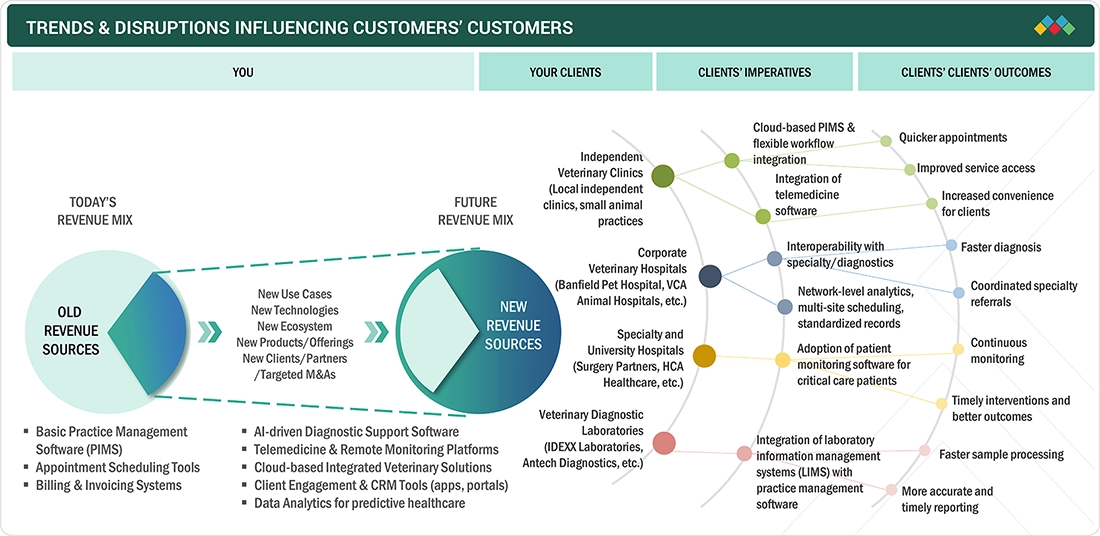
Source: Secondary Research, Interviews with Experts, MarketsandMarkets Analysis
MARKET DYNAMICS

Level
-
Increasing push towards efficiency and automation with integrated diagnostics ,, payments in PIMS

-
Rising global pet ownership and increasing spend on veterinary care


Level
-
Budget sensitivity in small/independent practices

-
High software switching and migration costs


Level
-
Retiring legacy systems pushing users towards new PIMS

-
Software cross-selling with veterinary diagnostics


Level
-
Rising cybersecurity threats in veterinary software

Source: Secondary Research, Interviews with Experts, MarketsandMarkets Analysis
Driver: Increasing push toward efficiency and automation through AI and integrated PIMS
The veterinary software market is experiencing robust growth due to the increasing demand for efficiency and automation in veterinary practices, particularly through integrated Practice Management Systems (PIMS). Modern PIMS solutions now integrate pharmacy, inventory, and billing modules, minimizing stockouts, preventing revenue leakage, and improving cash flow through automated reconciliation. Adoption has accelerated as clinics and hospital groups prioritize remote access, multi-location consolidation, interoperability with diagnostic partners, and SaaS-based subscription models that reduce IT complexity and costs. Leading players such as IDEXX have added AI-driven clinical decision support into their platforms (e.g., Neo, VetConnect PLUS, DecisionIQ), helping clinicians interpret lab results more effectively. DecisionIQ, for instance, uses machine learning and proprietary diagnostic data to detect subtle patterns in results and suggest possible diagnoses or next steps, significantly reducing time to diagnosis. As cloud-native software continues to integrate AI-assisted triage, predictive analytics, and diagnostic connectivity, it will unlock deeper insights and further enhance practice productivity.
Restraint: Budget Constraints and Switching Costs for Smaller Clinics
Despite the clear operational benefits, budget sensitivity remains a major barrier to veterinary software adoption, especially among small and mid-sized clinics. Monthly subscription fees for cloud-based PIMS typically range from USD 150 to USD 400 per month, with extra charges for premium modules such as imaging integrations and advanced payment solutions. In addition, migration from legacy, on-premises systems to modern SaaS platforms can be costly and disruptive, involving data transfer risks, staff retraining, and temporary downtime. As a result, many clinics particularly those with tight budgets or multiple locations delay switching, even when current systems are outdated. This slows adoption of more advanced, integrated solutions and limits vendors’ ability to scale rapidly.
Opportunity: Replacement of Legacy Systems and Digital Modernization
A significant market opportunity lies in the replacement of outdated, on-premise or desktop-based practice management systems. Many clinics continue to rely on legacy software that is expensive to maintain, lacks interoperability with modern diagnostic and payment systems, and poses cybersecurity risks. As these drawbacks become increasingly apparent, clinics are motivated to invest in cloud-native, integrated PIMS/EHR platforms that offer automation, real-time analytics, and seamless integrations. Vendors that can deliver smooth migration pathways, regulatory compliance assurance, and robust customer support are well positioned to capture this wave of system upgrades.
Challenge: Rising Cybersecurity Threats and Data Protection Risks
With the digitization of veterinary workflows including EMRs, diagnostics, telehealth, payments, and client communications cybersecurity risks are increasing sharply. The American Veterinary Medical Association (AVMA) estimates that approximately 11,000 veterinary practices face cyberattacks annually, making cybersecurity one of the most pressing concerns for the industry. Smaller practices, which often lack dedicated IT staff, are particularly vulnerable to phishing, ransomware, and data exfiltration attacks. Breaches can result in direct costs (data recovery, legal liabilities, regulatory fines) and indirect impacts such as client distrust, operational downtime, and reputational damage.
VETERINARY SOFTWARE MARKET: COMMERCIAL USE CASES ACROSS INDUSTRIES
| COMPANY | USE CASE DESCRIPTION | BENEFITS |
|---|---|---|
 |
Offers cloud-based veterinary practice management solutions with integrated diagnostics, reporting, and billing. | Improves workflow efficiency, accelerates diagnostic decision-making, and reduces administrative burden. |
 |
Provides telehealth and client engagement platforms supporting virtual care, digital communications, and prescription support. | Enhances accessibility for pet owners, strengthens client relationships, and reduces reliance on in-clinic visits. |
 |
Offers a unified veterinary software platform (Pulse) that integrates scheduling, medical records, billing, and client communication. | Increases operational productivity, automates routine tasks, and improves overall clinic experience. |
 |
Provides veterinary imaging software for managing radiology workflows, image processing, and digital reporting. | Improves diagnostic accuracy, streamlines imaging tasks, and enables faster clinical decisions. |
 |
Offers cloud-based veterinary practice management software for scheduling, patient records, payments, and messaging. | Enables remote access, simplifies practice operations, and enhances client engagement. |
Logos and trademarks shown above are the property of their respective owners. Their use here is for informational and illustrative purposes only.
MARKET ECOSYSTEM
The veterinary software market ecosystem comprises software developers (Idexx, Carestream), technology providers, veterinary practices, regulatory bodies, and end users. Software developers are central to the ecosystem and depend on technology providers for critical components such as cloud infrastructure, cybersecurity frameworks, diagnostic imaging integration , and payment gateway solutions. Technology partners also enable interoperability with electronic health records (EHRs), telehealth platforms, and mobile applications. Veterinary practices, including independent clinics, corporate veterinary chains, specialty hospitals, and university veterinary centers, are the primary users of these systems. They require solutions that ensure operational efficiency, accurate record-keeping, secure client communication, and streamlined clinical decision-making.Regulatory bodies, such as the FDA (US), EMA (Europe), and regional veterinary associations, play a critical role by enforcing compliance standards related to data security, telehealth regulations, and medical software interoperability. These regulations significantly influence software design, approval, and adoption timelines. End users, including veterinarians, support staff, and pet owners (via client-facing apps and portals), also shape the market by driving demand for user-friendly, integrated, and outcome-focused software solutions.
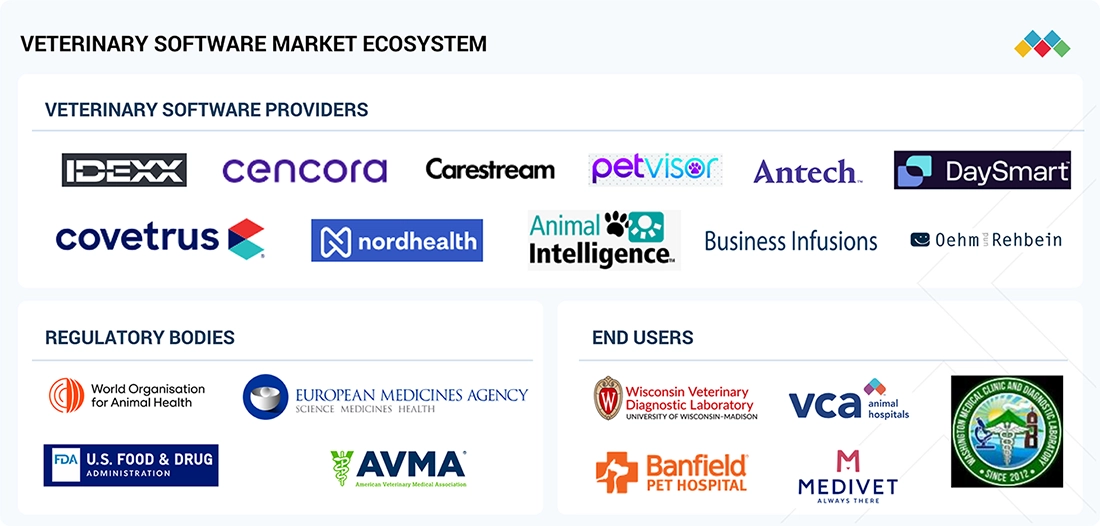
Logos and trademarks shown above are the property of their respective owners. Their use here is for informational and illustrative purposes only.
MARKET SEGMENTS
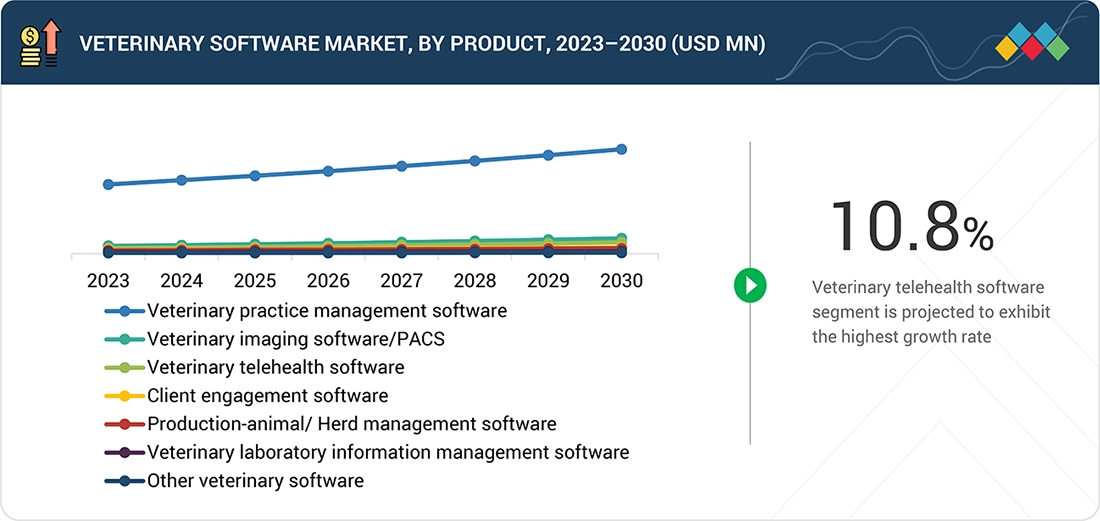
Source: Secondary Research, Interviews with Experts, MarketsandMarkets Analysis
Veterinary software Market, By Product
The veterinary practice management software segment held the largest share of the global veterinary software market in 2024. This dominance is attributed to its extensive adoption by veterinary clinics and hospitals for managing electronic medical records (EMR), automating appointment scheduling, billing, inventory management, and streamlining overall workflows. PIMS has become the backbone of veterinary operations, offering seamless integration with diagnostic equipment, payment gateways, and client communication tools. These capabilities not only enhance efficiency but also improve patient care and client satisfaction, making PIMS an essential software solution for most practices..
Veterinary software Market, By Delivery Mode
As of 2024, Web/ Cloud-based model is the largest and fastest-growing segment in the veterinary software market, . This preference is driven by advantages such as reduced upfront IT infrastructure costs, automatic software updates, enhanced scalability, secure remote access to data, and improved business continuity. Cloud deployment is especially advantageous for multi-location practices, allowing them to access centralized databases, standardize operations, and generate consolidated performance reports seamlessly. The growing need for telehealth integration and remote practice management has further accelerated the shift to cloud models. By reducing IT maintenance burdens and enabling superior disaster recovery capabilities, cloud-based solutions are increasingly becoming the default choice for veterinary practices of all sizes from single-location clinics to corporate veterinary groups.
Veterinary software Market, By Practice type
The exclusive small animal practices segment accounted for the largest share in the veterinary software market by practice type in 2024, due to the growing companion animal population worldwide, increasing expenditure on pet health and wellness, and rising adoption of preventive care services such as vaccinations, routine check-ups, and chronic disease management. Additionally, small animal practices are more likely to adopt digital tools such as PIMS and telehealth platforms to streamline operations and improve customer experience.
Veterinary software Market, By End User
Independent Veterinary clinics represent the largest share of the veterinary software market in 2024 due to the large number of small and mid-sized practices globally and their increasing shift toward digitization to enhance operational efficiency and improve client experience. Independent clinics are adopting PIMS, imaging software, and cloud-based platforms to streamline scheduling, optimize inventory, and provide better communication with pet owners through email/SMS reminders. The adoption is further supported by competitive pricing models (subscription-based SaaS) that make software accessible even to smaller clinic.
REGION
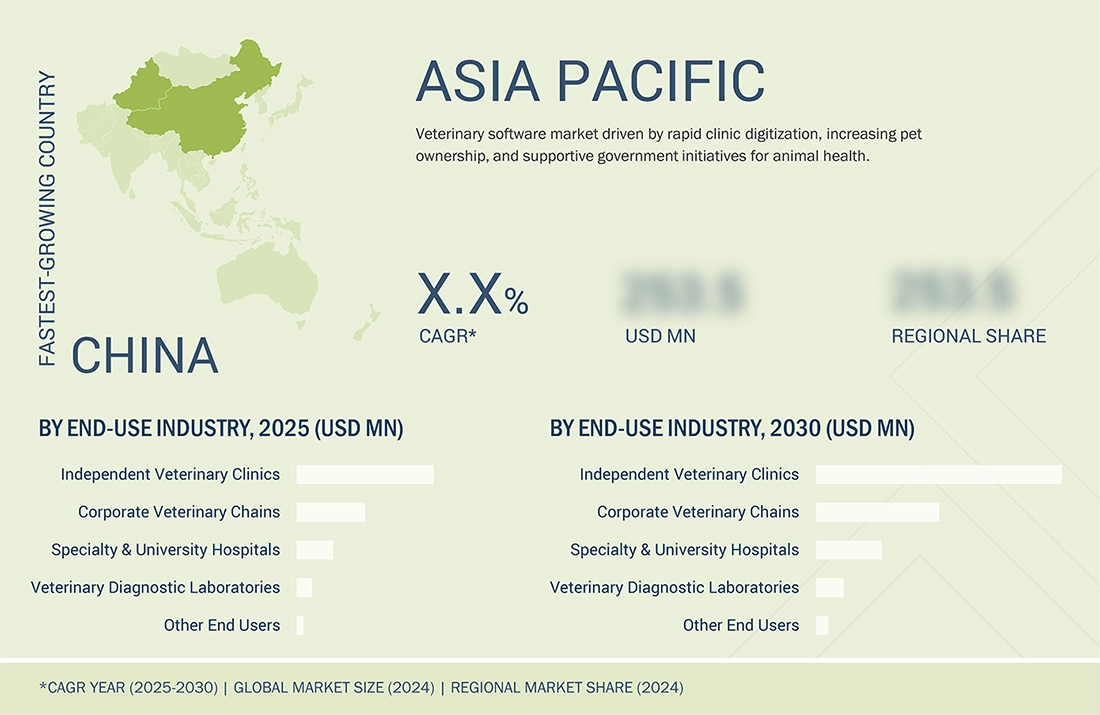
Asia Pacific to be fastest-growing region in global veterinary software market during forecast period
The APAC is expected to grow at highest CAGR globally during the forecast period. This growth is primarily driven by a combination of rising pet ownership, growing awareness of animal health, and rapid digital transformation in veterinary practices. Countries such as China, India, Japan, and Australia are witnessing increased demand for advanced practice management solutions as the number of companion animals and veterinary professionals expands. Government initiatives to strengthen animal healthcare infrastructure, coupled with rising expenditure on pet insurance and preventive care, are further boosting adoption. Additionally, the surge in cloud-based technologies, telehealth platforms, and mobile-enabled veterinary solutions is accelerating market penetration, particularly among small and mid-sized clinics seeking cost-effective and scalable systems. With strong growth in the livestock sector, increasing prevalence of zoonotic diseases, and rising investments from global players to tap into underserved markets.
VETERINARY SOFTWARE MARKET: COMPANY EVALUATION MATRIX
In the veterinary software market matrix, In the veterinary software market, IDEXX Laboratories, Inc. (Star) leads with scale, extensive distribution, and a broad solutions portfolio. Antech diagnostics, Inc. (Emerging Leader) is gaining momentum with innovative Digital imaging management software technologies. While IDEXX Laboratories, Inc. dominates through reach, Antech diagnostics ’s innovation positions it for rapid growth toward the leaders’ quadrant.
Source: Secondary Research, Interviews with Experts, MarketsandMarkets Analysis
KEY MARKET PLAYERS
- IDEXX Laboratories,Inc. (US)
- Covetrus (US)
- Nordhealth (Finland)
- Carestream Health (US)
- Cencora Inc(US)
- DaySmart Software (US)
- Animal Intelligence Software (US)
- Chetu, Inc (US)
- Antech Diagnostics, Inc. (US)
- OR Technology- Oehm and Rehbein GmbH (Germany)
- Business Infusions (Canada)
- Asteris (Valsoft Corporation) (Canada)
- Clientrax (US)
- Shepherd Veterinary Solutions (US)
- Advanced Technology Corp. (US)
MARKET SCOPE
| REPORT METRIC | DETAILS |
|---|---|
| Market Size in 2024 (Value) | USD 1.44 Billion |
| Market Forecast in 2030 (Value) | USD 2.143 Billion |
| Growth Rate | CAGR of 6.9% from 2025- 2030 |
| Years Considered | 2023–2030 |
| Base Year | 2024 |
| Forecast Period | 2025–2030 |
| Units Considered | Value (USD Billion), Volume (Thousand units) |
| Report Coverage | Revenue forecast, company ranking, competitive landscape, growth factors, and trends |
| Segments Covered |
|
| Regions Covered | North America, Asia Pacific, Europe, Latin America, and the Middle East & Africa |
WHAT IS IN IT FOR YOU: VETERINARY SOFTWARE MARKET REPORT CONTENT GUIDE
DELIVERED CUSTOMIZATIONS
We have successfully delivered the following deep-dive customizations:
| CLIENT REQUEST | CUSTOMIZATION DELIVERED | VALUE ADDS |
|---|---|---|
| Product Analysis | Comparison of top software products :Veterinary Patient Management software, Veterinary PACS, Veterinary telehealth software, Client engagement software, livestock farm management software, Veterinary LIMS and other software. | Identify interconnections ; Detect customer migration trends across industries. |
| Company Information | Key players: IDEXX Laboratories,Inc. (US), Covetrus (US), Cencora Inc(US), Nordhealth (Finland), Carestream Health (US). | Insights on revenue shifts towards emerging software technologies |
| Geographic Analysis | Detailed analysis on Rest of APAC was provided to one of the top players. Client focused on ASEAN Market country level analysis for device market. | Country level demand mapping for new product launches and localization strategy planning. |
RECENT DEVELOPMENTS
- September 2026: IDEXX Laboratories,Inc. (US) acquired CoVetAI, an AI-native clinical workflow software provider for veterinary practices. CoVet’s technology captures and organizes information across consultations, diagnostics, treatment planning and client follow-up, and IDEXX plans to integrate the capability into its veterinary software ecosystem, strengthening its practice-management and AI workflow offerings.
- July 2026: Nordhealth (Finland) launched Provet AI Agents, embedding AI directly into its veterinary practice-management system (PIMS). The new capabilities include a Clinical AI Agent that can turn spoken consultations into notes, vitals, diagnoses and orders, alongside Ask Provet, which allows practice teams to query operational and financial data using natural language.
- October 2025: DaySmart Software (US) introduced Daisy, the Veterinary SOAP Notes Assistant, as part of its new AI capabilities. Integrated into DaySmart’s veterinary software, Daisy captures spoken consultations and drafts structured SOAP notes in real time, targeting documentation workload and workflow efficiency for veterinary practices.
- May 2025: Antech Diagnostics, Inc. (US) launched RapidRead™ Dental, an AI-powered veterinary radiology interpretation tool that analyzes dental radiographs and provides tooth-by-tooth assessments. The software was developed using more than 55,000 images and 275,000 teeth and is designed to provide rapid interpretation while the animal remains under anesthesia, integrating diagnostic intelligence into veterinary clinical workflows.
- January 2025: Covetrus (US) announced AI-powered workflow automation and new treatment-board capabilities within Covetrus Pulse, as part of its expanded Covetrus Platform. The software enhancements automate elements of veterinary practice workflows, reduce administrative work and provide connected practice-management functionality for veterinary clinics.
Table of Contents
 Exclusive indicates content/data unique to MarketsandMarkets and not available with any competitors.
Methodology
This study extensively used both primary and secondary sources. The research involved studying various factors affecting the industry to identify segmentation types, industry trends, key players, competitive landscape, key market dynamics, and key player strategies.
Secondary Research
This research study involved the usage of comprehensive secondary sources, directories, databases such as Bloomberg Business, Factiva, and Dun & Bradstreet, white papers, annual reports, company house documents, investor presentations, and SEC filings of companies. Secondary research was used to identify and collect information useful for an extensive, technical, market-oriented, and commercial study of the infusion pump market. It was also used to identify key players in the market and classify and segment the industry based on trends to the most detailed level. Additionally, significant developments related to market and technology perspectives were noted. A database of the primary industry leaders was also created using secondary research.
Primary Research
In the primary research process, various sources from both the supply and demand sides were interviewed to obtain qualitative and quantitative information for this report. Primary sources from the supply side include project/sales/marketing/business development managers, presidents, CEOs, vice presidents, chairpersons, chief operating officers, chief strategy officers, directors, chief information officers, and chief medical information officers related to the veterinary software market. Primary sources from the demand side include healthcare professionals from veterinary hospitals, veterinary clinics, and veterinary diagnostic centers.
A breakdown of the primary respondents is provided below:
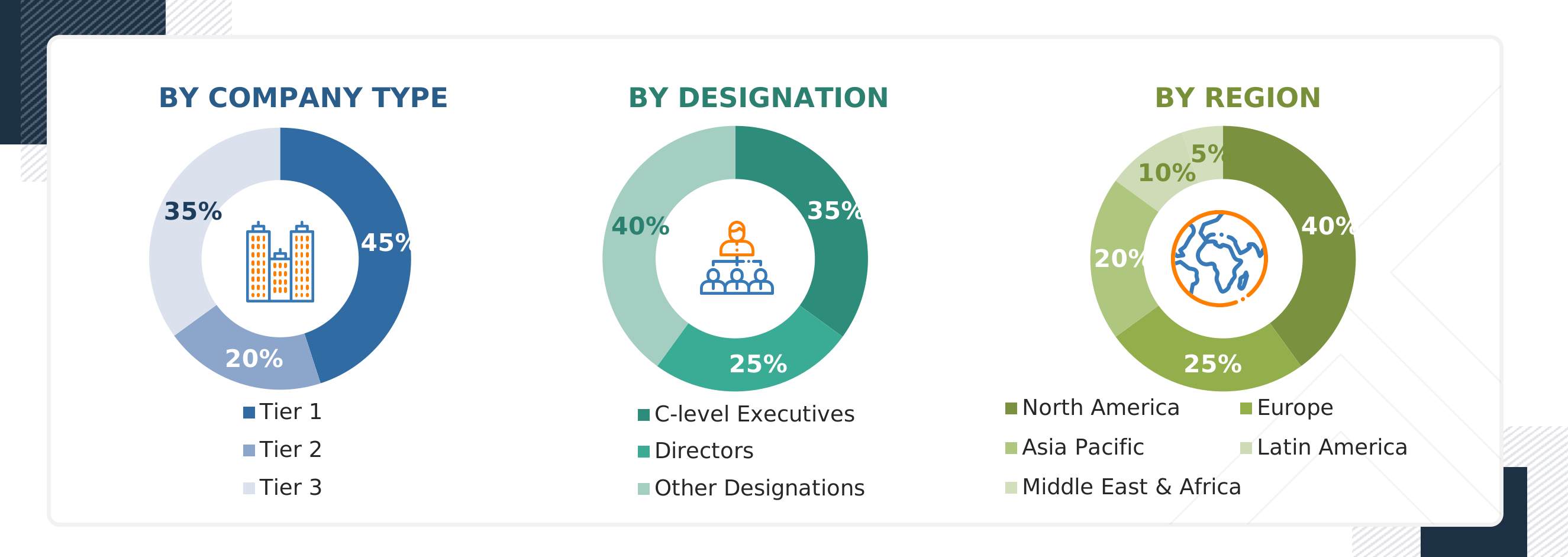
Note 1: C-level executives include CEOs, COOs, CTOs, and VPs.
Note 2: Other designations include sales, marketing, and product managers.
Note 3: Tiers are defined based on a company’s total revenue. As of 2024: Tier 1 = >USD 1 billion, Tier 2 = USD 500 million to USD 1 billion, and Tier 3 = < USD 500 million.
To know about the assumptions considered for the study, download the pdf brochure
Market Size Estimation
The total size of the veterinary software market was determined after data triangulation from three approaches, as mentioned below. After each approach, the weighted average of the three approaches was taken based on the level of assumptions used in each approach.
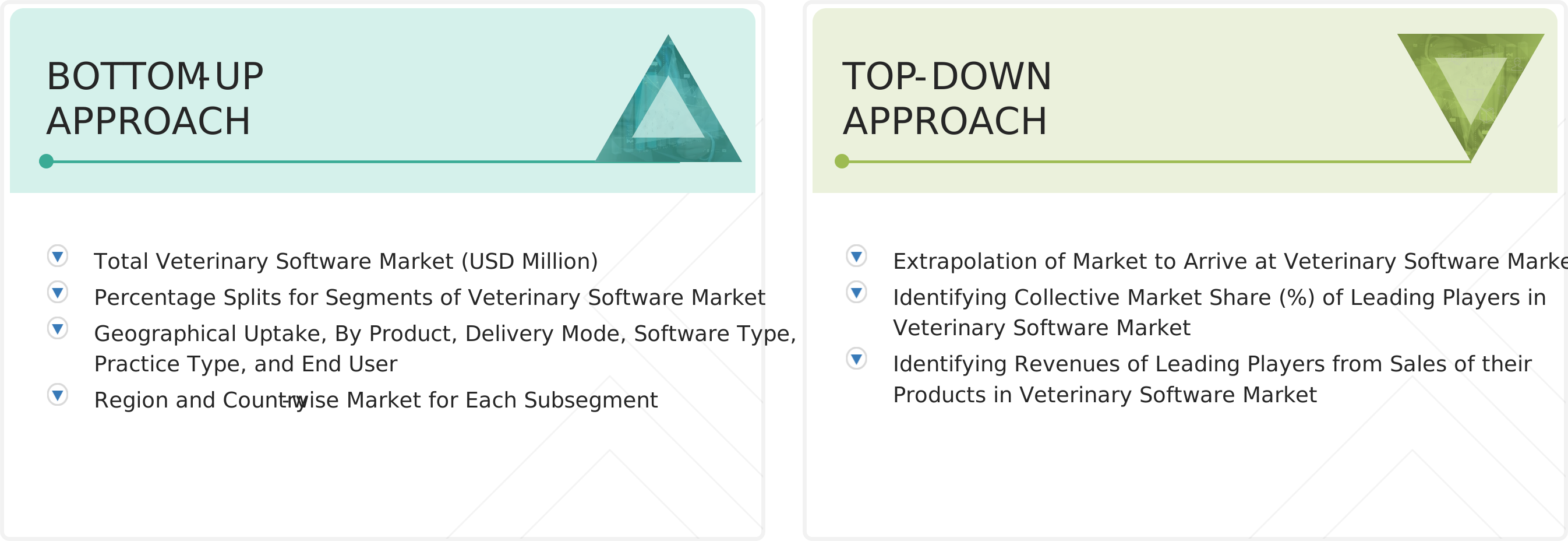
Data Triangulation
After arriving at the market size, the total market was divided into several segments and subsegments. Data triangulation and market breakdown procedures were employed wherever applicable to complete the overall market engineering process and arrive at the exact statistics for all segments and subsegments.
Market Definition
Veterinary software comprises specialized computer programs intentionally developed to optimize and augment diverse facets of veterinary practice administration and healthcare delivery. These comprehensive digital solutions integrate patient records management, appointment scheduling, billing, inventory administration, diagnostic imaging, telemedicine capabilities, and laboratory information systems with the overarching goal of enhancing operational effectiveness, data-driven decision-making, and superior animal healthcare provision in veterinary clinics, hospitals, and diagnostic laboratories.
Stakeholders
- Software Development Companies
- Veterinary Healthcare Institutions (Hospitals & Outpatient Clinics)
- Distributors and Suppliers of Veterinary software
- Research Institutes
- Health Insurance Payers
- Venture capitalists
- Market Research and Consulting Firms
- World Organization for Animal Health
- Organization for Economic Co-operation and Development (OECD)
Report Objectives
- To define, describe, and forecast the veterinary software market based on product, delivery mode, software type, practice type, end user, and region
- To provide detailed information regarding the major factors influencing market growth (such as drivers, restraints, opportunities, and challenges)
- To strategically analyze the micromarkets with respect to individual growth trends, prospects, and contributions to the total veterinary software market
- To analyze the opportunities in the market for stakeholders and provide details of the competitive landscape for market leaders
- To profile the key market players and comprehensively analyze their market shares and core competencies.
- To forecast the revenue of the market segments with respect to five main regions, namely, North America (US and Canada), Europe (Germany, France, UK, Italy, Spain, Netherlands, and Rest of Europe), the Asia Pacific (China, Japan, India, South Korea, New Zealand, Australia, Thailand, Vietnam, Indonesia and Rest of Asia Pacific), Latin America (Brazil, Mexico, and Rest of Latin America), and the Middle East & Africa [GCC Countries (Kingdom of Saudi Arabia, United Arab Emirates, and Rest Of GCC Countries) and Rest of Middle East & Africa
- To track and analyze competitive developments such as product launches & approvals, agreements, partnerships, expansions, acquisitions, and collaborations in the veterinary software market


Personalize This Research
- Triangulate with your Own Data
- Get Data as per your Format and Definition
- Gain a Deeper Dive on a Specific Application, Geography, Customer or Competitor
- Any level of Personalization
Let Us Help You
- What are the Known and Unknown Adjacencies Impacting the Veterinary Software Market
- What will your New Revenue Sources be?
- Who will be your Top Customer; what will make them switch?
- Defend your Market Share or Win Competitors
- Get a Scorecard for Target Partners

Custom Market Research Services
We Will Customise The Research For You, In Case The Report Listed Above Does Not Meet With Your Requirements
Get 10% Free CustomisationTESTIMONIALS

JAYANT RAJPUROHIT
Director of Market Insights, Data and Analytics
SFI Health,
Leading Pharmaceutical Companywww.sfihealth.com/

We at SFI Health approached MarketsandMarkets for an Opportunity Assessment on "Incidence and Prevalence of Focus Indications" as we wanted to know the most attractive HCPs like Physician, Functional MD, Naturopath and Pharmacist. The project was critical for us to ensure our focus on the right target which would enable sustainable growth and profitability for SFI Health. The business insights provided exceeded our expectations and we were extremely impressed. The team at MarketsandMarkets is highly professional and detail oriented and very well understood our business needs. MarketsandMarkets offers a unique combination of expertise and dedicated engagement model. We identified 2 new products to be launched in coming months, based on the research findings provided by MarketsandMarkets. We are happy with the services and would strongly recommend MarketsandMarkets to my peers in the industry.

BEATRIZ DE LA CALLE
Head of Commercial Analytics
Qualicaps,
Leading Pharmaceutical Companywww.qualicaps.com/

We partnered with MarketsandMarkets for an assessment study on hard empty capsules. The team was extremely professional in understanding our business requirements and we received timely responses to all our queries. The market intelligence and the recommendations has met our business requirements. We were extremely impressed to see the final study results; it really exceeded our expectations. The market intelligence offered by MarketsandMarkets, and clarity on next steps will help us achieve our business objective for the Year 2021. We are happy with the services and would strongly recommend MarketsandMarkets to my peers in the industry.

Bob Williams,
Senior Director Business Development & Innovation
Bracco Diagnostics Inc.,
Italian Multinational in life sciences sector and a World Leader in imaging diagnosticsimaging.bracco.com/us-en
We were pleased with targeted insights that MarketsandMarkets identified from a custom study on the 'Radiation Dose Management Solutions Market'. Your team identified and characterized the market participants as well as underlying trends accurately. This study was useful to Bracco in formulating business strategies for our dose monitoring product lines and we thank MarketsandMarkets for the job well done.
Cody Coonradt,
Market Development and Strategy Manager
3M Health Information Systems,
Leader in Health care Coding, Payment & Analytics Solutions.www.3m.com/3M/en_US/health-information-systems-us
The value for our organization comes from three things: depth of research, specificity of segments and being easy to work with. As important as the first two are, the third can't be underestimated. MarketsandMarkets, maybe more than any other research vendor, wants to know what is top of mind for our team and what big questions we are grappling to answer.
Their customer first approach and high value engagement model, have given us great analysis and excellent value for money
- Canada Veterinary Software Market
- US Veterinary Software Market
- Germany Veterinary Software Market
- UK Veterinary Software Market
- France Veterinary Software Market
- Italy Veterinary Software Market
- Spain Veterinary Software Market
- Netherlands Veterinary Software Market
- China Veterinary Software Market
- Japan Veterinary Software Market
- India Veterinary Software Market
- Australia Veterinary Software Market
- South Korea Veterinary Software Market
- New Zealand Veterinary Software Market
- Thailand Veterinary Software Market
- Brazil Veterinary Software Market
- Mexico Veterinary Software Market
- Rest Of Europe Veterinary Software Market
- Rest Of Asia Pacific Veterinary Software Market
- Rest Of Latin America Veterinary Software Market






Growth opportunities and latent adjacency in Veterinary Software Market