Concrete Admixtures Market

Concrete Admixtures Market by Type (Superplasticizers, Normal Plasticizers, Accelerating Admixtures, Retarding Admixtures, Air-entraining Admixtures), Application (Residential, Commercial, Infrastructure), and Region - Global Forecast to 2031




OVERVIEW
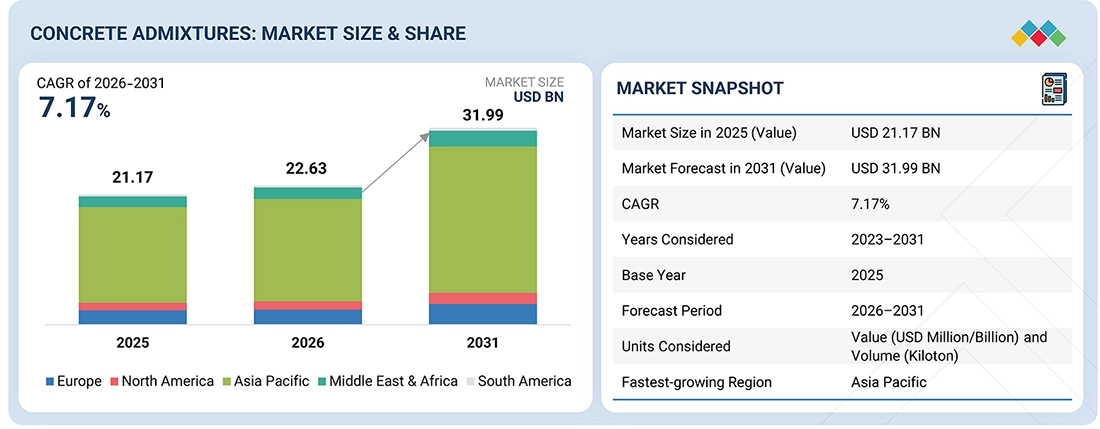
Source: Secondary Research, Interviews with Experts, MarketsandMarkets Analysis
The concrete admixtures market is projected to grow from USD 22.63 billion in 2026 to USD 31.99 billion by 2031, at a CAGR of 7.17%. Concrete admixtures are materials added to concrete before or during mixing to modify its properties in the fresh or hardened state. They are used to improve workability, durability, strength development, setting time, and resistance to environmental conditions. Market growth is driven by increasing infrastructure development, rapid urbanization, rising investments in residential and commercial construction, and growing demand for high-performance and sustainable concrete solutions across global construction projects.
KEY TAKEAWAYS
-
BY REGIONAsia Pacific led the global concrete admixtures market in 2025, accounting for 73.3% of the market share by value.
-
BY PRODUCT TYPEThe superplasticizers segment led the overall concrete admixtures market in 2025.
-
BY APPLICATIONThe infrastructure application is projected to register the highest CAGR of 7.99%, in terms of value, during the forecast period.
-
COMPETITIVE LANDSCAPE - KEY PLAYERSSika AG, Saint-Gobain, MAPEI Corporation, RPM International Inc., and Arkema S.A. are identified as key players in the global concrete admixtures market. These companies have strong market presence and extensive product portfolios.
-
COMPETITIVE LANDSCAPE - STARTUPSECMAS Group, Wacker Chemie AG, and Penetron, among other emerging players, hold strong positions in specialized niche segments, underscoring their potential to become future market leaders in the concrete admixtures market.
The concrete admixtures market is projected to grow steadily over the next decade, supported by advancements in construction technologies and the increasing focus on durable and sustainable infrastructure. Construction companies are increasingly utilizing concrete admixtures to enhance material performance, optimize resource utilization, and improve project productivity. Growing emphasis on resilient infrastructure, green building practices, and long-lasting structures further strengthens the role of concrete admixtures as an essential component of modern construction, supporting continued market expansion across residential, commercial, and infrastructure projects.
TRENDS & DISRUPTIONS IMPACTING CUSTOMERS' CUSTOMERS
The impact on consumer business arises from evolving construction trends and industry disruptions. Raw material suppliers and distribution partners are closely linked to concrete admixture manufacturers, while application sectors represent the primary demand base for concrete admixture products. Market shifts, including changes in construction activity, infrastructure investments, sustainability requirements, and building regulations, directly influence the revenues of application sectors. Any change in end-user demand subsequently affects procurement volumes across suppliers and distributors, which in turn impacts the revenues of concrete admixtures manufacturers throughout the value chain.
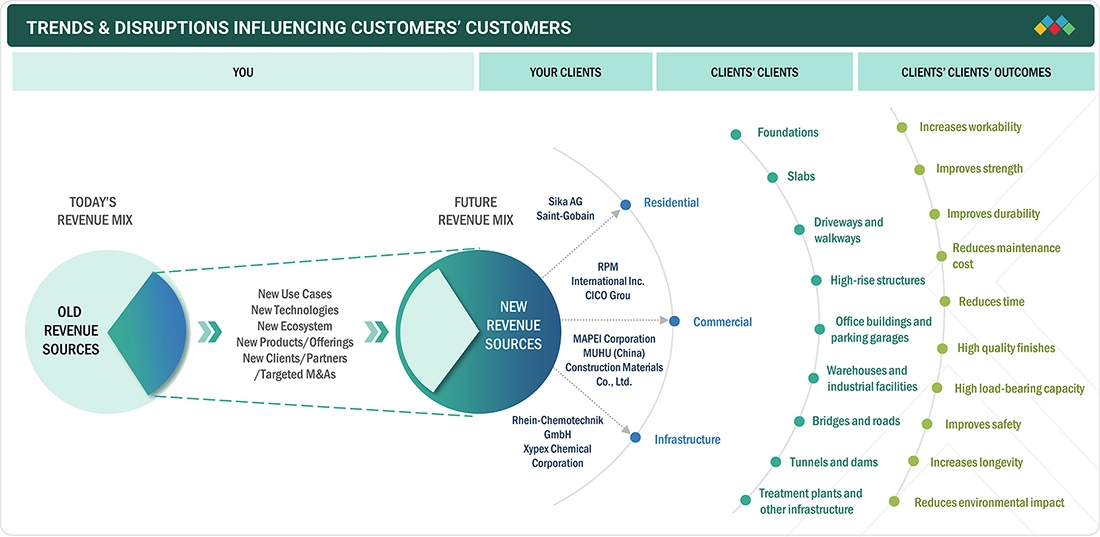
Source: Secondary Research, Interviews with Experts, MarketsandMarkets Analysis
MARKET DYNAMICS

Level
-
Emerging construction industry with huge growth potential in developing countries

-
Growing urbanization trend


Level
-
Stringent government and environmental regulations

-
Established infrastructure in developed countries


Level
-
Exploring advanced applications in 3D printing and self-healing concrete

-
Emerging demand for concrete admixtures in construction industry


Level
-
Lack of technical guidance and R&D

-
Unstable cost of raw materials

Source: Secondary Research, Interviews with Experts, MarketsandMarkets Analysis
Driver: Emerging construction industry with huge growth potential in developing countries
The concrete admixtures market is experiencing strong growth due to the rapid expansion of the construction industry in developing countries. Increasing urbanization, population growth, and government investments in infrastructure are driving the construction of residential buildings, commercial complexes, transportation networks, and industrial facilities. Concrete admixtures are widely used to improve workability, durability, strength, and construction efficiency, making them essential in modern projects. Countries across Asia Pacific, the Middle East, Africa, and Latin America are witnessing significant construction activity, creating sustained demand for advanced concrete technologies. This expanding construction base continues to support long-term growth in the concrete admixtures market.
Restraint: Stringent government and environmental regulations
Stringent environmental regulations present a restraint for the concrete admixtures market by increasing compliance requirements for manufacturers. Governments and regulatory agencies are imposing stricter standards on chemical composition, emissions, waste management, and environmental impact associated with construction materials. Manufacturers must invest in product reformulation, testing, certification, and sustainable production processes to meet evolving requirements. These compliance efforts often increase operational costs and extend product development timelines. Smaller companies may face greater challenges in adapting to changing regulations, thereby limiting their market participation. Regulatory complexity across regions further increases the burden of maintaining compliance and market competitiveness.
Opportunity: Utilization of ready-mix concrete (RMC) in developing countries
The growing adoption of ready-mix concrete (RMC) in developing countries offers significant opportunities for the concrete admixtures market. Rapid urban development and large-scale infrastructure projects are increasing the preference for RMC due to its consistent quality, reduced material wastage, and faster construction timelines. Admixtures play a crucial role in enhancing the performance of ready-mix concrete by improving flowability, setting characteristics, and durability during transportation and placement. As construction companies seek greater efficiency and quality control, demand for advanced admixture solutions continues to rise. Expanding RMC production facilities across emerging economies further strengthens opportunities for admixture manufacturers.
Challenge: Unstable cost of raw materials
Volatility in raw material prices remains a major challenge for the concrete admixtures market. Key ingredients used in admixture production, including specialty chemicals, polymers, and petrochemical derivatives, are subject to fluctuations caused by changes in crude oil prices, supply chain disruptions, and global economic conditions. Rising input costs can reduce profit margins for manufacturers and create pricing uncertainties for customers. Frequent cost variations also complicate long-term procurement planning and contract negotiations. Additionally, manufacturers must balance cost management with product performance and quality requirements, making raw material price instability a persistent challenge for sustainable market growth.
CONCRETE ADMIXTURES MARKET: COMMERCIAL USE CASES ACROSS INDUSTRIES
| COMPANY | USE CASE DESCRIPTION | BENEFITS |
|---|---|---|
 |
High-performance superplasticizers for high-strength concrete in large infrastructure bridges and tunnels | Improved workability and flow | Higher strength with less cement | Faster construction cycles | Reduced cracking |
 |
Advanced concrete admixtures for massive pours in power plants and metro projects | Better pumpability over long distances | Controlled setting time | Enhanced durability in harsh conditions | Lower shrinkage |
 |
Specialized admixtures for rapid-setting and high-early-strength concrete in industrial facilities | Faster formwork removal | Accelerated project timelines | Improved surface finish | Reduced labor costs |
 |
Sustainable concrete admixtures with corrosion inhibitors for marine and coastal structures | Extended service life in aggressive environments | Superior resistance to chloride penetration | Lower maintenance needs | Eco-friendly performance |
Logos and trademarks shown above are the property of their respective owners. Their use here is for informational and illustrative purposes only.
MARKET ECOSYSTEM
The concrete admixtures market ecosystem consists of raw material suppliers (Dow Inc., BASF SE, and Evonik Industries AG), manufacturers (Sika AG, Saint-Gobain, MAPEI Corporation, RPM International Inc., and Arkema S.A.), and end users (Larsen & Toubro Limited, Vinci S.A., and Bechtel Corporation). Raw materials such as lignosulfonates, polycarboxylate ethers, naphthalene sulfonates, melamine-based compounds, and specialty chemical additives are processed into concrete admixtures and customized formulations that enhance workability, strength development, setting-time control, durability, and water reduction. End users in the residential, commercial, infrastructure, and industrial construction sectors drive demand for high-performance concrete solutions, while manufacturers ensure consistent quality and application-specific performance. Collaboration across the value chain is crucial for advancing sustainable construction practices, meeting evolving building standards, improving resource efficiency, and supporting the widespread adoption of advanced concrete admixture technologies.
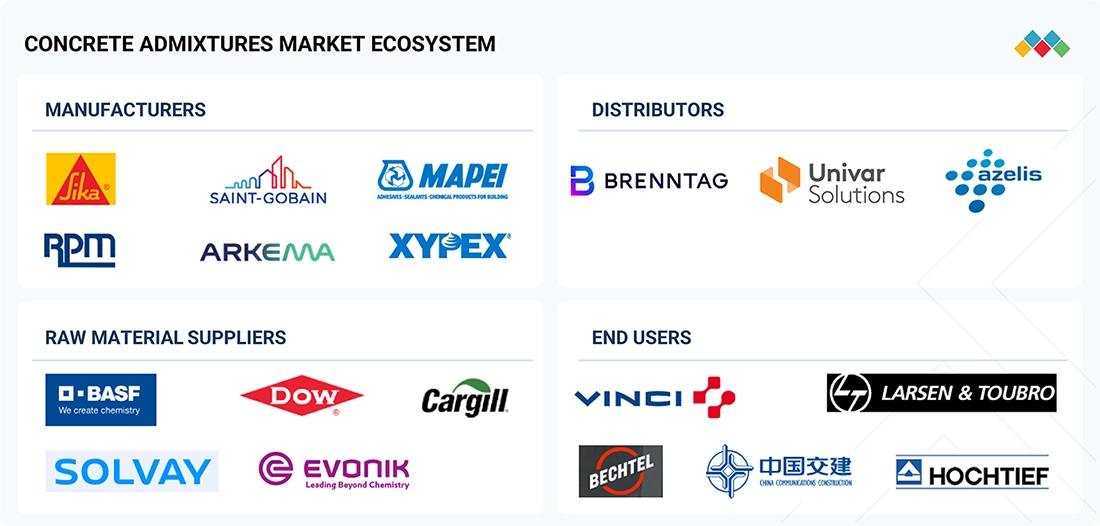
Logos and trademarks shown above are the property of their respective owners. Their use here is for informational and illustrative purposes only.
MARKET SEGMENTS
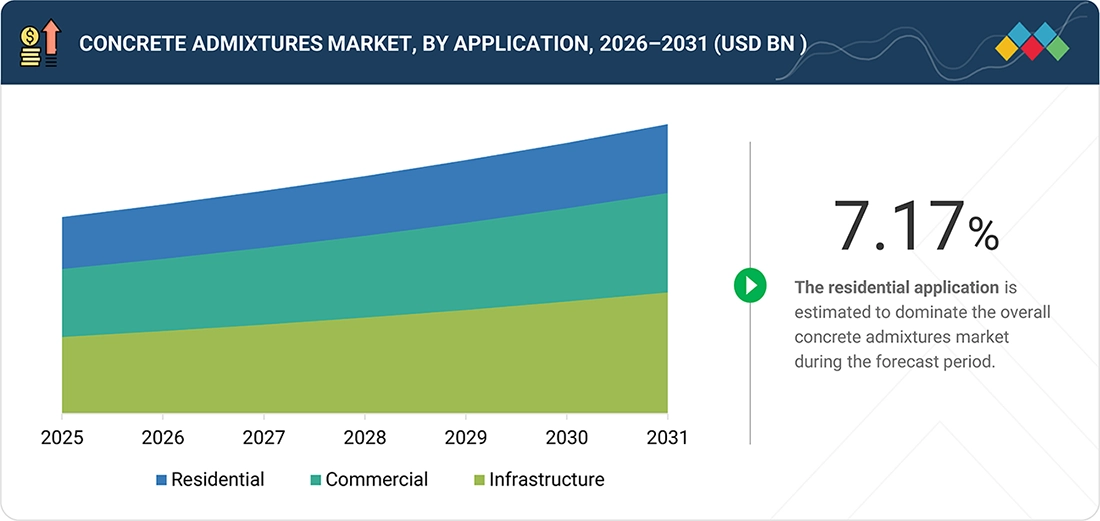
Source: Secondary Research, Interviews with Experts, MarketsandMarkets Analysis
Concrete Admixtures Market, By Product Type
In 2025, the superplasticizers segment accounted for the largest share of the overall concrete admixtures market. The increasing use of pumped concrete in major construction projects is significantly supporting demand for superplasticizers. Modern construction sites rely heavily on pumping systems to transport concrete efficiently across long horizontal distances and elevated locations. Superplasticizers enhance concrete flow properties, enabling smooth movement through pipelines while maintaining consistency and placement quality. Large infrastructure developments, commercial projects, industrial facilities, and residential complexes increasingly utilize pumping technology to improve productivity and site logistics. As project scales continue to expand and construction operations seek greater efficiency, demand for concrete formulations suitable for advanced pumping applications continues to rise. This trend positions superplasticizers as a critical component of modern concrete placement practices.
Concrete Admixtures Market, By Application
In 2025, the residential application accounted for the largest share of the concrete admixtures market. Residential construction is increasingly characterized by multi-story apartment complexes, integrated housing communities, and high-density urban developments that require advanced concrete performance. These projects often incorporate intricate structural layouts, heavily reinforced sections, and large foundation systems, creating a need for concrete with superior flowability and placement characteristics. Concrete admixtures enable improved workability, uniform consistency, and efficient placement across complex structural elements while maintaining required strength and quality standards. Furthermore, large-scale residential developments consume significant volumes of ready-mix concrete, increasing the reliance on admixture-based formulations to ensure consistent performance throughout construction. As urbanization drives vertical housing expansion and land utilization becomes more intensive, demand for concrete admixtures continues to strengthen across the residential construction sector.
REGION
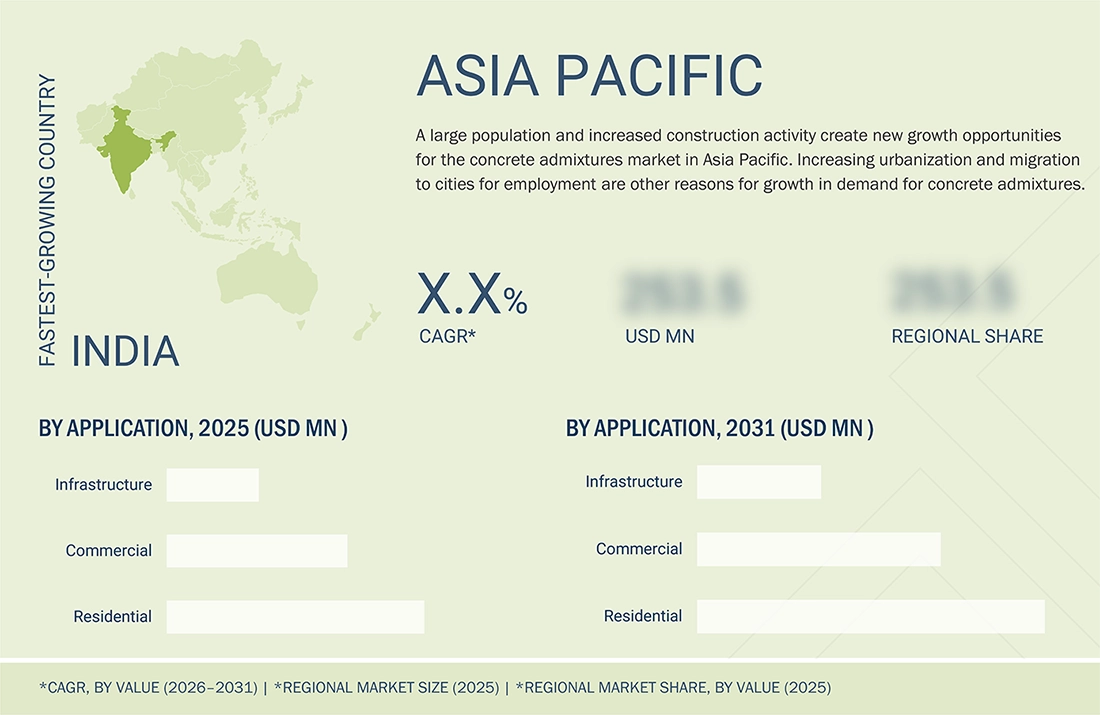
Asia Pacific to be the fastest-growing region in the global concrete admixtures market during the forecast period
Asia Pacific accounted for the largest share of the global concrete admixtures market in 2025. The region is also projected to be the fastest-growing region during the forecast period. Asia Pacific is witnessing strong growth in high-rise residential buildings, commercial towers, mixed-use complexes, and large urban housing developments. These projects require concrete with advanced performance properties to meet the structural demands of tall and sophisticated designs. Concrete admixtures enhance workability, pumping capability, setting time management, and strength development, supporting efficient placement of concrete at greater heights. Construction companies increasingly use admixtures to maintain consistent concrete quality across multi-story projects and improve overall construction productivity. Limited land availability in major urban centers is driving the shift toward vertical development, further increasing the need for high-performance concrete solutions. As cities continue to expand upward through large-scale building projects, concrete admixtures are becoming increasingly essential to achieving efficient construction processes and reliable structural performance.
CONCRETE ADMIXTURES MARKET: COMPANY EVALUATION MATRIX
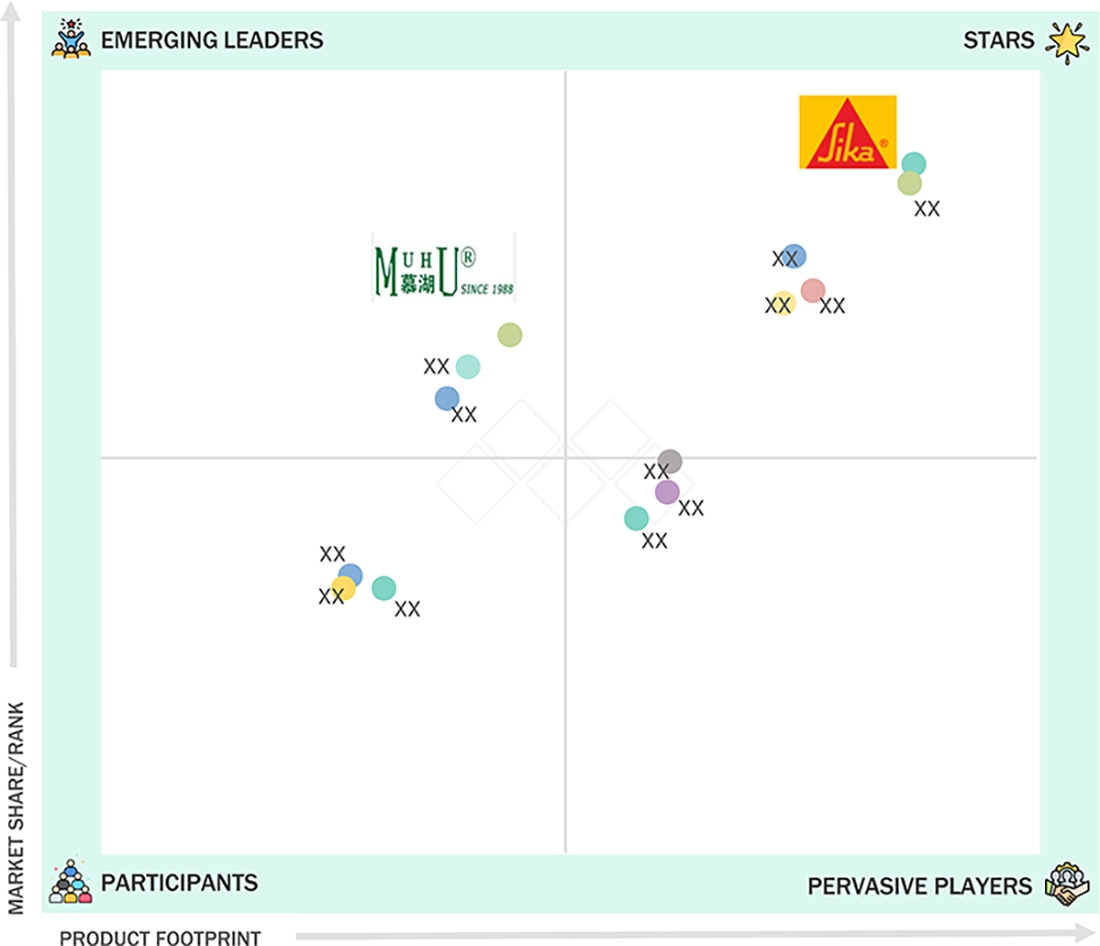
In the concrete admixtures market matrix, Sika AG (Star) leads with a strong global market presence and an extensive portfolio of concrete admixtures, enabling large-scale adoption across infrastructure, residential, commercial, and industrial construction projects. Muhu (China) Construction Materials Co., Ltd. (Emerging Leader) is gaining traction through its expanding range of cost-effective and high-performance admixture solutions tailored to rapidly growing construction markets. While Sika dominates through its global footprint, technical expertise, and strong project engagement capabilities, Muhu demonstrates significant growth potential through regional expansion, manufacturing scale, and increasing penetration in large infrastructure developments, positioning it to move toward the leaders’ quadrant.
Source: Secondary Research, Interviews with Experts, MarketsandMarkets Analysis
KEY MARKET PLAYERS
MARKET SCOPE
| REPORT METRIC | DETAILS |
|---|---|
| Market Size in 2025 (Value) | USD 21.17 Billion |
| Market Size in 2031 (Value) | USD 31.99 Billion |
| Growth Rate | CAGR of 7.17% from 2026 to 2031 |
| Years Considered | 2023–2031 |
| Base Year | 2025 |
| Forecast Period | 2026–2031 |
| Units Considered | Value (USD Million/Billion) and Volume (Kiloton) |
| Report Coverage | Revenue forecast, company ranking, competitive landscape, growth factors, and trends |
| Segments Covered |
|
| Regional Scope | Asia Pacific, Europe, North America, Middle East & Africa, and South America |
WHAT IS IN IT FOR YOU: CONCRETE ADMIXTURES MARKET REPORT CONTENT GUIDE
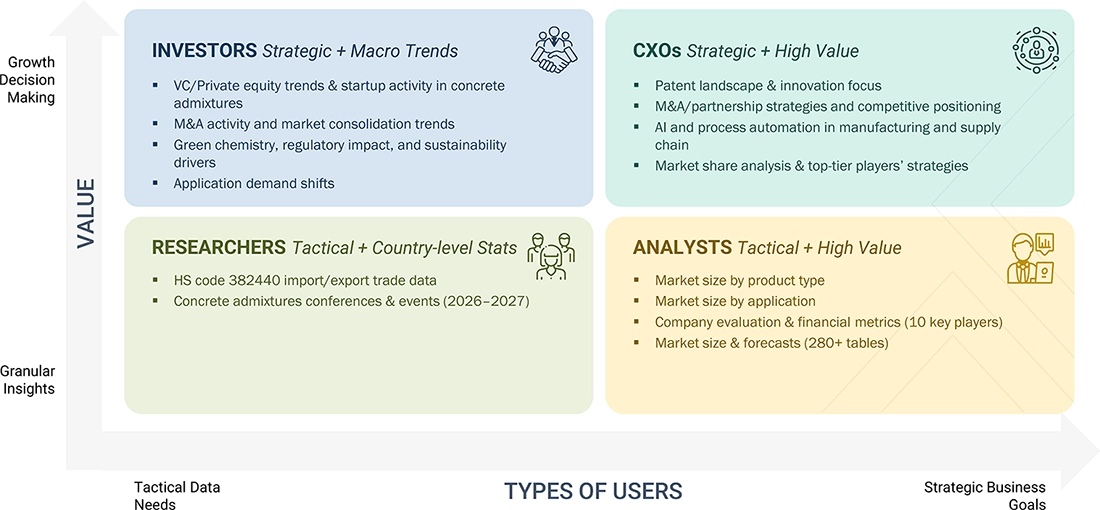
DELIVERED CUSTOMIZATIONS
We have successfully delivered the following deep-dive customizations:
| CLIENT REQUEST | CUSTOMIZATION DELIVERED | VALUE ADDS |
|---|---|---|
| Europe-based Concrete Admixtures Manufacturer |
|
|
| Asia Pacific-based Concrete Admixtures Manufacturer |
|
|
RECENT DEVELOPMENTS
- February 2025 : Saint-Gobain completes the acquisition of FOSROC, a leading player in construction chemicals in Asia and emerging markets, further strengthening its worldwide presence in the sector.
- September 2024 : MAPEI Corporation opened a new 32,000 sq. ft. admixture manufacturing plant in Denver, Colorado, as part of its planned five-facility expansion program in the US.
- June 2024 : Sika AG has closed the acquisition of Chema, a leading producer of tile setting materials in Peru with operations throughout the whole country.
- February 2023 : Sika has completed the acquisition of MBCC Group after having received all necessary regulatory approvals.
- January 2023 : Saint-Gobain, through its Chryso business, has completed the acquisition of Matchem in Brazil and entered into exclusive negotiations to acquire IDP Chemicals in Egypt.
Table of Contents
 Exclusive indicates content/data unique to MarketsandMarkets and not available with any competitors.
Methodology
The study involved four major activities in estimating the market size for concrete admixtures. Exhaustive secondary research was done to collect information on the market, the peer market, and the parent market. The next step was to validate these findings, assumptions, and sizing with industry experts across the value chain through primary research. Both top-down and bottom-up approaches were employed to estimate the complete market size. After that, the market breakdown and data triangulation procedures were used to estimate the market size of the segments and subsegments.
Secondary Research
Secondary sources used in this study included annual reports, press releases, and investor presentations of companies; white papers; certified publications; articles from recognized authors; and gold-standard and silver-standard websites, such as Factiva, ICIS, Bloomberg, and others. The findings of this study were verified through primary research, which involved conducting extensive interviews with key officials, including CEOs, VPs, directors, and other executives. The breakdown of profiles of the primary interviewees is illustrated in the figure below:
Primary Research
The concrete admixtures market comprises several stakeholders, including raw material suppliers, end-product manufacturers, and regulatory organizations across the supply chain. Various primary sources from both the supply and demand sides of the market were interviewed to obtain qualitative and quantitative information.
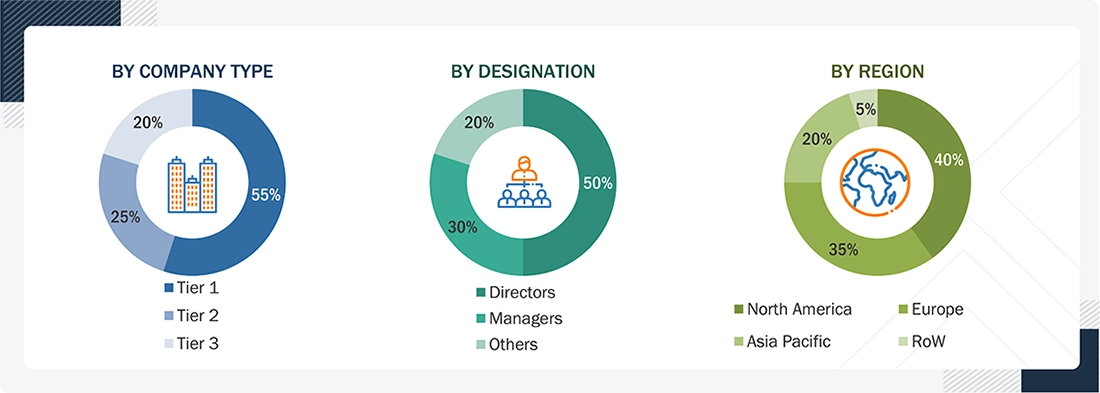
Notes: Tier 1, Tier 2, and Tier 3 companies are classified based on their market revenue in 2024/2025 available in the public domain, product portfolios, and geographical presence.
Other designations include consultants and sales, marketing, and procurement managers.
|
COMPANY NAME |
DESIGNATION |
|
Sika AG |
Senior Manager |
|
Saint-Gobain |
Innovation Manager |
|
MAPEI Corporation |
Vice-President |
|
RPM International Inc. |
Production Supervisor |
|
Arkema S.A. |
Sales Manager |
To know about the assumptions considered for the study, download the pdf brochure
Market Size Estimation
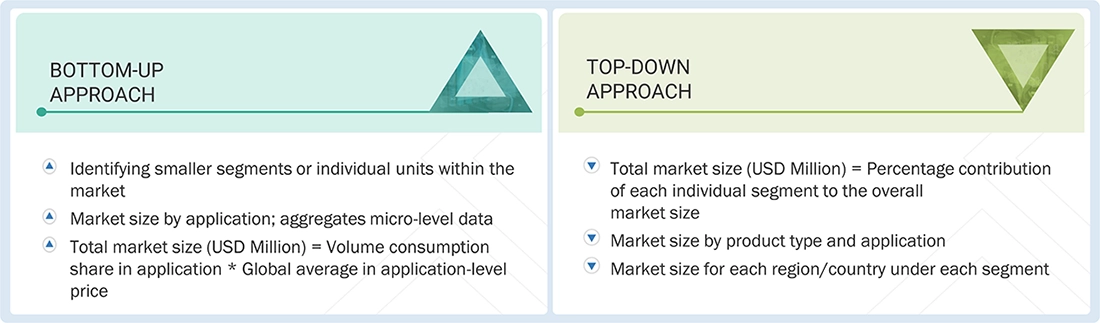
Both top-down and bottom-up approaches were used to estimate and validate the total size of the concrete admixtures market. These methods were also used extensively to estimate the size of various subsegments in the market. The research methodology used to estimate the market size includes the following:
- The key players in the industry have been identified through extensive secondary research.
- The supply chain of the industry has been determined through primary and secondary research.
- All percentage shares, splits, and breakdowns have been determined using secondary sources and verified through primary sources.
- All possible parameters that affect the markets covered in this research study have been accounted for, viewed in extensive detail, verified through primary research, and analyzed to obtain the final quantitative and qualitative data.
INFOGRAPHIC DEPICTING BOTTOM-UP AND TOP-DOWN APPROACHES
Data Triangulation
After determining the overall market size using the market size estimation processes explained above, the market was divided into several segments and subsegments. To complete the overall market engineering process and determine the exact statistics for each market segment and subsegment, data triangulation and market breakdown procedures were employed, as applicable. The data was triangulated by studying various factors and trends from both the demand and supply sides in the concrete admixtures industry.
Market Definition
According to the American Concrete Institute (ACI), concrete admixtures are generally substances added to concrete during the batching process, before or during mixing, to modify its properties. They can enhance the workability, durability, strength, or other characteristics of concrete. These admixtures can be chemical or mineral additives. They are widely used in construction applications for residential, commercial, and infrastructure projects.
Key Stakeholders
- Concrete admixture manufacturers
- Concrete admixture distributors
- Raw material suppliers
- Government and research organizations
- Investment banks and private equity firms
Report Objectives
- To analyze and forecast the size of the global concrete admixtures market in terms of value and volume
- To provide detailed information about the major drivers, restraints, challenges, and opportunities influencing the market growth
- To define, describe, and segment the market based on product type, application, and region
- To forecast the size of the market segments based on regions such as Asia Pacific, North America, Europe, the Middle East & Africa, and South America
- To strategically analyze micromarkets with respect to individual growth trends, prospects, and their contribution to the overall market
- To identify and analyze opportunities for stakeholders in the market
- To analyze competitive developments such as expansions, partnerships, joint ventures, mergers & acquisitions, agreements, and product launches in the market
- To strategically profile the key companies and comprehensively analyze their core competencies
Available customizations:
Along with the given market data, MarketsandMarkets offers customizations according to the company’s specific needs. The following customization options are available for the report:
Regional Analysis
- Further breakdown of a region with respect to a particular country or additional application
Company Information
- Detailed analysis and profiles of additional market players (up to five)


Personalize This Research
- Triangulate with your Own Data
- Get Data as per your Format and Definition
- Gain a Deeper Dive on a Specific Application, Geography, Customer or Competitor
- Any level of Personalization
Let Us Help You
- What are the Known and Unknown Adjacencies Impacting the Concrete Admixtures Market
- What will your New Revenue Sources be?
- Who will be your Top Customer; what will make them switch?
- Defend your Market Share or Win Competitors
- Get a Scorecard for Target Partners

Custom Market Research Services
We Will Customise The Research For You, In Case The Report Listed Above Does Not Meet With Your Requirements
Get 10% Free CustomisationTESTIMONIALS

We at Nissan Chemicals Corporation have been clients of MarketsandMarkets for more than a year now. We recently consulted MarketsandMarkets for a study, the team at MarketsandMarkets was extremely professional and organized. The business insights were very detailed and aligned well with our expectations that really helped us formulate the Business Plans and device new strategies for development themes. MarketsandMarkets offers a unique combination of expertise and dedicated engagement model. Their research findings have helped us in designing our Pricing Strategy which will make it easier for us to predict the future sales and profits for the next ten years. We look forward to working with MarketsandMarkets in the future.
VP of Strategy & New Business Development
Leading Specialty Chemical Company
The MarketsandMarkets Engagement Model, composed of both the Knowledge Store and advisory custom research, has greatly helped us in understanding our markets and making strategic decisions. The Knowledge Store is a fast way to allow everyone in our organization to understand more about most any market they are interested in. The ability to then get custom research done and get answers to specific strategic questions and market insight has been spectacular. The Markets and Markets team feel more like colleagues than vendors and their services have helped us change our culture where statements of things like growth opportunities and competitive position are always backed by industry research.

Rich Gibson,
Director, Corporate Strategy
Milliken & Company,
Leading Industrial Manufacturer of specialty chemical, floor covering, performance and protective textile materials, and healthcaremilliken.com
MarketsandMarkets is a trusted resource that helps us to better understand markets that are near-adjacencies-whether its technology, value chain or geography. Their Knowledge Store platform provides a dashboard of markets and their characteristics which is easy to use and saves us time.
Adam Shaw,
Market Development and Strategy Manager
AdvanSix Inc. USA,
An American Leader in Chemicalswww.advansix.com
The Knowledge Store from MarketsandMarkets is a valuable tool which has helped my team acquire greater insight in to the end markets that our business serves. This has enabled us to help our company build stronger strategies throughout our planning process.
TOSHIO KINOSHITA
Senior Chif Consultion Research & Consulting Division
Mitsubishi Chemical Research Corporation,
Leading Manufacturer of Chemical Productswww.mitsubishichem-res.co.jp/en/

We recently engaged with MarketsandMarkets for a study, the team not only clearly understood our business objectives but was also extremely professional in the way they handled the entire project. The study was efficiently conducted in a phase-wise manner, and the engagement model furnished us with high-quality business insights that far exceeded our expectations at each phase. We were especially happy that MarketsandMarkets could provide us with both, an English as well as a Japanese version of the study. A special thanks to the Analyst Team and Client Services Team, whose fluency in Japanese enhanced our comfort level, as we could converse with them in our preferred language.
Independent entrepreneurs
Arrow Precision
We approached MarketsandMarkets for study on Proppants Market, and their work exceeded our expectations. The study conducted was comprehensive and enabled us to view the market through the various dimensions. In addition, the team was extraordinarily responsive throughout the process and resolved our queries on time. I strongly recommend MarketsandMarkets and will certainly consider them for additional market assessments we will need in the future.
Global engineering company, Japan
Deputy Manager,
Strategic Planning OfficeThe high-quality insights shared by the MarketsandMarkets team helped us understand the pharmaceutical plant designers in a specific geography. It also captured the risks that we may likely face in communicating with our potential partners. The study would enable us identify partners, which would impact our future growth.
- Rest Of Asia Pacific Concrete Admixtures Market
- Rest Of Europe Concrete Admixtures Market
- China Concrete Admixtures Market
- India Concrete Admixtures Market
- Japan Concrete Admixtures Market
- South Korea Concrete Admixtures Market
- Indonesia Concrete Admixtures Market
- US Concrete Admixtures Market
- Canada Concrete Admixtures Market
- Mexico Concrete Admixtures Market
- Germany Concrete Admixtures Market
- Italy Concrete Admixtures Market
- UK Concrete Admixtures Market
- France Concrete Admixtures Market
- Spain Concrete Admixtures Market
- Turkey Concrete Admixtures Market
- Saudi Arabia Concrete Admixtures Market
- Egypt Concrete Admixtures Market
- Iran Concrete Admixtures Market
- Brazil Concrete Admixtures Market
- Argentina Concrete Admixtures Market
- South America Concrete Admixtures Market
Growth opportunities and latent adjacency in Concrete Admixtures Market




George
Apr, 2015
Product/ application query on concrete admixture not pertainng to market insights .
Gregory
Aug, 2015
Information on high performance addmixtures, to conduct concrete diagnostics..
Benjamin
Jul, 2015
Interested in Air Entrianment admixtures market for 2019.
Karl-Otto
Apr, 2015
Incomplete.
Stefan
Jan, 2014
General information on plasticizers and superplasticizers market by type of product - lignosulfonates, naphthalenes, polycarboxylate.
sanjay
Dec, 2014
Market in India manufacturing concrete admixture, require technical experienced consultant .
Alfonso
Nov, 2012
Report on global market for concrete admixtures.
Gary
Oct, 2014
General information on concrete admixtures.
donald
Jan, 2017
Information on concrete admixtures/Cement Admixtures.
Ali
Jan, 2015
Insulation and admixtures materials information..
Bhimsi
Jul, 2012
General information on cement and concrete additives market .
satish
Mar, 2016
Concrete Repair Mortars Market.
fadela
Jun, 2014
General information on concrete admixtures for self consolidating concrete.
Giuseppe
Oct, 2013
Information on Concrete Admixtures Market by End-use application, Competitor landscape, and value chain analysis..
Juergen
Oct, 2015
Intrested in Mexico and South American specific report.
Adam
Apr, 2012
European market of admixtures.