
Well Intervention Market
 Download PDF
 Request Customisation
 Speak to Analyst
 Get Free Sample Pages
Well Intervention Market by Service (Logging and Bottomhole Survey, Tubing/Packer Failure and Repair, Stimulation), Intervention (Light, Medium, Heavy), Application (Onshore, Offshore) Well (Horizontal, Vertical), and Region - Global Forecast to 2029




OVERVIEW
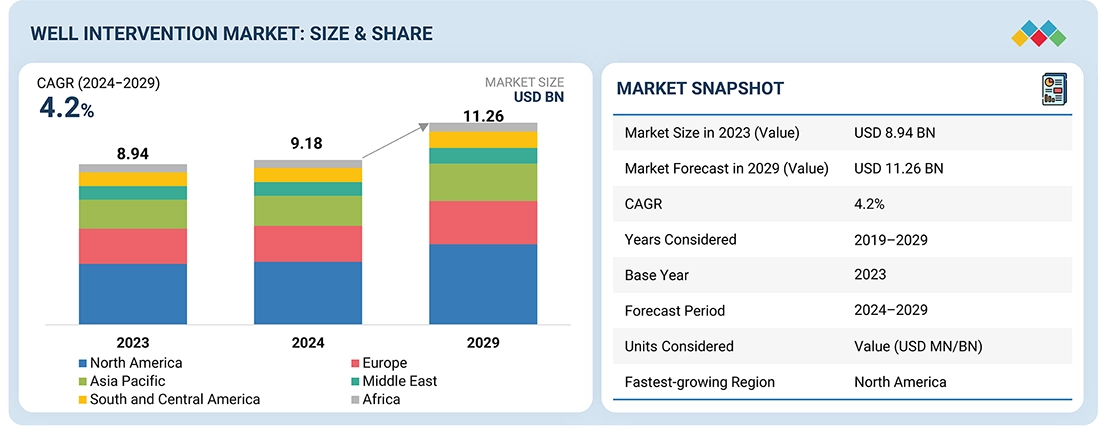
Source: Secondary Research, Interviews with Experts, MarketsandMarkets Analysis
The Well Intervention market is expected to grow from an estimated USD 9.18 billion in 2024 to USD 11.26 billion by 2029, at a CAGR of 4.2% during the forecast period. The well intervention market is growing due to increasing efforts by upstream companies to optimize oil production. With aging oil fields and the need for enhanced recovery techniques, well interventions become essential. Technological advancements, such as hydraulic fracturing and acidizing, are also driving market growth by improving reservoir performance. Regions like North America, Europe, and Asia-Pacific are witnessing significant market expansion due to rising demand for energy and the exploration of unconventional oil and gas resources
KEY TAKEAWAYS
-
BY REGIONThe North America Well Intervention market is estimated to dominate with a share of 38.0% in 2023.
-
BY WELL TYPEBy well type, the well Intervention market for the Horizontal well segment is anticipated to record a CAGR of 4.3% between 2024 and 2029.
-
BY INTERVENTION TYPEBy Intervention type, the Light intervention segment is expected to account for an 49.5% share of the Digital oilfield market in 2024.
-
BY APPLICATIONBy application, the offshore application segment in the Well Intervention Market is projected to register the highest CAGR, driven by rising deepwater and ultra-deepwater exploration activities.
-
BY SERVICEBy service, the sand control segment is expected to register the highest CAGR, fueled by increasing wellbore stability and production optimization needs.
-
COMPETITIVE LANDSCAPESLB, Halliburton, Weatherford, and Baker Hughes Company are recognized as star leaders in the Well Intervention Market due to their extensive global presence, advanced intervention technologies, and comprehensive service portfolios. Their strong R&D capabilities and ability to execute complex offshore and onshore projects enable them to capture high-value contracts and maintain a competitive edge.
The well intervention market is experiencing steady growth as operators focus on enhancing production efficiency, maintaining aging well infrastructure, and extending the lifecycle of mature fields. Increasing demand for interventions such as well cleaning, stimulation, and integrity management is driving wider adoption of advanced tools and digitalized service techniques. As energy companies aim to maximize recovery and optimize operational performance across both onshore and offshore assets, the need for reliable and cost-effective well intervention services continues to strengthen.
TRENDS & DISRUPTIONS IMPACTING CUSTOMERS' CUSTOMERS
The well intervention market is expected to grow exponentially in the coming years. An increase in investments in technology and a focus on achieving a low carbon footprint is expected to drive the market. The well intervention market is growing due to the need for increased oil and gas production from mature fields, technological advancements, and rising energy demand. This growth supports the oil and gas industries by enhancing recovery rates, maintaining production levels, and optimizing operational efficiency.
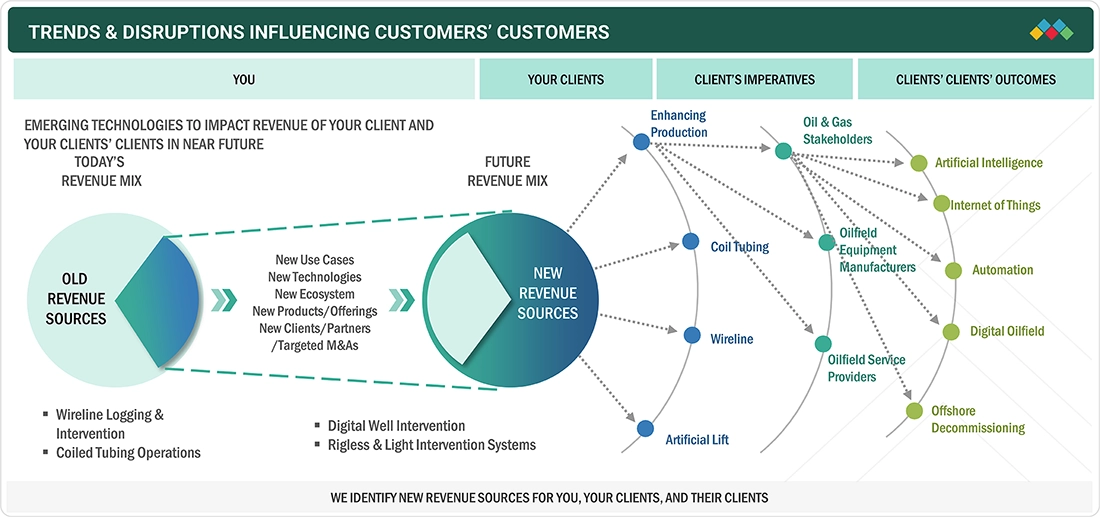
Source: Secondary Research, Interviews with Experts, MarketsandMarkets Analysis
MARKET DYNAMICS

Level
-
Growing need to increase production potential of mature oil & gas fields

-
Development of shale reservoirs


Level
-
Strict government regulations pertaining to exploration and production activities

-
Declining oil demand in Europe


Level
-
Increasing oil & gas discoveries

-
Digitalization and automation of well intervention solutions


Level
-
Complexities associated with well intervention operations in high-pressure, high temperature (HPHT) environmental conditions

-
Implementation of artificial lift technologies in horizontal wells

Source: Secondary Research, Interviews with Experts, MarketsandMarkets Analysis
Driver: Growing need to increase production potential of mature oil & gas fields
According to a survey by Halliburton, one of the leading players in the well intervention market, mature fields account for about 70.0% of the global oil & gas production, with many in the secondary or tertiary production phases. The average recovery factor is 70.0% for gas and 35.0% for oil. However, the recovery rates may decline further due to geological characteristics, resource constraints, or operational inefficiencies of old technologies. A mature field is distinguished by a decline in overall production after primary recovery efforts or when easily accessible hydrocarbons are recovered. These wells are far from being a decaying resource, as they are likely to cater to the rising demand for energy in the future. The major difficulty with the mature fields is that their oil production is uneconomical, or the operator faces technological limitations in recovering oil reserves.
Restraint: Strict government regulations pertaining to exploration and production activities
In the US, New York and Maryland have banned hydraulic fracturing due to various concerns related to health and environmental degradation, such as air and water contamination. Ohio reported 77 minor earthquakes in a month, predominantly caused by hydraulic fracturing activities in 2014. Besides, France, Bulgaria, Romania, Ireland, South Africa, the Czech Republic, Denmark, Germany, the UK, and Scotland have banned hydraulic fracturing activities. These factors are expected to hamper the growth of the oil & gas service industry in the long term. The government regulations related to the oil & gas field developments have become strict, and regulatory authorities have re-evaluated the drilling procedures intending to prevent future oil spill incidents. Various oil spills, such as the Torrey Canyon in 1967, the Amoco Cadiz in 1978, the Piper Alpha 1988 disaster in the North Sea, the Exxon Valdez 1989, the Prestige oil spill in 2002 in the Bay of Biscay, and the Montara incident 2009, have highlighted the devastating impacts of exploration and drilling activities on the human and marine ecosystem. For instance, in May 2024, an oil spill occurred in Galveston Bay, Texas, US, following a barge collision with a bridge pillar, leading to concerns over environmental damage. The barge struck a column of the bridge connecting Galveston and Pelican Island, causing oil leakage into the bay. The collision resulted in a partial bridge collapse, exacerbating the situation and raising questions about safety measures for maritime transportation in the area.
Opportunity: Increasing oil & gas discoveries
Players operating in the oil & gas industry are focusing on making discoveries as some of the existing fields may create challenges in producing hydrocarbons at an economical rate and require plug and abandonment. Major oil & gas companies have made extensive discoveries in the onshore and offshore regions. As per the news by OilPrice in April 2024, oil & gas discoveries for 2023 fell to a record low of 5 billion barrels of oil equivalent while exploration costs rose close to twofold. Of these, 60% of the 5-billion-barrel total was new oil discoveries; the remaining was gas discoveries. As for geographical distribution, the biggest portion of discoveries in 2023 were made in Asia, at 32%, with Latin America second, accounting for 21% of all new oil & gas discoveries. Europe and Africa held third place, with a share of 11% each.
Challenge: Complexities associated with well intervention operations in high-pressure, high-temperature (HPHT) environmental conditions
Oil & gas reserves are finite resources that are depleting as production activities constantly increase. Thus, the upstream operators have increased their focus on challenging geographic conditions such as high-pressure, high-temperature (HPHT) wells. The commercial viability of uneconomic gas reserves and the use of thermal recovery techniques have increased the requirement for operations in HPHT wells in the Gulf of Mexico Kvitebjørn, Kristin and Huldra fields, and the North Sea, among other regions. However, the drilling of HPHT exploratory wells involves high-risk and cost-intensive operations, which is expected to be a challenge for well intervention service providers.
WELL INTERVENTION MARKET: COMMERCIAL USE CASES ACROSS INDUSTRIES
| COMPANY | USE CASE DESCRIPTION | BENEFITS |
|---|---|---|
 |
Reposol Sinopec Resources UK Ltd requested an independent technical study of 28 wells that had the potential to add incremental production from their assets. The company faced the challenge of maximizing production from existing wells to enhance overall asset performance and profitability. A comprehensive analysis and recommendations to optimize production efficiency were imperative to meet production targets and achieve operational excellence | Expro, a leading full-cycle energy services expert, undertook the production optimization study to address Reposol Sinopec’s challenges. Leveraging its expertise and advanced technical capabilities, Expro conducted an in-depth analysis of the 28 wells, assessing their current performance and identifying opportunities for improvement. Through the study, Expro provided tailored recommendations and solutions to enhance production rates and optimize asset performance. By utilizing innovative techniques and leveraging its experienced personnel, Expro delivered a comprehensive production optimization strategy within a short timeframe, enabling Reposol Sinopec to maximize production from its assets and achieve operational excellence. |
 |
A well operator wanted to eliminate sustained casing pressure gas flaring, pressure releases, and the cost of cement squeeze jobs to remediate sustained casing pressure in Delaware and Anadarko Basin wells drilled using oil-based mud (OBM) in tight holes. | Schlumberger’s CemPRIME Scrub spacer and CemFIT Heal system improved cement bonds to prevent gas migration from the production casing in Texas and Oklahoma. The spacer and cement combination eliminated sustained casing pressure in the operator’s wells in both fields. The solution was economical because the designs used the CemFIT Heal system to cap the annulus rather than filling the entire annulus. For wells that otherwise would have required remedial operations to eliminate sustained casing pressure, the operator is saving more than USD 50,000 per well. |
Logos and trademarks shown above are the property of their respective owners. Their use here is for informational and illustrative purposes only.
MARKET ECOSYSTEM
The well intervention market ecosystem comprises raw material suppliers, manufacturers, and end users. As the end users of the well intervention market primarily include oil & gas industries, the involvement of third-party distributors is minimized or eliminated
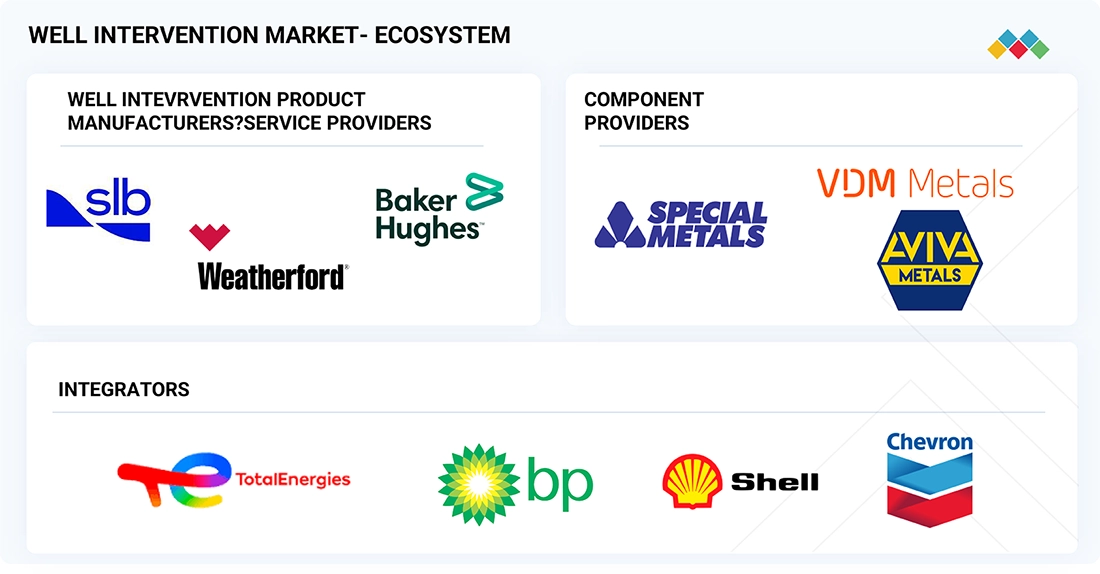
Logos and trademarks shown above are the property of their respective owners. Their use here is for informational and illustrative purposes only.
MARKET SEGMENTS
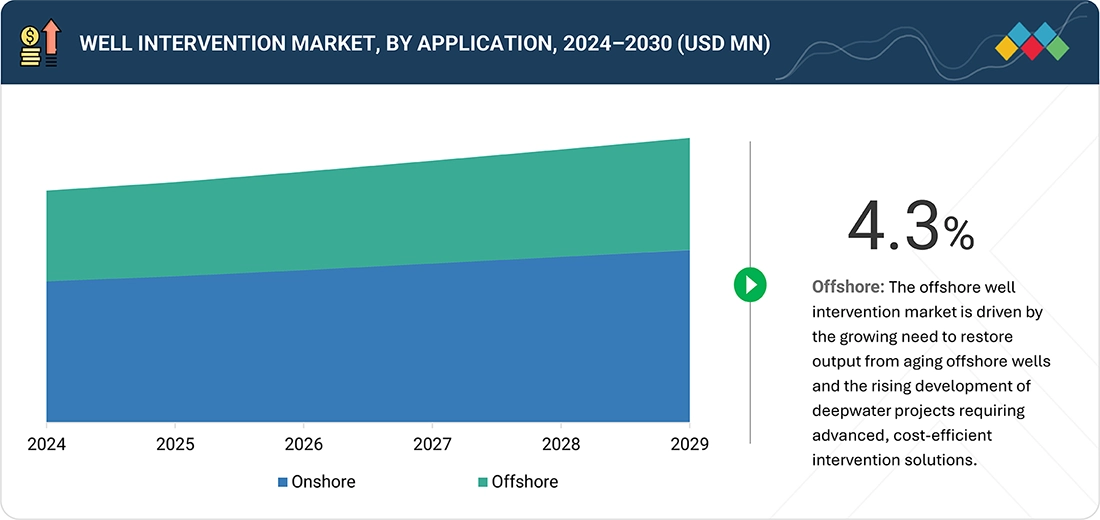
Source: Secondary Research, Interviews with Experts, MarketsandMarkets Analysis
Well Intervention market, By well type
By well type, the horizontal well segment is expected to register the highest CAGR in the Well Intervention Market, driven by increasing adoption of horizontal drilling for enhanced oil recovery. Operators favor horizontal wells for efficient reservoir exploitation and improved production rates, while advanced intervention technologies further optimize well performance and minimize downtime.
Well Intervention market, By Intervention type
By intervention type, the light intervention segment is projected to register the highest CAGR, driven by its cost-effectiveness, faster deployment, and suitability for routine maintenance and production optimization in both onshore and offshore wells.
Well Intervention market, By application
By application, the offshore segment is projected to register the highest CAGR, driven by increasing deepwater and ultra-deepwater exploration, rising investments in offshore oil & gas projects, and the growing demand for complex well intervention services.
Well Intervention market, By service
By service, the sand control segment is expected to register the highest CAGR in the Well Intervention Market. This growth is driven by the increasing need to maintain wellbore stability and prevent sand-related production issues. Operators are focusing on sand control solutions to enhance overall well performance and maximize hydrocarbon recovery. Advanced technologies and interventions in this segment further support efficient and reliable operations across onshore and offshore wells.
REGION
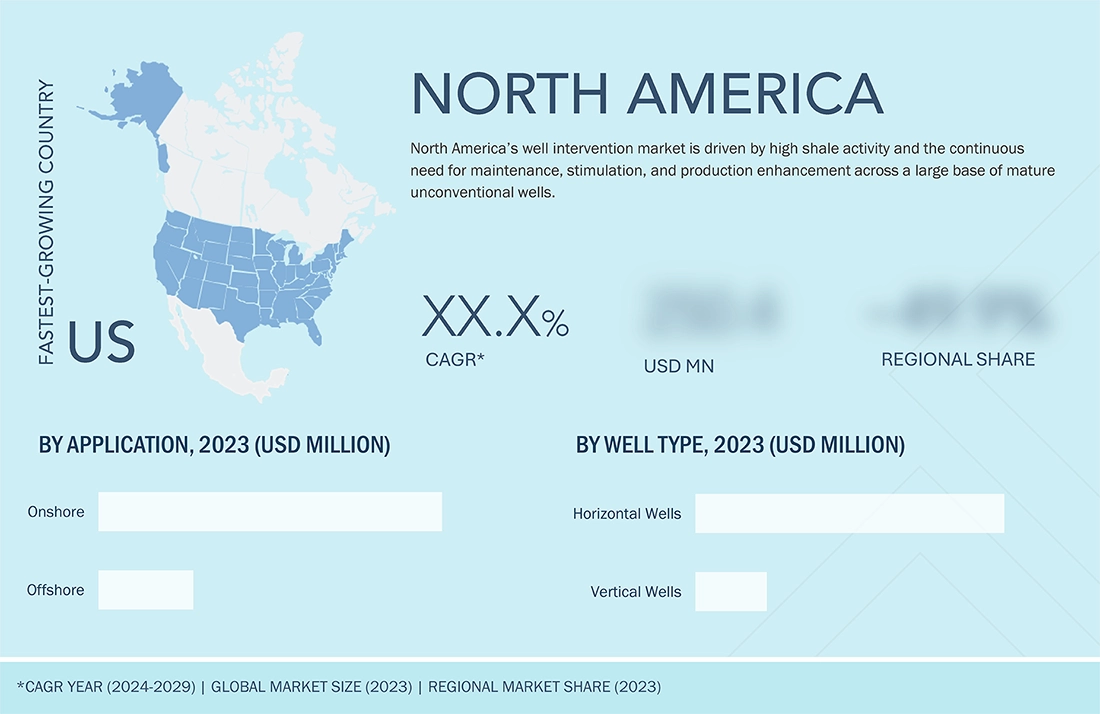
North America is expected to dominate global Well Intervention market during forecast period with highest CAGR
The North America register the highest CAGR of 5.0% of the Well Intervention market during the forecast period, driven by increasing investment in shale and unconventional oil & gas assets. The region’s adoption of advanced intervention technologies, coupled with a focus on maximizing production from mature and horizontal wells, supports robust market growth. Additionally, strong regulatory frameworks and continuous technological innovations further accelerate demand for well intervention services across the region.
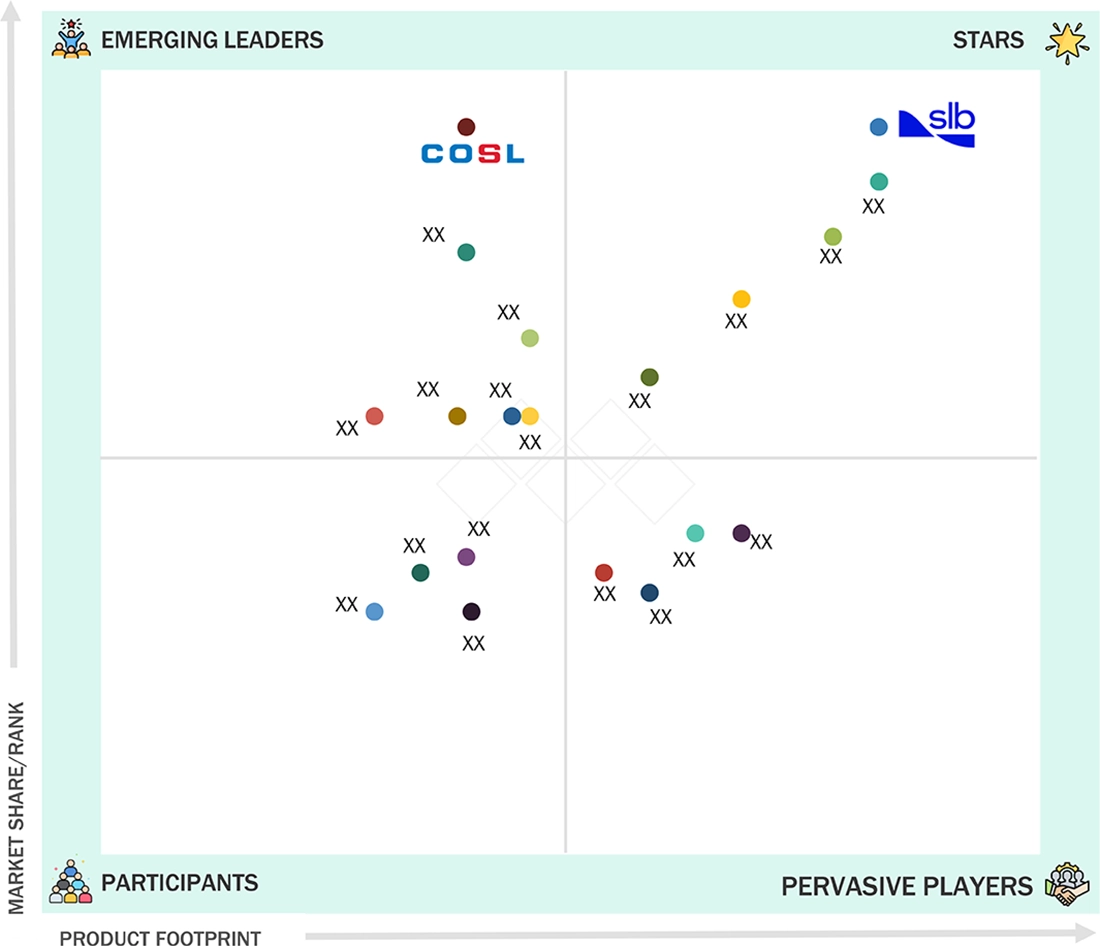
WELL INTERVENTION MARKET: COMPANY EVALUATION MATRIX
SLB has been identified as the star player in the Well Intervention market, supported by its strong digital portfolio, advanced AI-driven solutions, and deep expertise across drilling, production, and reservoir optimization. The company’s ability to deliver integrated digital platforms and real-time analytics positions it as the leading innovator driving transformation across global oilfield operations. China Oilfield Services Limited (COSL) has been identified as an emerging leader due to its expanding offshore service capabilities, growing international footprint, and increasing adoption of advanced well intervention and offshore support technologies.
Source: Secondary Research, Interviews with Experts, MarketsandMarkets Analysis
KEY MARKET PLAYERS
- Halliburton (US)
- SLB (US)
- Baker Hughes (US)
- Weatherford (US)
- Forum Energy Technologies, Inc. (US)
- Archer (Norway)
- Expro Group (UK)
- Trican (Canada)
- Patterson-UTI (US)
- Interventek Subsea Engineering (UK)
- Nine Energy Service (US)
- Key Energy Services (US)
- AJ Lucas (Australia)
- Oceaneering International, Inc. (US)
- China Oilfield Services Limited (China)
- Welltec A/S (Denmark)
- Superior Energy Services (US)
- OilSERV (Dubai)
- STEP ENERGY SERVICES (Canada)
- NOV (US)
- AKOFS Offshore (Norway)
- TAQA KSA (Saudi Arabia)
- Hunting PLC (UK)
- Helix Energy (US)
- PROWELL ENERGY (Indonesia)
MARKET SCOPE
| REPORT METRIC | DETAILS |
|---|---|
| Market Size in 2023 (Value) | USD 8.94 Billion |
| Market Forecast in 2029 (Value) | USD 11.26 Billion |
| Growth Rate | CAGR of 4.2% from 2024-2029 |
| Years Considered | 2019–2029 |
| Base Year | 2023 |
| Forecast Period | 2024–2029 |
| Units Considered | Value (USD Million/Billion) |
| Report Coverage | Revenue forecast, company ranking, competitive landscape, growth factors, and trends |
| Segments Covered |
|
| Regions Covered | Europe, Asia Pacific, North America, Middle East, Africa, and South and Central America |
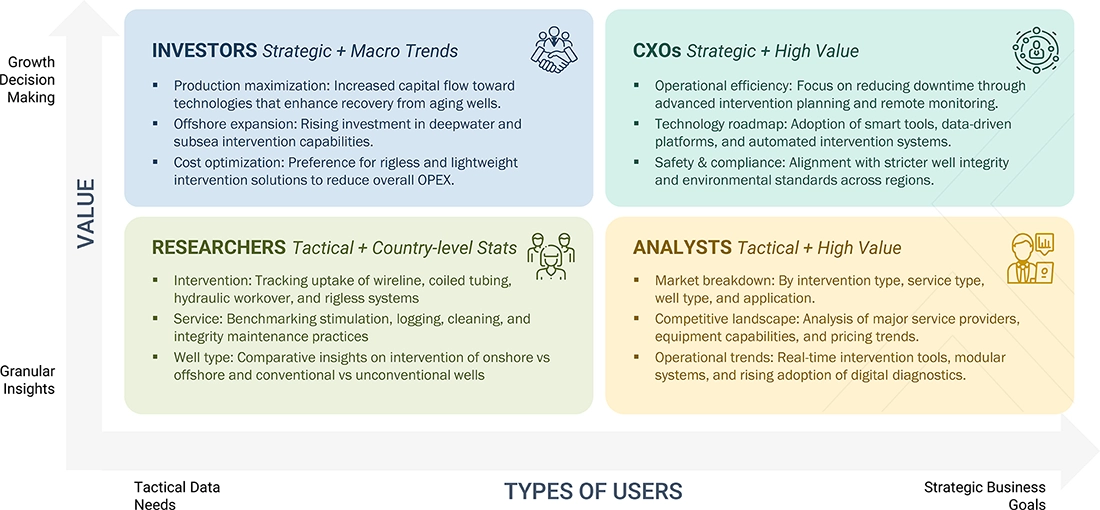
WHAT IS IN IT FOR YOU: WELL INTERVENTION MARKET REPORT CONTENT GUIDE
RECENT DEVELOPMENTS
- October 2023 : Halliburton launched EquiFlow Density, which distinguishes between reservoir fluids using a novel density amplifier. It has a fluid selector that makes the instrument totally orientation neutral while amplifying density forces through artificial gravity. Without requiring any surface intervention, the fluid selector automatically opens or closes to restrict water. With this instrument, water inflow—which is normally handled at the surface—is significantly reduced.
- April 2021 : Halliburton launched StrataXaminer, a wireline logging service that provides images of the reservoir structure to identify bedding, fracture patterns, fault zones, and potential flow barriers.
- March 2021 : SLB and Microsoft partnered to provide the energy industry with open, enterprise-scale data management. The companies have launched an AI-enhanced cloud-native solution for the Open Subsurface Data Universe (OSDU) platform optimized for Microsoft Azure as part of the partnership.
- February 2021 : Baker Hughes launched the Open Artificial Intelligence (OAI) energy initiative, an ecosystem of AI-based solutions for the energy and process industries. The ecosystem offers solutions such as physics-based models, monitoring, diagnostics, prescriptive actions, and services powered by the BHC3 Artificial Intelligence (AI) Suite and Microsoft Azure
- November 2020 : SLB launched MagniSphere, a high-definition Nuclear Magnetic Resonance (NMR) logging while drilling service. The service delivers real-time production analysis for optimum well placement, resulting in improved production and recovery in complex reservoirs
Table of Contents
 Exclusive indicates content/data unique to MarketsandMarkets and not available with any competitors.
Methodology
The study involved major activities in estimating the current size of the Well Intervention market. Exhaustive secondary research was done to collect information on the peer and parent markets. The next step was to validate these findings, assumptions, and sizing with industry experts across the value chain through primary research. Both top-down and bottom-up approaches were employed to estimate the complete market size. Thereafter, market breakdown and data triangulation were used to estimate the market size of the segments and subsegments.
Secondary Research
This research study on the Well Intervention market involved the use of extensive secondary sources, directories, and databases, such as the Federal Energy Regulatory Commission (FERC), Occupational Safety and Health Administration (OSHA), Bureau of Safety and Environmental Enforcement (BSEE), Canada Energy Regulator (CER), Norwegian Offshore Directorate, North Sea Transition Authority (NSTA), National Offshore Petroleum Safety and Environmental Management Authority (NOPSEMA), and Saudi Arabian Standards Organization, to identify and collect information useful for a technical, market-oriented, and commercial study of the global Well Intervention market. The other secondary sources included annual reports, press releases & investor presentations of companies, white papers, certified publications, articles by recognized authors, manufacturer associations, trade directories, and databases.
Primary Research
Well intervention encompasses various operations aimed at enhancing or restoring production in wells, addressing issues like flow restrictions, reservoir changes, sand production, or mechanical failures. Costs escalate as offshore activities expand into deeper waters and encounter more complex conditions. Techniques like wireline units for light intervention and CT or HWO units for medium intervention offer cost-effective alternatives, particularly for live wells. Platform well intervention utilizes equipment brought onto the platform, while subsea intervention, although more costly, is mitigated by specialized vessels and innovative subsea systems. The industry trend favors cost reduction through dedicated intervention vessels and advanced subsea technologies.
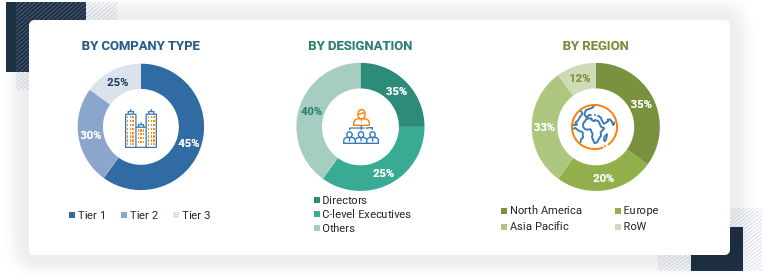
To know about the assumptions considered for the study, download the pdf brochure
Market Size Estimation
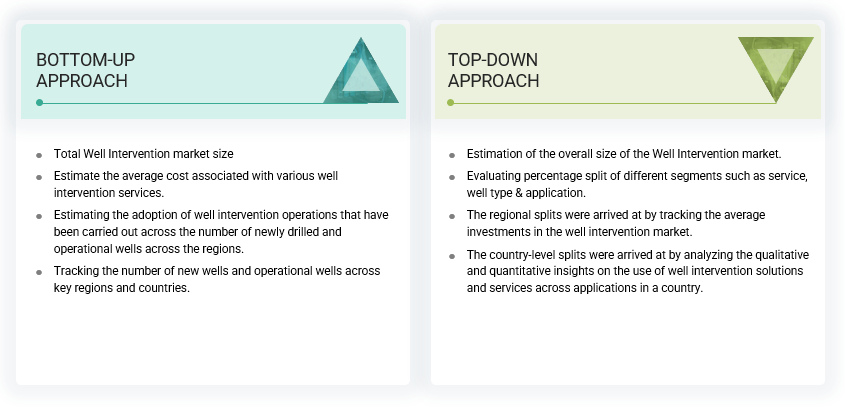
Both top-down and bottom-up approaches were used to estimate and validate the total size of the Well Intervention market. These methods were also used extensively to estimate the size of various subsegments in the market. The research methodology used to estimate the market size includes the following:
Well Intervention Market Size: Top-Down Approach & Bottom-Up Approach
Data Triangulation
After arriving at the overall market size from the above estimation process, the total market has been split into several segments and subsegments. To complete the overall market engineering process and arrive at the exact statistics for all the segments and subsegments, data triangulation and market breakdown processes have been employed, wherever applicable. The data has been triangulated by studying various factors and trends from both the demand- and supply sides. Along with this, the market has been validated using both the top-down and bottom-up approaches.
Market Definition
At some point, oil and gas wells have to be maintained, repaired, or replaced to keep them operating as long as possible. Well intervention services achieve this. Well intervention refers to any remedial operation performed on oil or gas wells to restore or improve fluid production (oil and gas). It can be carried out during the well completion, production, or abandonment processes. It is performed due to flow restrictions in a well, changes in reservoir characteristics, sand production, mechanical failure, or to provide access to additional hydrocarbon reserves. Some common well intervention operations include slackline, coiled tubing, hydraulic workover, and wireline, but the well downhole applications may vary depending on a particular well, such as well surveillance and diagnostic, reservoir management techniques, re-entry drilling towards accessing new producing intervals, complete repair and abandonment, and well evaluation. Well intervention services might be performed onshore oil and gas fields or maybe done offshore.
Stakeholders
- Consulting companies in the energy & power sector
- Government & research organizations
- Investment banks
- National oil companies (NOCs)
- Oil & gas field operators
- Oilfield service companies
- Power & energy associations
- Drilling contractors
- Well intervention service providers
- Well intervention tools and equipment manufacturers
- Drilling contractors
Report Objectives
- To define, describe, and forecast the oil and gas pumps market based on type, pump type, application and region in terms of value
- To define, describe, segment, and forecast the Well Intervention market, in terms of value and volume based on service, intervention type, well type, application, and region
- To forecast the market size for five key regions: North America, South America, Europe, Asia Pacific, and Middle East & Africa, along with their key countries
- To provide detailed information about the key drivers, restraints, opportunities, and challenges influencing the growth of the market
- To strategically analyze the subsegments concerning individual growth trends, prospects, and contributions of each segment to the overall market size
- To analyze market opportunities for stakeholders and the competitive landscape of the market
- To strategically profile the key players and comprehensively analyze their market shares and core competencies
- To analyze competitive developments, such as deals and agreements in the market
Need a Tailored Report?
Customize this report to your needs
Get 10% FREE Customization
Customize This ReportPersonalize This Research
- Triangulate with your Own Data
- Get Data as per your Format and Definition
- Gain a Deeper Dive on a Specific Application, Geography, Customer or Competitor
- Any level of Personalization
Let Us Help You
- What are the Known and Unknown Adjacencies Impacting the Well Intervention Market
- What will your New Revenue Sources be?
- Who will be your Top Customer; what will make them switch?
- Defend your Market Share or Win Competitors
- Get a Scorecard for Target Partners

Custom Market Research Services
We Will Customise The Research For You, In Case The Report Listed Above Does Not Meet With Your Requirements
Get 10% Free CustomisationTESTIMONIALS

Kimberly Murphy
GLOBAL MARKETING DIRECTOR
Bently Nevada,
Leading Condition Monitoring & Asset Protectionwww.bakerhughesds.com/bently-nevada

MarketsandMarkets™ showed consistent rigor for success and relentlessly worked with Bently Nevada stakeholders to positively impact go-to-market strategy. Their proactiveness and flexibility has been instrumental in achieving the objectives to grow our sales pipeline in key industrial markets.

DARRICK HUEBER
Business Development Leader
Nexus Controls LLC,
Leading Manufacturer of Automation System & Electrical Panelswww.bakerhughesds.com/nexus-controls
We partnered with MarketsandMarkets to expand our business further by tapping into new industrial segments. It was critical for us to gather crucial business insights about specific markets to achieve this goal. MarketsandMarkets engagement model and client services helped us provide those insights, it was really impressive and valuable for my business. The team was extremely flexible and helpful.

Mike Schoff
Global Industrial Commercial Strategy Leader
Nexus Controls LLC
Leading Manufacturer of Automation System & Electrical Panelswww.bakerhughesds.com/nexus-controls
We consulted MarketsandMarkets for potential Partner Identification. Overall, it was a good experience. The insights provided through interviews conducted by the team helped us put together the questionnaire required for discussion with the selected partners. Their ability to provide insights through interviews with customers in a timely manner was quite impressive.
- US Well Intervention Market
- Canada Well Intervention Market
- Mexico Well Intervention Market
- Russia Well Intervention Market
- Norway Well Intervention Market
- UK Well Intervention Market
- Denmark Well Intervention Market
- China Well Intervention Market
- India Well Intervention Market
- Australia Well Intervention Market
- Indonesia Well Intervention Market
- Malaysia Well Intervention Market
- Nigeria Well Intervention Market
- Saudi Arabia Well Intervention Market
- UAE Well Intervention Market
- Iraq Well Intervention Market
- Iran Well Intervention Market
- Brazil Well Intervention Market
- Argentina Well Intervention Market
- Venezuela Well Intervention Market
- Africa Well Intervention Market
- Middle East Well Intervention Market
- Rest Of Europe Well Intervention Market
- Rest Of Asia Pacific Well Intervention Market
Growth opportunities and latent adjacency in Well Intervention Market






Daniel
Jun, 2022
Interested in the major factors influencing the growth and policies applied by the companies of the global well intervention market for the period of 2022-2030..