Asia Pacific Animal Parasiticides Market Size, Growth, Share & Trends Analysis

Asia Pacific Animal Parasiticides Market by Type [Ectoparasiticides (Pour-ons & Spot-ons, Dips), Endoparasiticides (Oral Liquids, Injectables, Feed Additives), Endectocides], Animal Type (Companion Animals, Livestock), End User - Forecast to 2031




OVERVIEW
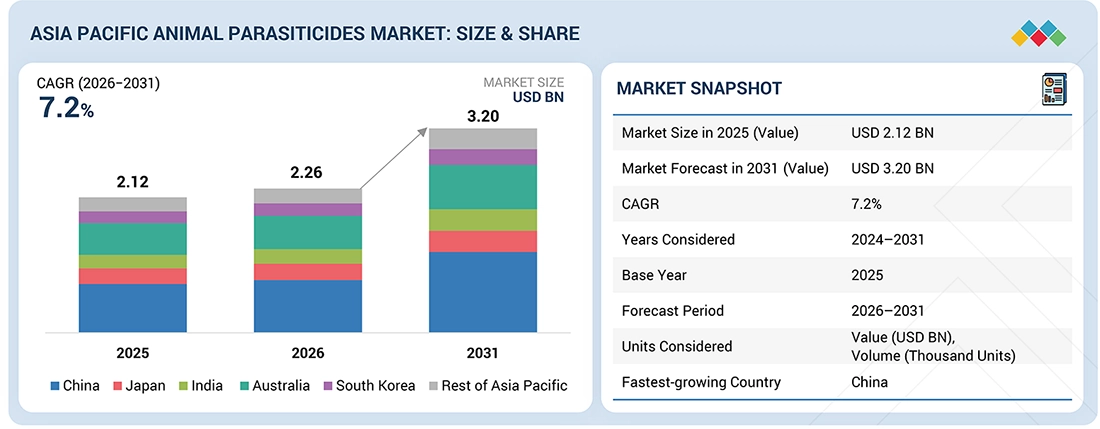
Source: Secondary Research, Interviews with Experts, MarketsandMarkets Analysis
The Asia Pacific animal parasiticides market, valued at US$2.12 billion in 2025, stood at US$2.26 billion in 2026 and is projected to advance at a resilient CAGR of 7.2% from 2026 to 2031, culminating in a forecasted valuation of US$3.20 billion by the end of the period. The Asia Pacific animal parasiticides market is growing due to rising levels of parasite infestation among livestock and companion animals, expanding animal populations, and greater focus on preventive animal healthcare. The demand for parasiticides that offer long-acting doses, combinations, and ease of administration is increasingly supported by higher investments in animal care and enhanced veterinary infrastructure throughout the region. The regional spread is also fueled by the adoption of modern farm management practices and stronger disease control initiatives.
KEY TAKEAWAYS
-
By CountryChina is expected to register the highest CAGR of 8.9% from 2026 to 2031.
-
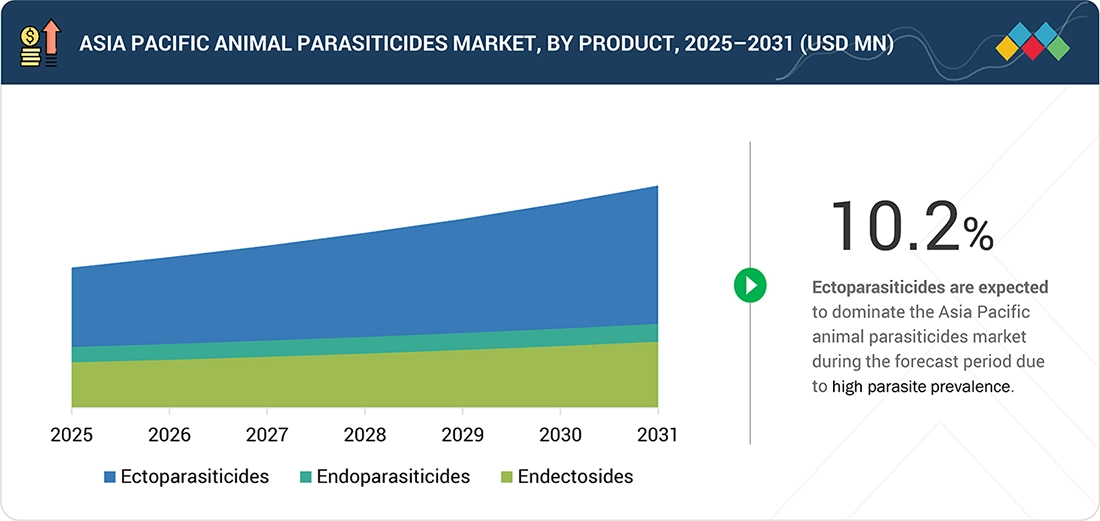
By TypeBy type, the ectoparasiticides segment is expected to register the highest CAGR of 8.1% during the forecast period.
-
By Animal TypeBy animal type, the companion animals segment dominated the market by accounting for 57.8% share in 2025.
-
By End UserBy end user, the veterinary hospitals & clinics segment led the market, with a share of 59.8% in 2025.
-
Competitive Landscape - Key PlayersZoetis Services LLC (US), Merck & Co., Inc. (US), and Boehringer Ingelheim International GmbH (Germany) were identified as some of the star players in the Asia Pacific animal parasiticides market, given their extensive global reach and comprehensive product portfolios.
-
Competitive Landscape - StartupsAbbey Labs (Australia), Alivira Animal Health Limited (India), and Headway Animal Health (Australia) have distinguished themselves among startups and SMEs by due to their strong product portfolio and business strategy.
The growing prevalence of parasites in livestock and companion animals has led to a rise in the Asia Pacific animal parasiticides markets due to warm climatic conditions and intensifying farming practices. Increased companion animal ownership and substantial spending on preventive veterinary care, coupled with awareness of dangers posed by zoonotic diseases, have also spurred demand for animal parasiticides. Other factors driving market growth include improved regional veterinary infrastructure, stringent disease-control regulations, and the rising adoption of long-acting and combination parasiticides.
TRENDS & DISRUPTIONS IMPACTING CUSTOMERS' CUSTOMERS
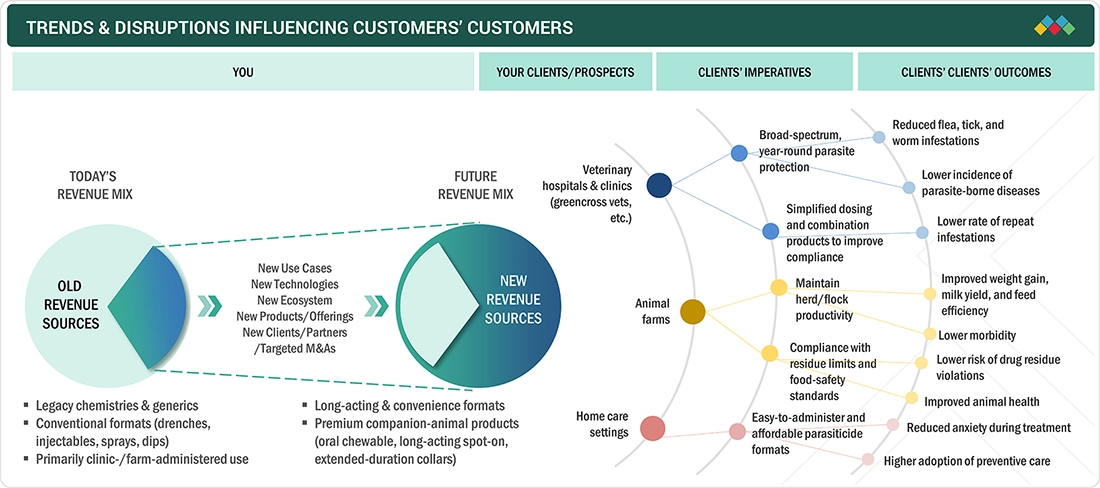
Trends shaping this market include increasing demand for preventive parasite control, growing ownership of companion animals, expanding livestock production, and greater awareness of the risks posed by zoonotic diseases. Primary adopters of innovative parasiticide solutions, such as animal health companies, are increasingly seeking contract manufacturers and CDMOs based in Asia Pacific for the development of sustainable formulations, optimization of delivery systems, and scalable manufacturing. The need for easy-to-administer, long-acting, and compliance-friendly treatments, together with the integration of digital farm management and parasite surveillance, is driving product development and commercialization strategies across Asia Pacific. The growing reliance on integrated formulations, regional outsourcing partnerships, and innovation-driven differentiation in the Asia Pacific animal parasiticides ecosystem is a key factor shaping market growth.
Source: Secondary Research, Interviews with Experts, MarketsandMarkets Analysis
MARKET DYNAMICS

Level
-
High parasite prevalence due to warm, humid climates

-
Growing population of companion animals and livestock


Level
-
Strict regulations on parasiticide residues in food-producing animals

-
Growing parasite resistance


Level
-
Development of long-acting and controlled-release parasiticides

-
Growth of veterinary CDMOs and local manufacturing in Asia Pacific


Level
-
Managing and delaying parasiticide resistance

-
Navigating diverse regulatory framework

Source: Secondary Research, Interviews with Experts, MarketsandMarkets Analysis
Driver: High parasite prevalence due to warm, humid climates
At present, the high prevalence of parasites is a key driver of the Asia Pacific animal parasiticides market, largely due to the region’s warm, humid climate and tropical weather patterns associated with its geographic location. These conditions provide an optimal environment for ticks, fleas, mites, lice, and a wide range of internal parasites to survive and proliferate. As a result, there is a sustained and ongoing demand for parasiticides for both preventive and curative management of parasite-related diseases across the Asia Pacific region.
Restraint: Strict regulations on parasiticide residues in food-producing animals
Strict regulations on parasiticide residues in food-producing animals represent a significant restraint, particularly for export-oriented countries in the Asia Pacific region where food safety standards are highly stringent. Compliance requirements related to maximum residue limits, withdrawal periods, environmental impact, and animal welfare increase regulatory complexity and substantially raise the cost of new product development. These challenges can delay product launches, limit the use of certain active ingredients, and reduce operational flexibility for both manufacturers and livestock producers.
Opportunity: Development of long-acting and controlled-release parasiticides
The development of long-acting and controlled release parasiticides is a great opportunity because of challenges associated with frequent administration, high labor intensity, and lack of compliance when taking the drugs. The advantage of these drugs is that they provide prolonged protection with fewer administrations, which will benefit farming enterprises where large numbers of animals are handled, as well as pet owners. Through these offerings, differentiation of portfolios can now occur for players in the industry.
Challenge: Managing and delaying parasiticide resistance
Resistance management and the delaying of parasiticide resistance are among the important challenges in the animal parasiticides market in the Asia Pacific region. This is mainly because of repeated use of the same active ingredient and class, misuse of dosing, and inadequate rotation of classes used for treatments. As there is an increased level of resistance, there is diminished efficacy and effectiveness of the products, as well as rising economic costs for farmers and consumers.
ASIA PACIFIC ANIMAL PARASITICIDES MARKET: COMMERCIAL USE CASES ACROSS INDUSTRIES
| COMPANY | USE CASE DESCRIPTION | BENEFITS |
|---|---|---|
 |
Offers an extensive parasiticides portfolio for companion animals (e.g., Simparica, Revolution/Stronghold) and livestock, alongside vaccines, diagnostics, and animal health solutions sold across Asia Pacific | Provides broad parasite control across species | supports preventive health and herd/clinic productivity with widely recognized brands |
 |
Develops and commercializes parasiticide products such as BRAVECTO (including long-acting formulations) for fleas, ticks, and internal parasites in dogs/cats and livestock globally including Asia Pacific | Enhances treatment adherence with long-acting protection |reduces parasite burden | strengthen field performance for vets and owners |
 |
Provides animal health products, including parasiticides, for companion and production animals, leveraging global R&D and product distribution networks | Delivers preventive and therapeutic parasite solutions across species | supports veterinary practice needs in Asia Pacific markets |
 |
Supplies parasiticides as part of its broader veterinary pharmaceutical portfolio for pets and livestock, targeting fleas, ticks, mites, internal worms, and related conditions | Improves animal health outcomes | supports farm efficiency | supplies vets and farmers with effective parasite control options |
 |
Offers a wide range of parasiticides (external and internal) for companion animals and livestock, supported by localized subsidiaries and R&D in multiple regions | Provides region-adapted parasite solutions |strengthens animal health services |supports parasite prevention and treatment |
Logos and trademarks shown above are the property of their respective owners. Their use here is for informational and illustrative purposes only.
MARKET ECOSYSTEM
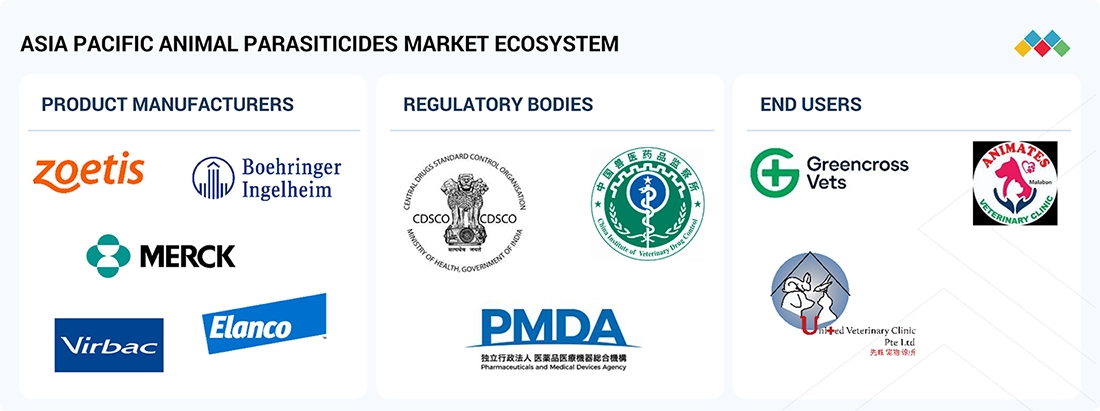
The Asia Pacific ecosystem of animal parasiticides comprises a multitude of players, ranging from product manufacturers (multinational companies and regional formulators producing ectoparasiticides, endoparasiticides, and endectocides); ingredient suppliers; contract R&D/CDMO partners who develop and scale formulations; distributors and wholesalers (traditional pharma distributors, veterinary wholesalers, and e-commerce channels with fast-growing sales); end users such as commercial livestock producers, companion-animal clinics, smallholder farmers, and pet owners; service providers such as veterinary clinics, diagnostic and reference laboratories, and field extension services; agencies for regulators and government procurement that set the standards for approval, residues, and use; and supporting stakeholders like vets’ associations, feed companies, contract research organizations, and academic laboratories, who together shape product acceptance, surveillance, stewardship, and market access across the varied regulatory and production landscape within the region.
Logos and trademarks shown above are the property of their respective owners. Their use here is for informational and illustrative purposes only.
MARKET SEGMENTS
Source: Secondary Research, Interviews with Experts, MarketsandMarkets Analysis
Asia Pacific Animal Parasiticides Market, by Type
In 2025, ectoparasiticides accounted for the largest share of the Asia Pacific animal parasiticides market, primarily due to the widespread presence of ticks, fleas, and mites across tropical and subtropical climate zones. Increasing awareness of vector-borne diseases and their significant economic impact on livestock and companion animals has driven the regular use of preventive treatments. Demand has been further supported by the ease of topical administration, broad product availability, and high adoption among companion animals, resulting in higher and more frequent usage than other parasiticide classes.
Asia Pacific Animal Parasiticides Market, by Animal Type
In 2025, companion animals dominated the Asia Pacific animal parasiticides market, which is driven by a growing number of pet owners, rapid urbanization, and a rising trend of considering pets as family members among key countries. Pet owners demonstrated greater readiness to pay for preventive measures to control parasites, particularly ectoparasites. The prominent presence of veterinary practices, retail, and e-commerce helped facilitate regular use among companion animals.
Asia Pacific Animal Parasiticides Market, by End User
In 2025, veterinary hospitals and clinics accounted for the largest share of the Asia Pacific animal parasiticides market as they represent the main source of diagnosis, prescription, and provision of preventive measures. Prescription medications and prescribed products command a larger amount of trust, compliance, and sales of branded products. In fact, the rising number of city-based clinics and the clinic attendance of pet owners contributed to higher sales of products from this source.
REGION
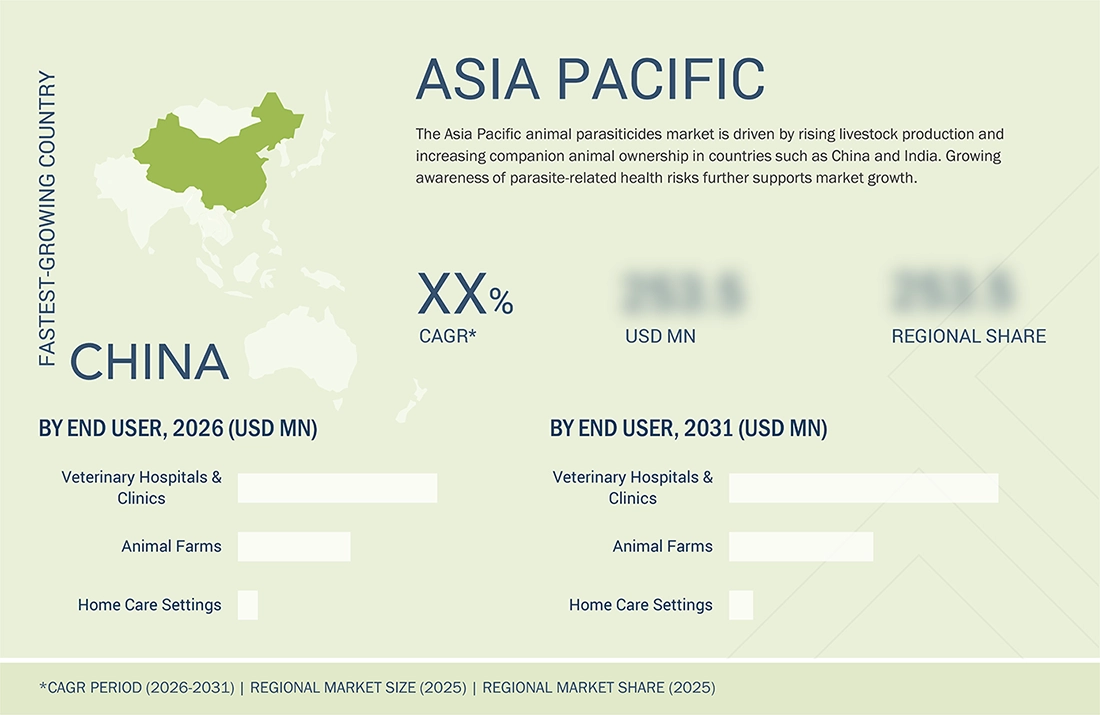
China to be fastest-growing country in Asia Pacific animal parasiticides market during forecast period
China is likely to be the fastest-growing market for animal parasiticides in the Asia Pacific region, driven by rising companion animal ownership and increasing urban incomes that support higher spending on pet healthcare. At the same time, the scaling and modernization of livestock farming are boosting demand for effective parasite control to reduce productivity losses and disease transmission. Growth is further supported by greater awareness of zoonotic and vector-borne diseases, the expanding network of veterinary clinics and hospitals, and improved access to parasiticides through e-commerce and organized retail channels nationwide.
ASIA PACIFIC ANIMAL PARASITICIDES MARKET: COMPANY EVALUATION MATRIX
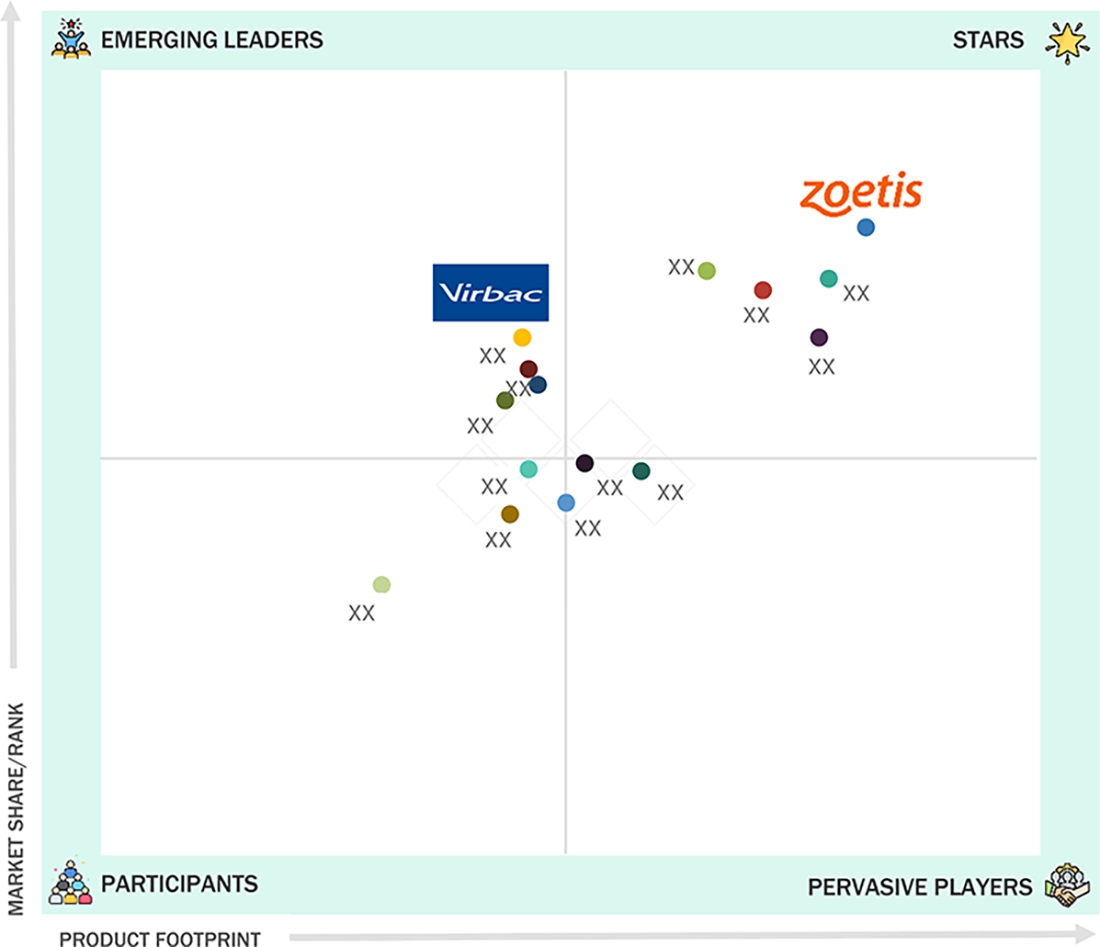
In the Asia Pacific animal parasiticides market, Zoetis (Star) is ranked at the top position, which is supported by its wide product portfolio of ectoparasiticides, endoparasiticides, and endectocides for both companion and food-producing animals. The company's dominance is sustained by its strong R&D capabilities, continuous product innovation, and a vast distribution and veterinary network in the leading Asia Pacific markets. Virbac (Emerging Leader) is becoming popular very quickly, especially in the field of parasiticides for companion animals, which is a result of its concentrate veterinary-only strategy, differentiation formulations, and Asiatic footprint extension. As the top animal health companies keep on investing in preventive care, portfolio expansion, and regional manufacturing, the rise of Zoetis and Virbac in Asia Pacific is going to the core of the dynamics of the evolution of animal parasiticides in the region.
Source: Secondary Research, Interviews with Experts, MarketsandMarkets Analysis
KEY MARKET PLAYERS
- Zoetis Services LLC (US)
- Merck & Co., Inc. (US)
- Boehringer Ingelheim International GmbH (Germany)
- Elanco (US)
- Virbac (France)
- Ceva (France)
- Vetoquinol (France)
- Norbrook (UK)
- Phibro Animal Health Corporation (US)
- Bimeda Corporate (Ireland)
MARKET SCOPE
| REPORT METRIC | DETAILS |
|---|---|
| Market Size in 2025 (Value) | USD 2.12 BN |
| Market Forecast in 2031 (Value) | USD 3.20 BN |
| Growth Rate | CAGR of 7.2% from 2026-2031 |
| Years Considered | 2024-2031 |
| Base Year | 2025 |
| Forecast Period | 2026-2031 |
| Units Considered | Value (USD Billion), Volume (Thousand Units) |
| Report Coverage | Revenue Forecast, Company Ranking, Competitive Landscape, Growth Factors, and Trends |
| Segments Covered |
|
| Countries Covered | China, Japan, India, Australia, South Korea, Thailand, Vietnam, New Zealand, Indonesia, Philippines, Rest of Asia Pacific |
| Parent & Related Segment Reports | Animal Parasiticides Market |
WHAT IS IN IT FOR YOU: ASIA PACIFIC ANIMAL PARASITICIDES MARKET REPORT CONTENT GUIDE
DELIVERED CUSTOMIZATIONS
We have successfully delivered the following deep-dive customizations:
| CLIENT REQUEST | CUSTOMIZATION DELIVERED | VALUE ADDS |
|---|---|---|
| Product Analysis | Compared different key parasiticide types for animals marketed in Asia Pacific, such as ectoparasiticides, endoparasiticides, and endectocides Evaluated whether used for prevention or treatment, by animal type (pets versus livestock), and product differentiation among major companies in Asia Pacific | Facilitated clarity into product maturity, usage dynamics, and demand gaps, thereby aiding in portfolio optimization, pricing decisions, and prioritized focus on high-growth parasiticide markets |
| Company Information | Profiled major animal health firms operating in the Asia Pacific region such as Zoetis, MSD Animal Health, Boehringer Ingelheim, Elanco, Virbac, and major local players | Assessed their product portfolios, R&D investments, manufacturing, and distribution networks in major Asia Pacific countries |
| Geographic Analysis | Carried out in-depth regional analysis in China, India, Japan, Australia, and Rest of Asia Pacific regarding the prevalence of parasitic diseases, farm animal density, and companion animal market trends | Assisted in the development of regional strategies for finding the fastest-growing countries, the level of complexity for regulations, opportunities for localizations, and markets to pursue in the Asia Pacific region |
RECENT DEVELOPMENTS
- July 2025 : Merck & Co., Inc. announced that the US FDA approved BRAVECTO QUANTUM, an extended-release injectable suspension administered annually to treat and protect dogs against fleas and ticks.
- April 2025 : Zoetis Services LLC announced that the US FDA approved the expansion of the indication for Simparica Trio. It is a combination parasiticide for canines that prevents flea tapeworm infections.
- April 2024 : Zoetis Services LLC and Phibro Animal Health Corporation unveiled a definitive agreement whereby Phibro purchased Zoetis' medicated feed additive portfolio that also includes a few water-soluble products and related assets for USD 350 ??????million.
Table of Contents
 Exclusive indicates content/data unique to MarketsandMarkets and not available with any competitors.
Methodology
The market size for Asia Pacific animal parasiticides was estimated using four main methods in this study. The market, as well as its peer and parent markets, were the subject of extensive research. The subsequent phase involved doing primary research to confirm these conclusions, presumptions, and estimates with industry professionals across the value chain. For the purpose of estimating the value market, top-down and bottom-up strategies were both used. The market size of segments and subsegments was then estimated using market breakdown and data triangulation processes.
Secondary Research
There were several secondary sources used in this study, including directories, databases like Bloomberg Business, Factiva, and Dun & Bradstreet, white papers, annual reports, corporate house documents, investor presentations, and firm SEC filings. In order to find and gather data for the detailed, technical, market-focused, and commercial analysis of the Asia Pacific animal parasiticides market, secondary research was carried out. Relevant information on major companies, market classification and segmentation according to industry trends down to the most basic level, and significant changes regarding market and technological views were also obtained. Additionally, utilizing secondary research, a database of the important industry executives was created.
Primary Research
To gather qualitative and quantitative data for this study, a variety of sources from the supply and demand sides were interviewed during the main research phase. CEOs, vice presidents, marketing and sales directors, business development managers, technology and innovation directors of animal parasiticide manufacturing businesses, key opinion leaders, suppliers, and distributors are the main sources on the supply side. Veterinary hospitals and clinics, research facilities, academic institutions, and contract manufacturing companies are some of the main demand-side suppliers.
To know about the assumptions considered for the study, download the pdf brochure
Market Size Estimation
The market size for Asia Pacific animal parasiticides was calculated using data from four different sources, as will be discussed below. Each technique concluded and a weighted average of the four ways was calculated based on the number of assumptions each approach made. The market size for Asia Pacific animal parasiticides was calculated using data from four distinct sources, as will be discussed below:
Data Triangulation
The entire market was split up into a number of segments and subsegments when the market size was determined. Data triangulation and market breakdown processes were used where necessary to complete the entire market engineering process and arrive at the precise statistics for all segments and subsegments.
Approach to derive the market size and estimate market growth
Using secondary data from both paid and unpaid sources, the market rankings for the major players were determined following a thorough analysis of their sales of Asia Pacific animal parasiticides. Due to data restrictions, the revenue share in certain cases was determined after a thorough analysis of the product portfolio of big corporations and their individual sales performance. This information was verified at each stage by in-depth interviews with professionals in the field.
Market definition
Animal parasiticides, often known as antiparasitics, are drugs used to stop, reduce and cure internal and external parasite infestations in pets and cattle. Ectoparasiticides, endoparasiticides, and endectocides are the typical subcategories of parasiticides. They come in a variety of deliverable forms, including liquids for oral use, pills, injectables, pour-ons, spot-ons, drenches, ear tags, collars, and sprays. Depending on the kind of parasite, the kind of animal, and the quantity of animals to be treated, a parasiticide is chosen.
Key Stakeholders
- Animal Parasiticide Manufacturers
- Animal Parasiticide Distributors
- Animal Health R&D Companies
- Veterinary Clinics and Hospitals
- Veterinary Pharmaceutical Associations
- Veterinary Research Institutes and Universities
- Venture Capitalists and Investors
- Market Research and Consulting Firms
- Government Associations
Objectives of the Study
- To define, characterize, segment, and forecast the market for Asia Pacific animal parasiticides based on type, animal type, end user, and region
- To provide comprehensive information on the key elements affecting the market's growth (such as drivers, restraints, opportunities, and industry-specific challenges)
- To evaluate the market for Asia Pacific animal parasiticides in light of the Porter's Five Forces, the regulatory environment, the value chain, the supply chain, the ecosystem, patent protection, and the effects of the recession
- To evaluate micromarkets with regard to their unique growth trends, prospects, and market contributions
- To assess market prospects for participants and give information on the competitive environment
- To list prominent market participants and thoroughly assess all of their essential abilities
- To monitor and assess market competition through actions including product introductions and approvals, acquisitions, growth, alliances, and agreements
Available Customizations
MarketsandMarkets provides modifications based on the provided market data to suit the unique requirements of the organization. The report can be customized in the ways shown below:
Product Analysis
- Product matrix, which compares the product portfolios of the major companies in detail
Geographic Analysis
- Further breakdown of the RoE animal parasiticides market into Belgium, Russia, the Netherlands, Switzerland, and other countries
- Further breakdown of the RoLATAM animal parasiticides market into Argentina, Colombia, Chile, and other countries


Personalize This Research
- Triangulate with your Own Data
- Get Data as per your Format and Definition
- Gain a Deeper Dive on a Specific Application, Geography, Customer or Competitor
- Any level of Personalization
Let Us Help You
- What are the Known and Unknown Adjacencies Impacting the Asia Pacific Animal Parasiticides Market
- What will your New Revenue Sources be?
- Who will be your Top Customer; what will make them switch?
- Defend your Market Share or Win Competitors
- Get a Scorecard for Target Partners

Custom Market Research Services
We Will Customise The Research For You, In Case The Report Listed Above Does Not Meet With Your Requirements
Get 10% Free CustomisationTESTIMONIALS

JAYANT RAJPUROHIT
Director of Market Insights, Data and Analytics
SFI Health,
Leading Pharmaceutical Companywww.sfihealth.com/

We at SFI Health approached MarketsandMarkets for an Opportunity Assessment on "Incidence and Prevalence of Focus Indications" as we wanted to know the most attractive HCPs like Physician, Functional MD, Naturopath and Pharmacist. The project was critical for us to ensure our focus on the right target which would enable sustainable growth and profitability for SFI Health. The business insights provided exceeded our expectations and we were extremely impressed. The team at MarketsandMarkets is highly professional and detail oriented and very well understood our business needs. MarketsandMarkets offers a unique combination of expertise and dedicated engagement model. We identified 2 new products to be launched in coming months, based on the research findings provided by MarketsandMarkets. We are happy with the services and would strongly recommend MarketsandMarkets to my peers in the industry.

BEATRIZ DE LA CALLE
Head of Commercial Analytics
Qualicaps,
Leading Pharmaceutical Companywww.qualicaps.com/

We partnered with MarketsandMarkets for an assessment study on hard empty capsules. The team was extremely professional in understanding our business requirements and we received timely responses to all our queries. The market intelligence and the recommendations has met our business requirements. We were extremely impressed to see the final study results; it really exceeded our expectations. The market intelligence offered by MarketsandMarkets, and clarity on next steps will help us achieve our business objective for the Year 2021. We are happy with the services and would strongly recommend MarketsandMarkets to my peers in the industry.

Bob Williams,
Senior Director Business Development & Innovation
Bracco Diagnostics Inc.,
Italian Multinational in life sciences sector and a World Leader in imaging diagnosticsimaging.bracco.com/us-en
We were pleased with targeted insights that MarketsandMarkets identified from a custom study on the 'Radiation Dose Management Solutions Market'. Your team identified and characterized the market participants as well as underlying trends accurately. This study was useful to Bracco in formulating business strategies for our dose monitoring product lines and we thank MarketsandMarkets for the job well done.
Cody Coonradt,
Market Development and Strategy Manager
3M Health Information Systems,
Leader in Health care Coding, Payment & Analytics Solutions.www.3m.com/3M/en_US/health-information-systems-us
The value for our organization comes from three things: depth of research, specificity of segments and being easy to work with. As important as the first two are, the third can't be underestimated. MarketsandMarkets, maybe more than any other research vendor, wants to know what is top of mind for our team and what big questions we are grappling to answer.
Their customer first approach and high value engagement model, have given us great analysis and excellent value for money






Growth opportunities and latent adjacency in Asia Pacific Animal Parasiticides Market