Asia Pacific In Vitro Diagnostics Market Size, Growth, Share & Trends Analysis

Asia Pacific In Vitro Diagnostics Market by Product & Service (Kits, Instruments), Technology (Immunoassay, Hematology, Glucose Monitoring), Specimen (Blood), Site of Testing, Application (Endocrinology, Cardiology, Infectious Diseases) - Forecast to 2031




OVERVIEW
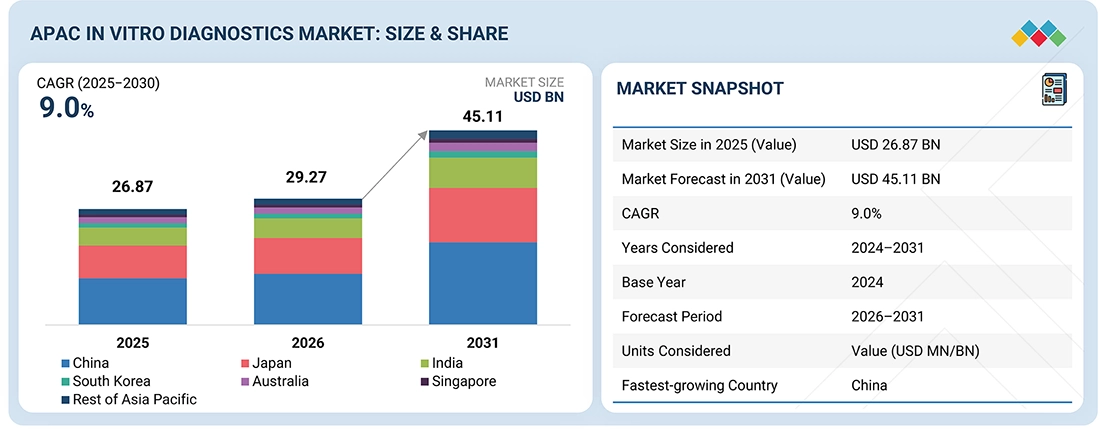
Source: Secondary Research, Interviews with Experts, MarketsandMarkets Analysis
The Asia Pacific in vitro diagnostics market is valued at an estimated USD 29.27 billion in 2026 and is projected to reach USD 45.11 billion by 2031 at a CAGR of 9.0% during the forecast period. Market expansion is being driven by increased access to diagnostic services, resulting from the gradual improvement in the region's healthcare sector infrastructure. Alongside this, the frequently growing older adult population, which requires repeated evaluation of their conditions, such as diabetes, cardiovascular disorders, and other conditions associated with aging, is leading to increased test volumes. This population also relies more heavily on routine health examinations and continuous disease management. Moreover, the increasing incidence rates of infectious diseases, cancer, and other chronic pathologies will further drive demand for regular and follow-up tests; consequently, the demand for a significantly wide range of IVD solutions will remain sustained.
KEY TAKEAWAYS
-
By CountryBy country, China accounted for the largest share in the Asia Pacific in vitro diagnostics market in 2025.
-
By Product & ServicesBy product & service, the reagent & kits segment is expected to register the highest CAGR of 9.5%.
-
By TechnologyBy technology, the immunoassay segment accounted for the largest market share in 2025, while molecular diagnostics is expected to register the highest CAGR during the forecast period.
-
By SpecimenBy specimen, the blood, serum, and plasma specimens segment is expected to dominate the market.
-
By Site of TestingBy site of testing, the laboratory test segment held the largest share of the market in 2025.
-
By ApplicationBy application, the infectious diseases segment is expected to dominate the market.
-
By End UserBy end user, clinical laboratories segment will grow the fastest during the forecast period.
-
Competitive LandscapeF. Hoffmann-La Roche Ltd., Abbott, Danaher Corporation, Sysmex Corporation, Shenzhen Mindray Bio-Medical Electronics Co.,were identified as some of the star players in the Asia Pacific in vitro diagnostics market, supported by their strong market presence and extensive product portfolios.
-
Competitive LandscapeDevyser (Sweden) and Boster Biological Technology (US), among others, have distinguished themselves among startups and SMEs by securing strong footholds in specialized niche areas.
The fast-growing Asia Pacific in vitro diagnostics market is driven by the expanded improvement in healthcare infrastructure and the rising burden of chronic and lifestyle-related diseases. Many countries are increasingly focusing their efforts on preventive health, which includes utilizing diagnostic services at an earlier stage and promoting the adoption of routine and specialist tests. Additionally, significant diversity in population coupled with incessant improvements in govenmemt supported healthcare initiatives is making diagnosis products readily accessible in care facilities. Collectively, these factors contribute to a steady increase in testing volumes while strengthening the overall market outlook for IVD solutions in Asia Pacific.
TRENDS & DISRUPTIONS IMPACTING CUSTOMERS' CUSTOMERS
The Asia Pacific in vitro diagnostics market is evolving, driven by the increasing adoption of advanced testing technologies and enhancements in laboratory processes to meet the growing demand for diagnostics. Increasing usage of point-of-care solutions and digital diagnostic tools provides improved accessibility and increases workflow efficiency across wide care settings. All these changes are being integrated into the spectrum of diagnostic services, supporting a more responsive and integrated testing environment across the region.
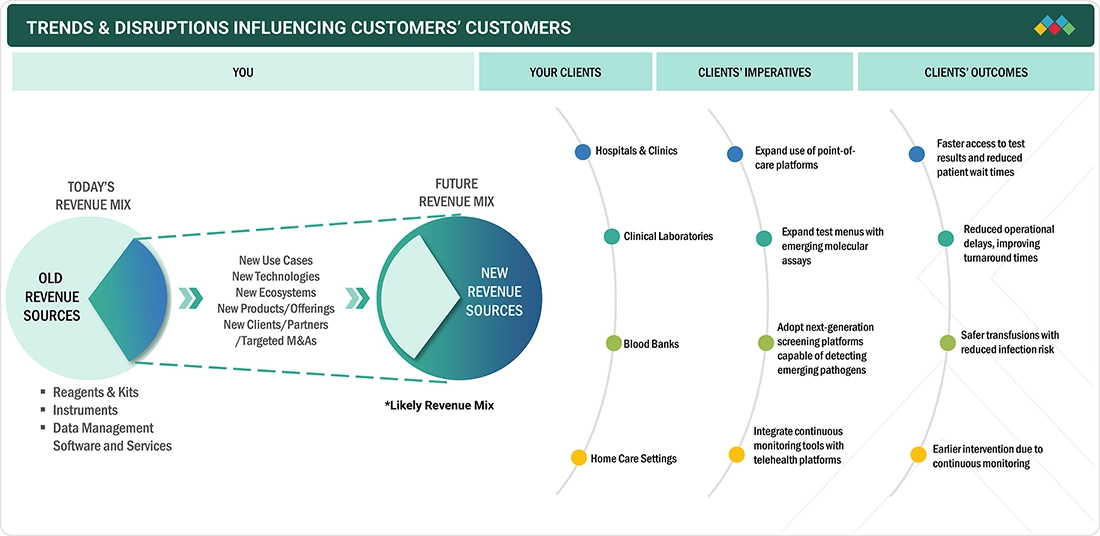
Source: Secondary Research, Interviews with Experts, MarketsandMarkets Analysis
MARKET DYNAMICS

Level
-
Rising prevalence of chronic health conditions

-
Increasing use of point-of-care testing and wider implementation of automated analyzer


Level
-
Significant capital costs required for diagnostic equipment

-
Rising regulatory demands and compliance


Level
-
Advancements in disease-specific biomarkers and targeted diagnostic tests

-
Growing importance and adoption of companion diagnostics


Level
-
Operational inefficiencies and workflow hurdles

-
Concerns related to data security and cybersecurity threats

Source: Secondary Research, Interviews with Experts, MarketsandMarkets Analysis
Driver: Rising prevalence of chronic health conditions
The chronic conditions like diabetes, cardiovascular disorders, and kidney diseases are increasingly affecting the Asia Pacific region, thereby increasing demand for IVD products & services. These chronic illnesses require continuous evaluation, which in turn increases reliance on laboratory-based and point-of-care tests to aid patient management. Therefore, an increasing number of routine and advanced diagnostic assays are now being utilized in different healthcare settings, thereby ensuring steady growth of the IVD market across Asia Pacific.
Restraint: Significant capital costs required for diagnostic equipment
The adoption of advanced diagnostic technologies in the Asia Pacific region is frequently impeded by the heavy capital investments needed for high-performance analyzers and laboratory automation systems. For smaller hospitals, regional clinics, and resource-limited facilities, upgrading and expanding diagnostic capabilities may be delayed owing to financial constraints. Besides, such financial barriers slow down the pace of technology updates and may restrict access to advanced testing solutions in lower-income markets of the region.
Opportunity: Advancements in disease-specific biomarkers and targeted diagnostic tests
With advancements in biomarker research and the development of targeted diagnostic tests, the Asia Pacific IVD market offers promising growth opportunities. Since healthcare providers are increasingly moving toward a personalized treatment approach, there is demand for assays that can enable precision disease characterization and therapy selection.
Challenge: Operational inefficiencies and workflow hurdles
Operational inefficiencies remain a challenge for diagnostic facilities, especially with high patient volumes. Inadequate staffing further increases the trouble. Variability in laboratory processes, lack of data processing due to manual data entry, and the existence of fragmented information systems combine to cause delays in turnaround times for tests and eventual productivity losses. However, these workflow limitations must be handled by laboratories for them to benefit fully from the emerging trends in automation, digitalization, and other innovations that are transforming the regional diagnostics landscape.
ASIA PACIFIC IN VITRO DIAGNOSTICS MARKET: COMMERCIAL USE CASES ACROSS INDUSTRIES
| COMPANY | USE CASE DESCRIPTION | BENEFITS |
|---|---|---|
 |
Provides cobas 4800 and a cobas 5800/6800/8800 molecular platforms, which are used primarily for conducting high-throughput viral load tests by or for centralized clinical laboratories. | Provides high analytical precision, supports automated large-volume workflows, enables faster turnaround times, and ensures regulatory-compliant performance for extensive infectious disease testing. |
 |
Deploys Alinity m analyzers for automated molecular detection of HIV, HBV, and HCV in medium- to high-throughput diagnostic laboratories. | Delivers shorter sample-to-result times, reduces manual processing steps, ensures consistent assay performance, and enhances laboratory workflow efficiency. |
 |
Provides GeneXpert systems for rapid, cartridge-based molecular testing across decentralized and point-of-care environments. | Enables quick results with minimal hands-on time, offers a comprehensive infectious disease test menu, maintains high analytical sensitivity, and supports use in low-resource or near-patient settings. |
 |
Offers automated hematology and laboratory automation systems used in high-volume diagnostic laboratories. | Ensures reliable and standardized hematology results, streamlines sample handling, improves workflow productivity, and supports scalable laboratory operations. |
 |
Delivers a broad portfolio of clinical chemistry, immunoassay, and hematology analyzers tailored for diverse healthcare settings. | Provides diagnostic solutions with stable performance, user-friendly system interfaces, and flexible configurations that expand access to quality testing. |
Logos and trademarks shown above are the property of their respective owners. Their use here is for informational and illustrative purposes only.
MARKET ECOSYSTEM
The players and elements that form the ecosystem of the Asia Pacific in vitro diagnostics market comprise all major stakeholders across the value chain, encompassing products and services, technologies, specimens, testing sites, applications, and end users. Manufacturers involved in product development and commercialization, as well as distribution through third-party networks and e-commerce, and research and development partners offering outsourced development and manufacturing support, are included. The core stakeholders within the Asia Pacific IVD supply chain are end users such as hospitals, clinics, clinical laboratories, and other healthcare providers that depend on IVD solutions during the diagnostic workflow
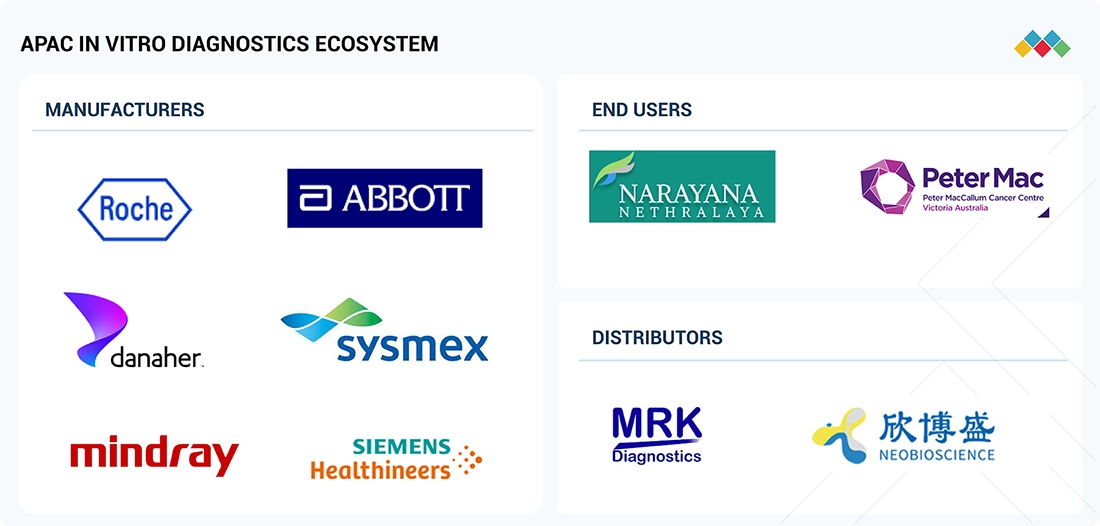
Logos and trademarks shown above are the property of their respective owners. Their use here is for informational and illustrative purposes only.
MARKET SEGMENTS
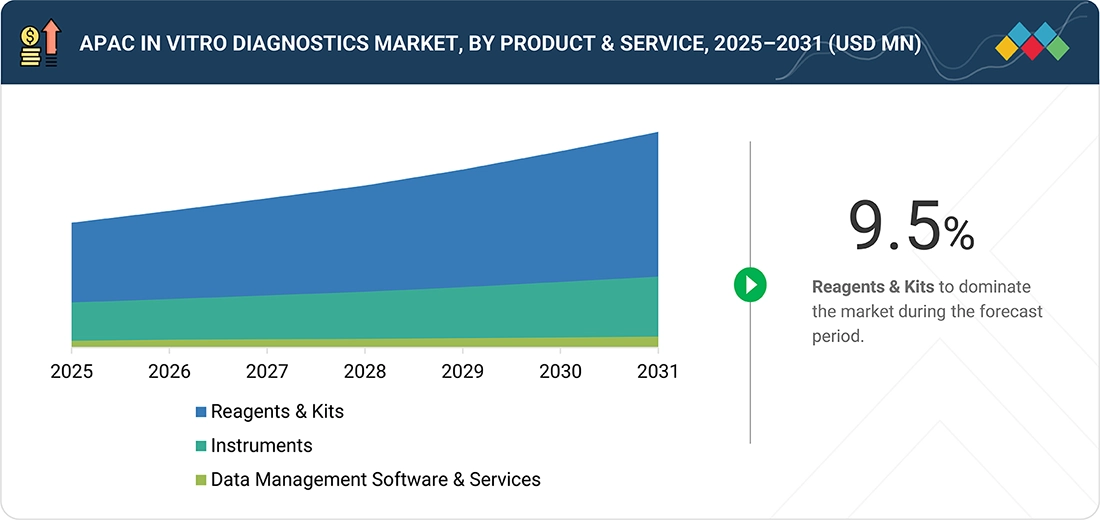
Source: Secondary Research, Interviews with Experts, MarketsandMarkets Analysis
Asia Pacific In Vitro Diagnostics Market, By Product & Service
For the product & service segment, the in vitro diagnostics market in Asia Pacific is classified into reagents and kits, instruments, and data management software and services. Of these, reagents & kits accounted for the largest share in 2025 due to their extensive application in routine testing with higher test volumes across clinical applications and their requirement in molecular diagnostics, immunoassays, clinical chemistry, and other laboratory procedures.
Asia Pacific In Vitro Diagnostics Market, By Technology
By technology, the Asia Pacific in vitro diagnostics market is segmented into immunoassay, clinical chemistry, molecular diagnostics, glucose monitoring, hematology, microbiology, coagulation & hemostasis, blood gas analyzers, urinalysis, and chromatography & mass spectrometry. In 2025, the immunoassay segment held the largest market share due to its widespread clinical applicability, frequent utilization in diagnostic workflows, and strong alignment with automated and high-throughput laboratory systems.
Asia Pacific In Vitro Diagnostics Market, By Specimen
By specimen, the Asia Pacific in vitro diagnostics market is divided into blood, serum, and plasma, saliva, urine, and other specimen types. In 2025, blood, serum, and plasma were the leading segment, specializing in their widespread diagnostic relevance, standardized sample-handling protocols, and good acceptance across numerous testing platforms embraced by end users.
Asia Pacific In Vitro Diagnostics Market, By Site of Testing
By site of testing, the Asia Pacific IVD market is classified into laboratory tests and point-of-care tests. The laboratory tests segment held the major share in 2025 due to the presence of well-structured diagnostic networks, dependence on centralized testing workflows, and the ability to efficiently manage high volumes of both routine and specialized testing.
Asia Pacific In Vitro Diagnostics Market, By Application
By application, the Asia Pacific in vitro diagnostics market is segmented into infectious diseases, oncology, endocrinology, cardiology, blood screening, genetic testing, autoimmune diseases, allergy diagnostics, drug monitoring and testing, bone and mineral disorders, coagulation testing, blood group typing, and other applications. As the largest segment in 2025, infectious diseases are driven by a significant need for large-scale screening and routine diagnostic evaluations and continuous monitoring of patients in hospital and laboratory environments.
Asia Pacific In Vitro Diagnostics Market, By End User
By end user, the Asia Pacific IVD market is divided into hospitals & clinics, clinical laboratories, blood banks, home care settings, pharmaceutical & biotechnology companies, and academic institutes. Of these, hospitals and clinics held the majority of the market share in 2025, owing to the high number of inpatients, a wide range of on-site diagnostic needs, and the introduction of automated testing platforms into clinical operations.
REGION
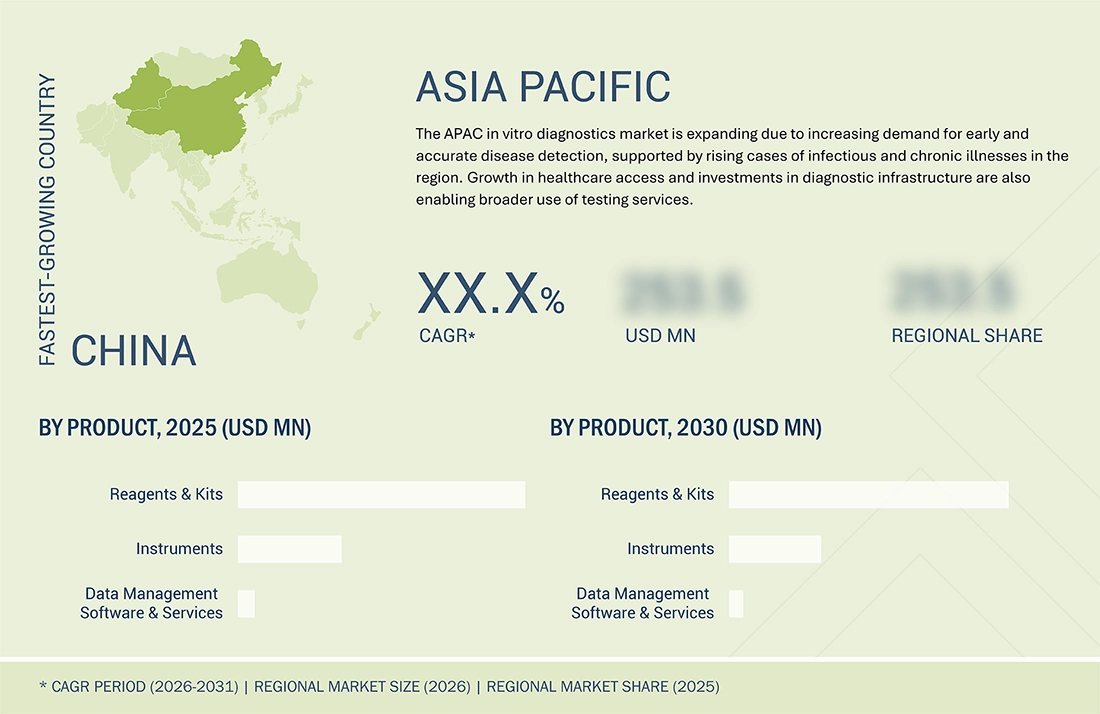
China to be fastest-growing country in the Asia Pacific in vitro diagnostics market during forecast period
China is expected to exhibit the highest CAGR in the Asia Pacific in vitro diagnostics market, driven by the rapid development of health infrastructure, increased demand for diagnosis from its large and aging population, and a growing emphasis on early disease detection. Such strong domestic manufacturing capabilities also enhance access to affordable IVD solutions for faster growth.
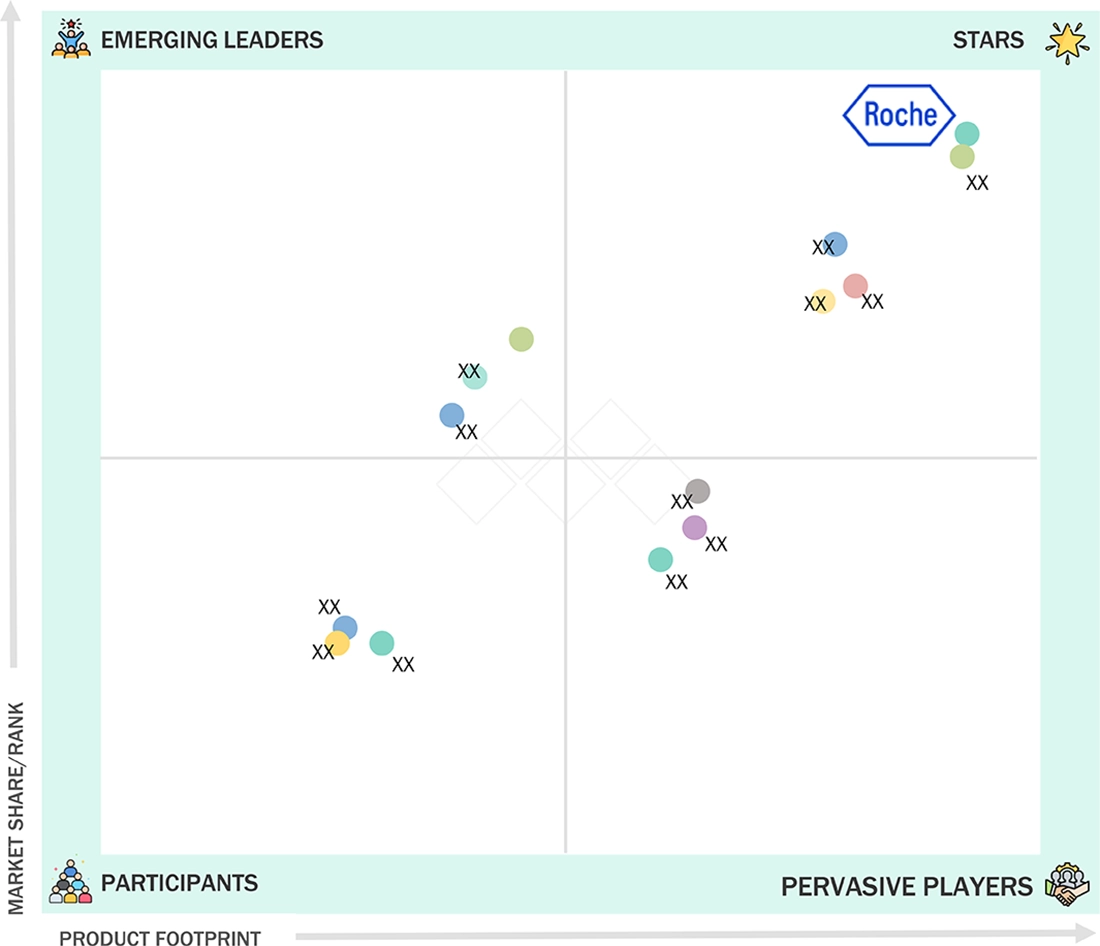
ASIA PACIFIC IN VITRO DIAGNOSTICS MARKET: COMPANY EVALUATION MATRIX
F. Hoffmann-La Roche Ltd. (Star) is a leading player in the Asia Pacific in vitro diagnostics market due to its substantial portfolio of high-performance molecular, immunoassay and clinical chemistry systems widely adopted across hospitals & clinics, clinical laboratories and other end users. It is further aided by an established distribution network and sustained investments in automated integrated platforms that support high-throughput workflows and consistent diagnostic performance.
Source: Secondary Research, Interviews with Experts, MarketsandMarkets Analysis
KEY MARKET PLAYERS
MARKET SCOPE
| REPORT METRIC | DETAILS |
|---|---|
| Market Size in 2025 (Value) | USD 26.87 Billion |
| Market Forecast in 2031 (Value) | USD 45.11 Billion |
| Growth Rate | CAGR of 9.0% from 2026-2031 |
| Years Considered | 2024-2031 |
| Base Year | 2024 |
| Forecast Period | 2026-2031 |
| Units Considered | Value (USD Million/Billion) |
| Report Coverage | Revenue forecast, company ranking, competitive landscape, growth factors, and trends |
| Segments Covered |
|
| Countries Covered | China, Japan, India, Australia, South Korea, Singapore, Rest of Asia Pacific |
| Parent & Related Segment Reports |
In-Vitro Diagnostics Market Europe In Vitro Diagnostics Market US IVD Market Latin America IVD Market Middle East and Africa IVD Market |
WHAT IS IN IT FOR YOU: ASIA PACIFIC IN VITRO DIAGNOSTICS MARKET REPORT CONTENT GUIDE
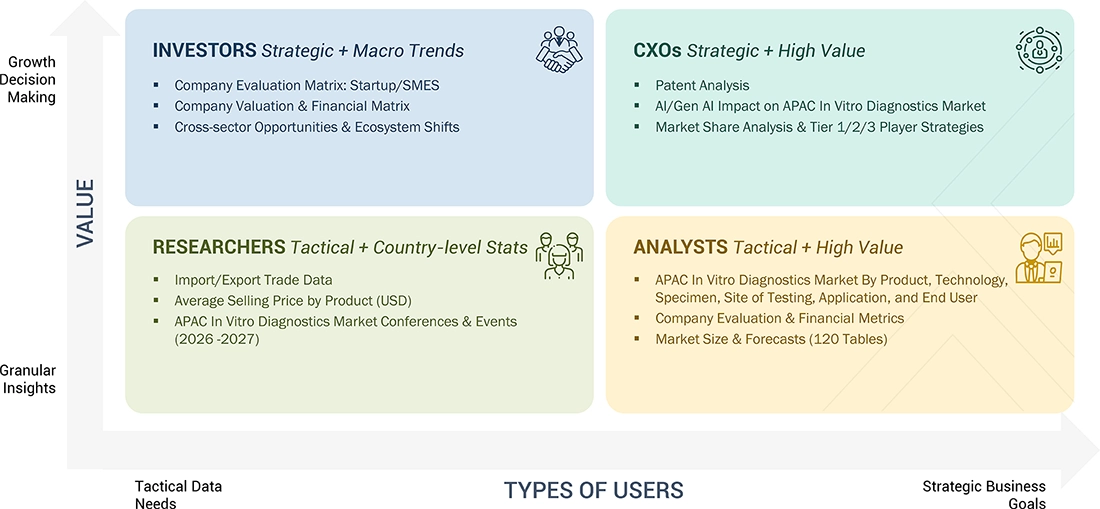
DELIVERED CUSTOMIZATIONS
We have successfully delivered the following deep-dive customizations:
| CLIENT REQUEST | CUSTOMIZATION DELIVERED | VALUE ADDS |
|---|---|---|
| Product Analysis | Product matrix, which provides a detailed comparison of the product portfolio of each company in the Asia Pacific In Vitro Diagnostics market | Enables easy comparison of competitors’ offerings, helping identify gaps, overlaps, and differentiation opportunities |
| Company Information | Additional five company profiles of players operating in the Asia Pacific In Vitro Diagnostics market | Provides insights into competitors’ strategies, innovation focus, and partnerships, supporting strategic planning |
| Geographic Analysis | Additional country-level analysis of the Asia Pacific In Vitro Diagnostics market | Guides market entry, localization, and targeted launch strategies by highlighting regional demand and opportunities |
RECENT DEVELOPMENTS
- July 2024: Beckman Coulter, Inc. [a subsidiary of Danaher Corporation (US)] entered into a collaboration with Fujirebio (Japan) to advance the development of blood-based biomarkers for Alzheimer’s disease. The partnership focuses on identifying novel biomarkers and enhancing existing assays that support the detection of tau pathology, aiming to improve diagnostic capabilities and contribute to earlier and more accurate disease assessment.
- September 2024: Sysmex Corporation (Japan) launched a new assay kit designed for its Automated Blood Coagulation Analyzers CN-6500 and CN-3500. The product incorporates HISCL-Series technology to improve the accuracy and efficiency of coagulation testing, further enhancing Sysmex’s capabilities in advanced hemostasis diagnostics.
- December 2023: Shenzhen Mindray Bio-Medical Electronics Co., Ltd. (China) acquired a 75% stake in DiaSys Diagnostic Systems GmbH (Germany). This acquisition enables Mindray to advance the development of its overseas supply chain platform and further strengthen its in vitro diagnostics portfolio.
- March 2023: Siemens Healthineers AG (Germany) entered into an agreement with Sysmex Corporation (Japan) involving hemostasis diagnostic products. Under this agreement, each company would provide the other with hemostasis solutions, thus expanding product availability and advancing the diagnostic area of coagulation testing.
Table of Contents
 Exclusive indicates content/data unique to MarketsandMarkets and not available with any competitors.
Methodology
This study involved the extensive use of primary and secondary sources. A comprehensive study was conducted using secondary research methods to gather data about the market, its parent market, and its peer markets. The next stage involved conducting primary research to confirm these conclusions and assumptions and sizing with industry experts throughout the value chain. A combination of top-down and bottom-up methods was used to assess the overall market size. The market sizes of segments and subsegments were then estimated using data triangulation techniques and market breakdown.
Secondary Research
The secondary research process involves the widespread use of secondary sources, directories, databases (such as Bloomberg Businessweek, Factiva, and D&B Hoovers), white papers, annual reports, investor presentations, SEC filings of companies and publications from government sources [such as National Institutes of Health (NIH), US FDA, US Census Bureau, World Health Organization (WHO), International Trade Administration (ITA), American Association for Clinical Chemistry (AACC), American Diabetes Association (ADA), Association for Molecular Pathology (AMP) and Centers for Medicare and Medicaid Services (CMS) were referred to identify and collect information for the Asia Pacific In Vitro Diagnostics Market study. It was also used to obtain important information about the key players and market classification & segmentation according to industry trends to the bottom-most level and key developments related to market and technology perspectives. A database of the key industry leaders was also prepared using secondary research.
Primary Research
In the primary research process, various sources from the supply and demand sides were interviewed to obtain qualitative and quantitative information for this report. The primary sources from the supply side include industry experts such as CEOs, vice presidents, marketing and sales directors, technology & innovation directors, and related key executives from various key companies and organizations in the Asia Pacific In Vitro Diagnostics Market. The primary sources from the demand side include hospitals & clinics, clinical laboratories, blood banks, pharmaceutical and biotechnology companies, and academic institutes. Primary research was conducted to validate the market segmentation, identify key players, and gather insights on key industry trends & key market dynamics.
Market Size Estimation
For the regional market value, annual revenues were calculated based on the revenue mapping of major product manufacturers and OEMs active in the Asia Pacific In Vitro Diagnostics Market. All the major product manufacturers were identified at the country level. Revenue mapping for the respective business segments/subsegments was done for the major players. The Asia Pacific In Vitro Diagnostics Market was split into various segments and sub-segments based on:
- List of major players operating in the products market at the regional and/or country level.
- Product mapping of various in vitro diagnostics manufacturers at the regional/country level.
- Mapping of annual revenue generated by listed major players from in vitro diagnostics (or the nearest reported business unit/product category).
- Extrapolation of the revenue mapping of the listed major players to derive the market value of the respective segments/subsegments.
- Summation of the market value of all segments/subsegments to arrive at the Asia Pacific In Vitro Diagnostics Market.
The above-mentioned data was consolidated and added with detailed inputs and analysis from MarketsandMarkets and presented in this report.
Data Triangulation
After arriving at the overall size of the Asia Pacific In Vitro Diagnostics Market through the above-mentioned methodology, this market was split into several segments and subsegments. Where applicable, the data triangulation and market breakdown procedures were employed to complete the overall market engineering process and arrive at the exact market value data for the key segments and subsegments. Examining several macro variables and regional trends from demand- and supply-side players helped triangulate the extrapolated market data.
Market Definition
IVD tests are non-invasive tests performed to diagnose, monitor, screen, and assess diseases and health conditions. The term "in vitro," which refers to "in glass," signifies that test tubes or petri dishes are typically used in these tests. These tests are performed artificially on biological samples (blood, urine, and tissues). IVD has a broad scope ranging from sophisticated technologies performed in clinical laboratories to simple and easy-to-use rapid testing kits.
IVD is used to assess a person's health. This technique is used in precision medicine to determine the suitable course of treatment for particular patients and diagnose and prevent diseases and other medical disorders.
Stakeholders
- Transfection products manufacturing companies
- Pharmaceutical & Biopharmaceutical Companies
- Chemical Companies
- Biopharmaceutical Companies
- Contract Research Organizations (CROs)
- Contract Development and Manufacturing Organizations (CDMOs)
- Research Institutes and Universities
- Venture Capitalists & Investors
- Government Associations
Report Objectives
- To define, describe, and forecast the Asia Pacific In Vitro Diagnostics Market based on product & service, technology, specimen, site of testing, application, end user, and region.
- To provide detailed information regarding the major factors influencing the market growth (such as drivers, restraints, opportunities, and industry-specific challenges).
- To assess the Asia Pacific In Vitro Diagnostics Market with respect to Porter’s Five Forces, regulatory landscape, the value chain, the supply chain, ecosystem analysis, patent protection, pricing assessment, key stakeholders, and buying criteria.
- To strategically analyze micromarkets with respect to individual growth trends, prospects, and contributions to the overall market.
- To analyze the opportunities in the IVD market for stakeholders and provide details of the competitive landscape for market leaders.
- To profile the key players operating in the IVD market and comprehensively analyze their core competencies and market shares.
- To track and analyze competitive developments such as partnerships, agreements, collaborations, acquisitions, expansions, product/technology developments, and product approvals.
- To benchmark players within the IVD market using the Company Evaluation Quadrant framework, which analyzes market players on various parameters within categories of business strategies, market share, and product offerings.


Personalize This Research
- Triangulate with your Own Data
- Get Data as per your Format and Definition
- Gain a Deeper Dive on a Specific Application, Geography, Customer or Competitor
- Any level of Personalization
Let Us Help You
- What are the Known and Unknown Adjacencies Impacting the Asia Pacific In Vitro Diagnostics Market
- What will your New Revenue Sources be?
- Who will be your Top Customer; what will make them switch?
- Defend your Market Share or Win Competitors
- Get a Scorecard for Target Partners

Custom Market Research Services
We Will Customise The Research For You, In Case The Report Listed Above Does Not Meet With Your Requirements
Get 10% Free CustomisationTESTIMONIALS

JAYANT RAJPUROHIT
Director of Market Insights, Data and Analytics
SFI Health,
Leading Pharmaceutical Companywww.sfihealth.com/

We at SFI Health approached MarketsandMarkets for an Opportunity Assessment on "Incidence and Prevalence of Focus Indications" as we wanted to know the most attractive HCPs like Physician, Functional MD, Naturopath and Pharmacist. The project was critical for us to ensure our focus on the right target which would enable sustainable growth and profitability for SFI Health. The business insights provided exceeded our expectations and we were extremely impressed. The team at MarketsandMarkets is highly professional and detail oriented and very well understood our business needs. MarketsandMarkets offers a unique combination of expertise and dedicated engagement model. We identified 2 new products to be launched in coming months, based on the research findings provided by MarketsandMarkets. We are happy with the services and would strongly recommend MarketsandMarkets to my peers in the industry.

BEATRIZ DE LA CALLE
Head of Commercial Analytics
Qualicaps,
Leading Pharmaceutical Companywww.qualicaps.com/

We partnered with MarketsandMarkets for an assessment study on hard empty capsules. The team was extremely professional in understanding our business requirements and we received timely responses to all our queries. The market intelligence and the recommendations has met our business requirements. We were extremely impressed to see the final study results; it really exceeded our expectations. The market intelligence offered by MarketsandMarkets, and clarity on next steps will help us achieve our business objective for the Year 2021. We are happy with the services and would strongly recommend MarketsandMarkets to my peers in the industry.

Bob Williams,
Senior Director Business Development & Innovation
Bracco Diagnostics Inc.,
Italian Multinational in life sciences sector and a World Leader in imaging diagnosticsimaging.bracco.com/us-en
We were pleased with targeted insights that MarketsandMarkets identified from a custom study on the 'Radiation Dose Management Solutions Market'. Your team identified and characterized the market participants as well as underlying trends accurately. This study was useful to Bracco in formulating business strategies for our dose monitoring product lines and we thank MarketsandMarkets for the job well done.
Cody Coonradt,
Market Development and Strategy Manager
3M Health Information Systems,
Leader in Health care Coding, Payment & Analytics Solutions.www.3m.com/3M/en_US/health-information-systems-us
The value for our organization comes from three things: depth of research, specificity of segments and being easy to work with. As important as the first two are, the third can't be underestimated. MarketsandMarkets, maybe more than any other research vendor, wants to know what is top of mind for our team and what big questions we are grappling to answer.
Their customer first approach and high value engagement model, have given us great analysis and excellent value for money






Growth opportunities and latent adjacency in Asia Pacific In Vitro Diagnostics Market