Asia Pacific Wound Care Market Size, Growth, Share & Trends Analysis

Asia Pacific Wound Care Market by Product [Dressing (Foam, Hydrocolloid, Collagen), Device (NPWT, Debridement), Biological Skin Substitutes, Sutures, Staplers)], Wound (Chronic, Acute), End User (Hospital, Clinic, Home Care), Region - Forecast to 2031




OVERVIEW
Source: Secondary Research, Interviews with Experts, MarketsandMarkets Analysis
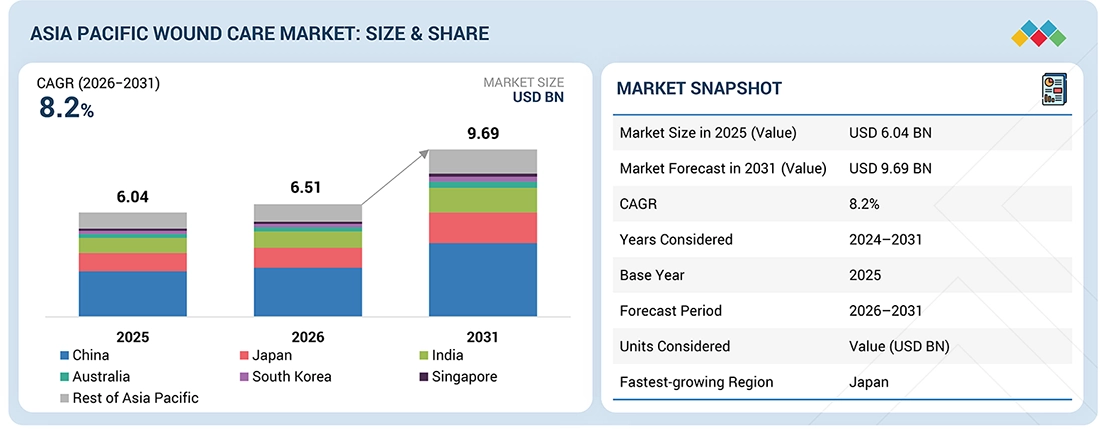
The asia pacific wound care market, valued at USD 6.04 billion in 2025, stood at USD 6.51 billion in 2026 and is projected to advance at a resilient CAGR of 8.2% from 2026 to 2031, culminating in a forecasted valuation of USD 9.69 billion by the end of the period. The market is driven by a rising number of traumatic and burn injuries, an increasing burden of chronic diseases, and a growing population. As a result, demand for effective and advanced wound care solutions has increased substantially. Government initiatives, expanding healthcare infrastructure, and reimbursement policies across many countries in the region are supporting market growth. However, the high cost of advanced wound care products and associated treatment risks may act as drawbacks. On the other hand, the region's growing economies have provided a promising trend for market growth, driven by technological advancements and healthcare modernization. Nevertheless, a lack of skilled manpower and awareness of advanced wound care solutions remain challenges for the market.
KEY TAKEAWAYS
-
BY COUNTRYBy country, China accounted for the largest market share in 2025.
-
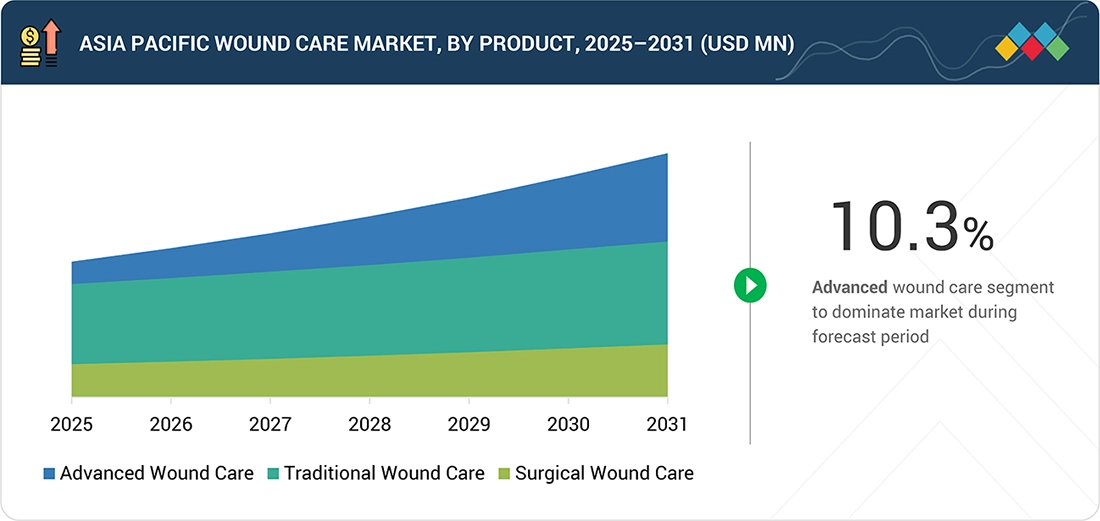
BY PRODUCTBy product, the advanced wound care segment is expected to register the highest CAGR of 10.3%.
-
BY WOUND TYPEBy wound type, the acute wound segment is expected to have the highest CAGR of 8.8% in the forecast period.
-
BY END USERThe hospital & clinics segment accounted for the largest market share of 54.5% in 2025.
-
Competitive LandscapeThe Asia Pacific wound care market is driven by strong investments and strategic partnerships. Key players such as Solventum, Johnson & Johnson Services, Inc., Smith+ Nephew, Medtronic, and B Braun SE leverage diverse product portfolios and innovation to expand globally through collaborations, acquisitions, and new product launches.
-
Competitive LandscapeModitech Med and DeRoyal Industries, among others, have distinguished themselves among startups and SMEs by securing strong footholds in specialized niche areas.
The wound care market in the Asia Pacific region is expected to grow significantly in the coming years due to increasing rates of traumatic and burn injuries, higher prevalence of chronic conditions, and a rising population of older adults in the Asia Pacific region. The overall demand for effective wound management solutions is further driven by improving healthcare policies and initiatives in several Asia Pacific countries. However, the expensive nature of product solutions for wound care might hinder the growth of this market to some extent, as it might force patients to take risks in light of costly wound care services. On the other hand, the emerging Asia Pacific region offers a promising market for wound care due to increased awareness about wound management and technologically advanced wound care services invested in these countries. Despite the increasing trends in this market, the Asia Pacific wound care market is still challenged by a lack of healthcare professionals and awareness about wound care among individuals from underdeveloped regions.
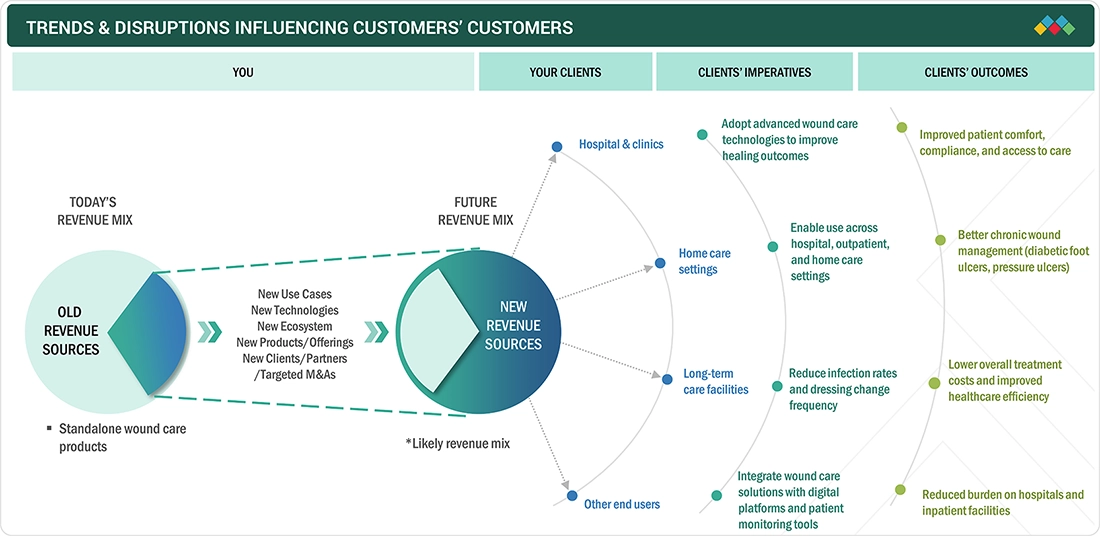
TRENDS & DISRUPTIONS IMPACTING CUSTOMERS' CUSTOMERS
The impact on the Asia Pacific wound care market is closely tied to patterns of patient demand and trends in treatment practices across the region. Hospitals, clinics, and other healthcare providers are the primary end users of wound care products, and shifts in clinical protocols, increased adoption of advanced wound therapies, and changes in how services are delivered affect product demand. As healthcare services in the Asia Pacific region continue to develop and modernize, procurement decisions are influenced by factors such as clinical effectiveness, cost efficiency, and regulatory compliance. These changes ultimately affect purchasing across healthcare facilities, which can have a direct impact on the revenue performance and growth strategies of wound care product manufacturers operating in the region.
Source: Secondary Research, Interviews with Experts, MarketsandMarkets Analysis
MARKET DYNAMICS

Level
-
Growing geriatric population

-
Rise in cases of traumatic injuries


Level
-
High cost of advanced wound care products

-
Risks associated with use of advanced wound care products


Level
-
Growth opportunities in emerging economies

-
Technological advancements in wound care


Level
-
Lack of trained healthcare professionals

-
Limited access to wound care solutions in underdeveloped regions

Source: Secondary Research, Interviews with Experts, MarketsandMarkets Analysis
Driver: Rise in cases of traumatic injuries
The Asia Pacific wound care market is being driven primarily by the rising number of road traffic accidents. In particular, countries such as India and China experience a high percentage of road traffic accidents, especially involving motorcyclists, pedestrians, and workers. Additionally, increased industrial activity is contributing to a rise in occupational wounds. In particular, many occupational accidents are associated with serious wounds. With an increase in the number of trauma cases, the wound care market is witnessing rising demand, especially for comprehensive wound care, thereby contributing to the sustained growth of the wound care market in the Asia Pacific region.
Restraint: High cost of advanced wound care products
Despite the proven clinical advantages, innovative products in advanced wound care have failed to gain a foothold in the Asia Pacific market due to high prices that make them inaccessible, especially in economies with limited budgets, low insurance coverage, and low healthcare spending. Costly treatments, including bioengineered skin substitutes, antimicrobial dressings, and negative-pressure wound therapy products, place a heavy financial burden on healthcare providers. Chronic, non-healing wounds, such as diabetic foot ulcers, which are highly prevalent in the Asia Pacific region due to a high incidence of diabetes, often result in prolonged hospitalization and a significant cost burden on healthcare providers. This high healthcare spending in the Asia Pacific region underscores the strong need for affordable solutions in wound care management in these countries, where, owing to poor healthcare infrastructure, access to such treatments is limited to critical cases only.
Opportunity: Technological advancements in wound care
The increasing integration of technology into the care of patients with wounds is being identified as a promising opportunity in the Asia Pacific wound care market. Current technologies, such as intelligent dressings and easy-to-use digital wound care solutions, are improving patient care for those with wounds. Introducing simple, effective technologies such as smart bandages, which can detect infection and monitor the wound's real-time healing process, is improving patient care, particularly in remote and resource-limited regions. In addition, the emergence of portable and extended-wear negative pressure wound therapy is improving the patient experience and extending its use beyond hospital clinics. There is a promising increase in investments in biologics and enzymatic debridement technologies, indicating a shift within the wound care market from conventional to more minimally invasive technologies. As the need to provide patients with faster healing and fewer complications grows, the market in the Asia Pacific region is expected to see heightened research & development activity to deliver more innovative solutions.
Challenge: Lack of trained healthcare professionals
One of the major growth inhibitors for wound care solutions in the Asia Pacific market is the scarcity of appropriately trained healthcare professionals, especially in rural and under-resourced areas. Effective wound management requires not only access to specialty products but also skilled clinical application, continuous patient monitoring, and informed decision-making about the type of wound. However, many nurses and general practitioners throughout the region have never received formal training in standardized protocols for wound treatment, leading to underdiagnosis, delayed diagnosis, and inappropriate use of advanced treatments. This skills deficit is particularly serious for the proper management of complex conditions such as diabetic foot ulcers and pressure injuries, which require evidence-based, precise treatment approaches for successful outcomes. This issue further constrains market growth because healthcare systems without sufficient skill cannot adopt and effectively utilize advanced technologies in wound care. To address this concern, more training programs, curriculum enhancements, hands-on educational initiatives, and incentive packages are needed to attract and retain wound care specialists in high-need areas of the Asia Pacific.
ASIA PACIFIC WOUND CARE MARKET: COMMERCIAL USE CASES ACROSS INDUSTRIES
| COMPANY | USE CASE DESCRIPTION | BENEFITS |
|---|---|---|
 |
Provides advanced wound care products such as antimicrobial dressings, foam dressings used to manage exudate, and negative pressure wound therapy (NPWT) systems used to treat chronic wounds, surgical wounds, and hard-to-heal ulcers | Enhances wound healing by controlling infection, keeping moisture balance, facilitating tissue formation, thus reducing healing time, hospital stay, and cost of treatment |
 |
Offers a complete portfolio in wound management with Ethicon, covering advanced dressings, closure, NPWT, and debridement devices to treat surgical wounds, burns, pressure ulcers, and diabetic foot ulcers | Enhances clinical results by reducing the need to change dressings, decreasing complications and infections, increasing patient comfort, and promoting healing |
 |
Provides advanced wound care solutions such as foam dressings, NPWT devices, and specialty products for burns, PU, chronic wounds, etc., and is increasingly being used in hospitals as well as home care settings in the Asia Pacific region | Promotes quicker wound healing, minimizes complications, and ensures more efficient treatment, resulting in superior outcomes and cost savings, unlike regular approaches used when managing wounds |
 |
Specializes in providing surgical wound closing solutions, advanced healing solutions, and products that prevent infection during a wound attack | Optimizes the outcome of the operation or surgery by minimizing the risk of infection, improving tissue approximation, and enhancing the integrity of the wound |
 |
Provides an extensive line of wound dressings, infection control solutions, compression therapy, and skin protection systems for the effective management of both acute and chronic wounds across different settings in healthcare | Improves skin integrity, reduces the risk of infection, decreases readmission rates, and provides continuum-of-care management of wounds to improve the overall quality and better outcomes for patients regionally |
Logos and trademarks shown above are the property of their respective owners. Their use here is for informational and illustrative purposes only.
MARKET ECOSYSTEM
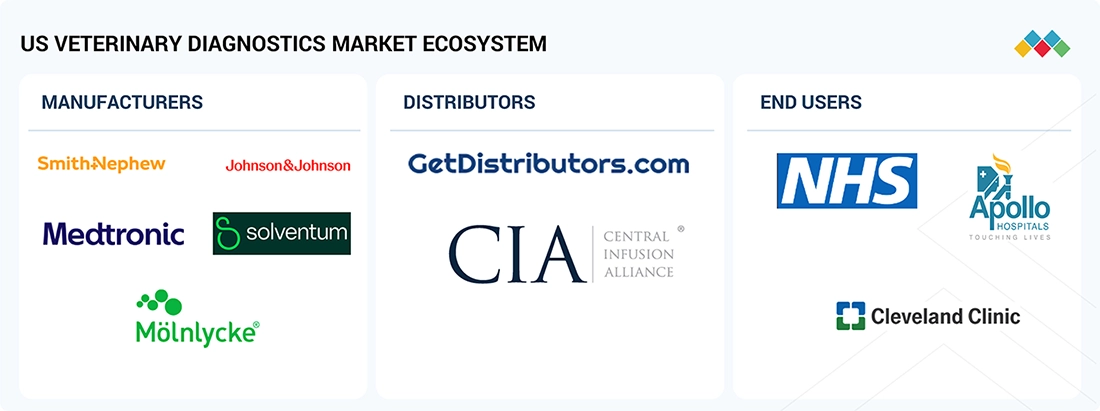
The Asia Pacific wound care market is characterized by a strong network that includes manufacturers, distributors, healthcare services, and development partners working together to deliver effective solutions that help patients with wounds heal. Manufacturers play a key role by fostering innovation at each step through the development of technologically advanced products that meet the healthcare requirements of this region. Distributors, on the other hand, are integral, serving hospitals, ambulatory surgical organizations, clinics, and even home healthcare services, which are the end users, helping them deliver wound care services efficiently to patients. These services, in turn, are vital to the healing process, thereby reducing infection and enhancing comfort.
Logos and trademarks shown above are the property of their respective owners. Their use here is for informational and illustrative purposes only.
MARKET SEGMENTS
Source: Secondary Research, Interviews with Experts, MarketsandMarkets Analysis
Wound Care Market, by Product
The Asia Pacific wound care market is segmented into advanced wound care products, surgical wound care products, and traditional wound care products. In 2025, advanced wound care products held the largest market share. Factors such as clinical efficacy and increased use of these products in healthcare institutions across the Asia Pacific region contributed to this share. Advanced wound care products include advanced wound dressings, which are further sub-classified by type and properties; wound therapy devices; biological skin substitutes; and topical agents. Rising patient awareness of effective wound management, combined with higher incidence rates of HAIs, is fueling demand for these products to support healing and adequately address infection. Furthermore, conditions such as diabetic foot ulcers, venous leg ulcers, and pressure ulcers, which may take a long time to heal, can be treated with advanced wound dressings, thereby contributing to the growth of this segment. Improvements in dressing technology, including antimicrobial agents, moisture management, and smart sensor technologies, are also likely to drive this market segment in the Asia Pacific region during the forecast period.
Wound Care Market, by Wound Type
The Asia Pacific market for wound care comprises both chronic and acute wounds. In 2025, the chronic wound market held the largest market share in the Asia Pacific region. Additionally, with the increasing geriatric population in Asia Pacific countries, the need to procure the best and most efficient wound care management practices and tools to facilitate healing by preventing complications will continue to propel the chronic wound market in the region.
Wound Care Market, by End User
The Asia Pacific wound care market has been segmented by end user into hospitals & clinics, home care settings, long-term care settings, and others. In 2025, hospitals & clinics held the largest share of the wound care market in the Asia Pacific region. This can be attributed to patients seeking medical care and treatment for chronic wounds such as pressure ulcers, diabetic foot ulcers, and venous leg ulcers. This share is also attributable to the availability of medical professionals in hospitals and clinics who can provide timely interventions and treatments. In addition, hospitals have the facilities to treat patients, which further adds to their share in the Asia Pacific wound care market.
REGION
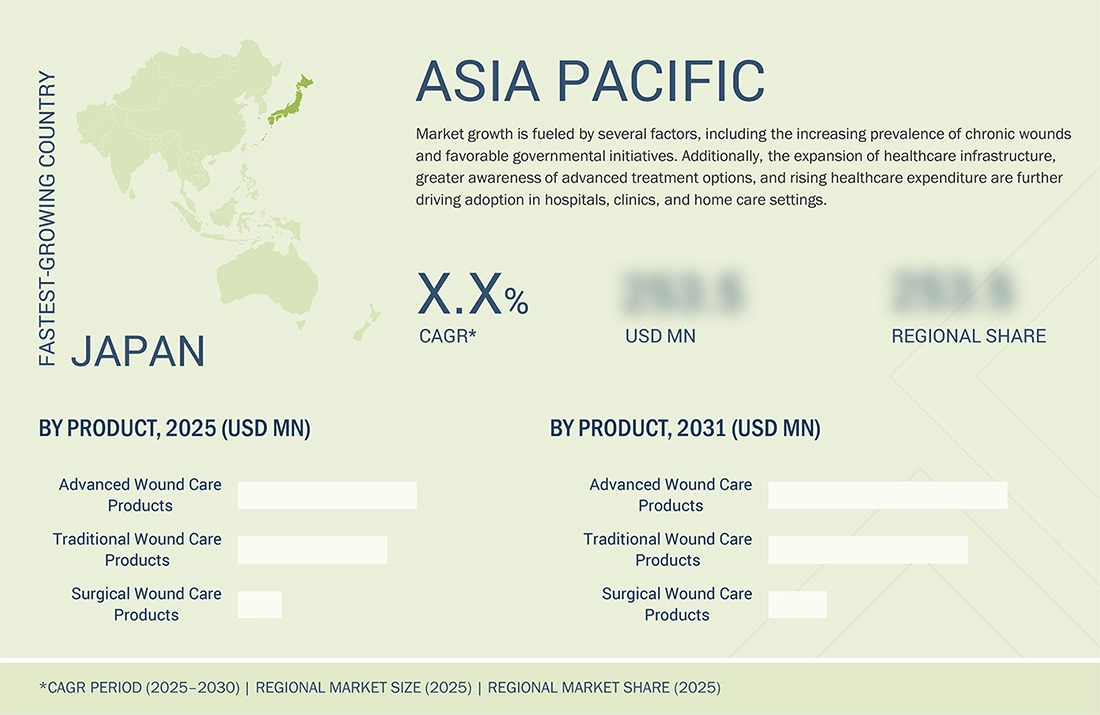
Japan is the fastest growing country in the Asia Pacific wound care market
Japan is the fastest-growing country in the Asia-Pacific wound care market, and the primary reason is its rapidly aging population and the high incidence of age-related diseases that increase the risk of complex wounds. Japan has one of the largest populations in the world, and this has led to a rapidly increasing elderly population that is prone to pressure ulcers, diabetic foot ulcers, and post-surgical wounds. In addition, Japan has a well-established healthcare system and high healthcare expenditures, which are conducive to the adoption of advanced wound care technology. Government initiatives in Japan are beneficial for the growth of this market segment, and it is expected that Japan will be the fastest-growing segment in the Asia-Pacific region.
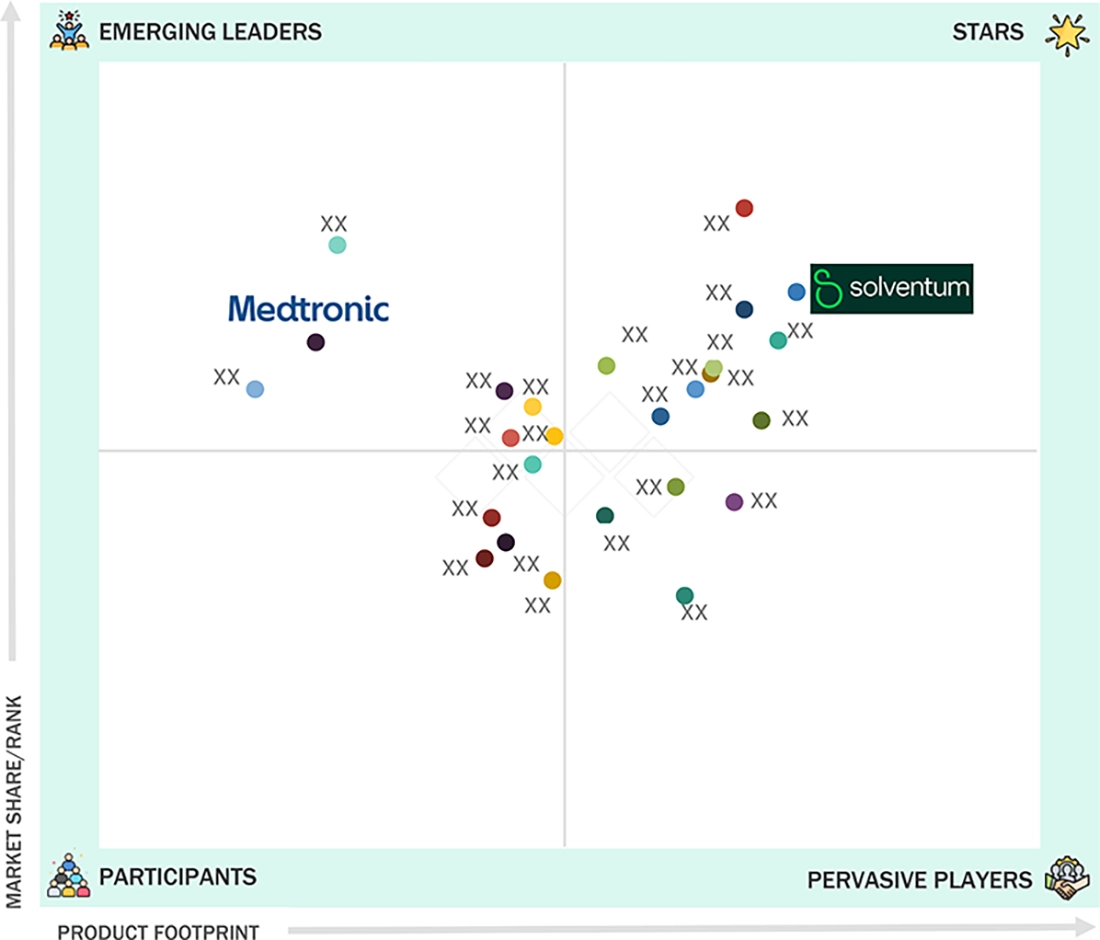
ASIA PACIFIC WOUND CARE MARKET: COMPANY EVALUATION MATRIX
In the Asia Pacific wound care market, Solventum holds a leading position supported by its comprehensive advanced wound care portfolio, strong clinical acceptance, and extensive regional distribution capabilities that enable broad adoption across hospital and outpatient settings. Medtronic, positioned as an Emerging Leader, is strengthening its presence through an expanding surgical wound care and wound closure portfolio, including sutures, topical skin adhesives, barbed closure devices, and stapling systems that enhance procedural efficiency and healing outcomes. While Solventum maintains market leadership driven by its established provider relationships and advanced therapy offerings, Medtronic’s diversified surgical wound management solutions and continued regional expansion are accelerating its momentum toward the leadership quadrant in the Asia Pacific wound care market.
Source: Secondary Research, Interviews with Experts, MarketsandMarkets Analysis
KEY MARKET PLAYERS
- Solventum (US)
- Johnson & Johnson Services, Inc. (US)
- Smith+Nephew (UK)
- Medtronic (Ireland)
- B.Braun SE (Germany)
- Convatec Group PLC (UK)
- Coloplast Group (Denmark)
- Cardinal Health (US)
- Mölnlycke AB (Sweden)
- Integra LifeSciences Corporation (US)
- PAUL HARTMANN AG (Germany)
- MIMEDX Group, Inc. (US)
- Essity Aktiebolag (Sweden)
- Organogenesis Inc. (US)
- Bioventus (US)
MARKET SCOPE
| REPORT METRIC | DETAILS |
|---|---|
| Market Size in 2025 (Value) | USD 6.04 Billion |
| Market Forecast in 2031 (Value) | USD 9.69 Billion |
| Growth Rate | CAGR of 8.2% from 2026 to 2031 |
| Years Considered | 2024–2031 |
| Base Year | 2024 |
| Forecast Period | 2026–2031 |
| Units Considered | Value (USD Million/Billion), Volume (Thousands) |
| Report Coverage | Revenue Forecast, Company Ranking, Competitive Landscape, Growth Factors, and Trends |
| Segments Covered |
|
| Regional Scope | China, Japan, India, Australia, South Korea, Singapore, Rest of Asia Pacific |
| Parent & Related Segment Reports |
Wound Care Market Europe Wound Care Market US Wound Care Market |
WHAT IS IN IT FOR YOU: ASIA PACIFIC WOUND CARE MARKET REPORT CONTENT GUIDE
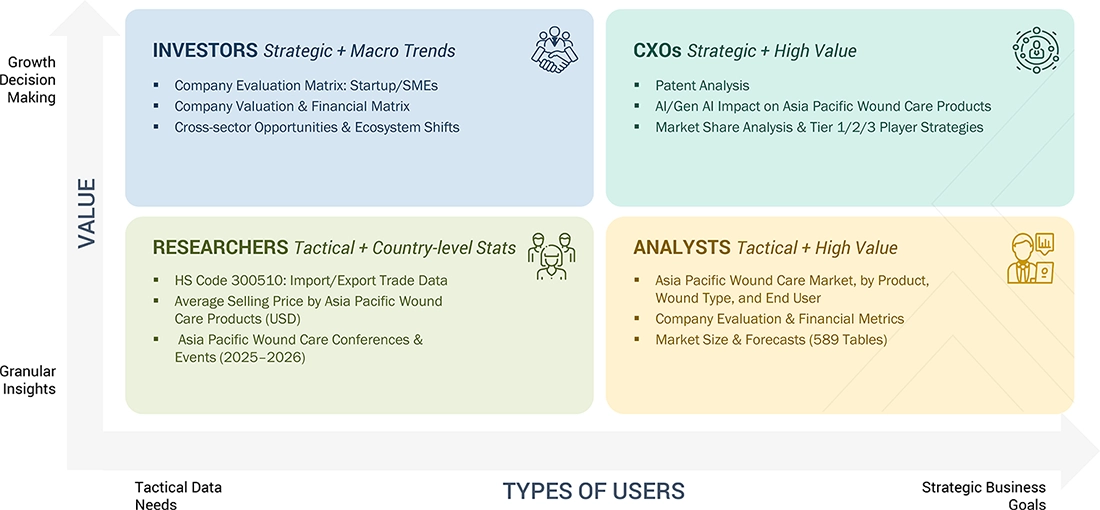
DELIVERED CUSTOMIZATIONS
We have successfully delivered the following deep-dive customizations:
| CLIENT REQUEST | CUSTOMIZATION DELIVERED | VALUE ADDS |
|---|---|---|
| Product Analysis | Product matrix, which provides a detailed comparison of the product portfolio of each company in the Asia Pacific wound care market | Enables easy comparison of competitors’ offerings, helping identify gaps, overlaps, and differentiation opportunities. |
| Company Information | Additional five company profiles of players operating in the Asia Pacific wound care market | Provides insights into competitors’ strategies, innovation focus, and partnerships, supporting strategic planning. |
RECENT DEVELOPMENTS
- March 2025 : Convatec Group PLC (UK) and the Wound, Ostomy, and Continence Nurses Society (US) collaborated to launch two free educational programs to improve ostomy care knowledge for healthcare professionals.
- January 2025 : Cardinal Health (US) opened a distribution center in Fort Worth, Texas, to support its At-Home Solutions business.
- April 2024 : Smith+Nephew (UK) introduced the RENASYS EDGE System, designed for home care patients with chronic wounds, such as ulcers.
Table of Contents
 Exclusive indicates content/data unique to MarketsandMarkets and not available with any competitors.
Methodology
The study involved major activities in estimating the current market size for the global Asia Pacific Wound Care Market. Exhaustive secondary research was done to collect information on the wound care industry. The next step was to validate these findings, assumptions, and sizing with industry experts across the value chain using primary research. Different approaches, such as top-down and bottom-up, were employed to estimate the total market size. After that, the market breakup and data triangulation procedures were used to estimate the market size of the segments and subsegments of the Asia Pacific Wound Care Market.
The four steps involved in estimating the market size are:
Secondary Research
The secondary research process involves the widespread use of secondary sources, directories, databases (such as Bloomberg Businessweek, Factiva, and D&B Hoovers), white papers, annual reports, investor presentations, SEC filings of companies and publications from government sources [such as National Institutes of Health (NIH), US FDA, US Census Bureau, World Health Organization (WHO), , Global Burden of Disease Study, and Centers for Medicare and Medicaid Services (CMS) were referred to identify and collect information for the Asia Pacific Wound Care Market study. It was also used to obtain important information about the key players and market classification & segmentation according to industry trends to the bottom-most level, and key developments related to market and technology perspectives. A database of the key industry leaders was also prepared using secondary research.
Primary Research
In the primary research process, various sources from both the supply and demand sides were interviewed to obtain qualitative and quantitative information for this report. The primary sources from the supply side include industry experts such as CEOs, vice presidents, marketing and sales directors, technology & innovation directors, and related key executives from various key companies and organizations in the Asia Pacific Wound Care Market. The primary sources from the demand side include pharmaceutical companies, biotechnology companies, CROs, pharmacies, medical device companies, and research academics and universities. Primary research was conducted to validate the market segmentation, identify key players in the market, and gather insights on key industry trends & key market dynamics.
The following is a breakdown of the primary respondents:

Note 1: Other designations include sales managers, marketing managers, and product managers.
Note 2: Companies are classified into tiers based on their total revenues. As of 2024, Tier 1 = >USD 100 million, Tier 2 = USD 10 million to USD 100 million, and Tier 3 = < USD 10 million.
To know about the assumptions considered for the study, download the pdf brochure
Market Size Estimation
For the global market value, annual revenues were calculated based on the revenue mapping of major product manufacturers and OEMs active in the Asia Pacific Wound Care Market. All the major service providers were identified at the global and/or country/regional level. Revenue mapping for the respective business segments/sub-segments was done for the major players. The Asia Pacific Wound Care Market was split into various segments and sub-segments based on:
- List of major players operating in the product market at the regional and/or country level
- Product mapping of wound care providers at the regional and/or country level
- Mapping of annual revenue generated by listed major players from wound care (or the nearest reported business unit/product category)
- Extrapolation of the revenue mapping of the listed major players to derive the global market value of the respective segments/subsegments
- Summation of the market value of all segments/subsegments to arrive at the Asia Pacific Wound Care Market
The above-mentioned data was consolidated and added with detailed inputs and analysis from MarketsandMarkets and presented in this report.
The research methodology used to estimate the market size includes the following:

Data Triangulation
After arriving at the overall market size by applying the process mentioned above, the total market was split into several segments. To complete the overall market engineering process and arrive at the exact statistics for all segments and subsegments, data triangulation and market breakdown procedures were employed, wherever applicable. The data was triangulated by studying various factors and trends from both the demand and supply sides.
Market Definition
Wound care involves using various products, such as dressings, devices, and biologics, to facilitate the rapid healing and management of wounds. Wound care enables an individual’s injuries to transition into smoother, cost-effective, and treatment-efficient healing.
Stakeholders
- Wound Care Product Manufacturers
- Wound Care Associates
- Research and Consulting Firms
- Distributors of Wound Care Devices
- Contract Manufacturers of Wound Care Products
- Healthcare Institutes (Hospitals, Medical Schools, Diagnostic Centers, and Outpatient Clinics)
- Research Institutes
- Venture Capitalists
Report Objectives
- To define, describe, segment, and forecast the Asia Pacific Wound Care Market by product, wound type, end user, and region
- To provide detailed information regarding the major factors influencing market growth (such as drivers, restraints, opportunities, and challenges)
- To analyze the micromarkets with respect to individual growth trends, prospects, and contributions to the overall Asia Pacific Wound Care Market
- To analyze market opportunities for stakeholders and provide details of the competitive landscape for key players
- To forecast the size of the market segments with respect to five regions: North America, Europe, the Asia Pacific, Latin America, and the Middle East & Africa
- To profile the key players and comprehensively analyze their product portfolios, market positions, and core competencies
- To benchmark players within the market using the proprietary Company Evaluation Matrix framework, which analyzes market players on various parameters within the broad categories of business and product excellence
- To study the impact of AI/Gen AI on the market, along with the macroeconomic outlook for each region


Personalize This Research
- Triangulate with your Own Data
- Get Data as per your Format and Definition
- Gain a Deeper Dive on a Specific Application, Geography, Customer or Competitor
- Any level of Personalization
Let Us Help You
- What are the Known and Unknown Adjacencies Impacting the Asia Pacific Wound Care Market
- What will your New Revenue Sources be?
- Who will be your Top Customer; what will make them switch?
- Defend your Market Share or Win Competitors
- Get a Scorecard for Target Partners

Custom Market Research Services
We Will Customise The Research For You, In Case The Report Listed Above Does Not Meet With Your Requirements
Get 10% Free CustomisationTESTIMONIALS

JAYANT RAJPUROHIT
Director of Market Insights, Data and Analytics
SFI Health,
Leading Pharmaceutical Companywww.sfihealth.com/

We at SFI Health approached MarketsandMarkets for an Opportunity Assessment on "Incidence and Prevalence of Focus Indications" as we wanted to know the most attractive HCPs like Physician, Functional MD, Naturopath and Pharmacist. The project was critical for us to ensure our focus on the right target which would enable sustainable growth and profitability for SFI Health. The business insights provided exceeded our expectations and we were extremely impressed. The team at MarketsandMarkets is highly professional and detail oriented and very well understood our business needs. MarketsandMarkets offers a unique combination of expertise and dedicated engagement model. We identified 2 new products to be launched in coming months, based on the research findings provided by MarketsandMarkets. We are happy with the services and would strongly recommend MarketsandMarkets to my peers in the industry.

BEATRIZ DE LA CALLE
Head of Commercial Analytics
Qualicaps,
Leading Pharmaceutical Companywww.qualicaps.com/

We partnered with MarketsandMarkets for an assessment study on hard empty capsules. The team was extremely professional in understanding our business requirements and we received timely responses to all our queries. The market intelligence and the recommendations has met our business requirements. We were extremely impressed to see the final study results; it really exceeded our expectations. The market intelligence offered by MarketsandMarkets, and clarity on next steps will help us achieve our business objective for the Year 2021. We are happy with the services and would strongly recommend MarketsandMarkets to my peers in the industry.

Bob Williams,
Senior Director Business Development & Innovation
Bracco Diagnostics Inc.,
Italian Multinational in life sciences sector and a World Leader in imaging diagnosticsimaging.bracco.com/us-en
We were pleased with targeted insights that MarketsandMarkets identified from a custom study on the 'Radiation Dose Management Solutions Market'. Your team identified and characterized the market participants as well as underlying trends accurately. This study was useful to Bracco in formulating business strategies for our dose monitoring product lines and we thank MarketsandMarkets for the job well done.
Cody Coonradt,
Market Development and Strategy Manager
3M Health Information Systems,
Leader in Health care Coding, Payment & Analytics Solutions.www.3m.com/3M/en_US/health-information-systems-us
The value for our organization comes from three things: depth of research, specificity of segments and being easy to work with. As important as the first two are, the third can't be underestimated. MarketsandMarkets, maybe more than any other research vendor, wants to know what is top of mind for our team and what big questions we are grappling to answer.
Their customer first approach and high value engagement model, have given us great analysis and excellent value for money






Growth opportunities and latent adjacency in Asia Pacific Wound Care Market