US Wound Care Market Size, Growth, Share & Trends Analysis

US Wound Care Market by Product [Dressings (Foam, Hydrocolloid, Collagen), Devices (NPWT, Debridement), Biological Skin Substitutes, Sutures, Staplers], Wound [Chronic, Acute], End User [Hospitals, Clinics, Home Care]-Forecast to 2031




OVERVIEW
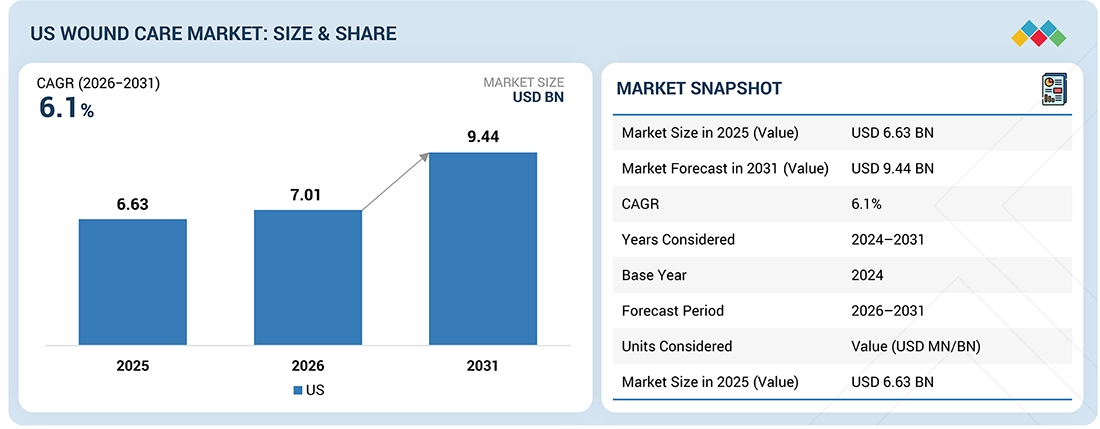
Source: Secondary Research, Interviews with Experts, MarketsandMarkets Analysis
The US wound care market, valued at USD 6.63 billion in 2025, stood at USD 7.01 billion in 2026 and is projected to advance at a resilient CAGR of 6.1% from 2026 to 2031, culminating in a forecasted valuation of USD 9.44 billion by the end of the period. The growth of wound care products is primarily driven by trauma and burn injuries, the rising prevalence of chronic diseases, and the growing geriatric population. This trend has created an increasing need for effective wound management solutions. Furthermore, positive government initiatives and reimbursement frameworks are spurring market growth.
KEY TAKEAWAYS
-
By ProductBy product, the advanced wound care segment is expected to register the highest CAGR of 6.8% during the forecast period.
-
By Wound TypeBy wound type, the chronic wounds segment is expected to dominate the market in 2025 with a share of 58.5%.
-
By End UserBy end user, the hospitals & clinics segment is expected to dominate the market in 2025 with a share of 52.8%.
-
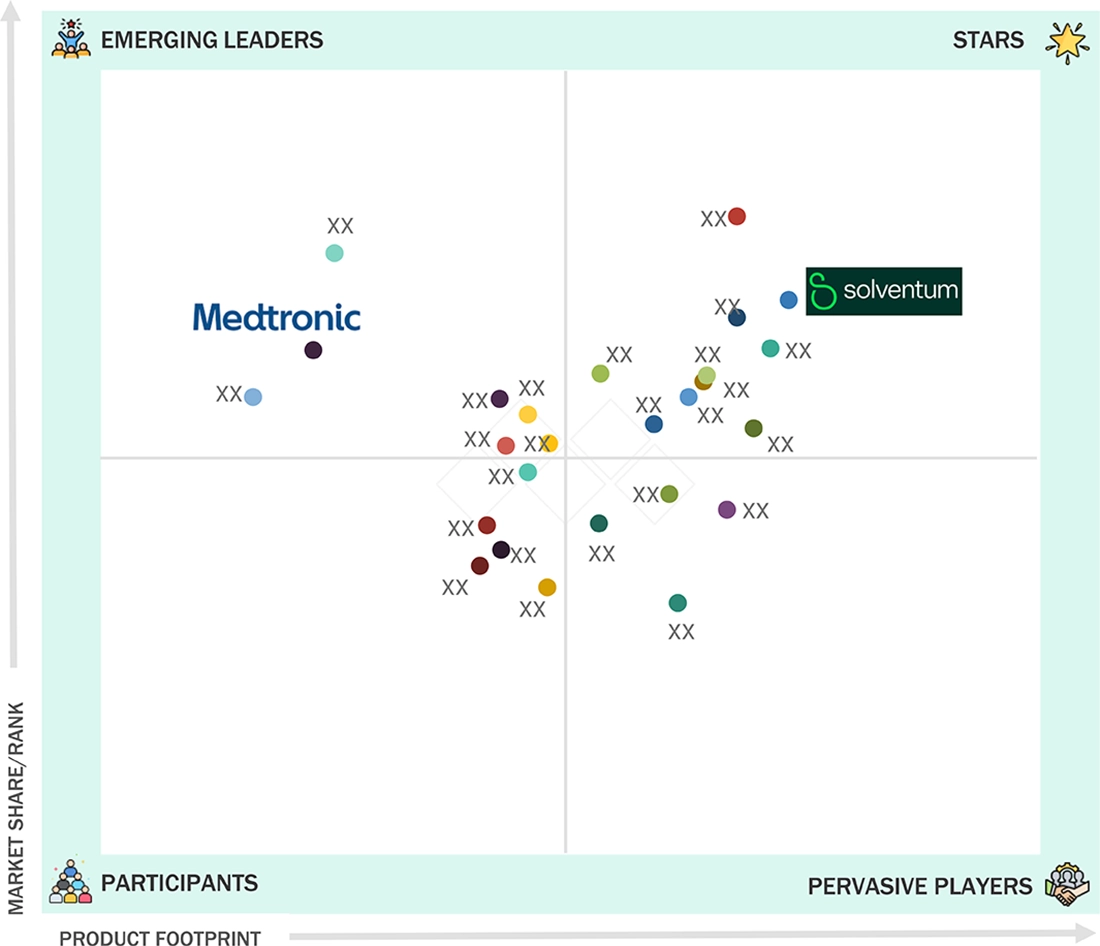
Competitive LandscapeCardinal Health, Solventum, and Johnson & Johnson were identified as the star players in the US wound care market, supported by their strong market presence and extensive product portfolios.
-
Competitive LandscapePensar Medical and DermaRite Industries have distinguished themselves among startups and SMEs by securing strong footholds in specialized niche areas.
The US wound care market is expected to increase during the forecast period due to growing incidences of trauma injuries, burn injuries, and an increase in chronic diseases among older generations. But due to their increased costs, their adoption might be restrained. The growth of the market is restrained due to a lack of healthcare professionals. Also, because some areas are underdeveloped, their growth is restrained due to a lack of awareness.
TRENDS & DISRUPTIONS IMPACTING CUSTOMERS' CUSTOMERS
The US wound care market is significantly related to the nature of customer demand and treatment trends. The primary market participants driving demand for wound care manufacturers are hospitals, clinics, and healthcare institutions. Any change in the treatment patterns, adoption of the latest therapies, and change in the delivery of the services significantly impacts the demand for the services of the healthcare facilities, thus the top-line business of the manufacturers of the wound care products.

Source: Secondary Research, Interviews with Experts, MarketsandMarkets Analysis
MARKET DYNAMICS

Level
-
Growing geriatric population

-
Rising cases of traumatic injuries


Level
-
High cost of advanced wound care products

-
Risks associated with the use of advanced wound care products


Level
-
Home-care Optimized Solutions

-
Technological advancement in wound care


Level
-
Lack of trained healthcare professionals

-
Data security and privacy concerns

Source: Secondary Research, Interviews with Experts, MarketsandMarkets Analysis
Driver: Rising cases of traumatic injuries
The wound care market is driven by the rising number of trauma injuries, particularly those caused by traffic and industrial accidents. According to the WHO, around 1.3 million deaths and 20-50 million non-fatal injuries occur annually due to traffic incidents. The majority of these deaths involve motorcycle and pedestrian riders. Additionally, approximately 270 million workplace accidents occur each year, according to the International Labor Organization. These accidents often cause severe wounds that require thorough care to prevent complications such as infection and tissue damage, and to avoid penalties that may arise from such incidents, including hospitalization or rehabilitation, especially when care is inadequate.
Restraint: High cost of advanced wound care products
Despite the proven efficacy of advanced wound care products, they remain prohibitively costly for most people. More expensive wound management solutions, such as bioengineered skin substitutes, antimicrobial dressings, and negative pressure therapy systems, would otherwise pose a significant economic burden on patients and the healthcare system as a whole. Studies published in Advances in Wound Care suggest that chronic, nonhealing wounds, which presently affect between 1% and 2% of the global population, would otherwise require between USD 20 million and USD 50 million annually to manage. Of this number, foot lesions, specifically those associated with diabetes mellitus, rank among the leading causes of hospitalization and presently affect about 25% of patients identified as suffering from the chronic condition.
Opportunity: Technological advancements in wound care
The increasing integration of technology in the area of wound management is becoming one of the major opportunities in the wound care industry. Improved smart devices and wound dressings improve patient outcomes and help deliver more efficient and effective care. Infection-sensing smart dressings that can transmit cure information on the spot help patients receive personalized care on time. In the same way, the development of extended wear negative pressure wound therapy system technology enhances ease of use and adaptability among patients in settings beyond hospitals. The technology will help adhere to treatment results and alleviate pressure on the health infrastructure. Further, increased spending on biologics points to the rising use of minimally invasive therapies. In response to mounting demand for faster healing with fewer complications, industry players can be expected to accelerate spending on research and development work aimed at offering scalable and affordable solutions appropriate for larger numbers.
Challenge: Lack of trained healthcare professionals
One of the common hindrances to the adoption of wound care solutions is the dearth of well-equipped healthcare professionals in most areas. It has been observed that proper wound management is not only dependent on proper equipment being available, due to which most people are resorting to advanced wound care solutions, but requires an expert level of application as well, which often leads to delayed treatment, incorrect diagnosis and inept use of advanced solutions by most general practitioners and nurses who are not well equipped in wound management practices. The lack of expertise not only makes it difficult for specialists to manage cases related to foot ulcers in diabetics as well as pressure sores effectively, requiring strict expert level application to get successful results but also hampers the growth of the wound care industry by making it challenging for countries to adapt to advanced solutions when most healthcare professionals are not well equipped to make proper use of the solutions in the healthcare sector.
US WOUND CARE MARKET: COMMERCIAL USE CASES ACROSS INDUSTRIES
| COMPANY | USE CASE DESCRIPTION | BENEFITS |
|---|---|---|
 |
Provides advanced solutions for wound care in the form of antimicrobial dressings, exudate management dressings, and NPWT solutions for treating chronic wounds, surgical wounds, and difficult-to-heal ulcers. | Improves wound healing by regulating infection, moisture content, and granulation tissue generation, thus reducing recovery time, hospital stay, and total costs of treatment. |
 |
Offers a full range of wound closure solutions such as absorbable and antibacterial sutures, staples, and tissue control devices for surgical, trauma, and minimally invasive procedures. | Optimizes surgical procedures through infection risk reduction, rapid approximation, and patient recovery for better operating room efficiency and ultimate wound integrity. |
 |
Offers a premium portfolio of advanced wound care, including foam dressing such as ALLEVYN, Negative Pressure Wound Therapy Solution such as PICO, and debridement solutions for complex wounds, burns, pressure ulcers, and diabetic foot ulcers. | Decreases dressing change frequency, complications, comfort, and associated costs, resulting in quicker healing and superior clinical performance. |
 |
Offers a wide range of skin and wound care products such as advanced dressings, compression therapies, and barrier creams used for the prevention and treatment of minor to chronic wounds. | It fosters a healing environment that is moist, thereby preventing breakdowns, infections, and the continuum of care needs, which results in improved skin integrity, reduced instances of readmissions, and optimized resource management. |
 |
Concentrates on innovative wound management with soft silicones based on Safetac Technology, high exudate foam absorbers, and pressure ulcer protection solutions for surgical areas, chronic wounds, and vulnerable skin. | Facilitates dressing with reduced pain and trauma, promotes fast wound closure, and preserves injured skin, providing scientifically proven outcomes in the reduction of wound size, improvement in quality of life, and value-based care. |
Logos and trademarks shown above are the property of their respective owners. Their use here is for informational and illustrative purposes only.
MARKET ECOSYSTEM
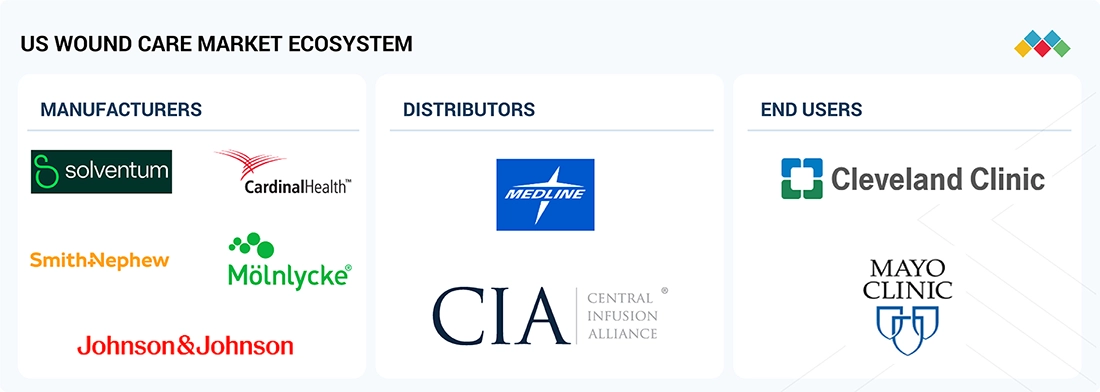
The ecosystem market map for the US wound care market is an interconnected structure in which key stakeholders, such as manufacturers, distributors, healthcare organizations, and partnering organizations for development, collaborate to manage wounds effectively and optimize patient care. The role of the manufacturer is evident, as innovation through the development of sophisticated wound care products meets the need for improvement. Moreover, the functions of distributors, logistics providers, and group purchasing organizations are also important, ensuring the timely delivery of products and facilitating market access. Additionally, hospitals, ambulatory surgical centers, and home healthcare settings represent the end users who opt for wound care solutions for quicker recovery, infection prevention, or enhanced patient comfort.
Logos and trademarks shown above are the property of their respective owners. Their use here is for informational and illustrative purposes only.
MARKET SEGMENTS

Source: Secondary Research, Interviews with Experts, MarketsandMarkets Analysis
Wound Care Market, by Product
In terms of products, the wound care market includes advanced wound care products, surgical wound care products, and traditional wound care products. In 2024, advanced wound care products accounted for the largest share of the market. The market is segmented into advanced wound dressings by type, advanced wound dressings by property, wound therapy devices, biological skin substitutes, and topical agents. Patients have become more educated about how to care for their wounds. Moreover, hospital-acquired infections have increased, making advanced wound care products essential for effectively controlling these infections. Additionally, the market for advanced wound care products is being driven by the rising incidence of chronic wounds, such as diabetic foot ulcers, venous leg ulcers, and pressure ulcers. These wounds require prolonged treatment, and advanced wound care products help effectively heal them.
Wound Care Market, by Wound Type
The wound care market is categorized based on wound type, consisting of chronic wounds and acute wounds, among others. As of 2024, this segment is dominated by chronic wounds. The chronic wound type is further categorized based on diabetic foot ulcers, pressure ulcers, venous leg ulcers, among others. The growth of this market is largely driven by the increasing number of chronic wounds worldwide. With this, the increasing number of patients is accompanied by the rising need for effective wound care products. Additionally, the increasing number of older populations has led to a rise in the need for wound care solutions that promote faster wound healing while reducing the likelihood of complications.
Wound Care Market, by End User
The market classification based on types of end users has been done in relation to wound care hospitals & clinics, home care centers, long-term care centers, along with other types. It was estimated that in the year 2024, the hospitals & clinics comprising inpatient & outpatient centers led the wound care market in terms of size. The major reason for this occurrence is that more people are likely to visit these places for treatments related to chronic wounds, such as pressure ulcers, foot ulcers in individuals with diabetes, and venous leg ulcers. These centers employ qualified personnel and feature advanced medical equipment.
US WOUND CARE MARKET: COMPANY EVALUATION MATRIX
Following its spinoff from 3M in April 2024, Solventum embarked on a new journey as an independent company. While it previously benefited from 3M’s resources and brand recognition, Solventum is now focused on establishing its own identity. The company develops, manufactures, and markets a wide range of products that meet the needs of both patients and healthcare providers. Its operations are organized into four key business segments: MedSurg, Dental Solutions, Health Information Systems, and Purification & Filtration. To drive growth, Solventum is prioritizing innovation and strategic expansion. The company enhances its competitive position by combining materials science with digital technologies, delivering improved clinical and economic outcomes for healthcare systems.
Source: Secondary Research, Interviews with Experts, MarketsandMarkets Analysis
KEY MARKET PLAYERS
MARKET SCOPE
| REPORT METRIC | DETAILS |
|---|---|
| Market Size in 2025 (Value) | USD 6.63 Billion |
| Market Forecast in 2031 (Value) | USD 9.44 Billion |
| Growth Rate | CAGR of 6.1% from 2026–2031 |
| Years Considered | 2024–2031 |
| Base Year | 2024 |
| Forecast Period | 2026–2031 |
| Units Considered | Value (USD Million/Billion) |
| Report Coverage | Revenue forecast, company ranking, competitive landscape, growth factors, and trends |
| Segments Covered |
|
| Parent & Related Segment Reports |
Wound Care Market Asia Pacific Wound Care Market Europe Wound Care Market |
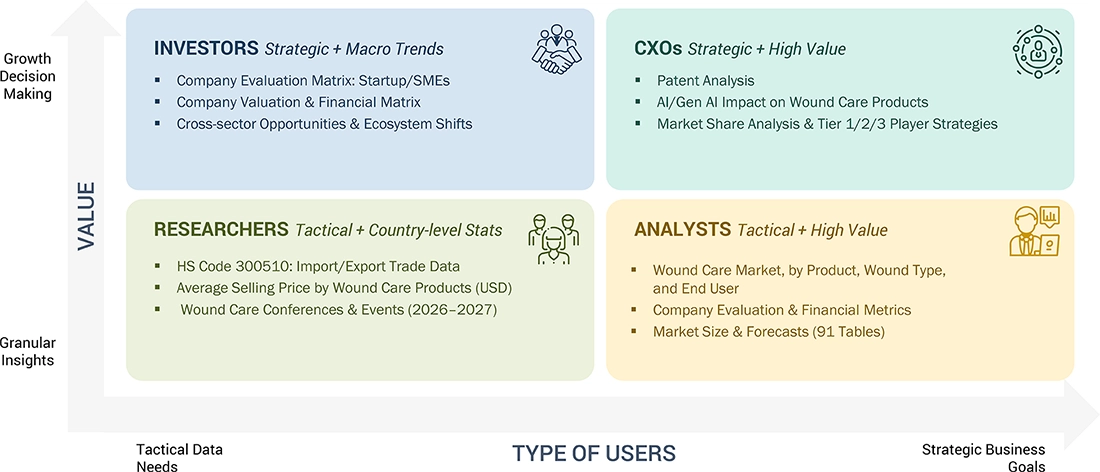
WHAT IS IN IT FOR YOU: US WOUND CARE MARKET REPORT CONTENT GUIDE
DELIVERED CUSTOMIZATIONS
We have successfully delivered the following deep-dive customizations:
| CLIENT REQUEST | CUSTOMIZATION DELIVERED | VALUE ADDS |
|---|---|---|
| Product Analysis | Product matrix, which provides a detailed comparison of the product portfolio of each company in the US wound care market | Enables easy comparison of competitors’ offerings, helping identify gaps, overlaps, and opportunities for differentiation. |
| Company Information | Additional five company profiles of players operating in the US wound care market | Provides insights into competitors’ strategies, innovation focus, and partnerships, supporting strategic planning. |
| Geographic Analysis | Additional country-level analysis of the US wound care market | Guides market entry, localization, and targeted launch strategies by highlighting regional demand and opportunities. |
RECENT DEVELOPMENTS
- March 2025: Convatec Group PLC (UK) and the Wound, Ostomy and Continence Nurses Society (US) collaborated to launch two free educational programs to improve ostomy care knowledge for healthcare professionals.
- January 2025: Cardinal Health (US) opened a distribution center in Fort Worth, Texas, to support its At-Home Solutions business.
- July 2024: Owens & Minor (US) acquired Rotech Healthcare (US) for USD 1.36 billion. This acquisition strengthens Owens & Minor's presence in the home-based care segment, expanding its services and capabilities.
- April 2024: Smith+Nephew (UK) introduced the RENASYS EDGE System, which is designed for home care patients with chronic wounds, such as ulcers.
Table of Contents
 Exclusive indicates content/data unique to MarketsandMarkets and not available with any competitors.
Methodology
The study involved major activities in estimating the current market size for the US Wound Care Market. Exhaustive secondary research was done to collect information on the US wound care industry. The next step was to validate these findings, assumptions, and sizing with industry experts across the value chain using primary research. Different approaches, such as top-down and bottom-up, were employed to estimate the total market size. After that, the market breakup and data triangulation procedures were used to estimate the market size of the segments and subsegments of the US Wound Care Market.
The four steps involved in estimating the market size are:
Secondary Research
The secondary research process involves the widespread use of secondary sources, directories, databases (such as Bloomberg Businessweek, Factiva, and D&B Hoovers), white papers, annual reports, investor presentations, SEC filings of companies and publications from government sources [such as National Institutes of Health (NIH), US FDA, US Census Bureau, World Health Organization (WHO), , Global Burden of Disease Study, and Centers for Medicare and Medicaid Services (CMS) were referred to identify and collect information for the US Wound Care Market study. It was also used to obtain important information about the key players and market classification & segmentation according to industry trends to the bottom-most level, and key developments related to market and technology perspectives. A database of the key industry leaders was also prepared using secondary research.
Primary Research
In the primary research process, various sources from both the supply and demand sides were interviewed to obtain qualitative and quantitative information for this report. The primary sources from the supply side include industry experts such as CEOs, vice presidents, marketing and sales directors, technology & innovation directors, and related key executives from various key companies and organizations in the US Wound Care Market. The primary sources from the demand side include pharmaceutical companies, biotechnology companies, CROs, pharmacies, medical device companies, and research academics and universities. Primary research was conducted to validate the market segmentation, identify key players in the market, and gather insights on key industry trends & key market dynamics.
Market Size Estimation
For the market value, global revenues were calculated based on the revenue mapping of major product manufacturers and OEMs active in the US Wound Care Market. All the major service providers were identified at the country level. Revenue mapping for the respective business segments/sub-segments was done for the major players. The US Wound Care Market was split into various segments and sub-segments based on:
- List of major players operating in the product market at the regional and/or country level
- Product mapping of US wound care providers at the regional and/or country level
- Mapping of annual revenue generated by listed major players from US wound care (or the nearest reported business unit/product category)
- Extrapolation of the revenue mapping of the listed major players to derive the market value of the respective segments/subsegments
- Summation of the market value of all segments/subsegments to arrive at the US Wound Care Market
The above-mentioned data was consolidated and added with detailed inputs and analysis from MarketsandMarkets and presented in this report.
Data Triangulation
After arriving at the overall market size by applying the process mentioned above, the total market was split into several segments. To complete the overall market engineering process and arrive at the exact statistics for all segments and subsegments, data triangulation and market breakdown procedures were employed, wherever applicable. The data was triangulated by studying various factors and trends from both the demand and supply sides.
Market Definition
Wound care involves using various products, such as dressings, devices, and biologics, to facilitate the rapid healing and management of wounds. Wound care enables an individual’s injuries to transition into smoother, cost-effective, and treatment-efficient healing.
Stakeholders
- Wound Care Product Manufacturers
- Wound Care Associates
- Research and Consulting Firms
- Distributors of Wound Care Devices
- Contract Manufacturers of Wound Care Products
- Healthcare Institutes (Hospitals, Medical Schools, Diagnostic Centers, and Outpatient Clinics)
- Research Institutes
- Venture Capitalists
Report Objectives
- To define, describe, segment, and forecast the US Wound Care Market by product, wound type, end user, and region
- To provide detailed information regarding the major factors influencing market growth (such as drivers, restraints, opportunities, and challenges)
- To analyze the micromarkets with respect to individual growth trends, prospects, and contributions to the overall US Wound Care Market
- To analyze market opportunities for stakeholders and provide details of the competitive landscape for key players
- To profile the key players and comprehensively analyze their product portfolios, market positions, and core competencies
- To benchmark players within the market using the proprietary Company Evaluation Matrix framework, which analyzes market players on various parameters within the broad categories of business and product excellence
- To study the impact of AI/Gen AI on the market, along with the macroeconomic outlook in the US Wound Care Market


Personalize This Research
- Triangulate with your Own Data
- Get Data as per your Format and Definition
- Gain a Deeper Dive on a Specific Application, Geography, Customer or Competitor
- Any level of Personalization
Let Us Help You
- What are the Known and Unknown Adjacencies Impacting the US Wound Care Market
- What will your New Revenue Sources be?
- Who will be your Top Customer; what will make them switch?
- Defend your Market Share or Win Competitors
- Get a Scorecard for Target Partners

Custom Market Research Services
We Will Customise The Research For You, In Case The Report Listed Above Does Not Meet With Your Requirements
Get 10% Free CustomisationTESTIMONIALS

JAYANT RAJPUROHIT
Director of Market Insights, Data and Analytics
SFI Health,
Leading Pharmaceutical Companywww.sfihealth.com/

We at SFI Health approached MarketsandMarkets for an Opportunity Assessment on "Incidence and Prevalence of Focus Indications" as we wanted to know the most attractive HCPs like Physician, Functional MD, Naturopath and Pharmacist. The project was critical for us to ensure our focus on the right target which would enable sustainable growth and profitability for SFI Health. The business insights provided exceeded our expectations and we were extremely impressed. The team at MarketsandMarkets is highly professional and detail oriented and very well understood our business needs. MarketsandMarkets offers a unique combination of expertise and dedicated engagement model. We identified 2 new products to be launched in coming months, based on the research findings provided by MarketsandMarkets. We are happy with the services and would strongly recommend MarketsandMarkets to my peers in the industry.

BEATRIZ DE LA CALLE
Head of Commercial Analytics
Qualicaps,
Leading Pharmaceutical Companywww.qualicaps.com/

We partnered with MarketsandMarkets for an assessment study on hard empty capsules. The team was extremely professional in understanding our business requirements and we received timely responses to all our queries. The market intelligence and the recommendations has met our business requirements. We were extremely impressed to see the final study results; it really exceeded our expectations. The market intelligence offered by MarketsandMarkets, and clarity on next steps will help us achieve our business objective for the Year 2021. We are happy with the services and would strongly recommend MarketsandMarkets to my peers in the industry.

Bob Williams,
Senior Director Business Development & Innovation
Bracco Diagnostics Inc.,
Italian Multinational in life sciences sector and a World Leader in imaging diagnosticsimaging.bracco.com/us-en
We were pleased with targeted insights that MarketsandMarkets identified from a custom study on the 'Radiation Dose Management Solutions Market'. Your team identified and characterized the market participants as well as underlying trends accurately. This study was useful to Bracco in formulating business strategies for our dose monitoring product lines and we thank MarketsandMarkets for the job well done.
Cody Coonradt,
Market Development and Strategy Manager
3M Health Information Systems,
Leader in Health care Coding, Payment & Analytics Solutions.www.3m.com/3M/en_US/health-information-systems-us
The value for our organization comes from three things: depth of research, specificity of segments and being easy to work with. As important as the first two are, the third can't be underestimated. MarketsandMarkets, maybe more than any other research vendor, wants to know what is top of mind for our team and what big questions we are grappling to answer.
Their customer first approach and high value engagement model, have given us great analysis and excellent value for money






Growth opportunities and latent adjacency in US Wound Care Market