Atomic Force Microscopy Market

Atomic Force Microscopy Market by Offering (AFMs, Probes, Software), Grade (Industrial, Research), Application (Semiconductors & Electronics, Materials Science & Nanotechnology, Life Sciences & Biomedical), and Region - Global Forecast to 2032




OVERVIEW
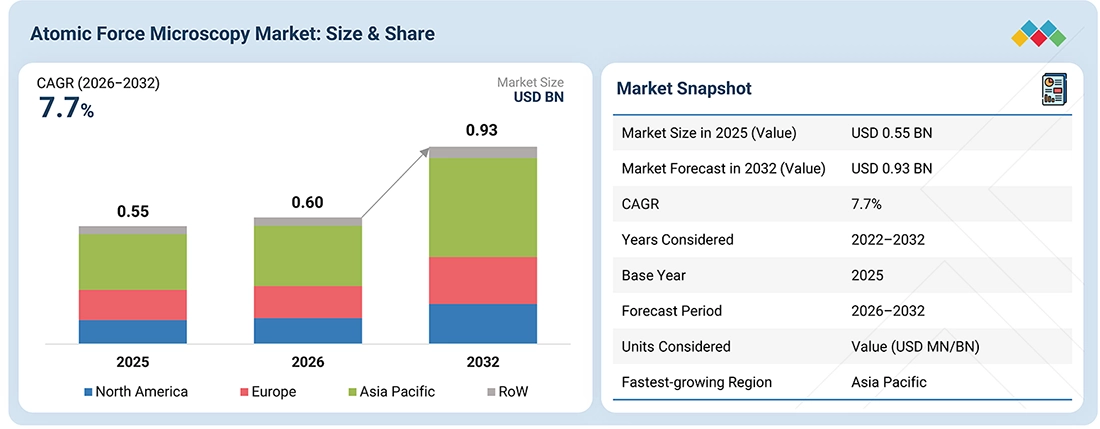
The atomic force microscopy market is projected to reach USD 0.93 billion by 2032 from USD 0.60 billion in 2026, at a CAGR of 7.7%. The market is witnessing steady growth due to the increasing need for nanoscale surface characterization and analysis across semiconductor & electronics, materials science & nanotechnology, chemical & polymer research, and life sciences applications. The growing use of AFM for analyzing surface morphology, roughness, mechanical properties, and material characteristics is boosting the adoption of AFM systems in industrial and research applications. In addition, advancements in AFM systems, probes, imaging techniques, and software are improving measurement accuracy, resolution, automation, and ease of use, supporting market growth.
MARKET SCOPE
| REPORT METRIC | DETAILS |
|---|---|
| Market Size in 2025 (Value) | USD 0.55 Billion |
| Market Size in 2026 (Value) | USD 0.60 Billion |
| Market Forecast in 2032 (Value) | USD 0.93 Billion |
| Growth Rate | CAGR of 7.7% from 2026–2032 |
| Years Considered | 2022–2032 |
| Base Year | 2025 |
| Forecast Period | 2026–2032 |
| Units Considered | Value (USD Million/Billion), Volume (Million Units) |
| Report Coverage | Revenue Forecast, Company Ranking, Competitive Landscape, Growth Factors, and Trends |
|
Top Companies
|
|
|
Growth Drivers
|
|
| Segments Covered |
|
| Regions Covered | North America, Europe, Asia Pacific, and RoW |
KEY TAKEAWAYS
-
BY REGIONBy region, Asia Pacific is expected to account for ~47.7% share of the atomic force microscopy market, in terms of value, in 2026.
-
BY OFFERINGBy offering, the atomic force microscopes segment is anticipated to hold the largest market share during the forecast period.
-
BY GRADEBy grade, the industrial segment is likely to record a CAGR of ~8.1% between 2026 and 2032.
-
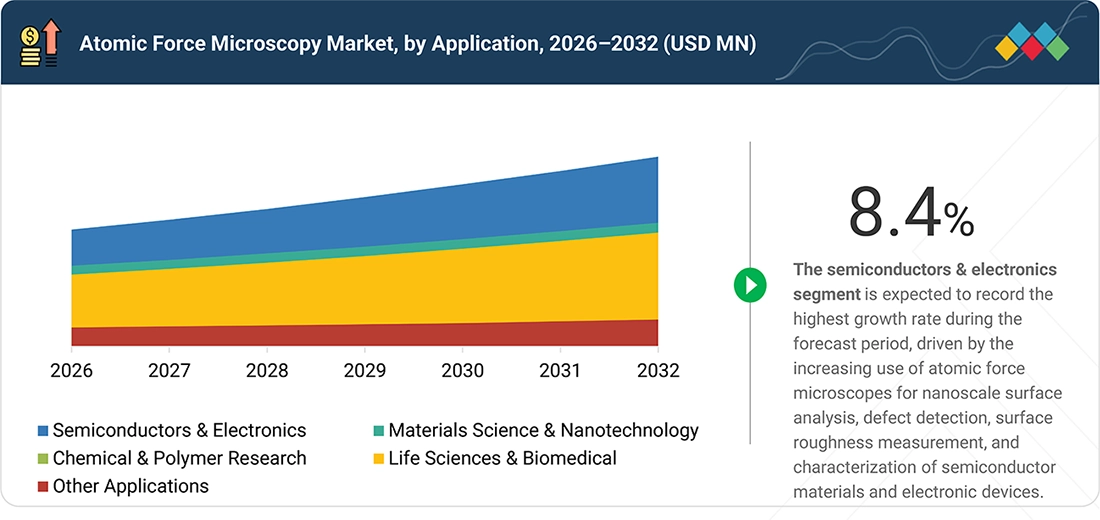
BY APPLICATIONBy application, the semiconductors & electronics segment is expected to record a CAGR of ~8.4% from 2026 to 2032.
-
COMPETITIVE LANDSCAPE (KEY PLAYERS)Park Systems, Bruker, Oxford Instruments, Hitachi High-Tech Corporation, and Semilab Inc. are identified as key players in the atomic force microscopy market based on their product offerings, technological capabilities, research and development activities, and presence across industrial and research applications.
-
COMPETITIVE LANDSCAPE (STARTUPS/SMES)HORIBA, Anton Paar, Nanosurf, NT-MDT SI, Attocube Systems, Quantum Design, Mad City Labs, Nanomagnetics Instruments, AFM Workshop, and RHK Technology, among others, offer atomic force microscopy systems, probes, software, and related solutions for applications including semiconductor and electronics research, materials science, nanotechnology, chemical and polymer research, and life sciences.
The atomic force microscopy industry is expected to grow steadily as industries and research institutions increase their adoption of nanoscale characterization and surface analysis technologies across semiconductor & electronics, materials science & nanotechnology, chemical & polymer research, life sciences, and other applications. The increasing need for high-resolution analysis of surface morphology, roughness, mechanical properties, and other material characteristics at the nanoscale supports market growth. These factors are driving the adoption of atomic force microscopes, specialized probes, and AFM software across industrial and research environments. Product innovations and strategic developments by key players such as Hitachi High-Tech Corporation, Bruker, HORIBA, Oxford Instruments, Anton Paar, Semilab, Park Systems, Nanosurf, and NT-MDT SI are supporting market development. These developments focus on improving imaging resolution, measurement accuracy, automation, scanning capabilities, probe technologies, and software functionality, enabling users to characterize increasingly complex materials and structures.
Source: Secondary Research, Interviews with Experts, MarketsandMarkets Analysis
TRENDS & DISRUPTIONS IMPACTING CUSTOMERS' CUSTOMERS
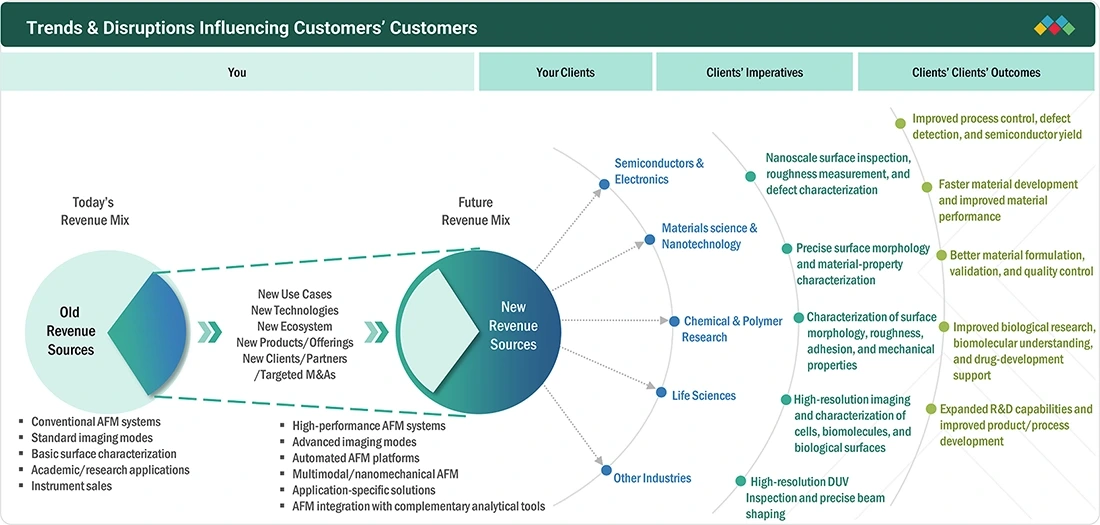
Advanced atomic force microscopy technologies, high-resolution nanoscale imaging, automated measurement, multimodal characterization, and application-specific atomic force microscopy solutions are increasing the use of atomic force microscopy across semiconductors and electronics, materials science and nanotechnology, chemical and polymer research, life sciences, and other specialized applications. These innovations enable precise surface characterization, nanoscale defect detection, material-property analysis, biological imaging, and faster measurement, creating new revenue opportunities beyond traditional atomic force microscopy imaging and research applications. As customers increasingly prioritize higher measurement accuracy, faster analysis, improved automation, greater reproducibility, and advanced nanoscale characterization, manufacturers are moving toward integrated and customized atomic force microscopy solutions. This transition is driving wider adoption of atomic force microscopy across research, semiconductor, materials, chemical, polymer, and life sciences applications and supporting the overall market growth.
Source: Secondary Research, Interviews with Experts, MarketsandMarkets Analysis
MARKET DYNAMICS

Level
-
Need for nanoscale precision in semiconductor manufacturing

-
High investments in nanotechnology


Level
-
Damage to samples due to contact-mode atomic force microscopy

-
Critical sample preparation requirements


Level
-
Increasing investments in OLED panel production globally

-
Shifting application scope from basic imaging to multi-modal analysis


Level
-
High-throughput challenges due to surface coverage and speed limitations

Source: Secondary Research, Interviews with Experts, MarketsandMarkets Analysis
Driver: Need for nanoscale precision in semiconductor manufacturing
The growing complexity of semiconductor devices is increasing the need for precise surface measurement and nanoscale characterization. Atomic force microscopes can provide detailed information on surface morphology, roughness, defects, and other features at the nanoscale. This makes them useful for semiconductor research, process development, quality control, and failure analysis, supporting their adoption in semiconductor manufacturing.
Restraint: Damage to samples due to contact-mode atomic force microscopy
The possibility of sample damage during contact-mode measurements can limit the use of atomic force microscopes for delicate or soft materials. Continuous contact between the probe and the sample can cause scratching, deformation, or other changes to the surface. This can be a concern when analyzing biological samples, polymers, thin films, and other sensitive materials.
Opportunity: Increasing investments in OLED panel production globally
Increasing investments in organic light-emitting diode panel manufacturing are creating growth opportunities for the atomic force microscopes market in the display industry. Atomic force microscopes can be used to examine surface roughness, defects, thin films, and nanoscale structures in display materials and layers. Their ability to provide detailed surface information can support research, process development, and quality control in organic light-emitting diode manufacturing.
Challenge: High-throughput challenges due to surface coverage and speed limitations
The relatively small scanning area and limited measurement speed of atomic force microscopes can make high-throughput characterization challenging. Detailed nanoscale measurements may require considerable time, particularly when large surface areas need to be analyzed. This can limit the use of atomic force microscopes in manufacturing environments where rapid inspection of large numbers of samples is required.
ATOMIC FORCE MICROSCOPY MARKET: COMMERCIAL USE CASES ACROSS INDUSTRIES
| COMPANY | USE CASE DESCRIPTION | BENEFITS |
|---|---|---|
 |
Park Systems provides atomic force microscope systems for semiconductor and electronics, materials science and nanotechnology, chemical and polymer research, and life sciences. Its systems are used to measure surface roughness, observe nanoscale structures, identify defects, and characterize material surfaces. | Enables detailed surface and nanoscale analysis | Supports semiconductor wafer and device characterization | Helps measure surface roughness and defects | Supports research and quality-control activities |
 |
Bruker provides atomic force microscope systems for semiconductor and electronics, materials science and nanotechnology, chemical and polymer research, and life sciences. Its systems are used to study surface topography, material properties, thin films, and biological samples at the nanoscale. | Enables high-resolution surface characterization | Supports analysis of material and mechanical properties | Helps characterize thin films and advanced materials | Supports research in materials and life sciences |
 |
Oxford Instruments provides atomic force microscope systems for materials science and nanotechnology, semiconductor and electronics, and life sciences. Its systems are used to examine surface structure, roughness, electrical properties, and other nanoscale characteristics of materials and devices. | Enables precise nanoscale surface measurements | Supports semiconductor and advanced-material research | Helps analyze electrical and surface properties | Supports detailed characterization of materials and devices |
 |
Hitachi High-Tech Corporation provides atomic force microscope systems for semiconductor and electronics, materials science and nanotechnology, and industrial applications. Its systems are used to examine wafer and material surfaces, measure roughness, and identify small surface defects and variations. | Supports wafer and surface inspection | Helps identify nanoscale defects and surface variations | Enables accurate roughness measurements | Supports semiconductor process development and quality control |
 |
Semilab provides atomic force microscope and surface-analysis solutions for semiconductor and electronics, materials science and nanotechnology, and industrial applications. Its solutions are used to analyze wafer surfaces, thin films, surface roughness, and nanoscale defects during research and manufacturing processes. | Enables detailed wafer and thin-film characterization | Supports semiconductor process monitoring | Helps identify surface defects and roughness variations | Supports research and manufacturing quality control |
Logos and trademarks shown above are the property of their respective owners. Their use here is for informational and illustrative purposes only.
MARKET ECOSYSTEM
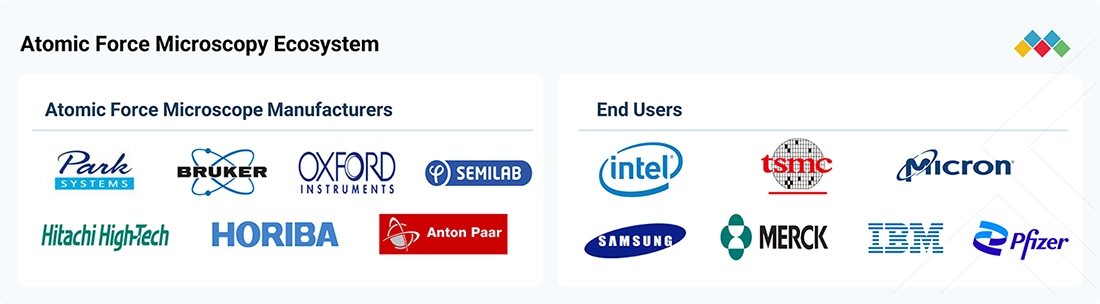
The atomic force microscopy ecosystem comprises atomic force microscope manufacturers, probe and component suppliers, and end users. Atomic force microscope manufacturers provide systems for nanoscale imaging, surface characterization, roughness measurement, defect analysis, and material analysis, while probe and component suppliers provide probes and related components used with these systems. Key participants include Park Systems, Bruker, Oxford Instruments, Semilab Inc., Hitachi High-Tech Corporation, HORIBA, and Anton Paar, along with end users such as Intel, Micron Technology, IBM, Samsung Electronics, Merck, and Pfizer. These companies use atomic force microscopes for applications across semiconductor and electronics, materials science and nanotechnology, chemical and polymer research, and life sciences.
Logos and trademarks shown above are the property of their respective owners. Their use here is for informational and illustrative purposes only.
MARKET SEGMENTS
Source: Secondary Research, Interviews with Experts, MarketsandMarkets Analysis
Atomic Force Microscopy Market, By Offering
By offering, the atomic force microscopes segment is expected to account for the largest share of the market during the forecast period, as these systems are the primary equipment used for nanoscale imaging, surface analysis, and material characterization. Growing demand for high-resolution analysis of thin films, nanomaterials, semiconductor structures, and advanced materials is driving adoption. Increasing use of AFM for surface roughness, mechanical, electrical, magnetic, and chemical characterization, along with growing research in nanotechnology and 2D materials, is further supporting segment growth.
Atomic Force Microscopy Market, By Grade
By grade, the industrial segment is expected to record the highest growth during the forecast period, driven by the increasing use of atomic force microscopes for surface inspection, defect analysis, quality control, and material characterization in industrial applications. Growing adoption in semiconductor wafer metrology, process monitoring, thin-film analysis, and failure analysis is further driving demand. The shift toward automated and in-line nanoscale metrology is also supporting the use of industrial-grade AFM systems.
Atomic Force Microscopy Market, By Application
By application, the semiconductors & electronics segment is expected to record higher growth during the forecast period, driven by the increasing need for nanoscale surface analysis, defect identification, roughness measurement, and characterization of semiconductor materials and devices. Increasing semiconductor miniaturization is creating demand for precise nanoscale metrology, while AFM adoption in wafer inspection, CMP characterization, etch-process monitoring, advanced packaging, and failure analysis is further supporting segment growth.
REGION
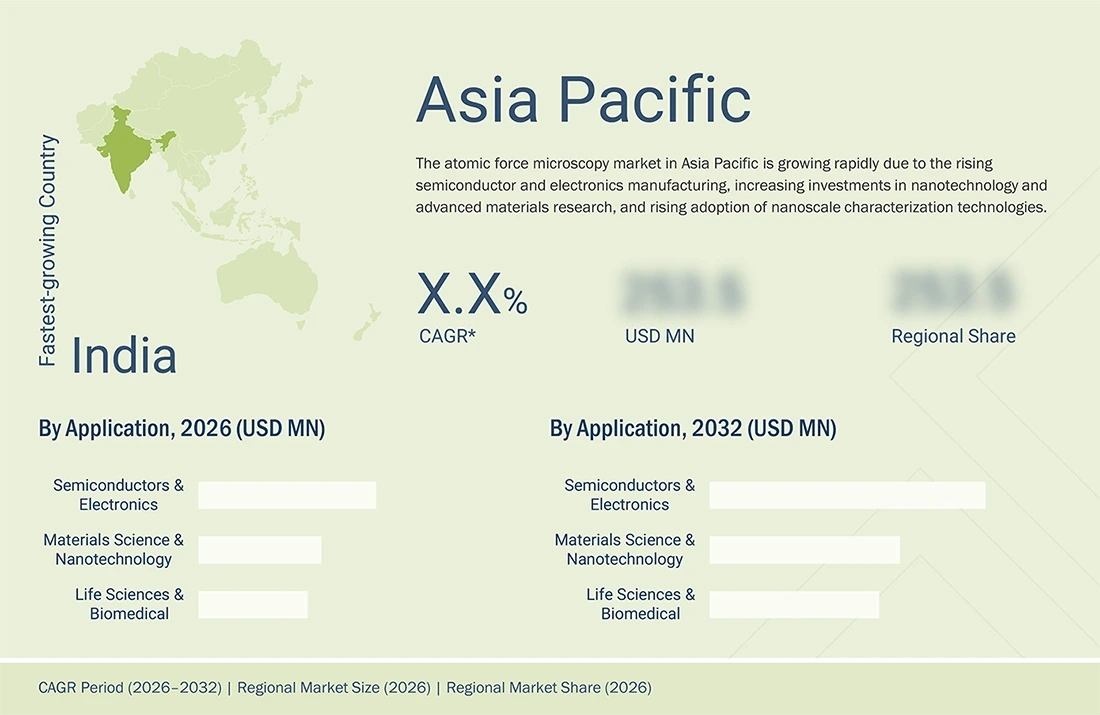
Asia Pacific to be the fastest-growing region in the atomic force microscopy during the forecast period
Asia Pacific is expected to be the fastest-growing region in the atomic force microscopy market, driven by the increasing adoption of advanced surface characterization and nanoscale measurement technologies across semiconductor and electronics, material science and nanotechnology, and life sciences applications. Growing demand for nanoscale imaging, surface roughness measurement, defect analysis, and material characterization is supporting regional adoption. Furthermore, China, Japan, South Korea, and India are strengthening demand through investments in semiconductor and electronics manufacturing, nanotechnology research, advanced materials, and life sciences research. The presence of major semiconductor manufacturers, research institutions, and technology companies, along with increasing investments in advanced manufacturing and research and development, is further supporting regional market growth.
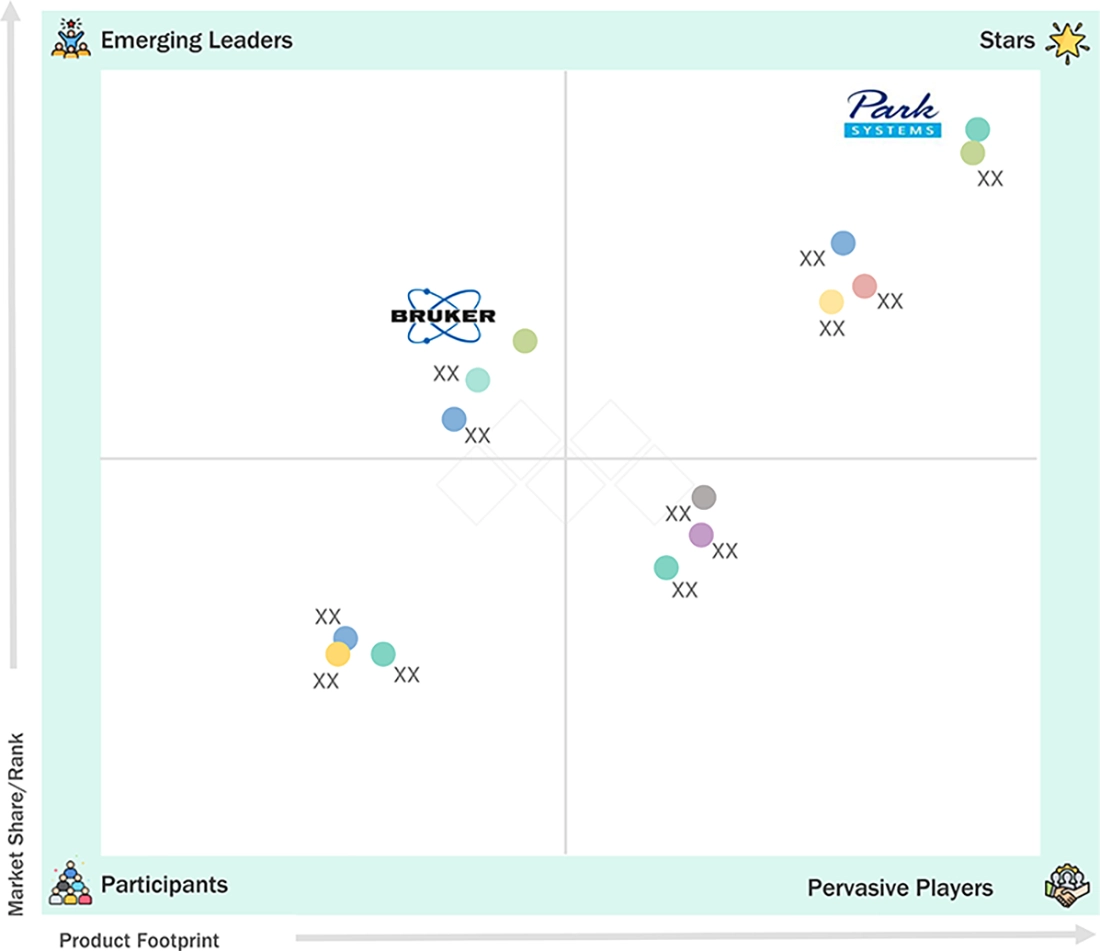
ATOMIC FORCE MICROSCOPY MARKET: COMPANY EVALUATION MATRIX
In the atomic force microscopy market matrix, Park Systems (Star) holds a leading position, supported by its wide range of atomic force microscope systems and strong presence across semiconductor and electronics, materials science and nanotechnology, and research applications. Its systems are used for high-resolution surface imaging, surface roughness measurement, defect analysis, and nanoscale material characterization. Bruker (Star) also holds a leading position, supported by its broad atomic force microscope portfolio for materials research, semiconductor and electronics, chemical and polymer research, and life sciences. Its systems are used for nanoscale imaging, surface characterization, and analysis of material properties across research and industrial applications.
Source: Secondary Research, Interviews with Experts, MarketsandMarkets Analysis
KEY MARKET PLAYERS
- Park Systems (South Korea)
- Bruker (US)
- Oxford Instruments (UK)
- Hitachi High-Tech Corporation (Japan)
- Semilab Inc. (US)
- HORIBA (Japan)
- Anton Paar GmbH (Austria)
- Nanosurf (Switzerland)
- NT-MDT SI (Russia)
- Attocube Systems AG (Germany)
WHAT IS IN IT FOR YOU: ATOMIC FORCE MICROSCOPY MARKET REPORT CONTENT GUIDE
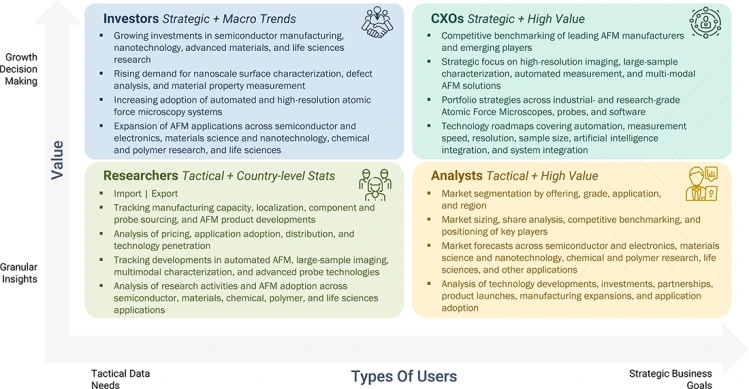
DELIVERED CUSTOMIZATIONS
We have successfully delivered the following deep-dive customizations:
| CLIENT REQUEST | CUSTOMIZATION DELIVERED | VALUE ADDS |
|---|---|---|
| Atomic Force Microscope Manufacturer | Mapping and benchmarking atomic force microscope systems based on specifications, imaging modes, resolution, scanning range, and software capabilities. | Helps identify growth opportunities and strengthen product positioning and development plans. |
| Probe and Component Supplier | Benchmarking probe types, materials, coatings, compatibility, and application requirements. | Helps identify technology gaps and support product development planning. |
| Research Institution / Industrial User | Assessing atomic force microscope requirements across semiconductor and electronics, material science and nanotechnology, chemical and polymer research, and life sciences. | Supports system selection and identifies application opportunities. |
| Semiconductor, Electronics, and Industrial Enterprise | Evaluating suppliers based on system performance, customization, pricing, and technical support. | Supports informed supplier selection and procurement decisions. |
| Enterprise / Original Equipment Manufacturer / System Developer | Benchmarking leading companies across regions, offerings, grades, applications, and technologies. | Helps validate market opportunities and identify potential investment and partnership areas. |
RECENT DEVELOPMENTS
- July 2026 : Bruker advanced automated Atomic Force Microscopy workflows by integrating machine learning and artificial intelligence with automated instrument control. The approach enables automated measurements across multiple locations on large samples, supports data collection and analysis, and improves the potential for higher-throughput nanoscale characterization in materials research and industrial applications.
- May 2026 : Oxford Instruments advanced AFM measurement precision through interferometric Atomic Force Microscopy technology, which enables direct measurement of true probe displacement. The technology improves measurement accuracy, sensitivity, and repeatability, supporting detailed characterization of surface and material properties at the nanoscale.
- March 2026 : Park Systems expanded the application of atomic force microscopy for advanced nanomaterials through techniques such as Kelvin probe force microscopy, conductive AFM, and piezoresponse force microscopy. These capabilities enable researchers to analyze electrical, mechanical, and electromechanical properties in addition to surface topography.
- January 2026 : Park Systems expanded large-sample AFM measurement capabilities through automated functions such as probe exchange, laser alignment, autofocus, scan optimization, and sequential multi-position measurements. These features support higher measurement productivity and facilitate the characterization of larger samples in research and industrial environments.
- November 2025 : Hitachi High-Tech Corporation adjusted its scanning probe microscope portfolio by announcing the planned discontinuation of the AFM100 Series and AFM5500MII systems. The company planned to continue maintenance and support for existing systems after production ends, reflecting a transition in its AFM product portfolio.
Table of Contents
 Exclusive indicates content/data unique to MarketsandMarkets and not available with any competitors.
Methodology
The study involved four major activities in estimating the current size of the atomic force microscopy market. Extensive secondary research was conducted to gather information on the market, adjacent industries, and the broader microscopy, nanotechnology, metrology, semiconductor, materials research, and life sciences ecosystem. This was followed by primary research with industry stakeholders across the value chain, including atomic force microscope manufacturers, probe suppliers, microscopy and metrology technology providers, distributors, research institutions, system integrators, and end users across semiconductor and electronics, materials science and nanotechnology, chemical and polymer research, life sciences, and industrial applications, to validate assumptions and market sizing. Both top-down and bottom-up approaches were used to estimate the overall market size. Market breakdowns and data triangulation techniques were then applied to derive the size of individual segments and subsegments. Secondary and primary sources were jointly used to support a comprehensive technical and commercial analysis of the market.
Secondary Research
Various secondary sources were referred to during the secondary research process to identify and collect information relevant to the atomic force microscopy market. These sources included annual reports, press releases, investor presentations of key companies, product catalogs, technical datasheets, white papers, industry journals, certified publications, patents, industry associations, company websites, trade directories, government databases, and microscopy, nanotechnology, and semiconductor industry sources. Secondary research was conducted to obtain key insights into the market’s supply chain, value chain, competitive landscape, and segmentation across offering, grade, application, and region. It also helped analyze industry trends and the adoption of atomic force microscopes, probes, and software across semiconductor and electronics, materials science and nanotechnology, chemical and polymer research, life sciences, and industrial applications. The collected data was further analyzed to estimate the overall market size and validate findings, which were subsequently refined through primary research with industry experts and key stakeholders.
Primary Research
Extensive primary research was conducted after gaining knowledge about the current scenario of the atomic force microscopy market through secondary research. Several primary interviews were conducted with experts from the demand and supply sides across four major regions: North America, Europe, Asia Pacific, and RoW. This primary data was collected through questionnaires, emails, and telephonic interviews.
Breakdown of Primary Interviews
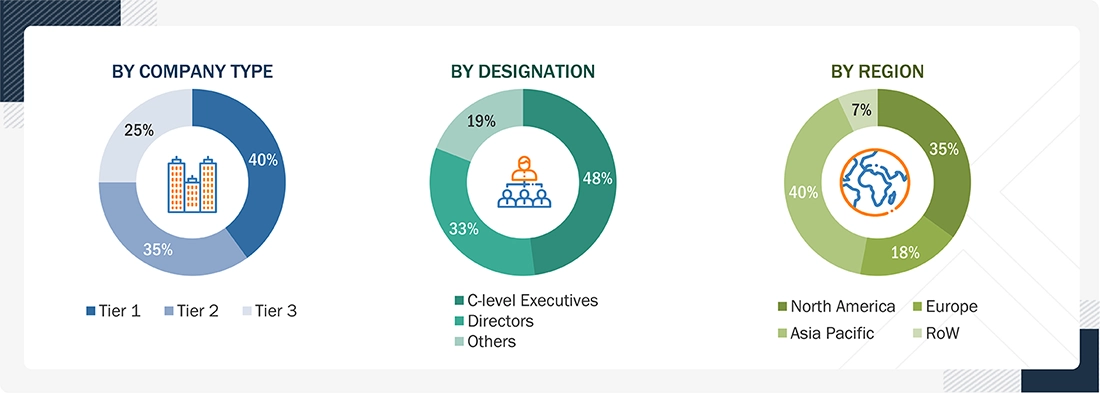
Note: The three tiers of companies are defined based on their total revenue in 2025: Tier 1 - revenue greater than or equal to USD 1 billion; Tier 2 - revenue between USD 100 million and USD 1 billion; and Tier 3 - revenue less than or equal to USD 100 million. Other designations include sales managers, marketing managers, and product managers.
To know about the assumptions considered for the study, download the pdf brochure
Market Size Estimation
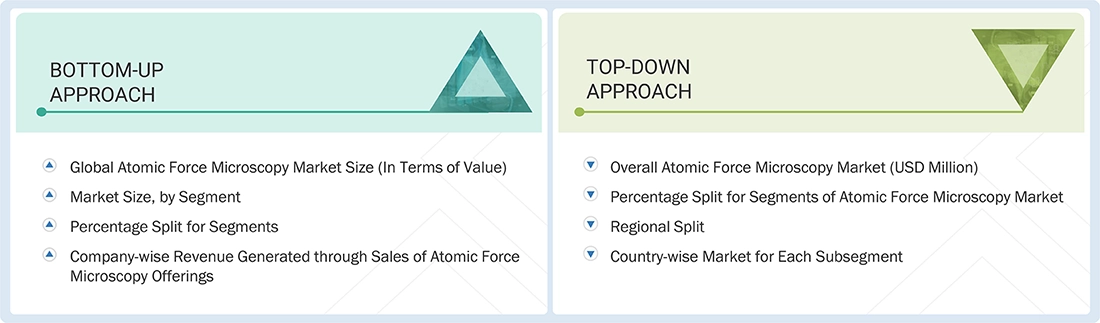
Both top-down and bottom-up approaches were used to estimate and validate the total size of the atomic force microscopy market. These methods have also been used extensively to estimate the size of various subsegments in the market. The following research methodology was used to estimate the market size:
- Major players in the atomic force microscopy market and related markets were identified through extensive secondary research.
- The industry’s value chain and market size (in terms of value) were determined through primary and secondary research processes.
- All percentage shares, splits, and segment-level breakdowns were determined using secondary sources and verified through primary sources.
Atomic Force Microscopy Market : Top-Down and Bottom-Up Approach
Data Triangulation
After arriving at the overall size of the atomic force microscopy market from the market size estimation process explained above, the total market was split into several segments and subsegments. Data triangulation and market breakdown procedures were employed, wherever applicable, to complete the overall market engineering process and arrive at the statistics for all segments and subsegments of the market. The data were triangulated by studying various factors and trends from the demand and supply sides, including offering, grade, application, and regional developments. Along with this, the market size was validated using both top-down and bottom-up approaches.
Market Definition
Atomic force microscopes (AFMs) are nanoscale imaging and measurement instruments used to examine the surface of materials and samples with very high resolution. AFMs use a sharp probe to scan the sample surface and generate detailed information about its topography, surface roughness, and other physical characteristics at the nanoscale. Atomic force microscopes are used for applications such as surface imaging, roughness measurement, defect identification, and material characterization across semiconductor and electronics, materials science and nanotechnology, chemical and polymer research, life sciences, and industrial applications. AFM systems can be used with different probes, measurement modes, and software depending on the type of sample and the specific measurement requirements.
Atomic force microscopes are particularly useful for applications that require detailed analysis of surfaces and nanoscale structures, including semiconductor wafers and devices, thin films, nanomaterials, polymers, and biological samples. They support research, product development, process monitoring, quality control, and failure analysis by providing detailed information about sample surfaces and material characteristics. A typical AFM system consists of the microscope, a probe, and software for controlling measurements and analyzing the collected data. The configuration and capabilities of AFM systems vary depending on the application, sample type, required resolution, and measurement requirements.
Key Stakeholders
- Pharmaceutical and biotechnology industries
- Semiconductor and materials industries
- Academic and research institutes
- Pathological laboratories
- Hospitals
- Medical device suppliers
- Market research and consulting firms
Report Objectives
- To describe and forecast the atomic force microscopy market size, by offering, grade, and application, in terms of value
- To describe and forecast the market for various segments across four main regions, namely North America, Europe, Asia Pacific, and RoW, in terms of value
- To strategically analyze micromarkets with regard to individual growth trends, prospects, and contribution to the overall market
- To provide detailed information regarding drivers, restraints, opportunities, and challenges influencing the market growth
- To analyze opportunities for stakeholders by identifying high-growth segments in the market
- To provide a detailed overview of the atomic force microscopy value chain
- To strategically analyze key technologies, trends impacting customers, ecosystem, regulatory landscape, patent landscape, Porter’s Five Forces, and case studies pertaining to the market
- To strategically profile key players in the atomic force microscopy market and comprehensively analyze their market share and core competencies
- To analyze competitive developments, such as partnerships, acquisitions, expansions, collaborations, agreements, and product launches in the market
Available customizations:
With the given market data, MarketsandMarkets offers customizations according to the company’s specific needs. The following customization options are available for the report:
Company Information
-
Detailed analysis and profiling of additional market players (up to 5)
Key Questions Addressed by the Report
What is the Atomic Force Microscopy Market?
The Atomic Force Microscopy Market covers AFM systems, probes, software, and related technologies used for nanoscale surface imaging, characterization, and measurement across semiconductors, electronics, materials science, nanotechnology, and life sciences.
What are the major growth drivers of the Atomic Force Microscopy Market?
Major growth drivers include increasing demand for nanoscale surface characterization, semiconductor miniaturization, nanotechnology research, advanced materials development, and expanding applications in life sciences and biomedical research.
How is AI transforming atomic force microscopy?
AI is enabling automated image analysis, feature recognition, artifact detection, scan optimization, and intelligent selection of areas for detailed imaging, making AFM workflows more efficient and increasingly autonomous.
What are the latest trends in atomic force microscopy?
Key trends include AI-assisted AFM, autonomous microscopy, high-speed AFM, automated measurements, multimodal imaging, advanced nanomechanical analysis, and integration with complementary analytical techniques.
Why is atomic force microscopy important for semiconductor manufacturing?
AFM enables high-resolution analysis of surface roughness, wafer topography, nanoscale defects, thin films, and other structures. Semiconductor miniaturization is increasing the need for precise nanoscale metrology.
How is AI-enabled AFM supporting nanotechnology research?
AI-enabled AFM can identify nanoscale features, reduce imaging artifacts, optimize imaging parameters, automate segmentation, and direct the microscope toward scientifically relevant areas.
What role does AFM play in life sciences and biomedical research?
AFM provides nanoscale imaging and nanomechanical measurements of cells, membranes, proteins, DNA, and other biological structures. AI integration is also supporting more automated biological imaging and analysis.
What is autonomous atomic force microscopy?
Autonomous AFM combines automated microscope control with AI or machine learning to select imaging areas, optimize measurement parameters, recognize nanoscale features, and conduct experiments with less manual intervention.
Which applications are driving demand for atomic force microscopy?
Major applications include semiconductors and electronics, materials science, nanotechnology, life sciences, biomedical research, polymers, energy materials, and advanced surface characterization.
What is the future outlook for the Atomic Force Microscopy Market?
The market is expected to benefit from semiconductor miniaturization, advanced materials research, nanotechnology development, and increasing AI and automation adoption. The market is projected to grow from USD 0.60 billion in 2026 to USD 0.93 billion by 2032, at a 7.7% CAGR.


Personalize This Research
- Triangulate with your Own Data
- Get Data as per your Format and Definition
- Gain a Deeper Dive on a Specific Application, Geography, Customer or Competitor
- Any level of Personalization
Let Us Help You
- What are the Known and Unknown Adjacencies Impacting the Atomic Force Microscopy Market
- What will your New Revenue Sources be?
- Who will be your Top Customer; what will make them switch?
- Defend your Market Share or Win Competitors
- Get a Scorecard for Target Partners

Custom Market Research Services
We Will Customise The Research For You, In Case The Report Listed Above Does Not Meet With Your Requirements
Get 10% Free CustomisationTESTIMONIALS

Tetsuya Ohhira
Business Development Manager-Technology Business
Nikon Corporation,
Leading Japanese MNC specializing in optics and imaging productswww.nikon.com
MarketsandMarkets™ response
is quick. Their attitude is flexible and positive. Analyst Insights are globally considered and
significant. Client Services quickly respond to our inquiry and demand. Their wide range of global
surveys help us make our strategic plan.
We hope Knowledge Store will be easier to search
for a report.
VP - Marketing & Business Development
Leading Provider of Process Control Solutions
We engaged with MarketsandMarkets on a study to perform an analysis and recommend a Go-To-Market strategy for metrology and process control in the semiconductor market. The study was tailored to our targets and needs with well-defined milestones. Our overall experience with the MarketsandMarkets team was very good throughout the project in all aspects including the analysis methodologies used, the quality and depth of primary and secondary data sets, the professionalism and flexibility of the team and the ability to meet the target schedule and milestones. We want to thank MarketsandMarkets team for a job well done.
- US Atomic Force Microscopy Market
- Canada Atomic Force Microscopy Market
- Mexico Atomic Force Microscopy Market
- Germany Atomic Force Microscopy Market
- UK Atomic Force Microscopy Market
- France Atomic Force Microscopy Market
- Italy Atomic Force Microscopy Market
- Spain Atomic Force Microscopy Market
- Netherlands Atomic Force Microscopy Market
- Russia Atomic Force Microscopy Market
- Switzerland Atomic Force Microscopy Market
- China Atomic Force Microscopy Market
- Japan Atomic Force Microscopy Market
- South Korea Atomic Force Microscopy Market
- India Atomic Force Microscopy Market
- Taiwan Atomic Force Microscopy Market
- Australia Atomic Force Microscopy Market
- Singapore Atomic Force Microscopy Market
- Malaysia Atomic Force Microscopy Market
- Thailand Atomic Force Microscopy Market
- Rest Of Europe Atomic Force Microscopy Market
- Rest Of Asia Pacific Atomic Force Microscopy Market






Growth opportunities and latent adjacency in Atomic Force Microscopy Market