Biodegradable Plastics Market

Biodegradable Plastics Market by Type (Pla, Starch Blends, Pbat, Pbs, Pha, Cellulose Based), End-Use Industry (Packaging, Consumer Goods, Agriculture & Horticulture, Textile), And Region - Global Forecast to 2030




OVERVIEW
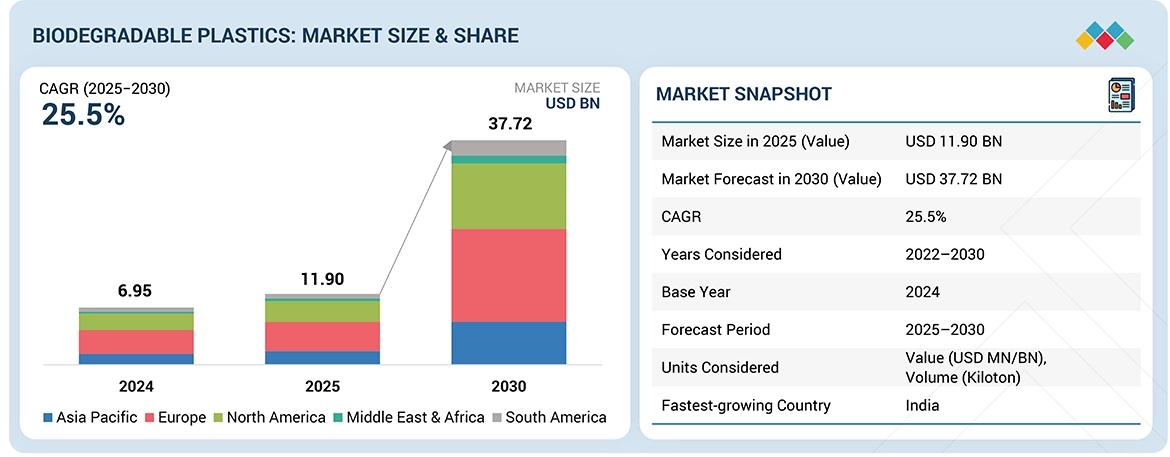
Source: Secondary Research, Interviews with Experts, MarketsandMarkets Analysis
The biodegradable plastics market is projected to grow from USD 11.90 billion in 2025 to USD 37.72 billion by 2030, registering a CAGR of 25.5% during the forecast period. The biodegradable plastics market expands because people become more environmentally conscious about plastic waste while they gain better understanding of sustainable practices. The market receives its primary drivers from government regulations which prohibit single-use plastics and which encourage the development of environmentally friendly products. The increasing consumer interest in environmentally friendly products together with corporate sustainability commitments drives market growth. Material science advancements have developed biodegradable plastics which now offer better performance and lower costs than traditional plastic materials. New market possibilities emerge from the packaging and agricultural sectors and medical field expansion. The worldwide market growth accelerates through research investments together with supportive policies and circular economy initiatives.
KEY TAKEAWAYS
-
By RegionEurope dominated the biodegradable plastics market, with a 41.3% share in terms of value in 2024.
-
By TypePLA dominates the market, by type, with a share of 28.6%, in terms of value, in 2024.
-
By End-use IndustryBased on end-use industry, packaging is the fastest-growing segment with a CAGR of 27.4% during the forecast period.
-
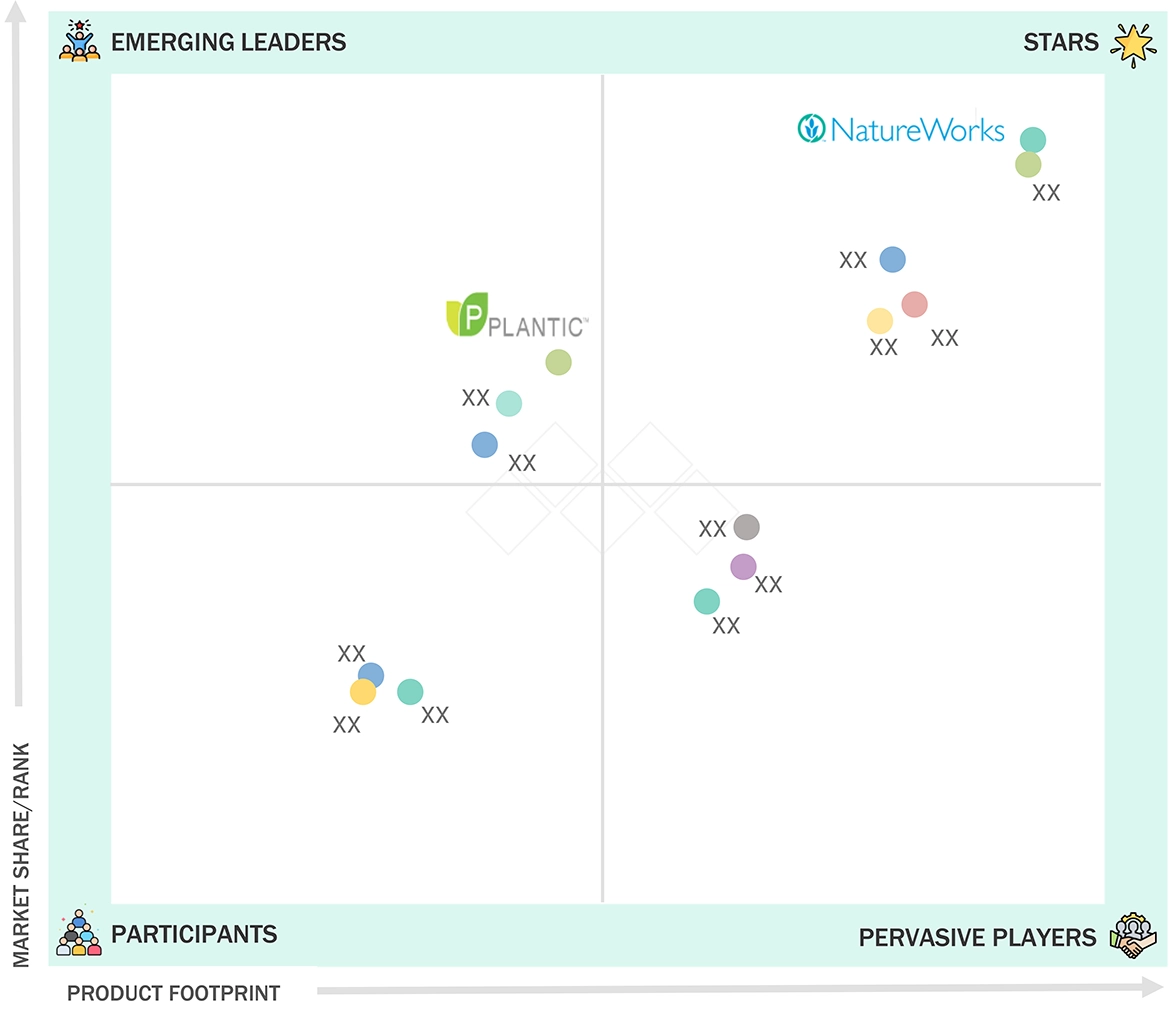
COMPETITIVE LANDSCAPE- KEY PLAYERSCompanies such as BASF, NatureWorks LLC, and Mitsubishi Chemical Group Corporation were identified as some of the star players in the market, given their strong market share and product footprint.
-
COMPETITIVE LANDSCAPE- STARTUPSBIO ON, Zhejiang Hisun Biomaterials Co., Ltd, BIO-FED, among others, have distinguished themselves among startups and SMEs by securing strong footholds in specialized niche areas, underscoring their potential as emerging market leaders.
Rising environmental concerns about plastic pollution and growing sustainability awareness drive the biodegradable plastics market. The main drivers of the market include government regulations which ban single-use plastics and mandate sustainable product alternatives. The market is experiencing growth because consumers now choose green products, which forces businesses to use biodegradable materials. The development of new technologies has made biodegradable plastics better through performance improvements and cost reductions which help them compete in the market. Market expansion receives support through corporate sustainability programs and investments that build circular economy systems. The increasing demand from packaging and agriculture and healthcare applications combines with worldwide carbon footprint reduction initiatives which drive industry adoption across various sectors.
TRENDS & DISRUPTIONS IMPACTING CUSTOMERS' CUSTOMERS
The biodegradable plastics market experiences fluctuations, forcing clients such as Amazon, Genpak, and Nestlé to adopt sustainable materials and packaging solutions. The rising legal requirements for single-use plastics force businesses to switch to biodegradable products, resulting in higher production and raw material costs. The growing demand for environmentally friendly products among consumers creates business opportunities for companies to differentiate their brands while expanding their market presence. The development of new technologies enhances material properties but requires businesses to invest in implementing them and restructuring their supply chains. Companies need to maintain cost effectiveness while achieving their sustainability objectives and delivering optimal operational performance. The current market trends compel clients to develop fresh strategic approaches which will advance their sustainability efforts while maintaining business competitiveness in an environmentally aware market.
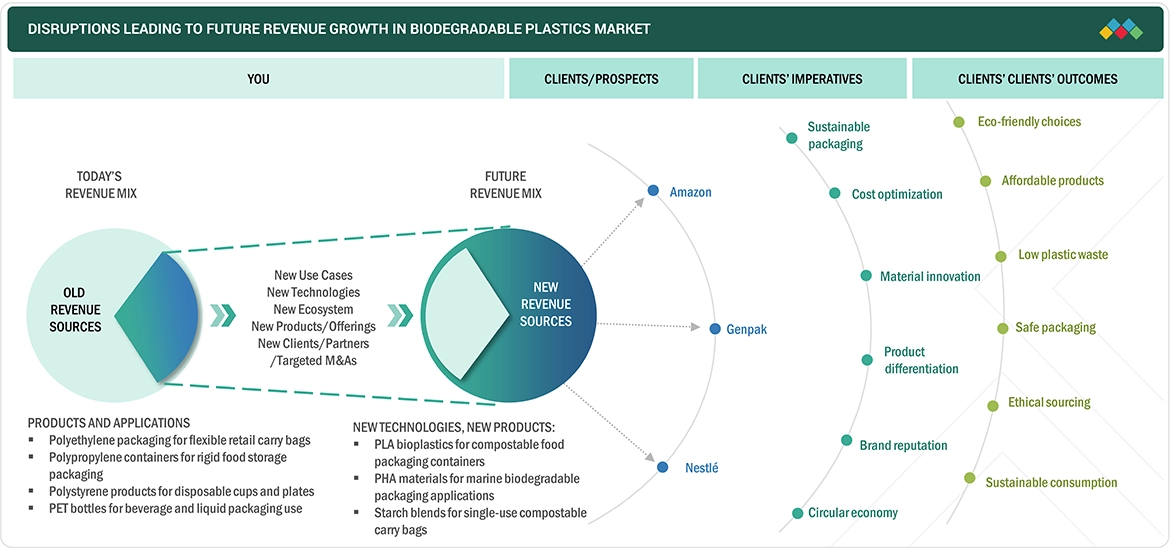
Source: Secondary Research, Interviews with Experts, MarketsandMarkets Analysis
MARKET DYNAMICS

Level
-
Government focus on new policies and regulations

-
Consumers with strong purchasing power and a high degree of environmental awareness


Level
-
Volatility in raw material prices

-
Higher price of biodegradable plastics as compared to conventional plastics


Level
-
Increasing use of biodegradable plastics in packaging end-use industry

-
Higher growth in emerging economies of Asia Pacific


Level
-
High price and complex production process

-
Less durability of biodegradable plastics as compared to traditional plastics

Source: Secondary Research, Interviews with Experts, MarketsandMarkets Analysis
Driver: Government focus on new policies and regulations
The biodegradable plastics market is experiencing significant growth as governments enact new laws that restrict traditional plastic use and promote environmentally friendly materials. Companies are required to use biodegradable materials because single-use plastic bans, waste management regulations, and extended producer responsibility laws create new industry requirements. The transition process receives additional momentum from green innovation funding and tax benefits and subsidies which serve as financial incentives. The regulations promote equal competition among businesses by enabling eco-friendly products to compete with traditional ones. The adoption of compliance requirements forces companies to change their packaging and product development processes which creates higher demand for biodegradable plastics and increases industry investment in these materials.
Restraint: Stringent regulatory approvals
The biodegradable plastics market faces a significant barrier because raw material prices experience extreme fluctuations, which affect the agricultural feedstocks that these materials depend on, including corn, sugarcane, and starch. The manufacturing process incurs higher expenses due to unstable production costs, making it difficult for manufacturers to determine their product prices. Biodegradable plastics, which use unstable petrochemical supply chains as their primary material source, become less financially viable than traditional plastics. The existing economic conditions make it difficult for businesses to secure long-term contracts and make capital investments which directly impacts their profit margins. Environmental demand for biodegradable products results in companies holding back on production expansion and complete adoption of these sustainable solutions.
Opportunity: Increasing use of biodegradable plastics in packaging end-use industry
The growing demand for biodegradable plastics in packaging solutions creates a major market opportunity because the industry needs large quantities of packaged products. Organizations in the food, e-commerce, and retail sectors use packaging materials that contribute to plastic waste. Biodegradable plastics help businesses achieve two goals by meeting environmental regulations and satisfying customer demand for sustainable products. The demand for compostable and recyclable packaging solutions has increased significantly as brands now prefer these materials. The development of new materials that enhance product durability and storage time while reducing manufacturing costs supports industry expansion. The growing application market allows manufacturers to increase production capacity while attracting funding and accessing new sources of revenue in a market that prioritizes sustainability.
Challenge: High price and complex production process
The biodegradable plastics market faces its most significant barriers because high production costs and complicated manufacturing methods prevent companies from adopting biodegradable plastics at large scale. Biodegradable plastic production requires specialized raw materials and advanced technology and controlled processing conditions which increases production costs beyond those of traditional plastic manufacturing. The operational process becomes more complicated due to supply chain restrictions and insufficient infrastructure. Manufacturers face difficulties in reaching economies of scale which hinders their ability to provide products at competitive rates. The combination of rising environmental awareness and regulatory support has created market growth opportunities but businesses particularly in cost-sensitive industries prefer to wait before adopting new practices.
BIODEGRADABLE PLASTICS MARKET: COMMERCIAL USE CASES ACROSS INDUSTRIES
| COMPANY | USE CASE DESCRIPTION | BENEFITS |
|---|---|---|
 |
Produces PLA biopolymers from renewable feedstocks for packaging, fibers, food serviceware, and 3D printing applications | Low carbon footprint, compostable, food-safe, processable, versatile across packaging and consumer applications |
 |
Develops PLA resins for rigid and flexible packaging, consumer goods, and medical applications supporting circular economy solutions | Compostable, heat-resistant grades, low emissions, food-contact safe, strong mechanical performance |
 |
Offers biodegradable polymers for packaging, agricultural films, organic waste bags, and coated paper applications | Certified compostable, durable, versatile, supports waste management, compatible with standard processing technologies |
 |
Produces BioPBS biodegradable plastics for packaging, agriculture, and durable goods requiring flexibility and heat resistance | Biodegradable, heat-resistant, flexible, durable, suitable for soil and marine environments |
 |
Develops starch-based biodegradable plastics for packaging, films, and coatings with high renewable content | High bio-content, compostable, customizable, reduces fossil reliance, suitable for flexible packaging applications |
Logos and trademarks shown above are the property of their respective owners. Their use here is for informational and illustrative purposes only.
MARKET ECOSYSTEM
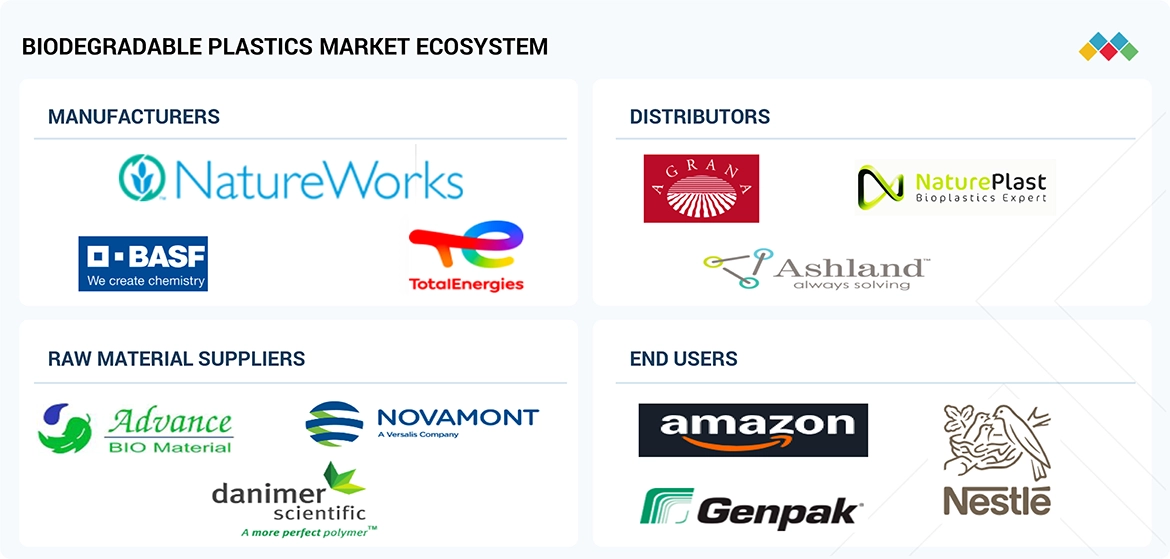
The biodegradable plastics market ecosystem consists of raw material suppliers (Advance Bio Material Company P.Ltd, Novamont S.p.A., Danimer Scientific), manufacturers (BASF, NatureWorks LLC, TotalEnergies), distributors (AGRANA Beteiligungs-AG, Ashland, NaturePlast), and end users (Amazon, Genpak, Nestlé). The market ecosystem operates through raw material suppliers who deliver renewable feedstocks which include corn starch and sugarcane and cellulose for biopolymer production. The manufacturers use the provided materials to create biodegradable resins and complete plastic products through their polymerization and processing technology methods. The distributors operate the logistics and storage functions while they manage the supply chain networks to provide materials to different industries in an efficient manner. The end-users of packaging and agriculture and consumer goods companies use biodegradable plastics to create their final products which increases demand for these materials while promoting sustainable material use.
Logos and trademarks shown above are the property of their respective owners. Their use here is for informational and illustrative purposes only.
MARKET SEGMENTS
Source: Secondary Research, Interviews with Experts, MarketsandMarkets Analysis
Biodegradable Plastics Market, By Type
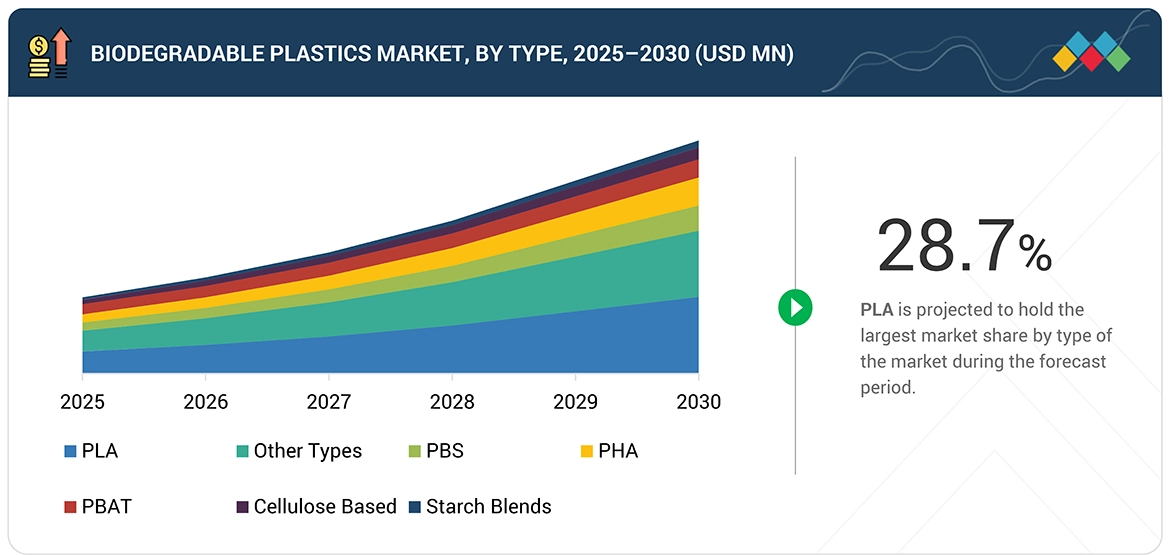
Polylactic acid (PLA) holds the largest share of the biodegradable plastics market because it offers effective cost performance and environmental sustainability. PLA is produced in industrial quantities because it is derived from renewable materials such as cornstarch and sugarcane. The material provides excellent clarity and stiffness together with processability, which makes it suitable for use in packaging, food serviceware, and fibers. The existing plastic processing equipment can handle PLA because it poses no barriers to businesses looking to use it. Its industrial compostability and lower carbon footprint align with regulatory and brand sustainability goals. The continuous advancement work of NatureWorks LLC and other companies establishes PLA as the leading solution in its market.
Biodegradable Plastics Market, By End-use Industry
Packaging is the fastest-growing end-use industry in the biodegradable plastics market because of environmental concerns increase and regulations against single-use plastics become more stringent. Worldwide governments promote sustainable alternatives which force brands to switch to biodegradable packaging solutions. PLA materials deliver superior clarity together with lightweight characteristics which make them appropriate for food packaging. The food and beverage industry together with e-commerce businesses observe rising product demand because consumers prefer environmentally friendly products. Brands can achieve their sustainability targets through compostable packaging infrastructure development because this system helps minimize plastic waste and decreases environmental damage.
REGION
Asia Pacific to be fastest-growing region during forecast period
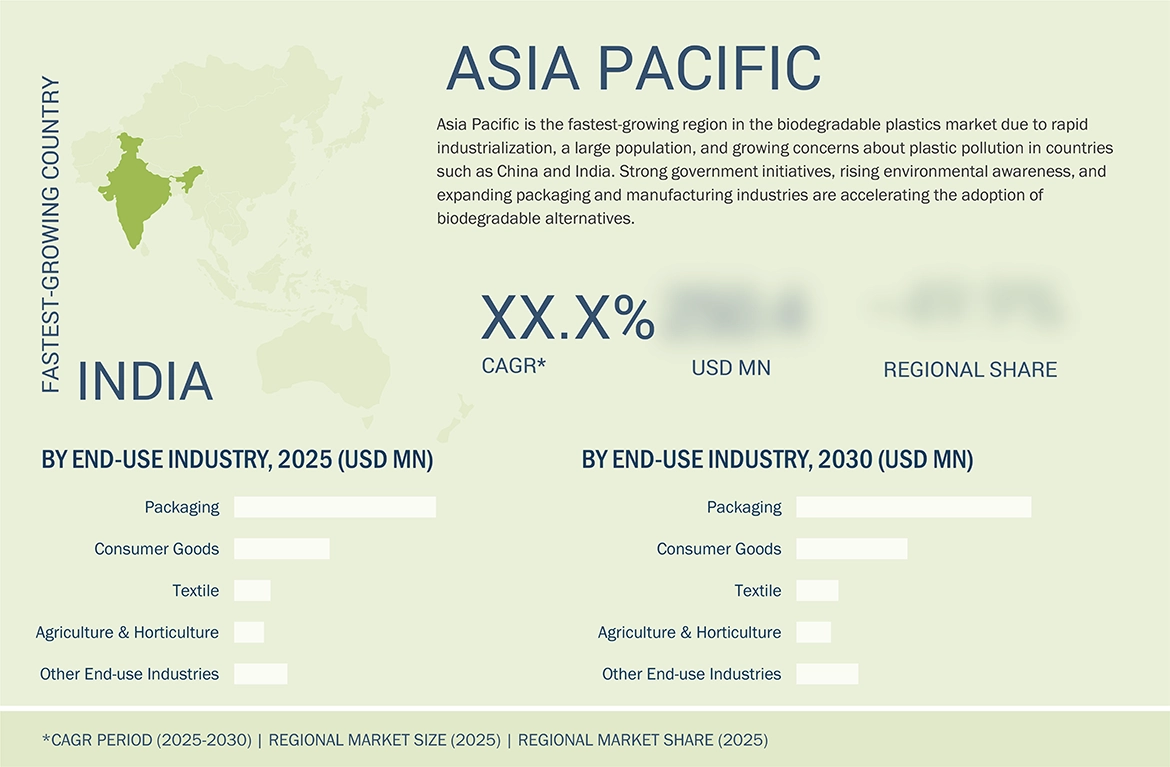
Asia Pacific experiences the fastest growth in the biodegradable plastics market because industrial development, environmental awareness, and government support create a favorable business environment. The countries of China, India, and Japan have established regulations to control the use of single-use plastic, thereby promoting the development of sustainable alternatives. The region utilizes its extensive agricultural resources to produce bio-based feedstocks at low costs. The expanding packaging industry, together with the agricultural and consumer goods sectors, creates additional demands for products. The production capacity and innovation of global and regional manufacturers are expanding through their increasing investments, which boost market growth throughout the entire region.
BIODEGRADABLE PLASTICS MARKET: COMPANY EVALUATION MATRIX
NatureWorks LLC (star player) holds a leading position due to its established global production capacity, strong PLA technology portfolio, and partnerships enabling scalable, sustainable material solutions across industries. The company maintains its market dominance through ongoing product development and dependable supply chain operations. PLANTIC (emerging leader) is increasing its market presence through its development of advanced biodegradable materials which offer high barrier performance and serve packaging and specialized uses. The company has developed performance-based solutions which fulfill sustainable needs and provide specialized product options for eco-friendly brands. The two companies work together to create bio-based high-performance solutions which fundamentally change the competitive landscape and drive innovation in the developing biodegradable plastics sector.
Source: Secondary Research, Interviews with Experts, MarketsandMarkets Analysis
KEY MARKET PLAYERS
- NatureWorks LLC
- TotalEnergies
- BASF
- Mitsubishi Chemical Group Corporation
- Biome Bioplastics
- PLANTIC
- FKuR
- Danimer Scientific
- TORAY INDUSTRIES, INC.
- Novamont S.p.A.
MARKET SCOPE
| REPORT METRIC | DETAILS |
|---|---|
| Market Size in 2024 (Value) | USD 9.65 Billion |
| Market Forecast in 2030 (value) | USD 37.72 Billion |
| Growth Rate | CAGR of 25.5% from 2025–2030 |
| Years Considered | 2022–2030 |
| Base Year | 2024 |
| Forecast Period | 2025–2030 |
| Units Considered | Value (USD Million/Billion), Volume (Kiloton) |
| Report Coverage | Revenue forecast, company ranking, competitive landscape, growth factors, and trends. |
| Segments Covered |
|
| Regions Covered | North America, Asia Pacific, Europe, South America, Middle East & Africa |
WHAT IS IN IT FOR YOU: BIODEGRADABLE PLASTICS MARKET REPORT CONTENT GUIDE
DELIVERED CUSTOMIZATIONS
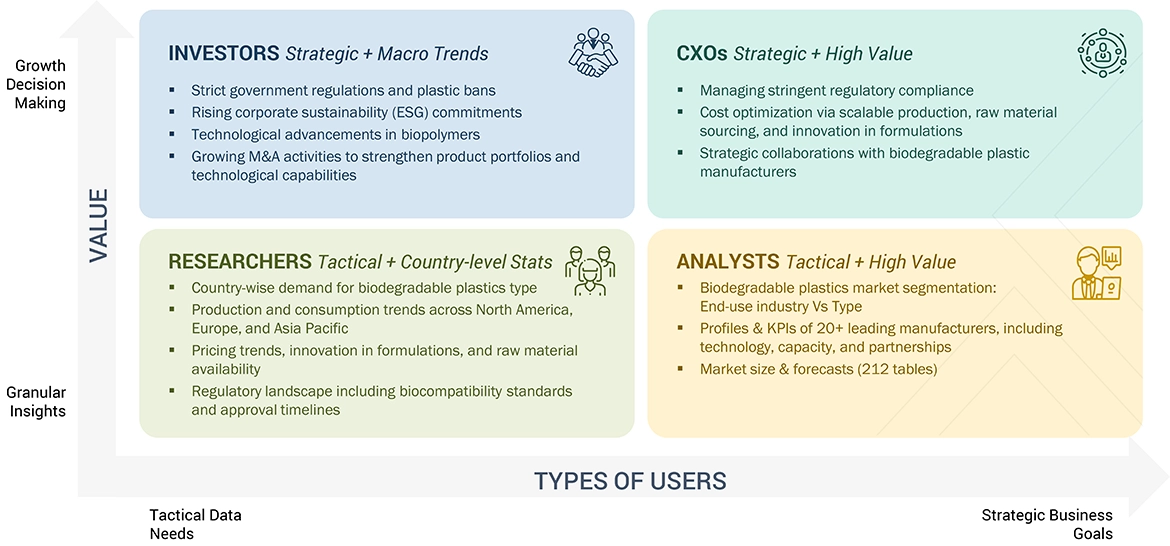
We have successfully delivered the following deep-dive customizations:
| CLIENT REQUEST | CUSTOMIZATION DELIVERED | VALUE ADDS |
|---|---|---|
| Packaging Companies | Supplier profiling of biodegradable polymer producers (PLA, PHA, PBS, starch blends) based on cost, performance, and availability | Enable vendor selection, reduce environmental impact, ensure regulatory compliance, and optimize packaging costs |
| Food & Beverage Brands | Comparative analysis of biodegradable materials for food packaging based on shelf life, barrier properties, and compostability | Support material selection, enhance product safety, improve sustainability positioning, and reduce plastic waste |
| Consumer Goods Manufacturers | Evaluation of biodegradable plastics for product applications based on performance, design flexibility, and lifecycle impact | Enhance brand value, meet sustainability goals, ensure product performance, and reduce carbon footprint |
RECENT DEVELOPMENTS
- August 2024 :
- April 2024 :
- November 2023 :
Table of Contents
 Exclusive indicates content/data unique to MarketsandMarkets and not available with any competitors.
Methodology
The study involves two major activities in estimating the current market size for the biodegradable plastics market. Exhaustive secondary research was done to collect information on the market, peer market, and parent market. The next step was to validate these findings, assumptions, and sizing with industry experts across the value chain through primary research. Both top-down and bottom-up approaches were employed to estimate the complete market size. Afterward, market breakdown and data triangulation were used to estimate the market size for segments and subsegments.
Secondary Research
Secondary sources used for this research include the financial statements of companies that offer biodegradable plastics and information from various trade, business, and professional associations. Secondary research has been used to obtain critical information on the industry’s value chain, the total pool of key players, market classification, and segmentation by industry trends down to the bottom-most level and regional markets. Secondary data were collected and analyzed to determine the overall size of the biodegradable plastics market, and the results were validated by primary respondents.
Primary Research
Extensive primary research was conducted following secondary research on the biodegradable plastics market. Several primary interviews were conducted with market experts from both the demand and supply sides across major countries of North America, Europe, Asia Pacific, the Middle East & Africa, and South America. Primary data was collected through questionnaires, emails, and telephonic interviews. Primary sources from the supply side included various industry experts, such as Chief X Officers (CXOs), Vice Presidents (VPs), Directors from business development, marketing, product development/innovation teams, and related key executives from biodegradable plastics industry vendors, material providers, distributors, and key opinion leaders. Primary interviews were conducted to gather insights into market statistics, revenue from products and services, market breakdowns, market size estimates, market forecasting, and data triangulation. Primary research also helped in understanding the various trends related to technology, applications, end users, and regions. Stakeholders from the demand side, such as CIOs, CTOs, CSOs, and installation teams of the customer/end users who are seeking biodegradable plastics services, were interviewed to understand the buyer’s perspective on the suppliers, products, component providers, and their current usage of biodegradable plastics and future outlook of their business, which will affect the overall market.
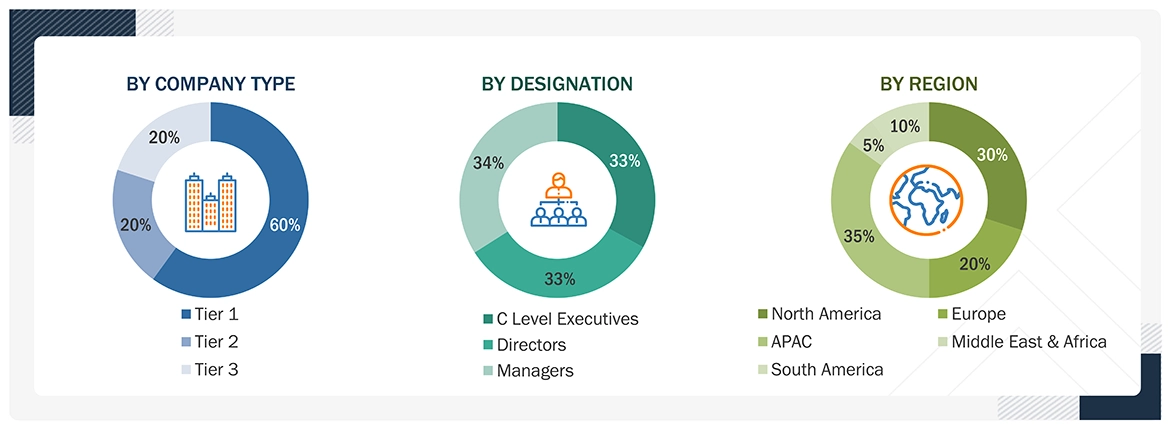
Breakup of Primary Research:
To know about the assumptions considered for the study, download the pdf brochure
Market Size Estimation
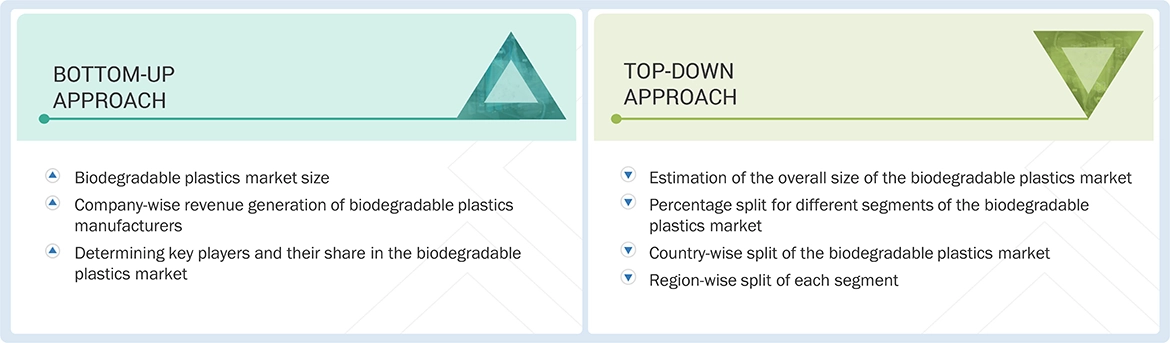
The research methodology used to estimate the size of the biodegradable plastics market includes the following details. Market sizing was conducted from the demand side. The market was upsized based on regional demand for biodegradable plastics across different end-use industries. Such procurements provide information on the demand aspects of the biodegradable plastics industry for each end-use industry. For each end-use, all possible market segments were integrated and mapped.
Biodegradable Plastics Market : Top-Down and Bottom-Up Approach
Data Triangulation
After arriving at the overall size from the market size estimation process explained above, the total market was split into several segments and subsegments. The data triangulation and market breakdown procedures explained below were implemented, as applicable, to complete the overall market engineering process and obtain exact statistics for various market segments and subsegments. The data was triangulated by examining various factors and trends on both the demand and supply sides. Additionally, the market size was validated using both top-down and bottom-up approaches.
Market Definition
The biodegradable plastics market refers to the global industry that produces, distributes, and uses plastic materials that microorganisms can transform into water, carbon dioxide, and biomass through natural decomposition under specific environmental conditions. The materials were created to minimize the existing environmental pollution that results from the use of traditional plastics made from petroleum products. Biodegradable plastics can be created from renewable resources, such as corn starch, sugarcane, cellulose, and various bio-based feedstocks, or they can be produced through chemical processes that transform biodegradable petrochemical polymers into usable products. The industry's main applications are packaging, agricultural products, consumer goods, textiles, and medical equipment. The market develops due to two main factors: rising environmental regulations and increasing public knowledge of environmental issues and businesses' environmental protection efforts. The product range includes PLA, PHA, starch blends, PBAT, and PBS to meet the growing demand for sustainable, environmentally friendly material solutions.
Key Stakeholders
- Biodegradable Plastics Manufacturers
- Biodegradable Plastics Distributors and Suppliers
- End-use Industries
- Universities, Governments, and Research Organizations
- Associations and Industrial Bodies
- R&D Institutes
- Environmental Support Agencies
- Investment Banks and Private Equity Firms
- Research and Consulting Firms
Report Objectives
- To define, describe, and forecast the market size in terms of volume and value
- To provide detailed information regarding the key factors, such as drivers, restraints, opportunities, and challenges influencing market growth
- To analyze and forecast the market by type, end-use industry, and region
- To forecast the market size concerning five main regions (along with country-level data), namely, North America, Europe, Asia Pacific, Middle East & Africa, and South America, and analyze the significant region-specific trends
- To strategically analyze micromarkets with respect to individual growth trends, prospects, and contributions of the submarkets to the overall market
- To analyze the market opportunities and the competitive landscape for stakeholders and market leaders
- To assess recent market developments and competitive strategies, such as agreements, contracts, acquisitions, partnerships & collaborations, and new product developments/new product launches, to draw the competitive landscape
- To strategically profile the key market players and comprehensively analyze their core competencies
Available Customizations
MarketsandMarkets offers the following customizations for this market report:
- Additional country-level analysis of the biodegradable plastics market
Product Analysis
- Product matrix, which provides a detailed comparison of the product portfolio of each company in the market


Personalize This Research
- Triangulate with your Own Data
- Get Data as per your Format and Definition
- Gain a Deeper Dive on a Specific Application, Geography, Customer or Competitor
- Any level of Personalization
Let Us Help You
- What are the Known and Unknown Adjacencies Impacting the Biodegradable Plastics Market
- What will your New Revenue Sources be?
- Who will be your Top Customer; what will make them switch?
- Defend your Market Share or Win Competitors
- Get a Scorecard for Target Partners

Custom Market Research Services
We Will Customise The Research For You, In Case The Report Listed Above Does Not Meet With Your Requirements
Get 10% Free CustomisationTESTIMONIALS

We at Nissan Chemicals Corporation have been clients of MarketsandMarkets for more than a year now. We recently consulted MarketsandMarkets for a study, the team at MarketsandMarkets was extremely professional and organized. The business insights were very detailed and aligned well with our expectations that really helped us formulate the Business Plans and device new strategies for development themes. MarketsandMarkets offers a unique combination of expertise and dedicated engagement model. Their research findings have helped us in designing our Pricing Strategy which will make it easier for us to predict the future sales and profits for the next ten years. We look forward to working with MarketsandMarkets in the future.
VP of Strategy & New Business Development
Leading Specialty Chemical Company
The MarketsandMarkets Engagement Model, composed of both the Knowledge Store and advisory custom research, has greatly helped us in understanding our markets and making strategic decisions. The Knowledge Store is a fast way to allow everyone in our organization to understand more about most any market they are interested in. The ability to then get custom research done and get answers to specific strategic questions and market insight has been spectacular. The Markets and Markets team feel more like colleagues than vendors and their services have helped us change our culture where statements of things like growth opportunities and competitive position are always backed by industry research.

Rich Gibson,
Director, Corporate Strategy
Milliken & Company,
Leading Industrial Manufacturer of specialty chemical, floor covering, performance and protective textile materials, and healthcaremilliken.com
MarketsandMarkets is a trusted resource that helps us to better understand markets that are near-adjacencies-whether its technology, value chain or geography. Their Knowledge Store platform provides a dashboard of markets and their characteristics which is easy to use and saves us time.
Adam Shaw,
Market Development and Strategy Manager
AdvanSix Inc. USA,
An American Leader in Chemicalswww.advansix.com
The Knowledge Store from MarketsandMarkets is a valuable tool which has helped my team acquire greater insight in to the end markets that our business serves. This has enabled us to help our company build stronger strategies throughout our planning process.
TOSHIO KINOSHITA
Senior Chif Consultion Research & Consulting Division
Mitsubishi Chemical Research Corporation,
Leading Manufacturer of Chemical Productswww.mitsubishichem-res.co.jp/en/

We recently engaged with MarketsandMarkets for a study, the team not only clearly understood our business objectives but was also extremely professional in the way they handled the entire project. The study was efficiently conducted in a phase-wise manner, and the engagement model furnished us with high-quality business insights that far exceeded our expectations at each phase. We were especially happy that MarketsandMarkets could provide us with both, an English as well as a Japanese version of the study. A special thanks to the Analyst Team and Client Services Team, whose fluency in Japanese enhanced our comfort level, as we could converse with them in our preferred language.
Independent entrepreneurs
Arrow Precision
We approached MarketsandMarkets for study on Proppants Market, and their work exceeded our expectations. The study conducted was comprehensive and enabled us to view the market through the various dimensions. In addition, the team was extraordinarily responsive throughout the process and resolved our queries on time. I strongly recommend MarketsandMarkets and will certainly consider them for additional market assessments we will need in the future.
Global engineering company, Japan
Deputy Manager,
Strategic Planning OfficeThe high-quality insights shared by the MarketsandMarkets team helped us understand the pharmaceutical plant designers in a specific geography. It also captured the risks that we may likely face in communicating with our potential partners. The study would enable us identify partners, which would impact our future growth.
- US Biodegradable Plastics Market
- Canada Biodegradable Plastics Market
- Mexico Biodegradable Plastics Market
- France Biodegradable Plastics Market
- Germany Biodegradable Plastics Market
- Italy Biodegradable Plastics Market
- UK Biodegradable Plastics Market
- Spain Biodegradable Plastics Market
- China Biodegradable Plastics Market
- Japan Biodegradable Plastics Market
- South Korea Biodegradable Plastics Market
- India Biodegradable Plastics Market
- South Africa Biodegradable Plastics Market
- Brazil Biodegradable Plastics Market
- Argentina Biodegradable Plastics Market
- Rest Of Europe Biodegradable Plastics Market
- Rest Of Asia Pacific Biodegradable Plastics Market
- GCC Countries Biodegradable Plastics Market
- -Rest Of GCC Biodegradable Plastics Market
- Rest Of South America Biodegradable Plastics Market




Growth opportunities and latent adjacency in Biodegradable Plastics Market