Cashew Nutshell Liquid Market

Cashew Nutshell Liquid Market by Product Type (PF Resins, Epoxy Resins, Epoxy Curing Agents, Surfactants, Polyols, Friction Linings), Application (Adhesive, Coating, Foam & Insulation, Laminate, Personal Care, Fuel), and Region - Global Forecast to 2031




OVERVIEW
Source: Secondary Research, Interviews with Experts, MarketsandMarkets Analysis
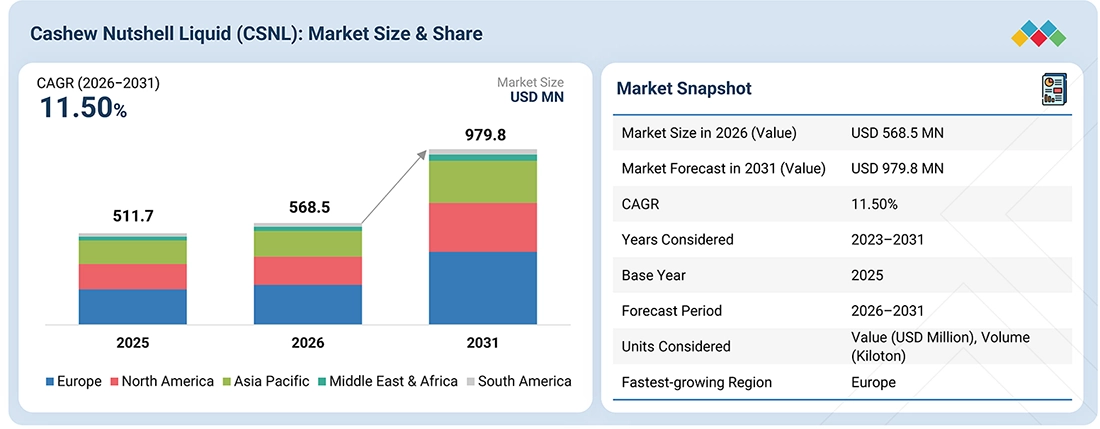
The cashew nutshell liquid market is estimated to grow from USD 568.5 million in 2026 to USD 979.8 million by 2031, at a CAGR of 11.50%. This growth is driven by increasing demand for high-performance, renewable, and cost-effective materials across industrial applications. Market expansion is supported by advancements in cashew nutshell liquid-based resins, friction materials, coatings, adhesives, and polymer systems, along with the development of high-performance formulations for automotive, construction, marine, and industrial applications. The growing use of cashew nutshell liquid derivatives in brake linings, paints, laminates, sealants, and protective coatings is further increasing demand for this bio-based material. In addition, rising emphasis on sustainable raw materials, reduced dependence on petroleum-based products, and improved material performance are contributing to the adoption of cashew nutshell liquid across diverse end-use industries.
KEY TAKEAWAYS
-
BY REGIONEurope dominated the global cashew nutshell liquid market in 2025, accounting for a market share of 38.8%, in terms of value.
-
BY PRODUCT TYPEThe friction materials segment is projected to be the fastest-growing product type of the cashew nutshell liquid market with a CAGR of 13.43%, in terms of value, between 2026 and 2031.
-
BY APPLICATIONThe coatings application dominated the overall cashew nutshell liquid market with a share of 28.2%, in terms of value, in 2025.
-
COMPETITIVE LANDSCAPE - KEY PLAYERSCardolite Corporation (US), Palmer International (US), and Golden Cashew Products Pvt. Ltd. are identified as key players in the global cashew nutshell liquid market. These companies have strong market presence and extensive product portfolios.
-
COMPETITIVE LANDSCAPE - STARTUPSPT Comextra Majora, Thinh Dai Vietnam Company Limited, and Tan Loc Cashew Oil Production Company Limited, among other emerging players, have carved out solid positions within specialized niche segments, highlighting their potential to evolve into future market leaders.
The growth potential for the cashew nutshell liquid market remains strong, supported by increasing demand for bio-based materials, advancements in processing technologies, and the growing need for sustainable alternatives to petroleum-derived products. A key trend shaping the market is the development of high-performance CNSL-based products, including resins, coatings, adhesives, friction materials, and specialty chemicals, to meet evolving performance and environmental requirements. Cashew nutshell liquid is increasingly used to enhance material durability, chemical resistance, thermal stability, and weatherability across automotive components, coatings, construction materials, adhesives, and industrial applications. Its ability to provide functional performance, support renewable material adoption, and enable sustainable product formulations is further driving demand across diverse end-use industries.
TRENDS & DISRUPTIONS IMPACTING CUSTOMERS' CUSTOMERS
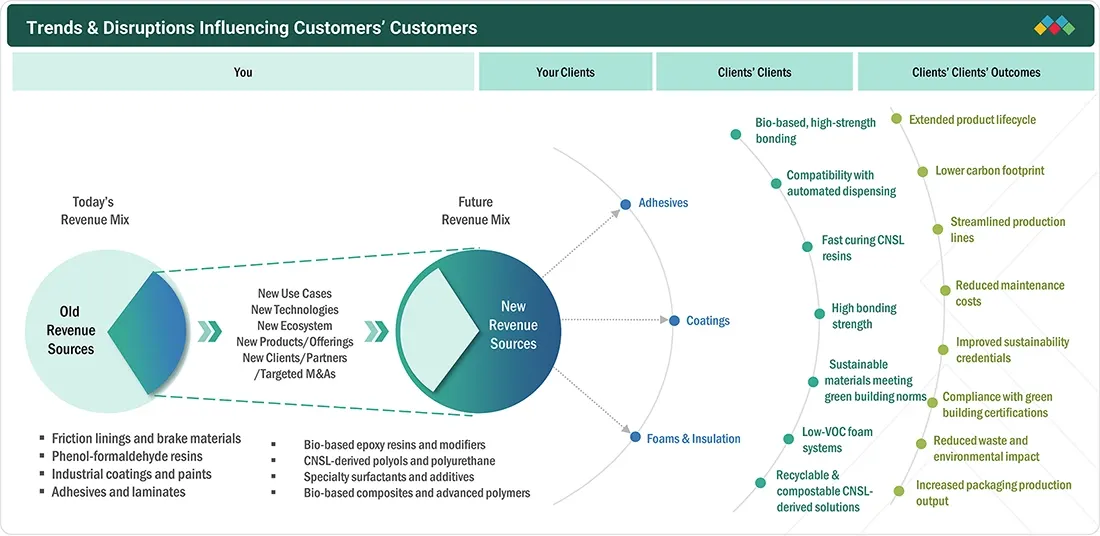
The cashew nutshell liquid market largely depends on demand trends across major end-use industries, advancements in CNSL-based formulations, and changes in cashew processing and raw material availability. Key users of cashew nutshell liquid include resin manufacturers, coatings producers, friction material manufacturers, adhesives & sealants companies, laminates producers, and rubber product manufacturers. These users incorporate CNSL into resins, coatings, brake linings, adhesives, and other materials to improve chemical resistance, flexibility, thermal stability, and durability. The increasing adoption of bio-based raw materials, sustainable resin systems, high-performance coatings, friction materials, and renewable chemical alternatives is influencing market growth. Any slowdown in cashew processing, resin and coating production, automotive activity, construction demand, or availability of cashew shells can affect CNSL consumption and revenues across the market value chain.
Source: Secondary Research, Interviews with Experts, MarketsandMarkets Analysis
MARKET DYNAMICS

Level
-
Increasing preference for bio-based alternatives

-
Growing government initiatives supporting cashew industry


Level
-
Emissions and fume release during processing

-
Lack of standardization and inconsistent quality


Level
-
CNSL biofuel blends for marine fuel

-
R&D in CNSL applications accelerating commercial adoption


Level
-
Availability of substitutes

Source: Secondary Research, Interviews with Experts, MarketsandMarkets Analysis
Driver: Increasing preference for bio-based alternatives
The growing preference for renewable and bio-based raw materials is supporting demand for cashew nutshell liquid (CNSL) as an alternative to petroleum-derived chemicals. CNSL is obtained from cashew shells, a by-product of cashew processing, providing manufacturers with a renewable feedstock for resins, coatings, adhesives, and friction materials. Its use can support the development of lower-fossil-content formulations while adding value to an agricultural residue. This trend is encouraging manufacturers to explore CNSL-based products across industrial applications.
Restraint: Emissions and fume release during processing
Emissions and fume release during CNSL processing can constrain its adoption, particularly where thermal treatment is required to modify or refine the material. Heating cashew shells and processing CNSL can generate fumes and volatile compounds that require appropriate ventilation, emission controls, and worker-safety measures. These requirements can increase processing costs and add operational complexity for producers. Stricter environmental and workplace-emission requirements can further influence processing practices and investment decisions.
Opportunity: CNSL biofuel blends for marine fuel
The development of CNSL-based biofuel blends presents an opportunity to expand CNSL beyond conventional industrial applications into the marine fuel sector. CNSL contains energy-rich organic compounds that can potentially be incorporated into blended fuels after suitable processing and formulation. Growing interest in renewable marine fuels and lower-carbon alternatives is creating scope for research into CNSL-derived fuel components. Successful engine compatibility, fuel stability, emissions performance, and compliance with marine fuel standards could support commercial adoption.
Challenge: Availability of substitutes
The CNSL market faces competition from established petroleum-based and other bio-based alternatives used in similar applications. Phenolic resins, synthetic chemicals, vegetable oils, and other renewable feedstocks can offer manufacturers different combinations of cost, performance, availability, and processing characteristics. Established supply chains for these alternatives can make switching to CNSL less attractive for some users. CNSL producers therefore need to demonstrate consistent quality, application-specific performance, and reliable supply to strengthen its position across end-use industries.
CASHEW NUTSHELL LIQUID MARKET: COMMERCIAL USE CASES ACROSS INDUSTRIES
| COMPANY | USE CASE DESCRIPTION | BENEFITS |
|---|---|---|
 |
Uses CNSL-derived phenolic compounds in laminate adhesive technology. A Henkel Japan patent describes a laminating adhesive incorporating a phenolic compound derived from CNSL alongside a urethane prepolymer, targeting plastic-film lamination applications where adhesion and compatibility are important. | Improved adhesive strength, component compatibility, film appearance, and processing efficiency, supporting the development of high-performance and more bio-based adhesive formulations |
 |
Uses cardanol, a major derivative of CNSL, in specialty thermoset resin technology. Huntsman introduced its XU 35500 benzoxazine diluent produced from cardanol for composite applications, alongside benzoxazine resin systems designed for demanding structural and electrical applications. | Improved thermal stability, electrical performance, dimensional stability, hot/wet performance, and lower water absorption, while incorporating a renewable bio-based feedstock into advanced resin systems |
 |
Saint-Gobain Recherche researchers developed recyclable phenol-carbamate networks using cashew nutshell liquid novolac as a bio-based component. The work demonstrates the company's R&D application of CNSL-derived chemistry toward recyclable polymeric materials. | Enables bio-based polymer development, recyclability, and reduced dependence on conventional petrochemical phenolic feedstocks while maintaining functional performance in advanced material systems |
 |
Uses cashew-derived friction modifiers in automotive brake friction materials. Nisshinbo has patented friction-material formulations incorporating cashew dust for disc brake pads and automotive brake linings. | Improved friction stability, braking performance, wear characteristics, and noise-control performance while supporting non-asbestos friction-material formulations |
Logos and trademarks shown above are the property of their respective owners. Their use here is for informational and illustrative purposes only.
MARKET ECOSYSTEM
The cashew nutshell liquid market ecosystem includes cashew processors, CNSL extractors, chemical manufacturers, CNSL-based product producers, formulators, distributors, and end-use manufacturers. CNSL producers collect and process cashew shells, extracting and refining products such as natural CNSL, cardanol, cardanol derivatives, and specialty chemicals for industrial applications. Demand is primarily influenced by the need for bio-based materials, improved chemical and thermal resistance, enhanced durability, and sustainable alternatives to petroleum-derived products. Continuous product development, processing optimization, and collaboration across the value chain are enabling the development of high-performance and more sustainable CNSL-based solutions that meet evolving material performance and environmental requirements.
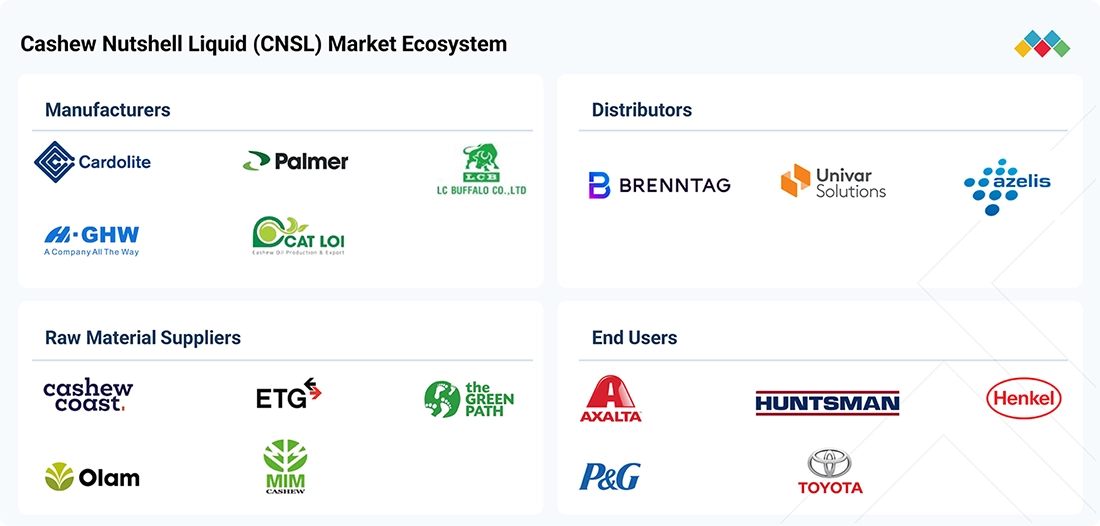
Logos and trademarks shown above are the property of their respective owners. Their use here is for informational and illustrative purposes only.
MARKET SEGMENTS
Source: Secondary Research, Interviews with Experts, MarketsandMarkets Analysis
Cashew Nutshell Liquid (CNSL) Market, By Product Type
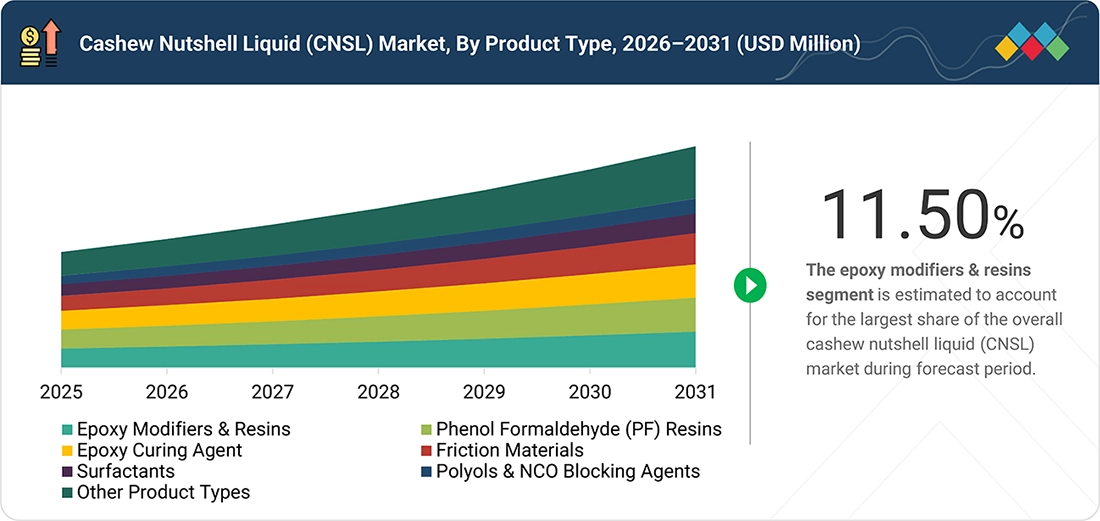
The epoxy modifiers & resins segment accounted for the largest share of the global cashew nutshell liquid market, in terms of value, in 2025. This is attributed to the use of CNSL as a bio-based modifier and reactive component in epoxy formulations. CNSL-derived compounds can improve flexibility, impact resistance, chemical resistance, and curing characteristics of epoxy systems. These properties support their use in industrial coatings, adhesives, flooring, composites, and protective materials. The availability of CNSL from cashew-processing residues also provides formulators with a renewable feedstock for developing modified epoxy systems.
Cashew Nutshell Liquid (CNSL) Market, By Application
In 2025, the coatings application held the largest share of the global cashew nutshell liquid market by value. This dominance is driven by the use of CNSL-derived materials in protective and industrial coating formulations requiring chemical resistance, flexibility, adhesion, and durability. CNSL-based phenolic compounds are particularly suitable for coatings exposed to harsh operating environments, including industrial equipment and metal surfaces. Their compatibility with resin systems enables formulators to develop coatings with improved performance while incorporating bio-based content. Increasing interest in renewable raw materials in industrial coatings is further supporting CNSL consumption in this application.
REGION
Europe projected to be fastest-growing cashew nutshell liquid market during forecast period
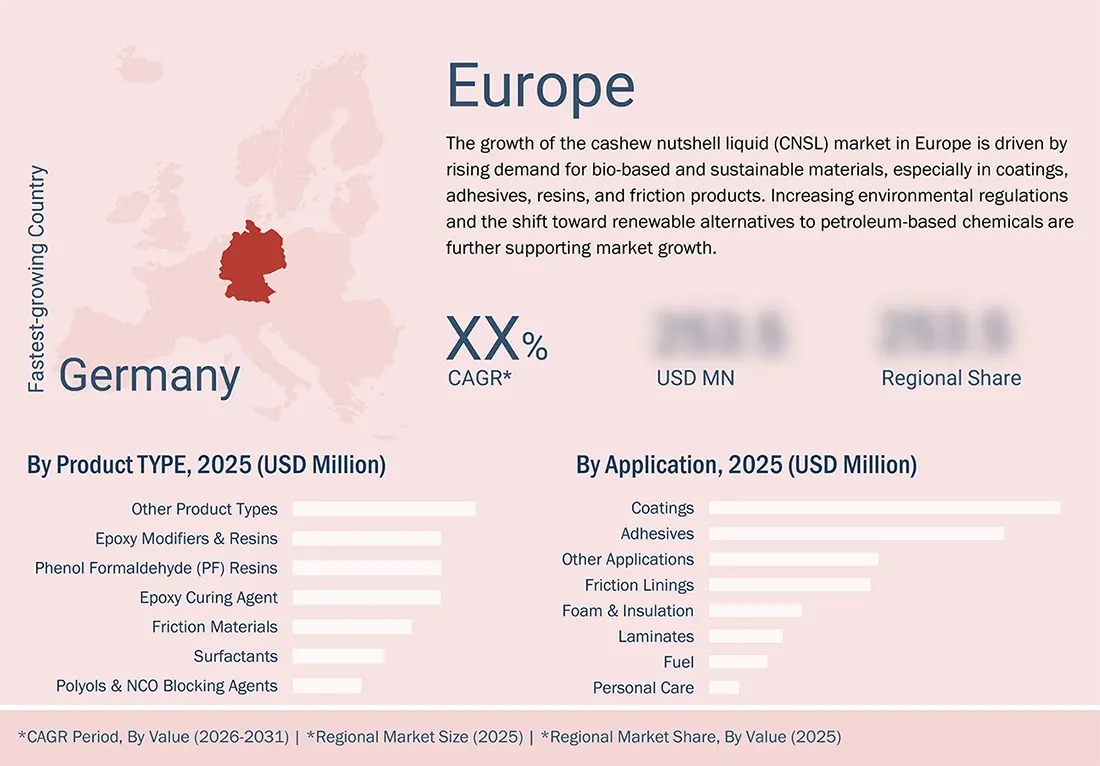
Europe is projected to be the fastest-growing market for cashew nutshell liquid during the forecast period in terms of value. This market growth is supported by increasing demand for bio-based and renewable raw materials across industrial applications. The region’s coatings, adhesives, friction materials, and resin industries are exploring alternatives to conventional petrochemical inputs, creating opportunities for CNSL-based formulations. Growing emphasis on circular use of agricultural by-products is also supporting interest in CNSL as a value-added renewable feedstock. In addition, demand for sustainable materials in automotive, construction, and industrial manufacturing is expected to expand the application base for CNSL-derived products.
CASHEW NUTSHELL LIQUID MARKET: COMPANY EVALUATION MATRIX
Cardolite Corporation (Star) holds a leading position in the cashew nutshell liquid market due to its extensive portfolio of CNSL-based products, strong global manufacturing and distribution capabilities, and broad presence across diverse application areas, including coatings, adhesives, friction materials, and resins. Golden Cashew Products Pvt. Ltd. (Emerging) is strengthening its position in the cashew nutshell liquid market by expanding its CNSL product offerings, enhancing processing capabilities, and developing value-added solutions for industrial applications. The company's focus on product quality, sustainable utilization of cashew-processing by-products, and application-specific CNSL solutions is supporting its growth as demand increases for bio-based and renewable chemical alternatives. Both companies are expected to further strengthen their competitive positions through product development, capacity expansion, and investments in advanced CNSL processing technologies.
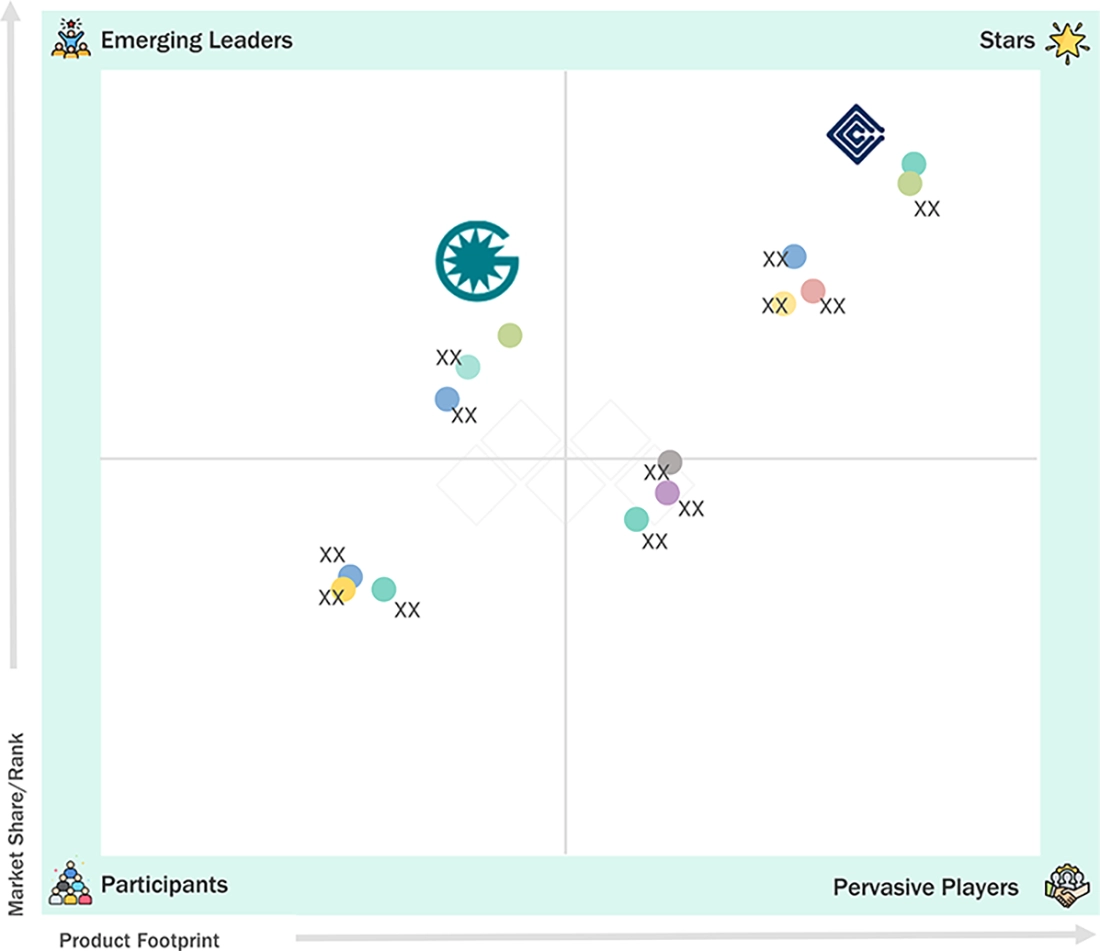
Source: Secondary Research, Interviews with Experts, MarketsandMarkets Analysis
KEY MARKET PLAYERS
MARKET SCOPE
| REPORT METRIC | DETAILS |
|---|---|
| Market Size in 2025 (Value) | USD 511.7 Million |
| Revenue Forecast in 2031 (Value) | USD 979.8 Million |
| Growth Rate | CAGR of 11.50% from 2026 to 2031 |
| Years Considered | 2023–2031 |
| Base Year | 2025 |
| Forecast Period | 2026–2031 |
| Units Considered | Value (USD Million), Volume (Kiloton) |
| Report Coverage | Revenue forecast, company ranking, competitive landscape, growth factors, and trends |
| Segments Covered | By Product Type: Phenol Formaldehyde (PF) Resins, Epoxy Modifiers & Resins, Epoxy Curing Agent, Surfactants, Polyols & NCO Blocking Agents, Friction Materials, and Other Product Types By Application: Adhesives, Coatings, Foams & Insulation, Laminates, Friction Linings, Personal Care, Fuels, and Other Applications |
| Regional Scope | Asia Pacific, Europe, North America, Middle East & Africa, South America |
WHAT IS IN IT FOR YOU: CASHEW NUTSHELL LIQUID MARKET REPORT CONTENT GUIDE
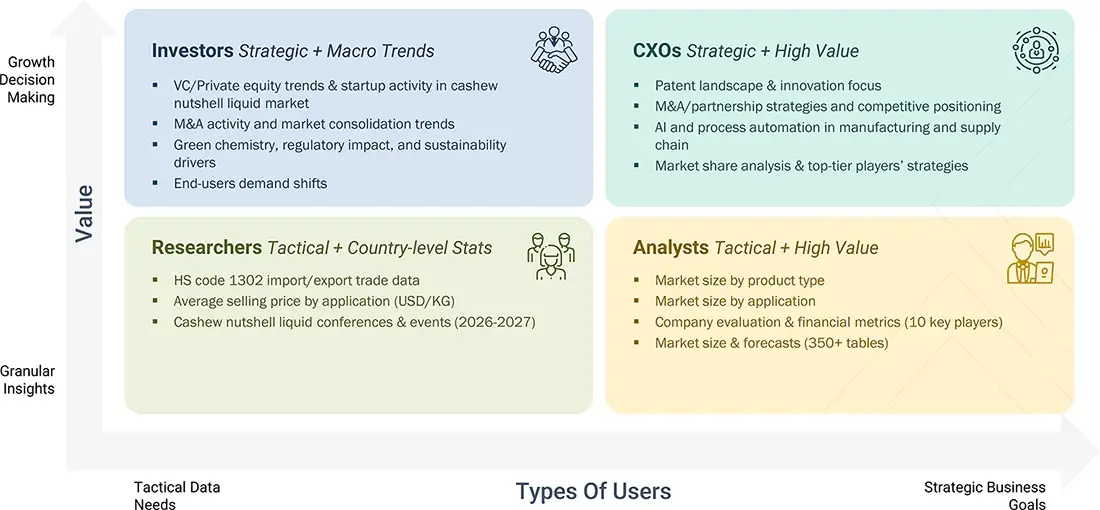
DELIVERED CUSTOMIZATIONS
We have successfully delivered the following deep-dive customizations:
| CLIENT REQUEST | CUSTOMIZATION DELIVERED | VALUE ADDS |
|---|---|---|
| North America-based Cashew Nutshell Liquid (CNSL) Manufacturer |
|
|
| Asia Pacific-based Cashew Nutshell Liquid (CNSL) Manufacturer |
|
|
RECENT DEVELOPMENTS
- May 2025 : COIM USA, a specialty chemical manufacturer, announced the acquisition of a 20-acre property in New Boston, Texas, from Palmer International. The acquisition included existing logistics infrastructure and a new renewable polyol product line derived chiefly from CNSL. This product line complements COIM’s existing polyester polyols and supports its strategy to expand sustainable offerings. COIM plans to further expand the site, targeting an additional 100 million pounds of capacity for new product lines by mid-2027.
- December 2022 : Palmer International expanded its operations by purchasing an existing facility at TexAmericas Center in New Boston, Texas (Texarkana region). The company committed an initial investment of USD 10 million to install equipment throughout 2023. This move was driven by capacity constraints at Palmer’s Pennsylvania site and the desire to capitalize on Texas’s business-friendly environment and logistical advantages.
Table of Contents
 Exclusive indicates content/data unique to MarketsandMarkets and not available with any competitors.
Methodology
The study involved four major activities in estimating the market size for cashew nutshell liquid. Exhaustive secondary research was done to collect information on the market, the peer market, and the parent market. The next step was to validate these findings, assumptions, and sizing with industry experts across the value chain through primary research. Both top-down and bottom-up approaches were employed to estimate the complete market size. After that, the market breakdown and data triangulation procedures were used to estimate the market size of the segments and subsegments.
Secondary Research
Secondary sources used in this study included annual reports, press releases, and investor presentations of companies; white papers; certified publications; articles from recognized authors; and gold-standard and silver-standard websites, such as Factiva, ICIS, Bloomberg, and others. The findings of this study were verified through primary research, which involved conducting extensive interviews with key officials, including CEOs, VPs, directors, and other executives. The breakdown of profiles of the primary interviewees is illustrated in the figure below:
Primary Research
The cashew nutshell liquid market comprises several stakeholders, such as raw material suppliers, end-product manufacturers, and regulatory organizations in the supply chain. Various primary sources from both the supply and demand sides of the market were interviewed to obtain qualitative and quantitative information.
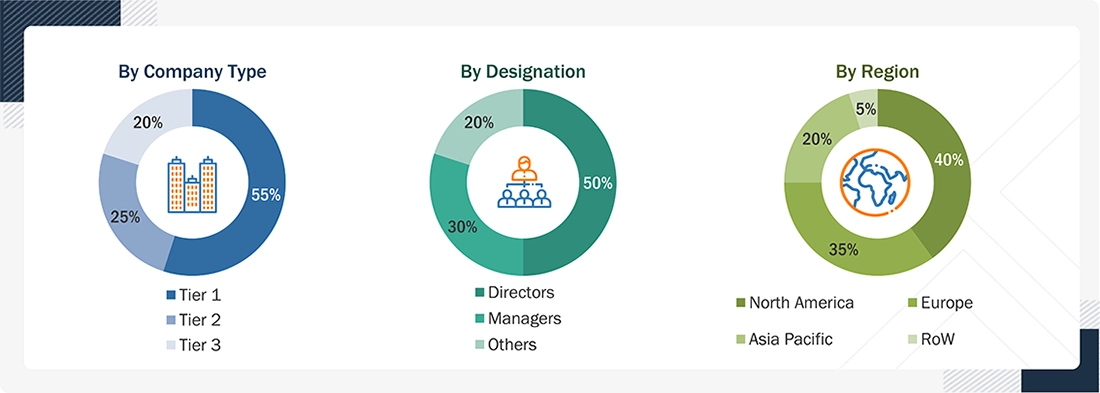
Notes: Tier 1, Tier 2, and Tier 3 companies are classified based on their market revenue in 2024/2025, available in the public domain, product portfolios, and geographical presence.
Other designations include consultants and sales, marketing, and procurement managers.
|
COMPANY NAME |
DESIGNATION |
|
Cashew Chem India |
Senior Manager |
|
Sri Devi Group |
Innovation Manager |
|
Sri Devi Group |
Vice-President |
|
ADMARK Polycoats Pvt. Ltd. |
Production Supervisor |
|
Cardolite Corporation |
Sales Manager |
To know about the assumptions considered for the study, download the pdf brochure
Market Size Estimation
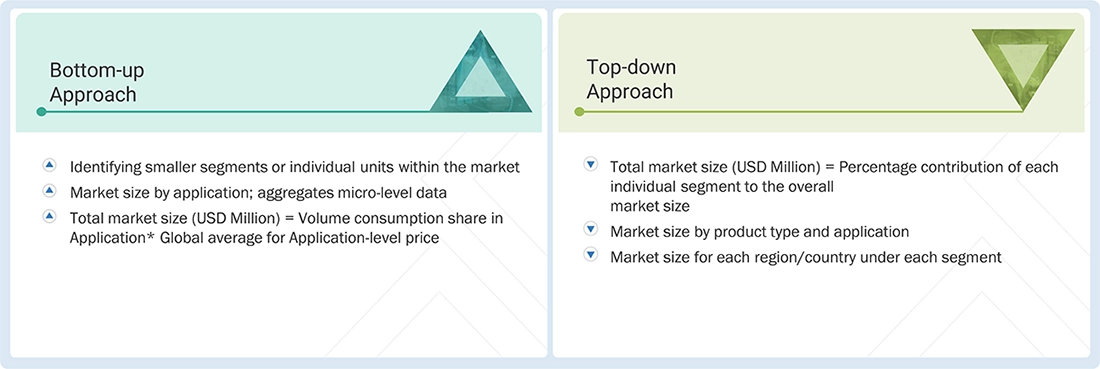
Both top-down and bottom-up approaches were used to estimate and validate the total size of the cashew nutshell liquid market. These methods were also used extensively to estimate the size of various subsegments in the market. The research methodology used to estimate the market size includes the following:
- The key players in the industry have been identified through extensive secondary research.
- The supply chain of the industry has been determined through primary and secondary research.
- All percentage shares, splits, and breakdowns have been determined using secondary sources and verified through primary sources.
- All possible parameters that affect the markets covered in this research study have been accounted for, viewed in extensive detail, verified through primary research, and analyzed to obtain the final quantitative and qualitative data.
Data Triangulation
After determining the overall market size using the market size estimation processes explained above, the market was divided into several segments and subsegments. To complete the overall market engineering process and determine the exact statistics for each market segment and subsegment, data triangulation and market breakdown procedures were employed, as applicable. The data were triangulated by studying various factors and trends from both the demand and supply sides in the cashew nutshell liquid industry.
Market Definition
CNSL is a by-product of the cashew industry. The cashew nut has an exterior shell, which is a soft honeycomb structure containing a dark reddish-brown viscous liquid or oil called CNSL. The liquid has multiple applications in polymer industries, such as friction linings, adhesives, coatings, laminating resins, rubber compounding resins, cashew cements, PU-based polymers, surfactants, epoxy resins, foundry chemicals, and intermediates for the chemical industry.
Key Stakeholders
- Cashew Nutshell Liquid Manufacturers
- Cashew Nutshell Liquid Distributors
- Raw Material Suppliers
- Service Providers
- Industry associations
- Government and Research Organizations
Report Objectives
- To define, describe, and forecast the size of the cashew nutshell liquid (CNSL) market in terms of both value and volume
- To provide detailed information about the key drivers, restraints, opportunities, and challenges influencing the market growth
- To estimate and forecast the market size based on product type and application
- To forecast the market size with respect to five main regions: North America, Europe, Asia Pacific, the Middle East & Africa, and South America
- To strategically analyze micromarkets with respect to individual growth trends, prospects, and their contribution to the overall market
- To analyze opportunities in the market for stakeholders and provide a competitive landscape for market leaders
- To analyze competitive developments in the market, such as product developments, mergers & acquisitions, investments & expansions, joint ventures, and agreements & partnerships
- To strategically profile the key players and comprehensively analyze their market shares and core competencies
Available customizations:
Along with the given market data, MarketsandMarkets offers customizations according to the company’s specific needs. The following customization options are available for the report:
Regional Analysis
- Further breakdown of a region with respect to a particular country or additional end-use industry
Company Information
- Detailed analysis and profiles of additional market players (up to five)
Key Questions Addressed by the Report
Who are the major players in the cashew nutshell liquid market?
Major players include Cardolite Corporation (US), GHW (Vietnam) Co. Ltd., Palmer International (US), LC Buffalo Co. Ltd. (Vietnam), Cat Loi Cashew Oil Production & Export Joint Stock Company (Vietnam), SENESEL sp. z o.o. (Poland), Zhejiang Wansheng Co., Ltd. (China), Cashew Chem India (India), Sri Devi Group (India), and ADMARK Polycoats Pvt. Ltd. (India).
What are the drivers and opportunities for the cashew nutshell liquid market?
Drivers include rising demand from coatings and adhesives industries, government initiatives supporting the cashew sector, and preference for bio-based alternatives. Opportunities are expected from technological advancements in manufacturing.
Which strategies are the key players focusing upon in the cashew nutshell liquid market?
The key strategies adopted are product launches, partnerships, mergers & acquisitions, agreements, and expansions to grow their global footprint.
What is the expected growth rate of the cashew nutshell liquid market between 2025 and 2030?
The market is projected to grow at a CAGR of 11.36% in terms of value during the forecast period.
Which major factors are expected to restrain the growth of the cashew nutshell liquid market?
Growth is expected to be restrained by emissions and fume release during processing, lack of standardization, and inconsistent product quality.


Personalize This Research
- Triangulate with your Own Data
- Get Data as per your Format and Definition
- Gain a Deeper Dive on a Specific Application, Geography, Customer or Competitor
- Any level of Personalization
Let Us Help You
- What are the Known and Unknown Adjacencies Impacting the Cashew Nutshell Liquid Market
- What will your New Revenue Sources be?
- Who will be your Top Customer; what will make them switch?
- Defend your Market Share or Win Competitors
- Get a Scorecard for Target Partners

Custom Market Research Services
We Will Customise The Research For You, In Case The Report Listed Above Does Not Meet With Your Requirements
Get 10% Free CustomisationTESTIMONIALS
We at Nissan Chemicals Corporation have been clients of MarketsandMarkets for more than a year now. We recently consulted MarketsandMarkets for a study, the team at MarketsandMarkets was extremely professional and organized. The business insights were very detailed and aligned well with our expectations that really helped us formulate the Business Plans and device new strategies for development themes. MarketsandMarkets offers a unique combination of expertise and dedicated engagement model. Their research findings have helped us in designing our Pricing Strategy which will make it easier for us to predict the future sales and profits for the next ten years. We look forward to working with MarketsandMarkets in the future.
VP of Strategy & New Business Development
Leading Specialty Chemical Company
The MarketsandMarkets Engagement Model, composed of both the Knowledge Store and advisory custom research, has greatly helped us in understanding our markets and making strategic decisions. The Knowledge Store is a fast way to allow everyone in our organization to understand more about most any market they are interested in. The ability to then get custom research done and get answers to specific strategic questions and market insight has been spectacular. The Markets and Markets team feel more like colleagues than vendors and their services have helped us change our culture where statements of things like growth opportunities and competitive position are always backed by industry research.

Rich Gibson,
Director, Corporate Strategy
Milliken & Company,
Leading Industrial Manufacturer of specialty chemical, floor covering, performance and protective textile materials, and healthcaremilliken.com
MarketsandMarkets is a trusted resource that helps us to better understand markets that are near-adjacencies-whether its technology, value chain or geography. Their Knowledge Store platform provides a dashboard of markets and their characteristics which is easy to use and saves us time.
Adam Shaw,
Market Development and Strategy Manager
AdvanSix Inc. USA,
An American Leader in Chemicalswww.advansix.com
The Knowledge Store from MarketsandMarkets is a valuable tool which has helped my team acquire greater insight in to the end markets that our business serves. This has enabled us to help our company build stronger strategies throughout our planning process.
TOSHIO KINOSHITA
Senior Chif Consultion Research & Consulting Division
Mitsubishi Chemical Research Corporation,
Leading Manufacturer of Chemical Productswww.mitsubishichem-res.co.jp/en/

We recently engaged with MarketsandMarkets for a study, the team not only clearly understood our business objectives but was also extremely professional in the way they handled the entire project. The study was efficiently conducted in a phase-wise manner, and the engagement model furnished us with high-quality business insights that far exceeded our expectations at each phase. We were especially happy that MarketsandMarkets could provide us with both, an English as well as a Japanese version of the study. A special thanks to the Analyst Team and Client Services Team, whose fluency in Japanese enhanced our comfort level, as we could converse with them in our preferred language.
Independent entrepreneurs
Arrow Precision
We approached MarketsandMarkets for study on Proppants Market, and their work exceeded our expectations. The study conducted was comprehensive and enabled us to view the market through the various dimensions. In addition, the team was extraordinarily responsive throughout the process and resolved our queries on time. I strongly recommend MarketsandMarkets and will certainly consider them for additional market assessments we will need in the future.
Global engineering company, Japan
Deputy Manager,
Strategic Planning OfficeThe high-quality insights shared by the MarketsandMarkets team helped us understand the pharmaceutical plant designers in a specific geography. It also captured the risks that we may likely face in communicating with our potential partners. The study would enable us identify partners, which would impact our future growth.
- China Cashew Nutshell Liquid Market
- India Cashew Nutshell Liquid Market
- Japan Cashew Nutshell Liquid Market
- South Korea Cashew Nutshell Liquid Market
- Indonesia Cashew Nutshell Liquid Market
- Vietnam Cashew Nutshell Liquid Market
- Mexico Cashew Nutshell Liquid Market
- Canada Cashew Nutshell Liquid Market
- Germany Cashew Nutshell Liquid Market
- France Cashew Nutshell Liquid Market
- UK Cashew Nutshell Liquid Market
- Italy Cashew Nutshell Liquid Market
- Netherlands Cashew Nutshell Liquid Market
- Brazil Cashew Nutshell Liquid Market
- South Africa Cashew Nutshell Liquid Market
- US Cashew Nutshell Liquid Market
- Rest Of Europe Cashew Nutshell Liquid Market
- Rest Of Asia Pacific Cashew Nutshell Liquid Market
- GCC Countries Cashew Nutshell Liquid Market
- –Rest Of GCC Countries Cashew Nutshell Liquid Market
- Rest Of South America Cashew Nutshell Liquid Market






Growth opportunities and latent adjacency in Cashew Nutshell Liquid Market