Communication Small Satellite Market Size, Share & Growth, 2030

Communication Small Satellite Market Size, Share and Trends by System (Satellite Bus, Payloads, Solar Panels, Satellite Antennas, Others), Orbit (LEO, MEO, GEO), Mass, Customer, Frequency and Region - Global Forecast To 2030




COMMUNICATION SMALL SATELLITE MARKET SIZE, SHARE & TRENDS
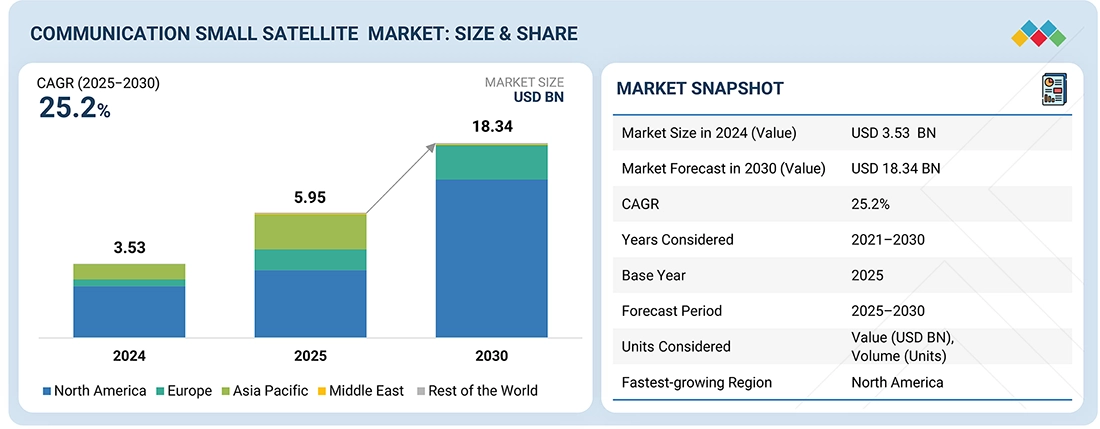
According to Marketsandmarkets, The global Communication Small Satellite Market size was valued at USD 5.95 billion in 2025 and is projected to reach USD 18.34 billion by 2030, growing at a CAGR of 25.2% from 2025 to 2030. In terms of volume, the market is expected to grow from 3,028 units in 2025 to 4,396 units by 2030. The growth is driven by the rising demand for high-throughput and low-latency connectivity, which is supported by the rapid deployment of cost-efficient small satellite constellations.
REPORT SCOPE
| REPORT METRIC | DETAILS |
|---|---|
| Market Size in 2024 (Value) | USD 3.53 Billion |
| Market Forecast in 2030 (Value) | USD 18.34 Billion |
| Growth Rate | CAGR of 25.2% from 2025-2030 |
| Years Considered | 2021-2030 |
| Base Year | 2024 |
| Forecast Period | 2025-2030 |
| Units Considered | Value (USD Million/Billion), Volume (Units) |
| Report Coverage | Revenue forecast, company ranking, competitive landscape, growth factors, and trends |
| Segments Covered |
|
| Regions Covered | North America, Asia Pacific, Europe, Middle East, Rest of World (Latin America and Africa) |
Market Size & Forecast
KEY TAKEAWAYS
-
By RegionThe North American communication small satellite market accounted for a 54.1% share in 2025.
-
By CustomerThe commercial segment is projected to register the highest CAGR of 25.7%.
-
By SystemThe satellite bus segment is projected to be the dominant during the forecast period.
-
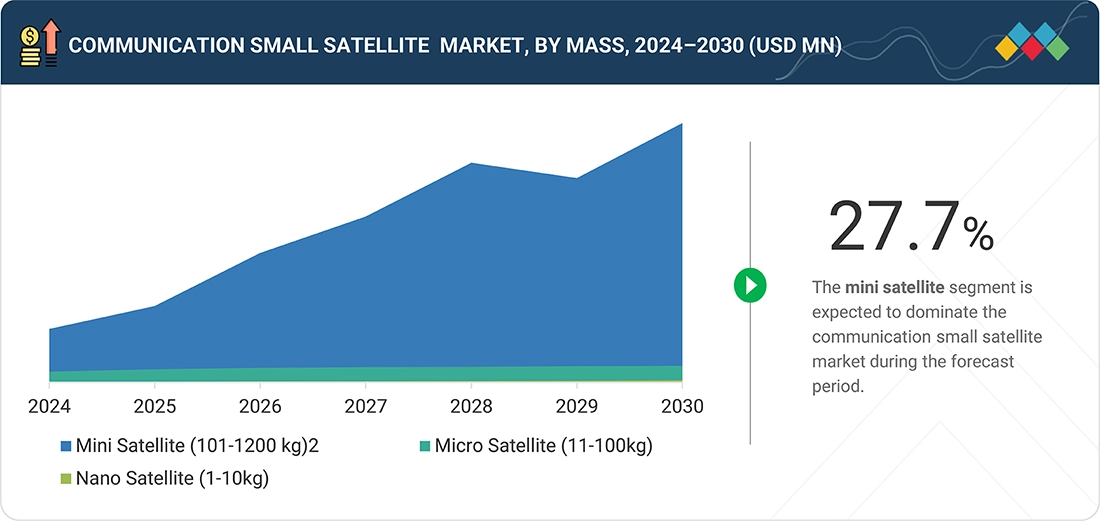
By MassThe mini satellite(101-1,200 KG) segment is expected to dominate the market during the forecast period.
-
By FrequencyThe laser/optical (200–400 THZ) segment is projected to grow at the fastest rate from 2025 to 2030.
-
By OrbitThe LEO segment is projected to grow at the fastest rate during the forecast period.
-
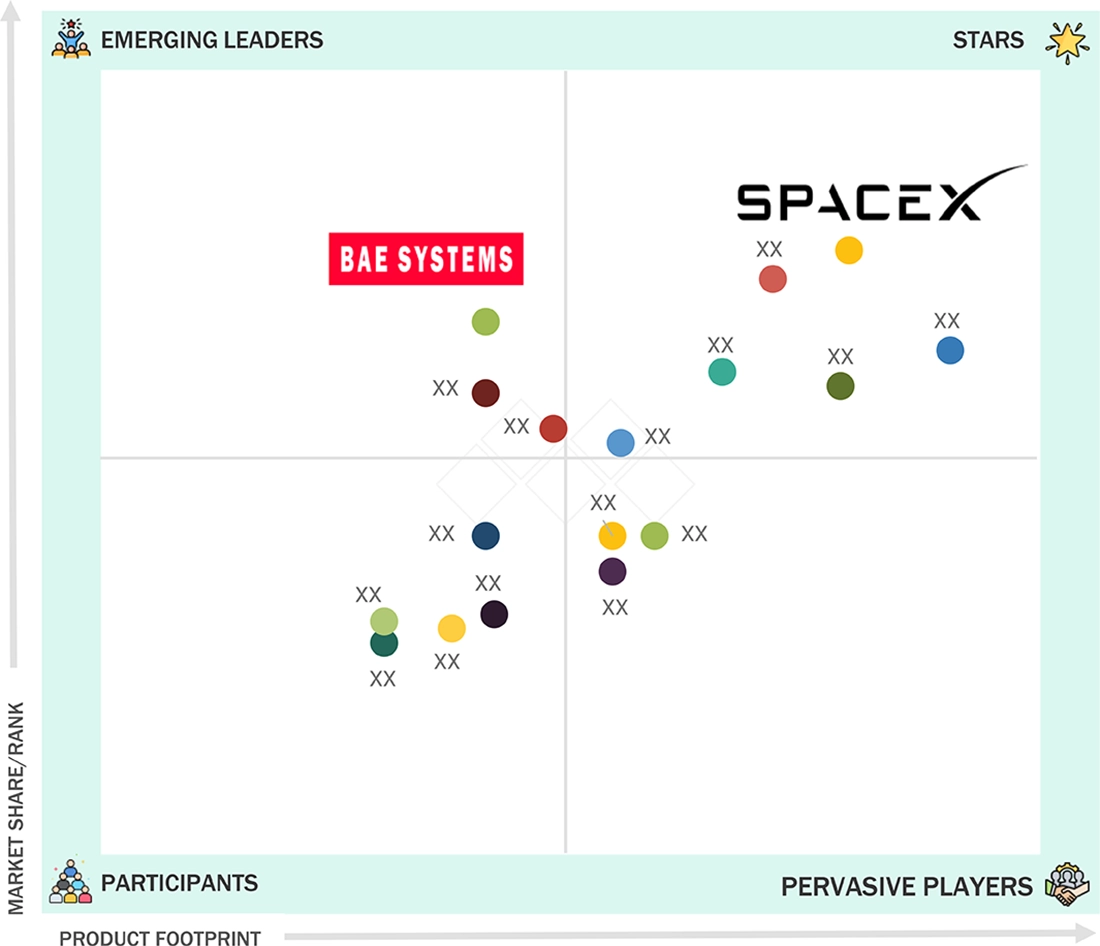
Competitive LandscapeSpacex, Airbus, MDA, and Thales were identified as some of the star players in the communication small satellite market, given their strong market share and product footprint.
The Communication Small Satellite Industry is witnessing growth driven by the rising need for timely, high-resolution geospatial intelligence to support defense, climate monitoring, and commercial decision-making.
Source: Secondary Research, Interviews with Experts, MarketsandMarkets Analysis
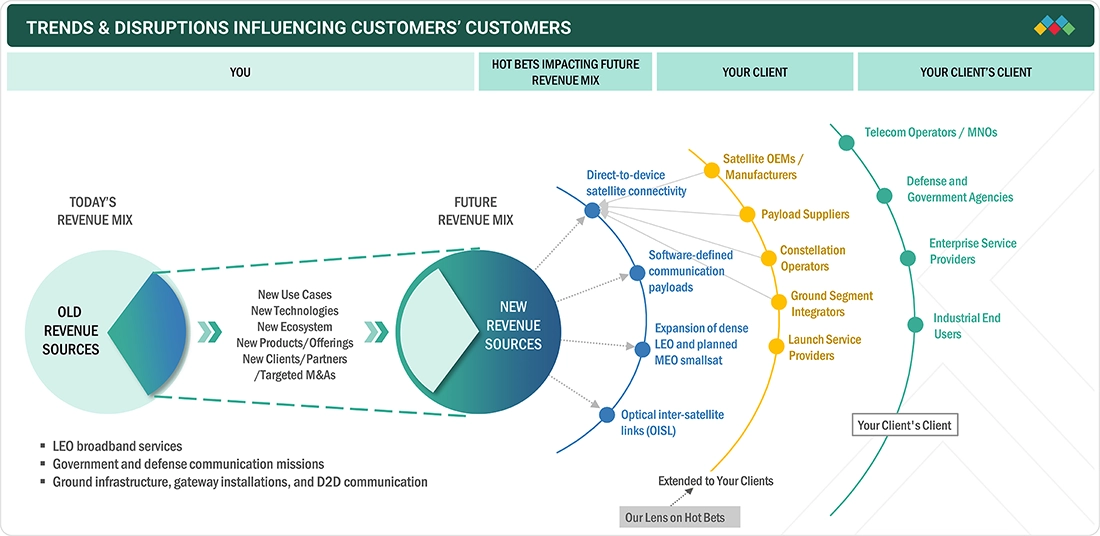
TRENDS & DISRUPTIONS IMPACTING CUSTOMERS' CUSTOMERS
The impact on consumer business in the communication small satellite market is generated by evolving expectations for seamless, high-speed connectivity across remote, underserved, and mobile environments.
Source: Secondary Research, Interviews with Experts, MarketsandMarkets Analysis
MARKET DYNAMICS

Level
-
Rising demand for low-latency global connectivity

-
Rapid growth of LEO communication constellations


Level
-
Limited power and payload constrain data capacity

-
High launch and replenishment costs


Level
-
Growth of software-defined, reconfigurable payloads

-
Expanding direct-to-device communication use


Level
-
Component supply chain delays impacting build cycles

-
Increasing orbital congestion and collision risks

Source: Secondary Research, Interviews with Experts, MarketsandMarkets Analysis
Driver: Rising demand for low-latency global connectivity
The growing demand for low-latency global connectivity is forcing operators to deploy dense LEO networks to serve remote, maritime, and mobility segments. This is creating high demand for communication small satellites due to their lower cost and rapid deployment cycles.
Restraint: Limited power and payload constrain data capacity
Limited onboard power and payload capacity restrict achievable throughput and limit the type of communication missions small satellites can support. This reduces competitiveness among larger GEO or high-capacity MEO platforms.
Opportunity: Growth of software-defined, reconfigurable payloads
Growth of software-defined and reconfigurable payloads enables operators to upgrade services in orbit, optimize bandwidth, and support new waveforms without hardware changes. This increases mission flexibility and commercial importance.
Challenge: Component supply chain delays impacting build cycles
The increasing delays in getting key parts, especially advanced RF and digital processors, slow down satellite manufacturing. This pushes back launch schedules and service rollouts, making it harder for companies to bring satellite services to market on time.
COMMUNICATION SMALL SATELLITE MARKET SIZE, SHARE & GROWTH, 2030: COMMERCIAL USE CASES ACROSS INDUSTRIES
| COMPANY | USE CASE DESCRIPTION | BENEFITS |
|---|---|---|
 |
Use of communication small satellites for the expansion of Starlink’s coverage for broadband and mobility services across remote and underserved regions | Enables wider, and more consistent connectivity while keeping deployment and operational costs manageable |
 |
Deployment of compact communication satellites to support resilient military and government networks that need secure links in contested environments | Provides reliable, hardened communication layers without depending on large, and costly GEO infrastructure |
 |
Use of small communication satellites for tactical data relay and low-latency mission support across defense and civil operations | Improvement of real-time information flow and enhancement of situational awareness for users operating in dynamic conditions |
Logos and trademarks shown above are the property of their respective owners. Their use here is for informational and illustrative purposes only.
MARKET ECOSYSTEM
The key stakeholders in the communication small satellite market ecosystem are prominent companies, private and small enterprises, and end users. Collaboration across manufacturers, system suppliers, and end users drives continuous innovation. It also supports the expansion of operational requirements in the communication small satellite domain.
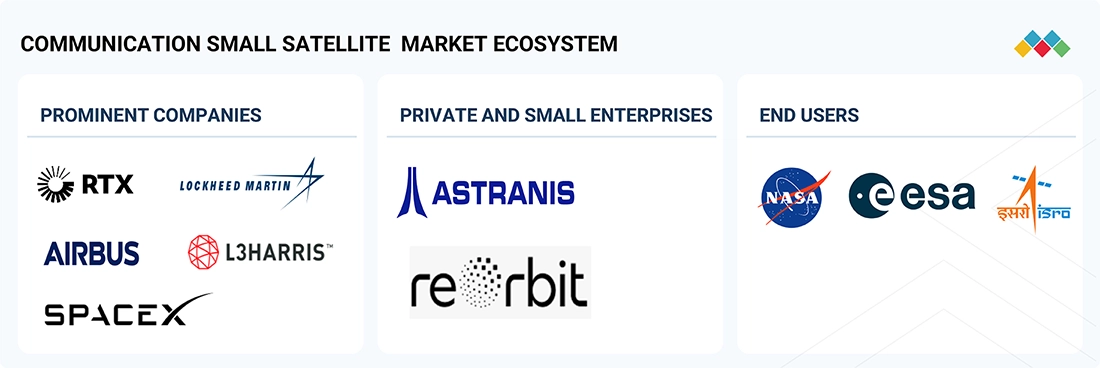
Logos and trademarks shown above are the property of their respective owners. Their use here is for informational and illustrative purposes only.
MARKET SEGMENTS
Source: Secondary Research, Interviews with Experts, MarketsandMarkets Analysis
Communication Small Satellite Market, By Mass
The mini satellite(101-1,200 KG) segment is projected to dominate the market, driven by steady demand for mid-capacity communication payloads that balance coverage and cost.
Communication Small Satellite Market, By System
The satellite bus segment is expected to capture the largest market share owing to the rising need for modular, power-efficient platforms that support high-throughput communication missions.
Communication Small Satellite Market, By Customer
The commercial segment is projected to dominate the market, driven by growing investments from operators rolling out LEO broadband and direct-to-device services.
Communication Small Satellite Market, By Frequency
The Ku-band (12 to 18 GHz) segment is expected to capture the largest market share owing to the increasing adoption of this band for mobility, enterprise connectivity, and high-throughput links.
Communication Small Satellite Market, By Orbit
The LEO segment is projected to dominate the market in 2025, driven by the rising deployment of dense communication constellations aimed at achieving global, low-latency coverage.
REGION
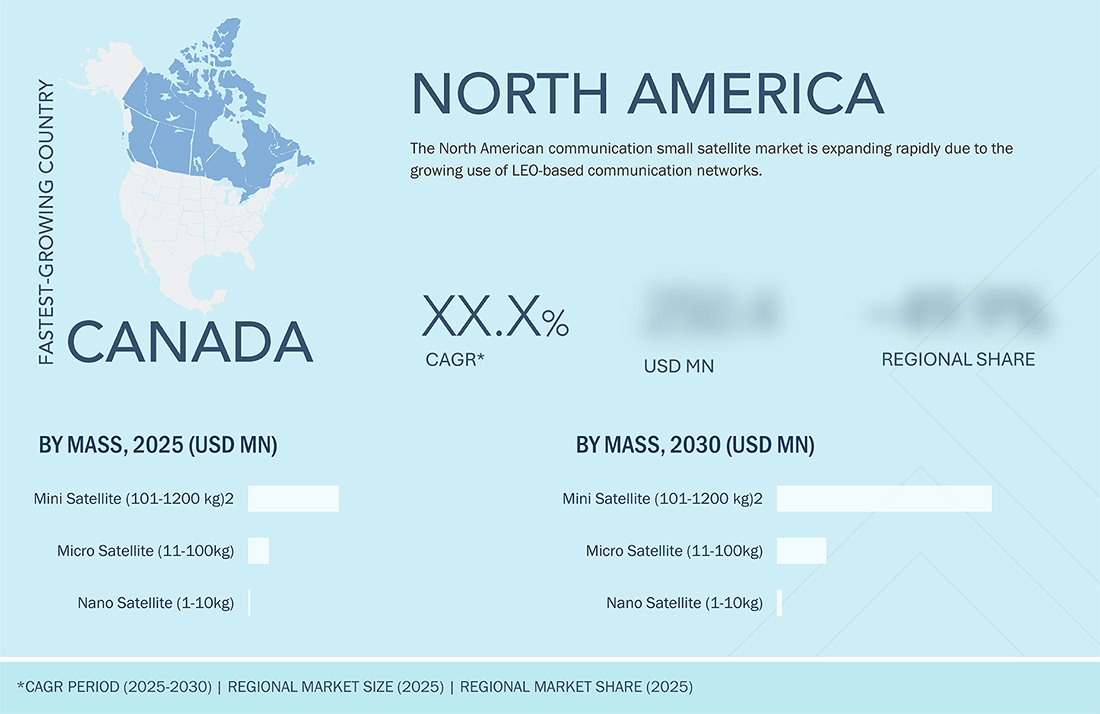
North America to be fastest-growing region in communication small satellite market during forecast period
The North American communication small satellite market is projected to register the highest CAGR during the forecast period, driven by the rising demand for fast, reliable connectivity across remote regions. Also, the rapid use of LEO-based communication networks is driving the market in the region.
COMMUNICATION SMALL SATELLITE MARKET SIZE, SHARE & GROWTH, 2030: COMPANY EVALUATION MATRIX
The company evaluation matrix for the communication small satellite market evaluates players based on product footprint and market share. It highlights their competitive positioning and ranks them according to market strength and growth strategies. SpaceX leads the market with a strong product portfolio, manufacturing technologies, and a broad customer base, while BAE Systems is recognized as an emerging leader in this market.
Source: Secondary Research, Interviews with Experts, MarketsandMarkets Analysis
KEY MARKET PLAYERS
List of Communication Small Satellite Companies
- SPACEX (US)
- Airbus (France)
- MDA (Canada)
- Thales Alenia Space (France)
- L3harris Technologies, Inc. (US)
- Northrop Grumman (US)
- Surrey Satellite Technology Ltd (UK)
- Mitsubishi Electric Corporation (Japan)
- Lockheed Martin Corporation (US)
- BAE Systems (UK)
- RTX (US)
- OHB SE (Germany)
- The Aerospace Corporation (US)
- Kuiper Systems Llc (US)
WHAT IS IN IT FOR YOU: COMMUNICATION SMALL SATELLITE MARKET SIZE, SHARE & GROWTH, 2030 REPORT CONTENT GUIDE
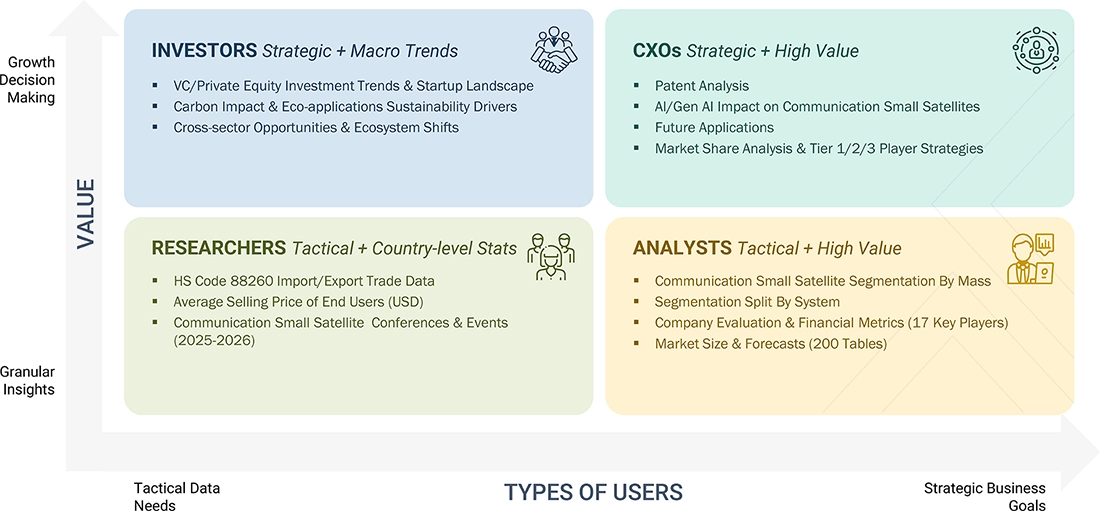
DELIVERED CUSTOMIZATIONS
We have successfully delivered the following deep-dive customizations:
| CLIENT REQUEST | CUSTOMIZATION DELIVERED | VALUE ADDS |
|---|---|---|
| Leading Manufacturer | Additional segment breakdown for countries | Additional country-level market sizing tables for segments/sub-segments covered at the regional/global level to gain an understanding of market potential by each country |
RECENT DEVELOPMENTS
- December 2025 : Telesat entered a strategic agreement with the Government of Canada and MDA Space to develop next-generation military satellite communications capabilities under the Enhanced Satellite Communication Project – Polar.
- July 2025 : Thales Alenia Space signed a contract with GovSat (LuxGovSat S.A.), a joint venture between the Luxembourg Government and SES, to build GovSat-2, a defense-oriented geostationary communications satellite operating in X, Ka, and UHF bands. The satellite will provide secure and jam-resistant broadband communications services for government and allied users.
- February 2025 : MDA Space signed a definitive contract with Globalstar Inc. to serve as the contractor for Globalstar’s next-generation low Earth orbit communication satellite constellation, valued at approximately USD 768 million.
Table of Contents
 Exclusive indicates content/data unique to MarketsandMarkets and not available with any competitors.
Methodology
The study involved four major activities in estimating the current size of the Communication Small Satellite Market . Exhaustive secondary research was done to collect information on the market, peer market, and parent market. The next step was to validate these findings, assumptions, and sizing with industry experts across the value chain through primary research. Both top-down and bottom-up approaches were employed to estimate the complete market size. After that, market breakdown and data triangulation were used to estimate the market size of segments and subsegments.
Secondary Research
The ranking analysis of companies in the Communication Small Satellite Market was carried out using secondary data from paid and unpaid sources, as well as by analyzing the product portfolios and service offerings of key companies operating in the market. These companies were rated based on the performance and quality of their products. These data points were further validated by primary sources.
Secondary sources referred for this research study included the European Space Agency (ESA), the National Aeronautics and Space Administration (NASA), the United Nations Conference on Trade and Development (UNCTAD), the Satellite Industry Association (SIA), corporate filings such as annual reports, investor presentations, and financial statements of trade, business, and professional associations. The secondary data was collected and analyzed to arrive at the overall size of the market, which was validated by primary respondents.
Primary Research
Extensive primary research was conducted after obtaining information regarding the Communication Small Satellite Market scenario through secondary research. Several primary interviews were conducted with market experts from both, the demand and supply sides across major countries of North America, Europe, Asia Pacific, the Middle East, and Rest of the World. Primary data was collected through questionnaires, emails, and telephonic interviews. The primary sources from the supply side included various industry experts, such as Chief X Officers (CXOs), Vice Presidents (VPs), Directors, from business development, marketing, product development/innovation teams, and related key executives from small satellite vendors; system integrators; component providers; distributors; and key opinion leaders.
Primary interviews were conducted to gather insights such as market statistics, data of revenue collected from the products and services, market breakdowns, market size estimations, market forecasting, and data triangulation. Primary research also helped in understanding the various trends related to technology, application, vertical, and region. Stakeholders from the demand side, such as CIOs, CTOs, and CSOs, and installation teams of the customer/end users who are using small satellite were interviewed to understand the buyer’s perspective on the suppliers, products, component providers, and their current usage of small satellite and future outlook of their business which will affect the overall market.
Market Size Estimation
The research methodology used to estimate the size of the Communication Small Satellite Market includes the following details.
- The top-down and bottom-up approaches were used to estimate and validate the size of the Communication Small Satellite Market . The research methodology used to estimate the market size includes the following details.
- The key players were identified through secondary research, and their market ranking was determined through primary and secondary research. This included a study of the annual and financial reports of the top market players and extensive interviews of leaders, including chief executive officers (CEO), directors, and marketing executives.
- All percentage shares, splits, and breakdowns were determined using secondary sources and verified through primary sources. All possible parameters that affect the markets covered in this research study were accounted for, viewed in extensive detail, verified through primary research, and analyzed to obtain the final quantitative and qualitative data. This data was consolidated, enhanced with detailed inputs, analyzed by MarketsandMarkets, and presented in this report.
Global Communication Small Satellite Market size: Bottom-Up Approach
The Communication Small Satellite Market , by application and mass, was used as a primary segment for estimating and projecting the global market size from 2024 to 2029.
The market size was calculated by adding the mass subsegments mentioned below, and the different methodologies adopted for each to arrive at the market numbers are delineated below:
Global Communication Small Satellite Market Size: Top-Down Approach
In the top-down approach, the overall market size was used to estimate the size of individual markets (mentioned in the market segmentation) acquired through percentage splits from secondary and primary research. The size of the immediate parent market was used to implement the top-down approach and calculate specific market segments. The bottom-up approach was also implemented to validate the revenues obtained for various market segments.
- Companies manufacturing small satellites and their subsystems are included in the report.
- The total revenue of these companies was identified through their annual reports and other authentic sources. In cases where annual reports were unavailable, the company revenue was estimated based on the number of employees, sources such as Factiva, ZoomInfo, press releases, and any publicly available data.
- Company revenue was calculated based on their operating segments.
- All publicly available company contracts related to small satellites were mapped and summed up.
- Based on these parameters (contracts, agreements, partnerships, joint ventures, product matrix, secondary research), the share of small satellites in each segment was estimated.
Based on these parameters (contracts, agreements, partnerships, joint ventures, product matrix, secondary research), the share of small satellites in each segment was estimated
Data Triangulation
After arriving at the overall size of the Communication Small Satellite Market from the market size estimation process explained above, the total market was split into several segments and subsegments. The data triangulation and market breakdown procedures explained below were implemented, wherever applicable, to complete the overall market engineering process and arrive at the exact statistics for various segments and sub-segments of the market. The data was triangulated by studying various factors and trends from both the demand and supply sides. The market size was validated using both top-down and bottom-up approaches.
Market Definition
A small satellite, or smallsat, encompasses any satellite with a mass from approximately 1 to 1000 kilograms. These satellites are engineered to perform space missions similar to larger satellites but are constructed using smaller, lighter, and often commercially available components. The classification includes various subcategories like small, mini, micro, nano, and CubeSats, based on their mass. Small satellite typically leverages advancements in miniaturization of technology and are launched either independently or as secondary payloads, allowing for cost-effective access to space and opportunities for high-frequency mission updates and constellation deployment. These satellites are typically used by businesses and governments for a variety of applications including communication, earth observation, and scientific research.
Market Stakeholders
- Satellite Component Manufacturers
- Satellite Manufacturers
- Satellite Integrators
- Launch Service Providers
- Government and Civil Organizations Related to the Market
- Small Satellite Companies
- Payload Suppliers
- Scientific Institutions
- Meteorological Organizations
- Component Suppliers
- Technologists
- R&D Staff
Report Objectives
- To define, describe, and forecast the size of the Communication Small Satellite Market based on mass, subsystem, end use, application, frequency, orbit, and region
- To forecast the market size of segments with respect to various regions, including North America, Europe, Asia Pacific, Middle East, and Rest of the World along with major countries in each region
- To identify and analyze key drivers, restraints, opportunities, and challenges influencing the growth of the Communication Small Satellite Market
- To analyze technological advancements and product launches in the market
- To strategically analyze micro markets, with respect to their growth trends, prospects, and their contribution to the market
- To provide a detailed competitive landscape of the market and analyze competitive growth strategies such as new product developments, contracts, partnerships, joint ventures, agreements, and collaborations adopted by key players in the market
- To identify the detailed financial position, key products, unique selling points, and key developments of leading companies in the market
- To strategically profile key market players and comprehensively analyze their market ranking and core competencies.
Available Customizations:
MarketsAndMarkets offers the following customizations for this market report:
- Additional country-level analysis of the Communication Small Satellite Market
- Profiling of additional market players (up to 5)
Product Analysis
- Product matrix, which provides a detailed comparison of the product portfolio of each company in the Communication Small Satellite Market
Key Questions Addressed by the Report
What is the projected market size of the communication small satellite market?
The communication small satellite market is projected to reach USD 18.34 billion by 2030, growing at a CAGR of 25.2%.
Which region dominates the communication small satellite market?
North America dominates the market with a share of around 54.1 percent in 2025, while it is also expected to witness strong growth during the forecast period.
What are the key segments of the communication small satellite market?
The market is segmented by system including satellite bus, payloads, solar panels, and antennas, as well as by orbit, mass, customer, frequency, and region.
Which segment is expected to lead the market during the forecast period?
The satellite bus segment is expected to dominate by system, while the commercial customer segment and LEO orbit segment are projected to drive significant growth.
Who are the key players in the communication small satellite market?
Major companies operating in the market include SpaceX, Airbus, MDA Ltd., Thales Alenia Space, L3Harris Technologies, Northrop Grumman, and Lockheed Martin Corporation.


Personalize This Research
- Triangulate with your Own Data
- Get Data as per your Format and Definition
- Gain a Deeper Dive on a Specific Application, Geography, Customer or Competitor
- Any level of Personalization
Let Us Help You
- What are the Known and Unknown Adjacencies Impacting the Communication Small Satellite Market
- What will your New Revenue Sources be?
- Who will be your Top Customer; what will make them switch?
- Defend your Market Share or Win Competitors
- Get a Scorecard for Target Partners

Custom Market Research Services
We Will Customise The Research For You, In Case The Report Listed Above Does Not Meet With Your Requirements
Get 10% Free CustomisationTESTIMONIALS






Growth opportunities and latent adjacency in Communication Small Satellite Market