Compressed Air Energy Storage Market

Compressed Air Energy Storage Market by Type (Adiabatic, Diabatic), Expenditure Type (CAPEX, OPEX), Storage Form (Underground, Above Ground), Application (Grid Management, Renewable Energy Integration), Capacity, and Region - Global Forecast to 2030




OVERVIEW
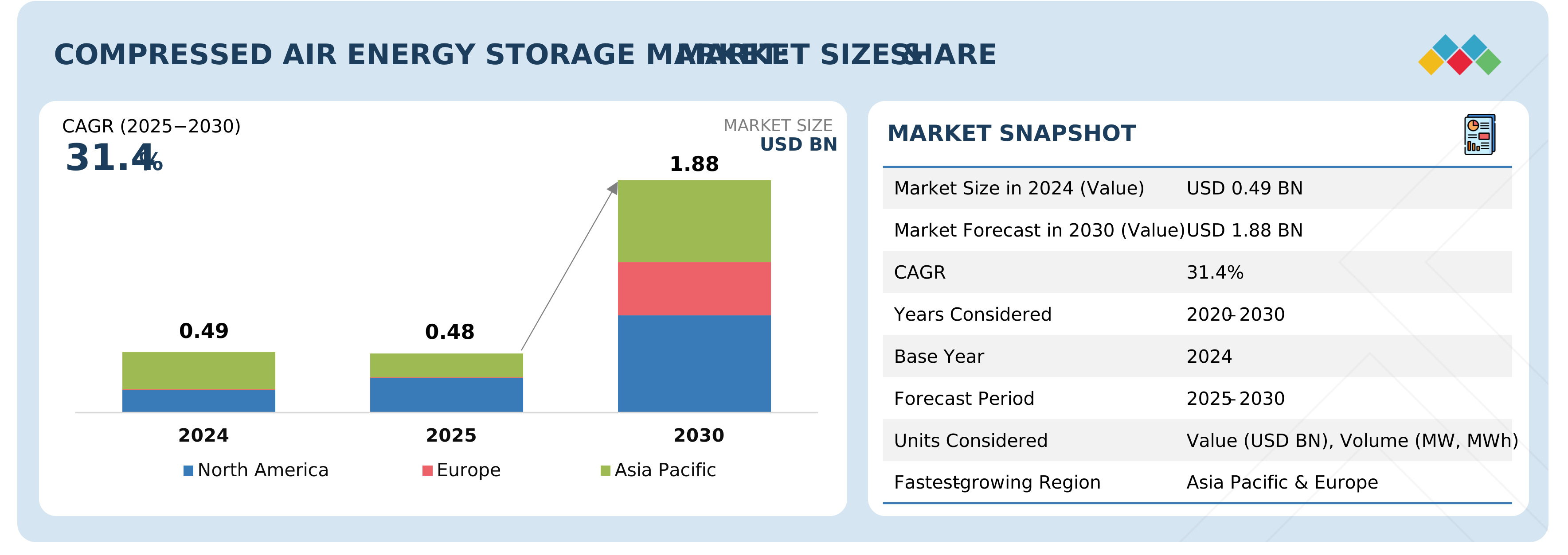
The global compressed air energy storage (CAES) market is projected to reach USD 1.88 billion by 2030 from USD 0.48 billion in 2025, at a CAGR of 31.4%. The market is witnessing strong momentum, driven by the rising integration of renewable energy sources and the growing need for long-duration storage to balance grid intermittency. Increasing adoption of wind and solar power is creating demand for reliable storage technologies that ensure grid stability and energy security. Supportive government initiatives, carbon neutrality targets, and investments in modernizing energy infrastructure are accelerating project deployment worldwide.
MARKET SNAPSHOT TABLE
| REPORT METRIC | DETAILS |
|---|---|
| Market Size in 2024 (Value) | USD 1.88 Billion |
| Market Forecast in 2030 (Value) | USD 0.49 Billion |
| Growth Rate | CAGR of 31.4% from 2025-2030 |
| Years Considered | 2020-2030 |
| Base Year | 2024 |
| Forecast Period | 2030 |
| Units Considered | Value (USD million), Volume (MW, MWh) |
| Report Coverage | Revenue forecast, company ranking, competitive landscape, growth factors, and trends |
| Segments Covered |
|
| Regions Covered | Europe, Asia Pacific, North America, RoW |
Compressed Air Energy Storage Market Size and Forecast:
- Market Size Value in 2024: USD 0.49 Billion
- Market Size Value in 2025: USD 0.48 Billion
- Revenue Forecast in 2030: USD 1.88 Billion
- Growth Rate: CAGR of 31.4% from 2025 to 2030
- Data available from 2020 to 2030
Compressed Air Energy Storage Market Trends and Insights
- Market Growth: Compressed Air Energy Storage Market growth is driven by increasing renewable energy integration, grid modernization projects, and rising demand for long-duration energy storage solutions.
-
Growing Trends: Adoption of adiabatic Compressed Air Energy Storage systems is increasing due to their higher efficiency, lower emissions, and better support for renewable energy integration.
- Growth Opportunities: Expanding renewable energy capacity, supportive energy storage policies, and rising need to ensure grid resilience are creating strong Compressed Air Energy Storage market opportunities.
- Market Share Analysis: The adiabatic CAES segment holds the largest Compressed Air Energy Storage market share, driven by its superior energy efficiency and sustainable operation.
KEY TAKEAWAYS
-
BY TYPEThe adiabatic CAES segment is gaining traction as it eliminates the need for fossil fuels by capturing and reusing compression heat, making it a fully renewable and emission-free storage solution. Its higher round-trip efficiency and alignment with global decarbonization goals further drive adoption.
-
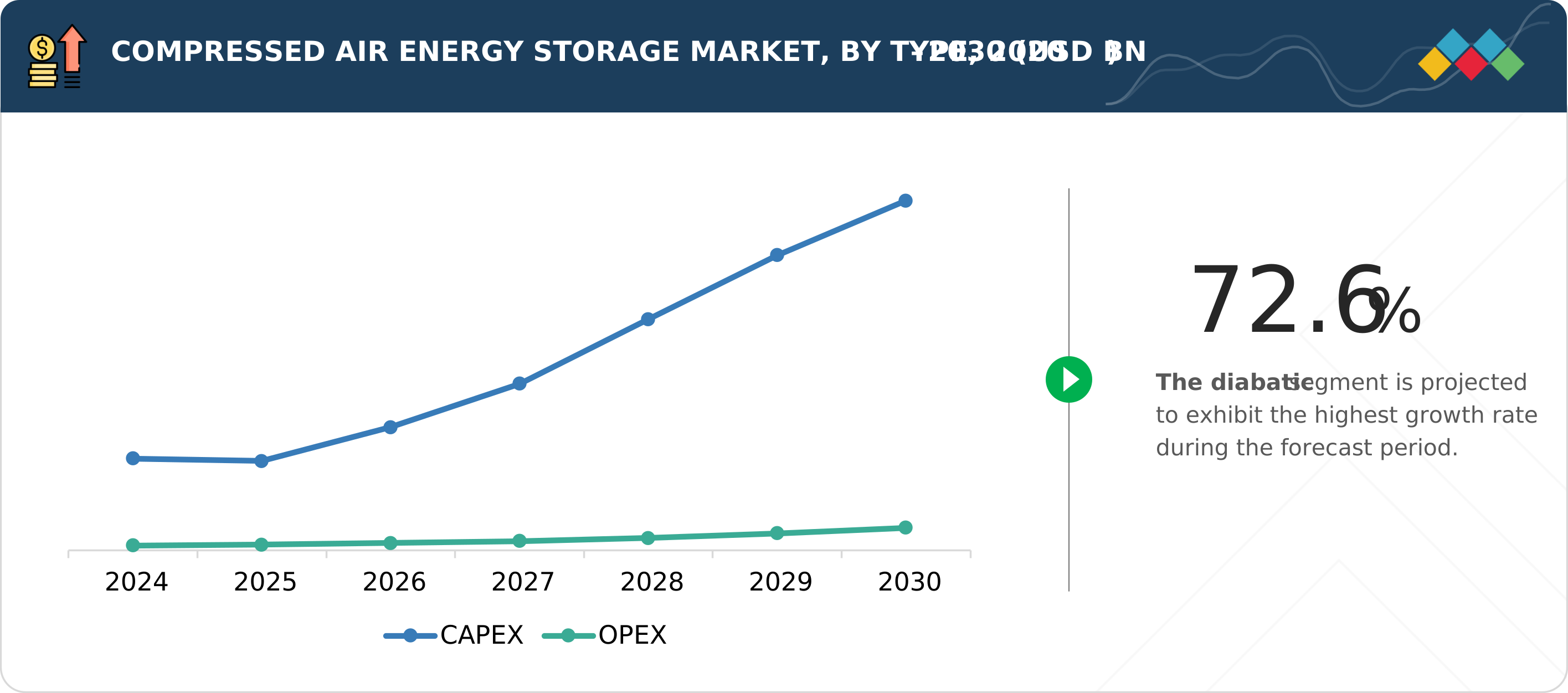
BY EXPENDITURE TYPEThe CAPEX segment in the CAES market is rising as large upfront investments in underground caverns, compressors, and turbines ensure long-term asset stability and scalability. Increasing government funding and investor interest in sustainable infrastructure projects are also fueling this growth.
-
BY APPLICATIONThe renewable energy integration segment in the CAES market is gaining traction as it enables balancing of variable wind and solar generation with long-duration storage. Growing deployment of renewables and the need for stable grid operations are reinforcing the adoption of CAES in this segment.
-
BY STORAGE FORMUnderground storage plays a pivotal role in the CAES market by offering large-scale, secure, and long-duration energy storage solutions. The availability of suitable geological formations and proven cost efficiency make it a preferred choice for utility-scale projects worldwide.
-
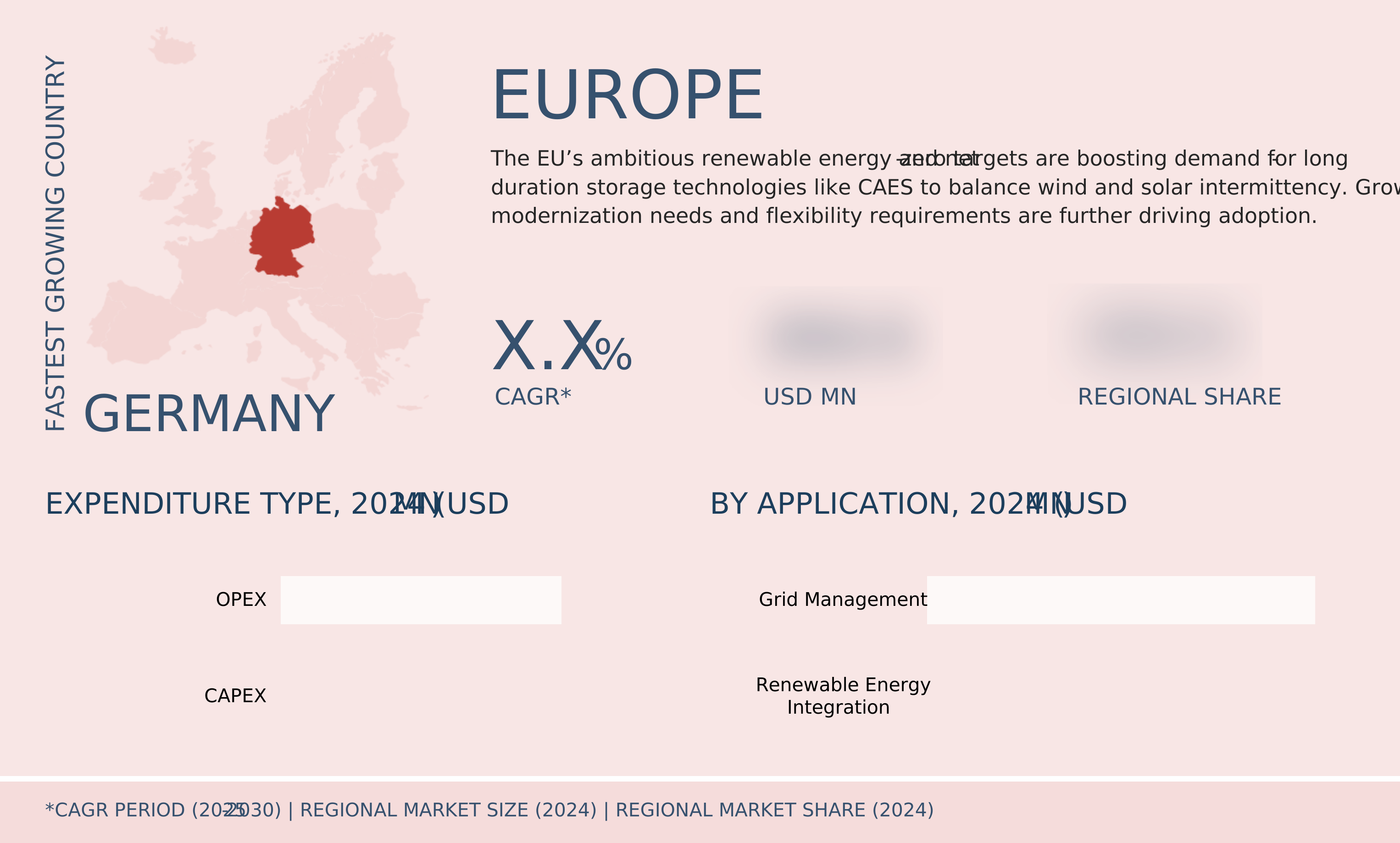
BY REGIONEurope is projected to register the highest CAGR of 147.3% during the forecast period, fueled with strong policy frameworks and significant investments in renewable energy integration. Countries like Germany, the UK, and Italy are advancing large-scale CAES projects to enhance grid flexibility and energy security, while EU-level funding programs and supportive regulations are accelerating commercialization across the region.
-
COMPETITIVE LANDSCAPEThe major market players have adopted both organic and inorganic strategies, including partnerships and investments. For instance, Hydrostor, APEX CAES, and Siemens Energy are entered into a number of agreements and partnerships to cater to the growing demand for CAES innovative applications.
The compressed air energy storage (CAES) market is witnessing strong growth due to the rising need for reliable and sustainable energy storage solutions. Increasing integration of renewable energy sources like wind and solar are driving demand for CAES to balance grid intermittency. Advances in adiabatic and isothermal technologies are improving system efficiency and cost-effectiveness. Supportive government policies and investments in energy infrastructure are further accelerating the adoption of CAES globally.
Source: Secondary Research, Interviews with Experts, MarketsandMarkets Analysis
TRENDS & DISRUPTIONS IMPACTING CUSTOMERS' CUSTOMERS
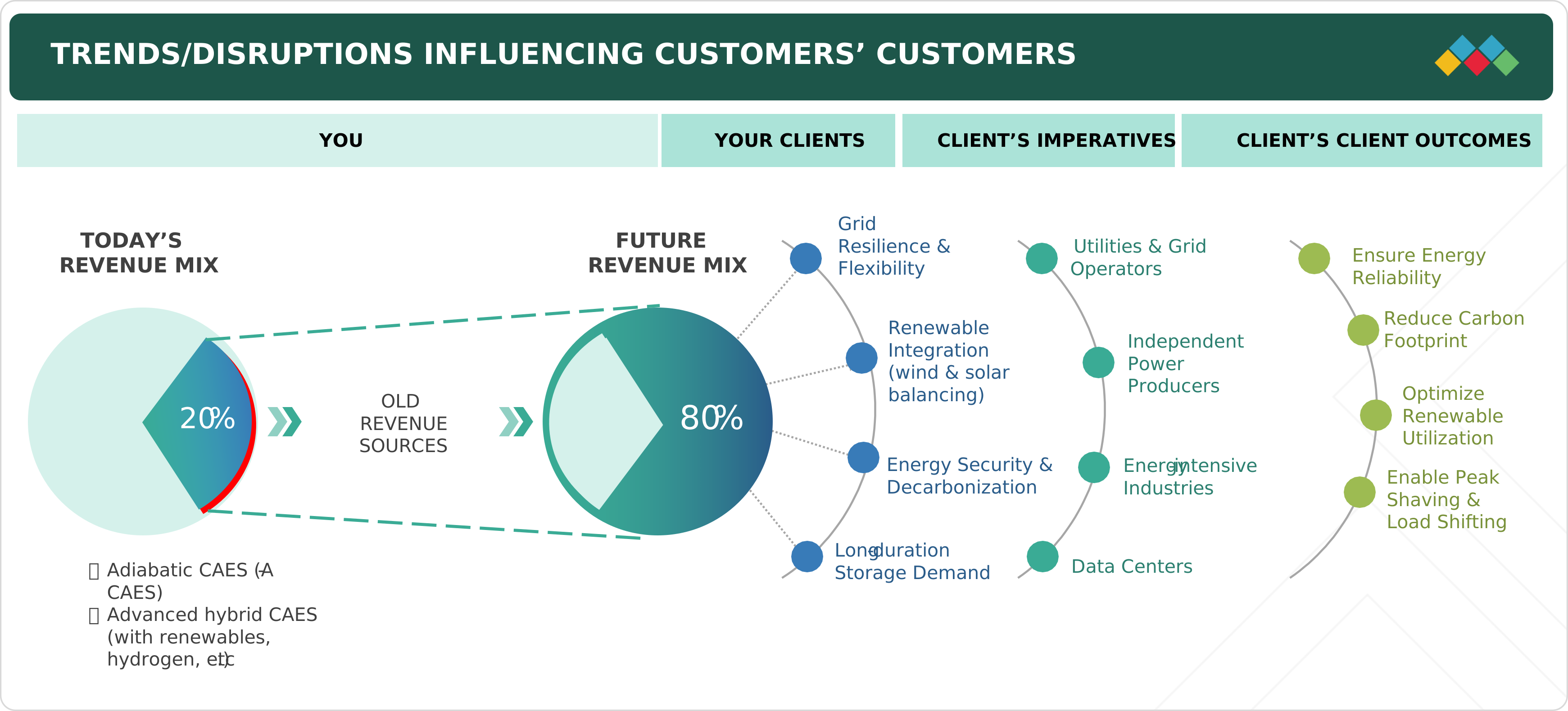
The impact on consumers’ business emerges from customer trends or disruptions. Hot bets are the clients of compressed air energy storage technology providers, and target applications are the clients of compressed air energy storage technology providers. Shifts, which are changing trends or disruptions, will impact on the revenues of end users. The revenue impact on end users will affect the revenue of hot bets, which will further affect the revenues of compressed air energy storage technology providers.
Source: Secondary Research, Interviews with Experts, MarketsandMarkets Analysis
MARKET DYNAMICS

Level
-
Growing integration of renewable energy

-
Short and long-term storage across diverse applications


Level
-
Competition from alternative storage technologies

-
Geological dependency and storage feasibility


Level
-
Government incentives & regulatory support

-
Rising need to ensure grid resilience


Level
-
High upfront capital costs

-
Lower round-trip efficiency

Source: Secondary Research, Interviews with Experts, MarketsandMarkets Analysis
Driver: Growing integration of renewable energy
The rapid expansion of renewable power generation is creating significant demand for long-duration storage solutions such as CAES. According to the International Energy Agency, global renewable electricity generation is projected to exceed 17,000 TWh by 2030, representing nearly a 90% increase from 2023 and enough to meet the combined demand of China and the US. By 2025, renewables are expected to surpass coal as the largest source of electricity generation, while both wind and solar are set to overtake nuclear energy by 2026.
Restraint: Competition from alternative storage technologies
The CAES market faces growing competition from alternative storage technologies that are scaling more rapidly and attracting stronger investment. Grid-scale storage plays a pivotal role in achieving the Net Zero Emissions by 2050 Scenario, enabling short-term balancing, ancillary services, long-term energy shifting, and grid restoration after blackouts. Pumped-storage hydropower is the most widely deployed storage technology globally, with China leading in new capacity investments since 2015. Batteries, on the other hand, have become the most scalable and fastest-growing solution, with global investment in battery energy storage surpassing USD 20 billion in 2022 and USD 35 billion in 2023, supported by government targets and a robust project pipeline.
Opportunity: Government incentives & regulatory support
Government-driven initiatives and incentives are playing a vital role in boosting the adoption of CAES and other large-scale storage technologies. In July 2021, China announced plans to install over 30 GW of energy storage by 2025 (excluding pumped-storage hydropower), representing more than a three-fold increase from its 2022 capacity. In the US, the Inflation Reduction Act (August 2022) introduced investment tax credits for stand-alone storage, creating strong financial motivation for new grid-scale projects. Similarly, in December 2022, the Australian Renewable Energy Agency (ARENA) approved funding support for 2 GW/4.2 GWh of grid-scale storage projects equipped with advanced grid-forming inverters.
Challenge: High upfront capital costs
Compressed air energy storage (CAES) systems face a major barrier due to their high initial capital cost, which is estimated to be around 30% higher than lithium-ion battery storage systems. The primary drivers of this cost include lower round-trip efficiency (typically 40–55% for CAES vs. 85–90% for Li-ion) and 5–10x higher maintenance costs due to the presence of turbines, compressors, and other moving parts. In addition, the reliance on natural gas or alternative fuels in some CAES designs further increases operating costs and carbon intensity compared to battery storage. Construction and installation costs also add to the challenge, since CAES projects often require geological formations (salt caverns or aquifers) or purpose-built storage tanks, which involve significant site-specific feasibility studies and engineering.
Compressed Air Energy Storage Market: COMMERCIAL USE CASES ACROSS INDUSTRIES
| COMPANY | USE CASE DESCRIPTION | BENEFITS |
|---|---|---|
 |
Researchers proposed an underwater compressed air energy storage system, where surplus renewable electricity is used to compress air into large underwater storage units. | When demand is high, the stored air is released to generate electricity. This system is designed to cover Sicily’s electricity needs for an entire year by storing and releasing energy as required. |
 |
The Abhar and Kahak regions of Iran have strong wind resources, making them ideal for wind power projects. However, the electricity generated varies greatly depending on the time of day and seasonal weather patterns. | Engineers studied the use of compressed air energy storage alongside the wind farms to capture excess energy during high-wind periods. The stored compressed air was then released to generate power when demand was greater than wind output. This system achieved round-trip efficiencies of 40–45%, significantly improving the reliability of wind energy for the region. |
Logos and trademarks shown above are the property of their respective owners. Their use here is for informational and illustrative purposes only.
MARKET ECOSYSTEM
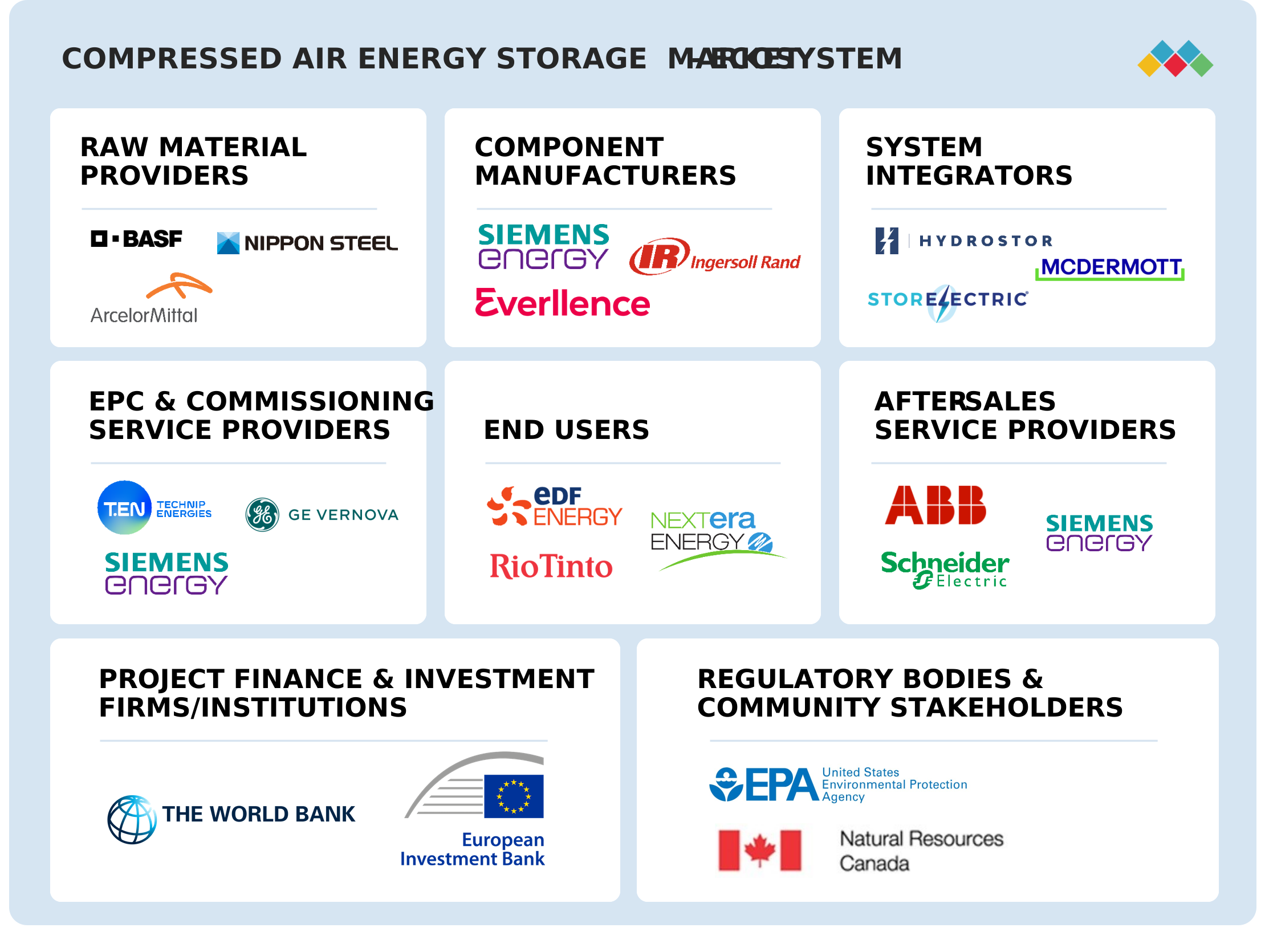
The compressed air energy storage (CAES) ecosystem highlights the interconnections across different stages of the value chain, showcasing how companies contribute to the deployment and growth of this energy storage technology. At the component manufacturing stage, companies such as Siemens Energy, Ingersoll Rand, and Everellence provide critical equipment, including compressors, expanders, turbines, and control systems essential for CAES operation. Moving into system integration and EPC, players such as Hydrostor, Storelectric Ltd., and McDermott specialize in designing, engineering, and constructing full CAES plants, including geological assessments, construction, and integration of thermal storage and grid interfaces.
Logos and trademarks shown above are the property of their respective owners. Their use here is for informational and illustrative purposes only.
MARKET SEGMENTS
Source: Secondary Research, Interviews with Experts, MarketsandMarkets Analysis
Compressed Air Energy Storage Market, By Type
The adiabatic segment accounted for the largest market share in 2024. The adiabatic segment is witnessing growth as it offers higher energy efficiency by capturing and reusing the heat generated during compression. This reduces energy losses and lowers operational costs, making it an attractive option for large-scale storage projects. Its ability to enhance overall system performance is driving increased adoption across renewable-integrated grids.
Compressed Air Energy Storage Market, By Expenditure Type
The CAPEX segment accounted for the largest market share in 2024. The CAPEX segment is growing as investments in advanced CAES infrastructure rise to support large-scale energy storage projects. Higher initial expenditures are justified by long-term operational efficiency and reliability. Increasing deployment of utility-scale storage solutions is driving demand for capital-intensive systems. This trend is further reinforced by government incentives and funding for sustainable energy infrastructure.
Compressed Air Energy Storage Market, By Storage Form
The underground segment dominated the overall compressed air energy storage market in 2024. The underground storage segment is expanding as it provides secure, large-scale, and long-duration energy storage solutions. Utilizing natural caverns or man-made reservoirs allows for efficient and reliable storage of compressed air. Its capability to support grid stability and integrate renewable energy drives adoption. Growing focus on energy security and sustainable infrastructure further accelerates its deployment.
Compressed Air Energy Storage Market, By Application
The renewable energy integration segment held the largest share in 2024. The renewable energy integration segment is growing as CAES systems help balance the intermittency of wind and solar power. By storing excess energy and releasing it during peak demand, they enhance grid reliability. This capability supports the increasing adoption of renewables worldwide. Rising emphasis on sustainable energy transitions is further boosting the market growth.
Compressed Air Energy Storage Market, By Capacity
The large (Above 500 MWh) segment held the largest share in 2024. The large (above 500?MWh) segment is expanding as utility-scale CAES projects meet growing energy demands. High-capacity systems enable long-duration storage, supporting grid stability and peak load management. Their scalability makes them ideal for integrating large renewable energy installations. Increasing focus on sustainable and resilient energy infrastructure is driving adoption.
REGION
Europe to be fastest-growing compressed air energy storage market during forecast period
Europe registered the highest CAGR in the CAES market, largely driven by the region’s ambitious renewable energy and net-zero targets. Governments are implementing supportive policies and providing incentives to encourage investment in long-duration energy storage solutions. Significant funding is being directed toward grid modernization projects to enhance flexibility, reliability, and resilience, creating favorable conditions for CAES deployment. Additionally, advancements in CAES technologies, including adiabatic and underground storage systems, are improving efficiency and performance, making these solutions increasingly attractive for utility-scale applications. The region’s strong focus on integrating intermittent renewable energy sources, such as wind and solar, further accelerates market growth, positioning Europe as a key hub for CAES innovation and adoption.
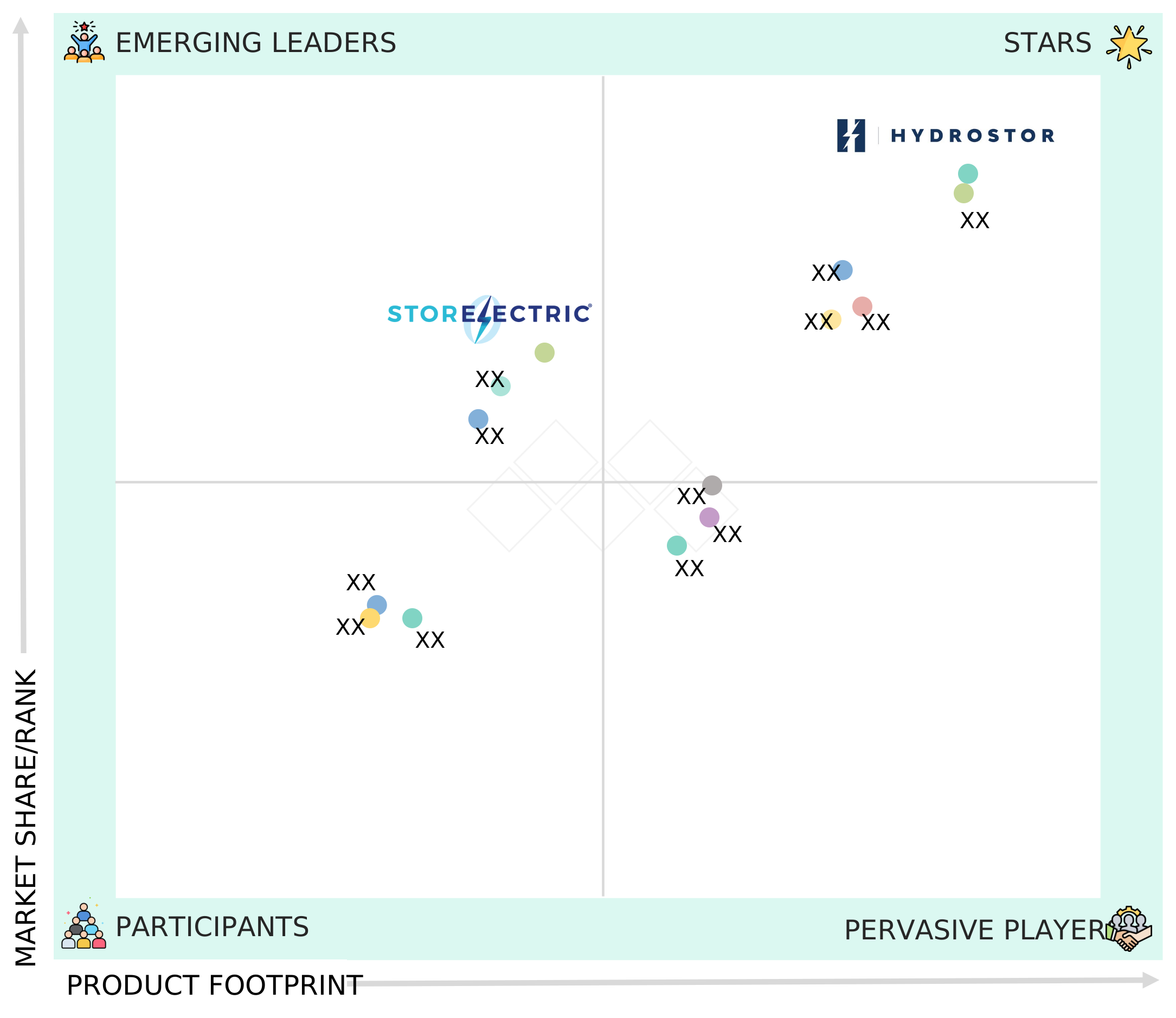
Compressed Air Energy Storage Market: COMPANY EVALUATION MATRIX
In the compressed air energy storage market matrix, Hydrostor (Star) leads with a strong market presence and wide product portfolio, driving large-scale adoption across industries like grid management and renewable energy integration. Storelectric LTD (Emerging Leader) is gaining traction with sustainable adiabatic solutions.
Source: Secondary Research, Interviews with Experts, MarketsandMarkets Analysis
KEY MARKET PLAYERS
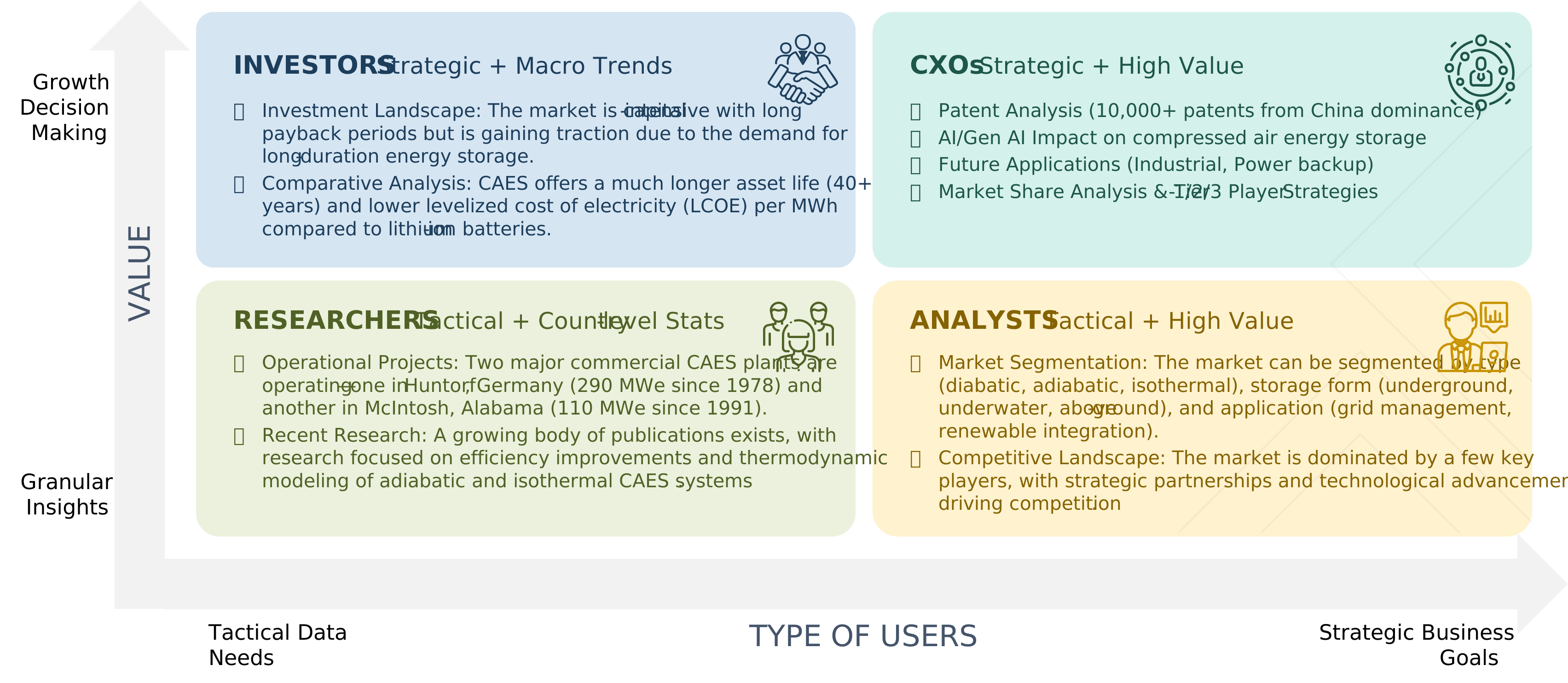
WHAT IS IN IT FOR YOU: Compressed Air Energy Storage Market REPORT CONTENT GUIDE
DELIVERED CUSTOMIZATIONS
We have successfully delivered the following deep-dive customizations:
| CLIENT REQUEST | CUSTOMIZATION DELIVERED | VALUE ADDS |
|---|
RECENT DEVELOPMENTS
- January 2023 : Hydrostor entered into a 25-year power purchase agreement with Central Coast Community Energy (3CE) for its proposed Willow Rock Energy Storage Center located in Kern County, California. The agreement stipulates that 3CE will purchase 200 MW of long-duration energy storage capacity, valued at approximately USD 1 billion, from the 500 MW facility. This storage center is designed to provide up to eight hours of clean energy storage, advancing 3CE's objective to supply 100% renewable electricity to 447,000 customers by 2030.
- June 2023 : Storelectric LTD. finalized the acquisition of TES CAES Technology Ltd., substantially expanding its compressed air energy storage (CAES) intellectual property portfolio and strengthened its capacity to provide integrated, long-duration energy storage solutions. This acquisition bolsters Storelectric's ability to commercialize established CAES technologies and expedite project implementation in the UK and globally. Additionally, it positions the company to assume a more significant role in enhancing grid stability and promoting the worldwide clean energy transition.
- June 2022 : Augwind entered into a strategic collaboration agreement with Voith Hydro to develop and integrate specialized components, including turbines, pumps, and power systems, into Augwind's AirBattery energy storage solution. This partnership seeks to improve the performance and efficiency of AirBattery, which utilizes compressed air energy storage combined with pumped hydro principles to deliver long-duration energy storage. The collaboration capitalizes on Voith Hydro's extensive expertise in hydropower equipment manufacturing to facilitate Augwind's global deployment of AirBattery systems.
- June 2022 : Highview Power established a 50:50 joint venture with Chilean backup power provider Energía Latina S.A. (Enlasa) to develop a 50 MW/500 MWh liquid air energy storage (LAES) project in Diego de Almagro, Chile. The project employs Highview's CRYOBattery technology, which liquefies ambient air at -196°C for storage and subsequently reheats it to generate electricity, delivering up to 10 hours of energy storage. With an estimated value of approximately USD 150 million, the project advances Chile's renewable energy objectives, including the goal of achieving 100% renewable electricity by 2050.
Table of Contents
 Exclusive indicates content/data unique to MarketsandMarkets and not available with any competitors.
Methodology
The study involved major activities in estimating the current size of the compressed air energy storage market. Exhaustive secondary research was done to collect information on the peer and parent markets. The next step was to validate these findings, assumptions, and sizing with industry experts across the value chain through primary research. The top-down and bottom-up approaches were employed to estimate the total market size. Thereafter, market breakdown and data triangulation techniques were used to estimate the market size of the segments and subsegments.
Secondary Research
This research study involved the use of extensive secondary sources, directories, and databases, such as Hoover’s, Bloomberg, Factiva, IRENA, the International Energy Agency, and Statista Industry Journal, to collect and identify valuable information for a technical, market-oriented, and commercial study of compressed air energy storage. Other secondary sources included annual reports, press releases, and investor presentations of companies; white papers; certified publications; and articles by recognized authors, manufacturer associations, trade directories, and databases.
Primary Research
In the primary research process, various primary sources from the supply and demand sides were interviewed to obtain qualitative and quantitative information for this report. Primary sources from the supply side include industry experts such as chief executive officers (CEOs), vice presidents (VPs), marketing directors, and related key executives from various companies and organizations operating in the compressed air energy storage market.
In the complete market engineering process, the top-down and bottom-up approaches, along with several data triangulation methods, were extensively used to perform the market size estimations and forecasts for all segments and subsegments listed in this report. Extensive qualitative and quantitative analyses were conducted to complete the market engineering process and list key information/insights throughout the report.
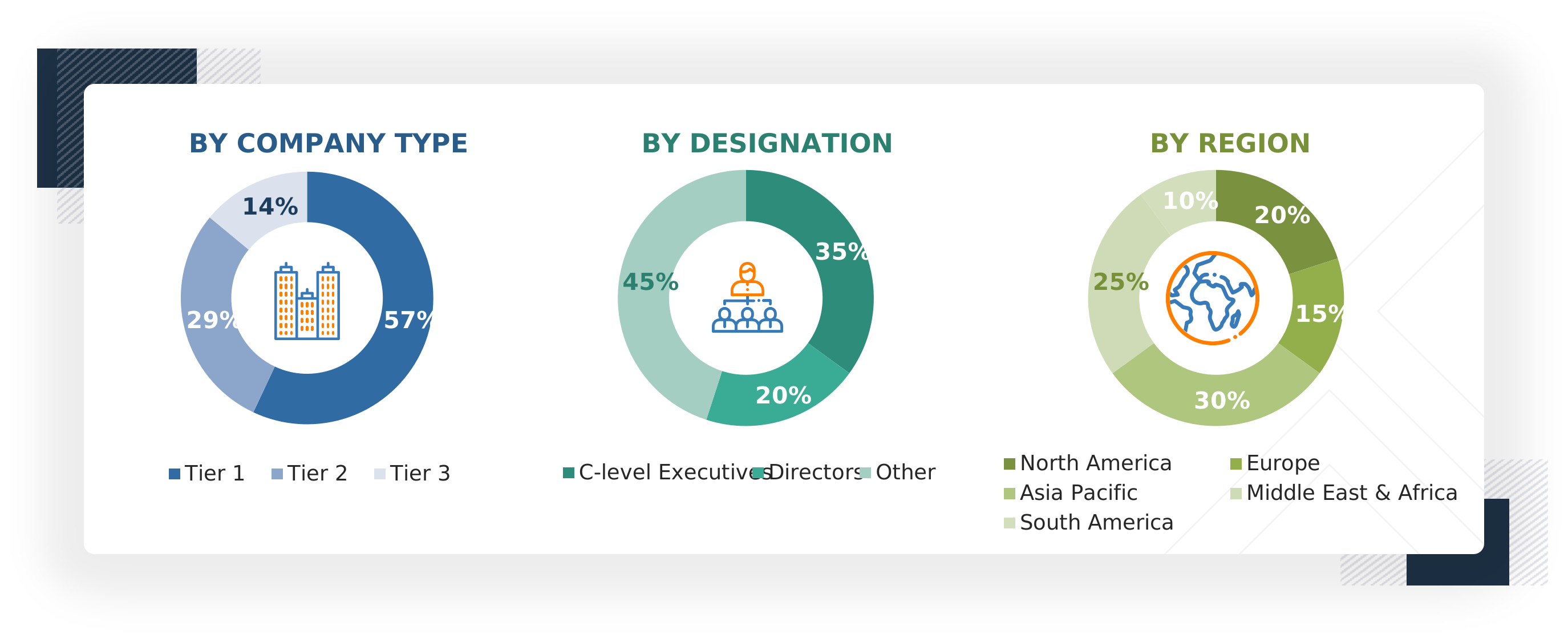
Notes: The tiers of the companies are defined based on their total revenues as of 2024; Tier 1: >
USD 1 billion, Tier 2: From USD 500 million to USD 1 billion, and Tier 3: < USD 500 million. Others include sales managers, engineers,
and regional managers.
To know about the assumptions considered for the study, download the pdf brochure
Market Size Estimation
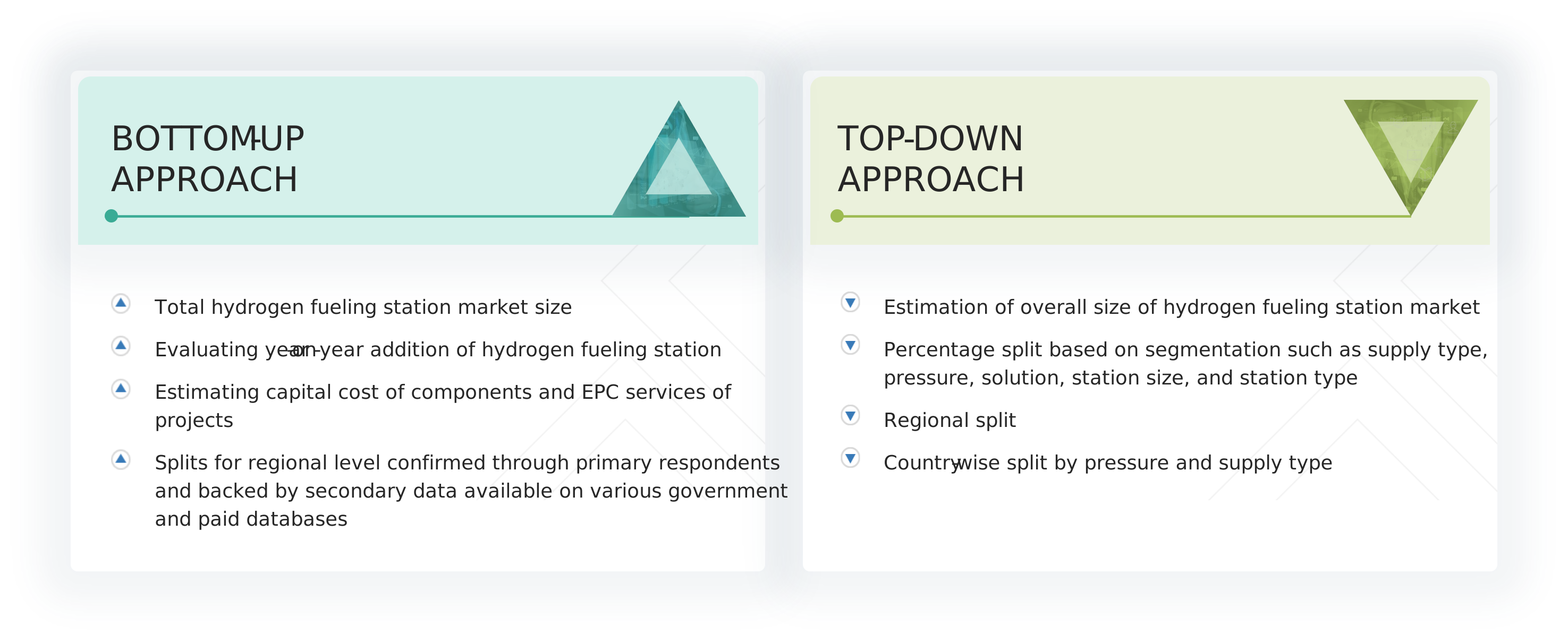
The top-down and bottom-up approaches were used to estimate and validate the total size of the compressed air energy storage market. These methods were also used extensively to estimate the size of various subsegments of the market. The research methodology used to estimate the market size includes the following.
Compressed Air Energy Storage Market : Top-Down and Bottom-Up Approach
Data Triangulation
The total market was split into several segments and subsegments after arriving at the overall market size from the above estimation process. Data triangulation and market breakdown processes were employed to complete the overall market engineering process and arrive at the exact statistics for all the segments and subsegments, wherever applicable. The data was triangulated by studying various factors and trends from the demand and supply sides. In addition, the market size was validated using both the top-down and bottom-up approaches.
Market Definition
Compressed air energy storage (CAES) is a form of mechanical energy storage that converts electricity into compressed air and later back into electricity when needed. In the charging phase, an electric motor powers a compressor that compresses ambient air and stores it in a reservoir such as an underground cavern, above-ground tank, or underwater balloon. During the discharging phase, the stored air is released and expanded through a turbine, which drives a generator to produce electricity. Compressed air energy storage (CAES) is emerging as a critical long-duration energy storage technology for stabilizing modern power grids. With the rapid growth of renewable energy sources such as wind and solar, CAES provides a reliable solution to address intermittency by storing excess electricity and delivering it back when demand rises. Compared to conventional batteries, CAES offers advantages such as longer operational lifespans, grid-level scalability capacities, low maintenance requirements, and the potential for zero-emission operation when deployed in adiabatic configurations.
The compressed air energy storage market comprises revenues of companies that offer technology and equipment for the compressed air energy storage market. The market has been studied for four key regions: North America, Europe, Asia Pacific, and RoW.
Stakeholders
- Compressed air energy storage (CAES) system manufacturers
- Turbine, compressor, and generator manufacturers
- Underground cavern and storage facility developers
- State and national regulatory authorities
- State and national regulatory authorities
- Organizations, forums, alliances, and associations
- Investors/Shareholders
- Manufacturers’ associations
- Long-duration energy storage raw material and component manufacturers
- Long-duration energy storage manufacturers, dealers, and suppliers
- Electrical equipment manufacturers’ associations and groups
- Power utilities and other end-use companies
Report Objectives
- To define, describe, segment, and forecast the compressed air energy storage market size by type, capacity, by storage form, and by application in terms of value
- To forecast the market size across five key regions, namely, North America, Europe, Asia Pacific, the Middle East & Africa, and South America, in terms of value
- To provide detailed information about the key drivers, restraints, opportunities, and industry-specific challenges influencing the growth of the compressed air energy storage market
- To provide the supply chain analysis, trends/disruptions impacting customer business, ecosystem analysis, regulatory landscape, patent analysis, case study analysis, technology analysis, key conferences & events, impact of AI/Gen AI, pricing analysis, Porter’s five forces analysis, and regulatory analysis for the compressed air energy storage market
- To strategically analyze the micromarkets1 with respect to individual growth trends, upcoming expansions, and their contributions to the overall market
- To analyze opportunities for stakeholders in the compressed air energy storage market and draw a competitive landscape for market players
- To benchmark players within the market using the company evaluation matrix, which analyzes market players on various parameters within the broad categories of business and product strategies
- To compare key market players with respect to the market share, product specifications, and applications
- To strategically profile key players and comprehensively analyze their market ranking and core competencies
- To track and analyze competitive developments in the compressed air energy storage market, such as sales contracts, agreements, investments, expansions, product launches, alliances, mergers, partnerships, joint ventures, collaborations, and acquisitions
Available Customizations
MarketsandMarkets offers customizations according to the specific needs of the companies using the given market data.
The following customization options are available for the report:
Product Analysis
- Product matrix, which gives a detailed comparison of the product portfolio of each company
Geographic Analysis as per Feasibility
- Further breakdown of the compressed air energy storage market by country
Company Information
- Detailed analysis and profiling of additional market players (up to five)
Key Questions Addressed by the Report
What is the current market size of the Compressed Air Energy Storage Market, and how is it expected to grow?
The global Compressed Air Energy Storage (CAES) market is projected to grow from USD 0.48 billion in 2025 to USD 1.88 billion by 2030, at a CAGR of 31.4%.
What are the key factors driving the growth of the Compressed Air Energy Storage Market?
The Compressed Air Energy Storage Market growth is driven by increasing renewable energy integration, demand for long-duration energy storage, grid modernization, and supportive government policies for clean energy.
Which type segment holds the largest share of the Compressed Air Energy Storage Market?
The adiabatic CAES segment holds the largest market share due to its higher efficiency, lower emissions, and compatibility with renewable energy systems.
What are the major applications of Compressed Air Energy Storage Market?
CAES market is primarily used for grid management, renewable energy integration, and other applications requiring reliable long-duration energy storage.
Which regions are expected to offer significant opportunities in the Compressed Air Energy Storage Market?
Europe, North America, and Asia Pacific are expected to witness strong growth due to expanding renewable energy projects, energy storage investments, and supportive regulatory frameworks.


Personalize This Research
- Triangulate with your Own Data
- Get Data as per your Format and Definition
- Gain a Deeper Dive on a Specific Application, Geography, Customer or Competitor
- Any level of Personalization
Let Us Help You
- What are the Known and Unknown Adjacencies Impacting the Compressed Air Energy Storage Market
- What will your New Revenue Sources be?
- Who will be your Top Customer; what will make them switch?
- Defend your Market Share or Win Competitors
- Get a Scorecard for Target Partners

Custom Market Research Services
We Will Customise The Research For You, In Case The Report Listed Above Does Not Meet With Your Requirements
Get 10% Free CustomisationTESTIMONIALS

Kimberly Murphy
GLOBAL MARKETING DIRECTOR
Bently Nevada,
Leading Condition Monitoring & Asset Protectionwww.bakerhughesds.com/bently-nevada

MarketsandMarkets™ showed consistent rigor for success and relentlessly worked with Bently Nevada stakeholders to positively impact go-to-market strategy. Their proactiveness and flexibility has been instrumental in achieving the objectives to grow our sales pipeline in key industrial markets.

DARRICK HUEBER
Business Development Leader
Nexus Controls LLC,
Leading Manufacturer of Automation System & Electrical Panelswww.bakerhughesds.com/nexus-controls

We partnered with MarketsandMarkets to expand our business further by tapping into new industrial segments. It was critical for us to gather crucial business insights about specific markets to achieve this goal. MarketsandMarkets engagement model and client services helped us provide those insights, it was really impressive and valuable for my business. The team was extremely flexible and helpful.

Mike Schoff
Global Industrial Commercial Strategy Leader
Nexus Controls LLC
Leading Manufacturer of Automation System & Electrical Panelswww.bakerhughesds.com/nexus-controls
We consulted MarketsandMarkets for potential Partner Identification. Overall, it was a good experience. The insights provided through interviews conducted by the team helped us put together the questionnaire required for discussion with the selected partners. Their ability to provide insights through interviews with customers in a timely manner was quite impressive.
- Canada Compressed Air Energy Storage Market
- US Compressed Air Energy Storage Market
- Germany Compressed Air Energy Storage Market
- UK Compressed Air Energy Storage Market
- Netherlands Compressed Air Energy Storage Market
- Switzerland Compressed Air Energy Storage Market
- China Compressed Air Energy Storage Market
- Australia Compressed Air Energy Storage Market






Growth opportunities and latent adjacency in Compressed Air Energy Storage Market