
Glycolic Acid Market
 Download PDF
 Request Customisation
 Speak to Analyst
 Get Free Sample Pages
Glycolic Acid Market by Purity (99%, 70%, 30%, Others), By Grade (Cosmetic Grade, Technical Grade), By Application (Personal Care & Dermatology, Industrial, Household, Other Applications), & Region - Global Forecast to 2032




OVERVIEW
Source: Secondary Research, Interviews with Experts, MarketsandMarkets Analysis
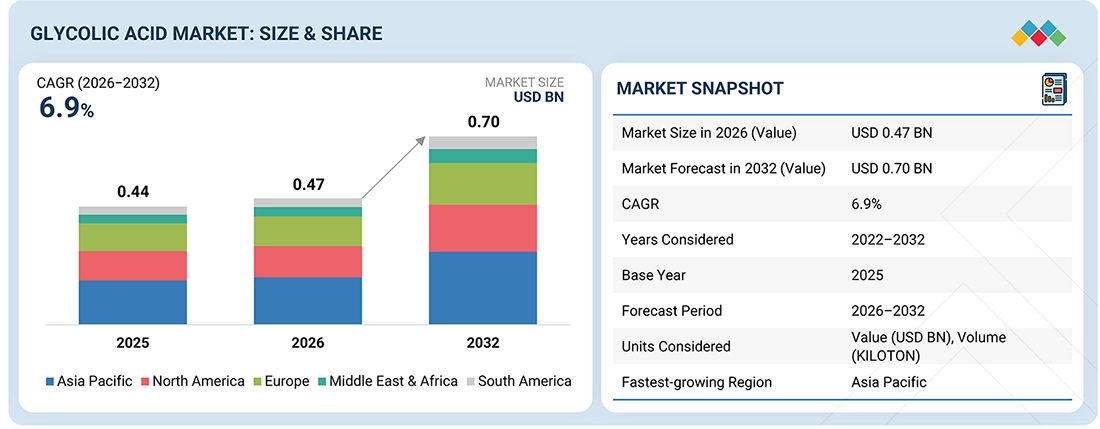
The glycolic acid market is projected to reach USD 0.70 billion by 2032 from USD 0.47 billion in 2026, at a CAGR of 6.9% from 2026 to 2032. Demand for glycolic acid is fueled by the expanding personal care and dermatology industry, increasing adoption in industrial cleaning and metal treatment, and growing use in specialty chemical formulations
KEY TAKEAWAYS
-
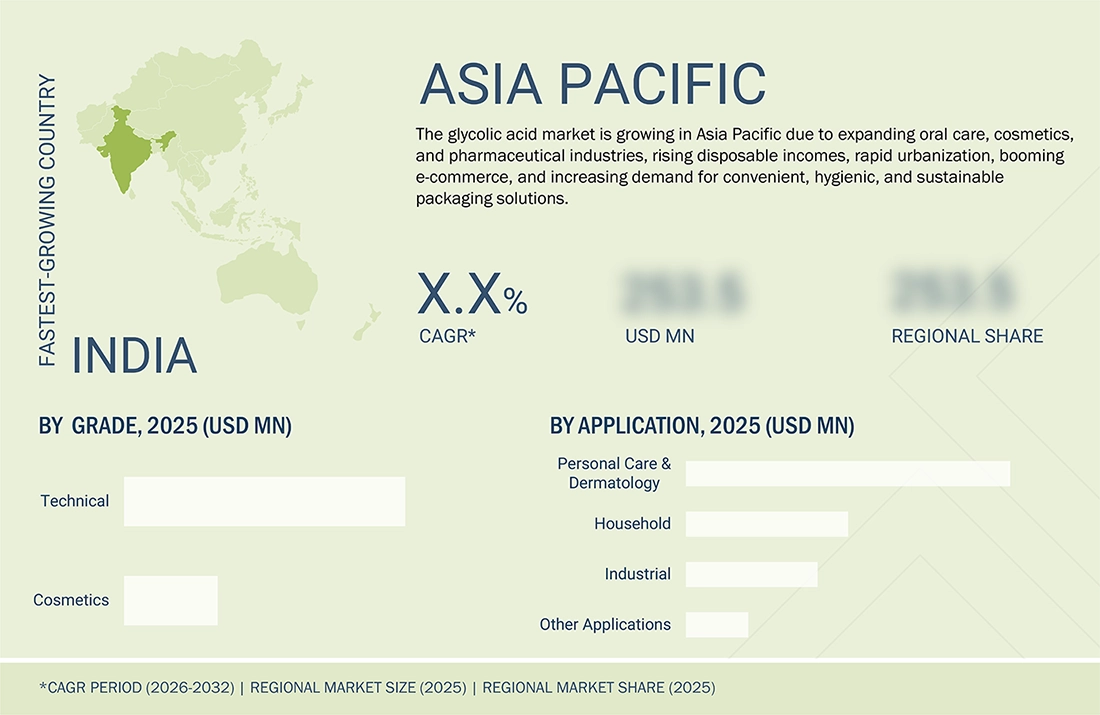
By RegionAsia Pacific accounted for a significant share of 37.5% in 2025.
-
By GradeBy Grade, the Cosmetic Grade segment is projected to register the highest CAGR of 6.1% during the period.
-
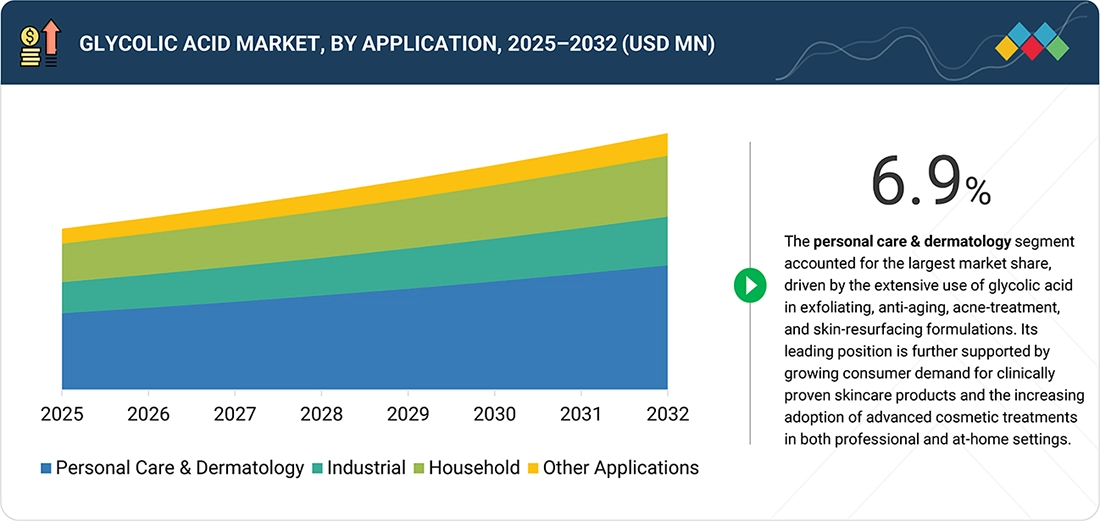
By ApplicationBy application, the Personal Care & Dermatology segment dominated the market in 2025, accounting for a share of 47.7%.
-
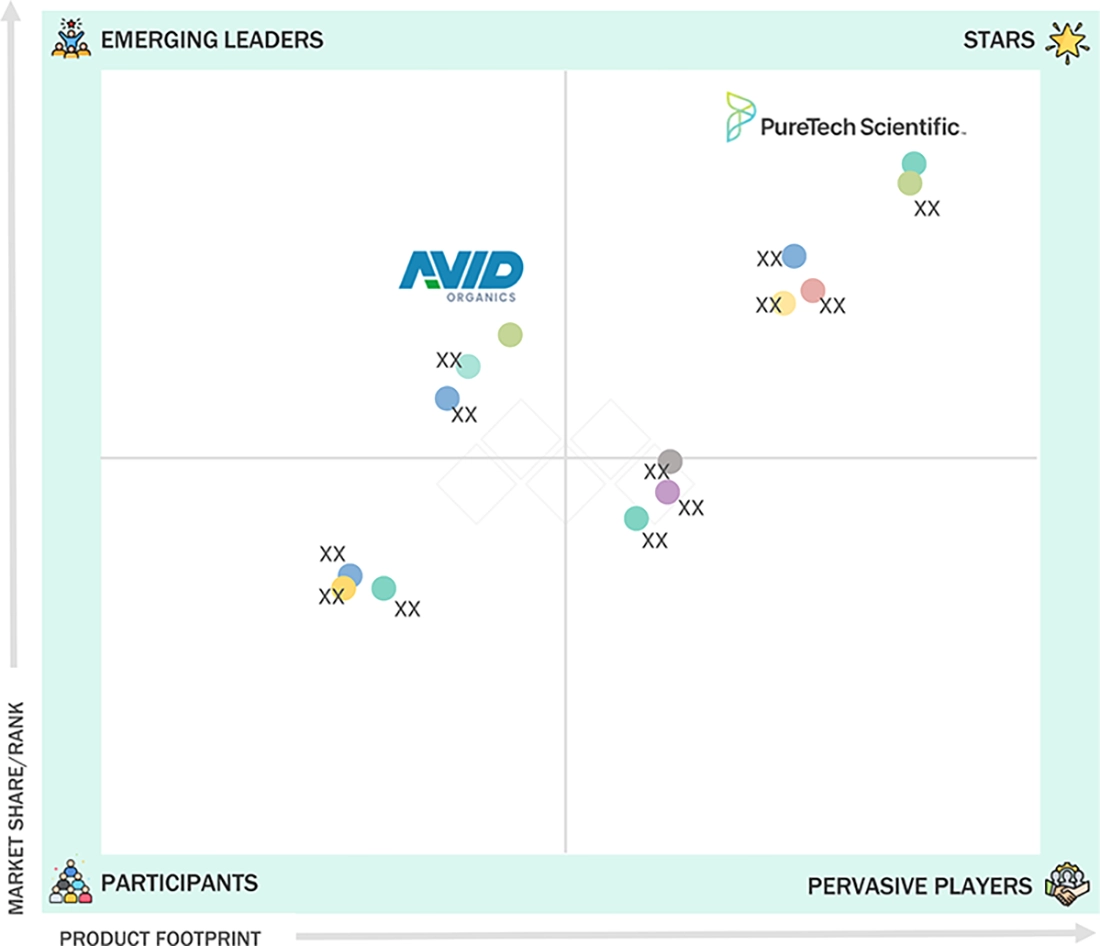
Competitive Landscape - Key PlayersPureTech Scientific Inc. (US), China Petrochemical Corporation (Sinopec) (China), CABB Group GmbH (Germany), Water Chemical Co., Ltd. (China), Zhonglan Industry Co., Ltd. (China) were identified as star players in the glycolic acid market (global), given their strong market share and product footprint.
-
Competitive Landscape - Startups/SMEsJinan Huashihang Chemical Co. (China), Ltd., Fengchen Group Co.,Ltd (China), Hangzhou Lingrui Chemical Co., Ltd. (China), Jiaxing Jlight Chemicals Co., Ltd. (China), have distinguished themselves among startups and SMEs by securing strong footholds in specialized niche areas, underscoring their potential as emerging market leaders.
The growing utilization of glycolic acid is primarily supported by expanding dermatological skincare production, increasing industrial processing requirements, and broader applications in specialty formulations
TRENDS & DISRUPTIONS IMPACTING CUSTOMERS' CUSTOMERS
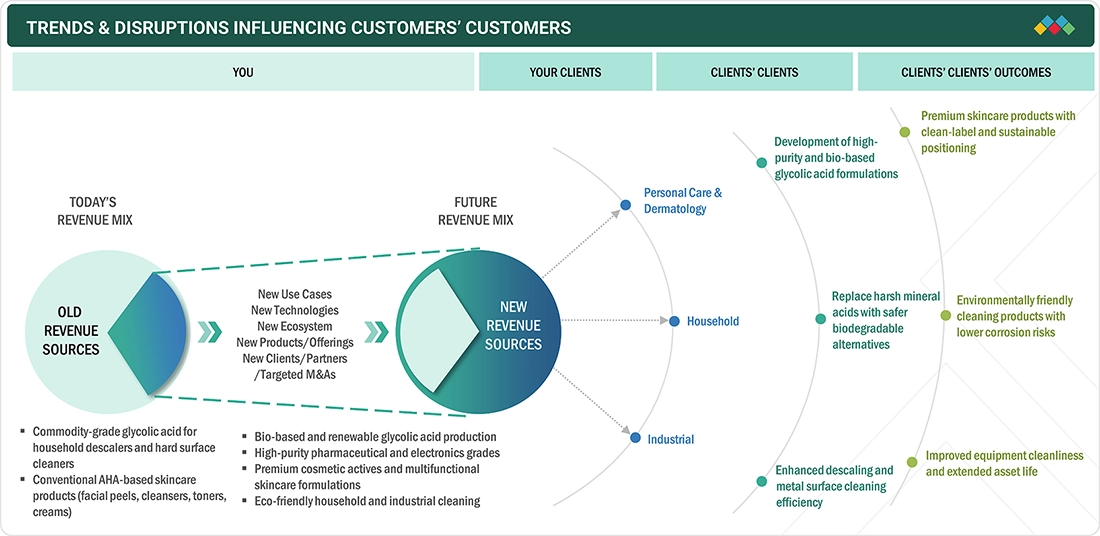
In the glycolic acid industry, a major trend in production is toward high-purity production and specialized formulations, which are believed to help optimize processes and address environmental challenges. Therefore, companies focus on producing cosmetic- and pharmaceutical-grade glycolic acid, using bio-based materials and energy-efficient synthesis and optimization processes. At the same time, companies strive to secure optimized supply chain integration and broader distribution with regards to key end-use industries. New developments, such as ultra-pure glycolic acid for advanced skincare formulations, customized concentration grades for industrial applications, and improved use or formulation, have become especially popular in industries such as personal care, dermatology, household cleaning, industrial cleaning, metal treatment, and specialty chemicals.
Source: Secondary Research, Interviews with Experts, MarketsandMarkets Analysis
MARKET DYNAMICS

Level
-
Growing demand from the Cosmetics industry

-
Rising use of glycolic acid in household and industrial cleaning products


Level
-
Rising Concerns Over Skin Irritation, Overuse, and Misuse

-
Increasing Competition from Alternatives


Level
-
Rapid Growth of the Cosmetics Industry in the Asia-Pacific region

-
Growth of E-commerce and Direct-to-Consumer Cosmetic Brands


Level
-
Complex Regulatory Compliance Across Regions

-
Volatility in Raw Material Prices and Supply Chain Costs

Source: Secondary Research, Interviews with Experts, MarketsandMarkets Analysis
Driver:Growing demand from the Cosmetics industry
The rapid growth of the cosmetics sector is significantly driving demand for glycolic acid, particularly in high-end skincare and dermatological formulations. Glycolic acid is widely used in facial cleansers, chemical peels, serums, toners, exfoliation masks, anti-aging creams, and acne treatments for its ability to stimulate cellular renewal and improve skin texture, among other benefits. The growing awareness of scientifically-based skincare and the increasing budgets devoted to anti-aging and cosmetic treatments have transformed the offerings of many manufacturers, who seek to enrich their lines of glycolic acid products. Furthermore, people's tendency to use dermatologist-recommended, performance-driven active agents and products increases demand for cosmetic-grade glycolic acid and, consequently, supports overall market growth.
Restraint: Rising Concerns Over Skin Irritation, Overuse, and Misuse
Growing apprehensions about skin irritation and misuse of products containing glycolic acid are inhibiting the expansion of the market, particularly in the area of cosmetics and personal care. Excessive amounts of glycolic acid can cause redness, skin peeling, skin irritation, and damage to the skin barrier. The availability of high-strength acid peels and exfoliating products on online shopping sites has made consumers vulnerable to the misuse of these products without expert consultation. The authorities have already taken steps to impose concentration limits, label safety warnings, and provide usage instructions. Manufacturers are spending significant amounts of money to conduct extensive safety tests on their products.
Opportunity: Development of Bio-based Glycolic Acid
The bio-based glycolic acid market is expected to experience unprecedented growth, with industries gravitating towards sustainable, low-carbon raw materials. Companies are exploring plant-based feedstocks, biotechnology-driven production technologies, and green chemistry techniques to minimize reliance on oil-based inputs and comply with evolving environmental legislation. Bio-based glycolic acid has the potential to reduce carbon emissions while providing the quality and functionality needed for cosmetics, drug manufacturing, and specialized industrial uses. The preference for eco-friendly ingredients from the consumers’ side and the trends towards sustainable sourcing by cosmetic brands shall also contribute to the success of commercialization of the solutions.
Challenge: Complex Regulatory Compliance Across Regions
The glycolic acid industry faces challenges in overcoming the complexities of regional compliance due to different regulations of manufacturing, safety, labeling and ingredient levels, as standards differ depending on the type of product (cosmetics, pharmaceuticals, household goods, or industrial products), requiring manufacturers to adapt formulations accordingly. Manufacturers have to deal with the evolving nature of environmental legislation, chemical registration processes and good manufacturing practices as it complicates their work and makes product approval periods longer while increasing certification and testing expenses. Regulatory changes also mean that companies have to follow up-to-date trends and reformulate their products, which adds another layer of complexity to their work and hinders their plans of expanding their business across the world.
GLYCOLIC ACID MARKET: COMMERCIAL USE CASES ACROSS INDUSTRIES
| COMPANY | USE CASE DESCRIPTION | BENEFITS |
|---|---|---|
 |
Controlled-Release Glycolic Acid for Sensitive Skin (Glypure GL) – Utilizes glycolide technology to gradually release glycolic acid after application, enabling controlled penetration into the skin | Reduces irritation while promoting collagen production, skin hydration, wrinkle reduction, improved elasticity, and effective anti-aging performance for sensitive skin formulations |
 |
Formaldehyde-Free Glycolic Acid Manufacturing (Avid Organics) – Uses an alternative synthesis route that completely eliminates formaldehyde during glycolic acid production while maintaining high purity and batch consistency | Improves worker safety, simplifies regulatory compliance, lowers hazardous waste generation, strengthens ESG credentials, and delivers high-purity glycolic acid for regulated applications |
Logos and trademarks shown above are the property of their respective owners. Their use here is for informational and illustrative purposes only.
MARKET ECOSYSTEM
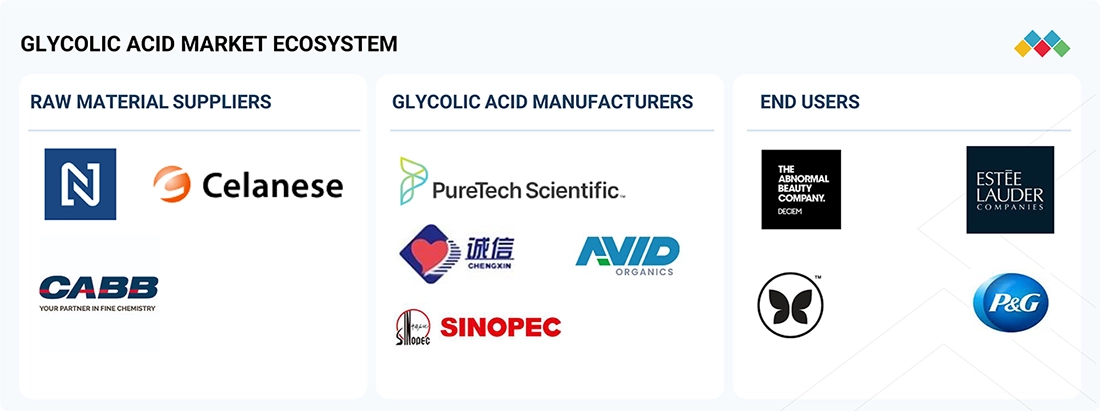
The market ecosystem for glycolic acid comprises suppliers of raw materials, glycolic acid producers, distributors, formulators, and end-use industries. Raw material suppliers provide the feedstock, catalysts, and chemicals needed to manufacture glycolic acid. Producers manufacture cosmetic-grade, pharmaceutical-grade, and technical-grade glycolic acids at various purities for their consumers. Distributors and specialty chemical suppliers ensure that products are available in local markets and offer special supply terms. At the end of the process, glycolic acid is supplied to other formulators or manufacturers, who use it for personal care and cosmetics, pharmaceutical products, cleaning products, industrial cleaning, the textile industry, etc. In addition to the named functions, contract manufacturers, regulatory compliance advisers, and logistics partners are necessary to ensure product quality and regulatory compliance in supply chain management.
Logos and trademarks shown above are the property of their respective owners. Their use here is for informational and illustrative purposes only.
MARKET SEGMENTS
Source: Secondary Research, Interviews with Experts, MarketsandMarkets Analysis
Glycolic Acid Market, By Grade
Technical grade glycolic acid has dominated the glycolic acid market due to its extensive use in industrial and institutional applications where consumption is high and ultra-pure quality is not a significant issue. Its applications in industrial forms include cleaning formulas, metal cleaning and rust removal, surface treatment, glue and oil and gas, textile coloration, as well as in leather production. The increasing demand for eco-friendly cleaning products has only pushed the use of technical-grade glycolic acid as an effective alternative to conventional mineral acids. In addition, the comparatively lower cost of production is another reason why technical-grade glycolic acid is the first choice among users. Due to the growing development of manufacturing, infrastructure maintenance, and industry processing, technical-grade glycolic acid will keep leading the market in the coming years.
Glycolic Acid Market, By Application
The personal care and dermatology segment accounted for the largest share of the glycolic acid market due to the ingredient's proven effectiveness as an alpha hydroxy acid (AHA) in advanced skincare formulations. Glycolic acid is widely used in products like facial cleansers, chemical peels, serums, toners, exfoliating masks, moisturizers, anti-aging creams, and acne treatments because of its benefits like stimulating cell turnover, improving skin texture, reducing hyperpigmentation, lightening fine lines, and boosting collagen production. Growing awareness of preventive skin care, rising investments in premium beauty products, and continuous development of multifunctional skin care products are boosting high purchases of glycolic acid. The demand for glycolic acid from over-the-counter skin care brands and professionals within the dermatology field also strengthens the leading position of the segment in the global glycolic acid sector.
REGION
Asia Pacific to be the largest global glycolic acid market during forecast period
The glycolic acid market in Asia Pacific accounted for the largest share due to a well-established chemical sector, expanding personal care and cosmetics industries, and excellent industrial production facilities. A number of top glycolic acid manufacturers are located in Asia Pacific and have the capacity for mass production at low cost thanks to integrated supply chains that provide needed raw materials for the domestic market and for export. The rise in demand for skin care products provides impetus for increased demand for glycolic acid in cosmetic products, as many skincare products, such as chemical peels, creams, serums, cleansers, and exfoliating formulations, contain it. In addition, rapid growth of the industry results in the increased need for glycolic acid in industrial cleaning, metal treatment, textile processing, leather finishing, and specialty chemical manufacturing. Also, low manufacturing costs due to low raw material prices as well as investments into manufactured capacity have contributed to the position of the region in the glycolic acid market.
GLYCOLIC ACID MARKET: COMPANY EVALUATION MATRIX
PureTech Scientific Inc. (Star) is regarded as an industry leader in the glycolic acid market because of its strong expertise in the production of high-purity glycolic acid, production capacity in North America, established supply chain across cosmetics, pharmaceuticals, and industrial applications, as well as constant investments in innovation in the production process, quality control, and sustainable manufacturing. Avid Organics (Emerging Leader) is emerging as an industry competitor in the glycolic acid market because of its expanding production capacities, focus on manufacturing glycolic acid with no formaldehyde, increasing network of exports, and growing presence in the cosmetics, pharmaceutical, and specialty chemicals segments with the support of sustainable production technologies and improvements in product quality thus being able to compete with other companies in this sector.
Source: Secondary Research, Interviews with Experts, MarketsandMarkets Analysis
KEY MARKET PLAYERS
- PureTech Scientific Inc. (US)
- China Petrochemical Corporation (Sinopec) (China)
- CABB Group GmbH (Germany)
- Water Chemical Co., Ltd. (China)
- Zhonglan Industry Co., Ltd. (China)
- CrossChem Limited (US)
- Avid Organics Pvt. Ltd. (India)
- Hebei Chengxin Co., Ltd. (China)
- Tianci Chemical Co., Ltd. (China)
- Hefei TNJ Chemical Industry Co., Ltd. (China)
- Kureha Corporation (Japan)
- Tokyo Chemical Industry Co., Ltd. (TCI) (Japan)
- Merck KGaA (Germany)
- Jinan Huashihang Chemical Co., Ltd. (China)
- Fengchen Group Co., Ltd. (China)
MARKET SCOPE
| REPORT METRIC | DETAILS |
|---|---|
| Market Size in 2025 (Value) | USD 0.44 Billion |
| Market Forecast in 2026 (Value) | USD 0.47 Billion |
| Market Forecast in 2032 (Value) | USD 0.70 Billion |
| Growth Rate | CAGR of 6.90% from 2026- 2032 |
| Years Considered | 2022–2032 |
| Base Year | 2025 |
| Forecast Period | 2026–2032 |
| Units Considered | Value (USD Billion), Volume (Kiloton) |
| Report Coverage | Revenue forecast, company ranking, competitive landscape, growth factors, and trends |
| Segments Covered |
|
| Regions Covered | North America, Asia Pacific, Europe, South America, Middle East & Africa |
WHAT IS IN IT FOR YOU: GLYCOLIC ACID MARKET REPORT CONTENT GUIDE
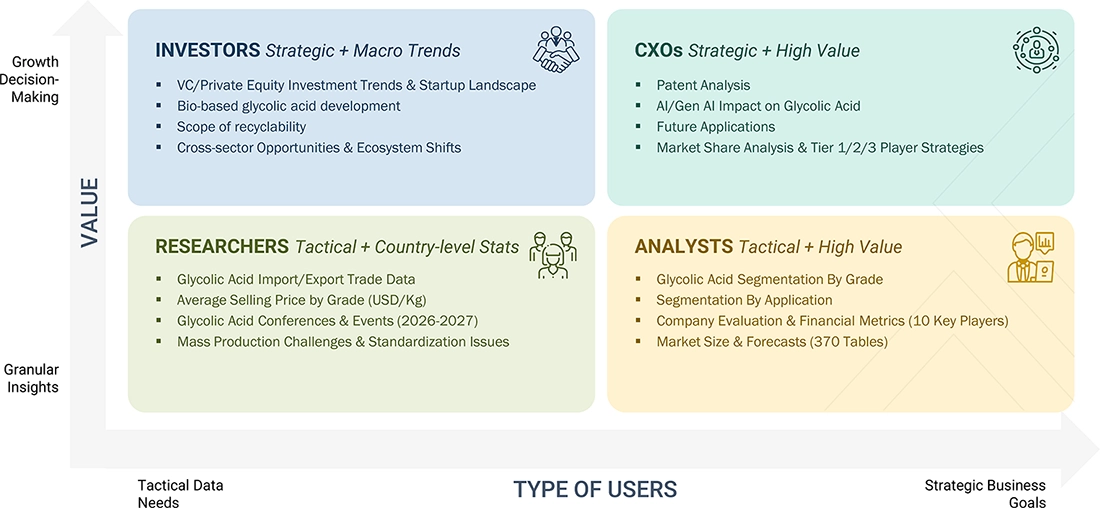
DELIVERED CUSTOMIZATIONS
We have successfully delivered the following deep-dive customizations:
| CLIENT REQUEST | CUSTOMIZATION DELIVERED | VALUE ADDS |
|---|---|---|
| North America Glycolic Acid Market – Manufacturer, Distributor, Supplier & Repacker Analysis | Detailed North America-specific glycolic acid market study covering key manufacturers, distributors, suppliers, repackers, product portfolios, supply chain mapping, end-use applications, competitive landscape, regional presence, and company profiling with verified company-level intelligence |
|
| CLIENT REQUEST | CUSTOMIZATION DELIVERED | VALUE ADDS | | | | | ||
| Deeper analysis of high-growth end-use industries | Detailed demand breakdown for semiconductor, healthcare, metal fabrication, and environmental monitoring sectors | Consumption pattern analysis across industries | Purity requirement mapping for specialt | ||
| Assessment of competitive positioning in specialty gas mixtures | Benchmarking of key players based on blending capabilities, purity levels, distribution models, and technology integration | Comparative analysis of product portfolios and certification cap |
RECENT DEVELOPMENTS
- February 2026 : CABB entered an exclusive distribution partnership with Univar Solutions covering EMEA for glycolic acid products GLYCOS Clear 70 and GLYTECH Basic 70. The agreement expanded commercial availability across beauty & personal care and home & industrial cleaning markets
- March 2025 : PureTech Scientific entered a strategic distribution partnership with Brenntag Beauty & Personal Care Group for the Glypure® cosmetic-grade glycolic acid portfolio across the United States, Canada, and Mexico, strengthening regional availability for personal care formulators
- August 2023 : PureTech Scientific completed the acquisition of The Chemours Company's Glycolic Acid business, creating a standalone company focused exclusively on manufacturing and developing high-purity glycolic acid products for pharmaceutical, medical device, personal care, and specialty chemical markets
Table of Contents
 Exclusive indicates content/data unique to MarketsandMarkets and not available with any competitors.
Methodology
The study involved four major activities to estimate the current size of the global glycolic acid market. Exhaustive secondary research was carried out to collect information on the market, the peer product market, and the parent product group market. The next step was to validate these findings, assumptions, and sizes with the industry experts across the value chain of glycolic acid through primary research. The top-down and bottom-up approaches were employed to estimate the overall size of the glycolic acid market. After that, market breakdown and data triangulation procedures were used to determine the size of different segments of the market.
Secondary Research
The market for companies offering glycolic acid was arrived at by studying the secondary data available through paid and unpaid sources, analyzing the product portfolios of the major companies in the ecosystem, and rating the companies by their performance and quality. Various secondary sources, such as Business Standard, Bloomberg, World Bank, and Factiva, were referred to identify and collect information for this study on the glycolic acid market. In the secondary research process, various secondary sources were referred to identify and collect information related to the study. Secondary sources included annual reports, press releases, investor presentations, glycolic acid vendors, forums, certified publications, and white papers. The secondary research was used to obtain critical information on the industry’s value chain, the total pool of key players, market classification, and segmentation from the market and technology-oriented perspectives.
Primary Research
In the primary research process, various primary sources from the supply and demand sides were interviewed to obtain qualitative and quantitative information for this report. The primary sources from the supply side included industry experts, such as Chief Executive Officers (CEOs), Vice Presidents (VPs), marketing directors, technology and innovation directors, and related key executives from several key companies and organizations operating in the glycolic acid market. After the complete market engineering (calculations for market statistics, market breakdown, market size estimations, market forecasting, and data triangulation), extensive primary research was conducted to gather information and verify and validate the critical numbers arrived at. Primary research was also conducted to identify the segmentation types, industry trends, competitive landscape of glycolic acid offered by various market players, and key market dynamics, such as drivers, restraints, opportunities, challenges, industry trends, and key player strategies. In the complete market engineering process, the top-down and bottom-up approaches and several data triangulation methods were extensively used to perform the market estimation and market forecasting for the overall market segments and subsegments listed in this report. Extensive qualitative and quantitative analysis was performed on the complete market engineering process to list the key information/insights throughout the report.
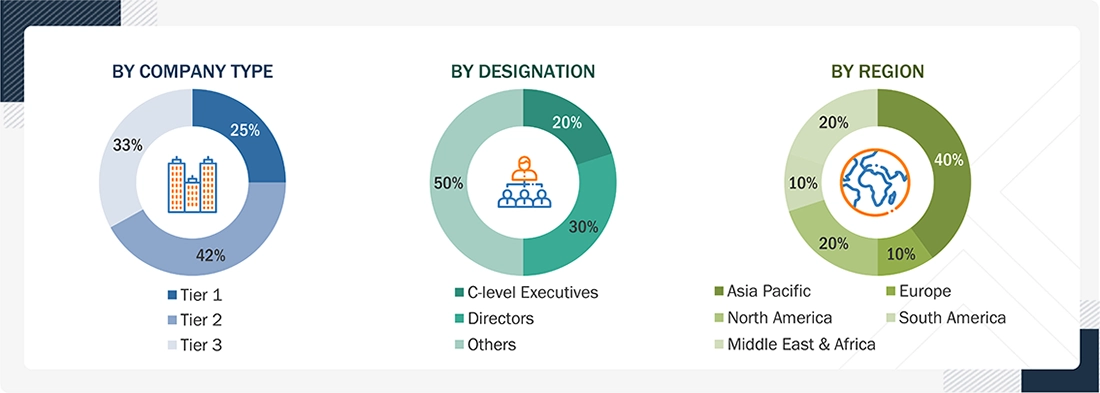
Notes:
Others include Sales, Marketing, and Product Managers.
Tier 1: > USD 1 billion; Tier 2: USD 500 million–1 billion; and Tier 3: < USD 500 million
To know about the assumptions considered for the study, download the pdf brochure
Market Size Estimation
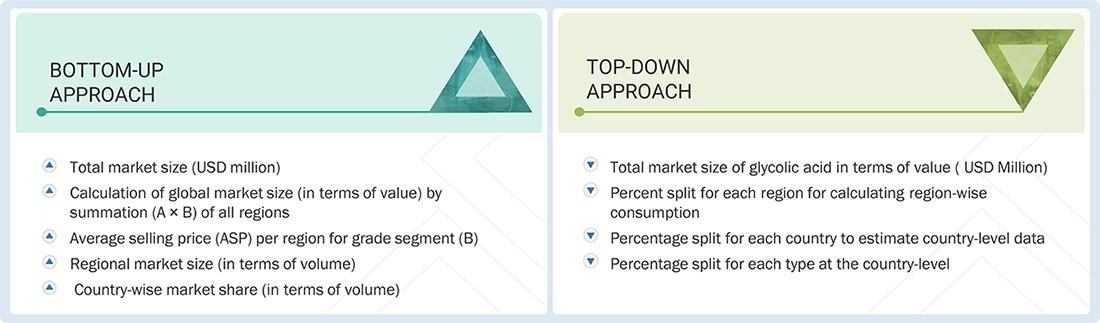
The top-down and bottom-up approaches were used to estimate and validate the size of the global glycolic acid market. These approaches were also used extensively to estimate the size of various dependent market segments.
The research methodology used to estimate the market size included the following approaches:
Data Triangulation
After arriving at the overall market size using the market size estimation processes, the market was split into several segments and subsegments. The data triangulation and market breakup procedures were employed, wherever applicable, to complete the overall market engineering process and arrive at the exact statistics of each market segment and subsegment. The data was triangulated by studying various factors and trends from both the demand and supply sides.
Market Definition
Glycolic acid is an alpha hydroxy acid (AHA), valued for its excellent exfoliating, chelating, descaling, and biodegradable properties. It is widely used in personal care, pharmaceuticals, industrial and household cleaning, oil & gas, textiles, food processing, and specialty chemical manufacturing, making it a versatile specialty chemical with broad industrial applications.
Key Stakeholders
- Glycolic acid manufacturers
- Glycolic acid suppliers
- Industry Associations and Regulatory Bodies
- Research & Development Entities
- Raw Material Suppliers
- End-users
Report Objectives
- To define, describe, and forecast the size of the global glycolic acid market based on grade, application, and region in terms of value and volume
- To provide detailed information on the significant drivers, restraints, opportunities, and challenges influencing the market
- To analyze and forecast the market based on grade and application
- To strategically analyze micro markets concerning individual growth trends, prospects, and their contribution to the market
- To assess the growth opportunities in the market for stakeholders and provide details on the competitive landscape for market leaders
- To forecast the market size of segments for North America, Europe, Asia Pacific, South America, and the Middle East & Africa
- To strategically profile key players and comprehensively analyze their market shares and core competencies
- To analyze competitive developments, such as expansions, product launches, partnerships, and acquisitions in the glycolic acid market
- To provide the impact of AI on the glycolic acid market
Available customizations:
With the given market data, MarketsandMarkets offers customizations according to client-specific needs.
The following customization options are available for the glycolic acid report:
Product Analysis
- A product matrix that gives a detailed comparison of the product portfolio of each company
Regional Analysis
- A further breakdown of the glycolic acid market for additional countries
Company Information
- Detailed analysis and profiling of additional market players (up to five)
Need a Tailored Report?
Customize this report to your needs
Get 10% FREE Customization
Customize This ReportPersonalize This Research
- Triangulate with your Own Data
- Get Data as per your Format and Definition
- Gain a Deeper Dive on a Specific Application, Geography, Customer or Competitor
- Any level of Personalization
Let Us Help You
- What are the Known and Unknown Adjacencies Impacting the Glycolic Acid Market
- What will your New Revenue Sources be?
- Who will be your Top Customer; what will make them switch?
- Defend your Market Share or Win Competitors
- Get a Scorecard for Target Partners

Custom Market Research Services
We Will Customise The Research For You, In Case The Report Listed Above Does Not Meet With Your Requirements
Get 10% Free CustomisationTESTIMONIALS
We at Nissan Chemicals Corporation have been clients of MarketsandMarkets for more than a year now. We recently consulted MarketsandMarkets for a study, the team at MarketsandMarkets was extremely professional and organized. The business insights were very detailed and aligned well with our expectations that really helped us formulate the Business Plans and device new strategies for development themes. MarketsandMarkets offers a unique combination of expertise and dedicated engagement model. Their research findings have helped us in designing our Pricing Strategy which will make it easier for us to predict the future sales and profits for the next ten years. We look forward to working with MarketsandMarkets in the future.
VP of Strategy & New Business Development
Leading Specialty Chemical Company
The MarketsandMarkets Engagement Model, composed of both the Knowledge Store and advisory custom research, has greatly helped us in understanding our markets and making strategic decisions. The Knowledge Store is a fast way to allow everyone in our organization to understand more about most any market they are interested in. The ability to then get custom research done and get answers to specific strategic questions and market insight has been spectacular. The Markets and Markets team feel more like colleagues than vendors and their services have helped us change our culture where statements of things like growth opportunities and competitive position are always backed by industry research.

Rich Gibson,
Director, Corporate Strategy
Milliken & Company,
Leading Industrial Manufacturer of specialty chemical, floor covering, performance and protective textile materials, and healthcaremilliken.com
MarketsandMarkets is a trusted resource that helps us to better understand markets that are near-adjacencies-whether its technology, value chain or geography. Their Knowledge Store platform provides a dashboard of markets and their characteristics which is easy to use and saves us time.
Adam Shaw,
Market Development and Strategy Manager
AdvanSix Inc. USA,
An American Leader in Chemicalswww.advansix.com
The Knowledge Store from MarketsandMarkets is a valuable tool which has helped my team acquire greater insight in to the end markets that our business serves. This has enabled us to help our company build stronger strategies throughout our planning process.
TOSHIO KINOSHITA
Senior Chif Consultion Research & Consulting Division
Mitsubishi Chemical Research Corporation,
Leading Manufacturer of Chemical Productswww.mitsubishichem-res.co.jp/en/

We recently engaged with MarketsandMarkets for a study, the team not only clearly understood our business objectives but was also extremely professional in the way they handled the entire project. The study was efficiently conducted in a phase-wise manner, and the engagement model furnished us with high-quality business insights that far exceeded our expectations at each phase. We were especially happy that MarketsandMarkets could provide us with both, an English as well as a Japanese version of the study. A special thanks to the Analyst Team and Client Services Team, whose fluency in Japanese enhanced our comfort level, as we could converse with them in our preferred language.
Independent entrepreneurs
Arrow Precision
We approached MarketsandMarkets for study on Proppants Market, and their work exceeded our expectations. The study conducted was comprehensive and enabled us to view the market through the various dimensions. In addition, the team was extraordinarily responsive throughout the process and resolved our queries on time. I strongly recommend MarketsandMarkets and will certainly consider them for additional market assessments we will need in the future.
Global engineering company, Japan
Deputy Manager,
Strategic Planning OfficeThe high-quality insights shared by the MarketsandMarkets team helped us understand the pharmaceutical plant designers in a specific geography. It also captured the risks that we may likely face in communicating with our potential partners. The study would enable us identify partners, which would impact our future growth.




Growth opportunities and latent adjacency in Glycolic Acid Market