

Fraud Detection and Prevention (FDP) Market by Fraud Type (Identity, Payment, Insider, Investment), Offering (Solutions (Fraud Analytics, Authentication, and GRC) and Services), Vertical (BFSI, Healthcare, Retail), and Region - Global Forecast to 2031




OVERVIEW
Source: Secondary Research, Interviews with Experts, MarketsandMarkets Analysis
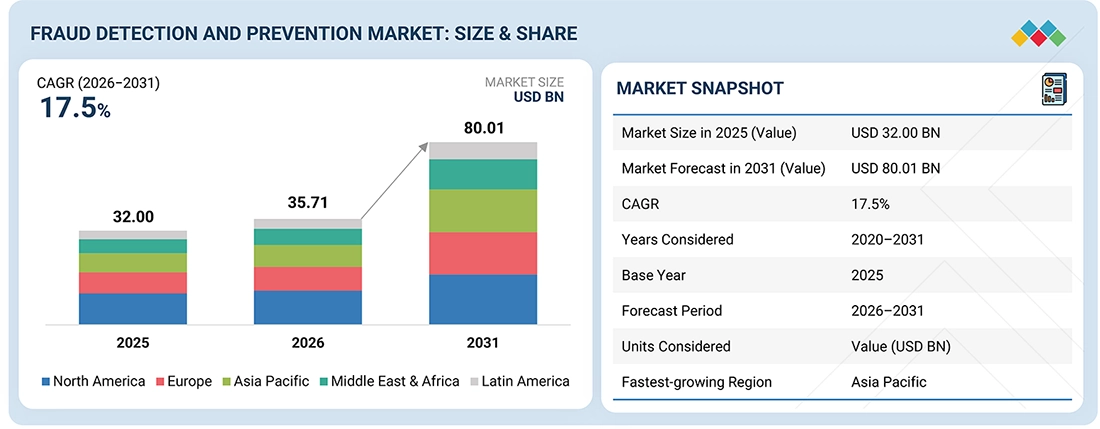
The fraud detection and prevention market is projected to reach USD 80.01 billion by 2031 from USD 35.71 billion in 2026, at a CAGR of 17.5%. The surge in fraudulent activity and rising revenue losses from fraud and chargebacks are driving organizations to invest in advanced fraud detection and prevention solutions. Instances of insider fraud, payment fraud, account takeover, and identity fraud are exposing weaknesses in traditional security controls and creating significant financial and reputational risks. To minimize the impact of these frauds, businesses are adopting AI-driven fraud analytics, real-time transaction monitoring, behavioral analytics, and adaptive authentication. Advanced FDP solutions are helping organizations reduce fraud losses, minimize chargebacks, improve customer trust, and strengthen operational resilience across digital transactions and financial ecosystems.
Market Size and Forecast:
- Market Size Value in 2025: USD 32.00 billion
- Market Size Value in 2026: USD 35.71 billion
- Revenue Forecast in 2031: USD 80.01 billion
- Growth Rate: CAGR of 17.5% from 2026 to 2031
- Data available from 2020 to 2031
- Base year: 2025
- Forecast period: 2026-2031
- Fastest Growing Region: Asia Pacific
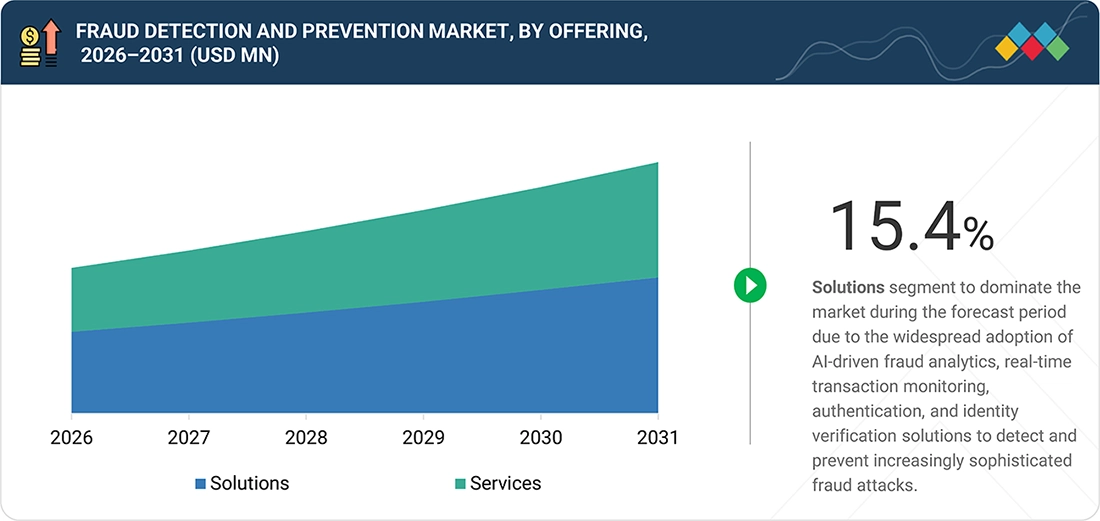
- Solutions segment to dominate the market at a CAGR of 15.4% during the forecast period.
Key Market Trends and Insights
- Growth Driver: Rising AI adoption, increasing digital transactions, and growing cyber fraud are driving demand for advanced fraud detection and prevention solutions.
-
Key Trends: AI-powered fraud analytics, behavioral biometrics, cloud-based deployment, and real-time transaction monitoring are accelerating market growth.
- Opportunities: Expanding digital payments, cloud adoption, and stricter regulatory compliance create significant growth opportunities.
- AI Impact: AI enables predictive analytics, anomaly detection, behavioral analysis, and automated risk scoring to improve fraud detection accuracy and response times.
KEY TAKEAWAYS
-
BY REGIONNorth America is expected to account for the largest share of 35% of the FDP market in 2026.
-
BY OFFERINGBy offering, the solutions segment is expected to dominate the market in terms of market share in 2026.
-
BY FRAUD TYPEBy fraud type, the insider fraud segment will be register the highest growth during the forecast period.
-
BY DEPLOYMENT MODEBy deployment mode, the cloud segment is expected to register the highest CAGR of 16% during the forecast period.
-
BY FUNCTIONALITYBy functionality, real-time detection will be the fastest-growing segment from 2026 to 2031.
-
BY ORGANIZATION SIZEBy organization size, the large enterprises segment is expected to hold the largest market share in 2026.
-
BY VERTICALBy vertical, the healthcare segment is likely to record the highest CAGR of 17% during the forecast period.
-
COMPETITIVE LANDSCAPE - KEY PLAYERSFIS Global, NICE Actimize, Experian, and FICO are leading players in the fraud detection and prevention market, offering AI-driven platforms that combine fraud analytics, real-time transaction monitoring, identity intelligence, risk scoring, authentication, and case management to help organizations detect, prevent, and investigate fraud across banking, payments, lending, and digital channels.
-
COMPETITIVE LANDSCAPE - STARTUPS/SMEsSEON, Incognia, Alfa Group, and JuicyScore are emerging innovators providing AI powered fraud prevention solutions focused on device intelligence, behavioral analytics, digital identity verification, and risk based decisioning, enabling organizations to detect account takeover, synthetic identity, and payment fraud while reducing false positives and improving customer onboarding.
Organizations in banking, insurance, retail, healthcare, and government are enhancing fraud prevention strategies to protect digital transactions and customer identities. The growing use of AI, machine learning, and risk-based authentication enables faster detection of suspicious activity, reduces false positives, and improves the efficiency of fraud investigations. These capabilities help organizations protect revenue, ensure regulatory compliance, and deliver secure digital experiences while adapting to rapidly evolving fraud techniques.
TRENDS & DISRUPTIONS IMPACTING CUSTOMERS' CUSTOMERS
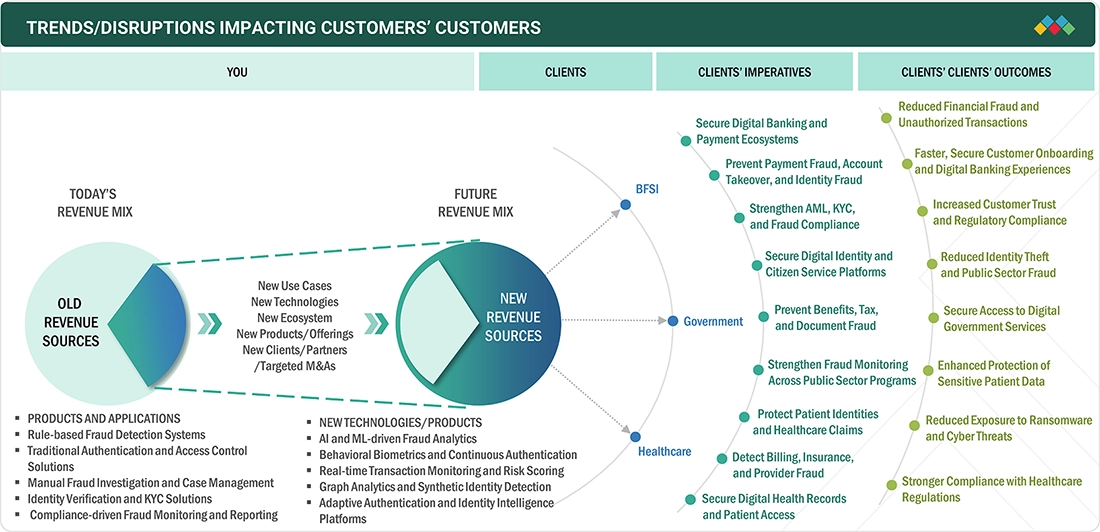
The fraud detection and prevention industry is evolving from traditional rule-based fraud monitoring to intelligent, AI-driven platforms that combine fraud analytics, behavioral intelligence, authentication, and real-time decisioning. This figure illustrates how the revenue mix is shifting toward advanced fraud analytics, adaptive authentication, and identity intelligence solutions driven by increasing digital fraud and evolving regulatory requirements. It also highlights how the specific fraud-prevention needs of the BFSI, government, and healthcare sectors are accelerating technology adoption and delivering improved security, compliance, and customer trust.
Source: Secondary Research, Interviews with Experts, MarketsandMarkets Analysis
MARKET DYNAMICS

Level
-
Surge in synthetic identities and fraudulent activities

-
Increased revenue losses and chargebacks due to fraud


Level
-
False positives with highly sensitive fraud detection systems

-
Rise in online fraud complexity


Level
-
Rising use of predictive analytics in fraud detection and prevention

-
Growing use of fraud detection tools by card issuers and payment processors to prevent payment fraud


Level
-
Multifaceted cross-channel fraud

-
Lack of trained professionals to analyze fraud attacks

Source: Secondary Research, Interviews with Experts, MarketsandMarkets Analysis
Driver: Surge in synthetic identities and fraudulent activities
The rapid growth of synthetic identities, AI-enabled scams, and increasingly sophisticated fraud attacks is driving demand for advanced fraud detection and prevention (FDP) platforms. According to LexisNexis Risk Solutions, in April 2026, its Cybercrime Report, based on analysis of more than 116 billion online transactions, identified synthetic identity fraud, bot-driven attacks, and account takeover as major contributors to rising global fraud activity.
Restraint: False positives with highly sensitive fraud detection systems
While organizations are deploying increasingly sensitive fraud detection models, excessive false positives continue to disrupt legitimate customer transactions and increase operational workloads. High false-positive rates create customer friction, require additional manual reviews, and can erode trust in digital services, making it difficult for organizations to balance fraud prevention with user experience. According to Experian, in March 2025, over half of UK businesses planned to build new AI models specifically to improve customer decisioning and reduce false positives in fraud detection.
Opportunity: Rising use of predictive analytics in fraud detection and prevention
The growing adoption of predictive analytics presents significant opportunities for FDP vendors to improve risk assessment and automate fraud decisions. AI and machine learning models can identify emerging fraud patterns, adapt to evolving attack techniques, and strengthen real-time transaction monitoring across digital channels. According to Experian's 2025 US Identity & Fraud Report, released in July 2025, more than one-third of businesses already use AI, including generative AI, to combat fraud, reflecting the growing adoption of predictive analytics.
Challenge: Multifaceted cross channel fraud
The growing complexity of cross channel fraud is challenging organizations to detect coordinated attacks spanning digital banking, payments, mobile applications, eCommerce, and customer onboarding. Fraudsters increasingly exploit multiple identities, devices, and channels within a single attack, making siloed detection systems less effective. According to Feedzai, in June 2026, the company launched Feedzai IQ Score, which leverages intelligence derived from over USD 9 trillion in payments risk assessed annually to help financial institutions identify fraud patterns across institutions and channels in real time.
FRAUD DETECTION AND PREVENTION (FDP) MARKET: COMMERCIAL USE CASES ACROSS INDUSTRIES
| COMPANY | USE CASE DESCRIPTION | BENEFITS |
|---|---|---|
 |
Cross River Bank implemented Alloy's identity decisioning platform to automate customer onboarding, unify identity verification, fraud detection, and compliance checks, enabling faster account opening while managing fraud risk across digital banking channels. | Faster digital customer onboarding | Improved fraud detection and identity verification | Reduced manual reviews and operational costs | Enhanced AML/KYC compliance |
 |
UNA Financial deployed JuicyScore's JuicyID solution to strengthen digital identity verification and fraud detection by leveraging device intelligence and behavioral analytics to assess customer risk during loan origination. | Reduced operational risks from fraudulent applications | Improved identity verification accuracy | Faster lending decisions | Lower fraud losses while maintaining customer experience |
 |
Bank Mandiri implemented FICO Falcon Fraud Manager to strengthen payment card fraud detection using AI driven analytics, real time transaction monitoring, and adaptive fraud models across its card portfolio. | Improved fraud detection accuracy | Reduced card fraud losses | Faster real time fraud identification | Enhanced customer experience with fewer false positives |
 |
Dime Community Bank collaborated with Fiserv to enhance its Card Expert platform, improving card fraud management capabilities through advanced monitoring, analytics, and operational enhancements that support proactive fraud prevention. | Enhanced card fraud monitoring and prevention | Improved fraud investigation efficiency | Better operational visibility into fraud events | Strengthened customer protection and payment security |
Logos and trademarks shown above are the property of their respective owners. Their use here is for informational and illustrative purposes only.
MARKET ECOSYSTEM
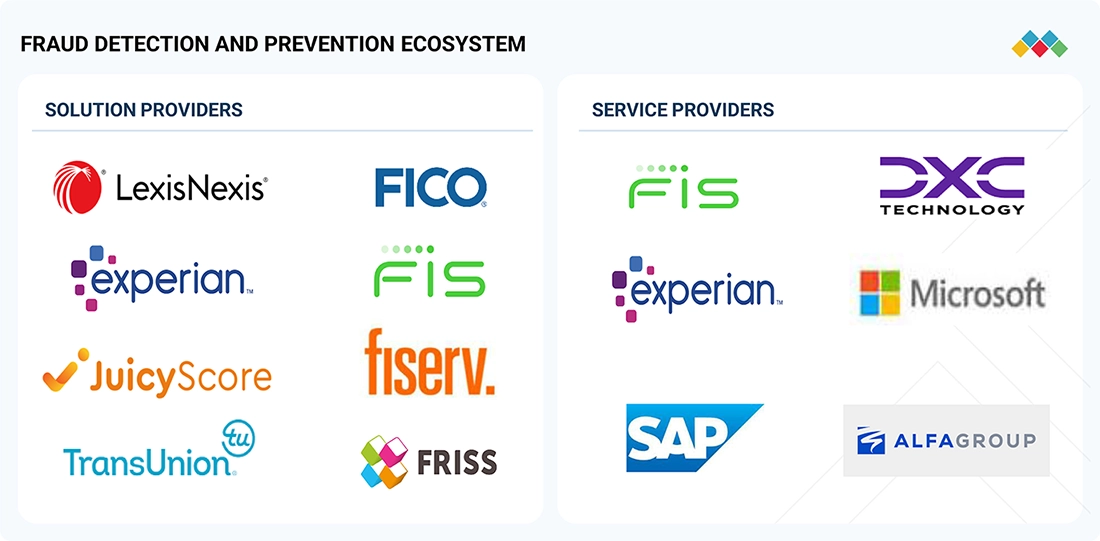
The fraud detection and prevention market ecosystem comprises solution providers and service providers that collaborate to help organizations detect, prevent, investigate, and respond to evolving fraud threats. Solution providers deliver technologies such as fraud analytics, identity fraud management, risk based authentication, and governance, risk, and compliance (eGRC), while service providers offer consulting, implementation, managed services, and risk assessment. Together, these stakeholders enable organizations across banking, financial services, healthcare, retail, government, and other industries to strengthen fraud resilience, improve regulatory compliance, and secure digital customer interactions.
Logos and trademarks shown above are the property of their respective owners. Their use here is for informational and illustrative purposes only.
MARKET SEGMENTS
Source: Secondary Research, Interviews with Experts, MarketsandMarkets Analysis
Fraud Detection and Prevention Market, by Solution
Fraud analytics is the largest solution segment as organizations increasingly rely on AI, machine learning, and behavioral intelligence to detect sophisticated fraud patterns across digital channels. These capabilities enable real-time risk scoring, anomaly detection, and faster fraud investigations while reducing manual effort. According to Experian's 2025 US Identity & Fraud Report published in July 2025, nearly 60% of businesses reported rising fraud losses, while over one-third are already using AI, including generative AI, to combat fraud, accelerating investments in fraud analytics platforms.
Fraud Detection and Prevention Market, by Fraud Type
Identity fraud accounts for the largest share as digital banking, remote onboarding, and online transactions continue to expand the attack surface for fraudsters. Organizations are investing in identity intelligence, behavioral analytics, and adaptive authentication to counter synthetic identities and account takeover. According to the LexisNexis Risk Solutions Cybercrime Report, published in March 2026, analysis of more than 116 billion online transactions during 2025 identified synthetic identities, bot-driven attacks, and account takeover as key drivers of rising global fraud activity.
Fraud Detection and Prevention Market, by Functionality
Real-time detection is the largest functionality segment because organizations must identify suspicious activities before fraudulent transactions are completed. Continuous monitoring and AI-driven decisioning help minimize financial losses and improve operational efficiency across digital channels. According to Experian's 2025 U.S. Identity & Fraud Report, released in July 2025, 72% of business leaders expect AI-generated fraud and deepfakes to become major challenges by 2026, increasing demand for real-time fraud detection capabilities.
Fraud Detection and Prevention Market, by Deployment Mode
On-premises deployment remains the largest segment as banks, financial institutions, and government organizations require complete control over sensitive customer data, fraud models, and regulatory compliance. These organizations continue to prioritize internal infrastructure for mission-critical fraud prevention systems. According to Experian's fraud study published in February 2026, 68% of organizations stated that their existing fraud technologies could not keep pace with increasingly sophisticated attacks, prompting many highly regulated enterprises to modernize secure internal fraud environments.
Fraud Detection and Prevention Market, by Organization Size
Large enterprises dominate the market due to their extensive digital operations, high transaction volumes, and exposure to complex fraud schemes across multiple business units. They require enterprise-scale fraud analytics and centralized risk management platforms. According to Experian's 2025 US Identity & Fraud Report, published in July 2025, 70% of businesses reported increasing their fraud prevention budgets as fraud losses continued to rise, reflecting strong investment from large enterprises in advanced fraud prevention technologies.
Fraud Detection and Prevention Market, by Vertical
BFSI represents the largest vertical because financial institutions are primary targets for payment fraud, identity theft, account takeover, and first-party fraud. Banks continue to invest in AI-driven fraud detection, identity verification, and transaction monitoring to strengthen security and regulatory compliance. According to the LexisNexis Risk Solutions Cybercrime Report, published in May 2025, first-party fraud became the leading global fraud type, accounting for approximately one-third of reported fraud cases across financial services, ecommerce, and related sectors.
REGION
Asia Pacific to be the fastest-growing region in the global FDP market during the forecast period
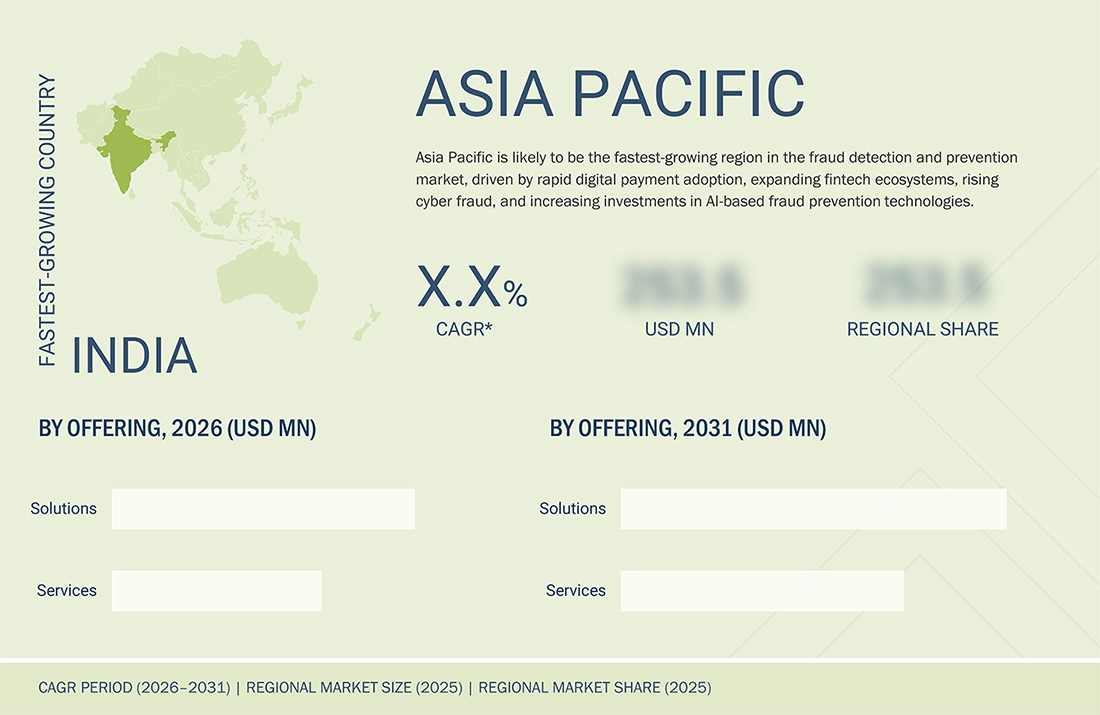
Asia Pacific is the fastest-growing region in the fraud detection and prevention market due to rapid digital payment adoption, expanding fintech ecosystems, increasing mobile banking usage, and the rising sophistication of cyber fraud across emerging economies. Organizations are accelerating investments in AI-driven fraud analytics, identity verification, and real-time transaction monitoring to strengthen digital trust. According to the LexisNexis Risk Solutions APAC Cybercrime Report, published in 2026, digital transactions in Asia Pacific increased by 20% in 2025, while the regional fraud attack rate rose 12% year over year, highlighting the need for advanced fraud prevention solutions.
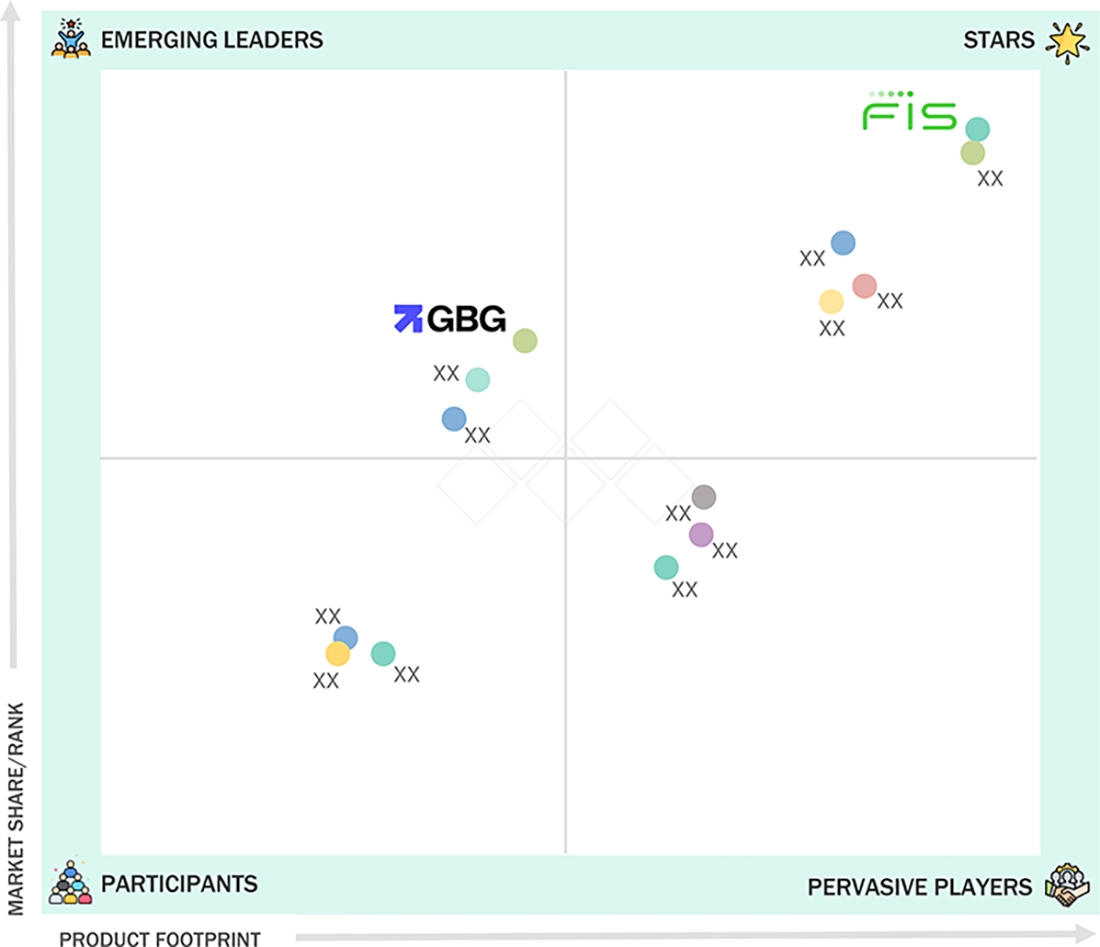
FRAUD DETECTION AND PREVENTION (FDP) MARKET: COMPANY EVALUATION MATRIX
FIS Global (Key Player) is a leading provider in the fraud detection and prevention market, offering integrated fraud management, payment risk, and financial crime solutions that combine AI-driven fraud analytics, real-time transaction monitoring, authentication, and case management to protect digital payments and banking ecosystems. GBG (Emerging Player) is expanding its presence with AI-powered identity verification and fraud prevention solutions, enabling organizations to strengthen digital onboarding, identity intelligence, and risk-based decisioning while reducing identity fraud across customer journeys.
Source: Secondary Research, Interviews with Experts, MarketsandMarkets Analysis
KEY MARKET PLAYERS
- FIS Global (US)
- LexisNexis Risk Solutions (US)
- TransUnion (US)
- Fiserv (US)
- NICE Actimize (US)
- Experian (Ireland)
- FICO (US)
- SAS Institute (US)
- SAP (Germany)
- DXC Technology (US)
- F5 (US)
MARKET SCOPE
| REPORT METRIC | DETAILS |
|---|---|
| Market Size in 2025 (Value) | USD 32.00 Billion |
| Market Forecast in 2026 (Value) | USD 35.71 Billion |
| Market Forecast in 2031 (Value) | USD 80.01 Billion |
| Growth Rate | CAGR of 17.5% from 2026–2031 |
| Years Considered | 2020–2031 |
| Base Year | 2025 |
| Forecast Period | 2026–2031 |
| Units Considered | Value (USD Billion) |
| Report Coverage | Revenue Forecast, Company Ranking, Competitive Landscape, Growth Factors, and Trends |
| Segments Covered |
|
| Regions Covered | North America, Europe, Asia Pacific, Middle East & Africa, Latin America |
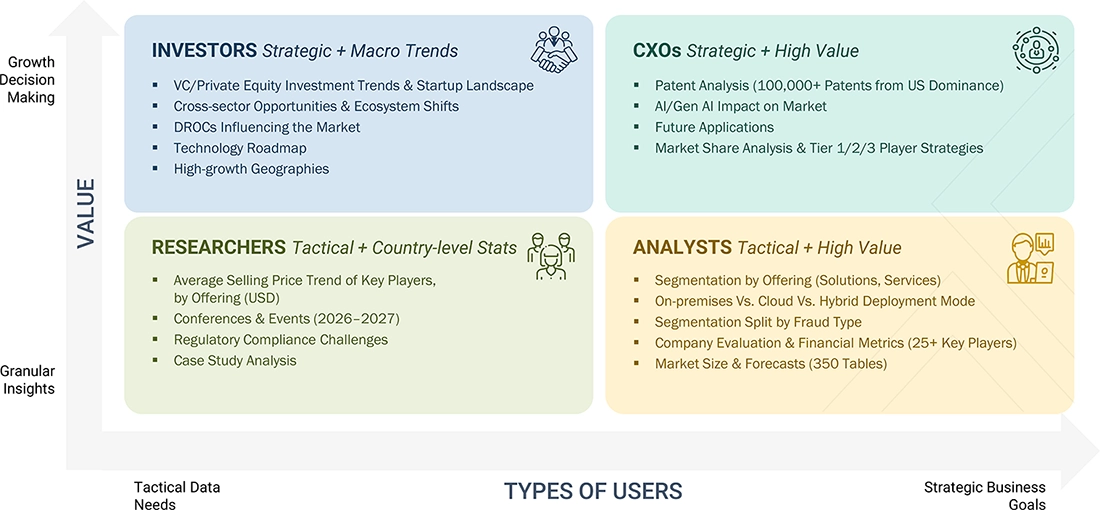
WHAT IS IN IT FOR YOU: FRAUD DETECTION AND PREVENTION (FDP) MARKET REPORT CONTENT GUIDE
DELIVERED CUSTOMIZATIONS
We have successfully delivered the following deep-dive customizations:
| CLIENT REQUEST | CUSTOMIZATION DELIVERED | VALUE ADDS |
|---|---|---|
| Leading Solution Provider (EU) | Comprehensive assessment of the fraud detection and prevention market in Italy, including analysis of fraud trends, regulatory landscape, competitive benchmarking of leading vendors, adoption across BFSI, retail & eCommerce, healthcare, government, and telecommunications, along with evaluation of fraud analytics, identity fraud management, authentication, and case management solutions. The study also covers deployment trends, technology adoption, ecosystem analysis, and key growth opportunities within the market in Italy. | Provides a detailed understanding of Italy's evolving fraud prevention landscape, enabling stakeholders to identify high-growth application areas, evaluate vendor positioning, understand regulatory and digital payment trends, assess technology adoption, and support market entry, investment planning, partnership strategies, and product positioning within the Italian FDP ecosystem. |
RECENT DEVELOPMENTS
- April 2026 : Experian launched Transaction Forensics, an AI-powered fraud and anti-money laundering solution that combines transaction and behavioral analytics to help financial institutions detect and prevent sophisticated financial crime in real time.
- December 2024 : Visa completed its acquisition of Featurespace to strengthen its AI-powered fraud detection and risk scoring portfolio, enhancing real-time payment fraud prevention and financial crime detection capabilities for financial institutions and payment providers worldwide.
- May 2024 : Mangopay launched an AI-driven fraud prevention solution that provides real-time fraud detection, device fingerprinting, darknet intelligence, and risk analysis to help platforms prevent account takeover, payment fraud, chargebacks, and reseller fraud.
Table of Contents
 Exclusive indicates content/data unique to MarketsandMarkets and not available with any competitors.
Methodology
Secondary research was conducted to collect information useful for this technical, market-oriented, and commercial study of the fraud detection and prevention (FDP) market. The next step involved validating these findings, assumptions, and sizing with industry experts across the value chain using primary research. Different approaches, including top-down and bottom-up methods, were employed to estimate the total market size. After that, the market breakup and data triangulation procedures were used to estimate the market size of the segments and subsegments of the FDP market.
Secondary Research
During the secondary research process, various secondary sources were consulted to identify and collect information relevant to the study. The secondary sources included annual reports, press releases, investor presentations of FDP vendors, forums, certified publications, and whitepapers. The secondary research was mainly used to obtain key information about the industry’s supply chain, the total pool of key players, market classification and segmentation according to industry trends to the bottom-most level, regional markets, and key developments from both market- and technology-oriented perspectives, all of which were further validated by primary sources.
Primary Research
In the primary research process, various primary sources from both the supply and demand sides were interviewed to obtain qualitative and quantitative information for this report. The primary sources from the supply side included industry experts such as chief executive officers (CEOs), vice presidents (VPs), marketing directors, technology and innovation directors, and other key executives from major companies and organizations operating in the FDP market.
In the market engineering process, top-down and bottom-up approaches were extensively used, along with several data triangulation methods, to estimate and forecast the overall market segments and subsegments listed in this report. Extensive qualitative and quantitative analyses were conducted across the entire market engineering process to present key information/insights throughout the report.
After the complete market engineering process (including calculations for market statistics, market breakups, market size estimates, market forecasts, and data triangulation), extensive primary research was conducted to gather information and verify & validate the derived critical numbers. The primary research was also conducted to identify segmentation types, industry trends, the competitive landscape of FDP market players, and key market dynamics, including drivers, restraints, opportunities, challenges, and key strategies.
The following is the breakup of the primary study:
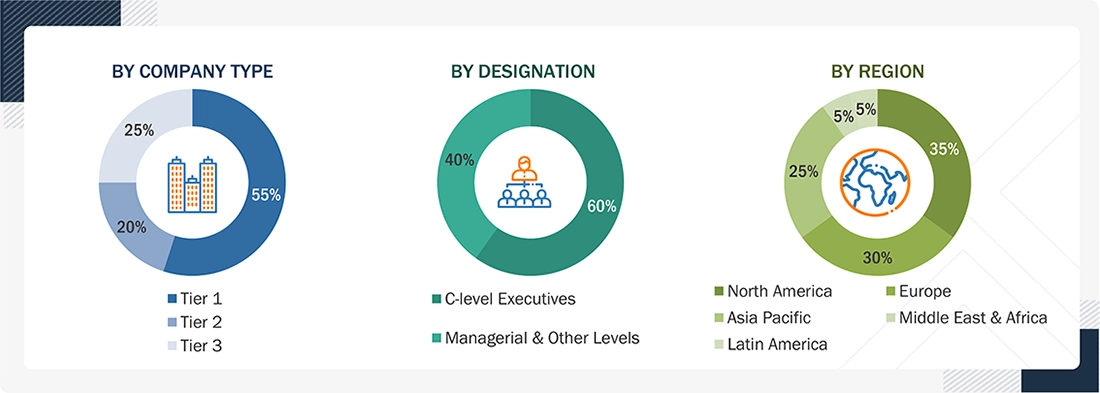
Note: Tier 1 companies receive revenues higher than USD 10 billion; Tier 2 companies' revenues range between USD 1 and 10 billion; and Tier 3 companies' revenues range between USD 500 million and USD 1 billion. Other designations include sales, marketing, and product managers.
To know about the assumptions considered for the study, download the pdf brochure
Market Size Estimation
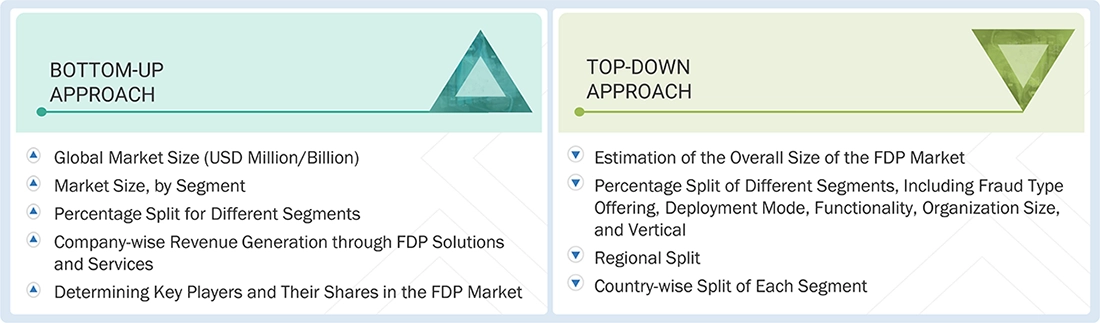
Top-down and bottom-up approaches were employed to estimate and validate the size of the FDP market and of various dependent subsegments within it. The research methodology used to estimate the market size includes the following: critical players in the market were identified through secondary research, and their market shares in the respective regions were determined through both primary and secondary research. This procedure involved analyzing the annual and financial reports of the top market players and conducting extensive interviews with key industry leaders, including CEOs, VPs, directors, and marketing executives, to gather valuable insights.
All percentage splits and breakdowns were determined using secondary sources and verified through primary sources. All parameters that affect the market covered in this study were accounted for, examined in detail, verified through primary research, and analyzed to obtain final quantitative and qualitative data. This data was consolidated with detailed inputs and analysis from MarketsandMarkets.
Fraud Detection and Prevention (FDP) Market : Top-Down and Bottom-Up Approach
Data Triangulation
The market was divided into several segments and subsegments after determining the overall market size using the market size estimation processes explained above. Data triangulation and market breakup procedures were employed, where applicable, to complete the overall market engineering process and arrive at the exact statistics for each market segment and subsegment. The data was triangulated by studying various factors and trends from both the demand and supply sides.
Market Definition
According to MarketsandMarkets, “FDP is the process of finding fraudulent activity in a system and utilizing the resources to mitigate those risks is termed fraud detection and utilizing automated tools and predictive analytics methods to discover the vulnerability is termed fraud prevention”.
Key Stakeholders
- Chief Technology and Data Officers
- Anti-Fraud Service Professionals
- Business Analysts
- Information Technology (IT) Professionals
- Government Agencies
- Investors And Venture Capitalists
- Small and Medium-Sized Enterprises (SMEs) and Large Enterprises
- Third-party Service Providers
- Consultants/Consultancies/Advisory Firms
- Managed And Professional Service Providers
Report Objectives
- To describe and forecast the FDP market by offering, fraud type, functionality, deployment mode, organization size, vertical, and region, as well as analyze the various macroeconomic and microeconomic factors that affect market growth
- To forecast the market size of five major regions: North America, Europe, Asia Pacific, the Middle East & Africa, and Latin America
- To analyze the subsegments of the market concerning individual growth trends, prospects, and contributions to the overall market
- To provide detailed information related to the primary factors (drivers, restraints, opportunities, and challenges) influencing the growth of the FDP market
- To analyze opportunities in the market for stakeholders by identifying high-growth segments of the FDP market
- To profile the key players of the FDP market and comprehensively analyze their market size and core competencies
- To analyze competitive developments, such as product launches, mergers and acquisitions, partnerships, agreements, and collaborations in the global FDP market
Available customizations:
With the given market data, MarketsandMarkets offers customizations based on company-specific needs. The following customization options are available for the report:
Product Analysis
- Product matrix, which gives a detailed comparison of the product portfolio of each company
Regional Analysis
- Further breakdown of the Asia Pacific market, by country
- Further breakdown of the North American market, by country
- Further breakdown of the Latin American market, by country
- Further breakdown of the Middle Eastern & African market, by country
- Further breakdown of the European market, by country
Company Information
- Detailed analysis and profiling of additional market players (up to 5)
Key Questions Addressed by the Report
What are the opportunities in the global fraud detection and prevention market?
The fraud detection and prevention market offer strong opportunities through the growing adoption of AI, real-time analytics, and behavioral monitoring to tackle evolving fraud tactics. Expanding digital services, remote onboarding, and rising demand from SMEs and fintechs further open up new growth areas for solution providers.
What is the definition of the fraud detection and prevention market?
According to MarketsandMarkets, the process of finding a fraudulent activity in a system and utilizing the resources to mitigate those risks is termed fraud detection, whereas utilizing automated tools and predictive analytics methods to discover the vulnerability is termed fraud prevention.
Which region is expected to show the highest market share in the fraud detection and prevention market?
North America is expected to account for the largest market share during the forecast period.
What are the major market players covered in the report?
Major vendors, namely, include Major vendors, namely, Fiserv (US), LexisNexis Risk Solutions (US), TransUnion (US), FIS Global (US), Experian (Ireland), IBM (US), NICE Actimize (Israel), ACI Worldwide (US), SAS Institute (US), RSA Security (US), SAP (Germany), FICO (US), Microsoft (US), F5 (US), AWS (US), Bottomline Technologies (US), ClearSale (Brazil), Genpact (US), Securonix (US), Accertify (US), Feedzai (Portugal), CaseWare (Canada), OneSpan (US), Signifyd (US), BioCatch (Israel), FRISS (Netherlands), MaxMind (US), DataVisor (US), Cleafy (Italy), and Gurucul (US). Alloy (US), Castle (US), Enzoic (US), Kubient (US), SpyCloud (US), Seon (Hungary), Deduce (US), Incognia (US), Resistant AI (Czech Republic), Amani Technologies (UAE), JuicyScore (Russia), Fugu (India), and Pipl (US).
What is the current size of the global fraud detection and prevention market?
In 2030, the global fraud detection and prevention market is estimated to reach USD 65.68 billion.







Growth opportunities and latent adjacency in Fraud Detection and Prevention (FDP) Market